EP4131459A1 - Energiespeichervorrichtung und elektrode für eine energiespeichervorrichtung - Google Patents
Energiespeichervorrichtung und elektrode für eine energiespeichervorrichtung Download PDFInfo
- Publication number
- EP4131459A1 EP4131459A1 EP21781526.5A EP21781526A EP4131459A1 EP 4131459 A1 EP4131459 A1 EP 4131459A1 EP 21781526 A EP21781526 A EP 21781526A EP 4131459 A1 EP4131459 A1 EP 4131459A1
- Authority
- EP
- European Patent Office
- Prior art keywords
- lithium
- carbon
- negative electrode
- current collector
- carbon nanowall
- Prior art date
- Legal status (The legal status is an assumption and is not a legal conclusion. Google has not performed a legal analysis and makes no representation as to the accuracy of the status listed.)
- Pending
Links
Images




Classifications
-
- H—ELECTRICITY
- H01—ELECTRIC ELEMENTS
- H01M—PROCESSES OR MEANS, e.g. BATTERIES, FOR THE DIRECT CONVERSION OF CHEMICAL ENERGY INTO ELECTRICAL ENERGY
- H01M4/00—Electrodes
- H01M4/02—Electrodes composed of, or comprising, active material
- H01M4/36—Selection of substances as active materials, active masses, active liquids
- H01M4/58—Selection of substances as active materials, active masses, active liquids of inorganic compounds other than oxides or hydroxides, e.g. sulfides, selenides, tellurides, halogenides or LiCoFy; of polyanionic structures, e.g. phosphates, silicates or borates
- H01M4/583—Carbonaceous material, e.g. graphite-intercalation compounds or CFx
- H01M4/587—Carbonaceous material, e.g. graphite-intercalation compounds or CFx for inserting or intercalating light metals
-
- C—CHEMISTRY; METALLURGY
- C01—INORGANIC CHEMISTRY
- C01B—NON-METALLIC ELEMENTS; COMPOUNDS THEREOF; METALLOIDS OR COMPOUNDS THEREOF NOT COVERED BY SUBCLASS C01C
- C01B32/00—Carbon; Compounds thereof
- C01B32/15—Nano-sized carbon materials
-
- C—CHEMISTRY; METALLURGY
- C01—INORGANIC CHEMISTRY
- C01B—NON-METALLIC ELEMENTS; COMPOUNDS THEREOF; METALLOIDS OR COMPOUNDS THEREOF NOT COVERED BY SUBCLASS C01C
- C01B32/00—Carbon; Compounds thereof
- C01B32/15—Nano-sized carbon materials
- C01B32/18—Nanoonions; Nanoscrolls; Nanohorns; Nanocones; Nanowalls
-
- H—ELECTRICITY
- H01—ELECTRIC ELEMENTS
- H01G—CAPACITORS; CAPACITORS, RECTIFIERS, DETECTORS, SWITCHING DEVICES, LIGHT-SENSITIVE OR TEMPERATURE-SENSITIVE DEVICES OF THE ELECTROLYTIC TYPE
- H01G11/00—Hybrid capacitors, i.e. capacitors having different positive and negative electrodes; Electric double-layer [EDL] capacitors; Processes for the manufacture thereof or of parts thereof
- H01G11/04—Hybrid capacitors
- H01G11/06—Hybrid capacitors with one of the electrodes allowing ions to be reversibly doped thereinto, e.g. lithium ion capacitors [LIC]
-
- H—ELECTRICITY
- H01—ELECTRIC ELEMENTS
- H01G—CAPACITORS; CAPACITORS, RECTIFIERS, DETECTORS, SWITCHING DEVICES, LIGHT-SENSITIVE OR TEMPERATURE-SENSITIVE DEVICES OF THE ELECTROLYTIC TYPE
- H01G11/00—Hybrid capacitors, i.e. capacitors having different positive and negative electrodes; Electric double-layer [EDL] capacitors; Processes for the manufacture thereof or of parts thereof
- H01G11/22—Electrodes
- H01G11/26—Electrodes characterised by their structure, e.g. multi-layered, porosity or surface features
- H01G11/28—Electrodes characterised by their structure, e.g. multi-layered, porosity or surface features arranged or disposed on a current collector; Layers or phases between electrodes and current collectors, e.g. adhesives
-
- H—ELECTRICITY
- H01—ELECTRIC ELEMENTS
- H01G—CAPACITORS; CAPACITORS, RECTIFIERS, DETECTORS, SWITCHING DEVICES, LIGHT-SENSITIVE OR TEMPERATURE-SENSITIVE DEVICES OF THE ELECTROLYTIC TYPE
- H01G11/00—Hybrid capacitors, i.e. capacitors having different positive and negative electrodes; Electric double-layer [EDL] capacitors; Processes for the manufacture thereof or of parts thereof
- H01G11/22—Electrodes
- H01G11/30—Electrodes characterised by their material
- H01G11/32—Carbon-based
- H01G11/36—Nanostructures, e.g. nanofibres, nanotubes or fullerenes
-
- H—ELECTRICITY
- H01—ELECTRIC ELEMENTS
- H01G—CAPACITORS; CAPACITORS, RECTIFIERS, DETECTORS, SWITCHING DEVICES, LIGHT-SENSITIVE OR TEMPERATURE-SENSITIVE DEVICES OF THE ELECTROLYTIC TYPE
- H01G11/00—Hybrid capacitors, i.e. capacitors having different positive and negative electrodes; Electric double-layer [EDL] capacitors; Processes for the manufacture thereof or of parts thereof
- H01G11/22—Electrodes
- H01G11/30—Electrodes characterised by their material
- H01G11/50—Electrodes characterised by their material specially adapted for lithium-ion capacitors, e.g. for lithium-doping or for intercalation
-
- H—ELECTRICITY
- H01—ELECTRIC ELEMENTS
- H01M—PROCESSES OR MEANS, e.g. BATTERIES, FOR THE DIRECT CONVERSION OF CHEMICAL ENERGY INTO ELECTRICAL ENERGY
- H01M10/00—Secondary cells; Manufacture thereof
- H01M10/05—Accumulators with non-aqueous electrolyte
- H01M10/052—Li-accumulators
- H01M10/0525—Rocking-chair batteries, i.e. batteries with lithium insertion or intercalation in both electrodes; Lithium-ion batteries
-
- H—ELECTRICITY
- H01—ELECTRIC ELEMENTS
- H01M—PROCESSES OR MEANS, e.g. BATTERIES, FOR THE DIRECT CONVERSION OF CHEMICAL ENERGY INTO ELECTRICAL ENERGY
- H01M4/00—Electrodes
- H01M4/02—Electrodes composed of, or comprising, active material
- H01M4/13—Electrodes for accumulators with non-aqueous electrolyte, e.g. for lithium-accumulators; Processes of manufacture thereof
- H01M4/133—Electrodes based on carbonaceous material, e.g. graphite-intercalation compounds or CFx
-
- H—ELECTRICITY
- H01—ELECTRIC ELEMENTS
- H01M—PROCESSES OR MEANS, e.g. BATTERIES, FOR THE DIRECT CONVERSION OF CHEMICAL ENERGY INTO ELECTRICAL ENERGY
- H01M4/00—Electrodes
- H01M4/02—Electrodes composed of, or comprising, active material
- H01M4/62—Selection of inactive substances as ingredients for active masses, e.g. binders, fillers
- H01M4/624—Electric conductive fillers
- H01M4/625—Carbon or graphite
-
- C—CHEMISTRY; METALLURGY
- C01—INORGANIC CHEMISTRY
- C01P—INDEXING SCHEME RELATING TO STRUCTURAL AND PHYSICAL ASPECTS OF SOLID INORGANIC COMPOUNDS
- C01P2002/00—Crystal-structural characteristics
- C01P2002/70—Crystal-structural characteristics defined by measured X-ray, neutron or electron diffraction data
- C01P2002/72—Crystal-structural characteristics defined by measured X-ray, neutron or electron diffraction data by d-values or two theta-values, e.g. as X-ray diagram
-
- C—CHEMISTRY; METALLURGY
- C01—INORGANIC CHEMISTRY
- C01P—INDEXING SCHEME RELATING TO STRUCTURAL AND PHYSICAL ASPECTS OF SOLID INORGANIC COMPOUNDS
- C01P2004/00—Particle morphology
- C01P2004/01—Particle morphology depicted by an image
- C01P2004/02—Particle morphology depicted by an image obtained by optical microscopy
-
- C—CHEMISTRY; METALLURGY
- C01—INORGANIC CHEMISTRY
- C01P—INDEXING SCHEME RELATING TO STRUCTURAL AND PHYSICAL ASPECTS OF SOLID INORGANIC COMPOUNDS
- C01P2004/00—Particle morphology
- C01P2004/01—Particle morphology depicted by an image
- C01P2004/03—Particle morphology depicted by an image obtained by SEM
-
- C—CHEMISTRY; METALLURGY
- C01—INORGANIC CHEMISTRY
- C01P—INDEXING SCHEME RELATING TO STRUCTURAL AND PHYSICAL ASPECTS OF SOLID INORGANIC COMPOUNDS
- C01P2006/00—Physical properties of inorganic compounds
- C01P2006/40—Electric properties
-
- H—ELECTRICITY
- H01—ELECTRIC ELEMENTS
- H01M—PROCESSES OR MEANS, e.g. BATTERIES, FOR THE DIRECT CONVERSION OF CHEMICAL ENERGY INTO ELECTRICAL ENERGY
- H01M4/00—Electrodes
- H01M4/02—Electrodes composed of, or comprising, active material
- H01M2004/026—Electrodes composed of, or comprising, active material characterised by the polarity
- H01M2004/027—Negative electrodes
-
- Y—GENERAL TAGGING OF NEW TECHNOLOGICAL DEVELOPMENTS; GENERAL TAGGING OF CROSS-SECTIONAL TECHNOLOGIES SPANNING OVER SEVERAL SECTIONS OF THE IPC; TECHNICAL SUBJECTS COVERED BY FORMER USPC CROSS-REFERENCE ART COLLECTIONS [XRACs] AND DIGESTS
- Y02—TECHNOLOGIES OR APPLICATIONS FOR MITIGATION OR ADAPTATION AGAINST CLIMATE CHANGE
- Y02E—REDUCTION OF GREENHOUSE GAS [GHG] EMISSIONS, RELATED TO ENERGY GENERATION, TRANSMISSION OR DISTRIBUTION
- Y02E60/00—Enabling technologies; Technologies with a potential or indirect contribution to GHG emissions mitigation
- Y02E60/10—Energy storage using batteries
Definitions
- the technical field of the present specification relates to a power storage device and an electrode for power storage device, using a carbon material(s).
- lithium-ion secondary batteries lithium-ion primary batteries
- lithium-ion capacitors can be listed as power storage devices using lithium ions, for example.
- Patent Literature 1 discloses a lithium-ion secondary battery including a positive electrode, a negative electrode, a separator, and a nonaqueous electrolytic solution.
- a technology using lithium cobaltate or lithium nickelate as the positive-electrode active material and using carbon as the negative-electrode active material is a disclosed (in the scope of claims and working examples in Patent Literature 1).
- Graphite is used as the carbon material in many cases. Graphite can occlude or release one lithium ion per six carbon atoms in a six-membered ring.
- Patent Literature 1 Japanese Patent No. 2668678
- the problem to be solved by the technology disclosed herein is to provide an electrode for power storage device and a power storage device that make it possible to involve more lithium ions in a charge-discharge reaction.
- An electrode for power storage device in a first aspect includes a current collector and an active material layer on the current collector.
- the active material layer includes a carbon nanowall.
- the carbon nanowall is capable of involving, in a charge-discharge reaction, two or more lithium ions per carbon atom in a single charge or discharge.
- the positive electrode PE is a positive electrode of the lithium-ion secondary battery LiB1.
- the positive electrode PE includes a positive electrode current collector P1 and a positive electrode active material layer P2.
- a positive electrode active material layer P2 is formed on each of a first surface P1a and a second surface P1b of the positive electrode current collector P1.
- the positive electrode current collector P1 is, for example, a metallic foil.
- the shape of the positive electrode current collector P1 may be any other shape.
- a material of the positive electrode current collector P1 is, for example, Al or Ti.
- the material of the positive electrode current collector P1 may be an electric conductor, such as any other metal.
- the negative electrode current collector N1 is, for example, a metallic foil.
- the shape of the negative electrode current collector N1 may be any other shape.
- a material of the negative electrode current collector N1 is, for example, Cu.
- the material of the negative electrode current collector N1 may be an electric conductor, such as any other metal.
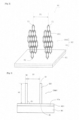
- the mosaic structure is a structure where a plurality of regions having a six-membered ring structure are discretely arranged. That is, the carbon nanowall CNW1 does not have to be an all-single crystal in a six-membered ring.
- a layer spacing of the graphite is approximately 0.35 nm. Therefore, the thickness of the carbon nanowall CNW1 composed of ten layers of the graphene sheets GS1 is approximately 3.5 nm. Dependent on manufacturing conditions, it is considered that the average thickness of the carbon nanowall CNW1 is approximately 3.5 nm. Typically, it is considered that the carbon nanowall CNW1 may be composed of 5 to 20 layers of the graphene sheets GS1. The thickness of he carbon nanowall CNW1 is equal to or grater than 1.5 nm and equal to or less than 7 nm.
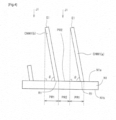
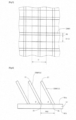
- each carbon nanowall By arranging each carbon nanowall so as to substantially perpendicularly grow, since the carbon nanowalls do not in contact with each other at the end portions E1 of the carbon nanowalls, and thereby the electrolytic solution and the lithium ions can enter between the carbon nanowalls. Therefore, the entire carbon nanowall can effectively function as an electrode.
- the ratio SS3/SS1 indicates an increasing rate of the surface area depending on the presence or absence of the carbon nanowall.
- SS 3 / SS 1 4 ⁇ D 1 ⁇ H 1 + I 1 2 / I 1 2 ⁇ 4 ⁇ D 1 ⁇ H 1 / I 1 2 ⁇ 4 ⁇ H 1 / D 1 where H1>>I1 and D1 ⁇ I1.
- the carbon nanowall CNW1 is capable of involving, in the charge-discharge reaction, two or more lithium ions per carbon atom in a single charge or discharge.
- the carbon nanowall CNW1 is capable of involving, in the charge-discharge reaction, ten or more lithium ions per carbon atom in a single charge or discharge.
- the carbon nanowall CNW1 is capable of involving, in the charge-discharge reaction, twenty or more lithium ions per carbon atom in a single charge or discharge.
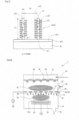
- FIG. 10 is a schematic structure diagram illustrating a lithium-ion capacitor LiC2 of a modified example according to the second embodiment.
- the lithium-ion capacitor LiC2 includes a positive electrode PE3, a negative electrode NE, a separator Sp1, na electrolytic solution ES1, and a vessel V1.
- the lithium-ion secondary battery LiB1 As a practical example, the lithium-ion secondary battery LiB1 according to the first embodiment is manufactured.
- the positive electrode current collector P1 is aluminum, and the positive-electrode active material is lithium cobaltate.
- the negative electrode current collector N1 is copper, and the negative-electrode active material is a carbon nanowall.
- the electrolytic solution is 1M LiPF 6 .
- the positive electrode active material layer is a region 1.6 cm in diameter.
- the negative electrode active material layer is a region 1.3 cm in diameter.
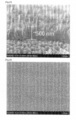
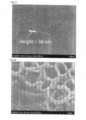
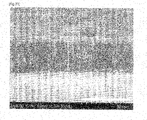
- the carbon nanowalls are of three heights: 1 ⁇ m, 4 ⁇ m, and 10 ⁇ m.
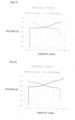
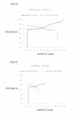
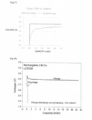
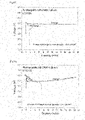
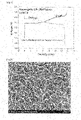
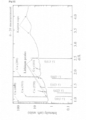
- FIG. 18 is a graphic chart illustrating discharging characteristics of a lithium-ion secondary battery using a negative electrode including a carbon nanowall with a height of 0 nm.
- the horizontal axis of FIG. 18 indicates capacity.
- the vertical axis of FIG. 18 indicates voltage. In this case, there is no carbon nanowall but there is only copper foil, in the negative electrode. As illustrated in FIG. 18 , the voltage drops immediately after the start of discharge.
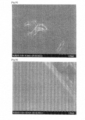
- the metal lithium is deposited is fills the gaps between carbon nanowalls. Therefore, more lithium ions are involved in the charge-discharge reaction than that of the conventionally examples. It is possible to involve equal to or greater than two lithium ions per carbon atom in the charge-discharge reaction.
- An electrode for power storage device in a second aspect includes a current collector and an active material layer on the current collector.
- the active material layer includes a carbon nanowall.
- the carbon nanowall includes a surface on which lithium can be deposited.
Landscapes
- Engineering & Computer Science (AREA)
- Chemical & Material Sciences (AREA)
- Power Engineering (AREA)
- Materials Engineering (AREA)
- Microelectronics & Electronic Packaging (AREA)
- Nanotechnology (AREA)
- Organic Chemistry (AREA)
- Chemical Kinetics & Catalysis (AREA)
- Electrochemistry (AREA)
- General Chemical & Material Sciences (AREA)
- Inorganic Chemistry (AREA)
- Crystallography & Structural Chemistry (AREA)
- Manufacturing & Machinery (AREA)
- Battery Electrode And Active Subsutance (AREA)
Applications Claiming Priority (3)
| Application Number | Priority Date | Filing Date | Title |
|---|---|---|---|
| JP2020066211 | 2020-04-01 | ||
| JP2021005803 | 2021-01-18 | ||
| PCT/JP2021/014103 WO2021201199A1 (ja) | 2020-04-01 | 2021-04-01 | 蓄電デバイスおよび蓄電デバイス用電極 |
Publications (2)
| Publication Number | Publication Date |
|---|---|
| EP4131459A1 true EP4131459A1 (de) | 2023-02-08 |
| EP4131459A4 EP4131459A4 (de) | 2024-05-08 |
Family
ID=77928708
Family Applications (1)
| Application Number | Title | Priority Date | Filing Date |
|---|---|---|---|
| EP21781526.5A Pending EP4131459A4 (de) | 2020-04-01 | 2021-04-01 | Energiespeichervorrichtung und elektrode für eine energiespeichervorrichtung |
Country Status (5)
| Country | Link |
|---|---|
| US (1) | US20230163303A1 (de) |
| EP (1) | EP4131459A4 (de) |
| JP (1) | JP7742998B2 (de) |
| CN (1) | CN115298857B (de) |
| WO (1) | WO2021201199A1 (de) |
Families Citing this family (5)
| Publication number | Priority date | Publication date | Assignee | Title |
|---|---|---|---|---|
| WO2024106320A1 (ja) * | 2022-11-14 | 2024-05-23 | 名古屋市 | カーボンナノウォール電極及びその製造方法 |
| JP7675352B2 (ja) * | 2022-12-30 | 2025-05-13 | 国立大学法人東海国立大学機構 | 蓄電デバイス用電極、二次電池、および、蓄電デバイス用電極の製造方法 |
| JP2025068633A (ja) * | 2023-10-17 | 2025-04-30 | 富士通商株式会社 | 両面負極全固体電池 |
| JP2025068634A (ja) * | 2023-10-17 | 2025-04-30 | 富士通商株式会社 | 全固体リチウム電池 |
| JP2025092131A (ja) * | 2023-12-08 | 2025-06-19 | 富士通商株式会社 | リチウムイオンキャパシタ |
Family Cites Families (12)
| Publication number | Priority date | Publication date | Assignee | Title |
|---|---|---|---|---|
| JP2668678B2 (ja) | 1986-11-08 | 1997-10-27 | 旭化成工業株式会社 | 二次電池 |
| JP4662067B2 (ja) * | 2006-07-25 | 2011-03-30 | トヨタ自動車株式会社 | 構造制御されたカーボンナノウォール、及びカーボンナノウォールの構造制御方法 |
| US7745047B2 (en) * | 2007-11-05 | 2010-06-29 | Nanotek Instruments, Inc. | Nano graphene platelet-base composite anode compositions for lithium ion batteries |
| JP5412638B2 (ja) * | 2008-06-27 | 2014-02-12 | 公立大学法人横浜市立大学 | リチウムイオン電池用負極材料及びそれを用いた急速充放電型リチウムイオン電池 |
| JP5130275B2 (ja) * | 2009-11-11 | 2013-01-30 | トヨタ自動車株式会社 | リチウム二次電池用負極およびその製造方法 |
| JP5001995B2 (ja) * | 2009-11-11 | 2012-08-15 | トヨタ自動車株式会社 | リチウム二次電池用正極およびその製造方法 |
| KR20150027022A (ko) * | 2012-06-13 | 2015-03-11 | 가부시키가이샤 산고 | 리튬 이차 전지용 부극 및 그의 제조 방법 |
| US20140023920A1 (en) | 2012-07-20 | 2014-01-23 | Semiconductor Energy Laboratory Co., Ltd. | Secondary battery |
| US9520595B2 (en) * | 2012-10-29 | 2016-12-13 | Sango Co., Ltd. | Negative electrode for lithium-ion secondary cell and method for manufacturing same |
| WO2014129545A1 (ja) * | 2013-02-22 | 2014-08-28 | 住友電気工業株式会社 | 多孔質部材および触媒部材 |
| JP2020004627A (ja) * | 2018-06-28 | 2020-01-09 | 于 暁玲 | ナトリウムイオン電池用負極材料及びこれを用いたナトリウムイオン電池 |
| CN110034284A (zh) * | 2018-10-10 | 2019-07-19 | 溧阳天目先导电池材料科技有限公司 | 具有表面碳纳米墙的硅基负极材料及其制备方法和电池 |
-
2021
- 2021-04-01 JP JP2022512683A patent/JP7742998B2/ja active Active
- 2021-04-01 CN CN202180021043.6A patent/CN115298857B/zh active Active
- 2021-04-01 US US17/915,590 patent/US20230163303A1/en active Pending
- 2021-04-01 EP EP21781526.5A patent/EP4131459A4/de active Pending
- 2021-04-01 WO PCT/JP2021/014103 patent/WO2021201199A1/ja not_active Ceased
Also Published As
| Publication number | Publication date |
|---|---|
| CN115298857B (zh) | 2026-01-27 |
| JPWO2021201199A1 (de) | 2021-10-07 |
| WO2021201199A1 (ja) | 2021-10-07 |
| JP7742998B2 (ja) | 2025-09-24 |
| EP4131459A4 (de) | 2024-05-08 |
| CN115298857A (zh) | 2022-11-04 |
| US20230163303A1 (en) | 2023-05-25 |
Similar Documents
| Publication | Publication Date | Title |
|---|---|---|
| US20230163303A1 (en) | Power storage device and electrode for power storage device | |
| US8685569B2 (en) | Electrode for power storage device and power storage device | |
| EP3159955B1 (de) | Negativelektrodenmaterial für sekundärbatterien mit wasserfreiem elektrolyt, negativelektrode für sekundärbatterien mit wasserfreiem elektrolyt, sekundärbatterie mit wasserfreiem elektrolyt und verfahren zur herstellung von negativelektrodenaktivmaterialpartikeln | |
| JP5015173B2 (ja) | リチウム電池の陰極に利用可能なカーボンナノチューブ及びシリコンベースの材料 | |
| US10062901B2 (en) | Negative active material, lithium battery including the material, and method of manufacturing the material | |
| JP5457101B2 (ja) | 非水電解質二次電池 | |
| CN105580171B (zh) | 非水电解质二次电池用负极活性物质及使用了该负极活性物质的非水电解质二次电池 | |
| US20220131143A1 (en) | Positive electrode active material and lithium secondary battery comprising the same | |
| EP4148825A1 (de) | Kathodenaktivmaterial und lithiumsekundärbatterie damit | |
| CN109841807B (zh) | 锂电极及包含它的锂二次电池 | |
| US20130059195A1 (en) | Electrode for power storage device and power storage device | |
| KR102878943B1 (ko) | 양극 활물질 전구체, 이의 제조방법 및 양극 활물질 | |
| EP3780234B1 (de) | Sekundärbatterie mit wasserfreiem elektrolyt | |
| US20230378439A1 (en) | Negative electrode for lithium-ion secondary battery | |
| EP4084130A1 (de) | Verfahren zur herstellung einer sekundärbatterie | |
| CN117460697A (zh) | 碳纳米壁生长用金属基板和带有碳纳米壁的金属基板以及它们的制造方法 | |
| JP7722684B2 (ja) | リチウムイオン二次電池の負極とその製造方法および製造装置ならびにリチウムイオン二次電池 | |
| Igarashi et al. | Effect of crystallinity of synthetic graphite on electrochemical potassium intercalation into graphite | |
| US20020034687A1 (en) | Rechargeable lithium battery | |
| EP2913870A1 (de) | Negative elektrode für eine lithium-ionen-sekundärzelle und verfahren zur herstellung davon | |
| EP4492493A1 (de) | Negativelektrodenmaterial, herstellungsverfahren dafür, negativelektrode damit und lithiumsekundärbatterie mit der negativelektrode | |
| WO2018135253A1 (ja) | 正極活物質、正極およびリチウムイオン二次電池 | |
| CN119725422A (zh) | 负极活性颗粒及其制备方法、负极极片、电池及电子设备 | |
| WO2021060192A1 (ja) | 蓄電デバイスおよび蓄電デバイス用電極の製造方法 | |
| IGARASHI et al. | The Electrochemical Society of Japan |
Legal Events
| Date | Code | Title | Description |
|---|---|---|---|
| STAA | Information on the status of an ep patent application or granted ep patent |
Free format text: STATUS: THE INTERNATIONAL PUBLICATION HAS BEEN MADE |
|
| PUAI | Public reference made under article 153(3) epc to a published international application that has entered the european phase |
Free format text: ORIGINAL CODE: 0009012 |
|
| STAA | Information on the status of an ep patent application or granted ep patent |
Free format text: STATUS: REQUEST FOR EXAMINATION WAS MADE |
|
| 17P | Request for examination filed |
Effective date: 20221012 |
|
| AK | Designated contracting states |
Kind code of ref document: A1 Designated state(s): AL AT BE BG CH CY CZ DE DK EE ES FI FR GB GR HR HU IE IS IT LI LT LU LV MC MK MT NL NO PL PT RO RS SE SI SK SM TR |
|
| DAV | Request for validation of the european patent (deleted) | ||
| DAX | Request for extension of the european patent (deleted) | ||
| RAP1 | Party data changed (applicant data changed or rights of an application transferred) |
Owner name: FUJITUSYOU CO., LTD. |
|
| A4 | Supplementary search report drawn up and despatched |
Effective date: 20240410 |
|
| RIC1 | Information provided on ipc code assigned before grant |
Ipc: H01M 6/16 20060101ALI20240404BHEP Ipc: C01B 32/18 20170101ALI20240404BHEP Ipc: H01M 10/0525 20100101ALI20240404BHEP Ipc: H01G 11/50 20130101ALI20240404BHEP Ipc: H01G 11/36 20130101ALI20240404BHEP Ipc: H01G 11/28 20130101ALI20240404BHEP Ipc: H01G 11/06 20130101ALI20240404BHEP Ipc: H01M 4/66 20060101ALI20240404BHEP Ipc: H01M 4/587 20100101ALI20240404BHEP Ipc: H01M 4/133 20100101ALI20240404BHEP Ipc: H01M 4/06 20060101AFI20240404BHEP |