EP4134075A1 - Hexahydronaphthalen-2-one derivate zur verwendung gegen sars-cov-2 - Google Patents
Hexahydronaphthalen-2-one derivate zur verwendung gegen sars-cov-2 Download PDFInfo
- Publication number
- EP4134075A1 EP4134075A1 EP21191707.5A EP21191707A EP4134075A1 EP 4134075 A1 EP4134075 A1 EP 4134075A1 EP 21191707 A EP21191707 A EP 21191707A EP 4134075 A1 EP4134075 A1 EP 4134075A1
- Authority
- EP
- European Patent Office
- Prior art keywords
- compound
- bond
- petasol
- alkenyl
- carbon
- Prior art date
- Legal status (The legal status is an assumption and is not a legal conclusion. Google has not performed a legal analysis and makes no representation as to the accuracy of the status listed.)
- Withdrawn
Links
Images



Classifications
-
- A—HUMAN NECESSITIES
- A61—MEDICAL OR VETERINARY SCIENCE; HYGIENE
- A61K—PREPARATIONS FOR MEDICAL, DENTAL OR TOILETRY PURPOSES
- A61K31/00—Medicinal preparations containing organic active ingredients
- A61K31/12—Ketones
- A61K31/122—Ketones having the oxygen directly attached to a ring, e.g. quinones, vitamin K1, anthralin
-
- A—HUMAN NECESSITIES
- A61—MEDICAL OR VETERINARY SCIENCE; HYGIENE
- A61K—PREPARATIONS FOR MEDICAL, DENTAL OR TOILETRY PURPOSES
- A61K31/00—Medicinal preparations containing organic active ingredients
- A61K31/21—Esters, e.g. nitroglycerine, selenocyanates
- A61K31/215—Esters, e.g. nitroglycerine, selenocyanates of carboxylic acids
- A61K31/22—Esters, e.g. nitroglycerine, selenocyanates of carboxylic acids of acyclic acids, e.g. pravastatin
-
- A—HUMAN NECESSITIES
- A61—MEDICAL OR VETERINARY SCIENCE; HYGIENE
- A61K—PREPARATIONS FOR MEDICAL, DENTAL OR TOILETRY PURPOSES
- A61K31/00—Medicinal preparations containing organic active ingredients
- A61K31/33—Heterocyclic compounds
- A61K31/395—Heterocyclic compounds having nitrogen as a ring hetero atom, e.g. guanethidine or rifamycins
- A61K31/41—Heterocyclic compounds having nitrogen as a ring hetero atom, e.g. guanethidine or rifamycins having five-membered rings with two or more ring hetero atoms, at least one of which being nitrogen, e.g. tetrazole
- A61K31/425—Thiazoles
- A61K31/426—1,3-Thiazoles
-
- A—HUMAN NECESSITIES
- A61—MEDICAL OR VETERINARY SCIENCE; HYGIENE
- A61K—PREPARATIONS FOR MEDICAL, DENTAL OR TOILETRY PURPOSES
- A61K31/00—Medicinal preparations containing organic active ingredients
- A61K31/33—Heterocyclic compounds
- A61K31/395—Heterocyclic compounds having nitrogen as a ring hetero atom, e.g. guanethidine or rifamycins
- A61K31/435—Heterocyclic compounds having nitrogen as a ring hetero atom, e.g. guanethidine or rifamycins having six-membered rings with one nitrogen as the only ring hetero atom
- A61K31/47—Quinolines; Isoquinolines
- A61K31/4706—4-Aminoquinolines; 8-Aminoquinolines, e.g. chloroquine, primaquine
-
- A—HUMAN NECESSITIES
- A61—MEDICAL OR VETERINARY SCIENCE; HYGIENE
- A61P—SPECIFIC THERAPEUTIC ACTIVITY OF CHEMICAL COMPOUNDS OR MEDICINAL PREPARATIONS
- A61P11/00—Drugs for disorders of the respiratory system
-
- A—HUMAN NECESSITIES
- A61—MEDICAL OR VETERINARY SCIENCE; HYGIENE
- A61P—SPECIFIC THERAPEUTIC ACTIVITY OF CHEMICAL COMPOUNDS OR MEDICINAL PREPARATIONS
- A61P31/00—Antiinfectives, i.e. antibiotics, antiseptics, chemotherapeutics
- A61P31/12—Antivirals
- A61P31/14—Antivirals for RNA viruses
Definitions
- the invention relates to compounds for the treatment of viral infections.
- compounds extracted from Darksidea spp. are provided for use in the treatment of SARS-CoV-2 infection.
- the Severe acute respiratory syndrome-related coronavirus 2 (SARS-CoV-2), which caused the COVID-19 pandemic outbreak, belongs to the Coronaviridae family. Coronaviruses are enveloped single-stranded positive-sense RNA viruses and are recognized as a continuous zoonotic threat with the ability to cause respiratory, enteric, hepatic, or neurological diseases with highly variable severity in humans. Recently, three zoonotic coronaviruses caused widespread outbreaks: SARS-CoV in 2002-2003 resulted approximately 800 deaths in 30 countries [ Drosten, C., et al., Identification of a novel coronavirus in patients with severe acute respiratory syndrome. N Engl J Med, 2003.
- Darksidea belong to the root-colonising fungi, dark septate endophytes (DSE) [ Knapp, D.G., et al., Dark septate endophytic pleosporalean genera from semiarid areas. Persoonia, 2015. 35: 87-100 . ] To date, no medicinal use of Darksidea has been reported.
- DSE dark septate endophytes
- the virus is an RNA virus, preferably selected from coronaviruses, ebolaviruses, mammarenaviruses, in particular Lassa mammarenavirus, henipaviruses, in particular Nipah henipavirus and orthonairoviruses, in particular Crimean-Congo hemorrhagic fever orthonairovirus, preferably the virus is a coronavirus, preferably a SARS coronavirus, highly preferably SARS-CoV-2.
- the compound has general formula (II) wherein in general formula (II)
- the compound has general formula (III) wherein wherein R 1 is and R 2 are as defined above.
- the compound is selected from the group consisting of compounds having general formulae IV.1, IV.2, IV.3, preferably general formulae IV.1, IV.2, wherein R 2 is as defined above.
- R 2 is selected from the group consisting of
- the compound is the S isomer.
- the compound is selected from the group consisting of petasol and esters thereof, isopetasol and esters thereof.
- the compound is selected from the group consisting of petasol, petasin, S-petasin, isopetasol, isopetasin and S-isopetasin.
- the compound is selected from the group consisting of petasol and isopetasol.
- the compound is selected from the group consisting of petasol, petasin and S-petasin.
- the coronavirus is SARS-CoV-2.
- tioalkyl refers to a saturated (i.e., S-alkyl) or unsaturated (i.e., S-alkenyl and S-alkynyl) group attached to the parent molecular moiety through a sulfur atom.
- the alkyl group contains 1-20 aliphatic carbon atoms.
- the alkyl group contains 1-10 aliphatic carbon atoms.
- the alkyl, alkenyl, and alkynyl groups employed in the invention contain 1-8 aliphatic carbon atoms.
- the alkyl group contains 1-6 aliphatic carbon atoms.
- the alkyl group contains 1-4 aliphatic carbon atoms.
- thioalkyl include, but are not limited to, methylthio, ethylthio, propylthio, isopropylthio, n-butylthio, and the like.
- Petasol is an eremophilane sesquiterpenoid compound, having the structure (A): and isomers isopetasol, having the structure (B): and neopetasol, having the structure (C):
- Petasol may be synthesized by the method described in Neuenschwander, M., Neuenschwander, A. and Steinegger, E. (1979), Struktur der Sesquiterpene von Petasites hybridus (L.) G. M. et SCH.: Neopetasol-Abkömmlinge. HCA, 62: 627-634. https://doi.org/10.1002/hlca.19790620229 , while the synthesis of isopetasol was reported by Bohlmann and Otto (Natlich vorumblede Terpen-Derivate, 3831 ) Synthese des Isopetasols. Liebigs Ann. Chem., 1982: 186-190.
- Petasol and its isomers may be isolated from a number of sources with methods well-known in the art. See e.g. Lin et al. (Eremophilanes from Petasites formosanus Kitamura. Chem. Pharm. Bull. 46(11) 1807-1809 (1998 )) and Debrunner and Neuenschwander (Sesquiterpenes of Petasites hybridus ( L.) G.M. et Sch.: influence of locations and seasons on sesquiterpene distribution.
- Identification of the isolated compounds can be performed by conventional methods, such as HPLC and NMR. An example of such methods is given in the Examples.
- Petasin ( CAS: 26577-85-5 ) is an ester of angelic acid and petasol, having the structure (D) and the isomers isopetasin ( CAS: 469-26-1 ), having the structure (E) and neopetasin ( CAS: 70387-53-0 ), having the structure (F)
- S-petasin ( CAS:70238-51-6 ) is a methylsulfanyl derivative of petasin, having the structure (G) and the isomers S-isopetasin with the structure and S-neopetasin ( CAS: 87984-58-5 ) with the structure
- a method for producing an extract containing S-petasin and its isomers from cranberry is described in WO2009149288 , from Petasites hybridus in WO2011042469 and by Aebi et al.. Kunststoffsstoffe von Petasites hybridus (L.) Fl. Wett. Pharmaceutica acta Helvetiae. 1995;29:277-279 (containing petasin, isopetasin, S-petasin and S-isopetasin), Lin Y-L, Mei C-H, Huang S-L, Kuo Y-H. Four new sesquiterpenes from Petasites formosanus. Journal of Natural Products. 1998;61(7):887-890 .
- Petasol and/or any of the compounds described herein by a plant or fungus species may be detected by well known methods (an example is given in the Examples section) and the extraction of petasol and/or any of the compounds for use according to the invention may be extracted from plants or fungus by known methods (see references above and the Examples).
- Petasol and isopetasol may be isolated from any of the Darksidea species by the method described in the Examples, comprising:
- Culturing may be performed in a bioreactor.
- a method for the production of petasol, isopetasol and/or neopetasol comprising steps (a)-(b) and optionally (c) defined above.
- a Darksidea sp. highly preferably Darksidea alpha
- steps (a)-(b) and optionally (c) defined above comprising steps (a)-(b) and optionally (c) defined above.
- a pharmaceutical composition comprising a compound according to formula (I) and a pharmaceutically acceptable excipient for use in the treatment of an RNA virus infection is also provided.
- the pharmaceutical composition is suitable for oral administration, e.g. is in the form of a tablet, powder, capsule.
- the pharmaceutical composition is suitable for parenteral administration, e.g. intravenous administration.
- an extract comprising a compound according to formula (I) derived from a plant or a fungus is provided for use in the treatment of an RNA virus infection.
- the plant belongs to a Petasites sp. or the fungus belongs to a Darksidea sp., preferably to Darksidea alpha.
- the extract is enriched in the compound.
- the compound is selected from the group consisting of petasol and esters thereof, isopetasol and esters thereof.
- the compound is selected from the group consisting of petasol, petasin, S-petasin, isopetasol, isopetasin and S-isopetasin.
- the compound is selected from the group consisting of petasol and isopetasol.
- the compound is selected from the group consisting of petasol, petasin and S-petasin.
- the compound for use is a prodrug of petasol or isopetasol, which may be converted into petasol or isopetasol, respectively, upon administration to a subject in need thereof and a pharmaceutical composition comprising the prodrug and a pharmaceutically acceptable excipient for use in the treatment of a coronavirus infection is provided.
- the RNA virus is selected from enveloped, positive-strand RNA viruses.
- the RNA virus is selected from from coronaviruses, ebolaviruses, mammarenaviruses, in particular Lassa mammarenavirus, henipaviruses, in particular Nipah henipavirus and orthonairoviruses, in particular Crimean-Congo hemorrhagic fever orthonairovirus, preferably the virus is a SARS coronavirus, highly preferably SARS-CoV-2.
- RNA virus is selected from coronaviruses (family Coronaviridae, genera Coronavirus: Alphacoronavirus, Betacoronavirus, Gammacoronavirus, Deltacoronavirus), preferably respiratory coronaviruses, e.g.
- coronaviruses family Coronaviridae, genera Coronavirus: Alphacoronavirus, Betacoronavirus, Gammacoronavirus, Deltacoronavirus
- respiratory coronaviruses e.g.
- bovine respiratory coronavirus canine respiratory coronavirus, feline respiratory coronavirus, infectious bronchitis viruses, and coronaviruses causing mainly respiratory, enteric, hepatic and neurological symptomps, such as rabbit coronavirus, feline enteric coronavirus (FECV), feline infectious peritonitis virus (FIPV), transmissible gastroenteritis virus (TGEV), porcine epidemic diarrhoea virus (PEDV), and porcine deltacoronavirus (PDCoV).
- FECV feline enteric coronavirus
- FFPV feline infectious peritonitis virus
- TGEV transmissible gastroenteritis virus
- PEDV porcine epidemic diarrhoea virus
- PDCV porcine deltacoronavirus
- the subject to be treated is a mammal or an avian subject, e.g.
- a human such as a companion animal (such as a dog, cat or rabbit), a domesticated or farm animal, such as cattle, swine, sheep, fowl or a wild animal, such as bats, big cats, hares or african wild dogs.
- a companion animal such as a dog, cat or rabbit
- a domesticated or farm animal such as cattle, swine, sheep, fowl
- a wild animal such as bats, big cats, hares or african wild dogs.
- the fungal isolates from which DA-1 (petasol), DA-2 (isopetasol) and DA-3 (neopetasol) were isolated represent the widespread root endophytic fungi Darksidea alpha (Ascomycota, Pleosporales).
- the isolates are in the fungal root endophyte strain collection at the Mycological Research Group (Department of Plant Anatomy, Institute of Biology, Eötvös Loránd University). Albeit several isolates were screened and they produced the compounds, the most efficient producers were the isolates DSE7/1, DSE7/15 and DSE7/20 (Table 1-2).
- nrDNA ITS internal transcribed spacer regions of the nrDNA and intervening 5.8S nrDNA
- LSU partial 28S large subunit of the nrRNA gene
- SSU partial 18S small subunit of the nrRNA gene
- ACT partial actin gene
- TUB partial beta-tubulin gene
- CAL partial calmodulin gene
- TEF partial translation elongation factor 1-alpha gene.
- Isolates of Darksidea alpha were grown in Petri dishes (60 mm) on Potato dextrose agar (PDA) medium (VWR, Hungary) at room temperature in dark for 30 days. Complete in vitro cultures containing the medium and fungal mycelium were lyophilized and pulverized. These powders were extracted three times. First, they were extracted with 5 mL of methyl alcohol held under reflux at boiling point for 30 min. Thereafter, the insoluble, centrifuged material was extracted for a second time and a third time, as before. The combined supernatants were dried by a rotary vacuum evaporator at 40 °C. The dried extracts were dissolved in 5 mL of methanol.
- HPLC highperformance liquid chromatography
- UV ultraviolet
- HR-MS high-resolution mass spectrometry
- a Dionex Ultimate 3000 UHPLC system (3000RS diode array detector (DAD), TCC-3000RS column thermostat, HPG-3400RS pump, SRD-3400 solvent rack degasser, WPS-3000TRS autosampler), hyphenated with a Orbitrap Q Exactive Focus Mass Spectrometer equipped with electrospray ionization (ESI) (Thermo Fischer Scientific, Waltham, MA, USA) was used for chromatographic separation and high resolution mass spectral analysis. The HPLC separations were performed on a Kinetex C18 column (75 ⁇ 3 mm; 2.6 ⁇ m) (Phenomenex, USA).
- Eluents eluent A, 0.1% v/v formic acid, eluent B, acetonitrile:0.1% v/v formic acid (80:20, v/v).
- Linear gradient 0.0 min, 20% B; 10.0 min, 70% B; flow rate: 0.3 mL/min; column temperature: 25 °C; injected volume: 1.0-5.0 ⁇ L.
- the ESI source was operated in positive ionization mode and operation parameters were optimized automatically using the built-in software.
- the working parameters were as follows: spray voltage, 3500 V (+); capillary temperature 256 °C; sheath-, auxiliary- and spare-gases (N2): 47.50, 11.25 and 2.25 arbitrary units, respectively.
- the resolution of the full scan was of 70,000 and the scanning range was between 100-1000 m/z units.
- DAD spectra were recorded between 230 and 600 nm.
- NMR spectra of the isolated compounds were recorded in chloroform-d at 25 °C on a Varian DDR spectrometer (599.9 MHz for 1H and 150.9 MHz for 13C) equipped with a dual 5 mm inverse detection gradient (IDPFG) probe-head. Chemical shifts were referenced relative to the appropriate solvent resonances.
- Vero-E6 cell line was obtained from the European Collection of Authenticated Cell Cultures (ECACC 85020206) and maintained in DMEM high-glucose (4,5 g/L) medium (Lonza) containing 10% FBS (Gibco) and supplemented with2 mM of L-glutamine (Lonza)1 mM sodium pyruvate (Merck), CellCultureGuard (PanReacApplichem) at 37oC in a humidified atmosphere of 5% CO2.
- the Vero-E6 cells was maintained in the previously described DMEM medium supplemented with 5% FBS and CellCultureGuard (PanReacApplichem,).
- Vero-E6 cells were plated in a 96-well flat bottom tissue culture plates in 10% FBS containing DMEM media (5000 cells / 100 ⁇ L) one day prior to experiment. Before the test, 50 ⁇ L supernatant was removed and replaced with 50 ⁇ L DMEM serum free (SFM) medium. Compounds were serially diluted with SFM DMEM medium and added to the cells (final concentration range: 0.02 - 100 ⁇ M, final FBS concentration: 2.5%).
- SFM DMEM serum free
- Vero E6 cells were plated in 96-well flat bottom tissue culture plates (TPP) in 10% FBS containing DMEM medium (5000 cells / 100 ⁇ L) 24 hrs prior to experiment. After removing the supernatant, Vero E6 cells were treated for 1 hour with the serial dilution of the compounds in DMEM media. As negative control DMEM containing 0.5% DMSO medium was applied.
- Vero E6 cells were infected with SARS-CoV-2 virus at a multiplicity of infection (MOI) of 0.05, then cells were incubated with the viruses for further 1.5 hrs. After the removal of the supernatant from the wells, infected cells were incubated with 200 ⁇ L serially diluted compound solutions in DMEM containing 5% FBS. The inoculated cultures were growing in a humidified 37°C incubator in an atmosphere of 5% CO2 and observed for cytopathic effect (CPE) daily. Microscopic images were taken 2 days after infection ( Fig. 1 ). When CPEs were observed, typically 48 hrs after infection, 50 ⁇ L of virus-containing supernatants were transferred to 96-well plates to determine the infective titer and kept in -80°C until further use.
- MOI multiplicity of infection
- TCID50 Calculator (v2.1-20-01-2017_MB) [(accessed on 10 June 2020)]; available online: https://www.klinikum.uni-heidelberg.de/fileadmin/inst_hygiene/molekulare_virologie/Downloads/TCID50_calculator_v2_17-01-20_MB.xlsx.]. Experiments were done in quadruplets and repeated at least three times. The assay was validated by a negative and a positive control (medium treated virus control and chloroquine treated control).
- Real-time RT-qPCR was conducted using SARS-CoV-2 RT-qPCR kit (PerkinElmer, The Netherlands) on Roche LightCycler 480 with automated second derivative evaluation method.
- the culture extracts of the fungus Darksidea alpha contained three main compounds ( Fig. 2 , peaks at 7.3, 7.6 and 8.5 min retention times).
- the effective compound petasol is a rarely occurring natural metabolite, determined earlier only in four fungal species [ Le, D.H., et al., Eremophilane-type sesquiterpenes from cultured lichen mycobionts of Sarcographa tricosa. Phytochemistry, 2013. 91: 242-8 .; Bunkers, G.J. and Strobel, G.A., A proposed mode of action for green island induction by the eremophilane phytotoxins produced by Drechslera gigantea. Physiol Mol Plant Pathol, 1991. 5: 313-23 .; Jayasuriya, H., et al., Identification of diverse microbial metabolites as potent inhibitors of HIV-1 Tat transactivation.
- petasol could be isolated (average yield, obtained from four independently grown fungal cultures; differences could be characterized by a relative standard deviation (RSD) value of 23%).
- RSS relative standard deviation
- significant amount of isopetasol (1.0 mg) and neopetasol (0.33 mg) can also be isolated from 1.0 g lyophilized Darksidea alpha culture (average yields, obtained from four independently grown fungal cultures; differences could be characterized by the RSD values of 54 % (isopetasol) and 13% (neopetasol)).
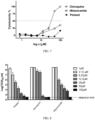
- antiviral activity of two drugs were determined, namely Nitazoxanide and Chloroquine. These drugs are being studied to treat COVID-19 ( Fig. 6 ).
- Both compounds showed a concentration dependent antiviral effect on SARS-CoV-2 virus infected Vero E6 cells.
- Petasol The antiviral effect of Petasol was tested on SARS-CoV-2 virus infected Vero-E6 cells. After 48 hours of incubation, the virus-induced cytopathic effect (CPE) was detected. Petasol compound showed similar antiviral effect as chloroquine and better than Nitazoxanide ( Fig. 8 ).
- Petasol was also comparatively tested with its isomers.
- the antiviral activity of isopetasol and neopetasol was markedly different than petasol. This indicates that the antiviral effect is strongly dependent on the structure, namely the absolute configuration of the compound petasol ( Fig. 9 ).
- CPE virus-induced cytopathic effect
- direct determination of the viral copy numbers was also assessed using a RT-qPCR method. Viral RNA copy numbers showed high similarity with the TCID50 values. Therefore, we can conclude that both read-out methods have resulted in similar antiviral effect of petasol ( Fig. 10 ).
Landscapes
- Health & Medical Sciences (AREA)
- Life Sciences & Earth Sciences (AREA)
- Public Health (AREA)
- Veterinary Medicine (AREA)
- Chemical & Material Sciences (AREA)
- Medicinal Chemistry (AREA)
- Pharmacology & Pharmacy (AREA)
- Animal Behavior & Ethology (AREA)
- General Health & Medical Sciences (AREA)
- Epidemiology (AREA)
- Chemical Kinetics & Catalysis (AREA)
- Organic Chemistry (AREA)
- Virology (AREA)
- Nuclear Medicine, Radiotherapy & Molecular Imaging (AREA)
- General Chemical & Material Sciences (AREA)
- Communicable Diseases (AREA)
- Oncology (AREA)
- Emergency Medicine (AREA)
- Molecular Biology (AREA)
- Engineering & Computer Science (AREA)
- Bioinformatics & Cheminformatics (AREA)
- Pulmonology (AREA)
- Pharmaceuticals Containing Other Organic And Inorganic Compounds (AREA)
Priority Applications (3)
| Application Number | Priority Date | Filing Date | Title |
|---|---|---|---|
| PCT/HU2022/050060 WO2023017288A1 (en) | 2021-08-09 | 2022-08-08 | Hexahydronaphthalen-2-one derivatives for use against a coronavirus infection |
| EP22765596.6A EP4384154A1 (de) | 2021-08-09 | 2022-08-08 | Hexahydronaphthalen-2-on-derivate zur verwendung gegen coronavirus-infektion |
| US18/682,627 US20250248965A1 (en) | 2021-08-09 | 2022-08-08 | Hexahydronaphthalen-2-one derivatives for use against a coronavirus infection |
Applications Claiming Priority (1)
| Application Number | Priority Date | Filing Date | Title |
|---|---|---|---|
| HUP2100293 | 2021-08-09 |
Publications (1)
| Publication Number | Publication Date |
|---|---|
| EP4134075A1 true EP4134075A1 (de) | 2023-02-15 |
Family
ID=89662434
Family Applications (1)
| Application Number | Title | Priority Date | Filing Date |
|---|---|---|---|
| EP21191707.5A Withdrawn EP4134075A1 (de) | 2021-08-09 | 2021-08-17 | Hexahydronaphthalen-2-one derivate zur verwendung gegen sars-cov-2 |
Country Status (1)
| Country | Link |
|---|---|
| EP (1) | EP4134075A1 (de) |
Cited By (1)
| Publication number | Priority date | Publication date | Assignee | Title |
|---|---|---|---|---|
| WO2024170920A1 (en) * | 2023-02-14 | 2024-08-22 | Eötvös Loránd Tudományegyetem | Compounds for use against coronavirus infection |
Citations (6)
| Publication number | Priority date | Publication date | Assignee | Title |
|---|---|---|---|---|
| EP0281656A1 (de) | 1987-03-12 | 1988-09-14 | Plantamed Arzneimittel GmbH | Verwendung von Petasites-Extrakten zur Herstellung eines Arzneimittels zur Behandlung von gastrointestinalen Erkrankungen |
| DE4447594A1 (de) | 1994-07-25 | 1996-04-25 | Plantamed Arzneimittel Gmbh | Neue pharmakologisch wirksame, enantiomere Sesquiterpene und pharmazeutische Zubereitungen, enthaltend diese Verbindungen |
| CH690355A5 (de) | 1996-03-28 | 2000-08-15 | Zeller Max Soehne Ag | Verwendung von Extrakt aus Petasites hybridus sowie Verfahren und Vorrichtung zur Gewinnung des Extraktes. |
| WO2009149288A2 (en) | 2008-06-04 | 2009-12-10 | Herbalscience Group Llc | Extracts of cranberry and methods of using thereof |
| WO2011042469A1 (de) | 2009-10-07 | 2011-04-14 | Reiner Rittinghausen | Verwendung einer zusammensetzung auf basis von eremophilanoliden |
| KR20150047814A (ko) | 2013-10-25 | 2015-05-06 | 부산대학교 산학협력단 | 반응표면분석법을 이용한 머위로부터 페타신 함유 추출물을 제조하는 방법 |
-
2021
- 2021-08-17 EP EP21191707.5A patent/EP4134075A1/de not_active Withdrawn
Patent Citations (7)
| Publication number | Priority date | Publication date | Assignee | Title |
|---|---|---|---|---|
| EP0281656A1 (de) | 1987-03-12 | 1988-09-14 | Plantamed Arzneimittel GmbH | Verwendung von Petasites-Extrakten zur Herstellung eines Arzneimittels zur Behandlung von gastrointestinalen Erkrankungen |
| DE4447594A1 (de) | 1994-07-25 | 1996-04-25 | Plantamed Arzneimittel Gmbh | Neue pharmakologisch wirksame, enantiomere Sesquiterpene und pharmazeutische Zubereitungen, enthaltend diese Verbindungen |
| CH690355A5 (de) | 1996-03-28 | 2000-08-15 | Zeller Max Soehne Ag | Verwendung von Extrakt aus Petasites hybridus sowie Verfahren und Vorrichtung zur Gewinnung des Extraktes. |
| WO2009149288A2 (en) | 2008-06-04 | 2009-12-10 | Herbalscience Group Llc | Extracts of cranberry and methods of using thereof |
| WO2011042469A1 (de) | 2009-10-07 | 2011-04-14 | Reiner Rittinghausen | Verwendung einer zusammensetzung auf basis von eremophilanoliden |
| EP2485718A1 (de) | 2009-10-07 | 2012-08-15 | Reiner Rittinghausen | Verwendung einer zusammensetzung auf basis von eremophilanoliden |
| KR20150047814A (ko) | 2013-10-25 | 2015-05-06 | 부산대학교 산학협력단 | 반응표면분석법을 이용한 머위로부터 페타신 함유 추출물을 제조하는 방법 |
Non-Patent Citations (34)
| Title |
|---|
| AEBI ET AL.: "Inhaltsstoffe von Petasites hybridus (L.) Fl. Wett", PHARMACEUTICA ACTA HELVETIAE, vol. 29, 1995, pages 277 - 279 |
| ASSIRI, A. ET AL.: "Hospital outbreak of Middle East respiratory syndrome coronavirus", N ENGL J MED, vol. 369, 2013, pages 407 - 16 |
| BOHLMANNOTTO, NATURLICH VORKOMMENDE TERPEN-DERIVATE, pages 3831 |
| BUNKERS, G.J.STROBEL, G.A.: "A proposed mode of action for green island induction by the eremophilane phytotoxins produced by Drechslera gigantea", PHYSIOL MOL PLANT PATHOL, vol. 5, 1991, pages 313 - 23 |
| BURNSTAYLOR: "Synthetic Approaches to Enantiomerically Enriched 4-Hydroxycyclohex-2-en-1-one - A Key Chiral Building Block in Complex Natural Product Synthesis", SYNTHESIS, no. 5, 2011, pages 0681 - 0707 |
| CHEM. PHARM. BULL., vol. 27, 1979, pages 331 - 340 |
| CHEN, Y. ET AL.: "Bioactive sesquiterpene derivatives from mangrove endophytic fungus Phomopsis sp. SYSU-QYP-23: Structures and nitric oxide inhibitory activities", BIOORG CHEM, vol. 107, 2021, pages 104530 |
| DE CLERCQ, E.LI, G.: "Approved antiviral drugs over the past 50 years", CLIN MICROBIOL REV, vol. 29, 2016, pages 695 - 747, XP009528410, DOI: 10.1128/CMR.00102-15 |
| DEBRUNNERNEUENSCHWANDER: "Sesquiterpenes of Petasites hybridus ( L.) G.M. et Sch.: influence of locations and seasons on sesquiterpene distribution", PHARMACEUTICS ACTA HELVETIAE, vol. 70, 1995, pages 315 - 323, XP002253399, DOI: 10.1016/0031-6865(95)00037-2 |
| DROSTEN, C. ET AL.: "Identification of a novel coronavirus in patients with severe acute respiratory syndrome", N ENGL J MED, vol. 348, 2003, pages 1967 - 76, XP002288120, DOI: 10.1056/NEJMoa030747 |
| HIROSHI SHIMODA ET AL: "Anti Type I Allergic Property of Japanese Butterbur Extract and Its Mast Cell Degranulation Inhibitory Ingredients", JOURNAL OF AGRICULTURAL AND FOOD CHEMISTRY, vol. 54, no. 8, 1 April 2006 (2006-04-01), pages 2915 - 2920, XP055112843, ISSN: 0021-8561, DOI: 10.1021/jf052994o * |
| HOLWERDA, M. ET AL.: "Identification of an antiviral compound from the pandemic response box that efficiently inhibits SARS-CoV-2 infection in vitro", MICROORGANISMS, vol. 8, 2020, pages 1872 |
| JAYASURIYA ET AL.: "Identification of Diverse Microbial Metabolites as potent Inhibitors of HIV-1 Tat Transactivation", CHEM BIODIVERS, vol. 2, no. 1, January 2005 (2005-01-01), pages 112 - 22 |
| JAYASURIYA HIRANTHI ET AL: "Identification of Diverse Microbial Metabolites as Potent Inhibitors of HIV-1 Tat Transactivation", CHEMISTRY & BIODIVERSITY, vol. 2, no. 1, 1 January 2005 (2005-01-01), CH, pages 112 - 122, XP055880445, ISSN: 1612-1872, Retrieved from the Internet <URL:https://onlinelibrary.wiley.com/doi/epdf/10.1002/cbdv.200490162> DOI: 10.1002/cbdv.200490162 * |
| JAYASURIYA, H. ET AL.: "Identification of diverse microbial metabolites as potent inhibitors of HIV-1 Tat transactivation", CHEM BIODIVERS, vol. 2, 2005, pages 112 - 22 |
| KNAPP, D.G. ET AL.: "Dark septate endophytic pleosporalean genera from semiarid areas", PERSOONIA, vol. 35, 2015, pages 87 - 100 |
| KNAPP, D.G.A. PINTYEG.M. KOVACS: "The dark side is not fastidious - dark septate endophytic fungi of native and invasive plants of semiarid sandy areas", PLOS ONE, vol. 7, 2012, pages e32570 |
| LE, D.H. ET AL.: "Eremophilane-type sesquiterpenes from cultured lichen mycobionts of Sarcographa tricosa", PHYTOCHEMISTRY, vol. 91, 2013, pages 242 - 8 |
| LIN ET AL.: "Eremophilanes from Petasites formosanus Kitamura", CHEM. PHARM. BULL., vol. 46, no. 11, 1998, pages 1807 - 1809 |
| LIN Y-LMEI C-HHUANG S-LKUO Y-H: "Four new sesquiterpenes from Petasites formosanus", JOURNAL OF NATURAL PRODUCTS, vol. 61, no. 7, 1998, pages 887 - 890 |
| LIN, Y.L.: "Eremophilanes from Petasits formosanus KITAMURA", CHEM PHARM BULL, vol. 46, 1998, pages 1807 - 9 |
| MARTINEZ, J.P. ET AL.: "Antiviral drug discovery: broad-spectrum drugs from nature", NAT PROD REP, vol. 32, 2015, pages 29 - 48, XP055221694, DOI: 10.1039/C4NP00085D |
| NEUENSCHWANDER, M.NEUENSCHWANDER, A.STEINEGGER, E.: "Struktur der Sesquiterpene von Petasites hybridus (L.) G. M. et SCH.", NEOPETASOL-ABKOMMLINGE. HELVETICA CHIMICA ACTA, 1979 |
| NEUENSCHWANDER, M.NEUENSCHWANDER, A.STEINEGGER, E.: "Struktur der Sesquiterpene von Petasites hybridus", HCA, vol. 62, 1979, pages 627 - 634, Retrieved from the Internet <URL:https://doi.org/10.1002/hlca.19790620229> |
| PEIRIS, J.S.Y. GUANK.Y. YUEN: "Severe acute respiratory syndrome", NAT MED, vol. 10, 2004, pages 88 - 97 |
| PIRRUNG ET AL.: "The Total Synthesis of Natural Products: Bicyclic and Tricyclic Sesquiterpenes", 22 September 2009, JOHN WILEY & SONS |
| REBOLD, N. ET AL.: "COVID-19: Before the Fall, An evidence-based narrative review of treatment options", INFECT DIS THER, vol. 10, 2021, pages 93 - 113 |
| SINGH POOJA ET AL: "Identification of Potent Inhibitors of COVID-19 Main Protease Enzyme by Molecular Docking Study", CHEMRXIV.ORG, 24 April 2020 (2020-04-24), XP055880822, Retrieved from the Internet <URL:https://chemrxiv.org/engage/api-gateway/chemrxiv/assets/orp/resource/item/60c74a4e4c89195569ad31e4/original/identification-of-potent-inhibitors-of-covid-19-main-protease-enzyme-by-molecular-docking-study.pdf> [retrieved on 20220118], DOI: 10.26434/chemrxiv.12179202.v1 * |
| SRIVASTAV AMIT KUMAR ET AL: "Tapping the Unexplored Potential of Marine Fungi and Edible Mushrooms for in Silico Screening of Anti-Viral Bioactive Compounds Against SARS-CoV-2 for Rapid Development of Nutraceuticals", CHEMRXIV.ORG, 19 November 2020 (2020-11-19), XP055880819, Retrieved from the Internet <URL:https://chemrxiv.org/engage/api-gateway/chemrxiv/assets/orp/resource/item/60c7521af96a002d5c288158/original/tapping-the-unexplored-potential-of-marine-fungi-and-edible-mushrooms-for-in-silico-screening-of-anti-viral-bioactive-compounds-against-sars-co-v-2-for-rapid-development-of-nutraceuticals.pdf> [retrieved on 20220118], DOI: 10.26434/chemrxiv.13252373.v1 * |
| SUGAMA, K. ET AL.: "Sesquiterpenoids from petasites fragrans", PHYTOCHEMISTRY, vol. 7, 1983, pages 1619 - 22 |
| SYNTHESE DES ISOPETASOLS. LIEBIGS ANN. CHEM., 1982, pages 186 - 190, Retrieved from the Internet <URL:https://doi.org/10.1002/ilac.198219820119)> |
| TORII ET AL., BULL. CHEM. SOC. JPN., vol. 52, 1979, pages 861 - 866 |
| WIT, E. ET AL.: "SARS and MERS: recent insights into emerging coronaviruses", NAT REV MICROBIOL, vol. 14, 2016, pages 523 - 34, XP037065680, DOI: 10.1038/nrmicro.2016.81 |
| ZAKI, A.M. ET AL.: "Isolation of a novel coronavirus from a man with pneumonia in Saudi Arabia", N ENGL J MED, vol. 367, 2012, pages 1814 - 20, XP055274765, DOI: 10.1056/NEJMoa1211721 |
Cited By (1)
| Publication number | Priority date | Publication date | Assignee | Title |
|---|---|---|---|---|
| WO2024170920A1 (en) * | 2023-02-14 | 2024-08-22 | Eötvös Loránd Tudományegyetem | Compounds for use against coronavirus infection |
Similar Documents
| Publication | Publication Date | Title |
|---|---|---|
| Kwon et al. | In vitro antiviral activity of phlorotannins isolated from Ecklonia cava against porcine epidemic diarrhea coronavirus infection and hemagglutination | |
| Li et al. | Quinoid glycosides from Forsythia suspensa | |
| US11332707B2 (en) | Endophytic fungus from gingko, metabolite product and use thereof | |
| KR100720151B1 (ko) | 항바이러스 활성을 갖는 플라보노이드 화합물 | |
| Nazir et al. | Phenalenones: insight into the biosynthesis of polyketides from the marine alga-derived fungus Coniothyrium cereale | |
| US20250248965A1 (en) | Hexahydronaphthalen-2-one derivatives for use against a coronavirus infection | |
| Uzor et al. | Anti-respiratory syncytial virus compounds from two endophytic fungi isolated from Nigerian medicinal plants | |
| Agbo et al. | Antiviral activity of Salidroside from the leaves of Nigerian mistletoe (Loranthus micranthus Linn) parasitic on Hevea brasiliensis against respiratory syncytial virus | |
| EP3281945B1 (de) | Phillygenin-glucuronsäure-derivat, herstellungsverfahren und anwendung davon | |
| EP4665316A1 (de) | Verbindungen zur verwendung gegen coronavirus-infektion | |
| KR101764349B1 (ko) | 펩티드 디포밀라제 저해 및 항균 활성을 갖는 신규한 프라비마이신 화합물 | |
| CN103553888B (zh) | 厚朴酚衍生物及其制备方法和在制备抗肿瘤药物中的应用 | |
| JP2012184195A (ja) | キシログラニンa及びb | |
| JP4769726B2 (ja) | コンセントリコリド及びその誘導体、それらを調製する工程、それを含む薬学的組成物並びにその使用 | |
| CN109897053B (zh) | 雷斯吲哚甲及其制备方法和抗丙型肝炎病毒用途 | |
| KR100619498B1 (ko) | 간보호 및 간장질환 치료용 의약 조성물 | |
| EP2752416B1 (de) | Neue mangromicinverbindung und herstellungsverfahren dafür | |
| US20060111420A1 (en) | Sorbicillactone-a derivatives for the treatment of tumour and viral diseases | |
| CN113149949A (zh) | 一种化合物及其制备方法和用途 | |
| US20260138962A1 (en) | Synthesis of derivatives of siphonochilone and therapeutic use thereof | |
| Huang et al. | Synthesis, evaluation and structure-activity relationship studies of pterodontic acid acylated derivatives with anti-flu A virus (H1N1) activity in vitro | |
| KR100470150B1 (ko) | 간섬유화 억제 활성을 갖는 메소-디히드로구아이레트산유도체 | |
| KR20120072931A (ko) | 에노일 리덕테이즈 저해 및 항균 활성을 갖는 신규한 히스피딘계 화합물 | |
| CN118373765A (zh) | 冠状病毒抑制剂及其用途 | |
| Changt et al. | Cytotoxic hexadepsipeptides and |
Legal Events
| Date | Code | Title | Description |
|---|---|---|---|
| PUAI | Public reference made under article 153(3) epc to a published international application that has entered the european phase |
Free format text: ORIGINAL CODE: 0009012 |
|
| STAA | Information on the status of an ep patent application or granted ep patent |
Free format text: STATUS: THE APPLICATION HAS BEEN PUBLISHED |
|
| AK | Designated contracting states |
Kind code of ref document: A1 Designated state(s): AL AT BE BG CH CY CZ DE DK EE ES FI FR GB GR HR HU IE IS IT LI LT LU LV MC MK MT NL NO PL PT RO RS SE SI SK SM TR |
|
| STAA | Information on the status of an ep patent application or granted ep patent |
Free format text: STATUS: THE APPLICATION IS DEEMED TO BE WITHDRAWN |
|
| 18D | Application deemed to be withdrawn |
Effective date: 20230817 |