EP4135217A1 - Verfahren und vorrichtung zur durchführung einer ephemeridenbasierten zellenneuauswahl in einem satellitennetzwerk - Google Patents
Verfahren und vorrichtung zur durchführung einer ephemeridenbasierten zellenneuauswahl in einem satellitennetzwerk Download PDFInfo
- Publication number
- EP4135217A1 EP4135217A1 EP21883312.7A EP21883312A EP4135217A1 EP 4135217 A1 EP4135217 A1 EP 4135217A1 EP 21883312 A EP21883312 A EP 21883312A EP 4135217 A1 EP4135217 A1 EP 4135217A1
- Authority
- EP
- European Patent Office
- Prior art keywords
- cell
- terminal
- serving
- neighbor
- serving cell
- Prior art date
- Legal status (The legal status is an assumption and is not a legal conclusion. Google has not performed a legal analysis and makes no representation as to the accuracy of the status listed.)
- Pending
Links
Images



Classifications
-
- H—ELECTRICITY
- H04—ELECTRIC COMMUNICATION TECHNIQUE
- H04B—TRANSMISSION
- H04B7/00—Radio transmission systems, i.e. using radiation field
- H04B7/14—Relay systems
- H04B7/15—Active relay systems
- H04B7/185—Space-based or airborne stations; Stations for satellite systems
- H04B7/1853—Satellite systems for providing telephony service to a mobile station, i.e. mobile satellite service
- H04B7/18563—Arrangements for interconnecting multiple systems
-
- H—ELECTRICITY
- H04—ELECTRIC COMMUNICATION TECHNIQUE
- H04W—WIRELESS COMMUNICATION NETWORKS
- H04W36/00—Hand-off or reselection arrangements
- H04W36/0005—Control or signalling for completing the hand-off
-
- H—ELECTRICITY
- H04—ELECTRIC COMMUNICATION TECHNIQUE
- H04B—TRANSMISSION
- H04B7/00—Radio transmission systems, i.e. using radiation field
- H04B7/14—Relay systems
- H04B7/15—Active relay systems
- H04B7/185—Space-based or airborne stations; Stations for satellite systems
- H04B7/1851—Systems using a satellite or space-based relay
- H04B7/18513—Transmission in a satellite or space-based system
-
- H—ELECTRICITY
- H04—ELECTRIC COMMUNICATION TECHNIQUE
- H04B—TRANSMISSION
- H04B7/00—Radio transmission systems, i.e. using radiation field
- H04B7/14—Relay systems
- H04B7/15—Active relay systems
- H04B7/185—Space-based or airborne stations; Stations for satellite systems
- H04B7/1853—Satellite systems for providing telephony service to a mobile station, i.e. mobile satellite service
- H04B7/18539—Arrangements for managing radio, resources, i.e. for establishing or releasing a connection
-
- H—ELECTRICITY
- H04—ELECTRIC COMMUNICATION TECHNIQUE
- H04B—TRANSMISSION
- H04B7/00—Radio transmission systems, i.e. using radiation field
- H04B7/14—Relay systems
- H04B7/15—Active relay systems
- H04B7/185—Space-based or airborne stations; Stations for satellite systems
- H04B7/1853—Satellite systems for providing telephony service to a mobile station, i.e. mobile satellite service
- H04B7/18539—Arrangements for managing radio, resources, i.e. for establishing or releasing a connection
- H04B7/18541—Arrangements for managing radio, resources, i.e. for establishing or releasing a connection for handover of resources
-
- H—ELECTRICITY
- H04—ELECTRIC COMMUNICATION TECHNIQUE
- H04W—WIRELESS COMMUNICATION NETWORKS
- H04W24/00—Supervisory, monitoring or testing arrangements
- H04W24/08—Testing, supervising or monitoring using real traffic
-
- H—ELECTRICITY
- H04—ELECTRIC COMMUNICATION TECHNIQUE
- H04W—WIRELESS COMMUNICATION NETWORKS
- H04W48/00—Access restriction; Network selection; Access point selection
- H04W48/20—Selecting an access point
-
- H—ELECTRICITY
- H04—ELECTRIC COMMUNICATION TECHNIQUE
- H04W—WIRELESS COMMUNICATION NETWORKS
- H04W64/00—Locating users or terminals or network equipment for network management purposes, e.g. mobility management
- H04W64/003—Locating users or terminals or network equipment for network management purposes, e.g. mobility management locating network equipment
-
- H—ELECTRICITY
- H04—ELECTRIC COMMUNICATION TECHNIQUE
- H04W—WIRELESS COMMUNICATION NETWORKS
- H04W76/00—Connection management
- H04W76/20—Manipulation of established connections
- H04W76/27—Transitions between radio resource control [RRC] states
-
- H—ELECTRICITY
- H04—ELECTRIC COMMUNICATION TECHNIQUE
- H04W—WIRELESS COMMUNICATION NETWORKS
- H04W84/00—Network topologies
- H04W84/02—Hierarchically pre-organised networks, e.g. paging networks, cellular networks, WLAN [Wireless Local Area Network] or WLL [Wireless Local Loop]
- H04W84/04—Large scale networks; Deep hierarchical networks
- H04W84/06—Airborne or Satellite Networks
Definitions
- the disclosure relates to a terminal and a base station in a communication system and, more specifically, to a method and a device for performing cell reselection in a satellite network (or a non-terrestrial network (NTN)).
- NTN non-terrestrial network
- the 5G or pre-5G communication system is also called a "beyond 4G network” communication system or a "post LTE” system.
- the 5G communication system is considered to be implemented in ultrahigh frequency (mmWave) bands (e.g., 60GHz bands) so as to accomplish higher data rates.
- mmWave ultrahigh frequency
- FD-MIMO full dimensional MIMO
- array antenna analog beam forming, large scale antenna techniques are discussed in 5G communication systems.
- cloud RANs cloud radio access networks
- D2D device-to-device
- SWSC sliding window superposition coding
- ACM advanced coding modulation
- FBMC filter bank multi carrier
- NOMA non-orthogonal multiple access
- SCMA sparse code multiple access
- the Internet which is a human centered connectivity network where humans generate and consume information
- IoT Internet of things
- IoE Internet of everything
- sensing technology “wired/wireless communication and network infrastructure”, “service interface technology”, and “security technology”
- M2M machine-to-machine
- MTC machine type communication
- IoT Internet technology
- IoT may be applied to a variety of fields including smart home, smart building, smart city, smart car or connected cars, smart grid, health care, smart appliances and advanced medical services through convergence and combination between existing information technology (IT) and various industrial applications.
- technologies such as a sensor network, machine type communication (MTC), and machine-to-machine (M2M) communication may be implemented by beamforming, MIMO, and array antennas.
- MTC machine type communication
- M2M machine-to-machine
- Application of a cloud radio access network (cloud RAN) as the above-described big data processing technology may also be considered an example of convergence of the 5G technology with the IoT technology.
- a reception signal strength between a case where a terminal supporting a satellite network (or a non-terrestrial network (NTN)) is positioned at a cell center in the satellite network and a case where the terminal is positioned in a cell edge in the satellite network, and thus a problem of reselection of a neighbor cell or a frequency ping-pong cell reselection issue may occur even when the terminal is at the cell center. Accordingly, a method and a device for performing a cell reselection procedure in the NTN need to be proposed.
- a method of a terminal in an NTN includes: receiving configuration information including at least one cell reselection parameter from a serving cell of a base station; identifying a cell reselection condition, based on the at least one cell reselection parameter and position information of the serving cell; and performing reselection by selecting a new cell, based on the cell reselection condition.
- a terminal of an NTN includes: a transceiver; and a controller which is connected to the transceiver, receives configuration information including at least one cell reselection parameter from a serving cell of a base station, identifies a cell reselection condition, based on the at least one cell reselection parameter and position information of the serving cell, and performs reselection by selecting a new cell, based on the cell reselection condition.
- a terminal in an NTN can more efficiently perform a cell reselection procedure. Specifically, a terminal can perform a cell reselection procedure in consideration of satellite ephemeris, thereby solving problem which may be caused during cell reselection in the NTN.
- eNB 3rd generation partnership project long term evolution
- gNB 3rd generation partnership project long term evolution
- FIG. 1 illustrates a structure of an LTE system according to an embodiment of the disclosure.
- a radio access network of an LTE system includes next-generation base stations (evolved Node Bs, hereinafter, referred to as "ENBs”, “Node Bs”, or “base stations”) 1-05, 1-10, 1-15, and 1-20, a mobility management entity (MME) 1-25, and a serving gateway (S-GW) 1-30.
- ENBs next-generation base stations
- MME mobility management entity
- S-GW serving gateway
- the ENBs 1-05 to 1-20 correspond to the conventional Node Bs of a universal mobile telecommunication system (UMTS).
- the ENB is connected to the LTE 1-35 via a radio channel, and performs more complex functions than the conventional Node B.
- all user traffics including real-time services such as voice over Internet protocol (VoIP) via Internet protocol are serviced through a shared channel, and thus a device for collecting state information such as buffer state information of UEs, available transmission power state information of UEs, and channel state information of UEs, and performing scheduling is required, and each of the ENBs 1-05 to 1-20 serves as such a device.
- a single ENB generally controls multiple cells.
- the LTE system uses a radio-access technology such as orthogonal frequency-division multiplexing (hereinafter, referred to as "OFDM") in a bandwidth of 20 MHz to achieve a data rate of 100 Mbps.
- OFDM orthogonal frequency-division multiplexing
- AMC adaptive modulation & coding
- the S-GW 1-30 is a device for providing a data bearer, and generates or releases the data bearer under the control of the MME 1-25.
- the MME is a device for performing a mobility management function and various control functions for a terminal, and is connected to multiple base stations.
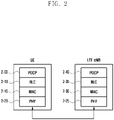
- FIG. 2 illustrates a radio protocol structure in an LTE system according to an embodiment of the disclosure.
- the radio protocol in the LTE system includes packet data convergence protocols (PDCPs) 2-05 and 2-40, radio link controls (RLCs) 2-10 and 2-35, and medium access controls (MACs) 2-15 and 2-30 in a terminal and an ENB, respectively.
- the packet data convergence protocols (PDCPs) 2-05 and 2-40 perform operations of IP header compression/recovery and the like.
- the main functions of the PDCP are summarized below:
- the radio link controls (hereinafter, referred to as "RLCs") 2-10 and 2-35 reconfigure a PDCP packet data unit (PDU) at an appropriate size to perform an ARQ operation or the like.
- RLCs The radio link controls
- PDU packet data unit
- the MACs 2-15 and 2-30 are connected to several RLC layer devices configured in one terminal, and perform an operation of multiplexing RLC PDUs into a MAC PDU and demultiplexing the RLC PDUs from the MAC PDU.
- the main functions of the MAC are summarized below:
- Physical layers 2-20 and 2-25 generate an OFDM symbol by performing channel-coding and modulating of upper-layer data, and transmit the same through a radio channel, or perform demodulating and channel-decoding of the OFDM symbol received through the radio channel, and transmit the same to an upper layer.
- FIG. 3 illustrates a structure of a next-generation mobile communication system according to an embodiment of the disclosure.
- a radio access network in the next-generation mobile communication system includes a next-generation base station (a new-radio node B, hereinafter, referred to as an "NR gNB” or an “NR base station”) 3-10 and a new-radio core network (NR CN) 3-05.
- a user equipment a new-radio user equipment, hereinafter, referred to as an "NR UE” or an “NR terminal” 3-15 accesses an external network through the NR gNB 3-10 and the NR CN 3-05.
- the NR gNB 3-10 corresponds to an evolved node B (eNB) in the conventional LTE system.
- the NR gNB 3-15 is connected to the NR UE 3-15 through a radio channel, and thus provides service superior to that of the conventional node B.
- all user traffic is serviced through shared channels, and thus a device for collecting state information, such as buffer state information of UEs, available transmission power state information of UEs, and channel state information of UEs, and performing scheduling is required, and the NR NB 3-10 serves as such a device.
- a single NR gNB generally controls multiple cells.
- a bandwidth that is equal to or higher than the conventional maximum bandwidth is applied, and a beamforming technology may be additionally combined using orthogonal frequency-division multiplexing (OFDM) as radio connection technology.
- OFDM orthogonal frequency-division multiplexing
- AMC adaptive modulation & coding
- the NR CN 3-05 performs a function such as mobility support, bearer configuration, and quality of service (QoS) configuration.
- the NR CN is a device that performs not only terminal mobility management functions but also various types of control functions, and is connected to multiple base stations.
- the next-generation mobile communication system may be linked with the conventional LTE system, and the NR CN is connected to the MME 3-25 through a network interface.
- the MME is connected to an eNB 3-30 corresponding to the conventional base station.
- FIG. 4 illustrates a radio protocol structure in a next-generation mobile communication system according to an embodiment of the disclosure.
- a terminal and an NR base station include NR service data adaptation protocols (SDAPs) 4-01 and 4-45, NR packet data convergence protocols (PDCPs) 4-05 and 4-40, NR radio link controls (RLCs) 4-10 and 4-35, and NR medium access controls (MACs) 4-15 and 4-30, respectively.
- SDAPs NR service data adaptation protocols
- PDCPs NR packet data convergence protocols
- RLCs NR radio link controls
- MACs medium access controls
- the main functions of the NR SDAPs 4-01 and 4-45 may include some of the following functions:
- the terminal may receive, through a radio resource control (RRC) message, a configuration as to whether to use a header of the SDAP-layer device or to use a function of the SDAP-layer device for each PDCP layer device, each bearer, or each logical channel.
- RRC radio resource control
- the terminal may be indicated to update or reconfigure, with a non-access stratum (NAS) reflective QoS 1-bit indicator and an access stratum (AS) reflective QoS 1-bit indicator of the SDAP header, mapping information for uplink and downlink QoS flows and a data bearer.
- the SDAP header may include QoS flow ID information indicating the QoS.
- the QoS information may be used as data-processing priority, scheduling information, or like in order to support a smooth service.
- the main functions of the NR PDCPs 4-05 and 4-40 may include some of the following functions:
- the reordering function of the NR PDCP device refers to a function of sequentially rearranging PDCP PDUs received in a lower layer, based on a PDCP sequence number (SN).
- the reordering function of the NR PDCP device may include: a function of delivering data to an upper layer in the rearranged order; a function of directly delivering data without considering an order; a function of recording lost PDCP PDUs by rearranging an order; a function of reporting a state of the lost PDCP PDUs to a transmission end; and a function of requesting retransmission of the lost PDCP PDUs.
- the main functions of the NR RLCs 4-10 and 4-35 may include some of the following functions:
- the in-sequence delivery function of the NR RLC device refers to a function of sequentially delivering RLC SDUs received from a lower layer, to an upper layer.
- the in-sequence delivery function of the NR RLC device may include a function of rearranging and delivering the same.
- the in-sequence delivery function of the NR RLC device may include: a function of rearranging the received RLC PDUs, based on an RLC sequence number (SN) or a PDCP sequence number (SN); a function of recording lost RLC PDUs by rearranging an order; a function of reporting the state of the lost RLC PDUs to a transmission end; and a function of requesting retransmission of the lost RLC PDUs.
- the in-sequence delivery function of the NR RLC device may include a function of sequentially delivering only RLC SDUs preceding the lost RLC SDU to the upper layer.
- the in-sequence delivery function of the NR RLC device may include a function of sequentially delivering, to the upper layer, all RLC SDUs received before a predetermined timer starts.
- the in-sequence delivery function of the NR RLC device may include a function of sequentially delivering, to the upper layer, all currently received RLC SDUs.
- the NR RLC device may process the RLC PDUs in the received order (in an arriving order, regardless of the order of serial numbers or sequence numbers), and may deliver the processed RLC PDUs to the PDCP device regardless of order (Out-of-sequence delivery), and when the NR RLC device receives a segment, the NR RLC device may receive segments which are stored in a buffer or are to be received later, reconfigure the segments into one complete RLC PDU, and then deliver the same to the PDCP device.
- the NR RLC layer may not include a concatenation function and may perform the function in the NR MAC layer or may replace the function with a multiplexing function of the NR MAC layer.
- the out-of-sequence delivery function of the NR RLC device refers to a function of directly delivering, to the upper layer regardless of order, the RLC SDUs received from the lower layer.
- the out-of-sequence delivery function of the NR RLC device may include a function of rearranging and delivering the divided multiple RLC SDUs.
- the out-of-sequence delivery function of the NR RLC device may include a function of storing the PDCP SN or the RLC SN of each of the received RLC PDUs, arranging the RLC PDUs, and recording the lost RLC PDUs.
- the NR MACs 4-15 and 4-30 may be connected to several NR RLC layer devices configured in one terminal, and the main functions of the NR MAC may include some of the following functions:
- NR Physical layers (NR PHYs) 4-20 and 4-25 may generate an OFDM symbol by performing channel-coding and modulating of upper-layer data, and transmit the same through a radio channel, or may perform demodulating and channel-decoding of the OFDM symbol received through the radio channel, and transmit the same to the upper layer.
- FIG. 5 illustrates a process of releasing a connection of a terminal and switching a mode from an RRC connected mode (RRC_CONNECTED) to an RRC inactive mode (RRC_INACTIVE) or an RRC idle mode (RRC_IDLE) by a base station, and then performing a cell reselection procedure by the terminal in the RRC inactive mode (RRC _INACTIVE) or the RRC idle mode (RRC_IDLE).
- RRC connected mode RRC_CONNECTED
- RRC_INACTIVE RRC inactive mode
- RRC_IDLE RRC idle mode
- a cell reselection procedure may correspond to a process of determining whether to maintain a current serving cell or perform cell reselection by selecting a neighbor cell when the service quality of the serving cell of the terminal in the RRC idle mode or the RRC inactive mode gets lower than that of the neighbor cell due to a predetermined reason or moving of the terminal.
- a terminal In a case of handover, whether to perform a handover operation is determined by a network (an MME, an access and mobility management function (AMF), a source eNB, or a source gNB).
- a network an MME, an access and mobility management function (AMF), a source eNB, or a source gNB.
- a cell selected for cell reselection as the terminal moves may mean a cell using the same NR intra-frequency as that of a currently camped-on serving cell, a cell using an NR inter-frequency that is different from that of the serving cell, or a cell using an inter-RAT frequency used in another a radio access technology (hereinafter, referred to as "RAT").
- RAT radio access technology
- a terminal 5-01 may be in an RRC-connected mode (RRC_CONNECTED) (operation 5-05).
- the terminal 5-01 in the RRC-connected mode may receive an RRC release message from a base station 5-02.
- the message may include inactive configuration information (for example, suspendConfig).
- the message may include one piece of cell reselection priority configuration information per frequency for each RAT (for example, NR EUTRA, UTRA-FDD, UTRA-TDD, etc.) and a timer value (for example, a t320 timer value) which can be commonly applied regardless of the RAT.
- RAT for example, NR EUTRA, UTRA-FDD, UTRA-TDD, etc.
- a timer value for example, a t320 timer value
- the terminal may transition to (or enter into) the RRC inactive mode (RRC_INACTIVE) or the RRC idle mode (RRC_IDLE) according to whether the RRC release message received in operation 5-10 includes the inactive configuration information. For example, when the RRC release message including the inactive configuration information has been successfully received, the terminal in the RRC-connected mode may transition to the RRC inactive mode. However, when the RRC release message not including the inactive configuration information has been successfully received, the terminal in the RRC-connected mode may transition to the RRC idle mode.
- the terminal may perform a cell selection process in the RRC idle mode or the RRC inactive mode.
- the cell selection process may mean a procedure of searching a selected public land mobile network (PLMN) or a stand-alone non-public network (SNPN) for a suitable cell and camping on the cell, and the cell which is found as a suitable cell in the RRC idle mode or the RRC inactive mode and on which the terminal has camped may be referred to as a serving cell.
- the terminal may receive system information (for example, MIB and/or SIB1) broadcasted in the cell, so as to perform the cell selection process.
- the terminal may select a cell through cell selection criteria (referred to as S criteria or Equation 1).
- Equation 1 For example, a cell satisfying Equation 1 below may be selected.
- Equation 1 may refer to 3GPP standard document TS 38.304, and the parameters may be included in the system information (for example, SIB1 and SIB2) broadcasted by the cell.
- SIB1 and SIB2 system information
- the same parameters may be used for other embodiments of the disclosure to which Equation 1 is applied.
- Srxlev may denote a cell selection reception level value (dB unit)
- Squal may denote a cell selection quality value (dB unit)
- Q rxlevmeas may denote a measured cell reception level value (RSRP)
- Q rxlevmin may denote a reception level value (dBm unit) required as minimum for a cell
- Q rxlevminoffset may denote an offset for Q rxlevmin in consideration of Srxlev evaluation
- P compensation may denote a compensation power value
- Q offsettemp may denote an offset temporarily applied to a cell
- Q qualmin may denote a quality level (dB unit) required as minimum for a cell
- Q qualminoffset may denote an offset for Q qualmin in consideration of Squal evaluation.
- the terminal may acquire (or receive) system information (SIB3, SIB4, ..., SIB8, and SIB24).
- the system information may include one piece of cell reselection priority configuration information per frequency for each RAT and a cell reselection parameter.
- SIB2 may include information (or parameter) commonly applied when the terminal in the RRC idle mode or the RRC inactive mode performs cell reselection by selecting NR intra-frequency, NR inter-frequency, and inter-RAT frequency cells.
- SIB3 may include information/parameter applied only when the terminal in the RRC idle mode or the RRC inactive mode performs cell reselection by selecting an NR intra-frequency cell.
- SIB4 may include information/parameter applied only when the terminal in the RRC idle mode or the RRC inactive mode performs cell reselection by selecting an NR inter-frequency cell.
- SIB5 may include information/parameter applied only when the terminal in the RRC idle mode or the RRC inactive mode performs cell reselection by selecting an LTE frequency (inter-RAT frequency) cell.
- the terminal may perform a cell reselection evaluation process.
- the cell reselection evaluation process may mean a series of procedures below:
- the frequency priority application scheme may be determined according to whether the RRC connection release message received by the terminal in operation 5-10 includes the cell reselection priority configuration information per frequency for each RAT and the timer value commonly applied to the RATs.
- a frequency priority may be determined according to the scheme below. The below scheme is merely provided as an example, the disclosure is not limited thereto, and the frequency priority may be determined based on various schemes.
- the terminal may perform neighbor cell measurement based on the following measurement rule by applying the frequency priority.
- the following measurement rule is merely provided as an example, the disclosure is not limited thereto, and the terminal may perform neighbor cell measurement based on various measurement rules.
- S nonIntraSrachP may denote an Srxlev threshold for the NR inter-frequency or inter-RAT frequency measurement
- S nonIntraSearchQ may denote an Squal threshold for the NR inter-frequency or inter-RAT frequency measurement.
- different cell reselection evaluation criteria may be applied depending on the frequency priority determined by the terminal.
- the terminal may apply different cell reselection criteria for the following cases.
- the disclosure is not limited to the following cases merely provided as an example, and there may be various cases in applying the cell reselection criteria.
- the terminal may perform cell reselection by prioritizing the RAT/frequency having a higher priority over the RAT/frequency having a lower priority (Cell reselection to a higher priority RAT/frequency shall take precedence over a lower priority RAT/frequency if multiple cells of different priorities fulfil the cell reselection criteria). For example, the terminal may perform cell reselection by prioritizing the first case or the fourth case caused by the first case. When the first and fourth cases caused by the first case are not satisfied, the terminal may perform cell reselection upon the third case. When the first case, the fourth case caused by the first case, and third cases are not satisfied, the terminal may perform cell reselection upon the second case or the fourth case caused by the second case.
- the terminal in the RRC idle mode or the RRC inactive mode may apply higher priority NR Inter-frequency and inter-RAT cell reselection criteria.
- the higher priority NR Inter-frequency and inter-RAT cell reselection criteria may be described as follows:
- the multiple cells may refer to multiple cells in one frequency (highest-priority frequency) having the highest priority, or in a case where there are multiple frequencies (highest-priority frequencies) having the highest priority and there are one or multiple cells for each frequency, the multiple cells may refer to multiple cells for the entire frequency, which satisfies the case above.
- the terminal may additionally derive a cell-specific ranking to perform cell reselection by selecting the highest ranked cell. That is, when the cell reselection criteria need to be applied upon the fourth case caused by the first case, cell reselection may be performed by selecting the highest ranked cell according to the following conditions.
- the terminal may perform ranking of all cells satisfying cell selection criteria (The UE shall perform ranking of all cells that fulfil the cell selection criterion S).
- the terminal may derive ranks for cells, based on an RSRP measurement value.
- the ranks of the serving cell and the neighbor cell may be obtained according to Equation 2 below.
- the serving cell rank and the neighbor cell rank may be obtained according to Equation 2 below.
- the serving cell rank may be referred to as R s
- the neighboring cell rank may be referred to as R n .
- R s Q meas , s + Q hyst ⁇ Qoffset temp
- R n Q meas , n ⁇ Qoffset ⁇ Qoffset temp
- Q meas (Q meas,s and Q meas,n ) may denote an RSRP measurement result (RSRP measurement quality) used for cell reselection.
- Q offset may be identical to Q offsets,n if Q offsets,n is valid for intra-frequency, and may be 0 if Q offsets,n is invalid.
- Q offset may be identical to Q offsets,n + Q offsetfrequency if Q offsets,n is valid for intra-frequency, and may be identical to Q offsetfrequency if Q offsets,n is invalid.
- Q offsettemp may denote an offset temporarily applied to a cell.
- the terminal in the RRC idle mode or the RRC inactive mode may apply lower priority NR Inter-frequency and inter-RAT cell reselection criteria.
- the lower priority NR Inter-frequency and inter-RAT cell reselection criteria may be described as follows.
- Inter-frequency and inter-RAT cell reselection criteria may be determined. If there are multiple cells (if cell reselection criteria need to be applied upon the fourth case caused by the second case), the terminal may additionally derive a cell-specific ranking to perform cell reselection by selecting the highest ranked cell.
- a cell-specific ranking is derived through the above-described method and cell reselection may be performed by selecting the highest ranked cell.
- the terminal may perform cell reselection by selecting a final target cell according to the above-described cell reselection evaluation process.
- MIB and SIB 1 broadcasted in the corresponding cell are received, and thus it is not indicated that the state of the corresponding cell is barred, and it is not considered that the cell is barred (cell status is "barred” is not indicated or not to be treated as if the cell status is "barred”).
- a reception level and a reception quality of the corresponding cell are newly derived based on the received SIB 1, whether the cell reselection criteria are satisfied (SrxlevX) AND Squal>0) is determined, and cell reselection can be finally performed by selecting the corresponding cell.
- FIG. 6 illustrates comparison of reception signal strengths between a case where a terminal is positioned at a cell center and a case where a terminal is positioned at a cell edge in a terrestrial network or an NTN.
- a measurement value for example, a reception level (Srxlev), a reception quality (Squal), and an absolute signal strength (reference signal received power (RSRP)
- RSRP reference signal received power
- a measurement value for example, a reception level (Srxlev), a reception quality (Squal), and an absolute signal strength (reference signal received power (RSRP)
- RSRP reference signal received power
- the disclosure proposes an ephemeris-based cell reselection procedure.
- the ephemeris-based cell reselection procedure proposed by the disclosure will be described.
- FIG. 7 illustrates a process of releasing a connection of a terminal and switching a mode of the terminal from an RRC-connected mode (RRC_CONNECTED) to an RRC inactive mode (RRC_INACTIVE) or an RRC idle mode (RRC_IDLE) by a base station, and then performing a satellite cell reselection procedure by the terminal according to an embodiment of the disclosure.
- RRC_CONNECTED an RRC-connected mode
- RRC_INACTIVE RRC inactive mode
- RRC_IDLE RRC idle mode
- An embodiment of the disclosure proposes a process of performing a satellite cell reselection procedure by a terminal in the RRC inactive mode (RRC_INACTIVE) or the RRC idle mode (RRC_IDLE) in a non-terrestrial network (hereinafter, referred to as "NTN").
- the terminal supporting the NTN and the satellite cell may have the following characteristics.
- a cell reselection procedure may be performed according to the above-described embodiment. That is, the terminal which cannot identify the location of the terminal itself may perform the cell reselection procedure according to the above-described embodiment. Unlike this, the terminal supporting the NTN operates the GNSS, the terminal may perform the cell reselection procedure by using the location of the terminal itself and the ephemeris information provided by the base station. That is, the terminal which can identify the location of the terminal itself may perform the cell reselection procedure by using the location of the terminal itself and the ephemeris information provided by the base station.
- the performing of the cell reselection procedure by suing the ephemeris information provided by the base station may be referred to as ephemeris-based cell reselection.
- a cell reselection parameter for the NTN terminal has the same purpose in that the parameter is used for cell reselection, but the cell reselection parameter for the NTN terminal may be newly introduced, and such a new cell reselection parameter may be broadcasted through system information.
- the NTN terminal may perform a cell reselection evaluation process by applying the cell reselection parameter described in the embodiment above. If the cell reselection parameter for the NTN terminal is newly introduced and is broadcasted through system information, the NTN terminal may perform the cell reselection process by applying the cell reselection parameter newly introduced for cell reselection.
- the NTN terminal may perform the cell reselection process by applying the cell reselection parameter newly introduced for cell reselection.
- a case in which a cell reselection parameter is newly introduced and the terminal performs a cell reselection procedure, based on the newly introduced cell reselection parameter is mainly described. However, the case is merely provided for convenience of description, and the disclosure is not limited thereto.
- an NTN terminal 7-01 may establish an RRC connection with an NTN gNB or a satellite cell 7-02 and may thus be in an RRC-connected mode (RRC_CONNECTED) (operation 7-05).
- RRC_CONNECTED RRC-connected mode
- the terminal 7-01 in the RRC-connected mode may receive an RRC release message (for example, RRCRelease) from the NTN gNB or the satellite cell 7-02.
- the message may store (or include) configuration information (for example, suspendConfig) for transition into an RRC inactive mode.
- the message may store one piece of cell reselection priority configuration information per frequency for each RAT (for example, NR, EUTRA, etc.) and a timer value (for example, a t320 value) commonly applicable regardless of the RAT.
- the message may include an indicator indicating whether a frequency is a frequency supporting the NTN, a predetermined cell identifier (for example, a physical cell ID) for indicating a frequency-specific satellite cell, a satellite type (low orbit satellite, a geostationary satellite, HAPS, etc.), or an indicator, an information element, etc. which can enable or disable determination on whether to perform measurement according to a distance between the terminal and a serving satellite in consideration of at least one of S IntraSearchP , S IntraSearchQ , S nonIntraSearchP , and S nonIntraSearchQ applied for a measurement rule.
- a predetermined cell identifier for example, a physical cell ID
- a satellite type low orbit satellite, a geostationary satellite, HAPS, etc.
- an indicator, an information element, etc. which can enable or disable determination on whether to perform measurement according to a distance between the terminal and a serving satellite in consideration of at least one of S IntraSearchP , S IntraSearchQ , S nonIntraSearchP , and
- the terminal 7-01 having received the RRC release message may transition to the RRC idle mode or the RRC inactive mode. If the configuration information for transition to the inactive mode is stored in the RRC release message, the terminal may apply the configuration information to transition to the RRC inactive mode. Otherwise, the terminal may transition to the RRC idle mode.
- the terminal 7-01 in the RRC idle mode or the RRC inactive mode may perform a cell selection process.
- the cell selection process may follow the above-described embodiment.
- the terminal 7-01 may acquire/receive system information (for example, SIB3, SIB4, SIB5, etc.) broadcasted by the NTN gNB or the satellite cell 7-02 to perform the cell reselection procedure.
- system information for example, SIB3, SIB4, SIB5, etc.
- the NTN gNB or the satellite cell 7-02 may broadcast the following information through the existing system information or new system information.
- the determination on whether to perform intra-frequency measurement, inter-frequency measurement, or inter-RAT frequency measurement, based on the distance between the terminal and the serving satellite may be enabled or disabled.
- the terminal 7-01 may perform ephemeris-based cell reselection evaluation process.
- the cell reselection evaluation process may mean a series of procedures below:
- the frequency priority application method may follow the above-described embodiment.
- the measurement rule may follow the above-described embodiment.
- the above-described measurement rule may be applied as a modified measurement rule in which whether to perform measurement for a neighbor (satellite) cell or a frequency to which the neighbor (satellite) cell belongs is enabled or disabled based on the distance between the terminal and a serving (satellite) cell.
- measurement for a neighbor cell may be performed only when a distance between the terminal and the serving (satellite cell) is equal to or less than a predetermined distance or is less than a predetermined distance, without determining whether to perform measurement for neighbor cells according to a measurement value of the serving (satellite) cell like in the existing rule.
- a distance threshold value for a predetermined distance reference may be provided to the terminal by the base station through system information or an RRC release message.
- the distance threshold value may mean the above-described Dserving, or may mean a separate predetermined distance threshold value.
- the terminal itself may enable or disable determination on whether to perform measurement, based the existing measurement rule according to the distance between the terminal and the serving (satellite) cell, or the base station may explicitly enable or disable the determination on whether to perform measurement according to the distance between the terminal and the serving (satellite) cell (for example, determining whether to perform measurement for a serving cell, based on a distance between the terminal and the serving (satellite) cell, may be enabled or disable through an indicator).
- the above-described measurement rule may be applied as a modified measurement rule in which whether to perform measurement for a neighbor cell or a frequency to which the neighbor cell belongs, based on a distance between the terminal and the neighbor (satellite) cell is enabled or disabled.
- the measurement for the neighbor cell or the frequency to which the neighbor cell belongs may be performed only when a distance between the terminal and the neighbor (satellite) cell is less than or equal to a predetermined distance or is less than a predetermined distance.
- the distance threshold for the predetermined distance reference may be provided to the terminal by the base station through the system information or RRC release message.
- the distance threshold value may mean the above-described Dneighbor, or may mean a separate predetermined distance threshold value.
- the terminal itself may enable or disable determination on whether to perform measurement for a neighbor cell according to the distance between the terminal and the neighbor (satellite) cell, or the base station may explicitly enable or disable the determination on whether to perform measurement for a neighbor cell according to the distance between the terminal and the neighbor (satellite) cell (for example, whether to perform measurement for a neighbor cell may be enabled or disable through an indicator).
- the cell reselection evaluation criteria may follow the above-described embodiment.
- the cell ranking may be derived through Equation 3.
- R s Q meas ,s + Q hyst ⁇ Qoffset temp + Qoffset location , serving
- R n Q meas ,n ⁇ Qoffset ⁇ Qoffset temp + Qoffset location , neighbor
- the Qoffset location, serving and Qoffset location , neighbor may be applied only when a satellite frequency is indicated, or may be also applied only for a predetermined neighbor cell indicated in the satellite frequency. That is, it may mean that the cell ranking is derived without applying the offsets to cells other than the satellite cell. In this case, for cells other than the satellite cell, the cell ranking may be derived according to Equation 2.
- the offset for example, Qoffset location, serving or Qoffset location, neighbor )
- different values may be applied according the satellite type.
- the terminal 7-01 may perform reselection by selecting the highest ranked cell.
- the terminal may also perform reselection by selecting the highest ranked cell from among cells satisfying the distance condition. If there is no cell satisfying the distance condition, the terminal may perform cell reselection by selecting a cell having the shortest distance between the terminal and the cell from among cells satisfying S criteria. Alternatively, the terminal may perform cell reselection by selecting a cell having the shorted distance between the terminal and the cell.
- the cell satisfying the distance condition may mean a cell having a distance from the terminal is less than (or equal to or less than) a predetermined distance.
- the predetermined distance may be one of the above-described distance thresholds, and may be a separately configured value.
- the terminal may perform cell reselection by selecting the highest ranked cell from among cells satisfying a distance condition between the terminal and the cell.
- An ephemeris-based cell reselection procedure may be performed in consideration of at least one of the following characteristics.
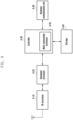
- FIG. 8 is a block diagram illustrating a structure of a terminal according to an embodiment of the disclosure.
- the terminal may include a radio frequency (RF) processor 8-10, a baseband processor 8-20, a storage 8-30, and a controller 8-40.
- RF radio frequency
- the RF processor 8-10 performs a function for transmitting or receiving a signal through a radio channel, such as signal band conversion, amplification, and the like. That is, the RF processor 8-10 up-converts a baseband signal provided from the baseband processor 8-20 to an RF-band signal and then transmits the RF-band signal through an antenna, and down-converts an RF-band signal received through an antenna into a baseband signal.
- the RF processor 8-10 may include a transmission filter, a reception filter, an amplifier, a mixer, an oscillator, a digital-to-analog converter (DAC), an analog-to-digital converter (ADC), and the like. Although only a single antenna is illustrated in FIG.
- the terminal may include multiple antennas.
- the RF processor 8-10 may include multiple RF chains.
- the RF processor 8-10 may perform beamforming. For beamforming, the RF processor 8-10 may adjust the phases and amplitudes of signals transmitted or received through multiple antennas or antenna elements.
- the RF processor may also perform MIMO and may receive multiple layers during the MIMO operation.
- the baseband processor 8-20 performs a function of conversion between a baseband signal and a bitstream according to the physical layer specifications of a system. For example, during data transmission, the baseband processor 8-20 generates complex symbols by encoding and modulating a transmission bitstream. In addition, during data reception, the baseband processor 8-20 reconstructs a received bitstream by demodulating and decoding a baseband signal provided from the RF processor 8-10.
- the baseband processor 8-20 during data transmission, the baseband processor 8-20 generates complex symbols by encoding and modulating a transmission bitstream, maps the complex symbols to subcarriers, and then configures OFDM symbols by performing inverse fast Fourier transformation (IFFT) operation and cyclic prefix (CP) insertion.
- IFFT inverse fast Fourier transformation
- CP cyclic prefix
- the baseband processor 8-20 segments a baseband signal provided from the RF processor 8-10 into units of OFDM symbols, reconstructs signals mapped to subcarriers through fast Fourier transformation (FFT), and then reconstructs a received bitstream through demodulation and decoding.
- FFT fast Fourier transformation
- the baseband processor 8-20 and the RF processor 8-10 transmit and receive signals as described above. Accordingly, each of the baseband processor 8-20 and the RF processor 8-10 may also be referred to as a transmitter, a receiver, a transceiver, or a communication unit. Furthermore, at least one of the baseband processor 8-20 and the RF processor 8-10 may include multiple communication modules to support multiple different radio-access technologies. In addition, at least one of the baseband processor 8-20 and the RF processor 8-10 may include multiple communication modules to process signals of different frequency bands.
- the different radio-access technologies may include a wireless LAN (e.g., IEEE 802.11), a cellular network (e.g., LTE), and the like.
- the different frequency bands may include a superhigh frequency (SHF) (e.g., 2.NRHz, NRHz) band and a millimeter-wave (mmWave) (e.g., 60 GHz) band.
- SHF superhigh frequency
- mmWave millimeter-wave
- the storage 8-30 stores data such as basic programs, applications, configuration information, or the like for the operation of the terminal. Specifically, the storage 8-30 may store information related to a second connection node for performing wireless communication by using a second wireless connection technology. In addition, the storage 8-30 provides the stored data upon a request from the controller 8-40.
- the controller 8-40 controls the overall operation of the terminal. For example, the controller 8-40 transmits or receives signals through the baseband processor 8-20 and the RF processor 8-10. In addition, the controller 8-40 records and reads data on or from the storage 8-40. To this end, the controller 8-40 may include at least one processor. For example, the controller 8-40 may include a communication processor (CP) for controlling communication and an application processor (AP) for controlling an upper layer such as an application.
- CP communication processor
- AP application processor
- FIG. 9 is a diagram illustrating a structure of a base station according to an embodiment of the disclosure.
- the base station includes an RF processor 9-10, a baseband processor 9-20, a backhaul communication unit 9-30, a storage 9-40, and a controller 9-50.
- the RF processor 9-10 performs a function of transmitting or receiving a signal through a radio channel, such as signal band conversion and amplification. That is, the RF processor 9-10 up-converts a baseband signal provided from the baseband processor 9-20 to an RF-band signal and then transmits the converted RF-band signal through an antenna, and down-converts an RF-band signal received through an antenna to a baseband signal.
- the RF processor 9-10 may include a transmission filter, a reception filter, an amplifier, a mixer, an oscillator, a DAC, an ADC, and the like. Although only a single antenna is illustrated in FIG. 9 , the first access node may include multiple antennas.
- the RF processor 9-10 may include multiple RF chains. Furthermore, the RF processor 9-10 may perform beamforming. For beamforming, the RF processor 9-10 may adjust phases and amplitudes of signals transmitted or received through multiple antennas or antenna elements. The RF processor 9-10 may perform a downlink MIMO operation by transmitting one or more layers.
- the baseband processor 9-20 performs conversion between a baseband signal and a bitstream according to the physical layer specifications of a first radio-access technology. For example, during data transmission, the baseband processor 9-20 generates complex symbols by encoding and modulating a transmission bitstream. In addition, during data reception, the baseband processor 9-20 reconstructs a received bitstream by demodulating and decoding a baseband signal provided from the RF processor 9-10. For example, according to an OFDM scheme, during data transmission, the baseband processor 9-20 generates complex symbols by encoding and modulating a transmission bitstream, maps the complex symbols to subcarriers, and then configures OFDM symbols by performing IFFT operation and CP insertion.
- the baseband processor 9-20 segments a baseband signal provided from the RF processor 9-10 into units of OFDM symbols, reconstructs signals mapped to subcarriers by performing FFT operation, and then reconstructs a received bitstream through demodulation and decoding.
- the baseband processor 9-20 and the RF processor 9-10 transmits and receives signals as described above. Accordingly, each of the baseband processor 9-20 and the RF processor 9-10 may also be referred to as a transmitter, a receiver, a transceiver, a communication unit, or a wireless communication unit.
- the backhaul communication unit 9-30 provides an interface for performing communication with other nodes in a network. That is, the backhaul communication unit 9-30 converts a bitstream transmitted from a primary base station to another node, for example, a secondary base station, a core network, and the like, into a physical signal, and converts a physical signal received from another node into a bitstream.
- the storage 9-40 stores data such as basic programs, applications, configuration information, or the like for the operation of the primary base station.
- the storage 9-40 may store information on a bearer allocated to a connected terminal, a measurement result reported from the connected terminal, and the like.
- the storage 9-40 may store information which serves as criteria for determining whether to provide or stop providing multi-connectivity to the terminal.
- the storage 9-40 provides the stored data upon a request from the controller 9-50.
- the controller 9-50 controls the overall operation of the base station. For example, the controller 9-50 transmits or receives a signal through the baseband processor 9-20 and the RF processor 9-10 or through the backhaul communication unit 9-30. In addition, the controller 9-50 records and reads data on or from the storage 9-40. To this end, the controller 9-50 may include at least one processor.
Landscapes
- Engineering & Computer Science (AREA)
- Computer Networks & Wireless Communication (AREA)
- Signal Processing (AREA)
- Physics & Mathematics (AREA)
- Astronomy & Astrophysics (AREA)
- General Physics & Mathematics (AREA)
- Aviation & Aerospace Engineering (AREA)
- Computer Security & Cryptography (AREA)
- Mobile Radio Communication Systems (AREA)
Applications Claiming Priority (2)
| Application Number | Priority Date | Filing Date | Title |
|---|---|---|---|
| KR20200137255 | 2020-10-22 | ||
| PCT/KR2021/014860 WO2022086244A1 (ko) | 2020-10-22 | 2021-10-21 | 위성 네트워크에서 천체력 기반 셀 재선택 과정을 수행하는 방법 및 장치 |
Publications (2)
| Publication Number | Publication Date |
|---|---|
| EP4135217A1 true EP4135217A1 (de) | 2023-02-15 |
| EP4135217A4 EP4135217A4 (de) | 2023-12-20 |
Family
ID=81290842
Family Applications (1)
| Application Number | Title | Priority Date | Filing Date |
|---|---|---|---|
| EP21883312.7A Pending EP4135217A4 (de) | 2020-10-22 | 2021-10-21 | Verfahren und vorrichtung zur durchführung einer ephemeridenbasierten zellenneuauswahl in einem satellitennetzwerk |
Country Status (6)
| Country | Link |
|---|---|
| US (1) | US20230209413A1 (de) |
| EP (1) | EP4135217A4 (de) |
| JP (1) | JP7853921B2 (de) |
| KR (1) | KR20230092825A (de) |
| CN (1) | CN115668807A (de) |
| WO (1) | WO2022086244A1 (de) |
Cited By (3)
| Publication number | Priority date | Publication date | Assignee | Title |
|---|---|---|---|---|
| WO2024170217A1 (en) * | 2023-02-16 | 2024-08-22 | Nokia Technologies Oy | Reference location propagation in ntn |
| WO2024191844A1 (en) * | 2023-03-10 | 2024-09-19 | Ofinno, Llc | Measurements in idle or inactive state |
| EP4664994A4 (de) * | 2023-03-03 | 2026-05-13 | Huawei Tech Co Ltd | Kommunikationsverfahren und zugehörige vorrichtung |
Families Citing this family (15)
| Publication number | Priority date | Publication date | Assignee | Title |
|---|---|---|---|---|
| JP7612892B2 (ja) * | 2021-03-31 | 2025-01-14 | 北京小米移動軟件有限公司 | セル再選択方法、セル再選択装置及び記憶媒体 |
| US20230292201A1 (en) * | 2022-03-08 | 2023-09-14 | Sharp Kabushiki Kaisha | Vehicle information for vehicle mounted relays |
| US12302182B2 (en) * | 2022-03-15 | 2025-05-13 | Sharp Kabushiki Kaisha | Soft cell identity change on vehicle mounted relays |
| EP4515726A1 (de) * | 2022-04-26 | 2025-03-05 | Nokia Technologies Oy | Antennenverstärkungsbasiertes handover-verfahren für ntn |
| WO2023225912A1 (en) * | 2022-05-25 | 2023-11-30 | Nec Corporation | Method, device and computer storage medium of communication |
| CN117642986A (zh) * | 2022-07-08 | 2024-03-01 | 深圳传音控股股份有限公司 | 测量方法、终端、网络设备及存储介质 |
| GB2621930B (en) * | 2022-08-10 | 2026-04-29 | Samsung Electronics Co Ltd | Enhancements for non-terrestrial network mobility |
| GB202214419D0 (en) * | 2022-09-30 | 2022-11-16 | Samsung Electronics Co Ltd | Global Navigation Satellite System Measurement in Non-Terrestrial Networks |
| GB2625289B (en) * | 2022-12-12 | 2026-01-28 | Samsung Electronics Co Ltd | Providing Neighbour Cell Information in Non-Terrestrial Network |
| WO2024168580A1 (en) * | 2023-02-15 | 2024-08-22 | Zte Corporation | Satellite assistance information of neighbor cells |
| EP4672816A1 (de) * | 2023-02-24 | 2025-12-31 | Guangdong Oppo Mobile Telecommunications Corp., Ltd. | Verfahren und vorrichtung zur drahtlosen kommunikation |
| CN118945680A (zh) * | 2023-05-12 | 2024-11-12 | 华为技术有限公司 | 通信方法和通信装置 |
| US20250038832A1 (en) * | 2023-07-26 | 2025-01-30 | Qualcomm Incorporated | Data transmission using store and forward satellites |
| CN119854846A (zh) * | 2023-10-17 | 2025-04-18 | 华为技术有限公司 | 通信方法及相关装置 |
| GB2637931A (en) * | 2024-02-06 | 2025-08-13 | Samsung Electronics Co Ltd | Method and apparatus for mobility in non-terrestrial networks |
Family Cites Families (16)
| Publication number | Priority date | Publication date | Assignee | Title |
|---|---|---|---|---|
| EP0964531A1 (de) * | 1998-06-12 | 1999-12-15 | ICO Services Ltd. | Zellselektion in einer mobilen Satelliten Anordnung mit Teilnehmer Ortsbestimmung durch Messung der Signallaufzeit und Dopplerverschiebung |
| KR100842621B1 (ko) * | 2006-08-07 | 2008-06-30 | 삼성전자주식회사 | 디지털 방송 수신 단말기의 핸드오버 장치 및 방법 |
| US8320909B2 (en) * | 2010-06-24 | 2012-11-27 | Apple Inc. | Expanded cell search and selection in a mobile wireless device |
| KR20160075570A (ko) * | 2013-12-04 | 2016-06-29 | 엘지전자 주식회사 | 셀 선택 방법 및 셀 재선택을 위한 측정 방법 |
| CN110366224B (zh) * | 2015-02-06 | 2020-08-07 | 华为技术有限公司 | 信令优化方法、设备、计算机可读存储介质和通信系统 |
| JP6608636B2 (ja) * | 2015-07-14 | 2019-11-20 | 日本電気通信システム株式会社 | 情報処理方法、情報処理装置及び情報処理プログラム |
| BR112020014362A2 (pt) * | 2018-01-19 | 2020-12-01 | Guangdong Oppo Mobile Telecommunications Corp., Ltd. | método e aparelho para nova seleção de célula, método de envio de informações de sistema e terminal |
| CN112514458B (zh) * | 2018-08-03 | 2024-09-17 | 索尼公司 | 通信装置、通信方法和通信程序 |
| CN110831100B (zh) * | 2018-08-09 | 2022-04-05 | 维沃移动通信有限公司 | 一种小区重选方法、终端及网络设备 |
| WO2020042623A1 (en) * | 2018-08-29 | 2020-03-05 | Huawei Technologies Co., Ltd. | Apparatus and method for improved data speeds for wireless devices |
| WO2020148582A1 (en) * | 2019-01-14 | 2020-07-23 | Telefonaktiebolaget Lm Ericsson (Publ) | Ue procedures for reducing rsrp/rsrq measurement in rrc idle mode and inactive state |
| CN113366908B (zh) * | 2019-01-25 | 2023-06-23 | 中兴通讯股份有限公司 | 不同地理覆盖范围的小区之间的通信 |
| CN112584451B (zh) * | 2019-09-30 | 2022-01-14 | 华为技术有限公司 | 一种适用于卫星网络的邻区关系配置方法及装置 |
| US12452738B2 (en) * | 2020-03-13 | 2025-10-21 | Telefonaktiebolaget Lm Ericsson (Publ) | Methods and devices for enabling cell selection or cell reselection procedures |
| BR112022024220A2 (pt) * | 2020-05-29 | 2022-12-20 | Beijing Xiaomi Mobile Software Co Ltd | Método, aparelho e dispositivo para resseleção de células, e, meio de armazenamento legível por computador não transitório |
| US12587922B2 (en) * | 2020-08-21 | 2026-03-24 | Qualcomm Incorporated | Measurement configuration during uplink data transfer over random access or dedicated uplink resources |
-
2021
- 2021-10-21 JP JP2022571735A patent/JP7853921B2/ja active Active
- 2021-10-21 KR KR1020227042372A patent/KR20230092825A/ko active Pending
- 2021-10-21 CN CN202180037115.6A patent/CN115668807A/zh active Pending
- 2021-10-21 WO PCT/KR2021/014860 patent/WO2022086244A1/ko not_active Ceased
- 2021-10-21 US US17/999,593 patent/US20230209413A1/en active Pending
- 2021-10-21 EP EP21883312.7A patent/EP4135217A4/de active Pending
Cited By (3)
| Publication number | Priority date | Publication date | Assignee | Title |
|---|---|---|---|---|
| WO2024170217A1 (en) * | 2023-02-16 | 2024-08-22 | Nokia Technologies Oy | Reference location propagation in ntn |
| EP4664994A4 (de) * | 2023-03-03 | 2026-05-13 | Huawei Tech Co Ltd | Kommunikationsverfahren und zugehörige vorrichtung |
| WO2024191844A1 (en) * | 2023-03-10 | 2024-09-19 | Ofinno, Llc | Measurements in idle or inactive state |
Also Published As
| Publication number | Publication date |
|---|---|
| JP2023548639A (ja) | 2023-11-20 |
| CN115668807A (zh) | 2023-01-31 |
| KR20230092825A (ko) | 2023-06-26 |
| US20230209413A1 (en) | 2023-06-29 |
| WO2022086244A1 (ko) | 2022-04-28 |
| JP7853921B2 (ja) | 2026-04-30 |
| EP4135217A4 (de) | 2023-12-20 |
Similar Documents
| Publication | Publication Date | Title |
|---|---|---|
| US20230209413A1 (en) | Method and device for performing ephemeris-based cell reselection in satellite network | |
| US12207107B2 (en) | Method for processing node failure in integrated access and backhaul system and method for transmitting redirection information therein | |
| US12101670B2 (en) | Method and apparatus for reselecting cell in wireless communication system | |
| US12177656B2 (en) | Method and apparatus for handling EN-DC cell reselection indicator in next-generation mobile communication system | |
| US11470525B2 (en) | Method and apparatus for handling cell reselection priorities for supporting V2X communication in next-generation mobile communication system | |
| US12477417B2 (en) | Method and apparatus for performing cell reselection in wireless communication system | |
| US11477681B2 (en) | Method and device for collecting and reporting cell measurement information in next generation mobile communication system | |
| KR20200050287A (ko) | 이동 통신 시스템에서 통신을 수행하는 방법 및 장치 | |
| US11917476B2 (en) | Method and apparatus for handling cell reselection priorities for supporting V2X communication in next-generation mobile communication system | |
| US20210360477A1 (en) | Method and apparatus for transmitting and receiving data in wireless communication system | |
| KR20220017755A (ko) | 차세대 이동 통신 시스템에서 슬라이스 (Slice) 기반 셀 재선택을 수행하는 방법 및 장치 | |
| US20260040206A1 (en) | Method and device for access to non-anchor network energy saving (nes) cell in next generation mobile communication system | |
| KR20200035850A (ko) | 백홀 액세스 통합 시스템에서 노드 실패 처리 방법 및 redirection 정보 전송 방법 | |
| KR20230021445A (ko) | 이동통신 시스템에서 엑세스 제어 정보를 제공하는 방법 및 장치 | |
| US20230124595A1 (en) | Method and apparatus for managing slice based cell reselection priorities in wireless communication system | |
| KR20210041491A (ko) | 차세대 이동 통신 시스템에서 음성 통화 서비스를 지원하는 방법 및 장치 | |
| KR20210125883A (ko) | 무선 통신 시스템에서 rrc 연결에 관한 정보를 관리하는 방법 및 장치 | |
| KR20230056500A (ko) | 셀 재선택 절차를 수행하는 방법 및 장치 | |
| KR20220134298A (ko) | 차세대 위성 통신 시스템에서 트래킹 영역 업데이트를 관리하는 방법 및 장치 | |
| KR20210077341A (ko) | 무선 통신 시스템에서 사설망에서 선택한 plmn의 보고 및 자동 이웃 관계를 구성하는 방법 및 장치 | |
| KR20220138298A (ko) | 무선 통신 시스템에서 슬라이싱 기반 셀 재선택을 수행하는 방법 및 장치 | |
| US11871279B2 (en) | Method and apparatus for configuring an assistance information bit for local cache bit | |
| KR20210117891A (ko) | 차세대 이동 통신 시스템에서 en-dc 셀 재선택 지시자를 핸들링 하는 방법 및 장치 |
Legal Events
| Date | Code | Title | Description |
|---|---|---|---|
| STAA | Information on the status of an ep patent application or granted ep patent |
Free format text: STATUS: THE INTERNATIONAL PUBLICATION HAS BEEN MADE |
|
| PUAI | Public reference made under article 153(3) epc to a published international application that has entered the european phase |
Free format text: ORIGINAL CODE: 0009012 |
|
| STAA | Information on the status of an ep patent application or granted ep patent |
Free format text: STATUS: REQUEST FOR EXAMINATION WAS MADE |
|
| 17P | Request for examination filed |
Effective date: 20221111 |
|
| AK | Designated contracting states |
Kind code of ref document: A1 Designated state(s): AL AT BE BG CH CY CZ DE DK EE ES FI FR GB GR HR HU IE IS IT LI LT LU LV MC MK MT NL NO PL PT RO RS SE SI SK SM TR |
|
| A4 | Supplementary search report drawn up and despatched |
Effective date: 20231120 |
|
| RIC1 | Information provided on ipc code assigned before grant |
Ipc: H04W 48/20 20090101ALI20231114BHEP Ipc: H04W 84/06 20090101ALI20231114BHEP Ipc: H04W 36/22 20090101ALI20231114BHEP Ipc: H04W 36/00 20090101ALI20231114BHEP Ipc: H04B 7/185 20060101AFI20231114BHEP |
|
| DAV | Request for validation of the european patent (deleted) | ||
| DAX | Request for extension of the european patent (deleted) | ||
| STAA | Information on the status of an ep patent application or granted ep patent |
Free format text: STATUS: EXAMINATION IS IN PROGRESS |
|
| 17Q | First examination report despatched |
Effective date: 20251114 |