EP4136091B1 - Formen und zusammensetzungen von plasmakallikreinhemmern - Google Patents
Formen und zusammensetzungen von plasmakallikreinhemmern Download PDFInfo
- Publication number
- EP4136091B1 EP4136091B1 EP21724430.0A EP21724430A EP4136091B1 EP 4136091 B1 EP4136091 B1 EP 4136091B1 EP 21724430 A EP21724430 A EP 21724430A EP 4136091 B1 EP4136091 B1 EP 4136091B1
- Authority
- EP
- European Patent Office
- Prior art keywords
- compound
- pattern
- solid form
- xrpd
- ray powder
- Prior art date
- Legal status (The legal status is an assumption and is not a legal conclusion. Google has not performed a legal analysis and makes no representation as to the accuracy of the status listed.)
- Active
Links
Images







Classifications
-
- A—HUMAN NECESSITIES
- A61—MEDICAL OR VETERINARY SCIENCE; HYGIENE
- A61P—SPECIFIC THERAPEUTIC ACTIVITY OF CHEMICAL COMPOUNDS OR MEDICINAL PREPARATIONS
- A61P9/00—Drugs for disorders of the cardiovascular system
-
- C—CHEMISTRY; METALLURGY
- C07—ORGANIC CHEMISTRY
- C07C—ACYCLIC OR CARBOCYCLIC COMPOUNDS
- C07C309/00—Sulfonic acids; Halides, esters, or anhydrides thereof
- C07C309/01—Sulfonic acids
- C07C309/02—Sulfonic acids having sulfo groups bound to acyclic carbon atoms
- C07C309/03—Sulfonic acids having sulfo groups bound to acyclic carbon atoms of an acyclic saturated carbon skeleton
- C07C309/04—Sulfonic acids having sulfo groups bound to acyclic carbon atoms of an acyclic saturated carbon skeleton containing only one sulfo group
-
- C—CHEMISTRY; METALLURGY
- C07—ORGANIC CHEMISTRY
- C07C—ACYCLIC OR CARBOCYCLIC COMPOUNDS
- C07C55/00—Saturated compounds having more than one carboxyl group bound to acyclic carbon atoms
- C07C55/02—Dicarboxylic acids
- C07C55/06—Oxalic acid
- C07C55/07—Salts thereof
-
- C—CHEMISTRY; METALLURGY
- C07—ORGANIC CHEMISTRY
- C07C—ACYCLIC OR CARBOCYCLIC COMPOUNDS
- C07C55/00—Saturated compounds having more than one carboxyl group bound to acyclic carbon atoms
- C07C55/02—Dicarboxylic acids
- C07C55/10—Succinic acid
-
- C—CHEMISTRY; METALLURGY
- C07—ORGANIC CHEMISTRY
- C07C—ACYCLIC OR CARBOCYCLIC COMPOUNDS
- C07C57/00—Unsaturated compounds having carboxyl groups bound to acyclic carbon atoms
- C07C57/02—Unsaturated compounds having carboxyl groups bound to acyclic carbon atoms with only carbon-to-carbon double bonds as unsaturation
- C07C57/13—Dicarboxylic acids
- C07C57/15—Fumaric acid
-
- C—CHEMISTRY; METALLURGY
- C07—ORGANIC CHEMISTRY
- C07C—ACYCLIC OR CARBOCYCLIC COMPOUNDS
- C07C59/00—Compounds having carboxyl groups bound to acyclic carbon atoms and containing any of the groups OH, O—metal, —CHO, keto, ether, groups, groups, or groups
- C07C59/235—Saturated compounds containing more than one carboxyl group
- C07C59/245—Saturated compounds containing more than one carboxyl group containing hydroxy or O-metal groups
-
- C—CHEMISTRY; METALLURGY
- C07—ORGANIC CHEMISTRY
- C07C—ACYCLIC OR CARBOCYCLIC COMPOUNDS
- C07C59/00—Compounds having carboxyl groups bound to acyclic carbon atoms and containing any of the groups OH, O—metal, —CHO, keto, ether, groups, groups, or groups
- C07C59/235—Saturated compounds containing more than one carboxyl group
- C07C59/245—Saturated compounds containing more than one carboxyl group containing hydroxy or O-metal groups
- C07C59/255—Tartaric acid
-
- C—CHEMISTRY; METALLURGY
- C07—ORGANIC CHEMISTRY
- C07C—ACYCLIC OR CARBOCYCLIC COMPOUNDS
- C07C69/00—Esters of carboxylic acids; Esters of carbonic or haloformic acids
- C07C69/76—Esters of carboxylic acids having a carboxyl group bound to a carbon atom of a six-membered aromatic ring
- C07C69/84—Esters of carboxylic acids having a carboxyl group bound to a carbon atom of a six-membered aromatic ring of monocyclic hydroxy carboxylic acids, the hydroxy groups and the carboxyl groups of which are bound to carbon atoms of a six-membered aromatic ring
-
- C—CHEMISTRY; METALLURGY
- C07—ORGANIC CHEMISTRY
- C07D—HETEROCYCLIC COMPOUNDS
- C07D519/00—Heterocyclic compounds containing more than one system of two or more relevant hetero rings condensed among themselves or condensed with a common carbocyclic ring system not provided for in groups C07D453/00 or C07D455/00
-
- C—CHEMISTRY; METALLURGY
- C07—ORGANIC CHEMISTRY
- C07B—GENERAL METHODS OF ORGANIC CHEMISTRY; APPARATUS THEREFOR
- C07B2200/00—Indexing scheme relating to specific properties of organic compounds
- C07B2200/13—Crystalline forms, e.g. polymorphs
Definitions
- Plasma kallikrein is a serine protease zymogen in blood that is converted to its catalytically active form by coagulation factor XIIa, and contributes to the innate inflammatory response and intrinsic cascade of blood coagulation.
- the mechanisms that lead to the activation of this pathway in vivo include interactions with polyphosphates released from activated platelets and deficiency of C1 inhibitor (C1-INH), the primary physiological inhibitor of pKal.
- C1-INH C1 inhibitor
- pKal-mediated cleavage of high-molecular weight kininogen generates the potent vasodilator and pro-inflammatory nonapeptide bradykinin (BK), which activates the bradykinin 2 receptor.
- B1 and B2 receptors are expressed by vascular, glial, and neuronal cell types, with the highest levels of retinal expression detected in the ganglion cell layer and inner and outer nuclear layers. Activation of B1 and B2 receptors causes vasodilation and increases vascular permeability.
- HAE hereditary angioedema
- pKal is also associated with a number of disorders, such as hereditary angioedema (HAE), an autosomal dominant disease characterized by painful, unpredictable, recurrent attacks of inflammation affecting the hands, feet, face, abdomen, urogenital tract, and the larynx.
- HAE hereditary angioedema
- Prevalence for HAE is uncertain but is estimated to be approximately 1 case per 50,000 persons without known differences among ethnic groups.
- HAE is caused by deficient (Type I) or dysfunctional (Type II) levels of C1-INH, which inhibits pKal, bradykinin, and other serine proteases in the blood.
- HAE hereditary angioedema
- Chemical compounds can form one or more different pharmaceutically acceptable salts and/or solid forms, including amorphous and polymorphic crystal forms. Individual salts and solid forms of bioactive chemical compounds can have different properties. There is a need for the identification and selection of appropriate salts and/or solid forms of bioactive chemical compounds (including appropriate crystalline forms, where applicable) for the development of pharmaceutically acceptable dosage forms for the treatment of various diseases or conditions associated with pKal.
- salt forms or free base forms, and pharmaceutically acceptable compositions thereof are useful for treating or lessening the severity of a variety of diseases or disorders as described in detail herein.
- Compound 1 which is a free base, is one of many compounds identified as a small molecule inhibitor of pKal in the '129 publication.
- Compound 1 is identified as compound I-148 and its synthesis is described in detail at Example 148, which is reproduced herein for ease of reference.
- Compound 1 has shown potency against plasma kallikrein in an in vitro assay (See, e.g., Table 1 of the '129 publication). For example, the '129 publication reports that Compound 1 has an EC 50 ⁇ 1 nM as measured in an in vitro kallikrein kinase assay. Accordingly, Compound 1 is useful for treating one or more disorders associated with activity of pKal.
- the present disclosure provides various free base solid forms of Compound 1, salt forms of Compound 1 and solid forms thereof, pharmaceutical compositions thereof, and methods of preparing solid forms of Compound 1 and salts and solid forms thereof.
- Salt forms and solid forms e.g., crystalline solid forms
- salt refers to a salt or co-crystal of two or more (e.g., two) component molecules (e.g., Compound 1 and a co-former).
- a ⁇ pK a (pK a (base)- pK a- (acid)) ⁇ 1 generally will permit the formation of a salt compound where the two compounds are ionized. Where this threshold is not met, non-ionic interactions (e.g., hydrogen bonds) can still occur between neutral acid and the base compounds to form, e.g., a co-crystal.
- a provided solid form is a salt. In other embodiments, a provided solid form is a co-crystal.
- Compound 1 can exist in a variety of physical forms.
- Compound 1 can be in solution, suspension, or in solid form.
- Compound 1 may be in solid form.
- said compound may be amorphous, crystalline, or a mixture thereof. Exemplary solid forms are described in more detail below.
- a form of Compound 1 may be substantially free of impurities.
- the term "substantially free of impurities” means that the compound contains no significant amount of extraneous matter. Such extraneous matter may include different forms of Compound 1, residual solvents, or any other impurities that may result from the preparation of, and/or isolation of, Compound 1.
- extraneous matter may include different forms of Compound 1, residual solvents, or any other impurities that may result from the preparation of, and/or isolation of, Compound 1.
- at least about 95% by weight of a form of Compound 1 is present.
- at least about 99% by weight of a form of Compound 1 is present.
- a form of Compound 1 may be present in an amount of at least about 97.0, 97.5, 98.0, 98.5, 99.0, 99.5, or 99.8 weight percent where the percentages are based on the total weight of the composition.
- form of compound 1 may contain no more than about 3.0 area percent HPLC of total organic impurities and, in certain aspects, no more than about 1.5 area percent HPLC total organic impurities relative to the total area of the HPLC chromatogram.
- a form of Compound 1 may contain no more than about 1.0 area percent HPLC of any single impurity; no more than about 0.6 area percent HPLC of any single impurity, and, in certain aspects, no more than about 0.5 area percent HPLC of any single impurity, relative to the total area of the HPLC chromatogram.
- the structure depicted for a form of Compound 1 is also meant to include all tautomeric forms of Compound 1. Additionally, structures depicted here are also meant to include compounds that differ only in the presence of one or more isotopically enriched atoms. For example, compounds having the present structure except for the replacement of hydrogen by deuterium or tritium, or the replacement of a carbon by a 13 C- or 14 C-enriched carbon are included.
- Compound 1 can exist in a variety of solid forms. Exemplary such forms include polymorphs such as those described herein.
- Compound 1 may be amorphous.
- Compound 1 may be amorphous, and substantially free of crystalline compound 1.
- polymorph refers to the different crystal structures into which a compound, or a salt or co-crystal or solvate thereof, can crystallize.
- Compound 1 may be a crystalline solid.
- Compound 1 may be a crystalline solid substantially free of amorphous Compound 1.
- substantially free of amorphous Compound 1 means that the compound contains no significant amount of amorphous Compound 1. At least about 95% by weight of crystalline Compound 1 may be present. At least about 99% by weight of crystalline Compound 1 may be present.
- Compound 1 can exist in at least three distinct polymorphic forms. Described herein are a polymorphic form of Compound 1 referred to herein as Form 1, a polymorphic form of Compound 1 referred to herein as Form 2, and a polymorphic form of Compound 1 referred to herein as Form 3.
- Compound 1 may be in a polymorphic form substantially free of other polymorphic forms.
- Compound 1 may be in Form 1, substantially free from other free base forms of Compound 1.
- Compound 1 may be in Form 2, substantially free from other free base forms of Compound 1.
- Compound 1 may be in Form 3, substantially free from other free base forms of Compound 1.
- Compound 1 may be an anhydrate. Compound 1 may be a hydrate.
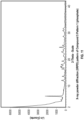
- Compound 1 Form 1 may have at least 1, 2, 3, 4 or 5 X-ray Powder Diffraction (XRPD) peaks selected from the angles (2 theta ⁇ 0.2) listed in Table 1 below. Table 1. XRPD Peak Positions for Compound 1 Form 1 Angle / ° 2 ⁇ Angle / ° 2 ⁇ Angle / ° 2 ⁇ 6.1 17.0 24.5 6.7 18.0 25.3 8.5 19.4 26.6 10.9 20.4 27.4 11.8 21.6 28.0 12.1 21.9 28.7 13.6 22.6 29.6 15.0 23.5 16.4 23.8
- Compound 1 Form 1 may be characterized by an X-ray powder diffraction (XRPD) pattern having diffractions at angles (2 theta ⁇ 0.2) and corresponding d-spacing (angstroms ⁇ 0.2) of: Table 2.
- XRPD X-ray powder diffraction
- Compound 1 Form 1 may be characterized in that it has one or more peaks in its X-ray powder diffraction pattern selected from those at about 11.8, 15.0, 17.0, 18.0, 19.4, and 23.5.
- Compound 1 Form 1 may be characterized in that it has two or more peaks in its X-ray powder diffraction pattern selected from those at about 11.8, 15.0, 17.0, 18.0, 19.4, and 23.5.
- Compound 1 Form 1 may be characterized in that it has three or more peaks in its X-ray powder diffraction pattern selected from those at about 11.8, 15.0, 17.0, 18.0, 19.4, and 23.5.
- Compound 1 Form 1 may be characterized in that it has four or more peaks in its X-ray powder diffraction pattern selected from those at about 11.8, 15.0, 17.0, 18.0, 19.4, and 23.5. Compound 1 Form 1 may be characterized in that it has five or more peaks in its X-ray powder diffraction pattern selected from those at about 11.8, 15.0, 17.0, 18.0, 19.4, and 23.5. Compound 1 Form 1 may be characterized in that it has all six peaks in its X-ray powder diffraction pattern selected from those at about 11.8, 15.0, 17.0, 18.0, 19.4, and 23.5.
- Compound 1 Form 1 may be characterized in that it has all six peaks in its X-ray powder diffraction pattern selected from those at about 11.8, 15.0, 17.0, 18.0, 19.4, and 23.5, corresponding to d-spacing (angstroms ⁇ 0.2) of 7.52, 5.92, 5.20, 4.93, 4.58, and 3.79 (respectively).
- d-spacing angstroms ⁇ 0.2
- the term "about”, when used in reference to a degree 2-theta value refers to the stated value ⁇ 0.2 degree 2-theta.
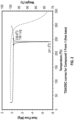
- the X-ray powder diffraction pattern of Compound 1 Form 1 may be substantially similar to the XRPD provided in Figure 1 .
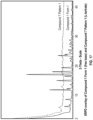
- Compound 1 Form 2 may have at least 1, 2, 3, 4 or 5 X-ray Powder Diffraction (XRPD) peaks selected from the angles (2 theta ⁇ 0.2) listed in Table 3 below. Table 3. XRPD Peak Positions for Compound 1 Form 2 Angle / ° 2 ⁇ Angle / ° 2 ⁇ 6.1 19.8 8.0 20.8 8.9 22.6 11.8 23.6 13.0 24.3 14.9 24.8 16.3 25.6 17.0 28.6 17.8 29.6 19.3 30.7
- Compound 1 Form 2 may be characterized by an X-ray powder diffraction (XRPD) pattern having diffractions at angles (2 theta ⁇ 0.2) and corresponding d-spacing (angstroms ⁇ 0.2) of: Table 4.
- XRPD X-ray powder diffraction
- Compound 1 Form 2 may be characterized in that it has one or more peaks in its X-ray powder diffraction pattern selected from those at about 6.1, 8.0, 13.0, 17.0, 17.8, and 25.6.
- Compound 1 Form 2 may be characterized in that it has two or more peaks in its X-ray powder diffraction pattern selected from those at about 6.1, 8.0, 13.0, 17.0, 17.8, and 25.6.
- Compound 1 Form 2 may be characterized in that it has three or more peaks in its X-ray powder diffraction pattern selected from those at about 6.1, 8.0, 13.0, 17.0, 17.8, and 25.6.
- Compound 1 Form 2 may be characterized in that it has four or more peaks in its X-ray powder diffraction pattern selected from those at about 6.1, 8.0, 13.0, 17.0, 17.8, and 25.6.
- Compound 1 Form 2 may be characterized in that it has five or more peaks in its X-ray powder diffraction pattern selected from those at about 6.1, 8.0, 13.0, 17.0, 17.8, and 25.6.
- Compound 1 Form 2 may be characterized in that it has all six peaks in its X-ray powder diffraction pattern selected from those at about 6.1, 8.0, 13.0, 17.0, 17.8, and 25.6.
- Compound 1 Form 2 may be characterized in that it has all six peaks in its X-ray powder diffraction pattern selected from those at about 6.1, 8.0, 13.0, 17.0, 17.8, and 25.6, corresponding to d-spacing (angstroms ⁇ 0.2) of 14.52, 11.04, 6.81, 5.20, 4.98, and 3.48 (respectively).
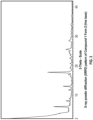
- the X-ray powder diffraction pattern of Compound 1 Form 2 may be substantially similar to the XRPD provided in Figure 3 .
- Compound 1 Form 3 may have at least 1, 2, 3, 4 or 5 X-ray Powder Diffraction (XRPD) peaks selected from the angles (2 theta ⁇ 0.2) listed in Table 5 below. Table 5. XRPD Peak Positions for Compound 1 Form 3 Angle / ° 2 ⁇ Angle / ° 2 ⁇ 5.8 20.8 8.3 21.8 12.7 22.4 13.8 23.5 14.3 24.1 16.9 25.3 17.5 27.3 17.9 28.0 18.4 29.1 19.3 23.9
- XRPD X-ray Powder Diffraction
- Compound 1 Form 3 may be characterized by an X-ray powder diffraction (XRPD) pattern having diffractions at angles (2 theta ⁇ 0.2) and corresponding d-spacing (angstroms ⁇ 0.2) of: Table 6.
- XRPD X-ray powder diffraction
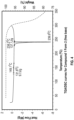
- the X-ray powder diffraction pattern of Compound 1 Form 3 may be substantially similar to the XRPD provided in Figure 5 .
- Compound 1 and a co-former may be combined to provide a species where Compound 1 and the co-former are, e.g., ionically bonded or are hydrogen bonded to form one of Compounds 2 through 11, described below.
- Compounds 2 through 11 can exist in a variety of physical forms.
- Compounds 2 through 11 can be in solution, suspension, or in solid form.
- Compounds 2 through 11 may be in solid form. When Compounds 2 through 11 are in solid form, said compounds may be amorphous, crystalline, or a mixture thereof. Exemplary solid forms of Compounds 2 through 11 are described in more detail below.
- Compound 2 comprising Compound 1 and hydrochloric acid:
- the solid form of Compound 2 may have a stoichiometry of (Compound 1 ):(hydrochloric acid) that is about 1:1.
- the solid form of Compound 2 may have a stoichiometry of (Compound 1 ):(hydrochloric acid) that is about 1:2.
- Compound 1 is in contact with one or two equivalents of HCl in various solvents, the resulting Compound 2 can exist in at least thirteen distinct polymorphic forms.
- the present invention provides a chemical species Compound 3 comprising Compound 1 and L-malic acid:
- Compound 3 can exist in a variety of physical forms.
- Compound 3 can be in solution, suspension, or in solid form.
- Compound 3 is in solid form.
- said compound may be amorphous, crystalline, or a mixture thereof. Exemplary solid forms are described in more detail below.
- the solid form of Compound 3 has a stoichiometry of (Compound 1 ):(L-malic acid) that is about 1:1.
- the present invention provides Compound 3 substantially free of impurities.
- substantially free of impurities means that the compound contains no significant amount of extraneous matter. Such extraneous matter may include excess L-malic acid, excess Compound 1, residual solvents, or any other impurities that may result from the preparation of, and/or isolation of, Compound 3.
- extraneous matter may include excess L-malic acid, excess Compound 1, residual solvents, or any other impurities that may result from the preparation of, and/or isolation of, Compound 3.
- at least about 95% by weight of Compound 3 is present.
- at least about 99% by weight of Compound 3 is present.
- Compound 3 is present in an amount of at least about 97.0, 97.5, 98.0, 98.5, 99.0, 99.5, or 99.8 weight percent where the percentages are based on the total weight of the composition. According to another embodiment, Compound 3 contains no more than about 3.0 area percent HPLC of total organic impurities and, in certain embodiments, no more than about 1.5 area percent HPLC total organic impurities relative to the total area of the HPLC chromatogram.
- Compound 3 contains no more than about 1.0 area percent HPLC of any single impurity; no more than about 0.6 area percent HPLC of any single impurity, and, in certain embodiments, no more than about 0.5 area percent HPLC of any single impurity, relative to the total area of the HPLC chromatogram.
- the structure depicted for Compound 3 is also meant to include all tautomeric forms of Compound 3. Additionally, structures depicted here are also meant to include compounds that differ only in the presence of one or more isotopically enriched atoms. For example, compounds having the present structure except for the replacement of hydrogen by deuterium or tritium, or the replacement of a carbon by a 13 C- or 14 C-enriched carbon are within the scope of this invention.
- Compound 3 can exist in a variety of solid forms. Exemplary such forms include polymorphs such as those described herein.
- Compound 3 is amorphous. In some embodiments, Compound 3 is amorphous, and is substantially free of crystalline Compound 3.
- Compound 3 is a crystalline solid. In other embodiments, Compound 3 is a crystalline solid substantially free of amorphous Compound 3. As used herein, the term "substantially free of amorphous Compound 3" means that the compound contains no significant amount of amorphous Compound 3. In certain embodiments, at least about 95% by weight of crystalline Compound 3 is present. In still other embodiments of the invention, at least about 99% by weight of crystalline Compound 3 is present.
- Compound 3 can exist in at least one polymorphic form.
- the present invention provides a polymorphic form of Compound 3 referred to herein as Pattern 1.
- Compound 3 Pattern 1 has at least 1, 2, 3, 4 or 5 X-ray Powder Diffraction (XRPD) peaks selected from the angles (2 theta ⁇ 0.2) listed in Table 7 below. Table 7. XRPD Peak Positions for Compound 3 Pattern 1 Angle / ° 2 ⁇ Angle / ° 2 ⁇ Angle / ° 2 ⁇ 6.2 18.0 25.3 10.1 18.5 26.1 10.9 19.3 26.4 11.3 20.0 26.7 12.3 20.4 27.4 12.7 20.8 27.9 13.9 21.2 28.6 15.0 22.4 29.7 16.5 23.5 30.2 17.3 23.7 30.9
- Compound 3 Pattern 1 is characterized by an X-ray powder diffraction (XRPD) pattern having diffractions at angles (2 theta ⁇ 0.2) and corresponding d-spacing (angstroms ⁇ 0.2) of: Table 8.
- XRPD X-ray powder diffraction
- Compound 3 Pattern 1 is characterized in that it has one or more peaks in its X-ray powder diffraction pattern selected from those at about 6.2, 12.7, 17.3, 20.4, 25.3, and 26.4. In some embodiments, Compound 3 Pattern 1 is characterized in that it has two or more peaks in its X-ray powder diffraction pattern selected from those at about 6.2, 12.7, 17.3, 20.4, 25.3, and 26.4. In some embodiments, Compound 3 Pattern 1 is characterized in that it has three or more peaks in its X-ray powder diffraction pattern selected from those at about 6.2, 12.7, 17.3, 20.4, 25.3, and 26.4.
- Compound 3 Pattern 1 is characterized in that it has four or more peaks in its X-ray powder diffraction pattern selected from those at about 6.2, 12.7, 17.3, 20.4, 25.3, and 26.4. In some embodiments, Compound 3 Pattern 1 is characterized in that it has five or more peaks in its X-ray powder diffraction pattern selected from those at about 6.2, 12.7, 17.3, 20.4, 25.3, and 26.4. In some embodiments, Compound 3 Pattern 1 is characterized in that it has all six peaks in its X-ray powder diffraction pattern selected from those at about 6.2, 12.7, 17.3, 20.4, 25.3, and 26.4.
- Compound 3 Pattern 1 is characterized in that it has all six peaks in its X-ray powder diffraction pattern selected from those at about 6.2, 12.7, 17.3, 20.4, 25.3, and 26.4, corresponding to d-spacing (angstroms ⁇ 0.2) of 14.32, 6.97, 5.13, 4.34, 3.52, and 3.37 (respectively).
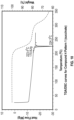
- the X-ray powder diffraction pattern of Compound 3 Pattern 1 is substantially similar to the XRPD provided in Figure 7 .
- the present invention provides a chemical species Compound 4 comprising Compound 1 and succinic acid:
- the solid form of Compound 4 has a stoichiometry of (Compound 1 ):(succinic acid) that is about 1:1.
- the term "about”, when used in reference to a stoichiometric ratio refers to 1:(1 ⁇ 0.2) ratio of (Compound 1 ):(co-former, e.g., an acid), e.g., a 1:(1 ⁇ 0.2) ratio, a 1:(1 ⁇ 0.1) ratio, or a 1:(1 ⁇ 0.05) ratio.
- the present invention provides Compound 4 substantially free of impurities.
- substantially free of impurities means that the compound contains no significant amount of extraneous matter. Such extraneous matter may include excess succinic acid, excess Compound 1, residual solvents, or any other impurities that may result from the preparation of, and/or isolation of, Compound 4.
- at least about 95% by weight of Compound 4 is present. In still other embodiments of the invention, at least about 99% by weight of Compound 4 is present.
- Compound 4 contains no more than about 1.0 area percent HPLC of any single impurity; no more than about 0.6 area percent HPLC of any single impurity, and, in certain embodiments, no more than about 0.5 area percent HPLC of any single impurity, relative to the total area of the HPLC chromatogram.
- the structure depicted for Compound 4 is also meant to include all tautomeric forms of Compound 4. Additionally, structures depicted here are also meant to include compounds that differ only in the presence of one or more isotopically enriched atoms. For example, compounds having the present structure except for the replacement of hydrogen by deuterium or tritium, or the replacement of a carbon by a 13 C- or 14 C-enriched carbon are within the scope of this invention.
- Compound 4 can exist in a variety of solid forms. Exemplary such forms include polymorphs such as those described herein.
- Compound 4 is amorphous. In some embodiments, Compound 4 is amorphous, and is substantially free of crystalline Compound 4.
- Compound 4 is a crystalline solid. In other embodiments, Compound 4 is a crystalline solid substantially free of amorphous Compound 4. As used herein, the term "substantially free of amorphous Compound 4 " means that the compound contains no significant amount of amorphous Compound 4. In certain embodiments, at least about 95% by weight of crystalline Compound 4 is present. In still other embodiments of the invention, at least about 99% by weight of crystalline Compound 4 is present.
- Compound 4 can exist in at least one polymorphic form.
- the present invention provides a polymorphic form of Compound 4 referred to herein as Pattern 1.
- Compound 4 Pattern 1 has at least 1, 2, 3, 4 or 5 X-ray Powder Diffraction (XRPD) peaks selected from the angles (2 theta ⁇ 0.2) listed in Table 9 below. Table 9. XRPD Peak Positions for Compound 4 Pattern 1 Angle / ° 2 ⁇ Angle / ° 2 ⁇ Angle / ° 2 ⁇ 6.2 18.5 26.5 7.9 19.3 26.8 10.2 20.4 27.4 10.9 20.9 27.9 11.2 21.8 28.4 11.5 23.0 28.7 12.7 23.8 29.8 16.5 24.6 31.0 17.3 25.4 18.1 26.2
- Compound 4 Pattern 1 is characterized by an X-ray powder diffraction (XRPD) pattern having diffractions at angles (2 theta ⁇ 0.2) and corresponding d-spacing (angstroms ⁇ 0.2) of: Table 10.
- XRPD X-ray powder diffraction
- Compound 4 Pattern 1 is characterized in that it has one or more peaks in its X-ray powder diffraction pattern selected from those at about 6.2, 10.2, 12.7, 17.3, 20.4, and 23.8. In some embodiments, Compound 4 Pattern 1 is characterized in that it has two or more peaks in its X-ray powder diffraction pattern selected from those at about 6.2, 10.2, 12.7, 17.3, 20.4, and 23.8. In some embodiments, Compound 4 Pattern 1 is characterized in that it has three or more peaks in its X-ray powder diffraction pattern selected from those at about 6.2, 10.2, 12.7, 17.3, 20.4, and 23.8.
- Compound 4 Pattern 1 is characterized in that it has four or more peaks in its X-ray powder diffraction pattern selected from those at about 6.2, 10.2, 12.7, 17.3, 20.4, and 23.8. In some embodiments, Compound 4 Pattern 1 is characterized in that it has five or more peaks in its X-ray powder diffraction pattern selected from those at about 6.2, 10.2, 12.7, 17.3, 20.4, and 23.8. In some embodiments, Compound 4 Pattern 1 is characterized in that it has all six peaks in its X-ray powder diffraction pattern selected from those at about 6.2, 10.2, 12.7, 17.3, 20.4, and 23.8.
- Compound 4 Pattern 1 is characterized in that it has all six peaks in its X-ray powder diffraction pattern selected from those at about 6.2, 10.2, 12.7, 17.3, 20.4, and 23.8, corresponding to d-spacing (angstroms ⁇ 0.2) of 14.26, 8.64, 6.95, 5.12, 4.35, and 3.73 (respectively).
- the X-ray powder diffraction pattern of Compound 4 Pattern is substantially similar to the XRPD provided in Figure 9 .
- the present invention provides a chemical species Compound 5 comprising Compound 1 and phosphoric acid:
- the solid form of Compound 5 has a stoichiometry of (Compound 1 ):(phosphoric acid) that is about 1:1.
- the present invention provides Compound 5 substantially free of impurities.
- substantially free of impurities means that the compound contains no significant amount of extraneous matter. Such extraneous matter may include excess L-malic acid, excess Compound 1, residual solvents, or any other impurities that may result from the preparation of, and/or isolation of, Compound 5.
- extraneous matter may include excess L-malic acid, excess Compound 1, residual solvents, or any other impurities that may result from the preparation of, and/or isolation of, Compound 5.
- at least about 95% by weight of Compound 5 is present.
- at least about 99% by weight of Compound 5 is present.
- Compound 5 is present in an amount of at least about 97.0, 97.5, 98.0, 98.5, 99.0, 99.5, or 99.8 weight percent where the percentages are based on the total weight of the composition.
- Compound 5 contains no more than about 3.0 area percent HPLC of total organic impurities and, in certain embodiments, no more than about 1.5 area percent HPLC total organic impurities relative to the total area of the HPLC chromatogram.
- Compound 5 contains no more than about 1.0% area percent HPLC of any single impurity; no more than about 0.6 area percent HPLC of any single impurity, and, in certain embodiments, no more than about 0.5 area percent HPLC of any single impurity, relative to the total area of the HPLC chromatogram.
- the structure depicted for Compound 5 is also meant to include all tautomeric forms of Compound 5. Additionally, structures depicted here are also meant to include compounds that differ only in the presence of one or more isotopically enriched atoms. For example, compounds having the present structure except for the replacement of hydrogen by deuterium or tritium, or the replacement of a carbon by a 13 C- or 14 C-enriched carbon are within the scope of this invention.
- Compound 5 can exist in a variety of solid forms. Exemplary such forms include polymorphs such as those described herein.
- Compound 5 is amorphous. In some embodiments, Compound 5 is amorphous, and is substantially free of crystalline Compound 5.
- Compound 5 is a crystalline solid. In other embodiments, Compound 5 is a crystalline solid substantially free of amorphous Compound 5. As used herein, the term "substantially free of amorphous Compound 5 " means that the compound contains no significant amount of amorphous Compound 5. In certain embodiments, at least about 95% by weight of crystalline Compound 5 is present. In still other embodiments of the invention, at least about 99% by weight of crystalline Compound 5 is present.
- Compound 5 can exist in at least one polymorphic form.
- the present invention provides a polymorphic form of Compound 5 referred to herein as Pattern 1.
- Compound 5 Pattern 1 has at least 1, 2, 3, 4 or 5 X-ray Powder Diffraction (XRPD) peaks selected from the angles (2 theta ⁇ 0.2) listed in Table 11 below. Table 11. XRPD Peak Positions for Compound 5 Pattern 1 Angle / ° 2 ⁇ Angle / ° 2 ⁇ 4.7 19.4 6.1 21.4 12.1 22.8 13.6 23.6 14.2 24.6 15.0 25.3 16.4 27.4 17.0 28.7 17.4 30.9 18.1 31.6
- Compound 5 Pattern 1 is characterized by an X-ray powder diffraction (XRPD) pattern having diffractions at angles (2 theta ⁇ 0.2) and corresponding d-spacing (angstroms ⁇ 0.2) of: Table 12.
- XRPD X-ray powder diffraction
- Compound 5 Pattern 1 is characterized in that it has one or more peaks in its X-ray powder diffraction pattern selected from those at about 4.7, 6.1, 17.0, 17.4, 18.1, and 24.6. In some embodiments, Compound 5 Pattern 1 is characterized in that it has two or more peaks in its X-ray powder diffraction pattern selected from those at about 4.7, 6.1, 17.0, 17.4, 18.1, and 24.6. In some embodiments, Compound 5 Pattern 1 is characterized in that it has three or more peaks in its X-ray powder diffraction pattern selected from those at about 4.7, 6.1, 17.0, 17.4, 18.1, and 24.6.
- Compound 5 Pattern 1 is characterized in that it has four or more peaks in its X-ray powder diffraction pattern selected from those at about 4.7, 6.1, 17.0, 17.4, 18.1, and 24.6. In some embodiments, Compound 5 Pattern 1 is characterized in that it has five or more peaks in its X-ray powder diffraction pattern selected from those at about 4.7, 6.1, 17.0, 17.4, 18.1, and 24.6. In some embodiments, Compound 5 Pattern 1 is characterized in that it has all six peaks in its X-ray powder diffraction pattern selected from those at about 4.7, 6.1, 17.0, 17.4, 18.1, and 24.6.
- Compound 5 Pattern 1 is characterized in that it has all six peaks in its X-ray powder diffraction pattern selected from those at about 4.7, 6.1, 17.0, 17.4, 18.1, and 24.6, corresponding to d-spacing (angstroms ⁇ 0.2) of 18.68, 14.45, 5.20, 5.10, 4.91, and 3.62 (respectively). .
- the X-ray powder diffraction pattern of Compound 5 Pattern 1 is substantially similar to the XRPD provided in Figure 11 .
- the present invention provides a chemical species Compound 6 comprising Compound 1 and oxalic acid:
- the solid form of Compound 6 has a stoichiometry of (Compound 1 ):(oxalic acid) that is about 1:1.
- the present invention provides Compound 6 substantially free of impurities.
- the term "substantially free of impurities” means that the compound contains no significant amount of extraneous matter. Such extraneous matter may include excess oxalic acid, excess Compound 1, residual solvents, or any other impurities that may result from the preparation of, and/or isolation of, Compound 6.
- extraneous matter may include excess oxalic acid, excess Compound 1, residual solvents, or any other impurities that may result from the preparation of, and/or isolation of, Compound 6.
- at least about 95% by weight of Compound 6 is present.
- at least about 99% by weight of Compound 6 is present.
- Compound 6 is present in an amount of at least about 97.0, 97.5, 98.0, 98.5, 99.0, 99.5, or 99.8 weight percent where the percentages are based on the total weight of the composition. According to another embodiment, Compound 6 contains no more than about 3.0 area percent HPLC of total organic impurities and, in certain embodiments, no more than about 1.5 area percent HPLC total organic impurities relative to the total area of the HPLC chromatogram.
- Compound 6 contains no more than about 1.0 area percent HPLC of any single impurity; no more than about 0.6 area percent HPLC of any single impurity, and, in certain embodiments, no more than about 0.5 area percent HPLC of any single impurity, relative to the total area of the HPLC chromatogram.
- the structure depicted for Compound 6 is also meant to include all tautomeric forms of Compound 6. Additionally, structures depicted here are also meant to include compounds that differ only in the presence of one or more isotopically enriched atoms. For example, compounds having the present structure except for the replacement of hydrogen by deuterium or tritium, or the replacement of a carbon by a 13 C- or 14 C-enriched carbon are within the scope of this invention.
- Compound 6 can exist in a variety of solid forms. Exemplary such forms include polymorphs such as those described herein.
- Compound 6 is amorphous. In some embodiments, Compound 4 is amorphous, and is substantially free of crystalline Compound 6.
- Compound 6 is a crystalline solid. In other embodiments, Compound 6 is a crystalline solid substantially free of amorphous Compound 6. As used herein, the term "substantially free of amorphous Compound 6 " means that the compound contains no significant amount of amorphous Compound 6. In certain embodiments, at least about 95% by weight of crystalline Compound 6 is present. In still other embodiments of the invention, at least about 99% by weight of crystalline Compound 6 is present.
- Compound 6 can exist in at least two polymorphic forms.
- the present invention provides a polymorphic form of Compound 6 referred to herein as Pattern 1.
- the present invention provides a polymorphic form of Compound 6 referred to herein as Pattern 4.
- Compound 6 Pattern 1 has at least 1, 2, 3, 4 or 5 X-ray Powder Diffraction (XRPD) peaks selected from the angles (2 theta ⁇ 0.2) listed in Table 13 below. Table 13. XRPD Peak Positions for Compound 6 Pattern 1 Angle / ° 2 ⁇ Angle / ° 2 ⁇ Angle / ° 2 ⁇ 4.7 15.9 24.0 6.1 16.4 24.2 7.1 16.7 24.6 8.4 17.0 25.3 9.3 17.3 26.1 11.9 18.7 27.3 13.6 19.7 27.9 14.0 20.3 28.7 14.9 21.7 29.8 15.4 22.0 30.9
- Compound 6 Pattern 1 is characterized by an X-ray powder diffraction (XRPD) pattern having diffractions at angles (2 theta ⁇ 0.2) and corresponding d-spacing (angstroms ⁇ 0.2) of: Table 14.
- XRPD X-ray powder diffraction
- Compound 6 Pattern 1 is characterized in that it has one or more peaks in its X-ray powder diffraction pattern selected from those at about 4.7, 6.1, 18.7, 24.0, 24.2, and 24.6. In some embodiments, Compound 6 Pattern 1 is characterized in that it has two or more peaks in its X-ray powder diffraction pattern selected from those at about 4.7, 6.1, 18.7, 24.0, 24.2, and 24.6. In some embodiments, Compound 6 Pattern 1 is characterized in that it has three or more peaks in its X-ray powder diffraction pattern selected from those at about 4.7, 6.1, 18.7, 24.0, 24.2, and 24.6.
- Compound 6 Pattern 1 is characterized in that it has four or more peaks in its X-ray powder diffraction pattern selected from those at about 4.7, 6.1, 18.7, 24.0, 24.2, and 24.6. In some embodiments, Compound 6 Pattern 1 is characterized in that it has five or more peaks in its X-ray powder diffraction pattern selected from those at about 4.7, 6.1, 18.7, 24.0, 24.2, and 24.6. In some embodiments, Compound 6 Pattern 1 is characterized in that it has all six peaks in its X-ray powder diffraction pattern selected from those at about 4.7, 6.1, 18.7, 24.0, 24.2, and 24.6.
- Compound 6 Pattern 1 is characterized in that it has all six peaks in its X-ray powder diffraction pattern selected from those at about 4.7, 6.1, 18.7, 24.0, 24.2, and 24.6, corresponding to d-spacing (angstroms ⁇ 0.2) of 18.88, 14.36, 4.73, 3.71, 3.67, and 3.62 (respectively).
- the X-ray powder diffraction pattern of Compound 6 Pattern 1 is substantially similar to the XRPD provided in Figure 13 .
- Compound 6 Pattern 4 has at least 1, 2, 3, 4 or 5 X-ray Powder Diffraction (XRPD) peaks selected from the angles (2 theta ⁇ 0.2) listed in Table 15 below. Table 15. XRPD Peak Positions for Compound 6 Pattern 4 Angle / ° 2 ⁇ Angle / ° 2 ⁇ Angle / ° 2 ⁇ 6.4 18.2 24.0 9.7 19.2 24.5 11.6 19.5 25.5 11.9 20.0 26.1 12.7 20.9 26.6 14.0 21.6 27.2 15.6 22.6 28.1 16.7 23.3 29.1
- Compound 6 Pattern 4 is characterized by an X-ray powder diffraction (XRPD) pattern having diffractions at angles (2 theta ⁇ 0.2) and corresponding d-spacing (angstroms ⁇ 0.2) of: Table 16.
- XRPD X-ray powder diffraction
- Compound 6 Pattern 4 is characterized in that it has one or more peaks in its X-ray powder diffraction pattern selected from those at about 6.4, 11.9, 19.2, 26.1, 26.6, and 27.2. In some embodiments, Compound 6 Pattern 4 is characterized in that it has two or more peaks in its X-ray powder diffraction pattern selected from those at about 6.4, 11.9, 19.2, 26.1, 26.6, and 27.2. In some embodiments, Compound 6 Pattern 4 is characterized in that it has three or more peaks in its X-ray powder diffraction pattern selected from those at about 6.4, 11.9, 19.2, 26.1, 26.6, and 27.2.
- Compound 6 Pattern 4 is characterized in that it has four or more peaks in its X-ray powder diffraction pattern selected from those at about 6.4, 11.9, 19.2, 26.1, 26.6, and 27.2. In some embodiments, Compound 6 Pattern 4 is characterized in that it has five or more peaks in its X-ray powder diffraction pattern selected from those at about 6.4, 11.9, 19.2, 26.1, 26.6, and 27.2. In some embodiments, Compound 6 Pattern 4 is characterized in that it has all six peaks in its X-ray powder diffraction pattern selected from those at about 6.4, 11.9, 19.2, 26.1, 26.6, and 27.2.
- Compound 6 Pattern 4 is characterized in that it has all six peaks in its X-ray powder diffraction pattern selected from those at about 6.4, 11.9, 19.2, 26.1, 26.6, and 27.2, corresponding to d-spacing (angstroms ⁇ 0.2) of 13.89, 7.43, 4.63, 3.42, 3.35, and 3.27 (respectively).
- the X-ray powder diffraction pattern is substantially similar to the XRPD provided in Figure 15 .
- the present invention provides a chemical species Compound 7 comprising Compound 1 and L-tartaric acid:
- the solid form of Compound 7 has a stoichiometry of (Compound 1 ):(L-tartaric acid) that is about 1:1.
- the present invention provides Compound 7 substantially free of impurities.
- the term "substantially free of impurities” means that the compound contains no significant amount of extraneous matter. Such extraneous matter may include excess L-tartaric acid, excess Compound 1, residual solvents, or any other impurities that may result from the preparation of, and/or isolation of, Compound 7.
- at least about 95% by weight of Compound 7 is present. In still other embodiments of the invention, at least about 99% by weight of Compound 7 is present.
- Compound 7 is present in an amount of at least about 97.0, 97.5, 98.0, 98.5, 99.0, 99.5, or 99.8 weight percent where the percentages are based on the total weight of the composition. According to another embodiment, Compound 7 contains no more than about 3.0 area percent HPLC of total organic impurities and, in certain embodiments, no more than about 1.5 area percent HPLC total organic impurities relative to the total area of the HPLC chromatogram.
- Compound 7 contains no more than about 1.0 area percent HPLC of any single impurity; no more than about 0.6 area percent HPLC of any single impurity, and, in certain embodiments, no more than about 0.5 area percent HPLC of any single impurity, relative to the total area of the HPLC chromatogram.
- the structure depicted for Compound 7 is also meant to include all tautomeric forms of Compound 7. Additionally, structures depicted here are also meant to include compounds that differ only in the presence of one or more isotopically enriched atoms. For example, compounds having the present structure except for the replacement of hydrogen by deuterium or tritium, or the replacement of a carbon by a 13 C- or 14 C-enriched carbon are within the scope of this invention.
- Compound 7 can exist in a variety of solid forms. Exemplary such forms include polymorphs such as those described herein.
- Compound 7 is amorphous. In some embodiments, Compound 7 is amorphous, and is substantially free of crystalline Compound 7.
- Compound 7 is a crystalline solid. In other embodiments, Compound 7 is a crystalline solid substantially free of amorphous Compound 7. As used herein, the term "substantially free of amorphous Compound 7 " means that the compound contains no significant amount of amorphous Compound 7. In certain embodiments, at least about 95% by weight of crystalline Compound 7 is present. In still other embodiments of the invention, at least about 99% by weight of crystalline Compound 7 is present.
- Compound 7 can exist in at least one polymorphic form.
- the present invention provides a polymorphic form of Compound 7 referred to herein as Pattern 1.
- Compound 8 comprising Compound 1 and methanesulfonic acid:
- the solid form of Compound 8 may have a stoichiometry of (Compound 1 ):(methanesulfonic acid) that is about 1:1.
- Compound 8 may be substantially free of impurities.
- the term "substantially free of impurities" means that the compound contains no significant amount of extraneous matter. Such extraneous matter may include excess methanesulfonic acid, excess Compound 1, residual solvents, or any other impurities that may result from the preparation of, and/or isolation of, Compound 8. At least about 95% by weight of Compound 8 may be present. At least about 99% by weight of Compound 8 may be present.
- Compound 8 may be present in an amount of at least about 97.0, 97.5, 98.0, 98.5, 99.0, 99.5, or 99.8 weight percent where the percentages are based on the total weight of the composition.
- Compound 8 may contain no more than about 3.0 area percent HPLC of total organic impurities and, in certain aspects, no more than about 1.5 area percent HPLC total organic impurities relative to the total area of the HPLC chromatogram.
- Compound 8 may contain no more than about 1.0 area percent HPLC of any single impurity; no more than about 0.6 area percent HPLC of any single impurity, and, in certain aspects, no more than about 0.5 area percent HPLC of any single impurity, relative to the total area of the HPLC chromatogram.
- the structure depicted for Compound 8 is also meant to include all tautomeric forms of Compound 8. Additionally, structures depicted here are also meant to include compounds that differ only in the presence of one or more isotopically enriched atoms. For example, compounds having the present structure except for the replacement of hydrogen by deuterium or tritium, or the replacement of a carbon by a 13 C- or 14 C-enriched carbon are included.
- Compound 8 can exist in a variety of solid forms. Exemplary such forms include polymorphs such as those described herein.
- Compound 8 may be amorphous. Compound 8 may be amorphous, and substantially free of crystalline Compound 8.
- Compound 8 may be a crystalline solid.
- Compound 8 may be a crystalline solid substantially free of amorphous Compound 8.
- substantially free of amorphous Compound 8 means that the compound contains no significant amount of amorphous Compound 8. At least about 95% by weight of crystalline Compound 8 may be present. At least about 99% by weight of crystalline Compound 8 may be present.
- Compound 8 can exist in at least one polymorphic form. Described herein are a polymorphic form of Compound 8 referred to herein as Pattern 1, a polymorphic form of Compound 8 referred to herein as Pattern 2, and a polymorphic form of Compound 8 referred to herein as Pattern 3.
- Compound 9 comprising Compound 1 and fumaric acid:
- the solid form of Compound 9 may havea stoichiometry of (Compound 1 ):(fumaric acid) that is about 1:1.
- Compound 9 may be substantially free of impurities.
- the term "substantially free of impurities" means that the compound contains no significant amount of extraneous matter. Such extraneous matter may include excess fumaric acid, excess Compound 1, residual solvents, or any other impurities that may result from the preparation of, and/or isolation of, Compound 9. At least about 95% by weight of Compound 9 may be present. At least about 99% by weight of Compound 9 may be present.
- Compound 9 may be present in an amount of at least about 97.0, 97.5, 98.0, 98.5, 99.0, 99.5, or 99.8 weight percent where the percentages are based on the total weight of the composition.
- Compound 9 may contain no more than about 3.0 area percent HPLC of total organic impurities and, in certain aspects, no more than about 1.5 area percent HPLC total organic impurities relative to the total area of the HPLC chromatogram.
- Compound 9 may contain no more than about 1.0 area percent HPLC of any single impurity; no more than about 0.6 area percent HPLC of any single impurity, and, in certain aspects, no more than about 0.5 area percent HPLC of any single impurity, relative to the total area of the HPLC chromatogram.
- the structure depicted for Compound 9 is also meant to include all tautomeric forms of Compound 9. Additionally, structures depicted here are also meant to include compounds that differ only in the presence of one or more isotopically enriched atoms. For example, compounds having the present structure except for the replacement of hydrogen by deuterium or tritium, or the replacement of a carbon by a 13 C- or 14 C-enriched carbon are included
- Compound 9 can exist in a variety of solid forms. Exemplary such forms include polymorphs such as those described herein.
- Compound 9 may be amorphous. Compound 9 may be amorphous, and substantially free of crystalline Compound 9.
- Compound 9 may be a crystalline solid.
- Compound 9 may be a crystalline solid substantially free of amorphous Compound 9.
- substantially free of amorphous Compound 9 means that the compound contains no significant amount of amorphous Compound 9. At least about 95% by weight of crystalline Compound 9 may be present. At least about 99% by weight of crystalline Compound 9 may be present.
- Compound 9 can exist in at least one polymorphic form. Described herein is a polymorphic form of Compound 9 referred to herein as Pattern 1.
- Compound 9 Pattern 1 may have at least 1, 2, 3, 4 or 5 X-ray Powder Diffraction (XRPD) peaks selected from the angles (2 theta ⁇ 0.2) listed in Table 17 below. Table 17. XRPD Peak Positions for Compound 9 Pattern 1 Angle / ° 2 ⁇ Angle / ° 2 ⁇ Angle / ° 2 ⁇ 6.1 18.1 25.3 8.0 18.4 26.1 10.2 19.3 26.5 10.8 20.4 26.9 11.2 20.9 27.4 11.5 21.2 27.9 12.2 21.7 28.8 12.7 22.5 29.6 16.5 23.0 30.9 17.3 23.8 28.4 17.5 24.5
- XRPD X-ray Powder Diffraction
- Compound 9 Pattern 1 may be characterized by an X-ray powder diffraction (XRPD) pattern having diffractions at angles (2 theta ⁇ 0.2) and corresponding d-spacing (angstroms ⁇ 0.2) of: Table 18.
- XRPD X-ray powder diffraction
- Compound 9 Pattern 1 may be characterized in that it has one or more peaks in its X-ray powder diffraction pattern selected from those at about 6.1, 10.8, 12.7, 20.4, 25.3, and 26.5.
- Compound 9 Pattern 1 may be characterized in that it has two or more peaks in its X-ray powder diffraction pattern selected from those at about 6.1, 10.8, 12.7, 20.4, 25.3, and 26.5.
- Compound 9 Pattern 1 may be characterized in that it has three or more peaks in its X-ray powder diffraction pattern selected from those at about 6.1, 10.8, 12.7, 20.4, 25.3, and 26.5.
- Compound 9 Pattern 1 may be characterized in that it has four or more peaks in its X-ray powder diffraction pattern selected from those at about 6.1, 10.8, 12.7, 20.4, 25.3, and 26.5.
- Compound 9 Pattern 1 may be characterized in that it has five or more peaks in its X-ray powder diffraction pattern selected from those at about 6.1, 10.8, 12.7, 20.4, 25.3, and 26.5.
- Compound 9 Pattern 1 may be characterized in that it has all six peaks in its X-ray powder diffraction pattern selected from those at about 6.1, 10.8, 12.7, 20.4, 25.3, and 26.5.
- Compound 6 Pattern 4 may be characterized in that it has all six peaks in its X-ray powder diffraction pattern selected from those at about 6.1, 10.8, 12.7, 20.4, 25.3, and 26.5, corresponding to d-spacing (angstroms ⁇ 0.2) of 14.4, 8.19, 6.96, 4.34, 3.52, and 3.36 (respectively).
- the X-ray powder diffraction pattern of Compound 9 Pattern 1 may be substantially similar to the XRPD provided in Figure 19 .
- Described herein is a chemical species Compound 10 comprising Compound 1 and methyl gallate:
- the solid form of Compound 10 may have a stoichiometry of (Compound 1 ):(methyl gallate) that is about 1:1.
- Compound 10 may be substantially free of impurities.
- the term "substantially free of impurities" means that the compound contains no significant amount of extraneous matter. Such extraneous matter may include excess methyl gallate, excess Compound 1, residual solvents, or any other impurities that may result from the preparation of, and/or isolation of, Compound 10. At least about 95% by weight of Compound 10 may be present. At least about 99% by weight of Compound 10 may be present.
- Compound 10 may be present in an amount of at least about 97.0, 97.5, 98.0, 98.5, 99.0, 99.5, or 99.8 weight percent where the percentages are based on the total weight of the composition.
- Compound 10 may contain no more than about 3.0 area percent HPLC of total organic impurities and, in certain embodiments, no more than about 1.5 area percent HPLC total organic impurities relative to the total area of the HPLC chromatogram.
- Compound 10 may contain no more than about 1.0 area percent HPLC of any single impurity; no more than about 0.6 area percent HPLC of any single impurity, and, in certain aspects, no more than about 0.5 area percent HPLC of any single impurity, relative to the total area of the HPLC chromatogram.
- the structure depicted for Compound 10 is also meant to include all tautomeric forms of Compound 10. Additionally, structures depicted here are also meant to include compounds that differ only in the presence of one or more isotopically enriched atoms. For example, compounds having the present structure except for the replacement of hydrogen by deuterium or tritium, or the replacement of a carbon by a 13 C- or 14 C-enriched carbon are included.
- Compound 10 can exist in a variety of solid forms. Exemplary such forms include polymorphs such as those described herein.
- Compound 10 may be amorphous.
- Compound 10 may be amorphous, and is substantially free of crystalline Compound 10.
- Compound 10 may be a crystalline solid.
- Compound 10 may be a crystalline solid substantially free of amorphous Compound 10.
- substantially free of amorphous Compound 10 means that the compound contains no significant amount of amorphous Compound 10. At least about 95% by weight of crystalline Compound 10 may be present. At least about 99% by weight of crystalline Compound 10 may be present.
- Compound 10 can exist in at least one polymorphic form. Described herein is a polymorphic form of Compound 10 referred to herein as Pattern 1.
- Compound 11 comprising Compound 1 and propyl gallate:
- the solid form of Compound 11 may have a stoichiometry of (Compound 1 ):(propyl gallate) that is about 1:1.
- Compound 11 may be substantially free of impurities.
- the term "substantially free of impurities" means that the compound contains no significant amount of extraneous matter. Such extraneous matter may include excess propyl gallate, excess Compound 1, residual solvents, or any other impurities that may result from the preparation of, and/or isolation of, Compound 11. At least about 95% by weight of Compound 11 may be present. At least about 99% by weight of Compound 11 may be present.
- Compound 11 may be present in an amount of at least about 97, 97.5, 98.0, 98.5, 99, 99.5, 99.8 weight percent where the percentages are based on the total weight of the composition.
- Compound 11 may contain no more than about 3.0 area percent HPLC of total organic impurities and, in certain aspects, no more than about 1.5 area percent HPLC total organic impurities relative to the total area of the HPLC chromatogram.
- Compound 11 may contain no more than about 1.0 area percent HPLC of any single impurity; no more than about 0.6 area percent HPLC of any single impurity, and, in certain aspects, no more than about 0.5 area percent HPLC of any single impurity, relative to the total area of the HPLC chromatogram.
- the structure depicted for Compound 11 is also meant to include all tautomeric forms of Compound 11. Additionally, structures depicted here are also meant to include compounds that differ only in the presence of one or more isotopically enriched atoms. For example, compounds having the present structure except for the replacement of hydrogen by deuterium or tritium, or the replacement of a carbon by a 13 C- or 14 C-enriched carbon are included.
- Compound 11 can exist in a variety of solid forms. Exemplary such forms include polymorphs such as those described herein.
- Compound 11 may be a crystalline solid.
- Compound 11 may be a crystalline solid substantially free of amorphous Compound 11.
- substantially free of amorphous Compound 11 means that the compound contains no significant amount of amorphous Compound 11. At least about 95% by weight of crystalline Compound 11 may be present. At least about 99% by weight of crystalline Compound 11 may be present.
- Compound 11 can exist in at least one polymorphic form. Described herein is a polymorphic form of Compound 11 referred to herein as Pattern 1.
- Compound 11 may be amorphous. Compound 11 may be amorphous, and substantially free of crystalline Compound 11.
- Compound 1 is prepared according to the methods described in detail in the '129 publication.
- “Acid” represents, e.g., any of the co-formers described herein.
- each of Compounds 2 through 9, and forms thereof are prepared from Compound 1 by combining Compound 1 with an appropriate acid to form the product Compound.
- a method for preparing Compounds 2 through 9, and forms thereof, by combining Compound 1 with an appropriate acid to form the product Compound is also described herein.
- a method for preparing Compound A comprising steps of: combining Compound 1: with a suitable co-former (e.g., a suitable acid) and optionally a suitable solvent under conditions suitable for forming Compound A.
- a suitable co-former e.g., a suitable acid
- Compound 1 may be treated with a co-former selected from: hydrochloric acid, sulfuric acid, p-toluenesulfonic acid, methanesulfonic acid, oxalic acid, L-malic acid, phosphoric acid, gentisic acid, salicylic acid, L-tartric acid, fumaric acid, citric acid, 4-amino salicylic acid, L-maleic acid, benzoic acid, succinic acid, nicotinic acid, sorbic acid, methyl gallate and propyl gallate.
- a co-former selected from: hydrochloric acid, sulfuric acid, p-toluenesulfonic acid, methanesulfonic acid, oxalic acid, L-malic acid, phosphoric acid, gentisic acid, salicylic acid, L-tartric acid, fumaric acid, citric acid, 4-amino salicylic acid, L-maleic acid, benzoic acid, succinic acid
- a suitable co-former is hydrochloric acid.
- a suitable co-former is sulfuric acid.
- IA suitable co-former is p-toluenesulfonic acid.
- a suitable co-former is methanesulfonic acid.
- a suitable co-former is oxalic acid.
- a suitable co-former is L-malic acid.
- a suitable co-former is phosphoric acid.
- a suitable co-former is gentisic acid.
- a suitable co-former is salicylic acid.
- a suitable co-former is L-tartaric acid.
- a suitable co-former is fumaric acid.
- a suitable co-former is 4-amino salicylic acid.
- a suitable co-former is maleic acid.
- a suitable co-former is benzoic acid.
- a suitable co-former is succinic acid.
- a suitable co-former is nicotinic acid.
- a suitable co-former is sorbic acid.
- a suitable co-former is methyl gallate.
- a suitable co-former is propyl gallate.
- a suitable solvent may be any solvent system (e.g., one solvent or a mixture of solvents) in which Compound 1 and/or an acid are soluble, or are at least partially soluble.
- Suitable solvents include, but are not limited to protic solvents, aprotic solvents, polar aprotic solvent, or mixtures thereof.
- Suitable solvents include an ether, an ester, an alcohol, a ketone, or a mixture thereof.
- a solvent may be one or more organic alcohols.
- a solvent may be chlorinated.
- a solvent A may bean aromatic solvent.
- a suitable solvent may be methanol, ethanol, isopropanol, t-butanol, acetonitrile, tetrahydrofuran (THF), or acetone wherein said solvent is anhydrous or in combination with water or dichloromethane (DCM).
- Suitable solvents may include n-heptane, ethyl acetate, methyl ethyl ketone (MEK), tert-butyl methyl ether (TBME), isopropyl acetate (IPAC), methyl isobutyl ketone (MIBK), dimethylformamide (DMF), dimethylacetamide (DMAC), dimethylsulfoxide (DMSO), toluene, trifluorotoluene, anisole, chlorobenzene, cumene, or N-methylpyrrolidone (NMP).
- a suitable solvent may be acetone.
- a suitable solvent may be methanol.
- a suitable solvent may be ethyl acetate.
- a suitable solvent may ba combination of said solvents.
- Described herein is a method for preparing a free base form of Compound 1 or Compound A, comprising one or more steps of removing a solvent and adding a solvent.
- An added solvent may bthe same as the solvent removed.
- An added solvent may bdifferent from a solvent removed.
- Means of solvent removal are known in the synthetic and chemical arts and include, but are not limited to, any of those described herein and in the Exemplification.
- a method for preparing a free base form of Compound 1 or Compound A may comprise one or more steps of heating or cooling a preparation.
- a method for preparing a free base form of Compound 1 or Compound A may comprise one or more steps of agitating or stirring a preparation.
- a method for preparing a free base form of Compound 1 or Compound A may comprise a step of adding a suitable co-former to a solution or slurry of compound 1.
- a method for preparing a free base form of Compound 1 or Compound A may comprise a step of adding a suitable acid to a solution or slurry of compound 1.
- a method for preparing a free base form of Compound 1 or Compound A may comprise a step of heating.
- a free base form of Compound 1 or Compound A may precipitate from the mixture.
- a free base form of Compound 1 or Compound A may crystallize from the mixture.
- a free base form of Compound 1 or Compound A may crystallize from solution following seeding of the solution (i.e., adding crystals of a free base form of Compound 1 or Compound A to the solution).
- a free base form of Compound 1 or Compound A can precipitate out of the reaction mixture, or be generated by removal of part or all of the solvent through methods such as evaporation, distillation, filtration (e.g., nanofiltration, ultrafiltration), reverse osmosis, absorption and reaction, by adding a suitable anti-solvent, for example but not limited to, heptane, cumene, toluene, and TBME, by cooling or by different combinations of these methods.
- a suitable anti-solvent for example but not limited to, heptane, cumene, toluene, and TBME, by cooling or by different combinations of these methods.
- a free base form of Compound 1 or Compound A is optionally isolated. It will be appreciated that a free base form of Compound 1 or Compound A may be isolated by any suitable physical means known to one of ordinary skill in the art. Precipitated solid free base form of Compound 1 or Compound A may be separated from the supernatant by filtration. Precipitated solid free base form of Compound 1 or Compound A may be separated from the supernatant by decanting the supernatant.
- a free base form of Compound 1 or Compound A may be separated from the supernatant by filtration.
- An isolated free base form of Compound 1 or Compound A may bdried in air. Isolated free base form of Compound 1 or Compound A may bdried under reduced pressure, optionally at elevated temperature.
- Compounds described herein are for use in medicine.
- Compounds described herein may be useful as serine protease zymogen inhibitor.
- Compounds described herein may be selective inhibitors of plasma kallikrein (pKal). Described herein are methods of decreasing pKal activity. Such methods include contacting pKal with an effective amount of a provided compound. Therefore, further described herein are methods of inhibiting pKal activity by contacting pKal with a compound described herein.
- Provided compounds may be useful for the treatment of diseases and disorders that may be alleviated by inhibiting (i.e., decreasing) pKal activity.
- Diseases is meant diseases or disease symptoms.
- methods of treating pKal-mediated disorders in a subject in need thereof include administering to the subject a therapeutically effective amount of a provided compound.
- Exemplary pKal-mediated disorders include edema, which refers to swelling in the whole body of a subject or a part thereof due to inflammation or injury when small blood vessels become leaky and releases fluid into nearby tissues.
- the edema is hereditary angioedema (HAE).
- HAE hereditary angioedema
- DME diabetic macular edema
- Described herein are methods of inhibiting the activity of pKal.
- Described herein is a method of inhibiting the activity of pKal in vitro via contacting any of the compounds described herein with pKal molecules in a sample, such as a biological sample.
- Described herein is a method of inhibiting the activity of pKal in vivo via delivering an effective amount of any of the compounds described herein to a subject in need of the treatment through a suitable route.
- Provided methods may comprise administering to a subject in need thereof (e.g., a subject such as a human patient with edema) any of the compounds described herein.
- the methods may comprise administering a compound of 1-11, or a pharmaceutically acceptable composition thereof, to a subject in need thereof.
- the method may comprise administering a pharmaceutical composition comprising a compound of 1-11.
- the subject to be treated by any of the methods described herein may be a human patient having, suspected of having, or at risk for edema, for example, HAE or DME.
- a subject having an edema can be identified by routine medical examination, e.g., laboratory tests.
- a subject suspected of having an edema might show one or more symptoms of the disease/disorder.
- a subject at risk for edema can be a subject having one or more of the risk factors associated with the disease, for example, deficiency in C1 inhibitor (C1-INH) as for HAE.
- C1 inhibitor C1 inhibitor
- Described herein are methods of alleviating one or more symptoms of HAE in a human patient who is suffering from an HAE attack. Such a patient can be identified by routine medical procedures. An effective amount of one or more of the provided compounds can be given to the human patient via a suitable route, for example, those described herein.
- the compounds described herein may be used alone, or may be used in combination with other anti-HAE agents, for example but not limited to, a C1 esterase inhibitor (e.g., Cinryze ® or Berinert ® ), a pKal inhibitor (e.g ., ecallantide or lanadelumab) or a bradykinin B2 receptor antagonist (e.g. , Firazyr ® ).
- Described herein are methods or reducing the risk of HAE attack in a human HAE patient who is in quiescent stage. Such a patient can be identified based on various factors, including history of HAE attack.
- An effective amount of one or more of the compounds can be given to the human patient via a suitable route, for example, those described herein.
- the compounds described herein may be used alone, or may be used in combination with other anti-HAE agents, for example but not limited to, a C1 esterase inhibitor (e.g., Cinryze ® or Berinert ® ), a pKal inhibitor (e.g ., ecallantide or lanadelumab) or a bradykinin B2 receptor antagonist (e.g., Firazyr ® ).
- prophylactic treatment of HAE in human patients having risk to HAE attacks with one or more of the compounds described herein may be human subjects having history of HAE attacks (e.g ., human subjects experiencing more than 2 attacks per month).
- patients suitable for the prophylactic treatment may be human subjects having no HAE attack history but bearing one or more risk factors for HAE (e.g ., family history, genetic defects in C1-INH gene, etc.)
- risk factors for HAE e.g ., family history, genetic defects in C1-INH gene, etc.
- Such prophylactic treatment may involve the compounds described herein as the sole active agent, or involve additional anti-HAE agents, such as those described herein.
- Described herein are methods for preventing or reducing edema in an eye of a subject e.g ., a human patient.
- the human patient is a diabetic having, suspected of having, or at risk for diabetic macular edema (DME).
- DME is the proliferative form of diabetic retinopathy characterized by swelling of the retinal layers, neovascularization, vascular leak, and retinal thickening in diabetes mellitus due to leaking of fluid from blood vessels within the macula.
- An effective amount of one or more of the compounds described herein, or pharmaceutically acceptable salts thereof, may be delivered into the eye of the subject where treatment is needed.
- the compound may be delivered by intraocular injection, or intravitreal injection.
- a subject may be treated with the compound as described herein, either as the sole active agent, or in combination with another treatment for DME.
- treatment for DME include laser photocoagulation, steroids, VEGF pathway targeting agents (e.g ., Lucentis ® (ranibizumab) or Eylea ® (aflibercept)), and/or anti-PDGF agents.
- the methods disclosed herein may comprise administering to the subject an effective amount of a compound of 1-11.
- the effective amount may be a therapeutically effective amount.
- the effective amount may be a prophylactically effective amount.
- the subject being treated may ban animal.
- the animal may be of either sex and may be at any stage of development.
- the subject may be a mammal.
- the subject being treated may be a human.
- the subject may be a domesticated animal, such as a dog, cat, cow, pig, horse, sheep, or goat.
- the subject may be a companion animal, such as a dog or cat.
- the subject may ba livestock animal, such as a cow, pig, horse, sheep, or goat.
- the subject may ba zoo animal.
- the subject may ba research animal such as a rodent ( e.g. , mouse, rat), dog, pig, or non-human primate.
- the animal may ba genetically engineered animal.
- the animal may ba transgenic animal.
- Certain methods described herein may comprise administering one or more additional pharmaceutical agent(s) in combination with the compounds described herein.
- the additional pharmaceutical agent(s) may be administered at the same time as the compound of 1-11, or at different times than the compound of 1-11.
- the compound of Formulae 1-11 and any additional pharmaceutical agent(s) may be on the same dosing schedule or different dosing schedules. All or some doses of the compound of 1-11 may be administered before all or some doses of an additional pharmaceutical agent, after all or some does an additional pharmaceutical agent, within a dosing schedule of an additional pharmaceutical agent, or a combination thereof.
- the timing of administration of the compound of Formulae 1-11 and additional pharmaceutical agents may be different for different additional pharmaceutical agents.
- the additional pharmaceutical agent may comprise an agent useful in the treatment of an edema, such as HAE or DME. Examples of such agents are provided herein.
- candidate inhibitors capable of decreasing pKal activity may be identified in vitro.
- the activity of the inhibitor compounds can be assayed utilizing methods known in the art and/or those methods presented herein.
- compositions comprising any of the compounds described herein (e.g., any of Compounds 1-11 ) or any of the compounds described herein (e.g., any of Compounds 1-11 ) in combination with a pharmaceutically acceptable excipient (e.g., carrier).
- a pharmaceutically acceptable excipient e.g., carrier
- compositions include optical isomers, diastereomers, or pharmaceutically acceptable salts of the inhibitors disclosed herein.
- a “pharmaceutically acceptable carrier,” as used herein refers to pharmaceutical excipients, for example, pharmaceutically, physiologically, acceptable organic or inorganic carrier substances suitable for enteral or parenteral application that do not deleteriously react with the active agent.
- suitable pharmaceutically acceptable carriers include water, salt solutions (such as Ringer's solution), alcohols, oils, lipids, gelatins, and carbohydrates such as lactose, amylose or starch, fatty acid esters, hydroxymethycellulose, and polyvinyl pyrrolidine.
- Such preparations can be sterilized and, if desired, mixed with auxiliary agents such as lubricants, preservatives, stabilizers, wetting agents, emulsifiers, salts for influencing osmotic pressure, buffers, coloring, and/or aromatic substances and the like that do not deleteriously react with the compounds of the invention.
- auxiliary agents such as lubricants, preservatives, stabilizers, wetting agents, emulsifiers, salts for influencing osmotic pressure, buffers, coloring, and/or aromatic substances and the like that do not deleteriously react with the compounds of the invention.
- the compounds described herein can be administered alone or can be coadministered to the subject. Coadministration is meant to include simultaneous or sequential administration of the compounds individually or in combination (more than one compound).
- the preparations can also be combined, when desired, with other active substances (e.g. to reduce metabolic degradation).
- Compounds described herein can be prepared and administered in a wide variety of oral, parenteral, and topical dosage forms.
- the compounds described herein can be administered by injection (e.g. intravenously, intramuscularly, intracutaneously, subcutaneously, intraduodenally, or intraperitoneally).
- the compounds described herein can be administered by inhalation, for example, intranasally.
- the compounds described herein can be administered transdermally. It is also envisioned that multiple routes of administration (e.g., intramuscular, oral, transdermal) can be used to administer the compounds described herein.
- pharmaceutical compositions comprising a pharmaceutically acceptable carrier or excipient and one or more compounds described herein.
- pharmaceutically acceptable carriers can be either solid or liquid.
- Solid form preparations include powders, tablets, pills, capsules, cachets, suppositories, and dispersible granules.
- a solid carrier can be one or more substance that may also act as diluents, flavoring agents, binders, preservatives, tablet disintegrating agents, or an encapsulating material.
- the carrier is a finely divided solid in a mixture with the finely divided active component.
- the active component is mixed with the carrier having the necessary binding properties in suitable proportions and compacted in the shape and size desired.
- the powders and tablets preferably contain from 5% to 70% of the active compound.
- Suitable carriers are magnesium carbonate, magnesium stearate, talc, sugar, lactose, pectin, dextrin, starch, gelatin, tragacanth, methylcellulose, sodium carboxymethylcellulose, a low melting wax, cocoa butter, and the like.
- the term "preparation" is intended to include the formulation of the active compound with encapsulating material as a carrier providing a capsule in which the active component with or without other carriers, is surrounded by a carrier, which is thus in association with it.
- cachets and lozenges are included. Tablets, powders, capsules, pills, cachets, and lozenges can be used as solid dosage forms suitable for oral administration.
- a low melting wax such as a mixture of fatty acid glycerides or cocoa butter
- the active component is dispersed homogeneously therein, as by stirring.
- the molten homogeneous mixture is then poured into convenient sized molds, allowed to cool, and thereby to solidify.
- Liquid form preparations include solutions, suspensions, and emulsions, for example, water or water/propylene glycol solutions.
- liquid preparations can be formulated in solution in aqueous polyethylene glycol solution.
- suitable admixtures for the compounds described herein are injectable, sterile solutions, preferably oily or aqueous solutions, as well as suspensions, emulsions, or implants, including suppositories.
- carriers for parenteral administration include aqueous solutions of dextrose, saline, pure water, ethanol, glycerol, propylene glycol, peanut oil, sesame oil, polyoxyethylene-block polymers, and the like. Ampoules are convenient unit dosages.
- the compounds described herein can also be incorporated into liposomes or administered via transdermal pumps or patches. Suitable pharmaceutical admixtures include those described, for example, in Pharmaceutical Sciences (17th Ed., Mack Pub. Co., Easton, PA ) and WO 96/05309 .
- Aqueous solutions suitable for oral use can be prepared by dissolving the active component in water and adding suitable colorants, flavors, stabilizers, and thickening agents as desired.
- Aqueous suspensions suitable for oral use can be made by dispersing the finely divided active component in water with viscous material, such as natural or synthetic gums, resins, methylcellulose, sodium carboxymethylcellulose, and other well-known suspending agents.
- solid form preparations that are intended to be converted, shortly before use, to liquid form preparations for oral administration.
- liquid forms include solutions, suspensions, and emulsions.
- These preparations may contain, in addition to the active component, colorants, flavors, stabilizers, buffers, artificial and natural sweeteners, dispersants, thickeners, solubilizing agents, and the like.
- the pharmaceutical preparation is preferably in unit dosage form.
- the preparation is subdivided into unit doses containing appropriate quantities of the active component.
- the unit dosage form can be a packaged preparation, the package containing discrete quantities of preparation, such as packeted tablets, capsules, and powders in vials or ampoules.
- the unit dosage form can be a capsule, tablet, cachet, or lozenge itself, or it can be the appropriate number of any of these in packaged form.
- the quantity of active component in a unit dose preparation may be varied or adjusted according to the particular application and the potency of the active component.
- the composition can, if desired, also contain other compatible therapeutic agents.
- TGA Thermogravimetric
- DSC Differential Scanning Calorimetry
- TGA data were collected using a TA Q500/Q5000 TGA from TA Instruments.
- DSC was performed using a TA Q200/Q2000 DSC from TA Instruments. Detailed parameters used are listed in Table 20. Table 20.
- TGA and DSC Parameters Parameters TGA DSC Method Ramp Ramp Sample pan Platinum, open Aluminum, crimped Temperature RT - 350 °C 25 °C - 310 °C Heating rate 10 °C/min 10 °C/min Purge gas N 2 N 2
- the IDR was calculated based on the surface area of the 3/6/8 mm disc recess used (28.3 mm2 surface area).
- XRPD analysis was performed on all samples, both after compression of the material into the disc recess, and post dissolution analysis to observe any change in form.
- XRPD diffractograms were collected on the Bruker C2.
- Compound 1 (30 mg) obtained from the synthetic procedure described in Example 1 was charged to a 2 mL Retsch milling jar equipped with one stainless steel milling ball. This was milled at 30 Hz for 30 minutes. Amorphous form of Compound 1 was successfully prepared by milling at 30 mg scale. The XRPD pattern of the as-prepared material was observed to be free from peaks concomitant with formation of amorphous material.
- Compound 1 Form 1 can be prepared from an amorphous form of Compound 1. Acetone (100 vol, 42 mL) was charged to the vessel and the amorphous form was slurried at 5 °C with 500 rpm suspended magnetic stirring for 3 days. The solid was subsequently isolated by filtration and dried under suction for 30 minutes. Recovery: 339.33 mg, Yield: 80.2%. Table 30. Characterisation of Compound 1 Form 1 Description Compound 1 Form 1 XRPD Free base - Pattern 2 Crystalline consistent with previously isolated material. DSC Onset of sharp endotherm at 239.6 °C (136.1 J/g). TGA Start of thermal degradation at ca.
- Figure 1 provides an XRPD Compound 1 Form 1.
- Figure 2 provides TGA/DSC curves for Compound 1 Form 1.
- Compound 1 Form 2 can be prepared from amorphous form of Compound 1.
- 393 mg amorphous form of Compound 1 was charged to a 100 mL HEL polyblock vial.
- Methanol 100 vol, 40 mL
- the material was slurried at 5 °C with 500 rpm suspended magnetic stirring for 1 hour.
- an aliquot of the material was isolated by filtration and partially dried under positive pressure, this was analyzed by XRPD, then allowed to dry and reanalyzed. The remaining solid was subsequently isolated by filtration and dried under suction for 30 minutes. Recovery: 288.74 mg, Yield 73.4 %. Table 31.
- Figure 3 provides an XRPD pattern of Compound 1 Form 2.
- Figure 4 provides TGA/DSC curves of Compound 1 Form 2.
- Compound 1 Form 3 can be prepared from amorphous form of Compound 1.
- 502 mg amorphous form of Compound 1 was charged to a 20 mL scintillation vial.
- acetic acid (5 vol) was added and the sample heated to 50 °C on a Polar Bear with 500 rpm magnetic stirring to give a clear brown solution.
- This solution was cooled to 20 °C at 1 °C/min, whereupon acetonitrile (15 vol) was added dropwise to give a white precipitate.
- the sample was then stirred for a further 10 minutes prior to isolation by filtration.
- Figure 5 provides an XRPD pattern of Compound 1 Form 3.
- Figure 6 provides TGA/DSC curves of Compound 1 Form 3.
- Amorphous form, Form 1, and Form 2 of Compound 1 were successfully scaled-up and characterized.
- Form 2 was shown to form via a tentatively assigned solvated phase (methanol) which transformed to Form 2 on drying.
- Form 2 was shown to convert to Form 1 on GVS analysis, and during storage for one week at conditions of 40 °C/75%RH. Peaks corresponding to a suspected hydrated phase were also observed in the XRPD pattern of Form 2 material post storage at conditions of 25 °/97%RH.
- Amorphous form of Compound 1 was shown to convert to Form 1 upon heating to 150 °C, post GVS analysis and after storage at conditions of 40 °C/75%RH and 25 °C/97%RH for one week.
- Competitive slurries performed on a mixture of Form 1 and Form 2 ( Table 33 ) showed that in the majority of experimental conditions investigated, Form 1 is the more thermodynamically stable polymorph.
- both Compound 1 Form 3 and Compound 1 Form 1 were dispensed into a 20 mL vial. These were mixed, and then aliquots (20 mg) of this mixture were dispensed into HPLC vials and 90 vol (1.8 mL) selected solvents added. Samples were slurried using a Polar Bear with 500 rpm magnetic stirring at 5 and 50 °C. After 24 hours, aliquots were removed and analysed by XRPD. Experiment numbers: 01-10.
- salt forms were identified from a total of sixty-six experiments. Of these thirteen salt forms, seven had properties deemed suitable for further characterization. Specifically, these seven salt forms are identified from the experiment with L-malic acid, succinic acid, phosphoric acid, oxalic acid, L-tartaric acid, methanesulfonic acid, and fumaric acid. The rest of the salt forms, e.g., sulfate salts, HCl salts, etc., exhibited complex thermal behavior typified by multiple endotherms at low temperature, or changed XRPD pattern after storage at conditions of 40 °C/75%RH for one week, and were deemed unsuitable for further scale-up and characterization.
- Compound 3 Pattern 1 was isolated from the experiment performed using ethyl acetate as the solvent.
- Compound 3 Form 1 was shown to contain 0.7 molar equivalents of L-malic acid by 1 H-NMR spectroscopy. Slight changes were observed in the XRPD pattern of the material after storage at conditions of 40 °C/75%RH for one week.
- Figure 7 provides the XRPD pattern of the Compound 3 Pattern 1.
- Figure 8 provides the TGA/DSC curves of Compound 3 Pattern 1.
- the figure shows an endotherm (possibly melting/decomposition) at 187.2 °C (onset temperature) and a weight loss of 1.9% up to 150 °C.
- TGA analysis of Compound 3 Pattern 1 shows the start of thermal decomposition to occur at approximately 190 °C.
- the DSC trace of the scaled-up material contained a single endotherm with an onset at 187.2 °C (82.9 J/g).
- GVS analysis of the material showed it to be slightly hygroscopic with a 0.22 % mass increase observed between 0 and 90 %RH, no observed change to the material was evidenced by XRPD post GVS analysis. The material was shown to be unchanged by XRPD after storage for one week at conditions of 40 °C/75%RH and 25 °C/97%RH.
- Compound 4 Pattern 1 was isolated from the experiments performed using acetone and ethyl acetate as solvents. Compound 4 Pattern 1 was shown to contain 0.75 molar equivalents of succinic acid by 1 H-NMR. Compound 4 Pattern 1 was unchanged as evidenced by XRPD after storage for one week at 40 °C/75%RH.
- Figure 9 provides the XRPD pattern of the Compound 4 Pattern 1.
- Figure 10 provides the TGA/DSC curves of Compound 4 Pattern 1.
- TGA analysis of the material shows the start of thermal decomposition to occur at approximately 200 °C.
- the DSC trace of the scaled-up material contained a single endotherm with an onset at 223.4 °C (171 J/g), whereas the DSC trace of material obtained from the screening experiments showed two thermal events.
- GVS analysis of the material showed it to be non-hygroscopic with a 0.16 % mass increase observed between 0 and 90 %RH, and no observed change to the material was evidenced by XRPD post GVS analysis. The material was shown to be unchanged by XRPD after storage for one week at conditions of 40 °C/75%RH and 25 °C/97%RH.
- Compound 5 Pattern 1 was isolated from the screening experiment performed in acetone. This material was shown to contain one equivalent of phosphate by ion chromatography and was unchanged as evidenced by XRPD after storage for one week at conditions of 40 °C/75%RH. Compound 5 Pattern 1 was shown to have a small exotherm with onset at 90.3 °C, prior to a sharp endotherm with onset at 227.6 °C in its DSC thermogram. Table 40. Characterization of the Scaled-up Compound 5 Pattern 1 Description Phosphate, Compound 5 Pattern 1 Recovery / Yield 571.09 mg / 94.3 % XRPD Crystalline, consistent with screen. IC 0.9 equivalents HPLC 98.4% NMR Consistent with structure.
- Figure 11 provides the XRPD pattern of Compound 5 Pattern 1.
- Figure 12 provides the TGA/DSC curves of Compound 5 Pattern 1.
- Thermal analysis of the material showed thermal decomposition of the material to occur at approximately 225 °C, and the DSC trace contained a single endotherm with an onset at 224.7 °C (141 J/g).
- GVS analysis of the material showed it to be slightly hygroscopic with a 1.2 % mass increase observed between 0 and 90 %RH, with no observed change to the material as evidenced by XRPD post analysis. The material was shown to be unchanged by XRPD after storage for one week at conditions of 40 °C/75%RH and 25 °C/97%RH.
- Compound 6 Pattern 1 was isolated from experiments in both acetone and ethyl acetate. This material was shown to contain one equivalent of oxalic acid by ion chromatography, and had a single melt in its DSC thermogram with onset at 212.8 °C. The XRPD pattern of the material after storage at conditions of 40 °C/75%RH for one week was slightly changed to that of the material isolated from screening.
- Figure 13 provides the XRPD pattern of the Compound 6 Pattern 1.
- Figure 14 provides the TGA/DSC curves of Compound 6 Pattern 1.
- Thermal analysis of the material showed thermal decomposition of the material to occur at approximately 200°C, and the DSC trace contained a single endotherm with a shoulder (onset 211.3 °C, 197 J/g).
- GVS analysis of the material showed it to be slightly hygroscopic with a 0.6 % mass increase observed between 0 and 90 %RH, with no observed change to the material as evidenced by XRPD post analysis. The material was shown to be unchanged by XRPD after storage for one week at conditions of 40 °C/75%RH and 25 °C/97%RH.
- Compound 6 Pattern 2 was isolated from the screening experiments in IPA. About 10 mg of Compound 6 Pattern 2 was then heated to 175 °C at a rate of 10 °C in a TGA pan, held isothermally for 5 minutes, then cooled to ambient temperature to obtain Compound 6 Pattern 4.
- the TGA thermogram of the material which showed no mass loss corresponding to desolvation demonstrated the material to be a solvent-free form.
- the TGA thermogram was seen to contain a mass loss between 200 and 260 °C corresponding to 0.84 molar equivalents of oxalic acid. The temperature of this mass loss coincides with an endotherm in the DSC trace of the material (onset 223.8 °C, 215 J/g).
- Figure 15 provides the XRPD pattern of the Compound 6 Pattern 4.
- Figure 16 provides the TGA/DSC curves of Compound 6 Pattern 4.
- Compound 6 Pattern 4 was shown to be slightly hygroscopic by GVS with a 0.66 % mass loss observed between 0 and 90 %RH. Analysis of the material post GVS analysis showed it to have been unchanged as demonstrated by XRPD. The material was shown to be unchanged by XRPD after storage for one week at conditions of 40 °C/75 %RH and 25 °C/97%RH.
- Compound 6 Pattern 4 can be prepared according to the following procedure: Compound 1 obtained from the synthetic procedure described in Example 1 (500 mg) was charged to a 100 mL round bottom flask. To this, 50 vol (25 mL) MeCN:H 2 O 1:1 was added and the suspension heated to 50 °C. To this, two equivalents of oxalic acid (1 M in THF) were added and clarification of the suspension was observed. The solution was stirred isothermally for 30 minutes, then cooled to 5 °C at 0.1 °C/min. The resulting suspension was held isothermally for 12 hours, then isolated by filtration and dried under suction. The 523.19 mg material was recovered with a yield of 87.6%.
- the material was shown to have an XRPD pattern consistent with Oxalate Salt - Pattern 4. Ion chromatography showed the material to contain 1.0 equivalent of oxalic acid, demonstrating that although two equivalents of oxalic acid were used, the material is a monosalt.
- both Compound 6 Pattern 1 and Compound 6 Pattern 4 were dispensed into a 20 mL vial. These were mixed, and then aliquots (20 mg) of this mixture was dispensed into HPLC vials and 90 vol selected solvents were added. Samples were slurried using a Polar Bear with 500 rpm magnetic stirring. Aliquots were removed after four days and analyzed by XRPD.
- Compound 7 Form 1 was isolated from the experiments performed using acetone or ethyl acetate as solvent. The material was shown to contain 0.87 molar equivalents of L-tartaric acid by 1 H-NMR spectroscopy. The material was unchanged as evidenced by XRPD after storage for one week at 40 °C/75%RH.
- Figure 17 provides XRPD overlay of Compound 1 Form 1 and Compound 7 Pattern 1.
- Figure 18 provides the TGA/DSC curves of Compound 7 Pattern 1.
- This XRPD pattern demonstrated Compound 7 Pattern 1 to be poorly crystalline. Analysis of the material showed a mass loss of 0.6 % between 25 °C thought to correspond to water, and the start of thermal decomposition at approximately 190 °C. The DSC trace contained a single endotherm with an onset at 199.0 °C (99 J/g). GVS analysis of the material showed it to be hygroscopic with a 3.4 % mass increase observed between 0 and 90 %RH with no hysteresis observed. This mass increase is consistent with 1.0 molar equivalents of water, which is indicative of possible hydrate formation. No observed change to the material was evidenced by XRPD post GVS analysis. The material was shown to be unchanged by XRPD after storage for one week at conditions of 40 °C/75%RH and 25 °C/97%RH.
- Compound 9 Pattern 1 was isolated from all three solvent-screens performed. This material was shown to contain 0.4 molar equivalents of fumaric acid by 1 H-NMR spectroscopy and was unchanged as evidenced by XRPD after storage for one week at 40 °C/75%RH.
- Figure 19 provides the XRPD pattern of the Compound 9 Pattern 1.
- Figure 20 provides the TGA/DSC curves of Compound 9 Pattern 1.
- TGA analysis of the material showed the start of thermal decomposition to occur at approximately 210 °C.
- the DSC trace contained a single endotherm with an onset at 251.9 °C (154 J/g).
- the material isolated from the screening experiments was shown to contain 0.4 molar equivalents of fumaric acid by 1 H-NMR, and the sole endotherm in the DSC thermogram had a shoulder.
- the increase in fumaric acid equivalents as evidenced by 1 H-NMR, and the single peak in the DSC thermogram indicates the isolated material to be more phase pure than that obtained from screening.
- Compound 6 Pattern 4 is more thermodynamically stable than Compound 6 Pattern 1 in competitive slurry experiments.
- a scalable solution-based and operationally simple crystallization procedure for the isolation of phase pure Compound 6 Pattern 4 in high yield, purity and low residual solvent content was identified. Table 47.
- Compound 1 was dispensed into a 2 mL stainless-steel milling jar containing one stainless steel milling ball, and to this 1 molar equivalent of methyl gallate was charged. THF (35 ⁇ L) was charged to the vial, and was milled on a Retsch mill for 30 minutes at 30 Hz. An aliquot was isolated and analyzed by XRPD.
- the DSC trace of the material showed a single endotherm at 190.7 °C, and the material remained unchanged by XRPD after storage of the material at conditions of 40 °C/75%RH for one week.
- Compound 1 was dispensed into a 2 mL stainless-steel milling jar containing one stainless steel milling ball, to this 1 molar equivalent of propyl gallate was charged. THF (35 ⁇ l) was charged to the vial, and this was milled on a Retsch mill for 30 minutes at 30 Hz. An aliquot was isolated and analyzed by XRPD.
- the DSC trace of the material contained a broad endotherm with onset at 148 °C with numerous shoulders typical of a material with complex thermal behavior, and a second endotherm with onset at 189 °C.
- the material remained unchanged by XRPD after storage of the material at conditions of 40 °C/75%RH for one week.
Landscapes
- Chemical & Material Sciences (AREA)
- Organic Chemistry (AREA)
- Health & Medical Sciences (AREA)
- Engineering & Computer Science (AREA)
- Bioinformatics & Cheminformatics (AREA)
- Cardiology (AREA)
- Heart & Thoracic Surgery (AREA)
- Chemical Kinetics & Catalysis (AREA)
- General Chemical & Material Sciences (AREA)
- Medicinal Chemistry (AREA)
- Nuclear Medicine, Radiotherapy & Molecular Imaging (AREA)
- Pharmacology & Pharmacy (AREA)
- Life Sciences & Earth Sciences (AREA)
- Animal Behavior & Ethology (AREA)
- General Health & Medical Sciences (AREA)
- Public Health (AREA)
- Veterinary Medicine (AREA)
- Pharmaceuticals Containing Other Organic And Inorganic Compounds (AREA)
- Medicines That Contain Protein Lipid Enzymes And Other Medicines (AREA)
- Nitrogen And Oxygen Or Sulfur-Condensed Heterocyclic Ring Systems (AREA)
Claims (15)
- Feste Form von Verbindung 1:

- Feste Form der Verbindung 1 nach Anspruch 1, ausgewählt aus der Gruppe bestehend aus einer Verbindung 1 Salzform von L-Äpfelsäure, Oxalsäure, Phosphorsäure, Bernsteinsäure und L-Weinsäure.
- Feste Form nach Anspruch 1, wobei die feste Form eine feste Form von Verbindung 3 ist, die Verbindung 1 und L-Äpfelsäure umfasst:
 (i) die feste Form Verbindung 3 Muster 1 und gekennzeichnet ist durch eines von a) bis g):a) ein Röntgen-Pulverdiffraktometriemuster (XRPD), umfassend drei oder mehr Diffraktionen in Winkeln (2 theta ± 0,2) von 6,2, 12,7, 17,3, 20,4, 25,3 und 26,4;b) ein Röntgen-Pulverdiffraktometriemuster (XRPD), umfassend vier oder mehr Diffraktionen in Winkeln (2 theta ± 0,2) von 6,2, 12,7, 17,3, 20,4, 25,3 und 26,4;c) ein Röntgen-Pulverdiffraktometriemuster (XRPD), umfassend fünf oder mehr Diffraktionen in Winkeln (2 theta ± 0,2) von 6,2, 12,7, 17,3, 20,4, 25,3 und 26,4;d) ein Röntgen-Pulverdiffraktometriemuster (XRPD), umfassend Diffraktionen in Winkeln (2 theta ± 0,2) von 6,2, 12,7, 17,3, 20,4, 25,3 und 26,4;e) ein Röntgen-Pulverdiffraktometriemuster (XRPD), umfassend Diffraktionen in Winkeln (2 theta ± 0,2) von 6,2, 12,7, 17,3, 20,4, 25,3 und 26,4, entsprechend einem (jeweiligen) d-Abstand (Angström ± 0,2) von 14,32, 6,97, 5,13, 4,34, 3,52 und 3,37;f) ein Röntgen-Pulverdiffraktometriemuster (XRPD), umfassend Diffraktionen in Winkeln (2 theta ± 0,2) von:
Winkel / ° 2θ Winkel / ° 2θ Winkel / ° 2θ 6,2 18,0 25,3 10,1 18,5 26,1 10,9 19,3 26,4 11,3 20,0 26,7 12,3 20,4 27,4 12,7 20,8 27,9 13,9 21,2 28,6 15,0 22,4 29,7 16,5 23,5 30,2 17,3 23,7 30,9 g) ein Röntgen-Pulverdiffraktometriemuster (XRPD), umfassend Diffraktionen in Winkeln (2 theta ± 0,2) entsprechend einem d-Abstand (Angström ± 0,2) von:Winkel / ° 2θ d- Abstand / Angstrom Winkel / ° 2θ d- Abstand / Angstrom 6,2 14,32 20,8 4,26 10,1 8,74 21,2 4,19 10,9 8,09 22,4 3,96 11,3 7, 82 23,5 3,79 12,3 7,22 23,7 3,76 Winkel / ° 2θ d- Abstand / Angstrom Winkel / ° 2θ d- Abstand / Angstrom 12,7 6, 97 25,3 3,52 13,9 6,37 26,1 3,41 15,0 5,90 26,4 3,37 16,5 5,37 26,7 3,33 17,3 5,13 27,4 3,25 18,0 4, 91 27,9 3,19 18,5 4,80 28,6 3,12 19,3 4,60 29,7 3,00 20,0 4,44 30,2 2,96 20,4 4,34 30,9 2,89 (ii) die feste Form der Verbindung 3 oder die feste Form der Verbindung 3 Muster 1, gekennzeichnet durch eines von (i) a) bis g), durch eines von h) oder i) gekennzeichnet ist:h) eine dynamische Differenzkalorimetrie (DSC) Endotherm mit einem Minimum bei etwa 187,2 °C;i) eine etwa 0,22%ige Massenzunahme zwischen 0 und 90%RH durch gravimetrische Wasserdampfsorptionsanalyse (GVS). - Feste Form nach Anspruch 1, wobei die feste Form eine feste Form von Verbindung 4 ist, die Verbindung 1 und Bernsteinsäure umfasst:
 (i) die feste Form Verbindung 4 Muster 1 und gekennzeichnet ist durch eines von a) bis g):a) ein Röntgen-Pulverdiffraktometriemuster (XRPD), umfassend drei oder mehr Diffraktionen in Winkeln (2 theta ± 0,2) von 6,2, 10,2, 12,7, 17,3, 20,4 und 23,8;b) ein Röntgen-Pulverdiffraktometriemuster (XRPD), umfassend vier oder mehr Diffraktionen in Winkeln (2 theta ± 0,2) von 6,2, 10,2, 12,7, 17,3, 20,4 und 23,8;c) ein Röntgen-Pulverdiffraktometriemuster (XRPD), umfassend fünf oder mehr Diffraktionen in Winkeln (2 theta ± 0,2) von 6,2, 10,2, 12,7, 17,3, 20,4 und 23,8;d) ein Röntgen-Pulverdiffraktometriemuster (XRPD), umfassend Diffraktionen in Winkeln (2 theta ± 0,2) von 6,2, 10,2, 12,7, 17,3, 20,4 und 23,8;e) ein Röntgen-Pulverdiffraktometriemuster (XRPD), umfassend Diffraktionen in Winkeln (2 theta ± 0,2) von 6,2, 10,2, 12,7, 17,3, 20,4 und 23,8, entsprechend einem (jeweiligen) d-Abstand (Angström ± 0,2) von 14,26, 8,64, 6,95, 5,12, 4,35 und 3,73;f) ein Röntgen-Pulverdiffraktometriemuster (XRPD), umfassend Diffraktionen in Winkeln (2 theta ± 0,2) von:
Winkel / ° 2θ Winkel / ° 2θ Winkel / ° 2θ 6,2 18,5 26,5 7,9 19,3 26,8 10,2 20,4 27,4 10,9 20,9 27,9 11,2 21,8 28,4 11,5 23,0 28,7 12,7 23,8 29,8 16,5 24,6 31,0 17,3 25,4 18,1 26,2 g) ein Röntgen-Pulverdiffraktometriemuster (XRPD), umfassend Diffraktionen in Winkeln (2 theta ± 0,2) entsprechend einem d-Abstand (Angström ± 0,2) von:Winkel / ° 2θ d- Abstand / Angstrom Winkel / ° 2θ d- Abstand / Angstrom 6,2 14,26 21,8 4, 08 7,9 11,19 23,0 3,86 10,2 8,64 23,8 3,73 10,9 8,11 24,6 3,62 11,2 7,86 25,4 3,51 11,5 7,69 26,2 3,40 12,7 6,95 26,5 3,36 16,5 5,37 26,8 3,32 17,3 5,12 27,4 3,25 18,1 4, 89 27,9 3,19 18,5 4, 80 28,4 3,14 19,3 4,59 28,7 3,10 20,4 4,35 29,8 3,00 20,9 4,24 31,0 2,89 (ii) die feste Form der Verbindung 4 oder die feste Form der Verbindung 4 Muster 1, dadurch gekennzeichnet, dass eines von (i) a) bis g) durch eines von h) oder i) gekennzeichnet ist:h) eine dynamische Differenzkalorimetrie (DSC) Endotherme mit einem Minimum bei etwa 223,4 °C;i) eine etwa 0,16%ige Massenzunahme zwischen 0 und 90%RH durch gravimetrische Wasserdampfsorptionsanalyse (GVS). - Feste Form nach Anspruch 1, wobei die feste Form eine feste Form von Verbindung 5 ist, die Verbindung 1 und Phosphorsäure umfasst:
 (i) die feste Form Verbindung 5 Muster 1 und gekennzeichnet ist durch eines von a) bis g):a) ein Röntgen-Pulverdiffraktometriemuster (XRPD), umfassend drei oder mehr Diffraktionen in Winkeln (2 theta ± 0,2) von 4,7, 6,1, 17,0, 17,4, 18,1 und 24,6;b) ein Röntgen-Pulverdiffraktometriemuster (XRPD), umfassend vier oder mehr Diffraktionen in Winkeln (2 theta ± 0,2) von 4,7, 6,1, 17,0, 17,4, 18,1 und 24,6;c) ein Röntgen-Pulverdiffraktometriemuster (XRPD), umfassend fünf oder mehr Diffraktionen in Winkeln (2 theta ± 0,2) von 4,7, 6,1, 17,0, 17,4, 18,1 und 24,6;d) ein Röntgen-Pulverdiffraktometriemuster (XRPD), umfassend Diffraktionen in Winkeln (2 theta ± 0,2) von 4,7, 6,1, 17,0, 17,4, 18,1 und 24,6;e) ein Röntgen-Pulverdiffraktometriemuster (XRPD), umfassend Diffraktionen in Winkeln (2 theta ± 0,2) von 4,7, 6,1, 17,0, 17,4, 18,1 und 24,6, entsprechend einem (jeweiligen) d-Abstand (Angström ± 0,2) von 18,68, 14,45, 5,20, 5,10, 4,91 und 3,62;f) ein Röntgen-Pulverdiffraktometriemuster (XRPD), umfassend Diffraktionen in Winkeln (2 theta ± 0,2) von:
Winkel / ° 2θ Winkel / ° 2θ 4,7 19,4 6,1 21,4 12,1 22,8 13,6 23,6 14,2 24,6 15,0 25,3 16,4 27,4 17,0 28,7 17,4 30,9 18,1 31,6 g) ein Röntgen-Pulverdiffraktometriemuster (XRPD), umfassend Diffraktionen in Winkeln (2 theta ± 0,2) entsprechend einem d-Abstand (Angström ± 0,2) von:Winkel / ° 2θ d- Abstand / Angstrom Winkel / ° 2θ d- Abstand / Angstrom 4,7 18,68 19,4 4,58 6,1 14,45 21,4 4,15 12,1 7,33 22,8 3, 89 13,6 6,51 23,6 3,77 14,2 6,24 24,6 3, 62 15,0 5,91 25,3 3,51 16,4 5,40 27,4 3,25 17,0 5,20 28,7 3,11 17,4 5,10 30,9 2,89 18,1 4,91 31,6 2,83 (ii) die feste Form der Verbindung 5 oder die feste Form der Verbindung 5 Muster 1, dadurch gekennzeichnet, dass eines von (i) a) bis g) durch eines von h) oder i) gekennzeichnet ist:h) eine dynamische Differenzkalorimetrie (DSC) Endotherme mit einem Minimum bei etwa 224,7 °C; oderi) eine etwa 1,2%ige Massenzunahme zwischen 0 und 90%RH durch gravimetrische Wasserdampfsorptionsanalyse (GVS). - Feste Form nach Anspruch 1, wobei die feste Form eine feste Form von Verbindung 6 ist, die Verbindung 1 und Oxalsäure umfasst:
 (i) die feste Form Verbindung 6 Muster 1 und gekennzeichnet ist durch eines von a) bis g):a) ein Röntgen-Pulverdiffraktometriemuster (XRPD), umfassend drei oder mehr Diffraktionen in Winkeln (2 theta ± 0,2) von 4,7, 6,1, 18,7, 24,0 24,2 und 24,6;b) ein Röntgen-Pulverdiffraktometriemuster (XRPD), umfassend vier oder mehr Diffraktionen in Winkeln (2 theta ± 0,2) von 4,7, 6,1, 18,7, 24,0 24,2 und 24,6;c) ein Röntgen-Pulverdiffraktometriemuster (XRPD), umfassend fünf oder mehr Diffraktionen in Winkeln (2 theta ± 0,2) von 4,7, 6,1, 18,7, 24,0 24,2 und 24,6;d) ein Röntgen-Pulverdiffraktometriemuster (XRPD), umfassend Diffraktionen in Winkeln (2 theta ± 0,2) von 4,7, 6,1, 18,7, 24,0 24,2 und 24,6;e) ein Röntgen-Pulverdiffraktometriemuster (XRPD), umfassend Diffraktionen in Winkeln (2 theta ± 0,2) von 4,7, 6,1, 18,7, 24,0 24,2 und 24,6, entsprechend einem (jeweiligen) d-Abstand (Angström ± 0,2) von 18,88, 14,36, 4,73, 3,71, 3,67, und 3,62;f) ein Röntgen-Pulverdiffraktometriemuster (XRPD), umfassend Diffraktionen in Winkeln (2 theta ± 0,2) von:
Winkel / ° 2θ Winkel / ° 2θ Winkel / ° 2θ 4,7 15,9 24,0 6,1 16,4 24,2 7,1 16,7 24,6 8,4 17,0 25,3 9,3 17,3 26,1 11,9 18,7 27,3 13,6 19,7 27,9 14,0 20,3 28,7 14,9 21,7 29,8 15,4 22,0 30,9 g) ein Röntgen-Pulverdiffraktometriemuster (XRPD), umfassend Diffraktionen in Winkeln (2 theta ± 0,2) entsprechend einem d-Abstand (Angström ± 0,2) von:Winkel / ° 2θ d- Abstand / Angstrom Winkel / ° 2θ d- Abstand / Angstrom 4,7 18,88 18,7 4,73 6,1 14,36 19,7 4,50 7,1 12,43 20,3 4,37 8,4 10,58 21,7 4,09 9,3 9,51 22,0 4,03 11,9 7,44 24,0 3,71 13,6 6,51 24,2 3,67 14,0 6,32 24,6 3,62 14,9 5,96 25,3 3,52 15,4 5,74 26,1 3,42 15,9 5,56 27,3 3,26 16,4 5,40 27,9 3,19 16,7 5,30 28,7 3,11 17,0 5,20 29,8 2,99 17,3 5,12 30,9 2,90 (ii) die feste Form der Verbindung 6 oder die feste Form der Verbindung 6 Muster 1, dadurch gekennzeichnet, dass eines von (i) a) bis g) durch eines von h) oder i) gekennzeichnet ist:h) eine dynamische Differenzkalorimetrie (DSC) Endotherme mit einem Minimum bei etwa 211,3 °C; oderi) eine etwa 0,6%ige Massenzunahme zwischen 0 und 90% RH durch gravimetrische Wasserdampfsorptionsanalyse (GVS);(iii) die feste Form Verbindung 6 Muster 4 und gekennzeichnet ist durch eines von a) bis g):a) ein Röntgen-Pulverdiffraktometriemuster (XRPD), umfassend drei oder mehr Diffraktionen in Winkeln (2 theta ± 0,2) von 6,4, 11,9, 19,2, 26,1, 26,6 und 27,2;b) ein Röntgen-Pulverdiffraktometriemuster (XRPD), umfassend vier oder mehr Diffraktionen in Winkeln (2 theta ± 0,2) von 6,4, 11,9, 19,2, 26,1, 26,6 und 27,2;c) ein Röntgen-Pulverdiffraktometriemuster (XRPD), umfassend fünf oder mehr Diffraktionen in Winkeln (2 theta ± 0,2) von 6,4, 11,9, 19,2, 26,1, 26,6 und 27,2;d) ein Röntgen-Pulverdiffraktometriemuster (XRPD), umfassend Diffraktionen in Winkeln (2 theta ± 0,2) von 6,4, 11,9, 19,2, 26,1, 26,6 und 27,2;e) ein Röntgen-Pulverdiffraktometriemuster (XRPD), umfassend Diffraktionen in Winkeln (2 theta ± 0,2) von 6,4, 11,9, 19,2, 26,1, 26,6 und 27,2, entsprechend einem (jeweiligen) d-Abstand (Angström ± 0,2) von 13,89, 7,43, 4,63, 3,42, 3,35, und 3,27;f) ein Röntgen-Pulverdiffraktometriemuster (XRPD), umfassend Diffraktionen in Winkeln (2 theta ± 0,2) von:Winkel / ° 2θ Winkel / ° 2θ Winkel / ° 2θ 6,4 18,2 24,0 9,7 19,2 24,5 11,6 19,5 25,5 11,9 20,0 26,1 12,7 20,9 26,6 14,0 21,6 27,2 15,6 22,6 28,1 16,7 23,3 29,1 g) ein Röntgen-Pulverdiffraktometriemuster (XRPD), umfassend Diffraktionen in Winkeln (2 theta ± 0,2) entsprechend einem d-Abstand (Angström ± 0,2) von:Winkel / ° 2θ d- Abstand / Angstrom Winkel / ° 2θ d- Abstand / Angstrom 6,4 13,89 20,9 4,25 9,7 9,08 21,6 4,10 11,6 7, 65 22,6 3,93 11,9 7,43 23,3 3,81 12,7 6, 97 24,0 3,71 14,0 6,31 24,5 3,62 15,6 5,67 25,5 3,49 16,7 5,31 26,1 3,42 18,1 4,87 26,6 3,35 19,2 4,63 27,2 3,27 19,5 4,55 28,1 3,18 20,0 4,45 29,2 3,06 (iv) die feste Form der Verbindung 6 oder die feste Form der Verbindung 6 Muster 4, dadurch gekennzeichnet, dass eines von (iii) a) bis g) durch eines von h) oder i) gekennzeichnet ist:h) eine dynamische Differenzkalorimetrie (DSC) Endotherme mit einem Minimum bei etwa 222,9 °C; oderi) eine etwa 0,66%ige Massenzunahme zwischen 0 und 90%RH durch gravimetrische Wasserdampfsorptionsanalyse (GVS). - Feste Form nach einem der Ansprüche 1 bis 6, wobei die feste Form der Verbindung ein Säure:Basen-Verhältnis von etwa 1:1 aufweist.
- Feste Form nach einem der Ansprüche 1 bis 7, wobei die feste Form kristallin ist.
- Feste Form nach einem der Ansprüche 1 bis 7, wobei die feste Form amorph ist.
- Feste Form nach einem der Ansprüche 1 bis 9, wobei die feste Form im Wesentlichen frei von Verunreinigungen ist.
- Feste Form nach Anspruch 1, wobei die feste Form eine feste Form der Verbindung 6 ist:
 (i) ein Verfahren, umfassend die Schritte des Kombinierens von Verbindung 1 und Oxalsäure in IPA und dann Entfernen des Lösungsmittels, um die feste Form der Verbindung 6 bereitzustellen, wobei die feste Form hergestellt wird durch:a) ein Verfahren, umfassend die Schritte des Hinzufügens einer Lösung von Oxalsäure in THF zu einer Lösung von Verbindung 1 in IPA und des anschließenden Entfernens des Lösungsmittels, um die feste Form von Verbindung 6 bereitzustellen; oderb) ein Verfahren, umfassend folgende Schritte:i) Zugeben einer Lösung von Oxalsäure in THF zu einer Lösung von Verbindung 1 in IPA bei 50 °C,ii) Abkühlen der kombinierten Lösung aus Schritt i) auf 5 °C,iii) Rühren der gekühlten Lösung für eine Zeit, die ausreicht, um die feste Form der Verbindung 6 zu bilden, undiv) Filtern der kombinierten Lösung, um das Lösungsmittel zu entfernen;oder(ii) ein Verfahren, umfassend die Schritte des Kombinierens von Verbindung 1 und Oxalsäure in Aceton und dann Entfernen des Lösungsmittels, um die feste Form der Verbindung 6 bereitzustellen, wobei die feste Form hergestellt wird durch:a) ein Verfahren, umfassend die Schritte des Hinzufügens einer Lösung von Oxalsäure in THF zu einer Lösung von Verbindung 1 in Aceton, und anschließendes Entfernen des Lösungsmittels, um die feste Form von Verbindung 6 bereitzustellen; oderb) ein Verfahren, umfassend folgende Schritte:v) Zugeben einer Lösung von Oxalsäure in THF zu einer Lösung von Verbindung 1 in Aceton bei 50 °C,vi) Abkühlen der kombinierten Lösung aus Schritt i) auf 5 °C,vii) Rühren der gekühlten Lösung für eine Zeit, die ausreicht, um die feste Form der Verbindung 6zu bilden, undviii) Filtern der kombinierten Lösung, um das Lösungsmittel zu entfernen.
 - Pharmazeutische Zusammensetzung umfassend die feste Form nach einem der Ansprüche 1 bis 11 und einen pharmazeutisch verträglichen Träger oder Hilfsstoff.
- Verfahren zur Herstellung einer festen Form der Verbindung 6,
 (i) die Schritte des Kombinierens von Verbindung 1 und Oxalsäure in IPA und das anschließende Entfernen des Lösungsmittels, um die feste Form von Verbindung 6 zu bereitstellen, wobei die feste Form hergestellt wird durch:a) ein Verfahren, umfassend die Schritte des Hinzufügens einer Lösung von Oxalsäure in THF zu einer Lösung von Verbindung 1 in IPA und des anschließenden Entfernens des Lösungsmittels, um die feste Form von Verbindung 6 bereitzustellen; oderb) ein Verfahren, umfassend folgende Schritte:i) Zugeben einer Lösung von Oxalsäure in THF zu einer Lösung von Verbindung 1 in IPA bei 50 °C,ii) Abkühlen der kombinierten Lösung aus Schritt i) auf 5 °C,iii) Rühren der gekühlten Lösung für eine Zeit, die ausreicht, um die feste Form der Verbindung 6zu bilden, undiv) Filtern der kombinierten Lösung, um das Lösungsmittel zu entfernen;oder(ii) die Schritte des Kombinierens der Verbindung 1 und Oxalsäure in Aceton und des anschließenden Entfernens des Lösungsmittels, um die feste Form der Verbindung 6bereitzustellen, wobei die feste Form hergestellt wird durch:a) ein Verfahren, umfassend die Schritte des Hinzufügens einer Lösung von Oxalsäure in THF zu einer Lösung von Verbindung 1 in Aceton, und anschließendes Entfernen des Lösungsmittels, um die feste Form von Verbindung 6bereitzustellen; oderb) ein Verfahren, umfassend folgende Schritte:v) Zugeben einer Lösung von Oxalsäure in THF zu einer Lösung von Verbindung 1 in Aceton bei 50 °Cvi) Abkühlen der kombinierten Lösung aus Schritt i) auf 5 °C,vii) Rühren der gekühlten Lösung für eine Zeit, die ausreicht, um die feste Form der Verbindung 6 zu bilden, undviii) Filtern der kombinierten Lösung, um das Lösungsmittel zu entfernen.
 - Feste Form oder Zusammensetzung nach einem der Ansprüche 1 bis 12 zur Verwendung in einem Verfahren zur Behandlung einer durch Plasmakallikrein vermittelten Krankheit oder Störung.
- Feste Form oder Zusammensetzung nach einem der Ansprüche 1 bis 12 zur Verwendung bei einem Verfahren zur Behandlung von vererblichen Angioödem oder diabetischem Makulaödem.
Priority Applications (1)
| Application Number | Priority Date | Filing Date | Title |
|---|---|---|---|
| EP25178752.9A EP4623913A3 (de) | 2020-04-17 | 2021-04-16 | Formen und zusammensetzungen von plasmakallikreinhemmern |
Applications Claiming Priority (2)
| Application Number | Priority Date | Filing Date | Title |
|---|---|---|---|
| US202063011776P | 2020-04-17 | 2020-04-17 | |
| PCT/US2021/027620 WO2021211930A1 (en) | 2020-04-17 | 2021-04-16 | Forms and compositions of inhibitors of plasma kallikrein |
Related Child Applications (1)
| Application Number | Title | Priority Date | Filing Date |
|---|---|---|---|
| EP25178752.9A Division EP4623913A3 (de) | 2020-04-17 | 2021-04-16 | Formen und zusammensetzungen von plasmakallikreinhemmern |
Publications (2)
| Publication Number | Publication Date |
|---|---|
| EP4136091A1 EP4136091A1 (de) | 2023-02-22 |
| EP4136091B1 true EP4136091B1 (de) | 2025-05-28 |
Family
ID=75870731
Family Applications (2)
| Application Number | Title | Priority Date | Filing Date |
|---|---|---|---|
| EP25178752.9A Pending EP4623913A3 (de) | 2020-04-17 | 2021-04-16 | Formen und zusammensetzungen von plasmakallikreinhemmern |
| EP21724430.0A Active EP4136091B1 (de) | 2020-04-17 | 2021-04-16 | Formen und zusammensetzungen von plasmakallikreinhemmern |
Family Applications Before (1)
| Application Number | Title | Priority Date | Filing Date |
|---|---|---|---|
| EP25178752.9A Pending EP4623913A3 (de) | 2020-04-17 | 2021-04-16 | Formen und zusammensetzungen von plasmakallikreinhemmern |
Country Status (9)
| Country | Link |
|---|---|
| US (1) | US20230167132A1 (de) |
| EP (2) | EP4623913A3 (de) |
| JP (2) | JP2023522331A (de) |
| DK (1) | DK4136091T3 (de) |
| ES (1) | ES3035604T3 (de) |
| FI (1) | FI4136091T3 (de) |
| PL (1) | PL4136091T3 (de) |
| PT (1) | PT4136091T (de) |
| WO (1) | WO2021211930A1 (de) |
Families Citing this family (1)
| Publication number | Priority date | Publication date | Assignee | Title |
|---|---|---|---|---|
| WO2019028362A1 (en) * | 2017-08-04 | 2019-02-07 | Dyax Corp. | INHIBITORS OF PLASMATIC KALLIKREIN AND USES THEREOF |
Family Cites Families (6)
| Publication number | Priority date | Publication date | Assignee | Title |
|---|---|---|---|---|
| US6309853B1 (en) | 1994-08-17 | 2001-10-30 | The Rockfeller University | Modulators of body weight, corresponding nucleic acids and proteins, and diagnostic and therapeutic uses thereof |
| EP1596869B1 (de) * | 2003-01-21 | 2014-06-04 | New Form Pharmaceuticals Inc. | Neue co-kristallisierung |
| WO2011115069A1 (ja) * | 2010-03-19 | 2011-09-22 | 第一三共株式会社 | 結晶の網羅的探索 |
| CN110015955A (zh) * | 2010-07-23 | 2019-07-16 | 格吕伦塔尔有限公司 | 3-(3-二甲基氨基-1-乙基-2-甲基-丙基)-苯酚的盐或共晶体 |
| WO2012097333A2 (en) * | 2011-01-14 | 2012-07-19 | Redwood Bioscience, Inc. | Aldehyde-tagged immunoglobulin polypeptides and method of use thereof |
| EP3765459A1 (de) | 2018-03-13 | 2021-01-20 | Shire Human Genetic Therapies, Inc. | Substituierte imidazopyridine als inhibitoren von plasmakallikrein und verwendungen davon |
-
2021
- 2021-04-16 EP EP25178752.9A patent/EP4623913A3/de active Pending
- 2021-04-16 EP EP21724430.0A patent/EP4136091B1/de active Active
- 2021-04-16 ES ES21724430T patent/ES3035604T3/es active Active
- 2021-04-16 US US17/919,212 patent/US20230167132A1/en active Pending
- 2021-04-16 DK DK21724430.0T patent/DK4136091T3/da active
- 2021-04-16 WO PCT/US2021/027620 patent/WO2021211930A1/en not_active Ceased
- 2021-04-16 PL PL21724430.0T patent/PL4136091T3/pl unknown
- 2021-04-16 FI FIEP21724430.0T patent/FI4136091T3/fi active
- 2021-04-16 PT PT217244300T patent/PT4136091T/pt unknown
- 2021-04-16 JP JP2022562728A patent/JP2023522331A/ja active Pending
-
2025
- 2025-07-22 JP JP2025122305A patent/JP2025142238A/ja active Pending
Also Published As
| Publication number | Publication date |
|---|---|
| PL4136091T3 (pl) | 2025-08-18 |
| ES3035604T3 (en) | 2025-09-05 |
| WO2021211930A1 (en) | 2021-10-21 |
| EP4136091A1 (de) | 2023-02-22 |
| FI4136091T3 (fi) | 2025-07-25 |
| EP4623913A2 (de) | 2025-10-01 |
| US20230167132A1 (en) | 2023-06-01 |
| WO2021211930A8 (en) | 2021-12-16 |
| JP2023522331A (ja) | 2023-05-30 |
| JP2025142238A (ja) | 2025-09-30 |
| PT4136091T (pt) | 2025-08-22 |
| EP4623913A3 (de) | 2025-12-24 |
| DK4136091T3 (da) | 2025-08-18 |
Similar Documents
| Publication | Publication Date | Title |
|---|---|---|
| JP2025098178A (ja) | ピロリジン化合物 | |
| TWI714231B (zh) | 2,6-二胺基吡啶化合物 | |
| KR20150028971A (ko) | 항바이러스성 화합물의 고체 형태 | |
| CA3018346A1 (en) | 6-hydroxy-4-oxo-1,4-dihydropyrimidine-5-carboxamides as apj agonists | |
| TW201213329A (en) | Pyrazine derivatives as ENaC blockers | |
| KR102442536B1 (ko) | 리나글립틴 결정형 및 이의 제조방법 | |
| JP2008534470A (ja) | Dpp−iv阻害剤の新規な塩及び多形 | |
| SK7652002A3 (en) | Crystalline form of (s)-2-ethoxy-3-[4-(2-{4- methanesulfonyloxyphenyl} ethoxy) phenyl] propanoic acid | |
| EP2455368B1 (de) | 2-[[[2-[(hydroxyacetyl)amino]-4-pyridinyl]methyl]thio]-n-[4-(trifluormethoxy)phenyl]-3-pyridincarboxamid-benzen- sulfonat, kristalle davon, polymorphe daraus und herstellungsverfahren dafür | |
| JP2025142238A (ja) | 血漿カリクレインの阻害剤の形態及び組成物 | |
| US11773076B2 (en) | Crystalline forms of a somatostatin modulator | |
| CA2962724C (en) | Salt of dicarboxylic acid compound | |
| TW202539633A (zh) | 葡萄糖依賴性促胰島素多肽受體拮抗劑及其用途 | |
| US20240317764A1 (en) | Salts and solid forms of a compound having apj receptor activity | |
| WO2024226537A9 (en) | Amorphous obicetrapib and sglt2 inhibitor combination | |
| JP5796872B2 (ja) | 第Xa因子阻害剤の結晶性塩 | |
| WO2021211938A1 (en) | Solid forms of inhibitors of plasma kallikrein | |
| US20100222394A1 (en) | Method for producing pyrazol-3-yl-benzamide derivative | |
| KR102013566B1 (ko) | 6-(피페리딘-4-일옥시)-2h-이소퀴놀린-1-온 하이드로클로라이드의 결정성 용매화물 | |
| WO2019015640A1 (zh) | 一种氮杂环酰胺衍生物的盐、其晶型及其制备方法和用途 | |
| EP3532050B1 (de) | Kristalline form von (1r,2r)-2-[4-(3-methy1-1h-pyrazol-5-yl)benzoyl]-n-(4-oxo-4,5,6,7-tetrahydropyrazolo[1,5-a]pyrazin-3-yl)cyclohexan-carboxamid | |
| CN121517394A (zh) | 一种取代的吡啶丙酸衍生物及其用途 | |
| BR122025013926A2 (pt) | Ácidos carboxílicos de pirazolo piperidina substituídos, seu processo de preparação e medicamento | |
| HK1240925B (en) | Salt of dicarboxylic acid compound | |
| CN101679373A (zh) | Fxa抑制剂的新固体形式 |
Legal Events
| Date | Code | Title | Description |
|---|---|---|---|
| STAA | Information on the status of an ep patent application or granted ep patent |
Free format text: STATUS: UNKNOWN |
|
| STAA | Information on the status of an ep patent application or granted ep patent |
Free format text: STATUS: THE INTERNATIONAL PUBLICATION HAS BEEN MADE |
|
| PUAI | Public reference made under article 153(3) epc to a published international application that has entered the european phase |
Free format text: ORIGINAL CODE: 0009012 |
|
| STAA | Information on the status of an ep patent application or granted ep patent |
Free format text: STATUS: REQUEST FOR EXAMINATION WAS MADE |
|
| 17P | Request for examination filed |
Effective date: 20221108 |
|
| AK | Designated contracting states |
Kind code of ref document: A1 Designated state(s): AL AT BE BG CH CY CZ DE DK EE ES FI FR GB GR HR HU IE IS IT LI LT LU LV MC MK MT NL NO PL PT RO RS SE SI SK SM TR |
|
| DAV | Request for validation of the european patent (deleted) | ||
| DAX | Request for extension of the european patent (deleted) | ||
| REG | Reference to a national code |
Ref country code: HK Ref legal event code: DE Ref document number: 40089013 Country of ref document: HK |
|
| STAA | Information on the status of an ep patent application or granted ep patent |
Free format text: STATUS: EXAMINATION IS IN PROGRESS |
|
| 17Q | First examination report despatched |
Effective date: 20231207 |
|
| GRAP | Despatch of communication of intention to grant a patent |
Free format text: ORIGINAL CODE: EPIDOSNIGR1 |
|
| STAA | Information on the status of an ep patent application or granted ep patent |
Free format text: STATUS: GRANT OF PATENT IS INTENDED |
|
| INTG | Intention to grant announced |
Effective date: 20241216 |
|
| GRAS | Grant fee paid |
Free format text: ORIGINAL CODE: EPIDOSNIGR3 |
|
| GRAA | (expected) grant |
Free format text: ORIGINAL CODE: 0009210 |
|
| STAA | Information on the status of an ep patent application or granted ep patent |
Free format text: STATUS: THE PATENT HAS BEEN GRANTED |
|
| AK | Designated contracting states |
Kind code of ref document: B1 Designated state(s): AL AT BE BG CH CY CZ DE DK EE ES FI FR GB GR HR HU IE IS IT LI LT LU LV MC MK MT NL NO PL PT RO RS SE SI SK SM TR |
|
| REG | Reference to a national code |
Ref country code: GB Ref legal event code: FG4D |
|
| REG | Reference to a national code |
Ref country code: CH Ref legal event code: EP |
|
| P01 | Opt-out of the competence of the unified patent court (upc) registered |
Free format text: CASE NUMBER: APP_19686/2025 Effective date: 20250424 |
|
| REG | Reference to a national code |
Ref country code: IE Ref legal event code: FG4D Ref country code: DE Ref legal event code: R096 Ref document number: 602021031430 Country of ref document: DE |
|
| REG | Reference to a national code |
Ref country code: NL Ref legal event code: FP |
|
| REG | Reference to a national code |
Ref country code: FI Ref legal event code: FGE |
|
| REG | Reference to a national code |
Ref country code: SE Ref legal event code: TRGR |
|
| REG | Reference to a national code |
Ref country code: DK Ref legal event code: T3 Effective date: 20250806 |
|
| REG | Reference to a national code |
Ref country code: PT Ref legal event code: SC4A Ref document number: 4136091 Country of ref document: PT Date of ref document: 20250822 Kind code of ref document: T Free format text: AVAILABILITY OF NATIONAL TRANSLATION Effective date: 20250818 |
|
| REG | Reference to a national code |
Ref country code: GR Ref legal event code: EP Ref document number: 20250401413 Country of ref document: GR Effective date: 20250808 |
|
| REG | Reference to a national code |
Ref country code: ES Ref legal event code: FG2A Ref document number: 3035604 Country of ref document: ES Kind code of ref document: T3 Effective date: 20250905 |
|
| REG | Reference to a national code |
Ref country code: LT Ref legal event code: MG9D |
|
| PG25 | Lapsed in a contracting state [announced via postgrant information from national office to epo] |
Ref country code: BG Free format text: LAPSE BECAUSE OF FAILURE TO SUBMIT A TRANSLATION OF THE DESCRIPTION OR TO PAY THE FEE WITHIN THE PRESCRIBED TIME-LIMIT Effective date: 20250528 |
|
| PG25 | Lapsed in a contracting state [announced via postgrant information from national office to epo] |
Ref country code: HR Free format text: LAPSE BECAUSE OF FAILURE TO SUBMIT A TRANSLATION OF THE DESCRIPTION OR TO PAY THE FEE WITHIN THE PRESCRIBED TIME-LIMIT Effective date: 20250528 |
|
| PG25 | Lapsed in a contracting state [announced via postgrant information from national office to epo] |
Ref country code: RS Free format text: LAPSE BECAUSE OF FAILURE TO SUBMIT A TRANSLATION OF THE DESCRIPTION OR TO PAY THE FEE WITHIN THE PRESCRIBED TIME-LIMIT Effective date: 20250828 |
|
| PG25 | Lapsed in a contracting state [announced via postgrant information from national office to epo] |
Ref country code: IS Free format text: LAPSE BECAUSE OF FAILURE TO SUBMIT A TRANSLATION OF THE DESCRIPTION OR TO PAY THE FEE WITHIN THE PRESCRIBED TIME-LIMIT Effective date: 20250928 |
|
| PG25 | Lapsed in a contracting state [announced via postgrant information from national office to epo] |
Ref country code: LV Free format text: LAPSE BECAUSE OF FAILURE TO SUBMIT A TRANSLATION OF THE DESCRIPTION OR TO PAY THE FEE WITHIN THE PRESCRIBED TIME-LIMIT Effective date: 20250528 |
|
| PG25 | Lapsed in a contracting state [announced via postgrant information from national office to epo] |
Ref country code: SM Free format text: LAPSE BECAUSE OF FAILURE TO SUBMIT A TRANSLATION OF THE DESCRIPTION OR TO PAY THE FEE WITHIN THE PRESCRIBED TIME-LIMIT Effective date: 20250528 |
|
| PG25 | Lapsed in a contracting state [announced via postgrant information from national office to epo] |
Ref country code: EE Free format text: LAPSE BECAUSE OF FAILURE TO SUBMIT A TRANSLATION OF THE DESCRIPTION OR TO PAY THE FEE WITHIN THE PRESCRIBED TIME-LIMIT Effective date: 20250528 |
|
| PG25 | Lapsed in a contracting state [announced via postgrant information from national office to epo] |
Ref country code: SK Free format text: LAPSE BECAUSE OF FAILURE TO SUBMIT A TRANSLATION OF THE DESCRIPTION OR TO PAY THE FEE WITHIN THE PRESCRIBED TIME-LIMIT Effective date: 20250528 |
|
| REG | Reference to a national code |
Ref country code: DE Ref legal event code: R097 Ref document number: 602021031430 Country of ref document: DE |
|
| PLBE | No opposition filed within time limit |
Free format text: ORIGINAL CODE: 0009261 |
|
| STAA | Information on the status of an ep patent application or granted ep patent |
Free format text: STATUS: NO OPPOSITION FILED WITHIN TIME LIMIT |
|
| REG | Reference to a national code |
Ref country code: CH Ref legal event code: L10 Free format text: ST27 STATUS EVENT CODE: U-0-0-L10-L00 (AS PROVIDED BY THE NATIONAL OFFICE) Effective date: 20260409 |