EP4137026B1 - Procédé de fonctionnement d'un appareil de nettoyage, ainsi que appareil de nettoyage - Google Patents
Procédé de fonctionnement d'un appareil de nettoyage, ainsi que appareil de nettoyage Download PDFInfo
- Publication number
- EP4137026B1 EP4137026B1 EP21192403.0A EP21192403A EP4137026B1 EP 4137026 B1 EP4137026 B1 EP 4137026B1 EP 21192403 A EP21192403 A EP 21192403A EP 4137026 B1 EP4137026 B1 EP 4137026B1
- Authority
- EP
- European Patent Office
- Prior art keywords
- cleaning
- user
- application
- cleaning device
- setting
- Prior art date
- Legal status (The legal status is an assumption and is not a legal conclusion. Google has not performed a legal analysis and makes no representation as to the accuracy of the status listed.)
- Active
Links
Images

Classifications
-
- A—HUMAN NECESSITIES
- A47—FURNITURE; DOMESTIC ARTICLES OR APPLIANCES; COFFEE MILLS; SPICE MILLS; SUCTION CLEANERS IN GENERAL
- A47L—DOMESTIC WASHING OR CLEANING; SUCTION CLEANERS IN GENERAL
- A47L11/00—Machines for cleaning floors, carpets, furniture, walls, or wall coverings
- A47L11/40—Parts or details of machines not provided for in groups A47L11/02 - A47L11/38, or not restricted to one of these groups, e.g. handles, arrangements of switches, skirts, buffers, levers
- A47L11/4011—Regulation of the cleaning machine by electric means; Control systems and remote control systems therefor
-
- A—HUMAN NECESSITIES
- A47—FURNITURE; DOMESTIC ARTICLES OR APPLIANCES; COFFEE MILLS; SPICE MILLS; SUCTION CLEANERS IN GENERAL
- A47L—DOMESTIC WASHING OR CLEANING; SUCTION CLEANERS IN GENERAL
- A47L9/00—Details or accessories of suction cleaners, e.g. mechanical means for controlling the suction or for effecting pulsating action; Storing devices specially adapted to suction cleaners or parts thereof; Carrying-vehicles specially adapted for suction cleaners
- A47L9/28—Installation of the electric equipment, e.g. adaptation or attachment to the suction cleaner; Controlling suction cleaners by electric means
- A47L9/2857—User input or output elements for control, e.g. buttons, switches or displays
-
- A—HUMAN NECESSITIES
- A47—FURNITURE; DOMESTIC ARTICLES OR APPLIANCES; COFFEE MILLS; SPICE MILLS; SUCTION CLEANERS IN GENERAL
- A47L—DOMESTIC WASHING OR CLEANING; SUCTION CLEANERS IN GENERAL
- A47L9/00—Details or accessories of suction cleaners, e.g. mechanical means for controlling the suction or for effecting pulsating action; Storing devices specially adapted to suction cleaners or parts thereof; Carrying-vehicles specially adapted for suction cleaners
- A47L9/28—Installation of the electric equipment, e.g. adaptation or attachment to the suction cleaner; Controlling suction cleaners by electric means
- A47L9/2805—Parameters or conditions being sensed
- A47L9/2826—Parameters or conditions being sensed the condition of the floor
Definitions
- the invention relates to a method for operating a cleaning device, wherein a user selects a cleaning activity to be carried out by means of the cleaning device via a communication interface of the cleaning device or via a communication interface of an external terminal in communication with the cleaning device, wherein the user selects at least one device setting of the cleaning device in order to carry out the cleaning activity Cleaning device and / or at least one device application of the cleaning device and carries out the cleaning activity with the device setting and / or device application made.
- the invention relates to a cleaning device with a communication interface, which is designed to carry out such a method.
- cleaning devices of the aforementioned type are known in the prior art. These are usually cleaning devices that are manually operated by a user and are preferably designed to carry out a number of different cleaning activities.
- the cleaning activities include, for example, hard floor cleaning, carpet cleaning, above-floor cleaning, wet cleaning and the like.
- essentially autonomous cleaning robots are also known in the prior art, which can be operated in different operating modes, for example.
- the user selects one of several cleaning activities that can be carried out with the cleaning device and then carries out certain device settings and/or device applications.
- the device settings include, for example, setting a power level of a blower or a speed of a rotating cleaning brush.
- a device application carried out by the user can, for example, be a certain speed of movement of the cleaning device over the surface to be cleaned or the connection of the cleaning device to a certain accessory.
- the accessories are, for example, a suction nozzle that can be detachably connected to a base device of the cleaning device, a mop attachment or similar.
- the user selects the device settings and/or device applications according to his or her own preference or judgment. If he needs help with this, he can access a manual for the cleaning device or look for help in an Internet forum that connects a number of users of similar cleaning devices.
- a method for operating a cleaning device according to the preamble of claim 1 is, for example EP-A-3108787 known.
- the user is provided with instructions for a plurality of steps to be carried out sequentially by the user via the communication interface, which include a device setting and/or device application, and wherein a tax - and evaluation device of the cleaning device or the external terminal corresponding to the step currently to be carried out monitors the actual execution of the device setting and / or device application and in the case that the device setting and / or device application actually carried out by the user is based on a predefined reference for the device setting to be carried out and/or device application differs, a notice is sent to the user.
- the user no longer has to search for help in manuals or forums for a cleaning activity to be carried out, but receives this directly from the cleaning device itself or from an external terminal that is in communication with the cleaning device.
- the cleaning device or the external terminal transmits instructions on how to carry out the cleaning activity to the user.
- the instructions contain a number of steps that the user must carry out.
- the instructions correspond to a step-by-step description of the procedure to be carried out by the user Carrying out the selected cleaning activity.
- the individual steps of the instructions can be output not only via the communication interface of the cleaning device itself, but alternatively also on an external device, for example a mobile device, in particular a mobile phone or tablet computer, or also on an external stationary device, such as a TV or similar.
- the instructions can provide the user with information on how to proceed in text form, as an image, video and/or voice output.
- the steps of the instructions communicated in this way can also provide implementation examples for the respective cleaning activity.
- the instructions themselves can be stored in a local memory of the cleaning device, a local memory of the external device or even a web server, for example on a server of the manufacturer of the cleaning device.
- the communication between the cleaning device and an external device and/or a web server preferably takes place via wireless data communication, for example within the framework of a WLAN network, via Bluetooth or via other wireless communication technologies.
- the user After receiving the instructions for carrying out the cleaning activity or after receiving a first step for carrying out the cleaning activity, the user carries out the first step.
- the user has to set a specific power level of a fan of the cleaning device as a device setting. Further possible device settings will be explained in more detail later.
- the step can alternatively or additionally include that the user has to execute a specific device application.
- the cleaning device must be guided over the surface to be cleaned, in particular in a sequence of back and forth movements and/or at a certain speed.
- a device application can further also involve the user connecting a certain accessory to the cleaning device, for example a suction nozzle that contains a rotating cleaning brush.
- the cleaning device has device-internal communication technology through which the control and evaluation device of the cleaning device gains knowledge of which settings or applications the user has made.
- the cleaning device has, for example, a plurality of detection devices, such as a contact sensor, which detects the connection of an accessory to the cleaning device, a power meter for detecting a power consumption of an electrical consumer, an acceleration sensor, which detects the back and forth movement of the cleaning device over a can detect cleaning surface or something similar.
- the control and evaluation device of the cleaning device can evaluate the measured values and compare them with a predefined reference, which is defined for the relevant step of the selected cleaning activity.
- the instructions for carrying out the cleaning activity or the first step of the instructions are sent to the user when the user has selected the cleaning activity.
- the user selects, for example, one of several cleaning activities displayed on a display, in particular a touchscreen, of the cleaning device or an external terminal and then presses a start button. He then receives instructions as to which device setting or device application he has to carry out in a first step of the instructions.
- the user can also start the instructions separately, that is, regardless of the time at which they select the cleaning activity, for example at the moment when he actually wants to carry out the cleaning activity. If the user has carried out a specified device setting and/or device application, it is checked whether the user has carried out the specified step according to the instructions.
- the user will be sent the next step in the instructions.
- There are therefore essentially two different reactions to the user's setting or application namely, on the one hand, a progression of the presentation if it is determined that the user has carried out the step correctly, ie the device setting or device application matches the predefined reference, and on the other hand stopping the presentation if the user's action deviates from the predefined reference for this instruction step.
- the control and evaluation device can issue a note about the detected deviation and ask the user to correct it.
- the user can also see a notice about a deviation from the instructions on the display of the cleaning device or the display of the external device. Overall, the user is guided step by step through the successive steps of the cleaning activity. This checks whether the user's implementation was carried out in accordance with the regulations.
- a detection device of the cleaning device measures a current amount of a device parameter of the cleaning device that is characteristic of the device setting and/or device application and communicates it to the control and evaluation device.
- a characteristic device parameter is set on the cleaning device, which can be measured by the detection device of the cleaning device and whose amount is compared with a corresponding reference amount or reference range.
- the detectable device parameters are measurable physical parameters, such as voltage, current, speed, frequency, speed, acceleration, force or similar.
- a distinction can also be made between the values “zero” and “one”, for example based on contact with an accessory, where "zero" indicates no contact with an accessory and "one” indicates contact with an accessory.
- a detection device of the cleaning device can, for example, also read out a code of an accessory and thus recognize which accessory from a plurality of available accessories has been connected to the cleaning device.
- control and evaluation device accesses a memory device in which a reference amount or reference range of the device parameter defined for the device setting and/or device application is stored, with the control and evaluation device including the measured amount of the device parameter compares with the stored reference amount or reference range.
- a reference range is specified for the device parameter for the comparison
- the measured device parameter can have a certain amount range. It is therefore not necessary for a measured device parameter to be absolutely identical to a single reference amount. Rather, a certain tolerance is included, which is taken into account when deciding whether the user has made a device setting and/or device application in accordance with the regulations.
- the steps to be carried out in succession are communicated to the user separately, so that the user is only informed of the device setting and/or device application of the next step of the instructions to be carried out.
- This design prevents the user from skipping instruction steps or incorrectly combined with each other.
- the user can concentrate on the next device setting to be carried out or device application to be carried out.
- it can be achieved that the user is only informed of a step in the instructions to be carried out later when the device setting and/or device application of the previous step carried out by the user matches the predefined reference for this previous step. According to this embodiment, it can be recognized at which point in time the user made an application error.
- the cleaning device is then kept in the status that corresponds to the incorrect device setting or device application. Incorrect use or non-optimal settings of the cleaning device can therefore be cleaned up in the best possible way and at the earliest possible time.
- the operation of the cleaning device or at least the execution of the selected cleaning activity is stopped and the user receives a message via a message about how he can proceed in order to make the cleaning activity a success.
- the user can preferably select a cleaning activity from a large number of different cleaning activities available on the cleaning device or the external terminal.
- An application is preferably installed on the cleaning device and/or the external terminal, which offers the user various alternatives for cleaning activities to be carried out.
- the cleaning activity can in particular be upholstery cleaning and/or mattress cleaning and/or carpet cleaning and/or vehicle interior cleaning and/or floor cleaning and/or stain removal and/or wet cleaning and/or wet cleaning and/or dry cleaning and/or carpet cleaning and/or hard floor cleaning and/or a Cleaning with the application of cleaning agents be.
- the execution of the cleaning activity also includes, for example, a large number of successive activity steps, which the user has to carry out individually as part of a separate step in the instructions.
- the cleaning activity “upholstery cleaning” may initially require a first step that involves connecting the cleaning device to a defined accessory.
- a subsequent step can be, for example, applying upholstery cleaning agent to the surface to be cleaned.
- a subsequent work step can then include tapping the surface to be cleaned. If the user has not already carried out the first step correctly, for example connecting the wrong accessory to the cleaning device, the instructions will not progress. Rather, the user is informed that there is an error and how it can be eliminated. Only after the user has connected the correct accessories do the instructions move on to the next step, namely applying upholstery cleaning agent.
- the device settings include, but are not limited to, a performance of an electrical consumer of the cleaning device, a delivery quantity of a liquid application device and/or cleaning agent application device, a speed or oscillation frequency of a soil processing element processing a surface, a position of a sealing element of a flow channel, a flow cross section a flow channel, and others.
- the device applications include, but are also not limited to, connecting the cleaning device to an accessory, in particular a suction nozzle and/or cleaning brush and/or a wiping element, applying a liquid to a surface to be cleaned, and moving the cleaning device over the surface to be cleaned , carrying out the cleaning activity over a certain period of time or others.
- a step of the instructions may also include a combination of one or more device settings and one or more device applications, such as operating a blower at a specific power level, connecting a specific accessory to a base device, and moving the cleaning device back and forth over the device being cleaned Area.
- the instructions with the chronologically sequential steps can be structured in a modular manner.
- each step that involves the user interacting with the cleaning device or an accessory can result in a plurality of alternative subsequent steps, with the subsequent step depending on how the user carried out the previous step.
- the next displayed step of the application depends on the evaluation result of the control and evaluation device, namely on whether the measured device parameters match a predefined reference.
- a decision is made as to which of the alternative subsequent steps will be presented to the user. This can be particularly relevant if the device parameters can occupy a certain parameter range. For example, with a measured value in an upper area of the reference range, a different subsequent step can occur than in the case of a device parameter in a lower area of the reference range.
- progression of the displayed steps can be delayed and remain in the status of the previous instruction step until the user makes corrections to the device application or device setting, that is, the measured data show that the requirements for the progress of the instructions or the cleaning activity is available.
- the invention also proposes a cleaning device with a communication interface, which is set up to carry out a previously described method.
- the cleaning device can not only have a communication interface to carry out the method, but also a control and evaluation device which monitors a device setting and/or device application by the user and the progress of the instructions or the issuance of a notice sent to the user.
- the cleaning device can also have a variety of different detection devices in order to measure a device parameter, which provides information about a specific device setting and/or device application.
- the cleaning device can furthermore be a device hand-held by a user or a device that operates essentially autonomously, in particular a cleaning robot that moves automatically.
- Figure 1 shows a user with a system consisting of a cleaning device 1 and an external terminal 4.
- the cleaning device 1 is designed here as an example as a cleaning device 1 that is manually operated by a user, namely, for example, a suction cleaning device.
- the cleaning device 1 is used to clean different surfaces, which can be, for example, hard floors, carpets, mattresses, upholstery, above-floor surfaces, vehicle interiors or others.
- the cleaning device 1 has a base device 14 and an accessory 13 that is detachably connected to the base device 14.
- the accessory 13 here is, for example, a suction nozzle with a floor processing element 12 that can be rotated about a substantially horizontal axis.
- the cleaning device 1 can also be connected to other types of accessories 13, for example with a wiping accessory, an upholstery brush, narrow suction nozzles for interior cleaning vehicles or others.
- a fan, a fan motor and a dust chamber are arranged in the base device 14 - not shown here.
- the base device 14 furthermore has - facing away from the accessories 13 - a handle 16 with a handle 17, by means of which a user can guide the cleaning device 1 in a usual back and forth movement over a surface to be cleaned.
- the handle 16 is advantageously designed to be telescopic, so that the user can adjust its length to his body size in order to handle the cleaning device 1 comfortably.
- the handle 17 has an operating device 18 with, for example, a plurality of actuating elements (not shown in detail), which can be designed, for example, as push buttons.
- the operating device 18 can also have other types of actuating elements, for example slide switches, rotary switches, toggle switches or even a touchscreen.
- the user can, for example, set a fan speed of the blower or a speed of the soil cultivation element 12 in order to work an area in the best possible way.
- the operating device 18 thus serves as a communication interface 2, via which the user can communicate directly with a control and evaluation device 10 of the cleaning device 1, namely, for example, can transmit specifications to it.
- the external terminal 4 is designed here, for example, as a mobile phone.
- the external terminal 4 can also be another, preferably mobile, external terminal 4.
- it can be provided to use a tablet computer, a laptop or similar as the terminal device 4.
- the external terminal 4 preferably has a display 11 in the usual manner, which is particularly preferably designed as a touchscreen. The user can then receive information as well as make inputs via this display 11, so that the display 11 simultaneously serves as a communication interface 3 of the external terminal 4.
- the external terminal 4 is in communication connection with the cleaning device 1.
- the cleaning device 1 and the external terminal 4 have communication modules (not shown), for example WLAN modules, Bluetooth modules or others.
- the communication modules of the cleaning device 1 and the external terminal 4 can be integrated into the user's home network.
- direct communication can also take place, particularly based on Bluetooth or Zigbee.
- An application is also installed on the external terminal 4 and the cleaning device 1 to implement the method according to the invention to carry out.
- a server (not shown) can also be integrated into the communication network, which can contain, for example, information about cleaning activities 5 of the cleaning device 1, for example information about steps 9, which are to be carried out as part of a cleaning activity 5.
- Device parameters that the cleaning device 1 has to have at the time of executing the respective step 9 can also be stored associated with these steps 9.
- the data can be stored centrally in the server and thus accessed by other devices in the home network, in particular the cleaning device 1 and the external terminal 4.
- the data is at least stored in a local memory of the cleaning device 1.
- the memory of the cleaning device 1 has information about a plurality of stored cleaning activities 5 that the cleaning device 1 can carry out. For each cleaning activity 5, at least one device setting 6 and/or at least one device application 7 is stored, which the user has to carry out himself.
- the memory of the cleaning device 1 or the central server also has instructions 8 for carrying out the cleaning activity 5.
- This instruction 8 can be displayed to the user on the communication interface 2 of the cleaning device 1 and/or the communication interface 3 of the external terminal 4.
- the instructions 8 can be in text form and/or image form and/or video form and/or audio form and contain a plurality of steps 9 that are to be carried out sequentially by the user. This will be discussed later with reference to the Figures 3 to 6 executed.
- the cleaning device 1 further has one or preferably several detection devices (not shown in detail), which can measure a device parameter of the cleaning device 1.
- a device parameter can, for example, be a voltage, current, speed, frequency, temperature, liquid flow, fill level, energy consumption of an electrical consumer or similar.
- the device parameters are those which are caused by a device setting 6 and/or a device application 7 by the user, for example by a device setting 6, such as a power of a drive motor for the soil processing element 12 or for selected by the user via the operating device 18 of the cleaning device 1 a suction fan of the cleaning device 1.
- the detection device can also detect a device parameter caused by a device application 7, for example that the user has connected the cleaning device 1 to a specific accessory 13.
- the detection device can, for example, have a code scanner, which can read a code of an accessory 13 that is correctly connected to the base device 14.
- a device application 7 can, for example, also be a movement of the cleaning device 1 over a surface to be cleaned, the movement being detected by means of a motion sensor or similar.
- cleaning activities 5 are according to Figure 2
- upholstery cleaning, mattress cleaning, carpet cleaning and hard floor cleaning can be selected.
- other cleaning activities 5 can also be selected, in particular in conjunction with suitable accessories 13.
- Cleaning activities 5 also include vehicle interior cleaning, floor cleaning, stain removal, wet cleaning, damp cleaning, dry cleaning or cleaning using cleaning agents . Combinations of these cleaning activities 5 can also be provided, for example wet carpet cleaning, stain removal using cleaning agent or others.
- the user chooses here now, for example, the cleaning activity 5 "cushion", whereupon the external terminal 4 transmits information about the cleaning activity 5 to be carried out to the control and evaluation device 10 of the cleaning device 1.
- the user can start a guide 8, which guides him step by step through the device settings 6 and/or device applications 7 to be made, which serve to optimally carry out the selected cleaning activity 5.
- the instructions 8 contain a plurality of steps 9, which are shown here, for example Figures 3 to 5 are shown in more detail.
- the instructions 8 can, for example, be stored in a local memory of the cleaning device 1 or on a server with which the external terminal 4 and/or the cleaning device 1 is in communication connection.
- the instructions 8 can be stored locally in the external terminal 4.
- a computing device of the external terminal 4 retrieves the instructions 8 belonging to the cleaning activity 5 "upholstery" from a web server which is in communication connection with the external terminal 4.
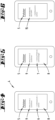
- the user is then informed, as in Figure 3 shown, a first step 9 "Step 1" is displayed, which is to be carried out by the user on the cleaning device 1.
- “Step 1” involves the user connecting an upholstery brush as an accessory 13 to the base device 14 of the cleaning device 1.
- this is a device application 7 that is to be executed by the user. While this step 9 is displayed on the display 11 of the external terminal 4, a detection device of the cleaning device 1 detects whether the user actually carries out step 9.
- the cleaning device 1 has, for example, a contact sensor and/or code scanner as a detection device.
- the contact sensor can detect contact between an accessory 13 and the base device 14.
- the code scanner can also determine whether the connected accessory 13 is also the expected “upholstery brush” accessory.
- the base device 14 of the cleaning device 1 can preferably be connected to different accessories 13 to carry out different cleaning activities 5.
- Each accessory 13 accordingly has a code which uniquely identifies the accessory 13.
- the detection signal from the detection device can then either be evaluated by the cleaning device 1's own control and evaluation device 10 or forwarded unprocessed to the external terminal 4. In the latter case, the computing device of the external terminal 4 takes over the evaluation of the detection signal from the detection device.
- the control and evaluation device 10 of the cleaning device 1 or the computing device of the external terminal 4 accesses a memory device in which a reference amount characteristic of the device application 7 "connect upholstery brush" is stored.
- This reference amount can be, for example, the code of the accessory 13 “upholstery brush”. If the detection device then reads a code that corresponds to the stored reference amount, step 9 of instructions 8 is considered to have been carried out correctly.
- the instructions 8 then proceed to a next step 9.
- This next “Step 2" is in Figure 4 and includes the request "Select fan level 1".
- the user of the cleaning device 1 is thus requested to make a device setting 6 on the cleaning device 1.
- the device setting 6 can be made here, for example, using the operating device 18 of the base device 14.
- the operating device 18 can, for example, have three operating elements for 3 different fan levels, which are named “fan level 1", “fan level 2" and “fan level 3”.
- the user then operates the control element of the control device 18 which corresponds to “blower level 1”.
- a detection device of the cleaning device 1 can then, for example, detect the device parameter “power of the blower motor” and compare it with a reference amount or reference range defined for “Step 2”. If the values match, the user has correctly executed the specified device setting 6 and the one on the external Instructions 8 displayed on the terminal 4 proceed to the next step 9, namely “Step 3”.
- the next step 3 of instructions 8 includes - as in Figure 5 shown - that the user moves the cleaning device 1 over the surface to be cleaned, namely in a sequence of back and forth movements.
- the display 11 of the external terminal 4 thus shows the user that he has to execute the device application 7 "move the device back and forth on the surface".
- the device application 7 of the “back and forth movement” is characterized, for example, by an acceleration, speed and/or change in location of the cleaning device 1 in the environment, which can be detected by a corresponding detection device.
- the control and evaluation device 10 then accesses the associated memory device in which a reference amount or reference range for this device parameter is stored, for example an acceleration amount or speed.
- a reference range can be defined that contains a large number of reference amounts that are still considered to be in accordance with the specifications. If the control and evaluation device 10 then determines that the measured amount of the device parameter, ie the measured amount of acceleration or speed, lies within this reference range, step 9 "move the device back and forth on the surface" is considered to have been carried out correctly. Instructions 8 have now been completed and the cleaning activity has ended. The user can receive a message about this.
- Figure 6 shows an alternative course when carrying out the cleaning activity 5.
- the user has made a device setting 6 here that is not the one required in step 9
- Device setting 6 according to instructions 8 corresponds.
- the user has selected “fan level 2” instead of “fan level 1”.
- the control and evaluation device 10 of the cleaning device 1 accordingly recognizes that the device parameter does not correspond to the reference amount or reference range defined for the device setting 6 "Select fan level 1".
- the device parameter here is, for example, the power of the blower motor.
- other device parameters can also be measured for checking, for example a speed of a motor shaft of the electric motor driving the fan.
- the control and evaluation device 10 therefore recognizes the deviation and transmits the in Figure 6 shown note 15 "Application stopped, select fan level 1" to the user. Furthermore, for example, the fan of the cleaning device 1 can also be stopped completely until the user sets the device setting 6 as specified.
- the instructions 8 for the cleaning activity 5 do not proceed to a subsequent step 9 if the user has not made the device setting 6 as intended.
- the instructions 8 themselves can be structured modularly in such a way that a subsequently displayed step 9 is influenced by the execution of the step 9 to be carried out beforehand.
- a decision is made based on the specific situation as to which subsequent step 9 will be presented to the user.
- the instructions 8 are kept in a step 9 until the evaluation of the measured device parameters shows that the prerequisites for the progression of the instructions 8 are met. The user is therefore within the current step 9 as long as possible for a required corrective action, ie always Device setting 6 that still needs to be carried out is indicated until this has been carried out correctly.
Landscapes
- Engineering & Computer Science (AREA)
- Mechanical Engineering (AREA)
- Electric Vacuum Cleaner (AREA)
Claims (10)
- Procédé pour faire fonctionner un appareil de nettoyage (1), un utilisateur sélectionnant une activité de nettoyage (5) à exécuter au moyen de l'appareil de nettoyage (1) par l'intermédiaire d'une interface de communication (2) de l'appareil de nettoyage (1) ou par l'intermédiaire d'une interface de communication (3) d'un terminal externe (4) en liaison de communication avec l'appareil de nettoyage (1), l'utilisateur effectuant, pour l'exécution de l'activité de nettoyage (5), au moins un réglage (6) de l'appareil de nettoyage (1) et/ou au moins une application (7) de l'appareil de nettoyage (1) et exécutant l'activité de nettoyage (5) avec le réglage (6) et/ ou l'application (7) effectués, caractérisé en ce que l'utilisateur reçoit, en fonction de l'activité de nettoyage (5) sélectionnée, par l'intermédiaire de l'interface de communication (2, 3), une instruction (8) pour une pluralité d'étapes (9) à exécuter successivement dans le temps par l'utilisateur, lesquelles contiennent un réglage d'appareil (6) et/ou une application d'appareil (7), et un dispositif de commande et d'évaluation (10) de l'appareil de nettoyage (1) ou du terminal externe (4) surveillant, en correspondance avec l'étape (9) à exécuter actuellement, l'exécution effective du réglage d'appareil (6) et/ou de l'application d'appareil (7) et, dans le cas, que le réglage de l'appareil (6) et/ou l'application de l'appareil (7) effectivement exécuté par l'utilisateur s'écarte d'une référence prédéfinie pour le réglage de l'appareil (6) et/ou l'application de l'appareil (7) à exécuter, transmet une indication (15) à l'utilisateur.
- Procédé selon la revendication 1, caractérisé en ce qu'une pluralité d'activités de nettoyage (5) pouvant être sélectionnées par l'utilisateur et/ou les instructions (8) pour l'activité de nettoyage (5) sélectionnée sont représentées sur un écran (11) de l'appareil de nettoyage (1) ou du terminal externe (4).
- Procédé selon la revendication 1 ou 2, caractérisé en ce qu'un dispositif de détection de l'appareil de nettoyage (1) mesure une valeur actuelle d'un paramètre de l'appareil de nettoyage (1) caractéristique du réglage de l'appareil (6) et/ou de l'application de l'appareil (7) et la communique au dispositif de commande et d'évaluation (10).
- Procédé selon la revendication 3, caractérisé en ce que le dispositif de commande et d'évaluation (10) accède à un dispositif de mémoire dans lequel est mémorisé un montant de référence ou une plage de référence du paramètre de l'appareil, défini pour le réglage (6) de l'appareil et/ou l'application (7) de l'appareil, le dispositif de commande et d'évaluation (10) comparant la valeur mesurée du paramètre de l'appareil au montant de référence ou à la plage de référence mémorisé(e).
- Procédé selon l'une des revendications précédentes, caractérisé en ce que les étapes (9) à exécuter successivement dans le temps sont communiquées à l'utilisateur séparément dans le temps, de sorte que l'utilisateur ne se voit communiquer que le réglage de l'appareil (6) et/ou l'application de l'appareil (7) de l'étape suivante (9) à exécuter du guide (8).
- Procédé selon la revendication 5, caractérisé en ce qu'une étape (9) de l'instruction (8) à exécuter ultérieurement dans le temps n'est communiquée à l'utilisateur que si le réglage (6) de l'appareil et/ou l'application (7) de l'appareil de l'étape (9) qui précède dans le temps, exécutés par l'utilisateur, coïncident avec la référence prédéfinie pour cette étape (9) qui précède dans le temps.
- Procédé selon l'une quelconque des revendications précédentes, caractérisé en ce que l'activité de nettoyage (5) est choisie dans le groupe suivant : nettoyage des coussins, nettoyage des matelas, nettoyage des tapis, nettoyage de l'intérieur des véhicules, nettoyage du sol au-dessus, élimination des taches, nettoyage humide, nettoyage humide, nettoyage à sec, nettoyage des moquettes, nettoyage des sols durs, nettoyage avec application de détergent.
- Procédé selon l'une des revendications précédentes, caractérisé en ce que le réglage de l'appareil (6) est choisi dans le groupe : puissance d'un consommateur électrique de l'appareil de nettoyage (1), quantité de distribution d'un dispositif d'application de liquide et/ou d'un dispositif d'application de produit de nettoyage, vitesse de rotation ou fréquence d'oscillation d'un élément de traitement du sol (12) traitant une surface, position d'un élément d'étanchéité d'un canal d'écoulement, section transversale d'écoulement d'un canal d'écoulement.
- Procédé selon l'une des revendications précédentes, caractérisé en ce que l'application de l'appareil (7) est choisie dans le groupe : relier l'appareil de nettoyage (1) à un accessoire (13), notamment une buse d'aspiration et/ou une brosse de nettoyage et/ou un élément d'essuyage, appliquer un liquide sur une surface à nettoyer, déplacer l'appareil de nettoyage (1) sur la surface à nettoyer, exécuter l'activité de nettoyage (5) pendant une durée déterminée.
- Appareil de nettoyage (1) avec une interface de communication (2), caractérisé en ce que l'appareil de nettoyage (1) est conçu pour mettre en oeuvre un procédé selon l'une des revendications précédentes.
Priority Applications (4)
| Application Number | Priority Date | Filing Date | Title |
|---|---|---|---|
| EP21192403.0A EP4137026B1 (fr) | 2021-08-20 | 2021-08-20 | Procédé de fonctionnement d'un appareil de nettoyage, ainsi que appareil de nettoyage |
| ES21192403T ES2972906T3 (es) | 2021-08-20 | 2021-08-20 | Procedimiento para el funcionamiento de un aparato de limpieza, así como aparato de limpieza |
| CN202210955437.5A CN115707426A (zh) | 2021-08-20 | 2022-08-10 | 运行清洁设备的方法和清洁设备 |
| US17/890,449 US20230054392A1 (en) | 2021-08-20 | 2022-08-18 | Method for operating a cleaning device as well as cleaning device |
Applications Claiming Priority (1)
| Application Number | Priority Date | Filing Date | Title |
|---|---|---|---|
| EP21192403.0A EP4137026B1 (fr) | 2021-08-20 | 2021-08-20 | Procédé de fonctionnement d'un appareil de nettoyage, ainsi que appareil de nettoyage |
Publications (2)
| Publication Number | Publication Date |
|---|---|
| EP4137026A1 EP4137026A1 (fr) | 2023-02-22 |
| EP4137026B1 true EP4137026B1 (fr) | 2024-01-17 |
Family
ID=77431223
Family Applications (1)
| Application Number | Title | Priority Date | Filing Date |
|---|---|---|---|
| EP21192403.0A Active EP4137026B1 (fr) | 2021-08-20 | 2021-08-20 | Procédé de fonctionnement d'un appareil de nettoyage, ainsi que appareil de nettoyage |
Country Status (4)
| Country | Link |
|---|---|
| US (1) | US20230054392A1 (fr) |
| EP (1) | EP4137026B1 (fr) |
| CN (1) | CN115707426A (fr) |
| ES (1) | ES2972906T3 (fr) |
Family Cites Families (8)
| Publication number | Priority date | Publication date | Assignee | Title |
|---|---|---|---|---|
| US9893391B1 (en) * | 2013-09-23 | 2018-02-13 | Pacific Steamex Cleaning Systems, Inc. | Battery water level detector for a battery operated device |
| KR102427836B1 (ko) * | 2015-06-26 | 2022-08-02 | 삼성전자주식회사 | 로봇 청소기, 정보 제공 시스템 및 정보 제공 방법 |
| US20190388923A1 (en) * | 2017-01-27 | 2019-12-26 | Briggs & Stratton Corporation | Battery powered pressure washer |
| KR102689863B1 (ko) * | 2017-02-24 | 2024-07-31 | 삼성전자주식회사 | 전자 장치 및 그의 제어 방법 |
| US11771283B2 (en) * | 2017-12-06 | 2023-10-03 | BISSELL , Inc. | Method and system for manual control of autonomous floor cleaner |
| AU2020217740A1 (en) * | 2019-02-06 | 2021-09-02 | Ecolab Usa Inc. | Reducing illnesses and infections caused by ineffective cleaning by tracking and controlling cleaning efficacy |
| WO2021018395A1 (fr) * | 2019-07-31 | 2021-02-04 | Alfred Kärcher SE & Co. KG | Système de nettoyage à haute pression et procédé permettant de faire fonctionner un système de nettoyage à haute pression |
| US11449068B2 (en) * | 2020-05-11 | 2022-09-20 | Deere & Company | Mobile work machine state detection and visualization system |
-
2021
- 2021-08-20 EP EP21192403.0A patent/EP4137026B1/fr active Active
- 2021-08-20 ES ES21192403T patent/ES2972906T3/es active Active
-
2022
- 2022-08-10 CN CN202210955437.5A patent/CN115707426A/zh active Pending
- 2022-08-18 US US17/890,449 patent/US20230054392A1/en active Pending
Also Published As
| Publication number | Publication date |
|---|---|
| ES2972906T3 (es) | 2024-06-17 |
| CN115707426A (zh) | 2023-02-21 |
| US20230054392A1 (en) | 2023-02-23 |
| EP4137026A1 (fr) | 2023-02-22 |
Similar Documents
| Publication | Publication Date | Title |
|---|---|---|
| DE60016435T2 (de) | Kochvorbereitungshilfevorrichtung | |
| EP3418005B1 (fr) | Système comportant au moins un appareil électroménager, au moins un dispositif de nettoyage automatique et un dispositif de commande | |
| EP4186403B1 (fr) | Système composé d'un appareil de traitement du sol, d'un dispositif accumulateur et d'au moins un appareil accessoire | |
| EP3449792B1 (fr) | Appareil de nettoyage du sol et son procédé de fonctionnement | |
| EP4003616B1 (fr) | Système de nettoyage à haute pression et procédé permettant de faire fonctionner un système de nettoyage à haute pression | |
| EP3084742B1 (fr) | Dispositif portable de commande à distance d'une pluralité d'appareils électroménagers, système, procédé correspondant et produit logiciel informatique | |
| EP3408146B2 (fr) | Configuration d'un processus de nettoyage dans une station de lavage de véhicules pour le libre service | |
| EP3415065A1 (fr) | Système pourvu d'au moins deux appareils de nettoyage | |
| EP1434910A1 (fr) | Appareil electromenager commande par un programme et dote d'un dispositif d'affichage | |
| EP3386153B1 (fr) | Procédé de connexion d'un appareil électroménager à un réseau domestique sans fil | |
| EP1156148B1 (fr) | Dispositif pour la communication de données entre une machine à coudre et un ordinateur central | |
| DE102019127971B4 (de) | Einstellungsmethode für elektronische Drehmomentwerkzeuge | |
| DE102008012094A1 (de) | Verfahren und Gerät zur Kontrolle von Ultraschallsystemen mittels physischer Regler | |
| DE102018133490B4 (de) | Bodenreinigungsvorrichtung und Verfahren zum Betreiben einer Bodenreinigungsvorrichtung | |
| EP3162263B1 (fr) | Appareil de nettoyage et appareil auxiliaire destiné à relier un appareil de base de l'appareil de nettoyage | |
| EP4137026A1 (fr) | Procédé de fonctionnement d'un appareil de nettoyage, ainsi que appareil de nettoyage | |
| WO2015007315A1 (fr) | Procédé de transmission sans fil d'informations d'un dispositif auxiliaire à un appareil de nettoyage de sol et appareil de nettoyage de sol | |
| DE112005000122B4 (de) | Fernsteuerungssystem für Haushaltsgeräte sowie zugehöriges Verfahren | |
| EP3954265A1 (fr) | Système comprenant un appareil électroménager et un accumulateur comportant un dispositif d'affichage optique | |
| EP4098162A1 (fr) | Procédé de réglage d'une plage de paramètres sur un appareil de traitement du sol, ainsi qu'appareil de traitement du sol et système doté d'un appareil de traitement du sol et d'un terminal externe | |
| EP3669739B1 (fr) | Robot électroménager et son procédé de commande | |
| EP4099658B1 (fr) | Procédé de fonctionnement d'un système pourvu d'au moins deux appareils électroménagers de conception identique, ainsi que système pourvu d'au moins deux appareils électroménagers de conception identique | |
| DE102019106292A1 (de) | Bodenbearbeitungsgerät mit einem Akkumulator und System aus einem Bodenbearbeitungsgerät und mindestens einem weiteren Akkumulator | |
| EP3987992B1 (fr) | Appareil électroménager mobile doté d'un affichage | |
| DE60216071T2 (de) | Verfahren und vorrichtung zum betrieb eines datenverarbeitungssystems unter verwendung mehrerer konsolenansichten |
Legal Events
| Date | Code | Title | Description |
|---|---|---|---|
| PUAI | Public reference made under article 153(3) epc to a published international application that has entered the european phase |
Free format text: ORIGINAL CODE: 0009012 |
|
| STAA | Information on the status of an ep patent application or granted ep patent |
Free format text: STATUS: THE APPLICATION HAS BEEN PUBLISHED |
|
| AK | Designated contracting states |
Kind code of ref document: A1 Designated state(s): AL AT BE BG CH CY CZ DE DK EE ES FI FR GB GR HR HU IE IS IT LI LT LU LV MC MK MT NL NO PL PT RO RS SE SI SK SM TR |
|
| STAA | Information on the status of an ep patent application or granted ep patent |
Free format text: STATUS: REQUEST FOR EXAMINATION WAS MADE |
|
| 17P | Request for examination filed |
Effective date: 20230427 |
|
| RBV | Designated contracting states (corrected) |
Designated state(s): AL AT BE BG CH CY CZ DE DK EE ES FI FR GB GR HR HU IE IS IT LI LT LU LV MC MK MT NL NO PL PT RO RS SE SI SK SM TR |
|
| GRAP | Despatch of communication of intention to grant a patent |
Free format text: ORIGINAL CODE: EPIDOSNIGR1 |
|
| STAA | Information on the status of an ep patent application or granted ep patent |
Free format text: STATUS: GRANT OF PATENT IS INTENDED |
|
| INTG | Intention to grant announced |
Effective date: 20230927 |
|
| GRAS | Grant fee paid |
Free format text: ORIGINAL CODE: EPIDOSNIGR3 |
|
| GRAA | (expected) grant |
Free format text: ORIGINAL CODE: 0009210 |
|
| STAA | Information on the status of an ep patent application or granted ep patent |
Free format text: STATUS: THE PATENT HAS BEEN GRANTED |
|
| AK | Designated contracting states |
Kind code of ref document: B1 Designated state(s): AL AT BE BG CH CY CZ DE DK EE ES FI FR GB GR HR HU IE IS IT LI LT LU LV MC MK MT NL NO PL PT RO RS SE SI SK SM TR |
|
| REG | Reference to a national code |
Ref country code: GB Ref legal event code: FG4D Free format text: NOT ENGLISH |
|
| REG | Reference to a national code |
Ref country code: CH Ref legal event code: EP |
|
| REG | Reference to a national code |
Ref country code: DE Ref legal event code: R096 Ref document number: 502021002477 Country of ref document: DE |
|
| REG | Reference to a national code |
Ref country code: IE Ref legal event code: FG4D Free format text: LANGUAGE OF EP DOCUMENT: GERMAN |
|
| REG | Reference to a national code |
Ref country code: LT Ref legal event code: MG9D |
|
| REG | Reference to a national code |
Ref country code: NL Ref legal event code: MP Effective date: 20240117 |
|
| REG | Reference to a national code |
Ref country code: ES Ref legal event code: FG2A Ref document number: 2972906 Country of ref document: ES Kind code of ref document: T3 Effective date: 20240617 |
|
| PG25 | Lapsed in a contracting state [announced via postgrant information from national office to epo] |
Ref country code: NL Free format text: LAPSE BECAUSE OF FAILURE TO SUBMIT A TRANSLATION OF THE DESCRIPTION OR TO PAY THE FEE WITHIN THE PRESCRIBED TIME-LIMIT Effective date: 20240117 |
|
| PG25 | Lapsed in a contracting state [announced via postgrant information from national office to epo] |
Ref country code: NL Free format text: LAPSE BECAUSE OF FAILURE TO SUBMIT A TRANSLATION OF THE DESCRIPTION OR TO PAY THE FEE WITHIN THE PRESCRIBED TIME-LIMIT Effective date: 20240117 |
|
| PG25 | Lapsed in a contracting state [announced via postgrant information from national office to epo] |
Ref country code: IS Free format text: LAPSE BECAUSE OF FAILURE TO SUBMIT A TRANSLATION OF THE DESCRIPTION OR TO PAY THE FEE WITHIN THE PRESCRIBED TIME-LIMIT Effective date: 20240517 |
|
| PG25 | Lapsed in a contracting state [announced via postgrant information from national office to epo] |
Ref country code: LT Free format text: LAPSE BECAUSE OF FAILURE TO SUBMIT A TRANSLATION OF THE DESCRIPTION OR TO PAY THE FEE WITHIN THE PRESCRIBED TIME-LIMIT Effective date: 20240117 |
|
| PG25 | Lapsed in a contracting state [announced via postgrant information from national office to epo] |
Ref country code: GR Free format text: LAPSE BECAUSE OF FAILURE TO SUBMIT A TRANSLATION OF THE DESCRIPTION OR TO PAY THE FEE WITHIN THE PRESCRIBED TIME-LIMIT Effective date: 20240418 |
|
| PG25 | Lapsed in a contracting state [announced via postgrant information from national office to epo] |
Ref country code: RS Free format text: LAPSE BECAUSE OF FAILURE TO SUBMIT A TRANSLATION OF THE DESCRIPTION OR TO PAY THE FEE WITHIN THE PRESCRIBED TIME-LIMIT Effective date: 20240417 Ref country code: HR Free format text: LAPSE BECAUSE OF FAILURE TO SUBMIT A TRANSLATION OF THE DESCRIPTION OR TO PAY THE FEE WITHIN THE PRESCRIBED TIME-LIMIT Effective date: 20240117 |
|
| P01 | Opt-out of the competence of the unified patent court (upc) registered |
Free format text: CASE NUMBER: APP_35632/2024 Effective date: 20240613 |
|
| PG25 | Lapsed in a contracting state [announced via postgrant information from national office to epo] |
Ref country code: RS Free format text: LAPSE BECAUSE OF FAILURE TO SUBMIT A TRANSLATION OF THE DESCRIPTION OR TO PAY THE FEE WITHIN THE PRESCRIBED TIME-LIMIT Effective date: 20240417 Ref country code: NO Free format text: LAPSE BECAUSE OF FAILURE TO SUBMIT A TRANSLATION OF THE DESCRIPTION OR TO PAY THE FEE WITHIN THE PRESCRIBED TIME-LIMIT Effective date: 20240417 Ref country code: LT Free format text: LAPSE BECAUSE OF FAILURE TO SUBMIT A TRANSLATION OF THE DESCRIPTION OR TO PAY THE FEE WITHIN THE PRESCRIBED TIME-LIMIT Effective date: 20240117 Ref country code: IS Free format text: LAPSE BECAUSE OF FAILURE TO SUBMIT A TRANSLATION OF THE DESCRIPTION OR TO PAY THE FEE WITHIN THE PRESCRIBED TIME-LIMIT Effective date: 20240517 Ref country code: HR Free format text: LAPSE BECAUSE OF FAILURE TO SUBMIT A TRANSLATION OF THE DESCRIPTION OR TO PAY THE FEE WITHIN THE PRESCRIBED TIME-LIMIT Effective date: 20240117 Ref country code: GR Free format text: LAPSE BECAUSE OF FAILURE TO SUBMIT A TRANSLATION OF THE DESCRIPTION OR TO PAY THE FEE WITHIN THE PRESCRIBED TIME-LIMIT Effective date: 20240418 Ref country code: FI Free format text: LAPSE BECAUSE OF FAILURE TO SUBMIT A TRANSLATION OF THE DESCRIPTION OR TO PAY THE FEE WITHIN THE PRESCRIBED TIME-LIMIT Effective date: 20240117 Ref country code: BG Free format text: LAPSE BECAUSE OF FAILURE TO SUBMIT A TRANSLATION OF THE DESCRIPTION OR TO PAY THE FEE WITHIN THE PRESCRIBED TIME-LIMIT Effective date: 20240117 |
|
| PG25 | Lapsed in a contracting state [announced via postgrant information from national office to epo] |
Ref country code: PT Free format text: LAPSE BECAUSE OF FAILURE TO SUBMIT A TRANSLATION OF THE DESCRIPTION OR TO PAY THE FEE WITHIN THE PRESCRIBED TIME-LIMIT Effective date: 20240517 Ref country code: PL Free format text: LAPSE BECAUSE OF FAILURE TO SUBMIT A TRANSLATION OF THE DESCRIPTION OR TO PAY THE FEE WITHIN THE PRESCRIBED TIME-LIMIT Effective date: 20240117 |
|
| PG25 | Lapsed in a contracting state [announced via postgrant information from national office to epo] |
Ref country code: SE Free format text: LAPSE BECAUSE OF FAILURE TO SUBMIT A TRANSLATION OF THE DESCRIPTION OR TO PAY THE FEE WITHIN THE PRESCRIBED TIME-LIMIT Effective date: 20240117 Ref country code: PT Free format text: LAPSE BECAUSE OF FAILURE TO SUBMIT A TRANSLATION OF THE DESCRIPTION OR TO PAY THE FEE WITHIN THE PRESCRIBED TIME-LIMIT Effective date: 20240517 Ref country code: PL Free format text: LAPSE BECAUSE OF FAILURE TO SUBMIT A TRANSLATION OF THE DESCRIPTION OR TO PAY THE FEE WITHIN THE PRESCRIBED TIME-LIMIT Effective date: 20240117 Ref country code: LV Free format text: LAPSE BECAUSE OF FAILURE TO SUBMIT A TRANSLATION OF THE DESCRIPTION OR TO PAY THE FEE WITHIN THE PRESCRIBED TIME-LIMIT Effective date: 20240117 |
|
| PG25 | Lapsed in a contracting state [announced via postgrant information from national office to epo] |
Ref country code: DK Free format text: LAPSE BECAUSE OF FAILURE TO SUBMIT A TRANSLATION OF THE DESCRIPTION OR TO PAY THE FEE WITHIN THE PRESCRIBED TIME-LIMIT Effective date: 20240117 |
|
| PG25 | Lapsed in a contracting state [announced via postgrant information from national office to epo] |
Ref country code: SM Free format text: LAPSE BECAUSE OF FAILURE TO SUBMIT A TRANSLATION OF THE DESCRIPTION OR TO PAY THE FEE WITHIN THE PRESCRIBED TIME-LIMIT Effective date: 20240117 |
|
| REG | Reference to a national code |
Ref country code: DE Ref legal event code: R097 Ref document number: 502021002477 Country of ref document: DE |
|
| PG25 | Lapsed in a contracting state [announced via postgrant information from national office to epo] |
Ref country code: CZ Free format text: LAPSE BECAUSE OF FAILURE TO SUBMIT A TRANSLATION OF THE DESCRIPTION OR TO PAY THE FEE WITHIN THE PRESCRIBED TIME-LIMIT Effective date: 20240117 Ref country code: EE Free format text: LAPSE BECAUSE OF FAILURE TO SUBMIT A TRANSLATION OF THE DESCRIPTION OR TO PAY THE FEE WITHIN THE PRESCRIBED TIME-LIMIT Effective date: 20240117 |
|
| PG25 | Lapsed in a contracting state [announced via postgrant information from national office to epo] |
Ref country code: SK Free format text: LAPSE BECAUSE OF FAILURE TO SUBMIT A TRANSLATION OF THE DESCRIPTION OR TO PAY THE FEE WITHIN THE PRESCRIBED TIME-LIMIT Effective date: 20240117 |
|
| PG25 | Lapsed in a contracting state [announced via postgrant information from national office to epo] |
Ref country code: SM Free format text: LAPSE BECAUSE OF FAILURE TO SUBMIT A TRANSLATION OF THE DESCRIPTION OR TO PAY THE FEE WITHIN THE PRESCRIBED TIME-LIMIT Effective date: 20240117 Ref country code: SK Free format text: LAPSE BECAUSE OF FAILURE TO SUBMIT A TRANSLATION OF THE DESCRIPTION OR TO PAY THE FEE WITHIN THE PRESCRIBED TIME-LIMIT Effective date: 20240117 Ref country code: RO Free format text: LAPSE BECAUSE OF FAILURE TO SUBMIT A TRANSLATION OF THE DESCRIPTION OR TO PAY THE FEE WITHIN THE PRESCRIBED TIME-LIMIT Effective date: 20240117 Ref country code: EE Free format text: LAPSE BECAUSE OF FAILURE TO SUBMIT A TRANSLATION OF THE DESCRIPTION OR TO PAY THE FEE WITHIN THE PRESCRIBED TIME-LIMIT Effective date: 20240117 Ref country code: DK Free format text: LAPSE BECAUSE OF FAILURE TO SUBMIT A TRANSLATION OF THE DESCRIPTION OR TO PAY THE FEE WITHIN THE PRESCRIBED TIME-LIMIT Effective date: 20240117 Ref country code: CZ Free format text: LAPSE BECAUSE OF FAILURE TO SUBMIT A TRANSLATION OF THE DESCRIPTION OR TO PAY THE FEE WITHIN THE PRESCRIBED TIME-LIMIT Effective date: 20240117 |
|
| PLBE | No opposition filed within time limit |
Free format text: ORIGINAL CODE: 0009261 |
|
| STAA | Information on the status of an ep patent application or granted ep patent |
Free format text: STATUS: NO OPPOSITION FILED WITHIN TIME LIMIT |
|
| 26N | No opposition filed |
Effective date: 20241018 |
|
| REG | Reference to a national code |
Ref country code: CH Ref legal event code: PL |
|
| PG25 | Lapsed in a contracting state [announced via postgrant information from national office to epo] |
Ref country code: LU Free format text: LAPSE BECAUSE OF NON-PAYMENT OF DUE FEES Effective date: 20240820 |
|
| PG25 | Lapsed in a contracting state [announced via postgrant information from national office to epo] |
Ref country code: SI Free format text: LAPSE BECAUSE OF FAILURE TO SUBMIT A TRANSLATION OF THE DESCRIPTION OR TO PAY THE FEE WITHIN THE PRESCRIBED TIME-LIMIT Effective date: 20240117 Ref country code: CH Free format text: LAPSE BECAUSE OF NON-PAYMENT OF DUE FEES Effective date: 20240831 Ref country code: MC Free format text: LAPSE BECAUSE OF FAILURE TO SUBMIT A TRANSLATION OF THE DESCRIPTION OR TO PAY THE FEE WITHIN THE PRESCRIBED TIME-LIMIT Effective date: 20240117 |
|
| REG | Reference to a national code |
Ref country code: BE Ref legal event code: MM Effective date: 20240831 |
|
| PG25 | Lapsed in a contracting state [announced via postgrant information from national office to epo] |
Ref country code: BE Free format text: LAPSE BECAUSE OF NON-PAYMENT OF DUE FEES Effective date: 20240831 |
|
| PG25 | Lapsed in a contracting state [announced via postgrant information from national office to epo] |
Ref country code: IE Free format text: LAPSE BECAUSE OF NON-PAYMENT OF DUE FEES Effective date: 20240820 |
|
| PGFP | Annual fee paid to national office [announced via postgrant information from national office to epo] |
Ref country code: ES Payment date: 20250917 Year of fee payment: 5 |
|
| PGFP | Annual fee paid to national office [announced via postgrant information from national office to epo] |
Ref country code: DE Payment date: 20250819 Year of fee payment: 5 |
|
| PGFP | Annual fee paid to national office [announced via postgrant information from national office to epo] |
Ref country code: IT Payment date: 20250829 Year of fee payment: 5 |
|
| PGFP | Annual fee paid to national office [announced via postgrant information from national office to epo] |
Ref country code: AT Payment date: 20251020 Year of fee payment: 5 Ref country code: FR Payment date: 20250821 Year of fee payment: 5 |
|
| PG25 | Lapsed in a contracting state [announced via postgrant information from national office to epo] |
Ref country code: CY Free format text: LAPSE BECAUSE OF FAILURE TO SUBMIT A TRANSLATION OF THE DESCRIPTION OR TO PAY THE FEE WITHIN THE PRESCRIBED TIME-LIMIT; INVALID AB INITIO Effective date: 20210820 |
|
| PG25 | Lapsed in a contracting state [announced via postgrant information from national office to epo] |
Ref country code: HU Free format text: LAPSE BECAUSE OF FAILURE TO SUBMIT A TRANSLATION OF THE DESCRIPTION OR TO PAY THE FEE WITHIN THE PRESCRIBED TIME-LIMIT; INVALID AB INITIO Effective date: 20210820 |
|
| GBPC | Gb: european patent ceased through non-payment of renewal fee |
Effective date: 20250820 |