EP4140835B1 - Verfahren und system zur enteisung einer glasfläche eines fahrzeugs - Google Patents
Verfahren und system zur enteisung einer glasfläche eines fahrzeugs Download PDFInfo
- Publication number
- EP4140835B1 EP4140835B1 EP22191764.4A EP22191764A EP4140835B1 EP 4140835 B1 EP4140835 B1 EP 4140835B1 EP 22191764 A EP22191764 A EP 22191764A EP 4140835 B1 EP4140835 B1 EP 4140835B1
- Authority
- EP
- European Patent Office
- Prior art keywords
- icing
- vehicle
- information
- defrosting
- condition
- Prior art date
- Legal status (The legal status is an assumption and is not a legal conclusion. Google has not performed a legal analysis and makes no representation as to the accuracy of the status listed.)
- Active
Links
Images
Classifications
-
- B—PERFORMING OPERATIONS; TRANSPORTING
- B60—VEHICLES IN GENERAL
- B60S—SERVICING, CLEANING, REPAIRING, SUPPORTING, LIFTING, OR MANOEUVRING OF VEHICLES, NOT OTHERWISE PROVIDED FOR
- B60S1/00—Cleaning of vehicles
- B60S1/02—Cleaning windscreens, windows or optical devices
- B60S1/46—Cleaning windscreens, windows or optical devices using liquid; Windscreen washers
- B60S1/48—Liquid supply therefor
- B60S1/481—Liquid supply therefor the operation of at least part of the liquid supply being controlled by electric means
- B60S1/485—Liquid supply therefor the operation of at least part of the liquid supply being controlled by electric means including control systems responsive to external conditions, e.g. by detection of moisture, dirt or the like
-
- B—PERFORMING OPERATIONS; TRANSPORTING
- B60—VEHICLES IN GENERAL
- B60S—SERVICING, CLEANING, REPAIRING, SUPPORTING, LIFTING, OR MANOEUVRING OF VEHICLES, NOT OTHERWISE PROVIDED FOR
- B60S1/00—Cleaning of vehicles
- B60S1/02—Cleaning windscreens, windows or optical devices
- B60S1/023—Cleaning windscreens, windows or optical devices including defroster or demisting means
- B60S1/026—Cleaning windscreens, windows or optical devices including defroster or demisting means using electrical means
-
- B—PERFORMING OPERATIONS; TRANSPORTING
- B60—VEHICLES IN GENERAL
- B60S—SERVICING, CLEANING, REPAIRING, SUPPORTING, LIFTING, OR MANOEUVRING OF VEHICLES, NOT OTHERWISE PROVIDED FOR
- B60S1/00—Cleaning of vehicles
- B60S1/02—Cleaning windscreens, windows or optical devices
- B60S1/04—Wipers or the like, e.g. scrapers
- B60S1/06—Wipers or the like, e.g. scrapers characterised by the drive
- B60S1/08—Wipers or the like, e.g. scrapers characterised by the drive electrically driven
- B60S1/0818—Wipers or the like, e.g. scrapers characterised by the drive electrically driven including control systems responsive to external conditions, e.g. by detection of moisture, dirt or the like
- B60S1/0822—Wipers or the like, e.g. scrapers characterised by the drive electrically driven including control systems responsive to external conditions, e.g. by detection of moisture, dirt or the like characterized by the arrangement or type of detection means
-
- B—PERFORMING OPERATIONS; TRANSPORTING
- B60—VEHICLES IN GENERAL
- B60S—SERVICING, CLEANING, REPAIRING, SUPPORTING, LIFTING, OR MANOEUVRING OF VEHICLES, NOT OTHERWISE PROVIDED FOR
- B60S1/00—Cleaning of vehicles
- B60S1/02—Cleaning windscreens, windows or optical devices
- B60S1/46—Cleaning windscreens, windows or optical devices using liquid; Windscreen washers
- B60S1/48—Liquid supply therefor
- B60S1/481—Liquid supply therefor the operation of at least part of the liquid supply being controlled by electric means
- B60S1/486—Liquid supply therefor the operation of at least part of the liquid supply being controlled by electric means including control systems responsive to a vehicle driving condition, e.g. speed
-
- B—PERFORMING OPERATIONS; TRANSPORTING
- B60—VEHICLES IN GENERAL
- B60S—SERVICING, CLEANING, REPAIRING, SUPPORTING, LIFTING, OR MANOEUVRING OF VEHICLES, NOT OTHERWISE PROVIDED FOR
- B60S1/00—Cleaning of vehicles
- B60S1/02—Cleaning windscreens, windows or optical devices
- B60S1/46—Cleaning windscreens, windows or optical devices using liquid; Windscreen washers
- B60S1/48—Liquid supply therefor
- B60S1/487—Liquid supply therefor the liquid being heated
- B60S1/488—Liquid supply therefor the liquid being heated electrically
Definitions
- the present invention relates to a method for defrosting a glass surface of a vehicle. It finds a particular but non-limiting application in motor vehicles.
- a method for defrosting a glass surface of a vehicle comprising a defrosting device comprising at least one reservoir containing a defrosting liquid, at least one wiper blade, and a device for spraying the defrosting liquid onto the glass surface.
- the defrosting method comprises activating a drive motor for said at least one wiper blade of the defrosting device to initiate a defrosting cycle and thereby spray the defrosting liquid onto the glass surface.
- a disadvantage of this prior art is that said defrosting method requires human intervention, since it is the user who manually triggers the defrosting method at his request (remotely or not).
- the present invention aims to propose a method for defrosting a glass surface of a vehicle which is automatic and autonomous in which human intervention is no longer necessary.
- the method for defrosting a glass surface of a vehicle according to the invention thus makes it possible to start the defrosting of the glass surface of the vehicle automatically when necessary, namely in the presence of frost on said glass surface and when the vehicle is about to be used.
- said method for defrosting a glass surface of a vehicle may further comprise one or more additional features taken alone or in all technically possible combinations, among the following.
- said temperature threshold is within the range 3° to 5° Celsius.
- said tertiary condition comprises the activation of the defogging function and its adjustment to a maximum level.
- said defrosting cycle comprises a spraying of a defrosting liquid.
- said defrosting cycle comprises a spraying of a heated liquid.
- said wiping system further comprises at least one wiping blade and at least one hydraulic ramp which forms said at least one spraying device arranged at the level of the wiping blade.
- said vehicle comprises a starter switch and the contact of said vehicle is activated if said starter switch is in the accessory ignition position.
- said temperature threshold is equal to 4° Celsius.
- the heated liquid is water or a windshield washer fluid.
- the temperature measuring device comprises one or more temperature sensors or is a weather server.
- a computer program product comprising instructions which, when the program is executed by a computer, cause the computer to implement the steps of the defrosting method according to any of the preceding characteristics.
- Non-transitory computer-readable storage medium comprising instructions which, when executed by a computer, cause the computer to perform the defrosting method according to any of the foregoing features.
- the vehicle 2 is a motor vehicle.
- motor vehicle we mean any type of motorized vehicle. This embodiment is taken as a non-limiting example in the remainder of the description. In the remainder of the description, the vehicle 2 is thus otherwise called motor vehicle 2.
- the glazed surface 20 is the glazed surface of the windshield of the vehicle 2.
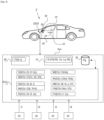
- the motor vehicle 2 is illustrated in the figure 3 .
- the motor vehicle 2 further comprises a defrosting device 21 configured to defrost the glass surface 20 of the motor vehicle 2.
- the motor vehicle 2 further comprises a starter switch 22 and accessories 23.
- the motor vehicle 2 further comprises a temperature measuring device 24 configured to measure the outside temperature t. In a non-limiting example illustrated in the figure 3 , it is located at the level of a rearview mirror of the motor vehicle 2.
- the motor vehicle 2 further comprises a human-machine interface 25 associated with a defogging function fd.
- the human-machine interface 25 is a rotary button which makes it possible to activate/deactivate the defogging function but also to choose the defogging levels, namely to adjust the defogging power.
- the motor vehicle 2 further comprises at least one presence sensor 26 located at the driver's seat 27 of the motor vehicle 2. It makes it possible to detect whether or not a person is seated on the driver's seat 27, therefore the driver's seat 27 is occupied or not.
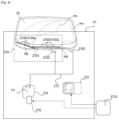
- the wiping system 210 used for defrosting is the same as that used to remove water and dirt from the glass surface 20.
- the wiping system 210 comprises at least one drive arm 2102 which connected to the wiper blade 2101 performs an angular back-and-forth movement opposite the glazed surface 20 between a low position PB and a high position PH.
- the drive arm 2102 is notably arranged in a rod which extends along a longitudinal axis and one end of which is connected to the wiper blade 2101 via a connection device (not illustrated) and another end of which is connected to a means for driving the wiper blade 2101 such as a drive motor 212.
- said at least one spray device 2100 is located on the wiper blade 2101, or at the drive arm 2102, or at the arm/blade connection device, or even on the hood of the motor vehicle 2.
- the spray device 2100 comprises a plurality of orifices 2100a.
- the orifices 2100a are located on the wiper blade 2101, or at the drive arm 2102, or at the arm/blade connection device, or even on the hood of the motor vehicle 2.
- the orifices 2100a may be arranged so as to spray liquid L, Lq toward the top of the wiper blades 2101, i.e. toward the top of the glazed surface 20, or they may be arranged so as to spray liquid L, Lq toward the bottom of the wiper blades 2101, i.e. toward the bottom of the glazed surface 20.
- each wiper blade 2101 comprises at least one hydraulic ramp (otherwise called a ramp) having orifices 2100a through which the liquid L, Lq can be sprayed/spread on the glazed surface 20.
- the hydraulic ramp thus forms the spraying device 2100.
- each wiper blade 2101 comprises two ramps, one of the ramps having orifices 2100a configured to spray the liquid L, Lq upwards of the glazed surface 20, the other ramp having orifices 2100a configured to spray the liquid L, Lq downwards of the glazed surface 20.
- These ramps can spray the liquid simultaneously or alternately depending on the direction of movement of the wiper blade 2101.
- the or each ramp of a wiper blade 2101 is supplied with liquid L, Lq via the pipe system 213.
- the drive motor 212 is configured to drive the wiper blade(s) 2101, via the drive arms 2102, between their respective low positions PB and high positions PH.
- the pipe system 213 connects the reservoir 214 to the orifices 2100a of said at least one spraying device 2100.
- the reservoir 214 is a reservoir independent of the reservoir comprising windshield washer fluid, each reservoir being associated with a different pump.
- the reservoir 214 may be partitioned and comprise two respective storage compartments for liquid L, Lq and windshield washer fluid, each compartment being associated with a different pump.
- Said at least one pump 215 is associated with the reservoir 214 comprising the liquid L, Lq and is configured to circulate the liquid L, Lq in the pipe system 213 until ejection through the orifice(s) 2100a of said at least one spraying device 2100 onto the glazed surface 20, namely the glazed surface 20 of the windshield in the non-limiting example taken.
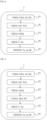
- the defrosting method 1 is described below with reference to the Figures 1 and 2 according to a non-limiting embodiment.
- the defrosting method 1 is implemented by a defrosting system Sys which comprises an electronic control unit ECU (called “Electronic Control Unit” in English).
- step E1 illustrated F1(ECU, C1(Cc, 22, 23)) the electronic control unit ECU checks a primary condition C1 according to which the contact Ce of said motor vehicle 2 is activated.
- the electronic control unit ECU checks the outside temperature t via contact information I1 that it receives from the starter switch 22. It will be noted that the contact Ce of said vehicle 2 is activated if the starter switch 22 is in the accessory ignition position 23. It will be noted that if the contact Ce of the vehicle 2 is activated, this means that the vehicle 2 is in use and will soon be driven. The same is true if the driver's seat 27 is occupied.
- the electronic control unit ECU checks a secondary condition C2 according to which the outside temperature t is below a temperature threshold Th1.
- the electronic control unit ECU checks the outside temperature t via temperature information I2 that it receives from the temperature measuring device 24.
- the temperature threshold Th1 is between 3° and 5° Celsius. In a non-limiting variant embodiment, the temperature threshold Th1 is equal to 4°. This outside temperature value t generally corresponds to the temperature below which frost forms.
- the electronic control unit ECU checks a tertiary condition C3 according to which a defogging function fd is activated.
- the electronic control unit ECU checks whether the defogging function fd is activated via a defogging information I3 that it receives from the human-machine interface 25 which allows the activation/deactivation of this defogging function fd.
- This defogging function fd is an aid for defrosting the glass surface 20.
- the tertiary condition C3 comprises activating the defogging function fd and setting it to a maximum step Th2, otherwise called maximum defogging step Th2.
- the electronic control unit ECU checks the tertiary condition C3 according to which the defogging function fd is activated and set to the maximum step Th2.
- the maximum defogging level Th2 is the last level corresponding to the maximum defogging power.
- the electronic control unit ECU is further configured to check whether the driver's seat 27 is occupied.
- the electronic control unit ECU checks a quaternary condition C4 according to which a person o is present on said driver's seat 27 of said motor vehicle 2.
- steps E1 to E3, and where appropriate E3' may be carried out simultaneously or sequentially in any order, or some simultaneously and others sequentially in any order.
- step E4 illustrated on the figure 1 and the figure 2 F4(ECU, C, Cy) if all conditions C are met, then the electronic control unit ECU activates said defrosting device 21 to initiate a defrosting cycle Cy.
- activation of the defrosting device 21 it is meant that the electronic control unit ECU sends a command to the defrosting device 21 to drive the pump 215 and to drive the drive motor 212.
- the defrosting cycle Cy is thus executed. It is executed by the defrosting device 21.
- the defrosting cycle Cy comprises a spraying by said at least one spraying device 2100 of said liquid L, Lq onto said glass surface 20.
- said defrosting cycle Cy comprises a spraying of a defrosting liquid L.
- said defrosting cycle Cy comprises a spraying of a heated liquid Lq.
- the liquid Lq that is heated is water or windshield washer fluid.
- heating elements are used to heat said liquid Lq.
- This second non-limiting embodiment makes it possible not to use a specific liquid Lq for defrosting such as a liquid of defrosting L.
- the tank used for the standard wiping function intended to evacuate water and dirt from the glass surface 20 can be used as a tank 214 used for defrosting. This avoids having an additional tank. This reduces the space requirement in the motor vehicle 2.
- one or more heating resistors are immersed in the liquid storage tank 214 Lq to heat said liquid Lq.
- one or more heating elements are embedded in the walls of the pipes located between the liquid storage tank 214 Lq and the liquid Lq projection orifices 2100a.
- defrosting of the glazed surface 20 of the motor vehicle 2 can be initiated, i.e. carried out, and this automatically and autonomously without a person having to intervene.
- the glazed surface 20 of the motor vehicle 2 is thus defrosted before the motor vehicle 2 starts to roll. This makes it possible to quickly make the motor vehicle 2 operational.
- the defrosting method 1 is implemented by a defrosting system Sys of a glazed surface 20 of a vehicle 2.
- the defrosting system Sys is illustrated in the figure 3 .
- the functions of the electronic control unit ECU are illustrated in the figure 3 .
- the electronic control unit ECU receives this primary information I1 from the starter switch 22.
- the electronic control unit ECU receives from the one or more temperature sensors or from a weather server the value of said outside temperature t.
- the electronic control unit ECU receives from the human-machine interface 25 the information indicating that the demisting function fd is activated and on which level.
- the electronic control unit ECU receives from the presence sensor(s) 26 the information indicating whether the driver's seat 27 is occupied or not.
- the electronic control unit ECU receives from the one or more presence sensors the information on the occupation of the driver's seat 27.
- the electronic control unit ECU is configured to activate said defrosting device 21 to start a defrosting cycle Cy (function f11(ECU, C, Cy)).
- the defrosting device 21 executes the defrosting cycle Cy (function f2 described previously).
- the primary information I1, the secondary information I2, the tertiary information I3, and the quaternary information I4 are transmitted via the vehicle network.
- the vehicle network is a CAN or LIN network.
- the defrosting system Sys may comprise one or more computer program products Pg comprising one or more sequences of instructions executable by said electronic control unit ECU, the execution of said sequences of instructions allowing implementation of the defrosting method 1 described.
- Such a computer program Pg may be written in a writable non-volatile memory of the ROM type or in a rewritable non-volatile memory of the EEPROM or FLASH type. Said computer program Pg may be written in memory at the factory or even loaded into memory or downloaded remotely into memory.
- the sequences of instructions may be sequences of machine instructions, or even sequences of a control language interpreted by the electronic control unit ECU at the time of their execution.
- a computer program Pg is written in a memory 28 of the defrosting system Sys.
- the defrosting system Sys at least one memory 28 which is coupled to said electronic control unit ECU.
- the memory 28 is a non-transitory storage medium readable by computer comprising instructions which, when executed by a computer, cause the computer to perform said defrosting method 1.
- the defrosting method 1 can also be applied to lateral glazed surfaces 20 of the side windows of the vehicle 2.
- the defrosting method 1 can be applied to a glazed surface 20 of the rear window of the vehicle 2.
Landscapes
- Engineering & Computer Science (AREA)
- Mechanical Engineering (AREA)
- Water Supply & Treatment (AREA)
- Automation & Control Theory (AREA)
- Air-Conditioning For Vehicles (AREA)
- Materials Applied To Surfaces To Minimize Adherence Of Mist Or Water (AREA)
- Catching Or Destruction (AREA)
Claims (8)
- Verfahren (1) zum Enteisen einer verglasten Oberfläche (20) eines Fahrzeugs (2), wobei das Fahrzeug (2) eine Enteisungsvorrichtung (21) umfasst, die ein Wischersystem (210) mit mindestens einer Vorrichtung (2100) zum Versprühen einer Flüssigkeit (L, Lq) umfasst, wobei das Enteisungsverfahren (1) die folgenden Schritte umfasst:- Verifizierung (E1) eines primären Zustands (C1), bei dem die Zündung (Cc) des Fahrzeugs (2) aktiviert wird;- Überprüfung (E2) einer Nebenbedingung (C2), wonach die Außentemperatur (t) unter einem Temperaturschwellenwert (Th1) liegt;- Überprüfung (E3) einer tertiären Bedingung (C3), nach der eine Entstörungsfunktion (fd) aktiviert wird;- Überprüfung (E3') eines quaternären Zustands (C4), wonach sich eine Person (o) auf einem Fahrersitz (27) des Fahrzeugs (2) befindet,- wenn alle diese Bedingungen erfüllt sind, die Aktivierung (E4) der Enteisungsvorrichtung (21), um einen Enteisungszyklus (Cy) zu starten, wobei der Enteisungszyklus (Cy) das Sprühen der Flüssigkeit (L, Lq) auf die verglaste Oberfläche (20) durch die mindestens eine Vorrichtung (2100) umfasst;- Ausführung des Enteisungszyklus (Cy) durch die Enteisungsvorrichtung (21).
- Enteisungsverfahren (1) nach Anspruch 1, wobei die Temperaturschwelle (Th1) im Bereich von 3° bis 5°C liegt.
- Enteisungsverfahren (1) nach einem der vorhergehenden Ansprüche, wobei die tertiäre Bedingung (C3) die Aktivierung der Entfeuchtungsfunktion (fd) und deren Einstellung auf ein maximales Niveau (Th2) umfasst.)
- Enteisungsverfahren (1) nach einem der vorhergehenden Ansprüche, wobei der Enteisungszyklus (Cy) das Versprühen einer Enteisungsflüssigkeit (L) umfasst.)
- Enteisungsverfahren (1) nach einem der vorhergehenden Ansprüche 1 bis 3, wobei der Enteisungszyklus (Cy) das Versprühen einer erhitzten Flüssigkeit (Lq) umfasst.)
- Enteisungsverfahren (1) nach einem der vorhergehenden Ansprüche, dadurch gekennzeichnet, dass das Wischersystem (210) auch mindestens ein Wischblatt (2101) und mindestens eine hydraulische Rampe umfasst, die die mindestens eine Sprühvorrichtung (2100) bildet, die in Höhe des Wischblattes (2101) angeordnet ist.)
- Enteisungsverfahren (1) nach einem der vorhergehenden Ansprüche, wobei das Fahrzeug (2) einen Zündanlassschalter (22) aufweist und die Zündung (Cc) des Fahrzeugs (2) aktiviert wird, wenn sich der Zündanlassschalter (22) in der Position für die Zündung des Zubehörs (23) befindet.)
- System (Sys) zum Enteisen einer verglasten Oberfläche (20) eines Fahrzeugs (2), wobei das Enteisungssystem (Sys) eine Enteisungsvorrichtung (21) umfasst, die ein Wischersystem (210) mit mindestens einer Vorrichtung (2100) zum Sprühen einer Flüssigkeit (L, Lq) auf eine verglaste Oberfläche (20) eines Fahrzeugs (2) umfasst,) die Enteisungsvorrichtung (21) so konfiguriert ist, dass sie einen Enteisungszyklus (Cy) ausführt, wobei der Enteisungszyklus (Cy) das Sprühen der Flüssigkeit (L, Lq) auf die verglaste Oberfläche (20) durch die mindestens eine Vorrichtung (2100) umfasst, und das Enteisungssystem (Sys) außerdem umfasst:- eine Temperaturmessvorrichtung (24), die so konfiguriert ist, dass sie die Außentemperatur (t) misst; und- eine elektronische Steuereinheit (ECU), die so konfiguriert ist, dass sie:- eine Primärinformation (I1) über eine Zündung (Cc) des Fahrzeugs (2) zu empfangen;- gemäß dieser primären Information (I1) eine primäre Bedingung (C1) zu überprüfen, gemäß der die Zündung (Cc) des Fahrzeugs (2) aktiviert wird;- sekundäre Informationen (I2) über die Außentemperatur (t) erhalten;- gemäß dieser sekundären Information (I2) eine sekundäre Bedingung (C2) zu überprüfen, wonach die Außentemperatur (t) unter einem Temperaturschwellenwert (Th1) liegt;- tertiäre Informationen (I3) über eine Demisting-Funktion (fd) empfangen;- gemäß dieser tertiären Information (I3) eine tertiäre Bedingung (C3) zu überprüfen, gemäß der die Entnebelungsfunktion (fd) aktiviert wird;- quaternäre Informationen (I4) über die Anwesenheit einer Person (o) auf einem Fahrersitz (27) des Fahrzeugs (2) zu empfangen,- in Abhängigkeit von dieser quaternären Information (I4) eine quaternäre Bedingung (C4) prüfen, nach der eine Person (o) auf dem Fahrersitz (27) anwesend ist,- wenn alle diese Bedingungen erfüllt sind, die Enteisungsvorrichtung (21) aktivieren, um einen Enteisungszyklus (Cy) zu starten.
Applications Claiming Priority (1)
| Application Number | Priority Date | Filing Date | Title |
|---|---|---|---|
| FR2109097A FR3126422B1 (fr) | 2021-08-31 | 2021-08-31 | Procédé de dégivrage d’une surface vitrée d’un véhicule |
Publications (2)
| Publication Number | Publication Date |
|---|---|
| EP4140835A1 EP4140835A1 (de) | 2023-03-01 |
| EP4140835B1 true EP4140835B1 (de) | 2024-11-20 |
Family
ID=78332892
Family Applications (1)
| Application Number | Title | Priority Date | Filing Date |
|---|---|---|---|
| EP22191764.4A Active EP4140835B1 (de) | 2021-08-31 | 2022-08-23 | Verfahren und system zur enteisung einer glasfläche eines fahrzeugs |
Country Status (5)
| Country | Link |
|---|---|
| US (1) | US12576816B2 (de) |
| EP (1) | EP4140835B1 (de) |
| JP (1) | JP2023036031A (de) |
| CN (1) | CN115923714A (de) |
| FR (1) | FR3126422B1 (de) |
Family Cites Families (11)
| Publication number | Priority date | Publication date | Assignee | Title |
|---|---|---|---|---|
| JPH05286416A (ja) * | 1992-04-10 | 1993-11-02 | Mitsubishi Electric Corp | 自動霜付着防止装置 |
| US6669109B2 (en) * | 1998-11-06 | 2003-12-30 | Micro-Heat Inc | Apparatus for cleaning or de-icing a vehicle window |
| DE102009051263A1 (de) * | 2009-10-29 | 2010-09-30 | Daimler Ag | Verfahren zur automatischen Enteisung einer Kraftfahrzeugscheibe |
| FR2957881B1 (fr) * | 2010-03-29 | 2015-08-14 | Valeo Systemes Dessuyage | Procede de nettoyage d'une vitre et systeme d'essuie-glace, notamment pour vehicule automobile |
| KR101594232B1 (ko) * | 2011-03-22 | 2016-02-15 | 쌩-고벵 글래스 프랑스 | 전기 가열 장치를 사용하여 투명창을 제빙하기 위한 방법 및 배열 |
| FR2973293A1 (fr) * | 2011-04-04 | 2012-10-05 | Peugeot Citroen Automobiles Sa | Dispositif de controle du degivrage de vitres d'un vehicule par une sequence predefinie d'operations, et installation de chauffage/climatisation associee |
| FR2993526B1 (fr) * | 2012-07-20 | 2014-08-15 | Valeo Systemes Dessuyage | Dispositif et procede de nettoyage d'une surface de pare-brise de vehicule |
| FR3040948B1 (fr) * | 2015-09-15 | 2017-09-08 | Valeo Systemes Dessuyage | Procede et dispositif de degivrage d’une vitre de vehicule |
| US9994175B2 (en) * | 2016-03-04 | 2018-06-12 | Honda Motor Co., Ltd. | System for preconditioning a vehicle and method thereof |
| JP2018047878A (ja) * | 2016-09-23 | 2018-03-29 | 株式会社デンソーテン | 付着物除去装置および付着物除去方法 |
| WO2018230558A1 (ja) * | 2017-06-13 | 2018-12-20 | 株式会社小糸製作所 | 車両用クリーナシステムおよび車両用クリーナシステムを備える車両 |
-
2021
- 2021-08-31 FR FR2109097A patent/FR3126422B1/fr active Active
-
2022
- 2022-08-23 EP EP22191764.4A patent/EP4140835B1/de active Active
- 2022-08-30 JP JP2022137291A patent/JP2023036031A/ja active Pending
- 2022-08-30 CN CN202211045720.0A patent/CN115923714A/zh active Pending
- 2022-08-30 US US17/823,147 patent/US12576816B2/en active Active
Also Published As
| Publication number | Publication date |
|---|---|
| EP4140835A1 (de) | 2023-03-01 |
| US20230068777A1 (en) | 2023-03-02 |
| JP2023036031A (ja) | 2023-03-13 |
| CN115923714A (zh) | 2023-04-07 |
| FR3126422B1 (fr) | 2023-10-06 |
| FR3126422A1 (fr) | 2023-03-03 |
| US12576816B2 (en) | 2026-03-17 |
Similar Documents
| Publication | Publication Date | Title |
|---|---|---|
| EP3414134B1 (de) | System und verfahren zur steuerung einer vorrichtung zur reinigung einer fensterscheibe eines fahrzeugs | |
| EP3007943B1 (de) | Verfahren zum waschen einer fahrzeugscheibe | |
| EP3144190B1 (de) | Verfahren und vorrichtung zur enteisung einer fahrzeugscheibe | |
| EP3433143B1 (de) | Verfahren und system zur steuerung der reinigung eines fahrzeugfensters und anordnung mit solch einem system und einer reinigungsvorrichtung | |
| EP4140835B1 (de) | Verfahren und system zur enteisung einer glasfläche eines fahrzeugs | |
| EP2671765B1 (de) | Fernreinigungssystem der windschutzscheibe eines fahrzeugs | |
| WO2011039158A1 (fr) | Procede de nettoyage d'une vitre et systeme d'essuie-glace, notamment pour vehicule automobile | |
| EP3007944B1 (de) | Verfahren zum waschen der fensterscheibe eines fahrzeuges | |
| FR3068938B1 (fr) | Procede et dispositif pour l'application d'un liquide hydrophobe sur une vitre d'un vehicule automobile | |
| FR2933931A1 (fr) | Procede et systeme de degivrage d'une vitre de vehicule automobile | |
| WO2018059848A1 (fr) | Procédé de détermination de l'usage en balayage d'un balai d'essuie-glace, et système d'essuyage | |
| FR3049915A1 (fr) | Dispositif de degivrage et/ou de nettoyage d'une vitre de vehicule utilisant un moteur a rotation continue, moteur a rotation continue et procede correspondants | |
| FR3121103A1 (fr) | Procédé de commande d’un dispositif de traitement d’un pare-brise de véhicule avec un liquide hydrophobe | |
| FR3147172A1 (fr) | Procédé de nettoyage d’une zone de capteur d’une vitre de véhicule et véhicule équipé pour ce procédé | |
| WO2020136041A1 (fr) | Procédé de nettoyage d'une surface optique d'un véhicule automobile | |
| EP4140836B1 (de) | Verfahren zur reinigung von insektenaufschlägen auf einer glasfläche eines fahrzeugs | |
| FR3074753A1 (fr) | Procede de commande d'un systeme d'essuyage d'une vitre hydrophobe de vehicule, et systeme d'essuyage d'une telle vitre | |
| FR2957881A1 (fr) | Procede de nettoyage d'une vitre et systeme d'essuie-glace, notamment pour vehicule automobile | |
| FR3063953A1 (fr) | Procede et dispositif pour l'application d'un liquide hydrophobe sur une vitre d'un vehicule automobile | |
| FR3123279A1 (fr) | Procédé de nettoyage et système de nettoyage correspondant | |
| FR2957879A1 (fr) | Procede de nettoyage d'une vitre et systeme d'essuie-glace, notamment pour vehicule automobile | |
| FR2957880A1 (fr) | Procede de nettoyage d'une vitre et systeme d'essuie-glace, notamment pour vehicule automobile | |
| EP3543077B1 (de) | Kontrollverfahren eines scheibenreinigungssystems eines kraftfahrzeugs | |
| EP3204267A1 (de) | Steuerung einer wischanlage mit automatischer wischfunktion für ein kraftfahrzeug | |
| FR3129349A1 (fr) | procédé de redémarrage d’un véhicule automobile |
Legal Events
| Date | Code | Title | Description |
|---|---|---|---|
| PUAI | Public reference made under article 153(3) epc to a published international application that has entered the european phase |
Free format text: ORIGINAL CODE: 0009012 |
|
| STAA | Information on the status of an ep patent application or granted ep patent |
Free format text: STATUS: THE APPLICATION HAS BEEN PUBLISHED |
|
| AK | Designated contracting states |
Kind code of ref document: A1 Designated state(s): AL AT BE BG CH CY CZ DE DK EE ES FI FR GB GR HR HU IE IS IT LI LT LU LV MC MK MT NL NO PL PT RO RS SE SI SK SM TR |
|
| STAA | Information on the status of an ep patent application or granted ep patent |
Free format text: STATUS: REQUEST FOR EXAMINATION WAS MADE |
|
| 17P | Request for examination filed |
Effective date: 20230817 |
|
| RBV | Designated contracting states (corrected) |
Designated state(s): AL AT BE BG CH CY CZ DE DK EE ES FI FR GB GR HR HU IE IS IT LI LT LU LV MC MK MT NL NO PL PT RO RS SE SI SK SM TR |
|
| GRAP | Despatch of communication of intention to grant a patent |
Free format text: ORIGINAL CODE: EPIDOSNIGR1 |
|
| STAA | Information on the status of an ep patent application or granted ep patent |
Free format text: STATUS: GRANT OF PATENT IS INTENDED |
|
| INTG | Intention to grant announced |
Effective date: 20240610 |
|
| GRAS | Grant fee paid |
Free format text: ORIGINAL CODE: EPIDOSNIGR3 |
|
| GRAA | (expected) grant |
Free format text: ORIGINAL CODE: 0009210 |
|
| STAA | Information on the status of an ep patent application or granted ep patent |
Free format text: STATUS: THE PATENT HAS BEEN GRANTED |
|
| AK | Designated contracting states |
Kind code of ref document: B1 Designated state(s): AL AT BE BG CH CY CZ DE DK EE ES FI FR GB GR HR HU IE IS IT LI LT LU LV MC MK MT NL NO PL PT RO RS SE SI SK SM TR |
|
| REG | Reference to a national code |
Ref country code: GB Ref legal event code: FG4D Free format text: NOT ENGLISH |
|
| REG | Reference to a national code |
Ref country code: CH Ref legal event code: EP |
|
| REG | Reference to a national code |
Ref country code: DE Ref legal event code: R096 Ref document number: 602022007863 Country of ref document: DE |
|
| REG | Reference to a national code |
Ref country code: IE Ref legal event code: FG4D Free format text: LANGUAGE OF EP DOCUMENT: FRENCH |
|
| REG | Reference to a national code |
Ref country code: LT Ref legal event code: MG9D |
|
| REG | Reference to a national code |
Ref country code: NL Ref legal event code: MP Effective date: 20241120 |
|
| PG25 | Lapsed in a contracting state [announced via postgrant information from national office to epo] |
Ref country code: HR Free format text: LAPSE BECAUSE OF FAILURE TO SUBMIT A TRANSLATION OF THE DESCRIPTION OR TO PAY THE FEE WITHIN THE PRESCRIBED TIME-LIMIT Effective date: 20241120 Ref country code: IS Free format text: LAPSE BECAUSE OF FAILURE TO SUBMIT A TRANSLATION OF THE DESCRIPTION OR TO PAY THE FEE WITHIN THE PRESCRIBED TIME-LIMIT Effective date: 20250320 Ref country code: PT Free format text: LAPSE BECAUSE OF FAILURE TO SUBMIT A TRANSLATION OF THE DESCRIPTION OR TO PAY THE FEE WITHIN THE PRESCRIBED TIME-LIMIT Effective date: 20250320 |
|
| PG25 | Lapsed in a contracting state [announced via postgrant information from national office to epo] |
Ref country code: NL Free format text: LAPSE BECAUSE OF FAILURE TO SUBMIT A TRANSLATION OF THE DESCRIPTION OR TO PAY THE FEE WITHIN THE PRESCRIBED TIME-LIMIT Effective date: 20241120 Ref country code: FI Free format text: LAPSE BECAUSE OF FAILURE TO SUBMIT A TRANSLATION OF THE DESCRIPTION OR TO PAY THE FEE WITHIN THE PRESCRIBED TIME-LIMIT Effective date: 20241120 |
|
| REG | Reference to a national code |
Ref country code: AT Ref legal event code: MK05 Ref document number: 1743322 Country of ref document: AT Kind code of ref document: T Effective date: 20241120 |
|
| PG25 | Lapsed in a contracting state [announced via postgrant information from national office to epo] |
Ref country code: BG Free format text: LAPSE BECAUSE OF FAILURE TO SUBMIT A TRANSLATION OF THE DESCRIPTION OR TO PAY THE FEE WITHIN THE PRESCRIBED TIME-LIMIT Effective date: 20241120 |
|
| PG25 | Lapsed in a contracting state [announced via postgrant information from national office to epo] |
Ref country code: ES Free format text: LAPSE BECAUSE OF FAILURE TO SUBMIT A TRANSLATION OF THE DESCRIPTION OR TO PAY THE FEE WITHIN THE PRESCRIBED TIME-LIMIT Effective date: 20241120 |
|
| PG25 | Lapsed in a contracting state [announced via postgrant information from national office to epo] |
Ref country code: NO Free format text: LAPSE BECAUSE OF FAILURE TO SUBMIT A TRANSLATION OF THE DESCRIPTION OR TO PAY THE FEE WITHIN THE PRESCRIBED TIME-LIMIT Effective date: 20250220 |
|
| PG25 | Lapsed in a contracting state [announced via postgrant information from national office to epo] |
Ref country code: LV Free format text: LAPSE BECAUSE OF FAILURE TO SUBMIT A TRANSLATION OF THE DESCRIPTION OR TO PAY THE FEE WITHIN THE PRESCRIBED TIME-LIMIT Effective date: 20241120 Ref country code: AT Free format text: LAPSE BECAUSE OF FAILURE TO SUBMIT A TRANSLATION OF THE DESCRIPTION OR TO PAY THE FEE WITHIN THE PRESCRIBED TIME-LIMIT Effective date: 20241120 Ref country code: GR Free format text: LAPSE BECAUSE OF FAILURE TO SUBMIT A TRANSLATION OF THE DESCRIPTION OR TO PAY THE FEE WITHIN THE PRESCRIBED TIME-LIMIT Effective date: 20250221 |
|
| PG25 | Lapsed in a contracting state [announced via postgrant information from national office to epo] |
Ref country code: PL Free format text: LAPSE BECAUSE OF FAILURE TO SUBMIT A TRANSLATION OF THE DESCRIPTION OR TO PAY THE FEE WITHIN THE PRESCRIBED TIME-LIMIT Effective date: 20241120 |
|
| PG25 | Lapsed in a contracting state [announced via postgrant information from national office to epo] |
Ref country code: RS Free format text: LAPSE BECAUSE OF FAILURE TO SUBMIT A TRANSLATION OF THE DESCRIPTION OR TO PAY THE FEE WITHIN THE PRESCRIBED TIME-LIMIT Effective date: 20250220 |
|
| PG25 | Lapsed in a contracting state [announced via postgrant information from national office to epo] |
Ref country code: SM Free format text: LAPSE BECAUSE OF FAILURE TO SUBMIT A TRANSLATION OF THE DESCRIPTION OR TO PAY THE FEE WITHIN THE PRESCRIBED TIME-LIMIT Effective date: 20241120 |
|
| PG25 | Lapsed in a contracting state [announced via postgrant information from national office to epo] |
Ref country code: DK Free format text: LAPSE BECAUSE OF FAILURE TO SUBMIT A TRANSLATION OF THE DESCRIPTION OR TO PAY THE FEE WITHIN THE PRESCRIBED TIME-LIMIT Effective date: 20241120 |
|
| PG25 | Lapsed in a contracting state [announced via postgrant information from national office to epo] |
Ref country code: EE Free format text: LAPSE BECAUSE OF FAILURE TO SUBMIT A TRANSLATION OF THE DESCRIPTION OR TO PAY THE FEE WITHIN THE PRESCRIBED TIME-LIMIT Effective date: 20241120 |
|
| PG25 | Lapsed in a contracting state [announced via postgrant information from national office to epo] |
Ref country code: RO Free format text: LAPSE BECAUSE OF FAILURE TO SUBMIT A TRANSLATION OF THE DESCRIPTION OR TO PAY THE FEE WITHIN THE PRESCRIBED TIME-LIMIT Effective date: 20241120 |
|
| PG25 | Lapsed in a contracting state [announced via postgrant information from national office to epo] |
Ref country code: SK Free format text: LAPSE BECAUSE OF FAILURE TO SUBMIT A TRANSLATION OF THE DESCRIPTION OR TO PAY THE FEE WITHIN THE PRESCRIBED TIME-LIMIT Effective date: 20241120 |
|
| PG25 | Lapsed in a contracting state [announced via postgrant information from national office to epo] |
Ref country code: CZ Free format text: LAPSE BECAUSE OF FAILURE TO SUBMIT A TRANSLATION OF THE DESCRIPTION OR TO PAY THE FEE WITHIN THE PRESCRIBED TIME-LIMIT Effective date: 20241120 |
|
| PG25 | Lapsed in a contracting state [announced via postgrant information from national office to epo] |
Ref country code: IT Free format text: LAPSE BECAUSE OF FAILURE TO SUBMIT A TRANSLATION OF THE DESCRIPTION OR TO PAY THE FEE WITHIN THE PRESCRIBED TIME-LIMIT Effective date: 20241120 |
|
| REG | Reference to a national code |
Ref country code: DE Ref legal event code: R097 Ref document number: 602022007863 Country of ref document: DE |
|
| PG25 | Lapsed in a contracting state [announced via postgrant information from national office to epo] |
Ref country code: SE Free format text: LAPSE BECAUSE OF FAILURE TO SUBMIT A TRANSLATION OF THE DESCRIPTION OR TO PAY THE FEE WITHIN THE PRESCRIBED TIME-LIMIT Effective date: 20241120 |
|
| PLBE | No opposition filed within time limit |
Free format text: ORIGINAL CODE: 0009261 |
|
| STAA | Information on the status of an ep patent application or granted ep patent |
Free format text: STATUS: NO OPPOSITION FILED WITHIN TIME LIMIT |
|
| PGFP | Annual fee paid to national office [announced via postgrant information from national office to epo] |
Ref country code: DE Payment date: 20250812 Year of fee payment: 4 |
|
| PGFP | Annual fee paid to national office [announced via postgrant information from national office to epo] |
Ref country code: FR Payment date: 20250828 Year of fee payment: 4 |
|
| 26N | No opposition filed |
Effective date: 20250821 |
|
| REG | Reference to a national code |
Ref country code: CH Ref legal event code: H13 Free format text: ST27 STATUS EVENT CODE: U-0-0-H10-H13 (AS PROVIDED BY THE NATIONAL OFFICE) Effective date: 20260324 |
|
| PG25 | Lapsed in a contracting state [announced via postgrant information from national office to epo] |
Ref country code: MC Free format text: LAPSE BECAUSE OF FAILURE TO SUBMIT A TRANSLATION OF THE DESCRIPTION OR TO PAY THE FEE WITHIN THE PRESCRIBED TIME-LIMIT Effective date: 20241120 |
|
| PG25 | Lapsed in a contracting state [announced via postgrant information from national office to epo] |
Ref country code: LU Free format text: LAPSE BECAUSE OF NON-PAYMENT OF DUE FEES Effective date: 20250823 |
|
| PG25 | Lapsed in a contracting state [announced via postgrant information from national office to epo] |
Ref country code: CH Free format text: LAPSE BECAUSE OF NON-PAYMENT OF DUE FEES Effective date: 20250831 |