EP3433143B1 - Verfahren und system zur steuerung der reinigung eines fahrzeugfensters und anordnung mit solch einem system und einer reinigungsvorrichtung - Google Patents
Verfahren und system zur steuerung der reinigung eines fahrzeugfensters und anordnung mit solch einem system und einer reinigungsvorrichtung Download PDFInfo
- Publication number
- EP3433143B1 EP3433143B1 EP17711229.9A EP17711229A EP3433143B1 EP 3433143 B1 EP3433143 B1 EP 3433143B1 EP 17711229 A EP17711229 A EP 17711229A EP 3433143 B1 EP3433143 B1 EP 3433143B1
- Authority
- EP
- European Patent Office
- Prior art keywords
- snow
- window
- vehicle
- snow removal
- cycle
- Prior art date
- Legal status (The legal status is an assumption and is not a legal conclusion. Google has not performed a legal analysis and makes no representation as to the accuracy of the status listed.)
- Active
Links
Images

Classifications
-
- B—PERFORMING OPERATIONS; TRANSPORTING
- B60—VEHICLES IN GENERAL
- B60S—SERVICING, CLEANING, REPAIRING, SUPPORTING, LIFTING, OR MANOEUVRING OF VEHICLES, NOT OTHERWISE PROVIDED FOR
- B60S1/00—Cleaning of vehicles
- B60S1/02—Cleaning windscreens, windows or optical devices
- B60S1/04—Wipers or the like, e.g. scrapers
- B60S1/06—Wipers or the like, e.g. scrapers characterised by the drive
- B60S1/08—Wipers or the like, e.g. scrapers characterised by the drive electrically driven
- B60S1/0818—Wipers or the like, e.g. scrapers characterised by the drive electrically driven including control systems responsive to external conditions, e.g. by detection of moisture, dirt or the like
-
- B—PERFORMING OPERATIONS; TRANSPORTING
- B60—VEHICLES IN GENERAL
- B60S—SERVICING, CLEANING, REPAIRING, SUPPORTING, LIFTING, OR MANOEUVRING OF VEHICLES, NOT OTHERWISE PROVIDED FOR
- B60S1/00—Cleaning of vehicles
- B60S1/02—Cleaning windscreens, windows or optical devices
- B60S1/04—Wipers or the like, e.g. scrapers
- B60S1/06—Wipers or the like, e.g. scrapers characterised by the drive
- B60S1/08—Wipers or the like, e.g. scrapers characterised by the drive electrically driven
-
- B—PERFORMING OPERATIONS; TRANSPORTING
- B60—VEHICLES IN GENERAL
- B60S—SERVICING, CLEANING, REPAIRING, SUPPORTING, LIFTING, OR MANOEUVRING OF VEHICLES, NOT OTHERWISE PROVIDED FOR
- B60S1/00—Cleaning of vehicles
- B60S1/02—Cleaning windscreens, windows or optical devices
- B60S1/04—Wipers or the like, e.g. scrapers
- B60S1/06—Wipers or the like, e.g. scrapers characterised by the drive
- B60S1/08—Wipers or the like, e.g. scrapers characterised by the drive electrically driven
- B60S1/0818—Wipers or the like, e.g. scrapers characterised by the drive electrically driven including control systems responsive to external conditions, e.g. by detection of moisture, dirt or the like
- B60S1/0822—Wipers or the like, e.g. scrapers characterised by the drive electrically driven including control systems responsive to external conditions, e.g. by detection of moisture, dirt or the like characterized by the arrangement or type of detection means
- B60S1/0833—Optical rain sensor
- B60S1/0844—Optical rain sensor including a camera
-
- B—PERFORMING OPERATIONS; TRANSPORTING
- B60—VEHICLES IN GENERAL
- B60S—SERVICING, CLEANING, REPAIRING, SUPPORTING, LIFTING, OR MANOEUVRING OF VEHICLES, NOT OTHERWISE PROVIDED FOR
- B60S1/00—Cleaning of vehicles
- B60S1/02—Cleaning windscreens, windows or optical devices
- B60S1/46—Cleaning windscreens, windows or optical devices using liquid; Windscreen washers
- B60S1/48—Liquid supply therefor
- B60S1/481—Liquid supply therefor the operation of at least part of the liquid supply being controlled by electric means
- B60S1/485—Liquid supply therefor the operation of at least part of the liquid supply being controlled by electric means including control systems responsive to external conditions, e.g. by detection of moisture, dirt or the like
Definitions
- the invention relates to a method for controlling a system for cleaning a motor vehicle window which comprises a snow removal cycle, a system for controlling a cleaning device, and also an assembly comprising such a system and a device. cleaning, for example of the wiper type.
- a motor vehicle is equipped with a system for wiping and washing the exterior surface of the window fitted to the vehicle, and in particular the windshield of the vehicle.
- Such a wiping and washing system makes it possible to prevent the driver's view of his environment from being disturbed, in particular when the vehicle is traveling in the rain.
- Such a system may include one or more wiper blades, each of which is designed to scrape at least part of the exterior surface of the window, in particular so as to evacuate the water present on this surface.
- Jets or projection nozzles are for example arranged on a body part of the vehicle in the vicinity of the window to be wiped or can be integrated into the wiper blade and are supplied with so-called windshield washer fluid, by the intermediate of a circuit comprising in particular a pump and a system of pipes connected to a reservoir of windshield washer fluid, for projecting this liquid onto the surface of the window for which it is desired to carry out a washing operation.
- the cleaning system When the function of the cleaning system is to ensure defrosting of the outer surface of the window, it may include a second reservoir comprising a defrosting liquid possibly associated with an additional pump and an additional piping system.
- the nozzle jets are supplied with de-icing liquid by means connected to the de-icing liquid reservoir.
- This system can also be used, with a suitable liquid, to remove dirt caused for example by the crushing of mosquitoes or other insects on the outer surface of the windshield.
- the liquid is then used to dissolve or loosen this dirt before the wiper blade of the wiper blade scrapes the outer surface of the windshield to remove it.
- the Applicant has already proposed various examples of the design of systems and devices for defrosting or cleaning insects which call in particular for the implementation of controlled programs in which a specific liquid projection is used.
- JP-A-2006347297 shows the preambles of claims 1 and 7.
- the invention also proposes an assembly comprising a system for controlling a cleaning system according to the invention and a device for cleaning the pane designed to perform at least one operation of scanning the outer surface of the pane aimed at removing it. at least part of a snow present on this surface.
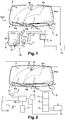
- the invention relates to the control of a system 100 for cleaning the outer surface 1 of a window of a motor vehicle, which is here a windshield 2, as illustrated in the figure 1 .
- the system comprises a cleaning device 100 which here comprises two wiper blades, or wiper blades 3, each of which is mounted on an associated wiper arm 4.
- Each wiper blade is able to move angularly along the outer surface 1 of the windshield 2 between an extreme low wiping position PB and an extreme high wiping position PH, and vice versa.
- the cleaning device also comprises an electric motor 5 which is intended to drive the wiper arms, and therefore the wiper blades 3 in alternating angular sweeping.
- the cleaning system 100 also comprises a set of means for spraying liquid onto the outer surface of the windshield.
- These means here comprise a system 6 of pipe (s) connected to jets (or nozzles) 7 intended to eject and project liquid onto the windshield 2.
- the jets 7 are located here and distributed all along the wiper blades 3, and they are arranged so as to project liquid upwards from the wiper blades 3, that is to say upwards. windshield 2.
- the jets can be located along the wiper blades 3 only facing the extreme high wiping position PB.
- the liquid projection can be carried out only in the direction of the rise from the low position PB to the high position PH, only in the direction of the descent from the high position PH to the low position PB, or also both uphill and downhill.
- the system can be implemented with nozzles located on both longitudinal sides of the wiper blades.
- the liquid projection can then be carried out either only in the direction of the rise from the low position PB to the high position PH, or only in the direction of the descent from the high position PH to the position low PB, or in both directions, that is to say according to the direction of the rise and according to the direction of the descent.
- the liquid is then sprayed using the nozzles placed facing the advancing side or opposite the advancing side depending on the desired effect.
- nozzles 7 arranged on both sides of the wiper blades 3 simultaneously spray the liquid.
- the pipe system (s) 6 is supplied with the liquid to be sprayed by two separate upstream circuits, each of which is associated with a specific function requested from the cleaning system 1.
- a first circuit 8 For a normal or conventional washing function aimed at removing water and / or dirt present on the outer surface of the windshield, a first circuit 8 comprises a first reservoir 9 - containing a washing liquid - and a first pump 10 intended to circulate the washing liquid in the pipe system (s) 6.
- a second circuit 11 For a cleaning function such as a defrost function, a second circuit 11 comprises a second reservoir 12 - containing a defrost liquid - and a second pump 13 intended to circulate the defrost liquid in the pipe system (s). 6.
- Such a defrosting function is used to remove frost formed on the outer surface of the window, here the windshield.
- the cleaning device 100 can be designed to also be able to clean insects stuck on the windshield 2.
- the second reservoir 12 may be in the form of a removable cartridge. By changing the cartridge, for example, it is then possible to replace a de-icing liquid with a cleaning liquid suitable for cleaning insects, for example containing a specific detergent.
- the defrosting and insect cleaning functions have the particularity of ridding the windshield of a material adhering to the outer surface 1 of the windshield 2, for which the liquid used for washing function is not suitable.
- the cleaning system 100 uses a particular liquid which is expensive and which should be used in a minimum quantity.
- the cleaning system 100 comprises an electronic unit 14 capable of controlling the electric motor 5 for driving the wiper blades 3 and activating the pumps 10, 13 of the two circuits 8, 11 for supplying liquid to perform various operating cycles on the system, including cycles suitable either for the normal washing function, with the washing liquid present in the first tank 9, or one of the defrosting and / or insect cleaning functions, with the specific liquid present in the second reservoir 12.
- the electronic control unit 14 can be more or less simple, depending on the complexity of the operations provided for performing the various cycles and performing the various functions.
- the vehicle can also be equipped with a sensor 15 for measuring the outside temperature which is here located on an upper part of the windshield 2, in the middle thereof, without this position being limiting.
- the temperature measurement sensor 15 can be directly exposed to the ambient air outside the vehicle, and it is intended to measure the outside temperature, for example in a range of values going from -50 ° C to + 50 ° C.
- the electronic control unit 14 can be linked to the sensor 15 for measuring the outside temperature and use the data supplied by this sensor to adapt the parameters of the various cycles and fulfill the various functions performed by the system.
- the vehicle comprises, in a known manner, on-board control means 16 which allow a driver to transmit orders to the unit control 14 to perform different cycles and perform the different functions by the system.
- the defrost and / or insect cleaning functions should be implemented when the vehicle is stationary.
- the on-board control means 16 may include safety devices to prevent the implementation of these functions when the vehicle is moving.
- the vehicle is equipped with an electronic remote transmission module 17 for, when the vehicle is parked, allowing a user to remotely initiate defrosting or dirt cleaning cycles.
- the electronic remote transmission module 17 is arranged to communicate with a terminal 18, for example portable, which is for example a mobile telephone, from which the user can remotely send control orders to the cleaning system 100 and / or read messages containing information transmitted to it by various sources, including information supplied by the cleaning system.
- a terminal 18 for example portable, which is for example a mobile telephone, from which the user can remotely send control orders to the cleaning system 100 and / or read messages containing information transmitted to it by various sources, including information supplied by the cleaning system.
- the vehicle is equipped with a sensor 19 for determining the condition of the outer surface of the windshield 2. It is also equipped with an electronic control module 20 designed to analyze and use data supplied by the sensor 19 .
- the electronic control module 20 can be a specific box belonging to the cleaning system or it can be constituted by part of an on-board computer, depending on the type of vehicle.
- the electronic control module 20 is electrically connected to the electronic remote transmission module 17, in particular for communicating with the portable terminal 18 and transmitting control commands to the control unit 14.
- the sensor 19 and the electronic control module 20 are designed to analyze the condition of the outer surface of the windshield 2.
- the senor 19 is arranged inside the vehicle and may for example include a camera looking outwards through the windshield.
- the sensor 19 is installed so as not to obstruct the driver's vision, and so that his field of view passes through a portion of the windshield representative of the general condition of the outer surface of the latter.
- the sensor 19 is for example installed at the top in the middle of the windshield, generally at the level of the interior rear-view mirror of the passenger compartment, and its field passes through a portion of the windshield 2 which can be scanned by at least one of the wiper blades 3.
- the senor 19 may include a camera installed outside the vehicle, or even an ultrasonic sensor arranged on the window 2.
- the senor 19 can provide data relating to the presence and / or absence of any material or any product present which adheres to the outer surface of the windshield.
- the sensor 19 and the electronic control module 20 are designed to analyze the state of the outer surface 1 of the windshield 2 and determine the presence or absence of snow on the outer surface of the windshield.
- the sensor 19 and the electronic control module 20 are designed to analyze the condition of the outer surface of the windshield 2, and to determine the amount of snow - in surface area and / or in the thickness of the layer of snow. snow - present on the outer surface of the windshield 2.
- the vehicle can also be equipped with a sensor 21 for locating the geographical position of the vehicle which is connected to the electronic control module 20.
- a sensor 21 for locating the geographical position of the vehicle which is connected to the electronic control module 20.
- Such a sensor, or any another equivalent means of geolocation of the vehicle allows the electronic control module 20 to know in real time, or to have memorized, the geographical location of the vehicle, in particular when it is stationary.
- the vehicle can also receive in real time, or store, meteorological information or data supplied by a service provider. These data can for example be received by the electronic remote transmission module 17 or by any other means of remote communication with which the vehicle is equipped.
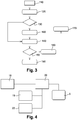
- the user here wishes to trigger a cycle of defrosting the outer surface of the windshield 2.
- step 110 he transmits an order to initiate a defrost cycle.
- the electronic module 20 for controlling the cleaning system 100 triggers a step 120 of data acquisition aimed at determining whether any snow is present on the outer surface 1 of the windshield 2.
- step 120 is carried out using the sensor 19, which can as described above be a camera.
- the image or shooting data supplied by the sensor 19 is transmitted to the electronic control unit 20 which is capable of analyzing them to determine the presence or absence of snow on the windshield 2.
- the electronic control unit 20 performs an analysis step 130 and provides a result representative of the whether or not there is snow on the outer surface 1 of the windshield 2.
- step 130 If the result of the analysis step 130 is negative, that is to say if there is no snow on the windshield 2, or if the quantity of snow present is evaluated as being very low or negligible, the electronic control module 20 then triggers a step 140 for starting a window cleaning cycle which is here a defrost cycle in response to the command transmitted to step 110.
- the step 140 of starting a defrost cycle can be followed by a step 150 of determining a state of blocking, or not, of the wiper blades 3 by the frost present at the outer surface of windshield 2.
- the control system issues an order 160 representative of this blocking state which is translated by the system in the form of an instruction 170 d 'stop the defrost cycle.
- the control system issues an instruction 180 to continue the defrost cycle.
- step 130 If the result of the analysis step 130 is positive, that is to say if the analysis of the data supplied by the sensor 19 leads to a result of detection of snow present on the outer surface of the windshield 2 , the electronic control module 20 then triggers in step 190 a snow removal cycle of all or part of the outer surface 1 of the windshield 2.
- the cleaning system 100 then performs one or more snow removal operations aimed at ridding the outer surface of the windshield 2 of at least part of the snow present, in particular in order to clear the area to be defrosted corresponding for example to a field. minimum driver's vision.
- the snow removal operations are for example constituted by one or more sweeping (s) carried out by the wiper blades 3.
- the scans are carried out between the extreme positions PB and PH which have been described above which correspond respectively to the extreme low and high scanning positions during conventional operations of wiping the windshield with a view to removing it from it. 'water.
- the implementation of the wiper blades 3 with a view to removing the snow can be carried out according to a particular snow removal mode, which is managed by the electronic module 20 and according to which one and or the other of the two wiper blades 3 is angularly displaced beyond one and / or the other of the two extreme positions PB and or PH, that is to say for example towards a grid located in the lower part of the windshield 2, beyond a windshield seal located in the upper part, so as to come as close as possible to or touch a windshield pillar.
- a particular snow removal mode which is managed by the electronic module 20 and according to which one and or the other of the two wiper blades 3 is angularly displaced beyond one and / or the other of the two extreme positions PB and or PH, that is to say for example towards a grid located in the lower part of the windshield 2, beyond a windshield seal located in the upper part, so as to come as close as possible to or touch a windshield pillar.
- the snow is thus evacuated “entirely” outside the windshield.
- the management of the number of successive snow removal operations carried out by the wiper blades 3 is managed by the electronic control module 20 in association with the sensor 19 until the snow has been completely or almost completely evacuated.
- the sensor or sensors for evaluating the presence of snow are such that they allow an initial evaluation of the thickness of the layer of snow or of the quantity of snow to be evacuated, the number of snow sweeping operations then being able to be established initially.
- the electronic piloting device 20 receives information which is representative of the probability, that is to say of a probability level, of the presence of snow on the outer surface 1 of the windshield 2.
- the driver can remotely transmit, for example by means of the portable terminal 18, information according to which it has snowed or it is going to snow, this information possibly being more or less rich in data possibly indicating the amount of snow that has fallen or of which the amount of snow has fallen. fall is expected, or for example indicating the chronology of snowfall.
- control system 100 When the driver parks his vehicle with a view to leaving it, he can also enter information according to which he thinks it is going to snow, the control system 100, and in particular the electronic control unit 20, being able to be designed and programmed to perform one several "preventive" cycles of snow removal while the vehicle is parked.
- the information or data, representative of a level of probability of the presence of snow on the outer surface of the windshield 2, can also be supplied to the control system. control, and in particular to the electronic control unit 20, automatically without intervention by the driver.
- the vehicle can receive and store information relating to the climate and meteorology which may or may not be associated with the data supplied by the sensor 21 and which are representative of the geographical position of the vehicle.
- All of these data is then analyzed by the electronic control unit 20 which determines whether the probability is greater than a determined threshold value and which, depending on the result of this analysis step, triggers or not a snow removal cycle. more or less important.
- the triggering of one or more snow removal cycles, successive or staggered in time, is then a preventive snow removal operation.
- the duration of each cycle and / or the interval between each snow removal cycle can be calculated by the control system 100, and in particular by the electronic control unit 20, in particular by taking into account information relating to the torque of the control unit (s). electric motors 5 for driving the wiper blades 3.
- the interval to the next snow clearing cycle will be extended. If significant resistance is detected, this information can be analyzed as representative of heavy snowfall and the interval to the next snow removal cycle will be shortened.
- each cycle comprising one or more snow removal operations by sweeping the outer surface 1 of the windshield 2, consumes electrical energy.
- the quantity of electrical energy necessary for carrying out a snow removal cycle may be greater or lesser depending in particular on the quantity of snow to be removed which determines the number of successive snow sweeping operations, and therefore the amount of snow to be removed. energy consumed during each snow removal cycle.
- the thickness of the snow requires the application of a more or less significant torque by the electric motors 5, which also modifies the electric consumption.
- step 200 by means of the control button 16, or in a preventive and programmed manner, or even by transmission of a remote tripping order as explained previously, an order to launch d is transmitted to the electronic control unit 20. '' a snow removal cycle, possibly as a preventive measure.
- This order is transmitted to the electronic control unit 20 which, in step 210, analyzes the data supplied by the sensor 22 for measuring the charge level of the electric battery of the vehicle in order, in step 220, to determine whether the battery electric is sufficiently charged to perform such snow removal cycle or at least part of the snow removal cycle.
- a sufficient level of charge of the electric battery does not mean only the quantity of electricity necessary to carry out one or more operations of evacuating the snow by sweeping by means of the wiper blades 3, but it also takes into account a sufficient "minimum” amount of electrical energy after the snow-clearing cycle, in particular to then allow the motor vehicle's powertrain to be started.
- the electronic control unit 20 then issues an instruction 230 to stop the snow removal cycle.
- step 220 reveals a sufficient level of charge in the electric battery of the vehicle
- the electronic control device 20 then triggers a step 120 ′ of acquiring data relating to the presence or absence of snow on the outer surface 1 of the guard. -brise 2 which is analogous to step 120 described above.
- step 130 ′ The data supplied for example by the sensor 19, or the data relating to the probability of the presence of snow on the outer surface 1 of the windshield 2, are then analyzed in step 130 ′ which is analogous to step 130 described. previously.
- step 130 ′ reveals that there is no snow to be evacuated, then the electronic control device either interrupts the snow removal cycle, or puts the latter in timed standby until a new subsequent triggering.
- step 130 ′ reveals the presence of snow to be removed, then the electronic control device 20 triggers a step 190 ′, similar to step 190 described above which comprises at least one operation for removing the snow by sweeping the snow. means of wiper blades 3.
- the snow removal cycle can then optionally comprise an additional step 240 of determining the number of sweeping operations which may have been carried out in particular to compare it with a number of operations programmed or determined as a function of the result of an evaluation of a quantity of snow present on the outer surface 1, or which is expected to fall on this outer surface of the windshield 2.
- step 240 reveals that a sufficient number of evacuation operations have been performed, then the electronic control device 20 ends the process at step 250.
- step 240 reveals that only an insufficient number of operations could be performed, the electronic control device 20 then triggers a new interrogation to measure the charge level of the electric battery of the vehicle in step 210.
Landscapes
- Engineering & Computer Science (AREA)
- Mechanical Engineering (AREA)
- Automation & Control Theory (AREA)
- Water Supply & Treatment (AREA)
- Air-Conditioning For Vehicles (AREA)
- Vehicle Cleaning, Maintenance, Repair, Refitting, And Outriggers (AREA)
Claims (11)
- Verfahren zur Steuerung eines Systems (100) zur Reinigung eines Fensters (2) eines Kraftfahrzeugs, wobei dieses Verfahren einen Schneebeseitigungszyklus umfasst, welcher umfasst:- einen Schritt (120) der Erfassung wenigstens eines Datenelements, welches für das Vorhandensein oder das Nichtvorhandensein von Schnee auf einer Außenfläche (1) des Fensters (2) repräsentativ ist oder welches für die Wahrscheinlichkeit des Vorhandenseins von Schnee auf einer Außenfläche des Fensters repräsentativ ist;- und einen Schritt (130) der Analyse des Datenelements, dessen Ergebnis, wenn das Vorhandensein von Schnee erkannt worden ist oder wenn die Wahrscheinlichkeit des Vorhandenseins von Schnee größer als ein bestimmter Schwellenwert ist, darin besteht, einen Arbeitsvorgang (190) der Schneebeseitigung einzuleiten, welcher bezweckt, das Fenster von wenigstens einem Teil des Schnees zu befreien,wobei der Schneebeseitigungszyklus in Reaktion auf einen Schneebeseitigungsbefehl ausgelöst wird, der von einem Benutzer des Fahrzeugs gesendet wird, wobei der Schneebeseitigungsbefehl von einem Benutzer des Fahrzeugs aus der Ferne gesendet und an das Reinigungssystem übertragen wird,
wobei das Verfahren dadurch gekennzeichnet ist, dass vor dem Start eines Schneebeseitigungszyklus oder während eines Schneebeseitigungszyklus das Verfahren einen Schritt (210) der Messung eines Energieniveaus umfasst, das an Bord des Fahrzeugs für den Antrieb von Mitteln (3) zum Kehren der Außenfläche des Fensters verfügbar ist, und wenn der Schritt (210) der Messung ein verfügbares Energieniveau aufzeigt, das niedriger als ein bestimmter Schwellenwert ist, der Schneebeseitigungszyklus nicht startet oder unterbrochen wird, vorzugsweise eine entsprechende Information an einen Benutzer des Fahrzeugs übertragen wird und vorzugsweise das verfügbare Energieniveau ein Ladeniveau einer elektrischen Batterie des Fahrzeugs ist. - Verfahren nach Anspruch 1, dadurch gekennzeichnet, dass der Arbeitsvorgang der Schneebeseitigung bis zur Erzielung eines bestimmten Niveaus der Schneebeseitigung des Fensters wiederholt wird.
- Verfahren nach Anspruch 1 oder 2, dadurch gekennzeichnet, dass in Reaktion auf den Schneebeseitigungsbefehl der Schneebeseitigungszyklus verzögert und/oder sequentiell ausgelöst wird.
- Verfahren nach einem der vorhergehenden Ansprüche, dadurch gekennzeichnet, dass der Schritt (120) der Erfassung wenigstens eines Datenelements, welches für das Vorhandensein oder das Nichtvorhandensein von Schnee auf der Außenfläche des Fensters repräsentativ ist, mittels wenigstens eines Sensors (19) durchgeführt wird, der an Bord des Fahrzeugs mitgeführt wird.
- Verfahren nach einem der vorhergehenden Ansprüche, dadurch gekennzeichnet, dass der Schritt (120) der Erfassung wenigstens eines Datenelements, welches für die Wahrscheinlichkeit des Vorhandenseins von Schnee auf der Außenfläche des Fensters repräsentativ ist, ein Schritt der Erfassung von meteorologischen Daten und/oder der geographischen Positionsbestimmung des Fahrzeugs im Stillstand und/oder während der Fahrt ist.
- Verfahren nach einem der vorhergehenden Ansprüche, dadurch gekennzeichnet, dass der Arbeitsvorgang der Schneebeseitigung mittels einer Vorrichtung zur Reinigung der Außenfläche (1) des Fensters (2) durchgeführt wird, welche dafür eingerichtet ist, das Fenster von wenigstens einem Teil des auf dieser Fläche vorhandenen Schnees zu befreien, und welche wenigstens ein Scheibenwischerblatt (3) aufweist, das dafür eingerichtet ist zu arbeiten:- gemäß einem ersten Modus, dem des Wischens, in welchem es sich in Winkelrichtung zwischen einer äußersten Wischposition (PB) und einer anderen äußersten Wischposition (PH) bewegt;- und gemäß einem zweiten Modus, dem der Schneebeseitigung, in welchem es sich in Winkelrichtung zwischen zwei äußersten Positionen des Kehrens des Schnees bewegen kann, von denen sich wenigstens eine in Winkelrichtung jenseits einer der zwei äußersten Wischpositionen (PB, PH) befindet.
- System (100) zur Steuerung einer Vorrichtung zur Reinigung eines Fensters eines Kraftfahrzeugs, welches umfasst:- wenigstens einen Sensor (19) zur Erfassung wenigstens eines Datenelements, welches für das Vorhandensein oder das Nichtvorhandensein von Schnee auf einer Außenfläche (1) des Fensters (2) repräsentativ ist oder welches für die Wahrscheinlichkeit des Vorhandenseins von Schnee auf einer Außenfläche des Fensters repräsentativ ist;- und ein erstes elektronisches Mittel (20) zur Kommunikation mit wenigstens dem Sensor (19) zur Erfassung und zum Empfang eines Befehls zur Auslösung eines Schneebeseitigungszyklus,dadurch gekennzeichnet, dass das erste elektronische Mittel (20) dafür eingerichtet ist:- das wenigstens eine Datenelement zu analysieren;- und, wenn das Vorhandensein von Schnee erkannt worden ist oder wenn die Wahrscheinlichkeit des Vorhandenseins von Schnee größer als ein bestimmter Schwellenwert ist, wenigstens einen Arbeitsvorgang (190) der Schneebeseitigung für das Fenster einzuleiten, welcher bezweckt, das Fenster von wenigstens einem Teil des Schnees zu befreien, wobei das System ein zweites elektronisches Mittel (17) umfasst, welches mit dem ersten elektronischen Mittel (20) verbunden ist und welches dafür eingerichtet ist, mit einem tragbaren Endgerät (18) zu kommunizieren, um wenigstens einen Befehl zu empfangen, der von einem Benutzer des Fahrzeugs aus der Ferne gesendet wurde, und um von dem System stammende Informationen an den Benutzer zu übertragen, wobei die an den Benutzer zu übertragenden Informationen eine Information umfassen, die sich auf die Nichtauslösung eines Schneebeseitigungszyklus und/oder auf die Unterbrechung eines Schneebeseitigungszyklus bezieht,wobei das System dadurch gekennzeichnet ist, dass es wenigstens einen Messfühler (22) für ein Energieniveau umfasst, das an Bord des Fahrzeugs für den Antrieb von Mitteln (3) zum Kehren der Außenfläche (1) des Fensters (2) verfügbar ist, wobei der Messfühler (22) mit dem ersten elektronischen Mittel (20) verbunden ist und das erste elektronische Mittel (20) dafür eingerichtet ist, den Schneebeseitigungszyklus nicht auszulösen oder zu unterbrechen, wenn der von dem Messfühler gemessene Wert eines Energieniveaus niedriger als ein bestimmter Schwellenwert ist, wobei der Messfühler vorzugsweise ein Messfühler (22) für ein Ladeniveau einer elektrischen Batterie des Fahrzeugs ist.
- System nach Anspruch 7, dadurch gekennzeichnet, dass es Mittel zur Auslösung eines Zyklus (140) der Reinigung des Fensters umfasst, welcher nach Abschluss des Schneebeseitigungszyklus ausgelöst werden kann, wobei der Reinigungszyklus (140) vorzugsweise ein Zyklus der Entfrostung des Fensters ist.
- System nach einem der Ansprüche 7 bis 8, dadurch gekennzeichnet, dass der wenigstens eine Sensor (19) zur Erfassung wenigstens eines Datenelements, welches für das Vorhandensein oder das Nichtvorhandensein von Schnee auf der Außenfläche des Fensters repräsentativ ist, ein Sensor ist, der an Bord des Fahrzeugs mitgeführt wird.
- System nach einem der Ansprüche 7 bis 9, dadurch gekennzeichnet, dass der wenigstens eine Sensor zur Erfassung wenigstens eines Datenelements, welches für die Wahrscheinlichkeit des Vorhandenseins von Schnee auf der Außenfläche (1) des Fensters (2) repräsentativ ist, ein Sensor zur Erfassung von meteorologischen Daten (21) und/oder zur geographischen Positionsbestimmung des Fahrzeugs im Stillstand und/oder während der Fahrt ist.
- Anordnung, dadurch gekennzeichnet, dass sie ein System zur Steuerung einer Vorrichtung zur Reinigung (100) nach einem der Ansprüche 7 bis 10 und eine Vorrichtung zur Reinigung des Fensters, die dafür eingerichtet ist, wenigstens einen Arbeitsvorgang des Kehrens der Außenfläche (1) des Fensters (2), welcher bezweckt, es von wenigstens einem Teil des auf dieser Fläche vorhandenen Schnees zu befreien, aufweist, wobei die Vorrichtung zur Reinigung (100) wenigstens ein Scheibenwischerblatt (3) aufweist, wobei das Scheibenwischerblatt (3) vorzugsweise dafür eingerichtet ist zu arbeiten:- gemäß einem ersten Modus, dem des Wischens, in welchem es sich in Winkelrichtung zwischen einer äußersten Wischposition (PB) und einer anderen äußersten Wischposition (PH) bewegt;- und gemäß einem zweiten Modus, dem der Schneebeseitigung, in welchem es sich in Winkelrichtung zwischen zwei äußersten Positionen des Kehrens des Schnees bewegen kann, von denen sich wenigstens eine in Winkelrichtung jenseits einer der zwei äußersten Wischpositionen (PB, PH) befindet.
Applications Claiming Priority (2)
| Application Number | Priority Date | Filing Date | Title |
|---|---|---|---|
| FR1652518A FR3049246B1 (fr) | 2016-03-24 | 2016-03-24 | Procede et systeme de pilotage du nettoyage d'une vitre de vehicule, et ensemble comportant un tel systeme et un dispositif de nettoyage |
| PCT/EP2017/056596 WO2017162609A1 (fr) | 2016-03-24 | 2017-03-20 | Procédé et système de pilotage du nettoyage d'une vitre de véhicule, et ensemble comportant un tel système et un dispositif de nettoyage |
Publications (2)
| Publication Number | Publication Date |
|---|---|
| EP3433143A1 EP3433143A1 (de) | 2019-01-30 |
| EP3433143B1 true EP3433143B1 (de) | 2021-07-14 |
Family
ID=55808760
Family Applications (1)
| Application Number | Title | Priority Date | Filing Date |
|---|---|---|---|
| EP17711229.9A Active EP3433143B1 (de) | 2016-03-24 | 2017-03-20 | Verfahren und system zur steuerung der reinigung eines fahrzeugfensters und anordnung mit solch einem system und einer reinigungsvorrichtung |
Country Status (3)
| Country | Link |
|---|---|
| EP (1) | EP3433143B1 (de) |
| FR (1) | FR3049246B1 (de) |
| WO (1) | WO2017162609A1 (de) |
Families Citing this family (6)
| Publication number | Priority date | Publication date | Assignee | Title |
|---|---|---|---|---|
| FR3085922B1 (fr) * | 2018-09-19 | 2020-09-18 | Valeo Systemes Dessuyage | Detection de neige sur une surface vitree d'un vehicule automobile |
| FR3085923B1 (fr) * | 2018-09-19 | 2021-04-02 | Valeo Systemes Dessuyage | Dispositif de detection de neige sur une surface vitree d'un vehicule automobile |
| CN115052789B (zh) * | 2019-12-17 | 2025-12-19 | 考特克斯·特克斯罗恩有限公司及两合公司 | 用于优化清洁过程的资源要求的方法、清洁方法、控制量的用途、清洁系统和机动车辆 |
| EP3860886B1 (de) * | 2019-12-17 | 2022-04-27 | Kautex Textron GmbH & Co. KG | Verfahren zur indirekten ableitung einer systematischen abhängigkeit für ein systemverhalten eines systemteils eines reinigungssystems |
| EP3967559B1 (de) | 2020-09-09 | 2023-06-07 | Volvo Truck Corporation | Verfahren und system zur verwaltung eines assistenzsystems für eine windschutzscheibe eines fahrerhauses eines fahrzeugs |
| US12503078B2 (en) * | 2023-09-13 | 2025-12-23 | GM Global Technology Operations LLC | Vehicle glass clearing management system |
Citations (2)
| Publication number | Priority date | Publication date | Assignee | Title |
|---|---|---|---|---|
| JP2006347297A (ja) * | 2005-06-14 | 2006-12-28 | Toyota Motor Corp | 車載装置 |
| WO2017137397A1 (fr) * | 2016-02-11 | 2017-08-17 | Valeo Systèmes d'Essuyage | Système et procédé de pilotage d'un dispositif de nettoyage d'une vitre d'un véhicule |
Family Cites Families (6)
| Publication number | Priority date | Publication date | Assignee | Title |
|---|---|---|---|---|
| JPH0211442A (ja) * | 1988-06-28 | 1990-01-16 | Mazda Motor Corp | 車両用ワイパ制御装置 |
| US20040021575A1 (en) * | 2002-08-01 | 2004-02-05 | Oskorep John Jeffrey | Methods and apparatus for melting snow and ice on a vehicle |
| US20070056947A1 (en) * | 2005-09-15 | 2007-03-15 | Control Devices, Inc. | System and sensor for remote defrost activation |
| FR2987016B1 (fr) * | 2012-02-22 | 2014-11-21 | Valeo Systemes Dessuyage | Procede pour faire fondre du gel et/ou du givre et/ou de la glace et/ou de la neige present sur la vitre d'un vehicule |
| DE102012207925A1 (de) * | 2012-05-11 | 2013-11-14 | Robert Bosch Gmbh | Steuerung einer Enteisungseinrichtung |
| US8996257B2 (en) * | 2013-02-01 | 2015-03-31 | GM Global Technology Operations LLC | Vehicle anti-icing and de-icing systems and corresponding methods of operation |
-
2016
- 2016-03-24 FR FR1652518A patent/FR3049246B1/fr active Active
-
2017
- 2017-03-20 WO PCT/EP2017/056596 patent/WO2017162609A1/fr not_active Ceased
- 2017-03-20 EP EP17711229.9A patent/EP3433143B1/de active Active
Patent Citations (2)
| Publication number | Priority date | Publication date | Assignee | Title |
|---|---|---|---|---|
| JP2006347297A (ja) * | 2005-06-14 | 2006-12-28 | Toyota Motor Corp | 車載装置 |
| WO2017137397A1 (fr) * | 2016-02-11 | 2017-08-17 | Valeo Systèmes d'Essuyage | Système et procédé de pilotage d'un dispositif de nettoyage d'une vitre d'un véhicule |
Also Published As
| Publication number | Publication date |
|---|---|
| WO2017162609A1 (fr) | 2017-09-28 |
| FR3049246B1 (fr) | 2019-05-03 |
| EP3433143A1 (de) | 2019-01-30 |
| FR3049246A1 (fr) | 2017-09-29 |
Similar Documents
| Publication | Publication Date | Title |
|---|---|---|
| EP3433143B1 (de) | Verfahren und system zur steuerung der reinigung eines fahrzeugfensters und anordnung mit solch einem system und einer reinigungsvorrichtung | |
| EP3414134B1 (de) | System und verfahren zur steuerung einer vorrichtung zur reinigung einer fensterscheibe eines fahrzeugs | |
| EP3002169B1 (de) | Scheibenwischerarm, reinigungssystem und -verfahren einer glasoberfläche eines kraftfahrzeugs | |
| EP3144190B1 (de) | Verfahren und vorrichtung zur enteisung einer fahrzeugscheibe | |
| WO2020064881A1 (fr) | Systeme d'aide a la conduite d'un vehicule automobile | |
| FR3141417A1 (fr) | Système d’essuie-glace de véhicule | |
| EP2851246B1 (de) | Verfahren zur Erfassung der Position eines Wischarms einer Scheibenwischervorrichtung | |
| EP2671765B1 (de) | Fernreinigungssystem der windschutzscheibe eines fahrzeugs | |
| EP3439926B1 (de) | Vorrichtung zum enteisen und/oder reinigen einer fahrzeugfensterscheibe mit einem motor mit kontinuierlicher rotation sowie entsprechender motor mit kontinuierlicher rotation und verfahren | |
| EP2783926A1 (de) | Verfahren zur Erhöhung der Kratzfestigkeit der Windschutzscheibe, und Scheibenwischer, der dieses Verfahren umsetzt | |
| FR2933931A1 (fr) | Procede et systeme de degivrage d'une vitre de vehicule automobile | |
| EP3339115B1 (de) | Flüssigkeitstank, insbesondere für scheibenwaschflüssigkeit, für ein reinigungssystem eines fahrzeugs | |
| FR3141418A1 (fr) | Système d’essuie-glace | |
| WO2022162235A1 (fr) | Système de nettoyage d'une surface vitrée d'un véhicule | |
| WO2020058309A1 (fr) | Procede de degivrage d'une surface vitree de vehicule | |
| EP4185499B1 (de) | Verfahren zum reinigen eines erfassungssystems eines fahrzeugs und korrespondierendes kraftfahrzeug | |
| FR2957881A1 (fr) | Procede de nettoyage d'une vitre et systeme d'essuie-glace, notamment pour vehicule automobile | |
| FR3161886A1 (fr) | Système de nettoyage d’un véhicule | |
| FR2957879A1 (fr) | Procede de nettoyage d'une vitre et systeme d'essuie-glace, notamment pour vehicule automobile | |
| EP4140835A1 (de) | Verfahren und system zur enteisung einer glasfläche eines fahrzeugs | |
| FR2957873A1 (fr) | Procede de nettoyage d'une vitre et systeme d'essuie-glace, notamment pour vehicule automobile | |
| WO2022253585A1 (fr) | Procédé de nettoyage et système de nettoyage correspondant | |
| FR3016324A1 (fr) | Dispositif de nettoyage de vitre de vehicule comportant une unite de mouillage | |
| FR3151263A1 (fr) | Système de véhicule pour exécuter une fonction de service par un dispositif de nettoyage de véhicule | |
| WO2020057817A1 (fr) | Détection de neige sur une surface vitrée d'un véhicule automobile |
Legal Events
| Date | Code | Title | Description |
|---|---|---|---|
| STAA | Information on the status of an ep patent application or granted ep patent |
Free format text: STATUS: UNKNOWN |
|
| STAA | Information on the status of an ep patent application or granted ep patent |
Free format text: STATUS: THE INTERNATIONAL PUBLICATION HAS BEEN MADE |
|
| PUAI | Public reference made under article 153(3) epc to a published international application that has entered the european phase |
Free format text: ORIGINAL CODE: 0009012 |
|
| STAA | Information on the status of an ep patent application or granted ep patent |
Free format text: STATUS: REQUEST FOR EXAMINATION WAS MADE |
|
| 17P | Request for examination filed |
Effective date: 20180921 |
|
| AK | Designated contracting states |
Kind code of ref document: A1 Designated state(s): AL AT BE BG CH CY CZ DE DK EE ES FI FR GB GR HR HU IE IS IT LI LT LU LV MC MK MT NL NO PL PT RO RS SE SI SK SM TR |
|
| AX | Request for extension of the european patent |
Extension state: BA ME |
|
| DAV | Request for validation of the european patent (deleted) | ||
| DAX | Request for extension of the european patent (deleted) | ||
| STAA | Information on the status of an ep patent application or granted ep patent |
Free format text: STATUS: EXAMINATION IS IN PROGRESS |
|
| 17Q | First examination report despatched |
Effective date: 20200610 |
|
| GRAP | Despatch of communication of intention to grant a patent |
Free format text: ORIGINAL CODE: EPIDOSNIGR1 |
|
| STAA | Information on the status of an ep patent application or granted ep patent |
Free format text: STATUS: GRANT OF PATENT IS INTENDED |
|
| INTG | Intention to grant announced |
Effective date: 20210224 |
|
| GRAS | Grant fee paid |
Free format text: ORIGINAL CODE: EPIDOSNIGR3 |
|
| GRAA | (expected) grant |
Free format text: ORIGINAL CODE: 0009210 |
|
| STAA | Information on the status of an ep patent application or granted ep patent |
Free format text: STATUS: THE PATENT HAS BEEN GRANTED |
|
| AK | Designated contracting states |
Kind code of ref document: B1 Designated state(s): AL AT BE BG CH CY CZ DE DK EE ES FI FR GB GR HR HU IE IS IT LI LT LU LV MC MK MT NL NO PL PT RO RS SE SI SK SM TR |
|
| REG | Reference to a national code |
Ref country code: GB Ref legal event code: FG4D Free format text: NOT ENGLISH |
|
| REG | Reference to a national code |
Ref country code: IE Ref legal event code: FG4D Free format text: LANGUAGE OF EP DOCUMENT: FRENCH |
|
| REG | Reference to a national code |
Ref country code: DE Ref legal event code: R096 Ref document number: 602017042069 Country of ref document: DE |
|
| REG | Reference to a national code |
Ref country code: AT Ref legal event code: REF Ref document number: 1410399 Country of ref document: AT Kind code of ref document: T Effective date: 20210815 |
|
| REG | Reference to a national code |
Ref country code: LT Ref legal event code: MG9D |
|
| REG | Reference to a national code |
Ref country code: NL Ref legal event code: MP Effective date: 20210714 |
|
| REG | Reference to a national code |
Ref country code: AT Ref legal event code: MK05 Ref document number: 1410399 Country of ref document: AT Kind code of ref document: T Effective date: 20210714 |
|
| PG25 | Lapsed in a contracting state [announced via postgrant information from national office to epo] |
Ref country code: ES Free format text: LAPSE BECAUSE OF FAILURE TO SUBMIT A TRANSLATION OF THE DESCRIPTION OR TO PAY THE FEE WITHIN THE PRESCRIBED TIME-LIMIT Effective date: 20210714 Ref country code: FI Free format text: LAPSE BECAUSE OF FAILURE TO SUBMIT A TRANSLATION OF THE DESCRIPTION OR TO PAY THE FEE WITHIN THE PRESCRIBED TIME-LIMIT Effective date: 20210714 Ref country code: NO Free format text: LAPSE BECAUSE OF FAILURE TO SUBMIT A TRANSLATION OF THE DESCRIPTION OR TO PAY THE FEE WITHIN THE PRESCRIBED TIME-LIMIT Effective date: 20211014 Ref country code: PT Free format text: LAPSE BECAUSE OF FAILURE TO SUBMIT A TRANSLATION OF THE DESCRIPTION OR TO PAY THE FEE WITHIN THE PRESCRIBED TIME-LIMIT Effective date: 20211115 Ref country code: NL Free format text: LAPSE BECAUSE OF FAILURE TO SUBMIT A TRANSLATION OF THE DESCRIPTION OR TO PAY THE FEE WITHIN THE PRESCRIBED TIME-LIMIT Effective date: 20210714 Ref country code: LT Free format text: LAPSE BECAUSE OF FAILURE TO SUBMIT A TRANSLATION OF THE DESCRIPTION OR TO PAY THE FEE WITHIN THE PRESCRIBED TIME-LIMIT Effective date: 20210714 Ref country code: AT Free format text: LAPSE BECAUSE OF FAILURE TO SUBMIT A TRANSLATION OF THE DESCRIPTION OR TO PAY THE FEE WITHIN THE PRESCRIBED TIME-LIMIT Effective date: 20210714 Ref country code: BG Free format text: LAPSE BECAUSE OF FAILURE TO SUBMIT A TRANSLATION OF THE DESCRIPTION OR TO PAY THE FEE WITHIN THE PRESCRIBED TIME-LIMIT Effective date: 20211014 Ref country code: SE Free format text: LAPSE BECAUSE OF FAILURE TO SUBMIT A TRANSLATION OF THE DESCRIPTION OR TO PAY THE FEE WITHIN THE PRESCRIBED TIME-LIMIT Effective date: 20210714 Ref country code: RS Free format text: LAPSE BECAUSE OF FAILURE TO SUBMIT A TRANSLATION OF THE DESCRIPTION OR TO PAY THE FEE WITHIN THE PRESCRIBED TIME-LIMIT Effective date: 20210714 Ref country code: HR Free format text: LAPSE BECAUSE OF FAILURE TO SUBMIT A TRANSLATION OF THE DESCRIPTION OR TO PAY THE FEE WITHIN THE PRESCRIBED TIME-LIMIT Effective date: 20210714 |
|
| PG25 | Lapsed in a contracting state [announced via postgrant information from national office to epo] |
Ref country code: PL Free format text: LAPSE BECAUSE OF FAILURE TO SUBMIT A TRANSLATION OF THE DESCRIPTION OR TO PAY THE FEE WITHIN THE PRESCRIBED TIME-LIMIT Effective date: 20210714 Ref country code: LV Free format text: LAPSE BECAUSE OF FAILURE TO SUBMIT A TRANSLATION OF THE DESCRIPTION OR TO PAY THE FEE WITHIN THE PRESCRIBED TIME-LIMIT Effective date: 20210714 Ref country code: GR Free format text: LAPSE BECAUSE OF FAILURE TO SUBMIT A TRANSLATION OF THE DESCRIPTION OR TO PAY THE FEE WITHIN THE PRESCRIBED TIME-LIMIT Effective date: 20211015 |
|
| REG | Reference to a national code |
Ref country code: DE Ref legal event code: R097 Ref document number: 602017042069 Country of ref document: DE |
|
| PG25 | Lapsed in a contracting state [announced via postgrant information from national office to epo] |
Ref country code: DK Free format text: LAPSE BECAUSE OF FAILURE TO SUBMIT A TRANSLATION OF THE DESCRIPTION OR TO PAY THE FEE WITHIN THE PRESCRIBED TIME-LIMIT Effective date: 20210714 |
|
| PLBE | No opposition filed within time limit |
Free format text: ORIGINAL CODE: 0009261 |
|
| STAA | Information on the status of an ep patent application or granted ep patent |
Free format text: STATUS: NO OPPOSITION FILED WITHIN TIME LIMIT |
|
| PG25 | Lapsed in a contracting state [announced via postgrant information from national office to epo] |
Ref country code: SM Free format text: LAPSE BECAUSE OF FAILURE TO SUBMIT A TRANSLATION OF THE DESCRIPTION OR TO PAY THE FEE WITHIN THE PRESCRIBED TIME-LIMIT Effective date: 20210714 Ref country code: SK Free format text: LAPSE BECAUSE OF FAILURE TO SUBMIT A TRANSLATION OF THE DESCRIPTION OR TO PAY THE FEE WITHIN THE PRESCRIBED TIME-LIMIT Effective date: 20210714 Ref country code: RO Free format text: LAPSE BECAUSE OF FAILURE TO SUBMIT A TRANSLATION OF THE DESCRIPTION OR TO PAY THE FEE WITHIN THE PRESCRIBED TIME-LIMIT Effective date: 20210714 Ref country code: EE Free format text: LAPSE BECAUSE OF FAILURE TO SUBMIT A TRANSLATION OF THE DESCRIPTION OR TO PAY THE FEE WITHIN THE PRESCRIBED TIME-LIMIT Effective date: 20210714 Ref country code: CZ Free format text: LAPSE BECAUSE OF FAILURE TO SUBMIT A TRANSLATION OF THE DESCRIPTION OR TO PAY THE FEE WITHIN THE PRESCRIBED TIME-LIMIT Effective date: 20210714 Ref country code: AL Free format text: LAPSE BECAUSE OF FAILURE TO SUBMIT A TRANSLATION OF THE DESCRIPTION OR TO PAY THE FEE WITHIN THE PRESCRIBED TIME-LIMIT Effective date: 20210714 |
|
| 26N | No opposition filed |
Effective date: 20220419 |
|
| PG25 | Lapsed in a contracting state [announced via postgrant information from national office to epo] |
Ref country code: IT Free format text: LAPSE BECAUSE OF FAILURE TO SUBMIT A TRANSLATION OF THE DESCRIPTION OR TO PAY THE FEE WITHIN THE PRESCRIBED TIME-LIMIT Effective date: 20210714 |
|
| PG25 | Lapsed in a contracting state [announced via postgrant information from national office to epo] |
Ref country code: MC Free format text: LAPSE BECAUSE OF FAILURE TO SUBMIT A TRANSLATION OF THE DESCRIPTION OR TO PAY THE FEE WITHIN THE PRESCRIBED TIME-LIMIT Effective date: 20210714 |
|
| REG | Reference to a national code |
Ref country code: CH Ref legal event code: PL |
|
| GBPC | Gb: european patent ceased through non-payment of renewal fee |
Effective date: 20220320 |
|
| REG | Reference to a national code |
Ref country code: BE Ref legal event code: MM Effective date: 20220331 |
|
| PG25 | Lapsed in a contracting state [announced via postgrant information from national office to epo] |
Ref country code: LU Free format text: LAPSE BECAUSE OF NON-PAYMENT OF DUE FEES Effective date: 20220320 Ref country code: LI Free format text: LAPSE BECAUSE OF NON-PAYMENT OF DUE FEES Effective date: 20220331 Ref country code: IE Free format text: LAPSE BECAUSE OF NON-PAYMENT OF DUE FEES Effective date: 20220320 Ref country code: GB Free format text: LAPSE BECAUSE OF NON-PAYMENT OF DUE FEES Effective date: 20220320 Ref country code: CH Free format text: LAPSE BECAUSE OF NON-PAYMENT OF DUE FEES Effective date: 20220331 |
|
| PG25 | Lapsed in a contracting state [announced via postgrant information from national office to epo] |
Ref country code: BE Free format text: LAPSE BECAUSE OF NON-PAYMENT OF DUE FEES Effective date: 20220331 |
|
| P01 | Opt-out of the competence of the unified patent court (upc) registered |
Effective date: 20230528 |
|
| PG25 | Lapsed in a contracting state [announced via postgrant information from national office to epo] |
Ref country code: HU Free format text: LAPSE BECAUSE OF FAILURE TO SUBMIT A TRANSLATION OF THE DESCRIPTION OR TO PAY THE FEE WITHIN THE PRESCRIBED TIME-LIMIT; INVALID AB INITIO Effective date: 20170320 |
|
| PG25 | Lapsed in a contracting state [announced via postgrant information from national office to epo] |
Ref country code: MK Free format text: LAPSE BECAUSE OF FAILURE TO SUBMIT A TRANSLATION OF THE DESCRIPTION OR TO PAY THE FEE WITHIN THE PRESCRIBED TIME-LIMIT Effective date: 20210714 Ref country code: CY Free format text: LAPSE BECAUSE OF FAILURE TO SUBMIT A TRANSLATION OF THE DESCRIPTION OR TO PAY THE FEE WITHIN THE PRESCRIBED TIME-LIMIT Effective date: 20210714 |
|
| PG25 | Lapsed in a contracting state [announced via postgrant information from national office to epo] |
Ref country code: TR Free format text: LAPSE BECAUSE OF FAILURE TO SUBMIT A TRANSLATION OF THE DESCRIPTION OR TO PAY THE FEE WITHIN THE PRESCRIBED TIME-LIMIT Effective date: 20210714 |
|
| PG25 | Lapsed in a contracting state [announced via postgrant information from national office to epo] |
Ref country code: MT Free format text: LAPSE BECAUSE OF FAILURE TO SUBMIT A TRANSLATION OF THE DESCRIPTION OR TO PAY THE FEE WITHIN THE PRESCRIBED TIME-LIMIT Effective date: 20210714 |
|
| PGFP | Annual fee paid to national office [announced via postgrant information from national office to epo] |
Ref country code: DE Payment date: 20260313 Year of fee payment: 10 |
|
| PGFP | Annual fee paid to national office [announced via postgrant information from national office to epo] |
Ref country code: FR Payment date: 20260331 Year of fee payment: 10 |