EP4142152A1 - Filter, volumenschallwellenresonatoranordnung und verfahren zur herstellung davon und elektronische vorrichtung - Google Patents
Filter, volumenschallwellenresonatoranordnung und verfahren zur herstellung davon und elektronische vorrichtung Download PDFInfo
- Publication number
- EP4142152A1 EP4142152A1 EP21792440.6A EP21792440A EP4142152A1 EP 4142152 A1 EP4142152 A1 EP 4142152A1 EP 21792440 A EP21792440 A EP 21792440A EP 4142152 A1 EP4142152 A1 EP 4142152A1
- Authority
- EP
- European Patent Office
- Prior art keywords
- resonator
- electrode
- thickness
- series
- top electrode
- Prior art date
- Legal status (The legal status is an assumption and is not a legal conclusion. Google has not performed a legal analysis and makes no representation as to the accuracy of the status listed.)
- Pending
Links
- 238000000034 method Methods 0.000 title claims abstract description 17
- 238000004519 manufacturing process Methods 0.000 title claims abstract description 9
- 239000000758 substrate Substances 0.000 claims abstract description 13
- 238000000151 deposition Methods 0.000 claims description 32
- 230000008021 deposition Effects 0.000 claims description 26
- 238000000059 patterning Methods 0.000 claims description 5
- 239000010410 layer Substances 0.000 description 143
- 238000003780 insertion Methods 0.000 description 24
- 230000037431 insertion Effects 0.000 description 24
- 239000000463 material Substances 0.000 description 18
- 230000008878 coupling Effects 0.000 description 14
- 238000010168 coupling process Methods 0.000 description 14
- 238000005859 coupling reaction Methods 0.000 description 14
- 229920002120 photoresistant polymer Polymers 0.000 description 11
- 230000008569 process Effects 0.000 description 8
- VYPSYNLAJGMNEJ-UHFFFAOYSA-N silicon dioxide Inorganic materials O=[Si]=O VYPSYNLAJGMNEJ-UHFFFAOYSA-N 0.000 description 7
- 230000007423 decrease Effects 0.000 description 6
- 238000010586 diagram Methods 0.000 description 6
- 239000010408 film Substances 0.000 description 5
- 229910052751 metal Inorganic materials 0.000 description 4
- 239000002184 metal Substances 0.000 description 4
- 238000002161 passivation Methods 0.000 description 4
- 235000012239 silicon dioxide Nutrition 0.000 description 4
- VYZAMTAEIAYCRO-UHFFFAOYSA-N Chromium Chemical compound [Cr] VYZAMTAEIAYCRO-UHFFFAOYSA-N 0.000 description 3
- RYGMFSIKBFXOCR-UHFFFAOYSA-N Copper Chemical compound [Cu] RYGMFSIKBFXOCR-UHFFFAOYSA-N 0.000 description 3
- FYYHWMGAXLPEAU-UHFFFAOYSA-N Magnesium Chemical compound [Mg] FYYHWMGAXLPEAU-UHFFFAOYSA-N 0.000 description 3
- ZOKXTWBITQBERF-UHFFFAOYSA-N Molybdenum Chemical compound [Mo] ZOKXTWBITQBERF-UHFFFAOYSA-N 0.000 description 3
- KJTLSVCANCCWHF-UHFFFAOYSA-N Ruthenium Chemical compound [Ru] KJTLSVCANCCWHF-UHFFFAOYSA-N 0.000 description 3
- RTAQQCXQSZGOHL-UHFFFAOYSA-N Titanium Chemical compound [Ti] RTAQQCXQSZGOHL-UHFFFAOYSA-N 0.000 description 3
- 229910045601 alloy Inorganic materials 0.000 description 3
- 239000000956 alloy Substances 0.000 description 3
- 229910052782 aluminium Inorganic materials 0.000 description 3
- XAGFODPZIPBFFR-UHFFFAOYSA-N aluminium Chemical compound [Al] XAGFODPZIPBFFR-UHFFFAOYSA-N 0.000 description 3
- 230000008859 change Effects 0.000 description 3
- 229910052804 chromium Inorganic materials 0.000 description 3
- 239000011651 chromium Substances 0.000 description 3
- 150000001875 compounds Chemical class 0.000 description 3
- 229910052802 copper Inorganic materials 0.000 description 3
- 239000010949 copper Substances 0.000 description 3
- PMHQVHHXPFUNSP-UHFFFAOYSA-M copper(1+);methylsulfanylmethane;bromide Chemical compound Br[Cu].CSC PMHQVHHXPFUNSP-UHFFFAOYSA-M 0.000 description 3
- 230000003247 decreasing effect Effects 0.000 description 3
- 238000005530 etching Methods 0.000 description 3
- PCHJSUWPFVWCPO-UHFFFAOYSA-N gold Chemical compound [Au] PCHJSUWPFVWCPO-UHFFFAOYSA-N 0.000 description 3
- 229910052737 gold Inorganic materials 0.000 description 3
- 239000010931 gold Substances 0.000 description 3
- 229910052741 iridium Inorganic materials 0.000 description 3
- GKOZUEZYRPOHIO-UHFFFAOYSA-N iridium atom Chemical compound [Ir] GKOZUEZYRPOHIO-UHFFFAOYSA-N 0.000 description 3
- 229910052749 magnesium Inorganic materials 0.000 description 3
- 239000011777 magnesium Substances 0.000 description 3
- 238000001451 molecular beam epitaxy Methods 0.000 description 3
- 229910052750 molybdenum Inorganic materials 0.000 description 3
- 239000011733 molybdenum Substances 0.000 description 3
- 229910052762 osmium Inorganic materials 0.000 description 3
- SYQBFIAQOQZEGI-UHFFFAOYSA-N osmium atom Chemical compound [Os] SYQBFIAQOQZEGI-UHFFFAOYSA-N 0.000 description 3
- 229910052707 ruthenium Inorganic materials 0.000 description 3
- 239000000377 silicon dioxide Substances 0.000 description 3
- 238000000427 thin-film deposition Methods 0.000 description 3
- 229910052719 titanium Inorganic materials 0.000 description 3
- 239000010936 titanium Substances 0.000 description 3
- WFKWXMTUELFFGS-UHFFFAOYSA-N tungsten Chemical compound [W] WFKWXMTUELFFGS-UHFFFAOYSA-N 0.000 description 3
- 229910052721 tungsten Inorganic materials 0.000 description 3
- 239000010937 tungsten Substances 0.000 description 3
- JMASRVWKEDWRBT-UHFFFAOYSA-N Gallium nitride Chemical compound [Ga]#N JMASRVWKEDWRBT-UHFFFAOYSA-N 0.000 description 2
- XLOMVQKBTHCTTD-UHFFFAOYSA-N Zinc monoxide Chemical compound [Zn]=O XLOMVQKBTHCTTD-UHFFFAOYSA-N 0.000 description 2
- 238000004891 communication Methods 0.000 description 2
- 238000004943 liquid phase epitaxy Methods 0.000 description 2
- 239000000126 substance Substances 0.000 description 2
- 239000010409 thin film Substances 0.000 description 2
- PIGFYZPCRLYGLF-UHFFFAOYSA-N Aluminum nitride Chemical compound [Al]#N PIGFYZPCRLYGLF-UHFFFAOYSA-N 0.000 description 1
- JBRZTFJDHDCESZ-UHFFFAOYSA-N AsGa Chemical compound [As]#[Ga] JBRZTFJDHDCESZ-UHFFFAOYSA-N 0.000 description 1
- 229910002601 GaN Inorganic materials 0.000 description 1
- 229910001218 Gallium arsenide Inorganic materials 0.000 description 1
- 229910052581 Si3N4 Inorganic materials 0.000 description 1
- 230000004888 barrier function Effects 0.000 description 1
- 238000005229 chemical vapour deposition Methods 0.000 description 1
- 238000005137 deposition process Methods 0.000 description 1
- 238000012938 design process Methods 0.000 description 1
- 239000010432 diamond Substances 0.000 description 1
- 229910003460 diamond Inorganic materials 0.000 description 1
- 239000013067 intermediate product Substances 0.000 description 1
- 238000012986 modification Methods 0.000 description 1
- 230000004048 modification Effects 0.000 description 1
- 229910021421 monocrystalline silicon Inorganic materials 0.000 description 1
- 230000000737 periodic effect Effects 0.000 description 1
- 238000005498 polishing Methods 0.000 description 1
- 239000000047 product Substances 0.000 description 1
- 239000010453 quartz Substances 0.000 description 1
- 229910052761 rare earth metal Inorganic materials 0.000 description 1
- 229910052594 sapphire Inorganic materials 0.000 description 1
- 239000010980 sapphire Substances 0.000 description 1
- 239000004065 semiconductor Substances 0.000 description 1
- HBMJWWWQQXIZIP-UHFFFAOYSA-N silicon carbide Chemical compound [Si+]#[C-] HBMJWWWQQXIZIP-UHFFFAOYSA-N 0.000 description 1
- 229910010271 silicon carbide Inorganic materials 0.000 description 1
- HQVNEWCFYHHQES-UHFFFAOYSA-N silicon nitride Chemical compound N12[Si]34N5[Si]62N3[Si]51N64 HQVNEWCFYHHQES-UHFFFAOYSA-N 0.000 description 1
- 239000002356 single layer Substances 0.000 description 1
- 239000011787 zinc oxide Substances 0.000 description 1
Images





Classifications
-
- H—ELECTRICITY
- H03—ELECTRONIC CIRCUITRY
- H03H—IMPEDANCE NETWORKS, e.g. RESONANT CIRCUITS; RESONATORS
- H03H9/00—Networks comprising electromechanical or electro-acoustic elements; Electromechanical resonators
- H03H9/02—Details
- H03H9/02007—Details of bulk acoustic wave devices
- H03H9/02086—Means for compensation or elimination of undesirable effects
- H03H9/02118—Means for compensation or elimination of undesirable effects of lateral leakage between adjacent resonators
-
- H—ELECTRICITY
- H03—ELECTRONIC CIRCUITRY
- H03H—IMPEDANCE NETWORKS, e.g. RESONANT CIRCUITS; RESONATORS
- H03H3/00—Apparatus or processes specially adapted for the manufacture of impedance networks, resonating circuits, resonators
- H03H3/007—Apparatus or processes specially adapted for the manufacture of impedance networks, resonating circuits, resonators for the manufacture of electromechanical resonators or networks
- H03H3/02—Apparatus or processes specially adapted for the manufacture of impedance networks, resonating circuits, resonators for the manufacture of electromechanical resonators or networks for the manufacture of piezoelectric or electrostrictive resonators or networks
- H03H3/04—Apparatus or processes specially adapted for the manufacture of impedance networks, resonating circuits, resonators for the manufacture of electromechanical resonators or networks for the manufacture of piezoelectric or electrostrictive resonators or networks for obtaining desired frequency or temperature coefficient
-
- H—ELECTRICITY
- H03—ELECTRONIC CIRCUITRY
- H03H—IMPEDANCE NETWORKS, e.g. RESONANT CIRCUITS; RESONATORS
- H03H3/00—Apparatus or processes specially adapted for the manufacture of impedance networks, resonating circuits, resonators
- H03H3/007—Apparatus or processes specially adapted for the manufacture of impedance networks, resonating circuits, resonators for the manufacture of electromechanical resonators or networks
- H03H3/02—Apparatus or processes specially adapted for the manufacture of impedance networks, resonating circuits, resonators for the manufacture of electromechanical resonators or networks for the manufacture of piezoelectric or electrostrictive resonators or networks
-
- H—ELECTRICITY
- H03—ELECTRONIC CIRCUITRY
- H03H—IMPEDANCE NETWORKS, e.g. RESONANT CIRCUITS; RESONATORS
- H03H9/00—Networks comprising electromechanical or electro-acoustic elements; Electromechanical resonators
- H03H9/02—Details
-
- H—ELECTRICITY
- H03—ELECTRONIC CIRCUITRY
- H03H—IMPEDANCE NETWORKS, e.g. RESONANT CIRCUITS; RESONATORS
- H03H9/00—Networks comprising electromechanical or electro-acoustic elements; Electromechanical resonators
- H03H9/02—Details
- H03H9/02007—Details of bulk acoustic wave devices
-
- H—ELECTRICITY
- H03—ELECTRONIC CIRCUITRY
- H03H—IMPEDANCE NETWORKS, e.g. RESONANT CIRCUITS; RESONATORS
- H03H9/00—Networks comprising electromechanical or electro-acoustic elements; Electromechanical resonators
- H03H9/02—Details
- H03H9/125—Driving means, e.g. electrodes, coils
- H03H9/13—Driving means, e.g. electrodes, coils for networks consisting of piezoelectric or electrostrictive materials
- H03H9/131—Driving means, e.g. electrodes, coils for networks consisting of piezoelectric or electrostrictive materials consisting of a multilayered structure
-
- H—ELECTRICITY
- H03—ELECTRONIC CIRCUITRY
- H03H—IMPEDANCE NETWORKS, e.g. RESONANT CIRCUITS; RESONATORS
- H03H9/00—Networks comprising electromechanical or electro-acoustic elements; Electromechanical resonators
- H03H9/02—Details
- H03H9/125—Driving means, e.g. electrodes, coils
- H03H9/13—Driving means, e.g. electrodes, coils for networks consisting of piezoelectric or electrostrictive materials
- H03H9/132—Driving means, e.g. electrodes, coils for networks consisting of piezoelectric or electrostrictive materials characterized by a particular shape
-
- H—ELECTRICITY
- H03—ELECTRONIC CIRCUITRY
- H03H—IMPEDANCE NETWORKS, e.g. RESONANT CIRCUITS; RESONATORS
- H03H9/00—Networks comprising electromechanical or electro-acoustic elements; Electromechanical resonators
- H03H9/15—Constructional features of resonators consisting of piezoelectric or electrostrictive material
- H03H9/17—Constructional features of resonators consisting of piezoelectric or electrostrictive material having a single resonator
-
- H—ELECTRICITY
- H03—ELECTRONIC CIRCUITRY
- H03H—IMPEDANCE NETWORKS, e.g. RESONANT CIRCUITS; RESONATORS
- H03H9/00—Networks comprising electromechanical or electro-acoustic elements; Electromechanical resonators
- H03H9/46—Filters
- H03H9/54—Filters comprising resonators of piezoelectric or electrostrictive material
- H03H9/58—Multiple crystal filters
- H03H9/582—Multiple crystal filters implemented with thin-film techniques
-
- H—ELECTRICITY
- H03—ELECTRONIC CIRCUITRY
- H03H—IMPEDANCE NETWORKS, e.g. RESONANT CIRCUITS; RESONATORS
- H03H9/00—Networks comprising electromechanical or electro-acoustic elements; Electromechanical resonators
- H03H9/46—Filters
- H03H9/54—Filters comprising resonators of piezoelectric or electrostrictive material
- H03H9/58—Multiple crystal filters
- H03H9/60—Electric coupling means therefor
- H03H9/605—Electric coupling means therefor consisting of a ladder configuration
-
- H—ELECTRICITY
- H03—ELECTRONIC CIRCUITRY
- H03H—IMPEDANCE NETWORKS, e.g. RESONANT CIRCUITS; RESONATORS
- H03H3/00—Apparatus or processes specially adapted for the manufacture of impedance networks, resonating circuits, resonators
- H03H3/007—Apparatus or processes specially adapted for the manufacture of impedance networks, resonating circuits, resonators for the manufacture of electromechanical resonators or networks
- H03H3/02—Apparatus or processes specially adapted for the manufacture of impedance networks, resonating circuits, resonators for the manufacture of electromechanical resonators or networks for the manufacture of piezoelectric or electrostrictive resonators or networks
- H03H2003/021—Apparatus or processes specially adapted for the manufacture of impedance networks, resonating circuits, resonators for the manufacture of electromechanical resonators or networks for the manufacture of piezoelectric or electrostrictive resonators or networks the resonators or networks being of the air-gap type
-
- H—ELECTRICITY
- H03—ELECTRONIC CIRCUITRY
- H03H—IMPEDANCE NETWORKS, e.g. RESONANT CIRCUITS; RESONATORS
- H03H9/00—Networks comprising electromechanical or electro-acoustic elements; Electromechanical resonators
- H03H9/46—Filters
- H03H9/54—Filters comprising resonators of piezoelectric or electrostrictive material
- H03H9/58—Multiple crystal filters
- H03H9/582—Multiple crystal filters implemented with thin-film techniques
- H03H9/586—Means for mounting to a substrate, i.e. means constituting the material interface confining the waves to a volume
- H03H9/587—Air-gaps
-
- H—ELECTRICITY
- H03—ELECTRONIC CIRCUITRY
- H03H—IMPEDANCE NETWORKS, e.g. RESONANT CIRCUITS; RESONATORS
- H03H9/00—Networks comprising electromechanical or electro-acoustic elements; Electromechanical resonators
- H03H9/46—Filters
- H03H9/54—Filters comprising resonators of piezoelectric or electrostrictive material
- H03H9/58—Multiple crystal filters
- H03H9/582—Multiple crystal filters implemented with thin-film techniques
- H03H9/586—Means for mounting to a substrate, i.e. means constituting the material interface confining the waves to a volume
- H03H9/589—Acoustic mirrors
Definitions
- Embodiments of the present disclosure relate to the field of semiconductors, and in particular, to a filter, a bulk acoustic wave resonator assembly and a method of manufacturing the same, and an electronic device having the filter or the resonator assembly.
- a bulk acoustic wave filter has the advantages of low insertion loss, high rectangular coefficient, high power capacity and the like, and thus is widely applied to the current wireless communication system and is an important component for determining the quality of a radiofrequency signal entering and exiting the communication system.
- FIG. 1 is a schematic diagram of a common trapezoidal structure of a filter, in which a plurality of series resonators and a plurality of parallel resonators are illustrated.
- 5G requires higher and higher filter frequencies, the film thickness of a bulk acoustic resonator becomes thinner and thinner.
- the electrode resistance is remarkably increased due to a decreased electrode thickness, resulting in an increased insertion loss of the filter.
- the 5G frequency band generally has higher bandwidth requirements for the filter than the 4G frequency band, thereby requiring the resonator to have a higher electromechanical coupling coefficient.
- the thickness of the piezoelectric material has to be increased in order to increase the electromechanical coupling coefficient of the resonator, and meanwhile, the electrode thickness has to be decreased in order to maintain the resonant frequency of the resonator unchanged, thereby resulting in a further increase in the electrode resistance.
- a conductive layer or a conductive protruding structure electrically connected to a top electrode is provided between the top electrode and a piezoelectric layer, such that the resistance of the top electrode of the resonator can be reduced.
- the thickness of the conductive layer or the conductive protruding structure also affects the series impedance Rs and the parallel impedance Rp of the resonator.
- the performance of the series resonators and the parallel resonators affects the insertion loss of a passband of the filter. Accordingly, in order to reduce the insertion loss of the passband of the filter, it is required that the series impedance Rs of the series resonators is relatively small, and the parallel impedance Rp of the parallel resonators is relatively large.
- the conductive layers or conductive protruding structures of the series resonators and the parallel resonators have the same thickness, which is not conducive to further reducing the insertion loss of the passband of the filter.
- the present disclosure provides a new structural solution to reduce insertion loss of a passband of a filter to further improve the performance of the filter.
- a filter includes a plurality of series resonators and a plurality of parallel resonators.
- Each of the plurality of series resonator and the plurality of parallel resonators includes a substrate, an acoustic mirror, a bottom electrode, a top electrode, and a piezoelectric layer.
- the top electrode of at least one series resonator of the plurality of series resonators and the top electrode of at least one parallel resonator of the plurality of parallel resonators have or are provided with protrusion portions at both top electrode connection ends and non-top electrode connection ends, and a top surface of each of the protrusion portions is higher than a top surface of an inner side portion of the top electrode.
- the resonators having the protrusion portions each include a conductive layer, the conductive layer is in contact with a corresponding electrode of the top electrode and the bottom electrode of the resonator in a thickness direction of the resonator, and the conductive layer is configured in such a manner that the protrusion portion is higher than the top surface of the inner side portion of the top electrode.
- the conductive layer of the at least one series resonator has a thickness greater than a thickness of the conductive layer of the at least one parallel resonator.
- the embodiments of the present disclosure further relate to a bulk acoustic wave resonator assembly.
- the bulk acoustic wave resonator assembly includes a first resonator and a second resonator, both of which are bulk acoustic wave resonators.
- Each of the first resonator and the second resonator includes a substrate, an acoustic mirror, a bottom electrode, a top electrode, and a piezoelectric layer, the top electrodes of the first resonator and the second resonator are connected to each other or the bottom electrodes of the first resonator and the second resonator are connected to each other.
- the top electrodes of the first resonator and the second resonator have or are provided with protrusion portions at both top electrode connection ends and non-top electrode connection ends, and a top surface of each of the protrusion portions is higher than a top surface of an inner side portion of the top electrode.
- the first resonator and the second resonator each include a conductive layer, which is in contact with a corresponding electrode in a thickness direction of the resonator, and the conductive layer is configured in such a manner that the protrusion portion is higher than the top surface of the inner side portion of the top electrode.
- the conductive layer of the first resonator has a thickness different from a thickness of the conductive layer of the second resonator.
- the embodiments of the present disclosure further relate to a method of manufacturing the above bulk acoustic wave resonator assembly, wherein the thickness of the conductive layer of the first resonator is greater than that of the conductive layer of the second resonator.
- the method includes: depositing a first deposition layer in a region where the first resonator and the second resonator are located; depositing a second deposition layer in a region corresponding to the first resonator on the first deposition layer; and patterning the first deposition layer and the second deposition layer to form the conductive layer of the first resonator and the conductive layer of the second resonator, the thickness of the conductive layer of the first resonator being the sum of a thickness of the first deposition layer and a thickness of the second deposition layer, and the thickness of the conductive layer of the second resonator being the thickness of the first deposition layer.
- the embodiments of the present disclosure further relate to an electronic device including the above filter or resonator assembly.
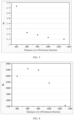
- FIG. 3 is an example diagram showing a relationship between a series impedance Rs of a bulk acoustic wave resonator and a thickness of a protruding structure
- FIG. 4 is an example diagram showing a relationship between a parallel impedance Rp of the bulk acoustic wave resonator and the thickness of the protruding structure.
- an electrode has a thickness of 1000 ⁇ .
- the series impedance Rs of the resonator decreases as the thickness of the protruding structure (indicated by 105 in FIG. 5 ) increases.
- FIG. 5 the series impedance Rs of the resonator decreases as the thickness of the protruding structure (indicated by 105 in FIG. 5 ) increases.
- the parallel impedance Rp of the resonator first increases and then decreases along with the thickness of the protruding structure.
- the thickness of the protruding structure is less than that of an electrode in contact with the protruding structure. Therefore, when the serial and parallel protruding structures of the filter have the same thickness, it is impossible to configure the series impedance Rs of the series resonator to be low and meanwhile configure the parallel impedance Rp of the parallel resonator to be at a preferable value.
- FIG. 8 exemplarily illustrates a graph showing a passband insertion loss curve of a filter, in which a curve where m1 is located corresponds to a protruding structure of the series resonator of the filter with a thickness of 1000 ⁇ and a protruding structure of the parallel resonator of the filter with a thickness of 400 ⁇ , and a curve where m2 is located corresponds to protruding structures of the series resonator and the parallel resonator of the filter with a thickness of 400 ⁇ .
- the thickness of the electrode is 1000 ⁇ .
- the series impedance Rs is about 1.15 ⁇
- the parallel impedance Rp is about 2100 ⁇ .
- the series impedance Rs is about 1.75 ⁇
- the parallel impedance Rp is about 2200 ⁇ .
- the series impedance Rs is decreased, but the parallel impedance Rp is improved.
- the filter of a conventional trapezoidal structure as shown in FIG.
- the series impedance Rs of the series resonator and the parallel impedance Rp of the parallel resonator mainly affect the insertion loss (referred to as insertion loss) near the center frequency of the passband of the filter
- the parallel impedance Rp of the series resonator mainly affects the insertion loss of a right edge of the filter
- the series impedance Rs of the parallel resonator mainly affects the insertion loss of a left edge of the filter. Therefore, the lower the series impedance Rs of the series resonator is, the higher the parallel impedance Rp of the parallel resonator is, and the better the insertion loss near the center frequency of the filter is.
- the insertion loss at the right edge of the filter deteriorates.
- the insertion loss at the right edge of the filter can be improved by appropriately increasing the electromechanical coupling coefficient of the resonator.
- the series impedance Rs of the parallel resonator decreases, the insertion loss of the left edge of the filter deteriorates, but can be adjusted by appropriately increasing the electromechanical coupling coefficient of the resonator. As can be seen from FIG.
- the position of the highest point of the insertion loss of the passband for the curve where m1 is located can be increased by about 0.15 dB (increased from -1.667 dB to -1.511 dB).
- the parallel impedance Rp thereof can be further increased to 2300 ⁇ and the series impedance Rs can be further reduced to 1.25 ⁇ .
- the electromechanical coupling coefficient is further optimized, thereby improving the overall performance of the passband of the filter.
- the present disclosure provides a filter.
- the thickness of a protruding structure of a series resonator of the filter is greater than the thickness of a protruding structure of a parallel resonator. Accordingly, the thicknesses of the protruding structures of the series resonator and the parallel resonator can be further optimized to reduce the insertion loss of the passband of the filter.
- FIG. 5 is a schematic sectional view of a series resonator and a parallel resonator, which are adjacent to each other, of a filter according to an exemplary embodiment of the present disclosure.
- a left resonator is a series resonator
- a right resonator is a parallel resonator
- the two resonators are connected by a top electrode.
- the thickness of the protruding structure 105 of the series resonator is greater than that of the protruding structure 105 of the parallel resonator.
- a total thickness of the top electrode and the protruding structure 105 of the series resonator is greater than 2000 ⁇ , and the thickness of the protruding structure of the parallel resonator is less than that of the top electrode.
- the aforementioned electrode thickness may be considered to be the total thickness of the electrode thickness and the thickness of the mass load.
- the protruding structure 105 of the series resonator extends from an effective region of the resonator A1 to the outer side of the resonator.
- the protruding structure 105 covers at least 50% of a top electrode connection region, and further covers more than 80% of the top electrode connection region.
- the top electrode connection region refers to a top electrode connection portion beyond the effective regions of the series resonator A1 and the parallel resonator A2.
- Such an extension of the protruding structure of the series resonator can thicken the top electrode connection portion, and the total thickness thereof is greater than 2000 ⁇ . In this way, the electrical loss of the passband of the filter can be further reduced, so that the insertion loss thereof is superior. At the same time, heat generated during the operation of the resonator is conducted outwards, thereby improving the power capacity of the filter.
- FIG. 6 is a schematic sectional view of two adjacent series resonators of a filter according to an exemplary embodiment of the present disclosure.
- the two resonators are both series resonators and connected by a top electrode.
- a total thickness of the top electrode 106 and the protruding structures 105 of the two series resonators is greater than 2000 ⁇ .
- the protruding structures 105 of the two series resonators extend outwards to completely cover a top electrode connection region between the resonators.
- FIG. 7 is a schematic sectional view of two adjacent series resonators of a filter according to an exemplary embodiment of the present disclosure, in which the two resonators share a bottom electrode or bottom electrodes of the two resonators are connected to each other.
- the two resonators are both series resonators, and the two resonators are connected by the bottom electrode.
- the protruding structure 105 is arranged below the bottom electrode 102.
- the total thickness of the protruding structures 105 and the bottom electrodes 102 of the series resonators is greater than 2000 ⁇ .
- the protruding structures 105 of the two series resonators extend outwards to completely cover a bottom electrode connection region between the resonators.
- the series resonator and the parallel resonator of the filter may be connected to each other through the bottom electrodes.
- conductive layers of the series resonator and the parallel resonator, which are adjacent to each other are arranged below piezoelectric layers and are in contact with the bottom electrodes.
- located below the piezoelectric layer includes located between the piezoelectric layer and the bottom electrode or between the bottom electrode and the substrate, which are all within the scope of the present disclosure.
- the top electrode of the series resonator and the top electrode of the parallel resonator are provided with protrusion portions (corresponding to regions indicated by d21 and d22 in FIG. 20 described below) at both a top electrode connection end and a non-top electrode connection end, and top surfaces of the protrusion portions are higher than a top surface of an inner side portion (corresponding to a region indicated by M in FIG. 20 described below) of the top electrode.
- the resonator having the protrusion portions includes a conductive layer (corresponding to the protruding structure 105), which is located below the top electrode. The conductive layer enables the protrusion portions to be higher than the top surface of the inner side portion M of the top electrode. A further description is given below with reference to FIGS. 19-21 .
- FIG. 19 is a top view of a resonator of a filter according to an embodiment of the present disclosure.
- FIG. 20 is a schematic sectional view along line A1-A1 in FIG. 19 .
- FIG. 21 exemplarily illustrates a cross-sectional view of the conductive layer in FIG. 20 .
- the effective region of the resonator is a convex pentagonal structure.
- the present disclosure is not limited thereto, and the effective region may be other convex polygonal structures.
- the protruding structure 105 has different widths on different edges of the pentagon structure.
- a width of an edge is a width within a boundary of an acoustic mirror along a lateral or radial direction of the resonator, that is, the protruding structure has different widths on each edge of the pentagon structure.
- the difference in width herein means that a width of at least one edge is different from widths of the remaining edges.
- the electromechanical coupling coefficient of the resonator can be adjusted by changing the widths of the protruding structure 105 at each edge and the proportion of each width to the five edges (i.e., by changing a ratio of the number of width edges to a total number of edges of a polygon).
- the presence of the protruding structure on each edge allows the parallel impedance Rp (or a quality factor Qp) at a parallel resonance frequency at a higher level without a significant drop due to the adjustment of the width of the protruding structure on each edge.
- the top electrode 106 is provided with protrusion portions at both a top electrode connection end (at right side in FIG. 20 ) and a non-top electrode connection end (at left side in FIG. 20 ). It is apparent that the protrusion portion includes the wing structure 113 and a part of the bridge structure 114 in FIG. 20 . In FIG. 20 , the top surface of the protrusion portion is higher than the top surface of the inner side portion M of the top electrode. As shown in FIG.
- the inner side portion M of the top electrode is a convex polygonal region with five edges, the protrusion portions are arranged around the convex polygonal region to form a polygonal electrode frame.
- the electrode frame is composed of the wing structure 113 and the bridge structure 114 that is located on the inner side of the acoustic mirror, and the electrode frame includes a plurality of frame edges.
- the widths of the protruding structures have a corresponding relationship with the electromechanical coupling coefficient kt 2 of the resonator.
- the electromechanical coupling coefficients of resonators with the same area decrease as the widths of the protruding structures increase.
- the frame edges of the electrode frame of the resonator have different widths.
- the width of the electrode frame is determined by the widths of the protruding structure 105.
- the protruding structure has different widths on the five edges of the protruding structure 105, the kt 2 of the resonator may be adjusted, while other properties (e.g., a Q value at a frequency of the parallel resonator) are substantially unaffected.
- kt 2 may be further adjusted by selecting the number of edges of the protruding structure with the same width. For example, when the widths of five edges of the protruding structure are all 2 ⁇ m, kt 2 is 8.0%; when the widths of four edges of the protruding structure are all 2 ⁇ m and the width of the other edge is 5 ⁇ m, kt 2 is 7.9%; when the widths of three edges of the protruding structure are all 2 ⁇ m and the widths of the other two edges are 5 ⁇ m, kt 2 is 7.8%; when the widths of two edges of the protruding structure are both 2 ⁇ m and the widths of the other three edges are 5 ⁇ m, kt 2 is 7.7%; when the width of one edge of the protruding structure is 2 ⁇ m and the widths of the other four edges are 5 ⁇ m, kt 2 is 7.6%; and when the widths of five edges of the protruding structure are all 5 ⁇ m, kt 2 is 8.
- FIG. 22 is a graph showing change of a parallel impedance Rp of a resonator with a conventional protruding structure and a width W of the protruding structure.
- the traditional protruding structure refers to a case where the widths of the protruding structure at all edges of one resonator are the same.
- the value of the parallel impedance Rp exhibits periodic characteristics with the increase in the width W, and each period has a peak point.
- the widths such as a1, a2, a3, a4, a5 of the protruding structure corresponding to local peak values approximately satisfy a proportional relationship a1: a2: a3: a4: a5:...
- the electromechanical coupling coefficient monotonically decreases along with the increase in the widths of the protruding structure.
- the widths of the protruding structure corresponding to the peak values in different periods may be combined.
- the width of the protruding structure corresponding to the peak value of the first period is 2 ⁇ m and the width of the protruding structure corresponding to the peak value of the second period is 5 ⁇ m, such that the protruding structures with these two widths are combined in one resonator. Accordingly, the parallel impedance Rp can be maintained at a peak value level by adjusting kt 2 .
- the resonator constituting the filter can meet this requirement by setting specific thicknesses of the bottom electrode, the piezoelectric layer, and the top electrode. After the thickness of the protruding structure and the widths corresponding to the peak values are determined, the electromechanical coupling coefficient of the resonator is substantially determined. However, in an actual design process of the filter, in order to achieve excellent performance, the electromechanical coupling coefficient of the resonator needs to be adjusted within a small range.
- the electromechanical coupling coefficient is adjustable in a certain range by providing different protruding structures on each edge of the resonator and the wing and bridge structures with different widths.
- the electromechanical coupling coefficient is flexibly adjusted by selecting the widths of two or more protruding structures, bridge structures or wing structures on different edges of the resonator and controlling the proportion of each width to the five edges. Therefore, the overall insertion loss performance of the passband of the filter is further improved by adjusting the thicknesses of the protruding structures on the series resonators and the parallel resonators.
- the protruding structure 105 is a conductive layer located between the top electrode and the piezoelectric layer.
- the conductive layer is arranged between the top electrode 106 and the piezoelectric layer 104.
- the protrusion portion includes a bridge portion or bridge structure 114 located at the top electrode connection end and a wing structure 113 located at the non-top electrode connection end.
- the conductive layer includes an insertion frame (corresponding to the protruding structure 105 in FIG. 21 ) located in the acoustic mirror in the lateral direction, and the insertion frame and the electrode frame have the same inner side boundary and the same outer side boundary in the lateral direction.
- the frames have different widths.
- the present disclosure is not limited thereto, and the width of a single frame may change in a longitudinal direction thereof.
- FIG. 5 also shows a bulk acoustic wave resonator assembly having two resonators, wherein each of the two resonators includes a conductive layer in contact with a corresponding electrode in a thickness direction of the resonator.
- the conductive layer enables the protrusion portion to be higher than the top surface of the inner side portion of the top electrode, and the thickness of the conductive layer of one resonator is different from that of the conductive layer of the other resonator.
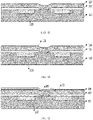
- the manufacturing method of the structure shown in FIG. 5 is exemplarily described below with reference to FIGS. 9-18 .
- the protruding structure 105 is divided into two layers.
- structures of the two layers of protruding structures are not distinguished.
- a sacrificial material is filled, and then the sacrificial material is ground by a CMP (chemical mechanical polishing) process.
- the substrate 101 is provided with two cavity structures, which are spaced apart from each other.
- a metal layer is deposited on the surface of the substrate 101, and the metal layer is patterned into the bottom electrode 102.
- a seed layer may be deposited on the substrate, and the metal layer is then deposited and patterned on the seed layer to form the bottom electrode 102.
- the bottom electrodes corresponding to the two resonators are spaced apart from each other.
- the piezoelectric thin film layer 104 is deposited on the surface of the structure shown in FIG. 10 , such as aluminum nitride (AlN) and gallium nitride (GaN).
- the used deposition process includes, but is not limited to, MOCVD (Metal Organic Chemical Vapor Deposition), MBE (Molecular Beam Epitaxy), CBE (Chemical Molecular Beam Epitaxy), and LPE (Liquid Phase Epitaxy).
- MOCVD Metal Organic Chemical Vapor Deposition
- MBE Molecular Beam Epitaxy
- CBE Chemical Molecular Beam Epitaxy
- LPE Liquid Phase Epitaxy
- a first layer of protruding structure material is deposited on the surface of the piezoelectric thin film layer 104 by a thin film deposition process, and the first layer of protruding structure material covers corresponding regions of the series resonator and the parallel resonator.
- the thickness of the first layer of protruding structure material is equal to that of the conductive layer or the protruding structure of the parallel resonator, and further, the thickness thereof is less than that of the top electrode.
- a second layer of protruding structure material is selectively deposited in a region where the series resonator is located by the thin film deposition process. Therefore, in the region corresponding to the series resonator, the thickness of the material for forming the protruding structure is greater than that of the protruding structure corresponding to the region of the parallel resonator. In a further embodiment, the sum of the total thickness of the two layers of protruding structure materials and the thickness of the top electrode is greater than 2000 ⁇ .
- the second layer of protruding structure material may be formed by a lift-off process.
- the photoresist 111 is sequentially coated on the structure shown in FIG. 13 , then patterning exposure is performed on the photoresist 111. After that, the exposed photoresist is removed by developing to form a required pattern of the protruding structure, and the pattern of the photoresist corresponds to the pattern of the protruding structure, as shown in FIG. 14 .
- the second layer of protruding structure material is deposited in the region corresponding to the series resonator on the first layer of protruding structure material.
- the above situation includes that the second layer of protruding structure material covers only the region corresponding to the series resonator and the second layer of protruding structure material further covers the top electrode connection region between the series resonator and the parallel resonator, which are all within the scope of the present disclosure.
- FIG. 15 an etching process is performed on the structure in FIG. 14 , and the remaining photoresist is then stripped off, so as to form the protruding structure shown in FIG. 15 .
- the protruding structure on the left side has a two-layer structure with a larger thickness
- the protruding structure on the right side has a single-layer structure with a smaller thickness.
- the top electrode 106 and a passivation layer 107 are sequentially deposited on the structure shown in FIG. 15 by the thin film deposition process.
- the top electrodes of the two resonators are connected to each other.
- the photoresist 111 is sequentially coated on the structure shown in FIG. 16 , and patterning exposure is then performed on the photoresist 111. After that, the exposed photoresist is removed by developing to form a required pattern of the protruding structure, and the pattern of the photoresist in FIG. 17 corresponds to the pattern of the protruding structure.
- the etching process is performed on the passivation layer and the top electrode in the structure of FIG. 17 , and the remaining photoresist is then stripped off, so as to form a top electrode pattern and a passivation layer pattern shown in FIG. 18 .
- an etchant is introduced through a release hole (not shown) to release the sacrificial layer in the cavity structure, to obtain the structure corresponding to FIG. 5 .
- the conductive layer is an insertion layer, that is, the conductive layer is located below the top electrode.
- the conductive layer may be arranged on an upper surface of the top electrode to be in contact with the top electrode. In this case, the conductive layer forms the above protrusion portion, and these also fall within the scope of the present disclosure.
- the electronic device herein includes, but is not limited to, intermediate products such as an RF front end, filter and amplifier modules, and terminal products such as mobile phones, WIFI, and drones.
Landscapes
- Physics & Mathematics (AREA)
- Acoustics & Sound (AREA)
- Engineering & Computer Science (AREA)
- Manufacturing & Machinery (AREA)
- Chemical & Material Sciences (AREA)
- Crystallography & Structural Chemistry (AREA)
- Piezo-Electric Or Mechanical Vibrators, Or Delay Or Filter Circuits (AREA)
Applications Claiming Priority (2)
| Application Number | Priority Date | Filing Date | Title |
|---|---|---|---|
| CN202010314867.XA CN111600566B (zh) | 2020-04-21 | 2020-04-21 | 滤波器、体声波谐振器组件及其制造方法、电子设备 |
| PCT/CN2021/088485 WO2021213402A1 (zh) | 2020-04-21 | 2021-04-20 | 滤波器、体声波谐振器组件及其制造方法、电子设备 |
Publications (2)
| Publication Number | Publication Date |
|---|---|
| EP4142152A1 true EP4142152A1 (de) | 2023-03-01 |
| EP4142152A4 EP4142152A4 (de) | 2024-04-10 |
Family
ID=72189025
Family Applications (1)
| Application Number | Title | Priority Date | Filing Date |
|---|---|---|---|
| EP21792440.6A Pending EP4142152A4 (de) | 2020-04-21 | 2021-04-20 | Filter, volumenschallwellenresonatoranordnung und verfahren zur herstellung davon und elektronische vorrichtung |
Country Status (3)
| Country | Link |
|---|---|
| EP (1) | EP4142152A4 (de) |
| CN (1) | CN111600566B (de) |
| WO (1) | WO2021213402A1 (de) |
Families Citing this family (8)
| Publication number | Priority date | Publication date | Assignee | Title |
|---|---|---|---|---|
| CN111600566B (zh) * | 2020-04-21 | 2021-06-01 | 诺思(天津)微系统有限责任公司 | 滤波器、体声波谐振器组件及其制造方法、电子设备 |
| CN115694410A (zh) * | 2021-07-29 | 2023-02-03 | 诺思(天津)微系统有限责任公司 | 具有多个底电极层的体声波谐振器、滤波器及电子设备 |
| CN115765673A (zh) * | 2021-09-03 | 2023-03-07 | 诺思(天津)微系统有限责任公司 | 谐振器组、滤波器、电子设备及谐振器制作方法 |
| CN117639708B (zh) * | 2023-01-09 | 2024-08-09 | 北京芯溪半导体科技有限公司 | 一种体声波谐振器、滤波器和电子设备 |
| CN115833779A (zh) * | 2023-02-15 | 2023-03-21 | 成都频岢微电子有限公司 | 一种波浪形体声波谐振器 |
| CN116722837B (zh) * | 2023-05-31 | 2024-07-02 | 锐石创芯(重庆)科技有限公司 | 体声波滤波器组件、射频前端模块及电子设备 |
| CN117833859B (zh) * | 2024-01-03 | 2025-08-22 | 武汉敏声新技术有限公司 | 一种谐振器及其制备方法 |
| CN118100857B (zh) * | 2024-03-13 | 2025-04-01 | 睿思微系统(烟台)有限公司 | 一种体声波谐振器阵列及其制备方法 |
Family Cites Families (28)
| Publication number | Priority date | Publication date | Assignee | Title |
|---|---|---|---|---|
| US6262637B1 (en) * | 1999-06-02 | 2001-07-17 | Agilent Technologies, Inc. | Duplexer incorporating thin-film bulk acoustic resonators (FBARs) |
| FI107660B (fi) * | 1999-07-19 | 2001-09-14 | Nokia Mobile Phones Ltd | Resonaattorirakenne |
| GB0012437D0 (en) * | 2000-05-24 | 2000-07-12 | Univ Cranfield | Improvements to filters |
| US7388454B2 (en) * | 2004-10-01 | 2008-06-17 | Avago Technologies Wireless Ip Pte Ltd | Acoustic resonator performance enhancement using alternating frame structure |
| JP4719623B2 (ja) * | 2006-05-31 | 2011-07-06 | 太陽誘電株式会社 | フィルタ |
| US9577603B2 (en) * | 2011-09-14 | 2017-02-21 | Avago Technologies General Ip (Singapore) Pte. Ltd. | Solidly mounted acoustic resonator having multiple lateral features |
| JP6336712B2 (ja) * | 2013-01-28 | 2018-06-06 | 太陽誘電株式会社 | 圧電薄膜共振器、フィルタおよびデュプレクサ |
| CN103281050A (zh) * | 2013-06-17 | 2013-09-04 | 天津大学 | 薄膜体声波滤波器 |
| CN103532516B (zh) * | 2013-08-05 | 2017-10-24 | 天津大学 | 体波谐振器及其制造方法 |
| JP6371518B2 (ja) * | 2013-12-17 | 2018-08-08 | 太陽誘電株式会社 | 圧電薄膜共振器およびその製造方法、フィルタ並びにデュプレクサ |
| CN105262456B (zh) * | 2015-10-09 | 2018-07-31 | 锐迪科微电子(上海)有限公司 | 一种高性能薄膜体声波谐振器及其制造方法 |
| US10135415B2 (en) * | 2015-12-18 | 2018-11-20 | Texas Instruments Incorporated | Method to reduce frequency distribution of bulk acoustic wave resonators during manufacturing |
| JP7036487B2 (ja) * | 2016-07-07 | 2022-03-15 | サムソン エレクトロ-メカニックス カンパニーリミテッド. | 弾性波フィルタ装置及びその製造方法 |
| JP6903471B2 (ja) * | 2017-04-07 | 2021-07-14 | 太陽誘電株式会社 | 圧電薄膜共振器、フィルタおよびマルチプレクサ |
| CN110166014B (zh) * | 2018-02-11 | 2020-09-08 | 诺思(天津)微系统有限责任公司 | 体声波谐振器及其制造方法 |
| KR102052829B1 (ko) * | 2018-06-15 | 2019-12-09 | 삼성전기주식회사 | 음향 공진기 및 이를 포함하는 음향 공진기 필터 |
| DE102018117248B4 (de) * | 2018-07-17 | 2020-03-19 | RF360 Europe GmbH | BAW-Resonator mit einem hohen Q-Wert und Störmodenunterdrückung |
| KR20200031541A (ko) * | 2018-09-14 | 2020-03-24 | 스카이워크스 솔루션즈, 인코포레이티드 | 희생 층 에칭을 위한 릴리스 포트들의 위치들 |
| US11595016B2 (en) * | 2018-10-05 | 2023-02-28 | Samsung Electro-Mechanics Co., Ltd. | Bulk-acoustic wave resonator |
| CN110061712B (zh) * | 2018-12-26 | 2023-10-20 | 天津大学 | 包括环形凸起梁檐结构的声学谐振器、滤波器和电子设备 |
| CN109889179A (zh) * | 2018-12-26 | 2019-06-14 | 天津大学 | 谐振器和梯形滤波器 |
| CN111010111B (zh) * | 2019-05-31 | 2025-03-14 | 天津大学 | 附加结构与顶电极分离的体声波谐振器、滤波器及电子设备 |
| CN111010116B (zh) * | 2019-08-13 | 2023-12-15 | 天津大学 | 带有高度渐变的凸起结构的体声波谐振器、滤波器和电子设备 |
| CN111010122B (zh) * | 2019-10-23 | 2021-06-01 | 诺思(天津)微系统有限责任公司 | 电极具有空隙层的体声波谐振器、滤波器及电子设备 |
| CN111010135A (zh) * | 2019-10-26 | 2020-04-14 | 诺思(天津)微系统有限责任公司 | 体声波谐振器、滤波器及电子设备 |
| CN111030634B (zh) * | 2019-12-31 | 2021-04-16 | 诺思(天津)微系统有限责任公司 | 带电学隔离层的体声波谐振器及其制造方法、滤波器及电子设备 |
| CN111262548B (zh) * | 2019-12-31 | 2021-06-22 | 诺思(天津)微系统有限责任公司 | 体声波谐振器组、滤波器、电子设备、机电耦合系数调整方法 |
| CN111600566B (zh) * | 2020-04-21 | 2021-06-01 | 诺思(天津)微系统有限责任公司 | 滤波器、体声波谐振器组件及其制造方法、电子设备 |
-
2020
- 2020-04-21 CN CN202010314867.XA patent/CN111600566B/zh active Active
-
2021
- 2021-04-20 WO PCT/CN2021/088485 patent/WO2021213402A1/zh not_active Ceased
- 2021-04-20 EP EP21792440.6A patent/EP4142152A4/de active Pending
Also Published As
| Publication number | Publication date |
|---|---|
| CN111600566A (zh) | 2020-08-28 |
| EP4142152A4 (de) | 2024-04-10 |
| WO2021213402A1 (zh) | 2021-10-28 |
| CN111600566B (zh) | 2021-06-01 |
Similar Documents
| Publication | Publication Date | Title |
|---|---|---|
| EP4142152A1 (de) | Filter, volumenschallwellenresonatoranordnung und verfahren zur herstellung davon und elektronische vorrichtung | |
| EP4148997A1 (de) | Volumenschallwellenresonator, filter, elektronische vorrichtung und verfahren zur einstellung eines elektromechanischen kopplungskoeffizienten | |
| EP4087132A1 (de) | Akustischer volumenresonator, filter, elektronische vorrichtung, verfahren zur einstellung des elektromechanischen kopplungskoeffizienten | |
| US7649304B2 (en) | Piezoelectric resonator and piezoelectric filter | |
| US8756777B2 (en) | Method of manufacturing a ladder filter | |
| US6812619B1 (en) | Resonator structure and a filter comprising such a resonator structure | |
| US6924717B2 (en) | Tapered electrode in an acoustic resonator | |
| JP2002198758A (ja) | FBAR(FilmBulkAcousticResonator)素子及びその製造方法 | |
| CN114696768B (zh) | 体声波共振器及其形成方法 | |
| CN111917393A (zh) | 体声波谐振器及制造方法、体声波谐振器组件、滤波器及电子设备 | |
| JP4629492B2 (ja) | 圧電薄膜共振子およびフィルタ | |
| CN109167585A (zh) | 体声波谐振器及其制作方法、滤波器 | |
| US20070209174A1 (en) | Method of producing a topology-optimized electrode for a resonator in thin-film technology | |
| KR102691309B1 (ko) | 체적 음향 공진기 | |
| CN116488608A (zh) | 一种薄膜体声波谐振器及其制造方法、滤波器 | |
| CN111817687B (zh) | 滤波器设计方法和滤波器、多工器、通信设备 | |
| US20250357910A1 (en) | Resonator and method for forming the same | |
| JP5128077B2 (ja) | 薄膜圧電共振器とそれを用いた薄膜圧電フィルタ | |
| CN213152017U (zh) | 一种晶体滤波元件 | |
| US11336258B2 (en) | Bulk acoustic wave resonator, manufacturing method of the same, and filter | |
| KR100691152B1 (ko) | 박막 벌크 음향 공진기 | |
| KR20230103494A (ko) | 체적 음향 공진기 | |
| KR20230079955A (ko) | 체적 음향 공진기 | |
| CN111988010B (zh) | 一种晶体滤波元件 | |
| CN115149920B (zh) | 谐振器及其形成方法、电子设备 |
Legal Events
| Date | Code | Title | Description |
|---|---|---|---|
| STAA | Information on the status of an ep patent application or granted ep patent |
Free format text: STATUS: THE INTERNATIONAL PUBLICATION HAS BEEN MADE |
|
| PUAI | Public reference made under article 153(3) epc to a published international application that has entered the european phase |
Free format text: ORIGINAL CODE: 0009012 |
|
| STAA | Information on the status of an ep patent application or granted ep patent |
Free format text: STATUS: REQUEST FOR EXAMINATION WAS MADE |
|
| 17P | Request for examination filed |
Effective date: 20221121 |
|
| AK | Designated contracting states |
Kind code of ref document: A1 Designated state(s): AL AT BE BG CH CY CZ DE DK EE ES FI FR GB GR HR HU IE IS IT LI LT LU LV MC MK MT NL NO PL PT RO RS SE SI SK SM TR |
|
| DAV | Request for validation of the european patent (deleted) | ||
| DAX | Request for extension of the european patent (deleted) | ||
| RIC1 | Information provided on ipc code assigned before grant |
Ipc: H03H 9/60 20060101ALI20230915BHEP Ipc: H03H 9/58 20060101ALI20230915BHEP Ipc: H03H 9/13 20060101ALI20230915BHEP Ipc: H03H 9/17 20060101ALI20230915BHEP Ipc: H03H 9/02 20060101ALI20230915BHEP Ipc: H03H 3/02 20060101AFI20230915BHEP |
|
| A4 | Supplementary search report drawn up and despatched |
Effective date: 20240313 |
|
| RIC1 | Information provided on ipc code assigned before grant |
Ipc: H03H 9/60 20060101ALI20240306BHEP Ipc: H03H 9/58 20060101ALI20240306BHEP Ipc: H03H 9/13 20060101ALI20240306BHEP Ipc: H03H 9/17 20060101ALI20240306BHEP Ipc: H03H 9/02 20060101ALI20240306BHEP Ipc: H03H 3/02 20060101AFI20240306BHEP |