EP4147923B1 - Flugzeugbremssystem - Google Patents
Flugzeugbremssystem Download PDFInfo
- Publication number
- EP4147923B1 EP4147923B1 EP22192348.5A EP22192348A EP4147923B1 EP 4147923 B1 EP4147923 B1 EP 4147923B1 EP 22192348 A EP22192348 A EP 22192348A EP 4147923 B1 EP4147923 B1 EP 4147923B1
- Authority
- EP
- European Patent Office
- Prior art keywords
- brake
- actuators
- inboard
- load
- cavity
- Prior art date
- Legal status (The legal status is an assumption and is not a legal conclusion. Google has not performed a legal analysis and makes no representation as to the accuracy of the status listed.)
- Active
Links
Images


Classifications
-
- B—PERFORMING OPERATIONS; TRANSPORTING
- B60—VEHICLES IN GENERAL
- B60T—VEHICLE BRAKE CONTROL SYSTEMS OR PARTS THEREOF; BRAKE CONTROL SYSTEMS OR PARTS THEREOF, IN GENERAL; ARRANGEMENT OF BRAKING ELEMENTS ON VEHICLES IN GENERAL; PORTABLE DEVICES FOR PREVENTING UNWANTED MOVEMENT OF VEHICLES; VEHICLE MODIFICATIONS TO FACILITATE COOLING OF BRAKES
- B60T8/00—Arrangements for adjusting wheel-braking force to meet varying vehicular or ground-surface conditions, e.g. limiting or varying distribution of braking force
- B60T8/17—Using electrical or electronic regulation means to control braking
- B60T8/1701—Braking or traction control means specially adapted for particular types of vehicles
- B60T8/1703—Braking or traction control means specially adapted for particular types of vehicles for aircrafts
-
- B—PERFORMING OPERATIONS; TRANSPORTING
- B64—AIRCRAFT; AVIATION; COSMONAUTICS
- B64C—AEROPLANES; HELICOPTERS
- B64C25/00—Alighting gear
- B64C25/32—Alighting gear characterised by elements which contact the ground or similar surface
- B64C25/42—Arrangement or adaptation of brakes
- B64C25/44—Actuating mechanisms
- B64C25/46—Brake regulators for preventing skidding or aircraft somersaulting
-
- F—MECHANICAL ENGINEERING; LIGHTING; HEATING; WEAPONS; BLASTING
- F16—ENGINEERING ELEMENTS AND UNITS; GENERAL MEASURES FOR PRODUCING AND MAINTAINING EFFECTIVE FUNCTIONING OF MACHINES OR INSTALLATIONS; THERMAL INSULATION IN GENERAL
- F16D—COUPLINGS FOR TRANSMITTING ROTATION; CLUTCHES; BRAKES
- F16D55/00—Brakes with substantially-radial braking surfaces pressed together in axial direction, e.g. disc brakes
- F16D55/24—Brakes with substantially-radial braking surfaces pressed together in axial direction, e.g. disc brakes with a plurality of axially-movable discs, lamellae, or pads, pressed from one side towards an axially-located member
- F16D55/26—Brakes with substantially-radial braking surfaces pressed together in axial direction, e.g. disc brakes with a plurality of axially-movable discs, lamellae, or pads, pressed from one side towards an axially-located member without self-tightening action
- F16D55/36—Brakes with a plurality of rotating discs all lying side by side
- F16D55/40—Brakes with a plurality of rotating discs all lying side by side actuated by a fluid-pressure device arranged in or one the brake
-
- F—MECHANICAL ENGINEERING; LIGHTING; HEATING; WEAPONS; BLASTING
- F16—ENGINEERING ELEMENTS AND UNITS; GENERAL MEASURES FOR PRODUCING AND MAINTAINING EFFECTIVE FUNCTIONING OF MACHINES OR INSTALLATIONS; THERMAL INSULATION IN GENERAL
- F16D—COUPLINGS FOR TRANSMITTING ROTATION; CLUTCHES; BRAKES
- F16D65/00—Parts or details
- F16D65/14—Actuating mechanisms for brakes; Means for initiating operation at a predetermined position
- F16D65/16—Actuating mechanisms for brakes; Means for initiating operation at a predetermined position arranged in or on the brake
- F16D65/18—Actuating mechanisms for brakes; Means for initiating operation at a predetermined position arranged in or on the brake adapted for drawing members together, e.g. for disc brakes
- F16D65/186—Actuating mechanisms for brakes; Means for initiating operation at a predetermined position arranged in or on the brake adapted for drawing members together, e.g. for disc brakes with full-face force-applying member, e.g. annular
-
- B—PERFORMING OPERATIONS; TRANSPORTING
- B60—VEHICLES IN GENERAL
- B60T—VEHICLE BRAKE CONTROL SYSTEMS OR PARTS THEREOF; BRAKE CONTROL SYSTEMS OR PARTS THEREOF, IN GENERAL; ARRANGEMENT OF BRAKING ELEMENTS ON VEHICLES IN GENERAL; PORTABLE DEVICES FOR PREVENTING UNWANTED MOVEMENT OF VEHICLES; VEHICLE MODIFICATIONS TO FACILITATE COOLING OF BRAKES
- B60T17/00—Component parts, details, or accessories of power brake systems not covered by groups B60T8/00, B60T13/00 or B60T15/00, or presenting other characteristic features
- B60T17/18—Safety devices; Monitoring
- B60T17/22—Devices for monitoring or checking brake systems; Signal devices
- B60T17/221—Procedure or apparatus for checking or keeping in a correct functioning condition of brake systems
-
- B—PERFORMING OPERATIONS; TRANSPORTING
- B60—VEHICLES IN GENERAL
- B60T—VEHICLE BRAKE CONTROL SYSTEMS OR PARTS THEREOF; BRAKE CONTROL SYSTEMS OR PARTS THEREOF, IN GENERAL; ARRANGEMENT OF BRAKING ELEMENTS ON VEHICLES IN GENERAL; PORTABLE DEVICES FOR PREVENTING UNWANTED MOVEMENT OF VEHICLES; VEHICLE MODIFICATIONS TO FACILITATE COOLING OF BRAKES
- B60T2270/00—Further aspects of brake control systems not otherwise provided for
- B60T2270/40—Failsafe aspects of brake control systems
-
- B—PERFORMING OPERATIONS; TRANSPORTING
- B64—AIRCRAFT; AVIATION; COSMONAUTICS
- B64C—AEROPLANES; HELICOPTERS
- B64C25/00—Alighting gear
- B64C25/32—Alighting gear characterised by elements which contact the ground or similar surface
- B64C25/42—Arrangement or adaptation of brakes
- B64C25/44—Actuating mechanisms
-
- F—MECHANICAL ENGINEERING; LIGHTING; HEATING; WEAPONS; BLASTING
- F16—ENGINEERING ELEMENTS AND UNITS; GENERAL MEASURES FOR PRODUCING AND MAINTAINING EFFECTIVE FUNCTIONING OF MACHINES OR INSTALLATIONS; THERMAL INSULATION IN GENERAL
- F16D—COUPLINGS FOR TRANSMITTING ROTATION; CLUTCHES; BRAKES
- F16D2121/00—Type of actuator operation force
- F16D2121/02—Fluid pressure
- F16D2121/04—Fluid pressure acting on a piston-type actuator, e.g. for liquid pressure
Definitions
- the present invention relates generally to aircraft wheel and brake assemblies and, more particularly, to systems and methods configured to reduce brake grab and improve antiskid performance on slippery runways.
- Aircraft typically utilize brake systems on wheels to slow or stop the aircraft during landings, taxiing and emergency situations, such as, for example, a rejected takeoff (RTO), which generally refers to engagement of a brake system during an aborted takeoff and involves high braking loads over a short period of time, resulting in a rapid increase in the brake temperature.
- RTO rejected takeoff
- the brake systems generally employ a heat sink comprising a series of friction disks, sandwiched between a pressure plate and an end plate, that may be forced into sliding contact with one another during a brake application to slow or stop the aircraft.
- a typical hydraulic brake system may include, without limitation, a source of pressurized hydraulic fluid, an actuator for exerting a force across the heat sink (e.g., across the pressure plate, the series of friction disks and the end plate), a valve for controlling a pressure level provided to the actuator and a brake control unit for receiving inputs from an operator and from various feedback mechanisms and for producing responsive outputs to the valve.
- a source of pressurized hydraulic fluid e.g., across the pressure plate, the series of friction disks and the end plate
- a valve for controlling a pressure level provided to the actuator
- a brake control unit for receiving inputs from an operator and from various feedback mechanisms and for producing responsive outputs to the valve.
- a pressurized fluid is applied to the actuator, which may comprise a piston configured to translate the pressure plate toward the end plate.
- the actuator may comprise a piston configured to translate the pressure plate toward the end plate.
- the brake components e.g., translation of the piston and the various components of the heat sink
- a measured pressure level at the actuator used for feedback to the brake control unit, may be very low for a period of time until the force is actually established across the heat sink.
- a brake command signal output by the brake control unit does not generate an actual brake engagement.
- the brake control unit may instruct the valve ( e.g., via a brake command signal) to open further to generate an actual brake engagement (e . g ., a slowing torque applied to a wheel). This may occur, for example, if the brake control unit includes an integrator that accumulates the product of error and time. As time passes without error reduction (or without feedback indicating an actual brake engagement), the brake control unit may continue to increase the level of the brake command signal being output to the valve, thereby increasing the pressure level to the actuator. Once the force is finally established across the heat sink, an actual brake engagement will occur, but such will be in response to the increased brake command signal.
- an actual brake engagement will occur, but such will be in response to the increased brake command signal.
- the increased brake command signal is the result of the accumulated error during the brake fill condition and typically results in greater braking than is desired until the brake control unit recovers and outputs a reduced brake command signal more representative of a desired or input level of braking.
- Brake fill may thus result in unwanted grabbing (or brake grab) or jerky brake performance and may be present with any type of braking system ( e . g ., hydraulic, pneumatic or electromechanical).
- the antiskid controls typically modulate the loads within the brake stack at a relatively low pressure (e . g ., when using a hydraulic system), on the order of 100 to 150 psi ( ⁇ 690 to 1035 kPa) above the contact pressure.
- the resulting torque generated by the brake stack may cause an undesirable and repeated increase and decrease of pressure applied at the brake stack, resulting in difficulties for the antiskid control systems and diminished brake performance.
- US 2018/099650 relates to a brake system for an aircraft.
- the invention concerns a braking system according to claim 1 and a method of braking a vehicle according to claim 13.
- the braking system includes a brake stack; a first brake cavity operably coupled to the brake stack, the first brake cavity including a first plurality of brake actuators; a second brake cavity operably coupled to the brake stack, the second brake cavity including a second plurality of brake actuators; and a brake control module, the brake control module being configured to activate either the first plurality of brake actuators or both the first plurality of brake actuators and the second plurality of brake actuators in response to an input brake load.
- the brake control module includes a first servo valve fluidly coupled to the first brake cavity and a second servo valve fluidly coupled to the second brake cavity.
- the first plurality of brake actuators is fluidly coupled to the first servo valve via a first hydraulic line.
- the second plurality of brake actuators is fluidly coupled to the second servo valve via a second hydraulic line.
- the brake control module is configured to activate the first plurality of brake actuators in response to the input brake load being less than a threshold brake load. In various embodiments, the brake control module is configured to activate both the first plurality of brake actuators and the second plurality of brake actuators in response to the input brake load being greater than the threshold brake load. In various embodiments, the first plurality of brake actuators is interspaced between the second plurality of brake actuators. In various embodiments, the threshold brake load is within a range from about 200 psi to about 400 psi. In various embodiments, the threshold brake load is about 300 psi.
- the braking system includes a first directional control valve disposed between the brake control module and the second brake cavity, the first directional control valve being configured to activate the second plurality of brake actuators in response to an input brake load being greater than a threshold brake load.
- the brake control module includes a first servo valve fluidly coupled to the first brake cavity and to the second brake cavity.
- the first directional control valve is configured to block a hydraulic fluid from activating the second plurality of brake actuators within the second brake cavity and to connect the second plurality of brake actuators to a hydraulic fluid return reservoir in response to the input brake load being less than the threshold brake load.
- the first directional control valve is configured to route the hydraulic fluid to the second brake cavity in response to the input brake load being greater than the threshold brake load.
- the brake control module includes a second servo valve fluidly coupled to a second brake mechanism coupled to a second wheel.
- a second directional control valve is disposed between the second servo valve and the second brake mechanism.
- the first plurality of brake actuators is interspaced between the second plurality of brake actuators.
- the threshold brake load is within a range from about 200 psi to about 400 psi.
- a method of braking a vehicle having a brake stack connected to a wheel includes applying an input brake load to a braking system having a first plurality of brake actuators and a second plurality of brake actuators operably coupled to the brake stack and powered by a brake control module; activating the first plurality of brake actuators in response to the input brake load being less than a threshold brake load; and activating both the first plurality of brake actuators and the second plurality of brake actuators in response to the input brake load being greater than the threshold brake load.
- the brake control module includes a first servo valve fluidly coupled to the first plurality of brake actuators and a second servo valve fluidly coupled to the second plurality of brake actuators.
- a directional control valve is disposed between the brake control module and the second plurality of brake actuators and configured to activate the second plurality of brake actuators in response to the input brake load being greater than the threshold brake load.
- any reference to singular includes plural embodiments, and any reference to more than one component or step may include a singular embodiment or step.
- any reference to attached, fixed, connected, or the like may include permanent, removable, temporary, partial, full or any other possible attachment option.
- any reference to without contact (or similar phrases) may also include reduced contact or minimal contact.
- references to "a,” “an” or “the” may include one or more than one and that reference to an item in the singular may also include the item in the plural.
- all ranges may include upper and lower values and all ranges and ratio limits disclosed herein may be combined.
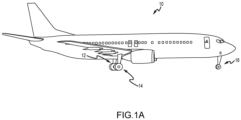
- FIG. 1A illustrates an aircraft 10 in accordance with various embodiments.
- the aircraft 10 includes landing gear, which may include a left main landing gear 12, a right main landing gear 14 and a nose landing gear 16.
- the landing gear support the aircraft 10 when it is not flying, allowing the aircraft 10 to taxi, take off and land without damage. While the invention refers to the three landing gear configurations just described, the invention nevertheless contemplates any number of landing gear configurations.
- FIG. 1B there is schematically depicted a brake mechanism 100 configured for use on a landing gear, such as, for example, each of the left main landing gear 12 and the right main landing gear 14 described above with reference to FIG. 1A .
- the brake mechanism 100 is mounted relative to an axle 102 for use with a wheel 104 disposed on and configured to rotate about the axle 102 via one or more bearing assemblies 103.
- the wheel 104 includes a hub 106, a wheel well 108 concentric about the hub 106 and a web portion 110 interconnecting the hub 106 and the wheel well 108.
- a central axis 112 extends through the axle 102 and defines a center of rotation of the wheel 104.
- a torque plate 114 (sometimes referred to as a torque tube) is aligned concentrically with the wheel 104, which is rotatable relative to the torque plate 114.
- the brake mechanism 100 includes a piston housing assembly 116, a pressure plate 118 disposed adjacent the piston housing assembly 116, an end plate 120 positioned a distal location from the piston housing assembly 116, and a plurality of rotor disks 122 interleaved with a plurality of stator disks 124 positioned intermediate the pressure plate 118 and the end plate 120.
- the pressure plate 118, the plurality of rotor disks 122, the plurality of stator disks 124 and the end plate 120 together form a brake stack 126 (or a brake heat sink).
- the pressure plate 118, the end plate 120 and the plurality of stator disks 124 are connected to the torque plate 114 and remain rotationally stationary relative to the axle 102.
- the plurality of rotor disks 122 is connected to the wheel 104 and rotates relative to the pressure plate 118, the end plate 120 and the plurality of stator disks 124 and about the central axis 112.
- the torque plate 114 may include an annular barrel or torque tube 128 and an annular plate or back leg 130.
- the back leg 130 is disposed at an end distal from the piston housing assembly 116 and may be made monolithic with the torque plate 114, as illustrated in FIG. 1B , or may be made as a separate annular piece and suitably connected to the torque tube 128.
- the torque plate 114 has a plurality of circumferentially spaced and axially extending splines 132 disposed on an outer surface of the torque tube 128.
- the plurality of stator disks 124 and the pressure plate 118 include notches or slots 134 on an inner periphery of each of the disks and the pressure plate 118 for engagement with the splines 132, such that each disk and the pressure plate 118 is axially slidable with respect to the torque tube 128.
- the end plate 120 is suitably connected to the back leg 130 of the torque plate 114 and is held non-rotatable, together with the plurality of stator disks 124 and the pressure plate 118, during a braking action.
- the plurality of rotor disks 122 interleaved between the pressure plate 118, the end plate 120 and the plurality of stator disks 124, each have a plurality of circumferentially spaced notches or slots 136 along an outer periphery of each disk for engagement with a plurality of torque bars 138 that are secured to or made monolithic with an inner periphery of the wheel 104.
- An actuating mechanism for the brake mechanism 100 includes a plurality of piston assemblies, circumferentially spaced around a piston housing 140 (only one piston assembly is illustrated in FIG. 1B ).
- Each of the plurality of piston assemblies includes a piston 142 configured to apply a load against the pressure plate 118.
- the plurality of piston assemblies affects a braking action by urging the pressure plate 118 and the plurality of stator disks 124 into frictional engagement with the plurality of rotor disks 122 and against the end plate 120.
- Fluid or hydraulic pressure, mechanical springs or electric actuators, among other mechanisms, may be used to actuate the plurality of piston assemblies.
- the plurality of rotor disks 122 and the plurality of stator disks 124 are fabricated from various materials, such as ceramic matrix composites, that enable the brake disks to withstand and dissipate the heat generated during and following a braking action.
- the braking system 200 includes a brake control unit 202 (BCU), which is programmed to control the various braking functions described herein.
- BCU brake control unit
- the braking system 200 enables an aircraft to brake, thereby slowing or stopping the aircraft when landing or taxiing on the ground.
- the braking system 200 may also be used in connection with other types of vehicles without departing from the scope of the invention.
- the braking system 200 generally includes a first brake control module 204 configured to operate a left inboard brake mechanism 206 (or a first brake mechanism) coupled to a first wheel and a second brake control module 208 configured to operate a right inboard brake mechanism 210 (or a second brake mechanism) coupled to a second wheel.
- the braking system 200 may include a third brake control module 212 configured to operate a left outboard brake mechanism 213 and a fourth brake control module 214 configured to operate a right outboard brake mechanism 215. Because the outboard braking system operates in identical fashion to the inboard braking system, only construction and operation of the inboard braking system is described herein for brevity.
- the braking system 200 generally includes a hydraulic fluid source 218 configured to provide a pressurized hydraulic fluid to each of the left inboard brake mechanism 206 and the right inboard brake mechanism 210 via, respectively, the first brake control module 204 and the second brake control module 208.
- the left inboard brake mechanism 206 comprises a first dual cavity brake mechanism, which includes a first left inboard brake cavity 220 (or a first brake cavity) and a second left inboard brake cavity 222 (or a second brake cavity). Both the first left inboard brake cavity 220 and the second left inboard brake cavity 222 share constructional and operational characteristics of the piston housing assembly 116 described above.
- first left inboard brake cavity 220 and the second left inboard brake cavity 222 may comprise a single monolithic unit or separate units.
- the first left inboard brake cavity 220 comprises a first plurality of left inboard brake actuators 224 (or a first plurality of brake actuators) and a second plurality of left inboard brake actuators 226 (or a second plurality of brake actuators).
- each of the first plurality of left inboard brake actuators 224 and the second plurality of left inboard brake actuators 226 comprises a piston (e.g., the piston 142 described above) configured to apply a load against a left inboard pressure plate (e.g., the pressure plate 118 described above).
- the members comprising the first plurality of left inboard brake actuators 224 are interspaced about the left inboard pressure plate with the members comprising the second plurality of left inboard brake actuators 226.
- the four members comprising the first plurality of left inboard brake actuators 224 (or a first set of brake actuators) may be positioned at 0°, 90°, 180° and 270° about the left inboard pressure plate while the four members comprising the second plurality of left inboard brake actuators 226 (or a second set of brake actuators) may be positioned at 45°, 135°, 225° and 315° about the left inboard pressure plate.
- the interspacing of the brake actuators as described provides a balanced load against the left inboard pressure plate when one or both of the first plurality of left inboard brake actuators 224 and the second plurality of left inboard brake actuators 226 is actuated.
- the right inboard brake mechanism 210 comprises a second dual cavity brake mechanism, which includes a first right inboard brake cavity 228 and a second right inboard brake cavity 230. Both the first right inboard brake cavity 228 and the second right inboard brake cavity 230 share constructional and operational characteristics of the piston housing assembly 116 described above. Note, in various embodiments, the first right inboard brake cavity 228 and the second right inboard brake cavity 230 may comprise a single monolithic unit or separate units.
- the first right inboard brake cavity 228 comprises a first plurality of right inboard brake actuators 232 and a second plurality of right inboard brake actuators 234.
- each of the first plurality of right inboard brake actuators 232 and the second plurality of right inboard brake actuators 234 comprises a piston (e.g., the piston 142 described above) configured to apply a load against a right inboard pressure plate (e.g., the pressure plate 118 described above).
- a piston e.g., the piston 142 described above
- a right inboard pressure plate e.g., the pressure plate 118 described above.
- the members comprising the first plurality of right inboard brake actuators 232 are interspaced about the right inboard pressure plate with the members comprising the second plurality of right inboard brake actuators 234.
- the four members comprising the first plurality of right inboard brake actuators 232 may be positioned at 0°, 90°, 180° and 270° about the right inboard pressure plate while the four members comprising the second plurality of right inboard brake actuators 234 may be positioned at 45°, 135°, 225° and 315° about the right inboard pressure plate.
- the interspacing of the brake actuators as described provides a balanced load against the right inboard pressure plate when one or both of the first plurality of right inboard brake actuators 232 and the second plurality of right inboard brake actuators 234 is actuated.
- the first left inboard brake cavity 220 which comprises the first plurality of left inboard brake actuators 224, is fluidly coupled to the hydraulic fluid source 218 via a first left inboard servo valve 240 (or a first servo valve) and a first left inboard hydraulic line 241 (or a first hydraulic line), while the second left inboard brake cavity 222, which comprises the second plurality of left inboard brake actuators 226, is fluidly coupled to the hydraulic fluid source 218 via a second left inboard servo valve 242 (or a second servo valve) and a second left inboard hydraulic line 243 (or a second hydraulic line).
- a first left inboard pressure transducer 244 is configured to monitor the fluid pressure within the first left inboard hydraulic line 241 and a second left inboard pressure transducer 245 is configured to monitor the fluid pressure within the second left inboard hydraulic line 243.
- a first left inboard fuse 246 is configured to stop the flow of hydraulic fluid to the first left inboard brake cavity 220 in the event of a loss of fluid pressure within the first left inboard hydraulic line 241 indicative of a failure within the first left inboard hydraulic system.
- a second left inboard fuse 247 is configured to stop the flow of hydraulic fluid to the second left inboard brake cavity 222 in the event of a loss of fluid pressure within the second left inboard hydraulic line 243 indicative of a failure within the second left inboard hydraulic system.
- a primary hydraulic line 269 fluidly couples the hydraulic fluid source 218 to the first left inboard servo valve 240 and to the second left inboard servo valve 242.
- a left inboard shutoff valve 248 is configured to turn on or shut off the flow of hydraulic fluid to the first left inboard servo valve 240 and to the second left inboard servo valve 242.
- first right inboard brake cavity 228, which comprises the first plurality of right inboard brake actuators 232, is fluidly coupled to the hydraulic fluid source 218 via a first right inboard servo valve 250 and a first right inboard hydraulic line 251
- second right inboard brake cavity 230 which comprises the second plurality of right inboard brake actuators 234
- a first right inboard pressure transducer 254 is configured to monitor the fluid pressure within the first right inboard hydraulic line 251
- a second right inboard pressure transducer 255 is configured to monitor the fluid pressure within the second right inboard hydraulic line 253.
- a first right inboard fuse 256 is configured to stop the flow of hydraulic fluid to the first right inboard brake cavity 228 in the event of a loss of fluid pressure within the first right inboard hydraulic line 251 indicative of a failure within the first right inboard hydraulic system.
- a second right inboard fuse 257 is configured to stop the flow of hydraulic fluid to the second right inboard brake cavity 230 in the event of a loss of fluid pressure within the second right inboard hydraulic line 253 indicative of a failure within the second right inboard hydraulic system.
- the primary hydraulic line 269 fluidly couples the hydraulic fluid source 218 to the first right inboard servo valve 250 and to the second right inboard servo valve 252.
- a right inboard shutoff valve 258 is configured to turn on or shut off the flow of hydraulic fluid to the first right inboard servo valve 250 and to the second right inboard servo valve 252.
- the brake control unit 202 receives brake command signals from a left pilot brake pedal 260 and a right pilot brake pedal 261 or a left co-pilot brake pedal 262 and a right co-pilot brake pedal 263.
- the brake command signals from the left pilot brake pedal 260 and the right pilot brake pedal 261 or the left co-pilot brake pedal 262 and the right co-pilot brake pedal 263 are indicative of a desired amount of braking (or an input brake load).
- the brake control unit 202 receives control signals from an auto-brake interface 264 for performing auto-brake and rejected take-off (RTO) braking functions.
- the brake control unit 202 also receives a series of discrete control signals associated with the aircraft, generally represented as aircraft discretes 265, for providing braking control thereof.
- the braking system 200 further includes an output device 266 (e.g., a display) coupled to the brake control unit 202.
- the output device 266 is configured to communicate information to the pilot or the co-pilot or to maintenance crew relating to the braking operations.
- the output device 266 includes a gauge, a speaker or a network access communication port configured to provide a message to a remote terminal.
- the brake control unit 202 controls the output device 266 to output a health status of the braking system 200 or the various components thereof.
- Power to the brake control unit 202 may be provided from an aircraft power source 267, such as, for example, a 28-Volt DC power source within the aircraft.
- the brake control unit 202 controls operation of the left inboard brake mechanism 206 and the right inboard brake mechanism 210. Focusing on the left inboard brake mechanism 206, for example, the brake control unit 202 is configured to operate the first left inboard brake cavity 220 (or the first plurality of left inboard brake actuators 224) independently of the second left inboard brake cavity 222 (or the second plurality of left inboard brake actuators 226). For example, when the brake control unit 202 receives brake command signals indicating a light brake load (e.g., a brake load equal to or less than a threshold brake load), the brake control unit 202 instructs the first left inboard servo valve 240 to open, thereby activating only the first plurality of left inboard brake actuators 224.
- a light brake load e.g., a brake load equal to or less than a threshold brake load
- the second left inboard servo valve 242 during a light brake load mode of operation, is configured to block high-pressure hydraulic fluid from reaching the second left inboard brake cavity 222 and to instead connect the second left inboard brake cavity 222 back to a hydraulic fluid return reservoir 219 via a fluid return hydraulic line 271, ensuring the fluid pressure within the second left inboard hydraulic line 243 and second left inboard brake cavity 222 remains at or below a return or a reservoir pressure.
- the brake control unit 202 when the brake control unit 202 receives brake command signals indicating a heavy brake load (e.g., a brake load greater than the threshold brake load), the brake control unit 202 instructs both the first left inboard servo valve 240 and the second left inboard servo valve 242 to open, thereby activating both the first plurality of left inboard brake actuators 224 and the second plurality of left inboard brake actuators 226. Under either mode of operation, i.e., the light brake load mode or the heavy brake load mode, the brake control unit 202 will also control the opening of the left inboard shutoff valve 248.
- a heavy brake load e.g., a brake load greater than the threshold brake load
- the brake control unit 202 controls operation of the left inboard shutoff valve 248, the first left inboard servo valve 240 and the second left inboard servo valve 242, via control signals sent over a left inboard bus 249.
- the degree to which the first left inboard servo valve 240 is opened will always be consistent with the desired brake load (or input brake load), regardless of whether the desired brake load is less than or equal to or greater than the threshold brake load as measured by the hydraulic pressure acting on the brake actuators (e.g., 300 psi or ⁇ 2,070 kPa).
- the degree to which the second left inboard servo valve 242 is opened will depend on whether the desired brake load is less than or equal to or greater than the threshold brake load.
- the threshold brake load translates to a hydraulic pressure within a range from about 200 psi ( ⁇ 1380 kPa) to about 400 psi ( ⁇ 2760 kPa).
- the brake control unit 202 is configured to operate the first right inboard brake cavity 228 (or the first plurality of right inboard brake actuators 232) independently of the second right inboard brake cavity 230 (or the second plurality of right inboard brake actuators 234). For example, in response to the brake control unit 202 receiving brake command signals indicating a light brake load (e.g., a brake load equal to or less than a threshold brake load), the brake control unit 202 instructs the first right inboard servo valve 250 to open, thereby activating only the first plurality of right inboard brake actuators 232.
- a light brake load e.g., a brake load equal to or less than a threshold brake load
- the second right inboard servo valve 252 during a light brake load mode of operation, is configured to block high-pressure hydraulic fluid from reaching the second right inboard brake cavity 230 and to instead connect the second right inboard brake cavity 230 back to the hydraulic fluid return reservoir 219 via the fluid return hydraulic line 271, ensuring the fluid pressure within the second right inboard hydraulic line 253 and the second right inboard brake cavity 230 remains at or below a return or a reservoir pressure.
- the brake control unit 202 in response to brake control unit 202 receiving brake command signals indicating a heavy brake load (e.g., a brake load greater than the threshold brake load), the brake control unit 202 instructs both the first right inboard servo valve 250 and the second right inboard servo valve 252 to open, thereby activating both the first plurality of right inboard brake actuators 232 and the second plurality of right inboard brake actuators 234. Under either mode of operation, i.e., the light brake load mode or the heavy brake load mode, the brake control unit 202 will also control the opening of the right inboard shutoff valve 258.
- a heavy brake load e.g., a brake load greater than the threshold brake load
- the brake control unit 202 controls operation of the right inboard shutoff valve 258, the first right inboard servo valve 250 and the second right inboard servo valve 252, via control signals sent over a right inboard bus 259.
- the degree to which the first right inboard servo valve 250 is opened will always be consistent with the desired brake load, regardless of whether the desired brake load is less than or equal to or greater than the threshold brake load as measured by the hydraulic pressure acting on the brake actuators (e.g., 300 psi or ⁇ 2,070 kPa).
- the degree to which the second right inboard servo valve 252 is opened will depend on whether the desired brake load is less than or equal to or greater than the threshold brake load.
- the threshold brake load translates to a hydraulic pressure within a range from about 200 psi ( ⁇ 1380 kPa) to about 400 psi ( ⁇ 2760 kPa).
- the braking system 200 - provide a system that reduces unwanted grabbing (or brake grab) or jerky brake performance and improves antiskid performance by controlling the amount of torque applied to a wheel during a braking operation.
- the brake control unit 202 when operating below the threshold brake load, is configured to open a single servo valve in each brake control module. This results in the desired brake load - via the hydraulic pressure applied to the actuators - being applied, for example, by one-half the actuators present in each brake mechanism, which further results in one-half the torque being applied to the wheel connected to each brake mechanism.
- the braking system 300 includes a brake control unit 302 (BCU), which is programmed to control the various braking functions described herein.
- BCU brake control unit
- the braking system 300 enables an aircraft to brake, thereby slowing or stopping the aircraft when landing or taxiing on the ground.
- the braking system 300 may also be used in connection with other types of vehicles without departing from the scope of the invention.
- the braking system 300 generally includes a brake control module 304 configured to operate a left inboard brake mechanism 306 (or a first brake mechanism) coupled to a first wheel and a right inboard brake mechanism 310 (or a second brake mechanism) coupled to a second wheel.
- the braking system 300 may include a second brake control module 308 configured to operate a left outboard brake mechanism 313 and a right outboard brake mechanism 315. Because the outboard braking system operates in identical fashion to the inboard braking system, only construction and operation of the inboard braking system is described herein for brevity.
- the braking system 300 generally includes a hydraulic fluid source 318 configured to provide a pressurized hydraulic fluid to each of the left inboard brake mechanism 306 and the right inboard brake mechanism 310 via the brake control module 304.
- the left inboard brake mechanism 306 comprises a first dual cavity brake mechanism, which includes a first left inboard brake cavity 320 (or a first brake cavity) and a second left inboard brake cavity 322 (or a second brake cavity). Both the first left inboard brake cavity 320 and the second left inboard brake cavity 322 share constructional and operational characteristics of the piston housing assembly 116 described above.
- the first left inboard brake cavity 320 and the second left inboard brake cavity 322 may comprise a single monolithic unit or separate units.
- the first left inboard brake cavity 320 comprises a first plurality of left inboard brake actuators 324 and the second left inboard brake cavity 322 comprises a second plurality of left inboard brake actuators 326.
- each of the first plurality of left inboard brake actuators 324 and the second plurality of left inboard brake actuators 326 comprises a piston (e.g., the piston 142 described above) configured to apply a load against a left inboard pressure plate (e.g., the pressure plate 118 described above).
- the members comprising the first plurality of left inboard brake actuators 324 are interspaced about the left inboard pressure plate with the members comprising the second plurality of left inboard brake actuators 326.
- the four members comprising the first plurality of left inboard brake actuators 324 may be positioned at 0°, 90°, 180° and 270° about the left inboard pressure plate while the four members comprising the second plurality of left inboard brake actuators 326 may be positioned at 45°, 135°, 225° and 315° about the left inboard pressure plate.
- the interspacing of the brake actuators as described provides a balanced load against the left inboard pressure plate when one or both of the first plurality of left inboard brake actuators 324 and the second plurality of left inboard brake actuators 326 is actuated.
- the right inboard brake mechanism 310 comprises a second dual cavity brake mechanism, which includes a first right inboard brake cavity 328 (or a first brake cavity) and a second right inboard brake cavity 330 (or a second brake cavity). Both the first right inboard brake cavity 328 and the second right inboard brake cavity 330 share constructional and operational characteristics of the piston housing assembly 116 described above. Note, in various embodiments, the first right inboard brake cavity 328 and the second right inboard brake cavity 330 may comprise a single monolithic unit or separate units.
- the first right inboard brake cavity 328 comprises a first plurality of right inboard brake actuators 332 and the second right inboard brake cavity 330 comprises a second plurality of right inboard brake actuators 334.
- each of the first plurality of right inboard brake actuators 332 and the second plurality of right inboard brake actuators 334 comprises a piston (e.g., the piston 142 described above) configured to apply a load against a right inboard pressure plate (e.g., the pressure plate 118 described above).
- a piston e.g., the piston 142 described above
- a right inboard pressure plate e.g., the pressure plate 118 described above.
- the members comprising the first plurality of right inboard brake actuators 332 are interspaced about the right inboard pressure plate with the members comprising the second plurality of right inboard brake actuators 334.
- the four members comprising the first plurality of right inboard brake actuators 332 may be positioned at 0°, 90°, 180° and 270° about the right inboard pressure plate while the four members comprising the second plurality of right inboard brake actuators 334 may be positioned at 45°, 135°, 225° and 315° about the right inboard pressure plate.
- the interspacing of the brake actuators as described provides a balanced load against the right inboard pressure plate when one or both of the first plurality of right inboard brake actuators 332 and the second plurality of right inboard brake actuators 334 is actuated.
- the first left inboard brake cavity 320 which comprises the first plurality of left inboard brake actuators 324, is fluidly coupled to the hydraulic fluid source 318 via a left inboard servo valve 340 and a left inboard hydraulic line 341.
- a left inboard pressure transducer 344 is configured to monitor the fluid pressure within the left inboard hydraulic line 341.
- a left inboard fuse 346 is configured to stop the flow of hydraulic fluid to the left inboard brake mechanism 306 in the event of a loss of fluid pressure within the left inboard hydraulic line 341 indicative of a failure within the left inboard hydraulic system.
- a primary hydraulic line 369 fluidly couples the hydraulic fluid source 318 to the left inboard servo valve 340.
- An inboard shutoff valve 348 is configured to turn on or shut off the flow of hydraulic fluid to the left inboard servo valve 340.
- a left inboard directional control valve 380 (or a first directional control valve) is positioned between the second left inboard brake cavity 322 and the left inboard hydraulic line 341.
- the pressurized hydraulic fluid within the left inboard hydraulic line 341 is in fluid communication with and allowed to operate both the first plurality of left inboard brake actuators 324 and the second plurality of left inboard brake actuators 326 under the same pressure.
- the left inboard directional control valve 380 is in a closed position, the pressurized hydraulic fluid that would otherwise be in fluid communication with the second plurality of left inboard brake actuators 326 is blocked and the second plurality of left inboard brake actuators 326 is instead connected via a fluid return hydraulic line 371 to a hydraulic fluid return reservoir 319, ensuring the fluid pressure within the second left inboard brake cavity 322 remains at or below a return or a reservoir pressure.
- first right inboard brake cavity 328 which comprises the first plurality of right inboard brake actuators 332, is fluidly coupled to the hydraulic fluid source 318 via a right inboard servo valve 350 and a right inboard hydraulic line 351.
- the second right inboard brake cavity 330 which comprises the second plurality of right inboard brake actuators 334, is also fluidly coupled to the hydraulic fluid source 318 via the right inboard servo valve 350 and the right inboard hydraulic line 351.
- a right inboard pressure transducer 354 is configured to monitor the fluid pressure within the right inboard hydraulic line 351.
- a right inboard fuse 356 is configured to stop the flow of hydraulic fluid to the right inboard brake mechanism 310 in the event of a loss of fluid pressure within the right inboard hydraulic line 351 indicative of a failure within the right inboard hydraulic system.
- the primary hydraulic line 369 fluidly couples the hydraulic fluid source 318 to the right inboard servo valve 350.
- the inboard shutoff valve 348 is configured to turn on or shut off the flow of hydraulic fluid to the right inboard servo valve 350.
- a right inboard directional control valve 382 (or a second directional control valve) is positioned between the second right inboard brake cavity 330 and the right inboard hydraulic line 351.
- the pressurized hydraulic fluid within the right inboard hydraulic line 351 is in fluid communication with and allowed to operate both the first plurality of right inboard brake actuators 332 and the second plurality of right inboard brake actuators 334 under the same pressure.
- the right inboard directional control valve 382 is in a closed position, the pressurized hydraulic fluid that would otherwise be in fluid communication with the second plurality of right inboard brake actuators 334 is blocked and the second plurality of right inboard brake actuators 334 is instead connected via the fluid return hydraulic line 371 to the hydraulic fluid return reservoir 319, ensuring the fluid pressure within the second right inboard brake cavity 330 remains at or below a return or a reservoir pressure.
- the brake control unit 302 receives brake command signals from a left pilot brake pedal 360 and a right pilot brake pedal 361 or a left co-pilot brake pedal 362 and a right co-pilot brake pedal 363.
- the brake command signals from the left pilot brake pedal 360 and the right pilot brake pedal 361 or the left co-pilot brake pedal 362 and the right co-pilot brake pedal 363 are indicative of a desired amount of braking.
- the brake control unit 302 receives control signals from an auto-brake interface 364 for performing auto-brake and rejected take-off (RTO) braking functions.
- the brake control unit 302 also receives a series of discrete control signals associated with the aircraft, generally represented as aircraft discretes 365, for providing braking control thereof.
- the braking system 300 further includes an output device 366 (e.g., a display) coupled to the brake control unit 302.
- the output device 366 is configured to communicate information to the pilot or the co-pilot or to maintenance crew relating to the braking operations.
- the output device 366 includes a gauge, a speaker or a network access communication port configured to provide a message to a remote terminal.
- the brake control unit 302 controls the output device 366 to output a health status of the braking system 300 or the various components thereof.
- Power to the brake control unit 302 may be provided from an aircraft power source 367, such as, for example, a 28-Volt DC power source within the aircraft.
- the brake control unit 302 controls operation of the left inboard brake mechanism 306 and, more particularly, the brake control unit 302 is configured to operate the first left inboard brake cavity 320 (or the first plurality of left inboard brake actuators 324) independently of the second left inboard brake cavity 322 (or the second plurality of left inboard brake actuators 326).
- the brake control unit 302 when the brake control unit 302 receives brake command signals indicating a light brake load (e.g., a brake load equal to or less than a threshold brake load), the brake control unit 302 instructs both the left inboard servo valve 340 and the right inboard servo valve 350 to open, thereby supplying pressurized hydraulic fluid to both the left inboard hydraulic line 341 and the right inboard hydraulic line 351 at a low-pressure level that corresponds to a brake load less than or equal to the threshold brake load.
- the low-pressure level is less than the pressure required to open either the left inboard directional control valve 380 or the right inboard directional control valve 382.
- the pressurized hydraulic fluid that would otherwise be in fluid communication with the second plurality of left inboard brake actuators 326 and the second plurality of right inboard brake actuators 334 is blocked and the second left inboard brake cavity 322 and the second right inboard brake cavity 330 are instead connected via the fluid return hydraulic line 371 to the hydraulic fluid return reservoir 319, ensuring the fluid pressure within the second left inboard brake cavity 322 and the second right inboard brake cavity 330 remains at or below a return or a reservoir pressure.
- the pressurized hydraulic fluid is supplied only to the first left inboard brake cavity 320 (or the first plurality of left inboard brake actuators 324) and the first right inboard brake cavity 328 (or the first plurality of right inboard brake actuators 332) at the low-pressure level consistent with the desired brake load below the threshold brake load.
- the brake control unit 302 when the brake control unit 302 receives brake command signals indicating a heavy brake load (e.g., a brake load greater than the threshold brake load), the brake control unit 302 instructs both the left inboard servo valve 340 and the right inboard servo valve 350 to open, thereby supplying pressurized hydraulic fluid to both the left inboard hydraulic line 341 and the right inboard hydraulic line 351 at a high-pressure level that corresponds to a brake load greater than the threshold brake load.
- the high-pressure level is greater than the pressure required to open both the left inboard directional control valve 380 and the right inboard directional control valve 382.
- the pressurized hydraulic fluid is now supplied to both the first left inboard brake cavity 320 (or the first plurality of left inboard brake actuators 324) and the first right inboard brake cavity 328 (or the first plurality of right inboard brake actuators 332) via, respectively, the left inboard hydraulic line 341 and the right inboard hydraulic line 351, and to both the second left inboard brake cavity 322 (or the second plurality of left inboard brake actuators 326) and the second right inboard brake cavity 330 (or the second plurality of right inboard brake actuators 332) via, respectively, the left inboard hydraulic line 341 and the right inboard hydraulic line 351 at the high-pressure level consistent with the desired brake load above the threshold brake load.
- the brake control unit 302 controls operation of the inboard shutoff valve 348, the left inboard servo valve 340 and the right inboard servo valve 350 via control signals sent over an inboard bus 349.
- the degree to which the left inboard servo valve 340 and the right inboard servo valve 350 are opened will be consistent with the desired brake load, regardless of whether the desired brake load is less than or equal to or greater than the threshold brake load as measured by the hydraulic pressure acting on the brake actuators (e.g., 300 psi or ⁇ 2,070 kPa).
- the threshold brake load translates to a hydraulic pressure within a range from about 200 psi ( ⁇ 1380 kPa) to about 400 psi ( ⁇ 2760 kPa).
- the braking system 300 - provide a system that reduces unwanted grabbing (or brake grab) or jerky brake performance and improves antiskid performance by controlling the amount of torque applied to a wheel during a braking operation.
- the directional control valves are configured to remain closed, such that only the first inboard cavities are charged with pressurized hydraulic fluid. This results in the desired brake load - via the hydraulic pressure applied to the actuators - being applied, for example, by one-half the actuators present in each brake mechanism, which further results in one-half the torque being applied to the wheel connected to each brake mechanism.
- the antiskid system may modulate braking with less gain since the torque being applied to each wheel is halved or lessened when compared to operating above the threshold brake load.
- the directional control valves are configured to open, such that each of the first and second inboard cavities are charged with pressurized hydraulic fluid, providing the full torque applied by the actuators present in each brake mechanism.
- a method 400 of braking a vehicle having a brake stack connected to a wheel is described as having the following steps.
- a first step 402 includes applying an input brake load to a braking system having a first plurality of brake actuators and a second plurality of brake actuators operably coupled to the brake stack and powered by a brake control module.
- a second step 404 includes activating the first set of brake actuators in response to the input brake load being less than a threshold value.
- a third step 406 includes activating both the first set of brake actuators and the second set of brake actuators in response to the input brake load being greater than the threshold value.
- the brake control module includes a first servo valve fluidly coupled to the first plurality of brake actuators and a second servo valve fluidly coupled to the second plurality of brake actuators.
- a directional control valve is disposed between the brake control module and the second plurality of brake actuators and configured to activate the second plurality of brake actuators in response to the input brake load being greater than the threshold value.
- references to "one embodiment,” “an embodiment,” “various embodiments,” etc. indicate that the embodiment described may include a particular feature, structure, or characteristic, but every embodiment may not necessarily include the particular feature, structure, or characteristic. Moreover, such phrases are not necessarily referring to the same embodiment.
- system program instructions or controller instructions may be loaded onto a tangible, non-transitory, computer-readable medium (also referred to herein as a tangible, non-transitory, memory) having instructions stored thereon that, in response to execution by a controller, cause the controller to perform various operations.
- a tangible, non-transitory, computer-readable medium also referred to herein as a tangible, non-transitory, memory
- non-transitory is to be understood to remove only propagating transitory signals per se from the claim scope and does not relinquish rights to all standard computer-readable media that are not only propagating transitory signals per se.
Landscapes
- Engineering & Computer Science (AREA)
- General Engineering & Computer Science (AREA)
- Mechanical Engineering (AREA)
- Aviation & Aerospace Engineering (AREA)
- Transportation (AREA)
- Regulating Braking Force (AREA)
Claims (15)
- Bremssystem, umfassend:einen Bremsstapel;eine Hydraulikfluidquelle (218);einen ersten Bremshohlraum (220), der betriebstechnisch an den Bremsstapel gekoppelt ist und strömungstechnisch an die Hydraulikfluidquelle (218) gekoppelt ist, wobei der erste Bremshohlraum eine erste Vielzahl von Bremsstellgliedern (224) umfasst;einen zweiten Bremshohlraum (222), der betriebstechnisch an den Bremsstapel gekoppelt ist und strömungstechnisch an die Hydraulikfluidquelle (218) gekoppelt ist, wobei der zweite Bremshohlraum eine zweite Vielzahl von Bremsstellgliedern (226) umfasst; und gekennzeichnet durchein Bremssteuermodul (208), das dazu konfiguriert ist, die erste Vielzahl von Bremsstellgliedern (224) und die zweite Vielzahl von Bremsstellgliedern (226) zu steuern,wobei das Bremssteuermodul dazu konfiguriert ist, als Reaktion darauf, dass ein Bremsbefehlssignal eine leichte Bremslast anzeigt, die erste Vielzahl von Bremsstellgliedern (224) zu aktivieren,wobei das Bremssteuermodul (208) dazu konfiguriert ist, als Reaktion darauf, dass das Bremsbefehlssignal eine schwere Bremslast anzeigt, sowohl die erste Vielzahl von Bremsstellgliedern (224) als auch die zweite Vielzahl von Bremsstellgliedern (226) zu aktivieren.
- Bremssystem nach Anspruch 1, ferner umfassend:ein erstes Servoventil (240), das strömungstechnisch zwischen den ersten Bremshohlraum und die Hydraulikfluidquelle (218) gekoppelt ist; undein zweites Servoventil (242), das strömungstechnisch zwischen den zweiten Bremshohlraum und die Hydraulikfluidquelle (218) gekoppelt ist.
- Bremssystem nach Anspruch 2, wobei die erste Vielzahl von Bremsstellgliedern (224) über eine erste Hydraulikleitung strömungstechnisch an das erste Servoventil (240) gekoppelt ist.
- Bremssystem nach Anspruch 3, wobei die zweite Vielzahl von Bremsstellgliedern (226) über eine zweite Hydraulikleitung strömungstechnisch an das zweite Servoventil (242) gekoppelt ist.
- Bremssystem nach Anspruch 4, wobei das Bremssteuermodul (208) dazu konfiguriert ist, die erste Vielzahl von Bremsstellgliedern (224) als Reaktion darauf zu aktivieren, dass das Bremsbefehlssignal kleiner als eine Schwellenbremslast ist.
- Bremssystem nach Anspruch 5, wobei das Bremssteuermodul (208) dazu konfiguriert ist, als Reaktion darauf, dass das Bremsbefehlssignal größer als die Schwellenbremslast ist, sowohl die erste Vielzahl von Bremsstellgliedern (224) als auch die zweite Vielzahl von Bremsstellgliedern (226) zu aktivieren.
- Bremssystem nach Anspruch 6, wobei die erste Vielzahl von Bremsstellgliedern (224) zwischen der zweiten Vielzahl von Bremsstellgliedern (226) angeordnet ist.
- Bremssystem nach Anspruch 7, wobei sich die Schwellenbremslast in einen Hydraulikdruck in einem Bereich von etwa 200 psi bis etwa 400 psi umsetzt.
- Bremssystem nach Anspruch 7, wobei sich die Schwellenbremslast in einen Hydraulikdruck von etwa 300 psi umsetzt.
- Bremssystem nach Anspruch 1, ferner umfassend:
ein erstes Wegeventil (380), das zwischen dem Bremssteuermodul (304) und dem zweiten Bremshohlraum (322) angeordnet ist, wobei das erste Wegeventil (380) dazu konfiguriert ist, als Reaktion darauf, dass eine Eingangsbremslast größer als eine Schwellenbremslast ist, die zweite Vielzahl von Bremsstellgliedern (326) zu aktivieren. - Bremssystem nach Anspruch 10, wobei das Bremssteuermodul (304) ein erstes Servoventil (340) beinhaltet, das strömungstechnisch an den ersten Bremshohlraum (320) und den zweiten Bremshohlraum (324) gekoppelt ist.
- Bremssystem nach Anspruch 11, wobei das erste Wegeventil (380) dazu konfiguriert ist, ein Hydraulikfluid daran zu hindern, die zweite Vielzahl von Bremsstellgliedern (326) innerhalb des zweiten Bremshohlraums zu aktivieren, und die zweite Vielzahl von Bremsstellgliedern (326) als Reaktion darauf, dass die Eingangsbremslast kleiner als die Schwellenbremslast ist, mit einem Hydraulikfluidrücklaufbehälter zu verbinden; und wobei vorzugsweise das erste Wegeventil (380) dazu konfiguriert ist, das Hydraulikfluid als Reaktion darauf, dass die Eingangsbremslast größer als die Schwellenbremslast ist, zu dem zweiten Bremshohlraum (322) zu leiten; und wobei vorzugsweise das Bremssteuermodul (304) ein zweites Servoventil umfasst, das strömungstechnisch an einen zweiten Bremsmechanismus gekoppelt ist, der an ein zweites Rad gekoppelt ist; und vorzugsweise ferner umfassend ein zweites Wegeventil (382), das zwischen dem zweiten Servoventil und dem zweiten Bremsmechanismus angeordnet ist; und wobei noch mehr bevorzugt die erste Vielzahl von Bremsstellgliedern (324) zwischen der zweiten Vielzahl von Bremsstellgliedern (326) angeordnet ist; und wobei noch weiter bevorzugt sich die Schwellenbremslast in einen Hydraulikdruck in einem Bereich von etwa 200 psi bis etwa 400 psi umsetzt.
- Verfahren zum Bremsen eines Fahrzeugs, das einen Bremsstapel aufweist, der mit einem Rad verbunden ist, umfassend:Anlegen einer Eingangsbremslast an ein Bremssystem, das eine erste Vielzahl von Bremsstellgliedern und eine zweite Vielzahl von Bremsstellgliedern aufweist, die betriebstechnisch an den Bremsstapel gekoppelt sind und von einem Bremssteuermodul mit Energie versorgt werden;Aktivieren der ersten Vielzahl von Bremsstellgliedern als Reaktion darauf, dass die Eingangsbremslast kleiner als eine Schwellenbremslast ist; undAktivieren sowohl der ersten Vielzahl von Bremsstellgliedern als auch der zweiten Vielzahl von Bremsstellgliedern als Reaktion darauf, dass die Eingangsbremslast größer als die Schwellenbremslast ist.
- Verfahren nach Anspruch 13, wobei das Bremssteuermodul ein erstes Servoventil, das strömungstechnisch an die erste Vielzahl von Bremsstellgliedern gekoppelt ist, und ein zweites Servoventil beinhaltet, das strömungstechnisch an die zweite Vielzahl von Bremsstellgliedern gekoppelt ist.
- Verfahren nach Anspruch 13 oder 14, wobei ein Wegeventil zwischen dem Bremssteuermodul und der zweiten Vielzahl von Bremsstellgliedern angeordnet und dazu konfiguriert ist, die zweite Vielzahl von Bremsstellgliedern als Reaktion darauf zu aktivieren, dass die Eingangsbremslast größer als die Schwellenbremslast ist.
Applications Claiming Priority (1)
| Application Number | Priority Date | Filing Date | Title |
|---|---|---|---|
| US17/469,674 US11912401B2 (en) | 2021-09-08 | 2021-09-08 | Aircraft brake system |
Publications (2)
| Publication Number | Publication Date |
|---|---|
| EP4147923A1 EP4147923A1 (de) | 2023-03-15 |
| EP4147923B1 true EP4147923B1 (de) | 2024-06-26 |
Family
ID=83149444
Family Applications (1)
| Application Number | Title | Priority Date | Filing Date |
|---|---|---|---|
| EP22192348.5A Active EP4147923B1 (de) | 2021-09-08 | 2022-08-26 | Flugzeugbremssystem |
Country Status (2)
| Country | Link |
|---|---|
| US (1) | US11912401B2 (de) |
| EP (1) | EP4147923B1 (de) |
Families Citing this family (1)
| Publication number | Priority date | Publication date | Assignee | Title |
|---|---|---|---|---|
| US12269709B2 (en) * | 2021-09-23 | 2025-04-08 | Fisher-Barton Inc. | Tension brake |
Family Cites Families (12)
| Publication number | Priority date | Publication date | Assignee | Title |
|---|---|---|---|---|
| US3937526A (en) | 1974-12-16 | 1976-02-10 | Goodyear Aerospace Corporation | Single valve braking system having anti-skid control |
| US5456523A (en) | 1994-01-19 | 1995-10-10 | Mcdonnell Douglas Corporation | Multi-wheel brake system |
| US20070084682A1 (en) | 2001-07-31 | 2007-04-19 | Griffith T T | Parking brake adjustment for an aircraft having an electric brake system |
| US20100292889A1 (en) * | 2009-05-14 | 2010-11-18 | Cahill Eric D | Brake operation built-in test equipment |
| US9669810B2 (en) * | 2012-01-10 | 2017-06-06 | Honeywell International Inc. | Brake assembly including independently activatable brake actuators |
| US10093298B2 (en) * | 2016-01-08 | 2018-10-09 | Goodrich Corporation | Abnormal brake behavior detection |
| US10300896B2 (en) * | 2016-10-10 | 2019-05-28 | Textron Innovations, Inc. | Brake system for aircraft |
| US10723342B2 (en) * | 2016-12-09 | 2020-07-28 | Goodrich Corporation | Arbitration of multiple systems using shared components |
| US10309468B2 (en) | 2017-10-20 | 2019-06-04 | Goodrich Corporation | Torque plate barrel having blended barrel support pedestal |
| US10800387B1 (en) * | 2019-03-29 | 2020-10-13 | Goodrich Corporation | Retractable electronic wear pin |
| US11492103B2 (en) * | 2019-04-08 | 2022-11-08 | Goodrich Corporation | Distributed brake control systems and methods for high efficiency antiskid performance |
| US11548625B2 (en) | 2019-12-13 | 2023-01-10 | Goodrich Corporation | Aircraft brake system |
-
2021
- 2021-09-08 US US17/469,674 patent/US11912401B2/en active Active
-
2022
- 2022-08-26 EP EP22192348.5A patent/EP4147923B1/de active Active
Also Published As
| Publication number | Publication date |
|---|---|
| EP4147923A1 (de) | 2023-03-15 |
| US11912401B2 (en) | 2024-02-27 |
| US20230074911A1 (en) | 2023-03-09 |
Similar Documents
| Publication | Publication Date | Title |
|---|---|---|
| EP3748189B1 (de) | Einziehbarer elektronischer verschleissstift | |
| EP3974266B1 (de) | Hybridbremssystem | |
| EP3560781B1 (de) | Gemischte positions- und drucksteuerung für hydraulikbremsensteuerungsanwendungen | |
| US20060226698A1 (en) | Aircraft taxi speed control system and method | |
| US11639160B2 (en) | Electrical power connection in an emergency park brake system | |
| EP3835149B1 (de) | Flugzeugbremssystem | |
| EP4227175A1 (de) | Hybridbremssysteme und -verfahren | |
| EP4227174B1 (de) | Hybridbremssysteme und -verfahren | |
| EP4147923B1 (de) | Flugzeugbremssystem | |
| EP3909818B1 (de) | Erkennung von bremsversagen unter verwendung der radgeschwindigkeit beim einfahren des fahrwerks | |
| EP3392140B1 (de) | Notfeststellbremssystem | |
| EP4309965A2 (de) | Alternierendes sekundärsystem im druckregelmodus für minimale bremsunterbrechung in einem primär-altern-bremssystem | |
| EP4183680B1 (de) | Bremssysteme und -verfahren mit haptikeinstellung | |
| US4723637A (en) | Torque limited brake | |
| EP4446181B1 (de) | Elektrohydrostatische bremsaktuatoren zum abbremsen und einparken | |
| EP3357771B1 (de) | Bremssystem und -verfahren | |
| US12403874B2 (en) | Pedal processing for primary / alternate aircraft braking system architecture | |
| EP4420942A1 (de) | Bremsanlage mit elektrischen bremsaktuatoren und verfahren |
Legal Events
| Date | Code | Title | Description |
|---|---|---|---|
| PUAI | Public reference made under article 153(3) epc to a published international application that has entered the european phase |
Free format text: ORIGINAL CODE: 0009012 |
|
| STAA | Information on the status of an ep patent application or granted ep patent |
Free format text: STATUS: THE APPLICATION HAS BEEN PUBLISHED |
|
| AK | Designated contracting states |
Kind code of ref document: A1 Designated state(s): AL AT BE BG CH CY CZ DE DK EE ES FI FR GB GR HR HU IE IS IT LI LT LU LV MC MK MT NL NO PL PT RO RS SE SI SK SM TR |
|
| STAA | Information on the status of an ep patent application or granted ep patent |
Free format text: STATUS: REQUEST FOR EXAMINATION WAS MADE |
|
| 17P | Request for examination filed |
Effective date: 20230913 |
|
| RBV | Designated contracting states (corrected) |
Designated state(s): AL AT BE BG CH CY CZ DE DK EE ES FI FR GB GR HR HU IE IS IT LI LT LU LV MC MK MT NL NO PL PT RO RS SE SI SK SM TR |
|
| P01 | Opt-out of the competence of the unified patent court (upc) registered |
Effective date: 20230922 |
|
| GRAP | Despatch of communication of intention to grant a patent |
Free format text: ORIGINAL CODE: EPIDOSNIGR1 |
|
| STAA | Information on the status of an ep patent application or granted ep patent |
Free format text: STATUS: GRANT OF PATENT IS INTENDED |
|
| INTG | Intention to grant announced |
Effective date: 20240208 |
|
| GRAS | Grant fee paid |
Free format text: ORIGINAL CODE: EPIDOSNIGR3 |
|
| GRAA | (expected) grant |
Free format text: ORIGINAL CODE: 0009210 |
|
| STAA | Information on the status of an ep patent application or granted ep patent |
Free format text: STATUS: THE PATENT HAS BEEN GRANTED |
|
| AK | Designated contracting states |
Kind code of ref document: B1 Designated state(s): AL AT BE BG CH CY CZ DE DK EE ES FI FR GB GR HR HU IE IS IT LI LT LU LV MC MK MT NL NO PL PT RO RS SE SI SK SM TR |
|
| REG | Reference to a national code |
Ref country code: GB Ref legal event code: FG4D |
|
| REG | Reference to a national code |
Ref country code: CH Ref legal event code: EP |
|
| REG | Reference to a national code |
Ref country code: DE Ref legal event code: R096 Ref document number: 602022004132 Country of ref document: DE |
|
| PG25 | Lapsed in a contracting state [announced via postgrant information from national office to epo] |
Ref country code: BG Free format text: LAPSE BECAUSE OF FAILURE TO SUBMIT A TRANSLATION OF THE DESCRIPTION OR TO PAY THE FEE WITHIN THE PRESCRIBED TIME-LIMIT Effective date: 20240626 |
|
| PG25 | Lapsed in a contracting state [announced via postgrant information from national office to epo] |
Ref country code: FI Free format text: LAPSE BECAUSE OF FAILURE TO SUBMIT A TRANSLATION OF THE DESCRIPTION OR TO PAY THE FEE WITHIN THE PRESCRIBED TIME-LIMIT Effective date: 20240626 Ref country code: HR Free format text: LAPSE BECAUSE OF FAILURE TO SUBMIT A TRANSLATION OF THE DESCRIPTION OR TO PAY THE FEE WITHIN THE PRESCRIBED TIME-LIMIT Effective date: 20240626 |
|
| REG | Reference to a national code |
Ref country code: LT Ref legal event code: MG9D |
|
| PG25 | Lapsed in a contracting state [announced via postgrant information from national office to epo] |
Ref country code: GR Free format text: LAPSE BECAUSE OF FAILURE TO SUBMIT A TRANSLATION OF THE DESCRIPTION OR TO PAY THE FEE WITHIN THE PRESCRIBED TIME-LIMIT Effective date: 20240927 |
|
| PG25 | Lapsed in a contracting state [announced via postgrant information from national office to epo] |
Ref country code: LV Free format text: LAPSE BECAUSE OF FAILURE TO SUBMIT A TRANSLATION OF THE DESCRIPTION OR TO PAY THE FEE WITHIN THE PRESCRIBED TIME-LIMIT Effective date: 20240626 |
|
| REG | Reference to a national code |
Ref country code: NL Ref legal event code: MP Effective date: 20240626 |
|
| PG25 | Lapsed in a contracting state [announced via postgrant information from national office to epo] |
Ref country code: NO Free format text: LAPSE BECAUSE OF FAILURE TO SUBMIT A TRANSLATION OF THE DESCRIPTION OR TO PAY THE FEE WITHIN THE PRESCRIBED TIME-LIMIT Effective date: 20240926 Ref country code: LV Free format text: LAPSE BECAUSE OF FAILURE TO SUBMIT A TRANSLATION OF THE DESCRIPTION OR TO PAY THE FEE WITHIN THE PRESCRIBED TIME-LIMIT Effective date: 20240626 Ref country code: HR Free format text: LAPSE BECAUSE OF FAILURE TO SUBMIT A TRANSLATION OF THE DESCRIPTION OR TO PAY THE FEE WITHIN THE PRESCRIBED TIME-LIMIT Effective date: 20240626 Ref country code: GR Free format text: LAPSE BECAUSE OF FAILURE TO SUBMIT A TRANSLATION OF THE DESCRIPTION OR TO PAY THE FEE WITHIN THE PRESCRIBED TIME-LIMIT Effective date: 20240927 Ref country code: FI Free format text: LAPSE BECAUSE OF FAILURE TO SUBMIT A TRANSLATION OF THE DESCRIPTION OR TO PAY THE FEE WITHIN THE PRESCRIBED TIME-LIMIT Effective date: 20240626 Ref country code: BG Free format text: LAPSE BECAUSE OF FAILURE TO SUBMIT A TRANSLATION OF THE DESCRIPTION OR TO PAY THE FEE WITHIN THE PRESCRIBED TIME-LIMIT Effective date: 20240626 Ref country code: RS Free format text: LAPSE BECAUSE OF FAILURE TO SUBMIT A TRANSLATION OF THE DESCRIPTION OR TO PAY THE FEE WITHIN THE PRESCRIBED TIME-LIMIT Effective date: 20240926 |
|
| PG25 | Lapsed in a contracting state [announced via postgrant information from national office to epo] |
Ref country code: NL Free format text: LAPSE BECAUSE OF FAILURE TO SUBMIT A TRANSLATION OF THE DESCRIPTION OR TO PAY THE FEE WITHIN THE PRESCRIBED TIME-LIMIT Effective date: 20240626 |
|
| REG | Reference to a national code |
Ref country code: AT Ref legal event code: MK05 Ref document number: 1697468 Country of ref document: AT Kind code of ref document: T Effective date: 20240626 |
|
| PG25 | Lapsed in a contracting state [announced via postgrant information from national office to epo] |
Ref country code: NL Free format text: LAPSE BECAUSE OF FAILURE TO SUBMIT A TRANSLATION OF THE DESCRIPTION OR TO PAY THE FEE WITHIN THE PRESCRIBED TIME-LIMIT Effective date: 20240626 |
|
| PG25 | Lapsed in a contracting state [announced via postgrant information from national office to epo] |
Ref country code: PT Free format text: LAPSE BECAUSE OF FAILURE TO SUBMIT A TRANSLATION OF THE DESCRIPTION OR TO PAY THE FEE WITHIN THE PRESCRIBED TIME-LIMIT Effective date: 20241028 |
|
| PG25 | Lapsed in a contracting state [announced via postgrant information from national office to epo] |
Ref country code: PT Free format text: LAPSE BECAUSE OF FAILURE TO SUBMIT A TRANSLATION OF THE DESCRIPTION OR TO PAY THE FEE WITHIN THE PRESCRIBED TIME-LIMIT Effective date: 20241028 |
|
| PG25 | Lapsed in a contracting state [announced via postgrant information from national office to epo] |
Ref country code: PL Free format text: LAPSE BECAUSE OF FAILURE TO SUBMIT A TRANSLATION OF THE DESCRIPTION OR TO PAY THE FEE WITHIN THE PRESCRIBED TIME-LIMIT Effective date: 20240626 |
|
| PG25 | Lapsed in a contracting state [announced via postgrant information from national office to epo] |
Ref country code: EE Free format text: LAPSE BECAUSE OF FAILURE TO SUBMIT A TRANSLATION OF THE DESCRIPTION OR TO PAY THE FEE WITHIN THE PRESCRIBED TIME-LIMIT Effective date: 20240626 |
|
| PG25 | Lapsed in a contracting state [announced via postgrant information from national office to epo] |
Ref country code: AT Free format text: LAPSE BECAUSE OF FAILURE TO SUBMIT A TRANSLATION OF THE DESCRIPTION OR TO PAY THE FEE WITHIN THE PRESCRIBED TIME-LIMIT Effective date: 20240626 Ref country code: IS Free format text: LAPSE BECAUSE OF FAILURE TO SUBMIT A TRANSLATION OF THE DESCRIPTION OR TO PAY THE FEE WITHIN THE PRESCRIBED TIME-LIMIT Effective date: 20241026 |
|
| PG25 | Lapsed in a contracting state [announced via postgrant information from national office to epo] |
Ref country code: CZ Free format text: LAPSE BECAUSE OF FAILURE TO SUBMIT A TRANSLATION OF THE DESCRIPTION OR TO PAY THE FEE WITHIN THE PRESCRIBED TIME-LIMIT Effective date: 20240626 |
|
| PG25 | Lapsed in a contracting state [announced via postgrant information from national office to epo] |
Ref country code: RO Free format text: LAPSE BECAUSE OF FAILURE TO SUBMIT A TRANSLATION OF THE DESCRIPTION OR TO PAY THE FEE WITHIN THE PRESCRIBED TIME-LIMIT Effective date: 20240626 Ref country code: SK Free format text: LAPSE BECAUSE OF FAILURE TO SUBMIT A TRANSLATION OF THE DESCRIPTION OR TO PAY THE FEE WITHIN THE PRESCRIBED TIME-LIMIT Effective date: 20240626 |
|
| PG25 | Lapsed in a contracting state [announced via postgrant information from national office to epo] |
Ref country code: SM Free format text: LAPSE BECAUSE OF FAILURE TO SUBMIT A TRANSLATION OF THE DESCRIPTION OR TO PAY THE FEE WITHIN THE PRESCRIBED TIME-LIMIT Effective date: 20240626 Ref country code: ES Free format text: LAPSE BECAUSE OF FAILURE TO SUBMIT A TRANSLATION OF THE DESCRIPTION OR TO PAY THE FEE WITHIN THE PRESCRIBED TIME-LIMIT Effective date: 20240626 |
|
| PG25 | Lapsed in a contracting state [announced via postgrant information from national office to epo] |
Ref country code: SM Free format text: LAPSE BECAUSE OF FAILURE TO SUBMIT A TRANSLATION OF THE DESCRIPTION OR TO PAY THE FEE WITHIN THE PRESCRIBED TIME-LIMIT Effective date: 20240626 Ref country code: SK Free format text: LAPSE BECAUSE OF FAILURE TO SUBMIT A TRANSLATION OF THE DESCRIPTION OR TO PAY THE FEE WITHIN THE PRESCRIBED TIME-LIMIT Effective date: 20240626 Ref country code: RO Free format text: LAPSE BECAUSE OF FAILURE TO SUBMIT A TRANSLATION OF THE DESCRIPTION OR TO PAY THE FEE WITHIN THE PRESCRIBED TIME-LIMIT Effective date: 20240626 Ref country code: PL Free format text: LAPSE BECAUSE OF FAILURE TO SUBMIT A TRANSLATION OF THE DESCRIPTION OR TO PAY THE FEE WITHIN THE PRESCRIBED TIME-LIMIT Effective date: 20240626 Ref country code: IS Free format text: LAPSE BECAUSE OF FAILURE TO SUBMIT A TRANSLATION OF THE DESCRIPTION OR TO PAY THE FEE WITHIN THE PRESCRIBED TIME-LIMIT Effective date: 20241026 Ref country code: ES Free format text: LAPSE BECAUSE OF FAILURE TO SUBMIT A TRANSLATION OF THE DESCRIPTION OR TO PAY THE FEE WITHIN THE PRESCRIBED TIME-LIMIT Effective date: 20240626 Ref country code: EE Free format text: LAPSE BECAUSE OF FAILURE TO SUBMIT A TRANSLATION OF THE DESCRIPTION OR TO PAY THE FEE WITHIN THE PRESCRIBED TIME-LIMIT Effective date: 20240626 Ref country code: CZ Free format text: LAPSE BECAUSE OF FAILURE TO SUBMIT A TRANSLATION OF THE DESCRIPTION OR TO PAY THE FEE WITHIN THE PRESCRIBED TIME-LIMIT Effective date: 20240626 Ref country code: AT Free format text: LAPSE BECAUSE OF FAILURE TO SUBMIT A TRANSLATION OF THE DESCRIPTION OR TO PAY THE FEE WITHIN THE PRESCRIBED TIME-LIMIT Effective date: 20240626 |
|
| PG25 | Lapsed in a contracting state [announced via postgrant information from national office to epo] |
Ref country code: IT Free format text: LAPSE BECAUSE OF FAILURE TO SUBMIT A TRANSLATION OF THE DESCRIPTION OR TO PAY THE FEE WITHIN THE PRESCRIBED TIME-LIMIT Effective date: 20240626 |
|
| REG | Reference to a national code |
Ref country code: DE Ref legal event code: R119 Ref document number: 602022004132 Country of ref document: DE |
|
| PG25 | Lapsed in a contracting state [announced via postgrant information from national office to epo] |
Ref country code: DK Free format text: LAPSE BECAUSE OF FAILURE TO SUBMIT A TRANSLATION OF THE DESCRIPTION OR TO PAY THE FEE WITHIN THE PRESCRIBED TIME-LIMIT Effective date: 20240626 |
|
| PG25 | Lapsed in a contracting state [announced via postgrant information from national office to epo] |
Ref country code: LU Free format text: LAPSE BECAUSE OF NON-PAYMENT OF DUE FEES Effective date: 20240826 |
|
| PG25 | Lapsed in a contracting state [announced via postgrant information from national office to epo] |
Ref country code: MC Free format text: LAPSE BECAUSE OF FAILURE TO SUBMIT A TRANSLATION OF THE DESCRIPTION OR TO PAY THE FEE WITHIN THE PRESCRIBED TIME-LIMIT Effective date: 20240626 |
|
| PLBE | No opposition filed within time limit |
Free format text: ORIGINAL CODE: 0009261 |
|
| STAA | Information on the status of an ep patent application or granted ep patent |
Free format text: STATUS: NO OPPOSITION FILED WITHIN TIME LIMIT |
|
| 26N | No opposition filed |
Effective date: 20250327 |
|
| REG | Reference to a national code |
Ref country code: BE Ref legal event code: MM Effective date: 20240831 |
|
| PG25 | Lapsed in a contracting state [announced via postgrant information from national office to epo] |
Ref country code: DE Free format text: LAPSE BECAUSE OF NON-PAYMENT OF DUE FEES Effective date: 20250301 |
|
| PG25 | Lapsed in a contracting state [announced via postgrant information from national office to epo] |
Ref country code: BE Free format text: LAPSE BECAUSE OF NON-PAYMENT OF DUE FEES Effective date: 20240831 |
|
| PG25 | Lapsed in a contracting state [announced via postgrant information from national office to epo] |
Ref country code: IE Free format text: LAPSE BECAUSE OF NON-PAYMENT OF DUE FEES Effective date: 20240826 |
|
| PG25 | Lapsed in a contracting state [announced via postgrant information from national office to epo] |
Ref country code: SE Free format text: LAPSE BECAUSE OF FAILURE TO SUBMIT A TRANSLATION OF THE DESCRIPTION OR TO PAY THE FEE WITHIN THE PRESCRIBED TIME-LIMIT Effective date: 20240626 |
|
| PGFP | Annual fee paid to national office [announced via postgrant information from national office to epo] |
Ref country code: FR Payment date: 20250723 Year of fee payment: 4 |
|
| PG25 | Lapsed in a contracting state [announced via postgrant information from national office to epo] |
Ref country code: CY Free format text: LAPSE BECAUSE OF FAILURE TO SUBMIT A TRANSLATION OF THE DESCRIPTION OR TO PAY THE FEE WITHIN THE PRESCRIBED TIME-LIMIT; INVALID AB INITIO Effective date: 20220826 |
|
| PG25 | Lapsed in a contracting state [announced via postgrant information from national office to epo] |
Ref country code: HU Free format text: LAPSE BECAUSE OF FAILURE TO SUBMIT A TRANSLATION OF THE DESCRIPTION OR TO PAY THE FEE WITHIN THE PRESCRIBED TIME-LIMIT; INVALID AB INITIO Effective date: 20220826 |
|
| REG | Reference to a national code |
Ref country code: CH Ref legal event code: H13 Free format text: ST27 STATUS EVENT CODE: U-0-0-H10-H13 (AS PROVIDED BY THE NATIONAL OFFICE) Effective date: 20260324 |
|
| PG25 | Lapsed in a contracting state [announced via postgrant information from national office to epo] |
Ref country code: CH Free format text: LAPSE BECAUSE OF NON-PAYMENT OF DUE FEES Effective date: 20250831 |