EP4157794B1 - Méthode d'extraction en deux étapes pour la préparation de précipité de carbonate de calcium - Google Patents
Méthode d'extraction en deux étapes pour la préparation de précipité de carbonate de calcium Download PDFInfo
- Publication number
- EP4157794B1 EP4157794B1 EP20732767.7A EP20732767A EP4157794B1 EP 4157794 B1 EP4157794 B1 EP 4157794B1 EP 20732767 A EP20732767 A EP 20732767A EP 4157794 B1 EP4157794 B1 EP 4157794B1
- Authority
- EP
- European Patent Office
- Prior art keywords
- calcium
- extraction
- reactor
- calcium carbonate
- carbonation
- Prior art date
- Legal status (The legal status is an assumption and is not a legal conclusion. Google has not performed a legal analysis and makes no representation as to the accuracy of the status listed.)
- Active
Links
Images


Classifications
-
- C—CHEMISTRY; METALLURGY
- C01—INORGANIC CHEMISTRY
- C01F—COMPOUNDS OF THE METALS BERYLLIUM, MAGNESIUM, ALUMINIUM, CALCIUM, STRONTIUM, BARIUM, RADIUM, THORIUM, OR OF THE RARE-EARTH METALS
- C01F11/00—Compounds of calcium, strontium, or barium
- C01F11/18—Carbonates
- C01F11/182—Preparation of calcium carbonate by carbonation of aqueous solutions and characterised by an additive other than CaCO3-seeds
-
- C—CHEMISTRY; METALLURGY
- C01—INORGANIC CHEMISTRY
- C01D—COMPOUNDS OF ALKALI METALS, i.e. LITHIUM, SODIUM, POTASSIUM, RUBIDIUM, CAESIUM, OR FRANCIUM
- C01D7/00—Carbonates of sodium, potassium or alkali metals in general
- C01D7/12—Preparation of carbonates from bicarbonates or bicarbonate-containing product
-
- Y—GENERAL TAGGING OF NEW TECHNOLOGICAL DEVELOPMENTS; GENERAL TAGGING OF CROSS-SECTIONAL TECHNOLOGIES SPANNING OVER SEVERAL SECTIONS OF THE IPC; TECHNICAL SUBJECTS COVERED BY FORMER USPC CROSS-REFERENCE ART COLLECTIONS [XRACs] AND DIGESTS
- Y02—TECHNOLOGIES OR APPLICATIONS FOR MITIGATION OR ADAPTATION AGAINST CLIMATE CHANGE
- Y02W—CLIMATE CHANGE MITIGATION TECHNOLOGIES RELATED TO WASTEWATER TREATMENT OR WASTE MANAGEMENT
- Y02W30/00—Technologies for solid waste management
- Y02W30/50—Reuse, recycling or recovery technologies
- Y02W30/91—Use of waste materials as fillers for mortars or concrete
Definitions
- Present invention relates to a method and a process of synthesizing high purity calcium carbonate precipitate from wastes and by-products rich in calcium and silica.
- the process also simultaneously produces a silicate rich residual material that can be used as a silica source in industries.
- Said materials are inorganic and alkaline; typical examples are oil shale ash from energy or oil and gas generation, coal ash and waste cement.
- the disclosed invention aims to address some of the issues present in industries, that produce calcium rich waste and by-products.
- extraction of finite material resources is reduced, achieving a degree of circularity in industries that produce and utilize precipitated calcium carbonate and silicate minerals.
- Methods and processes employed in present invention have the dual advantage of efficientlyzing the utilized waste streams, while simultaneously, capturing and reducing the carbon dioxide emission. For this reason, the methods presented here can be categorized as a carbon capture and utilization (CCU) technology.
- CCU carbon capture and utilization
- the disclosed invention aims to provide a method for synthesizing high purity calcium carbonate precipitate, by utilizing calcium and silica bearing wastes and by-products, originating from industries, as the principal raw material; thereby reducing the extraction of virgin material for the purpose.
- the method aims to capture and utilize carbon dioxide, from industrial waste gases or otherwise. Also, the method aims to produce a silica rich residual material low in salts and contaminants, such as iron and manganese, so that the said material can be utilized in industries, as a silica source with no or few pre-treatments.
- the present invention aims to decrease the hazardous nature of the silica rich residual material, from the process; so that the said material can be directly landfilled or backfilled as inert material with no or very little pre-treatment.
- the material can be utilized in cement and/or concrete production.
- the present invention addresses these issues and proposes the use of secondary raw materials from industries as a substitute for mined calcium carbonate minerals to produce high-grade calcium carbonate precipitate. Also, the proposal includes, production of a silica powder product that can be utilized in industries such as ceramic manufacturing and glass making.
- the input (calcium rich) material is subjected to multi-stage calcium extraction steps.
- This arrangement has the advantage of,
- the present invention provides the following technical process: a multistage method for producing precipitated calcium carbonate and silica concentrate, from calcium and silica containing waste and by-products, using ammonium based aqueous solution as the calcium extracting agent.
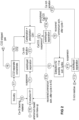
- the principal embodiment of the invention comprises the following steps (ref FIG 1 ).
- Step 1. Add solid calcium and silica bearing material into the extraction solution (in reactor- R1).
- the preferred operational parameters are influenced by several factors. Under optimum operational conditions, maximum amount of calcium ions will leach out, from the calcium bearing material, by using minimum energy and least amount of extraction chemical.
- the conditions shall also, discourage leaching of elements, such as iron or manganese, which are known to have a detrimental effect on the end product quality. Furthermore, the selected conditions shall avoid jelling of silicates, which can complicate the operation.
- the extraction process is carried out using an ammonium-based aqueous solution.
- the chosen solutions can selectively extract calcium ions, from silicate minerals containing calcium, without dissolving contaminants (such as salts, iron and manganese), which may co-precipitate with the calcium carbonate in the subsequent precipitation stage.
- the said solution is either ammonium acetate (CH 3 COONH 4 ), ammonium chloride (NH 4 Cl) or any other ammonium-based aqueous solution, but preferably ammonium chloride (NH 4 Cl) or most preferably ammonium acetate (CH 3 COONH 4 ).
- the material, from which calcium is extracted can be any alkaline, calcium bearing compound but preferably is a material deemed to be an industrial waste or by-product; and can be sourced either directly or indirectly from production, landfills, deposits and/or stockpiles.
- Examples of such materials are oil shale ash from energy or oil and gas generation, coal ash and waste cement.
- the most preferable material, from these examples, for the disclosed invention is oil shale ash from energy generation.
- the material shall be fine grained with a nominal grain size of; preferably ⁇ 1000 ⁇ m, more preferably ⁇ 500 ⁇ m and most preferably ⁇ 200 ⁇ m. Materials with larger sized particles are preferably mechanically sieved or more preferably mechanically comminuted in a dry environment.
- the temperature in the extraction reactor shall be within the range 3°C-100°C but preferably within the range 15°C-80°C.
- the most preferable temperature range for dissolution is 25°C-70°C.
- the solid to liquid ratio in the dissolution reactor is between the range 1:1-1:20, preferably between 1:1-1:10 but most preferably between 1:1-1:5.
- the molarity in the dissolution reactor is preferably between the range 0,1-3M but most preferably within the range 1,5-2M.
- the resulting mixture has a pH range between 8-13.
- the reactor used in this stage is a continuously stirred reactor. Step 2.
- the selected separation method will depend on grain size, grain distribution and the density of residual material.
- the separation technique may involve one of, or a combination of some or all the methods: sedimentation, centrifugation, decanting, filtration, reverse osmosis. Residual material from this step is directed to a separate reactor (R2) for a second calcium extraction stage.
- the calcium rich solution is subjected to carbonation to precipitate high purity calcium carbonate (in reactor CR1).
- Step 3 The carbonation is induced by introducing carbon dioxide gas directly into the calcium containing aqueous solution in a closed reactor. The carbon dioxide will hydrolyze to form bi-carbonates that will dissociate to a carbonate and hydrogen ion.
- the carbonate ion will readily react with the calcium ions in solution to form calcium carbonate precipitate.
- Carbon dioxide gas hydration reaction Calcium carbonate crystal formation: Calcium carbonate re-dissolution: It is noted that, carbon dioxide dissolution in water is influenced by pH. Carbon dioxide dissolving in water will mainly form CO 3 2- at pH>9 and HCO 3 - at pH ⁇ 9. Therefore, in theory, the maximum amount of calcium carbonate crystals will form around pH 9 9 .
- the solution into which carbon dioxide is introduced is not water, hence the optimal pH level for maximum crystal formation is different.
- the pH of the solution is preferably >7,5 but most preferably >8.
- the carbon dioxide is introduced into the calcium containing solution either by bubbling or spraying.
- the temperature during carbonation is kept between 3°C-80°C but preferably between 15°C-60°C; and most preferably within the range 25°C-45°C.
- Carbon dioxide utilized for carbonation can be either carbon dioxide or preferably carbon dioxide containing waste gases (carbon dioxide>5 vol%). More preferably the carbon dioxide gas originates from industries such as oil shale thermal plants but most preferably this gas is also separated, purified and concentrated before use.
- Step 4 Separate the calcium carbonate precipitate from solution. Selected separation method will depend on grain size, grain distribution and the density of precipitate.
- the separation technique may involve one of, or a combination of some or all the methods: sedimentation, centrifugation, decanting, filtration, reverse osmosis.
- the ammonium based aqueous solution is recovered and directed back to extraction reactor R1, for use in the first calcium extraction stage.
- Step 5 Residual material from step 2 is directed to the extraction reactor R2 where a second calcium extraction step takes place.
- the conditions (temperature, solution molarity, solid to liquid ratio etc.) in reactor R2 is kept within the same ranges as in R1.
- the residual material may be subjected to >1 number extraction cycles. This is determined based on the concentration of calcium ions leaching from a specific extraction cycle, relative to the magnitude of aqueous solution make-up and total energy consumed.
- Step 6 Separate the solid residual material from calcium rich solution.
- the separation technique may involve one of, or a combination of some or all the methods: sedimentation, centrifugation, decanting, filtration, reverse osmosis.
- Step 7. The calcium rich solution is subjected to carbonation in carbonation reactor-CR2 to precipitate calcium carbonate. The carbonation is induced by introducing carbon dioxide gas directly into the calcium containing aqueous solution in a closed reactor. The carbon dioxide is introduced into the calcium containing solution either by bubbling or spraying.
- the physical parameters, such as temperature, in reactor CR2 is kept within the same ranges as in CR1 (presented in Step 3).
- the carbon dioxide utilized for carbonation can be either carbon dioxide or preferably carbon dioxide containing waste gases (carbon dioxide >5 vol%). More preferably the waste gas originates from industries such as oil shale thermal plants but most preferably this gas is also separated, purified and concentrated before use.
- Step 8. Separate the calcium carbonate precipitate from solution.
- the separation technique may involve one of, or a combination of some or all the methods: sedimentation, centrifugation, decanting, filtration, reverse osmosis.
- the ammonium based aqueous solution is recovered and directed, to extraction reactor R2, for use in the calcium extraction.
- the calcium carbonate precipitate produced from the second carbonation stage can have different physical properties, in comparison to the precipitate from the first carbonation stage. This can be achieved by varying the operational parameters (temperature, carbonation duration, rate of carbonation, carbon dioxide bubble size etc.) in the carbonation reactor. This would indicate that the described technology can produce, precipitated calcium carbonate exhibiting different physical properties simultaneously.
- the precipitated calcium carbonate produced from both streams are characterized by; a fine-grained, white colored powder with a calcium carbonate content >95 w/w% and an average particle diameter 0,05-10 ⁇ m.
- the iron-III-oxide (Fe 2 O 3 ) concentration is ⁇ 0,2 w/w% and the Hunter Whiteness Index is >85%.
- the residual material from first (Step 2) and second (Step 6) stream are characterized by; a fine-grained, light grey colored powder.
- the silica oxide and magnesium oxide concentration from first stream is >40w/w% and >10w/w% respectively.
- the silica oxide and magnesium oxide concentrations are > 45w/w% and >15w/w% respectively.
- the precipitate of calcium carbonate is washed with water and de-watered to obtain a dry precipitated calcium carbonate product.
- the residual output material is washed with water and de-watered.
- the ammonium salts, in the washed solutions, are concentrated by distillation or more preferably by membrane separation; and re-used in the calcium extraction process. This will reduce the loss of ammonium solvents from the system.
- the ferromagnetic material in residual output material (from Step 6) will be isolated using magnetic and/or chemical extraction methods and processed.
- the residual material (from Step 6) can be utilized in cement and/or concrete production with no or minimal pre-treatment.
- the residual output material (from Step 6) can be further processed, to utilize as a substitute for silica minerals in industry.
- the residual output material (from Step 6) can be directly landfilled or backfilled as inert material.
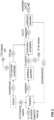
- the setup has a single carbonation reactor in comparison to the principal embodiment that has two carbonation reactors.
- the calcium rich solution from Step 6 is re-circulated back to the carbonation reactor CR1.
- this set-up a single output stream of calcium carbonate precipitate is present.
- this arrangement has a; lower operational cost (due to lower chemical and energy consumption) and lower capital cost (due to lesser piping and reactor numbers).
- a single calcium extraction stage is present. While this approach has some advantages, in comparison to other embodiments; such as lower energy usage, lower chemical loss and a leaner process; the setup will produce a lower grade silica stream (high calcium concentration) compared to a multi-stage extraction. The calcium carbonate yield per unit mass of input solid material, will also be lower.
- the advantages of the principal embodiment were previously listed in section: overview of the invention.
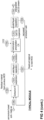
- each module consists of the steps; i) extraction of calcium, ii) solid/liquid separation, iii) carbonation and precipitation, iv) solid/liquid separation to receive the calcium carbonate precipitate.
- the initial input material for each module is the solid residue from the solid/liquid separation step (after calcium extraction) of previous module.
- This arrangement gives a high degree of control during the extraction and precipitation stage, if desired, to synthesize physically different or similar calcium carbonate crystals from each stream. If the operational parameters are same in all the calcium extraction steps, the calcium ions leaching during each extraction stage will be lower, relative to the previous stage.
- This variation in calcium concentration can influence the physical characteristics of calcium carbonate crystals formed during carbonation.
- the number of modules in the series will be determined based on a cost/benefit analysis. This is directly related to the amount of leachable calcium present, in the calcium bearing material, in relation to the operational conditions employed.
Landscapes
- Chemical & Material Sciences (AREA)
- Organic Chemistry (AREA)
- Inorganic Chemistry (AREA)
- Life Sciences & Earth Sciences (AREA)
- Geology (AREA)
- Engineering & Computer Science (AREA)
- Materials Engineering (AREA)
- Compounds Of Alkaline-Earth Elements, Aluminum Or Rare-Earth Metals (AREA)
Claims (16)
- Procédé à plusieurs phases pour produire du carbonate de calcium précipité et un concentré de silice à partir de déchets et de sous-produits contenant du calcium et de la silice, caractérisé en ce que le procédé comprend les étapes suivantes :l'étape 1 : consistant à ajouter une matière solide contenant du calcium et de la silice dans la solution d'extraction dans un réacteur d'extraction à agitation continue, ladite matière solide contenant du calcium et de la silice étant des cendres de schiste bitumineux ou des cendres de charbon ou des déchets de ciment ;l'étape 2 : consistant à séparer la matière résiduelle solide de la solution riche en calcium ;l'étape 3 : consistant à soumettre la solution riche en calcium de l'étape 2 à une carbonatation, dans le réacteur de carbonatation, pour précipiter du carbonate de calcium, dans lequel la carbonatation est induite en introduisant du dioxyde de carbone gazeux directement dans la solution aqueuse contenant du calcium dans un réacteur fermé ;l'étape 4 : consistant à séparer le précipité de carbonate de calcium de la solution de l'étape précédente ;l'étape 5 : consistant à diriger la matière résiduelle de l'étape 2 et la solution d'extraction récupérée de l'étape 4 vers un réacteur d'extraction, dans lequel une seconde étape d'extraction du calcium a lieu ;l'étape 6 : consistant à séparer la matière résiduelle solide de la solution riche en calcium ;l'étape 7 : consistant à soumettre la solution riche en calcium de l'étape 6 à une carbonatation, dans le réacteur de carbonatation, pour précipiter du carbonate de calcium, dans lequel la carbonatation est induite en introduisant du dioxyde de carbone gazeux directement dans la solution aqueuse contenant du calcium dans un réacteur fermé ;l'étape 8 : consistant à séparer le précipité de carbonate de calcium de la solution de l'étape précédente.
- Procédé à plusieurs étages selon la revendication 1, dans lequel l'agent d'extraction du calcium est une solution aqueuse à base d'ammonium, de préférence du chlorure d'ammonium NH4Cl, le plus préférentiellement de l'acétate d'ammonium CH3COONH4.
- Procédé à plusieurs phases selon la revendication 1 ou 2, dans lequel ladite matière solide contenant du calcium et de la silice présente une granulométrie nominale < 1000 µm, plus préférentiellement < 500 µm et le plus préférentiellement < 200 µm ; dans lequel des matières sont de préférence tamisées mécaniquement ou, plus préférentiellement, broyées mécaniquement dans un environnement sec.
- Procédé à plusieurs phases selon les revendications 1-3, dans lequel, à l'étape 1, la température dans le réacteur d'extraction est dans la plage de 3°C-100°C, de préférence dans la plage de 15°C-80°C, le plus préférentiellement dans la plage de 25°C-70°C ; le rapport solide/liquide dans le réacteur d'extraction est dans la plage de 1:1-1:20, de préférence 1:1-1:10, le plus préférentiellement 1:1-1:5 ; la molarité dans le réacteur d'extraction est, de préférence, dans la plage de 0,1-3 M, plus préférentiellement dans la plage 1,5-2 M ; et, à la fin de l'étape d'extraction, le mélange résultant présente une plage de pH de 8-13.
- Procédé à plusieurs phases selon les revendications 1-4, dans lequel aux étapes 3 et 7, le pH de la solution pendant une carbonatation est, de préférence, > 7.5, le plus préférentiellement > 8.
- Procédé à plusieurs phases selon les revendications 1-5, dans lequel aux étapes 3 et 7, le dioxyde de carbone est introduit dans la solution contenant du calcium par barbotage ou pulvérisation à une température entre 3°C et 80°C, de préférence entre 15°C-60°C, le plus préférentiellement entre 25°C-45°C.
- Procédé à plusieurs phases selon la revendication 6, dans lequel le dioxyde de carbone est présent en une quantité > 5 % en volume de gaz, dans lequel le gaz provient, de préférence, de gaz résiduaires industriels et dans lequel, le plus préférentiellement, le dioxyde de carbone dans les gaz résiduaires industriels est séparé, purifié et concentré avant utilisation.
- Procédé à plusieurs phases selon les revendications 1-7, dans lequel les techniques de séparation aux étapes 2, 4, 6 et 8, pour une séparation de solides à partir de liquides, comprennent l'un, ou une combinaison de certains ou de tous les procédés suivants : la sédimentation, la centrifugation, la décantation, la filtration, l'osmose inverse.
- Procédé à plusieurs phases selon les revendications 1-8, dans lequel le carbonate de calcium précipité produit présente : une teneur en carbonate de calcium > 95 % poids/poids, un diamètre moyen de particule de 0,05-10 µm ; la concentration en oxyde de fer III Fe2O3 est < 0,2 % poids/poids, l'indice de blancheur Hunter est > 85 %.
- Procédé à plusieurs phases selon les revendications 1-9, dans lequel le procédé comprend des étapes supplémentaires de lavage et de déshydratation du précipité de carbonate de calcium et du matériau de sortie résiduel avec de l'eau.
- Procédé à plusieurs phases selon la revendication 10, dans lequel les sels d'ammonium dans la solution de lavage sont concentrés par distillation ou plus préférentiellement par séparation sur membrane ; et réutilisés dans le processus d'extraction.
- Procédé à plusieurs phases selon l'une quelconque des revendications précédentes, dans lequel la matière ferromagnétique dans la matière de sortie résiduel de l'étape 6 est isolée et traitée à l'aide de procédés d'extraction magnétique et/ou chimique.
- Procédé à plusieurs phases selon l'une quelconque des revendications précédentes, dans lequel le réacteur pour l'extraction du calcium de seconde phase à l'étape 5 et le réacteur pour la carbonatation de seconde phase à l'étape 7 sont différents respectivement du réacteur pour l'extraction du calcium de première phase à l'étape 1 et du réacteur pour la carbonatation de première phase à l'étape 3.
- Procédé à plusieurs phases selon l'une quelconque des revendications précédentes, dans lequel un seul réacteur de carbonatation est présent, dans lequel la solution riche en calcium de l'étape 6 est soumise au réacteur de carbonatation décrit à l'étape 3 pour précipiter du carbonate de calcium.
- Procédé à plusieurs phases selon l'une quelconque des revendications précédentes, dans lequel un certain nombre de modules du présent procédé à plusieurs phases selon la revendication 1 sont disposés dans un agencement en série et dans lequel chaque module se compose des étapes suivantes :i) l'extraction du calcium,ii) la séparation solide/liquide,iii) la carbonatation et la précipitation,iv) la séparation solide/liquide pour recevoir le précipité de carbonate de calcium.
- Procédé à plusieurs phases selon l'une quelconque des revendications précédentes, dans lequel la matière résiduelle laissée après l'achèvement de l'extraction du calcium est une poudre à grains fins avec une concentration en oxyde de silice et en oxyde de magnésium respectivement > 45 % poids/poids et > 15 % poids/poids.
Priority Applications (5)
| Application Number | Priority Date | Filing Date | Title |
|---|---|---|---|
| RS20241462A RS66370B1 (sr) | 2020-06-01 | 2020-06-01 | Dvofazni postupak ekstrakcije za sintezu istaloženog kalcijum karbonata |
| PL20732767.7T PL4157794T3 (pl) | 2020-06-01 | 2020-06-01 | Dwustopniowy sposób ekstrakcji do syntezy strącanego węglanu wapnia |
| HUE20732767A HUE069948T2 (hu) | 2020-06-01 | 2020-06-01 | Kicsapatott kalcium-karbonát szintetizálására szolgáló, két lépésbõl álló kivonási módszer |
| SI202030552T SI4157794T1 (sl) | 2020-06-01 | 2020-06-01 | Dvostopenjska ekstrakcijska metoda za sintezo oborjenega kalcijevega karbonata |
| HRP20241786TT HRP20241786T1 (hr) | 2020-06-01 | 2020-06-01 | Dvofazni postupak ekstrakcije za sintezu istaloženog kalcijevog karbonata |
Applications Claiming Priority (1)
| Application Number | Priority Date | Filing Date | Title |
|---|---|---|---|
| PCT/EP2020/065108 WO2021244727A1 (fr) | 2020-06-01 | 2020-06-01 | Méthode d'extraction en deux étapes pour synthétiser du carbonate de calcium précipité |
Publications (2)
| Publication Number | Publication Date |
|---|---|
| EP4157794A1 EP4157794A1 (fr) | 2023-04-05 |
| EP4157794B1 true EP4157794B1 (fr) | 2024-12-11 |
Family
ID=71094283
Family Applications (1)
| Application Number | Title | Priority Date | Filing Date |
|---|---|---|---|
| EP20732767.7A Active EP4157794B1 (fr) | 2020-06-01 | 2020-06-01 | Méthode d'extraction en deux étapes pour la préparation de précipité de carbonate de calcium |
Country Status (19)
| Country | Link |
|---|---|
| US (1) | US20230212020A1 (fr) |
| EP (1) | EP4157794B1 (fr) |
| CN (1) | CN115916700A (fr) |
| AU (1) | AU2020451269B2 (fr) |
| BR (1) | BR112022023778A2 (fr) |
| CA (1) | CA3185651A1 (fr) |
| DK (1) | DK4157794T3 (fr) |
| ES (1) | ES3002962T3 (fr) |
| FI (1) | FI4157794T3 (fr) |
| HR (1) | HRP20241786T1 (fr) |
| HU (1) | HUE069948T2 (fr) |
| IL (1) | IL298590B2 (fr) |
| JO (1) | JOP20220324B1 (fr) |
| LT (1) | LT4157794T (fr) |
| PL (1) | PL4157794T3 (fr) |
| PT (1) | PT4157794T (fr) |
| RS (1) | RS66370B1 (fr) |
| SI (1) | SI4157794T1 (fr) |
| WO (1) | WO2021244727A1 (fr) |
Families Citing this family (4)
| Publication number | Priority date | Publication date | Assignee | Title |
|---|---|---|---|---|
| CN114832770B (zh) * | 2022-04-25 | 2023-07-04 | 东北大学 | 一种利用钢渣制备钙基循环捕碳材料的方法 |
| CN116626080B (zh) * | 2023-07-24 | 2023-09-26 | 四川省石棉县恒达粉体材料有限责任公司 | 一种大理岩的筛选方法 |
| TWI897684B (zh) * | 2023-10-27 | 2025-09-11 | 台灣卜力斯股份有限公司 | 碳中和減排捕捉回收碳酸鈣系統 |
| CN120646890A (zh) * | 2025-06-23 | 2025-09-16 | 北京工业大学 | 一种利废固碳制备高比表面积文石型碳酸钙的方法及应用 |
Citations (1)
| Publication number | Priority date | Publication date | Assignee | Title |
|---|---|---|---|---|
| CN106048709A (zh) * | 2016-02-16 | 2016-10-26 | 沈阳建筑大学 | 一种自石灰石中提取的碳酸钙晶须的制备方法 |
Family Cites Families (11)
| Publication number | Priority date | Publication date | Assignee | Title |
|---|---|---|---|---|
| EE05349B1 (et) | 2006-12-22 | 2010-10-15 | Tallinna Tehnikaülikool | Meetod aluselise reovee neutraliseerimiseks suitsugaasis sisalduva ssinikdioksiidiga |
| FI122348B (fi) | 2008-05-30 | 2011-12-15 | Rautaruukki Oyj | Menetelmä kalsiumkarbonaatin tuottamiseksi jäte- ja sivutuotteista |
| EE05446B1 (et) | 2009-06-08 | 2011-08-15 | Tallinna Tehnikaülikool | Meetod CO2 k?rvaldamiseks suitsugaasidest kaltsiumihendeid sisaldavate tstusheitmete toimel |
| RS54078B1 (sr) | 2010-10-26 | 2015-10-30 | Omya International Ag | Proizvodnja taloženog kalcijum-karbonata visoke čistoće |
| WO2013096764A1 (fr) * | 2011-12-21 | 2013-06-27 | Corex Materials, Inc. | Procédé de récupération pour une extraction de calcium continue et production de pcc |
| WO2015097674A1 (fr) * | 2013-12-23 | 2015-07-02 | Universidade Federal De Minas Gerais - Ufmg | Procédé de carbonatation de déchets industriels et urbains et régénération des réactifs |
| EP3098202A1 (fr) * | 2015-05-28 | 2016-11-30 | Omya International AG | Procédé permettant d'augmenter l'opacité de carbonate de calcium précipité |
| KR101758518B1 (ko) * | 2015-12-23 | 2017-07-14 | 주식회사 포스코 | 중조 및 탄산칼슘 제조 설비 및 그 제조방법 |
| US11712654B2 (en) * | 2017-03-02 | 2023-08-01 | Blue Planet Systems Corporation | Direct air capture (DAC) carbon dioxide (CO2) sequestration methods and systems |
| KR101998139B1 (ko) * | 2017-11-15 | 2019-07-09 | 한국지질자원연구원 | 물질교환을 통한 무기계 폐기물의 처리방법 |
| JP2020045260A (ja) * | 2018-09-20 | 2020-03-26 | 日鉄日新製鋼株式会社 | 製鋼スラグからカルシウムを回収する方法 |
-
2020
- 2020-06-01 PT PT207327677T patent/PT4157794T/pt unknown
- 2020-06-01 BR BR112022023778A patent/BR112022023778A2/pt active Search and Examination
- 2020-06-01 HU HUE20732767A patent/HUE069948T2/hu unknown
- 2020-06-01 RS RS20241462A patent/RS66370B1/sr unknown
- 2020-06-01 US US17/928,417 patent/US20230212020A1/en active Pending
- 2020-06-01 PL PL20732767.7T patent/PL4157794T3/pl unknown
- 2020-06-01 CA CA3185651A patent/CA3185651A1/fr active Pending
- 2020-06-01 IL IL298590A patent/IL298590B2/en unknown
- 2020-06-01 DK DK20732767.7T patent/DK4157794T3/da active
- 2020-06-01 ES ES20732767T patent/ES3002962T3/es active Active
- 2020-06-01 CN CN202080101218.XA patent/CN115916700A/zh active Pending
- 2020-06-01 WO PCT/EP2020/065108 patent/WO2021244727A1/fr not_active Ceased
- 2020-06-01 EP EP20732767.7A patent/EP4157794B1/fr active Active
- 2020-06-01 HR HRP20241786TT patent/HRP20241786T1/hr unknown
- 2020-06-01 FI FIEP20732767.7T patent/FI4157794T3/fi active
- 2020-06-01 SI SI202030552T patent/SI4157794T1/sl unknown
- 2020-06-01 AU AU2020451269A patent/AU2020451269B2/en active Active
- 2020-06-01 LT LTEPPCT/EP2020/065108T patent/LT4157794T/lt unknown
-
2022
- 2022-11-29 JO JOJO/P/2022/0324A patent/JOP20220324B1/ar active
Patent Citations (1)
| Publication number | Priority date | Publication date | Assignee | Title |
|---|---|---|---|---|
| CN106048709A (zh) * | 2016-02-16 | 2016-10-26 | 沈阳建筑大学 | 一种自石灰石中提取的碳酸钙晶须的制备方法 |
Also Published As
| Publication number | Publication date |
|---|---|
| HUE069948T2 (hu) | 2025-04-28 |
| PT4157794T (pt) | 2025-01-10 |
| EP4157794A1 (fr) | 2023-04-05 |
| HRP20241786T1 (hr) | 2025-03-14 |
| IL298590B1 (en) | 2025-09-01 |
| PL4157794T3 (pl) | 2025-04-22 |
| AU2020451269B2 (en) | 2024-11-14 |
| DK4157794T3 (en) | 2025-01-13 |
| US20230212020A1 (en) | 2023-07-06 |
| AU2020451269A1 (en) | 2022-12-15 |
| JOP20220324B1 (ar) | 2025-10-01 |
| IL298590A (en) | 2023-01-01 |
| CA3185651A1 (fr) | 2021-12-09 |
| IL298590B2 (en) | 2026-01-01 |
| CN115916700A (zh) | 2023-04-04 |
| LT4157794T (lt) | 2025-01-10 |
| BR112022023778A2 (pt) | 2022-12-20 |
| FI4157794T3 (fi) | 2025-01-13 |
| SI4157794T1 (sl) | 2025-03-31 |
| RS66370B1 (sr) | 2025-01-31 |
| ES3002962T3 (en) | 2025-03-10 |
| WO2021244727A1 (fr) | 2021-12-09 |
Similar Documents
| Publication | Publication Date | Title |
|---|---|---|
| EP4157794B1 (fr) | Méthode d'extraction en deux étapes pour la préparation de précipité de carbonate de calcium | |
| EP2294233B1 (fr) | Procédé de production de carbonate de calcium à partir de déchets et de sous-produits | |
| RU2596930C2 (ru) | Восстановительный способ непрерывной экстракции кальция и получения осаждённого карбоната кальция | |
| EP3349907B1 (fr) | Procédés et systèmes de récupération de produits à partir d'un laitier de fer et d'acier | |
| EP4157795B1 (fr) | Méthode d'extraction en deux étapes pour synthétiser du carbonate de calcium précipité | |
| KR100998916B1 (ko) | 탄산가스를 활용한 고순도 탄산칼슘의 제조방법 | |
| Shilla et al. | Review of methods for alumina recovery from mudstone and coal fly ash | |
| KR20170097297A (ko) | 마그네슘 탄산화 방법 | |
| CN101760638B (zh) | 从硫酸镁溶液中回收镁的方法 | |
| EA048569B1 (ru) | Двухстадийный способ экстракции для синтеза осажденного карбоната кальция | |
| EE01614U1 (et) | Mitmeetapiline meetod sadestatud kaltsiumkarbonaadi ja ränidioksiidi kontsentraadi tootmiseks kaltsiumit ja ränidioksiidi sisaldavatest jäätmetest ja kõrvalsaadustest | |
| CN106148734B (zh) | 一种综合利用硫酸亚铁生产电解锰的技术 | |
| Sarkarpour et al. | Indirect Mineral Carbonation of CO2 Using Municipal Incinerator Bottom Ash | |
| EE01613U1 (et) | Sadestatud kaltsiumkarbonaadi sünteesimise meetod |
Legal Events
| Date | Code | Title | Description |
|---|---|---|---|
| REG | Reference to a national code |
Ref country code: HR Ref legal event code: TUEP Ref document number: P20241786T Country of ref document: HR |
|
| STAA | Information on the status of an ep patent application or granted ep patent |
Free format text: STATUS: UNKNOWN |
|
| STAA | Information on the status of an ep patent application or granted ep patent |
Free format text: STATUS: THE INTERNATIONAL PUBLICATION HAS BEEN MADE |
|
| PUAI | Public reference made under article 153(3) epc to a published international application that has entered the european phase |
Free format text: ORIGINAL CODE: 0009012 |
|
| STAA | Information on the status of an ep patent application or granted ep patent |
Free format text: STATUS: REQUEST FOR EXAMINATION WAS MADE |
|
| 17P | Request for examination filed |
Effective date: 20221031 |
|
| AK | Designated contracting states |
Kind code of ref document: A1 Designated state(s): AL AT BE BG CH CY CZ DE DK EE ES FI FR GB GR HR HU IE IS IT LI LT LU LV MC MK MT NL NO PL PT RO RS SE SI SK SM TR |
|
| DAV | Request for validation of the european patent (deleted) | ||
| DAX | Request for extension of the european patent (deleted) | ||
| GRAP | Despatch of communication of intention to grant a patent |
Free format text: ORIGINAL CODE: EPIDOSNIGR1 |
|
| STAA | Information on the status of an ep patent application or granted ep patent |
Free format text: STATUS: GRANT OF PATENT IS INTENDED |
|
| INTG | Intention to grant announced |
Effective date: 20240725 |
|
| GRAS | Grant fee paid |
Free format text: ORIGINAL CODE: EPIDOSNIGR3 |
|
| GRAA | (expected) grant |
Free format text: ORIGINAL CODE: 0009210 |
|
| STAA | Information on the status of an ep patent application or granted ep patent |
Free format text: STATUS: THE PATENT HAS BEEN GRANTED |
|
| AK | Designated contracting states |
Kind code of ref document: B1 Designated state(s): AL AT BE BG CH CY CZ DE DK EE ES FI FR GB GR HR HU IE IS IT LI LT LU LV MC MK MT NL NO PL PT RO RS SE SI SK SM TR |
|
| REG | Reference to a national code |
Ref country code: GB Ref legal event code: FG4D |
|
| REG | Reference to a national code |
Ref country code: CH Ref legal event code: EP |
|
| REG | Reference to a national code |
Ref country code: IE Ref legal event code: FG4D |
|
| REG | Reference to a national code |
Ref country code: DE Ref legal event code: R096 Ref document number: 602020042943 Country of ref document: DE |
|
| P01 | Opt-out of the competence of the unified patent court (upc) registered |
Free format text: CASE NUMBER: APP_63824/2024 Effective date: 20241202 |
|
| REG | Reference to a national code |
Ref country code: PT Ref legal event code: SC4A Ref document number: 4157794 Country of ref document: PT Date of ref document: 20250110 Kind code of ref document: T Free format text: AVAILABILITY OF NATIONAL TRANSLATION Effective date: 20250106 |
|
| REG | Reference to a national code |
Ref country code: FI Ref legal event code: FGE Ref country code: DK Ref legal event code: T3 Effective date: 20250108 |
|
| REG | Reference to a national code |
Ref country code: NL Ref legal event code: FP |
|
| REG | Reference to a national code |
Ref country code: SE Ref legal event code: TRGR |
|
| REG | Reference to a national code |
Ref country code: EE Ref legal event code: FG4A Ref document number: E024809 Country of ref document: EE Effective date: 20241212 |
|
| REG | Reference to a national code |
Ref country code: SK Ref legal event code: T3 Ref document number: E 45640 Country of ref document: SK |
|
| REG | Reference to a national code |
Ref country code: GR Ref legal event code: EP Ref document number: 20250400059 Country of ref document: GR Effective date: 20250211 |
|
| REG | Reference to a national code |
Ref country code: ES Ref legal event code: FG2A Ref document number: 3002962 Country of ref document: ES Kind code of ref document: T3 Effective date: 20250310 |
|
| REG | Reference to a national code |
Ref country code: HR Ref legal event code: T1PR Ref document number: P20241786 Country of ref document: HR |
|
| REG | Reference to a national code |
Ref country code: HU Ref legal event code: AG4A Ref document number: E069948 Country of ref document: HU |
|
| REG | Reference to a national code |
Ref country code: HR Ref legal event code: ODRP Ref document number: P20241786 Country of ref document: HR Payment date: 20250513 Year of fee payment: 6 |
|
| PG25 | Lapsed in a contracting state [announced via postgrant information from national office to epo] |
Ref country code: SM Free format text: LAPSE BECAUSE OF FAILURE TO SUBMIT A TRANSLATION OF THE DESCRIPTION OR TO PAY THE FEE WITHIN THE PRESCRIBED TIME-LIMIT Effective date: 20241211 |
|
| PGFP | Annual fee paid to national office [announced via postgrant information from national office to epo] |
Ref country code: FI Payment date: 20250422 Year of fee payment: 6 |
|
| PGFP | Annual fee paid to national office [announced via postgrant information from national office to epo] |
Ref country code: PL Payment date: 20250514 Year of fee payment: 6 Ref country code: DE Payment date: 20250626 Year of fee payment: 6 |
|
| PGFP | Annual fee paid to national office [announced via postgrant information from national office to epo] |
Ref country code: GB Payment date: 20250617 Year of fee payment: 6 Ref country code: DK Payment date: 20250619 Year of fee payment: 6 |
|
| PGFP | Annual fee paid to national office [announced via postgrant information from national office to epo] |
Ref country code: LT Payment date: 20250422 Year of fee payment: 6 |
|
| PG25 | Lapsed in a contracting state [announced via postgrant information from national office to epo] |
Ref country code: IS Free format text: LAPSE BECAUSE OF FAILURE TO SUBMIT A TRANSLATION OF THE DESCRIPTION OR TO PAY THE FEE WITHIN THE PRESCRIBED TIME-LIMIT Effective date: 20250411 |
|
| PGFP | Annual fee paid to national office [announced via postgrant information from national office to epo] |
Ref country code: RS Payment date: 20250514 Year of fee payment: 6 Ref country code: NO Payment date: 20250617 Year of fee payment: 6 |
|
| PGFP | Annual fee paid to national office [announced via postgrant information from national office to epo] |
Ref country code: AL Payment date: 20250630 Year of fee payment: 6 Ref country code: NL Payment date: 20250624 Year of fee payment: 6 Ref country code: BE Payment date: 20250624 Year of fee payment: 6 |
|
| PGFP | Annual fee paid to national office [announced via postgrant information from national office to epo] |
Ref country code: HR Payment date: 20250513 Year of fee payment: 6 |
|
| PGFP | Annual fee paid to national office [announced via postgrant information from national office to epo] |
Ref country code: LV Payment date: 20250423 Year of fee payment: 6 Ref country code: PT Payment date: 20250512 Year of fee payment: 6 |
|
| PGFP | Annual fee paid to national office [announced via postgrant information from national office to epo] |
Ref country code: HU Payment date: 20250530 Year of fee payment: 6 Ref country code: EE Payment date: 20250424 Year of fee payment: 6 Ref country code: FR Payment date: 20250624 Year of fee payment: 6 |
|
| PGFP | Annual fee paid to national office [announced via postgrant information from national office to epo] |
Ref country code: GR Payment date: 20250619 Year of fee payment: 6 Ref country code: BG Payment date: 20250625 Year of fee payment: 6 |
|
| PGFP | Annual fee paid to national office [announced via postgrant information from national office to epo] |
Ref country code: AT Payment date: 20250617 Year of fee payment: 6 Ref country code: RO Payment date: 20250520 Year of fee payment: 6 |
|
| PGFP | Annual fee paid to national office [announced via postgrant information from national office to epo] |
Ref country code: TR Payment date: 20250513 Year of fee payment: 6 Ref country code: SK Payment date: 20250513 Year of fee payment: 6 |
|
| PGFP | Annual fee paid to national office [announced via postgrant information from national office to epo] |
Ref country code: CZ Payment date: 20250520 Year of fee payment: 6 |
|
| PGFP | Annual fee paid to national office [announced via postgrant information from national office to epo] |
Ref country code: IE Payment date: 20250617 Year of fee payment: 6 |
|
| PGFP | Annual fee paid to national office [announced via postgrant information from national office to epo] |
Ref country code: SI Payment date: 20250512 Year of fee payment: 6 Ref country code: SE Payment date: 20250619 Year of fee payment: 6 |
|
| REG | Reference to a national code |
Ref country code: DE Ref legal event code: R097 Ref document number: 602020042943 Country of ref document: DE |
|
| PGFP | Annual fee paid to national office [announced via postgrant information from national office to epo] |
Ref country code: ES Payment date: 20250710 Year of fee payment: 6 |
|
| PGFP | Annual fee paid to national office [announced via postgrant information from national office to epo] |
Ref country code: IT Payment date: 20250623 Year of fee payment: 6 |
|
| PLBE | No opposition filed within time limit |
Free format text: ORIGINAL CODE: 0009261 |
|
| STAA | Information on the status of an ep patent application or granted ep patent |
Free format text: STATUS: NO OPPOSITION FILED WITHIN TIME LIMIT |
|
| PGFP | Annual fee paid to national office [announced via postgrant information from national office to epo] |
Ref country code: CH Payment date: 20250701 Year of fee payment: 6 |
|
| PGFP | Annual fee paid to national office [announced via postgrant information from national office to epo] |
Ref country code: MK Payment date: 20250516 Year of fee payment: 6 |
|
| 26N | No opposition filed |
Effective date: 20250912 |
|
| PG25 | Lapsed in a contracting state [announced via postgrant information from national office to epo] |
Ref country code: MC Free format text: LAPSE BECAUSE OF FAILURE TO SUBMIT A TRANSLATION OF THE DESCRIPTION OR TO PAY THE FEE WITHIN THE PRESCRIBED TIME-LIMIT Effective date: 20241211 |
|
| REG | Reference to a national code |
Ref country code: AT Ref legal event code: UEP Ref document number: 1750283 Country of ref document: AT Kind code of ref document: T Effective date: 20241211 |
|
| PG25 | Lapsed in a contracting state [announced via postgrant information from national office to epo] |
Ref country code: LU Free format text: LAPSE BECAUSE OF NON-PAYMENT OF DUE FEES Effective date: 20250601 |