EP4159712B1 - N-[8-(2-hydroxybenzoyl)amino!kalium octanoat kristall polymorph, verfahren zu seiner herstellung und seine verwendung - Google Patents
N-[8-(2-hydroxybenzoyl)amino!kalium octanoat kristall polymorph, verfahren zu seiner herstellung und seine verwendung Download PDFInfo
- Publication number
- EP4159712B1 EP4159712B1 EP20937944.5A EP20937944A EP4159712B1 EP 4159712 B1 EP4159712 B1 EP 4159712B1 EP 20937944 A EP20937944 A EP 20937944A EP 4159712 B1 EP4159712 B1 EP 4159712B1
- Authority
- EP
- European Patent Office
- Prior art keywords
- crystal form
- hydroxybenzoyl
- amino
- potassium
- octanoate
- Prior art date
- Legal status (The legal status is an assumption and is not a legal conclusion. Google has not performed a legal analysis and makes no representation as to the accuracy of the status listed.)
- Active
Links
Images






Classifications
-
- C—CHEMISTRY; METALLURGY
- C07—ORGANIC CHEMISTRY
- C07C—ACYCLIC OR CARBOCYCLIC COMPOUNDS
- C07C235/00—Carboxylic acid amides, the carbon skeleton of the acid part being further substituted by oxygen atoms
- C07C235/42—Carboxylic acid amides, the carbon skeleton of the acid part being further substituted by oxygen atoms having carbon atoms of carboxamide groups bound to carbon atoms of six-membered aromatic rings and singly-bound oxygen atoms bound to the same carbon skeleton
- C07C235/44—Carboxylic acid amides, the carbon skeleton of the acid part being further substituted by oxygen atoms having carbon atoms of carboxamide groups bound to carbon atoms of six-membered aromatic rings and singly-bound oxygen atoms bound to the same carbon skeleton with carbon atoms of carboxamide groups and singly-bound oxygen atoms bound to carbon atoms of the same non-condensed six-membered aromatic ring
- C07C235/58—Carboxylic acid amides, the carbon skeleton of the acid part being further substituted by oxygen atoms having carbon atoms of carboxamide groups bound to carbon atoms of six-membered aromatic rings and singly-bound oxygen atoms bound to the same carbon skeleton with carbon atoms of carboxamide groups and singly-bound oxygen atoms bound to carbon atoms of the same non-condensed six-membered aromatic ring with carbon atoms of carboxamide groups and singly-bound oxygen atoms, bound in ortho-position to carbon atoms of the same non-condensed six-membered aromatic ring
- C07C235/60—Carboxylic acid amides, the carbon skeleton of the acid part being further substituted by oxygen atoms having carbon atoms of carboxamide groups bound to carbon atoms of six-membered aromatic rings and singly-bound oxygen atoms bound to the same carbon skeleton with carbon atoms of carboxamide groups and singly-bound oxygen atoms bound to carbon atoms of the same non-condensed six-membered aromatic ring with carbon atoms of carboxamide groups and singly-bound oxygen atoms, bound in ortho-position to carbon atoms of the same non-condensed six-membered aromatic ring having the nitrogen atoms of the carboxamide groups bound to hydrogen atoms or to acyclic carbon atoms
-
- A—HUMAN NECESSITIES
- A61—MEDICAL OR VETERINARY SCIENCE; HYGIENE
- A61K—PREPARATIONS FOR MEDICAL, DENTAL OR TOILETRY PURPOSES
- A61K31/00—Medicinal preparations containing organic active ingredients
- A61K31/185—Acids; Anhydrides, halides or salts thereof, e.g. sulfur acids, imidic, hydrazonic or hydroximic acids
- A61K31/19—Carboxylic acids, e.g. valproic acid
- A61K31/20—Carboxylic acids, e.g. valproic acid having a carboxyl group bound to a chain of seven or more carbon atoms, e.g. stearic, palmitic, arachidic acids
-
- A—HUMAN NECESSITIES
- A61—MEDICAL OR VETERINARY SCIENCE; HYGIENE
- A61K—PREPARATIONS FOR MEDICAL, DENTAL OR TOILETRY PURPOSES
- A61K38/00—Medicinal preparations containing peptides
- A61K38/16—Peptides having more than 20 amino acids; Gastrins; Somatostatins; Melanotropins; Derivatives thereof
- A61K38/17—Peptides having more than 20 amino acids; Gastrins; Somatostatins; Melanotropins; Derivatives thereof from animals; from humans
- A61K38/22—Hormones
- A61K38/26—Glucagons
-
- A—HUMAN NECESSITIES
- A61—MEDICAL OR VETERINARY SCIENCE; HYGIENE
- A61K—PREPARATIONS FOR MEDICAL, DENTAL OR TOILETRY PURPOSES
- A61K47/00—Medicinal preparations characterised by the non-active ingredients used, e.g. carriers or inert additives; Targeting or modifying agents chemically bound to the active ingredient
- A61K47/06—Organic compounds, e.g. natural or synthetic hydrocarbons, polyolefins, mineral oil, petrolatum or ozokerite
- A61K47/16—Organic compounds, e.g. natural or synthetic hydrocarbons, polyolefins, mineral oil, petrolatum or ozokerite containing nitrogen, e.g. nitro-, nitroso-, azo-compounds, nitriles, cyanates
- A61K47/18—Amines; Amides; Ureas; Quaternary ammonium compounds; Amino acids; Oligopeptides having up to five amino acids
-
- A—HUMAN NECESSITIES
- A61—MEDICAL OR VETERINARY SCIENCE; HYGIENE
- A61K—PREPARATIONS FOR MEDICAL, DENTAL OR TOILETRY PURPOSES
- A61K9/00—Medicinal preparations characterised by special physical form
- A61K9/20—Pills, tablets, discs, rods
- A61K9/2004—Excipients; Inactive ingredients
- A61K9/2013—Organic compounds, e.g. phospholipids, fats
-
- A—HUMAN NECESSITIES
- A61—MEDICAL OR VETERINARY SCIENCE; HYGIENE
- A61P—SPECIFIC THERAPEUTIC ACTIVITY OF CHEMICAL COMPOUNDS OR MEDICINAL PREPARATIONS
- A61P3/00—Drugs for disorders of the metabolism
- A61P3/04—Anorexiants; Antiobesity agents
-
- A—HUMAN NECESSITIES
- A61—MEDICAL OR VETERINARY SCIENCE; HYGIENE
- A61P—SPECIFIC THERAPEUTIC ACTIVITY OF CHEMICAL COMPOUNDS OR MEDICINAL PREPARATIONS
- A61P3/00—Drugs for disorders of the metabolism
- A61P3/08—Drugs for disorders of the metabolism for glucose homeostasis
- A61P3/10—Drugs for disorders of the metabolism for glucose homeostasis for hyperglycaemia, e.g. antidiabetics
-
- C—CHEMISTRY; METALLURGY
- C07—ORGANIC CHEMISTRY
- C07C—ACYCLIC OR CARBOCYCLIC COMPOUNDS
- C07C231/00—Preparation of carboxylic acid amides
- C07C231/22—Separation; Purification; Stabilisation; Use of additives
- C07C231/24—Separation; Purification
-
- A—HUMAN NECESSITIES
- A61—MEDICAL OR VETERINARY SCIENCE; HYGIENE
- A61K—PREPARATIONS FOR MEDICAL, DENTAL OR TOILETRY PURPOSES
- A61K38/00—Medicinal preparations containing peptides
-
- A—HUMAN NECESSITIES
- A61—MEDICAL OR VETERINARY SCIENCE; HYGIENE
- A61K—PREPARATIONS FOR MEDICAL, DENTAL OR TOILETRY PURPOSES
- A61K9/00—Medicinal preparations characterised by special physical form
- A61K9/0012—Galenical forms characterised by the site of application
- A61K9/0019—Injectable compositions; Intramuscular, intravenous, arterial, subcutaneous administration; Compositions to be administered through the skin in an invasive manner
-
- A—HUMAN NECESSITIES
- A61—MEDICAL OR VETERINARY SCIENCE; HYGIENE
- A61K—PREPARATIONS FOR MEDICAL, DENTAL OR TOILETRY PURPOSES
- A61K9/00—Medicinal preparations characterised by special physical form
- A61K9/0012—Galenical forms characterised by the site of application
- A61K9/0053—Mouth and digestive tract, i.e. intraoral and peroral administration
-
- C—CHEMISTRY; METALLURGY
- C07—ORGANIC CHEMISTRY
- C07B—GENERAL METHODS OF ORGANIC CHEMISTRY; APPARATUS THEREFOR
- C07B2200/00—Indexing scheme relating to specific properties of organic compounds
- C07B2200/13—Crystalline forms, e.g. polymorphs
Definitions
- the present application relates to the field of chemical medicine, in particular to a crystal polymorph of potassium N-[8-(2-hydroxybenzoyl)amino]octanoate and a preparation method and use thereof, as defined in the appended claims.
- Macromolecular drugs such as peptides and protein drugs are often not easily absorbed into the intestinal tract by oral administration due to their characteristics such as large molecular weight, low lipid solubility, unstable to gastric acid, and being destructible by various digestive enzymes in the gastrointestinal tract.
- people have tried to overcome drug absorption barriers from various aspects.
- gastrointestinal absorption enhancers are often used to improve biofilm permeability of drugs. Although it increases the absorption of drugs, it also increases the absorption of intestinal endotoxins and lacks safety for long-term use.
- a new type of macromolecular drug delivery agent N-[8-(2-hydroxybenzoyl)amino]octanoic acid (NAC for short) and a salt thereof are disclosed in U.S. Patent US5,650,386 (published in 1997 ), and its molecular formula is as shown in Formula (I).
- U.S. Patent US8,636,996 discloses the polymorphic form, amorphous form and preparation method thereof of monosodium N-[8-(2-hydroxybenzoyl)amino]octanoate (abbreviated as SNAC), and its molecular formula is as shown in Formula (II).
- SNAC is a novel amino acid derivative delivery agent. Recent studies have shown that, it may promote the oral absorption of various protein drug solutions such as heparin and human growth hormone without the need for dosage form protection, but does not show obvious cytotoxicity. Since the bioavailability, solubility and fluidity of different salt forms of a compound will also vary, different crystal forms of the same salt form will have different crystal shape, density, hardness, color, chemical stability, melting point, hygroscopicity, suspendability and dissolution rate and other characteristics, which will directly or indirectly affect the ability of the delivered drug, resulting in differences in the bioavailability, compressibility, and stability of the delivered drug.
- the object of this application is to provide a crystal polymorph of potassium N-[8-(2-hydroxybenzoyl)amino]octanoate and preparation method and use thereof, the pharmaceutical composition and use thereof, as defined in the appended claims.
- crystal polymorph of potassium N-[8-(2-hydroxybenzoyl)amino]octanoate described in this application which have high solubility and strong stability, can deliver drugs more effectively, and increase the permeability of the delivered drugs in the gastrointestinal tract, and are conducive to the preparation of oral preparations, so that the preventive and/or therapeutic drugs can be better delivered into the body to achieve the effect of improving bioavailability.
- X-Ray Powder Diffraction is usually applied to the analysis of crystal structure.
- X-rays are electromagnetic waves that generate a periodically changing electromagnetic field in a crystal when they are incident on it. X-rays cause electrons and nuclei in atoms to vibrate, and the vibrations in a nucleus are ignored due to the large mass of the nucleus.
- the vibrating electrons are the source of secondary X-rays with the same wavelength and phase as the incident light.
- the scattered waves of each electron in the crystal interfere with each other and superimpose each other, and this is called diffraction.
- the direction in which the scattered wave phases are consistent and mutually reinforcing is called the diffraction direction, resulting in diffraction rays.
- Thermogravimetric Analysis refers to a thermal analysis technique that measures the relationship between the mass of the sample to be tested and the temperature change at a program controlled temperature, and is used to study the thermal stability and composition of materials. TGA is a commonly used detection method in R&D and quality control. Thermogravimetric analysis is often used in combination with other analysis methods in actual material analysis, to conduct comprehensive thermal analysis and analyze materials comprehensively and accurately. The curve recorded by the thermogravimetric analyzer is called TGA curve.
- Differential scanning calorimetry is a technique that measures the rate of heat flow of a sample relative to a reference as a function of temperature or time under control of temperature program.
- the curve recorded by the differential scanning calorimeter is called DSC curve.
- W/g or mW/mg i.e., the power flowing to each gram of the sample
- T or time t the abscissa.
- the differential scanning calorimeter may be used to measure various thermodynamic and kinetic parameters, such as specific heat capacity, heat of reaction, heat of transition, phase diagram, reaction rate, crystallization rate, polymer crystallinity, sample purity, etc. This method has a wide temperature range (-175°C to 725°C), high resolution and less sample consumption. It is suitable for analysis of inorganic substances, organic compounds and pharmaceuticals.
- the present application provides a crystal polymorph of potassium N-[8-(2-hydroxybenzoyl)amino]octanoate, wherein the crystal polymorph of potassium N-[8-(2-hydroxybenzoyl)amino]octanoate is crystal Form I, and the crystal Form I has an X-ray powder diffraction pattern with characteristic peaks represented by 2 ⁇ ° of 7.83 ⁇ 0.2, 26.64 ⁇ 0.2, and 18.89 ⁇ 0.2.
- the crystal Form I has an X-ray powder diffraction pattern with characteristic peaks represented by 2 ⁇ ° of 7.83 ⁇ 0.2, 26.64 ⁇ 0.2, 18.89 ⁇ 0.2, and 21.59 ⁇ 0.2.
- the crystal Form I has an X-ray powder diffraction pattern with characteristic peaks represented by 2 ⁇ ° of 7.83 ⁇ 0.2, 26.64 ⁇ 0.2, 18.89 ⁇ 0.2, 5.24 ⁇ 0.2, 21.59 ⁇ 0.2, and 13.02 ⁇ 0.2.
- the crystal Form I has X-ray powder diffraction pattern with characteristic peaks represented by 2 ⁇ ° of: 7.83 ⁇ 0.2, 26.64 ⁇ 0.2, 18.89 ⁇ 0.2, 5.24 ⁇ 0.2, 21.59 ⁇ 0.2, 13.02 ⁇ 0.2, 24.29 ⁇ 0.2, 6.61 ⁇ 0.2, and 10.43+0.2.
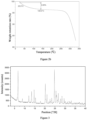
- Fig. 1 the X-ray powder diffraction pattern of the crystal Form I is shown as Fig. 1 .
- the crystal Form II has an X-ray powder diffraction pattern with characteristic peaks represented by 2 ⁇ ° of 24.76 ⁇ 0.2, 6.73 ⁇ 0.2, 20.26 ⁇ 0.2, and 14.68 ⁇ 0.2.
- the crystal Form II has an X-ray powder diffraction pattern with characteristic peaks represented by 2 ⁇ ° of 24.76 ⁇ 0.2, 6.73 ⁇ 0.2, 20.26 ⁇ 0.2, 14.68 ⁇ 0.2, 25.55 ⁇ 0.2, and 26.66 ⁇ 0.2.
- the crystal Form II has an X-ray powder diffraction pattern with characteristic peaks represented by 2 ⁇ ° of 24.76 ⁇ 0.2, 6.73 ⁇ 0.2, 20.26 ⁇ 0.2, 14.68 ⁇ 0.2, 25.55 ⁇ 0.2, 13.41 ⁇ 0.2, and 26.66 ⁇ 0.2.
- the crystal Form II has an X-ray powder diffraction pattern with characteristic peaks represented by 2 ⁇ ° of 24.76 ⁇ 0.2, 6.73 ⁇ 0.2, 20.26 ⁇ 0.2, 14.68 ⁇ 0.2, 25.55 ⁇ 0.2, 13.41 ⁇ 0.2, 26.66 ⁇ 0.2, and 21.08 ⁇ 0.2.
- the crystal Form II has an X-ray powder diffraction pattern with characteristic peaks represented by 2 ⁇ ° of 24.76 ⁇ 0.2, 6.73 ⁇ 0.2, 20.26 ⁇ 0.2, 14.68 ⁇ 0.2, 25.55 ⁇ 0.2, 13.41 ⁇ 0.2, 26.66 ⁇ 0.2, 21.08 ⁇ 0.2, and 25.79 ⁇ 0.2.
- the crystal Form II has an X-ray powder diffraction pattern with characteristic peaks represented by 2 ⁇ ° of 24.76 ⁇ 0.2, 6.73 ⁇ 0.2, 20.26 ⁇ 0.2, 14.68 ⁇ 0.2, 25.55 ⁇ 0.2, 13.41 ⁇ 0.2, 26.66 ⁇ 0.2, 21.08 ⁇ 0.2, 25.79 ⁇ 0.2, and 28.47 ⁇ 0.2.
- the crystal Form II has an X-ray powder diffraction pattern with characteristic peaks represented by 2 ⁇ ° of 24.76 ⁇ 0.2, 6.73 ⁇ 0.2, 20.26 ⁇ 0.2, 14.68 ⁇ 0.2, 25.55 ⁇ 0.2, 13.41 ⁇ 0.2, 26.66 ⁇ 0.2, 21.08 ⁇ 0.2, 25.79 ⁇ 0.2, 28.47 ⁇ 0.2, and 12.07 ⁇ 0.2.
- the crystal Form II has an X-ray powder diffraction pattern with characteristic peaks represented by 2 ⁇ ° of 24.76 ⁇ 0.2, 6.73 ⁇ 0.2, 20.26 ⁇ 0.2, 14.68 ⁇ 0.2, 25.55 ⁇ 0.2, 13.41 ⁇ 0.2, 26.66 ⁇ 0.2, 21.08 ⁇ 0.2, 25.79 ⁇ 0.2, 28.47 ⁇ 0.2, 12.07 ⁇ 0.2, 15.38 ⁇ 0.2, and 23.38 ⁇ 0.2.
- the crystal Form II has an X-ray powder diffraction pattern with characteristic peaks represented by 2 ⁇ ° of 24.76 ⁇ 0.2, 6.73 ⁇ 0.2, 20.26 ⁇ 0.2, 14.68 ⁇ 0.2, 25.55 ⁇ 0.2, 13.41 ⁇ 0.2, 26.66 ⁇ 0.2, 21.08 ⁇ 0.2, 25.79 ⁇ 0.2, 28.47 ⁇ 0.2, 12.07 ⁇ 0.2, 15.38 ⁇ 0.2, 23.38 ⁇ 0.2, and 29.48 ⁇ 0.2.
- the crystal Form II has an X-ray powder diffraction pattern with characteristic peaks represented by 2 ⁇ ° of 24.76 ⁇ 0.2, 6.73 ⁇ 0.2, 20.26 ⁇ 0.2, 14.68 ⁇ 0.2, 25.55 ⁇ 0.2, 13.41 ⁇ 0.2, 26.66 ⁇ 0.2, 21.08 ⁇ 0.2, 25.79 ⁇ 0.2, 28.47 ⁇ 0.2, 12.07 ⁇ 0.2, 15.38 ⁇ 0.2, 23.38 ⁇ 0.2, 29.48 ⁇ 0.2, and 22.55 ⁇ 0.2.
- the crystal Form II has an X-ray powder diffraction pattern with characteristic peaks represented by 2 ⁇ ° of 24.76 ⁇ 0.2, 6.73 ⁇ 0.2, 20.26 ⁇ 0.2, 14.68 ⁇ 0.2, 25.55 ⁇ 0.2, 13.41 ⁇ 0.2, 26.66 ⁇ 0.2, 21.08 ⁇ 0.2, 25.79 ⁇ 0.2, 28.47 ⁇ 0.2, 12.07 ⁇ 0.2, 15.38 ⁇ 0.2, 23.38 ⁇ 0.2, 29.48 ⁇ 0.2, 22.55 ⁇ 0.2, and 27.79 ⁇ 0.2.
- the crystal Form II has an X-ray powder diffraction pattern with characteristic peaks represented by 2 ⁇ ° of 24.76 ⁇ 0.2, 6.73 ⁇ 0.2, 20.26 ⁇ 0.2, 14.68 ⁇ 0.2, 25.55 ⁇ 0.2, 13.41 ⁇ 0.2, 26.66 ⁇ 0.2, 21.08 ⁇ 0.2, 25.79 ⁇ 0.2, 28.47 ⁇ 0.2, 12.07 ⁇ 0.2, 15.38 ⁇ 0.2, 23.38 ⁇ 0.2, 29.48 ⁇ 0.2, 22.55 ⁇ 0.2, 27.79 ⁇ 0.2, and 8.91 ⁇ 0.2.
- the melting point of the crystal Form II is 162.5°C.
- the adsorption water removal temperature of the crystal Form II is 93°C.
- the crystal Form II loses 5.6% of weight at 140°C.
- the present application describes a crystal polymorph of potassium N-[8-(2-hydroxybenzoyl)amino]octanoate, wherein the crystal polymorph of potassium N-[8-(2-hydroxybenzoyl)amino]octanoate is crystal Form III, and the crystal Form III has at least an X-ray powder diffraction pattern with characteristic peaks represented by 2 ⁇ ° of 9.06 ⁇ 0.2, 23.30 ⁇ 0.2, and 21.44 ⁇ 0.2.
- the crystal Form III has an X-ray powder diffraction pattern with characteristic peaks represented by 2 ⁇ ° of 9.06 ⁇ 0.2, 23.30 ⁇ 0.2, 21.44 ⁇ 0.2, and 24.75 ⁇ 0.2.
- the crystal Form III has an X-ray powder diffraction pattern with characteristic peaks represented by 2 ⁇ ° of 9.06 ⁇ 0.2, 23.30 ⁇ 0.2, 21.44 ⁇ 0.2, and 6.03 ⁇ 0.2.
- the crystal Form III has an X-ray powder diffraction pattern with characteristic peaks represented by 2 ⁇ ° of 9.06 ⁇ 0.2, 23.30 ⁇ 0.2, 21.44 ⁇ 0.2, 24.75 ⁇ 0.2, and 6.03 ⁇ 0.2.
- the crystal Form III has an X-ray powder diffraction pattern with characteristic peaks represented by 2 ⁇ ° of 9.06 ⁇ 0.2, 23.30 ⁇ 0.2, 21.44 ⁇ 0.2, 24.75 ⁇ 0.2, 6.03 ⁇ 0.2, and 21.20 ⁇ 0.2.
- the crystal Form III has an X-ray powder diffraction pattern with characteristic peaks represented by 2 ⁇ ° of 9.06 ⁇ 0.2, 23.30 ⁇ 0.2, 21.44 ⁇ 0.2, 24.75 ⁇ 0.2, 6.03 ⁇ 0.2, and 17.06 ⁇ 0.2.
- the crystal Form III has an X-ray powder diffraction pattern with characteristic peaks represented by 2 ⁇ ° of 9.06 ⁇ 0.2, 23.30 ⁇ 0.2, 21.44 ⁇ 0.2, 24.75 ⁇ 0.2, 6.03 ⁇ 0.2, 21.20 ⁇ 0.2, and 17.06 ⁇ 0.2.
- the crystal Form III has an X-ray powder diffraction pattern with characteristic peaks represented by 2 ⁇ ° of 9.06 ⁇ 0.2, 23.30 ⁇ 0.2, 21.44 ⁇ 0.2, 24.75 ⁇ 0.2, 6.03 ⁇ 0.2, 21.20 ⁇ 0.2, 17.06 ⁇ 0.2, and 21.75 ⁇ 0.2.
- the crystal Form III has an X-ray powder diffraction pattern with characteristic peaks represented by 2 ⁇ ° of 9.06 ⁇ 0.2, 23.30 ⁇ 0.2, 21.44 ⁇ 0.2, 24.75 ⁇ 0.2, 6.03 ⁇ 0.2, 21.20 ⁇ 0.2, 17.06 ⁇ 0.2, 21.75 ⁇ 0.2, and 29.52 ⁇ 0.2.
- the crystal Form III has an X-ray powder diffraction pattern with characteristic peaks represented by 2 ⁇ ° of 9.06 ⁇ 0.2, 23.30 ⁇ 0.2, 21.44 ⁇ 0.2, 24.75 ⁇ 0.2, 6.03 ⁇ 0.2, 21.20 ⁇ 0.2, 17.06 ⁇ 0.2, 21.75 ⁇ 0.2, 29.52 ⁇ 0.2, and 22.15 ⁇ 0.2.
- the crystal Form III has an X-ray powder diffraction pattern with characteristic peaks represented by 2 ⁇ ° of: 9.06 ⁇ 0.2, 23.30 ⁇ 0.2, 21.44 ⁇ 0.2, 24.75 ⁇ 0.2, 6.03 ⁇ 0.2, 21.20 ⁇ 0.2, 17.06 ⁇ 0.2, 21.75 ⁇ 0.2, 29.52 ⁇ 0.2, 22.15 ⁇ 0.2, and 15.11 ⁇ 0.2.
- the crystal Form III has an X-ray powder diffraction pattern with characteristic peaks represented by 2 ⁇ ° of 9.06 ⁇ 0.2, 23.30 ⁇ 0.2, 21.44 ⁇ 0.2, 24.75 ⁇ 0.2, 6.03 ⁇ 0.2, 21.20 ⁇ 0.2, 17.06 ⁇ 0.2, 21.75 ⁇ 0.2, 29.52 ⁇ 0.2, 22.15 ⁇ 0.2, 15.11 ⁇ 0.2, 28.47 ⁇ 0.2.
- the crystal Form III has an X-ray powder diffraction pattern with characteristic peaks represented by 2 ⁇ ° of 9.06 ⁇ 0.2, 23.30 ⁇ 0.2, 21.44 ⁇ 0.2, 24.75 ⁇ 0.2, 6.03 ⁇ 0.2, 21.20 ⁇ 0.2, 17.06 ⁇ 0.2, 21.75 ⁇ 0.2, 29.52 ⁇ 0.2, 22.15 ⁇ 0.2, 15.11 ⁇ 0.2, 28.47 ⁇ 0.2, and 22.54 ⁇ 0.2.
- the crystal Form III has an X-ray powder diffraction pattern with characteristic peaks represented by 2 ⁇ ° of 9.06 ⁇ 0.2, 23.30 ⁇ 0.2, 21.44 ⁇ 0.2, 24.75 ⁇ 0.2, 6.03 ⁇ 0.2, 21.20 ⁇ 0.2, 17.06 ⁇ 0.2, 21.75 ⁇ 0.2, 29.52 ⁇ 0.2, 22.15 ⁇ 0.2, 15.11 ⁇ 0.2, 28.47 ⁇ 0.2, 22.54 ⁇ 0.2, and 30.71 ⁇ 0.2.
- the crystal Form III has an X-ray powder diffraction pattern with characteristic peaks represented by 2 ⁇ ° of 9.06 ⁇ 0.2, 23.30 ⁇ 0.2, 21.44 ⁇ 0.2, 24.75 ⁇ 0.2, 6.03 ⁇ 0.2, 21.20 ⁇ 0.2, 17.06 ⁇ 0.2, 21.75 ⁇ 0.2, 29.52 ⁇ 0.2, 22.15 ⁇ 0.2, 15.11 ⁇ 0.2, 28.47 ⁇ 0.2, 22.54 ⁇ 0.2, 30.71 ⁇ 0.2, and 17.91 ⁇ 0.2.
- the crystal Form III has an X-ray powder diffraction pattern with characteristic peaks represented by 2 ⁇ ° of 9.06 ⁇ 0.2, 23.30 ⁇ 0.2, 21.44 ⁇ 0.2, 24.75 ⁇ 0.2, 6.03 ⁇ 0.2, 21.20 ⁇ 0.2, 17.06 ⁇ 0.2, 21.75 ⁇ 0.2, 29.52 ⁇ 0.2, 22.15 ⁇ 0.2, 15.11 ⁇ 0.2, 28.47 ⁇ 0.2, 22.54 ⁇ 0.2, 30.71 ⁇ 0.2, 17.91 ⁇ 0.2, and 15.64 ⁇ 0.2.
- the crystal Form III has an X-ray powder diffraction pattern with characteristic peaks represented by 2 ⁇ ° of 9.06 ⁇ 0.2, 23.30 ⁇ 0.2, 21.44 ⁇ 0.2, 24.75 ⁇ 0.2, 6.03 ⁇ 0.2, 21.20 ⁇ 0.2, 17.06 ⁇ 0.2, 21.75 ⁇ 0.2, 29.52 ⁇ 0.2, 22.15 ⁇ 0.2, 15.11 ⁇ 0.2, 28.47 ⁇ 0.2, 22.54 ⁇ 0.2, 30.71 ⁇ 0.2, 17.91 ⁇ 0.2, 15.64 ⁇ 0.2, and 26.49 ⁇ 0.2.
- the X-ray powder diffraction pattern of the crystal Form III is shown as Fig. 5 .
- the melting point of the crystal Form III is 162.0°C.
- the adsorption water removal temperature of the crystal Form III is 94.5°C.
- the crystal Form III loses 6.1% of weight at 140°C.
- the present application describes a crystal polymorph of potassium N-[8-(2-hydroxybenzoyl)amino]octanoate, wherein the crystal polymorph of potassium N-[8-(2-hydroxybenzoyl)amino]octanoate is crystal Form IV, and the crystal Form IV has at least an X-ray powder diffraction pattern with characteristic peaks represented by 2 ⁇ ° of 16.25 ⁇ 0.2, 6.8 ⁇ 0.2, and 22.08 ⁇ 0.2.
- the crystal Form IV has an X-ray powder diffraction pattern with characteristic peaks represented by 2 ⁇ ° of 16.25 ⁇ 0.2, 6.8 ⁇ 0.2, 22.08 ⁇ 0.2, and 13.16 ⁇ 0.2.
- the crystal Form IV has an X-ray powder diffraction pattern with characteristic peaks represented by 2 ⁇ ° of 16.25 ⁇ 0.2, 6.8 ⁇ 0.2, 22.08 ⁇ 0.2, and 19.39 ⁇ 0.2.
- the crystal Form IV has an X-ray powder diffraction pattern with characteristic peaks represented by 2 ⁇ ° of 16.25 ⁇ 0.2, 6.8 ⁇ 0.2, 22.08 ⁇ 0.2, 13.16 ⁇ 0.2, and 19.39 ⁇ 0.2.
- the crystal Form IV has an X-ray powder diffraction pattern with characteristic peaks represented by 2 ⁇ ° of 16.25 ⁇ 0.2, 6.8 ⁇ 0.2, 22.08 ⁇ 0.2, 13.16 ⁇ 0.2, 19.39 ⁇ 0.2, and 18.35 ⁇ 0.2.
- the crystal Form IV has an X-ray powder diffraction pattern with characteristic peaks represented by 2 ⁇ ° of 16.25 ⁇ 0.2, 6.8 ⁇ 0.2, 22.08 ⁇ 0.2, 13.16 ⁇ 0.2, 19.39 ⁇ 0.2, 18.35 ⁇ 0.2, and 9.68 ⁇ 0.2.
- the crystal Form IV has an X-ray powder diffraction pattern with characteristic peaks represented by 2 ⁇ ° of 16.25 ⁇ 0.2, 6.8 ⁇ 0.2, 22.08 ⁇ 0.2, 13.16 ⁇ 0.2, 19.39 ⁇ 0.2, 18.35 ⁇ 0.2, 9.68 ⁇ 0.2, 15.92 ⁇ 0.2, and 11.71 ⁇ 0.2.
- the crystal Form IV has an X-ray powder diffraction pattern with characteristic peaks represented by 2 ⁇ ° of 16.25 ⁇ 0.2, 6.8 ⁇ 0.2, 22.08 ⁇ 0.2, 13.16 ⁇ 0.2, 19.39 ⁇ 0.2, 18.35 ⁇ 0.2, 9.68 ⁇ 0.2, 15.92 ⁇ 0.2, 11.71 ⁇ 0.2, and 29.91 ⁇ 0.2.
- the crystal Form IV has an X-ray powder diffraction pattern with characteristic peaks represented by 2 ⁇ ° of 16.25 ⁇ 0.2, 6.8 ⁇ 0.2, 22.08 ⁇ 0.2, 13.16 ⁇ 0.2, 19.39 ⁇ 0.2, 18.35 ⁇ 0.2, 9.68 ⁇ 0.2, 15.92 ⁇ 0.2, 11.71 ⁇ 0.2, 29.91 ⁇ 0.2, and 23.04 ⁇ 0.2.
- the crystal Form IV has an X-ray powder diffraction pattern with characteristic peaks represented by 2 ⁇ ° of 16.25 ⁇ 0.2, 6.8 ⁇ 0.2, 22.08 ⁇ 0.2, 13.16 ⁇ 0.2, 19.39 ⁇ 0.2, 18.35 ⁇ 0.2, 9.68 ⁇ 0.2, 15.92 ⁇ 0.2, 11.71 ⁇ 0.2, 29.91 ⁇ 0.2, 23.04 ⁇ 0.2, and 16.56 ⁇ 0.2.
- the crystal Form IV has an X-ray powder diffraction pattern with characteristic peaks represented by 2 ⁇ ° of 16.25 ⁇ 0.2, 6.8 ⁇ 0.2, 22.08 ⁇ 0.2, 13.16 ⁇ 0.2, 19.39 ⁇ 0.2, 18.35 ⁇ 0.2, 9.68 ⁇ 0.2, 15.92 ⁇ 0.2, 11.71 ⁇ 0.2, 29.91 ⁇ 0.2, 23.04 ⁇ 0.2, 16.56 ⁇ 0.2, 23.5 ⁇ 0.2.
- the crystal Form IV has an X-ray powder diffraction pattern with characteristic peaks represented by 2 ⁇ ° of 16.25 ⁇ 0.2, 6.8 ⁇ 0.2, 22.08 ⁇ 0.2, 13.16 ⁇ 0.2, 19.39 ⁇ 0.2, 18.35 ⁇ 0.2, 9.68 ⁇ 0.2, 15.92 ⁇ 0.2, 11.71 ⁇ 0.2, 29.91 ⁇ 0.2, 23.04 ⁇ 0.2, 16.56 ⁇ 0.2, 23.5 ⁇ 0.2, and 27.31 ⁇ 0.2.
- the crystal Form IV has an X-ray powder diffraction pattern with characteristic peaks represented by 2 ⁇ ° of 16.25 ⁇ 0.2, 6.8 ⁇ 0.2, 22.08 ⁇ 0.2, 13.16 ⁇ 0.2, 19.39 ⁇ 0.2, 18.35 ⁇ 0.2, 9.68 ⁇ 0.2, 15.92 ⁇ 0.2, 11.71 ⁇ 0.2, 29.91 ⁇ 0.2, 23.04 ⁇ 0.2, 16.56 ⁇ 0.2, 23.5 ⁇ 0.2, 27.31 ⁇ 0.2, and 19.74 ⁇ 0.2.
- the crystal Form IV has an X-ray powder diffraction pattern with characteristic peaks represented by 2 ⁇ ° of 16.25 ⁇ 0.2, 6.8 ⁇ 0.2, 22.08 ⁇ 0.2, 13.16 ⁇ 0.2, 19.39 ⁇ 0.2, 18.35 ⁇ 0.2, 9.68 ⁇ 0.2, 15.92 ⁇ 0.2, 11.71 ⁇ 0.2, 29.91 ⁇ 0.2, 23.04 ⁇ 0.2, 16.56 ⁇ 0.2, 23.5 ⁇ 0.2, 27.31 ⁇ 0.2, 19.74 ⁇ 0.2, and 34.34 ⁇ 0.2.
- the crystal Form IV has an X-ray powder diffraction pattern with characteristic peaks represented by 2 ⁇ ° of 16.25 ⁇ 0.2, 6.8 ⁇ 0.2, 22.08 ⁇ 0.2, 13.16 ⁇ 0.2, 19.39 ⁇ 0.2, 18.35 ⁇ 0.2, 9.68 ⁇ 0.2, 15.92 ⁇ 0.2, 11.71 ⁇ 0.2, 29.91 ⁇ 0.2, 23.04 ⁇ 0.2, 16.56 ⁇ 0.2, 23.5 ⁇ 0.2, 27.31 ⁇ 0.2, 19.74 ⁇ 0.2, 34.34 ⁇ 0.2, and 18.82 ⁇ 0.2.
- the X-ray powder diffraction pattern of the crystal Form IV is shown as Fig. 7 .
- the melting point of the crystal Form IV is 163.8°C.
- the adsorption water removal temperature of the crystal Form IV is 96.1°C.
- the crystal Form IV loses 8.21% of weight at 150°C.
- the crystal forms I-IV of the PNAC provided by the present application all have good solubility, bioavailability and solid-state stability, particularly the crystal forms I and II have better bioavailability and solid-state stability.
- the present application provides a preparation method of crystal Form I of potassium N-[8-(2-hydroxybenzoyl)amino]octanoate, which comprises the following steps:
- the drying temperature may be 60°C, 65°C, 70°C, 75°C, 80°C, 85°C, 90°C, 95°C, or 100°C.
- the drying time may be 30h, 31h, 32h, 33h, 34h, 35h, 36h, 37h, 38h, 39h, or 40 hours.
- the drying is divided into two steps, firstly drying at 60°C for 16 h, and then drying again at 100°C for 24h after pressure of the system is balanced with nitrogen.
- the organic solvent is isopropanol or acetone.
- the concentration of the potassium hydroxide solution is 40-90%, preferably 50%.
- the concentration of the potassium hydroxide solution may be 40%, 45%, 50%, 55%, 60%, 65%, 70%, 75%, 80%, 85%, or 90%.
- the temperature of the system is raised to 48-52°C, and then potassium hydroxide solution is added dropwise, and after the dropwise addition the temperature is maintained at 48-52°C to react for 1 h.
- the system temperature may be 48°C, 49°C, 50°C, 51°C, 52°C, 53°C, 54°C, or 55°C.
- the reaction time at a maintained temperature may be 0.5h, 0.6h, 0.7h, 0.8h, 0.9h, 1h, 1.1h, 1.2h, 1.3h, 1.4h, 1.5h, 1.6h, 1.7h, 1.8h, 1.9h, or 2h.
- the beating time after adding the organic solvent to the crude product is 0.5h-1.5h, preferably 1h.
- the beating time after adding the organic solvent to the crude product may be 0.5h, 0.6h, 0.7h, 0.8h, 0.9h, 1h, 1.1h, 1.2h, 1.3h, 1.4h, 1.5h, 1.6h, 1.7h, 1.8h, 1.9h, or 2h.
- the present application provides a second preparation method of crystal Form I of potassium N-[8-(2-hydroxybenzoyl)amino]octanoate, wherein the crystal forms of potassium N-[8-(2-hydroxybenzoyl)amino]octanoate other than crystal Form I are heated to at least above 75°C to produce crystal Form I.
- crystal forms of potassium N-[8-(2-hydroxybenzoyl)amino]octanoate other than crystal Form I are at least one or more of crystal Form II, crystal Form III and crystal Form IV.
- crystal Form II The crystal form of potassium N-[8-(2-hydroxybenzoyl)amino]octanoate other than crystal Form I may be crystal Form II.
- crystal Form III The crystal form of potassium N-[8-(2-hydroxybenzoyl)amino]octanoate other than crystal Form I may be crystal Form III.
- crystal Form IV The crystal form of potassium N-[8-(2-hydroxybenzoyl)amino]octanoate other than crystal Form I may be crystal Form IV.
- crystal forms of potassium N-[8-(2-hydroxybenzoyl)amino]octanoate other than crystal Form I may be crystal Form II and crystal Form III.
- crystal forms of potassium N-[8-(2-hydroxybenzoyl)amino]octanoate other than crystal Form I may be crystal Form II and crystal Form IV.
- crystal forms of potassium N-[8-(2-hydroxybenzoyl)amino]octanoate other than crystal Form I may be crystal Form III and crystal Form IV.
- crystal forms of potassium N-[8-(2-hydroxybenzoyl)amino]octanoate other than crystal Form I may be crystal Form II, crystal Form III and crystal Form IV.
- crystal Forms of potassium N-[8-(2-hydroxybenzoyl)amino]octanoate other than crystal Form I are heated to 75°C or above under nitrogen protection to produce crystal Form I of potassium N-[8-(2-hydroxybenzoyl)amino]octanoate, wherein the heating time is 0-300 min.
- the heating temperature is preferably 110-140°C.
- the heating temperature may be 110°C, 115°C, 120°C, 125°C, 130°C, 135°C, or 140°C.
- the heating time may be 10min, 15min, 20min, 25min, 30min, 35min, 40min, 45min, 50min, 55min, 60min, 65min, 70min, 75min, 80min, 85min, 90min, 95min, 100min, 105min, 110min, 115min, 120min, 125min, 130min, 135min, 140min, 145min, 150min, 155min, 160min, 165min, 170min, 175min, 180min, 185min, 190min, 195min, 200min, 205min, 210min, 220min, 225min, 230min, 235min, 240min, 245min, 250min, 255min, 260min, 265min, 270min, 275min, 280min, 285min, 290min, 295min, or 300min.
- crystal Form II of potassium N-[8-(2-hydroxybenzoyl)amino]octanoate is heated to 140°C under nitrogen protection to produce crystal Form I of potassium N-[8-(2-hydroxybenzoyl)amino]octanoate.
- crystal Form IV of potassium N-[8-(2-hydroxybenzoyl)amino]octanoate is heated to 110°C under nitrogen protection to produce crystal Form I of potassium N-[8-(2-hydroxybenzoyl)amino]octanoate.
- the present application provides a third preparation method of crystal Form I of potassium N-[8-(2-hydroxybenzoyl)amino]octanoate, wherein the crystal forms of potassium N-[8-(2-hydroxybenzoyl)amino]octanoate other than crystal Form I are lyophilized to produce crystal Form I.
- crystal forms of potassium N-[8-(2-hydroxybenzoyl)amino]octanoate other than crystal Form I are at least one or more of crystal Form II, crystal Form III and crystal Form IV;
- the present application describes a preparation method of crystal Form III of potassium N-[8-(2-hydroxybenzoyl)amino]octanoate, which comprises the following steps:
- the filter cake is made to pass through a 20-24 mesh sieve to obtain uniform particles.
- the drying temperature is 60-100°C, and the drying time is 30-40 h.
- the drying temperature may be 60°C, 65°C, 70°C, 75°C, 80°C, 85°C, 90°C, 95°C, or 100°C.
- the drying time may be 30h, 31h, 32h, 33h, 34h, 35h, 36h, 37h, 38h, 39h, or 40h.
- the drying is divided into two steps, firstly drying at 60°C for 16 h, and then drying again at 100°C for 24h after pressure of the system is balanced with nitrogen.
- the organic solvent is isopropanol or acetone.
- the concentration of the potassium hydroxide solution is 40-90%, preferably 50%.
- the concentration of the potassium hydroxide solution may be 40%, 45%, 50%, 55%, 60%, 65%, 70%, 75%, 80%, 85%, or 90%.
- the temperature of the system is raised to 48-52°C, and then potassium hydroxide solution is added dropwise, and after the dropwise addition the temperature is maintained at 48-52°C to react for 1 h.
- the system temperature may be 48°C, 49°C, 50°C, 51°C, 52°C, 53°C, 54°C, or 55°C.
- the reaction time at a maintained temperature may be 0.5h, 0.6h, 0.7h, 0.8h, 0.9h, 1h, 1.1h, 1.2h, 1.3h, 1.4h, 1.5h, 1.6h, 1.7h, 1.8h, 1.9h, or 2h.
- the beating time after adding the organic solvent to the crude product is 0.5h-1.5h, preferably 1h.
- the beating time after adding the organic solvent to the crude product may be 0.5h, 0.6h, 0.7h, 0.8h, 0.9h, 1h, 1.1h, 1.2h, 1.3h, 1.4h, 1.5h, 1.6h, 1.7h, 1.8h, 1.9h, or 2h.
- the present application describes a preparation method of crystal Form II of potassium N-[8-(2-hydroxybenzoyl)amino]octanoate, wherein the crystal forms of potassium N-[8-(2-hydroxybenzoyl)amino]octanoate other than crystal Form II are exposed to an environment with relative humidity of 0-60% at room temperature for more than 24h to produce crystal Form II of potassium N-[8-(2-hydroxybenzoyl)amino]octanoate.
- the relative humidity is an environment with relative humidity of 20%, 30%, 40%, 50%, or 60%.
- the time for producing the crystal Form II of potassium N-[8-(2-hydroxybenzoyl)amino]octanoate may be 24h, 25h, 26h, 27h, 28h, 29h, 30h, 31h, 32h, 33h, 34h, 35h, 36h, 37h, 38h, 39h, 40h, 41h, 42h, 43h, 44h, 45h, 46h, 47h, or 48h, etc.
- crystal forms of potassium N-[8-(2-hydroxybenzoyl)amino]octanoate other than crystal Form II are at least one or more of crystal Form I, crystal Form III and crystal Form IV.
- crystal Form II The crystal form of potassium N-[8-(2-hydroxybenzoyl)amino]octanoate other than crystal Form II may be crystal Form I.
- crystal form of potassium N-[8-(2-hydroxybenzoyl)amino]octanoate other than crystal Form II may be crystal Form III.
- crystal Form IV The crystal form of potassium N-[8-(2-hydroxybenzoyl)amino]octanoate other than crystal Form II may be crystal Form IV.
- crystal forms of potassium N-[8-(2-hydroxybenzoyl)amino]octanoate other than crystal Form II may be crystal Form I and crystal Form III.
- crystal forms of potassium N-[8-(2-hydroxybenzoyl)amino]octanoate other than crystal Form II may be crystal Form I and crystal Form IV.
- crystal forms of potassium N-[8-(2-hydroxybenzoyl)amino]octanoate other than crystal Form II may be crystal Form III and crystal Form IV.
- crystal forms of potassium N-[8-(2-hydroxybenzoyl)amino]octanoate other than crystal Form II may be crystal Form I, crystal Form III and crystal Form IV.
- the present application describes a preparation method of crystal Form IV of potassium N-[8-(2-hydroxybenzoyl)amino]octanoate, which comprises the following steps:
- crystal forms of potassium N-[8-(2-hydroxybenzoyl)amino]octanoate other than crystal Form IV are at least one or more of crystal Form I, crystal Form II and crystal Form III.
- crystal Form IV The crystal form of potassium N-[8-(2-hydroxybenzoyl)amino]octanoate other than crystal Form IV may be crystal Form I.
- crystal Form II The crystal form of potassium N-[8-(2-hydroxybenzoyl)amino]octanoate other than crystal Form IV may be crystal Form II.
- crystal Form III The crystal form of potassium N-[8-(2-hydroxybenzoyl)amino]octanoate other than crystal Form IV may be crystal Form III.
- crystal forms of potassium N-[8-(2-hydroxybenzoyl)amino]octanoate other than crystal Form IV may be crystal Form I and crystal Form III.
- crystal forms of potassium N-[8-(2-hydroxybenzoyl)amino]octanoate other than crystal Form IV may be crystal Form I and crystal Form II.
- crystal forms of potassium N-[8-(2-hydroxybenzoyl)amino]octanoate other than crystal Form IV may be crystal Form III and crystal Form II.
- crystal forms of potassium N-[8-(2-hydroxybenzoyl)amino]octanoate other than crystal Form IV may be crystal Form I, crystal Form II and crystal Form III.
- the gel-like substance is exposed to an environment with 20%, 30% or 40% relative humidity, preferably 40% relative humidity.
- the crystal forms other than crystal Form IV are kept in an environment with higher than 80% relative humidity for at least two days to form a gel-like substance.
- the time for keeping in the above environment may be 48h, 50h, 55h, 60h, 65h, or 72h etc.
- the time for exposing the gel-like substance to an environment with 20-40% relative humidity at room temperature to produce crystal Form IV may be 120h, 121h, 122h, 123h, 124h, 125h, 126h, 127h, 128h, 129h, 130h, 131h, 132h, 133h, 134h, 135h, 136h, 137h, 138h, 139h, or 140h, etc.
- the present application provides a pharmaceutical composition comprising a crystal polymorph Form I of potassium N-[8-(2-hydroxybenzoyl)amino]octanoate.
- the pharmaceutical composition also comprises a preventive and/or therapeutic drug, and the preventive and/or therapeutic drug may be glucagon-like peptide-1 (GLP-1 for short), insulin, PYY, human amylin, heparin, human growth hormone, interferon, monoclonal antibody, protease inhibitor, or thrombopoietin.
- GLP-1 glucagon-like peptide-1
- the crystal polymorph of potassium N-[8-(2-hydroxybenzoyl)amino]octanoate in the pharmaceutical composition is one or more of crystal Form I, crystal Form II, crystal Form III and crystal Form IV.
- the pharmaceutical composition comprises the crystal Form I of potassium N-[8-(2-hydroxybenzoyl)amino]octanoate.
- the pharmaceutical composition comprises the crystal Form II of potassium N-[8-(2-hydroxybenzoyl)amino]octanoate.
- the pharmaceutical composition comprises the crystal Form III of potassium N-[8-(2-hydroxybenzoyl)amino]octanoate.
- the pharmaceutical composition comprises the crystal Form IV of potassium N-[8-(2-hydroxybenzoyl)amino]octanoate.
- the pharmaceutical composition comprises crystal Form I and crystal Form II of potassium N-[8-(2-hydroxybenzoyl)amino]octanoate.
- the pharmaceutical composition comprises crystal Form I and crystal Form III of potassium N-[8-(2-hydroxybenzoyl)amino]octanoate.
- the pharmaceutical composition comprises crystal Form I and crystal Form IV of potassium N-[8-(2-hydroxybenzoyl)amino]octanoate.
- the pharmaceutical composition comprises crystal Form II and crystal Form III of potassium N-[8-(2-hydroxybenzoyl)amino]octanoate.
- the pharmaceutical composition comprises crystal Form II and crystal Form IV of potassium N-[8-(2-hydroxybenzoyl)amino]octanoate.
- the pharmaceutical composition comprises crystal Form III and crystal Form IV of potassium N-[8-(2-hydroxybenzoyl)amino]octanoate.
- the pharmaceutical composition comprises crystal Form I, crystal Form II and crystal Form III of potassium N-[8-(2-hydroxybenzoyl)amino]octanoate.
- the pharmaceutical composition comprises crystal Form II, crystal Form III and crystal Form IV of potassium N-[8-(2-hydroxybenzoyl)amino]octanoate.
- the pharmaceutical composition comprises crystal Form I, crystal Form III and crystal Form IV of potassium N-[8-(2-hydroxybenzoyl)amino]octanoate.
- the pharmaceutical composition comprises crystal Form I, crystal Form II, crystal Form III and crystal Form IV of potassium N-[8-(2-hydroxybenzoyl)amino]octanoate.
- the weight ratio of crystal polymorph of potassium N-[8-(2-hydroxybenzoyl)amino]octanoate to the preventive and/or therapeutic drugs in the pharmaceutical composition may be (20-60):1.
- the weight ratio of crystal polymorph of potassium N-[8-(2-hydroxybenzoyl)amino]octanoate to the preventive and/or therapeutic drugs in the pharmaceutical composition may be 30:1.
- the weight ratio of crystal polymorph of potassium N-[8-(2-hydroxybenzoyl)amino]octanoate to preventive and/or therapeutic drugs in the pharmaceutical composition may be 20:1, 21:1, 22:1, 23:1, 24:1, 25:1, 26:1, 27:1, 28:1, 29:1, 30:1, 31:1, 32:1, 33:1, 34:1, 35:1, 36:1, 37:1, 38:1, 39:1, 40:1, 41:1, 42:1, 43:1, 44:1, 45:1, 46:1, 47:1, 48:1, 49:1, 50:1, 51:1, 52:1, 53:1, 54:1, 55:1, 56:1, 57:1, 58:1, 59:1, or 60:1.
- the pharmaceutical composition may be in the form of a tablet.
- the present application describes the use of a crystal polymorph of potassium N-[8-(2-hydroxybenzoyl)amino]octanoate or a pharmaceutical composition thereof in the preparation of preventive and/or therapeutic medicaments.
- the present application describes the use of a crystal polymorph of potassium N-[8-(2-hydroxybenzoyl)amino]octanoate or a pharmaceutical composition thereof in the promotion of drug delivery.
- the present application describes the use of a crystal polymorph of potassium N-[8-(2-hydroxybenzoyl)amino]octanoate or a pharmaceutical composition thereof in the preparation of a medicament for preventing and/or treating diabetes or diabetic complications.
- a preventive and/or therapeutic drug refers to a drug that, through use, achieves the purpose of avoiding, curing, decreasing, alleviating, altering, treating, ameliorating, improving, or affecting a pathological condition (e.g., a disease), symptoms of a disease, or susceptibility to a disease.
- a pathological condition e.g., a disease
- a preventive and/or therapeutic drug may be a protein; polypeptide; peptide; hormone; polysaccharide, mucopolysaccharide, and a specific mixture of mucopolysaccharides; carbohydrate; lipid; a small polar organic molecule (i.e. polar organic molecules with molecular weight of 500 daltons or less); other organic compounds; and certain compounds that do not pass through by themselves the gastrointestinal mucosa (only through the portion of the administered dose) and/or are susceptible to cleavage by acids and enzymatic activity in the gastrointestinal tract; or any combination of them.
- Preventive and/or therapeutic drugs may be substances including, but not limited to, the following (including their synthetic, natural or recombinant sources): growth hormones, including human growth hormone (hGH), recombinant human growth hormone (rhGH), bovine growth hormone, and porcine growth hormone; growth hormone-releasing hormone; growth hormone-releasing factor (e.g., GRF analog g); interferons, including ⁇ , ⁇ and ⁇ interferons; interleukin 1; interleukin 2; insulin, including porcine, bovine, human insulins, and human recombinant insulins, optionally with counterions including zinc, sodium, calcium and ammonium; insulin-like growth factors, including IGF-1; heparins, including unfractionated heparin, heparin analog, dermatan, chondroitin, low molecular weight heparin, very low molecular weight heparin, and ultra-low molecular weight heparin; calcitonin, including salmon, eel, porc
- the preferred drugs in this application are polypeptide and protein drugs that are difficult to be absorbed in the intestinal tract after oral administration.
- Common drugs include insulin, monoclonal antibody, heparin, glucagon-like peptide, PYY (peptide YY), human amylin, human growth hormone, interferon, protease inhibitor, thrombopoietin, etc., including analogs, fragments, mimetics and polyethylene glycol-modified derivatives thereof.
- Insulin is a protein hormone secreted by pancreatic islet ⁇ cells in pancreas stimulated by endogenous or exogenous substances such as glucose, lactose, ribose, arginine, and glucagon. Insulin is the only hormone in the body that lowers blood sugar, while promoting synthesis of glycogen, fat, and protein. Exogenous insulin is mainly used for diabetes treatment. All crystal forms of insulin in this application include but not limited to, naturally occurring and synthetic crystal forms of insulin. Since insulin is easily degraded by oral administration, subcutaneous injection is still the main method.
- PYY peptide YY
- PYYY pancreatic peptide
- PYY fragments e.g., PYY[3-36]
- other PYY agonists can also suppress appetite.
- the oral activity of PYY is essentially negligible due to its low absorption and rapid degradation in the gastrointestinal tract.
- Glucagon-like peptide-1 (GLP-1 for short) is a brain-gut peptide secreted by endocrine cells of ileum, and is currently mainly used as the target of type 2 diabetes drugs. Since GLP-1 may inhibit gastric emptying and reduce bowel motility, it helps to control food intake and reduce weight. However, since GLP-1 is a polypeptide, it is easy to be degraded after oral administration, and is difficult to reach the intestinal tract.
- Human amylin (human islet amyloid polypeptide, hIAPP) is a polypeptide hormone consisting of 37 amino acids, it is synthesized and secreted by pancreatic islet cells, and cooperates with insulin and glucagon to regulate glucose homeostasis.
- the physiological and pharmacological functions of hIAPP monomer are as follows: 1) affecting the secretion of insulin and glucagon; 2) delaying gastric emptying and reducing postprandial blood glucose; 3) elevating renin and angiotensin II to regulate kidney growth; 4) increasing aldosterone, and reducing blood calcium; 5) regulating bone density; 6) relaxing blood vessels, regulating hemodynamics; 7) regulating immune effects.
- hIAPP monomer may induce regulatory T cell differentiation, thereby regulating the inflammatory response and the secretion of immune factors.
- hIAPP has potential application prospects in prevention and treatment of obesity, diabetes, autoimmunity, osteoporosis and other diseases.
- the pharmaceutical composition may further comprise pharmaceutically acceptable excipient(s), which may be a non-toxic filler, stabilizer, diluent, carrier, solvent, or other preparation excipients.
- pharmaceutically acceptable excipient(s) may be a non-toxic filler, stabilizer, diluent, carrier, solvent, or other preparation excipients.
- diluents such as microcrystalline cellulose, mannitol, etc.
- fillers such as starch, sucrose, etc.
- binders such as starch, cellulose derivatives, alginates, gelatin, and/or polyethylene pyrrolidone
- disintegrants such as calcium carbonate and/or sodium bicarbonate
- absorption enhancers such as quaternary ammonium compounds
- surfactants such as hexadecanol
- carriers solvents, such as water, physiological saline, kaolin, bentonite, etc.
- lubricants such as talc, calcium/magnesium stearate, polyethylene glycol, etc.
- the pharmaceutical composition according to the present application is preferably an injection.
- the pharmaceutical composition is preferably in solid form, and it may be formulated into solid dosage form.
- Solid dosage form may be capsule, tablet or granule, such as powder or sachet. Powder may be sachet that is mixed with a liquid for administration.
- Solid dosage form may also be topical delivery system such as ointment, cream or semisolid.
- Contemplated solid dosage form may include sustained or controlled release system. Preferred solid dosage forms are those for oral administration.
- the powder may be packaged into capsules or compressed into tablets, used in powder form, or incorporated into ointments, creams or semisolids. Methods for forming solid dosage forms are well known in the art.
- the PNAC of this application may be used as a delivery agent in the pharmaceutical composition.
- the amount of delivery agent in a solid dosage form is a delivery effective amount, and may be determined for any particular compound or biologically or chemically active agent by methods well known to those skilled in the art.
- an active agent in the unit dosage form is absorbed into the circulation.
- the bioavailability of an active agent is readily assessed by measuring known pharmacological activities in plasma (e.g., increased clotting time by heparin or decreased circulating levels of calcium by calcitonin). Alternatively, circulating levels of the active agent itself may be measured directly.
- the amount of preventive and/or therapeutic drug (which may be referred to as an active agent) used in the pharmaceutical composition according to the present application is an effective amount to achieve the purpose of the active agent for the target indication.
- the amount of active agent in the composition will generally be a pharmacologically, biologically, therapeutically or chemically effective amount. However, this amount may be lower than when the composition is used in a unit dosage form, since a unit dosage form may contain multiple delivery agent compound/active agent compositions, or may contain divided pharmacologically, biologically, therapeutically or actively effective amounts.
- the total effective amount may be administered in cumulative units containing in total the effective amount of the active agent.
- the total amount of active agent used may be determined by methods known to those skilled in the art. However, since the composition according to the present application may deliver the active agent more effectively than other compositions or compositions containing the active agent alone, compared with that used in the existing unit dosage or delivery system, lower amount of biological or chemical active agent may be used in a subject while still achieving the same plasma levels and/or therapeutic effect.
- the delivery agents disclosed herein facilitate delivery of biologically and chemically active agents, particularly the deliveries by oral, sublingual, buccal, intraduodenal, intracolonic, rectal, vaginal, mucosal, pulmonary, intranasal, and ocular systems.
- the compound and composition according to the present application are used to administer biologically or chemically active agents to any animal, including but not limited to: bird, such as chicken; mammal, such as rodent, cattle, pig, dog, cat, and primate especially humans; and insects.
- compositions are particularly advantageous for delivery of chemically or biologically active agents that may otherwise be destroyed or have reduced activity before reaching the target area (i.e., the area where the active agent of the delivery composition is released) and in the animals to which they are administered.
- the compounds and compositions according to the present application are useful for oral administration of active agents, especially those that are not routinely delivered orally, or those that require enhanced delivery.
- a composition comprising said compound and active agent has the utility of delivering the active agent to the chosen biological system and increasing or enhancing the bioavailability of the active agent as compared with delivery of the active agent without using a delivery agent. Delivery may be improved by delivering more active agents over a period of time, or by delivering the active agent over a specific period of time (such as faster action or delayed delivery) or over a period of time (such as sustained delivery).
- the batches of crude product were pooled to add in isopropanol (19310.0 ml, 3.5 vol) for beating for 1 h.
- the system was subjected to suction filtration, and the resulting filter cake was rinsed with isopropanol (2760.0 ml, 0.5 vol).
- the filter cake was transferred to a vacuum drying oven, the pressure of the drying system was balanced with nitrogen, drying at 60°C for 16 h, and then transferring to a vacuum drying oven and drying at 100°C for 24 h. After drying, 4.52 kg of product in total was obtained with a yield of 72.8%, presenting as off-white powdery solids.
- the product is crystal Form I
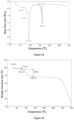
- the XRPD and TGA/DSC of crystal Form I are shown in Figs. 1-2b respectively
- PNAC is crystal Form I
- the characteristic XRPD peaks of crystal Form I are as follows in Table 1: Table 1: The characteristic XRPD peaks of the crystal Form I (characterized by °2 ⁇ ) No. Pos. [°2 ⁇ ] Height [cts] FWHM Left [°2 ⁇ ] d-spacing [ ⁇ ] Rel. Int.
- the DSC pattern ( Fig. 2a ) shows that, the crystal Form I begins to have a melting endothermic peak at 159.5°C, with a peak of 163.1°C; the combination of the DSC ( Fig. 2a ) and TGA ( Fig. 2b ) patterns shows that the crystal Form I is anhydrous.
- the PNAC crystal Form I prepared in Example 1 was exposed to an environment of 60% relative humidity at room temperature, and the storage time was longer than 24 h to obtain a product.
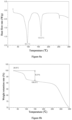
- the product is crystal Form II, and the XRPD and TGA/DSC patterns of the product are shown in Fig. 3-4b respectively, wherein the characteristic XRPD peaks of crystal Form II (characterized by °2 ⁇ ) are as follows in Table 2: Table 2: The characteristic XRPD peaks of the crystal Form II (characterized by °2 ⁇ ) No. Pos. [°2 ⁇ ] Height [cts] FWHM Left [°2 ⁇ ] d-spacing [ ⁇ ] Rel. Int.
- the DSC pattern ( Fig. 4a ) shows that, the crystal Form II begins to have a melting endothermic peak at 157.1 °C, with a peak of 162.5 °C; the combination of the DSC ( Fig. 4a ) and TGA ( Fig. 4b ) patterns shows that the crystal Form II is a 1/3 hydrate.
- the batches of crude product were pooled to add in isopropanol (19310.0 ml, 3.5 vol) for beating for 1 h.
- the system was subjected to suction filtration to obtain a filter cake, and the filter cake was made to pass through a 24-mesh sieve to prepare uniform particles, then transferring the particles to a vacuum drying oven for drying; the pressure of the drying system was balanced with nitrogen, drying at 60°C for 16 h, and transferring to a vacuum drying oven again for drying for 24 h under the condition of 100°C to get dried particles; and the dried particles were evenly spread in a 5°C low temperature environment with a controlled relative humidity of 50% to keep for 2 days to obtain the product.
- the product is crystal Form III
- the XRPD and TGA/DSC patterns of crystal Form III are shown in Fig. 5-6b respectively, wherein the characteristic XRPD peaks of crystal Form III (characterized by °2 ⁇ ) are as follows in Table 3: Table 3: The characteristic XRPD peaks of the crystal Form III (characterized by °2 ⁇ ) No. Pos. [°2 ⁇ ] Height [cts] FWHM Left [°2 ⁇ ] d-spacing [ ⁇ ] Rel. Int.
- the DSC pattern ( Fig. 6a ) shows that, the crystal Form III begins to have a melting endothermic peak at 156.6 °C, with peak of 162.0 °C; the combination of the DSC ( Fig. 6a ) and TGA ( Fig. 6b ) patterns shows that the crystal Form III is a 1/2 hydrate.
- the PNAC crystal Form I prepared in Example 1 was exposed to an environment of 80% relative humidity at room temperature, keeping for 3 days to form a gel-like substance, and the gel-like substance was exposed to an environment of 40% relative humidity, keeping for 5 days to form the product.
- the product is crystal Form IV
- the XRPD and TGA/DSC patterns of crystal Form IV are shown as Figs. 7-8b , respectively, and the characteristic XRPD peaks of crystal Form IV (characterized by °2 ⁇ ) are as follows in Table 4:
- the DSC pattern ( Fig. 8a ) shows that, the melting endothermic peak of the crystal Form IV is 163.8°C; the combination of DSC ( Fig. 8a ) and TGA ( Fig. 8b ) patterns shows that crystal Form IV is a monohydrate.
- SNAC in Rybelsus ® tablets (developed by Novo Nordisk, Danish pharmaceutical company) was characterized, and found to be identical to crystal Form I in patent WO2005107462. Therefore, the SNACs herein were prepared by referring to the preparation method of SNAC crystal Form I in Example 1 of patent WO2005107462. All the SNACs in the following examples were prepared by this method.
- the delivery agents (SNAC, PNAC-I, and PNAC-II) were combined with M4 respectively.
- the combined oral tablet prepared by combining SNAC and M4 was SNAC+M4.
- the combined oral tablet prepared by combining PNAC-I and M4 was PNAC-I+M4.
- the combined oral tablet prepared by combining PNAC-II and M4 was PNAC-II+M4.
- M4 was dissolved in 8 mM phosphate buffer (pH 7.2) to give a final M4 concentration of 1 mg/mL.
- Twenty-eight male beagle dogs with body weights of 9-12 kg were selected, and divided into 4 groups.
- Table 6 The plasma sampling scheme Groups Time points of plasma sampling M4 intravenous injection group predose, 0.5, 1, 3, 6, 12, 24, 48, 72, 96, 144 and 192 h after the dosing Oral administration group predose, 1.5, 3, 8, 24, 48, 72, 96 h after the dosing Note: At least 500 ⁇ l plasma, at each time point
- Table 7 Summary of plasma concentrations at different time points in the intravenous injection group
- Table 8 Summary of the plasma concentrations at different time points in each oral administration group
- the absolute bioavailability of the single oral SNAC group is 0.88%, while the absolute bioavailability of the single oral PNAC-II group is 1.28%, and the absolute bioavailability of the single oral PNAC-I group is 1.11%; the bioavailability of the two PNAC groups is significantly higher than that of the SNAC group.
- the absolute bioavailability of the single oral PNAC-II group is increased by 45.5%, and the absolute bioavailability of the single oral PNAC-I group is increased by 26.1%.
- the delivery agents (SNAC, PNAC-I, and PNAC-II) were respectively combined with M4.
- the combined oral tablet prepared by combining SNAC and M4 was SNAC+M4.
- the combined oral tablet prepared by combining PNAC-I and M4 was PNAC-I+M4.
- the combined oral tablet prepared by combining PNAC-II and M4 was PNAC-II+M4.
- the ingredients per tablet is 10 mg, and the delivery agent content is 300 mg and 450 mg, respectively.
- M4 is dissolved in 8 mM phosphate buffer (pH 7.2) to give a final M4 concentration of 1 mg/mL.
- Table 11 The plasma sampling schemes Groups Time points of plasma sampling M4 intravenous injection group predose, 0.5, 1, 3, 6, 12, 24, 48, 72, 96, 144, and 192 h after the dosing Oral administration group predose, 0.5, 1.5, 3, 8, 24, 72, and 120 h after the dosing Note: At least 500 ⁇ l plasma, at each time point.
- Table 12 Summary of plasma concentrations at different time points in the intravenous administration group Group Plasma concentration (nM)-Administration time (h) 0h 0.5 h 1 h 3 h 6 h 12 h 24 h 48 h 72 h 96 h 144 h 192 h M4 0 165.48 148.39 130.11 112.59 99.76 80.12 58.29 38.03 26.48 12.10 4.89
- Table 13 Summary of the plasma concentrations at different time points in each oral administration group Groups Plasma concentration (nM)-Administration time (h) 0h 0.5h 1.5h 3h 8h 24 h 72 h 120 h SNAC 300mg 0.00 40.37 35.12 20.19 16.86 12.37 5.81 2.03 SNAC 450mg 0.00 42.37 34.19 23.15 15.98 11.16 8.45 4.38 PNAC-I 300mg 0.00 21.38 30.20 24.15 18.39 16.12 10.89 5.76 PNAC-I 450mg
- the absolute bioavailability of the single oral SNAC (300 mg) group is 0.70%, the absolute bioavailability of the single oral SNAC (450 mg) group is 0.80%; while the absolute bioavailability of the single oral PNAC-II group (300 mg) group is 1.20%, and the absolute bioavailability of the single oral PNAC-II group (450 mg) group is 1.92%; the absolute bioavailability of the single oral PNAC-I (300 mg) group is 1.01%, and the absolute bioavailability of the single oral PNAC-I (450 mg) group is 1.72%.
- Each of the absolute bioavailability of the single oral PNAC group is significantly higher than that of SNAC, meanwhile the absolute bioavailability of administration group increases significantly with the increase of PNAC content.
- the absolute bioavailability of the single oral PNAC-II (300 mg) group is increased by 71%, and the absolute bioavailability of the single oral PNAC-I (300 mg) group is increased by 44%.
- the absolute bioavailability of the single oral PNAC-II (450 mg) group is increased by 140%, and the absolute bioavailability of the single oral PNAC-I (450 mg) group is increased by 115%.
- the crystal Form II prepared in Example 2 was divided into three groups. The first group was kept at 60°C for 24 h to obtain a solid sample. The second group was kept under conditions of 40°C and 75% relative humidity for two weeks to obtain a solid sample. The third group was kept under the conditions of 25°C and 60% relative humidity for 2 weeks to obtain a solid sample, and then the three groups of solid samples were respectively evaluated for physical and chemical stability by XRPD and HPLC assay.
- a C18 reversed-phase chromatographic column with a column length of 150 mm was used, the mobile phase was acetonitrile-water + 0.05% trifluoroacetic acid system, the flow rate was 1.2 ml/min, and the sample was detected under the condition of the detector wavelength UV-215 nm.
- the purity of main peak was calculated by normalization method.
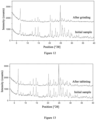
- the crystal Form II obtained in Example 2 was divided into three groups. In the first group, the crystal Form II was manually ground for 10 min to obtain a solid sample. In the second group, the crystal Form II was tableted (pressure of 3 kN) to obtain a solid sample. In the third group, airflow crushing was performed on crystal Form II (injection pressure of 0.4 MPa, pulverization pressure of 0.2 MPa) to obtain a solid sample. Three groups of solid samples were characterized by XRPD to evaluate their physical stability. The specific results are shown in Figs. 12-14 .
Landscapes
- Health & Medical Sciences (AREA)
- Chemical & Material Sciences (AREA)
- Organic Chemistry (AREA)
- Life Sciences & Earth Sciences (AREA)
- Animal Behavior & Ethology (AREA)
- Veterinary Medicine (AREA)
- Public Health (AREA)
- General Health & Medical Sciences (AREA)
- Medicinal Chemistry (AREA)
- Pharmacology & Pharmacy (AREA)
- Diabetes (AREA)
- Engineering & Computer Science (AREA)
- Bioinformatics & Cheminformatics (AREA)
- Epidemiology (AREA)
- General Chemical & Material Sciences (AREA)
- Chemical Kinetics & Catalysis (AREA)
- Endocrinology (AREA)
- Nuclear Medicine, Radiotherapy & Molecular Imaging (AREA)
- Hematology (AREA)
- Obesity (AREA)
- Proteomics, Peptides & Aminoacids (AREA)
- Gastroenterology & Hepatology (AREA)
- Zoology (AREA)
- Immunology (AREA)
- Child & Adolescent Psychology (AREA)
- Emergency Medicine (AREA)
- Oil, Petroleum & Natural Gas (AREA)
- Biophysics (AREA)
- Molecular Biology (AREA)
- Organic Low-Molecular-Weight Compounds And Preparation Thereof (AREA)
- Pharmaceuticals Containing Other Organic And Inorganic Compounds (AREA)
- Medicines That Contain Protein Lipid Enzymes And Other Medicines (AREA)
- Medicines Containing Antibodies Or Antigens For Use As Internal Diagnostic Agents (AREA)
- Medicinal Preparation (AREA)
- Acyclic And Carbocyclic Compounds In Medicinal Compositions (AREA)
Claims (15)
- Kristallpolymorph von Kalium-N-[8-(2-hydroxybenzoyl)amino]octanoat, dadurch gekennzeichnet, dass das Kristallpolymorph von Kalium-N-[8-(2-hydroxybenzoyl)amino]octanoat die Kristallform I ist und die Kristallform I mindestens ein Röntgen-Pulverbeugungsmuster unter Verwendung monochromatischer Cu-Ka-Strahlung (λ=1,5406) mit charakteristischen Peaks dargestellt durch 2θ° von 7,83±0,2, 26,64±0,2 und 18,89±0,2 aufweist.
- Kristallpolymorph von Kalium-N-[8-(2-hydroxybenzoyl)amino]octanoat nach Anspruch 1, dadurch gekennzeichnet, dass die Kristallform I außerdem mindestens ein Röntgen-Pulverbeugungsmuster mit charakteristischen Peaks dargestellt durch 2θ° von 5,24±0,2 oder 21,59±0,2 aufweist.
- Kristallpolymorph von Kalium-N-[8-(2-hydroxybenzoyl)amino]octanoat nach Anspruch 2, dadurch gekennzeichnet, dass die Kristallform I außerdem mindestens ein Röntgen-Pulverbeugungsmuster mit charakteristischen Peaks dargestellt durch 2θ° von 13,02±0,2 oder 24,29±0,2 aufweist.
- Kristallpolymorph von Kalium-N-[8-(2-hydroxybenzoyl)amino]octanoat nach Anspruch 3, dadurch gekennzeichnet, dass die Kristallform I außerdem mindestens ein Röntgen-Pulverbeugungsmuster mit charakteristischen Peaks dargestellt durch 2θ° von 6,61±0,2, 10,43±0,2, 31,63±0,2 oder 37,00±0,2 aufweist.
- Kristallpolymorph von Kalium-N-[8-(2-hydroxybenzoyl)amino]octanoat nach einem der Ansprüche 1-4, dadurch gekennzeichnet, dass das Röntgen-Pulverbeugungsmuster der Kristallform I wie in Abb. 1 gezeigt ist; vorzugsweise beträgt der Schmelzpunkt der Kristallform I 163,1°C; oder die Adsorptionswasserentfernungstemperatur der Kristallform I beträgt 83,6°C; oder die Kristallform I verliert bei 140°C 3,0 % Gewicht.
- Ein Herstellungsverfahren für die Kristallform I von Kalium-N-[8-(2-hydroxybenzoyl)amino]octanoat nach einem der Ansprüche 1-5, dadurch gekennzeichnet, dass es die folgenden Schritte umfasst:Zugabe eines organischen Lösungsmittels in ein Reaktionsgefäß und Rühren, dann Zugabe von N-[8-(2-Hydroxybenzoyl)amino]octansäure unter gleichmäßigem Rühren, tropfenweise Zugabe von Kaliumhydroxidlösung, nach der tropfenweisen Zugabe Konzentrieren, um das Rohprodukt zu erhalten;Zugabe eines organischen Lösungsmittels zum Rohprodukt, um nach dem Rühren und der Saugfiltration einen Filterkuchen zu erhalten, Spülen des Filterkuchens und Einbringen desselben in einen Trockenofen zum Trocknen, um das kristalline Polymorph von Kalium-N-[8-(2-hydroxybenzoyl)amino]octanoat zu erhalten.
- Herstellungsverfahren nach Anspruch 6, dadurch gekennzeichnet, dass der Filterkuchen gespült und dann zum Trocknen in einen Trockenofen gegeben wird, um die kristalline Form I von Kalium-N-[8-(2-hydroxybenzoyl)amino]octanoat zu erhalten, wobei die Trocknungstemperatur 60-100 °C und die Trocknungszeit 30-40 Stunden beträgt; vorzugsweise wird die Trocknung in zwei Schritte unterteilt, wobei zuerst 16 Stunden lang bei 60 °C und dann nochmals 24 Stunden lang bei 100 °C getrocknet wird, nachdem der Druck des Systems mit Stickstoff ausgeglichen wurde;Vorzugsweise ist das organische Lösungsmittel Isopropanol oder Aceton;die Konzentration der Kaliumhydroxidlösung beträgt 40-90 %, vorzugsweise 50 %.
- Herstellungsverfahren nach Anspruch 6, dadurch gekennzeichnet, dass nach der Zugabe von N-[8-(2-Hydroxybenzoyl)amino]octansäure die Temperatur des Systems auf 48 °C oder mehr erhöht wird, dann Kaliumhydroxidlösung tropfenweise zugegeben wird und nach der tropfenweisen Zugabe die Temperatur für 0,5-2 Stunden zur Reaktion gehalten wird;Vorzugsweise wird nach der Zugabe von N-[8-(2-Hydroxybenzoyl)amino]octansäure die Temperatur des Systems auf 48-52 °C erhöht, dann wird die Kaliumhydroxidlösung tropfenweise zugegeben, und nach der tropfenweisen Zugabe wird die Temperatur für eine Stunde zur Reaktion gehalten;wobei die N-[8-(2-Hydroxybenzoyl)amino]octansäure und die Kaliumhydroxidlösung in einem molaren Verhältnis von 1:1 zugegeben werden; unddie Rührzeit nach Zugabe des organischen Lösungsmittels zum Rohprodukt beträgt 0,5-1,5 Stunden, vorzugsweise 1 Stunde.
- Ein Herstellungsverfahren für die Kristallform I von Kalium-N-[8-(2-hydroxybenzoyl)amino]octanoat, dadurch gekennzeichnet, dass die von der Kristallform I verschiedenen Kristallformen von Kalium-N-[8-(2-hydroxybenzoyl)amino]octanoat auf mindestens 75 °C erhitzt werden, um die Kristallform I herzustellen;die von der Kristallform I verschiedenen Kristallformen von Kalium-N-[8-(2-hydroxybenzoyl)amino]octanoat sind mindestens eine oder mehrere der Kristallformen II, III und IV;die von der Kristallform I verschiedenen Kristallformen von Kalium-N-[8-(2-hydroxybenzoyl)amino]octanoat werden unter Stickstoffschutz auf 75 °C oder höher erhitzt, um die Kristallform I von Kalium-N-[8-(2-hydroxybenzoyl)amino]octanoat herzustellen;die Kristallform I ist die Kristallform I von Kalium-N-[8-(2-hydroxybenzoyl)amino]octanoat nach einem der Ansprüche 1-5;die Kristallform II weist mindestens ein Röntgen-Pulverbeugungsmuster mit charakteristischen Peaks auf, dargestellt durch 2θ° von 24,76±0,2, 6,73±0,2 und 20,26±0,2;die Kristallform III weist mindestens ein Röntgen-Pulverbeugungsmuster mit charakteristischen Peaks auf, dargestellt durch 2θ° von 9,06±0,2, 23,30±0,2 und 21,44±0,2;die Kristallform IV weist mindestens ein Röntgen-Pulverbeugungsmuster mit charakteristischen Peaks auf, dargestellt durch 2θ° von 16,25±0,2, 6,8±0,2 und 22,08±0,2.
- Herstellungsverfahren nach Anspruch 9, dadurch gekennzeichnet, dass die Kristallform II von Kalium-N-[8-(2-hydroxybenzoyl)amino]octanoat unter Stickstoffschutz auf 140°C erhitzt wird, um die Kristallform I von Kalium-N-[8-(2-hydroxybenzoyl)amino]octanoat herzustellen.
- Herstellungsverfahren nach Anspruch 9, dadurch gekennzeichnet, dass die Kristallform IV von Kalium-N-[8-(2-hydroxybenzoyl)amino]octanoat unter Stickstoffschutz auf 110°C erhitzt wird, um die Kristallform I von Kalium-N-[8-(2-hydroxybenzoyl)amino]octanoat herzustellen.
- Ein Herstellungsverfahren für die Kristallform I von Kalium-N-[8-(2-hydroxybenzoyl)amino]octanoat, dadurch gekennzeichnet, dass die von der Kristallform I verschiedenen Kristallformen von Kalium-N-[8-(2-hydroxybenzoyl)amino]octanoat lyophilisiert werden, um die Kristallform I herzustellen;die von der Kristallform I verschiedenen Kristallformen von Kalium-N-[8-(2-hydroxybenzoyl)amino]octanoat sind mindestens eine oder mehrere der Kristallformen II, III und IV;die Kristallform I ist die Kristallform I von Kalium-N-[8-(2-hydroxybenzoyl)amino]octanoat nach einem der Ansprüche 1-5;die Kristallform II weist mindestens ein Röntgen-Pulverbeugungsmuster mit charakteristischen Peaks auf, dargestellt durch 2θ° von 24,76±0,2, 6,73±0,2 und 20,26±0,2;die Kristallform III weist mindestens ein Röntgen-Pulverbeugungsmuster mit charakteristischen Peaks auf, dargestellt durch 2θ° von 9,06±0,2, 23,30±0,2 und 21,44±0,2;die Kristallform IV weist mindestens ein Röntgen-Pulverbeugungsmuster mit charakteristischen Peaks auf, dargestellt durch 2θ° von 16,25±0,2, 6,8±0,2 und 22,08±0,2.
- Eine pharmazeutische Zusammensetzung, dadurch gekennzeichnet, dass sie ein Kristallpolymorph von Kalium-N-[8-(2-hydroxybenzoyl)amino]octanoat umfasst;das Kristallpolymorph von Kalium-N-[8-(2-hydroxybenzoyl)amino]octanoat ist die Kristallform I;die Kristallform I ist die Kristallform I von Kalium-N-[8-(2-hydroxybenzoyl)amino]octanoat nach einem der Ansprüche 1-5.
- Pharmazeutische Zusammensetzung nach Anspruch 13, dadurch gekennzeichnet, dass sie außerdem ein präventives und/oder therapeutisches Arzneimittel umfasst;
wobei in der pharmazeutischen Zusammensetzung das Gewichtsverhältnis des Kristallpolymorphs von Kalium-N-[8-(2-hydroxybenzoyl)amino]octanoat zu den präventiven und/oder therapeutischen Arzneimitteln (20-60):1, vorzugsweise 30:1 beträgt. - Pharmazeutische Zusammensetzung nach Anspruch 14, dadurch gekennzeichnet, dass es sich bei den präventiven und/oder therapeutischen Arzneimitteln um Glucagon-ähnliches Peptid-1, Insulin, PYY, menschliches Amylin, Heparin, menschliches Wachstumshormon, Interferon, monoklonale Antikörper, Proteaseinhibitor und Thrombopoietin handelt.
Priority Applications (1)
| Application Number | Priority Date | Filing Date | Title |
|---|---|---|---|
| EP25164426.6A EP4663197A3 (de) | 2020-05-29 | 2020-11-11 | N-[8-(2-hydroxybenzoyl)amino!kalium octanoat kristall polymorph, verfahren zu seiner herstellung und seine verwendung |
Applications Claiming Priority (2)
| Application Number | Priority Date | Filing Date | Title |
|---|---|---|---|
| CN2020093306 | 2020-05-29 | ||
| PCT/CN2020/128050 WO2021238088A1 (zh) | 2020-05-29 | 2020-11-11 | N-[8-(2-羟基苯甲酰基)氨基]辛酸钾晶体多晶型物及其制备方法和用途 |
Related Child Applications (1)
| Application Number | Title | Priority Date | Filing Date |
|---|---|---|---|
| EP25164426.6A Division EP4663197A3 (de) | 2020-05-29 | 2020-11-11 | N-[8-(2-hydroxybenzoyl)amino!kalium octanoat kristall polymorph, verfahren zu seiner herstellung und seine verwendung |
Publications (3)
| Publication Number | Publication Date |
|---|---|
| EP4159712A1 EP4159712A1 (de) | 2023-04-05 |
| EP4159712A4 EP4159712A4 (de) | 2023-12-20 |
| EP4159712B1 true EP4159712B1 (de) | 2025-03-19 |
Family
ID=78745721
Family Applications (2)
| Application Number | Title | Priority Date | Filing Date |
|---|---|---|---|
| EP20937944.5A Active EP4159712B1 (de) | 2020-05-29 | 2020-11-11 | N-[8-(2-hydroxybenzoyl)amino!kalium octanoat kristall polymorph, verfahren zu seiner herstellung und seine verwendung |
| EP25164426.6A Pending EP4663197A3 (de) | 2020-05-29 | 2020-11-11 | N-[8-(2-hydroxybenzoyl)amino!kalium octanoat kristall polymorph, verfahren zu seiner herstellung und seine verwendung |
Family Applications After (1)
| Application Number | Title | Priority Date | Filing Date |
|---|---|---|---|
| EP25164426.6A Pending EP4663197A3 (de) | 2020-05-29 | 2020-11-11 | N-[8-(2-hydroxybenzoyl)amino!kalium octanoat kristall polymorph, verfahren zu seiner herstellung und seine verwendung |
Country Status (7)
| Country | Link |
|---|---|
| US (2) | US12410123B2 (de) |
| EP (2) | EP4159712B1 (de) |
| JP (2) | JP7631376B2 (de) |
| KR (2) | KR20260015857A (de) |
| AU (1) | AU2020450589B2 (de) |
| ES (1) | ES3030918T3 (de) |
| WO (1) | WO2021238088A1 (de) |
Family Cites Families (9)
| Publication number | Priority date | Publication date | Assignee | Title |
|---|---|---|---|---|
| US5650386A (en) | 1995-03-31 | 1997-07-22 | Emisphere Technologies, Inc. | Compositions for oral delivery of active agents |
| CN102040535B (zh) | 2004-05-06 | 2012-10-17 | 爱密斯菲尔科技公司 | N-[8-(2-羟基苯甲酰基)氨基]辛酸一钠的晶体的多晶 |
| CN1953753B (zh) | 2004-05-06 | 2011-02-09 | 爱密斯菲尔科技公司 | N-[8-(2-羟基苯甲酰基)氨基]辛酸一钠的晶体的多晶 |
| CN105641686A (zh) * | 2005-09-19 | 2016-06-08 | 爱密斯菲尔科技公司 | N-(5-氯水杨酰基)-8-氨基辛酸的二钠盐的晶形 |
| BRPI0716539A2 (pt) * | 2006-09-07 | 2016-11-01 | Emisphere Tech Inc | métodos para sintetização de ácido n-(8-[2-hidroxibenzoil]amino) caprílico e de sal de sódio deste |
| SI2651398T1 (en) | 2010-12-16 | 2018-04-30 | Novo Nordisk A/S | SOLID COMPOSITIONS CONTAINING GLP-1 AGONIST AND SOL N- (8- (2-HYDROXYBENZOIL) AMINO) CAPRICULATE ACIDS |
| BR112018071518A2 (pt) | 2016-04-22 | 2019-02-19 | Receptor Life Sciences, Inc. | compostos medicinais à base de planta de ação rápida e suplementos nutricionais |
| WO2019200594A1 (zh) | 2018-04-19 | 2019-10-24 | 杭州先为达生物科技有限公司 | 酰化的glp-1衍生物 |
| CN111517980B (zh) | 2020-05-14 | 2021-02-09 | 台州浦凯医药科技有限公司 | N-[8-(2-羟基苯甲酰基)氨基]辛酸一钾晶型化合物、制备方法及用途 |
-
2020
- 2020-11-11 EP EP20937944.5A patent/EP4159712B1/de active Active
- 2020-11-11 ES ES20937944T patent/ES3030918T3/es active Active
- 2020-11-11 WO PCT/CN2020/128050 patent/WO2021238088A1/zh not_active Ceased
- 2020-11-11 KR KR1020257041670A patent/KR20260015857A/ko active Pending
- 2020-11-11 US US17/999,945 patent/US12410123B2/en active Active
- 2020-11-11 KR KR1020227044941A patent/KR102901689B1/ko active Active
- 2020-11-11 EP EP25164426.6A patent/EP4663197A3/de active Pending
- 2020-11-11 AU AU2020450589A patent/AU2020450589B2/en active Active
- 2020-11-11 JP JP2022573605A patent/JP7631376B2/ja active Active
-
2025
- 2025-02-05 JP JP2025017628A patent/JP2025069391A/ja active Pending
- 2025-08-07 US US19/293,476 patent/US20250361201A1/en active Pending
Also Published As
| Publication number | Publication date |
|---|---|
| JP7631376B2 (ja) | 2025-02-18 |
| KR20230015414A (ko) | 2023-01-31 |
| EP4159712A1 (de) | 2023-04-05 |
| EP4663197A2 (de) | 2025-12-17 |
| KR20260015857A (ko) | 2026-02-03 |
| US20230234916A1 (en) | 2023-07-27 |
| JP2023527238A (ja) | 2023-06-27 |
| KR102901689B1 (ko) | 2025-12-22 |
| JP2025069391A (ja) | 2025-04-30 |
| US20250361201A1 (en) | 2025-11-27 |
| EP4663197A3 (de) | 2026-03-11 |
| AU2020450589A1 (en) | 2023-02-09 |
| US12410123B2 (en) | 2025-09-09 |
| ES3030918T3 (en) | 2025-07-02 |
| AU2020450589B2 (en) | 2023-11-09 |
| EP4159712A4 (de) | 2023-12-20 |
| WO2021238088A1 (zh) | 2021-12-02 |
Similar Documents
| Publication | Publication Date | Title |
|---|---|---|
| US8435946B2 (en) | Orally dosed pharmaceutical compositions comprising a delivery agent in micronized form | |
| JP4903690B2 (ja) | N−[8−(2−ヒドリキシベンゾイル)アミノ]カプリル酸一ナトリウムの結晶多形体 | |
| MXPA06011903A (es) | 8-(2-hidroxi-fenoxi)-octil-dietanolamida y sales de la misma para el suministro de agentes activos. | |
| CN112661663B (zh) | N-[8-(2-羟基苯甲酰基)氨基]辛酸钾晶体多晶型物及其制备方法和用途 | |
| EP4159712B1 (de) | N-[8-(2-hydroxybenzoyl)amino!kalium octanoat kristall polymorph, verfahren zu seiner herstellung und seine verwendung | |
| CN112062690A (zh) | N-[8-(2-羟基苯甲酰基)氨基]辛酸钾晶体多晶型物及其制备方法和用途 | |
| TWI386386B (zh) | N-(5-氯柳醯基)-8-胺基辛酸之二鈉鹽的晶形 | |
| RU2445972C2 (ru) | Фармацевтические композиции glp-1 | |
| HK40018266A (en) | Crystalline polymorphic forms of monosodium n-[8-(2-hydroxybenzoyl)amino]caprylate | |
| HK40018266B (en) | Crystalline polymorphic forms of monosodium n-[8-(2-hydroxybenzoyl)amino]caprylate | |
| HK1089950B (en) | Orally dosed pharmaceutical compositions comprising a delivery agent in micronized form | |
| HK1103718B (en) | Compounds and compositions for delivering active agents |
Legal Events
| Date | Code | Title | Description |
|---|---|---|---|
| STAA | Information on the status of an ep patent application or granted ep patent |
Free format text: STATUS: THE INTERNATIONAL PUBLICATION HAS BEEN MADE |
|
| PUAI | Public reference made under article 153(3) epc to a published international application that has entered the european phase |
Free format text: ORIGINAL CODE: 0009012 |
|
| STAA | Information on the status of an ep patent application or granted ep patent |
Free format text: STATUS: REQUEST FOR EXAMINATION WAS MADE |
|
| 17P | Request for examination filed |
Effective date: 20221216 |
|
| AK | Designated contracting states |
Kind code of ref document: A1 Designated state(s): AL AT BE BG CH CY CZ DE DK EE ES FI FR GB GR HR HU IE IS IT LI LT LU LV MC MK MT NL NO PL PT RO RS SE SI SK SM TR |
|
| DAV | Request for validation of the european patent (deleted) | ||
| DAX | Request for extension of the european patent (deleted) | ||
| A4 | Supplementary search report drawn up and despatched |
Effective date: 20231121 |
|
| RIC1 | Information provided on ipc code assigned before grant |
Ipc: A61K 38/00 20060101ALI20231115BHEP Ipc: A61K 9/00 20060101ALI20231115BHEP Ipc: A61K 9/20 20060101ALI20231115BHEP Ipc: A61P 3/04 20060101ALI20231115BHEP Ipc: A61P 3/10 20060101ALI20231115BHEP Ipc: A61K 38/26 20060101ALI20231115BHEP Ipc: A61K 47/18 20170101ALI20231115BHEP Ipc: C07C 231/24 20060101ALI20231115BHEP Ipc: C07C 235/60 20060101AFI20231115BHEP |
|
| GRAP | Despatch of communication of intention to grant a patent |
Free format text: ORIGINAL CODE: EPIDOSNIGR1 |
|
| STAA | Information on the status of an ep patent application or granted ep patent |
Free format text: STATUS: GRANT OF PATENT IS INTENDED |
|
| INTG | Intention to grant announced |
Effective date: 20241010 |
|
| GRAS | Grant fee paid |
Free format text: ORIGINAL CODE: EPIDOSNIGR3 |
|
| GRAA | (expected) grant |
Free format text: ORIGINAL CODE: 0009210 |
|
| STAA | Information on the status of an ep patent application or granted ep patent |
Free format text: STATUS: THE PATENT HAS BEEN GRANTED |
|
| AK | Designated contracting states |
Kind code of ref document: B1 Designated state(s): AL AT BE BG CH CY CZ DE DK EE ES FI FR GB GR HR HU IE IS IT LI LT LU LV MC MK MT NL NO PL PT RO RS SE SI SK SM TR |
|
| REG | Reference to a national code |
Ref country code: GB Ref legal event code: FG4D |
|
| REG | Reference to a national code |
Ref country code: CH Ref legal event code: EP |
|
| P01 | Opt-out of the competence of the unified patent court (upc) registered |
Free format text: CASE NUMBER: APP_9702/2025 Effective date: 20250226 |
|
| REG | Reference to a national code |
Ref country code: IE Ref legal event code: FG4D |
|
| REG | Reference to a national code |
Ref country code: DE Ref legal event code: R096 Ref document number: 602020048158 Country of ref document: DE |
|
| REG | Reference to a national code |
Ref country code: NL Ref legal event code: FP |
|
| REG | Reference to a national code |
Ref country code: ES Ref legal event code: FG2A Ref document number: 3030918 Country of ref document: ES Kind code of ref document: T3 Effective date: 20250702 |
|
| PG25 | Lapsed in a contracting state [announced via postgrant information from national office to epo] |
Ref country code: RS Free format text: LAPSE BECAUSE OF FAILURE TO SUBMIT A TRANSLATION OF THE DESCRIPTION OR TO PAY THE FEE WITHIN THE PRESCRIBED TIME-LIMIT Effective date: 20250619 |
|
| PG25 | Lapsed in a contracting state [announced via postgrant information from national office to epo] |
Ref country code: FI Free format text: LAPSE BECAUSE OF FAILURE TO SUBMIT A TRANSLATION OF THE DESCRIPTION OR TO PAY THE FEE WITHIN THE PRESCRIBED TIME-LIMIT Effective date: 20250319 |
|
| REG | Reference to a national code |
Ref country code: LT Ref legal event code: MG9D |
|
| PG25 | Lapsed in a contracting state [announced via postgrant information from national office to epo] |
Ref country code: NO Free format text: LAPSE BECAUSE OF FAILURE TO SUBMIT A TRANSLATION OF THE DESCRIPTION OR TO PAY THE FEE WITHIN THE PRESCRIBED TIME-LIMIT Effective date: 20250619 |
|
| PG25 | Lapsed in a contracting state [announced via postgrant information from national office to epo] |
Ref country code: HR Free format text: LAPSE BECAUSE OF FAILURE TO SUBMIT A TRANSLATION OF THE DESCRIPTION OR TO PAY THE FEE WITHIN THE PRESCRIBED TIME-LIMIT Effective date: 20250319 |
|
| PG25 | Lapsed in a contracting state [announced via postgrant information from national office to epo] |
Ref country code: LV Free format text: LAPSE BECAUSE OF FAILURE TO SUBMIT A TRANSLATION OF THE DESCRIPTION OR TO PAY THE FEE WITHIN THE PRESCRIBED TIME-LIMIT Effective date: 20250319 |
|
| PG25 | Lapsed in a contracting state [announced via postgrant information from national office to epo] |
Ref country code: BG Free format text: LAPSE BECAUSE OF FAILURE TO SUBMIT A TRANSLATION OF THE DESCRIPTION OR TO PAY THE FEE WITHIN THE PRESCRIBED TIME-LIMIT Effective date: 20250319 Ref country code: GR Free format text: LAPSE BECAUSE OF FAILURE TO SUBMIT A TRANSLATION OF THE DESCRIPTION OR TO PAY THE FEE WITHIN THE PRESCRIBED TIME-LIMIT Effective date: 20250620 |
|
| REG | Reference to a national code |
Ref country code: AT Ref legal event code: MK05 Ref document number: 1776879 Country of ref document: AT Kind code of ref document: T Effective date: 20250319 |
|
| PG25 | Lapsed in a contracting state [announced via postgrant information from national office to epo] |
Ref country code: SE Free format text: LAPSE BECAUSE OF FAILURE TO SUBMIT A TRANSLATION OF THE DESCRIPTION OR TO PAY THE FEE WITHIN THE PRESCRIBED TIME-LIMIT Effective date: 20250319 |
|
| PG25 | Lapsed in a contracting state [announced via postgrant information from national office to epo] |
Ref country code: SM Free format text: LAPSE BECAUSE OF FAILURE TO SUBMIT A TRANSLATION OF THE DESCRIPTION OR TO PAY THE FEE WITHIN THE PRESCRIBED TIME-LIMIT Effective date: 20250319 |
|
| PG25 | Lapsed in a contracting state [announced via postgrant information from national office to epo] |
Ref country code: PT Free format text: LAPSE BECAUSE OF FAILURE TO SUBMIT A TRANSLATION OF THE DESCRIPTION OR TO PAY THE FEE WITHIN THE PRESCRIBED TIME-LIMIT Effective date: 20250721 |
|
| PG25 | Lapsed in a contracting state [announced via postgrant information from national office to epo] |
Ref country code: PL Free format text: LAPSE BECAUSE OF FAILURE TO SUBMIT A TRANSLATION OF THE DESCRIPTION OR TO PAY THE FEE WITHIN THE PRESCRIBED TIME-LIMIT Effective date: 20250319 |
|
| PG25 | Lapsed in a contracting state [announced via postgrant information from national office to epo] |
Ref country code: AT Free format text: LAPSE BECAUSE OF FAILURE TO SUBMIT A TRANSLATION OF THE DESCRIPTION OR TO PAY THE FEE WITHIN THE PRESCRIBED TIME-LIMIT Effective date: 20250319 |
|
| PG25 | Lapsed in a contracting state [announced via postgrant information from national office to epo] |
Ref country code: CZ Free format text: LAPSE BECAUSE OF FAILURE TO SUBMIT A TRANSLATION OF THE DESCRIPTION OR TO PAY THE FEE WITHIN THE PRESCRIBED TIME-LIMIT Effective date: 20250319 Ref country code: EE Free format text: LAPSE BECAUSE OF FAILURE TO SUBMIT A TRANSLATION OF THE DESCRIPTION OR TO PAY THE FEE WITHIN THE PRESCRIBED TIME-LIMIT Effective date: 20250319 |
|
| PG25 | Lapsed in a contracting state [announced via postgrant information from national office to epo] |
Ref country code: RO Free format text: LAPSE BECAUSE OF FAILURE TO SUBMIT A TRANSLATION OF THE DESCRIPTION OR TO PAY THE FEE WITHIN THE PRESCRIBED TIME-LIMIT Effective date: 20250319 |
|
| PG25 | Lapsed in a contracting state [announced via postgrant information from national office to epo] |
Ref country code: SK Free format text: LAPSE BECAUSE OF FAILURE TO SUBMIT A TRANSLATION OF THE DESCRIPTION OR TO PAY THE FEE WITHIN THE PRESCRIBED TIME-LIMIT Effective date: 20250319 |
|
| PG25 | Lapsed in a contracting state [announced via postgrant information from national office to epo] |
Ref country code: IS Free format text: LAPSE BECAUSE OF FAILURE TO SUBMIT A TRANSLATION OF THE DESCRIPTION OR TO PAY THE FEE WITHIN THE PRESCRIBED TIME-LIMIT Effective date: 20250719 |
|
| PGFP | Annual fee paid to national office [announced via postgrant information from national office to epo] |
Ref country code: NL Payment date: 20251028 Year of fee payment: 6 |
|
| REG | Reference to a national code |
Ref country code: CH Ref legal event code: U11 Free format text: ST27 STATUS EVENT CODE: U-0-0-U10-U11 (AS PROVIDED BY THE NATIONAL OFFICE) Effective date: 20251201 |
|
| REG | Reference to a national code |
Ref country code: DE Ref legal event code: R097 Ref document number: 602020048158 Country of ref document: DE |
|
| PGFP | Annual fee paid to national office [announced via postgrant information from national office to epo] |
Ref country code: DE Payment date: 20251117 Year of fee payment: 6 |
|
| PGFP | Annual fee paid to national office [announced via postgrant information from national office to epo] |
Ref country code: GB Payment date: 20251126 Year of fee payment: 6 |
|
| PG25 | Lapsed in a contracting state [announced via postgrant information from national office to epo] |
Ref country code: DK Free format text: LAPSE BECAUSE OF FAILURE TO SUBMIT A TRANSLATION OF THE DESCRIPTION OR TO PAY THE FEE WITHIN THE PRESCRIBED TIME-LIMIT Effective date: 20250319 |
|
| PGFP | Annual fee paid to national office [announced via postgrant information from national office to epo] |
Ref country code: IT Payment date: 20251107 Year of fee payment: 6 |
|
| PGFP | Annual fee paid to national office [announced via postgrant information from national office to epo] |
Ref country code: FR Payment date: 20251127 Year of fee payment: 6 |
|
| PGFP | Annual fee paid to national office [announced via postgrant information from national office to epo] |
Ref country code: CH Payment date: 20251201 Year of fee payment: 6 |
|
| PLBE | No opposition filed within time limit |
Free format text: ORIGINAL CODE: 0009261 |
|
| STAA | Information on the status of an ep patent application or granted ep patent |
Free format text: STATUS: NO OPPOSITION FILED WITHIN TIME LIMIT |
|
| REG | Reference to a national code |
Ref country code: CH Ref legal event code: L10 Free format text: ST27 STATUS EVENT CODE: U-0-0-L10-L00 (AS PROVIDED BY THE NATIONAL OFFICE) Effective date: 20260128 |
|
| PGFP | Annual fee paid to national office [announced via postgrant information from national office to epo] |
Ref country code: ES Payment date: 20251210 Year of fee payment: 6 |
|
| 26N | No opposition filed |
Effective date: 20251222 |