EP4160497A1 - Dispositif de gestion d'historique, procédé de gestion d'historique et programme - Google Patents
Dispositif de gestion d'historique, procédé de gestion d'historique et programme Download PDFInfo
- Publication number
- EP4160497A1 EP4160497A1 EP20954059.0A EP20954059A EP4160497A1 EP 4160497 A1 EP4160497 A1 EP 4160497A1 EP 20954059 A EP20954059 A EP 20954059A EP 4160497 A1 EP4160497 A1 EP 4160497A1
- Authority
- EP
- European Patent Office
- Prior art keywords
- inventory
- management target
- storage unit
- control unit
- transaction history
- Prior art date
- Legal status (The legal status is an assumption and is not a legal conclusion. Google has not performed a legal analysis and makes no representation as to the accuracy of the status listed.)
- Pending
Links
Images













Classifications
-
- G—PHYSICS
- G06—COMPUTING OR CALCULATING; COUNTING
- G06Q—INFORMATION AND COMMUNICATION TECHNOLOGY [ICT] SPECIALLY ADAPTED FOR ADMINISTRATIVE, COMMERCIAL, FINANCIAL, MANAGERIAL OR SUPERVISORY PURPOSES; SYSTEMS OR METHODS SPECIALLY ADAPTED FOR ADMINISTRATIVE, COMMERCIAL, FINANCIAL, MANAGERIAL OR SUPERVISORY PURPOSES, NOT OTHERWISE PROVIDED FOR
- G06Q10/00—Administration; Management
- G06Q10/08—Logistics, e.g. warehousing, loading or distribution; Inventory or stock management
- G06Q10/083—Shipping
- G06Q10/0838—Historical data
-
- G—PHYSICS
- G06—COMPUTING OR CALCULATING; COUNTING
- G06F—ELECTRIC DIGITAL DATA PROCESSING
- G06F16/00—Information retrieval; Database structures therefor; File system structures therefor
- G06F16/20—Information retrieval; Database structures therefor; File system structures therefor of structured data, e.g. relational data
- G06F16/21—Design, administration or maintenance of databases
- G06F16/219—Managing data history or versioning
-
- G—PHYSICS
- G06—COMPUTING OR CALCULATING; COUNTING
- G06Q—INFORMATION AND COMMUNICATION TECHNOLOGY [ICT] SPECIALLY ADAPTED FOR ADMINISTRATIVE, COMMERCIAL, FINANCIAL, MANAGERIAL OR SUPERVISORY PURPOSES; SYSTEMS OR METHODS SPECIALLY ADAPTED FOR ADMINISTRATIVE, COMMERCIAL, FINANCIAL, MANAGERIAL OR SUPERVISORY PURPOSES, NOT OTHERWISE PROVIDED FOR
- G06Q10/00—Administration; Management
- G06Q10/06—Resources, workflows, human or project management; Enterprise or organisation planning; Enterprise or organisation modelling
- G06Q10/063—Operations research, analysis or management
- G06Q10/0631—Resource planning, allocation, distributing or scheduling for enterprises or organisations
- G06Q10/06315—Needs-based resource requirements planning or analysis
-
- G—PHYSICS
- G06—COMPUTING OR CALCULATING; COUNTING
- G06Q—INFORMATION AND COMMUNICATION TECHNOLOGY [ICT] SPECIALLY ADAPTED FOR ADMINISTRATIVE, COMMERCIAL, FINANCIAL, MANAGERIAL OR SUPERVISORY PURPOSES; SYSTEMS OR METHODS SPECIALLY ADAPTED FOR ADMINISTRATIVE, COMMERCIAL, FINANCIAL, MANAGERIAL OR SUPERVISORY PURPOSES, NOT OTHERWISE PROVIDED FOR
- G06Q10/00—Administration; Management
- G06Q10/08—Logistics, e.g. warehousing, loading or distribution; Inventory or stock management
- G06Q10/083—Shipping
- G06Q10/0833—Tracking
-
- G—PHYSICS
- G06—COMPUTING OR CALCULATING; COUNTING
- G06Q—INFORMATION AND COMMUNICATION TECHNOLOGY [ICT] SPECIALLY ADAPTED FOR ADMINISTRATIVE, COMMERCIAL, FINANCIAL, MANAGERIAL OR SUPERVISORY PURPOSES; SYSTEMS OR METHODS SPECIALLY ADAPTED FOR ADMINISTRATIVE, COMMERCIAL, FINANCIAL, MANAGERIAL OR SUPERVISORY PURPOSES, NOT OTHERWISE PROVIDED FOR
- G06Q10/00—Administration; Management
- G06Q10/08—Logistics, e.g. warehousing, loading or distribution; Inventory or stock management
- G06Q10/087—Inventory or stock management, e.g. order filling, procurement or balancing against orders
- G06Q10/0875—Itemisation or classification of parts, supplies or services, e.g. bill of materials
Definitions
- the embodiments discussed herein relate to a history management apparatus, a history management method, and a program.
- the following technique includes an inventory information storage unit that stores inventory information including reel IDs given to reels of components in inventory to identify the reels, in addition to the storage locations and inventory quantity of the components in inventory, a high-order information storage unit that stores information on the processing progresses of high orders, a retrieval request information storage unit that stores information on the processing progresses of retrieval requests made based on the high orders, and a processing unit that performs allocation of reels of the components in inventory and makes the retrieval requests, and also records retrieval transactions and storage transactions, wherein the processing unit specifies an item, storage location, retrieval quantity, and reel ID and makes a retrieval request for a reel of the components in inventory, and also employs a temporary retrieval state as the inventory status of the reels and performs inventory management.
- the prevent invention intends to make it easy to manage a history of logistics.
- This history management apparatus includes a first storage unit that stores a first information record associating the quantity of a management target with a unique first number, and a control unit that stores, in a second storage unit, a second information record assigning a unique second number and a unique first flag indicating the existence of the management target to each preset quantity of the management target with respect to the quantity of the management target, that stores, in response to a decrease in the quantity of the management target, the decreased quantity of the management target in association with a new first number in the first storage unit and changes, to a second flag indicating the absence of the management target, each first flag included in second information records which are stored in the second storage unit and the number of which is equal to the decreased quantity of the management target.
- the position, size, shape, range, and others of each component illustrated in the drawings may not represent the actual position, size, shape, range, and others. Therefore, the embodiments are not limited to the illustrated positions, sizes, shapes, ranges, and others.
- a history management apparatus (computer) of a first embodiment is an apparatus that manages a history of logistics for management targets.
- the management targets are not limited to any particular things, but solids, liquids, gases, and others may be used as management targets.
- a delivery slip is issued when items A are sold to a customer.
- N is indicated in the quantity field of the delivery slip and an amount calculated by multiplying a unit price by N is indicated as a sales amount.
- items A are to be stored for inventory, i.e., inventory items.
- N items A are purchased, these items A are stored for inventory at a prescribed place, and the inventory value is increased by an amount calculated by multiplying the wholesale price by A.
- the history management apparatus 1 uses N in calculation.
- the history management apparatus of the embodiment divides them into n1 + n2 + n3 + , ..., + nN, assigns N sequence numbers to the items A (numbering), and when M items A are sold (purchased, stored for inventory), locally performs a sales (purchase, inventory) process on each of M(n1 + n2 + n3 + , ..., + nM) to manage the (N - M) sales and remaining inventory items, so that any error that may has occurred in the sales, purchase, or inventory is found.
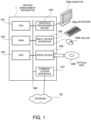
- FIG. 1 illustrates the hardware configuration of a history management apparatus according to the embodiment.
- the history management apparatus 1 is entirely controlled by a CPU (central processing unit) 101.
- a RAM (random access memory) 102 and a plurality of peripheral devices are connected to the CPU 101 via a bus 108.
- the RAM 102 is used as a main storage device of the history management apparatus 1.
- the RAM 102 temporarily stores therein at least part of OS (operating system) programs and application programs that are executed by the CPU 101.
- the RAM 102 stores therein various kinds of data to be used by the CPU 101 in processing.
- an HDD hard disk drive
- graphics processing device 104 an input device interface 105
- drive device 106 a drive device 106
- communication interface 107 Connected to the bus 108 are an HDD (hard disk drive) 103, a graphics processing device 104, an input device interface 105, a drive device 106, and a communication interface 107.
- the HDD 103 magnetically writes and reads data on a built-in disk.
- the HDD 103 is used as an auxiliary storage device of the history management apparatus 1.
- the OS programs, application programs, and various kinds of data are stored in the HDD 103.
- a semiconductor storage device, such as a flash memory, may be used as the auxiliary storage device.
- the graphics processing device 104 is connected to a monitor 104a.
- the graphics processing device 104 displays images on a screen of the monitor 104a in accordance with instructions from the CPU 101.
- Examples of the monitor 104a include a display device using CRT (cathode ray tube) and a liquid crystal display.
- the input device interface 105 is connected to a keyboard 105a and a mouse 105b.
- the input device interface 105 gives signals output from the keyboard 105a and mouse 105b to the CPU 101.
- the mouse 105b is an example of a pointing device, and another kind of pointing device may be used.
- Other examples of the pointing device include a touch panel, a tablet, a touchpad, and a trackball.
- the drive device 106 reads data from, for example, a portable recording medium such as an optical disc, on which data is recorded so as to be readable with reflection of light, or a USB (universal serial bus) memory.
- a portable recording medium such as an optical disc
- data recorded on an optical disc 200 may be read with laser light or the like.
- the optical disc 200 include Blu-ray (registered trademark), DVD (digital versatile disc), DVD-RAM, CD-ROM (compact disc read only memory), CD-R (recordable), and CD-RW (rewritable) .
- the communication interface 107 is connected to a network 50.
- the communication interface 107 communicates data with another computer or communication device over the network 50.
- the history management apparatus 1 with the hardware configuration illustrated in FIG. 1 is provided with the following functions.
- FIG. 2 is a block diagram illustrating functions of the history management apparatus according to the embodiment.
- the history management apparatus 1 includes an inventory transaction history information storage unit 11, an inventory transaction history detailed information storage unit 12, and a control unit 13.
- FIG. 3 illustrates an example of information that is stored in the inventory transaction history information storage unit.
- the information is stored in tabular form.
- the inventory transaction history information table T1 illustrated in FIG. 3 an attribute (a numerical value or string) is given to each data item. The meaning of each data item is described in the Remarks field.
- the inventory transaction history information table T1 illustrated in FIG. 3 is just an example, and any desired data items may be added, changed, and deleted.
- FIG. 4 illustrates an example of information that is stored in the inventory transaction history detailed information storage unit.
- the inventory transaction history detailed information table T2 illustrated in FIG. 4 an attribute (a numerical value or string) is given to each data item. The meaning of each data item is described in the Remarks field.
- the inventory transaction history detailed information table T2 illustrated in FIG. 4 is just an example, and any desired data items may be added, changed, and deleted.
- control unit 13 assigns a different sequence number to each quantity of one in connection with a product number (numbering), and creates sequences (records) for inventory transaction history information and inventory transaction history detailed information.
- control unit 13 appends "0" to group numbers in the inventory transaction history information. By doing so, it is recognized that the year-end inventory is allocated in allocation.
- the control unit 13 may give a GPS (global positioning system) number for use in tracking, to each quantity of one.
- a concrete example is a history management method for logistics.
- FIGS. 5 to 13 are views for explaining a concrete example of the history management method.
- a user operates the history management apparatus 1 to display a data input screen on the monitor 104a. Using the data input screen, the user enters information regarding the inventory quantity of the items X as of the end of February, 2020 into the history management apparatus 1.
- FIG. 5 illustrates an example of the data input screen.
- the data input screen 30 illustrated in FIG.5 has the following fields: product number (No.), storage/retrieval category, storage/retrieval date, storage type, and storage/retrieval quantity.
- product number No.
- storage/retrieval category On the right side of each field, a numerical value or string is selectable by a pulldown menu. The numerical value or string may be entered directly.
- the history management apparatus 1 After selecting a numerical value or string in each field, the user presses an enter button 31. In response to this, the history management apparatus 1 performs corresponding processing.
- the data input screen 30 may be provided with other fields to allow entry of other data items not illustrated (data items that are set in the inventory transaction history information table T1 and inventory transaction history detailed information table T2, and others) and their strings and numerical values.
- the data input screen 30 may be modified to enter the following information: inventory order registration (a process of ordering a product number for inventory and registering this transaction), inventory transfer (a process of transferring inventory items between storage places, performing a minus process of the inventory quantity at a transfer source, and performing a plus process of the inventory quantity at a transfer destination) (transfer destination), commission custody (a process of transferring inventory items to a supplier and a process of transferring product numbers from a certain warehouse to an own company's warehouse) (return), inventory status (storage, an increase in inventory quantity), return slip (storage of returns), bulk storage and retrieval, bulk stocktaking, delivery slip purchase order, year-end inventory, and others.
- inventory order registration a process of ordering a product number for inventory and registering this transaction
- inventory transfer a process of
- the data input screen 30 may be modified to enter the following information: delivery slip (sales: retrieval: first-in first-out (FIFO)), return slip (return to supplier: retrieval ⁇ return), inventory transfer (transfer source: retrieval: first-in first-out (FIFO)), commission custody (inventory: retrieval), inventory status (retrieval, a decrease in inventory quantity). Bulk storage and retrieval, bulk stocktaking, and others.
- FIG. 6 is a view for explaining an inventory check process according to the first embodiment.
- the control unit 13 creates an inventory transaction history information table T1a for group number "1," as illustrated in FIG. 6 .
- group number "1" is appended for end inventory. By doing so, it is recognized that the end inventory is allocated in allocation.
- control unit 13 creates an inventory transaction history detailed information table T2 in which a different sequence number "1" to "10" is assigned to each quantity of one for the items X on the basis of the inventory quantity.
- control unit 13 sets "1" that is the group number set in the inventory transaction history information table T1a, in the storage group number fields of these records. Also, the control unit 13 sets "0" in the allocation flag fields of the records.
- An allocation process for the inventory quantity and retrieval quantity is added in a variety of retrieval processes.
- sequences are regarded as not existing.
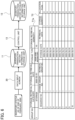
- FIG. 7 is a view for explaining a normal inventory retrieval process according to the first embodiment.
- the user When receiving a request to retrieve five items X on March 5, 2020, the user issues a delivery slip for the items X and retrieves five items X from inventory.
- the user operates the history management apparatus 1 to display the data input screen 30 on the monitor 104a. Using the data input screen 30, the user enters the retrieval quantity "5" of the items X into the history management apparatus 1.
- the control unit 13 When receiving the entry, the control unit 13 creates an inventory transaction history information table T1b for group number "2," as illustrated in FIG. 7 .
- the control unit 13 refers to the inventory transaction history detailed information table T2 to extract five records in chronological order of storage date and ascending order of sequence number from records that have not been assigned retrieval group numbers. Referring to FIG. 7 , the records with sequence numbers "1" to "5" are extracted.
- the control unit 13 updates the inventory transaction history detailed information regarding the five items X of the extracted sequence numbers "1" to "5.” More specifically, with respect to each record with the sequence numbers "1" to "5" in the inventory transaction history detailed information table T2, the control unit 13 sets "March 5, 2020” in the inventory transaction history retrieval date field and also sets "2" that is the group number set in the inventory transaction history information table T1b, in the retrieval group number field. In addition, the control unit 13 sets "1" in the allocation flag fields of these records.
- the explanation of the drawing includes only the inventory transaction history information table and changes in the inventory transaction history detailed information table. That is, the records with sequence numbers "6" to "10" have not been changed from the inventory transaction history detailed information table T2 illustrated in FIG. 6 . This applies to the following explanation.
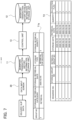
- FIG. 8 is a view for explaining an inventory storage process according to the first embodiment.
- the user When ten items X are stored for inventory on March 6, 2020, the user operates the history management apparatus 1 to display the data input screen 30 on the monitor 104a. Using the data input screen 30, the user enters the storage quantity "10" of the items X into the history management apparatus 1.
- the control unit 13 When receiving the entry, the control unit 13 creates an inventory transaction history information table T1c for group number "3," as illustrated in FIG. 8 . In addition, the control unit 13 updates the inventory transaction history detailed information table T2 by assigning sequence numbers "11" to "20" to the ten stored items X, respectively. The control unit 13 also sets "3" that is the group number set in the inventory transaction history information table T1c, in the storage group number fields of these records.
- FIG. 9 is a view for explaining a normal inventory retrieval process according to the first embodiment.
- the user When receiving a request to retrieve ten items X on March 10, 2020, the user issues a delivery slip for the items X and retrieves ten items X from inventory.
- the user operates the history management apparatus 1 to display the data input screen 30 on the monitor 104a. Using the data input screen 30, the user enters the retrieval quantity "10" of the items X into the history management apparatus 1.
- the control unit 13 When receiving the entry, the control unit 13 creates an inventory transaction history information table T1d for group number "4," as illustrated in FIG. 9 .
- the control unit 13 refers to the inventory transaction history detailed information table T2 to extract ten records in chronological order of storage date and ascending order of sequence number from records that have not been assigned retrieval group numbers. Referring to FIG. 9 , the records with sequence numbers "6" to "15" are extracted.
- the control unit 13 updates the inventory transaction history detailed information regarding the ten items X of the extracted sequence numbers "6" to "15.” More specifically, with respect to each record with the sequence numbers "6" to "15" in the inventory transaction history detailed information table T2, the control unit 13 sets "March 10, 2020” in the inventory transaction history retrieval date field, and also sets "4" that is the group number set in the inventory transaction history information table T1d, in the retrieval group number field. In addition, the control unit 13 sets "1" in the allocation flag fields of these records.
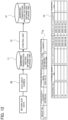
- FIG. 10 is a view for explaining a non-inventory purchase and retrieval process according to the first embodiment.
- the user When receiving a request to purchase and retrieve five non-inventory items X on March 14, 2020, the user issues a delivery slip for the items X. At this time, the user does not retrieve five items X from inventory, but performs a purchase process at the time of issuing the slip and then performs a retrieval process of the purchased items without storing them.
- the user operates the history management apparatus 1 to display the data input screen 30 on the monitor 104a. Using the data input screen 30, the user enters the non-inventory purchase and retrieval quantity "5" of the items X into the history management apparatus 1.
- control unit 13 When receiving the entry, the control unit 13 creates an inventory transaction history information table T1e for group numbers "5" and "6," as illustrated in FIG. 10 .
- the storage/retrieval category for the group number "5" is set to storage (temporary inventory).
- control unit 13 updates the inventory transaction history detailed information table T2 by assigning sequence numbers "21" to "25” to the fives purchased items X, respectively. With respect to each record with the assigned sequence numbers "21" to “25,” the control unit 13 sets "March 14, 2020” in the inventory transaction history retrieval date field and also sets "5" that is the group number assigned for the storage/retrieval category of "storage (temporary inventory)" in the inventory transaction history information table T1e, in the storage group number field. In addition, the control unit 13 sets "6" that is the group number assigned for the storage/retrieval category of "retrieval” in the inventory transaction history information table T1e, in the retrieval group number field. In addition, the control unit 13 sets "1" in the allocation flag fields of these records.
- FIG. 11 is a view for explaining a return process according to the first embodiment.
- the user When receiving, on March 15, 2020, a return request for items X delivered on March 14, 2020, the user issues a return slip for the items X.
- the user operates the history management apparatus 1 to display the data input screen 30 on the monitor 104a. Using the data input screen 30, the user enters the return storage quantity "5" of the items X into the history management apparatus 1.
- control unit 13 When receiving the entry, the control unit 13 creates an inventory transaction history information table T1f for group number "7."
- the storage/retrieval category in the inventory transaction history information table T1f is set to "return storage.”
- control unit 13 updates the inventory transaction history detailed information table T2 by assigning sequence numbers "26" to "30" to the five returned items X, respectively. With respect to each record with the assigned sequence numbers "26" to "30,” the control unit 13 sets "March 15, 2020” in the storage date field, and also sets "7" that is the group number set in the inventory transaction history information table T1f, in the storage group number field.
- FIG. 12 is a view for explaining a return process (return to supplier) according to the first embodiment.
- the user issues a return slip to return 4 items X from inventory to the supplier on March 25, 2020.
- the user operates the history management apparatus 1 to display the data input screen 30 on the monitor 104a. Using the data input screen 30, the user enters the return retrieval quantity "4" of the items X into the history management apparatus 1.
- the control unit 13 When receiving the entry, the control unit 13 creates an inventory transaction history information table T1g for group number "8," as illustrated in FIG. 12 .
- the storage/retrieval category in the inventory transaction history information table T1g is set to "retrieval for return.”
- control unit 13 refers to the inventory transaction history detailed information table T2 to extract four records in ascending order of sequence number from records that have not been assigned retrieval group numbers. Referring to FIG. 12 , the records with sequence numbers "16" to "19" are extracted.
- the control unit 13 updates the inventory transaction history detailed information regarding the four items X of the extracted sequence numbers "16" to "19.” More specifically, with respect to each record with the sequence numbers "16" to “19” in the inventory transaction history detailed information table T2, the control unit 13 sets "March 25, 2020” in the inventory transaction history retrieval date field and also sets "8" that is the group number set in the inventory transaction history information table T1g, in the retrieval group number field. In addition, the control unit 13 sets "1" in the allocation flag fields of these records.
- the above transactions are made in March, 2020.
- the user enters an inventory status check for the items X as of the end of March into the history management apparatus 1.
- the control unit 13 refers to the inventory transaction history detailed information table T2 to display an inventory status as of the end of March 2020, which is a collection of records with the allocation flags of 0, on the monitor 104a.
- FIG. 13 illustrates a year-end inventory status
- the inventory status screen 40 illustrated in FIG. 13 has the following fields: sequence number, group number, storage date, and quantity.
- the inventory status screen 40 enables the user to easily confirm if there is no difference between the history and the inventory quantity.
- the user When the month has changed, the user performs the inventory check process to confirm the monthly inventory status.
- the history management apparatus 1 includes a first storage unit (inventory transaction history information storage unit 11) that stores a first information record (inventory transaction history information) associating the quantity of a management target (item, material, or another) with a unique first number (group number), and a control unit 13 that stores, in a second storage unit (inventory transaction history detailed information storage unit 12), a second information record (inventory transaction history detailed information) assigning a unique second number (sequence number) and a unique first flag indicating the existence of the management target to each preset quantity of the management target with respect to the quantity of the management target, that stores, in response to a decrease in the quantity of the management target, the decreased quantity of the management target in association with a new first number in the first storage unit and changes, to a second flag indicating the absence of the management target, each first flag included in second information records which are stored in the second storage unit and the number of which is equal to the decreased quantity of the management target.
- a first storage unit inventory transaction history information storage
- the user is able to track the inventory flow from storage to retrieval for each quantity of one from the inventory transaction history and to check if the history matches the inventory quantity.
- the electronic data of the delivery destination and the inventory transaction history are compared with each other in terms of purchase slip number, product number, and quantity.
- inconsistent data that is, data that is included in the electronic data but is not included in the inventory transaction history and data that is included in the inventory transaction history but is not included in the electronic data.
- slips or the like received from the delivery destination and the like may be used to make a comparison in terms of purchase slip number, product number, and quantity. By doing so, it is possible to display a list of inconsistent data.
- the following describes a history management apparatus according to the second embodiment.
- the history management apparatus of the second embodiment manages a history of materials for production and final products.
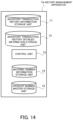
- FIG. 14 is a block diagram illustrating functions of a history management apparatus according to the second embodiment.
- the history management apparatus 1a additionally includes a material number information storage unit 14 and a product number master storage unit 15.
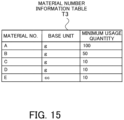
- FIG. 15 illustrates an example of information that is stored in the material number information storage unit.
- the material number information table T3 illustrated in FIG. 15 has the following fields: material number (No.), base unit, and minimum usage quantity. Information pieces arranged in a horizontal direction are associated with each other.
- the material number field contains information identifying the material number of a material.
- the base unit field contains the unit of measurement for the material.
- the minimum usage quantity field contains the quantity of a material that is used at a time. For example, 100 g of the material with material number A is used at a time.
- the material number information table T3 illustrated in FIG. 15 is just an example, and any desired data items may be added, changed, and deleted.
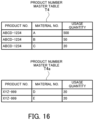
- FIG. 16 illustrates an example of information that is stored in a product number master storage unit.
- the product number master table T4 and product number master table T4a illustrated in FIG. 16 each have the following fields: product number, material number, and usage quantity. Information pieces arranged in a horizontal direction are associated with each other.
- the product number field contains information identifying the product number of a final product.
- the material number field contains information identifying the material number of a material used for producing the product indicated in the product number field.
- the usage quantity field contains the quantity of the material used for producing a single product indicated in the product number field.
- the product number master table T4 illustrated in FIG. 16 indicates that, to produce a single product with product number ABCD-1234, 500 g of a material with material number A, 50g of a material with material number B, and 20g of a material with material number C are used.
- the product number master table T4a indicates that, to produce a single product with product number YXZ-999, 20g of a material with material number D and 20 cc of a material with material number E are used.
- These material number information table T3, product number master table T4, and product number master table T4a may be stored in advance or may be stored at certain timing.
- FIG. 17 illustrates an example of a data input screen according to the second embodiment.
- the data input screen 30a of FIG. 17 has the following fields: processing type, material number, storage/retrieval date, storage type, and storage/retrieval quantity.
- FIGS. 18 to 22 are views for explaining a concrete example of a history management method according to the second embodiment.
- the following example describes inventory transaction sequences of materials with material numbers A, B, C, D, and E. Assume that the creation of history information starts on April 1, 2020.
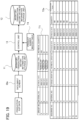
- FIG. 18 is a view for explaining an inventory check process according to the second embodiment.
- the inventory quantity of the material with material number A is "1000”
- the inventory quantity of the material with material number B is "200”
- the inventory quantity of the material with material number C is "50.”
- the user operates the history management apparatus 1 to display the data input screen 30a on the monitor 104a. Using the data input screen 30a, the user enters, into the history management apparatus 1, the inventory quantity "1000" of the material number A, the inventory quantity "200” of the material number B, and the inventory quantity "50" of the material number C.
- control unit 13 creates an inventory transaction history information table T1h for group numbers "1" to "3" that are respectively assigned to the material numbers.
- control unit 13 refers to the material number table T3 to create an inventory transaction history detailed information table T2a in which a different sequence number "1" to "19” is assigned to each quantity of "100” for the material number A, to each quantity of "50” for the material number B, and to each quantity of "10” for the material number C on the basis of the minimum usage quantities corresponding to the material numbers.
- control unit 13 sets "1" to "3” that are the group numbers set for the material numbers in the inventory transaction history information table T1h, in the storage group number fields of the corresponding records. The control unit 13 also sets "0" in the allocation flag fields of these records.
- FIG. 19 is a view for explaining a normal production and retrieval process according to the second embodiment.
- the user When receiving a request to produce one item with product number ABCD-1234 (hereinafter, referred to as "item X") on April 5, 2020, the user issues a production slip for the item X.
- the user operates the history management apparatus 1 to display the data input screen 30a on the monitor 104a. Using the data input screen 30a, the user enters the production quantity "1" of the item X into the history management apparatus 1.
- control unit 13 When receiving the entry, the control unit 13 refers to the product number master table T4.
- the control unit 13 creates an inventory transaction history information table T1i for group numbers "4" to "6.”
- the control unit 13 refers to the inventory transaction history detailed information table T2a to allot records for each material number on the basis of the material usage quantity registered in the product number master.
- the control unit 13 extracts five records in ascending order of sequence number from records that have not been assigned retrieval group numbers. Referring to FIG. 19 , the records with sequence numbers "1" to "5" are extracted.
- the control unit 13 updates the inventory transaction history detailed information regarding the material number A of the five extracted sequence numbers "1" to "5.” More specifically, with respect to each record with the sequence numbers "1" to "5" in the inventory transaction history detailed information table T2a, the control unit 13 sets "April 5, 2020” in the inventory transaction history retrieval date field and also sets "4" that is the group number set in the inventory transaction history information table T1i, in the retrieval group number field. The control unit 13 then sets "1" in the allocation flag fields of these records. The control unit 13 does the same process for the material numbers B and C.
- FIG. 20 is a view for explaining an inventory storage process according to the second embodiment.
- the user When 300 materials with material number A are stored for inventory on April 6, 2020, the user operates the history management apparatus 1 to display the data input screen 30a on the monitor 104a. Using the data input screen 30a, the user enters the storage quantity "300" of the material number A into the history management apparatus 1.
- the control unit 13 When receiving the entry, the control unit 13 creates an inventory transaction history information table T1j for group number "7," as illustrated in FIG. 20 .
- the control unit 13 refers to the material number table T3 and updates the inventory transaction history detailed information table T2a by assigning a different sequence number "20" to "22” to each quantity of "100” for the material number A on the basis of the minimum usage quantity corresponding to the material number.
- the control unit 13 also sets "7" that is the group number set in the inventory transaction history information table T1j, in the storage group number fields of these records.
- FIG. 21 is a view for explaining a normal production and retrieval process according to the second embodiment.
- the user When receiving a request to retrieve one item X on April 10, 2020, the user issues a production slip for the item X and produces one item X using inventory.
- the user operates the history management apparatus 1 to display the data input screen 30a on the monitor 104a. Using the data input screen 30a, the user enters the production quantity "1" of the item X into the history management apparatus 1.
- control unit 13 When receiving the entry, the control unit 13 refers to the product number master table T4. The control unit 13 creates an inventory transaction history information table T1k for group numbers "8" to "10.” In addition, the control unit 13 refers to the inventory transaction history detailed information table T2a to allocate records for each material number on the basis of the material usage quantities registered in the product number master.
- control unit 13 extracts five records in ascending order of sequence number from records that have not been assigned retrieval group numbers. Referring to FIG. 21 , the records with sequence numbers "6" to "10" are extracted.
- the control unit 13 updates the inventory transaction history detailed information regarding the material number A of the five extracted sequence numbers "6" to "10.” More specifically, with respect to each record with the sequence numbers "6" to "10" in the inventory transaction history detailed information table T2a, the control unit 13 sets April 10, 2020 in the inventory transaction history retrieval date field, and also sets "8" that is the group number set in the inventory transaction history information table T1k, in the retrieval group number field. The control unit 13 also sets "1" in the allocation flag fields of these records. The control unit 13 does the same process for the material numbers B and C.
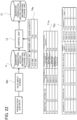
- FIG. 22 is a view for explaining a non-inventory material purchase and retrieval process.
- the user When receiving a non-inventory material purchase and retrieval request for one item with product number XYZ-999 (hereinafter, referred to as "item Y") on April 14, 2020, the user issues a production slip for the item Y. At this time, the user does not retrieve one item Y from inventory but performs a purchase process at the time of issuing the slip and then retrieves the purchase without storing it.
- the user operates the history management apparatus 1 to display the data input screen 30a on the monitor 104a. Using the data input screen 30a, the user enters the non-inventory material purchase and retrieval quantity "1" of the item Y into the history management apparatus 1.
- the control unit 13 When receiving the entry, the control unit 13 refers to the product number master table T4a. The control unit 13 then creates an inventory transaction history information table T1m for group numbers "11" to "14,” as illustrated in FIG. 22 .
- the inventory transaction history table T1m the storage/retrieval category for the group numbers "11” and “12” are set to “storage (temporary inventory), and the storage/retrieval category for the group numbers "13” and "14” are set to "retrieval for production.”
- the control unit 13 updates the inventory transaction history detailed information table T2a by assigning sequence numbers "23" and "24" for 20g of the purchased material with material number D.
- the control unit 13 sets April 14, 2020 in the inventory transaction history retrieval date field and also sets "11" that is the group number set in the inventory transaction history information table T1m, in the storage group number.
- the control unit 13 sets "13" that is the group number set in the inventory transaction history information table T1m, in the retrieval group number field.
- the control unit 13 sets "1" in the allocation flag fields of these records.
- FIG. 23 is a view for explaining a return process (return to supplier) according to the second embodiment.
- the user issues a return slip to return 300 materials with material number A from inventory to their supplier on April 25, 2020.
- the user operates the history management apparatus 1 to display the data input screen 30a on the monitor 104a. Using the data input screen 30a, the user enters the return retrieval quantity "300" of the material number A into the history management apparatus 1.
- the control unit 13 When receiving the entry, the control unit 13 creates an inventory transaction history information table T1n for group number "15," as illustrated in FIG. 23 .
- the storage/retrieval category is set to "retrieval for return" in the inventory transaction history information table T1n.
- control unit 13 updates the inventory transaction history detailed information table T2a by assigning sequence numbers "20" to "22” to the 300 returned materials with material number A.
- the control unit 13 then refers to the inventory transaction history detailed information table T2a to extract three records in ascending order of sequence number from records that have not been assigned retrieval group numbers. Referring to FIG. 23 , the records with sequence numbers "20" to "22" are extracted.
- the control unit 13 updates the inventory transaction history detailed information regarding the 300 materials with material number A of the extracted sequence numbers "20" to "22.” More specifically, with respect to each record with the sequence numbers "20" to "22" in the inventory transaction history detailed information table T2a, the control unit 13 sets April 25, 2020 in the inventory transaction history retrieval date field, and also sets "15" that is the group number set in the inventory transaction history information table T1n, in the retrieval group number field. The control unit 13 also sets "1" in the allocation flag fields of these records.
- the above transactions are made in April, 2020.
- the user enters an inventory status check for the items X as of the end of April into the history management apparatus 1.
- the control unit 13 refers to the inventory transaction history detailed information table T2a to display an inventory status that is a collection of records with the allocation flags of "0" on the monitor 104a.
- FIG. 24 illustrates a year-end inventory status according to the second embodiment.
- the history management apparatus of the second embodiment produces the same effects as that of the first embodiment. That is, it is possible to check whether no difference has occurred between the history and the inventory quantity.
- the following describes a history management apparatus according to a third embodiment.
- the history management apparatus of the third embodiment is different from those of the first and second embodiments in that GPS control numbers are assigned in production management and logistics history in order to manage a flow of entities from production via storage to logistics.
- a final product is linked to the GPS control numbers of materials used for the final product, for each group number so that the materials used are traceable.
- allocation flag "0" is set for materials and products (both inventory and non-inventory) at the time of storage.
- an allocation flag of "1" is set to record that the material has been retrieved (used).
- an allocation flag of "2" is set for the allocation at the time of retrieval of a final product and a purchased product to record that they have been retrieved.
- an allocation flag of "3" is set to record that its delivery is complete.
- FIG. 25 illustrates an example of information that is stored in a material number information storage unit according to the third embodiment.
- the material number information table T3a illustrated in FIG. 25 has the following fields: material number, base unit, and minimum usage quantity. Information pieces arranged in a horizontal direction are associated with each other.
- the material number information table T3a indicates that the base unit for material number A is gram, and the minimum usage quantity is 50 (50 g).
- the base unit for a packing box A is item and the minimum usage quantity is 1 (1 item).
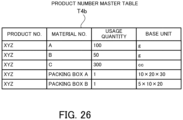
- FIG. 26 illustrates an example of information that is stored in a product number master storage unit according to the third embodiment.
- the product number master table T4b of FIG. 26 indicates that, to produce one item with product number XYZ, 100 g of a material with material number A, 50g of a material with material number B, 300 cc of a material with material number C, one packing box A, and one packing box B are used.
- the size of a packing box (vertical ⁇ horizontal ⁇ height) is set in the base unit field for each packing box A and B.
- FIG. 27 is a view for explaining a data input screen according to the third embodiment.
- the data input screen 30b of FIG. 27 has the following fields: material number, base unit, item count, quantity per item, storage/retrieval quantity, storage/retrieval date, and storage type.
- FIG. 28 illustrates an example of an inventory transaction history information table and inventory transaction history detailed information table according to the third embodiment.
- Packing boxes are prepared for packing products XYZ according to their sizes, and a different sequence is assigned to each box.
- an inventory transaction history detailed information table T2b As illustrated in an inventory transaction history detailed information table T2b, a sequence number and a GPS control number are given to each item count of one. Although not illustrated, GPS information (positional information) for each material number may be stored in the inventory transaction history detailed information table T2b.
- one packing box is used for each production quantity of "1.” Therefore, in the case where the production quantity is "2,” one product is packed in the packing box A and the other product is packed in the packing box B.
- the user operates the history management apparatus 1 to display the data input screen 30b on the monitor 104a.
- the user enters, into the history management apparatus 1, the purchase quantity "200" of the material number A, the purchase quantity "100” of the material number B, the purchase quantity "600” of the material number C, the purchase quantity "1" of the packing box A, and the purchase quantity "1" of the packing box B.
- control unit 13 creates an inventory transaction history information table T1p in which a different group number "1" to "5" is assigned to each material number.
- the control unit 13 refers to the inventory transaction history information table T1p, material number information table T3a, and product number master table T4b to create an inventory transaction history detailed information table T2b in which a different sequence number "1" to "16" is assigned to each quantity of "200" for the material number A, to each quantity of "100” for the material number B, to each quantity of "600” for the material number C, to each inventory quantity of "1” for the packing box A, and to each inventory quantity of "1” for the packing box B on the basis of the usage quantities corresponding to the material numbers.
- the control unit also sets "1" to "5" that are the group numbers set for the material numbers in the inventory transaction history information table T1p, in the storage group number fields of the corresponding records.
- the control unit 13 also sets a unique GPS control number in each of the GPS control number fields of the records.
- the control unit 13 also sets "0" in the allocation flag fields of the records.
- FIGS. 29 and 30 are views for explaining a normal production and retrieval process and product storage process according to the third embodiment.
- the user When receiving a request to produce two items XYZ on July 10, 2020, the user issues a production slip for the items XYZ. Then, the user operates the history management apparatus 1 to display the data input screen 30b on the monitor 104a. Using the data input screen 30b, the user enters the production quantity "2" of the items XYZ into the history management apparatus 1.
- control unit 13 When receiving the entry, the control unit 13 creates an inventory transaction history information table T1q for group numbers "6" to "10.” In addition, the control unit 13 refers to the inventory transaction history detailed information table T2b to allot records for each material number on the basis of the material number information table T3a and the material usage quantities registered in the product number master table T4b.
- the control unit 13 extracts four records in ascending order of sequence number from records that have not been assigned retrieval group numbers. Referring to FIG. 29 , the records with sequence numbers "1" to "4" are extracted.
- the control unit 13 updates the inventory transaction history detailed information regarding the material number A of the four extracted sequence numbers "1" to "4." More specifically, with respect to each record with the sequence numbers "1" to "4" in the inventory transaction history detailed information table T2b, the control unit 13 sets July 10, 2020 in the inventory transaction history retrieval date field and sets "6" that is the group number set in the inventory transaction history information table T1q, in the retrieval group number field. The control unit 13 also sets "1" in the allocation flag field. The control unit 13 does the same process for the material numbers B and C, packing box A, and packing box B.
- the control unit 13 creates an inventory transaction history information table T1r for group numbers "11” and "12” for the two final items XYZ, as illustrated in FIG. 30 .
- the GPS control numbers of all materials used for producing an item XYZ are set in the used GPS control number field in the inventory transaction history information table T1r.
- the control unit 13 also updates the inventory transaction history detailed information table T2b by assigning sequence numbers "17" and "18" to the final items XYZ, respectively.
- the control unit 13 sets "11” and "12” that are the group numbers set in the inventory transaction history information table T1r, in the storage group number fields of the corresponding records and assigns unique GPS control numbers in the GPS control number fields.
- FIG. 31 is a view for explaining an inventory storage process according to the third embodiment.
- the user When two items ABC and three items DEF are stored for inventory on July 15, 2020, the user operates the history management apparatus 1 to display the data input screen 30b on the monitor 104a. Using the data input screen 30b, the user enters the storage quantity "2" of the items ABC and the storage quantity "3" of the items DEF into the history management apparatus 1.
- the control unit 13 When receiving the entry, the control unit 13 updates the material number information table T3a and product number master table T4b. Then, the control unit 13 creates an inventory transaction history information table T1s for group numbers "13 and "14,” as illustrated in FIG. 31 . In addition, the control unit 13 updates the inventory transaction history detailed information table T2b by assigning sequence numbers "19" to "23" to the two stored items ABC and three stored items DEF, respectively. In addition, the control unit 13 sets "13" and "14” that are the group numbers set for the material numbers in the inventory transaction history information table T1s, in the storage group number fields of the corresponding records. The control unit 13 also sets unique GPS control numbers in the GPS control number fields of these records. The control unit 13 also sets "0" in the allocation flag fields of the records.
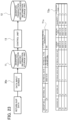
- FIG. 32 is a view for explaining a normal inventory retrieval process according to the third embodiment.
- the user When receiving a request to retrieve two items XYZ, two items ABC, and three items DEF on July 20, 2020, the user issues a delivery slip for the items X, and retrieves two items XYZ, two items ABC, and three items DEF from inventory.
- the user operates the history management apparatus 1 to display the data input screen 30b on the monitor 104a. Using the data input screen 30b, the user enters, into the history management apparatus 1, the retrieval quantity "2" of the items XYZ, the retrieval quantity "2" of the items ABC, and the retrieval quantity "3" of the items DEF.
- the control unit 13 When receiving the entry, the control unit 13 creates an inventory transaction history information table T1t for group numbers "15" to "18,” as illustrated in FIG. 32 .
- the control unit 13 also refers to the inventory transaction history detailed information table T2b to extract records in ascending order of sequence number from records that have not been assigned retrieval group numbers. Referring to FIG. 32 , the records with sequence numbers "17" to "23" are extracted.
- the control unit 13 updates the inventory transaction history detailed information in the records with the extracted sequence numbers "17" to "23.” More specifically, with respect to each record with the sequence numbers "17” to “23” in the inventory transaction history detailed information table T2b, the control unit 13 sets July 20, 2020 in the inventory transaction history retrieval date field and also sets a corresponding one of "15" to "18” that are the group numbers set in the inventory transaction history information table T1t, in the retrieval group number field. Then, the control unit 13 sets "2" indicating the completion of retrieval in the allocation flag fields of these records.
- FIG. 33 is a view for explaining a GPS tracking process according to the third embodiment.
- the user When the user confirms the arrival at the delivery destination, the user operates the history management apparatus 1 to display the data input screen 30b on the monitor 104a. Using the data input screen 30b, the user enters the delivery completion of the two items XYZ, two items ABC, and three items DEF into the history management apparatus 1.
- control unit 13 When receiving the entry, the control unit 13 updates the allocation flags to "3" with respect to the sequences given their GPS control numbers. In addition, the control unit 13 sets July 21, 2020 in the delivery date fields.
- the history management apparatus of the third embodiment produces the same effects as those of the first and second embodiments.
- the history management apparatus 1 of the third embodiment employs GPS control numbers in the production management and logistics history, so as to manage a flow of entities in the process from production via storage to logistics.
- the processes that are performed by the history management apparatus 1 may be performed by a plurality of apparatuses in a distributed manner.
- one apparatus may be configured to create an inventory transaction history information table
- another apparatus may be configured to use the inventory transaction history information table to create an inventory transaction history detailed information table.
- the history management apparatus, history management method, and program have been described with respect to the embodiments illustrated.
- the embodiments are not limited thereto, and the components of each unit may be replaced with other components having equivalent functions.
- information stored in advance in each table may be entered directly by a user.
- information that is occasionally entered by a user may be stored in advance in tables.
- other desired configurations and steps may be added to the embodiments.
- the present invention relates to a computer program that has been developed for computing, in real-time, the total value of all assets (movable properties, such as lands, real estates of buildings, forest materials, river sources, cars, and computers, animals and plants and their accompanying things, foods, and properties buried underground) existing in the world (may be considered as "in a specified three-dimensional space").
- assets movable properties, such as lands, real estates of buildings, forest materials, river sources, cars, and computers, animals and plants and their accompanying things, foods, and properties buried underground
- assets movable properties, such as lands, real estates of buildings, forest materials, river sources, cars, and computers, animals and plants and their accompanying things, foods, and properties buried underground
- assets movable properties, such as lands, real estates of buildings, forest materials, river sources, cars, and computers, animals and plants and their accompanying things, foods, and properties buried underground
- a computer that runs this program what is ideal is that (what is called now) one quantum computer M
- PD produced products
- PU products that are being made
- PM materials
- PN natural resources that are not materials
- SN sequence number
- ⁇ SN ⁇ denotes all entities subjected to sequence numbering
- sigmav denotes their total value
- sigmaP* denotes the calculation values of all entities belonging to the four unique resource states.
- the disclosed program is able to convert a target to be subjected to the sequence numbering, from an entity to currency. If sigmav ⁇ sigmam is satisfied, where sigmam denotes the total amount (the numerical value of currencies on the market plus currencies on computers) of currency issued in the word, which changes with time, as of a time point (ta), it means that humans are not broke. If sigmav ⁇ sigmam is satisfied, this means that currency that is more valued than actual assets are issued and distributed. The amount of currency, computed by sigmav - sigmam ⁇ 0, is just a scrap of paper. The amount of currency issued in each country of the world at present and in the past is not made public.
- the program of the present invention is usable to solve such a problem whose answer is uncertain.
- This program is able to both calculate the total value of all assets existing in the world and calculate the amount of issued currency as a base for measuring the assets.
- the State is able to easily find an illegal movement of assets, such as tax evasion and underground economy.
- the above-described processing functions may be implemented by using a computer.
- a program is prepared, which describes processes for the functions of the history management apparatus 1, 1a.
- a computer implements the above-described processing functions by executing the program.
- the program describing the intended processes may be stored on a computer-readable storage medium.
- Computer-readable storage media include magnetic storage devices, optical discs, magneto-optical storage media, semiconductor memories, and others.
- the magnetic storage devices include hard disk drives, flexible disks (FDs), magnetic tapes, and others.
- the optical discs include DVDs, DVD-RAMs, CD-ROMs, CD-RWs, and others.
- the magneto-optical storage media include magneto-optical disks (MOs) and others.
- portable storage media such as DVDs and CD-ROMs, on which the program is stored
- the program may be stored in the storage device of a server computer and may be transferred from the server computer to other computers over a network.
- a computer which is to execute the above program stores in its local storage device the program recorded on a portable storage medium or transferred from the server computer, for example. Then, the computer reads the program from the local storage device, and runs the program. The computer may run the program directly from the portable storage medium. Also, while receiving the program being transferred from the server computer over a network, the computer may sequentially run this program.
- processing functions may also be implemented wholly or partly by using a DSP (digital signal processor), an ASIC (application-specific integrated circuit), a PLD (programmable logic device), or other electronic circuits.
- DSP digital signal processor
- ASIC application-specific integrated circuit
- PLD programmable logic device
Landscapes
- Business, Economics & Management (AREA)
- Engineering & Computer Science (AREA)
- Human Resources & Organizations (AREA)
- Economics (AREA)
- Theoretical Computer Science (AREA)
- Strategic Management (AREA)
- Entrepreneurship & Innovation (AREA)
- Physics & Mathematics (AREA)
- General Physics & Mathematics (AREA)
- Quality & Reliability (AREA)
- Tourism & Hospitality (AREA)
- General Business, Economics & Management (AREA)
- Marketing (AREA)
- Operations Research (AREA)
- Development Economics (AREA)
- Databases & Information Systems (AREA)
- Accounting & Taxation (AREA)
- Finance (AREA)
- Educational Administration (AREA)
- Game Theory and Decision Science (AREA)
- General Engineering & Computer Science (AREA)
- Data Mining & Analysis (AREA)
- Management, Administration, Business Operations System, And Electronic Commerce (AREA)
Applications Claiming Priority (1)
| Application Number | Priority Date | Filing Date | Title |
|---|---|---|---|
| PCT/JP2020/034934 WO2022059073A1 (fr) | 2020-09-15 | 2020-09-15 | Dispositif de gestion d'historique, procédé de gestion d'historique et programme |
Publications (2)
| Publication Number | Publication Date |
|---|---|
| EP4160497A1 true EP4160497A1 (fr) | 2023-04-05 |
| EP4160497A4 EP4160497A4 (fr) | 2023-07-19 |
Family
ID=78028307
Family Applications (1)
| Application Number | Title | Priority Date | Filing Date |
|---|---|---|---|
| EP20954059.0A Pending EP4160497A4 (fr) | 2020-09-15 | 2020-09-15 | Dispositif de gestion d'historique, procédé de gestion d'historique et programme |
Country Status (5)
| Country | Link |
|---|---|
| US (1) | US12118511B2 (fr) |
| EP (1) | EP4160497A4 (fr) |
| JP (1) | JP6938066B1 (fr) |
| CN (1) | CN115701300B (fr) |
| WO (1) | WO2022059073A1 (fr) |
Families Citing this family (2)
| Publication number | Priority date | Publication date | Assignee | Title |
|---|---|---|---|---|
| CN117755705A (zh) * | 2023-12-27 | 2024-03-26 | 临沂临工智能信息科技有限公司 | 自动化罐装及存储的实现方法 |
| DE102024103980A1 (de) * | 2024-02-13 | 2025-08-14 | Deutsche Post Ag | Verfahren und Vorrichtung zum Bearbeiten und Sortieren von Sendungen |
Family Cites Families (24)
| Publication number | Priority date | Publication date | Assignee | Title |
|---|---|---|---|---|
| US6334108B1 (en) * | 1989-05-01 | 2001-12-25 | Catalina Marketing International, Inc. | Method and system for selective incentive point-of-sale marketing in response to customer shopping histories |
| US6684195B1 (en) * | 1989-05-01 | 2004-01-27 | Catalina Marketing International, Inc. | Method and system for selective incentive point-of-sale marketing in response to customer shopping histories |
| JPH0593361A (ja) * | 1991-09-30 | 1993-04-16 | Juki Corp | 縫製時の生産管理方式 |
| JPH09160991A (ja) * | 1995-12-08 | 1997-06-20 | Fujitsu Ltd | 商品販売管理装置 |
| JPH11116014A (ja) | 1997-10-09 | 1999-04-27 | Nec Corp | リール部品の在庫管理システム及び在庫管理方法並びに在庫管理プログラムを格納した記憶媒体 |
| US6609104B1 (en) * | 1999-05-26 | 2003-08-19 | Incentech, Inc. | Method and system for accumulating marginal discounts and applying an associated incentive |
| AU3683700A (en) * | 1999-10-05 | 2001-05-10 | S.C. Medicarom Group S.R.L. | Database organization for increasing performance by splitting tables |
| JP2003084821A (ja) * | 2001-09-14 | 2003-03-19 | Lion Engineering Co Ltd | 製造過程に配合処理を含む製品の製造装置及び製造方法 |
| JP2003109122A (ja) * | 2001-09-28 | 2003-04-11 | Fujitsu Ltd | 取引情報登録端末装置、取引情報管理システム、及び取引情報管理方法、並びにプログラム |
| US7969306B2 (en) * | 2002-01-11 | 2011-06-28 | Sap Aktiengesellschaft | Context-aware and real-time item tracking system architecture and scenarios |
| JP3991811B2 (ja) * | 2002-08-06 | 2007-10-17 | 株式会社日立製作所 | 在庫制御システムおよび在庫制御方法 |
| US20060095346A1 (en) * | 2004-10-28 | 2006-05-04 | Gambhir Robin U | System and method for inventory sharing across a multi-user network |
| JP5434414B2 (ja) * | 2009-09-14 | 2014-03-05 | 株式会社リコー | 在庫管理システム、在庫管理方法及び在庫管理プログラム |
| JP2018147251A (ja) * | 2017-03-06 | 2018-09-20 | 東芝テック株式会社 | 販売管理装置及びそのプログラム |
| CN107038556A (zh) * | 2017-04-18 | 2017-08-11 | 威海芸祥家纺技术服务有限公司 | 一种纺织erp智能管理系统 |
| JP6794328B2 (ja) * | 2017-09-26 | 2020-12-02 | 東芝テック株式会社 | 情報提供装置、情報提供プログラム、情報提供システム及び情報提供方法 |
| JP2019071029A (ja) * | 2017-10-11 | 2019-05-09 | 東芝テック株式会社 | 情報処理装置、品出し管理システムおよびプログラム |
| JP2019101696A (ja) * | 2017-11-30 | 2019-06-24 | 横河電機株式会社 | 機器管理装置、端末装置、機器管理システム、機器管理方法、プログラム、および記録媒体 |
| CN108573402B (zh) * | 2018-03-12 | 2020-07-03 | 阿里巴巴集团控股有限公司 | 一种兑换码发放方法、服务器及系统 |
| CN110322186B (zh) * | 2018-03-30 | 2023-06-02 | 阿里巴巴集团控股有限公司 | 数据对象库存信息处理方法、装置及系统 |
| CN109299897A (zh) * | 2018-09-17 | 2019-02-01 | 珠海横琴盛达兆业科技投资有限公司 | 一种实现医药行业批次级的逆向追踪方法 |
| JP2020052742A (ja) * | 2018-09-27 | 2020-04-02 | 株式会社オービック | 在庫内訳情報作成装置、在庫内訳情報作成方法および在庫内訳情報作成プログラム |
| CN109492969A (zh) * | 2018-10-30 | 2019-03-19 | 国科恒泰(北京)医疗科技股份有限公司 | 出库信息生成方法及装置 |
| JP7500168B2 (ja) * | 2019-08-26 | 2024-06-17 | 東芝テック株式会社 | 物品管理装置及びプログラム |
-
2020
- 2020-09-15 JP JP2020569920A patent/JP6938066B1/ja active Active
- 2020-09-15 CN CN202080101548.9A patent/CN115701300B/zh active Active
- 2020-09-15 EP EP20954059.0A patent/EP4160497A4/fr active Pending
- 2020-09-15 WO PCT/JP2020/034934 patent/WO2022059073A1/fr not_active Ceased
-
2021
- 2021-05-21 US US17/327,549 patent/US12118511B2/en active Active
Also Published As
| Publication number | Publication date |
|---|---|
| EP4160497A4 (fr) | 2023-07-19 |
| CN115701300A (zh) | 2023-02-07 |
| WO2022059073A1 (fr) | 2022-03-24 |
| JP6938066B1 (ja) | 2021-09-22 |
| US12118511B2 (en) | 2024-10-15 |
| US20220083971A1 (en) | 2022-03-17 |
| JPWO2022059073A1 (fr) | 2022-03-24 |
| CN115701300B (zh) | 2025-07-18 |
Similar Documents
| Publication | Publication Date | Title |
|---|---|---|
| US7904340B2 (en) | Methods and computer-readable medium for defining a product model | |
| US8510179B2 (en) | Inventory transaction common object | |
| JP2024001836A (ja) | 導出装置、導出方法及びプログラム | |
| CA2746563A1 (fr) | Elaboration d'un diagramme de planification pour les articles sur panneau perfore et sur etagere | |
| Gilmore et al. | Set‐up reduction in pharmaceutical manufacturing: an action research study | |
| US20070174146A1 (en) | Hierarchical stock allocation system and method | |
| US20100070318A1 (en) | Providing logistics execution application as enterprise services | |
| JP7338820B2 (ja) | 倉庫在庫数の特定方法及び装置 | |
| US12118511B2 (en) | History management apparatus, history management method, and program | |
| AU2017239518A1 (en) | Inventory management and tracking | |
| WO2017044540A1 (fr) | Génération d'analyse de commerçant agrégé à l'aide d'un emplacement d'origine de transactions en ligne | |
| JP2015225451A (ja) | 情報処理装置、表示方法およびプログラム | |
| TWI244016B (en) | Method using warehousing management to create inventory file | |
| Gupta et al. | Implementation Analysis for the Applications of Warehouse Model Under Linear Integer Problems | |
| JP2024069492A (ja) | 在庫管理装置、在庫管理方法、及び在庫管理プログラム | |
| EP4033427A1 (fr) | Dispositif de gestion d'informations, procédé de gestion d'informations et programme informatique | |
| US11367046B2 (en) | Method and system for tracking inventory | |
| JP2018206255A (ja) | 損益予測装置及び損益予測プログラム | |
| US20130332222A1 (en) | Computer-implemented system and method for generating a tactical plan for retail inventory placement with automated forecasts | |
| JP7614124B2 (ja) | 倉庫管理装置、倉庫管理方法、及び、倉庫管理プログラム | |
| Yano et al. | Inventory management system using blockchain technology. | |
| Ip et al. | An object‐based relational data base system using re‐configurable finance and material objects | |
| CN117575458A (zh) | 库存管理方法、介质、装置和计算设备 | |
| Camacho-Obregon et al. | Pilot Implementation of Exponential Smoothing, Cycle Counting and 5S to Increase the Percentage of Complete Orders in a Company of the Commerce Sector | |
| Mohapatra | Optimizing Sales and Distribution in SAP ERP |
Legal Events
| Date | Code | Title | Description |
|---|---|---|---|
| STAA | Information on the status of an ep patent application or granted ep patent |
Free format text: STATUS: THE INTERNATIONAL PUBLICATION HAS BEEN MADE |
|
| PUAI | Public reference made under article 153(3) epc to a published international application that has entered the european phase |
Free format text: ORIGINAL CODE: 0009012 |
|
| STAA | Information on the status of an ep patent application or granted ep patent |
Free format text: STATUS: REQUEST FOR EXAMINATION WAS MADE |
|
| 17P | Request for examination filed |
Effective date: 20230102 |
|
| AK | Designated contracting states |
Kind code of ref document: A1 Designated state(s): AL AT BE BG CH CY CZ DE DK EE ES FI FR GB GR HR HU IE IS IT LI LT LU LV MC MK MT NL NO PL PT RO RS SE SI SK SM TR |
|
| RAP3 | Party data changed (applicant data changed or rights of an application transferred) |
Owner name: SYNCA GROUP, LTD |
|
| REG | Reference to a national code |
Ref country code: DE Ref legal event code: R079 Free format text: PREVIOUS MAIN CLASS: G06Q0010080000 Ipc: G06Q0010083300 |
|
| A4 | Supplementary search report drawn up and despatched |
Effective date: 20230619 |
|
| RIC1 | Information provided on ipc code assigned before grant |
Ipc: G06Q 10/083 20230101ALI20230613BHEP Ipc: G06Q 10/0875 20230101ALI20230613BHEP Ipc: G06Q 10/0631 20230101ALI20230613BHEP Ipc: G06Q 10/0833 20230101AFI20230613BHEP |
|
| DAV | Request for validation of the european patent (deleted) | ||
| DAX | Request for extension of the european patent (deleted) | ||
| STAA | Information on the status of an ep patent application or granted ep patent |
Free format text: STATUS: EXAMINATION IS IN PROGRESS |
|
| 17Q | First examination report despatched |
Effective date: 20240328 |