EP4161081A1 - Verfahren zur erzeugung eines personalisierten fernsehkanals für einen benutzer eines endgeräts, das für den zugang zu mindestens einem rundfunkdienst für audiovisuelle inhalte konfiguriert ist, entsprechende vorrichtung, dienstausrüstung, system und computerprogramm. - Google Patents
Verfahren zur erzeugung eines personalisierten fernsehkanals für einen benutzer eines endgeräts, das für den zugang zu mindestens einem rundfunkdienst für audiovisuelle inhalte konfiguriert ist, entsprechende vorrichtung, dienstausrüstung, system und computerprogramm. Download PDFInfo
- Publication number
- EP4161081A1 EP4161081A1 EP22196725.0A EP22196725A EP4161081A1 EP 4161081 A1 EP4161081 A1 EP 4161081A1 EP 22196725 A EP22196725 A EP 22196725A EP 4161081 A1 EP4161081 A1 EP 4161081A1
- Authority
- EP
- European Patent Office
- Prior art keywords
- user
- audiovisual content
- personalized
- terminal
- content
- Prior art date
- Legal status (The legal status is an assumption and is not a legal conclusion. Google has not performed a legal analysis and makes no representation as to the accuracy of the status listed.)
- Pending
Links
Images



Classifications
-
- H—ELECTRICITY
- H04—ELECTRIC COMMUNICATION TECHNIQUE
- H04N—PICTORIAL COMMUNICATION, e.g. TELEVISION
- H04N21/00—Selective content distribution, e.g. interactive television or video on demand [VOD]
- H04N21/20—Servers specifically adapted for the distribution of content, e.g. VOD servers; Operations thereof
- H04N21/25—Management operations performed by the server for facilitating the content distribution or administrating data related to end-users or client devices, e.g. end-user or client device authentication, learning user preferences for recommending movies
- H04N21/258—Client or end-user data management, e.g. managing client capabilities, user preferences or demographics, processing of multiple end-users preferences to derive collaborative data
- H04N21/25866—Management of end-user data
- H04N21/25891—Management of end-user data being end-user preferences
-
- H—ELECTRICITY
- H04—ELECTRIC COMMUNICATION TECHNIQUE
- H04N—PICTORIAL COMMUNICATION, e.g. TELEVISION
- H04N21/00—Selective content distribution, e.g. interactive television or video on demand [VOD]
- H04N21/20—Servers specifically adapted for the distribution of content, e.g. VOD servers; Operations thereof
- H04N21/25—Management operations performed by the server for facilitating the content distribution or administrating data related to end-users or client devices, e.g. end-user or client device authentication, learning user preferences for recommending movies
- H04N21/262—Content or additional data distribution scheduling, e.g. sending additional data at off-peak times, updating software modules, calculating the carousel transmission frequency, delaying a video stream transmission, generating play-lists
- H04N21/26208—Content or additional data distribution scheduling, e.g. sending additional data at off-peak times, updating software modules, calculating the carousel transmission frequency, delaying a video stream transmission, generating play-lists the scheduling operation being performed under constraints
- H04N21/26241—Content or additional data distribution scheduling, e.g. sending additional data at off-peak times, updating software modules, calculating the carousel transmission frequency, delaying a video stream transmission, generating play-lists the scheduling operation being performed under constraints involving the time of distribution, e.g. the best time of the day for inserting an advertisement or airing a children programme
-
- H—ELECTRICITY
- H04—ELECTRIC COMMUNICATION TECHNIQUE
- H04N—PICTORIAL COMMUNICATION, e.g. TELEVISION
- H04N21/00—Selective content distribution, e.g. interactive television or video on demand [VOD]
- H04N21/20—Servers specifically adapted for the distribution of content, e.g. VOD servers; Operations thereof
- H04N21/25—Management operations performed by the server for facilitating the content distribution or administrating data related to end-users or client devices, e.g. end-user or client device authentication, learning user preferences for recommending movies
- H04N21/266—Channel or content management, e.g. generation and management of keys and entitlement messages in a conditional access system, merging a VOD unicast channel into a multicast channel
- H04N21/2668—Creating a channel for a dedicated end-user group, e.g. insertion of targeted commercials based on end-user profiles
-
- H—ELECTRICITY
- H04—ELECTRIC COMMUNICATION TECHNIQUE
- H04N—PICTORIAL COMMUNICATION, e.g. TELEVISION
- H04N21/00—Selective content distribution, e.g. interactive television or video on demand [VOD]
- H04N21/40—Client devices specifically adapted for the reception of or interaction with content, e.g. set-top-box [STB]; Operations thereof
- H04N21/45—Management operations performed by the client for facilitating the reception of or the interaction with the content or administrating data related to the end-user or to the client device itself, e.g. learning user preferences for recommending movies, resolving scheduling conflicts
- H04N21/4508—Management of client data or end-user data
- H04N21/4532—Management of client data or end-user data involving end-user characteristics, e.g. viewer profile, preferences
Definitions
- the present invention relates generally to telecommunications, and more specifically to access to audiovisual content. It applies more particularly to user terminals and/or to service equipment handling such content.
- Public or private television channels accessible by digital terrestrial television TNT, cable or satellite television traditionally offer schedules of audiovisual programs, which they broadcast in a time slot provided by the schedule.
- many of them now make available to the user a service for rebroadcasting audiovisual programs in catch-up (or "catch up” in English) for a given period, for example one month after the date of broadcasting of this program provided for by the program schedule.
- the user can still access in continuous download mode ((or "streaming", in English) an audiovisual content of which he missed the broadcast, at the time when he wishes during this given period.
- Some of these channels are called generalist, because they offer varied programming, intended for all types of audiences and adapted according to the time slot and the type of audience most represented on this time slot. Others are called thematic because they specialize in a particular theme, such as sport, travel, culture, news, young audiences, etc.
- the invention improves the situation.
- the invention proposes an entirely new and inventive approach to managing access to audiovisual content available to a user of one or more audiovisual content broadcasting services. It indeed proposes to build a personalized television channel for the user according to the preference criteria of this user.
- Multimedia content means digital content that contains at least one image, text or sound data.
- the multimedia content can be received in broadcast (streaming, television channel, radio, etc.) or stored on a medium (hard disk, database, server, etc.).
- preference criteria is meant a characteristic or a set of characteristics linked to an audiovisual content and which define a preference or a taste of the user for this audiovisual content. This is for example a theme, such as sport, travel, cinema, etc., a genre of film, such as a comedy, a thriller, etc., a level of violence or action depending on the time of day or the day of the week, an actor present in the film, etc.
- the user can define a theme that is specific to him, such as “automotive Europe” or “sport without football”, for example, or else broaden the definition of a theme offered by a thematic channel, such as "exploration of sailors and travel”.
- the invention consists in selecting for a given time slot and among the audiovisual content accessible at this time the audiovisual content most likely to please the user and to program it in a program schedule of the personalized channel.
- the method comprises learning an audiovisual content analysis model available to the user from the preference criteria and the selection of the audiovisual content implements an automatic decision module based on said model analysis.
- the invention is based on a machine learning technique (or "machine learning" in English) to build a data model configured to detect in an image, a text, a sound data of the audiovisual contents, characteristics or events representative of the user's preference criteria and making it possible to select the best audiovisual content available to the user according to his announced preferences and/or his past uses by relying on an elaborate and efficient data model.
- machine learning technique or "machine learning” in English
- the user terminal When the user asks to view his personalized channel, for example by pressing a dedicated button on his remote control or by clicking on an icon of this channel, the user terminal receives access information to the audiovisual content selected with a view to its reproduction on a screen of the user's terminal, such as a program of the personalized television channel.
- the user does not have to navigate through the entire audiovisual offer available, in particular he does not have to zap through all the television channels, to choose the audiovisual content he likes. most.
- the personalized channel offers him audiovisual content chosen especially for him, which he accesses effortlessly.
- the method further comprises obtaining a history of use of audiovisual content by the user of the service and the selection takes said history into account.
- audiovisual content usage history we mean all the audiovisual content that the user has viewed or listened to from one of his terminal equipment, partially or completely.
- a usage history includes information relating to each use or consumption of content, in particular information relating to the broadcast service of content used, for example the channel or service platform, the identification of the content, the viewing schedule, the number of times it has been viewed or listened to, etc.
- the invention applies to any type of audiovisual content access service.
- the user has subscribed to a digital television channel broadcasting service and/or to a program rebroadcasting service of said digital television channels in catch-up mode and/or to a video-on-demand service.
- the access information to the selected audiovisual content on the given time slot comprises at least one identifier of the selected audiovisual content and an identifier of the service on which said audiovisual content is accessible.
- the access information in question is intended to allow the user's terminal to access the selected audiovisual content.
- the access identifier for the selected content is an identifier of the television channel which programmed it on the given time slot or information for accessing the content in a video-on-demand catalog or even information access to content in a list of audiovisual content accessible in catch-up mode.
- said selection is implemented for a plurality of time slots during a phase prior to receipt of an access request, the method comprises recording programming information content selected over the plurality of time slots in an audiovisual program schedule dedicated to the personalized channel and the transmission of the program schedule to the user's terminal.
- the construction of the personalized channel is generated in a preliminary phase and its program schedule is made available to the user.
- One advantage is that the user can find out in advance the programming offered by his personalized channel.
- Another advantage is that when he requests access to the audiovisual content programmed on his personalized channel, it is returned to him without latency.
- the selection of the audiovisual content is implemented upon receipt of a request for access to the personalized channel on a current time slot.
- the construction of the personalized channel is done on demand, that is to say when the user actually requests access to this channel.
- One advantage is to exploit all the diversity of the audiovisual offer available to the user via the various broadcasting services to which he has access.
- the method comprises, for at least one audiovisual content transmitted on the user's personalized television channel, obtaining information on the conformity of the audiovisual content with the preference criteria of the user and an update of the analysis model from said at least one piece of evaluation information obtained for the transmitted audiovisual content.
- the user evaluates the proposed audiovisual content and this evaluation indicating the adequacy of the audiovisual content programmed on the personalized channel is exploited to evolve the data model used by the automatic decision system.
- the learning of the decision module is therefore done over time from an annotated history of the uses of the chain personalized by the user. In this way, the selection process evolves over time to adapt more finely to the tastes and expectations of the user.
- the user benefits from programming chosen especially for him on his personalized television channel.
- the programmed audiovisual content has been selected from the plurality of audiovisual content accessible to the user on the different services to which he has subscribed. All he has to do is zap to his personalized channel to access, from his terminal, the content selected for him by the invention on one of the broadcasting services available to him, as if it were content programmed by his channel. personalized.
- said device configured to implement the steps of the method for generating a personalized television channel as described above, in its different embodiments.
- said device is integrated into service equipment involved in the implementation of at least one service for broadcasting audiovisual content to a user.
- said service equipment is included in a system for broadcasting a personalized television channel to a user's terminal in a telecommunications network, said terminal being configured to access at least one audiovisual content broadcasting service.
- the system, the service equipment and the device for generating a personalized television channel have at least the same advantages as those conferred by the aforementioned generation method.
- the invention also relates to a computer program product comprising program code instructions for implementing the method as described previously, when it is executed by a processor.
- a program may use any programming language, and be in the form of source code, object code, or intermediate code between source code and object code, such as in partially compiled form, or in any other desirable form.
- the invention also relates to a recording medium readable by a computer on which is recorded a computer program comprising program code instructions for the execution of the steps of the methods according to the invention as described above.
- Such recording medium can be any entity or device capable of storing the program.
- the medium may comprise a storage means, such as a ROM, for example a CD ROM or a microelectronic circuit ROM, or else a means magnetic recording device, for example a mobile medium (memory card) or a hard disk or an SSD.
- such a recording medium may be a transmissible medium such as an electrical or optical signal, which may be conveyed via an electrical or optical cable, by radio or by other means, so that the program computer it contains is executable remotely.
- the program according to the invention can in particular be downloaded onto a network, for example the Internet network.
- the recording medium may be an integrated circuit in which the program is incorporated, the circuit being adapted to execute or to be used in the execution of the aforementioned method.
- the present technique is implemented by means of software and/or hardware components.
- module may correspond in this document to a software component, a hardware component or a set of hardware and software components.
- a software component corresponds to one or more computer programs, one or more sub-programs of a program, or more generally to any element of a program or software capable of implementing a function or a set of functions, as described below for the module concerned.
- Such a software component is executed by a data processor of a physical entity (terminal, server, gateway, set-top-box, router, etc.) and is likely to access the hardware resources of this physical entity (memories, recording media, communication bus, electronic input/output cards, user interfaces, etc.).
- resources means all sets of hardware and/or software elements supporting a function or a service, whether unitary or combined.
- a hardware component corresponds to any element of a hardware assembly (or hardware) able to implement a function or a set of functions, according to what is described below for the module concerned. It can be a hardware component that can be programmed or has an integrated processor for executing software, for example an integrated circuit, a smart card, a memory card, an electronic card for executing firmware ( “firmware” in English), etc.
- the principle of the invention is based on the generation of a personalized television channel for a user of one or more audiovisual content broadcasting services, from preference criteria collected for this user, and on the provision of this custom string to the user.
- this generation implements, for at least a given time slot, the selection, at least on the basis of the preference criteria and optionally of a usage history of the broadcasting service(s) by this user, of a audiovisual content among a plurality of audiovisual contents available for this user on the given time slot.
- information on access to the audiovisual content programmed on the personalized channel is transmitted to the user's terminal, in order to that it can recover the data streams of the audiovisual content, decode them and return them to the user on a display device, as if it were a program of this personalized channel.
- the invention therefore proposes to provide the user with a virtual television channel, generated from all the audiovisual content accessible to the user, and whose program schedule has been specifically constructed for this user according to his tastes.
- the invention applies to any type of service for providing or broadcasting audiovisual content implemented in any type of telecommunications network, to a user of terminal equipment connected to this network and configured to access this service.
- Multimedia content means digital content that contains at least one image, text or sound data.
- the multimedia content can be received by broadcast (streaming, television channel, radio, etc.) or stored on a medium (hard disk, database, server, etc.).
- the invention applies most particularly to the service(s) for broadcasting audiovisual content implemented by the same service operator. Indeed, the issues of user access rights to such and such audiovisual content are managed centrally by the operator. However, it also applies when the user has subscribed to several audiovisual content distribution services with different operators and to an Internet access service which offers him a management interface, for each distribution service, of his access rights to this service. In this way, the invention can generate a personalized television channel for the user from audiovisual content originating from these various broadcasting services.
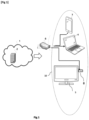
- a telecommunications system comprises a first local area network or LAN (Local Area Network, 10) and a wide area type network, or WAN (Wide Area Network, 1 ).
- the LAN network is a home network and the WAN network is an Internet network.
- the LAN network 10 could be a corporate network and the WAN network 1 could be of any type (cellular, GSM - Global System for Mobile Communications, UMTS - Universal Mobile Telecommunications System, Wifi - Wireless, DVB - Digital Video Broadcast, etc.) without departing from the scope of the invention.
- Terminal 3 for example a "smartphone” type smart phone
- terminal 4 for example a laptop computer
- terminal 5 for example an HDMI 8 key connected to a TV set
- LAN local network
- the context of the local network is given by way of example and could easily be transposed to an Internet network of the “best effort” type, a company network, etc. .
- a service equipment 2 involved in the implementation of at least one service S for broadcasting digital audiovisual content for example a digital content server
- WAN wide area network
- LAN local network
- the content server 2 receives, for example, channels of digital television content from a broadcast television network, not shown, and/or videos on demand and/or digital television content available for rebroadcasting in mode catch-up, and makes them available to customer terminals.
- a local area network also called a home network in the following, is a computer network that connects together, with or without wires, the terminal equipment, or more simply terminals, of a house (computers, printing peripherals, storage, connected objects, etc.), able to communicate with each other.
- a home network can include router equipment, also commonly called a gateway, an intermediate element ensuring the redirection, or routing, of the data packets between the various terminals and networks connected to it.
- a user of such a network can execute a given service on a given terminal having specific characteristics (for example, viewing multimedia content C).
- the multimedia content C can be, without loss of generality, coming from a network of the DVB, IP, etc. type.
- a broadcast digital network of the DVB (acronym for Digital Video Broadcast) type has an underlying infrastructure which may have satellite (SAT), digital terrestrial television, or even cable, as support, not shown.
- the terminals could also be connected to a DVB-IP type network, also called IPTV, i.e. ensuring the broadcasting of digital television or the supply of content, for example in VOD (Video on Demand) from the Internet network under the control of a service operator ensuring the quality of delivery (for example, an operator's TV, associated with a digital decoder and a home gateway from the same operator).
- VOD Video on Demand
- the multiplexed digital contents are received by a digital decoder, also called STB (or "Set Top Box", in English), via appropriate reception media (antennas, cables, ADSL, etc.) and the various digital content is de-multiplexed and decoded before playback by the terminals (eg televisions) connected to the STB.
- a decoder not represented on the figure 1
- the terminal can also be provided for accessing content broadcast in streaming mode without downloading, or “streamed” from the WAN or the LAN.
- “connected” television that is to say that the terminal can be connected to the Internet network in order to provide a set of services to users.
- OTT Over The Top
- OTT television allows a user of a terminal connected to the Internet network to render digital channels or Web content on the television.
- this type of "connected" terminal interfaces with the gateway in charge of the user's local network to access a contained in the extended network.
- a terminal can access digital content from inside the local network, for example from a streaming device associated with a local hard disk (not shown).
- DBV broadcast network
- IPTV IP Television
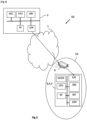
- FIG 2 represents an architecture of a service equipment according to an embodiment of the invention, for example the server equipment 2 of the figure 1 .
- the service equipment 2 communicates with the extended Internet network 1 and in particular other service equipment (not shown) involved in the implementation of the digital content distribution service(s) considered. It also communicates with the client terminal 3, 4, 5 via the residential gateway 6 via a transceiver E/R module.
- the server equipment comprises a device 100 for generating a personalized digital television channel for the user of the client terminal 3, 4, 5.
- a device is configured to obtain beforehand user preference criteria.
- he also obtains a history of the uses of the service(s) for broadcasting audiovisual content.
- the device 100 is also configured to select, for at least one given time slot, from the preference criteria obtained and optionally from the usage history, an audiovisual content from among a plurality of audiovisual contents available for this user on said time slot and, upon receipt of a request for access to the personalized television channel from the user in the given time slot, to transmit content access information to the user's terminal audiovisual selected, so that it renders it to the user as a program of the personalized channel.
- the preference criteria and the usage history collected can be recorded for example in the memories M of the server equipment 2 or in an external memory hosted by another equipment of the telecommunications network WAN 1.
- the device 100 is configured to implement the construction by learning of an analysis model of the plurality of audiovisual content accessible to the user according to the user's preference criteria and to select the audiovisual content in implementing an automatic decision system based on the analysis model.
- it is also configured to obtain information on the conformity of this audiovisual content with the user's preference criteria and to update the analysis model from said at least one evaluation information obtained for the audiovisual content transmitted.
- the device 100 thus implements the method for generating a personalized television channel according to the invention which will be detailed below in relation to the figures 3 to 5 .
- the device 100 can be independent of the server equipment 2, but connected to the latter by any link, wired or not.
- it is integrated into another piece of equipment of the extended telecommunications network 1, for example another piece of service equipment.
- it can be integrated into equipment of the local WAN network 10, for example into the gateway 6.
- FIG 2 also represents an architecture of a terminal equipment 3, 4, 5 according to one embodiment of the invention. This is, for example, television 5 of the figure 1 .
- the terminal equipment communicates with the residential gateway 6 and accesses the extended Internet network 1 via this gateway 6, which allows it in particular to communicate with service equipment such as the server 2, involved in the implementation of the broadcasting service. of audiovisual content considered.
- the terminal equipment 5 communicates with the local network LAN 10 with other equipment of the local network and in particular the gateway 6 via which it accesses the extended Internet network 1 and in particular the service equipment 2 involved in the setting implementation of the audiovisual content distribution service in question.
- it also comprises a DCOD module for decoding coded data streams representative of audiovisual content broadcast by the service in question and a user interface module INT via which the latter in particular selects a television channel or audiovisual content.
- a DCOD module for decoding coded data streams representative of audiovisual content broadcast by the service in question
- a user interface module INT via which the latter in particular selects a television channel or audiovisual content.
- This is for example a remote control, a touch screen etc.
- a device DISP for displaying audiovisual content, such as for example the television set 5 or a monitor.
- the server equipment comprises a device 200 for processing a request for access from the user to the personalized television channel.
- a device 200 for processing a request for access from the user to the personalized television channel is configured to collect the user's preference criteria, transmit them to the server equipment, transmit to the server equipment 2 the request for access to the personalized television channel coming from the user, receive the access information to the audiovisual content programmed by the personalized channel on the time slot considered and restore the audiovisual content to the user as a program of the personalized channel, in response to said request.
- the preference criteria are for example entered via the interface module INT. Once collected, they can be recorded for example in the memories M′ of the terminal equipment 5 or in an external memory hosted by another equipment of the local area network LAN 10.
- the device 200 is also configured to obtain user, following the restitution of the audiovisual content, information relating to compliance of the content with the user's preference criteria and to transmit said information to said service equipment.
- the device 200 thus implements the method for processing a request for access to the personalized channel according to the invention which will be detailed below in relation to the figures 3 to 5 .
- the device 200 can be independent of the terminal equipment 5, but connected to the latter by any link, wired or not.
- it can be integrated into another terminal equipment of the local communication network, for example the home gateway 6.
- the generation method is implemented by the aforementioned device 100, integrated in the server 2 and the processing method is implemented by the aforementioned device 200, integrated in the terminal 5.
- the invention is not limited to this embodiment, the device 100 being able to be integrated into equipment of the local area network LAN 10, such as for example the gateway 6 and the device 200 being able to be hosted by another equipment of the local area network LAN 10.
- the user of the terminal 5 accesses at least one audiovisual content broadcasting service from a service operator, for example a television channel broadcasting service S1.
- a service operator for example a television channel broadcasting service S1.
- he can also benefit from access to an S2 service for rebroadcasting digital content already broadcast in catch-up mode and to an S3 video-on-demand rental service, etc.
- access to each of these services may or may not be subject to prior subscription.
- the invention applies both to DTT channels and to paid content distribution services, for example via video-on-demand platforms.
- server equipment 2 contributes to the implementation of these various services.
- the personalized television channel is generated in phase advance, that is to say independently of any access request from the user to the personalized channel.
- its programming is generated upon receipt of new program schedules from the television channels of the service S1 and metadata describing the audiovisual content programmed in these new schedules.
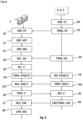
- the user terminal 5 obtains preference criteria CP from the user with a view to generating his personalized television channel. For example, it presents the user with a form, including questions, which the user fills in using the input interface INT, for example a touch screen, a keyboard, a remote control, etc.
- the user terminal 5 transmits at 31 the preference criteria CP obtained to the server equipment 2, which receives them at 20. It is noted that the latter may or may not have requested the sending of this information CP by the terminal 5.
- these preference criteria CP comprise a plurality of characteristics of audiovisual content appreciated or preferred by the user. They therefore define one or more themes or subjects, such as sport, travel, cinema, etc., a type of content such as a film, a series, a documentary, a television news, a genre of film, such as a comedy, thriller, etc., a level of violence or action, one or more actors or presenters involved in the content, a time slot associated with a particular type of content, etc.
- themes or subjects such as sport, travel, cinema, etc.
- a type of content such as a film, a series, a documentary, a television news, a genre of film, such as a comedy, thriller, etc.
- a level of violence or action such as a comedy, thriller, etc.
- one or more actors or presenters involved in the content a time slot associated with a particular type of content, etc.
- the device 100 obtains an HST history of the uses or consumptions of the user on the various services offered by the operator. It is assumed for example that to do this, it requires access to such data from another service equipment of the operator, which manages a database dedicated to the storage of these user usage histories.
- the HST history groups together dated information on the audiovisual content that the user has viewed or listened to, at least partially, from the terminal equipment 5 or another terminal configured to access the operator's services, during a past time period. These include channel IDs, program IDs, possibly a number of views or a percentage of content viewed, etc.
- the method comprises at 22 the construction of an analysis model MA of the preference criteria CP obtained, by learning or training an automatic decision module DEC.
- the analysis of his content consumption history can complement and enrich the CP preference criteria explicitly provided by the user.
- the DEC module is for example integrated into the server 2 or into another service equipment, but, as a variant, it can also be located in the local area network LAN 10 and for example be integrated into the home gateway 6.
- such an analysis model MA enables the module DEC, in an analysis phase, to select at 23, from among a plurality of audiovisual contents available for this user over a given time slot, audiovisual contents for the user, which correspond to his preference criteria.
- the learning of the MA model and the analysis of the audiovisual contents using the MA model are presented here in two stages, or in two distinct phases, for simplicity. It is understood however that the learning can be carried out several times (in particular in parallel or after the analysis) and that the analysis can be continuous.
- the learning may comprise an "upstream” learning phase (initial and prior to the analysis phase) to learn to detect/recognize characteristics or events representative of the preference criteria stated by the user and define parameters to then allow, from any audiovisual content received, that is to say presented at the input of the DEC module, to provide at the output an indication of correspondence between the content received and the at least one of the events processed by learning.
- an "upstream” learning phase initial and prior to the analysis phase
- the upstream learning phase is based on a learning base comprising audiovisual content, labeled or not, using characteristics and/or events representative of the themes and preferences stated by the user and possibly 'other themes and preferences not stated by the user. These contents can be chosen for example by the operator, manually or automatically.
- the learning phase can also include learning over time of the user's habits from his history of use of the audiovisual content programmed by the personalized channel and more generally of the service S, in order to refine the configuration resulting from upstream learning.
- the two learnings can be carried out on the same device (for example on server 2) or on different devices (for example the upstream learning can be carried out on another service equipment, dedicated to this task, the learning over water being carried out by the server equipment 2 or locally at the level of the domestic gateway 6.
- This learning phase is for example an ML machine learning phase.
- machine learning we mean automatic learning, or statistical learning, notably concerns the design, analysis, development and implementation of methods allowing a machine (in the broad sense) to evolve through a systematic process, and thus to complete difficult or problematic tasks by algorithmic means.
- a possible example of machine learning is that of classification, the purpose of which is to label each piece of data by associating it with a class.
- a neural network is used, for example, of the deep network type (or “deep learning”).
- the network RN evolves to learn to recognize a set of characteristic elements that make it possible to confirm the presence of an event in a content. For example, if you want to teach the machine to recognize audiovisual content concerning the theme of sport, you present it with content in which sporting actions appear, broadcasts of matches or sporting events, the presence of the public in stands, a scoreboard, etc., by training him to find all the content that includes it.
- the same process can be applied for the detection of the identity of an actor or an athlete, of the identity of the team which scored, the recognition of a particular sport, of a place, of a city, certain forms of violence in content, a song, etc.
- the learning phase outputs a set of data (software, parameters, optimized coefficients of the neural network, etc.), which constitutes the MA analysis model.
- neural network can be replaced by any artificial intelligence module capable of fulfilling the same functions (or similar functions): automatic learning by decision trees, statistical methods, logistic regression, linear discriminant analysis, genetic algorithms, etc.
- the audiovisual content programmed in the program schedules of the various digital television channels available to the user on the given time slot are analyzed by the DEC module, which is therefore configured to take a decision for each audiovisual content, for example by assigning it an ICP compatibility index with the user's preference criteria, the value of this index increasing with the analyzed compatibility level.
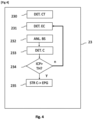
- a time slot CT is determined. This can be the current timeslot or a future timeslot, depending on whether the build of the custom string is on receipt an access request received at 25 from the user terminal 5 or in phase advance. In the example of the picture 3 , this is a future time slot.
- a set of reference audiovisual contents EC is chosen. This choice depends of course on the access rights of the user. It is assumed here that he has at least access to the digital television channel broadcasting service and that the set EC includes the audiovisual content programmed by these digital television channels on the determined time slot CT as well as metadata associated with each of this audiovisual content and comprising information describing this content.
- the module DEC carries out an analysis of the audiovisual contents of the set EC.
- the various contents are for example classified according to a decreasing order of compatibility index and the audiovisual content classified first is selected at 233 to be programmed on the time slot considered of the program schedule of the personalized channel.
- a minimum threshold TH corresponding to a minimum value of the compatibility index is required for the selection of an audiovisual content on the time slot considered.
- the compatibility index ICP associated with the content classified first is compared at 234 with this threshold TH. If it exceeds this threshold, the content is selected, otherwise it is not selected.
- an identifier of the selected audiovisual content and its original television channel are stored in memory at 235, in association with the time slot considered.
- the method changes reference content set EC at 231 and repeats the step of analysis 232 from the audiovisual contents of this new set EC.
- it is for example the audiovisual content offered by the catch-up services of the same television channels. If an audiovisual content available in catch-up mode satisfies the compatibility conditions, it is selected at 233, 234, its identification information is stored at 235 in the EPG program schedule of the personalized channel for the time slot CT.
- Steps 231-235 are repeated until all possible content sets have been tested or content satisfying the conformance criteria has been found.
- the selection step is repeated for several time slots of a program schedule, for example for the time slots of a day, a week or even a fortnight to come, depending on the availability of the program schedules of the television channels broadcast by the S service.
- the invention can propose to the user to broaden his preference criteria, so as to allow a wider selection of content.
- an EPG program schedule of the user's personalized television channel is constructed from the information stored in memory for each of the audiovisual content selected on the time slots considered and it is made available to the user.
- the program schedule is transmitted at 24 to the terminal 5 which receives it at 32 and stores it in memory.
- the terminal 5 restores it to the user, when the latter requests information on the programming of his personalized channel. For example, he makes this request simply by clicking on an icon dedicated to this channel on the mosaic of television channels displayed on the home screen of the operator's television channel broadcasting service or by pressing the dedicated key of its remote control.
- His access request DA(C) is transmitted by the user's terminal 5 at 34 and received at 25. It includes for example the identifier of the chosen audiovisual content and, where applicable, the identifier of the television channel scheduled it on the current time slot.
- the terminal 5 makes a standard request for access to the audiovisual content C to the server equipment 2, on the broadcast channel or to the address of the server which makes the content C available, identical to that which it would do if the user had requested access to the original channel or directly chosen the catch-up C content.
- the terminal 5 Upon receipt of the data streams corresponding to the audiovisual content C required for the original channel of the content C, it decodes them in the conventional manner, and restores them at 35 to the user as a program of his personalized channel.
- the terminal 5 asks the user at 36 to evaluate the audiovisual content that he has just viewed, in particular its adequacy with the preference criteria CP that he has set for his personalized television channel. To do this, it provides information on compliance with these CP preference criteria, for example in the form of a score between 1 and 5.
- the terminal 5 transmits the conformity information IC obtained to the service equipment 2 which receives it at 27 and stores it in memory, for example in the memory M′.
- the service equipment 2 triggers an update 28 of the learning of the analysis model MA of the audiovisual content on the basis of a history of the audiovisual content presented to the user on his personalized channel and information of CNF compliance that he provided in return.
- the analysis model MA evolves over time by taking into account a history of the audiovisual contents programmed in the personalized television channel and actually viewed by the user.
- the terminal 5 transmits to the server equipment 2 a personalized channel access command on the current time slot. It is received at 25' and triggers the selection 23' of an audiovisual content from among the audiovisual content available to the user. Except for the fact that this step is implemented in real time and for the current time slot CT only, it is identical to step 23 previously described and will not be detailed further. It is assumed that an audiovisual content C′ has been selected.
- the EPG(CT) information relating to this audiovisual content programmed on the user's personalized channel for example its identifier and, where applicable, the identifier of the originating television channel or of the service which makes it available (catch-up or video on demand for example) are transmitted at 24' to the terminal 5 which receives them at 33'. More generally, this information includes all the information necessary for the terminal 5 to be able to request access to the content C′.
- the terminal 5 returns them to the user so that he can decide whether or not he wants to view the programmed content C′.
- the terminal 5 requests at 341 access to the content C′, in a conventional manner, from the service which initially offered it. Upon receipt of this request at 251, the server equipment 2 transmits the content C' to the terminal at 26', then the terminal 5 restores it to the user at 35' as if it were a program of its own. custom string.
- the steps 36, 27, 28 of collecting an evaluation from the user following the viewing of the content C′, of reception by the server equipment 2 and of taking it into account for the update of the analysis module, are unchanged.
- a device 100 for generating a personalized television channel for a user of a multimedia content access service comprising a module for obtaining user preference criteria , a selection module, for at least one given time slot, on the basis of the preference criteria and the usage history obtained, of an audiovisual content among a plurality of audiovisual contents available for this user on said time slot , a module for receiving a request for access to the personalized channel from the user on the given time slot and a module for providing the audiovisual content selected on said personalized television channel.
- module can correspond both to a software component and to a hardware component or a set of hardware and software components, a software component itself corresponding to one or more computer programs or sub-programs or in a more general to any element of a program able to implement a function or a set of functions.
- such a device 100 comprises a random access memory 103 (for example a RAM memory), a processing unit 102 equipped for example with a processor, and controlled by a computer program Pg1, representative of the modules for obtaining, selection, reception and provision, stored in a read only memory 101 (for example a ROM memory or a hard disk).
- a read only memory 101 for example a ROM memory or a hard disk.
- the code instructions of the computer program are for example loaded into the random access memory 103 before being executed by the processor of the processing unit 102.
- the random access memory 103 can also contain the preference criteria of the user and a program schedule of the personalized television channel.
- FIG 6 only illustrates one particular way, among several possible, of making the device 100 so that it performs the steps of the method for generating a personalized television channel for the user as detailed above, in relation to the figures 3 to 5 , in its various embodiments. Indeed, these steps can be carried out either on a reprogrammable calculation machine (a PC computer, a DSP processor or a microcontroller) executing a program comprising a sequence of instructions, or on a dedicated calculation machine (for example a set of logic gates like an FPGA or an ASIC, or any other hardware module).
- a reprogrammable calculation machine a PC computer, a DSP processor or a microcontroller
- a dedicated calculation machine for example a set of logic gates like an FPGA or an ASIC, or any other hardware module.
- the corresponding program (that is to say the sequence of instructions) could be stored in a removable storage medium (such as for example an SD card , a USB key, a CD-ROM or a DVD-ROM) or not, this storage medium being partially or totally readable by a computer or a processor.
- a removable storage medium such as for example an SD card , a USB key, a CD-ROM or a DVD-ROM
- a device 200 for processing a request for access to a personalized television channel for a user of an access service to audiovisual content comprising a transmission module to a service equipment involved in the implementation of the user preference criteria service, said service equipment being configured to generate a personalized audiovisual program chain for the user from said preference criteria and said usage history, a module transmission to the service equipment of a request for access to the personalized television channel on a given time slot coming from the user and a module for rendering the audiovisual content programmed on the given time slot to the user by the personalized television channel.
- module can correspond both to a software component and to a hardware component or a set of hardware and software components, a software component itself corresponding to one or more computer programs or sub-programs or in a more general to any element of a program able to implement a function or a set of functions.
- such a device 200 comprises a random access memory 203 (for example a RAM memory), a processing unit 202 equipped for example with a processor, and controlled by a computer program Pg2, representative of the modules for obtaining and transmission, stored in a read only memory 201 (for example a ROM memory or a hard disk).
- a read only memory 201 for example a ROM memory or a hard disk.
- the code instructions of the computer program are for example loaded into the random access memory 203 before being executed by the processor of the processing unit 202.
- the random access memory 203 can also contain the preference criteria obtained from the user and a program schedule of the personalized television channel.
- FIG 7 only illustrates one particular way, among several possible, of making the device 200 so that it performs the steps of the processing method as detailed above, in relation to the figure 3 , 4 And 5 , and in its various embodiments. Indeed, these steps can be carried out indifferently on a reprogrammable calculation machine (a PC computer, a DSP processor or a microcontroller) executing a program comprising a sequence of instructions, or on a dedicated calculation machine (for example a set of logic gates such as an FPGA or an ASIC, or any other hardware module).
- a reprogrammable calculation machine a PC computer, a DSP processor or a microcontroller
- a dedicated calculation machine for example a set of logic gates such as an FPGA or an ASIC, or any other hardware module.
- the corresponding program (that is to say the sequence of instructions) can be stored in a removable storage medium (such as for example an SD card , a USB key, a CD-ROM or a DVD-ROM) or not, this storage medium being partially or totally readable by a computer or a processor.
- a removable storage medium such as for example an SD card , a USB key, a CD-ROM or a DVD-ROM
- the invention which has just been described in its various embodiments has numerous advantages.
- selecting for a user the best audiovisual content from a plurality of audiovisual content available on one or more given time slots, it generates for this user a virtual and personalized television channel, on the basis of his preferences and possibly his previous uses.
- the user only has to position himself on his personalized television channel to directly access the audiovisual content chosen for him, without effort or tedious research. Thanks to the feedback offered to the user, the programming of his personalized channel evolves over time to better adapt to his desires and expectations.
- the user can thus define his own thematic channels and even a family channel whose programming would be adapted to the uses of the home and would take into account the rules for the protection of minors.
- the programs broadcast from 4 p.m. would be cartoons or other content suitable for young audiences and those in the evening would be films, series or reports popular with the whole family.
Landscapes
- Engineering & Computer Science (AREA)
- Databases & Information Systems (AREA)
- Multimedia (AREA)
- Signal Processing (AREA)
- Computer Graphics (AREA)
- Business, Economics & Management (AREA)
- Marketing (AREA)
- Two-Way Televisions, Distribution Of Moving Picture Or The Like (AREA)
Applications Claiming Priority (1)
| Application Number | Priority Date | Filing Date | Title |
|---|---|---|---|
| FR2110372A FR3127664B1 (fr) | 2021-09-30 | 2021-09-30 | Procédé de génération d’une chaîne de télévision personnalisée pour un utilisateur d’au moins un service de diffusion de contenus audiovisuels, procédé de traitement d’une demande d’accès à la chaîne personnalisée, dispositifs, équipement de service, terminal utilisateur, système et programmes d’ordinateur correspondants. |
Publications (1)
| Publication Number | Publication Date |
|---|---|
| EP4161081A1 true EP4161081A1 (de) | 2023-04-05 |
Family
ID=79170918
Family Applications (1)
| Application Number | Title | Priority Date | Filing Date |
|---|---|---|---|
| EP22196725.0A Pending EP4161081A1 (de) | 2021-09-30 | 2022-09-20 | Verfahren zur erzeugung eines personalisierten fernsehkanals für einen benutzer eines endgeräts, das für den zugang zu mindestens einem rundfunkdienst für audiovisuelle inhalte konfiguriert ist, entsprechende vorrichtung, dienstausrüstung, system und computerprogramm. |
Country Status (3)
| Country | Link |
|---|---|
| US (1) | US12489937B2 (de) |
| EP (1) | EP4161081A1 (de) |
| FR (1) | FR3127664B1 (de) |
Families Citing this family (1)
| Publication number | Priority date | Publication date | Assignee | Title |
|---|---|---|---|---|
| US10447537B2 (en) * | 2017-07-11 | 2019-10-15 | Roku, Inc. | Automatic determination of display device functionality |
Citations (2)
| Publication number | Priority date | Publication date | Assignee | Title |
|---|---|---|---|---|
| US20180041791A1 (en) * | 2014-06-06 | 2018-02-08 | Echostar Technologies L.L.C. | Customized channel |
| US20180270522A1 (en) * | 2017-03-16 | 2018-09-20 | At&T Intellectual Property I, L.P. | User defined content summary channel |
-
2021
- 2021-09-30 FR FR2110372A patent/FR3127664B1/fr active Active
-
2022
- 2022-09-20 EP EP22196725.0A patent/EP4161081A1/de active Pending
- 2022-09-30 US US17/957,635 patent/US12489937B2/en active Active
Patent Citations (2)
| Publication number | Priority date | Publication date | Assignee | Title |
|---|---|---|---|---|
| US20180041791A1 (en) * | 2014-06-06 | 2018-02-08 | Echostar Technologies L.L.C. | Customized channel |
| US20180270522A1 (en) * | 2017-03-16 | 2018-09-20 | At&T Intellectual Property I, L.P. | User defined content summary channel |
Also Published As
| Publication number | Publication date |
|---|---|
| US20230098728A1 (en) | 2023-03-30 |
| US12489937B2 (en) | 2025-12-02 |
| FR3127664B1 (fr) | 2024-09-20 |
| FR3127664A1 (fr) | 2023-03-31 |
Similar Documents
| Publication | Publication Date | Title |
|---|---|---|
| US20150020106A1 (en) | Personalized video content from media sources | |
| JP7004451B2 (ja) | ユーザの軌跡に基づくメディアコンテンツの推奨 | |
| WO2015150685A1 (fr) | Dispositif et procédé de commande a distance de la restitution de contenus multimedia | |
| EP3021594A1 (de) | Verfahren zur klassifizierung eines inhalts, und inhaltsempfehlung in einem elektronischen programmführer | |
| EP4055831A1 (de) | Verfahren zur verwaltung des zappens von digitalen multimedia-inhalten aus http-adaptivem streaming und entsprechende verwaltungsvorrichtung, multimediastream-lesegerät und computerprogramm | |
| FR3021489A1 (fr) | Procede de telechargement adaptatif de contenus numeriques pour plusieurs ecrans | |
| FR3096541A1 (fr) | Procédé de gestion du téléchargement progressif adaptatif (HAS) d’un contenu numérique diffusé en temps réel, gestionnaire, terminal lecteur de flux multimédia et programme d’ordinateur correspondants. | |
| EP4254968A1 (de) | Verfahren zur erzeugung einer virtuellen fernsehkette für einen benutzer von mindestens einem rundfunkdienst für audiovisuelle inhalte, entsprechende erzeugungsvorrichtung, dienstausrüstung und computerprogramm | |
| EP4472358B1 (de) | Programmabhängige umgebungslichtverwaltung | |
| US12489937B2 (en) | Method of generating a personalized television channel, corresponding device, system and computer program | |
| EP3840391A1 (de) | Verwaltung der wiedergabe von multimediainhalten und einer navigationsschnittstelle auf einem bildschirm | |
| WO2017158274A1 (fr) | Acquisition d'extraits d'un flux multimédia sur un terminal | |
| EP2819424A1 (de) | Verfahren zur Verbesserung der Umschaltzeiten zwischen audiovisuellen Programmen | |
| FR3015844A1 (fr) | Methode d'access a un contenu diffuse sur un reseau point-vers-multipoints, prealablement ou ulterieurement a sa diffusion, et decodeur associe | |
| WO2021123563A1 (fr) | Analyse d'un contenu multimedia | |
| FR3036510A1 (fr) | Procede et dispositif pour selectionner un contenu multimedia secondaire | |
| FR3007862A1 (fr) | Methode de restitution d'une portion de contenu audiovisuel lors d'une sequence de demarrage d'un dispositif recepteur-decodeur en fonction des centres d'interet de l'utilisateur | |
| WO2023208688A1 (fr) | Gestion de la restitution d'un contenu multimédia | |
| WO2021105585A1 (fr) | Procédé de gestion d'une liste de contenus accessibles au zapping, les contenus numériques étant téléchargeables en mode de téléchargement progressif adaptatif (has), dispositif de gestion, lecteur de flux multimédia et programme d'ordinateur correspondants | |
| WO2010010175A1 (fr) | Procédé de gestion et de diffusion de messages promotionnels à un utilisateur dans un système multimédia | |
| FR3116685A1 (fr) | Personnalisation de flux multimédia en fonction de données dynamiques issues d’objets connectés | |
| FR3093605A1 (fr) | Procédé de navigation accélérée dans un contenu numérique obtenu par téléchargement progressif adaptatif (HAS), gestionnaire, lecteur de flux multimédia et programme d’ordinateur correspondants. | |
| FR3093603A1 (fr) | Procédé de navigation accélérée dans un contenu numérique obtenu par téléchargement progressif adaptatif (HAS), gestionnaire, lecteur de flux multimédia et programme d’ordinateur correspondants. | |
| WO2019158837A1 (fr) | Réception de flux représentatif d'un contenu multimédia | |
| FR2943876A1 (fr) | Procede pour visionner, sur un televiseur, une emission de television ulterieurement a sa diffusion |
Legal Events
| Date | Code | Title | Description |
|---|---|---|---|
| PUAI | Public reference made under article 153(3) epc to a published international application that has entered the european phase |
Free format text: ORIGINAL CODE: 0009012 |
|
| STAA | Information on the status of an ep patent application or granted ep patent |
Free format text: STATUS: THE APPLICATION HAS BEEN PUBLISHED |
|
| AK | Designated contracting states |
Kind code of ref document: A1 Designated state(s): AL AT BE BG CH CY CZ DE DK EE ES FI FR GB GR HR HU IE IS IT LI LT LU LV MC MK MT NL NO PL PT RO RS SE SI SK SM TR |
|
| STAA | Information on the status of an ep patent application or granted ep patent |
Free format text: STATUS: REQUEST FOR EXAMINATION WAS MADE |
|
| 17P | Request for examination filed |
Effective date: 20230926 |
|
| RBV | Designated contracting states (corrected) |
Designated state(s): AL AT BE BG CH CY CZ DE DK EE ES FI FR GB GR HR HU IE IS IT LI LT LU LV MC MK MT NL NO PL PT RO RS SE SI SK SM TR |
|
| RAP3 | Party data changed (applicant data changed or rights of an application transferred) |
Owner name: ORANGE |
|
| STAA | Information on the status of an ep patent application or granted ep patent |
Free format text: STATUS: EXAMINATION IS IN PROGRESS |
|
| 17Q | First examination report despatched |
Effective date: 20250416 |