EP4162018B1 - Reinigungsmittelzusammensetzung - Google Patents
Reinigungsmittelzusammensetzung Download PDFInfo
- Publication number
- EP4162018B1 EP4162018B1 EP21728952.9A EP21728952A EP4162018B1 EP 4162018 B1 EP4162018 B1 EP 4162018B1 EP 21728952 A EP21728952 A EP 21728952A EP 4162018 B1 EP4162018 B1 EP 4162018B1
- Authority
- EP
- European Patent Office
- Prior art keywords
- protease
- detergent composition
- saponin
- use according
- laundry detergent
- Prior art date
- Legal status (The legal status is an assumption and is not a legal conclusion. Google has not performed a legal analysis and makes no representation as to the accuracy of the status listed.)
- Revoked
Links
Images


Classifications
-
- C—CHEMISTRY; METALLURGY
- C11—ANIMAL OR VEGETABLE OILS, FATS, FATTY SUBSTANCES OR WAXES; FATTY ACIDS THEREFROM; DETERGENTS; CANDLES
- C11D—DETERGENT COMPOSITIONS; USE OF SINGLE SUBSTANCES AS DETERGENTS; SOAP OR SOAP-MAKING; RESIN SOAPS; RECOVERY OF GLYCEROL
- C11D3/00—Other compounding ingredients of detergent compositions covered in group C11D1/00
- C11D3/16—Organic compounds
- C11D3/38—Products with no well-defined composition, e.g. natural products
- C11D3/382—Vegetable products, e.g. soya meal, wood flour, sawdust
-
- C—CHEMISTRY; METALLURGY
- C11—ANIMAL OR VEGETABLE OILS, FATS, FATTY SUBSTANCES OR WAXES; FATTY ACIDS THEREFROM; DETERGENTS; CANDLES
- C11D—DETERGENT COMPOSITIONS; USE OF SINGLE SUBSTANCES AS DETERGENTS; SOAP OR SOAP-MAKING; RESIN SOAPS; RECOVERY OF GLYCEROL
- C11D3/00—Other compounding ingredients of detergent compositions covered in group C11D1/00
- C11D3/16—Organic compounds
- C11D3/38—Products with no well-defined composition, e.g. natural products
- C11D3/386—Preparations containing enzymes, e.g. protease or amylase
-
- C—CHEMISTRY; METALLURGY
- C11—ANIMAL OR VEGETABLE OILS, FATS, FATTY SUBSTANCES OR WAXES; FATTY ACIDS THEREFROM; DETERGENTS; CANDLES
- C11D—DETERGENT COMPOSITIONS; USE OF SINGLE SUBSTANCES AS DETERGENTS; SOAP OR SOAP-MAKING; RESIN SOAPS; RECOVERY OF GLYCEROL
- C11D3/00—Other compounding ingredients of detergent compositions covered in group C11D1/00
- C11D3/16—Organic compounds
- C11D3/38—Products with no well-defined composition, e.g. natural products
- C11D3/386—Preparations containing enzymes, e.g. protease or amylase
- C11D3/3869—Enzyme enhancers or mediators
Definitions
- the invention concerns a method, in particular a method relating to a detergent composition comprising a protease.
- Protease enzymes are a useful ingredient for detergent formulations, particularly for laundry detergents. As with any ingredient, especially expensive ingredients, improvement of activity of the ingredient is a problem to be solved.
- WO2018/041686 A1 discloses the use of saponins from Quillaja saponaria in detergents at low washing temperatures.
- the present invention provides a method of improving protease activity in a detergent composition, said method involving incorporation of from 0.1 to 40 wt.%,
- the method involves improving protease activity in a detergent composition, preferably in a home care detergent composition, more preferably a laundry detergent composition.
- the invention provides the use of saponin to improve protease activity in a detergent composition preferably in a home care detergent composition, more preferably a laundry detergent composition, wherein the saponin has a triterpenoid backbone, and one or more sugar moieties attached to the triterpenoid backbone.
- the protease is bacterial, fungal or mammalian in origin, more preferably bacterial or fungal in origin, most preferably bacterial in origin.
- the protease is selected from the following group, serine, acidic, metallo- and cysteine proteases. More preferably the protease is a serine and/or acidic protease.
- the protease is a serine protease. More preferably the serine protease is subtilisin type serine protease.
- the saponin has at least two sugar moieties attached to the triterpenoid backbone.
- the detergent composition comprises anionic and/or nonionic surfactant, more preferably the detergent composition comprises both anionic and nonionic surfactant.
- a preferred detergent composition is a laundry detergent composition.
- the laundry detergent composition is a liquid, gel or a powder, more preferably the detergent is a liquid detergent.
- the laundry detergent preferably comprises from 0.1 to 8 wt.% of an alkoxylated polyamine.
- the alkoxylated polyamine comprises an alkoxylated polyethylenimine, and/or alkoxylated polypropylenimine, more preferably the alkoxylation is ethoxylation or propoxylation or a mixture of both.
- the laundry detergent composition preferably comprises from 0.1 to 8 wt.% of a soil release polymer, preferably a polyester soil release polymer.
- Preferred detergent compositions particularly laundry detergent compositions additionally comprise a further enzyme selected from the group consisting of: lipases, cellulases, alpha-amylases, peroxidases/oxidases, pectate lyases, and/or mannanases.
- a further enzyme selected from the group consisting of: lipases, cellulases, alpha-amylases, peroxidases/oxidases, pectate lyases, and/or mannanases.
- indefinite article “a” or “an” and its corresponding definite article “the” as used herein means at least one, or one or more, unless specified otherwise.
- the detergent composition may take any suitable form, for example liquids, solids (including powders) or gels.
- the detergent composition can be applied to any suitable substrate, including but not limited to any substrate to which a home care composition would be applied, for example, textiles, crockery and cutlery.
- Particularly preferred substrates are textiles.
- Particularly preferred detergent compositions are laundry detergent compositions.
- the laundry detergent composition is a liquid, gel or a powder, more preferably the detergent is a liquid detergent.
- Laundry detergent compositions may take any suitable form. Preferred forms are liquid or powder, with liquid being most preferred.
- the detergent composition used in the method or use comprises from 0.0005 to 2.5 wt.%, preferably from 0.001 to 2 wt.%, more preferably from 0.005 to 1 wt.% of a protease enzyme.
- the protease can be derived from fungal, bacterial or mammalian sources.
- the protease is bacterial, fungal or mammalian in origin, more preferably bacterial or fungal in origin, most preferably bacterial in origin.
- the protease is selected from the following group, serine, acidic, metallo- and cysteine proteases. More preferably the protease is a serine and/or acidic protease.
- the protease is a serine protease. More preferably the serine protease is subtilisin type serine protease.
- proteases hydrolyse bonds within peptides and proteins, in the cleaning context this leads to enhanced removal of protein or peptide containing stains.
- Serine proteases are preferred.
- Subtilase type serine proteases are more preferred.
- the term "subtilases" refers to a sub-group of serine protease according to Siezen et al., Protein Engng. 4 (1991) 719-737 and Siezen et al. Protein Science 6 (1997) 501 -523 .
- Serine proteases are a subgroup of proteases characterized by having a serine in the active site, which forms a covalent adduct with the substrate.
- the subtilases may be divided into 6 sub-divisions, i.e. the Subtilisin family, the Thermitase family, the Proteinase K family, the Lantibiotic peptidase family, the Kexin family and the Pyrolysin family.
- subtilases are those derived from Bacillus species such as Bacillus lentus, B. licheniformis, B. alkalophilus, B. subtilis, B. amyloliquefaciens, B. pumilus and B. gibsonii described in; US7262042 and WO09/021867 , and subtilisin lentus, subtilisin Novo, subtilisin Carlsberg, subtilisin BPN', subtilisin 309, subtilisin 147 and subtilisin 168 described in WO 89/06279 and protease PD138 described in ( WO 93/18140 ).
- proteases may be those described in WO 92/175177 , WO 01/016285 , WO 02/026024 and WO 02/016547 .
- trypsin-like proteases are trypsin (e.g. of porcine or bovine origin) and the Fusarium protease described in WO 89/06270 , WO 94/25583 and WO 05/040372 , and the chymotrypsin proteases derived from Cellumonas described in WO 05/052161 and WO 05/052146 .
- protease is a subtilisin protease (EC 3.4.21.62).
- subtilases are those derived from Bacillus such as Bacillus lentus, B. alkalophilus, B. subtilis, B. amyloliquefaciens, Bacillus pumilus and Bacillus gibsonii described in; US7262042 and WO09/021867 , and subtilisin lentus, subtilisin Novo, subtilisin Carlsberg, Bacillus licheniformis, subtilisin BPN', subtilisin 309, subtilisin 147 and subtilisin 168 described in WO89/06279 and protease PD138 described in ( WO93/18140 ).
- the subsilisin is derived from Bacillus, preferably Bacillus lentus, B.
- subtilisin is derived from Bacillus gibsonii or Bacillus Lentus.
- Suitable commercially available protease enzymes include those sold under the trade names names Georgia ® , Relase ® , Relase ® Ultra, Savinase ® , Savinase ® Ultra, Coronase ® , Coronase ® Ultra, Kannase ® , Liquanase ® , Liquanase ® Ultra, all could be sold as Ultra ® or Evity ® (Novozymes A/S).
- the detergent composition used in the method or use comprises from 0.1 to 40 wt.%, preferably from 0.25 to 30 wt.%, more preferably from 0.5 to 25 wt.%, more preferably from 0.5 to 20 wt.%, most preferably from 0.5 to 15 wt.%, of a saponin, wherein the saponin has a triterpenoid backbone and one or more sugar moieties attached to the triterpenoid backbone.
- Saponins are natural compounds which contain sugar moieties bound to a fused system of non-aromatic 4, 5 and 6 membered rings.
- the ring system are preferably selected from the groups of triterpenoids, for example lanostane, dammarane, lupane, oleanane, ursane and hopane.
- triterpenoids for example lanostane, dammarane, lupane, oleanane, ursane and hopane.
- Saponins are discussed in " Saponins Used in Food and Agriculture” Plenum Press, New York 1996, G. R. Waller and K. Yamasaki (eds ).
- Saponins are preferably extracted from the seed, root, leaf, bulb, fruit, stem, pericarp, bark, tuber or flower of a plant. Saponin extraction and quantification is discussed in Food Research International 59 (2014) 16-40 by R. Sulaiman ey al . Extraction of saponins from agricultural products is discussed in WO2017/019599 and WO1999/053933 .
- Saponins may also be produced by bacteria (for example glycosylated hopanoids such as ribosylhopane) and marine organisms including sea cucumbers, starfish and sponges ( Bahrami, Y., Zhang, W. & Franco, C.M. (2016) Marine Drugs 16: 423-453 ). Saponins may also be produced through biotechnology, either through enzymatic biosynthesis in vitro or by the engineering of microbial cell factories ( Moses, T. et al. (2014) PNAS 28:1634-1639 ).
- the saponin is preferably a Tea saponin (for example preferably derived from Camellia species), Soapnut saponin (for example preferably derived from Sapindus species), Quillaja Bark saponin or Escin (for example preferably derived from Aesculus species).
- Saponins are listed in the Chemical Entities of Biological Interest (ChEBI) database, ( Hastings, J., de Matos, P., Dekker, A., Ennis, M., Harsha, B., Kale, N., Muthukrishnan, V., Owen, G., Turner, S., Williams, M., and Steinbeck, C. (2013) The ChEBI reference database and ontology for biologically relevant chemistry: enhancements for 2013. Nucleic Acids Res. ). For example, CHEBI:61778 - triterpenoid saponin.
- Agricultural residues remaining after harvest may be suitable for extraction and supply of saponins.
- sugarbeet leaves and skins may be further extracted to derive useful quantities of saponin.
- saponins may be extracted from parts of the plant collected from the wild (for example, protodioscin from Tribulus terrestris) or through managed plantations (for example from the bark of Quillaja saponaria).
- the detergent composition used in the method or use preferably comprises surfactant (which includes a mixture of two or more surfactants).
- the composition comprises from 1 to 60 wt.%, preferably from 2.5 to 50 wt.%, more preferably from 4 to 40 wt.% of surfactant. Even more preferred levels of surfactant are from 6 to 40 wt.%, more preferably from 8 to 35 wt.%.
- Suitable anionic detergent compounds which may be used are usually water-soluble alkali metal salts of organic sulphates and sulphonates having alkyl radicals containing from about 8 to about 22 carbon atoms, the term alkyl being used to include the alkyl portion of higher alkyl radicals.
- Suitable anionic detergent compounds are rhamnolipids, sodium and potassium alkyl sulphates, especially those obtained by sulphating higher C 8 to C 18 alcohols, produced for example from tallow or coconut oil, sodium and potassium alkyl C 9 to C 20 benzene sulphonates, particularly sodium linear secondary alkyl C 10 to C 15 benzene sulphonates; and sodium alkyl glyceryl ether sulphates, especially those ethers of the higher alcohols derived from tallow or coconut oil and synthetic alcohols derived from petroleum.
- the anionic surfactant is preferably selected from: rhamnolipids, linear alkyl benzene sulphonate; alkyl sulphates; alkyl ether sulphates; soaps; alkyl (preferably methyl) ester sulphonates, and mixtures thereof.
- the most preferred anionic surfactants are selected from: rhamnolipids, linear alkyl benzene sulphonate; alkyl sulphates; alkyl ether sulphates and mixtures thereof.
- the alkyl ether sulphate is a C 12 -C 14 n-alkyl ether sulphate with an average of 1 to 3EO (ethoxylate) units.
- Sodium lauryl ether sulphate is particularly preferred (SLES).
- the linear alkyl benzene sulphonate is a sodium C 11 to C 15 alkyl benzene sulphonates.
- the alkyl sulphates is a linear or branched sodium C 12 to C 18 alkyl sulphates.
- Sodium dodecyl sulphate is particularly preferred, (SDS, also known as primary alkyl sulphate).
- Rhamnolipids may preferably be mono-rhamnolipid rich (over 60%), di-rhamnolipid rich (over 60%), or a 40/60 to 60-40 mixture of mono- and di-rhamnolipid.
- liquid formulations preferably two or more anionic surfactant are present, for example linear alkyl benzene sulphonate together with an alkyl ether sulphate.
- the laundry composition in addition to the anionic surfactant comprises alkyl exthoylated non-ionic surfactant, preferably from 2 to 8 wt.% of alkyl ethoxylated non-ionic surfactant.
- Suitable nonionic detergent compounds which may be used include, in particular, the reaction products of compounds having an aliphatic hydrophobic group and a reactive hydrogen atom, for example, aliphatic alcohols, acids or amides, especially ethylene oxide either alone or with propylene oxide.
- Preferred nonionic detergent compounds are the condensation products of aliphatic C 8 to C 18 primary or secondary linear or branched alcohols with ethylene oxide.
- Alkyl polyglycosides (APG) are also preferred.
- nonionic detergent compound is the alkyl ethoxylated non-ionic surfactant is a C 8 to C 18 primary alcohol with an average ethoxylation of 7EO to 9EO units.
- surfactants used are saturated.
- a soil release polymer is included.
- the laundry detergent composition preferably comprises from 0.1 to 8 wt.% of a soil release polymer.
- Preferred levels of soil release polymer range from 0.2 to 6 wt.%, more preferably from 0.5 to 5 wt.%, most preferably from 1 to 5 wt.%.
- the soil release polymer is a polyester soil release polymer.
- polyester soil release polymer is a polyethylene and/or polypropylene terephthalate based soil release polymer, most preferably a polypropylene terephthalate based soil release polymer.
- Suitable polyester based soil release polymers are described in WO 2014/029479 and WO 2016/005338 .
- the detergent composition is in the form of a laundry composition, it is preferred that an alkoxylated polyamine is included.
- the laundry detergent preferably comprises from 0.1 to 8 wt.% of an alkoxylated polyamine.
- Preferred levels of alkoxylated polyamine range from 0.2 to 6 wt.%, more preferably from 0.5 to 5 wt.%. Another preferred level is from 1 to 4 wt.%.
- the alkoxylated polyamine may be linear or branched. It may be branched to the extent that it is a dendrimer.
- the alkoxylation may typically be ethoxylation or propoxylation, or a mixture of both.
- the alkoxylated polyamine comprises an alkoxylated polyethylenimine, and/or alkoxylated polypropylenimine, more preferably the alkoxylation is ethoxylation or propoxylation or a mixture of both.
- a nitrogen atom is alkoxylated, a preferred average degree of alkoxylation is from 10 to 30, preferably from 15 to 25.
- a preferred material is alkoxylated polyethylenimine, most preferably ethoxylated polyethyleneimine, with an average degree of ethoxylation being from 10 to 30 preferably from 15 to 25, where a nitrogen atom is ethoxylated.
- Additional enzymes other than the specified protease may be present in the detergent composition. It is preferred that additional enzymes are present in the preferred laundry detergent composition.
- the level of each enzyme in the laundry composition of the invention is from 0.0001 wt.% to 0.1 wt.%.
- Levels of enzyme present in the composition preferably relate to the level of enzyme as pure protein.
- Preferred further enzymes include those in the group consisting of: lipases, cellulases, alpha-amylases, peroxidases/oxidases, pectate lyases, and/or mannanases. Said preferred additional enzymes include a mixture of two or more of these enzymes.
- the further enzyme is selected from: lipases, cellulases, and/or alpha-amylases.
- Suitable lipases include those of bacterial or fungal origin. Chemically modified or protein engineered mutants are included. Examples of useful lipases include lipases from Humicola (synonym Thermomyces ), e.g. from H. lanuginosa ( T. lanuginosus ) as described in EP 258 068 and EP 305 216 or from H. insolens as described in WO 96/13580 , a Pseudomonas lipase, e.g. from P . alcaligenes or P. pseudoalcaligenes ( EP 218 272 ), P. cepacia ( EP 331 376 ), P. stutzeri ( GB 1,372,034 ), P.
- lipase variants such as those described in WO 92/05249 .
- Lipolase TM and Lipolase Ultra TM Lipex TM and Lipoclean TM (Novozymes A/S).
- the method of the invention may be carried out in the presence of phospholipase classified as EC 3.1.1.4 and/or EC 3.1.1.32.
- phospholipase is an enzyme which has activity towards phospholipids.
- Phospholipids such as lecithin or phosphatidylcholine, consist of glycerol esterified with two fatty acids in an outer (sn-1) and the middle (sn-2) positions and esterified with phosphoric acid in the third position; the phosphoric acid, in turn, may be esterified to an amino-alcohol.
- Phospholipases are enzymes which participate in the hydrolysis of phospholipids.
- phospholipases A 1 and A 2 which hydrolyze one fatty acyl group (in the sn-1 and sn-2 position, respectively) to form lysophospholipid
- lysophospholipase or phospholipase B
- Phospholipase C and phospholipase D release diacyl glycerol or phosphatidic acid respectively.
- the composition may use cutinase, classified in EC 3.1.1.74.
- the cutinase used according to the invention may be of any origin.
- Preferably cutinases are of microbial origin, in particular of bacterial, of fungal or of yeast origin.
- Suitable amylases include those of bacterial or fungal origin. Chemically modified or protein engineered mutants are included. Amylases include, for example, alpha-amylases obtained from Bacillus, e.g. a special strain of B . licheniformis, described in more detail in GB 1,296,839 , or the Bacillus sp. strains disclosed in WO 95/026397 or WO 00/060060 .
- amylases are Duramyl TM , Termamyl TM , Termamyl Ultra TM , Natalase TM , Stainzyme TM , Amplify TM , Fungamyl TM and BAN TM (Novozymes A/S), Rapidase TM and Purastar TM (from Genencor International Inc.).
- Suitable cellulases include those of bacterial or fungal origin. Chemically modified or protein engineered mutants are included. Suitable cellulases include cellulases from the genera Bacillus, Pseudomonas, Humicola, Fusarium, Thielavia, Acremonium, e.g. the fungal cellulases produced from Humicola insolens, Thielavia terrestris, Myceliophthora thermophila, and Fusarium oxysporum disclosed in US 4,435,307 , US 5,648,263 , US 5,691,178 , US 5,776,757 , WO 89/09259 , WO 96/029397 , and WO 98/012307 .
- Celluzyme TM Commercially available cellulases include Celluzyme TM , Carezyme TM , Celluclean TM , Endolase TM , Renozyme TM (Novozymes A/S), Clazinase TM and Puradax HA TM (Genencor International Inc.), and KAC-500(B) TM (Kao Corporation).
- Celluclean TM is preferred.
- Suitable peroxidases/oxidases include those of plant, bacterial or fungal origin. Chemically modified or protein engineered mutants are included. Examples of useful peroxidases include peroxidases from Coprinus, e.g. from C . cinereus, and variants thereof as those described in WO 93/24618 , WO 95/10602 , and WO 98/15257 . Commercially available peroxidases include Guardzyme TM and Novozym TM 51004 (Novozymes A/S).
- the aqueous solution used in the method preferably has an enzyme present.
- the enzyme is preferably present in the aqueous solution used in the method at a concentration in the range from 0.01 to 10ppm, preferably 0.05 to 1ppm.
- Any enzyme present in the composition may be stabilized using conventional stabilizing agents, e.g., a polyol such as propylene glycol or glycerol, a sugar or sugar alcohol, lactic acid, boric acid, or a boric acid derivative, e.g., an aromatic borate ester, or a phenyl boronic acid derivative such as 4-formylphenyl boronic acid, and the composition may be formulated as described in e.g. WO 92/19709 and WO 92/19708 .
- a polyol such as propylene glycol or glycerol
- a sugar or sugar alcohol lactic acid, boric acid, or a boric acid derivative, e.g., an aromatic borate ester, or a phenyl boronic acid derivative such as 4-formylphenyl boronic acid
- detergent compositions preferably laundry detergent compositions
- materials that may be included in the detergent compositions include builders, chelating agents, fluorescent agent, perfume, shading dyes and polymers.
- the composition may comprise a builder.
- Builder materials may be selected from 1) calcium sequestrant materials, 2) precipitating materials, 3) calcium ion-exchange materials and 4) mixtures thereof.
- calcium sequestrant builder materials examples include alkali metal polyphosphates, such as sodium tripolyphosphate and organic sequestrants, such as ethylene diamine tetra-acetic acid.
- precipitating builder materials examples include sodium orthophosphate and sodium carbonate.
- Examples of calcium ion-exchange builder materials include the various types of waterinsoluble crystalline or amorphous aluminosilicates, of which zeolites are well known representatives thereof, e.g. zeolite A, zeolite B (also known as zeolite P), zeolite C, zeolite X, zeolite Y and also the zeolite P-type as described in EP-A-0,384,070 .
- zeolites are well known representatives thereof, e.g. zeolite A, zeolite B (also known as zeolite P), zeolite C, zeolite X, zeolite Y and also the zeolite P-type as described in EP-A-0,384,070 .
- the composition may also contain 0-65 wt.% of a builder or complexing agent such as ethylenediaminetetraacetic acid, diethylenetriamine-pentaacetic acid, alkyl- or alkenylsuccinic acid, nitrilotriacetic acid or the other builders mentioned below.
- a builder or complexing agent such as ethylenediaminetetraacetic acid, diethylenetriamine-pentaacetic acid, alkyl- or alkenylsuccinic acid, nitrilotriacetic acid or the other builders mentioned below.
- Many builders are also bleach-stabilising agents by virtue of their ability to complex metal ions.
- Zeolite and carbonate are preferred builders, with carbonates being particularly preferred.
- the composition may contain as builder a crystalline aluminosilicate, preferably an alkali metal aluminosilicate, more preferably a sodium aluminosilicate. This is typically present at a level of less than 15 wt.%.
- Aluminosilicates are materials having the general formula: 0.8-1.5 M 2 O. Al 2 O 3 . 0.8-6 SiO 2 , where M is a monovalent cation, preferably sodium.
- the preferred sodium aluminosilicates contain 1.5-3.5 SiO 2 units in the formula above. They can be prepared readily by reaction between sodium silicate and sodium aluminate, as amply described in the literature.
- the ratio of surfactants to alumuminosilicate (where present) is preferably greater than 5:2, more preferably greater than 3:1.
- phosphate builders may be used.
- 'phosphate' embraces diphosphate, triphosphate, and phosphonate species.
- Other forms of builder include silicates, such as soluble silicates, metasilicates, layered silicates (e.g. SKS-6 from Hoechst).
- the laundry detergent formulation is a non-phosphate built laundry detergent formulation, i.e., contains less than 1 wt.% of phosphate. Most preferably the laundry detergent formulation is not built i.e. contain less than 1 wt.% of builder.
- Chelating agents may be present or absent from the detergent compositions.
- the chelating agent is present at a level of from 0.01 to 5 wt.%.
- Example phosphonic acid (or salt thereof) chelating agents are: 1-Hydroxyethylidene-1,1-diphosphonic acid (HEDP); Diethylenetriaminepenta(methylenephosphonic acid) (DTPMP); Hexamethylenediaminetetra(methylenephosphonic acid) (HDTMP); Aminotris(methylenephosphonic acid) (ATMP); Ethylenediaminetetra(methylenephosphonic acid) (EDTMP); Tetramethylenediaminetetra(methylenephosphonic acid) (TDTMP); and, Phosphonobutanetricarboxylic acid (PBTC).
- HEDP 1-Hydroxyethylidene-1,1-diphosphonic acid
- DTPMP Diethylenetriaminepenta(methylenephosphonic acid)
- HDTMP Hexamethylenediaminetetra(methylenephosphonic acid)
- AMP Aminotris(methylenephosphonic acid)
- ETMP Ethylenedi
- the composition preferably comprises a fluorescent agent (optical brightener).
- fluorescent agents are well known, and many such fluorescent agents are available commercially. Usually, these fluorescent agents are supplied and used in the form of their alkali metal salts, for example, the sodium salts.
- the total amount of the fluorescent agent or agents used in the composition is generally from 0.0001 to 0.5 wt.%, preferably 0.005 to 2 wt.%, more preferably 0.01 to 0.1 wt.%.
- Preferred classes of fluorescer are: Di-styryl biphenyl compounds, e.g. Tinopal (Trade Mark) CBS-X, Di-amine stilbene di-sulphonic acid compounds, e.g. Tinopal DMS pure Xtra and Blankophor (Trade Mark) HRH, and Pyrazoline compounds, e.g. Blankophor SN.
- Di-styryl biphenyl compounds e.g. Tinopal (Trade Mark) CBS-X
- Di-amine stilbene di-sulphonic acid compounds e.g. Tinopal DMS pure Xtra and Blankophor (Trade Mark) HRH
- Pyrazoline compounds e.g. Blankophor SN.
- Preferred fluorescers are fluorescers with CAS-No 3426-43-5 ; CAS-No 35632-99-6 ; CAS-No 24565-13-7 ; CAS-No 12224-16-7 ; CAS-No 13863-31-5 ; CAS-No 4193-55-9 ; CAS-No 16090-02-1 ; CAS-No 133-66-4 ; CAS-No 68444-86-0 ; CAS-No 27344-41-8.
- fluorescers are: sodium 2 (4-styryl-3-sulfophenyl)-2H-napthol[1,2-d]triazole, disodium 4,4'-bis ⁇ [(4-anilino-6-(N methyl-N-2 hydroxyethyl) amino 1,3,5-triazin-2-yl)]amino ⁇ stilbene-2-2' disulphonate, disodium 4,4'-bis ⁇ [(4-anilino-6-morpholino-1,3,5-triazin-2-yl)]amino ⁇ stilbene-2-2' disulphonate, and disodium 4,4'-bis(2-sulphostyryl)biphenyl.
- the aqueous solution used in the method has a fluorescer present.
- the fluorescer is present in the aqueous solution used in the method preferably in the range from 0.0001 g/l to 0.1 g/l, more preferably 0.001 to 0.02 g/l.
- the composition preferably comprises a perfume.
- perfumes are provided in the CTFA (Cosmetic, Toiletry and Fragrance Association) 1992 International Buyers Guide, published by CFTA Publications and OPD 1993 Chemicals Buyers Directory 80th Annual Edition, published by Schnell Publishing Co.
- the perfume comprises at least one note (compound) from: alpha-isomethyl ionone, benzyl salicylate; citronellol; coumarin; hexyl cinnamal; linalool; pentanoic acid, 2-methyl-, ethyl ester; octanal; benzyl acetate; 1,6-octadien-3-ol, 3,7-dimethyl-, 3-acetate; cyclohexanol, 2-(1,1-dimethylethyl)-, 1-acetate; delta-damascone; beta-ionone; verdyl acetate; dodecanal; hexyl cinnamic aldehyde; cyclopentadecanolide; benzeneacetic acid, 2-phenylethyl ester; amyl salicylate; beta-caryophyllene; ethyl undecylenate; geranyl an
- Useful components of the perfume include materials of both natural and synthetic origin. They include single compounds and mixtures. Specific examples of such components may be found in the current literature, e.g., in Fenaroli's Handbook of Flavour Ingredients, 1975, CRC Press ; Synthetic Food Adjuncts, 1947 by M. B. Jacobs, edited by Van Nostr and; or Perfume and Flavour Chemicals by S. Arctander 1969, Montclair, N.J. (USA ).
- compositions of the present invention it is envisaged that there will be four or more, preferably five or more, more preferably six or more or even seven or more different perfume components.
- top notes are defined by Poucher (Journal of the Society of Cosmetic Chemists 6(2):80 [1955 ]).
- Preferred top-notes are selected from citrus oils, linalool, linalyl acetate, lavender, dihydromyrcenol, rose oxide and cis-3-hexanol.
- Perfume top note may be used to cue the whiteness and brightness benefit of the invention.
- perfume components which it is advantageous to encapsulate include those with a relatively low boiling point, preferably those with a boiling point of less than 300, preferably 100-250 Celsius. It is also advantageous to encapsulate perfume components which have a low CLog P (ie. those which will have a greater tendency to be partitioned into water), preferably with a CLog P of less than 3.0.
- these materials have been called the "delayed blooming" perfume ingredients and include one or more of the following materials: allyl caproate, amyl acetate, amyl propionate, anisic aldehyde, anisole, benzaldehyde, benzyl acetate, benzyl acetone, benzyl alcohol, benzyl formate, benzyl iso valerate, benzyl propionate, beta gamma hexenol, camphor gum, laevo-carvone, d-carvone, cinnamic alcohol, cinamyl formate, cis-jasmone, cis-3-hexenyl acetate, cuminic alcohol, cyclal c, dimethyl benzyl carbinol, dimethyl benzyl carbinol acetate, ethyl acetate, ethyl aceto acetate, ethy
- compositions of the present invention it is envisaged that there will be four or more, preferably five or more, more preferably six or more or even seven or more different perfume components from the list given of delayed blooming perfumes given above present in the perfume.
- perfumes with which the present invention can be applied are the socalled 'aromatherapy' materials. These include many components also used in perfumery, including components of essential oils such as Clary Sage, Eucalyptus, Geranium, Lavender, Mace Extract, Neroli, Nutmeg, Spearmint, Sweet Violet Leaf and Valerian.
- the laundry treatment composition does not contain a peroxygen bleach, e.g., sodium percarbonate, sodium perborate, and peracid.
- a peroxygen bleach e.g., sodium percarbonate, sodium perborate, and peracid.
- the composition is a laundry detergent composition
- it comprises a shading dye.
- the shading dye is present at from 0.0001 to 0.1 wt.% of the composition.
- Dyes are described in Color Chemistry Synthesis, Properties and Applications of Organic Dyes and Pigments, (H Zollinger, Wiley VCH, Switzerland, 2003 ) and, Industrial Dyes Chemistry, Properties Applications. (K Hunger (ed), Wiley-VCH Weinheim 2003 ).
- Shading Dyes for use in laundry compositions preferably have an extinction coefficient at the maximum absorption in the visible range (400 to 700nm) of greater than 5000 L mol -1 cm -1 , preferably greater than 10000 L mol -1 cm -1 .
- the dyes are blue or violet in colour.
- Preferred shading dye chromophores are azo, azine, anthraquinone, and triphenylmethane.
- Azo, anthraquinone, phthalocyanine and triphenylmethane dyes preferably carry a net anionic charged or are uncharged.
- Azine preferably carry a net anionic or cationic charge.
- Blue or violet shading dyes deposit to fabric during the wash or rinse step of the washing process providing a visible hue to the fabric. In this regard the dye gives a blue or violet colour to a white cloth with a hue angle of 240 to 345, more preferably 250 to 320, most preferably 250 to 280.
- the white cloth used in this test is bleached non-mercerised woven cotton sheeting.
- Shading dyes are discussed in WO 2005/003274 , WO 2006/032327(Unilever ), WO 2006/032397(Unilever ), WO 2006/045275(Unilever ), WO 2006/027086(Unilever ), WO 2008/017570(Unilever ), WO 2008/141880 (Unilever ), WO 2009/132870(Unilever ), WO 2009/141173 (Unilever ), WO 2010/099997(Unilever ), WO 2010/102861 (Unilever ), WO 2010/148624(Unilever ), WO 2008/087497 (P&G ), WO 2011/011799 (P&G ), WO 2012/054820 (P&G ), WO 2013/142495 (P&G ) and WO 2013/151970 (P&G ).
- Mono-azo dyes preferably contain a heterocyclic ring and are most preferably thiophene dyes.
- Alkoxylated thiophene dyes are discussed in WO/2013/142495 and WO/2008/087497 . Preferred examples of thiophene dyes are shown below: and,
- Bis-azo dyes are preferably sulphonated bis-azo dyes.
- Preferred examples of sulphonated bis-azo compounds are direct violet 7, direct violet 9, direct violet 11, direct violet 26, direct violet 31, direct violet 35, direct violet 40, direct violet 41, direct violet 51, Direct Violet 66, direct violet 99 and alkoxylated versions thereof. Alkoxylated bis-azo dyes are discussed in WO2012/054058 and WO2010/151906 .
- alkoxylated bis-azo dye is :
- Thiophene dyes are available from Milliken under the tradenames of Liquitint Violet DD and Liquitint Violet ION.
- Azine dye are preferably selected from sulphonated phenazine dyes and cationic phenazine dyes. Preferred examples are acid blue 98, acid violet 50, dye with CAS-No 72749-80-5, acid blue 59, and the phenazine dye selected from: wherein:
- the shading dye is present in the composition in range from 0.0001 to 0.5 wt %, preferably 0.001 to 0.1 wt%. Depending upon the nature of the shading dye there are preferred ranges depending upon the efficacy of the shading dye which is dependent on class and particular efficacy within any particular class. As stated above the shading dye is a blue or violet shading dye.
- a mixture of shading dyes may be used.
- the shading dye is most preferably a reactive blue anthraquinone dye covalently linked to an alkoxylated polyethyleneimine.
- the alkoxylation is preferably selected from ethoxylation and propoxylation, most preferably propoxylation.
- 80 to 95 mol% of the N-H groups in the polyethylene imine are replaced with iso-propyl alcohol groups by propoxylation.
- the polyethylene imine before reaction with the dye and the propoxylation has a molecular weight of 600 to 1800.
- An example structure of a preferred reactive anthraquinone covalently attached to a propoxylated polyethylene imine is:
- the composition may comprise one or more further polymers.
- a preferred detergent composition comprises from 0.1 to 20 wt.%, preferably from 0.5 to 15 wt.% or one or more polymers. Examples are carboxymethylcellulose, poly (ethylene glycol), poly(vinyl alcohol), polycarboxylates such as polyacrylates, maleic/acrylic acid copolymers and lauryl methacrylate/acrylic acid copolymers.
- Substrate N-Succinyl-Ala-Ala-Pro-Phe-p-nitroanilide, was dissolved in methanol to give a stock solution of 20mM.
- Tris-HCl pH 8.5, 50mM
- Cotton stained with aged blood CS01 (Centre for Testmaterials - Netherlands) was cut into empty 96-well microtitre plates and pre-wash readings taken for stain intensity.
- FH32 water the stored formulation samples were diluted to give a final protease concentration of 5mg/L in FH32 water containing (1g/L) of a laundry detergent formulation containing 15 wt.% surfactant (anionic/nonionic mix) also comprising EPEI and polyester soil release polymer plus dosed saponin, and subsequently transferred (200 ⁇ L) to the stains using a multi-channel pipette just prior to incubation at 40°C, with shaking at 200rpm for 1h.
- anionic/nonionic mix also comprising EPEI and polyester soil release polymer plus dosed saponin
- the wash liquor was immediately removed using a multi-channel pipette, and the stain discs washed 3x with 200 ⁇ L dH2O, before leaving overnight in a cupboard to dry. After drying, the stain plates were digitally scanned and the deltaE measured. This value is used to express cleaning effect and is defined as the colour difference between a white cloth and that of the stained cloth after being washed.
- deltaE ⁇ L 2 + ⁇ a 2 + ⁇ b 2 1 / 2
- ⁇ L is a measure of the difference in darkness between the washed and white cloth
- ⁇ a and ⁇ b are measures for the difference in redness and yellowness respectively between both cloths.
- Example 1 showing the use of saponin to improve protease activity
- Biochemical assays for protease activity were initially used in high-throughput microtitre plate format to enable different saponins at different doses to be screened for their effect on protease activity.
- the protease used was Carnival Evity protease - supplied by Novozymes.
- the saponin was tested at the concentrations listed in table 1 without protease, and no effect on the assay was seen by the saponin alone.
- Table 1 shows that when using a concentration of 100ng/mL protease, a positive effect on (increasing) protease activity is observed from addition of saponin (in this instance Escin). In this case, a step-up in activity corresponding to 30% was noted from Escin concentrations >0.5 ⁇ M, in particular at concentrations ⁇ 10 ⁇ M).
- Table 1 Biochemical measurement of Carnival Evity protease (100ng/mL) activity in the presence of different doses of Escin saponin. Protease activity ( ⁇ abs/min @405nm) Saponin conc.
- Example 2 showing the use of different saponins to improve protease activity
- saponin molecules in addition to Escin, Tea saponin and Quillaja Bark saponin which are able to activate a laundry protease were subsequently found.
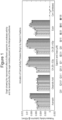
- the graph in figure 1 shows the effect of saponin at various levels for: a control (without protease); oleanolic acid (a triterpenoid backbone without sugar moieties); and saponins within the definition of the invention: the 3x and 4x glycosylated variants of oleanolic acid (OA-28 x 3Gly and OA-28 x4Gly), escin and avenacin.
- the level of saponin at 0 ⁇ m corresponds to the protease only activity.
- the saponins within the scope of the invention improved the protease activity by a statistically significant amount at a saponin level of 5 ⁇ M) and above.
- Avenacin shows major molecular structures in the Avenacin extract
- Oleanolic acid-28-x 4 Gly Structure is similar to Oleanolic acid-28-x 3 Gly (above) but with glycosylation to a 4 sugar chain - the material used was as Oleanolic acid-28-x 3 Gly with an extra identical sugar added to make Oleanolic acid-28-x 4 Gly Escin (showing major molecular structures in the Escin extract)
- Example 3 showing the activity of saponin on cleaning performance
- Table 2 also shows that increasing the dose of saponin does not result in improved cleaning from just the saponin alone.
- a relatively constant cleaning performance due to saponin ( ⁇ 5 dSRI) is observed at concentrations of up to 25mM (table 2).
- the 'add-on' effect of boosted protease activity is noted when using Tea saponin >1mM, which leads to increased values for dSRI ( ⁇ 18).
- Table 2 MTP wash study using wash-levels of Carnival Evity protease (5mg/L) towards aged blood stain (CS01), with varying dose of Tea saponin added.
- a 5mM dose of saponin corresponds to 0.6 wt.% addition in a formulation.
- Example 4 showing the activity of saponin on scaled-up cleaning performance
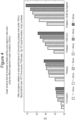
- Figure 2 shows that the saponin effect on increased protease activity is also seen in scaled-up mini-bottle wash studies (63ml).
- the figure is a graph showing the increased protease activity when 5mM of saponin is used. A statistically significant improvement in protease activity is demonstrated at this saponin level.
- proteases are found to be activated by saponins.
- proteases of different active site configuration/mechanism can also be activated by saponin (examples shown are subtilisin-type alkaline proteases with a catalytic serine residue, as well as an acidic protease) ( figure 3 ).
- Figure 3 shows that the increased protease activity using saponin is also seen across many different proteases, both from origin and from protease type.
- Example 6 showing the activity using different saponins at scaled-up mini-bottle (100ml) wash performance across different time points of the wash
Landscapes
- Chemical & Material Sciences (AREA)
- Life Sciences & Earth Sciences (AREA)
- Engineering & Computer Science (AREA)
- Wood Science & Technology (AREA)
- Chemical Kinetics & Catalysis (AREA)
- Oil, Petroleum & Natural Gas (AREA)
- Organic Chemistry (AREA)
- Detergent Compositions (AREA)
- Enzymes And Modification Thereof (AREA)
Claims (13)
- Verfahren zum Verbessern der Proteaseaktivität in einer Reinigungsmittelzusammensetzung, wobei das Verfahren das Einarbeiten von 0,1 bis 40 Gew.-%, vorzugsweise von 0,5 bis 25 Gew.-%, bevorzugter von 0,5 bis 20 Gew.-%, höchst bevorzugt von 0,5 bis 15 Gew.-%, eines Saponins in die Zusammensetzung umfasst,wobei die Reinigungsmittelzusammensetzung von 0,0005 bis 2,5 Gew.-%, vorzugsweise von 0,001 bis 2 Gew.-%, bevorzugter von 0,005 bis 1 Gew.-% eines Proteaseenzyms umfasst;wobei das Saponin ein Triterpenoid-Grundgerüst und ein oder mehrere Zuckereinheiten aufweist, die an das Triterpenoid-Grundgerüst gebunden sind.
- Verfahren nach Anspruch 1, wobei die Reinigungsmittelzusammensetzung eine Haushaltreinigungsmittelzusammensetzung, vorzugsweise eine Wäschereinigungsmittelzusammensetzung, ist.
- Verwendung von Saponin zur Verbesserung der Proteaseaktivität in einer Reinigungsmittelzusammensetzung, vorzugsweise in einer Haushaltsreinigungsmittelzusammensetzung, bevorzugter in einer Wäschereinigungsmittelzusammensetzung, wobei das Saponin ein Triterpenoid-Grundgerüst und ein oder mehrere Zuckereinheiten, die an das Triterpenoid-Grundgerüst gebunden sind, aufweist.
- Verfahren oder Verwendung nach irgendeinem der Ansprüche 1 bis 3, wobei die Protease bakteriellen, pilzlichen oder säugetierischen Ursprungs ist, vorzugsweise bakteriellen oder pilzlichen Ursprungs, höchst bevorzugt bakteriellen Ursprungs.
- Verfahren oder Verwendung nach irgendeinem der Ansprüche 1 bis 4, wobei die Protease aus der folgenden Gruppe ausgewählt ist: Serin-, saure, Metallound Cystein-Proteasen, wobei die Protease vorzugsweise eine Serinprotease und/oder saure Protease ist.
- Verfahren oder Verwendung nach irgendeinem der Ansprüche 1 bis 5, wobei die Protease eine Serinprotease ist, wobei die Serinprotease vorzugsweise eine Serinprotease vom Subtilisin-Typ ist.
- Verfahren oder Verwendung nach irgendeinem der Ansprüche 1 bis 6, wobei das Saponin mindestens zwei Zuckereinheiten aufweist, die an das Triterpenoid-Grundgerüst gebunden sind.
- Verfahren oder Verwendung nach irgendeinem der Ansprüche 1 bis 7, wobei die Reinigungsmittelzusammensetzung 1 bis 60 Gew.-%, vorzugsweise 2,5 bis 50 Gew.-%, bevorzugter 4 bis 40 Gew.-%, höchst bevorzugt 8 bis 35 Gew.-% eines Tensids enthält, wobei das Tensid kein Saponin einbezieht.
- Verfahren oder Verwendung nach irgendeinem der Ansprüche 1 bis 8, wobei die Reinigungsmittelzusammensetzung anionisches und/oder nichtionisches Tensid umfasst, vorzugsweise sowohl anionisches als auch nichtionisches Tensid.
- Verfahren oder Verwendung nach irgendeinem der Ansprüche 1 bis 9, wobei die Zusammensetzung eine Wäschereinigungsmittelzusammensetzung ist, wobei die Wäschereinigungsmittelzusammensetzung vorzugsweise eine Flüssigkeit, ein Gel oder ein Pulver und das Wäschereinigungsmittel bevorzugter ein flüssiges Reinigungsmittel ist.
- Verfahren oder Verwendung nach irgendeinem der Ansprüche 1 bis 10, wobei die Wäschereinigungsmittelzusammensetzung ein alkoxyliertes Polyamin umfasst, vorzugsweise in einer Menge von 0,1 bis 8 Gew.-%, bevorzugter von 0,2 bis 6 Gew.-%, höchst bevorzugt von 0,5 bis 5 Gew.-%, wobei das alkoxylierte Polyamin vorzugsweise ein alkoxyliertes Polyethylenimin und/oder ein alkoxyliertes Polypropylenimin ist, wobei die Alkoxylierung bevorzugter eine Ethoxylierung oder Propoxylierung oder eine Mischung von beiden ist.
- Verfahren oder Verwendung nach irgendeinem der Ansprüche 1 bis 11, wobei die Wäschereinigungsmittelzusammensetzung ein Soil-Release-Polymer umfasst, vorzugsweise in einer Menge von 0,1 bis 8 Gew.-%, bevorzugter von 0,2 bis 6 Gew.-%, höchst bevorzugt von 0,5 bis 5 Gew.-%, wobei das Soil-Release-Polymer ein Polyester-Soil-Release-Polymer ist.
- Verfahren oder Verwendung nach irgendeinem der Ansprüche 1 bis 12, zusätzlich umfassend ein weiteres Enzym, ausgewählt aus der Gruppe, bestehend aus: Lipasen, Cellulasen, alpha-Amylasen, Peroxidasen/Oxidasen, Pektatlyasen und/oder Mannanasen.
Applications Claiming Priority (2)
| Application Number | Priority Date | Filing Date | Title |
|---|---|---|---|
| EP20178738 | 2020-06-08 | ||
| PCT/EP2021/065145 WO2021249927A1 (en) | 2020-06-08 | 2021-06-07 | Method of improving protease activity |
Publications (2)
| Publication Number | Publication Date |
|---|---|
| EP4162018A1 EP4162018A1 (de) | 2023-04-12 |
| EP4162018B1 true EP4162018B1 (de) | 2024-01-31 |
Family
ID=71069770
Family Applications (1)
| Application Number | Title | Priority Date | Filing Date |
|---|---|---|---|
| EP21728952.9A Revoked EP4162018B1 (de) | 2020-06-08 | 2021-06-07 | Reinigungsmittelzusammensetzung |
Country Status (5)
| Country | Link |
|---|---|
| EP (1) | EP4162018B1 (de) |
| CN (1) | CN115698246A (de) |
| BR (1) | BR112022024537A2 (de) |
| WO (1) | WO2021249927A1 (de) |
| ZA (1) | ZA202212914B (de) |
Families Citing this family (2)
| Publication number | Priority date | Publication date | Assignee | Title |
|---|---|---|---|---|
| WO2024119298A1 (en) | 2022-12-05 | 2024-06-13 | The Procter & Gamble Company | Fabric and home care composition comprising a polyalkylenecarbonate compound |
| CN120113753A (zh) * | 2025-02-26 | 2025-06-10 | 山东新希望六和集团有限公司 | 一种提高肠道消化酶活性的组合物及其应用 |
Citations (6)
| Publication number | Priority date | Publication date | Assignee | Title |
|---|---|---|---|---|
| WO1999057236A1 (en) | 1998-05-04 | 1999-11-11 | The Procter & Gamble Company | Application of semi-synthetic saponins in the reduction of shrinkage on fine fabrics |
| CN106591013A (zh) | 2016-11-30 | 2017-04-26 | 大连百奥泰科技有限公司 | 一种生物洗涤剂组合物 |
| WO2017162378A1 (en) | 2016-03-21 | 2017-09-28 | Unilever Plc | Laundry detergent composition |
| WO2018041686A1 (de) | 2016-09-01 | 2018-03-08 | Henkel Ag & Co. Kgaa | Waschmittel mit saponin |
| CN108641832A (zh) | 2018-07-01 | 2018-10-12 | 田波 | 一种加酶护色洗衣液 |
| CN111234954A (zh) | 2020-03-06 | 2020-06-05 | 广州市百爱神生物科技有限公司 | 一种含植物萃取物微胶囊留香母婴洗涤剂及其制备方法 |
Family Cites Families (77)
| Publication number | Priority date | Publication date | Assignee | Title |
|---|---|---|---|---|
| GB1296839A (de) | 1969-05-29 | 1972-11-22 | ||
| GB1372034A (en) | 1970-12-31 | 1974-10-30 | Unilever Ltd | Detergent compositions |
| DK187280A (da) | 1980-04-30 | 1981-10-31 | Novo Industri As | Ruhedsreducerende middel til et fuldvaskemiddel fuldvaskemiddel og fuldvaskemetode |
| US4760025A (en) | 1984-05-29 | 1988-07-26 | Genencor, Inc. | Modified enzymes and methods for making same |
| US4933287A (en) | 1985-08-09 | 1990-06-12 | Gist-Brocades N.V. | Novel lipolytic enzymes and their use in detergent compositions |
| EP0258068B1 (de) | 1986-08-29 | 1994-08-31 | Novo Nordisk A/S | Enzymhaltiger Reinigungsmittelzusatz |
| EP0305216B1 (de) | 1987-08-28 | 1995-08-02 | Novo Nordisk A/S | Rekombinante Humicola-Lipase und Verfahren zur Herstellung von rekombinanten Humicola-Lipasen |
| DK6488D0 (da) | 1988-01-07 | 1988-01-07 | Novo Industri As | Enzymer |
| EP0394352B1 (de) | 1988-01-07 | 1992-03-11 | Novo Nordisk A/S | Enzymatisches waschmittel |
| JP3079276B2 (ja) | 1988-02-28 | 2000-08-21 | 天野製薬株式会社 | 組換え体dna、それを含むシュードモナス属菌及びそれを用いたリパーゼの製造法 |
| EP0406314B1 (de) | 1988-03-24 | 1993-12-01 | Novo Nordisk A/S | Cellulosezubereitung |
| US5776757A (en) | 1988-03-24 | 1998-07-07 | Novo Nordisk A/S | Fungal cellulase composition containing alkaline CMC-endoglucanase and essentially no cellobiohydrolase and method of making thereof |
| CA2001927C (en) | 1988-11-03 | 1999-12-21 | Graham Thomas Brown | Aluminosilicates and detergent compositions |
| EP0528828B2 (de) | 1990-04-14 | 1997-12-03 | Genencor International GmbH | Alkalische bacillus-lipasen, hierfür codierende dna-sequenzen sowie bacilli, die diese lipasen produzieren |
| DK0548228T3 (da) | 1990-09-13 | 1999-05-10 | Novo Nordisk As | Lipasevarianter |
| US5292796A (en) | 1991-04-02 | 1994-03-08 | Minnesota Mining And Manufacturing Company | Urea-aldehyde condensates and melamine derivatives comprising fluorochemical oligomers |
| HU213044B (en) | 1991-04-30 | 1997-01-28 | Procter & Gamble | Built liquid detergents with boric-polyol complex to inhibit proteolytic enzyme with additives improving detergent effect |
| EP0511456A1 (de) | 1991-04-30 | 1992-11-04 | The Procter & Gamble Company | Flüssiges Reinigungsmittel mit einem aromatischen Boratester zur Inhibierung des proteolytischen Enzyms |
| DK28792D0 (da) | 1992-03-04 | 1992-03-04 | Novo Nordisk As | Nyt enzym |
| DK72992D0 (da) | 1992-06-01 | 1992-06-01 | Novo Nordisk As | Enzym |
| AU673078B2 (en) | 1993-04-27 | 1996-10-24 | Genencor International, Inc. | New lipase variants for use in detergent applications |
| DK52393D0 (de) | 1993-05-05 | 1993-05-05 | Novo Nordisk As | |
| JP2859520B2 (ja) | 1993-08-30 | 1999-02-17 | ノボ ノルディスク アクティーゼルスカブ | リパーゼ及びそれを生産する微生物及びリパーゼ製造方法及びリパーゼ含有洗剤組成物 |
| BR9407808A (pt) | 1993-10-13 | 1997-05-06 | Novo Nordisk As | Variante de peroxidase com melhorada estabilidade para peróxido de hidrogenio em condições alcalinas composição de alvejamento e composição detergente |
| ES2287931T3 (es) | 1993-10-14 | 2007-12-16 | THE PROCTER & GAMBLE COMPANY | Composiciones limpiadoras que contienen proteasa. |
| JPH07143883A (ja) | 1993-11-24 | 1995-06-06 | Showa Denko Kk | リパーゼ遺伝子及び変異体リパーゼ |
| AU1806795A (en) | 1994-02-22 | 1995-09-04 | Novo Nordisk A/S | A method of preparing a variant of a lipolytic enzyme |
| JPH09510617A (ja) | 1994-03-29 | 1997-10-28 | ノボ ノルディスク アクティーゼルスカブ | アルカリ性バチルスアミラーゼ |
| EP0755442B1 (de) | 1994-05-04 | 2002-10-09 | Genencor International, Inc. | Lipasen mit verbesserten tensiostabilitaet |
| BE1008998A3 (fr) | 1994-10-14 | 1996-10-01 | Solvay | Lipase, microorganisme la produisant, procede de preparation de cette lipase et utilisations de celle-ci. |
| CN1167503A (zh) | 1994-10-26 | 1997-12-10 | 诺沃挪第克公司 | 一种具有脂解活性的酶 |
| JPH08228778A (ja) | 1995-02-27 | 1996-09-10 | Showa Denko Kk | 新規なリパーゼ遺伝子及びそれを用いたリパーゼの製造方法 |
| WO1996029397A1 (en) | 1995-03-17 | 1996-09-26 | Novo Nordisk A/S | Novel endoglucanases |
| JP4307549B2 (ja) | 1995-07-14 | 2009-08-05 | ノボザイムス アクティーゼルスカブ | 脂肪分解活性を有する修飾された酵素 |
| CN100362100C (zh) | 1996-09-17 | 2008-01-16 | 诺沃奇梅兹有限公司 | 纤维素酶变体 |
| CA2265734A1 (en) | 1996-10-08 | 1998-04-16 | Novo Nordisk A/S | Diaminobenzoic acid derivatives as dye precursors |
| AR015977A1 (es) | 1997-10-23 | 2001-05-30 | Genencor Int | Variantes de proteasa multiplemente substituida con carga neta alterada para su empleo en detergentes |
| US6355249B2 (en) | 1998-04-17 | 2002-03-12 | Her Majesty The Queen In Right Of Canada, As Represented By The Minister Of Agriculture And Agri-Food Canada | Process for recovery and purification of saponins and sapogenins from quinoa (Chenopodium quinoa) |
| ES2532606T3 (es) | 1999-03-31 | 2015-03-30 | Novozymes A/S | Polipéptidos con actividad de alfa-amilasa alcalina y ácidos nucleicos que los codifican |
| AU6820000A (en) | 1999-08-31 | 2001-03-26 | Novozymes A/S | Novel proteases and variants thereof |
| CN1337553A (zh) | 2000-08-05 | 2002-02-27 | 李海泉 | 地下观光游乐园 |
| WO2002016547A2 (en) | 2000-08-21 | 2002-02-28 | Novozymes A/S | Subtilase enzymes |
| DE10162728A1 (de) | 2001-12-20 | 2003-07-10 | Henkel Kgaa | Neue Alkalische Protease aus Bacillus gibsonii (DSM 14393) und Wasch-und Reinigungsmittel enthaltend diese neue Alkalische Protease |
| GB0314210D0 (en) | 2003-06-18 | 2003-07-23 | Unilever Plc | Laundry treatment compositions |
| EP1678296B1 (de) | 2003-10-23 | 2011-07-13 | Novozymes A/S | Protease mit verbesserter stabilität in detergentien |
| CA2546451A1 (en) | 2003-11-19 | 2005-06-09 | Genencor International, Inc. | Serine proteases, nucleic acids encoding serine enzymes and vectors and host cells incorporating same |
| GB0420203D0 (en) | 2004-09-11 | 2004-10-13 | Unilever Plc | Laundry treatment compositions |
| GB0421145D0 (en) | 2004-09-23 | 2004-10-27 | Unilever Plc | Laundry treatment compositions |
| WO2006032397A1 (en) | 2004-09-23 | 2006-03-30 | Unilever Plc | Laundry treatment compositions |
| DE102004052007B4 (de) | 2004-10-25 | 2007-12-06 | Müller Weingarten AG | Antriebssystem einer Umformpresse |
| DE202006007594U1 (de) * | 2006-05-12 | 2006-07-13 | Remsgold-Chemie Gmbh & Co | Reinigungsmittel |
| BRPI0706277B1 (pt) | 2006-08-10 | 2016-11-01 | Unilever Nv | composição de tratamento para lavagem de roupa, e, método doméstico de tratamento de produto têxtil |
| PL2104729T3 (pl) | 2007-01-19 | 2011-04-29 | Procter & Gamble | Kompozycja do prania zawierająca środek wybielający do substratów celulozowych |
| EP2152846B1 (de) | 2007-05-18 | 2012-05-16 | Unilever PLC | Triphendioxazinfarbstoffe |
| DE102007038031A1 (de) | 2007-08-10 | 2009-06-04 | Henkel Ag & Co. Kgaa | Mittel enthaltend Proteasen |
| JP5405488B2 (ja) | 2008-01-04 | 2014-02-05 | ザ プロクター アンド ギャンブル カンパニー | 酵素及び布地色調剤を含む組成物 |
| EP2085070A1 (de) | 2008-01-11 | 2009-08-05 | Procter & Gamble International Operations SA. | Reinigungs- und/oder Behandlungszusammensetzungen |
| US20090217464A1 (en) | 2008-02-29 | 2009-09-03 | Philip Frank Souter | Detergent composition comprising lipase |
| US20090217463A1 (en) | 2008-02-29 | 2009-09-03 | Philip Frank Souter | Detergent composition comprising lipase |
| WO2009132870A1 (en) | 2008-05-02 | 2009-11-05 | Unilever Plc | Reduced spotting granules |
| MX2010012769A (es) | 2008-05-20 | 2011-03-02 | Unilever Nv | Composicion matizante. |
| EP4545638A3 (de) | 2008-06-06 | 2025-07-16 | The Procter & Gamble Company | Waschmittelzusammensetzung mit einer variante einer xyloglucanase der familie 44 |
| WO2010099997A1 (en) | 2009-03-05 | 2010-09-10 | Unilever Plc | Dye radical initiators |
| BRPI1013881B1 (pt) | 2009-03-12 | 2023-10-17 | Unilever Ip Holdings B.V. | Composição detergente, e, método doméstico de tratamento de tecido |
| WO2010148624A1 (en) | 2009-06-26 | 2010-12-29 | Unilever Plc | Dye polymers |
| US20120101018A1 (en) | 2010-10-22 | 2012-04-26 | Gregory Scot Miracle | Bis-azo colorants for use as bluing agents |
| WO2012054058A1 (en) | 2010-10-22 | 2012-04-26 | The Procter & Gamble Company | Bis-azo colorants for use as bluing agents |
| EP2630197B1 (de) | 2010-10-22 | 2019-03-06 | Milliken & Company | Bis-azo-farbstoffe zur verwendung als blaufärbemittel |
| EP2638142B1 (de) | 2010-11-12 | 2017-05-10 | The Procter and Gamble Company | Thiophenazofarbstoffe und diese enthaltende wäschepflegezusammensetzungen |
| BR112014023153B1 (pt) | 2012-03-19 | 2021-02-23 | Milliken & Company | corantes de carboxilato |
| EP2834340B1 (de) | 2012-04-03 | 2016-06-29 | The Procter and Gamble Company | Waschmittelzusammensetzung mit wasserlöslicher phthalocyaninverbindung |
| DE102012016462A1 (de) | 2012-08-18 | 2014-02-20 | Clariant International Ltd. | Verwendung von Polyestern in Wasch- und Reinigungsmitteln |
| US9771547B2 (en) * | 2014-03-27 | 2017-09-26 | The Procter & Gamble Company | Cleaning compositions containing a polyetheramine |
| EP2966160A1 (de) | 2014-07-09 | 2016-01-13 | Clariant International Ltd. | Lagerstabile Zusammensetzungen mit schmutzablösenden Polymeren |
| RU2018106915A (ru) | 2015-07-27 | 2019-08-27 | Минн-Дак Фармерз Кооперэтив | Способ экстракции сапонинов из сельскохозяйственных продуктов |
| CN109576070A (zh) * | 2017-09-28 | 2019-04-05 | 刘琼 | 一种多功能洗衣液 |
| CN108998275B (zh) * | 2018-08-03 | 2022-05-24 | 广州市南大实业有限公司 | 一种高水溶性洗衣粉组合物及其制备方法 |
-
2021
- 2021-06-07 EP EP21728952.9A patent/EP4162018B1/de not_active Revoked
- 2021-06-07 BR BR112022024537A patent/BR112022024537A2/pt not_active Application Discontinuation
- 2021-06-07 CN CN202180040943.5A patent/CN115698246A/zh active Pending
- 2021-06-07 WO PCT/EP2021/065145 patent/WO2021249927A1/en not_active Ceased
-
2022
- 2022-11-28 ZA ZA2022/12914A patent/ZA202212914B/en unknown
Patent Citations (6)
| Publication number | Priority date | Publication date | Assignee | Title |
|---|---|---|---|---|
| WO1999057236A1 (en) | 1998-05-04 | 1999-11-11 | The Procter & Gamble Company | Application of semi-synthetic saponins in the reduction of shrinkage on fine fabrics |
| WO2017162378A1 (en) | 2016-03-21 | 2017-09-28 | Unilever Plc | Laundry detergent composition |
| WO2018041686A1 (de) | 2016-09-01 | 2018-03-08 | Henkel Ag & Co. Kgaa | Waschmittel mit saponin |
| CN106591013A (zh) | 2016-11-30 | 2017-04-26 | 大连百奥泰科技有限公司 | 一种生物洗涤剂组合物 |
| CN108641832A (zh) | 2018-07-01 | 2018-10-12 | 田波 | 一种加酶护色洗衣液 |
| CN111234954A (zh) | 2020-03-06 | 2020-06-05 | 广州市百爱神生物科技有限公司 | 一种含植物萃取物微胶囊留香母婴洗涤剂及其制备方法 |
Non-Patent Citations (1)
| Title |
|---|
| Y OKADA, K TAKAHASHI, T OKUYAMA, S SHIBATA: "Gleditsia Saponins. II. Locations of Monoterpenyl Moieties in the Molecule of Gleditsia Saponin C (GS-C)", PLANTA MEDICA, THIEME VERLAG, DE, vol. 46, no. 2, 1 October 1982 (1982-10-01), DE , pages 74 - 77, XP009558857, ISSN: 0032-0943, DOI: 10.1055/s-2007-970024 |
Also Published As
| Publication number | Publication date |
|---|---|
| CN115698246A (zh) | 2023-02-03 |
| ZA202212914B (en) | 2024-04-24 |
| WO2021249927A1 (en) | 2021-12-16 |
| EP4162018A1 (de) | 2023-04-12 |
| BR112022024537A2 (pt) | 2022-12-27 |
Similar Documents
| Publication | Publication Date | Title |
|---|---|---|
| EP3649222B1 (de) | Bleichungszusammensetzung | |
| EP3884025B1 (de) | Reinigungsmittelzusammensetzung | |
| TR201906232T4 (tr) | Çamaşır için deterjan bileşimi. | |
| EP4162018B1 (de) | Reinigungsmittelzusammensetzung | |
| EP3884024B1 (de) | Reinigungsmittelzusammensetzung | |
| EP3990603B1 (de) | Reinigungsmittelzusammensetzung | |
| EP3884026B1 (de) | Reinigungsmittelzusammensetzung | |
| EP3884022B1 (de) | Reinigungsmittelzusammensetzung | |
| US20230112279A1 (en) | Detergent composition | |
| EP3853330B1 (de) | Reinigungsmittelzusammensetzung | |
| WO2021185956A1 (en) | Detergent composition | |
| EP3417040B1 (de) | Bleichungszusammensetzung | |
| EP3884023B1 (de) | Reinigungsmittelzusammensetzung | |
| EP3649221B1 (de) | Wäschereinigungszusammensetzung | |
| EP3417039B1 (de) | Bleichungszusammensetzung | |
| EP3417042B1 (de) | Bleichungszusammensetzung |
Legal Events
| Date | Code | Title | Description |
|---|---|---|---|
| STAA | Information on the status of an ep patent application or granted ep patent |
Free format text: STATUS: UNKNOWN |
|
| STAA | Information on the status of an ep patent application or granted ep patent |
Free format text: STATUS: THE INTERNATIONAL PUBLICATION HAS BEEN MADE |
|
| PUAI | Public reference made under article 153(3) epc to a published international application that has entered the european phase |
Free format text: ORIGINAL CODE: 0009012 |
|
| STAA | Information on the status of an ep patent application or granted ep patent |
Free format text: STATUS: REQUEST FOR EXAMINATION WAS MADE |
|
| 17P | Request for examination filed |
Effective date: 20221130 |
|
| AK | Designated contracting states |
Kind code of ref document: A1 Designated state(s): AL AT BE BG CH CY CZ DE DK EE ES FI FR GB GR HR HU IE IS IT LI LT LU LV MC MK MT NL NO PL PT RO RS SE SI SK SM TR |
|
| GRAP | Despatch of communication of intention to grant a patent |
Free format text: ORIGINAL CODE: EPIDOSNIGR1 |
|
| STAA | Information on the status of an ep patent application or granted ep patent |
Free format text: STATUS: GRANT OF PATENT IS INTENDED |
|
| GRAJ | Information related to disapproval of communication of intention to grant by the applicant or resumption of examination proceedings by the epo deleted |
Free format text: ORIGINAL CODE: EPIDOSDIGR1 |
|
| STAA | Information on the status of an ep patent application or granted ep patent |
Free format text: STATUS: REQUEST FOR EXAMINATION WAS MADE |
|
| DAV | Request for validation of the european patent (deleted) | ||
| DAX | Request for extension of the european patent (deleted) | ||
| INTG | Intention to grant announced |
Effective date: 20230719 |
|
| INTC | Intention to grant announced (deleted) | ||
| GRAP | Despatch of communication of intention to grant a patent |
Free format text: ORIGINAL CODE: EPIDOSNIGR1 |
|
| STAA | Information on the status of an ep patent application or granted ep patent |
Free format text: STATUS: GRANT OF PATENT IS INTENDED |
|
| INTG | Intention to grant announced |
Effective date: 20231004 |
|
| GRAS | Grant fee paid |
Free format text: ORIGINAL CODE: EPIDOSNIGR3 |
|
| GRAA | (expected) grant |
Free format text: ORIGINAL CODE: 0009210 |
|
| STAA | Information on the status of an ep patent application or granted ep patent |
Free format text: STATUS: THE PATENT HAS BEEN GRANTED |
|
| P01 | Opt-out of the competence of the unified patent court (upc) registered |
Effective date: 20231208 |
|
| AK | Designated contracting states |
Kind code of ref document: B1 Designated state(s): AL AT BE BG CH CY CZ DE DK EE ES FI FR GB GR HR HU IE IS IT LI LT LU LV MC MK MT NL NO PL PT RO RS SE SI SK SM TR |
|
| REG | Reference to a national code |
Ref country code: GB Ref legal event code: FG4D Ref country code: CH Ref legal event code: EP |
|
| REG | Reference to a national code |
Ref country code: DE Ref legal event code: R096 Ref document number: 602021009058 Country of ref document: DE |
|
| REG | Reference to a national code |
Ref country code: IE Ref legal event code: FG4D |
|
| REG | Reference to a national code |
Ref country code: LT Ref legal event code: MG9D |
|
| REG | Reference to a national code |
Ref country code: NL Ref legal event code: MP Effective date: 20240131 |
|
| PG25 | Lapsed in a contracting state [announced via postgrant information from national office to epo] |
Ref country code: IS Free format text: LAPSE BECAUSE OF FAILURE TO SUBMIT A TRANSLATION OF THE DESCRIPTION OR TO PAY THE FEE WITHIN THE PRESCRIBED TIME-LIMIT Effective date: 20240531 |
|
| PG25 | Lapsed in a contracting state [announced via postgrant information from national office to epo] |
Ref country code: LT Free format text: LAPSE BECAUSE OF FAILURE TO SUBMIT A TRANSLATION OF THE DESCRIPTION OR TO PAY THE FEE WITHIN THE PRESCRIBED TIME-LIMIT Effective date: 20240131 |
|
| PG25 | Lapsed in a contracting state [announced via postgrant information from national office to epo] |
Ref country code: GR Free format text: LAPSE BECAUSE OF FAILURE TO SUBMIT A TRANSLATION OF THE DESCRIPTION OR TO PAY THE FEE WITHIN THE PRESCRIBED TIME-LIMIT Effective date: 20240501 |
|
| REG | Reference to a national code |
Ref country code: AT Ref legal event code: MK05 Ref document number: 1653886 Country of ref document: AT Kind code of ref document: T Effective date: 20240131 |
|
| PG25 | Lapsed in a contracting state [announced via postgrant information from national office to epo] |
Ref country code: NL Free format text: LAPSE BECAUSE OF FAILURE TO SUBMIT A TRANSLATION OF THE DESCRIPTION OR TO PAY THE FEE WITHIN THE PRESCRIBED TIME-LIMIT Effective date: 20240131 Ref country code: RS Free format text: LAPSE BECAUSE OF FAILURE TO SUBMIT A TRANSLATION OF THE DESCRIPTION OR TO PAY THE FEE WITHIN THE PRESCRIBED TIME-LIMIT Effective date: 20240430 Ref country code: HR Free format text: LAPSE BECAUSE OF FAILURE TO SUBMIT A TRANSLATION OF THE DESCRIPTION OR TO PAY THE FEE WITHIN THE PRESCRIBED TIME-LIMIT Effective date: 20240131 |
|
| PG25 | Lapsed in a contracting state [announced via postgrant information from national office to epo] |
Ref country code: ES Free format text: LAPSE BECAUSE OF FAILURE TO SUBMIT A TRANSLATION OF THE DESCRIPTION OR TO PAY THE FEE WITHIN THE PRESCRIBED TIME-LIMIT Effective date: 20240131 |
|
| PG25 | Lapsed in a contracting state [announced via postgrant information from national office to epo] |
Ref country code: AT Free format text: LAPSE BECAUSE OF FAILURE TO SUBMIT A TRANSLATION OF THE DESCRIPTION OR TO PAY THE FEE WITHIN THE PRESCRIBED TIME-LIMIT Effective date: 20240131 |
|
| PG25 | Lapsed in a contracting state [announced via postgrant information from national office to epo] |
Ref country code: RS Free format text: LAPSE BECAUSE OF FAILURE TO SUBMIT A TRANSLATION OF THE DESCRIPTION OR TO PAY THE FEE WITHIN THE PRESCRIBED TIME-LIMIT Effective date: 20240430 Ref country code: NO Free format text: LAPSE BECAUSE OF FAILURE TO SUBMIT A TRANSLATION OF THE DESCRIPTION OR TO PAY THE FEE WITHIN THE PRESCRIBED TIME-LIMIT Effective date: 20240430 Ref country code: NL Free format text: LAPSE BECAUSE OF FAILURE TO SUBMIT A TRANSLATION OF THE DESCRIPTION OR TO PAY THE FEE WITHIN THE PRESCRIBED TIME-LIMIT Effective date: 20240131 Ref country code: LT Free format text: LAPSE BECAUSE OF FAILURE TO SUBMIT A TRANSLATION OF THE DESCRIPTION OR TO PAY THE FEE WITHIN THE PRESCRIBED TIME-LIMIT Effective date: 20240131 Ref country code: IS Free format text: LAPSE BECAUSE OF FAILURE TO SUBMIT A TRANSLATION OF THE DESCRIPTION OR TO PAY THE FEE WITHIN THE PRESCRIBED TIME-LIMIT Effective date: 20240531 Ref country code: HR Free format text: LAPSE BECAUSE OF FAILURE TO SUBMIT A TRANSLATION OF THE DESCRIPTION OR TO PAY THE FEE WITHIN THE PRESCRIBED TIME-LIMIT Effective date: 20240131 Ref country code: GR Free format text: LAPSE BECAUSE OF FAILURE TO SUBMIT A TRANSLATION OF THE DESCRIPTION OR TO PAY THE FEE WITHIN THE PRESCRIBED TIME-LIMIT Effective date: 20240501 Ref country code: FI Free format text: LAPSE BECAUSE OF FAILURE TO SUBMIT A TRANSLATION OF THE DESCRIPTION OR TO PAY THE FEE WITHIN THE PRESCRIBED TIME-LIMIT Effective date: 20240131 Ref country code: ES Free format text: LAPSE BECAUSE OF FAILURE TO SUBMIT A TRANSLATION OF THE DESCRIPTION OR TO PAY THE FEE WITHIN THE PRESCRIBED TIME-LIMIT Effective date: 20240131 Ref country code: BG Free format text: LAPSE BECAUSE OF FAILURE TO SUBMIT A TRANSLATION OF THE DESCRIPTION OR TO PAY THE FEE WITHIN THE PRESCRIBED TIME-LIMIT Effective date: 20240131 Ref country code: AT Free format text: LAPSE BECAUSE OF FAILURE TO SUBMIT A TRANSLATION OF THE DESCRIPTION OR TO PAY THE FEE WITHIN THE PRESCRIBED TIME-LIMIT Effective date: 20240131 |
|
| PG25 | Lapsed in a contracting state [announced via postgrant information from national office to epo] |
Ref country code: PT Free format text: LAPSE BECAUSE OF FAILURE TO SUBMIT A TRANSLATION OF THE DESCRIPTION OR TO PAY THE FEE WITHIN THE PRESCRIBED TIME-LIMIT Effective date: 20240531 Ref country code: PL Free format text: LAPSE BECAUSE OF FAILURE TO SUBMIT A TRANSLATION OF THE DESCRIPTION OR TO PAY THE FEE WITHIN THE PRESCRIBED TIME-LIMIT Effective date: 20240131 |
|
| PG25 | Lapsed in a contracting state [announced via postgrant information from national office to epo] |
Ref country code: SE Free format text: LAPSE BECAUSE OF FAILURE TO SUBMIT A TRANSLATION OF THE DESCRIPTION OR TO PAY THE FEE WITHIN THE PRESCRIBED TIME-LIMIT Effective date: 20240131 Ref country code: PT Free format text: LAPSE BECAUSE OF FAILURE TO SUBMIT A TRANSLATION OF THE DESCRIPTION OR TO PAY THE FEE WITHIN THE PRESCRIBED TIME-LIMIT Effective date: 20240531 Ref country code: PL Free format text: LAPSE BECAUSE OF FAILURE TO SUBMIT A TRANSLATION OF THE DESCRIPTION OR TO PAY THE FEE WITHIN THE PRESCRIBED TIME-LIMIT Effective date: 20240131 Ref country code: LV Free format text: LAPSE BECAUSE OF FAILURE TO SUBMIT A TRANSLATION OF THE DESCRIPTION OR TO PAY THE FEE WITHIN THE PRESCRIBED TIME-LIMIT Effective date: 20240131 |
|
| PG25 | Lapsed in a contracting state [announced via postgrant information from national office to epo] |
Ref country code: DK Free format text: LAPSE BECAUSE OF FAILURE TO SUBMIT A TRANSLATION OF THE DESCRIPTION OR TO PAY THE FEE WITHIN THE PRESCRIBED TIME-LIMIT Effective date: 20240131 |
|
| PG25 | Lapsed in a contracting state [announced via postgrant information from national office to epo] |
Ref country code: SM Free format text: LAPSE BECAUSE OF FAILURE TO SUBMIT A TRANSLATION OF THE DESCRIPTION OR TO PAY THE FEE WITHIN THE PRESCRIBED TIME-LIMIT Effective date: 20240131 |
|
| PG25 | Lapsed in a contracting state [announced via postgrant information from national office to epo] |
Ref country code: EE Free format text: LAPSE BECAUSE OF FAILURE TO SUBMIT A TRANSLATION OF THE DESCRIPTION OR TO PAY THE FEE WITHIN THE PRESCRIBED TIME-LIMIT Effective date: 20240131 Ref country code: CZ Free format text: LAPSE BECAUSE OF FAILURE TO SUBMIT A TRANSLATION OF THE DESCRIPTION OR TO PAY THE FEE WITHIN THE PRESCRIBED TIME-LIMIT Effective date: 20240131 |
|
| REG | Reference to a national code |
Ref country code: DE Ref legal event code: R026 Ref document number: 602021009058 Country of ref document: DE |
|
| PG25 | Lapsed in a contracting state [announced via postgrant information from national office to epo] |
Ref country code: SK Free format text: LAPSE BECAUSE OF FAILURE TO SUBMIT A TRANSLATION OF THE DESCRIPTION OR TO PAY THE FEE WITHIN THE PRESCRIBED TIME-LIMIT Effective date: 20240131 |
|
| PG25 | Lapsed in a contracting state [announced via postgrant information from national office to epo] |
Ref country code: SM Free format text: LAPSE BECAUSE OF FAILURE TO SUBMIT A TRANSLATION OF THE DESCRIPTION OR TO PAY THE FEE WITHIN THE PRESCRIBED TIME-LIMIT Effective date: 20240131 Ref country code: SK Free format text: LAPSE BECAUSE OF FAILURE TO SUBMIT A TRANSLATION OF THE DESCRIPTION OR TO PAY THE FEE WITHIN THE PRESCRIBED TIME-LIMIT Effective date: 20240131 Ref country code: RO Free format text: LAPSE BECAUSE OF FAILURE TO SUBMIT A TRANSLATION OF THE DESCRIPTION OR TO PAY THE FEE WITHIN THE PRESCRIBED TIME-LIMIT Effective date: 20240131 Ref country code: EE Free format text: LAPSE BECAUSE OF FAILURE TO SUBMIT A TRANSLATION OF THE DESCRIPTION OR TO PAY THE FEE WITHIN THE PRESCRIBED TIME-LIMIT Effective date: 20240131 Ref country code: DK Free format text: LAPSE BECAUSE OF FAILURE TO SUBMIT A TRANSLATION OF THE DESCRIPTION OR TO PAY THE FEE WITHIN THE PRESCRIBED TIME-LIMIT Effective date: 20240131 Ref country code: CZ Free format text: LAPSE BECAUSE OF FAILURE TO SUBMIT A TRANSLATION OF THE DESCRIPTION OR TO PAY THE FEE WITHIN THE PRESCRIBED TIME-LIMIT Effective date: 20240131 |
|
| PLBI | Opposition filed |
Free format text: ORIGINAL CODE: 0009260 |
|
| PLAX | Notice of opposition and request to file observation + time limit sent |
Free format text: ORIGINAL CODE: EPIDOSNOBS2 |
|
| 26 | Opposition filed |
Opponent name: HENKEL AG & CO. KGAA Effective date: 20241028 |
|
| PG25 | Lapsed in a contracting state [announced via postgrant information from national office to epo] |
Ref country code: IT Free format text: LAPSE BECAUSE OF FAILURE TO SUBMIT A TRANSLATION OF THE DESCRIPTION OR TO PAY THE FEE WITHIN THE PRESCRIBED TIME-LIMIT Effective date: 20240131 |
|
| PG25 | Lapsed in a contracting state [announced via postgrant information from national office to epo] |
Ref country code: IT Free format text: LAPSE BECAUSE OF FAILURE TO SUBMIT A TRANSLATION OF THE DESCRIPTION OR TO PAY THE FEE WITHIN THE PRESCRIBED TIME-LIMIT Effective date: 20240131 |
|
| REG | Reference to a national code |
Ref country code: DE Ref legal event code: R119 Ref document number: 602021009058 Country of ref document: DE |
|
| PG25 | Lapsed in a contracting state [announced via postgrant information from national office to epo] |
Ref country code: MC Free format text: LAPSE BECAUSE OF FAILURE TO SUBMIT A TRANSLATION OF THE DESCRIPTION OR TO PAY THE FEE WITHIN THE PRESCRIBED TIME-LIMIT Effective date: 20240131 |
|
| REG | Reference to a national code |
Ref country code: CH Ref legal event code: PL |
|
| PG25 | Lapsed in a contracting state [announced via postgrant information from national office to epo] |
Ref country code: LU Free format text: LAPSE BECAUSE OF NON-PAYMENT OF DUE FEES Effective date: 20240607 |
|
| PG25 | Lapsed in a contracting state [announced via postgrant information from national office to epo] |
Ref country code: DE Free format text: LAPSE BECAUSE OF NON-PAYMENT OF DUE FEES Effective date: 20250101 |
|
| PG25 | Lapsed in a contracting state [announced via postgrant information from national office to epo] |
Ref country code: IE Free format text: LAPSE BECAUSE OF NON-PAYMENT OF DUE FEES Effective date: 20240607 |
|
| PG25 | Lapsed in a contracting state [announced via postgrant information from national office to epo] |
Ref country code: CH Free format text: LAPSE BECAUSE OF NON-PAYMENT OF DUE FEES Effective date: 20240630 Ref country code: SI Free format text: LAPSE BECAUSE OF FAILURE TO SUBMIT A TRANSLATION OF THE DESCRIPTION OR TO PAY THE FEE WITHIN THE PRESCRIBED TIME-LIMIT Effective date: 20240131 Ref country code: BE Free format text: LAPSE BECAUSE OF NON-PAYMENT OF DUE FEES Effective date: 20240630 |
|
| PG25 | Lapsed in a contracting state [announced via postgrant information from national office to epo] |
Ref country code: FR Free format text: LAPSE BECAUSE OF NON-PAYMENT OF DUE FEES Effective date: 20240630 |
|
| REG | Reference to a national code |
Ref country code: BE Ref legal event code: MM Effective date: 20240630 |
|
| RDAF | Communication despatched that patent is revoked |
Free format text: ORIGINAL CODE: EPIDOSNREV1 |
|
| REG | Reference to a national code |
Ref country code: DE Ref legal event code: R064 Ref document number: 602021009058 Country of ref document: DE Ref country code: DE Ref legal event code: R103 Ref document number: 602021009058 Country of ref document: DE |
|
| RDAG | Patent revoked |
Free format text: ORIGINAL CODE: 0009271 |
|
| STAA | Information on the status of an ep patent application or granted ep patent |
Free format text: STATUS: PATENT REVOKED |
|
| REG | Reference to a national code |
Ref country code: CH Ref legal event code: PL |
|
| 27W | Patent revoked |
Effective date: 20250515 |
|
| GBPR | Gb: patent revoked under art. 102 of the ep convention designating the uk as contracting state |
Effective date: 20250515 |
|
| PG25 | Lapsed in a contracting state [announced via postgrant information from national office to epo] |
Ref country code: CY Free format text: LAPSE BECAUSE OF FAILURE TO SUBMIT A TRANSLATION OF THE DESCRIPTION OR TO PAY THE FEE WITHIN THE PRESCRIBED TIME-LIMIT; INVALID AB INITIO Effective date: 20210607 |