EP4164199A1 - Fahrzeugkommunikationssystem - Google Patents
Fahrzeugkommunikationssystem Download PDFInfo
- Publication number
- EP4164199A1 EP4164199A1 EP21201185.2A EP21201185A EP4164199A1 EP 4164199 A1 EP4164199 A1 EP 4164199A1 EP 21201185 A EP21201185 A EP 21201185A EP 4164199 A1 EP4164199 A1 EP 4164199A1
- Authority
- EP
- European Patent Office
- Prior art keywords
- data
- processing unit
- communication system
- type processing
- vehicle communication
- Prior art date
- Legal status (The legal status is an assumption and is not a legal conclusion. Google has not performed a legal analysis and makes no representation as to the accuracy of the status listed.)
- Withdrawn
Links
Images
Classifications
-
- H—ELECTRICITY
- H04—ELECTRIC COMMUNICATION TECHNIQUE
- H04L—TRANSMISSION OF DIGITAL INFORMATION, e.g. TELEGRAPHIC COMMUNICATION
- H04L67/00—Network arrangements or protocols for supporting network services or applications
- H04L67/01—Protocols
- H04L67/12—Protocols specially adapted for proprietary or special-purpose networking environments, e.g. medical networks, sensor networks, networks in vehicles or remote metering networks
-
- H—ELECTRICITY
- H04—ELECTRIC COMMUNICATION TECHNIQUE
- H04L—TRANSMISSION OF DIGITAL INFORMATION, e.g. TELEGRAPHIC COMMUNICATION
- H04L67/00—Network arrangements or protocols for supporting network services or applications
- H04L67/01—Protocols
- H04L67/10—Protocols in which an application is distributed across nodes in the network
- H04L67/1097—Protocols in which an application is distributed across nodes in the network for distributed storage of data in networks, e.g. transport arrangements for network file system [NFS], storage area networks [SAN] or network attached storage [NAS]
-
- H—ELECTRICITY
- H04—ELECTRIC COMMUNICATION TECHNIQUE
- H04L—TRANSMISSION OF DIGITAL INFORMATION, e.g. TELEGRAPHIC COMMUNICATION
- H04L67/00—Network arrangements or protocols for supporting network services or applications
- H04L67/50—Network services
- H04L67/55—Push-based network services
-
- H—ELECTRICITY
- H04—ELECTRIC COMMUNICATION TECHNIQUE
- H04L—TRANSMISSION OF DIGITAL INFORMATION, e.g. TELEGRAPHIC COMMUNICATION
- H04L67/00—Network arrangements or protocols for supporting network services or applications
- H04L67/01—Protocols
- H04L67/10—Protocols in which an application is distributed across nodes in the network
- H04L67/1095—Replication or mirroring of data, e.g. scheduling or transport for data synchronisation between network nodes
Definitions
- the invention relates to a vehicle communication system and a vehicle comprising a vehicle communication system.
- Modern vehicles contain a vehicle communication system being a distributed digital information and control system.
- the communication system is based on multiple processing units known as electronic control units (ECU) which are connected via a communication network consisting of a plurality of signal lines.
- ECU electronice control units
- the type of communication network may depend on the vehicle, a type of information exchanged between the processing units, and the like, and make use of known communication technologies, such as Ethernet, Controller Area Network (CAN), FlexRay and others.
- Each processing unit may contain one or more services providing data to other processing units or implementing functions by means of data consuming applications. According to this, each processing unit is connected over the communication network as a client to the certain service using proxy software.
- a code for implementing a client and/or service and necessary for communication is usually provided by a connection middleware.
- the middleware is responsible for the communication between different processing units and supports a so-called distributed services model which is implemented with RPC pattern (Remote Procedure Call, request-response).
- the known RPC-model mandates the creation of a particular service and interface objects for each service which inflates the size of generated code needed to support such services. Hence, even for similar, but different services, respective code is needed which, on the one hand, needs lots of space in memory and, on the other hand, requires respective creation of particular interface objects for each service.
- the vehicle communication system comprises a plurality of processing units being connected via a communication network with each other for transmitting and receiving data between them.
- Each of the processing units is either one of a first type processing unit implementing a data consuming application (also referred to as a function), a second type processing unit providing data to other of the processing units, or a third type processing unit implementing a data consuming application and providing data to other of the processing units. While a processing unit of the first type is a data receiving processing unit, a processing of the second type corresponds to a data sending or providing processing unit.
- a processing unit of the third type both receives data from a data providing processing unit and provides itself data to other receiving processing units.
- the vehicle communication system comprises a plurality of data providers.
- Each of the data providers is connected to the second type processing unit or the third type processing unit, i.e., processing units which provide data to other processing units.
- Each of the data providers provides respective data values to the associated processing unit.
- the data values may be provided from the data provider by sending respective messages to the connected processing unit.
- the messages from the data provider may be sent on a regular basis, such as with a predetermined frequency, or triggered by an event.
- a data provider may comprise one of more sensors or the like.
- the second type processing unit and the third type processing unit are configured to convert the data value into a self-describing binary format and store the converted data value in a distributed data space.
- the distributed data space comprises a set of in-memory databases of the second type processing unit and the third type processing unit (i.e., data providing processing units).
- Each of the data consuming application accesses the converted data value in the distributed data space via a predetermined standardized interface.
- the distributed data space is a set of in-memory databases which keeps data provided by the data providers in the self-describing binary format.
- the distributed data space enables unified access to the converted data in contrast to a distributed services approach with a dedicated service for each group of data between two communicating processing units. Furthermore, a data consuming application does not require additional generated code for a custom interface.
- a in-memory database is regarded to be a data storage having only RAM persistence, providing the standardized interface and keeping the converted data values (also referred to as data elements) ordered in a way that a data consumer can obtain them or a portion by a known key.
- the converted data value comprises the data value represented in the self-describing binary format and an associated key.
- each data provider is associated with a respective key.
- the key is used for identifying a specific data value as well as for retrieving data values of a specific data provider.
- the second type processing unit and the third type processing unit are, upon receiving a data value from an associated data provider, configured to add a timestamp attribute to the converted data value.
- Applying a timestamp attribute to a converted data value allows data synchronization between different in-memory database instances as well as synchronizing different types of data values by data consuming applications.
- the timestamp attribute may be a high precision synchronized time common for the entire vehicle. For example, synchronizing of time may be done via gPTP-protocol (generic Precision Time Protocol) according to standard IEEE 1588 or other similar derived protocols. For example, they may be part of AUTOSAR specification of legacy field bus systems like: CAN, CANFD, FlexRay.
- the timestamp attribute comprises an ingress timestamp of when the data value is received by the second type processing unit and the third type processing unit from an associated data provider.
- the timestamp attribute may comprise an absolute time information indicating an expiry of the data value.
- the timestamp attribute may comprise an absolute time information indicating the time of creation of the data value. Absolute time can be used to mark an expiry time of a data value or mark the time when a message comprising the data value is created.
- it is possible to implement a data expiration strategy by demand on examining the timestamp attribute by a data receiving processing unit. It can be used to detect whether a message containing a data value is valid and did no expire. If a processing unit containing a data consuming application has subscribed to the data values of a specific data provider, they need to detect whether the received data value is "valid". This information may be examined from the converted data value containing the time.
- the set of in-memory databases is configured to be synchronized in real time.
- the synchronization may be made with the help of the timestamp attribute.
- the timestamp attribute not only allows data synchronization between different in-memory databases, but also a synchronization of different types of data values provided by different data providers. This synchronization may be made by those processing units which access the data, e.g., by means of the data consuming application, from different data providing processing units.
- the standardized interface may also be used to store the converted data values in the in-memory database.
- the standardized interface may be a CRUD (create, read, update, and delete) interface.
- the CRUD interface enables easy implementation of the vehicle communication system according to the invention.
- the self-describing binary format may be MessagePack or Google Protocol Buffers, but not limited to.
- the data consuming application is configured to subscribe to one or more of the converted data values in the distributed data space via a subscription request.
- the subscription request may contain at least one of: a filter information about what specific converted data values shall be received; a trigger information; a throttling information.
- a subscription of data is useful in the case where polling of data from the data consuming application is to be avoided. For example, instead of requesting the converted data values on a regular basis, a subscription to updates can be set up by the data consuming application resulting in a notification in case a predetermined trigger event arrives. By using subscriptions, the data consuming application can subscribe to the converted data values of a specific data provider.
- a trigger event can be defined by using a trigger information, e.g. values of requested data provider have to be greater than a given value. Furthermore, it can be defined by the throttling information in what frequency the data values shall be received where the requested receiving frequency can differ from the frequency with which data values are updated (converted) on the data provider side.
- the distributed data space comprises further memories and is configured to store a copy of the converted data values of one of more data providers of at least one of the in-memory databases in the respective further memory.
- a respective memory of the further memories is a memory of the first type processing unit or the third type processing unit (i.e., a data receiving processing unit) implementing a data consuming application.
- the further memory enables providing access to the converted data values as close as possible to data consuming application. As a result, there is less traffic on the communication network. Furthermore, delay upon accessing the data values can be avoided.
- data aggregators can be placed as near as possible to data providing processing units.
- the data aggregators may be in the form of the in-memory databases which are fast, provide the possibility to keep complex data structure using the unified standardized interface for data access, thus being able to do data throttling and filtering. If the in-memory databases are synchronized, it is possible to have a configuration where a copy of the required data from different data providing processing units is close to the data consuming application of a processing unit.
- a vehicle comprising a vehicle communication system according to one or more embodiments as described above is provided.
- the vehicle has the same advantages as set out in conjunction with the vehicle communication system.
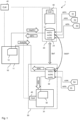
- Fig. 1 shows a schematic illustration of a vehicle communication system 1 according to an embodiment of the present invention.
- the vehicle communication system 1 comprises a plurality of processing units 10, 20, 30 which are connected with each other for transmitting and receiving data between two of them via a plurality of signal lines of a communication network, such as Ethernet, CAN, FlexRay or the like. While the present embodiment shows a number of three processing units 10, 20, 30, it is to be understood that the number of processing units in the vehicle communication system 1 may be arbitrary and in particular greater than three.
- the processing unit 10 represents a first type processing unit implementing a data consuming application 12 running on it.
- the processing unit 20 is a second type processing unit providing data to other processing units, in the present example processing unit 10 and processing unit 30.
- Processing unit 30 is a third type processing unit implementing a data consuming application 32 and providing data to other of the processing units, in the present example processing unit 10.
- the first type processing unit 10 and the third type processing unit 30 are also referred to as data consuming or data receiving processing units.
- the second type processing unit 20 and the third type processing unit 30 which provide data to other processing units are also referred to as a data providing processing units.
- the vehicle communication system 1 furthermore comprises a plurality of data providers 51-55.
- Each of the data providers 51-55 may comprise one or more sensors gathering specific information of the vehicle or its environment, such as temperatures, moisture, pressure, and so on.
- three data providers 51, 52, 53 are connected to the second type processing unit 20.
- the data providers 54, 55 are connected to the third type processing unit 30.
- Each of the data providers 51-55 provides respective data values d(51)-d(55) to the associated processing unit 20 or 30, where the suffix in parentheses indicates the data provider of the data values d.
- Provision of respective data values d(51)-d(55) may be in the form of messages which are generated by the data providers 51-55 on a regular basis, e.g., with predetermined regular time intervals, or based on a trigger event. According to the data provider and the data it is providing to the associated processing unit, the predetermined time interval may vary or be the same.
- the processing units 10, 20, 30 are conventional processing units comprising a processor 11, 21, 31 and a memory providing a respective software for providing the functionality of the respective processing unit.
- the data consuming applications 12, 32 of the data consuming processing units 10, 30 are executed on the respective processor 11, 31 executing a program which is stored in the not shown memory of the respective processing unit.
- the communication system 1 furthermore comprises clocks 41, 42, 43.
- Clock 41 may be a master clock of the vehicle or a clock of the processing unit 10 or associated to it.
- Clock 42 is associated to or part of processing unit 20.
- Clock 43 is associated to or part of processing unit 30.
- Clocks 41, 42, 43 are synchronized such that a time is common for the entire vehicle.
- the known gPTP-protocol or any other suitable protocol may be used for synchronization.
- the data consuming applications 12, 32 also referred to as functions of the respective processing units 10, 30, use the data values of one or more of the data providers 51-55 for performing a predetermined functionality of the application 12, 32.
- respective data values are processed in regular time intervals or on a time-to-time basis.
- the data providing processing units 20, 30 are configured to provide a respective in-memory database 23, 33.
- the totality of in-memory databases 23, 33 represents a distributed data space.
- the data providing processing units 20, 30 are configured, upon receiving a data value d(51)-d(55) from the associated data provider 51-55, to convert the received data value d(51)-d(55) into a self-describing binary format and store the converted data value dc(51)-dc(55) in its respective in-memory database 23 or 33 of the data providing processing unit 20 or 30.
- the data consuming applications 12, 32 of the data consuming processing units 10, 30 access the converted data value dc(51)-dc(55) in the distributed data space, i.e., the set of in-memory databases 23, 33, via a predetermined standardized interface, such as the known CRUD (Create, Read, Update, and Delete) interface.
- a predetermined standardized interface such as the known CRUD (Create, Read, Update, and Delete) interface.
- the self-describing binary format contains its structure description inside that allows to manipulate the data without having its schema on in-memory database 23, 33.
- Google Protocol Buffers or MessagePack may be an example of a self-describing binary format which is widely used.
- a self-describing binary format unlimited complex data structures may be used.
- a data scheme inside the in-memory database is not necessary which enables fast communication.
- the self-describing binary data format allows mimic relation tables where each record has the same structure. Moreover, it allows to have different data structures for each particular converted data. As a result, this allows to have objects database.
- the binary format allows to avoid serialization on service side and data can be delivered very fast. Compact structure tags save processor time and network bandwidth.
- the associated key may be associated to a respective data provider 51-55, for example.
- each converted data value dc(51)-dc(55) comprises a timestamp attribute which is added, upon receiving a data value d(51)-d(55) from an associated data provider 51-55, by the data providing processing units 20, 30 to the converted data value dc(51)-dc(55).
- the timestamp attribute enables to synchronize the set of in-memory databases 23, 33 in real time, as the clocks 42, 43 of the data providing processing units 20, 30 are synchronized.
- the synchronization of the timestamps between the processing units 20 and 30 is outlined by arrow SbT.
- Access to specific of the converted data values dc(51)-dc(55) may be made by the data consuming processing units 10, 30 using a key.
- data consuming application 12 running on the processing unit 10 needs the data values of data provider 51.
- the processing unit 10 sends a message containing the key of the data provider 51 "Key(51)" to the processing unit 20 hosting the in-memory database 23.
- the in-memory database 23 in turn provides the data values d(51) of data provider 51 that are stored in it.
- data consuming application 12 can subscribe to the data values d(54) of data provider 54.
- the data consuming application receives the data values d(54) every time when a new value is provided by the data provider 54.
- the processing unit 10 sends a subscription message "Subs(54)" to the processing unit 30.
- the in-memory database 33 provides the data values d(54) of data provider 54 immediately they are stored in it.
- a subscription might be used to avoid requesting data continuously on the consumer side, e.g., based on a trigger event.
- a subscription of data is useful in the case where polling is to be avoided on the data consuming application side.
- a subscription to all updates can be set up by the data consuming application resulting in a notification in case a predetermined trigger event arrives.
- the converted data values dc(54) received by the data consuming application 12 contain the timestamp attribute, filtering and throttling is possible using the timestamp attribute. This enables the data consuming processing units to have data on demand, with the amount needed and in time.
- the timestamp attribute may comprise an ingress timestamp of when the data value d(51)-d(55) is received by the data receiving processing unit from the associated data provider 51-55.
- the timestamp attribute may comprise an absolute time information indicating an expiry of the data value d(51)-d(55) or indicating the time of creation of the data value d(51)-d(55).
- Absolute message time can be used to detect whether a data value is valid and did not expire.
- data receiving applications access data values when they are needed and they are able to react on incoming data using the timestamp attribute.
- data consuming application 32 running on the processing unit 30 wishes to receive the data values of data provider 52 whose converted data values dc(52) are stored in the in-memory database 23 of different processing unit 20.
- a copy of the converted data values dc(52) is stored in the in-memory database 33 of processing unit 30.
- the in-memory database 33 represents a "further memory" for the converted data values dc(52) in this embodiment.
- the synchronization between the converted data values dc(52) in-memory database 23 of processing unit 20 and the converted data values dc(52) in-memory database 33 of processing unit 30 is made in real-time.
- the synchronization of the converted data values dc(52) between the in-memory databases 23 and 33 is outlined by arrow SbDP.
- the distributed data space may comprise an arbitrary number of further memories (not shown) to store a copy of converted data values of the respective data provider.
- the further memory may be provided in a respective data consuming processing unit, in the present example processing unit 10 or 30.
- Each further memory enables creating a data aggregator that is placed as near as possible to data consumer. It may make use of a CRUD like interface and can do data throttling and filtering.
- the proposed solution can be provided as a pure library without network and threading inside.
- Functions that this library provides are pure and have no side effect but allow to transform an incoming data stream either in a set of messages (input and response) as well as set of call-backs.
- a developer has the freedom to put this library in a certain point in its communication framework and handle data in a thread controlled by his data consuming application.
- the library is network and thread agnostic.
- a data provider comprising four sensors is connected to a data providing processing unit which hosts an in-memory database.
- the data provider provides the following sensor data as data value:
- the data from the data provider can be represented as:mois
- the data inside the in-memory database can be stored with a predetermined key, e.g., "car.sens.cond” and can be represented in binary format with pairs [key]: [value] representing the converted data value or data element.
- the data value contains four different sensor values which are indicated by a respective field number "1", “2", “3” and "4", followed by the respective sensor value. This results in, e.g.:
- the processing unit connected to the data provider is configured for receiving the above mentioned data values with some period from the data provider, formatting it to the binary form and storing it into the in-memory database using the standardized interface, e.g. CRUD interface.
- These tasks may be executed by a dedicated unit of the processing unit, e.g. a sensor-driver, or the general processor of the processing unit.
- the converted data value with an optional subset key "ecul" (e.g. the name of the processing unit) may be created by the processing unit with the command:
- the in-memory database does not need to have any knowledge about the name of the fields (i.e. no generated code required for data), and thus can store any data formatted as shown in the present example without creating an internal schema of the data. Hence, no recompilation or restart of the database is necessary.
- a data consuming processing unit can request the data by using the key.
- the key (including the subset key “ecu1” in this example) is sent in a message "read” from the data consuming processing unit to the processing unit hosting the in-memory data-base:
- the in-memory database returns a response containing the converted data value to the data consuming processing unit: 1 :0x12345758; 2 :21.2; 3 :10.3; 4 :43; 5 :995.
- the data consuming processing unit has knowledge about the data description. Then, it can access data dynamically just using the field number contained in the data value and indicating a respective sensor value. This procedure doesn't require any special generated code.
- the data processing unit sends a request using a filter "3?" to the in-memory database:
- the in-memory database returns part of the stored data without any knowledge of its meaning: 3 :10.3
- the data consuming processing unit (which can be referred to as a subscriber in this example) wants to subscribe to a specific sensor value, e.g. external temperature having the field number "2", and receive a notification only when the sensor value of it becomes, for example, less than 3 °C corresponding to possible ice on road
- the subscription request to the in-memory database contains the filter information "2?" representing the field number "2” and a trigger information "when 2:less 3" and thus reads:
- the in-memory database can still handle such requests even though it has no knowledge of its meaning. Thus, unnecessary communication in the communication network can be avoided.
- the data provider provides all data periodically to the data providing processing unit.
- the in-memory database notifies the data consuming processing unit (subscriber) only if the sensor value of field number "2" becomes less than 3 (trigger event).
- each converted data value (data element) stored in the in-memory database has attached a timestamp attribute (timestamp).
- the timestamp is synchronized using the known PTP protocol or any similar protocol so that all processing units are in one time domain.
- the timestamp allows data consuming processing units to verify whether data may be outdated or not. It can compare the data element to other data received from other data providers which might be important for safety applications.
- the processing unit easily can arrange them based on time and make complex decision based on set of data.
- the ability of subscription to some data elements is possible not only for data consuming applications but also for different in-memory databases and allows to implement data caching. Furthermore, using timestamps allows to control validity if the data is outdated.
- the scenario described above allows to create a hierarchical system of data where the higher-level unit (in hierarchical sense) has connections to lower-level units which run applications (data consuming processing units), in-memory databases (data providing processing units) linked with each other and has connected data providers.
- the higher-level unit can access remote databases directly as well as set up data replication for its applications using its own in-memory database with data caching.
Landscapes
- Engineering & Computer Science (AREA)
- Computer Networks & Wireless Communication (AREA)
- Signal Processing (AREA)
- Health & Medical Sciences (AREA)
- Computing Systems (AREA)
- General Health & Medical Sciences (AREA)
- Medical Informatics (AREA)
- Information Retrieval, Db Structures And Fs Structures Therefor (AREA)
- Small-Scale Networks (AREA)
Priority Applications (4)
| Application Number | Priority Date | Filing Date | Title |
|---|---|---|---|
| EP21201185.2A EP4164199A1 (de) | 2021-10-06 | 2021-10-06 | Fahrzeugkommunikationssystem |
| US18/698,921 US12113863B1 (en) | 2021-10-06 | 2022-09-28 | Vehicle communication system |
| PCT/EP2022/076942 WO2023057276A1 (en) | 2021-10-06 | 2022-09-28 | Vehicle communication system |
| EP22793556.6A EP4413721B1 (de) | 2021-10-06 | 2022-09-28 | Fahrzeugkommunikationssystem |
Applications Claiming Priority (1)
| Application Number | Priority Date | Filing Date | Title |
|---|---|---|---|
| EP21201185.2A EP4164199A1 (de) | 2021-10-06 | 2021-10-06 | Fahrzeugkommunikationssystem |
Publications (1)
| Publication Number | Publication Date |
|---|---|
| EP4164199A1 true EP4164199A1 (de) | 2023-04-12 |
Family
ID=78080222
Family Applications (2)
| Application Number | Title | Priority Date | Filing Date |
|---|---|---|---|
| EP21201185.2A Withdrawn EP4164199A1 (de) | 2021-10-06 | 2021-10-06 | Fahrzeugkommunikationssystem |
| EP22793556.6A Active EP4413721B1 (de) | 2021-10-06 | 2022-09-28 | Fahrzeugkommunikationssystem |
Family Applications After (1)
| Application Number | Title | Priority Date | Filing Date |
|---|---|---|---|
| EP22793556.6A Active EP4413721B1 (de) | 2021-10-06 | 2022-09-28 | Fahrzeugkommunikationssystem |
Country Status (3)
| Country | Link |
|---|---|
| US (1) | US12113863B1 (de) |
| EP (2) | EP4164199A1 (de) |
| WO (1) | WO2023057276A1 (de) |
Family Cites Families (20)
| Publication number | Priority date | Publication date | Assignee | Title |
|---|---|---|---|---|
| US7599521B2 (en) * | 2004-11-30 | 2009-10-06 | Honda Motor Co., Ltd. | Vehicle vicinity monitoring apparatus |
| TWI301108B (en) * | 2006-11-08 | 2008-09-21 | Autoland Scientech Co Ltd | Detecting system for a far-end driving apparatus |
| US8126642B2 (en) * | 2008-10-24 | 2012-02-28 | Gray & Company, Inc. | Control and systems for autonomously driven vehicles |
| WO2012144002A1 (ja) * | 2011-04-18 | 2012-10-26 | トヨタ自動車株式会社 | モータ用電圧変換制御装置 |
| EP2680534B1 (de) * | 2012-06-28 | 2017-12-27 | Harman Becker Automotive Systems GmbH | Protokollierung für telematiksysteme |
| KR101413427B1 (ko) * | 2012-12-18 | 2014-07-01 | 주식회사 유라코퍼레이션 | 차량용 네트워크의 보안 메시지 송수신 장치 및 방법 |
| EP2851815A1 (de) * | 2013-09-18 | 2015-03-25 | dSPACE digital signal processing and control engineering GmbH | Testeinrichtung zum Echtzeittest eines virtuellen Steuergeräts |
| WO2015090346A1 (en) * | 2013-12-20 | 2015-06-25 | Volvo Truck Corporation | Method to control energy flows of a vehicle |
| EP3738107A4 (de) * | 2018-01-09 | 2021-10-13 | Archive Auto, Inc. | Fahrzeugdatenerfassungs- und -zugriffssystem und -verfahren |
| US20230275877A1 (en) * | 2018-09-24 | 2023-08-31 | Karamba Security Ltd. | Visual sensor validation system |
| US11258762B2 (en) * | 2019-06-26 | 2022-02-22 | Blackberry Limited | Method and system for updating of an application layer for a third-party telematics provider |
| JP7342476B2 (ja) * | 2019-07-18 | 2023-09-12 | マツダ株式会社 | 車載ネットワークシステム |
| CN116032687A (zh) * | 2019-08-01 | 2023-04-28 | 住友电气工业株式会社 | 中继装置、通信方法以及计算机可读记录介质 |
| US11593085B1 (en) * | 2020-02-03 | 2023-02-28 | Rapid7, Inc. | Delta data collection technique for machine assessment |
| WO2022046469A1 (en) * | 2020-08-28 | 2022-03-03 | Evangelos Simoudis | Systems and methods for managing vehicle data |
| US12289200B2 (en) * | 2020-09-08 | 2025-04-29 | Amazon Technologies, Inc. | Virtual vehicle domain control unit (DCU) service and orchestration environments |
| JP7510902B2 (ja) * | 2021-03-19 | 2024-07-04 | 日立Astemo株式会社 | ソフトウェア更新装置、ソフトウェア更新システム及びソフトウェア更新方法 |
| JP7736071B2 (ja) * | 2021-08-27 | 2025-09-09 | 株式会社デンソー | 車両制御システム、及び車両制御装置 |
| US12175816B2 (en) * | 2021-11-29 | 2024-12-24 | Amazon Technologies, Inc. | Fleet data collection using a unified model to collect data from heterogenous vehicles |
| US11902374B2 (en) * | 2021-11-29 | 2024-02-13 | Amazon Technologies, Inc. | Dynamic vehicle data extraction service |
-
2021
- 2021-10-06 EP EP21201185.2A patent/EP4164199A1/de not_active Withdrawn
-
2022
- 2022-09-28 US US18/698,921 patent/US12113863B1/en active Active
- 2022-09-28 WO PCT/EP2022/076942 patent/WO2023057276A1/en not_active Ceased
- 2022-09-28 EP EP22793556.6A patent/EP4413721B1/de active Active
Non-Patent Citations (3)
| Title |
|---|
| HAPP DANIEL ET AL: "Meeting IoT platform requirements with open pub/sub solutions", ANNALES DES TELECOMMUNICATIONS - ANNALS OF TELECOMMUNICATIONS, GET LAVOISIER, PARIS, FR, vol. 72, no. 1, 20 July 2016 (2016-07-20), pages 41 - 52, XP036144705, ISSN: 0003-4347, [retrieved on 20160720], DOI: 10.1007/S12243-016-0537-4 * |
| HONG DAVID KE ET AL: "AVGuardian: Detecting and Mitigating Publish-Subscribe Overprivilege for Autonomous Vehicle Systems", 2020 IEEE EUROPEAN SYMPOSIUM ON SECURITY AND PRIVACY (EUROS&P), IEEE, 7 September 2020 (2020-09-07), pages 445 - 459, XP033847058, DOI: 10.1109/EUROSP48549.2020.00035 * |
| JOSE PINTO ET AL: "Towards a REST-style architecture for networked vehicles and sensors", PERVASIVE COMPUTING AND COMMUNICATIONS WORKSHOPS (PERCOM WORKSHOPS), 2010 8TH IEEE INTERNATIONAL CONFERENCE ON, IEEE, PISCATAWAY, NJ, USA, 29 March 2010 (2010-03-29), pages 745 - 750, XP031679908, ISBN: 978-1-4244-6605-4 * |
Also Published As
| Publication number | Publication date |
|---|---|
| US12113863B1 (en) | 2024-10-08 |
| WO2023057276A1 (en) | 2023-04-13 |
| US20240333800A1 (en) | 2024-10-03 |
| EP4413721B1 (de) | 2025-09-10 |
| EP4413721A1 (de) | 2024-08-14 |
Similar Documents
| Publication | Publication Date | Title |
|---|---|---|
| CN112199419B (zh) | 一种分布式时序数据库、存储方法、设备及存储介质 | |
| US9171019B1 (en) | Distributed lock service with external lock information database | |
| Kopetz | The time-triggered model of computation | |
| EP3186701B1 (de) | Verfahren und rechnervorrichtung zur ermöglichung des synchronisierten zugriffs auf eine cloud | |
| Fisteus et al. | Ztreamy: A middleware for publishing semantic streams on the web | |
| JPS6170654A (ja) | 分散処理システムにおける資源管理方式 | |
| JPH10187467A (ja) | リモートプロシジャコール処理方法 | |
| CN111212135A (zh) | 消息订阅方法、装置、系统、电子设备及存储介质 | |
| CN114238518A (zh) | 数据处理方法、装置、设备及存储介质 | |
| CN111522665A (zh) | 一种基于zookeeper实现Influxdb-proxy的高可用及负载均衡方法 | |
| US20260089199A1 (en) | Realtime Distribution of Granular Data Streams on a Network | |
| CN114157671B (zh) | 将区块链网络承载的信息向多个客户端节点分发的方法 | |
| CN113377816B (zh) | 一种分布式数据存取系统 | |
| US12107971B2 (en) | Scheduled synchronization of a data store with certificate revocation lists independent of connection requests | |
| EP4413721B1 (de) | Fahrzeugkommunikationssystem | |
| CN115189931A (zh) | 一种分布式密钥管理方法、装置、设备、存储介质 | |
| CN118410076B (zh) | 指标的查询方法、统计方法、装置、设备和存储介质 | |
| Turski | A global time system for CAN networks | |
| WO2019193980A1 (ja) | 制御システムおよび制御方法 | |
| Kim et al. | Analyzing the Impact of ECU Synchronization on the SOME/IP Service Discovery | |
| CN117955978A (zh) | 一种数据传输方法及相关装置 | |
| CN113377617A (zh) | 一种监控系统 | |
| CN120281770B (zh) | 基于云边协同系统的数据传输方法、装置及云边协同系统 | |
| CN120780642A (zh) | 核间通信方法、装置、机器人及存储介质 | |
| KR101929948B1 (ko) | 데이터 타입 기반의 멀티 디바이스 데이터 동기화를 위한 방법 및 시스템 |
Legal Events
| Date | Code | Title | Description |
|---|---|---|---|
| PUAI | Public reference made under article 153(3) epc to a published international application that has entered the european phase |
Free format text: ORIGINAL CODE: 0009012 |
|
| STAA | Information on the status of an ep patent application or granted ep patent |
Free format text: STATUS: THE APPLICATION HAS BEEN PUBLISHED |
|
| AK | Designated contracting states |
Kind code of ref document: A1 Designated state(s): AL AT BE BG CH CY CZ DE DK EE ES FI FR GB GR HR HU IE IS IT LI LT LU LV MC MK MT NL NO PL PT RO RS SE SI SK SM TR |
|
| STAA | Information on the status of an ep patent application or granted ep patent |
Free format text: STATUS: THE APPLICATION IS DEEMED TO BE WITHDRAWN |
|
| 18D | Application deemed to be withdrawn |
Effective date: 20231013 |