EP4164708B1 - Zweikomponentige dichtungssysteme mit synthetischen matrizen und biosynthetischen klebstoffen zum abdichten von resektierten organoberflächen - Google Patents
Zweikomponentige dichtungssysteme mit synthetischen matrizen und biosynthetischen klebstoffen zum abdichten von resektierten organoberflächen Download PDFInfo
- Publication number
- EP4164708B1 EP4164708B1 EP21732554.7A EP21732554A EP4164708B1 EP 4164708 B1 EP4164708 B1 EP 4164708B1 EP 21732554 A EP21732554 A EP 21732554A EP 4164708 B1 EP4164708 B1 EP 4164708B1
- Authority
- EP
- European Patent Office
- Prior art keywords
- adhesive
- matrix
- biosynthetic
- synthetic
- synthetic matrix
- Prior art date
- Legal status (The legal status is an assumption and is not a legal conclusion. Google has not performed a legal analysis and makes no representation as to the accuracy of the status listed.)
- Active
Links
Images





Classifications
-
- A—HUMAN NECESSITIES
- A61—MEDICAL OR VETERINARY SCIENCE; HYGIENE
- A61B—DIAGNOSIS; SURGERY; IDENTIFICATION
- A61B17/00—Surgical instruments, devices or methods
- A61B17/0057—Implements for plugging an opening in the wall of a hollow or tubular organ, e.g. for sealing a vessel puncture or closing a cardiac septal defect
-
- A—HUMAN NECESSITIES
- A61—MEDICAL OR VETERINARY SCIENCE; HYGIENE
- A61B—DIAGNOSIS; SURGERY; IDENTIFICATION
- A61B17/00—Surgical instruments, devices or methods
- A61B17/00491—Surgical glue applicators
-
- A—HUMAN NECESSITIES
- A61—MEDICAL OR VETERINARY SCIENCE; HYGIENE
- A61L—METHODS OR APPARATUS FOR STERILISING MATERIALS OR OBJECTS IN GENERAL; DISINFECTION, STERILISATION OR DEODORISATION OF AIR; CHEMICAL ASPECTS OF BANDAGES, DRESSINGS, ABSORBENT PADS OR SURGICAL ARTICLES; MATERIALS FOR BANDAGES, DRESSINGS, ABSORBENT PADS OR SURGICAL ARTICLES
- A61L24/00—Surgical adhesives or cements; Adhesives for colostomy devices
- A61L24/04—Surgical adhesives or cements; Adhesives for colostomy devices containing macromolecular materials
- A61L24/046—Surgical adhesives or cements; Adhesives for colostomy devices containing macromolecular materials obtained otherwise than by reactions only involving carbon-to-carbon unsaturated bonds
-
- A—HUMAN NECESSITIES
- A61—MEDICAL OR VETERINARY SCIENCE; HYGIENE
- A61L—METHODS OR APPARATUS FOR STERILISING MATERIALS OR OBJECTS IN GENERAL; DISINFECTION, STERILISATION OR DEODORISATION OF AIR; CHEMICAL ASPECTS OF BANDAGES, DRESSINGS, ABSORBENT PADS OR SURGICAL ARTICLES; MATERIALS FOR BANDAGES, DRESSINGS, ABSORBENT PADS OR SURGICAL ARTICLES
- A61L24/00—Surgical adhesives or cements; Adhesives for colostomy devices
- A61L24/04—Surgical adhesives or cements; Adhesives for colostomy devices containing macromolecular materials
- A61L24/10—Polypeptides; Proteins
-
- A—HUMAN NECESSITIES
- A61—MEDICAL OR VETERINARY SCIENCE; HYGIENE
- A61L—METHODS OR APPARATUS FOR STERILISING MATERIALS OR OBJECTS IN GENERAL; DISINFECTION, STERILISATION OR DEODORISATION OF AIR; CHEMICAL ASPECTS OF BANDAGES, DRESSINGS, ABSORBENT PADS OR SURGICAL ARTICLES; MATERIALS FOR BANDAGES, DRESSINGS, ABSORBENT PADS OR SURGICAL ARTICLES
- A61L24/00—Surgical adhesives or cements; Adhesives for colostomy devices
- A61L24/04—Surgical adhesives or cements; Adhesives for colostomy devices containing macromolecular materials
- A61L24/10—Polypeptides; Proteins
- A61L24/108—Specific proteins or polypeptides not covered by groups A61L24/102 - A61L24/106
-
- A—HUMAN NECESSITIES
- A61—MEDICAL OR VETERINARY SCIENCE; HYGIENE
- A61L—METHODS OR APPARATUS FOR STERILISING MATERIALS OR OBJECTS IN GENERAL; DISINFECTION, STERILISATION OR DEODORISATION OF AIR; CHEMICAL ASPECTS OF BANDAGES, DRESSINGS, ABSORBENT PADS OR SURGICAL ARTICLES; MATERIALS FOR BANDAGES, DRESSINGS, ABSORBENT PADS OR SURGICAL ARTICLES
- A61L31/00—Materials for other surgical articles, e.g. stents, stent-grafts, shunts, surgical drapes, guide wires, materials for adhesion prevention, occluding devices, surgical gloves, tissue fixation devices
- A61L31/005—Ingredients of undetermined constitution or reaction products thereof
-
- A—HUMAN NECESSITIES
- A61—MEDICAL OR VETERINARY SCIENCE; HYGIENE
- A61L—METHODS OR APPARATUS FOR STERILISING MATERIALS OR OBJECTS IN GENERAL; DISINFECTION, STERILISATION OR DEODORISATION OF AIR; CHEMICAL ASPECTS OF BANDAGES, DRESSINGS, ABSORBENT PADS OR SURGICAL ARTICLES; MATERIALS FOR BANDAGES, DRESSINGS, ABSORBENT PADS OR SURGICAL ARTICLES
- A61L31/00—Materials for other surgical articles, e.g. stents, stent-grafts, shunts, surgical drapes, guide wires, materials for adhesion prevention, occluding devices, surgical gloves, tissue fixation devices
- A61L31/04—Macromolecular materials
- A61L31/043—Proteins; Polypeptides; Degradation products thereof
- A61L31/047—Other specific proteins or polypeptides not covered by A61L31/044 - A61L31/046
-
- A—HUMAN NECESSITIES
- A61—MEDICAL OR VETERINARY SCIENCE; HYGIENE
- A61L—METHODS OR APPARATUS FOR STERILISING MATERIALS OR OBJECTS IN GENERAL; DISINFECTION, STERILISATION OR DEODORISATION OF AIR; CHEMICAL ASPECTS OF BANDAGES, DRESSINGS, ABSORBENT PADS OR SURGICAL ARTICLES; MATERIALS FOR BANDAGES, DRESSINGS, ABSORBENT PADS OR SURGICAL ARTICLES
- A61L31/00—Materials for other surgical articles, e.g. stents, stent-grafts, shunts, surgical drapes, guide wires, materials for adhesion prevention, occluding devices, surgical gloves, tissue fixation devices
- A61L31/04—Macromolecular materials
- A61L31/06—Macromolecular materials obtained otherwise than by reactions only involving carbon-to-carbon unsaturated bonds
-
- A—HUMAN NECESSITIES
- A61—MEDICAL OR VETERINARY SCIENCE; HYGIENE
- A61L—METHODS OR APPARATUS FOR STERILISING MATERIALS OR OBJECTS IN GENERAL; DISINFECTION, STERILISATION OR DEODORISATION OF AIR; CHEMICAL ASPECTS OF BANDAGES, DRESSINGS, ABSORBENT PADS OR SURGICAL ARTICLES; MATERIALS FOR BANDAGES, DRESSINGS, ABSORBENT PADS OR SURGICAL ARTICLES
- A61L31/00—Materials for other surgical articles, e.g. stents, stent-grafts, shunts, surgical drapes, guide wires, materials for adhesion prevention, occluding devices, surgical gloves, tissue fixation devices
- A61L31/12—Composite materials, i.e. containing one material dispersed in a matrix of the same or different material
- A61L31/125—Composite materials, i.e. containing one material dispersed in a matrix of the same or different material having a macromolecular matrix
-
- A—HUMAN NECESSITIES
- A61—MEDICAL OR VETERINARY SCIENCE; HYGIENE
- A61L—METHODS OR APPARATUS FOR STERILISING MATERIALS OR OBJECTS IN GENERAL; DISINFECTION, STERILISATION OR DEODORISATION OF AIR; CHEMICAL ASPECTS OF BANDAGES, DRESSINGS, ABSORBENT PADS OR SURGICAL ARTICLES; MATERIALS FOR BANDAGES, DRESSINGS, ABSORBENT PADS OR SURGICAL ARTICLES
- A61L31/00—Materials for other surgical articles, e.g. stents, stent-grafts, shunts, surgical drapes, guide wires, materials for adhesion prevention, occluding devices, surgical gloves, tissue fixation devices
- A61L31/14—Materials characterised by their function or physical properties, e.g. injectable or lubricating compositions, shape-memory materials, surface modified materials
- A61L31/146—Porous materials, e.g. foams or sponges
-
- A—HUMAN NECESSITIES
- A61—MEDICAL OR VETERINARY SCIENCE; HYGIENE
- A61L—METHODS OR APPARATUS FOR STERILISING MATERIALS OR OBJECTS IN GENERAL; DISINFECTION, STERILISATION OR DEODORISATION OF AIR; CHEMICAL ASPECTS OF BANDAGES, DRESSINGS, ABSORBENT PADS OR SURGICAL ARTICLES; MATERIALS FOR BANDAGES, DRESSINGS, ABSORBENT PADS OR SURGICAL ARTICLES
- A61L31/00—Materials for other surgical articles, e.g. stents, stent-grafts, shunts, surgical drapes, guide wires, materials for adhesion prevention, occluding devices, surgical gloves, tissue fixation devices
- A61L31/14—Materials characterised by their function or physical properties, e.g. injectable or lubricating compositions, shape-memory materials, surface modified materials
- A61L31/148—Materials at least partially resorbable by the body
-
- A—HUMAN NECESSITIES
- A61—MEDICAL OR VETERINARY SCIENCE; HYGIENE
- A61B—DIAGNOSIS; SURGERY; IDENTIFICATION
- A61B17/00—Surgical instruments, devices or methods
- A61B2017/00004—(bio)absorbable, (bio)resorbable or resorptive
-
- A—HUMAN NECESSITIES
- A61—MEDICAL OR VETERINARY SCIENCE; HYGIENE
- A61B—DIAGNOSIS; SURGERY; IDENTIFICATION
- A61B17/00—Surgical instruments, devices or methods
- A61B17/00491—Surgical glue applicators
- A61B2017/00495—Surgical glue applicators for two-component glue
-
- A—HUMAN NECESSITIES
- A61—MEDICAL OR VETERINARY SCIENCE; HYGIENE
- A61B—DIAGNOSIS; SURGERY; IDENTIFICATION
- A61B17/00—Surgical instruments, devices or methods
- A61B17/0057—Implements for plugging an opening in the wall of a hollow or tubular organ, e.g. for sealing a vessel puncture or closing a cardiac septal defect
- A61B2017/00646—Type of implements
- A61B2017/0065—Type of implements the implement being an adhesive
-
- A—HUMAN NECESSITIES
- A61—MEDICAL OR VETERINARY SCIENCE; HYGIENE
- A61L—METHODS OR APPARATUS FOR STERILISING MATERIALS OR OBJECTS IN GENERAL; DISINFECTION, STERILISATION OR DEODORISATION OF AIR; CHEMICAL ASPECTS OF BANDAGES, DRESSINGS, ABSORBENT PADS OR SURGICAL ARTICLES; MATERIALS FOR BANDAGES, DRESSINGS, ABSORBENT PADS OR SURGICAL ARTICLES
- A61L2400/00—Materials characterised by their function or physical properties
- A61L2400/04—Materials for stopping bleeding
Definitions
- the present patent application is generally related to systems and devices for sealing the resected surfaces of tissue and organs to manage bleeding, fluid leaks, and air leaks. Also disclosed are surgical procedures and methods for sealing the resected surfaces of tissue and organs to manage bleeding, fluid leaks, and air leaks.
- a resection is a surgical procedure that involves cutting out tissue or a part of an organ. Resections, which are performed on a wide variety of organs including livers, lungs and gastrointestinal systems, present surgeons with many unique problems related to effectively managing post-operative bleeding, and fluid and air leaks.
- surgeons manage major bleeding at resected surfaces by using tourniquets, extensive suturing, etc.
- adhesive fluids e.g., synthetic adhesives, fibrin glue gels
- Some surgeons use adhesive fluids (e.g., synthetic adhesives, fibrin glue gels), which are limited since they can flow off the resected surface prior to completely curing or can peel off easy following curing since they lack adequate adherence to underlying tissue or proper elastic properties.
- Liver Resection A surgical procedure that involves removing all or part of a liver is commonly referred to as a hepatectomy.
- a partial hepatectomy is a preferred approach for removing a solid tumor from a liver.
- tissue margins within the resected area are destroyed and the internal parenchyma and flow systems are exposed.
- the re-establishment of proper margins does not occur immediately, but requires an extended tissue healing process that can last from days to weeks.
- the resected tissue can ooze blood and/or leak organ specific liquids (e.g., bile), which can cause post-operative complications.
- organ specific liquids e.g., bile
- Lung Resection Lung resection procedures typically require a significant amount of tissue manipulation and handling, which results in a high incidence of post operative air leaks.
- Standardized techniques that are used to address air leaks involve suturing or stapling the lung tissue. These techniques are often ineffective, however, in creating an airtight seal due to the intrinsic friability of the lung parenchyma, particularly in emphysematous patients.
- topical adhesives are applied either directly on the pleural abrasion or onto staple lines, however, these techniques are often inadequate for preventing air leaks.
- Gastrointestinal (Gl) procedures often involve excising large segments of a patient's intestinal anatomy for effectively treating disease. After removing GI tissue, surgeons are required to reconstruct the patient's digestive system. GI reconstructions are complicated due to the delicate structure of the intestines, limited blood supply to lower colon, limited surgeon access to complex anatomical structures, and the pathologies that typically affect the surrounding tissues. Even when surgeons exercise great care during GI reconstruction procedures, however, there are a certain percentage of patients who will have complications resulting from leaks at surgically created anastomotic sites. GI leaks can result in devastating outcomes, requiring additional surgeries and treatments that are often unsuccessful in managing the leaks.
- the VERISET ® hemostatic patch is composed of an oxidized regenerated cellulose (ORC) layer and a reactive polyethylene glycol (PEG) layer.
- ORC oxidized regenerated cellulose
- PEG reactive polyethylene glycol
- the patch is applied to a tissue surface by applying pressure on the surface. Due to the fact that the ORC matrix is opaque, while applying pressure onto the resected surface, a surgeon cannot see through the VERISET ® hemostatic patch to assess the condition of the resected surface.
- the patch is also rigid with low flexibility and therefore may not achieve good tissue conformability or remain compliant with tissue movements.
- the present invention relates to a sealing device comprising a synthetic matrix and a biosynthetic or synthetic adhesive in liquid or powder form for adhering the synthetic matrix to tissue, wherein said synthetic matrix comprises fibers and has a density range of 128.7-190.7 mg/cm 3 .
- the present invention also relates to a kit for sealing a resected surface of an organ comprising a synthetic matrix comprising a non-woven mesh made of polyglactin 910 and an adhesive comprising a biocompatible, reactive electrophile and a nucleophile, wherein the polyglactin 910 material includes 90% glycolide and 10% L-lactide, said synthetic matrix is porous and has a density range of 128.7-190.7 mg/cm 3 , and said adhesive is in liquid or powder form.
- the present patent application discloses preferred systems, devices and methods for overcoming the above-identified deficiencies and effectively sealing resected surfaces to control bleeding, fluid leaks, and air leaks. Whilst no claim is directed to the methods per se , the device and kit are capable of being used and are intended to be used in such methods. As such, the methods described herein are considered as useful for understanding the invention.
- the systems and devices include using two component sealant that may be applied to the resected surfaces of soft organs (e.g., liver, lung, GI system, pancreas) in order to control intra and post-operative bleeding, fluid leaks (e.g., bile leaks), and/or air leaks.
- soft organs e.g., liver, lung, GI system, pancreas
- fluid leaks e.g., bile leaks
- air leaks e.g., air leaks.
- the first component of the two component sealant is a synthetic matrix (e.g., mesh or non-woven) that may be placed on a resected surface of an organ.
- the synthetic matrix is a non-woven matrix.
- the synthetic matrix is a biodegradable synthetic matrix.
- the synthetic matrix may be a synthetic substrate or patch such as an absorbable synthetic substrate made of a polyglactin 910 (PG910) material that is manufactured and sold under the trademark VICRYL ® polyglactin 910 material by Ethicon, Inc. of Somerville, New Jersey.
- the polyglactin 910 material includes 90% glycolide and 10% L-lactide.
- the synthetic matrix that may be placed on the resected surface of an organ together with the second component of the two component sealant, which may be a biosynthetic adhesive in a liquid or powder form (e.g., an albumin and PEG-SG mixture).
- a biosynthetic adhesive in a liquid or powder form (e.g., an albumin and PEG-SG mixture).
- the synthetic matrix may be a flexible or conformable non-woven matrix that is adapted to be placed onto the resected surface of an organ and conform to the shape of the resected surface and/or the organ.
- the synthetic matrix is bioabsorbable.
- the density of the synthetic matrix may be tailored to maximize the adhesiveness and cohesiveness of the sealant to form a non-permeable mechanical barrier.
- the adhesiveness and cohesiveness are preferably assessed together by analyzing the system's ability to withstand normal pressure that is applied to a surface of the synthetic matrix.
- the second component of the two component sealant is a biosynthetic adhesive or a synthetic adhesive in a liquid or a powder form.
- the adhesive may include a biocompatible, reactive electrophile and a nucleophile.
- the electrophile may include PEG-SG.
- the nucleophile may be selected from any source of amine (NH 2 ) groups (e.g., primary amine moieties), any appropriate protein or protein mixture, albumin, polyethylene glycol amines (PEG-NH 2 ), and combinations of albumin and PEG-NH 2 .
- the biosynthetic adhesive may be a solution of protein (e.g., Albumin) or partially hydrolyzed protein (e.g., Peptone) and polyethylene glycol succinimidyl glutarate (i.e., PEG-SG).
- protein e.g., Albumin
- partially hydrolyzed protein e.g., Peptone
- polyethylene glycol succinimidyl glutarate i.e., PEG-SG
- the term adhesive means a biosynthetic or synthetic adhesive in liquid or power form that is used to adhere a synthetic matrix (i.e., an absorbable synthetic substrate made of polyglactin 910) to tissue (e.g., a resected surface of an organ).
- a synthetic matrix i.e., an absorbable synthetic substrate made of polyglactin 910
- tissue e.g., a resected surface of an organ
- sealant or sealing device means a combination of a synthetic matrix and a biosynthetic or synthetic adhesive in liquid or power form that is used to adhere the synthetic matrix to tissue.
- the unique fiber architecture of the non-woven PG910 matrix provides proper support for the biosynthetic or synthetic adhesive to cure in a manner that will form a superior level of adhesion for forming a fluid and/or air-tight seal.
- the order in which the first and second components are applied to resected surfaces, as well as the particular composition of the biosynthetic adhesive, may affect the efficacy of the sealant, and thus can be modified and/or tailored for effective use on a specific organ or particular application.
- the synthetic matrix or nonwoven matrix and the biosynthetic or synthetic adhesive may be applied in different forms and using different methods in order to control leaks including but not limited to bleeding and fluid leaks from resected organs (e.g., liver, GI system) and/or air leaks from resected lungs.
- resected organs e.g., liver, GI system
- air leaks from resected lungs e.g., air leaks from resected lungs.
- the biosynthetic or synthetic adhesive is applied to a biodegradable synthetic matrix (e.g., VICRYL ® non-woven PG910), which is placed on a resected surface of an organ.
- the biosynthetic adhesive may be a solution of protein or partially hydrolyzed protein (e.g., albumin) and polyethylene glycol succinimidyl glutarate (PEG-SG) that is pre-mixed immediately prior to use.
- the density of the synthetic matrix is controlled (i.e., optimized) to ensure that the biosynthetic adhesive is retained by the synthetic matrix.
- the density of the synthetic matrix is controlled (i.e., optimized) to ensure that the biosynthetic adhesive fully permeates through the thickness of the synthetic matrix for contacting the resected surface and forming a liquid and/or air-tight seal over the resected surface.
- the two component sealant is allowed a period of time (e.g., 30 seconds to five minutes) for adhering to the resected tissue, whereupon the synthetic matrix and biosynthetic or synthetic adhesive combination preferably form a seal at the resected surface to prevent bleeding, fluid leaks (e.g., bile), and/or air leaks.
- a period of time e.g. 30 seconds to five minutes
- the biosynthetic adhesive may be applied to the surface of the synthetic matrix that faces away from the resected surface of the tissue.
- the density of the matrix may be modified and/or optimized for maximizing the cohesiveness resulting from the combination of the synthetic matrix and the biosynthetic adhesive.
- the density of the matrix is optimized (e.g., made sufficiently low enough) to allow the biosynthetic or synthetic adhesive to penetrate through the matrix and reach the tissue surface, whereupon the biosynthetic adhesive may cross-link with the surface molecules of the tissue.
- full penetration of the biosynthetic adhesive into the interstices of the matrix desirably forms a cohesive, cross-linked hydrogel, which incorporates the matrix fibers that serve as a reinforcement scaffold.
- the density of the synthetic matrix is preferably optimized to enhance the ability of the synthetic matrix to retain the biosynthetic adhesive until the adhesive is cross-linked to optimize cohesive properties.
- the ability of the synthetic matrix to retain the biosynthetic adhesive will increase with increasing matrix density up until a critical point, beyond which the synthetic matrix becomes too dense to allow for sufficient penetration of the biosynthetic adhesive through the synthetic matrix and retention of the biosynthetic matrix by the synthetic matrix.
- the systems, devices and methods disclosed herein provide an optimal matrix density range for a synthetic matrix, whereby the optical matrix density range is utilized for 1) maximizing penetration of the biosynthetic adhesive through the matrix, 2) maximizing retention of the biosynthetic adhesive by the matrix, 3) maximizing the system's ability to withstand pressure applied to the matrix, 4) maximizing the functionality of the two component sealant to stop bleeding and seal fluid and air leaks, and 5) maximize the device conformability to tissue.
- a method of sealing or providing hemostasis to an organ or a wound preferably would include applying a porous, flexible, synthetic matrix to the organ or wound, and applying an adhesive (e.g., a biosynthetic or synthetic adhesive, such as by spray) on top of the synthetic matrix, thereby allowing the adhesive to penetrate through the synthetic matrix to reach an interface between the substrate and the organ, wound, or resected surface.
- an adhesive e.g., a biosynthetic or synthetic adhesive, such as by spray
- the method could include curing the adhesive for bonding the synthetic matrix to the organ or wound.
- the porosity of the synthetic matrix has a density range of 128.7-190.7 mg/cm 3 , which is suitable for sealing high pressure bleeding.
- a method of sealing a resected surface of an organ to prevent bleeding, fluid leaks and/or air leaks preferably would include applying a synthetic matrix to a resected surface of an organ, applying an adhesive, such as a biosynthetic or synthetic adhesive, on the synthetic matrix so that the adhesive penetrates through interstices of the synthetic matrix for contacting an interface between the synthetic matrix and the resected surface of the organ, and curing the adhesive for bonding the synthetic matrix to the resected surface of the organ.
- an adhesive such as a biosynthetic or synthetic adhesive
- the synthetic matrix is a biodegradable, porous, flexible substrate.
- the synthetic matrix is a non-woven mesh made of polyglactin 910.
- the synthetic matrix and the adhesive are preferably at least partially transparent for enabling a surgeon to see through the synthetic matrix during positioning and/or re-positioning of the synthetic matrix on a resected surface of an organ.
- the biosynthetic adhesive desirably includes a partially hydrolyzed protein (e.g., albumin) and polyethylene glycol succinimidyl glutarate (PEG-SG).
- a partially hydrolyzed protein e.g., albumin
- PEG-SG polyethylene glycol succinimidyl glutarate
- the biosynthetic adhesive may be a mixture of a 10% albumin solution and 75 mg/ml of PEG-SG solution.
- the biosynthetic adhesive is in a liquid or a powder form.
- the adhesive After the biosynthetic or synthetic adhesive is applied to the synthetic matrix and is cured, the adhesive would mechanically interlock with fibers of the synthetic matrix, and preferably chemically cross-link with the fibers of the synthetic matrix.
- a method of sealing a resected surface of an organ preferably would include applying a porous, bioabsorbable synthetic matrix made of polyglactin 910 to a resected surface of the organ, applying an adhesive (e.g., a biosynthetic adhesive including albumin and polyethylene glycol succinimidyl glutarate (PEG-SG)) on the synthetic matrix so that the adhesive penetrates through pores of the synthetic matrix for contacting an interface between the synthetic matrix and the resected surface of the organ, and curing the adhesive for bonding the synthetic matrix to the resected surface of the organ.
- an adhesive e.g., a biosynthetic adhesive including albumin and polyethylene glycol succinimidyl glutarate (PEG-SG)
- the method could include a preliminary step of pre-applying the adhesive on the resected surface of the organ, and then applying the synthetic matrix onto the pre-applied adhesive.
- a kit for sealing a resected surface of an organ includes a synthetic matrix including a non-woven mesh made of polyglactin 910, and an adhesive comprising a biocompatible, reactive electrophile and a nucleophile, wherein the polyglactin 910 material includes 90% glycolide and 10% L-lactide, said synthetic matrix is porous and has a density range of 128.7-190.7 mg/cm 3 , and said adhesive is in liquid or powder form.
- the adhesive may be a biosynthetic adhesive including a partially hydrolyzed protein, such as albumin, and polyethylene glycol succinimidyl glutarate (PEG-SG).
- a biosynthetic adhesive including a partially hydrolyzed protein, such as albumin, and polyethylene glycol succinimidyl glutarate (PEG-SG).
- the kit may include a dual syringe for dispensing the biosynthetic adhesive.
- the dual syringe may include a first syringe barrel containing a 20% albumin solution and a second syringe barrel containing a 150mg/ml of PEG-SG solution.
- the two components are preferably mixed together upon being dispensed from the dual syringe for forming a curable biosynthetic adhesive or mixed in-situ on the matrix that is applied to tissue.
- a kit for sealing or providing hemostasis to an organ or a wound preferably includes an absorbable synthetic, porous matrix (e.g., a non-woven matrix or patch), such as a VICRYL ® non-woven PG910 substrate and a two part adhesive including albumin and PEG-SG.
- an absorbable synthetic, porous matrix e.g., a non-woven matrix or patch
- VICRYL ® non-woven PG910 substrate such as a VICRYL ® non-woven PG910 substrate
- a two part adhesive including albumin and PEG-SG.
- a two component sealant could be preferably applied to the resected surfaces of soft organs to prevent intra and post-operative bleeding, fluid leaks (e.g., bile), and/or air leaks (e.g., lungs) from the resected surfaces.
- fluid leaks e.g., bile
- air leaks e.g., lungs
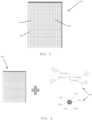
- a two component sealant for resected surfaces of soft organs includes an adhesive 100, such as a biosynthetic adhesive, that may be applied in a liquid or powder form onto a synthetic matrix.
- a biosynthetic adhesive may be a solution that includes a mixture of polyethylene glycol succinimidyl glutarate, also known as PEG-SG, and a protein (e.g., albumin).
- PEG-SG Polyethylene glycol succinimidyl glutarate
- the succinimidyl glutarate reacts with amine groups on proteins, e.g., collagen, under mildly alkaline conditions forming an amide bond.
- the cleavable ester linker designed into the PEG enables the polymer to be degradable in vivo.
- This form of PEG also provides the ability to cross-link across multiple collagen fibers due to its long spacer region allowing intermolecular cross-linking.
- FIG. 1 shows the chemical structure for the polyethylene glycol succinimidyl glutarate (i.e., PEG-SG).
- FIG. 2 shows a simplified schematic for the protein (i.e., albumin).
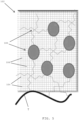
- the two component sealant includes a synthetic matrix 102 that is adapted to be placed onto the resected surface of a soft organ.
- the synthetic matrix 102 may be a mesh matrix or a non-woven matrix that is placed on the resected surface together with the biosynthetic adhesive 100 ( FIGS. 1 and 2 ).
- the non-woven matrix is flexible and/or conformable and is adapted for being placed onto a resected tissue surface, with the biosynthetic adhesive 100 being applied to the synthetic matrix 102.
- the synthetic matrix 102 preferably includes fibers 104 and interstices 106 that are disposed between the fibers 104.
- the biosynthetic adhesive is a cross-linkable liquid adhesive that is applied to the non-woven matrix 102.
- the biosynthetic adhesive is adapted to permeate through the interstices 106 of the synthetic matrix so that the synthetic matrix 102 will retain the biosynthetic adhesive, whereupon the adhesive will cure and mechanically interlock and/or chemically cross-link with the fibers 104 of the synthetic matrix 102.
- the density of the synthetic matrix 102 may be tailored (i.e., optimized) to maximize the ability of the adhesive to attach to tissue and the cohesiveness of the sealant to form a non-permeable mechanical barrier that covers the resected surface of the organ.
- the adhesiveness and cohesiveness may be assessed together by evaluating the system's ability to withstand normal pressure applied to a major surface of the synthetic matrix 102.
- the biosynthetic adhesive 100 may be applied to the surface of the synthetic matrix 102 that faces away from the resected surface of the tissue T.
- the density of the synthetic matrix 102 is selected to be sufficiently low enough to allow the biosynthetic adhesive 100 to penetrate completely through the thickness of the synthetic matrix 102 and reach the resected surface of the tissue, whereupon the biosynthetic adhesive 100 can cure and cross-link with the surface molecules to achieve adhesion to the underlying tissue.
- the biosynthetic adhesive 100 is preferably formulated so that it fully penetrates through the interstices of the synthetic matrix 102 to create a cohesive cross-linked hydrogel that incorporates the fibers of the synthetic matrix, which serves as a reinforcement scaffold that seals the resected surface of the tissue T.
- the cohesiveness resulting from the cross-linked hydrogel reinforcement may be increased by controlling the density of the synthetic matrix 102.
- the design parameters for the synthetic matrix 102 are selected to optimize the ability of the synthetic matrix to retain the biosynthetic adhesive 100 for a sufficient period of time to enable the adhesive to cure and mechanically interlock and/or to chemically cross-link with the fibers 104 of the synthetic matrix 102, which, in turn, optimizes the cohesive properties of the two component sealant.
- the ability of the synthetic matrix to retain the biosynthetic adhesive is preferably increased by increasing the matrix density up to a predetermined density level (i.e., a critical point, an optimized density level). Beyond the predetermined density level, the synthetic matrix will be too dense to allow for sufficient penetration of the biosynthetic adhesive through the thickness of the synthetic matrix and retention of the biosynthetic adhesive by the synthetic matrix.
- the specification and design parameters for the biosynthetic adhesive 100 and the synthetic matrix 102 are established by identifying an optimal matrix density range that maximizes penetration of the biosynthetic adhesive (e.g., a liquid) through the thickness of the synthetic matrix, retention of the biosynthetic adhesive by the synthetic matrix, and the system's ability to withstand pressure resulting from bleeding, fluid leaks, and air leaks, thereby maximizing the functionality of the two component sealant to stop bleeding and seal fluid and air leaks.
- the biosynthetic adhesive e.g., a liquid
- the synthetic matrix (e.g., VICRYL ® PG910 mesh) may be functionalized with amine groups to enable formation of covalent bonds between the synthetic matrix and the PEG molecules (i.e., PEG-SG), which will eventually covalently bind the synthetic matrix molecules to the tissue.
- PEG-SG PEG molecules
- a protein solution or a partially digested protein may be applied to the synthetic matrix and the resected area as disclosed herein as a PEG-SG substrate to form a sealant.
- FIGS. 4 and 5 show the reaction of the PEG-SG4 (4-arm version) with albumin.
- the amine (NH 2 ) groups of the protein e.g., primary amine moieties
- the PEG-SG4 is also capable of reacting with proteins on the tissue surface (e.g., collagen), providing adhesion of the cross-linked polymer to the tissue surface.
- a first synthetic matrix specimen i.e., comparative Matrix 1
- a second synthetic matrix specimen i.e., comparative Matrix 2
- a third synthetic matrix specimen i.e., Matrix 3
- a fourth synthetic matrix specimen i.e., Matrix 4
- a fifth synthetic matrix specimen i.e., comparative Matrix 5
- Matrix 1 Matrix 1
- Matrix 2 Matrix 5
- Average Density mg/cm 3
- Density Standard Deviation mg/cm 3
- Matrix 1 93.0 21.9
- Matrix 2 120.5 20.0
- Matrix 4 178.2 39.9
- Matrix 5 247.0 32.7
- each matrix was sized to be a 6 x 6 cm square matrix.
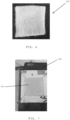
- each matrix held on a test board 108 at an approximately 45 degree angle.
- a spray device such as an Evicel ® Airless Spray Accessory. After being applied to the synthetic matrix 102, the biosynthetic adhesive was allowed to cure for two minutes.
- Each matrix was assessed to determine the retention of the biosynthetic adhesive by the synthetic matrix and the penetration of the biosynthetic adhesive through the thickness of the synthetic matrix.
- the retention of the biosynthetic adhesive by each of the five synthetic matrix samples was measured gravimetrically.
- synthetic matrix samples having different densities were studied to evaluate retention of the biosynthetic adhesive.
- a one-way ANOVA test was used to demonstrate that there were significant differences in permeation and retention at different densities (p ⁇ 0.05).
- the synthetic matrix specimen (i.e., Matrix 4) having a density of 178.2 mg/cm 3 was observed to result in the greatest biosynthetic adhesive retention while the least biosynthetic adhesive retention was observed when testing the synthetic matrix specimen (i.e., comparative Matrix 1) having a density of 93.0 mg/cm 3 , and the synthetic matrix specimen (i.e., comparative Matrix 5) having a density of 247 mg/cm 3 .
- the fourth matrix specimen (i.e., Matrix 4) having a density of 178.2 mg/cm 3 represented a 75%, 25%, 23%, and 80% increase in biosynthetic adhesive retention relative to the other specimens at 93.0 mg/cm 3 , 120.5 mg/cm 3 , 131.2 mg/cm 3 , and 247 mg/cm 3 conditions, respectively.
- the ability of the biosynthetic adhesive to penetrate or traverse through the synthetic matrix specimens having different densities was assessed via confocal microscopy.
- a cross-section of each synthetic matrix was imaged and measured via image processing methods.
- the biosynthetic adhesive retention and biosynthetic adhesive penetration data are shown together in FIG. 8 .
- the biosynthetic adhesive can completely penetrate through the synthetic matrix.
- the matrix density becomes too great to allow the biosynthetic adhesive to completely penetrate through the depth of matrix, and the biosynthetic adhesive can no longer pass completely through the matrix as was the case at lower matrix densities.
- the inability of the sealant to penetrate through the matrix then decreases the ability of the matrix to retain the sealant, which results in the sealant simply running off the exposed surface of the matrix. Without complete sealant penetration of the matrix, the sealant is unable to bind to the underlying tissue in vivo.
- FIG. 9 is a graph that shows the penetration of the biosynthetic adhesive through the thickness of the matrix specimens at different matrix densities. Due to the nature of the PG91 ⁇ matrix, as the density of the matrix increases, there is a corresponding increase in the thickness of the matrix itself. Up to a matrix density of 178.2 mg/cm3, the sealant completely penetrates through the matrix and the thickness of the biosynthetic adhesive increases, as well. Above the matrix density of 178.2 mg/cm3, although the matrix thickness continues to increase, the thickness of the biosynthetic adhesive will dramatically decrease due to poor penetration of the biosynthetic adhesive through the matrix.
- the distance of the biosynthetic adhesive penetration through the matrix is 52% lower than the penetration through a matrix specimen having density of 178.2 mg/cm 3 .
- the error bars represent one (1) standard deviation.
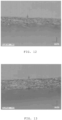
- FIGS. 10-14 shows representative confocal microscopy images of penetration of the biosynthetic adhesive through the thicknesses of five synthetic matrix specimens having different densities.
- the distance between the two red arrows indicates the sealant penetration through the respective matrix.
- FIG. 10 shows a first matrix specimen (comparative Matrix 1) having a density of 93.0 mg/cm 3 .
- FIG. 11 shows a second matrix specimen (comparative Matrix 2) having a density of 120.5 mg/cm 3 .
- FIG. 12 shows a third matrix specimen (Matrix 3) having a density of 131.2 mg/cm 3 .
- FIG. 13 shows a fourth matrix specimen (Matrix 4) having a density of 178.2 mg/cm 3 .
- FIG. 14 shows a fifth matrix specimen (comparative Matrix 5) having a density of 247.0 mg/cm 3 .
- the synthetic matrix specimens having densities of 93.0-178.2 mg/cm 3 were completely penetrated by the biosynthetic adhesive.
- the penetration of the biosynthetic adhesive through the synthetic matrix specimen having a density of 247.0 mg/cm 3 was 52% less than for the synthetic matrix specimen having densities of 178.2mg/cm 3 (Matrix Specimen 4 shown in FIG. 13 ).
- the functional consequences of the observed differences in retention and penetration of the biosynthetic adhesive were assessed via a benchtop hydraulic burst pressure test.
- a synthetic matrix specimen with previously cured biosynthetic adhesive was mounted on the test fixture. Saline was pumped underneath the matrix specimen at a rate of 2 mL/min until failure. The maximum pressure at failure was recorded. Synthetic matrix specimens having the five different density levels disclosed herein were evaluated. Referring to FIG. 15 , the synthetic matrix specimen having a density of 178 mg/cm 3 (i.e., Matrix 4 shown in FIG.
- the error bars represent one (1) standard deviation.
- Matrix 4 in FIG. 13 the synthetic matrix specimen having a density of 178 mg/cm 3 (i.e., Matrix 4 in FIG. 13 ) was significantly greater at sealing the resected surfaces of organs than the other synthetic matrix specimens having different densities.
- pressures of 9 mm Hg can be expected, however, in one embodiment, a safety factor of 3 is preferably applied to ensure desired performance.
- the upper limit of clinical pressures can reach 160 mmHg.
- a response optimizer algorithm in Minitab 18 was employed to determine the minimum matrix density that would result in a burst pressure of 27 mmHg and of 160 mmHg.
- the minimum matrix density was calculated to be 102.7 mg/cm 3 and 128.7 mg/cm 3 , respectively.
- the error bars represent one (1) standard deviation.
- the maximum matrix density for adequate sealing is restricted to a density that allows for complete penetration of the biosynthetic adhesive through the thickness of the synthetic matrix.
- the maximum matrix density was defined as the matrix density that resulted in sealant penetration greater than the average thickness of the matrices tested (i.e., 430 ⁇ m).
- a response optimizer algorithm in Minitab 18 was employed to determine that the maximum matrix density that would result in a biosynthetic adhesive penetration of 430 ⁇ m corresponded to a matrix density value of 190.7 mg/cm 3 .
- the error bars represent one (1) standard deviation.
- the optimal matrix density employed for sealing a soft tissue resection is about 102-191 mg/cm 3 and more preferably 102.7-190.7 mg/cm 3 and the optimal matrix density employed for sealing high pressure bleeding is about 128-191 mg/cm 3 , and more preferably 128.7-190.7 mg/cm 3 .
- a liver undergoes a partial lobe resection.
- a synthetic matrix 102 having a density of 107.9 mg/cm 3 and a biosynthetic adhesive are applied on the partial lobe resection of the liver using the systems, devices and methods disclosed herein.
- the combination of the synthetic matrix and the biosynthetic adhesive sealed the resected surface, prevented bleeding and fluid leaks, and reached hemostasis.
- a sealant including a synthetic mesh and a biosynthetic adhesive are applied together onto a resected surface of a soft organ.
- the synthetic mesh and the biosynthetic adhesive may be applied in different forms and methods as described below in order to control bleeding, fluid leaks, and air leaks.
- a biodegradable synthetic matrix e.g., a VICRYL ® non-woven PG910
- a biosynthetic adhesive e.g., albumin and PEG-SG adhesive solution
- the synthetic matrix and biosynthetic adhesive combination preferably forms a sealant at the resected surface.
- a biosynthetic adhesive (e.g., in liquid form) may be applied to a synthetic matrix and the synthetic matrix is then applied to the resected tissue.
- a biosynthetic adhesive (e.g., in liquid form) may be applied to the resected tissue and the synthetic matrix is then applied to the resected tissue and contacts the pre-applied biosynthetic adhesive.
- additional biosynthetic adhesive may be applied onto the placed synthetic matrix.
- PEG-SG (and possibly also albumin) is pre-coated on the synthetic matrix (e.g., a VICRYL ® PG910 mesh) and the synthetic matrix is applied dry on wet resected tissue to achieve sealing.
- the synthetic matrix e.g., a VICRYL ® PG910 mesh
- the PEG-SG and albumin components of the biosynthetic adhesive are applied to the resected tissue as a powder mixture followed by placement of a dry synthetic matrix (e.g., a VICRYL ® PG910 mesh) on a wet resected tissue to achieve sealing.
- a dry synthetic matrix e.g., a VICRYL ® PG910 mesh
- Dry storage preferably enables longer term storage of the product at room temperature.
- the powder mixture may have the following ratios of PEG-SG to protein (albumin): 0/100%, 20/80%, 40/60%, 50%50, 60/40%, 80/20% and 100/0% PEG-SG to albumin, respectively.
- the PEG-SG may be pre-coated on the synthetic substrate (e.g., the VICRYL ® PG910 mesh), and the albumin solution may be applied to the synthetic matrix and/or the resected tissue, and the synthetic matrix may be applied immediately to the resected tissue to achieve sealing.
- the synthetic substrate e.g., the VICRYL ® PG910 mesh
- the mesh can be used as a buttress material for linear staple with wide edges (wider than the linear anvil; as described in Disclosure #150334 Design of stapler anvil for delivery of buttress material wider than the anvil width ) followed by application of fluid adhesive on the mesh to provide sealing of exposed tissue (during soft organ resection using linear stapler, for example)
- Example 1 Use of the Synthetic Matrix and the Biosynthetic Adhesive as a Sealant in a Porcine Model of Liver Resection.
- the systems, devices and methods disclosed herein were used as a sealant in a porcine model of liver resection as follows.
- the liver lobe was resected using a surgical scalpel and the liver was clamped to minimize blood flow to the resected lobe.
- a biosynthetic adhesive solution was prepared as follows: a dual syringe system (e.g., Evicel device) holding 5ml in each syringe of 1) 20% albumin solution, and 2) 150mg/ml of PEG-SG solution.
- the content of the two syringes was mixed in the spray tip of the device as it was sprayed onto the resected liver surface (e.g., about 5ml). Then, the synthetic mesh (e.g., non-woven VICRYL ® PG910 mesh) was placed on the resected surface. The synthetic matrix preferably conforms to the geometry of the resected tissue. Additional biosynthetic adhesive (e.g., about 5 ml) was sprayed on the synthetic matrix with no pressure applied to the synthetic matrix. After two minutes, the clamp was removed to restore normal blood flow to the resected lobe. No bleeding or fluid leaks from the resected surface were visually observed.
- the synthetic mesh e.g., non-woven VICRYL ® PG910 mesh
- sutures may be passed through the cured sealant device (i.e., a combination of the synthetic mesh and the cured adhesive) to help secure the sealant device to the resected organ.
- the cured sealant device may serve as a buttress to reduce stress around the suture holes. Following several minutes, the sealant was removed, which required significantly high force due to strong adhesion of the synthetic matrix and the biosynthetic adhesive to the resected tissue and re-bleeding was observed.
- the Example 1 study demonstrates the efficiency of the sealing systems, devices and methods disclosed herein and its superiority over other tested matrices with the same adhesives.
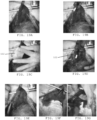
- FIGS. 19A-19G show the implementation of Example 1 including the PG910 Mesh and Liquid albumin/PEG-SG adhesive combination being used as a sealant in a porcine model of liver resection.
- FIG. 19A shows a resected surface and clamped liver lobe.
- FIG. 19B shows the adhesive sealant being sprayed onto the resected surface.
- FIG.19C shows the synthetic matrix 102 (e.g., VICRYL ® PG910 mesh) being placed on the sprayed resected surface.
- FIG. 19D shows the synthetic matrix 102 after being sprayed with the biosynthetic adhesive sealant.
- FIG. 19E shows the two minutes waiting period for enabling the biosynthetic adhesive to cure.
- FIG. 19A shows a resected surface and clamped liver lobe.
- FIG. 19B shows the adhesive sealant being sprayed onto the resected surface.
- FIG.19C shows the synthetic matrix 102 (
- FIG. 19F shows clamp removal and re-establishment of blood flow to the resected lobe, whereby no bleeding is observed in the treated areas.
- the VICRYL ® mesh combined with albumin/PEG-SG demonstrated sufficient efficacy as a sealant.
- FIG. 19G shows the resected surface after the sealant has been peeled away, which results in additional bleeding from the resected surface.
- Example 2 Use of the sealant system during a solid tumor resection procedure.
- the sealant system is used for patients undergoing a pulmonary resection.
- a sealing system including a synthetic matrix and a biosynthetic adhesive was placed at the areas of risk of leaks (e.g., a staple line, raw and denuded pleura surfaces) to achieve sealing at the resected area(s).
- the sealing system was applied to the resected organ using laparoscopic and non-laparoscopic methods. Studies demonstrated the efficacy of the synthetic matrix and biosynthetic adhesive combination in sealing pulmonary air leaks, as compared to other matrices used with fibrin glue.
- the sealing systems, devices and methods disclosed herein utilize a two component sealant including a synthetic matrix and a biosynthetic adhesive.
- the two component sealant provides surgeons with more flexibility in sealing resected tissue by enabling surgeons to apply a biosynthetic adhesive on both a synthetic matrix and/or the resected tissue prior to placing the synthetic matrix on the resected tissue.
- supplemental biosynthetic adhesive may be applied at specific locations, as needed.
- the synthetic matrix of the two component sealing system is flexible for conforming to uneven surfaces, such as an uneven resected surface of an organ.
- the synthetic matrix provides enhanced structural support (i.e., scaffolding) that is substantially greater than that which can be attained by using a liquid sealant by itself.
- the two component sealing system is designed to seal resected surfaces for preventing and/or controlling bleeding, fluid leaks and air leaks.
- the sealing system disclosed herein is independent of a patient's clotting system. Thus, surgeons can attain hemostasis and sealing independent of the patient's coagulation status, which could be impaired in patients being resected since most clotting proteins are produced in the liver.
- the sealing system may also be used for patients on antiplatelet and anticoagulant therapy, e.g., aspirin, heparin or warfarin.
- the two component sealing system is clear and allows surgeons to visually examine the resected surface following sealing. Surgeon visibility and confirmation that treatment is effective is critical and cannot be achieved with opaque liquid sealants and/or or opaque patches.
- the sealant clarity may reduce the likelihood of iatrogenic injury due to poor visualization at the resection site.
- the two component dealing system disclosed herein preferably provides strong adhesion to resected tissue, however, the synthetic matrix may be manually removed and repositioned, if necessary, for forming a proper seal.
- the combination of the synthetic matrix and the biosynthetic adhesive provide strong adhesion to resected tissue through direct covalent bonding with proteins on the tissue surface.
- the two component sealing system enables the properties of the respective components of the system to be modified to optimize retention of the biosynthetic adhesive by the synthetic matrix, and penetration of the biosynthetic adhesive through the thickness of the synthetic matrix.
- the specific formulations of the biosynthetic adhesive and the synthetic matrix may be modified to allow for specific characteristics (e.g., degradation rate, strength).
- the adhesive may include a synthetic adhesive.
- the adhesive may include a biocompatible, reactive electrophile and a nucleophile.
- the electrophile may include PEG-SG.
- the nucleophile may be selected from any source of NH 2 group, any appropriate protein or protein mixture, albumin, polyethylene glycol amines (PEG-NH 2 ), and combinations of albumin and PEG-NH 2 .
Landscapes
- Health & Medical Sciences (AREA)
- Surgery (AREA)
- Life Sciences & Earth Sciences (AREA)
- Public Health (AREA)
- Veterinary Medicine (AREA)
- Animal Behavior & Ethology (AREA)
- General Health & Medical Sciences (AREA)
- Epidemiology (AREA)
- Heart & Thoracic Surgery (AREA)
- Vascular Medicine (AREA)
- Chemical & Material Sciences (AREA)
- Chemical Kinetics & Catalysis (AREA)
- Engineering & Computer Science (AREA)
- Biomedical Technology (AREA)
- Nuclear Medicine, Radiotherapy & Molecular Imaging (AREA)
- Dispersion Chemistry (AREA)
- Medical Informatics (AREA)
- Molecular Biology (AREA)
- Composite Materials (AREA)
- Materials Engineering (AREA)
- Cardiology (AREA)
- Materials For Medical Uses (AREA)
- Sealing Material Composition (AREA)
Claims (14)
- Abdichtvorrichtung umfassend:eine synthetische Matrix; undeinen biosynthetischen oder synthetischen Klebstoff in flüssiger oder Pulverform zum Anhaften der synthetischen Matrix an Gewebe,wobei die synthetische Matrix Fasern umfasst und eine Dichte in dem Bereich von 128,7-190,7 mg/cm3 aufweist.
- Abdichtvorrichtung gemäß Anspruch 1, wobei die synthetische Matrix ein bioabbaubares poröses flexibles Substrat ist.
- Abdichtvorrichtung gemäß Anspruch 1, wobei die synthetische Matrix ein Vliesstoff-Netzmaterial aus Polyglactin 910 umfasst, wobei das Polyglactin 910-Material 90 % Glycolid und 10 % L-Lactid umfasst.
- Abdichtvorrichtung gemäß Anspruch 1, wobei die synthetische Matrix und der Klebstoff wenigstens teilweise transparent sind.
- Abdichtvorrichtung gemäß Anspruch 1, wobei der Klebstoff ein biokompatibles reaktionsfähiges Elektrophil und ein Nukleophil umfasst.
- Abdichtvorrichtung gemäß Anspruch 5, wobei das Elektrophil Polyethylenglycolsuccinimidylglutaratester (PEG-SG) umfasst.
- Abdichtvorrichtung gemäß Anspruch 6, wobei das Nukleophil ausgewählt ist aus der Gruppe bestehend aus einer beliebigen Quelle von Amingruppen (NH2), einem beliebigen geeigneten Protein oder Proteingemisch, Albumin, Polyethylenglycolaminen (PEG-NH2) und Kombinationen von Albumin und PEG-NH2.
- Abdichtvorrichtung gemäß Anspruch 1, wobei der biosynthetische Klebstoff ein teilhydrolysiertes Protein und PEG-SG umfasst.
- Abdichtvorrichtung gemäß Anspruch 8, wobei das teilhydrolysierte Protein Albumin ist.
- Abdichtvorrichtung gemäß Anspruch 9, wobei der biosynthetische Klebstoff ein Gemisch von einer 10 % Albuminlösung und 75 mg/ml PEG-SG-Lösung umfasst.
- Abdichtvorrichtung gemäß Anspruch 1, wobei der Klebstoff mit Fasern der synthetischen Matrix vernetzt ist.
- Kit zum Abdichten einer resezierten Oberfläche eines Organs, umfassend:eine synthetische Matrix umfassend ein Vliesstoff-Netzmaterial aus Polyglactin 910;einen Klebstoff umfassend ein biokompatibles reaktionsfähiges Elektrophil und ein Nukleophil,wobei das Polyglactin 910-Material 90 % Glycolid und 10 % L-Lactid enthält,wobei die synthetische Matrix porös ist und eine Dichte in dem Bereich von 128,7-190,7 mg/cm3 aufweist,wobei der Klebstoff in flüssiger oder Pulverform vorliegt.
- Kit gemäß Anspruch 12, wobei der Klebstoff ein biosynthetischer Klebstoff ist, der ein teilhydrolysiertes Protein und PEG-SG umfasst.
- Kit gemäß Anspruch 13, ferner umfassend:eine Doppelspritze zum Ausgeben des biosynthetischen Klebstoffs, umfassend einen ersten Spritzenzylinder und einen zweiten Spritzenzylinder;wobei der erste Spritzenzylinder eine 20 % Albuminlösung enthält; undder zweite Spritzenzylinder eine 150 mg/ml PEG-SG-Lösung enthält.
Priority Applications (1)
| Application Number | Priority Date | Filing Date | Title |
|---|---|---|---|
| EP24194863.7A EP4473914A3 (de) | 2020-06-10 | 2021-06-07 | Zwei-komponenten-dichtungssysteme mit synthetischen matrizen und biosynthetischen klebstoffen zum abdichten von organen |
Applications Claiming Priority (2)
| Application Number | Priority Date | Filing Date | Title |
|---|---|---|---|
| US16/897,328 US11826028B2 (en) | 2020-06-10 | 2020-06-10 | Two component sealing systems including synthetic matrices and biosynthetic adhesives for sealing resected surfaces of organs to control bleeding, fluid leaks and air leaks |
| PCT/IB2021/054988 WO2021250548A1 (en) | 2020-06-10 | 2021-06-07 | Two component sealing systems including synthetic matrices and biosynthetic adhesives for sealing resected surfaces of organs to control bleeding, fluid leaks and air leaks |
Related Child Applications (1)
| Application Number | Title | Priority Date | Filing Date |
|---|---|---|---|
| EP24194863.7A Division EP4473914A3 (de) | 2020-06-10 | 2021-06-07 | Zwei-komponenten-dichtungssysteme mit synthetischen matrizen und biosynthetischen klebstoffen zum abdichten von organen |
Publications (3)
| Publication Number | Publication Date |
|---|---|
| EP4164708A1 EP4164708A1 (de) | 2023-04-19 |
| EP4164708B1 true EP4164708B1 (de) | 2024-08-21 |
| EP4164708C0 EP4164708C0 (de) | 2024-08-21 |
Family
ID=76444482
Family Applications (2)
| Application Number | Title | Priority Date | Filing Date |
|---|---|---|---|
| EP21732554.7A Active EP4164708B1 (de) | 2020-06-10 | 2021-06-07 | Zweikomponentige dichtungssysteme mit synthetischen matrizen und biosynthetischen klebstoffen zum abdichten von resektierten organoberflächen |
| EP24194863.7A Withdrawn EP4473914A3 (de) | 2020-06-10 | 2021-06-07 | Zwei-komponenten-dichtungssysteme mit synthetischen matrizen und biosynthetischen klebstoffen zum abdichten von organen |
Family Applications After (1)
| Application Number | Title | Priority Date | Filing Date |
|---|---|---|---|
| EP24194863.7A Withdrawn EP4473914A3 (de) | 2020-06-10 | 2021-06-07 | Zwei-komponenten-dichtungssysteme mit synthetischen matrizen und biosynthetischen klebstoffen zum abdichten von organen |
Country Status (5)
| Country | Link |
|---|---|
| US (1) | US11826028B2 (de) |
| EP (2) | EP4164708B1 (de) |
| JP (1) | JP7761187B2 (de) |
| CN (1) | CN115916280A (de) |
| WO (1) | WO2021250548A1 (de) |
Families Citing this family (4)
| Publication number | Priority date | Publication date | Assignee | Title |
|---|---|---|---|---|
| US11826028B2 (en) * | 2020-06-10 | 2023-11-28 | Ethicon, Inc. | Two component sealing systems including synthetic matrices and biosynthetic adhesives for sealing resected surfaces of organs to control bleeding, fluid leaks and air leaks |
| US12114843B2 (en) | 2022-03-31 | 2024-10-15 | Ethicon, Inc. | Sealant applicators having mixing and spraying assemblies with malleable sections and spray tips having reduced dimensions |
| US12220118B2 (en) | 2022-03-31 | 2025-02-11 | Ethicon, Inc. | Systems, devices and methods for reconstituting therapeutic powders, mixing precursor solutions, and expressing sealants for controlling bleeding and sealing fluid and air leaks |
| US12599624B2 (en) | 2022-08-30 | 2026-04-14 | Ethicon, Inc. | Biodegradable lung sealants |
Family Cites Families (33)
| Publication number | Priority date | Publication date | Assignee | Title |
|---|---|---|---|---|
| ZA837717B (en) * | 1982-10-18 | 1985-05-29 | Johnson & Johnson Prod Inc | Synthetic absorbable hemostat |
| WO1993017635A1 (en) * | 1992-03-04 | 1993-09-16 | C.R. Bard, Inc. | Composite prosthesis and method for limiting the incidence of postoperative adhesions |
| CA2114282A1 (en) * | 1993-01-28 | 1994-07-29 | Lothar Schilder | Multi-layered implant |
| IL112580A0 (en) | 1994-02-24 | 1995-05-26 | Res Dev Foundation | Amniotic membrane graft of wrap to prevent adhesions or bleeding of internal organs |
| US6833408B2 (en) * | 1995-12-18 | 2004-12-21 | Cohesion Technologies, Inc. | Methods for tissue repair using adhesive materials |
| WO1997022371A1 (en) * | 1995-12-18 | 1997-06-26 | Collagen Corporation | Crosslinked polymer compositions and methods for their use |
| US6371975B2 (en) * | 1998-11-06 | 2002-04-16 | Neomend, Inc. | Compositions, systems, and methods for creating in situ, chemically cross-linked, mechanical barriers |
| JP4860817B2 (ja) * | 1998-08-26 | 2012-01-25 | ネオメンド、インク. | 化学的に架橋した機械的障壁または被覆構造体をインサイチュ作成するための組成物、システムおよび方法 |
| EP1563856A4 (de) | 2002-11-14 | 2008-02-27 | Chemo Sero Therapeut Res Inst | Thrombin tragendes bioabsorbierbares synthetisches vlies |
| US20040187877A1 (en) | 2002-12-04 | 2004-09-30 | Badylak Stephen F. | Method for repair of liver tissue |
| CN101043843A (zh) | 2004-06-30 | 2007-09-26 | 詹姆士·V·西茨曼 | 用于微创手术和其它内部处置的医疗装置 |
| CA2584698C (en) * | 2004-10-20 | 2014-02-25 | Ethicon, Inc. | A reinforced absorbable multilayered hemostatic wound dressing and method of making |
| WO2007041593A2 (en) * | 2005-10-03 | 2007-04-12 | Combinatorx, Incorporated | Anti-scarring drug combinations and use thereof |
| US20070154509A1 (en) * | 2005-12-30 | 2007-07-05 | Wilcher Steve A | Adsorbent-Containing Hemostatic Devices |
| TWI436793B (zh) * | 2006-08-02 | 2014-05-11 | 巴克斯特國際公司 | 快速作用之乾密封膠及其使用和製造方法 |
| US20100286791A1 (en) * | 2006-11-21 | 2010-11-11 | Goldsmith David S | Integrated system for the ballistic and nonballistic infixion and retrieval of implants |
| US7868123B2 (en) * | 2007-11-19 | 2011-01-11 | Ethicon, Inc. | Derivatized tertiary amines and uses thereof |
| US8299316B2 (en) * | 2007-12-18 | 2012-10-30 | Ethicon, Inc. | Hemostatic device |
| EP2442834A2 (de) | 2009-06-15 | 2012-04-25 | Technion Research and Development Foundation, Ltd. | Verstärkte chirurgische haft- und versiegelungsmittel sowie ihre in-situ-anwendung |
| US8273369B2 (en) * | 2010-05-17 | 2012-09-25 | Ethicon, Inc. | Reinforced absorbable synthetic matrix for hemostatic applications |
| US9017711B2 (en) | 2011-04-28 | 2015-04-28 | Warsaw Orthopedic, Inc. | Soft tissue wrap |
| US9056092B2 (en) * | 2011-12-02 | 2015-06-16 | Ethicon, Inc. | Hemostatic bioabsorbable device with polyethylene glycol binder |
| ES2830775T3 (es) * | 2012-03-19 | 2021-06-04 | Neomend Inc | Método de co-precipitación |
| US10206686B2 (en) * | 2014-06-10 | 2019-02-19 | Ethicon Llc | Bronchus sealants and methods of sealing bronchial tubes |
| CA2963057C (en) * | 2014-10-06 | 2023-08-01 | Gatt Technologies B.V. | Tissue-adhesive porous haemostatic product |
| KR102831575B1 (ko) * | 2015-08-17 | 2025-07-10 | 더 존스 홉킨스 유니버시티 | 조직 치유용 섬유-하이드로겔 복합체 외과용 메쉬 |
| CN109200331B (zh) * | 2015-12-17 | 2021-06-25 | 杭州亚慧生物科技有限公司 | 一种肺部封合医用凝胶及其制备方法与应用 |
| CN109475400A (zh) * | 2016-05-09 | 2019-03-15 | 生命连结有限公司 | 基于网状补片的原位可交联组合物 |
| CN107754005B (zh) * | 2016-08-15 | 2021-06-15 | 广州倍绣生物技术有限公司 | 止血组合物及其制造方法 |
| CN107537056A (zh) * | 2017-09-11 | 2018-01-05 | 杭州亚慧生物科技有限公司 | 一种硬脑膜封合凝胶及其制备方法与应用 |
| CN110193091A (zh) * | 2018-02-27 | 2019-09-03 | 华东理工大学 | 可注射蛋白/聚乙二醇基水凝胶材料及其制备方法和应用 |
| CN110801528A (zh) * | 2019-10-30 | 2020-02-18 | 金路平 | 一种硬脊膜封合水凝胶及其制备方法与应用 |
| US11826028B2 (en) * | 2020-06-10 | 2023-11-28 | Ethicon, Inc. | Two component sealing systems including synthetic matrices and biosynthetic adhesives for sealing resected surfaces of organs to control bleeding, fluid leaks and air leaks |
-
2020
- 2020-06-10 US US16/897,328 patent/US11826028B2/en active Active
-
2021
- 2021-06-07 EP EP21732554.7A patent/EP4164708B1/de active Active
- 2021-06-07 CN CN202180041942.2A patent/CN115916280A/zh active Pending
- 2021-06-07 EP EP24194863.7A patent/EP4473914A3/de not_active Withdrawn
- 2021-06-07 WO PCT/IB2021/054988 patent/WO2021250548A1/en not_active Ceased
- 2021-06-07 JP JP2022576046A patent/JP7761187B2/ja active Active
Also Published As
| Publication number | Publication date |
|---|---|
| US11826028B2 (en) | 2023-11-28 |
| WO2021250548A1 (en) | 2021-12-16 |
| JP2023529927A (ja) | 2023-07-12 |
| US20210393245A1 (en) | 2021-12-23 |
| EP4164708C0 (de) | 2024-08-21 |
| EP4473914A3 (de) | 2025-03-05 |
| EP4473914A2 (de) | 2024-12-11 |
| JP7761187B2 (ja) | 2025-10-28 |
| EP4164708A1 (de) | 2023-04-19 |
| CN115916280A (zh) | 2023-04-04 |
Similar Documents
| Publication | Publication Date | Title |
|---|---|---|
| EP4164708B1 (de) | Zweikomponentige dichtungssysteme mit synthetischen matrizen und biosynthetischen klebstoffen zum abdichten von resektierten organoberflächen | |
| Wang et al. | A catechol bioadhesive for rapid hemostasis and healing of traumatic internal organs and major arteries | |
| JP5014140B2 (ja) | 接着性縫合構造体およびこれを用いる方法 | |
| CA2596254C (en) | Surgical fastener buttress material | |
| Nomori et al. | Gelatin-resorcinol–formaldehyde-glutaraldehyde glue for sealing pulmonary air leaks during thoracoscopic operation | |
| US20240216585A1 (en) | Peg bicomponent self-adhesive absorbable biological patch and preparation method and use thereof | |
| US20120209319A1 (en) | Reinforced surgical adhesives and sealants and their in-situ application | |
| JP2008516680A5 (de) | ||
| JP2008510515A (ja) | ステープル留め支持構造物 | |
| AU2004206150A1 (en) | Hemostatic materials | |
| AU2013368867B2 (en) | Device and method for the application of a curable fluid composition to a portion of a bodily organ | |
| US20230263525A1 (en) | Surgical medical devices | |
| US9474825B2 (en) | Methods for sealing fluid leaks in lung tissue | |
| JP7830821B2 (ja) | 合成マトリクス及び生合成接着剤を含む二成分封止システム | |
| Horsley et al. | Management of the uncontrollable pulmonary air leak with cyanoacrylate glue | |
| US20120132105A1 (en) | Sealants, manufacturing thereof, and application thereof | |
| HK40084494A (en) | Two component sealing systems including synthetic matrices and biosynthetic adhesives for sealing resected surfaces of organs to control bleeding, fluid leaks and air leaks | |
| Kawai et al. | Sealing effect of cross-linked gelatin glue in the rat lung air leak model | |
| Hubel et al. | Characterization of Novel Adhesive For Use As Topical Hemostatic Agent | |
| CN119909220A (zh) | 一种生物胶水 | |
| Charron | Burst Pressure Properties and Ex Vivo Analysis of Alginate-Based Hydrogels for Tissue Sealant Applications | |
| Suzuki et al. | Sealants (adhesives) to prevent bleeding |
Legal Events
| Date | Code | Title | Description |
|---|---|---|---|
| STAA | Information on the status of an ep patent application or granted ep patent |
Free format text: STATUS: UNKNOWN |
|
| STAA | Information on the status of an ep patent application or granted ep patent |
Free format text: STATUS: THE INTERNATIONAL PUBLICATION HAS BEEN MADE |
|
| PUAI | Public reference made under article 153(3) epc to a published international application that has entered the european phase |
Free format text: ORIGINAL CODE: 0009012 |
|
| STAA | Information on the status of an ep patent application or granted ep patent |
Free format text: STATUS: REQUEST FOR EXAMINATION WAS MADE |
|
| 17P | Request for examination filed |
Effective date: 20230109 |
|
| AK | Designated contracting states |
Kind code of ref document: A1 Designated state(s): AL AT BE BG CH CY CZ DE DK EE ES FI FR GB GR HR HU IE IS IT LI LT LU LV MC MK MT NL NO PL PT RO RS SE SI SK SM TR |
|
| DAV | Request for validation of the european patent (deleted) | ||
| DAX | Request for extension of the european patent (deleted) | ||
| GRAP | Despatch of communication of intention to grant a patent |
Free format text: ORIGINAL CODE: EPIDOSNIGR1 |
|
| STAA | Information on the status of an ep patent application or granted ep patent |
Free format text: STATUS: GRANT OF PATENT IS INTENDED |
|
| INTG | Intention to grant announced |
Effective date: 20240319 |
|
| GRAS | Grant fee paid |
Free format text: ORIGINAL CODE: EPIDOSNIGR3 |
|
| GRAA | (expected) grant |
Free format text: ORIGINAL CODE: 0009210 |
|
| STAA | Information on the status of an ep patent application or granted ep patent |
Free format text: STATUS: THE PATENT HAS BEEN GRANTED |
|
| AK | Designated contracting states |
Kind code of ref document: B1 Designated state(s): AL AT BE BG CH CY CZ DE DK EE ES FI FR GB GR HR HU IE IS IT LI LT LU LV MC MK MT NL NO PL PT RO RS SE SI SK SM TR |
|
| REG | Reference to a national code |
Ref country code: GB Ref legal event code: FG4D |
|
| REG | Reference to a national code |
Ref country code: CH Ref legal event code: EP |
|
| REG | Reference to a national code |
Ref country code: IE Ref legal event code: FG4D |
|
| REG | Reference to a national code |
Ref country code: DE Ref legal event code: R096 Ref document number: 602021017550 Country of ref document: DE |
|
| U01 | Request for unitary effect filed |
Effective date: 20240918 |
|
| U07 | Unitary effect registered |
Designated state(s): AT BE BG DE DK EE FI FR IT LT LU LV MT NL PT RO SE SI Effective date: 20241030 |
|
| PG25 | Lapsed in a contracting state [announced via postgrant information from national office to epo] |
Ref country code: NO Free format text: LAPSE BECAUSE OF FAILURE TO SUBMIT A TRANSLATION OF THE DESCRIPTION OR TO PAY THE FEE WITHIN THE PRESCRIBED TIME-LIMIT Effective date: 20241121 |
|
| PG25 | Lapsed in a contracting state [announced via postgrant information from national office to epo] |
Ref country code: PL Free format text: LAPSE BECAUSE OF FAILURE TO SUBMIT A TRANSLATION OF THE DESCRIPTION OR TO PAY THE FEE WITHIN THE PRESCRIBED TIME-LIMIT Effective date: 20240821 Ref country code: GR Free format text: LAPSE BECAUSE OF FAILURE TO SUBMIT A TRANSLATION OF THE DESCRIPTION OR TO PAY THE FEE WITHIN THE PRESCRIBED TIME-LIMIT Effective date: 20241122 |
|
| PG25 | Lapsed in a contracting state [announced via postgrant information from national office to epo] |
Ref country code: IS Free format text: LAPSE BECAUSE OF FAILURE TO SUBMIT A TRANSLATION OF THE DESCRIPTION OR TO PAY THE FEE WITHIN THE PRESCRIBED TIME-LIMIT Effective date: 20241221 |
|
| PG25 | Lapsed in a contracting state [announced via postgrant information from national office to epo] |
Ref country code: HR Free format text: LAPSE BECAUSE OF FAILURE TO SUBMIT A TRANSLATION OF THE DESCRIPTION OR TO PAY THE FEE WITHIN THE PRESCRIBED TIME-LIMIT Effective date: 20240821 |
|
| PG25 | Lapsed in a contracting state [announced via postgrant information from national office to epo] |
Ref country code: ES Free format text: LAPSE BECAUSE OF FAILURE TO SUBMIT A TRANSLATION OF THE DESCRIPTION OR TO PAY THE FEE WITHIN THE PRESCRIBED TIME-LIMIT Effective date: 20240821 Ref country code: RS Free format text: LAPSE BECAUSE OF FAILURE TO SUBMIT A TRANSLATION OF THE DESCRIPTION OR TO PAY THE FEE WITHIN THE PRESCRIBED TIME-LIMIT Effective date: 20241121 |
|
| PG25 | Lapsed in a contracting state [announced via postgrant information from national office to epo] |
Ref country code: RS Free format text: LAPSE BECAUSE OF FAILURE TO SUBMIT A TRANSLATION OF THE DESCRIPTION OR TO PAY THE FEE WITHIN THE PRESCRIBED TIME-LIMIT Effective date: 20241121 Ref country code: PL Free format text: LAPSE BECAUSE OF FAILURE TO SUBMIT A TRANSLATION OF THE DESCRIPTION OR TO PAY THE FEE WITHIN THE PRESCRIBED TIME-LIMIT Effective date: 20240821 Ref country code: NO Free format text: LAPSE BECAUSE OF FAILURE TO SUBMIT A TRANSLATION OF THE DESCRIPTION OR TO PAY THE FEE WITHIN THE PRESCRIBED TIME-LIMIT Effective date: 20241121 Ref country code: IS Free format text: LAPSE BECAUSE OF FAILURE TO SUBMIT A TRANSLATION OF THE DESCRIPTION OR TO PAY THE FEE WITHIN THE PRESCRIBED TIME-LIMIT Effective date: 20241221 Ref country code: HR Free format text: LAPSE BECAUSE OF FAILURE TO SUBMIT A TRANSLATION OF THE DESCRIPTION OR TO PAY THE FEE WITHIN THE PRESCRIBED TIME-LIMIT Effective date: 20240821 Ref country code: GR Free format text: LAPSE BECAUSE OF FAILURE TO SUBMIT A TRANSLATION OF THE DESCRIPTION OR TO PAY THE FEE WITHIN THE PRESCRIBED TIME-LIMIT Effective date: 20241122 Ref country code: ES Free format text: LAPSE BECAUSE OF FAILURE TO SUBMIT A TRANSLATION OF THE DESCRIPTION OR TO PAY THE FEE WITHIN THE PRESCRIBED TIME-LIMIT Effective date: 20240821 |
|
| PG25 | Lapsed in a contracting state [announced via postgrant information from national office to epo] |
Ref country code: SM Free format text: LAPSE BECAUSE OF FAILURE TO SUBMIT A TRANSLATION OF THE DESCRIPTION OR TO PAY THE FEE WITHIN THE PRESCRIBED TIME-LIMIT Effective date: 20240821 |
|
| PG25 | Lapsed in a contracting state [announced via postgrant information from national office to epo] |
Ref country code: CZ Free format text: LAPSE BECAUSE OF FAILURE TO SUBMIT A TRANSLATION OF THE DESCRIPTION OR TO PAY THE FEE WITHIN THE PRESCRIBED TIME-LIMIT Effective date: 20240821 |
|
| PG25 | Lapsed in a contracting state [announced via postgrant information from national office to epo] |
Ref country code: SK Free format text: LAPSE BECAUSE OF FAILURE TO SUBMIT A TRANSLATION OF THE DESCRIPTION OR TO PAY THE FEE WITHIN THE PRESCRIBED TIME-LIMIT Effective date: 20240821 |
|
| U20 | Renewal fee for the european patent with unitary effect paid |
Year of fee payment: 5 Effective date: 20250509 |
|
| PLBE | No opposition filed within time limit |
Free format text: ORIGINAL CODE: 0009261 |
|
| STAA | Information on the status of an ep patent application or granted ep patent |
Free format text: STATUS: NO OPPOSITION FILED WITHIN TIME LIMIT |
|
| 26N | No opposition filed |
Effective date: 20250522 |
|
| REG | Reference to a national code |
Ref country code: CH Ref legal event code: H13 Free format text: ST27 STATUS EVENT CODE: U-0-0-H10-H13 (AS PROVIDED BY THE NATIONAL OFFICE) Effective date: 20260127 |
|
| PG25 | Lapsed in a contracting state [announced via postgrant information from national office to epo] |
Ref country code: MC Free format text: LAPSE BECAUSE OF FAILURE TO SUBMIT A TRANSLATION OF THE DESCRIPTION OR TO PAY THE FEE WITHIN THE PRESCRIBED TIME-LIMIT Effective date: 20240821 |
|
| GBPC | Gb: european patent ceased through non-payment of renewal fee |
Effective date: 20250607 |
|
| PG25 | Lapsed in a contracting state [announced via postgrant information from national office to epo] |
Ref country code: GB Free format text: LAPSE BECAUSE OF NON-PAYMENT OF DUE FEES Effective date: 20250607 |
|
| PG25 | Lapsed in a contracting state [announced via postgrant information from national office to epo] |
Ref country code: IE Free format text: LAPSE BECAUSE OF NON-PAYMENT OF DUE FEES Effective date: 20250607 |
|
| PG25 | Lapsed in a contracting state [announced via postgrant information from national office to epo] |
Ref country code: CH Free format text: LAPSE BECAUSE OF NON-PAYMENT OF DUE FEES Effective date: 20250630 |