EP4173542A1 - Réfrigérateur avec un transfert d'énergie sans fil à travers un front de cuisine - Google Patents
Réfrigérateur avec un transfert d'énergie sans fil à travers un front de cuisine Download PDFInfo
- Publication number
- EP4173542A1 EP4173542A1 EP22197686.3A EP22197686A EP4173542A1 EP 4173542 A1 EP4173542 A1 EP 4173542A1 EP 22197686 A EP22197686 A EP 22197686A EP 4173542 A1 EP4173542 A1 EP 4173542A1
- Authority
- EP
- European Patent Office
- Prior art keywords
- interaction element
- built
- designed
- wireless energy
- device lock
- Prior art date
- Legal status (The legal status is an assumption and is not a legal conclusion. Google has not performed a legal analysis and makes no representation as to the accuracy of the status listed.)
- Withdrawn
Links
Images

Classifications
-
- F—MECHANICAL ENGINEERING; LIGHTING; HEATING; WEAPONS; BLASTING
- F25—REFRIGERATION OR COOLING; COMBINED HEATING AND REFRIGERATION SYSTEMS; HEAT PUMP SYSTEMS; MANUFACTURE OR STORAGE OF ICE; LIQUEFACTION SOLIDIFICATION OF GASES
- F25D—REFRIGERATORS; COLD ROOMS; ICE-BOXES; COOLING OR FREEZING APPARATUS NOT OTHERWISE PROVIDED FOR
- F25D23/00—General constructional features
- F25D23/10—Arrangements for mounting in particular locations, e.g. for built-in type, for corner type
-
- F—MECHANICAL ENGINEERING; LIGHTING; HEATING; WEAPONS; BLASTING
- F24—HEATING; RANGES; VENTILATING
- F24C—DOMESTIC STOVES OR RANGES ; DETAILS OF DOMESTIC STOVES OR RANGES, OF GENERAL APPLICATION
- F24C15/00—Details
- F24C15/02—Doors specially adapted for stoves or ranges
-
- F—MECHANICAL ENGINEERING; LIGHTING; HEATING; WEAPONS; BLASTING
- F24—HEATING; RANGES; VENTILATING
- F24C—DOMESTIC STOVES OR RANGES ; DETAILS OF DOMESTIC STOVES OR RANGES, OF GENERAL APPLICATION
- F24C15/00—Details
- F24C15/30—Arrangements for mounting stoves or ranges in particular locations
-
- F—MECHANICAL ENGINEERING; LIGHTING; HEATING; WEAPONS; BLASTING
- F24—HEATING; RANGES; VENTILATING
- F24C—DOMESTIC STOVES OR RANGES ; DETAILS OF DOMESTIC STOVES OR RANGES, OF GENERAL APPLICATION
- F24C7/00—Stoves or ranges heated by electric energy
- F24C7/08—Arrangement or mounting of control or safety devices
- F24C7/082—Arrangement or mounting of control or safety devices on ranges, e.g. control panels, illumination
- F24C7/085—Arrangement or mounting of control or safety devices on ranges, e.g. control panels, illumination on baking ovens
-
- F—MECHANICAL ENGINEERING; LIGHTING; HEATING; WEAPONS; BLASTING
- F25—REFRIGERATION OR COOLING; COMBINED HEATING AND REFRIGERATION SYSTEMS; HEAT PUMP SYSTEMS; MANUFACTURE OR STORAGE OF ICE; LIQUEFACTION SOLIDIFICATION OF GASES
- F25D—REFRIGERATORS; COLD ROOMS; ICE-BOXES; COOLING OR FREEZING APPARATUS NOT OTHERWISE PROVIDED FOR
- F25D23/00—General constructional features
- F25D23/02—Doors; Covers
- F25D23/028—Details
-
- F—MECHANICAL ENGINEERING; LIGHTING; HEATING; WEAPONS; BLASTING
- F25—REFRIGERATION OR COOLING; COMBINED HEATING AND REFRIGERATION SYSTEMS; HEAT PUMP SYSTEMS; MANUFACTURE OR STORAGE OF ICE; LIQUEFACTION SOLIDIFICATION OF GASES
- F25D—REFRIGERATORS; COLD ROOMS; ICE-BOXES; COOLING OR FREEZING APPARATUS NOT OTHERWISE PROVIDED FOR
- F25D29/00—Arrangement or mounting of control or safety devices
-
- H—ELECTRICITY
- H02—GENERATION; CONVERSION OR DISTRIBUTION OF ELECTRIC POWER
- H02J—ELECTRIC POWER NETWORKS; CIRCUIT ARRANGEMENTS OR SYSTEMS FOR SUPPLYING OR DISTRIBUTING ELECTRIC POWER; SYSTEMS FOR STORING ELECTRIC ENERGY
- H02J50/00—Circuit arrangements or systems for wireless supply or distribution of electric power
- H02J50/10—Circuit arrangements or systems for wireless supply or distribution of electric power using inductive coupling
- H02J50/12—Circuit arrangements or systems for wireless supply or distribution of electric power using inductive coupling of the resonant type
-
- H—ELECTRICITY
- H02—GENERATION; CONVERSION OR DISTRIBUTION OF ELECTRIC POWER
- H02J—ELECTRIC POWER NETWORKS; CIRCUIT ARRANGEMENTS OR SYSTEMS FOR SUPPLYING OR DISTRIBUTING ELECTRIC POWER; SYSTEMS FOR STORING ELECTRIC ENERGY
- H02J50/00—Circuit arrangements or systems for wireless supply or distribution of electric power
- H02J50/40—Circuit arrangements or systems for wireless supply or distribution of electric power using two or more transmitting or receiving devices
- H02J50/402—Circuit arrangements or systems for wireless supply or distribution of electric power using two or more transmitting or receiving devices the two or more transmitting or the two or more receiving devices being integrated in the same unit, e.g. power mats with several coils or antennas with several sub-antennas
-
- H—ELECTRICITY
- H05—ELECTRIC TECHNIQUES NOT OTHERWISE PROVIDED FOR
- H05B—ELECTRIC HEATING; ELECTRIC LIGHT SOURCES NOT OTHERWISE PROVIDED FOR; CIRCUIT ARRANGEMENTS FOR ELECTRIC LIGHT SOURCES, IN GENERAL
- H05B6/00—Heating by electric, magnetic or electromagnetic fields
- H05B6/64—Heating using microwaves
- H05B6/6414—Aspects relating to the door of the microwave heating apparatus
-
- D—TEXTILES; PAPER
- D06—TREATMENT OF TEXTILES OR THE LIKE; LAUNDERING; FLEXIBLE MATERIALS NOT OTHERWISE PROVIDED FOR
- D06F—LAUNDERING, DRYING, IRONING, PRESSING OR FOLDING TEXTILE ARTICLES
- D06F34/00—Details of control systems for washing machines, washer-dryers or laundry dryers
- D06F34/04—Signal transfer or data transmission arrangements
- D06F34/05—Signal transfer or data transmission arrangements for wireless communication between components, e.g. for remote monitoring or control
-
- D—TEXTILES; PAPER
- D06—TREATMENT OF TEXTILES OR THE LIKE; LAUNDERING; FLEXIBLE MATERIALS NOT OTHERWISE PROVIDED FOR
- D06F—LAUNDERING, DRYING, IRONING, PRESSING OR FOLDING TEXTILE ARTICLES
- D06F34/00—Details of control systems for washing machines, washer-dryers or laundry dryers
- D06F34/10—Power supply arrangements, e.g. stand-by circuits
-
- F—MECHANICAL ENGINEERING; LIGHTING; HEATING; WEAPONS; BLASTING
- F25—REFRIGERATION OR COOLING; COMBINED HEATING AND REFRIGERATION SYSTEMS; HEAT PUMP SYSTEMS; MANUFACTURE OR STORAGE OF ICE; LIQUEFACTION SOLIDIFICATION OF GASES
- F25D—REFRIGERATORS; COLD ROOMS; ICE-BOXES; COOLING OR FREEZING APPARATUS NOT OTHERWISE PROVIDED FOR
- F25D2400/00—General features of, or devices for refrigerators, cold rooms, ice-boxes, or for cooling or freezing apparatus not covered by any other subclass
- F25D2400/36—Visual displays
-
- F—MECHANICAL ENGINEERING; LIGHTING; HEATING; WEAPONS; BLASTING
- F25—REFRIGERATION OR COOLING; COMBINED HEATING AND REFRIGERATION SYSTEMS; HEAT PUMP SYSTEMS; MANUFACTURE OR STORAGE OF ICE; LIQUEFACTION SOLIDIFICATION OF GASES
- F25D—REFRIGERATORS; COLD ROOMS; ICE-BOXES; COOLING OR FREEZING APPARATUS NOT OTHERWISE PROVIDED FOR
- F25D2400/00—General features of, or devices for refrigerators, cold rooms, ice-boxes, or for cooling or freezing apparatus not covered by any other subclass
- F25D2400/40—Refrigerating devices characterised by electrical wiring
-
- F—MECHANICAL ENGINEERING; LIGHTING; HEATING; WEAPONS; BLASTING
- F25—REFRIGERATION OR COOLING; COMBINED HEATING AND REFRIGERATION SYSTEMS; HEAT PUMP SYSTEMS; MANUFACTURE OR STORAGE OF ICE; LIQUEFACTION SOLIDIFICATION OF GASES
- F25D—REFRIGERATORS; COLD ROOMS; ICE-BOXES; COOLING OR FREEZING APPARATUS NOT OTHERWISE PROVIDED FOR
- F25D2700/00—Means for sensing or measuring; Sensors therefor
- F25D2700/04—Sensors detecting the presence of a person
Definitions
- the invention relates to two built-in domestic appliance systems and their separate interaction elements and fitted kitchen appliances.
- Various types of household appliances and in particular kitchen appliances are known, which can be used both free-standing and built-in, i.e. for example in a kitchenette or in kitchen furniture or in its body and covered by a movable front. This applies, for example, to cooling devices such as refrigerators and freezers.
- the domestic appliance itself has an appliance body with an interior space which is accessible but lockable for use by means of a door, a flap or the like as an appliance closure.
- the front of the kitchen furniture can be moved partially or completely together with the device lock as a cover for the household appliance, usually pivoted to the side.
- Built-in household appliances built-in appliances for short, offer the advantage of not being visually perceived by the user as a separate household appliance, which can improve the visual impression.
- the front as a cover corresponds to the other household or kitchen furniture that surrounds the built-in appliance, so that the built-in appliance is not visible when the appliance lock is closed and the user thus has a uniform view.
- Free-standing household appliances such as free-standing refrigerators currently have advantages over built-in appliances when it comes to value-added digital services.
- free-standing refrigerators which have displays, loudspeakers and similar smart applications as interaction elements on the outside of the refrigerator door. These applications can be used to implement numerous functions that were previously not available in refrigerators.
- information about the contents of the refrigerator can be displayed optically on the display, ie on an optical display, and/or output to the user acoustically via the loudspeaker. This can also apply to user inputs, for example using a touch display or separate input or control elements or using a microphone.
- a display, a loudspeaker or the like must be supplied with electrical energy, which has hitherto been implemented using cables.
- displays, loudspeakers and the like in household appliances can only be arranged where a wired electrical power supply can also be provided.
- fronts or facings have so far been ruled out as a place for using such interaction elements due to a lack of power supply.
- an interaction element such as a display, a loudspeaker or the like is also to be provided for a built-in household appliance, i.e. if functions of the built-in appliance such as the optical or acoustic output of information to the user are to be made possible despite a front as a cover, this means That the furniture front or kitchen front for attaching a display, a speaker or the like must be broken to allow the user to look at the display or the acoustic perception of the speaker.
- the interaction element can be arranged on the inside or outside of the front, which can, however, also require the corresponding processing of the front in order to route a cable for the electrical power supply and for data transmission through the front.
- the user would find a cable routed around or along the outside of the front panel in view. Both require optical or non-reversible interventions on the furniture front and are therefore usually not wanted. This would also lead to additional effort when installing the built-in device behind the furniture front at the place of use.
- the WO 2019/044239 A1 describes a refrigerator with a refrigeration unit for cooling air, with a heat-insulating housing forming an interior space in which products are stored and the interior space of which receives a supply of air cooled by the refrigeration unit, with a door for opening and closing the opening to interior and with a control unit.
- a power receiving unit of a non-contact power supply is arranged in the heat-insulating housing, so that the refrigerator as a whole can be supplied with electric power wirelessly.
- the WO 2008/071431 A2 describes a refrigerator and/or freezer, in particular a chest refrigerator and/or freezer, with a body and a cover movable relative to the body or a door or flap movable relative to the body, the one pane, preferably a glass - Or plastic pane, has or is formed by this, as well as a heating device by means of which the pane can be heated, with means for transmitting the power required for the operation of the heating device being provided, which work on the principle of inductive power transmission.
- the EP 1 760 733 A1 describes a refrigerator having one or more moveable elements that are powered in a non-contact manner to activate a power consumption device.
- the refrigerator includes a housing provided with a primary circuit connected to a main AC power supply and includes a moveable member connectable to the housing provided with a secondary circuit.
- the secondary circuit is powered by the primary circuit in a non-contacting manner and supplies electrical energy to a power-consuming device.
- the wireless energy transfer takes place by means of inductive coupling.
- the invention therefore faces the problem of creating the possibility, even with built-in household appliances, of using interaction elements despite the movable furniture front.
- the interaction elements should be able to be used particularly flexibly.
- damage to and changes to the movable furniture front should be avoided.
- This should be done in particular for built-in kitchen appliances and especially for built-in refrigerators. In any case, this should be as simple, flexible, inexpensive, weight-saving, space-saving, intuitive to use and/or user-friendly as possible.
- an alternative to known built-in household appliances should be created.
- the invention relates to a built-in household appliance system with a built-in household appliance with an appliance body with an interior, the appliance body having a wireless energy transmitter which is designed to emit electrical energy wirelessly to a separate interaction element, and with an appliance lock which is designed to to close the interior, the device lock being designed to be covered by a movable furniture front, and with at least the separate interaction element, which is designed to interact with a user, wherein the separate interaction element is also designed to be attached to the movable furniture front, facing away from the device lock, preferably magnetically or with a material connection, particularly preferably reversibly with a material connection, and with the separate interaction element is also designed to wirelessly receive the emitted electrical energy of the wireless energy transmitter of the device body and to be operated with it.
- a built-in household appliance system which has at least one built-in household appliance and a spatially or structurally separate interaction element, preferably consisting of them. These two separate elements or devices can work together functionally so that together they form a system.
- the built-in domestic appliance can be any technical and electrically operated appliance that can be used in a household and installed in a piece of furniture in the household and can be released and covered by a movable panel or a movable front of the piece of furniture.
- the movable facing can also be referred to as a movable furniture front or a movable kitchen front.
- Such a built-in household appliance can be, for example, a washing machine, a washer-dryer, a tumble dryer or the like and in particular a kitchen appliance such as a refrigerator, a freezer, an oven, a steam cooker, a microwave, a combination oven, steam cooker and/or microwave or the like .
- the fitted kitchen appliance has an appliance body which has an outer housing, elements or components for carrying out the intended use of the fitted kitchen appliance and an inner housing which forms an interior space in which a corresponding process of the intended use can be carried out.
- This interior is forward, i. H. towards the user, accessible through an opening which can be opened and closed by moving it through a device closure of the built-in household appliance such as a door, a flap or the like.
- the appliance lock of the built-in domestic appliance is preferably movable, in particular pivotable, together with the movable furniture front, which can be done about a horizontal axis or about a vertical axis.
- the interaction element can represent any element or device that can interact with a person as a user.
- An interaction is understood to mean that the device can have an effect for or on the user, for example through an optical output such as a glow, but also a display of information for example by symbols, characters, images and the like, by an acoustic output such as a signal or tone but also several tones and a voice output and/or by a haptic output such as vibration.
- An interaction is also understood to mean that the user can alternatively or additionally exert an effect on the device, which can be done, for example, by touching, pressing, rotating, tilting and the like of a control element such as a button, a switch, a touchscreen or A touch display, a rotating element, a sliding element or the like can also take place as well as alternatively or additionally by voice input.
- a control element such as a button, a switch, a touchscreen or A touch display, a rotating element, a sliding element or the like can also take place as well as alternatively or additionally by voice input.
- Such an interaction can also include gestures by the user, which can be detected by the interaction element. This can in particular be combined with one another.
- Such functions of the interaction element or multiple interaction elements can also be viewed and referred to as digital value-added services.
- wireless transmission of electrical energy from the built-in household appliance according to the invention is provided on the separate interaction element according to the invention.
- a built-in household appliance according to the invention can be mounted in the furniture body and provided with the movable furniture front as previously known.
- the separate interaction element according to the invention can then be arranged or fastened on the movable furniture front.
- electrical energy can now be sent wirelessly to the separate interaction element and held there by a corresponding wireless energy receiver.
- the obtained or received electrical energy can be used by the separate interaction element to operate it, which can be done directly and/or buffered or stored by means of an electrical energy store such as a capacitor or an accumulator, depending on the application and configuration of the interaction element.
- the separate interaction element can be attached to the outer surface of the movable furniture front by suitable mechanical means such as a horizontal rail for placing the separate interaction element on it, by suitable laterally or vertically arranged clamps, by latching mechanisms and the like.
- suitable mechanical means such as a horizontal rail for placing the separate interaction element on it, by suitable laterally or vertically arranged clamps, by latching mechanisms and the like.
- mechanical means can require processing of the movable furniture front or an intervention in the movable furniture front, which represents a corresponding effort and/or can be perceived as visually disturbing by the user
- the attachment of the separate interaction element on the outer surface of the movable furniture front is preferably carried out by suitable means which do not require any processing or modification of the movable furniture front.
- the separate interaction element can have at least one permanent magnet in order to be held magnetically through the movable furniture front on the front of the appliance lock, which for this purpose can be made of metal completely or at least in sections.
- the separate interaction element can also be held materially by means of adhesive and in particular materially reversibly by means of a reversible adhesive on the front side of the movable furniture front.
- the invention can thus be made possible to provide separate interaction elements for digital value-added services, including simple lighting and the like, on the front of the movable furniture front of a built-in household appliance mounted in the built-in furniture.
- This can be done without significant and preferably without any changes to the movable furniture front, since at least electrical cables for supplying the separate interaction element can be completely dispensed with thanks to the wireless transmission of electrical energy.
- This can also simplify the design of the device lock, since the wireless transmission of electrical energy can take place directly from the device body to the separate interaction element.
- the separate interaction element is designed to be attached directly opposite the wireless energy transmitter of the device body on the movable furniture front, perpendicular to the plane of the movable furniture front.
- the separate interaction element or its wireless energy receiver can be designed to be aligned directly with the wireless energy transmitter of the device body when used as intended on the front side of the movable furniture front. Appropriate positioning on the front side of the movable furniture front can be specified for the user or an installer through appropriate information in the assembly instructions.
- the wireless energy transmitter of the device body can be arranged with its direction of emission of electrical energy on the upper edge of the device body and aligned directly forward in the longitudinal direction, preferably centrally aligned in the transverse direction, so that the separate induction element or its wireless energy receiver accordingly is to be fixed on the front of the movable furniture front at its upper edge and preferably there in the middle by the user or fitter in order to bring about the required direct wireless energy transmission.
- This can enable wireless energy transmission over a comparatively short distance, in particular essentially only through the thickness of the movable furniture front, so that comparatively simple techniques of wireless energy transmission can be used. This can keep the outlay, the costs and/or the installation space requirement comparatively low.
- the separate interaction element is designed to be attached to the movable furniture front offset in the plane of the movable furniture front in relation to the wireless energy transmitter of the device body.
- the separate interaction element or its wireless energy receiver can alternatively be designed, when used as intended, on the front of the movable furniture front in the plane of the front of the movable furniture front to be offset to the wireless energy transmitter of the device body and thus not be able to be arranged directly opposite it, what can increase the scope or the possibilities for positioning the separate interaction element accordingly.
- a technique of wireless electrical energy transmission can be used, which offers a correspondingly larger scope or can act over larger distances and/or in a larger angular range.
- the wireless energy transmission between the wireless energy transmitter of the device body and the separate interaction element takes place by means of induction, preferably by means of a resonant oscillating circuit.
- the previously described wireless electrical energy transmission can basically be implemented very easily by means of induction, wherein different distances and/or different angular ranges for wireless electrical energy transmission can be made possible depending on the method of induction.
- the use of induction by means of a resonant oscillating circuit can be particularly advantageous here, as for example in WO 2019/086319 A1 described, whereby comparatively large distances and large angular ranges for wireless electrical energy transmission can be made possible.
- the device lock has at least one interaction element, preferably an optical detection unit, particularly preferably at least one camera, which is directed towards the interior when the device lock is closed, the interaction element of the device lock being designed to capture the electrical energy emitted by the wireless To receive energy transmitter of the device body wirelessly and to be operated herewith.
- an optical detection unit in particular as a camera when the device shutter is closed
- Interior of the built-in household appliance can be directed to optically capture the contents of the interior. This can be implemented in a refrigerator, for example, in order to visually detect the contents of the refrigerator.
- the present invention also relates to a built-in household appliance system with a built-in household appliance with an appliance body with an interior, the appliance body having a wireless energy transmitter which is designed to wirelessly emit electrical energy to a wireless energy receiver of an appliance lock, with the appliance lock being designed to close the interior, the device lock being designed to be concealed by a movable furniture front, the device lock having the wireless energy receiver, which is designed to wirelessly receive the electrical energy emitted by the wireless energy transmitter of the device body, and the device lock having a wireless energy transmitter, preferably with a plurality of transmission elements, which is designed to wirelessly transmit electrical energy to a separate interaction element, the wireless energy receiver and the wireless energy transmitter preferably being connected to one another with an electrical line, and with at least the separate interaction element which is designed to interact with a user, wherein the separate interaction element is also designed to be attached to the movable furniture front, facing away from the device lock, preferably magnetically or with a material connection, particularly preferably reversibly with a material connection, and with
- electrical energy is first transmitted wirelessly from the device body to the device lock and in a further step from the device lock to the separate interaction element.
- This can reduce the cost of the wireless electrical energy transmission, because within the device lock the received electrical energy can be forwarded, for example by means of an electrical line, and the distance of the wireless electrical energy transmission can be shortened in each case.
- This can also reduce the effort involved in enabling a flexible arrangement of the separate interaction element, since this position on the front side of the movable furniture front or multiple positions on the front side of the movable furniture front can be reached and supplied with electrical supply lines.
- the electrical energy received wirelessly within the device lock can also be made available to other elements or components of the device lock by means of electrical lines, without that these elements or components must be designed to receive wirelessly transmitted electrical energy, as a result of which their outlay or costs and installation space can also be reduced.
- providing several individual and functionally separate transmission elements of the wireless energy transmitter of the device lock can enable the user to place at least one separate interaction element per transmission element.
- a separate induction element can also be optionally placed on different transmitting elements and thus used at different positions on the front of the movable furniture front. This can also be combined with each other. As a result, the possible uses of separate interaction elements can be increased for the user.
- the separate interaction element is designed to be attached perpendicularly to the plane of the movable furniture front to the wireless energy transmitter, preferably exactly one of the transmitting elements of the wireless energy transmitter, of the device lock directly opposite on the movable furniture front.
- the separate interaction element is designed to be attached to the movable furniture front offset in the plane of the movable furniture front in relation to the wireless energy transmitter of the device lock.
- the wireless energy transmission between the wireless energy transmitter of the device lock and the separate interaction element takes place by means of induction, preferably by means of a resonant oscillating circuit.
- the device lock has at least one interaction element, preferably an optical detection unit, particularly preferably at least one camera, which is directed towards the interior when the device lock is closed, the interaction element forming the device lock is to wirelessly receive the emitted electrical energy of the wireless energy receiver of the device lock and to be operated with it.
- the interaction element forming the device lock is to wirelessly receive the emitted electrical energy of the wireless energy receiver of the device lock and to be operated with it.
- the separate interaction element and/or the interaction element of the device lock is/are designed to be operated by means of wirelessly received electrical energy exclusively when the device lock is closed. This can physically ensure that wireless electrical energy transmission only occurs when the device lock is closed and thus the separate interaction element and/or the interaction element of the device lock can no longer be operated when the device lock is at least partially open. This can enable easy and safe operation shutdown by the user opening the device lock.
- the separate interaction element and/or the interaction element of the device lock is/are designed to be operated by means of electrical energy received wirelessly from an electrical energy store, preferably the separate interaction element, the interaction element of the device lock and/or the device lock when the device lock is open.
- a corresponding electrical energy store can be implemented, for example, by means of a capacitor or accumulator. In any case, this can make it possible to continue to operate the separate interaction element and/or the interaction element of the device lock, at least for a certain period of time, when the closed device lock is opened by the user. As a result, corresponding operational interruptions caused by the user opening the device lock can be prevented or delayed.
- the separate interaction element has a display, preferably a touch display, an operating element, a loudspeaker, a microphone, an illuminant and/or an optical detection unit, preferably a camera.
- the separate interaction element and the built-in household appliance are designed to communicate directly or indirectly with one another wirelessly communicate.
- cables or lines and the like can be dispensed with, so that the advantages of wireless transmission can also be used in this regard.
- This can be done directly between the separate induction element and built-in household appliance using appropriate transmitters and/or receivers, for which purpose known technologies for short-distance data transmission such as Bluetooth, WiFi and the like can be used.
- this can also be done indirectly via at least one transmitter and/or receiver connected in between, which can be, for example, a WLAN router of a domestic wireless network or a mobile radio network. This allows the corresponding technical possibilities to be used in each case.
- the present invention also relates to a separate interaction element for use in a built-in household appliance system as described above.
- a corresponding separate interaction element can be made available in order to implement the corresponding properties and advantages described above and to use them in a built-in household appliance system according to the invention.
- the present invention also relates to a built-in domestic appliance for use in a built-in domestic appliance system as described above.
- a corresponding built-in household appliance can be made available in order to implement the corresponding properties and advantages described above and to use them in a built-in household appliance system according to the invention.
- a built-in household appliance and in particular a built-in kitchen appliance, especially a built-in refrigerator can be supplemented by wireless energy transmission, which can be implemented in particular inductively or by means of a resonant oscillating circuit.
- wireless energy transmission can be implemented in particular inductively or by means of a resonant oscillating circuit.
- a transmitter on the body of the device which can transmit electrical energy through wireless coupling to a receiver, which is arranged on the door or front panel of the built-in household appliance.
- the energy received can be used on the door and/or on the front panel of the built-in household appliance in order to supply electrical energy to accessories in the device and/or on the device. Furthermore, the energy received at the door and/or on the front panel of the built-in household appliance can again be transmitted wirelessly to the outside of the built-in household appliance by means of one or more additional transmitters through a curtained kitchen front. Appropriate receivers and consumers can be supplied and arranged wirelessly and flexibly on the kitchen front. This can be interaction elements such as displays, lighting, loudspeakers, cameras and the like.
- wireless energy transmission allows consumers or accessories such as cameras, in particular cameras directed into the interior of the built-in household appliance, to be physically switched off when the appliance door is open and therefore no physical energy transmission can take place.
- consumers or accessories such as cameras, in particular cameras directed into the interior of the built-in household appliance
- no physical energy transmission can take place.
- an adequate energy supply to the corresponding consumers can be realized with the aid of electrical energy buffers. For example, the lighting of the door racks can continue to be ensured for a certain period of time when the door is open.
- built-in household appliances can control and supply energy to additional functions or interaction elements such as displays, lamps, charging cradle and the like, in particular on the outside of the kitchen front. Additional functions such as displays, lamps and the like can be attached and removed from the kitchen front of the built-in appliance at any time without destroying it, i.e. the built-in appliance and the surrounding furniture or its front or front panel do not have to be rebuilt. Updates and upgrades to new technologies are possible because the built-in devices can remain installed, for example to simply implement a new display or a new feature on the front of the device.
- a longitudinal direction X which can also be referred to as depth X or length X, extends.
- a transverse direction Y which can also be referred to as width Y, extends perpendicularly to the longitudinal direction X.
- a vertical direction Z which can also be referred to as the height Z, extends perpendicularly both to the longitudinal direction X and to the transverse direction Y corresponds to the direction of gravity.
- the longitudinal direction X and the transverse direction Y together form the horizontal X, Y, which can also be referred to as the horizontal plane X, Y.
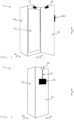
- the built-in household appliance system 1, 2 under consideration consists of a built-in household appliance 1, which is designed as a fitted kitchen appliance 1 in the form of a fitted kitchen appliance 1 or as a built-in refrigerator 1, and a separate interaction element 2.
- the built-in refrigerator 1 has an appliance body 10 which encloses an interior space 11 except for an opening (not designated).
- the interior 11 can be opened and closed by a user by means of a device lock 12 in the form of a device door 12 of the built-in refrigerator 1 .
- the appliance door 12 can be actuated by the user using a locking handle 12a as a door handle 12a.
- the device body 10 has a wireless energy transmitter 13 which is arranged on the upper edge (not labeled) of the device body 10 in the longitudinal direction X forwards towards the user and in the transverse direction Y centrally aligned.
- the appliance door 12 has a wireless energy receiver 14 directly opposite the wireless energy transmitter 13 of the appliance body 10 along the longitudinal direction X, which is also aligned with the wireless energy transmitter 13 of the appliance body 10 .
- the wireless energy transmitter 13 of the appliance body 10 and the wireless energy receiver 14 of the appliance door 12 are designed to transmit electrical energy wirelessly from the appliance body 10 to the appliance door 12 by means of induction over the short distance along the longitudinal direction X, which occurs between them when the appliance door 12 is closed transferred to. Due to the comparatively short distance, this can be done using simple technical means, which can keep the complexity, the costs and the installation space correspondingly low.
- the front side (not labeled) of the appliance door 12 has a wireless energy transmitter 16 in the longitudinal direction X, facing away from the interior 11 or towards the user, which is arranged below the wireless energy receiver 14 of the appliance door 12 in the vertical direction Z and also in the transverse direction Y is centered. In the vertical direction Z, the wireless energy transmitter 16 of the appliance door 12 is arranged at approximately the eye level of an average adult.
- the wireless energy receiver 14 of the appliance door 12 is electrically conductively connected to the wireless energy transmitter 16 of the appliance door 12 by means of an electrical line 15 .
- the electrical line 15 also runs on the front of the appliance door 12.
- the separate interaction element 2 has a touch display (not shown), so that the user can see information about the built-in refrigerator 1 on the touch display of the separate interaction element 2, such as a temperature of the built-in refrigerator 1, a time, a date and the like can be displayed by means of characters and/or as graphic symbols and the like.
- the built-in refrigerator 1 can be operated via the control elements that are displayed on the touch display, for example by the user being able to change the temperature.
- the separate interaction element 2 can be mounted on the front of the movable Furniture front 3 in the longitudinal direction X the wireless energy transmitter 16 of the appliance door 12 are arranged opposite.
- the separate interaction element 2 can preferably be held on the front side of the movable furniture front 3 by means of a reversible adhesive.
- the separate interaction element 2 can be supplied with electrical energy wirelessly from the wireless energy transmitter 16 of the appliance door 12 through the movable furniture front 3 .
- the electrical energy received or obtained wirelessly can be used directly by the separate interaction element 2 for its operation and/or stored or buffered for later operation, which can be done by means of a capacitor or an accumulator.
- a wireless data transmission between the separate interaction element 2 and a control unit (not shown) of the built-in refrigerator 1 can take place directly using Bluetooth, WiFi or the like or indirectly via a domestic WLAN network or a mobile network.
- the electrical energy which is available on the appliance door 12 as described above, can also be used there for electrical or electronic functions, which can also be done directly or in a buffered manner by means of electrical energy storage devices.
- several interaction elements 17 of the appliance door 12 in the form of two optical detection units 17 arranged in the vertical direction Z one above the other and below the wireless energy receiver 14 and aligned centrally in the transverse direction Y can be arranged as cameras 17 on the inside (not labeled) of the appliance door 12 , so that the two cameras 17 can optically capture the interior 11 of the built-in refrigerator 1 as completely as possible when the appliance door 12 is closed.
- This enables functions in which the contents of the interior 11 of the built-in refrigerator 1 is optically recorded and evaluated in order to provide the user with information about the contents of the interior 11 of the built-in refrigerator 1, for example on the touch display of the separate interaction element 2.
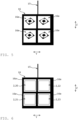
- the wireless energy transmitter 16 of the appliance door 12 can have a number of individual transmission elements 16a, which are each supplied with electricity as described above and can emit electrical energy wirelessly through the movable furniture front 3 .
- This can increase the flexibility for the user to arrange the previously described individual separate interaction element 2, since this is directly one of the four in each case in the longitudinal direction X figure 5 illustrated transmission elements 16a can take place opposite.
- several positions can be specified at which the separate interaction element 2 can be used alternatively. This can, for example, also be different positions in the vertical direction Z and thus at different eye levels.
- a display 20 or a display 20 which as a touch display can correspond to the touch display already described above, a loudspeaker 21, a microphone 22 and/or a light source 23 can be used individually used and each one of the transmitting elements 16a are attached opposite to the front of the movable furniture front 3.
- a loudspeaker 21 a microphone 22 and/or a light source 23
- each one of the transmitting elements 16a are attached opposite to the front of the movable furniture front 3.
- these several separate interaction elements 2 can also be flexibly arranged and used. This can further increase the flexibility of use for the user.
- the wireless energy transmitter 13 of the device body 10 can be formed by suitable technology of wireless energy transmission, directly wireless electrical energy to to transmit separate interaction element 2 or its wireless energy receiver. Accordingly, the elements of the appliance door 12 described above can be dispensed with. A range sufficient for this and a correspondingly large angular range can be achieved, for example, by inductive coupling with two resonant, highly efficient oscillating circuits. This can increase the flexibility of the arrangement of the separate interaction element 2 for the user, since the separate interaction element 2 can now be arranged arbitrarily on the front side of the movable furniture front 3 and this positioning can also be changed. This also applies correspondingly to a number of separate interaction elements 2, as described above.
Landscapes
- Engineering & Computer Science (AREA)
- Chemical & Material Sciences (AREA)
- Combustion & Propulsion (AREA)
- Mechanical Engineering (AREA)
- General Engineering & Computer Science (AREA)
- Physics & Mathematics (AREA)
- Thermal Sciences (AREA)
- Computer Networks & Wireless Communication (AREA)
- Power Engineering (AREA)
- Electromagnetism (AREA)
- Selective Calling Equipment (AREA)
Applications Claiming Priority (1)
| Application Number | Priority Date | Filing Date | Title |
|---|---|---|---|
| DE102021127900.3A DE102021127900A1 (de) | 2021-10-27 | 2021-10-27 | Einbauhaushaltsgerätesystem |
Publications (1)
| Publication Number | Publication Date |
|---|---|
| EP4173542A1 true EP4173542A1 (fr) | 2023-05-03 |
Family
ID=83457500
Family Applications (1)
| Application Number | Title | Priority Date | Filing Date |
|---|---|---|---|
| EP22197686.3A Withdrawn EP4173542A1 (fr) | 2021-10-27 | 2022-09-26 | Réfrigérateur avec un transfert d'énergie sans fil à travers un front de cuisine |
Country Status (2)
| Country | Link |
|---|---|
| EP (1) | EP4173542A1 (fr) |
| DE (1) | DE102021127900A1 (fr) |
Families Citing this family (1)
| Publication number | Priority date | Publication date | Assignee | Title |
|---|---|---|---|---|
| DE102023119454A1 (de) | 2023-06-15 | 2024-12-19 | Liebherr-Hausgeräte Ochsenhausen GmbH | Haltevorrichtung für eine Kamera |
Citations (10)
| Publication number | Priority date | Publication date | Assignee | Title |
|---|---|---|---|---|
| JP2001033136A (ja) * | 1999-07-19 | 2001-02-09 | Sharp Corp | 冷蔵庫 |
| EP1760733A1 (fr) | 2005-09-02 | 2007-03-07 | Electrolux Home Products Corporation N.V. | Réfrigérateur avec élément mobile avec transmission d'energie sans contact |
| WO2008071431A2 (fr) | 2006-12-14 | 2008-06-19 | Liebherr-Hausgeräte Lienz Gmbh | Appareil de réfrigération et/ou de congélation |
| EP2058595A2 (fr) * | 2007-11-07 | 2009-05-13 | Whirpool Corporation | Interface utilisateur pour la commande d'un appareil électrique domestique connecté à distance |
| DE102009027548A1 (de) * | 2009-07-08 | 2011-01-13 | BSH Bosch und Siemens Hausgeräte GmbH | Kältegerät |
| EP2910877A1 (fr) * | 2012-10-12 | 2015-08-26 | Kabushiki Kaisha Toshiba | Réfrigérateur |
| WO2019044239A1 (fr) | 2017-08-29 | 2019-03-07 | パナソニックIpマネジメント株式会社 | Réfrigérateur |
| WO2019086319A1 (fr) | 2017-11-03 | 2019-05-09 | Hilti Aktiengesellschaft | Circuit résonnant pour la transmission d'énergie électrique |
| DE102017221868A1 (de) * | 2017-12-05 | 2019-06-06 | BSH Hausgeräte GmbH | Haushaltsgerät mit Sensor zum Detektieren einer Türbewegung |
| DE102019204534A1 (de) * | 2019-04-01 | 2020-10-01 | BSH Hausgeräte GmbH | Haushaltsgerät mit in einer Tür angeordneter Kamera |
-
2021
- 2021-10-27 DE DE102021127900.3A patent/DE102021127900A1/de not_active Withdrawn
-
2022
- 2022-09-26 EP EP22197686.3A patent/EP4173542A1/fr not_active Withdrawn
Patent Citations (10)
| Publication number | Priority date | Publication date | Assignee | Title |
|---|---|---|---|---|
| JP2001033136A (ja) * | 1999-07-19 | 2001-02-09 | Sharp Corp | 冷蔵庫 |
| EP1760733A1 (fr) | 2005-09-02 | 2007-03-07 | Electrolux Home Products Corporation N.V. | Réfrigérateur avec élément mobile avec transmission d'energie sans contact |
| WO2008071431A2 (fr) | 2006-12-14 | 2008-06-19 | Liebherr-Hausgeräte Lienz Gmbh | Appareil de réfrigération et/ou de congélation |
| EP2058595A2 (fr) * | 2007-11-07 | 2009-05-13 | Whirpool Corporation | Interface utilisateur pour la commande d'un appareil électrique domestique connecté à distance |
| DE102009027548A1 (de) * | 2009-07-08 | 2011-01-13 | BSH Bosch und Siemens Hausgeräte GmbH | Kältegerät |
| EP2910877A1 (fr) * | 2012-10-12 | 2015-08-26 | Kabushiki Kaisha Toshiba | Réfrigérateur |
| WO2019044239A1 (fr) | 2017-08-29 | 2019-03-07 | パナソニックIpマネジメント株式会社 | Réfrigérateur |
| WO2019086319A1 (fr) | 2017-11-03 | 2019-05-09 | Hilti Aktiengesellschaft | Circuit résonnant pour la transmission d'énergie électrique |
| DE102017221868A1 (de) * | 2017-12-05 | 2019-06-06 | BSH Hausgeräte GmbH | Haushaltsgerät mit Sensor zum Detektieren einer Türbewegung |
| DE102019204534A1 (de) * | 2019-04-01 | 2020-10-01 | BSH Hausgeräte GmbH | Haushaltsgerät mit in einer Tür angeordneter Kamera |
Also Published As
| Publication number | Publication date |
|---|---|
| DE102021127900A1 (de) | 2023-04-27 |
Similar Documents
| Publication | Publication Date | Title |
|---|---|---|
| EP2739910B1 (fr) | Appareil électroménager comportant une antenne | |
| RU2503388C2 (ru) | Мебель с устройством для беспроводной передачи электрической энергии | |
| DE102008043722A1 (de) | Hausgeräte-Bedienungsanordnung mit einer tragbaren Fernbedienungseinheit | |
| WO2009012874A2 (fr) | Dispositif de préparation d'aliments et de produits de cuisson | |
| EP2425182A1 (fr) | Procédé pour faire fonctionner un appareil ménager, unité de commande portable et appareil ménager | |
| EP2058595A3 (fr) | Interface utilisateur pour la commande d'un appareil électrique domestique connecté à distance | |
| EP2041495A2 (fr) | Unite de commande destinee a afficher et/ou a regler des valeurs de parametres de fonctionnement d'au moins un appareil electromenager | |
| EP4173542A1 (fr) | Réfrigérateur avec un transfert d'énergie sans fil à travers un front de cuisine | |
| DE102008043126B4 (de) | Steuervorrichtung für Haushaltsgeräte mit Touchcontrolfeld | |
| CN108397971A (zh) | 具有可调节显控模块的抽屉组件及冰箱 | |
| DE102014215705A1 (de) | Kochgerät mit Nahfeldantennen | |
| DE102011088718A1 (de) | Beleuchtungssteuerpult mit herausnehmbarer Berührungsbildschirmvorrichtung | |
| DE202007007463U1 (de) | Sender mit anpassbarer Anzeige | |
| DE102005058996B3 (de) | Haushaltsgerät mit einer elektrischen Steuerung und einem Zubehörteil | |
| DE102015006707B4 (de) | Fernbedienvorrichtung und fernbedienbares System zur Steuerung von Haus- oder Gebäudefunktionen | |
| EP2663160A1 (fr) | Appareil ménager | |
| DE102013219053B4 (de) | Verfahren zum Bereitstellen einer graphischen Benutzeroberfläche für einen Benutzer eines Haushaltsgeräts mittels eines tragbaren Kommunikationsendgeräts, Computerprogrammprodukt und tragbares Kommunikationsendgerät | |
| EP3112757A1 (fr) | Appareil de cuisson avec un four de cuisson et plaque de cuisson | |
| EP2920776B1 (fr) | Appareil électroménager avec un élément de commande | |
| BE1029989B1 (de) | Haushaltgerät und Verfahren zum Betreiben eines Haushaltgeräts | |
| DE102020208742A1 (de) | Haushalts-Kältegerät | |
| WO2021078665A1 (fr) | Appareil électroménager doté d'une unité d'émission/réception | |
| WO2013030361A1 (fr) | Système domotique et dispositif commutateur destiné à des équipements domotiques et doté d'une unité clavier | |
| EP4162463B1 (fr) | Dispositif pour commander au moins un élément de meuble pouvant être entraîné ou déplacé électriquement | |
| EP4192307A1 (fr) | Composant de meuble |
Legal Events
| Date | Code | Title | Description |
|---|---|---|---|
| PUAI | Public reference made under article 153(3) epc to a published international application that has entered the european phase |
Free format text: ORIGINAL CODE: 0009012 |
|
| STAA | Information on the status of an ep patent application or granted ep patent |
Free format text: STATUS: THE APPLICATION HAS BEEN PUBLISHED |
|
| AK | Designated contracting states |
Kind code of ref document: A1 Designated state(s): AL AT BE BG CH CY CZ DE DK EE ES FI FR GB GR HR HU IE IS IT LI LT LU LV MC MK MT NL NO PL PT RO RS SE SI SK SM TR |
|
| STAA | Information on the status of an ep patent application or granted ep patent |
Free format text: STATUS: THE APPLICATION IS DEEMED TO BE WITHDRAWN |
|
| 18D | Application deemed to be withdrawn |
Effective date: 20231104 |