EP4174120A1 - Biaxial-orientierte folie enthaltend cycloolefinpolymere und alpha-olefinpolymere, verfahren zu ihrer herstellung, sowie ihre verwendung im kondensator - Google Patents
Biaxial-orientierte folie enthaltend cycloolefinpolymere und alpha-olefinpolymere, verfahren zu ihrer herstellung, sowie ihre verwendung im kondensator Download PDFInfo
- Publication number
- EP4174120A1 EP4174120A1 EP22201199.1A EP22201199A EP4174120A1 EP 4174120 A1 EP4174120 A1 EP 4174120A1 EP 22201199 A EP22201199 A EP 22201199A EP 4174120 A1 EP4174120 A1 EP 4174120A1
- Authority
- EP
- European Patent Office
- Prior art keywords
- film
- cycloolefin
- polymers
- polymer
- stretching
- Prior art date
- Legal status (The legal status is an assumption and is not a legal conclusion. Google has not performed a legal analysis and makes no representation as to the accuracy of the status listed.)
- Granted
Links
Images

Classifications
-
- C—CHEMISTRY; METALLURGY
- C08—ORGANIC MACROMOLECULAR COMPOUNDS; THEIR PREPARATION OR CHEMICAL WORKING-UP; COMPOSITIONS BASED THEREON
- C08J—WORKING-UP; GENERAL PROCESSES OF COMPOUNDING; AFTER-TREATMENT NOT COVERED BY SUBCLASSES C08B, C08C, C08F, C08G or C08H
- C08J5/00—Manufacture of articles or shaped materials containing macromolecular substances
- C08J5/18—Manufacture of films or sheets
-
- B—PERFORMING OPERATIONS; TRANSPORTING
- B29—WORKING OF PLASTICS; WORKING OF SUBSTANCES IN A PLASTIC STATE IN GENERAL
- B29C—SHAPING OR JOINING OF PLASTICS; SHAPING OF MATERIAL IN A PLASTIC STATE, NOT OTHERWISE PROVIDED FOR; AFTER-TREATMENT OF THE SHAPED PRODUCTS, e.g. REPAIRING
- B29C55/00—Shaping by stretching, e.g. drawing through a die; Apparatus therefor
- B29C55/02—Shaping by stretching, e.g. drawing through a die; Apparatus therefor of plates or sheets
- B29C55/10—Shaping by stretching, e.g. drawing through a die; Apparatus therefor of plates or sheets multiaxial
- B29C55/12—Shaping by stretching, e.g. drawing through a die; Apparatus therefor of plates or sheets multiaxial biaxial
-
- B—PERFORMING OPERATIONS; TRANSPORTING
- B29—WORKING OF PLASTICS; WORKING OF SUBSTANCES IN A PLASTIC STATE IN GENERAL
- B29D—PRODUCING PARTICULAR ARTICLES FROM PLASTICS OR FROM SUBSTANCES IN A PLASTIC STATE
- B29D7/00—Producing flat articles, e.g. films or sheets
- B29D7/01—Films or sheets
-
- B—PERFORMING OPERATIONS; TRANSPORTING
- B32—LAYERED PRODUCTS
- B32B—LAYERED PRODUCTS, i.e. PRODUCTS BUILT-UP OF STRATA OF FLAT OR NON-FLAT, e.g. CELLULAR OR HONEYCOMB, FORM
- B32B27/00—Layered products comprising a layer of synthetic resin
- B32B27/06—Layered products comprising a layer of synthetic resin as the main or only constituent of a layer, which is next to another layer of the same or of a different material
- B32B27/08—Layered products comprising a layer of synthetic resin as the main or only constituent of a layer, which is next to another layer of the same or of a different material of synthetic resin
-
- B—PERFORMING OPERATIONS; TRANSPORTING
- B32—LAYERED PRODUCTS
- B32B—LAYERED PRODUCTS, i.e. PRODUCTS BUILT-UP OF STRATA OF FLAT OR NON-FLAT, e.g. CELLULAR OR HONEYCOMB, FORM
- B32B27/00—Layered products comprising a layer of synthetic resin
- B32B27/30—Layered products comprising a layer of synthetic resin comprising vinyl (co)polymers; comprising acrylic (co)polymers
- B32B27/302—Layered products comprising a layer of synthetic resin comprising vinyl (co)polymers; comprising acrylic (co)polymers comprising aromatic vinyl (co)polymers, e.g. styrenic (co)polymers
-
- B—PERFORMING OPERATIONS; TRANSPORTING
- B32—LAYERED PRODUCTS
- B32B—LAYERED PRODUCTS, i.e. PRODUCTS BUILT-UP OF STRATA OF FLAT OR NON-FLAT, e.g. CELLULAR OR HONEYCOMB, FORM
- B32B27/00—Layered products comprising a layer of synthetic resin
- B32B27/32—Layered products comprising a layer of synthetic resin comprising polyolefins
-
- B—PERFORMING OPERATIONS; TRANSPORTING
- B32—LAYERED PRODUCTS
- B32B—LAYERED PRODUCTS, i.e. PRODUCTS BUILT-UP OF STRATA OF FLAT OR NON-FLAT, e.g. CELLULAR OR HONEYCOMB, FORM
- B32B27/00—Layered products comprising a layer of synthetic resin
- B32B27/32—Layered products comprising a layer of synthetic resin comprising polyolefins
- B32B27/325—Layered products comprising a layer of synthetic resin comprising polyolefins comprising polycycloolefins
-
- B—PERFORMING OPERATIONS; TRANSPORTING
- B32—LAYERED PRODUCTS
- B32B—LAYERED PRODUCTS, i.e. PRODUCTS BUILT-UP OF STRATA OF FLAT OR NON-FLAT, e.g. CELLULAR OR HONEYCOMB, FORM
- B32B27/00—Layered products comprising a layer of synthetic resin
- B32B27/32—Layered products comprising a layer of synthetic resin comprising polyolefins
- B32B27/327—Layered products comprising a layer of synthetic resin comprising polyolefins comprising polyolefins obtained by a metallocene or single-site catalyst
-
- C—CHEMISTRY; METALLURGY
- C08—ORGANIC MACROMOLECULAR COMPOUNDS; THEIR PREPARATION OR CHEMICAL WORKING-UP; COMPOSITIONS BASED THEREON
- C08L—COMPOSITIONS OF MACROMOLECULAR COMPOUNDS
- C08L23/00—Compositions of homopolymers or copolymers of unsaturated aliphatic hydrocarbons having only one carbon-to-carbon double bond; Compositions of derivatives of such polymers
- C08L23/02—Compositions of homopolymers or copolymers of unsaturated aliphatic hydrocarbons having only one carbon-to-carbon double bond; Compositions of derivatives of such polymers not modified by chemical after-treatment
- C08L23/04—Homopolymers or copolymers of ethene
- C08L23/08—Copolymers of ethene
- C08L23/0807—Copolymers of ethene with unsaturated hydrocarbons only containing four or more carbon atoms
- C08L23/0823—Copolymers of ethene with unsaturated hydrocarbons only containing four or more carbon atoms with aliphatic cyclic olefins
-
- C—CHEMISTRY; METALLURGY
- C08—ORGANIC MACROMOLECULAR COMPOUNDS; THEIR PREPARATION OR CHEMICAL WORKING-UP; COMPOSITIONS BASED THEREON
- C08L—COMPOSITIONS OF MACROMOLECULAR COMPOUNDS
- C08L23/00—Compositions of homopolymers or copolymers of unsaturated aliphatic hydrocarbons having only one carbon-to-carbon double bond; Compositions of derivatives of such polymers
- C08L23/02—Compositions of homopolymers or copolymers of unsaturated aliphatic hydrocarbons having only one carbon-to-carbon double bond; Compositions of derivatives of such polymers not modified by chemical after-treatment
- C08L23/10—Homopolymers or copolymers of propene
- C08L23/12—Polypropene
-
- H—ELECTRICITY
- H01—ELECTRIC ELEMENTS
- H01G—CAPACITORS; CAPACITORS, RECTIFIERS, DETECTORS, SWITCHING DEVICES, LIGHT-SENSITIVE OR TEMPERATURE-SENSITIVE DEVICES OF THE ELECTROLYTIC TYPE
- H01G4/00—Fixed capacitors; Processes of their manufacture
- H01G4/002—Details
- H01G4/018—Dielectrics
- H01G4/06—Solid dielectrics
- H01G4/14—Organic dielectrics
-
- H—ELECTRICITY
- H01—ELECTRIC ELEMENTS
- H01G—CAPACITORS; CAPACITORS, RECTIFIERS, DETECTORS, SWITCHING DEVICES, LIGHT-SENSITIVE OR TEMPERATURE-SENSITIVE DEVICES OF THE ELECTROLYTIC TYPE
- H01G4/00—Fixed capacitors; Processes of their manufacture
- H01G4/002—Details
- H01G4/018—Dielectrics
- H01G4/06—Solid dielectrics
- H01G4/14—Organic dielectrics
- H01G4/18—Organic dielectrics of synthetic material, e.g. derivatives of cellulose
-
- B—PERFORMING OPERATIONS; TRANSPORTING
- B32—LAYERED PRODUCTS
- B32B—LAYERED PRODUCTS, i.e. PRODUCTS BUILT-UP OF STRATA OF FLAT OR NON-FLAT, e.g. CELLULAR OR HONEYCOMB, FORM
- B32B2270/00—Resin or rubber layer containing a blend of at least two different polymers
-
- B—PERFORMING OPERATIONS; TRANSPORTING
- B32—LAYERED PRODUCTS
- B32B—LAYERED PRODUCTS, i.e. PRODUCTS BUILT-UP OF STRATA OF FLAT OR NON-FLAT, e.g. CELLULAR OR HONEYCOMB, FORM
- B32B2307/00—Properties of the layers or laminate
- B32B2307/30—Properties of the layers or laminate having particular thermal properties
-
- B—PERFORMING OPERATIONS; TRANSPORTING
- B32—LAYERED PRODUCTS
- B32B—LAYERED PRODUCTS, i.e. PRODUCTS BUILT-UP OF STRATA OF FLAT OR NON-FLAT, e.g. CELLULAR OR HONEYCOMB, FORM
- B32B2307/00—Properties of the layers or laminate
- B32B2307/50—Properties of the layers or laminate having particular mechanical properties
- B32B2307/514—Oriented
- B32B2307/518—Oriented bi-axially
-
- B—PERFORMING OPERATIONS; TRANSPORTING
- B32—LAYERED PRODUCTS
- B32B—LAYERED PRODUCTS, i.e. PRODUCTS BUILT-UP OF STRATA OF FLAT OR NON-FLAT, e.g. CELLULAR OR HONEYCOMB, FORM
- B32B2307/00—Properties of the layers or laminate
- B32B2307/50—Properties of the layers or laminate having particular mechanical properties
- B32B2307/54—Yield strength; Tensile strength
-
- B—PERFORMING OPERATIONS; TRANSPORTING
- B32—LAYERED PRODUCTS
- B32B—LAYERED PRODUCTS, i.e. PRODUCTS BUILT-UP OF STRATA OF FLAT OR NON-FLAT, e.g. CELLULAR OR HONEYCOMB, FORM
- B32B2457/00—Electrical equipment
- B32B2457/16—Capacitors
-
- C—CHEMISTRY; METALLURGY
- C08—ORGANIC MACROMOLECULAR COMPOUNDS; THEIR PREPARATION OR CHEMICAL WORKING-UP; COMPOSITIONS BASED THEREON
- C08J—WORKING-UP; GENERAL PROCESSES OF COMPOUNDING; AFTER-TREATMENT NOT COVERED BY SUBCLASSES C08B, C08C, C08F, C08G or C08H
- C08J2323/00—Characterised by the use of homopolymers or copolymers of unsaturated aliphatic hydrocarbons having only one carbon-to-carbon double bond; Derivatives of such polymers
- C08J2323/02—Characterised by the use of homopolymers or copolymers of unsaturated aliphatic hydrocarbons having only one carbon-to-carbon double bond; Derivatives of such polymers not modified by chemical after treatment
- C08J2323/10—Homopolymers or copolymers of propene
- C08J2323/12—Polypropene
-
- C—CHEMISTRY; METALLURGY
- C08—ORGANIC MACROMOLECULAR COMPOUNDS; THEIR PREPARATION OR CHEMICAL WORKING-UP; COMPOSITIONS BASED THEREON
- C08J—WORKING-UP; GENERAL PROCESSES OF COMPOUNDING; AFTER-TREATMENT NOT COVERED BY SUBCLASSES C08B, C08C, C08F, C08G or C08H
- C08J2445/00—Characterised by the use of homopolymers or copolymers of compounds having no unsaturated aliphatic radicals in side chain, and having one or more carbon-to-carbon double bonds in a carbocyclic or in a heterocyclic ring system; Derivatives of such polymers
-
- Y—GENERAL TAGGING OF NEW TECHNOLOGICAL DEVELOPMENTS; GENERAL TAGGING OF CROSS-SECTIONAL TECHNOLOGIES SPANNING OVER SEVERAL SECTIONS OF THE IPC; TECHNICAL SUBJECTS COVERED BY FORMER USPC CROSS-REFERENCE ART COLLECTIONS [XRACs] AND DIGESTS
- Y02—TECHNOLOGIES OR APPLICATIONS FOR MITIGATION OR ADAPTATION AGAINST CLIMATE CHANGE
- Y02E—REDUCTION OF GREENHOUSE GAS [GHG] EMISSIONS, RELATED TO ENERGY GENERATION, TRANSMISSION OR DISTRIBUTION
- Y02E60/00—Enabling technologies; Technologies with a potential or indirect contribution to GHG emissions mitigation
- Y02E60/10—Energy storage using batteries
Definitions
- Biaxially oriented film containing a) 1 to 25 percent by weight of at least 2 cycloolefin polymers having a glass transition temperature in the range from 120 to 180°C and b) 75 to 99 percent by weight of at least one semi-crystalline alpha-olefin polymer having a crystallite melting point in the range from 150 to 170°C, wherein the film contains at least a first cycloolefin polymer and a second cycloolefin polymer, wherein the second cycloolefin polymer has a higher glass transition temperature than the first cycloolefin polymer and wherein the weighted arithmetic mean of the glass transition temperatures of all cycloolefin polymers contained in the film is less than or equal to the weighted arithmetic mean of the crystallite melting point of all semi-crystalline alpha-olefin polymers contained in the film.
- Thermoplastics play an important role in electrical engineering as insulators and dielectrics, especially in the form of foils. The most widespread is the use of alpha-polyolefins and in particular of polypropylene (PP).
- PP polypropylene
- the patent documents WO 2015/091829 A1 , US 5,724,222A and EP 2 481 767 A2 describe biaxially oriented polypropylene films for use as the dielectric in capacitors. While polyethylene films are generally excellent for use as a dielectric, they exhibit high shrinkage at high temperatures. This makes the films unsuitable for use at high temperatures. Biaxially oriented polypropylene films are predominantly used in film capacitors. This is due in particular to the low loss factor and the high dielectric strength of polypropylene.
- Cycloolefin polymers have a significantly better heat resistance than ordinary polyolefins.
- COC cycloolefin polymers
- Their use in capacitors is out of the docs EP 0 992 531 A1 , WO 00/63013 A2 and CA 2 115 196C known. Films made from cycloolefin polymers can only be produced on machines specially designed for this purpose and do not permit high stretching ratios, which is unfavorable for the production of thin films such as are preferably used in capacitors.
- Blends of polypropylene and cycloolefin polymer can be used to utilize the temperature resistance of cycloolefin polymers for use in capacitors.
- Blends of polypropylene and cycloolefin polymers are from JP H05-262989 , the DE 10 2010 034 643 A1 and the DE 195 36 043 known.
- In the WO 2018/197034 A1 and the DE 10 2017 118 202 A1 specifically describes films for use in film capacitors.
- the WO 2018/197034 A1 describes films containing 10 to 45 percent by weight of a cycloolefin polymer having a glass transition temperature of 120 to 170°C and a semi-crystalline alpha-olefin polymer (usually polypropylene) having a crystallite melting point in the range of 150 to 170°C, the glass transition temperature of the cycloolefin polymer is less than or equal to the crystallite melting temperature of the alpha-olefin polymer.
- the films produced have a favorable surface roughness and low thermal shrinkage.
- the properties of the cycloolefin polymers are more pronounced in the specified quantity ranges with high proportions of the cycloolefin polymer, i.e.
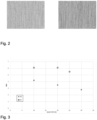
- the films have good thermal properties, including low shrinkage, but are more brittle and therefore less processable, in particular the maximum decreases possible stretch rate when producing thin films, making it impossible to produce thin films at high stretch rates. If high stretch rates are used with high proportions of the cycloolefin polymer, the film tears easily and the required web lengths can no longer be produced. figure 3 illustrates this problem. Other things being equal, the stretching rate must be reduced, particularly in the longitudinal direction, in order to still obtain a film that can be processed on a conventional belt line with high proportions of cycloolefin polymers.
- the object of the present invention was to produce films which have good electrical properties and low shrinkage at high temperatures. High heat stability is desirable.
- the films should preferably be able to be produced in conventional systems for producing biaxially oriented films. In particular, it is important that they can be processed into long webs at high film speeds. It is also advantageous if the films with high stretching rates can be produced. The production of films with a small thickness is also aimed at. Finally, it is a concern of this invention to make the production of foils for, for example, capacitors more economical.
- the films according to the invention offer a combination of good processability during production, high temperature resistance and good electrical properties, which the films of the prior art do not offer to the same extent.
- the addition of a cycloolefin polymer with a higher glass transition temperature reduces processability.
- this is surprisingly not the case, or not to the same extent, when mixtures of cycloolefin polymers are used in which the cycloolefin polymers have different glass transition temperatures.
- the films according to the invention can be produced with an area stretch ratio of about 50.
- the area stretch ratio is the product of the longitudinal stretch rate and the transverse stretch rate.
- These high area stretch ratios allow the production of thin foils with, for example, a thickness of less than 5 ⁇ m. Low film thicknesses are required in order to allow a high capacity in capacitors with low volume requirements (construction space).
- the films allow production at a film speed of 280 m/min after stretching or during winding (a typical film speed when producing films is 250 m/min). The films according to the invention can therefore be produced in an economical manner.
- the films according to the invention can be used as a dielectric in capacitors up to temperatures of 135.degree and are therefore also superior to films from the prior art in this property. At this temperature, they show clearly superior electrical properties compared to films from the prior art.
- Film capacitors have to meet increased requirements in terms of temperature and voltage, especially in the automotive sector. Required operating temperatures are 125°C and more, in particular 135°C and more.
- the invention provides a biaxially stretched film that meets the increased requirements.
- the present invention therefore opens up a new wide range of applications for films containing alpha-polyolefins and cycloolefin polymers.
- the films also exhibit low shrinkage values at high temperatures, particularly in the transverse direction (TD). Compared to those from the WO 2018/197034 A1 known foils thus result in thinner foils with inexpensive production and a possible use at higher temperatures.
- the films according to the invention have good electrical properties and favorable surface roughness.
- a further effect of the present invention is that the combination of two cycloolefin polymers means that a smaller total amount of cycloolefin polymers can be used and thus improved processability on the strip line can be achieved with the same good thermal stability. This has a positive effect on the stretching rate that can be achieved, particularly in the case of sequential stretching. Furthermore, costs are saved when smaller amounts of cycloolefin polymers are used. There is no negative influence on the electrical properties.
- the high proportion of polypropylene in the present films ensures that the films can be easily processed and, in particular, easily stretched during manufacture.
- the use of two cycloolefin polymers provides with different glass transition temperatures for favorable high-temperature properties without reducing processability.
- the semi-crystalline alpha-olefin polymers used in the present invention are preferably polymers of C3 to C8 polyolefins.
- the side chains can be linear or branched.
- polypropylene usually polypropylene.
- Polypropylene gives the films of the invention good processability and good electrical properties. In particular, they are usually propylene homopolymers.
- the polypropylene may contain up to 10% by weight, and preferably up to 5% by weight, of one or more C4 to C8 polyolefins as comonomers.
- the C4 to C8 polyolefins are preferably selected from the group consisting of 1-butene, 1-hexene and 1-octene.
- the partially crystalline polyolefins can be linear or branched. Furthermore, they can be random or block copolymers. It can also be isotactic, syndiotactic or atactic polymers. Isotactic polypropylenes are preferred. In the case of polypropylenes, the degree of crystallization typically ranges from 35% to 80%, preferably in the range from 60 to 80%. The degree of crystallization is measured according to ISO 11357 by differential scanning calorimetry (DSC) at a heating rate of 10K/min. Isotactic propylenes with a degree of crystallinity in the range from 60 to 80% are particularly preferred. Polypropylenes with densities ranging from 0.895 g/cm 3 to 0.920 g/cm 3 are usually used. Density is measured according to ISO 1183.
- the crystallite melting temperature is preferably in the range from 160 to 165°C.
- the modification of the crystallite melting temperature by using copolymers is known to those skilled in the art.
- the crystallite melting temperature is measured according to ISO 11357 by differential scanning calorimetry (DSC) at a heating rate of 10K/min.
- the semi-crystalline alpha-olefin polymers used preferably have a melt flow index (melt flow rate, Tg) in the range from 1 to 4 g/10 minutes, measured at a temperature of 230° C. under a load of 2.16 kg. Unless otherwise stated, all melt flow indices in this specification are measured according to ISO 1133.
- the foils are preferably particularly pure.
- a high-purity quality is preferably selected as the alpha-polyolefin polymer.
- the foil according to the invention has a low metal content, since even traces of metals in the dielectric of a capacitor can adversely affect the electrical properties of the capacitor.
- the total content of iron, cobalt, nickel, titanium, molybdenum, vanadium, chromium, copper and aluminum in the foil of the invention is less than 0.25 ppm.
- the cycloolefin polymers used in the present invention can be both homopolymers and copolymers. They can be prepared by ring-opening or, in particular, by ring-preserving polymerization. Preferably, they are prepared by the ring-preserving copolymerization of cyclic olefins, such as norbornene, with non-cyclic olefins, such as alpha-olefins or ethylene, with ethylene being preferred.
- Information on cycloolefin polymers usable in the present invention can be found, for example, in the WO 2018/197034 A1 and the documents cited there. It is also possible to use cycloolefin polymers whose remaining double bonds have been hydrogenated after the polymerization.
- cycloolefin polymers in which n is 0, m is 0 or 1, R 21 is hydrogen and R 22 is selected from the group consisting of hydrogen and a C1 to C8 alkyl group.
- R 21 is hydrogen
- R 22 is selected from the group consisting of hydrogen and a C1 to C8 alkyl group.
- preference is in turn given to those polymers in which R 1 , R 2 , R 5 to R 8 and R 15 to R 20 are also hydrogen.
- copolymers of norbornene and ethylene and of tetracyclododecene and ethylene are also hydrogen.
- a film of the invention wherein all cycloolefin polymers contained therein are copolymers containing norbornene and ethylene as monomers.
- the polymerization is preferably carried out in the presence of a metallocene catalyst.
- the monomers of formula (I) and (II) are preferably used in the cycloolefin polymers of the film of the present invention in a molar ratio of 95:5 to 5:95. They may contain up to 10 mole percent, based on the total amount of monomer, of one or more comonomers selected from the group consisting of propylene, pentene, hexene, cyclohexene and styrene.
- the glass transition temperature of the cycloolefin polymers is preferably in the range from 120°C to 170°C, more preferably in the range from 130 to 170°C and most preferably in the range from 140 to 160°C.
- the glass transition temperature is measured according to ISO 11357 by DSC with a heating rate of 10K/min.
- the cycloolefin polymers have a melt flow index in the range of 0.3 and 4 g/10 minutes measured at a temperature of 230°C under a load of 2.16 kg.
- a low surface roughness is necessary for the use of the films according to the invention in capacitors. However, if the surface roughness is too low, the film will be difficult to process on strip lines. In order to develop a surface roughness that is sufficient but not too great, it is advantageous if the melt flow indices of the polymers used are matched to one another.
- the ratio of the melt flow indices of cycloolefin polymers to the partially crystalline alpha-olefin polymers is preferably in the range from 1:2 to 2:1.
- the second cycloolefin polymer differs from the first cycloolefin polymer at least in that it has a higher glass transition temperature.
- the glass transition temperature is preferably at least 3°C higher, particularly preferably at least 5°C higher.
- the glass transition temperature is particularly preferably at least 10° C. higher.
- films according to the invention are therefore preferred in which the film contains only one partially crystalline alpha-olefin polymer and the weighted arithmetic mean of the glass transition temperatures of all cycloolefin polymers contained in the film is less than or equal to the crystallite melting temperature of the partially crystalline alpha-olefin polymer.
- a film of the present invention that contains only a semi-crystalline alpha-olefin polymer that is polypropylene.
- the film of the present invention must contain at least two cycloolefin polymers. However, it can also contain more than two cycloolefin polymers, for example 3 or 4. At least two of the cycloolefin polymers must have different glass transition temperatures. It can also contain more than two, ie for example 3 or 4, cycloolefin polymers which have different glass transition temperatures.
- the film according to the invention usually contains only one partially crystalline alpha-olefin polymer and no further cycloolefin polymers apart from the first and the second cycloolefin polymer.
- a film according to the invention is preferred in which the film contains only one partially crystalline alpha-olefin polymer, which is polypropylene and the film contains no further cycloolefin polymers apart from the first and the second cycloolefin polymer and both the first and the second cycloolefin polymer contain norbornene and ethylene included as monomers.
- Such foils are particularly suitable for use in capacitors.
- the biaxial orientation of the films according to the invention is significantly influenced both by the cycloolefin polymer content and by the glass transition temperature of the cycloolefin polymers.
- the film according to the invention is particularly suitable for capacitors if the sum of the proportions of all cycloolefin polymers in the film is in the range from 10 to 25 percent by weight and the sum of the proportions of all semi-crystalline alpha-olefin polymers in the film is in the range from 75 to 90 percent by weight.
- films in which the sum of the proportions of all cycloolefin polymers in the film is in the range from 10 to 20 percent by weight and the sum of the proportions of all semi-crystalline alpha-olefin polymers in the film is in the range from 80 to 90 percent by weight.
- films in which the sum of all cycloolefin polymers in the film ranges from 15 to 20 weight percent and the sum of all semi-crystalline alpha-olefin polymers in the film ranges from 80 to 85 weight percent.
- first and the second cycloolefin polymer are each contained in an amount of at least 3 percent by weight and more preferably at least in an amount of 5 percent by weight.
- the film according to the invention contains the first cycloolefin polymer and the second cycloolefin polymer in a proportion in the range from 3 to 22 percent by weight, preferably in the range from 3 to 17 percent by weight, particularly preferably in the range from 5 to 15 percent by weight.
- the cycloolefin polymers are used in these amounts, the effects of using more than one cycloolefin polymer are particularly pronounced.
- films can also be conventional ones Auxiliaries and additives included. Usually, such are added in amounts of not more than 5% by weight, preferably not more than 2% by weight.
- the auxiliaries and additives can be selected from the group consisting of fillers, pigments, dyes, oils, waxes, plasticizers, UV stabilizers, matting agents, preservatives, biocides, antioxidants, antistatic agents, flame retardants and reinforcing agents.
- the films preferably contain no further ingredients apart from the polymers described above. In particular, it is preferred that the films contain no solids (besides the polymers described above) and in particular no antiblocking agents and no fillers. Such solids can adversely affect electrical properties.
- the films according to the invention preferably have a heat shrinkage in the longitudinal direction of not more than 5%, particularly preferably not more than 3% and very particularly preferably not more than 2%. Furthermore, the films according to the invention preferably have a heat shrinkage in the transverse direction (TD) of at most 0.5%, particularly preferably of at most 0.1% and very particularly preferably of at most 0.05%. Transverse heat shrinkage is critical for capacitor applications since such heat shrinkage leads to damage of the capacitors. In particular, the films should exhibit these values of heat shrinkage in both directions at the same time. A film according to the invention is therefore particularly preferred, the film having a heat shrinkage of at most 5% in the longitudinal direction and of at most 0.5% in the transverse direction.
- a film according to the invention is most preferred, wherein the film has a heat shrinkage in the longitudinal direction of at most 2% and in the transverse direction of at most 0.05%.
- the heat shrinkage is measured in accordance with DIN ISO 11501 at 130° C. and for a period of 5 minutes.
- the roughness of the foil plays a role in the electrical properties and for this reason a low roughness is preferred.
- the films of the invention generally contain no antiblocking agents, there must be at least a certain surface roughness in order to ensure that the film can be processed. Films that are too smooth slip on transport rollers and can therefore practically not be processed in industrial systems.
- a film is preferred which has a surface roughness Ra in the range from 0.02 to 0.2 ⁇ m, preferably from 0.04 to 0.12 ⁇ m.
- the films according to the invention have a surface roughness Ra in the range from 0.06 to 0.09.
- the surface roughness Ra is determined according to DIN EN ISO 4287. How figure 1 shows, the films according to the invention have a homogeneous fibrillar surface structure on both sides.
- a measuring head When measuring the surface roughness Ra, a measuring head is guided over a certain length of the surface to measure the unevenness. Since the surface elevations of the films according to the invention are anisotropic, the measurement in the longitudinal direction of the film (transport direction) and in the direction transverse thereto can result in a different surface roughness. It is preferred if both measured values are in the stated ranges.
- the surface roughness of the film can be adjusted by suitably selecting the temperatures of the chill roll and the preheating temperature for stretching.
- the temperatures of the chill roll and the preheating temperature of the oven for simultaneous stretching are matched to one another.
- the temperatures of the cooling roll and the preheating temperature and the stretching roll temperature of the longitudinal stretching device (MDO) are matched to one another.
- the film according to the invention preferably has a thickness in the range from 2 ⁇ m to 10 ⁇ m. Films according to the invention with a thickness in the range from 2 to 5 ⁇ m are particularly preferred. These are the film thicknesses as determined according to DIN 53370. Foils with such thicknesses are best suited for dielectric applications.
- the width of the films according to the invention is typically in the range from 0.1 to 10 m and mostly in the range from 5 to 7 m.
- the films of the invention can have one or more layers and are therefore monolayer films or multilayer films.
- at least one layer has the composition of the film according to the invention described above. It is also possible for several layers of such a multilayer film to consist of a film according to the invention.
- a further embodiment of the present invention is therefore a multilayer film comprising at least one layer consisting of a film according to the invention described herein.
- it is a multilayer film which has a film according to the invention as described above as a layer which has either only one side or both sides an outer layer which contains one or more semi-crystalline alpha-olefin polymers, in particular semi-crystalline polypropylene as described above is preferred.
- the multi-layer films preferably have the same properties, in particular with regard to shrinkage and surface roughness, as the single-layer films.
- Coextruded multilayer films with at least one polypropylene outer layer and at least one layer which have the composition of the films according to the invention described above have the advantage that their surface properties can be adjusted using known techniques that are customary for polypropylene capacitor films, e.g. by targeted control of crystallization and targeted training of spherulites and that by the presence of at least one Layer of the films according to the invention described above can improve mechanical and electrical properties of these multilayer films at higher temperatures.
- multilayer films comprising a middle layer containing a semi-crystalline alpha-olefin polymer as described above and two outer layers each formed from a film of the invention as described herein.
- the middle layer particularly preferably contains only partially crystalline polypropylene, as is described here. This results in a film with improved temperature stability through the outer layers, with very good dielectric properties, since 100% polypropylene in the middle layer has a significant influence on this. Films that have no further layers apart from the middle layer and the outer layers are most preferred.
- the foil can additionally have a metallization, as explained below.
- a further embodiment of the film according to the invention is a coated film.
- This is a film in which at least one outer layer has been coated with a material. Coating in this sense means that the coating was not produced during the extrusion of the film.
- the coating can be applied to the finished film in a separate process after the film has been manufactured.
- a preferred embodiment is a film according to the invention which is coated on at least one side with a conductive layer.
- a further embodiment of the present invention is therefore a film according to the invention, the film being metallized on one or both sides.
- Metallization is required for use in film capacitors.
- One-sided is therefore most preferred foil coated with a metal layer.
- the film surface can be activated by corona treatment after stretching and then a metal layer can be applied.
- Films metallized on both sides according to the invention also form part of the present invention.
- the capacitors according to the invention preferably have an electrical breakdown strength of greater than or equal to 500 V/ ⁇ m, measured according to DIN EN 60243-2 under direct voltage at 23° C. and with a film thickness of 2.7 ⁇ m of greater than or equal to 400 V / ⁇ m.
- the films and capacitors according to the invention preferably have a dielectric loss factor of less than or equal to 1 to 2*10 -4 , measured at a frequency in the range of 1 kHz and 1 GHz at a temperature of 25°C.
- the loss factor is determined according to DIN EN 60674-2 (VDE).
- the capacitor comprises a film which has a dielectric constant in the range from 2 to 2.5.
- the dielectric constant is also determined according to DIN EN 60674-2 (VDE).
- the area stretch ratio of the biaxially stretched film, especially the wound film is at least 40.
- the longitudinal and transverse stretching may be performed simultaneously, or the longitudinal stretching may be performed first and the longitudinally stretched film may then be transversely stretched.
- the area stretch ratio is at least 40 even after relaxation.
- the raw material for producing the films according to the invention can, as one possibility, be provided as a compound which contains semi-crystalline alpha-olefin polymers and cyclo-olefin polymers.
- a batch dosage can also be used, in which the semi-crystalline alpha-olefin polymers and cycloolefin polymers according to the recipe immediately before feeding the Extruders are mixed together.
- a plastic granulate or powder is used as the raw material.
- a separate raw material can be provided for each layer. Depending on the desired thickness of each layer, the raw material is dosed separately for each layer.
- the raw material or raw materials are fed to an extruder. They are mixed and melted in the extruder. If the film has only one layer, only one extruder is needed.
- the film has several layers, a separate extruder is usually used for each layer. However, it is also possible to produce several layers from the same plastic granulate if two or more layers have the same composition. Then the material for two or more of these layers can be extruded from the same extruder. Furthermore, all layers can be extruded from one extruder if all layers have the same composition. Any type of extruder can be used.
- the extruder or extruders are preferably selected from the group consisting of single-screw extruders, cascade extruders and twin-screw extruders.
- a bus kneader or a planetary roller extruder can be used.
- the extruders are preferably operated at a temperature in the range from 230 to 280.degree. C., particularly preferably at a temperature in the range from 240 to 270.degree.
- the melt is discharged through a slot die and deposited on a chill roll. If the film has multiple layers, a multi-layer die is preferably used.
- a device for positioning the film on the chill roll is preferably used in order to improve the positioning of the film on the chill roll.
- a preferred device is an air knife, which is a directed flow of air that exerts a force on the film toward the chill roll.
- a pinning system results in more even contact between the film and the chill roll, resulting in a smooth and even cast film.
- the temperature of the chill roll is preferably in the range of 80 to 100°C, preferably 85 to 95°C and most preferably 90 to 95°C.
- a higher temperature within the specified temperature range is selected for thinner foils.
- the range from 90 to 95° C. is most suitable, in particular a temperature of 93° C.
- the cast film produced in this way is then stretched in the machine direction (MD) and in the transverse direction (TD).
- the stretching ratio in the longitudinal direction is, for example, in the range from 3.0 to 7.0, preferably in the range from 5.0 to 7.0.
- the draw ratio in the transverse direction is preferably in the range from 7.0 to 13.0, preferably in the range from 8.0 to 11.0.
- the biaxial orientation or stretching in the longitudinal and transverse directions can be carried out one after the other - in this case one speaks of sequential stretching - or the film is stretched in the longitudinal and transverse directions simultaneously - in this case one speaks of simultaneous stretching.
- the sequential stretching is preferably carried out as follows.
- the cast film (cast film) produced as described above is first stretched in the longitudinal direction.
- the cast film is fed to a longitudinal stretching unit - also known as an MDO (machine direction orienter) - and stretched in the machine direction after sufficient heating.
- MDO machine direction orienter
- the film is stretched, for example, between pairs of rollers with different rotational speeds.
- Such a longitudinal stretching system is, for example, in DE102011109385A1 disclosed.
- the stretching in the transverse direction is preferably carried out over time after longitudinal stretching.
- the film stretched in the longitudinal direction is fed to a transverse stretching unit 10—called a TDO (transverse direction orienter).
- Transverse stretching systems 10 as in figure 1 are shown schematically, usually have an oven 14 and two transport rails 16 for the film.
- the transport rails 16 are arranged mirror-symmetrically with respect to an axis of symmetry S of the stretching system 10 and extend at least partially in the oven 14.
- the transport rails 16 run in an inlet zone 18 and an outlet zone 20, in which the material web 12 is fed into and removed from the stretching system 10 outside the oven 14.
- the transverse stretching system 10 has at least three further zones 22, 24, 26.
- the zones 22, 24, 26 adjoin each other so that - viewed along the longitudinal direction or the usual take-off direction R of the transverse stretching systems 10 - the first zone 22, then the second zone 24, then the third zone 26, and finally the outlet zone 20 connects.
- the transport rails 16 are at a first distance from one another.
- the distance between the two transport rails 16 increases until finally at the beginning of the third zone 26, also called the heat treatment zone, a second distance is reached.
- the clip units 28 can be moved along the transport rail 16 by a suitable drive.
- Such a transverse stretching system 10 is, for example, from WO2014094803A1 known.
- the film that has already been stretched in the longitudinal direction is fed to the transverse stretching system 10 in the take-off direction R in the infeed zone 18 of the stretching system 10 .
- This is done, for example, by placing the film with its longitudinal edges in the pull-off direction into the clip units 28 of the transport rail 16 provided on the corresponding side and the clip units 28 being closed. This process is also called “clamping in”.
- the clip units 28 grip the film and move it into or through the oven 14 of the transverse stretching system 10.
- the film 12 has a width E perpendicular to the take-off direction R, which corresponds approximately to the first distance between the transport rails 16.
- the film 12 is then passed through the first zone 22 and heated there.
- the film 12 is stretched in the transverse direction, since the distance between the transport rails 16 increases continuously. This makes the foil 12 thinner and wider.
- the film 12 has a second width.
- the film 12 now passes through the third zone 26, in which the film 12 can relax before the film 12 is released from the clip units 28 in the outlet zone 20 and the transverse stretching systems 10 with the width leaves.
- the simultaneous stretching is carried out, for example, as follows, preferably by means of a pantograph method, spindle method, LISIM method or MESIM method.
- the film speed is up to 250 m/min.
- the structure of a simultaneous stretching system corresponds to the structure described above for the transverse stretching system in terms of the various zones and the basic arrangement of the rails in the oven. Differences between a transverse stretching system and a simultaneous stretching system are in the lengths of the zones and/or temperatures in the zones.
- the transport system also differs in that the clip units in simultaneous stretching systems can be accelerated individually on the rails, for example by means of linear motors, in order to stretch the film in the longitudinal direction.
- Such a simultaneous stretching system is, for example, in WO2015007367A1 described, particularly in paragraphs [0045] to [0055].
- the unstretched cast film runs into the infeed zone of the simultaneous stretching system, where it is clipped into the clip units as described above.
- the film is then fed into the first zone and heated there.
- the film is then fed into the second zone, i.e. the stretching zone, in order to be stretched in the longitudinal and transverse directions at the same time.
- the film is transversely stretched by increasing the distance between the transport rails in the stretching zone, thereby increasing the width of the foil.
- the clip units 28 are accelerated to a higher speed, also known as the stretching speed, compared to the drive speed in the entry zone.
- the stretching speed also known as the stretching speed
- the distance between the clip units in the stretching zone increases both in the longitudinal direction and in the transverse direction, so that the film is stretched in the longitudinal and transverse directions at the same time.
- the distances between the clip units are increased in relation to the desired stretching ratios in the longitudinal and transverse directions.
- the biaxially stretched film then passes through a third zone, as described for the transverse stretching unit, in which the film is heat treated or relaxed.
- a third zone as described for the transverse stretching unit, in which the film is heat treated or relaxed.
- the speeds of the clip units can also be reduced compared to the stretching zone.
- the film is unclipped by suitable means and then leaves the simultaneous stretching system.
- the film is preferably subjected to a heat treatment (also called stabilization or annealing). To do this, the film is kept at an elevated temperature for a certain period of time. This preferably takes place directly after stretching in the third zone of the transverse stretching system or the simultaneous stretching system.
- a heat treatment also called stabilization or annealing
- a relaxation of the film is preferably carried out during the heat treatment. This means that the tension on the film is reduced, purposefully reducing the stretch ratio.
- the film is only relaxed in the transverse direction, for example because the distance between the transport rails in the third zone is reduced.
- relaxation occurs in particular both in the longitudinal and in the transverse direction.
- the transverse spacing of opposing clip units is reduced and the clip unit speeds are reduced to the extent of the desired relaxation from draw zone speeds.
- the extent of the relaxation in the process according to the invention is in the range from 2% to 15%, preferably in the range from 7 to 12%. In the case of simultaneous stretching, this preferably applies to both directions.
- the relaxation reduces the shrinkage of the film.
- the film After the film has been biaxially stretched, the film is wound up.
- the edge of the film that was gripped by the clip units is cut off in the longitudinal direction beforehand.
- the surface of the film can be treated before the final winding, if this is desired or necessary.
- the foil is wound up on a winder.
- the thus produced biaxially oriented film according to the present invention can be further processed by further processing steps.
- the film can be cut into rolls before further processing.
- treatment steps include metallization, lamination, lining, coating (barrier, protection), printing, surface treatment, laser processing, lacquering, etc.
- the films are preferably metallized.
- Another object of the present invention is the use of a film, in particular a metallized film, as described in this specification, as a dielectric for the production of capacitors.
- Foil thicknesses DIN 53370; Layer thicknesses: DIN EN ISO 3146; Crystallite melting temperature, glass transition temperature and degree of crystallization: ISO 11357-1,-2,-3 (DSC, heating rate 10 K/min); Melt Flow Index: ISO 1133; heat shrinkage: DIN ISO 11501; Surface roughness: DIN EN ISO 4287; Dielectric strength: DIN EN 60243-2; Dissipation factor and dielectric constant: DIN EN 60674-2 (VDE).
- Polypropylene, cycloolefin polymer 1 and cycloolefin polymer 2 in the form of granules are melted using a twin-screw extruder at 250 to 260° C. (batch metering) and fed to a chill roll by means of a slot die.
- a standard high-pressure air knife is used to support the pressure of the film on the chill roll.
- the temperature of the surface of the chill roll is maintained at a temperature in the range of 90 to 95°C. A cooling bath was not used.
- the films are fed to a simultaneous stretching system (only examples 1, 3, 4 and 5).
- the simultaneous stretching system is divided into heating zones in which the film is heated to the temperatures shown in Table 1.
- the foils are equally heated from above and below.
- the first zone 22, second zone 24 and third zone 26 described above are divided into different heating zones in the following.
- Table 1 Heat profile during stretching (simultaneous; LISIM method) heating zone Temperature [°C] processing step 1-2 170 preheat 3 171-172 preheat 4 172-173 stretch zone 5 174 stretch zone 6 168 Annealing / relaxation 7 170-172 Annealing / relaxation 8th 172 Annealing / relaxation 9 166-164 Annealing / relaxation
- Example 1 the film is stretched by a factor of 6.1 in the longitudinal direction and by a factor of 9.9 in the transverse direction by means of simultaneous stretching.
- the relaxation (relaxation) takes place in the longitudinal and in the transverse direction by an amount of 10%.
- the effective stretch rate is 5.5 in the machine direction and 9 in the transverse direction and the area stretch ratio is 50.
- Example 3 a stretch rate of 5 in the machine direction was used.
- Example 2 sequential stretching was used.
- the film was first fed into a longitudinal stretching unit (MDO).
- MDO longitudinal stretching unit
- the film is guided over rollers that are heated and have different speeds, thus stretching the film in the longitudinal direction.
- the rolls have the temperatures shown in Table 2.
- the film stretched in the longitudinal direction is stretched in the transverse direction.
- it is fed into a transverse stretching system (TDO).
- TDO transverse stretching system
- the film is preheated again in a preheating zone (first zone 22), stretched in the stretching zone (second zone 24) and heat-treated in a third zone 26 (so-called annealing) and relaxed by 10% in the transverse direction.
- the film is heated to the temperatures shown in Table 3 in the various zones.
- the foils are equally heated from above and below.
- Table 3 (TDO): zones Temperature [°C] processing step 1 182 preheat 2 180 preheat 3 178 - 176 preheat 4 174 - 173 stretch zone 5 172-171 stretch zone 6 170 annealing 7 172 annealing 8th 172 annealing 9 166-162 annealing
- Example 2 In order to be able to guarantee stable film production, tears had to be avoided. For this, in Examples 2 and 3, it was necessary to reduce the area stretching ratio by reducing the stretching rate in the longitudinal direction. In Example 2, a longitudinal stretch rate of 3.7 was used.
- example 1 and example 3 according to the state of the art (WO 2018/197034 A1 ) used only one cycloolefin polymer and increased the amount of polymer in the polymer blend to increase temperature resistance. It is found that if the cycloolefin polymer content is increased by as little as 5% by weight in the case of simultaneous stretching, a reduction in the area stretching ratio becomes necessary in order to ensure stable production (sufficient running stability). This is the only way to produce long webs of film without tearing the film. In particular, stretching in the machine direction must be reduced. How to WO 2018/197034 A1 As can be seen, instead of reducing the stretch rates, the film thickness can also be increased in order to prevent the film from tearing during production.
- Example 4 offers about a 10% increase in breakdown voltage.
- the foils obtained were subjected to a typical metallization for capacitor foils (profile metallization for DC link applications) and capacitors were produced from each metallized foil.
- the capacitors were exposed to different test voltages at 125°C and at 135°C in a heating cabinet for 3000 hours. This results in different field strengths, which are given in the table.
- the field strength is the quotient of the voltage in [V] and the film thickness [ ⁇ m] (here 3.8 ⁇ m). If a short circuit was measured, the capacitor was counted as a failure.
- the films according to the invention have significantly superior electrical properties at high temperatures.
- the inventive films of Examples 4 and 5 pass the tests at a temperature of 125° C. and field strengths of 200 V/ ⁇ m and 250 V/ ⁇ m without any failure.
- the films of Comparative Experiments 1 to 3 all fail at 250V/ ⁇ m and at 200V/ ⁇ m only the film of Comparative Experiment 1 passes the test.
- the film of Comparative Experiment 3 was not measured at 200V/ ⁇ m but is measured at 125°C and 250V / ⁇ m unusable due to short circuit.
- the films in the comparative tests did not pass any of the tests that were carried out.
- the film of example 5 passes the tests at all field strengths and the film of example 4 still passes at a field strength of 140V/ ⁇ m. It only fails at 200V/ ⁇ m due to excessive capacitance drift.
- the films according to the invention therefore have significantly better electrical properties at high temperatures. In contrast to the capacitors according to the prior art, these can therefore be used in the automotive industry for high-temperature applications.
Landscapes
- Chemical & Material Sciences (AREA)
- Engineering & Computer Science (AREA)
- Manufacturing & Machinery (AREA)
- Chemical Kinetics & Catalysis (AREA)
- Organic Chemistry (AREA)
- Health & Medical Sciences (AREA)
- Medicinal Chemistry (AREA)
- Polymers & Plastics (AREA)
- Power Engineering (AREA)
- Materials Engineering (AREA)
- Mechanical Engineering (AREA)
- Microelectronics & Electronic Packaging (AREA)
- Manufacture Of Macromolecular Shaped Articles (AREA)
- Shaping By String And By Release Of Stress In Plastics And The Like (AREA)
- Laminated Bodies (AREA)
- Fixed Capacitors And Capacitor Manufacturing Machines (AREA)
- Organic Insulating Materials (AREA)
- Insulating Bodies (AREA)
Abstract
Description
- Biaxial orientierte Folie enthaltend a) 1 bis 25 Gewichtsprozente von wenigstens 2 Cycloolefinpolymeren mit einer Glasübergangstemperatur im Bereich von 120 bis 180°C und b) 75 bis 99 Gewichtsprozente wenigstens eines teilkristallinen alpha-Olefinpolymer mit einer Kristalitschmelztemperatur im Bereich von 150 bis 170°C, wobei die Folie wenigstens ein erstes Cycloolefinpolymer und ein zweites Cycloolefinpolymer enthält, wobei das zweite Cycloolefinpolymer eine höhere Glasübergangstemperatur aufweist, als das erste Cycloolefinpolymer und wobei das gewichtete arithmetische Mittel der Glasübergangstemperaturen aller in der Folie enthaltenen Cycloolefinpolymere kleiner oder gleich dem gewichteten arithmetischen Mittel der Kristallitschmelztemperatur aller in der Folie enthaltenen teilkristallinen alpha-Olefinpolymere ist.
- Thermoplastische Kunststoffe spielen in der Elektrotechnik eine bedeutende Rolle als Isolatoren und Dielektrika, insbesondere in Form von Folien. Am meisten verbreitet ist die Verwendung von alpha-Polyolefinen und insbesondere von Polypropylen (PP). Die Patentdokumente
WO 2015/091829 A1 ,US 5,724,222 A undEP 2 481 767 A2 beschreiben biaxial orientierte Polypropylen-Folien zur Verwendung als Dielektrikum in Kondensatoren. Während Polyethylen-Folien für die Verwendung als Dielektrikum im Allgemeinen ausgezeichnet geeignet sind, zeigen Sie bei hohen Temperaturen einen hohen Schrumpf. Dies macht die Folien für den Gebrauch bei hohen Temperaturen ungeeignet. In Folienkondensatoren finden vorwiegend biaxial orientierte Polypropylenfolien Anwendung. Dies begründet sich insbesondere im geringen Verlustfaktor und der hohen Spannungsfestigkeit von Polypropylen. Einschränkungen ergeben sich jedoch hinsichtlich der Temperaturstabilität (Anwendungsbereich 85 bis 105°C). Bei Temperaturen über 105°C ist ein Spannungsderating erforderlich, die maximal zulässige Spannung muss also herabgesetzt werden. Der Einsatz bei Temperaturen über 115°C ist nur mit großen Einschränkungen bzw. nicht möglich. - Cycloolefinpolymere weisen eine deutlich bessere Wärmeformbeständigkeit auf als gewöhnliche Polyolefine. Die Verwendung von Cycloolefinpolymeren (COC) als Kondensatorfolien ist bekannt. Diese Polymere weisen bedingt durch ihre hohen Glasübergangstemperaturen eine hohe Sprödigkeit auf, sodass eine biaxiale Verstreckung nur schwer bzw. nicht möglich ist. Ihre Verwendung in Kondensatoren ist aus den Dokumenten
EP 0 992 531 A1 ,WO 00/63013 A2 CA 2 115 196 C bekannt. Folien aus Cycloolefinpolymeren lassen sich nur auf besonders dafür hergestellten Maschinen herstellen und erlauben keine hohen Verstreckungsverhältnisse, was zur Herstellung dünner Folien, wie sie in Kondensatoren bevorzugt zum Einsatz kommen, ungünstig ist. - Um die Temperaturbeständigkeit von Cycloolefinpolymeren für die Anwendung in Kondensatoren nutzen zu können, können Blends aus Polypropylen und Cycloolefinpolymer verwendet werden. Blends von Polypropylen und Cycloolefinpolymeren sind aus der
JP H05-262989 DE 10 2010 034 643 A1 und derDE 195 36 043 bekannt. In derWO 2018/197034 A1 und derDE 10 2017 118 202 A1 werden spezifisch Folien für den Einsatz in Folienkondensatoren beschrieben. - Die
WO 2018/197034 A1 beschreibt Folien mit einem Gehalt von 10 bis 45 Gewichtsprozenten eines Cycloolefinpolymeren mit einer Glasübergangstemperatur von 120 bis 170°C und einem teilkristallinen alpha-Olefinpolymeren (in der Regel Polypropylen) mit einer Kristallitschmelztemperatur im Bereich von 150 bis 170°C, wobei die Glasübergangstemperatur des Cycloolefinpolymeren kleiner oder gleich der Kristallitschmelztemperatur des alpha-Olefinpolymeren ist. Die hergestellten Folien weisen eine günstige Oberflächenrauheit und einen geringen Thermoschrumpf auf. Hierbei treten in den angegebenen Mengenbereichen bei hohen Anteilen des Cycloolefinpolymeren die Eigenschaften der Cycloolefinpolymeren stärker hervor, das heißt bei hohen Anteilen des Cycloolefinpolymeren weisen die Folien gute thermische Eigenschaften auf, einschließlich eines geringen Schrumpfs, sind jedoch spröder und daher schlechter verarbeitbar, insbesondere sinkt das maximal möglich Reckrate bei der Herstellung dünner Folien, was die Herstellung dünner Folien bei hohen Reckraten unmöglich macht. Wendet man bei hohen Anteilen des Cycloolefinpolymeren hohe Reckraten an, so reißt die Folie leicht und die erforderlichen Bahnlängen können nicht mehr hergestellt werden.Figur 3 illustriert dieses Problem. Unter sonst gleichen Bedingungen muss die Reckrate insbesondere in Längsrichtung verringert werden, um bei hohen Anteilen von Cycloolefinpolymeren noch eine auf einer herkömmlichen Bandstraße verarbeitbare Folie zu erhalten. Die Punkte in derFigur 3 geben die höchstmögliche Reckrate in Längsrichtung an, bei der bei dem angegebenen Gehalt an Cycloolefinpolymeren noch eine kontinuierliche Produktion einer Folie möglich ist. Auf modernen Bandstraßen werden üblicherweise etwa Folien mit einer Länge von bis zu 30.000 m erzeugt. Reißen die Folien leicht, so ist es nicht mehr möglich, Folienbahnen von definierter Länge herzustellen. Dies behindert eine wirtschaftliche Herstellung der Folien und deren wirtschaftliche Verwendung. - Die gleichen Probleme treten beim Einsatz von Cycloolefinpolymeren mit hoher Glasübergangstemperatur auf. Bei Verwendung eines Cycloolefinpolymeren mit höherer Glasübergangstemperatur nimmt die Sprödigkeit des COC/PP Gemischs wesentlich zu, sodass eine stabile Folienproduktion auch durch Anpassung der Prozessparameter nur bedingt bzw. nicht möglich ist. Insgesamt ergibt sich ein Verlust der Laufstabilität, d.h. bei Folienherstellung kommt es bei der Verstreckung zu vermehrten Abrissen, sodass eine stabile Produktion nicht gegeben ist. Erforderliche Lauflängen von bis zu 30.000 m sind nicht produzierbar.
- Gemäß der
WO 2018/197034 A1 sind Folien, die bis zu Temperaturen von 120 bis 125°C in Kondensatoren einsetzbar sind, mit genügender Reckrate herstellbar. Für verschiedene Anwendungen sind jedoch höhere Temperaturfestigkeiten und geringere Foliendicken erforderlich, insbesondere für Anwendungen in Kondensatoren für den Automobilbau. Im Automobilbau werden elektronische Schaltungen häufig in Hochtemperaturumgebungen, wie dem Motorraum oder in der Nähe zu Batterien eingesetzt. - Es war die Aufgabe der vorliegenden Erfindung, Folien herzustellen, die gute elektrische Eigenschaften und bei hohen Temperaturen einen geringen Schrumpf aufweisen. Eine hohe Hitzestabilität ist wünschenswert. Die Folien sollen bevorzugt in herkömmlichen Anlagen zur Herstellung von biaxial orientierten Folien herstellbar sein. Insbesondere ist es wichtig, dass sie bei hohen Foliengeschwindigkeit zu langen Bahnen verarbeitet werden können. Es ist ferner von Vorteil, wenn die Folien mit hohen Reckraten herstellbar sind. Die Herstellung von Folien mit geringer Dicke wird ebenfalls angestrebt. Schließlich ist es ein Anliegen dieser Erfindung die Herstellung von Folien für zum Beispiel Kondensatoren wirtschaftlich günstiger zu machen.
- Gegenstand der vorliegenden Erfindung ist eine biaxial orientierte Folie enthaltend
- a) wenigstens 2 Cycloolefinpolymere
und - b) wenigstens ein teilkristallines alpha-Olefinpolymer,
- Die Begriffe "orientieren", "recken", "verrecken", "strecken", und "verstrecken" haben im Sinne der vorliegenden Beschreibung die gleiche Bedeutung. Dies gilt auch für entsprechende Begriffe wie "Recken", "Verstrecken", "Verstreckung" usw.
- Die erfindungsgemäßen Folien bieten überraschender Weise eine Kombination aus guter Verarbeitbarkeit bei der Herstellung, hoher Temperaturbeständigkeit und guten elektrischen Eigenschaften, welche die Folien aus dem Stand der Technik nicht in diesem Ausmaß bieten. Gemäß dem Stand der Technik verringert der Zusatz eines Cycloolefinpolymers mit höherer Glasübergangstemperatur die Verarbeitbarkeit. Wie die vorliegende Erfindung zeigt, ist dies überraschender Weise jedoch nicht oder nicht in dem gleichen Ausmaß der Fall, wenn Mischungen von Cycloolefinpolymeren eingesetzt werden, in denen die Cycloolefinpolymere verschiedene Glasübergangstemperaturen aufweisen.
- Die gute Verarbeitbarkeit zeigt sich darin, dass die erfindungsgemäßen Folien die Herstellung mit einem Flächenreckverhältnis von etwa 50 erlauben. Das Flächenreckverhältnis ist das Produkt aus der Reckrate in Längsrichtung und der Reckrate in Querrichtung. Diese hohen Flächenreckverhältnisse erlauben das Herstellen von dünnen Folien mit, zum Beispiel einer Dicke von weniger als 5 µm. Geringe Foliendicken sind erforderlich, um in Kondensatoren eine hohe Kapazität bei geringer Volumenbeanspruchung (Bauraum) zu erlauben. Gleichzeitig erlauben die Folien die Herstellung mit einer Foliengeschwindigkeit von 280 m/min bei nach dem Verstrecken bzw. beim Aufwickeln (eine typische Foliengeschwindigkeit bei der Herstellung von Folien ist 250 m/min). Die erfindungsgemäßen Folien sind daher in wirtschaftlicher Weise herstellbar.
- Gleichzeitig sind die erfindungsgemäßen Folien als Dielektrikum in Kondensatoren bis zu Temperaturen von 135°C einsetzbar und sind damit auch in dieser Eigenschaft den Folien aus dem Stand der Technik überlegen. Sie zeigen bei dieser Temperatur deutlich überlegene elektrische Eigenschaften gegenüber Folien aus dem Stand der Technik. Folienkondensatoren müssen insbesondere im Bereich Automotive gesteigerten Anforderungen hinsichtlich Temperatur und Spannung gerecht werden. Geforderte Einsatztemperaturen liegen bei 125°C und mehr insbesondere bei 135°C und mehr. Durch die Erfindung wird eine biaxial verstreckte Folie bereitgestellt, die den gesteigerten Anforderungen gerecht wird. Die vorliegende Erfindung erschließt Folien, die alpha-Polyolefine und Cycloolefinpolymere enthalten, daher einen neuen weiten Anwendungsbereich. Die Folien weisen ferner geringe Schrumpfwerte bei hohen Temperaturen auf, insbesondere in der Querrichtung (TD). Gegenüber den aus der
WO 2018/197034 A1 bekannten Folien ergeben sich somit dünnere Folien bei preisgünstiger Herstellung und ein möglicher Einsatz bei höheren Temperaturen. Ferner besitzen die erfindungsgemäßen Folien gute elektrische Eigenschaften und günstige Oberflächenrauheiten. - Ein weiterer Effekt der vorliegenden Erfindung ist es, dass durch die Kombination zweier Cycloolefinpolymeren eine geringere Gesamtmenge von Cycloolefinpolymeren eingesetzt werden kann und so kann bei gleichbleibend guter Temperaturfestigkeit eine verbesserte Verarbeitbarkeit auf der Bandstraße erreicht werden kann. Dies wirkt sich positiv auf die erreichbare Reckrate aus, insbesondere bei der sequentiellen Verstreckung. Ferner werden bei Einsatz geringerer Mengen von Cycloolefinpolymeren Kosten eingespart. Eine negative Beeinflussung der elektrischen Eigenschaften ergibt sich nicht.
- Der hohe Anteil von Polypropylen in den vorliegenden Folien sorgt dafür, dass die Folien während des Herstellens gut verarbeitbar und insbesondere gut verstreckbar sind. Überraschender Weise sorgt die Verwendung von zwei Cycloolefinpolymeren mit verschiedenen Glasübergangstemperaturen für günstige Hochtemperatureigenschaften ohne die Verarbeitbarkeit herabzusetzen.
- Die in der vorliegenden Erfindung eingesetzten teilkristallinen alpha-Olefinpolymere sind bevorzugt Polymere von C3 bis C8 Polyolefinen. Die Seitenketten können linear oder verzweigt sein. In der Regel handelt es sich um Polypropylen. Polypropylen verleiht den erfindungsgemäßen Folien gute Verarbeitbarkeit und gute elektrische Eigenschaften. Insbesondere handelt es sich für gewöhnlich um Propylen-Homopolymere. Das Polypropylen kann jedoch bis zu 10 Gewichtsprozent, und bevorzugt bis zu 5 Gewichtsprozente eines oder mehrerer C4 bis C8 Polyolefinen als Comonomere enthalten. Bevorzugt sind die C4 bis C8 Polyolefinen ausgesucht aus der Gruppe bestehend aus 1-Buten, 1-Hexen und 1-Okten.
- Die teilkristallinen Polyolefine können linear oder verzweigt sein. Ferner kann es sich um statistische oder Blockcopolymere handeln. Es kann sich ferner um isotaktische, syndiotaktische oder um ataktische Polymere handeln. Isotaktische Polypropylene sind bevorzugt. Der Kristallisationsgrad bewegt sich bei Polypropylenen typischerweise im Bereich von 35% bis 80 %, vorzugsweise im Bereich von 60 bis 80 %. Der Kristallisationsgrad wird gemäß ISO 11357 per Differential-Scanning-Kalorimetrie (DSC) mit einer Aufheizgeschwindigkeit von 10K/min gemessen. Besonders bevorzugt sind isotaktische Propylene mit einem Kristallisationsgrad im Bereich von 60 bis 80 %. Gewöhnlich werden Polypropylene mit Dichten im Bereich von 0,895 g/cm3 bis 0,920 g/cm3 eingesetzt. Die Dichte wird gemäß ISO 1183 gemessen.
- Die Kristallitschmelztemperatur liegt bevorzugt im Bereich von 160 bis 165°C. Die Modifikation der Kristallitschmelztemperatur durch Verwendung von Copolymerisaten ist dem Fachmann bekannt. Die Kristallitschmelztemperatur wird gemäß ISO 11357 per Differential-Scanning-Kalorimetrie (DSC) mit einer Aufheizgeschwindigkeit von 10K/min gemessen. Die eingesetzten teilkristallinen alpha-Olefinpolymeren weisen bevorzugt einen Schmelzflussindex (Melt-Flow-Rate, Tg) im Bereich von 1 bis 4 g/10 Minuten auf, gemessen bei einer Temperatur von 230°C unter einer Belastung von 2,16 kg. So weit nicht anders angegeben, werden alle Schmelzflussindeces dieser Beschreibung gemäß ISO 1133 gemessen.
- Um vorteilhafte elektrische Eigenschaften der Folien zu erreichen sind die Folien bevorzugt besonders rein. Hierfür wird als alpha-Polyolefinpolymer bevorzugt eine hochreine Qualität gewählt. Es ist besonders bevorzugt, dass die erfindungsgemäße Folie einen niedrigen Metallgehalt aufweist, da bereits Spuren von Metallen im Dielektrikum eines Kondensators die elektrischen Eigenschaften des Kondensators nachteilig beeinflussen können. Vorzugsweise beträgt der Gesamtgehalt an Eisen, Kobalt, Nickel, Titan, Molybdän, Vanadium, Chrom, Kupfer und Aluminium in der erfindungsgemäßen Folie weniger als 0,25 ppm.
- Besonders geeignete Typen sind die kommerziell erhältlichen Polymere "Borclean® HC300BF", "Borclean® HC312BF", beide von der Firma Borealis, Polyolefine der Firma "The Polyolefin Company" (TPC), Singapur und "Prime Polymer".
- Die in der vorliegenden Erfindung eingesetzten Cycloolefinpolymere können sowohl Homopolymere als auch Copolymere sein. Sie können durch ringöffnende oder insbesondere durch ringerhaltende Polymerisation hergestellt werden. Vorzugsweise werden sie durch ringerhaltende Copolymerisation von cyclischen Olefinen, wie Norbornen, mit nicht-cyclischen Olefinen, wie alpha-Olefinen oder Ethylen hergestellt, wobei Ethylen bevorzugt ist. Informationen über in der vorliegenden Erfindung verwendbaren Cycloolefinpolymere finden sich zum Beispiel in der
WO 2018/197034 A1 und den dort zitierten Dokumenten. Es können auch Cycloolefinpolymere eingesetzt werden, deren verbliebene Doppelbindungen nach der Polymerisation hydriert wurden. - Bevorzugt sind Cycloolefinpolymere die durch ringerhaltende Copolymerisation von mindestens einem Olefin der Formel (I) mit mindestens einem alpha-Olefin der Formel (II) hergestellt werden können.

- n 0 oder 1 ist,
- m o oder eine positive ganze Zahl ist, bevorzugt 0 oder 1,
- R1, R2, R3, R4, R5 und R6 unabhängig voneinander ausgesucht sind aus der Gruppe bestehend aus Wasserstoff, Halogen, Alkylgruppen, Cycloalkylgruppen, Arylgruppen und Alkoxygruppen,
- R17, R18, R19 und R20 unabhängig voneinander ausgewählt sind aus der Gruppe bestehend aus Wasserstoff und Alkylgruppen,
- wobei R17 und R19 gemeinsam einen Ring oder ein Ringsystem bilden können, wobei die Ringe gesättigt oder ungesättigt sein können.
- Bevorzugt sind Cycloolefinpolymere in denen n 0 ist, m 0 oder 1 ist, R21 Wasserstoff ist und R22 ausgesucht ist aus der Gruppe bestehend aus Wasserstoff und einer C1 bis C8 Alkylgruppe. Darunter wiederum sind solche Polymere bevorzugt, in denen auch R1, R2, R5 bis R8 und R15 bis R20 Wasserstoff sind. Ganz besonders bevorzugt sind Copolymere aus Norbornen und Ethylen und aus Tetracyclododecen und Ethylen.
- Am meisten bevorzugt ist eine erfindungsgemäße Folie, wobei alle darin enthaltenen Cycloolefinpolymere Copolymere sind, die Norbornen und Ethylen als Monomere enthalten. Die Polymerisation wird bevorzugt in Gegenwart eines Metallocen-Katalysators durchgeführt.
- Den Cycloolefinpolymeren der Folie der vorliegenden Erfindung werden die Monomeren der Formel (I) und (II) bevorzugt in einem Molverhältnis von 95:5 bis 5:95 eingesetzt. Sie können bis zu 10 Molprozente bezogen auf die gesamte Monomermenge von einem oder mehreren Comonomeren ausgesucht aus der Gruppe bestehend aus Propylen, Penten, Hexen, Cyclohexen und Styrol enthalten.
- Bevorzugte Cycloolefinpolymere können der
DE 102 42 730 A1 entnommen werden. Besonders bevorzugt sind die Typen Topas® 6013, Topas® 6015, Topas® 6017 und Topas® 5013 der Firma Topas Advanced Polymers GmbH, Frankfurt am Main, Deutschland, Polymere der Mitsui Chemicals mit der Bezeichnung "APEL COC" und Polymere der Firma JSR Corporation mit der Bezeichnung "ARTON COC". Am meisten bevorzugt sind Topas® 6013 M07/S04, TOPAS® 6015 S04 und TOPAS® 6017 S04. Ebenfalls geeignet sind Polymere die durch ringöffnende Polymerisation von Cyclopentadien oder Norbornen herstellbar sind. - Die Glasübergangstemperatur der Cycloolefinpolymere liegt bevorzugt im Bereich von 120°C bis 170°C, besonders bevorzugt im Bereich von 130 bis 170°C und am meisten bevorzugt im Bereich von 140 bis 160°C. Die Glasübergangstemperatur wird gemäß ISO 11357 per DSC mit einer Aufheizgeschwindigkeit von 10K/min gemessen.
- Bevorzugt weisen die Cycloolefinpolymere einen Schmelzflussindex im Bereich von 0,3 und 4 g/10 Minuten, gemessen bei einer Temperatur von 230°C unter einer Belastung von 2,16 kg auf.
- Für den Einsatz der erfindungsgemäßen Folien in Kondensatoren ist eine geringe Oberflächenrauheit notwendig. Eine zu geringe Oberflächenrauheit führt aber zu einer schlechten Verarbeitbarkeit der Folie auf Bandstraßen. Für die Ausbildung einer ausreichenden aber auch nicht zu großen Oberflächenrauheit ist es vorteilhaft, wenn die Schmelzflussindeces der eingesetzten Polymeren aufeinander abgestimmt werden. Bevorzugt liegt das Verhältnis der Schmelzflussindeces von Cycloolefinpolymeren zu den teilkristallinen alpha-Olefinpolymeren im Bereich von 1:2 bis 2:1.
- Das zweite Cycloolefinpolymer unterscheidet sich von dem ersten Cycloolefinpolymer zumindest darin, dass es eine höhere Glasübergangstemperatur aufweist. Bevorzugt ist die Glasübergangstemperatur wenigstens um 3°C höher, besonders bevorzugt wenigstens um 5 °C. Besonders bevorzugt ist die Glasübergangstemperatur wenigstens um 10°C höher.
- Die Verwendung von mehreren teilkristallinen alpha-Olefinpolymeren ist möglich. Dies kann dazu dienen, die Eigenschaften der Folien zu optimieren. Zur Erzielung der Effekte der vorliegenden Erfindung ist dies jedoch nicht unbedingt notwendig. Durch die Verwendung von mehreren teilkristallinen alpha-Olefinpolymeren wird jedoch der Herstellungsprozess der Folien etwas komplizierter. Bevorzugt sind daher erfindungsgemäße Folien, wobei die Folie nur ein teilkristallines alpha-Olefinpolymer enthält und das gewichtete arithmetisches Mittel der Glasübergangstemperaturen aller in der Folie enthaltenen Cycloolefinpolymere kleiner oder gleich der Kristallitschmelztemperatur des teilkristallinen alpha-Olefinpolymer ist. Besonders bevorzugt ist eine erfindungsgemäße Folie, die nur ein teilkristallines alpha-Olefinpolymer enthält, bei dem es sich um Polypropylen handelt.
- Die erfindungsgemäße Folie muss mindestens zwei Cycloolefinpolymere enthalten. Sie kann aber auch mehr als zwei Cycloolefinpolymere enthalten, also zum Beispiel 3 oder 4. Von den Cycloolefinpolymeren müssen wenigstens zwei eine voneinander verschiedene Glasübergangstemperatur aufweisen. Es können auch mehr als zwei, also zum Beispiel 3 oder 4 Cycloolefinpolymere enthalten sein, die voneinander abweichende Glasübergangstemperaturen aufweisen. Üblicherweise enthält die erfindungsgemäße Folie jedoch nur ein teilkristallines alpha-Olefinpolymer und neben dem ersten und dem zweiten Cycloolefinpolymer keine weiteren Cycloolefinpolymere.
- Bevorzugt ist eine erfindungsgemäße Folie, wobei die Folie nur ein teilkristallines alpha-Olefinpolymer enthält, bei dem es sich um Polypropylen handelt und die Folie neben dem ersten und dem zweiten Cycloolefinpolymer keine weiteren Cycloolefinpolymere enthält und sowohl das erste als auch das zweite Cycloolefinpolymer Norbornen und Ethylen als Monomere enthalten. Solche Folien sind für den Einsatz in Kondensatoren besonders geeignet.
- Die biaxiale Orientierung der erfindungsgemäßen Folien wird wesentlich sowohl vom Cycloolefinpolymer-Anteil als auch von der Glasübergangstemperatur der Cycloolefinpolymere beeinflusst. Die erfindungsgemäße Folie ist besonders für Kondensatoren geeignet, wenn die Summe der Anteile aller Cycloolefinpolymere in der Folie im Bereich von 10 bis 25 Gewichtsprozenten liegt und die Summe der Anteile aller teilkristallinen alpha-Olefinpolymere in der Folie im Bereich von 75 bis 90 Gewichtsprozenten liegt. Ganz besonders bevorzugt sind Folien, wobei die Summe der Anteile aller Cycloolefinpolymere in der Folie im Bereich von 10 bis 20 Gewichtsprozenten liegt und die Summe der Anteile aller teilkristallinen alpha-Olefinpolymere in der Folie im Bereich von 80 bis 90 Gewichtsprozenten liegt. Am meisten bevorzugt sind Folien bei welchen die Summe der Anteile aller Cycloolefinpolymere in der Folie im Bereich von 15 bis 20 Gewichtsprozenten liegt und die Summe der Anteile aller teilkristallinen alpha-Olefinpolymere in der Folie im Bereich von 80 bis 85 Gewichtsprozenten liegt.
- Es ist ferner bevorzugt, wenn das erste und das zweite Cycloolefinpolymer jeweils zumindest in einer Menge von 3 Gewichtsprozenten und besonders bevorzugt zumindest in einer Menge von 5 Gewichtsprozenten enthalten sind.
- In der Regel enthält die erfindungsgemäße Folie das erste Cycloolefinpolymer und das zweite Cycloolefinpolymer jeweils in einem Anteil im Bereich von 3 bis 22 Gewichtsprozenten, bevorzugt im Bereich von 3 bis 17 Gewichtsprozenten, besonders bevorzugt im Bereich von 5 bis 15 Gewichtsprozenten. Werden die Cycloolefinpolymer in diesen Mengen eingesetzt, so sind die Effekte, die durch Verwendung von mehr als einem Cycloolefinpolymer entstehen, besonders ausgeprägt.
- Folien können neben den vorbeschriebenen Polymeren auch übliche Hilfs- und Zusatzstoffe enthalten. Gewöhnlich werden solche in Mengen von nicht mehr als 5 Gewichtsprozenten, bevorzugt nicht mehr als 2 Gewichtsprozenten zugesetzt. Die Hilfs- und Zusatzstoffe können ausgesucht sein aus der Gruppe bestehend aus Füllstoffen, Pigmenten, Farbstoffen, Ölen, Wachsen, Weichmacher, UV-Stabilisatoren, Mattierungsmittel, Konservierungsmittel, Biozide, Antioxidationsmittel, Antistatika, Flammschutzmittel, und Verstärkungsmittel. Bevorzug enthalten die Folien jedoch neben den vorbeschriebenen Polymeren keine weiteren Inhaltsstoffe. Insbesondere ist es bevorzugt, dass die Folien keine Festkörper (neben den vorbeschriebenen Polymeren) und insbesondere keine Antiblockmittel und keine Füllstoffe enthalten. Solche Feststoffe können elektrischen Eigenschaften negativ beeinflussen.
- Bevorzugt weisen die erfindungsgemäßen Folien einen Wärmeschrumpf in Längsrichtung von höchstens 5 %, besonders bevorzugt von höchstens 3 % und ganz besonders bevorzugt von höchstens 2 % auf. Ferner weisen die erfindungsgemäßen Folien bevorzugt einen Wärmeschrumpf in Querrichtung (TD) von höchstens 0,5 %, besonders bevorzugt von höchstens 0.1 % und ganz besonders bevorzugt von höchstens 0.05 % auf. Der Wärmeschrumpf in Querrichtung ist entscheidend für die Anwendung in Kondensatoren, da ein solcher Wärmeschrumpf zur Beschädigung der Kondensatoren führt. Insbesondere sollten die Folien diese Werte des Wärmeschrumpf in beide Richtungen gleichzeitig aufweisen. Bevorzugt ist daher insbesondere eine erfindungsgemäße Folie, wobei die Folie einen Wärmeschrumpf in Längsrichtung von höchstens 5 % und in Querrichtung von höchstens 0,5% aufweist. Am meisten bevorzugt ist eine erfindungsgemäße Folie, wobei die Folie einen Wärmeschrumpf in Längsrichtung von höchstens 2% und in Querrichtung von höchstens 0.05 % aufweist. Der Wärmeschrumpf wird jeweils gemäß DIN ISO 11501 bei 130 °C und einer Dauer von 5 min gemessen. Am meisten bevorzugt sind jedoch erfindungsgemäße Folien, die solche Wärmeschrumpfwerte in Querrichtung bei einer Temperatur von 140°C aufweisen.
- Die Rauheit der Folie spielt für die elektrischen Eigenschaften eine Rolle und aus diesem Grund ist eine geringe Rauheit bevorzugt. Da die erfindungsgemäßen Folien jedoch in der Regel keine Antiblockmittel enthalten, muss zumindest eine gewisse Oberflächenrauheit vorhanden sein, um die Verarbeitbarkeit der Folie zu gewährleisten. Allzu glatte Folien rutschen auf Transportrollen und können daher in industriellen Anlagen praktisch nicht verarbeitet werden. Bevorzugt ist eine Folie, die eine Oberflächenrauheit Ra im Bereich von 0,02 bis 0,2 µm, vorzugsweise von 0,04 bis 0,12 µm aufweist. Idealerweise weisen die erfindungsgemäßen Folien eine Oberflächenrauheit Ra im Bereich von 0,06 bis 0,09 auf. Die Oberflächenrauheit Ra wird bestimmt gemäß DIN EN ISO 4287. Wie
Figur 1 zeigt, weisen die erfindungsgemäßen Folien auf beiden Seiten eine homogene fibrillare Oberflächenstruktur auf. Bei der Messung der Oberflächenrauheit Ra wird ein Messkopf über eine bestimmte Länge der Oberfläche geführt um die Unebenheiten zu vermessen. Da die Erhebungen der Oberflächen der erfindungsgemäßen Folien anisotrop sind, kann die Messung in Längsrichtung der Folie (Transportrichtung) und in der Richtung quer dazu eine andere Oberflächenrauheit ergeben. Es ist bevorzugt, wenn jeweils beide Messwerte in den angegebenen Bereichen liegen. - Wie dem Fachmann bekannt ist, kann die Oberflächenrauheit der Folie durch geeignete Wahl der Temperaturen der Kühlwalze und der Vorheiztemperatur zum Recken eingestellt werden. Im Fall des simultanen Verstreckens werden dabei die Temperaturen der Kühlwalze und die Vorheiztemperatur des Ofens zum simultanen Verstrecken (zum Beispiel einer LISIM-Anlage) aufeinander abgestimmt. Beim sequenziellen Verstrecken werden dabei die Temperaturen der Kühlwalze und die Vorheiztemperatur und die Streckwalzentemperatur der Längsreckeinrichtung (MDO) aufeinander abgestimmt.
- Die erfindungsgemäße Folie weist bevorzugt eine Dicke im Bereich von 2 µm bis 10 µm auf. Besonders bevorzugt sind erfindungsgemäße Folien mit einer Dicke im Bereich von 2 bis 5 µm. Hierbei handelt es sich um die Foliendicken, wie sie nach DIN 53370 bestimmt werden. Folien mit solchen Dicken sind für die Anwendungen als Dielektrikum am besten geeignet.
- Die Breite der erfindungsgemäßen Folien liegt typischerweise im Bereich von 0,1 bis 10m und meist im Bereich von 5 bis 7m.
- Bevorzugt ist eine biaxial orientierte Folie enthaltend
- a) wenigstens ein erstes Cycloolefinpolymer und ein zweites Cycloolefinpolymer, wobei beide jeweils 5 bis 95 Gewichtsprozente Norbornen und 5 bis 95 Gewichtsprozente Ethylen als Monomere enthalten, jeweils bezogen auf das gesamte Cycloolefinpolymer
- Die erfindungsgemäßen Folien können eine oder mehrere Schichten aufweisen und sind daher Einlagenfolien oder Mehrlagenfolien. In Mehrlagenfolien weist zumindest eine Schicht die Zusammensetzung der vorbeschriebenen erfindungsgemäßen Folie auf. Es können auch mehrere Schichten einer solchen Mehrlagenfolie aus einer erfindungsgemäßen Folie bestehen.
- Eine weitere Ausführungsform der vorliegenden Erfindung ist daher eine mehrschichtige Folie, umfassend wenigstens eine Schicht, die aus einer hierin beschriebenen erfindungsgemäßen Folie besteht. In einer Ausführungsform handelt es sich um eine mehrschichtige Folie, die eine erfindungsgemäße vorangehend beschriebene Folie als eine Schicht aufweist, die entweder nur auf einer Seite oder auf beiden Seiten eine Außenschicht aufweist, die ein oder mehrere teilkristalline alpha-Olefinpolymere enthält, wobei insbesondere teilkristallines Polypropylen, wie es vorstehend beschrieben ist, bevorzugt ist. Die mehrschichtigen Folien weisen dabei bevorzugt dieselben Eigenschaften, insbesondere bezüglich Schrumpf und Oberflächenrauheit, wie die einschichtigen Folien auf. Coextrudierte mehrschichtige Folien mit mindestens einer Polypropylen-Außenschicht und mindestens einer Schicht, die die Zusammensetzung der vorbeschriebenen erfindungsgemäßen Folien aufweisen, haben den Vorteil, dass deren Oberflächeneigenschaften sich mit bekannten, bei Polypropylen-Kondensatorfolien üblichen Techniken einstellen lassen, z.B. durch gezielte Steuerung der Kristallisation und gezielter Ausbildung von Sphäruliten und dass sich durch die Anwesenheit zumindest einer Schicht der vorbeschriebenen erfindungsgemäßen Folien mechanische und elektrische Eigenschaften dieser Mehrschichtfolien bei höheren Temperaturen verbessern lassen.
- Besonders bevorzugt sind Mehrlagenfolien, die eine mittlere Schicht umfassen, die ein teilkristallines alpha-Olefinpolymer, wie vorstehend beschrieben, enthält und zwei Außenschichten aufweisen, die je aus einer erfindungsgemäßen hierin beschriebenen Folie gebildet sind. Ganz besonders bevorzugt enthält die mittlere Schicht dabei ausschließlich teilkristallines Polypropylen, wie es hierin beschrieben ist. Dadurch ergibt sich eine Folie mit verbesserter Temperaturstabilität durch die Außenschichten, bei sehr guten dielektrischen Eigenschaften, da 100% Polypropylen in der Mittellage diese wesentlich beeinflusst. Am meisten bevorzugt, sind solche Folien, die außer der mittleren Schicht und den Außenschichten keine weiteren Schichten aufweist. Die Folie kann jedoch zusätzlich eine Metallisierung aufweisen, wie im Folgenden ausgeführt wird.
- Eine weitere Ausführungsform der erfindungsgemäßen Folie ist eine beschichtete Folie. Hierbei handelt es sich um eine Folie, bei der wenigstens eine Außenschicht mit einem Material beschichtet worden ist. Unter Beschichtung in diesem Sinne ist zu verstehen, dass die Beschichtung nicht bei der Extrusion der Folie erzeugt worden ist. Die Beschichtung kann nach der Herstellung der Folie in einem getrennten Verfahren auf die fertige Folie aufgebracht werden. Eine bevorzugte Ausführungsform ist eine erfindungsgemäße Folie, die zumindest auf einer Seite mit einer leitenden Schicht beschichtet ist. Eine weitere Ausführungsform der vorliegenden Erfindung ist daher eine erfindungsgemäße Folie, wobei die Folie auf einer oder beiden Seiten metallisiert ist.
- Für die Verwendung in Folienkondensatoren ist eine Metallisierung erforderlich. Am meisten bevorzugt ist daher eine einseitig mit einer Metallschicht beschichtete Folie. Hierzu kann die Folienoberfläche nach der Verstreckung mittels Coronabehandlung aktiviert werden und dann eine Metallschicht aufgetragen werden. Auch erfindungsgemäße doppelseitig metallisierte Folien sind Teil der vorliegenden Erfindung.
- Ein weiterer Gegenstand der vorliegenden Erfindung ist ein Kondensator, der dadurch gekennzeichnet ist, dass er eine in dieser Beschreibung beschriebene Folie umfasst. Die erfindungsgemäßen Kondensatoren weisen bei einer Foliendicke von 3,8µm bevorzugt eine elektrische Durchschlagsfestigkeit von größer oder gleich 500V/µm auf, nach DIN EN 60243-2 gemessen unter Gleichspannung bei 23°C und bei einer Foliendicke von 2,7µm von größer oder gleich 400V/µm. Ferner weisen die erfindungsgemäßen Folien und Kondensatoren bevorzugt einen dielektrischen Verlustfaktor von kleiner oder gleich 1 bis 2*10-4 auf, gemessen bei einer Frequenz im Bereich von 1 kHz und von 1 GHz bei einer Temperatur von 25°C. Der Verlustfaktor wird nach DIN EN 60674-2 (VDE) bestimmt. Ferner ist es bevorzugt, wenn der Kondensator eine Folie umfasst, die eine Dielektrizitätskonstante im Bereich von 2 bis 2,5 aufweist. Die Dielektrizitätskonstante wird ebenfalls nach DIN EN 60674-2 (VDE) bestimmt.
- Ein weiterer Gegenstand der vorliegenden Erfindung ist ein Verfahren zur Herstellung einer erfindungsgemäßen Folie umfassend die folgenden Schritte:
- Erzeugung, insbesondere mittels Extrusion, eines Films enthaltend wenigstens zwei Cycloolefinpolymere und wenigstens ein teilkristallines alpha-Olefinpolymer,
- Recken des Films in Längsrichtung (MD) und in Querrichtung (TD), um eine biaxial verstreckte Folie zu erhalten, und
- Aufwickeln der biaxial verstreckten Folie.
- Die zur Folie genannten Merkmale und Vorteile gelten gleichermaßen für das Verfahren und umgekehrt.
- Vorzugsweise beträgt das Flächenreckverhältnis der biaxial verstreckten Folie, insbesondere der aufgewickelten Folie, wenigstens 40.
- Das Recken kann in Längsrichtung und in Querrichtung gleichzeitig erfolgt oder das Recken kann zunächst in Längsrichtung erfolgen und die in Längsrichtung verstreckte Folie kann anschließend in Querrichtung gereckt werden.
- Zur Verbesserung der Eigenschaften der Folie können nach dem Recken und vor dem Aufwickeln einer oder mehrere der folgenden weiteren Schritte durchgeführt werden:
- Wärmebehandlung der biaxial verstreckten Folie,
- Relaxierung der biaxial verstreckten Folie, wodurch das Flächenreckverhältnis gezielt verringert wird.
- Beispielsweise beträgt das Flächenreckverhältnis auch nach der Relaxierung wenigstens 40.
- Die Verfahren werden im Folgenden genauer beschrieben:
- Der Rohstoff zur Herstellung der erfindungsgemäßen Folien kann als eine Möglichkeit als Compound bereitgestellt werden, der teilkristalline alpha-Olefinpolymere und Cycloolefinpolymere enthält. Auch kann eine Batch-Dosierung angewendet werden, bei der die teilkristallinen alpha-Olefinpolymere und Cycloolefinpolymere gemäß Rezeptur unmittelbar vor der Beschickung des Extruders zusammengemischt werden. Als Rohstoff wird ein Kunststoffgranulat oder Pulver eingesetzt.
- Wenn die Folie mehrere Schichten aufweist, kann für jede Schicht ein eigener Rohstoff bereitgestellt werden. Je nach gewünschter Dicke einer jeden Schicht wird der Rohstoff für jede Schicht gesondert dosiert.
- Für die in diesem Verfahren verwendeten alpha-Olefinpolymere und Cycloolefinpolymere gilt das vorstehend für die erfindungsgemäße Folie gesagte.
- Der Rohstoff oder die Rohstoffe werden einem Extruder zugeführt. Im Extruder werden sie gemischt und aufgeschmolzen. Wenn die Folie nur eine Schicht aufweist, wird nur ein Extruder benötigt.
- Wenn die Folie mehrere Schichten aufweist, wird in der Regel für jede Schicht ein eigener Extruder verwendet. Es können jedoch auch mehrere Schichten aus demselben Kunststoffgranulat hergestellt werden, wenn zwei oder mehr Schichten dieselbe Zusammensetzung aufweisen. Dann kann das Material für zwei oder mehr dieser Schichten aus demselben Extruder extrudiert werden. Ferner können alle Schichten aus einem Extruder extrudiert werden, wenn alle Schichten dieselbe Zusammensetzung aufweisen. Es kann jede beliebige Art von Extruder eingesetzt werden.
- Bevorzugt ist der Extruder oder sind die Extruder ausgesucht aus der Gruppe bestehend aus Einschneckenextruder, Kaskadenextruder, und Zweischneckenextruder.
- Es können auch andere Misch- und Aufbereitungsaggregate, wie z. B. ein Buskneter oder ein Planetwalzenextruder verwendet werden. Die Extruder werden bevorzugt bei einer Temperatur im Bereich von 230 bis 280 °C, besonders bevorzugt bei einer Temperatur im Bereich von 240 bis 270 °C betrieben.
- Die Schmelze wird über eine Breitschlitzdüse ausgetragen und auf einer Kühlwalze abgelegt. Wenn die Folie mehrere Schichten aufweist, wird bevorzugt eine Mehrlagendüse verwendet.
- Bevorzugt wird eine Vorrichtung für das Anlegen des Films an die Kühlrolle (Pinningsystem) verwendet, um das Anlegen der Folie an die Kühlwalze zu verbessern. Eine bevorzugte Vorrichtung ist ein Luftmesser, also ein gerichteter Luftstrom, der eine Kraft auf den Film in Richtung der Kühlwalze ausübt.
- Ein Pinningsystem führt zu einem gleichmäßigeren Kontakt zwischen dem Film und der Kühlwalze und damit zur Ausbildung einer glatten und ebenen Gießfolie.
- Die Temperatur der Kühlwalze liegt bevorzugt im Bereich von 80 bis 100 °C, bevorzugt von 85 bis 95°C und am meisten bevorzugt von 90 bis 95°C. Zur Einstellung der gewünschten Rauheit wird bei dünneren Folien eine höhere Temperatur innerhalb der angegebenen Temperaturbereiche gewählt. Bei einer Foliendicke von 3,8µm, wie sie in den Beispielen hergestellt wurden ist der Bereich von 90 bis 95°C am geeignetsten, insbesondere eine Temperatur von 93°C.
- Die so hergestellte Gießfolie wird anschließend in Längsrichtung (machine direction; MD) und in Querrichtung (transverse direction; TD) verstreckt.
- Im erfindungsgemäßen Verfahren liegt das Verstreckungsverhältnis in Längsrichtung beispielsweise im Bereich von 3,0 bis 7,0, bevorzugt im Bereich von 5,0 bis 7,0.
- Im erfindungsgemäßen Verfahren liegt das Verstreckungsverhältnis in Querrichtung bevorzugt im Bereich von 7,0 bis 13,0, bevorzugt im Bereich von 8,0 bis 11,0.
- Das biaxiale Orientieren oder Verstrecken in Längsrichtung und in Querrichtung kann hintereinander erfolgen - in diesem Fall spricht man von sequentiellem Verstrecken - oder die Folie wird gleichzeitig in Längs- und Querrichtung verstreckt - in diesem Fall spricht man von simultanem Verstrecken.
- Das sequentielle Verstrecken wird bevorzugt wie folgt durchgeführt.
- Beispielsweise wird der wie vorstehend beschrieben hergestellte Gießfilm (Castfilm) zunächst in Längsrichtung verstreckt. Hierzu wird der Gießfilm einer Längsreckanlage - auch MDO (machine direction orienter) genannt - zugeführt und nach ausreichender Erhitzung in Maschinenrichtung verstreckt. Die Folie wird in der Längsreckanlage beispielsweise zwischen Walzenpaaren mit unterschiedlicher Rotationsgeschwindigkeit verstreckt.
- Eine solche Längsreckanlage ist beispielsweise in der
DE102011109385A1 offenbart. - Das Verstrecken in Querrichtung erfolgt bevorzugt zeitlich nach dem Verstrecken in Längsrichtung. Beim Verstrecken in Querrichtung wird die in Längsrichtung verstreckte Folie einer Querreckanlage 10 - TDO (transverse direction orienter) genannt - zugeführt.
- Querreckanlagen 10, wie sie in
Figur 1 schematisch dargestellt sind, weisen üblicherweise einen Ofen 14 sowie zwei Transportschienen 16 für die Folie auf. - Die Transportschienen 16 sind gegenüber einer Symmetrieachse S der Reckanlage 10 spiegelsymmetrisch angeordnet und erstrecken sich zumindest teilweise im Ofen 14. In einer Einlaufzone 18 sowie einer Auslaufzone 20, in denen die Materialbahn 12 der Reckanlage 10 zu- bzw. abgeführt wird, verlaufen die Transportschienen 16 außerhalb des Ofens 14.
- Neben der Einlaufzone 18 und der Auslaufzone 20 weist die Querreckanlagen 10 zumindest drei weitere Zonen 22, 24, 26 auf.
- Die Zonen 22, 24, 26 grenzen aneinander an, sodass - entlang der Längsrichtung bzw. der üblichen Abzugsrichtung R der Querreckanlagen 10 betrachtet - an die Einlaufzone 18 zunächst die erste Zone 22, dann die zweite Zone 24, dann die dritte Zone 26, und schließlich die Auslaufzone 20 anschließt.
- In der an die Einlaufzone 18 angrenzenden ersten Zone 22 der Querreckanlage 10, auch Vorheizzone genannt, haben die Transportschienen 16 einen ersten Abstand zueinander.
- In der zweiten Zone 24, auch Reckzone genannt, vergrößert sich der Abstand der beiden Transportschienen 16 zueinander, bis schließlich zu Beginn der dritten Zone 26, auch Wärmebehandlungszone genannt, ein zweiter Abstand erreicht ist.
- An jeder der Transportschienen 16 sind in an sich bekannter Weise eine Vielzahl von Kluppeneinheiten 28 geführt. Die Kluppeneinheiten 28 können durch einen geeigneten Antrieb entlang der Transportschiene 16 bewegt werden.
- Eine solche Querreckanlage 10 ist beispielsweise aus der
WO2014094803A1 bekannt. - Zum Querverstrecken wird der Querreckanlage 10 die bereits in Längsrichtung verreckte Folie in der Einlaufzone 18 der Reckanlage 10 in Abzugsrichtung R zugeführt. Dies geschieht beispielsweise dadurch, dass die Folie mit ihren Längskanten in Abzugsrichtung in die Kluppeneinheiten 28 der an der entsprechenden Seite vorgesehenen Transportschiene 16 eingelegt wird und die Kluppeneinheiten 28 geschlossen werden. Dieser Vorgang wird auch "einkluppen" genannt. Dadurch greifen die Kluppeneinheiten 28 die Folie und bewegen diese in bzw. durch den Ofen 14 der Querreckanlage 10.
- In der Einlaufzone 18 hat die Folie 12 eine Breite E senkrecht zur Abzugsrichtung R, die in etwa dem ersten Abstand zwischen den Transportschienen 16 entspricht.
- Die Folie 12 wird dann durch die erste Zone 22 geführt und dort erwärmt.
- In der anschließenden zweiten Zone 24, also der Reckzone, wird die Folie 12 in Querrichtung verstreckt, da sich der Abstand der Transportschienen 16 kontinuierlich vergrößert. Dadurch wird die Folie 12 dünner und breiter. Zum Ende der zweiten Zone 24 weist die Folie 12 eine zweite Breite auf.
- Nach erfolgter Reckung durchläuft die Folie 12 nun die dritte Zone 26, bei der eine Relaxierung der Folie 12 erfolgen kann, bevor die Folie 12 in der Auslaufzone 20 von den Kluppeneinheiten 28 gelöst wird und sie die Querreckanlagen 10 mit der Breite verlässt.
- Das simultane Verstrecken wird beispielsweise wie folgt durchgeführt, vorzugsweise mittels einem Pantograph-Verfahren, Spindelverfahren, LISIM-Verfahren oder MESIM-Verfahrens. Die Foliengeschwindigkeit beträgt hierbei bis zu 250 m/min.
- Der Aufbau einer Simultanreckanlage entspricht in Bezug auf die verschiedenen Zonen und der grundlegenden Anordnung der Schienen im Ofen dem zuvor zur Querreckanlage beschriebenen Aufbau. Unterschiede zwischen einer Querreckanlage und einer Simultanreckanlage bestehen in den Längen der Zonen und/oder Temperaturen in den Zonen. Zudem unterscheidet sich das Transportsystem darin, dass die Kluppeneinheiten in Simultanreckanlagen an den Schienen einzeln beschleunigt werden können, beispielsweise mittels Linearmotoren, um die Folie in Längsrichtung zu verstrecken. Eine solche Simultanreckanlage ist zum Beispiel in der
WO2015007367A1 beschrieben, insbesondere in den Absätzen [0045] bis [0055]. - Beim Simultanverstrecken läuft der unverstreckte Gießfilm in die Einlaufzone der Simultanreckanlage wird dort wie zuvor beschrieben in den Kluppeneinheiten eingekluppt.
- Die Folie wird dann der ersten Zone zugeführt und dort erwärmt.
- Anschließend wird die Folie in die zweite Zone, also der Reckzone geführt, um hier gleichzeitig in Längs- und Querrichtung verstreckt zu werden.
- Ähnlich wie zur Querreckanlage beschrieben, erfolgt das Querverstrecken der Folie dadurch, dass sich der Abstand der Transportschienen zueinander in der Reckzone vergrößert, wodurch die Breite der Folie vergrößert wird.
- Im Unterschied zur Querreckanlage werden in der Reckzone die Kluppeneinheiten 28 gegenüber der Antriebsgeschwindigkeit in der Einlaufzone auf eine höhere Geschwindigkeit, auch Reckgeschwindigkeit genannt, beschleunigt. Dadurch wird die Folie auch in Längsrichtung gereckt.
- In anderen Worten nimmt der Abstand der Kluppeneinheiten in der Reckzone sowohl in Längsrichtung als auch in Querrichtung zu, sodass die Folie gleichzeitig in Längs- und in Querrichtung verstreckt wird. Die Abstände der Kluppeneinheiten werden dabei im Verhältnis der gewünschten Reckverhältnisse in Längs- und Querrichtung vergrößert.
- Anschließend durchläuft die biaxial verstreckte Folie, wie zur Querreckanlage beschrieben, eine dritte Zone, in der eine Wärmebehandlung bzw. Relaxierung der Folie erfolgt. Dabei kann der Abstand in Querrichtung von gegenüberliegenden Kluppeneinheiten verringert werden. Auch die Geschwindigkeiten der Kluppeneinheiten können gegenüber der Reckzone verringert werden.
- In der Auslaufzone wird die Folie durch geeignete Mittel ausgekluppt und verlässt dann die Simultanreckanlage.
- Bevorzugt wird die Folie nach dem Verstrecken einer Wärmebehandlung (auch Stabilisierung oder Annealing genannt) unterzogen. Dazu wird die Folie für eine bestimmte Zeit bei erhöhter Temperatur gehalten. Dies geschieht bevorzugt direkt im Anschluss an das Verstrecken in der dritten Zone der Querreckanlage bzw. der Simultanreckanlage.
- Während der Wärmebehandlung werden Spannungen innerhalb der Folie abgebaut, die durch das Verstrecken entstanden sind. Hierdurch werden die Eigenschaften über die gesamte Fläche der Folie vereinheitlicht.
- Bevorzugt wird während der Wärmebehandlung eine Relaxierung der Folie durchgeführt. Dies bedeutet, dass die Spannung auf die Folie reduziert wird, wodurch das Reckverhältnis gezielt verringert wird.
- Beim sequentiellen Verstrecken wird die Folie nur in Querrichtung relaxiert, beispielsweise dadurch, dass sich der Abstand der Transportschienen in der dritten Zone verringert.
- Beim simultanen Verstrecken erfolgt eine Relaxierung insbesondere sowohl in Längs- als auch in Querrichtung. Zum Beispiel wird der Abstand in Querrichtung von gegenüberliegenden Kluppeneinheiten verringert und die Geschwindigkeiten der Kluppeneinheiten werden im Ausmaß der gewünschten Relaxierung gegenüber den Geschwindigkeiten in der Reckzone verringert.
- Es ist weiterhin vorteilhaft, wenn der Umfang der Relaxierung im erfindungsgemäßen Verfahren im Bereich von 2 % und 15 % liegt, bevorzugt im Bereich von 7 bis 12 %. Bei einer simultanen Verstreckung gilt dies bevorzugt für beide Richtungen. Durch die Relaxierung wird der Schrumpf der Folie reduziert.
- Nachdem die Folie die biaxial verstreckt wurde, wird die Folie aufgewickelt.
- Hierzu wird zuvor der Rand der Folie in Längsrichtung abgeschnitten, der von den Kluppeneinheiten gegriffen wurde.
- Gegebenenfalls kann die Oberfläche der Folie noch vor dem endgültigen Aufwickeln behandelt werden, wenn dies gewünscht bzw. notwendig ist.
- Schließlich wird die Folie auf einem Wickler aufgewickelt.
- Die so hergestellte biaxial orientierte Folie gemäß der vorliegenden Erfindung kann durch weitere Arbeitsschritte weiterbehandelt werden.
- Zum Beispiel kann die Folie vor der Weiterbehandlung zu Schnittrollen konfektioniert werden.
- Weitere mögliche Behandlungsschritte sind unter anderem Metallisierung, Laminierung, Kaschierung, Beschichten (Barriere, Schutz), Bedrucken, Oberflächenbehandlung, Laserbearbeitung, Lackierung etc. Bevorzugt werden die Folien metallisiert.
- Ein weiterer Gegenstand der vorliegenden Erfindung ist die Verwendung einer Folie, insbesondere einer metallisierten Folie, wie in dieser Beschreibung beschrieben, als Dielektrikum zur Herstellung von Kondensatoren.
- Kurze Beschreibung der Figuren:
-
Figur 1 zeigt schematisch eine Querreckanlage. -
Figur 2 zeigt links eine mikroskopische Aufnahme der Oberfläche einer erfindungsgemäßen Folie, die während der Herstellung der Kühlwalze zugewandt war und rechts die Gegenseite. -
Figur 3 zeigt die maximal möglich Reckrate in Längsrichtung (MDx) für Folien bei einer Foliendicke von 3,8µm, welche nur ein Cycloolefinpolymer enthalten, sowohl für sequentielles Recken als auch für simultanes Recken. -
- BO
- biaxial orientiert
- BOPP
- biaxial orientiertes Polypropylen
- COC
- Cycloolefinpolymer, im speziellen Cycloolefincopolymer
- MD
- Längsrichtung, Laufrichtung, Maschinenrichtung (machine direction)
- PP
- Polypropylen
- TD
- Querrichtung, Quer zur Maschinenrichtung (transversal direction)
- Tg
- Glasübergangstemperatur
- Foliendicken: DIN 53370; Schichtdicken: DIN EN ISO 3146; Kristallitschmelztemperatur, Glasübergangstemperatur und Kristallisationsgrad: ISO 11357-1,-2,-3 (DSC, Aufheizgeschwindigkeit 10 K/min); Schmelzflussindex: ISO 1133; Wärmeschrumpf: DIN ISO 11501; Oberflächenrauheit: DIN EN ISO 4287; Elektrische Durchschlagsfestigkeit: DIN EN 60243-2; Verlustfaktor und Dielektrizitätskonstante: DIN EN 60674-2 (VDE).
- Polypropylen: Borclean® HC300BF (Kristallitschmelztemperatur 164°C; Schmelzflussindex (230°C/2.16 kg): 3,3 g/10min); metallisierbares PP für dielektrische Filme für Kondensatoren; extrem hohe Reinheit, Aschegehalt < 20 ppm, Gehalt an Metallen:
- Titan <3 ppm, Aluminium <3 ppm, Chlorid < 3 ppm;
- Cyclopolyolefinpolymer 1 (COC1): Topas COC 6013 M07
- Copolymer aus Norbornen und Ethylen
- Glasübergangstemperatur 142°C,
- Schmelzflussindex (260°C, 2,16 kg) 13,26 g/10min
- Cyclopolyolefinpolymer 2 (COC2): Topas COC 6015 S04
- Copolymer aus Norbornen und Ethylen
- Glasübergangstemperatur 158°C
- Schmelzflussindex (260°C, 2,16 kg) 4,08 g/10min
- Polypropylen, Cycloolefinpolymer 1 und Cycloolefinpolymer 2 in Form von Granulaten werden mit Hilfe eines Doppelschneckenextruders bei 250 bis 260 °C aufgeschmolzen (Batch-Dosierung) und mittels einer Breitschlitzdüse auf eine Kühlwalze gegeben. Zur Unterstützung des Andrucks der Folie an die Kühlwalze wurde ein übliches Hochdruck-Luftmesser eingesetzt. Die Temperatur der Oberfläche der Kühlwalze wird auf eine Temperatur im Bereich von 90 bis 95°C gehalten. Ein Kühlbad wurde nicht verwendet.
- Die Folien werden einer Simultanreckanlage zugeführt (nur Beispiele 1, 3, 4 und 5). Die Simultanreckanlage ist in Heizzonen eingeteilt, worin die Folie auf die in Tabelle 1 gezeigten Temperaturen erwärmt wird. Die Folien werden von oben und unten gleichermaßen beheizt. Die zuvor beschriebene erste Zone 22, zweite Zone 24 und dritte Zone 26 sind im Folgenden in verschiedene Heizzonen aufgeteilt.
Tabelle 1: Wärmeprofil beim Recken (simultan; LISIM-Verfahren) Heizzone Temperatur [°C] Verarbeitungsschritt 1-2 170 Vorheizen 3 171 - 172 Vorheizen 4 172 - 173 Reckzone 5 174 Reckzone 6 168 Annealing / Relaxierung 7 170 - 172 Annealing / Relaxierung 8 172 Annealing / Relaxierung 9 166 - 164 Annealing / Relaxierung - In Beispielen 1, 4 und 5 wird die Folie mittels simultaner Verstreckung in Längsrichtung um einen Faktor 6.1 gereckt und in Querrichtung um einen Faktor 9,9. Die Relaxierung (Entspannung) erfolgt in Längs- und in Querrichtung um einen Betrag von 10%. Damit beträgt die effektive Reckrate in Längsrichtung 5,5 und in Querrichtung 9 und das Flächenreckverhältnis 50. In Beispiel 3 wurde eine Reckrate in Längsrichtung von 5 verwendet.
- In Beispiel 2 wurde eine sequenzielle Verstreckung angewendet. Hierzu wurde die Folie zunächst einer Längsreckanlage (MDO) zugeführt. In der Längsreckanlage wird die Folie über Walzen geleitet, die beheizt sind und unterschiedliche Geschwindigkeiten aufweisen und so die Folie in Längsrichtung recken. Die Walzen weisen die in Tabelle 2 gezeigten Temperaturen auf.
Tabelle 2 (MDO): Walzen Temperatur [°C] Verarbeitungsschritt 1 104 Vorheizen 2 114 Vorheizen 3 130 Vorheizen 4 134 Vorheizen 5 138 Vorheizen 6 140 Vorheizen 7 150 Streckzone 8 150 Streckzone 9 124 Streckzone 10 124 Streckzone 11 127 Annealing 12 127 Annealing - Anschließend wird die in Längsrichtung gereckte Folie in Querrichtung gereckt. Hierzu wird sie einer Querreckanlage (TDO) zugeführt. Hier wird die Folie in einer Vorheizzone (erste Zone 22) noch einmal vorgeheizt, in der Reckzone (zweite Zone 24) verstreckt und in einer dritten Zone 26 Wärmebehandelt (sog. annealing) und in Querrichtung um 10% relaxiert. In den verschiedenen Zonen wird die Folie auf die in Tabelle 3 gezeigten Temperaturen erwärmt. Die Folien werden von oben und unten gleichermaßen beheizt.
Tabelle 3 (TDO): Zonen Temperatur [°C] Verarbeitungsschritt 1 182 Vorheizen 2 180 Vorheizen 3 178 - 176 Vorheizen 4 174 - 173 Reckzone 5 172 - 171 Reckzone 6 170 Annealing 7 172 Annealing 8 172 Annealing 9 166 - 162 Annealing - Um eine stabile Folienherstellung gewährleisten zu können, mussten Abrisse vermieden werden. Hierzu war in Beispielen 2 und 3 eine Reduzierung des Flächenreckverhältnisses durch Reduzierung der Reckrate in Längsrichtung notwendig. In Beispiel 2 wurde eine Reckrate in Längsrichtung von 3,7 verwendet.
- Es wurden 2 erfindungsgemäße Folien angefertigt und 3 Vergleichsversuche durchgeführt. Die Daten der Folien sind der unten stehenden Tabelle 4 zu entnehmen.
Tabelle 4: Zusammensetzung und Eigenschaften Beispiel 1* 2* 3* 4 5 Gehalt Polypropylen 80 80 75 80 80 Gehalt COC 1 20 20 25 16, 8 10 Gehalt COC 2 0 0 0 3,2 10 Tg [°C] 142 142 142 145** 150** Art der Verstreckung*** sim seq sim sim sim Flächenreckverhältnis 50 34 45 50 50 Endfoliendicke [µm] 3,8 3,8 3,8 3,8 3,8 Rauheit (MD) Ra [µm] 0,09 0,06 0,04 0,06 0,09 Rauheit (MD) Rmax [µm] 0,9 0,05 0,4 0,7 0,7 Rauheit (TD) Ra [µm] 0,09 0,07 0,05 0,06 0,09 Rauheit (TD) Rmax [µm] 0,9 0,9 0,5 0,6 0,9 Durchschlagsspannung[V] 560 520 550 560 600 Schrumpf (120°C/5min) MD [%] 1,7 1,0 1,3 1,0 1,0 TD [%] 0 0 0 0 0 Schrumpf (130°C/5min) MD [%] 2,6 2,0 2,1 2,0 1,8 TD [%] 0 0 0 0 0 Schrumpf (140°C/5min) MD [%] 4,7 3,2 3,7 3,8 4,4 TD [%] 0,3 0,2 0,3 0 0 * Vergleichsversuche
** Gewichtetes arithmetisches Mittel des Tg von COC1 und COC2
*** sim = simultan; seq = sequentiell - In Beispiel 1 und Beispiel 3 wurde gemäß dem Stand der Technik (
WO 2018/197034 A1 ) nur ein Cycloolefinpolymer eingesetzt und die Menge des Polymers im Polymer-Blend erhöht, um die Temperaturfestigkeit zu steigern. Es zeigt sich, dass bei Steigerung des Cycloolefinpolymer-Anteils um nur 5 Gewichtsprozente bei der simultanen Verstreckung eine Reduzierung des Flächenreckverhältnisses erforderlich wird, um eine stabile Produktion (genügende Laufstabilität) zu gewährleisten. Nur so können lange Folienbahnen ohne Folienriss erzeugt werden. Insbesondere das Recken in Maschinenrichtung muss reduziert werden. Wie man derWO 2018/197034 A1 entnehmen kann, kann statt der Reduktion der Reckraten auch die Foliendicke erhöht werden, um ein Reißen der Folie während der Produktion zu verhindern. Große Foliendicken sind jedoch bei Folien für Kondensatoren von Nachteil, da die Kondensatoren bei gleicher Kapazität, bei dicken Folien ein höheres Volumen aufweisen. Da bei vielen Anwendungen, auch im Automobilbau, der Bauraum stark eingeschränkt ist, ist dies von Nachteil. In den erfindungsgemäßen Beispielen 4 und 5 ist ein Verringern des Flächenreckverhältnisses bei gleicher Foliendicke nicht notwendig. Zusätzlich bietet Beispiel 5 eine um etwa 10% erhöhte Durchschlagsspannung. - Wie die Tabelle 4 zeigt sind die Werte für den Schrumpf bei 140°C in Querrichtung in den erfindungsgemäßen Beispielen ebenfalls leicht verbessert gegenüber den nicht erfindungsgemäßen Beispielen.
- Um die Effekte der vorliegenden Erfindung auf die elektrischen Eigenschaften der Folien zu untersuchen, wurden die erhaltenen Folien einer typischen Metallisierung für Kondensatorfolien unterzogen (Profilmetallisierung für DC-Link Anwendungen) und es wurden aus jeder metallisierten Folie Kondensatoren hergestellt. Die Kondensatoren wurden bei 125°C und bei 135°C in einem Wärmeschrank für 3000 Stunden verschiedenen Testspannungen ausgesetzt. Dadurch ergeben sich verschiedene Feldstärken, die in der Tabelle angegeben sind. Die Feldstärke ist der Quotient aus Spannung in [V] und der Foliendicke [µm] (hier 3,8µm). Wurde ein Kurzschluss gemessen, so wurde der Kondensator als Ausfall gezählt. In definierten Zeitabständen (1000 Stunden/2000 Stunden/3000 Stunden) wurden Kapazitätsdrift (dC/C) und Veränderung des Verlustfaktors der Kondensatoren untersucht. Bei starken Abweichungen dieser Daten von den Ausgangswerten wurden auch diese Kondensatoren als Ausfälle gezählt. Tabelle 5 zeigt die Ergebnisse der Versuche. Beispiele 1 bis 3 sind Vergleichsversuche.
Tabelle 5: elektrische Eigenschaften Beispiel 125°C 135°C 200V/µm* 250V/µm* 140V/µm* 180V/µm* 200V/µm* 1 - Ausfall Ausfall Ausfall - 2 Ausfall - 3 - Ausfall - - Ausfall 4 OK OK - Ausfall 5 OK OK * Feldstärke
OK = Die Kondensatoren waren nach 3000 Stunden noch innerhalb aller Grenzwerte
Ausfall = Ausfall durch Kurzschluss oder wegen hohem Kapazitätsdrift oder zu hohem Verlustfaktor
- nicht bestimmt - Wie man Tabelle 5 entnehmen kann haben die erfindungsgemäßen Folien deutlich überlegene elektrische Eigenschaften bei hohen Temperaturen. Die erfindungsgemäßen Folien der Beispiele 4 und 5 bestehen die Tests bei einer Temperatur von 125°C und Feldstärken von 200V/µm und 250V/µm völlig ohne Ausfall. Die Folien der Vergleichsversuche 1 bis 3 fallen bei 250V/µm alle aus und bei 200V/µm besteht den Test nur die Folie von Vergleichsversuch 1. Die Folie von Vergleichsversuch 3 wurde bei 200V/µm nicht gemessen, wird aber bei 125°C und 250V/µm durch Kurzschluss unbrauchbar.
- Bei 135°C bestehen die Folien der Vergleichsversuche keinen der durchgeführten Versuche. Die Folie von Beispiel 5 besteht die Tests bei allen Feldstärken und die Folie von Beispiel 4 besteht noch bei einer Feldstärke von 140V/µm. Sie fällt erst bei 200V/µm durch zu hohen Kapazitätsdrift aus. Die erfindungsgemäßen Folien haben daher bei hohen Temperaturen deutlich bessere elektrische Eigenschaften. Im Gegensatz zu den Kondensatoren nach dem Stand der Technik sind diese daher in der Autoindustrie bei Hochtemperaturanwendungen einsetzbar.


Claims (15)
- Biaxial orientierte Folie enthaltenda) wenigstens 2 Cycloolefinpolymere
undb) wenigstens ein teilkristallines alpha-Olefinpolymer,wobei die Summe der Anteile aller Cycloolefinpolymere in der Folie im Bereich von 1 bis 25 Gewichtsprozenten liegt und alle in der Folie enthaltenen Cycloolefinpolymeren eine Glasübergangstemperatur im Bereich von 120 bis 180°C aufweisen und die Folie wenigstens ein erstes Cycloolefinpolymer und ein zweites Cycloolefinpolymer enthält, wobei das zweite Cycloolefinpolymer eine höhere Glasübergangstemperatur aufweist, als das erste Cycloolefinpolymer undwobei die Summe der Anteile aller teilkristallinen alpha-Olefinpolymere in der Folie im Bereich von 75 bis 99 Gewichtsprozenten liegt und alle in der Folie enthaltenen teilkristallinen alpha-Olefinpolymere eine Kristalitschmelztemperatur im Bereich von 150 bis 170°C aufweisen undwobei das gewichtete arithmetische Mittel der Glasübergangstemperaturen aller in der Folie enthaltenen Cycloolefinpolymere kleiner oder gleich dem gewichteten arithmetischen Mittel der Kristallitschmelztemperatur aller in der Folie enthaltenen teilkristallinen alpha-Olefinpolymere ist undwobei alle Mengenangaben auf die gesamte Masse der Folie bezogen sind. - Folie gemäß Anspruch 1, wobei die Folie nur ein teilkristallines alpha-Olefinpolymer enthält und das gewichtete arithmetisches Mittel der Glasübergangstemperaturen aller in der Folie enthaltenen Cycloolefinpolymere kleiner oder gleich der Kristallitschmelztemperatur des teilkristallinen alpha-Olefinpolymer ist.
- Folie gemäß einem der Ansprüche 1 oder 2 wobei die Folie nur ein teilkristallines alpha-Olefinpolymer enthält, bei dem es sich um Polypropylen handelt;
und/oderwobei alle Cycloolefinpolymere Copolymere sind, die Norbornen und Ethylen als Monomere enthalten;
und/oderwobei die Summe der Anteile aller Cycloolefinpolymere in der Folie im Bereich von 10 bis 25 Gewichtsprozenten liegt und die Summe der Anteile aller teilkristallinen alpha-Olefinpolymere in der Folie im Bereich von 75 bis 90 Gewichtsprozenten liegt; und/oderwobei das zweite Cycloolefinpolymer eine um wenigstens 3°C höhere Glasübergangstemperatur aufweist, als das erste Cycloolefinpolymer. - Folie gemäß einem der vorangehenden Ansprüche, wobei die Folie nur ein teilkristallines alpha-Olefinpolymer enthält, bei dem es sich um Polypropylen handelt und die Folie neben dem ersten und dem zweiten Cycloolefinpolymer keine weiteren Cycloolefinpolymere enthält und sowohl das erste als auch das zweite Cycloolefinpolymer Norbornen und Ethylen als Monomere enthalten.
- Folie gemäß einem der vorangehenden Ansprüche, wobei das erste Cycloolefinpolymer und das zweite Cycloolefinpolymer jeweils in einem Anteil im Bereich von 5 bis 15 Gewichtsprozenten in der Folie enthalten sind.
- Mehrschichtige Folie, umfassend wenigstens eine Schicht, die aus einer Folie gemäß einem der vorangehenden Ansprüche besteht.
- Folie nach einem der vorangehenden Ansprüche, wobei die Folie einen Wärmeschrumpf in Längsrichtung von höchstens 5% bevorzugt höchstens 2% und in Querrichtung von höchstens 0,5%, bevorzugt höchstens 0.05% aufweist, gemessen nach ISO 11501 bei 130°C nach 5 Minuten.
- Folie nach einem der vorangehenden Ansprüche, wobei die Folie eine Oberflächenrauhigkeit Ra in Längs- und in Querrichtung, gemessen nach DIN EN ISO 4287, im Bereich von 0,02 bis 0,2 µm, bevorzugt von 0,06µm bis 0,09µm aufweist; und/oder wobei die Folie eine Dicke im Bereich von 2 µm bis 10 µm und bevorzugt im Bereich von 2 bis 5 µm aufweist.
- Folie nach einem der vorangehenden Ansprüche, wobei die Folie auf einer oder beiden Seiten metallisiert ist.
- Verwendung einer Folie nach einem der vorangehenden Ansprüche, als Dielektrikum zur Herstellung von Kondensatoren.
- Kondensator, dadurch gekennzeichnet, dass er eine Folie gemäß einem der Ansprüche 1 bis 10 umfasst.
- Verfahren zur Herstellung einer Folie gemäß einem der Ansprüche 1 bis 10, dadurch gekennzeichnet, dass die Folie gemäß einem Verfahren umfassend die folgenden Schritte hergestellt wird:- Erzeugung, insbesondere durch Extrusion, eines Films enthaltend wenigstens zwei Cycloolefinpolymere und wenigstens ein teilkristallines alpha-Olefinpolymer,- Recken des Films in Längsrichtung (MD) und in Querrichtung (TD), um eine biaxial verstreckte Folie zu erhalten, und- Aufwickeln der biaxial verstreckten Folie.
- Verfahren nach Anspruch 12, dadurch gekennzeichnet, dass das Flächenreckverhältnis der biaxial verstreckten Folie wenigstens 40 beträgt.
- Verfahren nach Anspruch 12 oder 13, dadurch gekennzeichnet, dass das Recken in Längsrichtung und in Querrichtung gleichzeitig erfolgt oder dass das Recken zunächst in Längsrichtung erfolgt und die in Längsrichtung verstreckte Folie anschließend in Querrichtung gereckt wird.
- Verfahren nach einem der Ansprüche 12 bis 14, gekennzeichnet durch einen oder mehrere der folgenden weiteren Schritte:- Wärmebehandlung der biaxial verstreckten Folie,- Relaxierung der biaxial verstreckten Folie, wodurch das Flächenreckverhältnis gezielt verringert wird.
Applications Claiming Priority (1)
| Application Number | Priority Date | Filing Date | Title |
|---|---|---|---|
| DE102021128332.9A DE102021128332A1 (de) | 2021-10-29 | 2021-10-29 | Biaxial-orientierte Folie enthaltend Cycloolefinpolymere und alpha-Olefinpolymere, Verfahren zu ihrer Herstellung, sowie ihre Verwendung im Kondensator |
Publications (3)
| Publication Number | Publication Date |
|---|---|
| EP4174120A1 true EP4174120A1 (de) | 2023-05-03 |
| EP4174120B1 EP4174120B1 (de) | 2023-12-13 |
| EP4174120C0 EP4174120C0 (de) | 2023-12-13 |
Family
ID=83691755
Family Applications (1)
| Application Number | Title | Priority Date | Filing Date |
|---|---|---|---|
| EP22201199.1A Active EP4174120B1 (de) | 2021-10-29 | 2022-10-12 | Biaxial-orientierte folie enthaltend cycloolefinpolymere und alpha-olefinpolymere, verfahren zu ihrer herstellung, sowie ihre verwendung im kondensator |
Country Status (7)
| Country | Link |
|---|---|
| EP (1) | EP4174120B1 (de) |
| JP (1) | JP7662594B2 (de) |
| KR (1) | KR20230062415A (de) |
| CN (1) | CN116063791B (de) |
| DE (1) | DE102021128332A1 (de) |
| HU (1) | HUE065570T2 (de) |
| PL (1) | PL4174120T3 (de) |
Cited By (4)
| Publication number | Priority date | Publication date | Assignee | Title |
|---|---|---|---|---|
| US12119180B2 (en) | 2023-02-03 | 2024-10-15 | Peak Nano Films, LLC | Multilayered high-temperature dielectric film |
| EP4464734A1 (de) * | 2023-05-15 | 2024-11-20 | Borealis AG | Zusammensetzung mit polypropylen und cyclischem olefinpolymer für kondensatoren |
| EP4541584A1 (de) | 2023-10-20 | 2025-04-23 | Borealis AG | Kompatibilisierte zusammensetzung für kondensatoren mit pp und cyclischem olefinpolymer |
| EP4624525A1 (de) | 2024-03-27 | 2025-10-01 | Borealis GmbH | Zusammensetzung für kondensatoren mit polypropylen, cyclischem olefinpolymer und plastomer |
Citations (17)
| Publication number | Priority date | Publication date | Assignee | Title |
|---|---|---|---|---|
| JPH05262989A (ja) | 1992-01-10 | 1993-10-12 | Toray Dow Corning Silicone Co Ltd | 室温硬化性オルガノポリシロキサン組成物 |
| DE19536043A1 (de) | 1995-09-28 | 1997-04-10 | Hoechst Ag | Polyolefinfolie mit Cycloolefinpolymer, Verfahren zu ihrer Herstellung und ihre Verwendung |
| US5724222A (en) | 1995-11-29 | 1998-03-03 | Toray Industries Inc. | Biaxially oriented polypropylene film and a capacitor made thereof |
| EP0992531A1 (de) | 1997-06-20 | 2000-04-12 | Nippon Zeon Co., Ltd. | Polymerfilm und filmkondensator |
| WO2000063013A2 (de) | 1999-04-20 | 2000-10-26 | Trespaphan Gmbh | Biaxial orientierte folie für die herstellung von keramikkondensatoren |
| DE10242730A1 (de) | 2002-09-13 | 2004-03-25 | Ticona Gmbh | Thermoformbare Folie mit hoher Wärmeformbeständigkeit und Wasserdampfbarriere |
| CA2115196C (en) | 1993-02-12 | 2004-11-30 | Cynthia Bennett | Semi-crystalline cycloolefin copolymer film |
| WO2012022409A1 (de) * | 2010-08-17 | 2012-02-23 | Topas Advanced Polymers Gmbh | Cycloolefinpolymerzusammensetzungen, formkörper und deren verwendung |
| EP2481767A2 (de) | 2006-02-17 | 2012-08-01 | Toray Industries, Inc. | Biaxial orientierte Polypropylenfolie |
| DE102011109385A1 (de) | 2011-08-04 | 2013-02-07 | Brückner Maschinenbau GmbH & Co. KG | Variables Längsreckwerk für das Verstrecken einer Kunststofffolie |
| WO2014094803A1 (de) | 2012-12-20 | 2014-06-26 | Brückner Maschinenbau GmbH & Co. KG | Reckanlage |
| WO2015007367A1 (de) | 2013-07-18 | 2015-01-22 | Brückner Maschinenbau GmbH & Co. KG | Linearmotorgetriebene transportanlage, insbesondere reckanlange |
| WO2015091829A1 (en) | 2013-12-18 | 2015-06-25 | Borealis Ag | Bopp film having low shrinkage |
| WO2018197034A1 (de) | 2017-04-27 | 2018-11-01 | Topas Advanced Polymers Gmbh | Polyolefinfolie und deren verwendung |
| DE102017118202A1 (de) | 2017-05-15 | 2018-11-15 | Epcos Ag | Folienkondensator |
| DE202020003627U1 (de) * | 2020-08-26 | 2021-01-11 | Topas Advanced Polymers Gmbh | Polyolefinzusammensetzungen, Formkörper enthaltend diese und deren Verwendung |
| WO2021014883A1 (ja) * | 2019-07-24 | 2021-01-28 | 東レ株式会社 | 積層フィルム及びそれを用いた成型転写箔 |
Family Cites Families (6)
| Publication number | Priority date | Publication date | Assignee | Title |
|---|---|---|---|---|
| JPH1081762A (ja) | 1996-09-05 | 1998-03-31 | Tousero Kk | 防シワ性に優れたポリオレフィン系フィルム |
| JPH10204199A (ja) | 1996-11-19 | 1998-08-04 | Mitsubishi Chem Corp | 多孔質成形体 |
| DE19647954A1 (de) * | 1996-11-20 | 1998-06-04 | Hoechst Ag | Biaxial orientierte Folie aus cycloolefinischen Polymeren, Verfahren zu deren Herstellung und deren Verwendung |
| DE102008051399A1 (de) * | 2008-10-11 | 2010-04-22 | Topas Advanced Polymers Gmbh | Folien und deren Verwendung |
| JP6540524B2 (ja) * | 2016-01-25 | 2019-07-10 | 王子ホールディングス株式会社 | 半透明性木目調延伸フィルム |
| JP2019202481A (ja) * | 2018-05-24 | 2019-11-28 | 三菱ケミカル株式会社 | フィルムの製造方法 |
-
2021
- 2021-10-29 DE DE102021128332.9A patent/DE102021128332A1/de active Pending
-
2022
- 2022-10-12 HU HUE22201199A patent/HUE065570T2/hu unknown
- 2022-10-12 PL PL22201199.1T patent/PL4174120T3/pl unknown
- 2022-10-12 EP EP22201199.1A patent/EP4174120B1/de active Active
- 2022-10-27 KR KR1020220140286A patent/KR20230062415A/ko active Pending
- 2022-10-27 JP JP2022171901A patent/JP7662594B2/ja active Active
- 2022-10-27 CN CN202211323279.8A patent/CN116063791B/zh active Active
Patent Citations (18)
| Publication number | Priority date | Publication date | Assignee | Title |
|---|---|---|---|---|
| JPH05262989A (ja) | 1992-01-10 | 1993-10-12 | Toray Dow Corning Silicone Co Ltd | 室温硬化性オルガノポリシロキサン組成物 |
| CA2115196C (en) | 1993-02-12 | 2004-11-30 | Cynthia Bennett | Semi-crystalline cycloolefin copolymer film |
| DE19536043A1 (de) | 1995-09-28 | 1997-04-10 | Hoechst Ag | Polyolefinfolie mit Cycloolefinpolymer, Verfahren zu ihrer Herstellung und ihre Verwendung |
| US5724222A (en) | 1995-11-29 | 1998-03-03 | Toray Industries Inc. | Biaxially oriented polypropylene film and a capacitor made thereof |
| EP0992531A1 (de) | 1997-06-20 | 2000-04-12 | Nippon Zeon Co., Ltd. | Polymerfilm und filmkondensator |
| WO2000063013A2 (de) | 1999-04-20 | 2000-10-26 | Trespaphan Gmbh | Biaxial orientierte folie für die herstellung von keramikkondensatoren |
| DE10242730A1 (de) | 2002-09-13 | 2004-03-25 | Ticona Gmbh | Thermoformbare Folie mit hoher Wärmeformbeständigkeit und Wasserdampfbarriere |
| EP2481767A2 (de) | 2006-02-17 | 2012-08-01 | Toray Industries, Inc. | Biaxial orientierte Polypropylenfolie |
| DE102010034643A1 (de) | 2010-08-17 | 2012-02-23 | Topas Advanced Polymers Gmbh | Cycloolefinpolymerzusammensetzungen, Formkörper und deren Verwendung |
| WO2012022409A1 (de) * | 2010-08-17 | 2012-02-23 | Topas Advanced Polymers Gmbh | Cycloolefinpolymerzusammensetzungen, formkörper und deren verwendung |
| DE102011109385A1 (de) | 2011-08-04 | 2013-02-07 | Brückner Maschinenbau GmbH & Co. KG | Variables Längsreckwerk für das Verstrecken einer Kunststofffolie |
| WO2014094803A1 (de) | 2012-12-20 | 2014-06-26 | Brückner Maschinenbau GmbH & Co. KG | Reckanlage |
| WO2015007367A1 (de) | 2013-07-18 | 2015-01-22 | Brückner Maschinenbau GmbH & Co. KG | Linearmotorgetriebene transportanlage, insbesondere reckanlange |
| WO2015091829A1 (en) | 2013-12-18 | 2015-06-25 | Borealis Ag | Bopp film having low shrinkage |
| WO2018197034A1 (de) | 2017-04-27 | 2018-11-01 | Topas Advanced Polymers Gmbh | Polyolefinfolie und deren verwendung |
| DE102017118202A1 (de) | 2017-05-15 | 2018-11-15 | Epcos Ag | Folienkondensator |
| WO2021014883A1 (ja) * | 2019-07-24 | 2021-01-28 | 東レ株式会社 | 積層フィルム及びそれを用いた成型転写箔 |
| DE202020003627U1 (de) * | 2020-08-26 | 2021-01-11 | Topas Advanced Polymers Gmbh | Polyolefinzusammensetzungen, Formkörper enthaltend diese und deren Verwendung |
Non-Patent Citations (1)
| Title |
|---|
| TOPAS ADVANCED POLYMERS GMBH: "Cyclic Olefin Copolymer Blends - A New Approach for High Temperature Polypropylene Film Capacitors", RESEARCH DISCLOSURE, KENNETH MASON PUBLICATIONS, HAMPSHIRE, UK, GB, vol. 655, no. 30, 5 October 2018 (2018-10-05), pages 1192, XP007146976, ISSN: 0374-4353, [retrieved on 20181005] * |
Cited By (7)
| Publication number | Priority date | Publication date | Assignee | Title |
|---|---|---|---|---|
| US12119180B2 (en) | 2023-02-03 | 2024-10-15 | Peak Nano Films, LLC | Multilayered high-temperature dielectric film |
| EP4464734A1 (de) * | 2023-05-15 | 2024-11-20 | Borealis AG | Zusammensetzung mit polypropylen und cyclischem olefinpolymer für kondensatoren |
| WO2024236038A1 (en) * | 2023-05-15 | 2024-11-21 | Borealis Ag | Composition comprising polypropylene and cyclic olefin polymer for capacitors |
| EP4541584A1 (de) | 2023-10-20 | 2025-04-23 | Borealis AG | Kompatibilisierte zusammensetzung für kondensatoren mit pp und cyclischem olefinpolymer |
| WO2025083227A1 (en) | 2023-10-20 | 2025-04-24 | Borealis Ag | Compatibilized composition for capacitors comprising pp and cyclic olefin polymer |
| EP4624525A1 (de) | 2024-03-27 | 2025-10-01 | Borealis GmbH | Zusammensetzung für kondensatoren mit polypropylen, cyclischem olefinpolymer und plastomer |
| WO2025202049A1 (en) | 2024-03-27 | 2025-10-02 | Borealis Gmbh | Composition for capacitors comprising pp, cyclic olefin polymer and plastomer |
Also Published As
| Publication number | Publication date |
|---|---|
| JP7662594B2 (ja) | 2025-04-15 |
| EP4174120B1 (de) | 2023-12-13 |
| CN116063791A (zh) | 2023-05-05 |
| EP4174120C0 (de) | 2023-12-13 |
| PL4174120T3 (pl) | 2024-04-22 |
| DE102021128332A1 (de) | 2023-05-04 |
| JP2023067823A (ja) | 2023-05-16 |
| HUE065570T2 (hu) | 2024-06-28 |
| CN116063791B (zh) | 2025-03-04 |
| KR20230062415A (ko) | 2023-05-09 |
Similar Documents
| Publication | Publication Date | Title |
|---|---|---|
| EP4174120B1 (de) | Biaxial-orientierte folie enthaltend cycloolefinpolymere und alpha-olefinpolymere, verfahren zu ihrer herstellung, sowie ihre verwendung im kondensator | |
| EP3615597A1 (de) | Polyolefinfolie und deren verwendung | |
| EP0497160B1 (de) | Biaxial gestreckte Polypropylenmonofolie | |
| DE102020006588A1 (de) | Kondensator enthaltend biaxial verstreckte Polypropylen-Cycloolefinpolymer-Folie als Dielektrikum und Verwendung dieser Folie | |
| DE3328260C2 (de) | Polyolefinharz-Zusammensetzung und deren Verwendung zur Herstellung metallisierter Filme | |
| DE112008002985B4 (de) | Biaxial orientierter Polypropylenfilm für einen Kondensator, ein bedampfter Film und ein Kondensator, der diesen verwendet | |
| EP0844077B1 (de) | Biaxial orientierte Folie aus cycloolefinischen Polymeren, Verfahren zu ihrer Herstellung und ihre Verwendung | |
| EP1385899B1 (de) | Opake folie aus polymilchsäuren | |
| DE102010022336A1 (de) | Biaxial orientierter Polypropylenfilm für einen Kondensator, Film mit darauf abgelagertem Metall und gegossene rohe Bahn | |
| DE10022306A1 (de) | Transparente biaxial orientierte Polyolefinfolie mit verbesserten Hafteigenschaften | |
| DE3832880A1 (de) | Biaxial orientierte polypropylenfolie fuer die metallisieranwendung | |
| DE69839365T2 (de) | Metallbeschichtete Polyolefinfolien | |
| EP0318779B1 (de) | Coextrudierte, biaxial orientierte Mehrschichtfolie | |
| EP0769371B1 (de) | Metallisierte Polyolefinfolie | |
| DE112004001741T5 (de) | Harzzusammensetzung und gestreckte Folie, die unter Verwendung derselben erhalten wird | |
| WO2002087877A1 (de) | Pla-folie mit guten antistatischen eigenschaften | |
| DE4128820C2 (de) | Verbundfolie mit guter Sauerstoffbarriere | |
| EP2353844A1 (de) | Steife Folie mit hoher Durchstoßfestigkeit für Verpackungen und technische Anwendungen und Verfahren zu ihrer Herstellung | |
| WO2022042871A1 (de) | Polyolefinzusammensetzungen, formköper enthaltend diese und deren verwendung | |
| WO2000063013A2 (de) | Biaxial orientierte folie für die herstellung von keramikkondensatoren | |
| DE69529743T2 (de) | Biaxial orientierte polypropylen folie | |
| DE3915533A1 (de) | Bedruckbare und metallisierbare orientierte polyolefinfolie | |
| DE2244703B2 (de) | Verfahren zur Herstellung einer gut gleitenden und nicht klebenden Polypropylenfolie mit guter Transparenz |
Legal Events
| Date | Code | Title | Description |
|---|---|---|---|
| PUAI | Public reference made under article 153(3) epc to a published international application that has entered the european phase |
Free format text: ORIGINAL CODE: 0009012 |
|
| STAA | Information on the status of an ep patent application or granted ep patent |
Free format text: STATUS: THE APPLICATION HAS BEEN PUBLISHED |
|
| AK | Designated contracting states |
Kind code of ref document: A1 Designated state(s): AL AT BE BG CH CY CZ DE DK EE ES FI FR GB GR HR HU IE IS IT LI LT LU LV MC ME MK MT NL NO PL PT RO RS SE SI SK SM TR |
|
| STAA | Information on the status of an ep patent application or granted ep patent |
Free format text: STATUS: REQUEST FOR EXAMINATION WAS MADE |
|
| 17P | Request for examination filed |
Effective date: 20230502 |
|
| RBV | Designated contracting states (corrected) |
Designated state(s): AL AT BE BG CH CY CZ DE DK EE ES FI FR GB GR HR HU IE IS IT LI LT LU LV MC ME MK MT NL NO PL PT RO RS SE SI SK SM TR |
|
| RAP3 | Party data changed (applicant data changed or rights of an application transferred) |
Owner name: BRUECKNER MASCHINENBAU GMBH |
|
| GRAJ | Information related to disapproval of communication of intention to grant by the applicant or resumption of examination proceedings by the epo deleted |
Free format text: ORIGINAL CODE: EPIDOSDIGR1 |
|
| STAA | Information on the status of an ep patent application or granted ep patent |
Free format text: STATUS: GRANT OF PATENT IS INTENDED |
|
| GRAP | Despatch of communication of intention to grant a patent |
Free format text: ORIGINAL CODE: EPIDOSNIGR1 |
|
| INTG | Intention to grant announced |
Effective date: 20230718 |
|
| GRAS | Grant fee paid |
Free format text: ORIGINAL CODE: EPIDOSNIGR3 |
|
| GRAA | (expected) grant |
Free format text: ORIGINAL CODE: 0009210 |
|
| STAA | Information on the status of an ep patent application or granted ep patent |
Free format text: STATUS: THE PATENT HAS BEEN GRANTED |
|
| AK | Designated contracting states |
Kind code of ref document: B1 Designated state(s): AL AT BE BG CH CY CZ DE DK EE ES FI FR GB GR HR HU IE IS IT LI LT LU LV MC ME MK MT NL NO PL PT RO RS SE SI SK SM TR |
|
| REG | Reference to a national code |
Ref country code: GB Ref legal event code: FG4D Free format text: NOT ENGLISH |
|
| REG | Reference to a national code |
Ref country code: CH Ref legal event code: EP |
|
| REG | Reference to a national code |
Ref country code: DE Ref legal event code: R096 Ref document number: 502022000324 Country of ref document: DE |
|
| REG | Reference to a national code |
Ref country code: IE Ref legal event code: FG4D Free format text: LANGUAGE OF EP DOCUMENT: GERMAN |
|
| U01 | Request for unitary effect filed |
Effective date: 20240108 |
|
| U07 | Unitary effect registered |
Designated state(s): AT BE BG DE DK EE FI FR IT LT LU LV MT NL PT SE SI Effective date: 20240206 |
|
| PG25 | Lapsed in a contracting state [announced via postgrant information from national office to epo] |
Ref country code: GR Free format text: LAPSE BECAUSE OF FAILURE TO SUBMIT A TRANSLATION OF THE DESCRIPTION OR TO PAY THE FEE WITHIN THE PRESCRIBED TIME-LIMIT Effective date: 20240314 |
|
| PG25 | Lapsed in a contracting state [announced via postgrant information from national office to epo] |
Ref country code: ES Free format text: LAPSE BECAUSE OF FAILURE TO SUBMIT A TRANSLATION OF THE DESCRIPTION OR TO PAY THE FEE WITHIN THE PRESCRIBED TIME-LIMIT Effective date: 20231213 |
|
| PG25 | Lapsed in a contracting state [announced via postgrant information from national office to epo] |
Ref country code: GR Free format text: LAPSE BECAUSE OF FAILURE TO SUBMIT A TRANSLATION OF THE DESCRIPTION OR TO PAY THE FEE WITHIN THE PRESCRIBED TIME-LIMIT Effective date: 20240314 Ref country code: ES Free format text: LAPSE BECAUSE OF FAILURE TO SUBMIT A TRANSLATION OF THE DESCRIPTION OR TO PAY THE FEE WITHIN THE PRESCRIBED TIME-LIMIT Effective date: 20231213 |
|
| PG25 | Lapsed in a contracting state [announced via postgrant information from national office to epo] |
Ref country code: RS Free format text: LAPSE BECAUSE OF FAILURE TO SUBMIT A TRANSLATION OF THE DESCRIPTION OR TO PAY THE FEE WITHIN THE PRESCRIBED TIME-LIMIT Effective date: 20231213 Ref country code: NO Free format text: LAPSE BECAUSE OF FAILURE TO SUBMIT A TRANSLATION OF THE DESCRIPTION OR TO PAY THE FEE WITHIN THE PRESCRIBED TIME-LIMIT Effective date: 20240313 Ref country code: HR Free format text: LAPSE BECAUSE OF FAILURE TO SUBMIT A TRANSLATION OF THE DESCRIPTION OR TO PAY THE FEE WITHIN THE PRESCRIBED TIME-LIMIT Effective date: 20231213 |
|
| REG | Reference to a national code |
Ref country code: HU Ref legal event code: AG4A Ref document number: E065570 Country of ref document: HU |
|
| PG25 | Lapsed in a contracting state [announced via postgrant information from national office to epo] |
Ref country code: IS Free format text: LAPSE BECAUSE OF FAILURE TO SUBMIT A TRANSLATION OF THE DESCRIPTION OR TO PAY THE FEE WITHIN THE PRESCRIBED TIME-LIMIT Effective date: 20240413 |
|
| PG25 | Lapsed in a contracting state [announced via postgrant information from national office to epo] |
Ref country code: CZ Free format text: LAPSE BECAUSE OF FAILURE TO SUBMIT A TRANSLATION OF THE DESCRIPTION OR TO PAY THE FEE WITHIN THE PRESCRIBED TIME-LIMIT Effective date: 20231213 |
|
| PG25 | Lapsed in a contracting state [announced via postgrant information from national office to epo] |
Ref country code: SK Free format text: LAPSE BECAUSE OF FAILURE TO SUBMIT A TRANSLATION OF THE DESCRIPTION OR TO PAY THE FEE WITHIN THE PRESCRIBED TIME-LIMIT Effective date: 20231213 |
|
| PG25 | Lapsed in a contracting state [announced via postgrant information from national office to epo] |
Ref country code: SM Free format text: LAPSE BECAUSE OF FAILURE TO SUBMIT A TRANSLATION OF THE DESCRIPTION OR TO PAY THE FEE WITHIN THE PRESCRIBED TIME-LIMIT Effective date: 20231213 Ref country code: SK Free format text: LAPSE BECAUSE OF FAILURE TO SUBMIT A TRANSLATION OF THE DESCRIPTION OR TO PAY THE FEE WITHIN THE PRESCRIBED TIME-LIMIT Effective date: 20231213 Ref country code: RO Free format text: LAPSE BECAUSE OF FAILURE TO SUBMIT A TRANSLATION OF THE DESCRIPTION OR TO PAY THE FEE WITHIN THE PRESCRIBED TIME-LIMIT Effective date: 20231213 Ref country code: IS Free format text: LAPSE BECAUSE OF FAILURE TO SUBMIT A TRANSLATION OF THE DESCRIPTION OR TO PAY THE FEE WITHIN THE PRESCRIBED TIME-LIMIT Effective date: 20240413 Ref country code: CZ Free format text: LAPSE BECAUSE OF FAILURE TO SUBMIT A TRANSLATION OF THE DESCRIPTION OR TO PAY THE FEE WITHIN THE PRESCRIBED TIME-LIMIT Effective date: 20231213 |
|
| REG | Reference to a national code |
Ref country code: DE Ref legal event code: R097 Ref document number: 502022000324 Country of ref document: DE |
|
| PLBE | No opposition filed within time limit |
Free format text: ORIGINAL CODE: 0009261 |
|
| STAA | Information on the status of an ep patent application or granted ep patent |
Free format text: STATUS: NO OPPOSITION FILED WITHIN TIME LIMIT |
|
| 26N | No opposition filed |
Effective date: 20240916 |
|
| U20 | Renewal fee for the european patent with unitary effect paid |
Year of fee payment: 3 Effective date: 20241028 |
|
| PG25 | Lapsed in a contracting state [announced via postgrant information from national office to epo] |
Ref country code: MC Free format text: LAPSE BECAUSE OF FAILURE TO SUBMIT A TRANSLATION OF THE DESCRIPTION OR TO PAY THE FEE WITHIN THE PRESCRIBED TIME-LIMIT Effective date: 20231213 |
|
| PGFP | Annual fee paid to national office [announced via postgrant information from national office to epo] |
Ref country code: PL Payment date: 20250829 Year of fee payment: 4 |
|
| PG25 | Lapsed in a contracting state [announced via postgrant information from national office to epo] |
Ref country code: IE Free format text: LAPSE BECAUSE OF NON-PAYMENT OF DUE FEES Effective date: 20241012 |
|
| PGFP | Annual fee paid to national office [announced via postgrant information from national office to epo] |
Ref country code: HU Payment date: 20251007 Year of fee payment: 4 |
|
| U20 | Renewal fee for the european patent with unitary effect paid |
Year of fee payment: 4 Effective date: 20251027 |
|
| PGFP | Annual fee paid to national office [announced via postgrant information from national office to epo] |
Ref country code: TR Payment date: 20251010 Year of fee payment: 4 |
|
| PG25 | Lapsed in a contracting state [announced via postgrant information from national office to epo] |
Ref country code: CY Free format text: LAPSE BECAUSE OF FAILURE TO SUBMIT A TRANSLATION OF THE DESCRIPTION OR TO PAY THE FEE WITHIN THE PRESCRIBED TIME-LIMIT; INVALID AB INITIO Effective date: 20221012 |