EP4174191A1 - Schiene mit hervorragenden ermüdungsrissausbreitungsbeständigkeitseigenschaften und verfahren zur herstellung davon - Google Patents
Schiene mit hervorragenden ermüdungsrissausbreitungsbeständigkeitseigenschaften und verfahren zur herstellung davon Download PDFInfo
- Publication number
- EP4174191A1 EP4174191A1 EP21834151.9A EP21834151A EP4174191A1 EP 4174191 A1 EP4174191 A1 EP 4174191A1 EP 21834151 A EP21834151 A EP 21834151A EP 4174191 A1 EP4174191 A1 EP 4174191A1
- Authority
- EP
- European Patent Office
- Prior art keywords
- rail
- mass
- content
- crack propagation
- fatigue crack
- Prior art date
- Legal status (The legal status is an assumption and is not a legal conclusion. Google has not performed a legal analysis and makes no representation as to the accuracy of the status listed.)
- Pending
Links
Images

Classifications
-
- C—CHEMISTRY; METALLURGY
- C22—METALLURGY; FERROUS OR NON-FERROUS ALLOYS; TREATMENT OF ALLOYS OR NON-FERROUS METALS
- C22C—ALLOYS
- C22C38/00—Ferrous alloys, e.g. steel alloys
- C22C38/02—Ferrous alloys, e.g. steel alloys containing silicon
-
- C—CHEMISTRY; METALLURGY
- C21—METALLURGY OF IRON
- C21D—MODIFYING THE PHYSICAL STRUCTURE OF FERROUS METALS; GENERAL DEVICES FOR HEAT TREATMENT OF FERROUS OR NON-FERROUS METALS OR ALLOYS; MAKING METAL MALLEABLE, e.g. BY DECARBURISATION OR TEMPERING
- C21D1/00—General methods or devices for heat treatment, e.g. annealing, hardening, quenching or tempering
- C21D1/02—Hardening articles or materials formed by forging or rolling, with no further heating beyond that required for the formation
-
- C—CHEMISTRY; METALLURGY
- C21—METALLURGY OF IRON
- C21D—MODIFYING THE PHYSICAL STRUCTURE OF FERROUS METALS; GENERAL DEVICES FOR HEAT TREATMENT OF FERROUS OR NON-FERROUS METALS OR ALLOYS; MAKING METAL MALLEABLE, e.g. BY DECARBURISATION OR TEMPERING
- C21D1/00—General methods or devices for heat treatment, e.g. annealing, hardening, quenching or tempering
- C21D1/18—Hardening; Quenching with or without subsequent tempering
-
- C—CHEMISTRY; METALLURGY
- C21—METALLURGY OF IRON
- C21D—MODIFYING THE PHYSICAL STRUCTURE OF FERROUS METALS; GENERAL DEVICES FOR HEAT TREATMENT OF FERROUS OR NON-FERROUS METALS OR ALLOYS; MAKING METAL MALLEABLE, e.g. BY DECARBURISATION OR TEMPERING
- C21D6/00—Heat treatment of ferrous alloys
- C21D6/002—Heat treatment of ferrous alloys containing Cr
-
- C—CHEMISTRY; METALLURGY
- C21—METALLURGY OF IRON
- C21D—MODIFYING THE PHYSICAL STRUCTURE OF FERROUS METALS; GENERAL DEVICES FOR HEAT TREATMENT OF FERROUS OR NON-FERROUS METALS OR ALLOYS; MAKING METAL MALLEABLE, e.g. BY DECARBURISATION OR TEMPERING
- C21D6/00—Heat treatment of ferrous alloys
- C21D6/005—Heat treatment of ferrous alloys containing Mn
-
- C—CHEMISTRY; METALLURGY
- C21—METALLURGY OF IRON
- C21D—MODIFYING THE PHYSICAL STRUCTURE OF FERROUS METALS; GENERAL DEVICES FOR HEAT TREATMENT OF FERROUS OR NON-FERROUS METALS OR ALLOYS; MAKING METAL MALLEABLE, e.g. BY DECARBURISATION OR TEMPERING
- C21D7/00—Modifying the physical properties of iron or steel by deformation
- C21D7/13—Modifying the physical properties of iron or steel by deformation by hot working
-
- C—CHEMISTRY; METALLURGY
- C21—METALLURGY OF IRON
- C21D—MODIFYING THE PHYSICAL STRUCTURE OF FERROUS METALS; GENERAL DEVICES FOR HEAT TREATMENT OF FERROUS OR NON-FERROUS METALS OR ALLOYS; MAKING METAL MALLEABLE, e.g. BY DECARBURISATION OR TEMPERING
- C21D8/00—Modifying the physical properties of ferrous metals or ferrous alloys by deformation combined with, or followed by, heat treatment
- C21D8/02—Modifying the physical properties of ferrous metals or ferrous alloys by deformation combined with, or followed by, heat treatment during manufacturing of plates or strips
- C21D8/0221—Modifying the physical properties of ferrous metals or ferrous alloys by deformation combined with, or followed by, heat treatment during manufacturing of plates or strips characterised by the working steps
- C21D8/0226—Hot rolling
-
- C—CHEMISTRY; METALLURGY
- C21—METALLURGY OF IRON
- C21D—MODIFYING THE PHYSICAL STRUCTURE OF FERROUS METALS; GENERAL DEVICES FOR HEAT TREATMENT OF FERROUS OR NON-FERROUS METALS OR ALLOYS; MAKING METAL MALLEABLE, e.g. BY DECARBURISATION OR TEMPERING
- C21D9/00—Heat treatment, e.g. annealing, hardening, quenching or tempering, adapted for particular articles; Furnaces therefor
- C21D9/04—Heat treatment, e.g. annealing, hardening, quenching or tempering, adapted for particular articles; Furnaces therefor for rails
-
- C—CHEMISTRY; METALLURGY
- C22—METALLURGY; FERROUS OR NON-FERROUS ALLOYS; TREATMENT OF ALLOYS OR NON-FERROUS METALS
- C22C—ALLOYS
- C22C38/00—Ferrous alloys, e.g. steel alloys
- C22C38/002—Ferrous alloys, e.g. steel alloys containing In, Mg, or other elements not provided for in one single group C22C38/001 - C22C38/60
-
- C—CHEMISTRY; METALLURGY
- C22—METALLURGY; FERROUS OR NON-FERROUS ALLOYS; TREATMENT OF ALLOYS OR NON-FERROUS METALS
- C22C—ALLOYS
- C22C38/00—Ferrous alloys, e.g. steel alloys
- C22C38/04—Ferrous alloys, e.g. steel alloys containing manganese
-
- C—CHEMISTRY; METALLURGY
- C22—METALLURGY; FERROUS OR NON-FERROUS ALLOYS; TREATMENT OF ALLOYS OR NON-FERROUS METALS
- C22C—ALLOYS
- C22C38/00—Ferrous alloys, e.g. steel alloys
- C22C38/06—Ferrous alloys, e.g. steel alloys containing aluminium
-
- C—CHEMISTRY; METALLURGY
- C22—METALLURGY; FERROUS OR NON-FERROUS ALLOYS; TREATMENT OF ALLOYS OR NON-FERROUS METALS
- C22C—ALLOYS
- C22C38/00—Ferrous alloys, e.g. steel alloys
- C22C38/18—Ferrous alloys, e.g. steel alloys containing chromium
-
- C—CHEMISTRY; METALLURGY
- C22—METALLURGY; FERROUS OR NON-FERROUS ALLOYS; TREATMENT OF ALLOYS OR NON-FERROUS METALS
- C22C—ALLOYS
- C22C38/00—Ferrous alloys, e.g. steel alloys
- C22C38/18—Ferrous alloys, e.g. steel alloys containing chromium
- C22C38/20—Ferrous alloys, e.g. steel alloys containing chromium with copper
-
- C—CHEMISTRY; METALLURGY
- C22—METALLURGY; FERROUS OR NON-FERROUS ALLOYS; TREATMENT OF ALLOYS OR NON-FERROUS METALS
- C22C—ALLOYS
- C22C38/00—Ferrous alloys, e.g. steel alloys
- C22C38/18—Ferrous alloys, e.g. steel alloys containing chromium
- C22C38/22—Ferrous alloys, e.g. steel alloys containing chromium with molybdenum or tungsten
-
- C—CHEMISTRY; METALLURGY
- C22—METALLURGY; FERROUS OR NON-FERROUS ALLOYS; TREATMENT OF ALLOYS OR NON-FERROUS METALS
- C22C—ALLOYS
- C22C38/00—Ferrous alloys, e.g. steel alloys
- C22C38/18—Ferrous alloys, e.g. steel alloys containing chromium
- C22C38/24—Ferrous alloys, e.g. steel alloys containing chromium with vanadium
-
- C—CHEMISTRY; METALLURGY
- C22—METALLURGY; FERROUS OR NON-FERROUS ALLOYS; TREATMENT OF ALLOYS OR NON-FERROUS METALS
- C22C—ALLOYS
- C22C38/00—Ferrous alloys, e.g. steel alloys
- C22C38/18—Ferrous alloys, e.g. steel alloys containing chromium
- C22C38/26—Ferrous alloys, e.g. steel alloys containing chromium with niobium or tantalum
-
- C—CHEMISTRY; METALLURGY
- C22—METALLURGY; FERROUS OR NON-FERROUS ALLOYS; TREATMENT OF ALLOYS OR NON-FERROUS METALS
- C22C—ALLOYS
- C22C38/00—Ferrous alloys, e.g. steel alloys
- C22C38/18—Ferrous alloys, e.g. steel alloys containing chromium
- C22C38/28—Ferrous alloys, e.g. steel alloys containing chromium with titanium or zirconium
-
- C—CHEMISTRY; METALLURGY
- C22—METALLURGY; FERROUS OR NON-FERROUS ALLOYS; TREATMENT OF ALLOYS OR NON-FERROUS METALS
- C22C—ALLOYS
- C22C38/00—Ferrous alloys, e.g. steel alloys
- C22C38/18—Ferrous alloys, e.g. steel alloys containing chromium
- C22C38/32—Ferrous alloys, e.g. steel alloys containing chromium with boron
-
- C—CHEMISTRY; METALLURGY
- C22—METALLURGY; FERROUS OR NON-FERROUS ALLOYS; TREATMENT OF ALLOYS OR NON-FERROUS METALS
- C22C—ALLOYS
- C22C38/00—Ferrous alloys, e.g. steel alloys
- C22C38/18—Ferrous alloys, e.g. steel alloys containing chromium
- C22C38/38—Ferrous alloys, e.g. steel alloys containing chromium with more than 1.5% by weight of manganese
-
- C—CHEMISTRY; METALLURGY
- C22—METALLURGY; FERROUS OR NON-FERROUS ALLOYS; TREATMENT OF ALLOYS OR NON-FERROUS METALS
- C22C—ALLOYS
- C22C38/00—Ferrous alloys, e.g. steel alloys
- C22C38/18—Ferrous alloys, e.g. steel alloys containing chromium
- C22C38/40—Ferrous alloys, e.g. steel alloys containing chromium with nickel
- C22C38/42—Ferrous alloys, e.g. steel alloys containing chromium with nickel with copper
-
- C—CHEMISTRY; METALLURGY
- C22—METALLURGY; FERROUS OR NON-FERROUS ALLOYS; TREATMENT OF ALLOYS OR NON-FERROUS METALS
- C22C—ALLOYS
- C22C38/00—Ferrous alloys, e.g. steel alloys
- C22C38/18—Ferrous alloys, e.g. steel alloys containing chromium
- C22C38/40—Ferrous alloys, e.g. steel alloys containing chromium with nickel
- C22C38/44—Ferrous alloys, e.g. steel alloys containing chromium with nickel with molybdenum or tungsten
-
- C—CHEMISTRY; METALLURGY
- C22—METALLURGY; FERROUS OR NON-FERROUS ALLOYS; TREATMENT OF ALLOYS OR NON-FERROUS METALS
- C22C—ALLOYS
- C22C38/00—Ferrous alloys, e.g. steel alloys
- C22C38/18—Ferrous alloys, e.g. steel alloys containing chromium
- C22C38/40—Ferrous alloys, e.g. steel alloys containing chromium with nickel
- C22C38/46—Ferrous alloys, e.g. steel alloys containing chromium with nickel with vanadium
-
- C—CHEMISTRY; METALLURGY
- C22—METALLURGY; FERROUS OR NON-FERROUS ALLOYS; TREATMENT OF ALLOYS OR NON-FERROUS METALS
- C22C—ALLOYS
- C22C38/00—Ferrous alloys, e.g. steel alloys
- C22C38/18—Ferrous alloys, e.g. steel alloys containing chromium
- C22C38/40—Ferrous alloys, e.g. steel alloys containing chromium with nickel
- C22C38/48—Ferrous alloys, e.g. steel alloys containing chromium with nickel with niobium or tantalum
-
- C—CHEMISTRY; METALLURGY
- C22—METALLURGY; FERROUS OR NON-FERROUS ALLOYS; TREATMENT OF ALLOYS OR NON-FERROUS METALS
- C22C—ALLOYS
- C22C38/00—Ferrous alloys, e.g. steel alloys
- C22C38/18—Ferrous alloys, e.g. steel alloys containing chromium
- C22C38/40—Ferrous alloys, e.g. steel alloys containing chromium with nickel
- C22C38/50—Ferrous alloys, e.g. steel alloys containing chromium with nickel with titanium or zirconium
-
- C—CHEMISTRY; METALLURGY
- C22—METALLURGY; FERROUS OR NON-FERROUS ALLOYS; TREATMENT OF ALLOYS OR NON-FERROUS METALS
- C22C—ALLOYS
- C22C38/00—Ferrous alloys, e.g. steel alloys
- C22C38/18—Ferrous alloys, e.g. steel alloys containing chromium
- C22C38/40—Ferrous alloys, e.g. steel alloys containing chromium with nickel
- C22C38/58—Ferrous alloys, e.g. steel alloys containing chromium with nickel with more than 1.5% by weight of manganese
-
- C—CHEMISTRY; METALLURGY
- C22—METALLURGY; FERROUS OR NON-FERROUS ALLOYS; TREATMENT OF ALLOYS OR NON-FERROUS METALS
- C22C—ALLOYS
- C22C38/00—Ferrous alloys, e.g. steel alloys
- C22C38/60—Ferrous alloys, e.g. steel alloys containing lead, selenium, tellurium, or antimony, or more than 0.04% by weight of sulfur
-
- C—CHEMISTRY; METALLURGY
- C21—METALLURGY OF IRON
- C21D—MODIFYING THE PHYSICAL STRUCTURE OF FERROUS METALS; GENERAL DEVICES FOR HEAT TREATMENT OF FERROUS OR NON-FERROUS METALS OR ALLOYS; MAKING METAL MALLEABLE, e.g. BY DECARBURISATION OR TEMPERING
- C21D2211/00—Microstructure comprising significant phases
- C21D2211/009—Pearlite
Definitions
- This invention relates to a rail and a method for producing the same, and more particularly to a rail having an improved fatigue crack propagation resistance characteristics and a method for advantageously producing the rail.
- a load applied to an axle shaft of a freight car is much higher than that applied to a passenger carriage, causing a severer usage environment of a rail.
- the rail used under such an environment has used steel mainly having a pearlite microstructure with an emphasis on wear resistance.
- the high-axle load railway means a railway in which a load capacity per one freight car in a train or goods train is large (for example, the load capacity is not less than about 150 tons).
- the C content is increased to more than 0.85 mass% but not more than 1.20 mass% in Patent Literatures 1 and 2.
- the C content is made to more than 0.85 mass% but not more than 1.20 mass% and the head portion of the rail is subjected to a heat treatment.
- the C content is increased to increase the cementite fraction, thus improving the wear resistance.
- Patent Literature 5 proposes a technique for suppressing the formation of pro-eutectoid cementite by adding Al and Si to improve fatigue damage resistance.
- Patent Literature 6 proposes a technique of controlling a lamellar spacing of pearlite in a proper range to decrease the fatigue crack propagation rate.
- Patent Literatures 1 to 4 when simply controlling the C content to more than 0.85 mass% but not more than 1.20 mass%, the pro-eutectoid cementite is formed depending on heat treatment conditions, also causing an increase in the amount of cementite layer having a brittle pearlite lamellar structure, so that the improvement of the fatigue damage resistance cannot be expected.
- the technique disclosed in Patent Literature 5, in which an oxide as a starting point of fatigue damage is formed by adding Al, has difficulty in suppressing the fatigue cracking.
- the pro-eutectoid cementite may be formed depending on the combination between the ingredients and production conditions, and consequently, fatigue crack propagation rate is increased, so that it cannot be said that the material control is sufficient.
- the invention is made to advantageously solve the aforementioned problems, and an object thereof is to provide a rail having excellent fatigue damage resistance, particularly fatigue crack propagation resistance characteristics and a preferable method for producing the same.
- the inventors prepared rails with varying contents of C, Si, Mn, and Cr and carefully studied each structure and fatigue crack propagation resistance characteristic of the rails and thus derived an ingredient parameter X corresponding to a pro-eutectoid cementite amount and a parameter CP from a prior austenite grain size R A .
- the inventors have also found, by controlling the parameter CP within a certain range, excellent fatigue crack propagation resistance characteristics can be obtained, even if there is a large amount of pro-eutectoid cementite present.
- [%Y] is the content of an element Y (mass%)
- R A is a prior austenite grain size ( ⁇ m).
- a method for producing a rail having excellent fatigue crack propagation resistance characteristics according to the invention is developed to solve the task and achieve the object and characterized by heating a raw steel material having any one of the aforementioned component compositions to not higher than 1350°C and hot rolling the material such that the finish temperature is not lower than 900°C.
- the method for producing a rail having excellent fatigue crack propagation resistance characteristics according to the invention is considered to have more preferable means as follows. That is, it is preferable that, after the hot rolling, accelerated cooling is conducted at a cooling rate of 0.4 to 3°C/s from 900°C to 750°C and at a cooling rate of 1 to 10°C/s from 750°C to a cooling stop temperature of 400 to 600°C.
- the rail and the method for producing the rail according to the invention can stably produce a rail with fatigue damage resistance that has excellent fatigue crack propagation resistance characteristics.
- Such a rail contributes to increasing the service life of a rail for a high axle load railway and preventing a railway accident, bringing about a beneficial effect in the industry.
- the fatigue damage resistance can be improved by properly controlling the heat treating conditions after the hot rolling.
- the C is an essential element to secure the strength of pearlite microstructure, i.e., fatigue damage resistance.
- the C content is less than 0.80%, it is difficult to obtain excellent fatigue crack propagation resistance characteristics.
- it exceeds 1.30% a large amount of a pro-eutectoid cementite is formed in an austenite grain boundary during the cooling after hot rolling, bringing about an increase in a fatigue crack propagation rate.
- the pro-eutectoid cementite is present even when the C content is not more than 1.30%, the influence thereof can be avoided by controlling the prior austenite grain size, based on a relation expression mentioned below. Therefore, the C content should range from 0.80 to 1.30%.
- the upper limit of the C content is preferably 1.00%, more preferably 0.90%.
- Si contributes to the reduction of fatigue crack propagation rate by increasing the pearlite equilibrium transformation temperature and reducing the lamellar spacing.
- the Si content needs to be not less than 0.10%.
- the weldability is deteriorated due to the high bonding force of Si with oxygen.
- Si acts to move the eutectoid precipitation point to the low C content side, so that an excessive addition of Si contributes to the formation of pro-eutectoid cementite and increases the fatigue crack propagation rate. Therefore, the Si content should range from 0.10 to 1.20 %.
- the lower limit of the Si content is preferably 0.20 %, and the upper limit of the Si content is preferably 0.80 %, more preferably 0.60%.
- Mn contributes to the reduction of the fatigue crack propagation rate by lowering the pearlite transformation temperature and increasing the lamellar spacing.
- an Mn content of less than 0.20% does not have a sufficient effect.
- the Mn content exceeds 1.80% the martensitic microstructure is likely to be formed, which causes hardening and embrittlement during heat treatment and welding of the rail, leading to material deterioration.
- the Mn content should range from 0.20 to 1.80%.
- the lower limit of the Mn content is preferably 0.30%, while the upper limit of the Mn content is preferably 1.00%, more preferably 0.60%.
- the P content exceeding 0.035% deteriorates ductility. Therefore, the P content should be not more than 0.035%, preferably not more than 0.020%.
- the lower limit of the P content is not particularly limited and may be 0%; more than 0% is usual industrially. Moreover, reducing the P content excessively causes an increase in the refining cost. Therefore, the P content is preferable to be not less than 0.001% from the viewpoint of economic efficiency.
- S is present in steel mainly in the form of A-based inclusion (subjected to viscous deformation by working).
- the S content exceeding 0.012% remarkably increases the amount of the inclusion and, at the same time, forms coarse inclusion, deteriorating the cleanness of the steel material. Meanwhile, less than 0.0005% S increases the refining cost. Therefore, the S content should range from 0.0005 to 0.012%.
- the upper limit of the S content is preferably 0.010%, more preferably 0.008%.
- the Cr content should range from 0.20 to 2.50%.
- the lower limit of the Cr content is preferably 0.40%, more preferably 0.50%, while the upper limit of the Cr content is preferably 1.50%, more preferably 1.00%.
- [%Y] is a content of element Y (mass%), and R A is a prior austenite grain size ( ⁇ m).
- the inventors have examined the cause of the increased fatigue crack propagation rate due to the presence of pro-eutectoid cementite. As a result, they have found that the preceding brittle fracture of pro-eutectoid cementite 24 at the tip of the fatigue crack 23 is the cause of the increase 26 in the fatigue crack propagation rate, as shown in the schematic view of FIG. 1(a). Furthermore, they have found that the progress of brittle crack can be suppressed by adjusting the prior austenite grain size to be a formation site of the structure in correspondence to the amount of the pro-eutectoid cementite formed to thus decrease an encountering frequency of the pro-eutectoid cementite with a plastic zone 22 formed in the tip of the fatigue crack.
- the CP value can be controlled to not more than 2500 by sufficiently coarsening the prior austenite grain size 21 larger than the size of the plastic zone 22 at the crack tip.
- the CP value is preferable to be not more than 2000.
- the component composition used in the rail according to the invention may arbitrarily contain any one selected from at least one selected from following Group A, at least one selected from following Group B, and both thereof, in addition to the aforementioned ingredients.
- V forms carbonitride in steel, which is dispersed and precipitated into the base to improve the wear resistance of steel.
- the V content exceeding 0.30% also increases the alloying cost, causing an increase in the production cost for a high internal hardness type rail. Therefore, V is preferable to be contained up to 0.30% as an upper limit. Moreover, V is preferable to be contained by not less than 0.001% to develop the above effect of improving the wear resistance.
- the upper limit of the V content is more preferably 0.15%.
- Cu is an element capable of further increasing the strength of steel by solid-solution strengthening like Cr.
- the content exceeds 1.0 %, however, a Cu-induced crack is easily caused. Therefore, when the component composition includes Cu, the content should be not more than 1.0%.
- the lower limit and upper limit of the Cu content should be 0.005% and 0.5%, respectively.
- Ni is an element capable of increasing the strength of steel without deteriorating its ductility. Also, the Cu-induced crack can be suppressed by composite addition with Cu, so that it is desirable to contain Ni when Cu is included in the component composition.
- the Ni content exceeds 1.0%, however, the hardenability of steel is further improved, increasing the production amount of martensite and bainite, which often causes deterioration of the wear resistance and the fatigue damage resistance. Therefore, when Ni is included, the Ni content is preferably not more than 1.0%. Moreover, the lower limit of the Ni content is more preferably 0.005%, while the upper limit of the Ni content is more preferably 0.5%.
- Nb largely improves the wear resistance, fatigue damage resistance, and ductility and largely contributes to the prolonged service life of the high internal hardness type rail.
- Nb content exceeds 0.05%, the effect of improving the wear resistance and fatigue damage resistance is saturated, failing to be commensurate with the increase of the content. Therefore, Nb may be contained by up to 0.05%.
- the Nb content is less than 0.001%, the effect of prolonging the service life of the rail is hard to be obtained.
- the Nb content is preferably not less than 0.001%.
- the upper limit of the Nb content is more preferably 0.03%.
- Mo is an element capable of further increasing the strength of steel by solid-solution strengthening. Mo also moves the eutectoid precipitation point toward the high C content side to suppress the formation of the pro-eutectoid cementite. However, when it exceeds 2.0%, the amount of bainite produced in steel increases to thus deteriorate the wear resistance. Therefore, when Mo is included in the component composition of the rail, the Mo content is preferably not more than 2.0%. Moreover, the lower limit of the Mo content is more preferably 0.005%, while the upper limit of the Mo content is more preferably 1.0%.
- Al can be added as a deoxidizing agent.
- the Al content exceeds 0.07%, a large amount of an oxide-based inclusion is produced in steel due to a high bonding force of Al with oxygen, resulting in deterioration in the ductility of steel. Therefore, the Al content is preferably not more than 0.07%.
- the lower limit of the Al content is not particularly limited but is preferable to be not less than 0.001% for deoxidization.
- the upper limit of the Al content is more preferably 0.03%.
- W forms precipitates as carbide during and after hot rolling for shaping into a rail form and improves the strength and ductility of the rail by precipitation strengthening.
- the W content exceeds 1.0%, however, martensite is produced in steel to deteriorate the ductility. Therefore, when W is added, the W content is preferably not more than 1.0%.
- the lower limit of the W content is not particularly limited, it is preferably not less than 0.001% to develop the action of improving the strength and ductility.
- the lower limit of the W content is more preferably 0.005%, while the upper limit of the W content is more preferably 0.5%.
- the B forms precipitates as nitride in steel during and after hot rolling for the shaping into a rail form and improves the strength and ductility of steel by precipitation strengthening.
- the B content exceeds 0.005%, however, martensite is formed, resulting in a decrease in the steel ductility.
- the B content is preferably not more than 0.005%.
- the lower limit of the B content is not particularly limited, it is preferably not less than 0.001% to develop the action of improving the strength and ductility.
- the upper limit of the B content is more preferably 0.003%.
- Ti forms precipitates as carbide, nitride, or carbonitride in steel during and after hot rolling for shaping into a rail form to improve the strength and ductility of steel by precipitation strengthening.
- the Ti content exceeds 0.05%, the coarse carbide, nitride, or carbonitride is produced, resulting in the deterioration of the ductility of steel. Therefore, when Ti is included, the Ti content is preferably not more than 0.05%.
- the lower limit of the Ti content is not particularly limited, it is preferably not less than 0.001% to develop the action of improving the strength and ductility.
- the lower limit of the Ti content is more preferably 0.005%, while the upper limit of the Ti content is more preferably 0.03%.
- the Sb content is preferably not more than 0.05%.
- the lower limit of the Sb content is not particularly limited, it is preferably not less than 0.001% to develop the effect of mitigating a decarburized layer.
- the lower limit of the Sb content is more preferably 0.005%, while the upper limit of the Sb content is more preferably 0.03%.
- the component composition of the raw steel material to be the material of the rail according to the invention comprises the above ingredients and the remainder being Fe and inevitable impurities. Also, a rail containing a trace amount of other elements in place of part of Fe in the component composition according to the invention within the scope of substantially having no influence upon the action and effects of the invention belongs to the invention.
- N, O, and so on are mentioned as the inevitable impurity, where N is acceptable up to 0.008% and O is acceptable up to 0.004%.
- the structure other than pearlite in the microstructure of the rail according to the invention is not particularly limited.
- the structure hardly affects the fatigue crack propagation resistance characteristics when the total area ratio thereof is not more than 5% and is thus allowed to be present.
- Such a structure includes, for example, ferrite, pro-eutectoid cementite, bainite, and martensite.
- the rail according to the invention can be produced by sequentially subjecting the raw steel material having the above component composition to the following treatments (1) to (3):
- the raw steel material used as a rail material can be produced by an arbitrary method, it is preferable that the raw steel material be usually produced by casting, particularly continuous casting.
- the raw steel material is hot-rolled into a rail form.
- the hot-rolling method is not particularly limited and can use an arbitrary method because the prior austenite grain size of the finally obtained rail can be controlled by controlling a finish rolling temperature in the hot rolling.
- Heating temperature not higher than 1350°C
- the temperature for heating the raw steel material conducted prior to the hot rolling is necessary to be not higher than 1350°C.
- the heating temperature exceeds the upper limit, the raw steel material is partly melted by excessive heating and may cause defects in the interior of the rail.
- the lower limit of the heating temperature is not particularly limited, it is preferably not lower than 1150°C to reduce deformation resistance in the rolling.
- Finish rolling temperature not lower than 900°C
- the finish-rolling temperature in the hot rolling is lower than 900°C
- the rolling is conducted at a low temperature zone of austenite, resulting in introduced processing strain into austenite crystal grains as well as remarkable elongation of austenite crystal grains.
- An increase in the austenite grain boundary area causes an increase in the nucleation site of pro-eutectoid cementite, resulting in the deterioration of the fatigue crack propagation resistance characteristics. Therefore, the finish rolling temperature should be not lower than 900°C.
- the upper limit of the finish rolling temperature is not particularly limited, it is preferable to be not higher than 1050°C because an extremely coarse prior austenite grain size deteriorates the ductility and toughness.
- the finish rolling temperature means a temperature of a side face of a rail head portion at an entry side of the final rolling mill and can be measured by a radiation thermometer.
- the average cooling rate of the primary cooling from 900°C to 750°C which is a formation temperature region of pro-eutectoid cementite
- the amount of pro-eutectoid cementite increases.
- the pro-eutectoid cementite tends to cause cracks, which may deteriorate the fatigue damage resistance of the rail. Therefore, the lower limit of the average cooling rate in the primary cooling is preferably 0.4°C/s, more preferably 0.7°C/s.
- the upper limit of the average cooling rate in the primary cooling is preferably 3°C/s, more preferably 2°C/s.
- Secondary cooling is performed after the primary cooling is finished.
- the average cooling rate from 750°C as a start temperature of the secondary cooling to a cooling stop temperature of the secondary cooling in a temperature zone of 400 to 600°C is less than 1°C/s, the lamellar spacing of the pearlite microstructure is coarsened. This may lower the hardness of the pearlite microstructure to deteriorate the fatigue damage resistance of the rail.
- the increase in the cooling time at the low-temperature zone may lower productivity, resulting in an increase in the production cost of the rail.
- the average cooling rate in the secondary cooling exceeds 10°C/s, a martensite structure may be produced to deteriorate the ductility and fatigue damage resistance. Therefore, the average cooling rate in the secondary cooling is preferably in the range of 1 to 10°C/s.
- the upper limit of the average cooling rate in the secondary cooling is more preferably 5°C/s.
- Each average cooling rate of the primary and secondary cooling is determined using a surface temperature of a side face on the rail head portion and can be measured by a radiation thermometer.
- the cooling stop temperature in the secondary cooling is a temperature measured on the side face of the rail head portion using the radiation thermometer after the stop of the accelerated cooling (before recuperation).
- a rail material was produced by subjecting a raw steel material having a component composition shown in Table 1 to a hot rolling and subsequently to accelerated cooling under conditions shown in Table 2.
- the accelerated cooling was applied to only a head portion of the rail, which is allowed to cool after the cooling is stopped.
- the finish rolling temperature in Table 2 is a temperature value of a side surface of the rail head portion measured at an entry side of a final rolling mill by a radiation thermometer.
- the cooling stop temperature in Table 2 is the temperature value of the side surface layer of the rail head portion measured by the radiation thermometer at a time of cooling stop in the secondary cooling.
- the cooling rate (°C/s) in each case of the primary cooling and the secondary cooling is a value obtained by converting the temperature change from the start of cooling to the stoppage thereof per unit time (second).
- Table 1-1 Steel No. Component composition (mass%) X Remarks C Si Mn P S Cr Other elements S01 0.83 0.59 0.48 0.011 0.007 0.91 42133 Inventive Steel S02 0.90 0.35 0.23 0.014 0.011 1.56 62851 Inventive Steel S03 0.85 0.89 0.60 0.009 0.006 0.72 47965 Inventive Steel S04 0.81 0.37 1.79 0.016 0.003 0.25 37467 Inventive Steel S05 0.92 1.19 0.34 0.013 0.005 1.03 71934 Inventive Steel S06 0.84 1.00 0.45 0.016 0.006 0.81 45442 Inventive Steel S07 1.29 0.13 0.76 0.015 0.005 0.22 364626 Inventive Steel S08 0.86 0.58 0.27 0.009 0.004 0.97 50008
- a leading portion of the rail was cut and the cut material was immediately subjected to a water-cooling treatment.
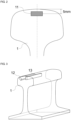
- a test specimen for a structure observation was taken out in a longitudinal rolling direction at 5-mm depth from a surface of a rail head portion 1 shown in FIG. 2 .
- the thus-obtained test specimen was subjected to mirror polishing and then etching with ⁇ -grains, and a section thereof was observed with an optical microscope of 200 magnification.
- the prior austenite grain size R A was evaluated by measuring grain sizes of 400 or more grains by a trace operation using image analysis software and calculating an average value thereof.
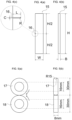
- FIG. 4 is a schematic view showing one example of the test specimen, where FIG. 4(a) is a front view, FIG. 4(b) is a side view, and FIG. 4(c) is an enlarged front view of a notch portion.
- da/dN is not more than 8.0 ⁇ 10 -8 , the material was evaluated to have characteristics of suppressing fatigue crack propagation.
- a Nishihara-type wear specimen which can evaluate fatigue damage resistance in a short time.
- the wheel specimen 18 was prepared by taking out a rod having a diameter of 32 mm from a head portion of a regular rail described in JIS E1101:2012, subjecting the rod to a heat treatment so as to have a Vickers hardness (load: 98N) of Hv 390 and a tempered martensite structure, and working into a cylinder shape having a diameter of 30 mm.
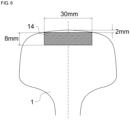
- the Nishihara-type wear specimen 17 was taken out from a fatigue damage resistance specimen collection area 14 on the surface of the rail head 1 as shown in FIG. 6 . Arrows in FIG. 5(a) indicate the rotating directions of the Nishihara-type wear specimen 17 and the wheel specimen 18, respectively.
- test results are also shown in Table 2.
- Test Nos. 1 to 20, ... in Table 2 of the rails that are made of acceptable steels satisfying the component composition according to the invention and CP of not more than 2500 and produced by the production method within ranges of the invention (heating temperature, finish rolling temperature)
- all the fatigue crack propagation rate da/dN (m/cycle) at ⁇ K 20 MPa • m 1/2 satisfy not more than 8.0 ⁇ 10 -8 .
- Test Nos. 1 to 20 in which the primary cooling and secondary cooling conditions are in preferable ranges, satisfy both the fatigue crack propagation rate da/dN (m/cycle) of not more than 8.0 ⁇ 10 -8 and the fatigue damage service life of not less than 8 ⁇ 10 5 times.
- the rail and the production method thereof according to the invention can stably produce a fatigue damage-resistant rail having an excellent fatigue crack propagation resistance characteristics, which contributes to increasing the service life of the rail for a high-axle load railway and preventing railroad accidents, thereby bringing about industrially beneficial effects.
Landscapes
- Chemical & Material Sciences (AREA)
- Engineering & Computer Science (AREA)
- Mechanical Engineering (AREA)
- Materials Engineering (AREA)
- Metallurgy (AREA)
- Organic Chemistry (AREA)
- Crystallography & Structural Chemistry (AREA)
- Physics & Mathematics (AREA)
- Thermal Sciences (AREA)
- Heat Treatment Of Steel (AREA)
- Heat Treatment Of Articles (AREA)
- Investigating Strength Of Materials By Application Of Mechanical Stress (AREA)
Applications Claiming Priority (2)
| Application Number | Priority Date | Filing Date | Title |
|---|---|---|---|
| JP2020111354 | 2020-06-29 | ||
| PCT/JP2021/020871 WO2022004247A1 (ja) | 2020-06-29 | 2021-06-01 | 耐疲労き裂伝播特性に優れるレールおよびその製造方法 |
Publications (2)
| Publication Number | Publication Date |
|---|---|
| EP4174191A1 true EP4174191A1 (de) | 2023-05-03 |
| EP4174191A4 EP4174191A4 (de) | 2025-05-21 |
Family
ID=79316006
Family Applications (1)
| Application Number | Title | Priority Date | Filing Date |
|---|---|---|---|
| EP21834151.9A Pending EP4174191A4 (de) | 2020-06-29 | 2021-06-01 | Schiene mit hervorragenden ermüdungsrissausbreitungsbeständigkeitseigenschaften und verfahren zur herstellung davon |
Country Status (9)
| Country | Link |
|---|---|
| US (1) | US20230279517A1 (de) |
| EP (1) | EP4174191A4 (de) |
| JP (1) | JP7173366B2 (de) |
| KR (1) | KR102772505B1 (de) |
| CN (1) | CN115917019B (de) |
| AU (1) | AU2021302317B2 (de) |
| BR (1) | BR112022025557A2 (de) |
| CA (1) | CA3186612C (de) |
| WO (1) | WO2022004247A1 (de) |
Families Citing this family (5)
| Publication number | Priority date | Publication date | Assignee | Title |
|---|---|---|---|---|
| CN120898012A (zh) * | 2023-03-24 | 2025-11-04 | 杰富意钢铁株式会社 | 导轨及其制造方法 |
| AU2024245086A1 (en) * | 2023-03-24 | 2025-09-04 | Jfe Steel Corporation | Rail and method of producing same |
| EP4667603A4 (de) * | 2023-03-24 | 2026-07-01 | Jfe Steel Corp | Schiene und verfahren zur herstellung davon |
| CN117363855A (zh) * | 2023-09-12 | 2024-01-09 | 包头钢铁(集团)有限责任公司 | 一种ih钢轨钢的制备方法 |
| CN118441228B (zh) * | 2024-04-26 | 2025-09-30 | 鞍钢股份有限公司 | 低裂纹诱发敏感性储氢罐体用压力容器钢板及其制造方法 |
Family Cites Families (22)
| Publication number | Priority date | Publication date | Assignee | Title |
|---|---|---|---|---|
| GB1342582A (en) * | 1970-03-20 | 1974-01-03 | British Steel Corp | Rail steel |
| JP3081116B2 (ja) | 1994-10-07 | 2000-08-28 | 新日本製鐵株式会社 | パーライト金属組織を呈した高耐摩耗レール |
| JP3078461B2 (ja) | 1994-11-15 | 2000-08-21 | 新日本製鐵株式会社 | 高耐摩耗パーライト系レール |
| JPH08246100A (ja) | 1995-03-07 | 1996-09-24 | Nippon Steel Corp | 耐摩耗性に優れたパーライト系レールおよびその製造法 |
| JPH08246101A (ja) | 1995-03-07 | 1996-09-24 | Nippon Steel Corp | 耐摩耗性・耐損傷性に優れたパーライト系レールおよびその製造法 |
| JP4598265B2 (ja) | 2000-06-14 | 2010-12-15 | 新日本製鐵株式会社 | パーライト系レールおよびその製造法 |
| JP4507494B2 (ja) * | 2003-01-17 | 2010-07-21 | Jfeスチール株式会社 | 疲労強度に優れた高強度鋼材の製造方法 |
| JP4736621B2 (ja) * | 2005-08-19 | 2011-07-27 | Jfeスチール株式会社 | 耐摩耗性及び耐疲労損傷性に優れるパーライト鋼レール |
| JP4781847B2 (ja) * | 2006-02-28 | 2011-09-28 | Jfeスチール株式会社 | 転動疲労性の優れた鋼部材の製造方法 |
| JP4964489B2 (ja) * | 2006-04-20 | 2012-06-27 | 新日本製鐵株式会社 | 耐摩耗性および延性に優れたパーライト系レールの製造方法 |
| BRPI0607042B1 (pt) * | 2006-11-09 | 2014-08-19 | Nippon Steel & Sumitomo Metal Corp | Aço para mola de alta resistência |
| JP4390004B2 (ja) * | 2007-03-28 | 2009-12-24 | Jfeスチール株式会社 | 耐摩耗性と耐疲労損傷性に優れた内部高硬度型パーライト鋼レールおよびその製造方法 |
| CN101743334B (zh) * | 2007-10-10 | 2012-04-04 | 杰富意钢铁株式会社 | 耐磨损性、耐疲劳损伤性及耐延迟断裂性优良的内部高硬度型珠光体钢轨及其制造方法 |
| EP2247764B1 (de) * | 2008-02-22 | 2011-08-31 | Tata Steel UK Limited | Schienenstahl mit hervorragender kombination aus verschleisseigenschaften und resistenz gegen ermüdung durch rollkontakt |
| JP5141332B2 (ja) * | 2008-03-27 | 2013-02-13 | Jfeスチール株式会社 | 耐遅れ破壊性に優れた内部高硬度型パーライト鋼レールおよびその製造方法 |
| JP5282506B2 (ja) * | 2008-09-25 | 2013-09-04 | Jfeスチール株式会社 | 耐摩耗性と耐疲労損傷性に優れた内部高硬度型パーライト鋼レールおよびその製造方法 |
| JP5238930B2 (ja) | 2009-02-12 | 2013-07-17 | Jfeスチール株式会社 | 耐摩耗性レールおよびその製造方法 |
| KR101826458B1 (ko) * | 2014-01-10 | 2018-02-06 | 신닛테츠스미킨 카부시키카이샤 | 베어링 부품 |
| EP3604566B1 (de) * | 2017-03-21 | 2023-11-15 | JFE Steel Corporation | Schiene und verfahren zur herstellung davon |
| WO2019189686A1 (ja) * | 2018-03-30 | 2019-10-03 | Jfeスチール株式会社 | レールおよびその製造方法 |
| AT521405B1 (de) * | 2018-07-10 | 2021-09-15 | Voestalpine Schienen Gmbh | Gleisteil aus einem hypereutektoiden Stahl |
| AU2019347433B2 (en) * | 2018-09-28 | 2022-01-06 | Nippon Steel Corporation | Railway wheel |
-
2021
- 2021-06-01 CN CN202180044681.XA patent/CN115917019B/zh active Active
- 2021-06-01 BR BR112022025557A patent/BR112022025557A2/pt not_active Application Discontinuation
- 2021-06-01 CA CA3186612A patent/CA3186612C/en active Active
- 2021-06-01 EP EP21834151.9A patent/EP4174191A4/de active Pending
- 2021-06-01 US US18/008,203 patent/US20230279517A1/en active Pending
- 2021-06-01 KR KR1020227038956A patent/KR102772505B1/ko active Active
- 2021-06-01 JP JP2021545917A patent/JP7173366B2/ja active Active
- 2021-06-01 AU AU2021302317A patent/AU2021302317B2/en active Active
- 2021-06-01 WO PCT/JP2021/020871 patent/WO2022004247A1/ja not_active Ceased
Also Published As
| Publication number | Publication date |
|---|---|
| EP4174191A4 (de) | 2025-05-21 |
| BR112022025557A2 (pt) | 2023-01-31 |
| CN115917019B (zh) | 2026-04-24 |
| KR102772505B1 (ko) | 2025-02-24 |
| CA3186612C (en) | 2025-06-10 |
| US20230279517A1 (en) | 2023-09-07 |
| AU2021302317A1 (en) | 2023-01-19 |
| JP7173366B2 (ja) | 2022-11-16 |
| KR20220160695A (ko) | 2022-12-06 |
| AU2021302317B2 (en) | 2023-11-16 |
| JPWO2022004247A1 (de) | 2022-01-06 |
| CN115917019A (zh) | 2023-04-04 |
| WO2022004247A1 (ja) | 2022-01-06 |
| CA3186612A1 (en) | 2022-01-06 |
Similar Documents
| Publication | Publication Date | Title |
|---|---|---|
| JP5292875B2 (ja) | 耐摩耗性,耐疲労損傷性および耐遅れ破壊性に優れた内部高硬度型パーライト鋼レールおよびその製造方法 | |
| JP4390004B2 (ja) | 耐摩耗性と耐疲労損傷性に優れた内部高硬度型パーライト鋼レールおよびその製造方法 | |
| US20190338402A1 (en) | Method for manufacturing railway vehicle wheel | |
| EP2942414B1 (de) | Dicke, harte stahlplatte mit hoher zugfestigkeit und herstellungsverfahren dafür | |
| CA3186612C (en) | Rail having excellent fatigue crack propagation resistance characteristics, and method for producing same | |
| JP5282506B2 (ja) | 耐摩耗性と耐疲労損傷性に優れた内部高硬度型パーライト鋼レールおよびその製造方法 | |
| EP3778961B1 (de) | Schiene und verfahren zur herstellung davon | |
| US4575397A (en) | Rail having high resistance to wear in its head and high resistance to rupture in its foot | |
| WO2007074986A1 (en) | Steel wire having excellent cold heading quality and quenching property, and method for producing the same | |
| JP7063400B2 (ja) | レール及びその製造方法 | |
| JP2020070495A (ja) | レールおよびその製造方法 | |
| JP3267772B2 (ja) | 高強度、高延性、高靭性レールの製造法 | |
| JP5141332B2 (ja) | 耐遅れ破壊性に優れた内部高硬度型パーライト鋼レールおよびその製造方法 | |
| JP6555447B2 (ja) | レールの製造方法 | |
| EP4667603A1 (de) | Schiene und verfahren zur herstellung davon | |
| CN111868285B (zh) | 轨道及其制造方法 | |
| EP4663799A1 (de) | Schiene und verfahren zur herstellung davon | |
| JP2008081823A (ja) | ファインブランキング加工性に優れた鋼板およびその製造方法 | |
| JP2007169727A (ja) | 高強度パーライト系レールおよびその製造方法 | |
| CN115261704A (zh) | 中等强度热轧贝氏体钢轨制造方法 |
Legal Events
| Date | Code | Title | Description |
|---|---|---|---|
| STAA | Information on the status of an ep patent application or granted ep patent |
Free format text: STATUS: THE INTERNATIONAL PUBLICATION HAS BEEN MADE |
|
| PUAI | Public reference made under article 153(3) epc to a published international application that has entered the european phase |
Free format text: ORIGINAL CODE: 0009012 |
|
| STAA | Information on the status of an ep patent application or granted ep patent |
Free format text: STATUS: REQUEST FOR EXAMINATION WAS MADE |
|
| 17P | Request for examination filed |
Effective date: 20221213 |
|
| AK | Designated contracting states |
Kind code of ref document: A1 Designated state(s): AL AT BE BG CH CY CZ DE DK EE ES FI FR GB GR HR HU IE IS IT LI LT LU LV MC MK MT NL NO PL PT RO RS SE SI SK SM TR |
|
| DAV | Request for validation of the european patent (deleted) | ||
| DAX | Request for extension of the european patent (deleted) | ||
| REG | Reference to a national code |
Ref country code: DE Ref legal event code: R079 Free format text: PREVIOUS MAIN CLASS: C21D0008000000 Ipc: C22C0038180000 |
|
| A4 | Supplementary search report drawn up and despatched |
Effective date: 20250422 |
|
| RIC1 | Information provided on ipc code assigned before grant |
Ipc: C21D 7/13 20060101ALI20250415BHEP Ipc: C21D 1/02 20060101ALI20250415BHEP Ipc: C21D 1/18 20060101ALI20250415BHEP Ipc: C21D 6/00 20060101ALI20250415BHEP Ipc: C21D 9/04 20060101ALI20250415BHEP Ipc: C22C 38/40 20060101ALI20250415BHEP Ipc: C22C 38/20 20060101ALI20250415BHEP Ipc: C22C 38/60 20060101ALI20250415BHEP Ipc: C22C 38/32 20060101ALI20250415BHEP Ipc: C22C 38/28 20060101ALI20250415BHEP Ipc: C22C 38/22 20060101ALI20250415BHEP Ipc: C22C 38/06 20060101ALI20250415BHEP Ipc: C22C 38/42 20060101ALI20250415BHEP Ipc: C22C 38/26 20060101ALI20250415BHEP Ipc: C22C 38/24 20060101ALI20250415BHEP Ipc: C22C 38/00 20060101ALI20250415BHEP Ipc: C22C 38/38 20060101ALI20250415BHEP Ipc: C22C 38/04 20060101ALI20250415BHEP Ipc: C22C 38/02 20060101ALI20250415BHEP Ipc: C22C 38/18 20060101AFI20250415BHEP |