EP4174227B1 - Verfahren und vorrichtung zur herstellung von innenbeschichtungen aus einer sandwichstruktur - Google Patents
Verfahren und vorrichtung zur herstellung von innenbeschichtungen aus einer sandwichstruktur Download PDFInfo
- Publication number
- EP4174227B1 EP4174227B1 EP22203713.7A EP22203713A EP4174227B1 EP 4174227 B1 EP4174227 B1 EP 4174227B1 EP 22203713 A EP22203713 A EP 22203713A EP 4174227 B1 EP4174227 B1 EP 4174227B1
- Authority
- EP
- European Patent Office
- Prior art keywords
- fibers
- web
- undulations
- needle
- manufacturing
- Prior art date
- Legal status (The legal status is an assumption and is not a legal conclusion. Google has not performed a legal analysis and makes no representation as to the accuracy of the status listed.)
- Active
Links
Images

Classifications
-
- D—TEXTILES; PAPER
- D04—BRAIDING; LACE-MAKING; KNITTING; TRIMMINGS; NON-WOVEN FABRICS
- D04H—MAKING TEXTILE FABRICS, e.g. FROM FIBRES OR FILAMENTARY MATERIAL; FABRICS MADE BY SUCH PROCESSES OR APPARATUS, e.g. FELTS, NON-WOVEN FABRICS; COTTON-WOOL; WADDING ; NON-WOVEN FABRICS FROM STAPLE FIBRES, FILAMENTS OR YARNS, BONDED WITH AT LEAST ONE WEB-LIKE MATERIAL DURING THEIR CONSOLIDATION
- D04H1/00—Non-woven fabrics formed wholly or mainly of staple fibres or like relatively short fibres
- D04H1/70—Non-woven fabrics formed wholly or mainly of staple fibres or like relatively short fibres characterised by the method of forming fleeces or layers, e.g. reorientation of fibres
- D04H1/74—Non-woven fabrics formed wholly or mainly of staple fibres or like relatively short fibres characterised by the method of forming fleeces or layers, e.g. reorientation of fibres the fibres being orientated, e.g. in parallel (anisotropic fleeces)
-
- B—PERFORMING OPERATIONS; TRANSPORTING
- B60—VEHICLES IN GENERAL
- B60N—SEATS SPECIALLY ADAPTED FOR VEHICLES; VEHICLE PASSENGER ACCOMMODATION NOT OTHERWISE PROVIDED FOR
- B60N3/00—Arrangements or adaptations of other passenger fittings, not otherwise provided for
- B60N3/04—Arrangements or adaptations of other passenger fittings, not otherwise provided for of floor mats or carpets
- B60N3/048—Arrangements or adaptations of other passenger fittings, not otherwise provided for of floor mats or carpets characterised by their structure
-
- D—TEXTILES; PAPER
- D04—BRAIDING; LACE-MAKING; KNITTING; TRIMMINGS; NON-WOVEN FABRICS
- D04H—MAKING TEXTILE FABRICS, e.g. FROM FIBRES OR FILAMENTARY MATERIAL; FABRICS MADE BY SUCH PROCESSES OR APPARATUS, e.g. FELTS, NON-WOVEN FABRICS; COTTON-WOOL; WADDING ; NON-WOVEN FABRICS FROM STAPLE FIBRES, FILAMENTS OR YARNS, BONDED WITH AT LEAST ONE WEB-LIKE MATERIAL DURING THEIR CONSOLIDATION
- D04H18/00—Needling machines
- D04H18/02—Needling machines with needles
-
- B—PERFORMING OPERATIONS; TRANSPORTING
- B32—LAYERED PRODUCTS
- B32B—LAYERED PRODUCTS, i.e. PRODUCTS BUILT-UP OF STRATA OF FLAT OR NON-FLAT, e.g. CELLULAR OR HONEYCOMB, FORM
- B32B38/00—Ancillary operations in connection with laminating processes
- B32B38/10—Removing layers, or parts of layers, mechanically or chemically
-
- B—PERFORMING OPERATIONS; TRANSPORTING
- B32—LAYERED PRODUCTS
- B32B—LAYERED PRODUCTS, i.e. PRODUCTS BUILT-UP OF STRATA OF FLAT OR NON-FLAT, e.g. CELLULAR OR HONEYCOMB, FORM
- B32B38/00—Ancillary operations in connection with laminating processes
- B32B38/18—Handling of layers or the laminate
- B32B38/1875—Tensioning
-
- B—PERFORMING OPERATIONS; TRANSPORTING
- B32—LAYERED PRODUCTS
- B32B—LAYERED PRODUCTS, i.e. PRODUCTS BUILT-UP OF STRATA OF FLAT OR NON-FLAT, e.g. CELLULAR OR HONEYCOMB, FORM
- B32B5/00—Layered products characterised by the non- homogeneity or physical structure, i.e. comprising a fibrous, filamentary, particulate or foam layer; Layered products characterised by having a layer differing constitutionally or physically in different parts
- B32B5/22—Layered products characterised by the non- homogeneity or physical structure, i.e. comprising a fibrous, filamentary, particulate or foam layer; Layered products characterised by having a layer differing constitutionally or physically in different parts characterised by the presence of two or more layers which are next to each other and are fibrous, filamentary, formed of particles or foamed
- B32B5/24—Layered products characterised by the non- homogeneity or physical structure, i.e. comprising a fibrous, filamentary, particulate or foam layer; Layered products characterised by having a layer differing constitutionally or physically in different parts characterised by the presence of two or more layers which are next to each other and are fibrous, filamentary, formed of particles or foamed one layer being a fibrous or filamentary layer
- B32B5/26—Layered products characterised by the non- homogeneity or physical structure, i.e. comprising a fibrous, filamentary, particulate or foam layer; Layered products characterised by having a layer differing constitutionally or physically in different parts characterised by the presence of two or more layers which are next to each other and are fibrous, filamentary, formed of particles or foamed one layer being a fibrous or filamentary layer another layer next to it also being fibrous or filamentary
- B32B5/275—Layered products characterised by the non- homogeneity or physical structure, i.e. comprising a fibrous, filamentary, particulate or foam layer; Layered products characterised by having a layer differing constitutionally or physically in different parts characterised by the presence of two or more layers which are next to each other and are fibrous, filamentary, formed of particles or foamed one layer being a fibrous or filamentary layer another layer next to it also being fibrous or filamentary characterised by one woven fabric layer next to a non-woven fabric layer
-
- B—PERFORMING OPERATIONS; TRANSPORTING
- B32—LAYERED PRODUCTS
- B32B—LAYERED PRODUCTS, i.e. PRODUCTS BUILT-UP OF STRATA OF FLAT OR NON-FLAT, e.g. CELLULAR OR HONEYCOMB, FORM
- B32B7/00—Layered products characterised by the relation between layers; Layered products characterised by the relative orientation of features between layers, or by the relative values of a measurable parameter between layers, i.e. products comprising layers having different physical, chemical or physicochemical properties; Layered products characterised by the interconnection of layers
- B32B7/04—Interconnection of layers
- B32B7/06—Interconnection of layers permitting easy separation
-
- B—PERFORMING OPERATIONS; TRANSPORTING
- B32—LAYERED PRODUCTS
- B32B—LAYERED PRODUCTS, i.e. PRODUCTS BUILT-UP OF STRATA OF FLAT OR NON-FLAT, e.g. CELLULAR OR HONEYCOMB, FORM
- B32B7/00—Layered products characterised by the relation between layers; Layered products characterised by the relative orientation of features between layers, or by the relative values of a measurable parameter between layers, i.e. products comprising layers having different physical, chemical or physicochemical properties; Layered products characterised by the interconnection of layers
- B32B7/04—Interconnection of layers
- B32B7/08—Interconnection of layers by mechanical means
- B32B7/09—Interconnection of layers by mechanical means by stitching, needling or sewing
-
- D—TEXTILES; PAPER
- D04—BRAIDING; LACE-MAKING; KNITTING; TRIMMINGS; NON-WOVEN FABRICS
- D04H—MAKING TEXTILE FABRICS, e.g. FROM FIBRES OR FILAMENTARY MATERIAL; FABRICS MADE BY SUCH PROCESSES OR APPARATUS, e.g. FELTS, NON-WOVEN FABRICS; COTTON-WOOL; WADDING ; NON-WOVEN FABRICS FROM STAPLE FIBRES, FILAMENTS OR YARNS, BONDED WITH AT LEAST ONE WEB-LIKE MATERIAL DURING THEIR CONSOLIDATION
- D04H1/00—Non-woven fabrics formed wholly or mainly of staple fibres or like relatively short fibres
- D04H1/40—Non-woven fabrics formed wholly or mainly of staple fibres or like relatively short fibres from fleeces or layers composed of fibres without existing or potential cohesive properties
- D04H1/42—Non-woven fabrics formed wholly or mainly of staple fibres or like relatively short fibres from fleeces or layers composed of fibres without existing or potential cohesive properties characterised by the use of certain kinds of fibres insofar as this use has no preponderant influence on the consolidation of the fleece
- D04H1/425—Cellulose series
-
- D—TEXTILES; PAPER
- D04—BRAIDING; LACE-MAKING; KNITTING; TRIMMINGS; NON-WOVEN FABRICS
- D04H—MAKING TEXTILE FABRICS, e.g. FROM FIBRES OR FILAMENTARY MATERIAL; FABRICS MADE BY SUCH PROCESSES OR APPARATUS, e.g. FELTS, NON-WOVEN FABRICS; COTTON-WOOL; WADDING ; NON-WOVEN FABRICS FROM STAPLE FIBRES, FILAMENTS OR YARNS, BONDED WITH AT LEAST ONE WEB-LIKE MATERIAL DURING THEIR CONSOLIDATION
- D04H1/00—Non-woven fabrics formed wholly or mainly of staple fibres or like relatively short fibres
- D04H1/40—Non-woven fabrics formed wholly or mainly of staple fibres or like relatively short fibres from fleeces or layers composed of fibres without existing or potential cohesive properties
- D04H1/42—Non-woven fabrics formed wholly or mainly of staple fibres or like relatively short fibres from fleeces or layers composed of fibres without existing or potential cohesive properties characterised by the use of certain kinds of fibres insofar as this use has no preponderant influence on the consolidation of the fleece
- D04H1/4282—Addition polymers
-
- D—TEXTILES; PAPER
- D04—BRAIDING; LACE-MAKING; KNITTING; TRIMMINGS; NON-WOVEN FABRICS
- D04H—MAKING TEXTILE FABRICS, e.g. FROM FIBRES OR FILAMENTARY MATERIAL; FABRICS MADE BY SUCH PROCESSES OR APPARATUS, e.g. FELTS, NON-WOVEN FABRICS; COTTON-WOOL; WADDING ; NON-WOVEN FABRICS FROM STAPLE FIBRES, FILAMENTS OR YARNS, BONDED WITH AT LEAST ONE WEB-LIKE MATERIAL DURING THEIR CONSOLIDATION
- D04H1/00—Non-woven fabrics formed wholly or mainly of staple fibres or like relatively short fibres
- D04H1/40—Non-woven fabrics formed wholly or mainly of staple fibres or like relatively short fibres from fleeces or layers composed of fibres without existing or potential cohesive properties
- D04H1/42—Non-woven fabrics formed wholly or mainly of staple fibres or like relatively short fibres from fleeces or layers composed of fibres without existing or potential cohesive properties characterised by the use of certain kinds of fibres insofar as this use has no preponderant influence on the consolidation of the fleece
- D04H1/4326—Condensation or reaction polymers
-
- D—TEXTILES; PAPER
- D04—BRAIDING; LACE-MAKING; KNITTING; TRIMMINGS; NON-WOVEN FABRICS
- D04H—MAKING TEXTILE FABRICS, e.g. FROM FIBRES OR FILAMENTARY MATERIAL; FABRICS MADE BY SUCH PROCESSES OR APPARATUS, e.g. FELTS, NON-WOVEN FABRICS; COTTON-WOOL; WADDING ; NON-WOVEN FABRICS FROM STAPLE FIBRES, FILAMENTS OR YARNS, BONDED WITH AT LEAST ONE WEB-LIKE MATERIAL DURING THEIR CONSOLIDATION
- D04H1/00—Non-woven fabrics formed wholly or mainly of staple fibres or like relatively short fibres
- D04H1/40—Non-woven fabrics formed wholly or mainly of staple fibres or like relatively short fibres from fleeces or layers composed of fibres without existing or potential cohesive properties
- D04H1/44—Non-woven fabrics formed wholly or mainly of staple fibres or like relatively short fibres from fleeces or layers composed of fibres without existing or potential cohesive properties the fleeces or layers being consolidated by mechanical means, e.g. by rolling
- D04H1/46—Non-woven fabrics formed wholly or mainly of staple fibres or like relatively short fibres from fleeces or layers composed of fibres without existing or potential cohesive properties the fleeces or layers being consolidated by mechanical means, e.g. by rolling by needling or like operations to cause entanglement of fibres
-
- D—TEXTILES; PAPER
- D04—BRAIDING; LACE-MAKING; KNITTING; TRIMMINGS; NON-WOVEN FABRICS
- D04H—MAKING TEXTILE FABRICS, e.g. FROM FIBRES OR FILAMENTARY MATERIAL; FABRICS MADE BY SUCH PROCESSES OR APPARATUS, e.g. FELTS, NON-WOVEN FABRICS; COTTON-WOOL; WADDING ; NON-WOVEN FABRICS FROM STAPLE FIBRES, FILAMENTS OR YARNS, BONDED WITH AT LEAST ONE WEB-LIKE MATERIAL DURING THEIR CONSOLIDATION
- D04H1/00—Non-woven fabrics formed wholly or mainly of staple fibres or like relatively short fibres
- D04H1/40—Non-woven fabrics formed wholly or mainly of staple fibres or like relatively short fibres from fleeces or layers composed of fibres without existing or potential cohesive properties
- D04H1/44—Non-woven fabrics formed wholly or mainly of staple fibres or like relatively short fibres from fleeces or layers composed of fibres without existing or potential cohesive properties the fleeces or layers being consolidated by mechanical means, e.g. by rolling
- D04H1/46—Non-woven fabrics formed wholly or mainly of staple fibres or like relatively short fibres from fleeces or layers composed of fibres without existing or potential cohesive properties the fleeces or layers being consolidated by mechanical means, e.g. by rolling by needling or like operations to cause entanglement of fibres
- D04H1/498—Non-woven fabrics formed wholly or mainly of staple fibres or like relatively short fibres from fleeces or layers composed of fibres without existing or potential cohesive properties the fleeces or layers being consolidated by mechanical means, e.g. by rolling by needling or like operations to cause entanglement of fibres entanglement of layered webs
-
- D—TEXTILES; PAPER
- D04—BRAIDING; LACE-MAKING; KNITTING; TRIMMINGS; NON-WOVEN FABRICS
- D04H—MAKING TEXTILE FABRICS, e.g. FROM FIBRES OR FILAMENTARY MATERIAL; FABRICS MADE BY SUCH PROCESSES OR APPARATUS, e.g. FELTS, NON-WOVEN FABRICS; COTTON-WOOL; WADDING ; NON-WOVEN FABRICS FROM STAPLE FIBRES, FILAMENTS OR YARNS, BONDED WITH AT LEAST ONE WEB-LIKE MATERIAL DURING THEIR CONSOLIDATION
- D04H11/00—Non-woven pile fabrics
- D04H11/08—Non-woven pile fabrics formed by creation of a pile on at least one surface of a non-woven fabric without addition of pile-forming material, e.g. by needling, by differential shrinking
-
- B—PERFORMING OPERATIONS; TRANSPORTING
- B32—LAYERED PRODUCTS
- B32B—LAYERED PRODUCTS, i.e. PRODUCTS BUILT-UP OF STRATA OF FLAT OR NON-FLAT, e.g. CELLULAR OR HONEYCOMB, FORM
- B32B2250/00—Layers arrangement
- B32B2250/02—2 layers
-
- B—PERFORMING OPERATIONS; TRANSPORTING
- B32—LAYERED PRODUCTS
- B32B—LAYERED PRODUCTS, i.e. PRODUCTS BUILT-UP OF STRATA OF FLAT OR NON-FLAT, e.g. CELLULAR OR HONEYCOMB, FORM
- B32B2250/00—Layers arrangement
- B32B2250/24—All layers being polymeric
-
- B—PERFORMING OPERATIONS; TRANSPORTING
- B32—LAYERED PRODUCTS
- B32B—LAYERED PRODUCTS, i.e. PRODUCTS BUILT-UP OF STRATA OF FLAT OR NON-FLAT, e.g. CELLULAR OR HONEYCOMB, FORM
- B32B2307/00—Properties of the layers or laminate
- B32B2307/50—Properties of the layers or laminate having particular mechanical properties
- B32B2307/514—Oriented
-
- B—PERFORMING OPERATIONS; TRANSPORTING
- B32—LAYERED PRODUCTS
- B32B—LAYERED PRODUCTS, i.e. PRODUCTS BUILT-UP OF STRATA OF FLAT OR NON-FLAT, e.g. CELLULAR OR HONEYCOMB, FORM
- B32B2307/00—Properties of the layers or laminate
- B32B2307/70—Other properties
- B32B2307/718—Weight, e.g. weight per square meter
-
- B—PERFORMING OPERATIONS; TRANSPORTING
- B32—LAYERED PRODUCTS
- B32B—LAYERED PRODUCTS, i.e. PRODUCTS BUILT-UP OF STRATA OF FLAT OR NON-FLAT, e.g. CELLULAR OR HONEYCOMB, FORM
- B32B2307/00—Properties of the layers or laminate
- B32B2307/70—Other properties
- B32B2307/732—Dimensional properties
-
- B—PERFORMING OPERATIONS; TRANSPORTING
- B32—LAYERED PRODUCTS
- B32B—LAYERED PRODUCTS, i.e. PRODUCTS BUILT-UP OF STRATA OF FLAT OR NON-FLAT, e.g. CELLULAR OR HONEYCOMB, FORM
- B32B2605/00—Vehicles
- B32B2605/003—Interior finishings
Definitions
- the present invention relates to a method for manufacturing interior coverings, in particular a floor covering for a motor vehicle.
- a method of manufacturing a covering comprising a step of producing a web of fibers having a given average orientation relative to a longitudinal direction, followed by a step of passing the web through a looping device comprising a set rotating discs and fixed looping elements, so as to generate undulations.
- the web is formed by layup with crisscrossing of fibers, the web being folded back on itself before being stretched in a stretching device to obtain a desired orientation of the fibers.
- the coating device and the stretching device are generally expensive, which has an impact on the economic benefit of the coating.
- the stretching carried out is generally significant, in particular having a stretching ratio of up to 5, which can cause irregularities in the web and consequently in the final coating.
- the invention aims in particular to remedy these drawbacks, by proposing a coating manufacturing process that is simpler and more economical to implement, while allowing the production of a good quality coating.
- the method according to the invention provides for producing the coating from a sandwich structure, by separating it.
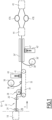
- a device 10 for manufacturing needled coverings 12, 12' We represented, on the figure 1 , a device 10 for manufacturing needled coverings 12, 12'.
- This manufacturing device 10 makes it possible to carry out a process for manufacturing coatings according to an example of an embodiment of the invention.
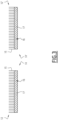
- the coverings 12, 12' are produced by the separation in two of a sandwich structure 12A shown on the figure 2 , along a plane of symmetry P, as will be explained later in more detail.
- Each covering 12, 12' forms for example an interior covering, and more particularly an interior covering of a motor vehicle, intended to be placed on the ground or on a wall of the vehicle.
- the covering 12, 12' can form any conceivable interior covering.
- the fibers 15 and 17, 17' are for example made from a thermoplastic polymer, such as polypropylene, polyethylene terephthalate (PET), polyamide, polylactic acid, their mixtures or their copolymers.
- a thermoplastic polymer such as polypropylene, polyethylene terephthalate (PET), polyamide, polylactic acid, their mixtures or their copolymers.
- the fibers 15 and 17, 17' may be fibers of natural origin such as flax or hemp fibers used alone or in mixtures.
- the layers 14 and 16, 16' can be formed from a mixture comprising a percentage of binder fibers, that is to say for example of two-component fibers of which one of the components has a melting temperature lower than the other.
- the face layer 14 has a velvet exterior appearance. This velvet is made up of 15 fibers.
- the length of the fibers used is generally between 60 and 200 mm.
- the density of the fibers is preferably between 4 (bi-component fiber) and 17 dtex.
- the crimp of the fibers is preferably between 2.5 and 4 undulations per cm.
- the manufacturing device 10 comprises a carding device 18, capable of producing a carding web 20 extending in a longitudinal direction X, corresponding to a production direction (machine direction).
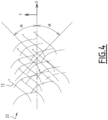
- the carding veil 20, represented schematically on the Figure 4 comprises said first fibers 15, mainly oriented in an orientation direction forming an angle ⁇ with the longitudinal direction the longitudinal direction
- angle ⁇ is an average angle, that is to say that the orientation of each fiber can deviate slightly from this angle ⁇ , but that the average of the angles formed by the orientations of all the fibers is substantially equal to this angle ⁇ .
- the carding device 18 is configured so that the carding web 20 has a surface mass of between 80 and 120 g/m 2 .
- the manufacturing process therefore includes a step of producing the carding web 20 by means of the carding device 18.
- the manufacturing device 10 comprises, downstream of the carding device 18, a stretching device 22 intended to stretch the carding web 20.
- the manufacturing process includes stretching the carding web 20 by means of the carding device 20. stretching 22.
- the stretching device 22 is configured to carry out longitudinal stretching with an elongation ratio of between 1.5 and 2. It will be recalled here that an elongation ratio is the ratio of the length of a portion of sail after stretching along the length of this same portion of sail before stretching.
- This longitudinal stretching has the effect of reducing the surface mass of the card web 20.
- the stretching device 22 comprises for example a first set 24 of upstream drive cylinders, and a second set 26 of downstream drive cylinders.
- Each set 24, 26 comprises two complementary cylinders between which the card web 20 passes, in contact with these two cylinders. Driving the cylinders of each assembly 24, 26 in rotation therefore allows the carding web 20 to be driven along the longitudinal direction X.
- the downstream drive cylinders of the second set 26 are movable in rotation with a rotation speed greater than that of the upstream drive cylinders of the first set 24, so that the carding web 20 is not driven with the same speed along its entire length.
- This card web 20, passing between the cylinders of each set 24, 26, is then stretched due to this difference in speed.
- V e peripheral speed of the input cylinders and P e the surface mass of the web engaging between the input cylinders
- V the peripheral speed of the output cylinders and Ps the surface mass of the sheet engaging between the input cylinders.
- the manufacturing device 10 comprises, at the outlet of the stretching device 22, a looping device 28 known per se, for example partly similar to that described in EP 0 859 077 .
- a looping device 28 is intended to loop the fibers 15 of the web 20 by verticalizing them, thus forming undulations.
- the manufacturing process here includes a step of looping the fibers 15 of the card web 20, by means of the looping device 28.
- This looping device 28 comprises a set of rotating discs 30 carried on a common transverse axis, driven in continuous rotation at a peripheral speed preferably equal to the entry speed of the web 20 into this looping device 28.
- the curling device 28 also comprises curling fingers 32, each being arranged between two adjacent disks 30.
- the looping fingers 32 extend to one end which is substantially tangential to the discs 30.
- each fiber 15 finds itself pre-looped by being driven at each end by a respective disc 30, surmounting the looping finger 32 corresponding placed between these two disks 30.
- a front part of the fiber 15 is driven by one of the disks 30, and a rear part of this fiber 15 is driven by the other disk 30.
- These two disks being secured to the same axis, their rotation speeds are identical.
- Each loop has a height H, taken in a direction of elevation perpendicular to the longitudinal direction and the transverse direction, and a width G taken in the transverse direction Y. It should be noted that the width G corresponds substantially to the interval between two adjacent disks 30.
- the stop mentioned above is therefore formed of a band 33 of a conveyor 34.
- the band 33 is an endless band, extending between two drive cylinders.
- Band 33 is equipped with brushes.
- the manufacturing device 10 then comprises a first device 36 for depositing a first sheet 38 on the undulations accumulated on the brushes.
- the first sheet 38 is formed by said fibers 17, for example of the same nature as those of the card web 20.
- the first layer 38 is pre-needled.
- the assembly formed by the brush conveyor 34 and the needle boards is known per se, and for example formed by a Dilour ® type machine.
- the needle board 41 carries a plurality of needles, allowing a needling density of the order of 200 to 400 cps/cm 2 .
- the structure formed by the face layer 14 and the first sole is then extracted from the brushes of the conveyor in a conventional manner, then deposited on a second sheet 38' coming from a second deposition device 36'.
- the second deposit device 36' is for example placed in a pit at the outlet of the first conveyor 34.
- the second sheet 38' is placed on a needling table 34'.
- the assembly formed by the second sheet 38', on which the structure is deposited, is introduced onto a second needling device 40' comprising at least one second needle board 41' placed under the structure.
- the second sheet 38' is formed by the fibers 17' mentioned above, which are for example of the same nature as the fibers 17 of the first sheet 38.
- the second sheet 38' is pre-needled.
- the second ply 38' is needled with the web 20 in the same way as the first ply 38 was previously needled with this same web 20.
- the second sole 16' is formed, by intertwining the fibers 15 with the fibers 17' of the second sheet 38'.
- the manufacturing device 10 comprises, downstream of the first needling device, a device for turning the structure, capable of extracting the structure from the brushes of the conveyor 33 and resting the structure on the anvil d a second needling device.
- the structure presents its fibers 15 upwards.
- the structure and the second sheet 38' are arranged so that the second sheet 38' is on the other side of the web 20 relative to the first sheet 38, so as to form a sandwich structure, with the veil 20 disposed between the first 38 and second 38' layers.
- the device 10 then comprises a device 44 for separating the sandwich structure into two symmetrical parts, by cutting the sandwich structure parallel to the soles 16, 16', along the plane of symmetry P mentioned previously.
- winding devices 47A, 47B exert respective traction on the soles 16, 16', responsible for driving the the sandwich structure from assembly with the second sheet 38'.
- the winding devices 47A, 47B respectively wind the two parts of the structure, to form two rollers, one comprising forming the first covering 12 and the other forming the second covering 12'.
- rollers are then brought to a device 45 for binding the fibers of the face layer 14 in the first sole 16 for the first covering 12, and of the face layer in the second sole 16' for the second covering 12'.
- This binding device 45 is for example a heat-fixing device, in particular a through-air oven or an infrared oven.
- the binding can be carried out in any conceivable manner, for example by incorporating a latex in the layers 38, 38', or between each layer 38, 38' and the web 20, or by incorporating hot-melt binder fibers among the fibers of the web 20 and/or in each sheet 38, 38'. Binder fibers are generally preferred to latex, for reasons of recyclability. This binding, necessary for all needled type constructions to ensure sufficient cohesion of the pile fibers with the sole and to avoid problems of tearing or abrasion, is carried out in a conventional manner and will therefore not be described in more detail.
- the angle ⁇ of orientation of the fibers must respect the relationship sin ⁇ ⁇ G/2H to within +/- 5°.
- a direct card web is used, such a web having an average fiber angle of between 5 and 10°.
- sin ⁇ ⁇ G/2H is well verified, which ensures good parallelization of the fibers in the velvet. It has in fact been found that such a card web is optimal for obtaining sufficient height to produce coverings from a separate sandwich structure.
Landscapes
- Engineering & Computer Science (AREA)
- Textile Engineering (AREA)
- Mechanical Engineering (AREA)
- Transportation (AREA)
- Chemical & Material Sciences (AREA)
- Chemical Kinetics & Catalysis (AREA)
- Nonwoven Fabrics (AREA)
- Treatment Of Fiber Materials (AREA)
- Laminated Bodies (AREA)
Claims (9)
- Verfahren zur Herstellung von Kraftfahrzeugbodenbelägen (12, 12'), umfassend:- einen Schritt eines Herstellen eines Vlieses (20) aus Fasern (15), das in einer Längsrichtung (X) länglich ist, wobei die Fasern (15) eine Ausrichtung aufweisen, die einen mittleren Winkel (α) in Bezug auf die Längsrichtung (X) bildet,- einen Durchlaufschritt des Vlieses (20) aus Fasern entlang der Längsrichtung (X) durch eine Schlingenvorrichtung (28), umfassend eine Anordnung von drehenden Scheiben (30) und festen Schlingenelementen (32), um Wellen zu erzeugen,- im Anschluss an den Durchlaufschritt einen Schritt zum Zuführen der Bahn (20) auf einen mit Bürsten (33) ausgestatteten Förderer (34) und zum Ansammeln der Wellen in den Bürsten (33), um eine vorbestimmte Dichte zu erreichen,- einen Ablegeschritt eines ersten Vlieses (38) aus vorgenadelten Fasern (17) auf den angesammelten Wellen,- einen Zusammenfügeschritt von angesammelten Wellen mit der ersten vorgenadelten Bahn (38) durch Nadeln durch die Bürsten (33), um eine Struktur zu erlangen, dadurch gekennzeichnet, dass das Verfahren Folgendes umfasst:und dadurch, dass:- einen Schritt des Zusammenfügens der Struktur mit einer zweiten Bahn (38') aus vorgenadelten Fasern (17'), um eine Sandwichstruktur (12A) zu erlangen, und- einen Schritt zum Trennen der Sandwichstruktur (12A), um zwei symmetrische Velours-Beschichtungen (12, 12') zu erlangen,- das Vlies (20) ein Kardenvlies ist, das einen mittleren Ausrichtungswinkel (α) der Fasern (15) von 5 bis 10° und eine flächenbezogene Masse von 80 bis 120 g/m2 aufweist,- wobei das Verfahren vor dem Durchlaufschritt einen Schritt umfasst, bei dem das Vlies (20) in Längsrichtung um ein Dehnungsverhältnis zwischen 1,5 und 2 gedehnt wird, um seine flächenbezogene Masse zu verringern.
- Herstellungsverfahren nach Anspruch 1, wobei die Wellen durch Schleifen gebildet werden, die jeweils eine vordefinierte Breite G in einer Querrichtung (Y) senkrecht zu der Längsrichtung (X) und eine vordefinierte Höhe H in einer Erhebungsrichtung senkrecht zu der Längs- (X) und Querrichtung (Y) aufweisen, wobei der mittlere Winkel α der Ausrichtung der Fasern des Vlieses (20) mit der Längsrichtung (X) die Beziehung sinα=G/2H auf +/- 5° genau einhält.
- Herstellungsverfahren nach Anspruch 1 oder 2, wobei die Fasern (15) des Vlieses (20), die Fasern (17) der ersten Bahn (38) und die Fasern (17') der zweiten Bahn (38') ausgewählt sind aus Fasern, die basierend auf einem thermoplastischen Polymer hergestellt werden, wie beispielsweise Polypropylen, Polyethylenterephthalat (PET), Polyamid, Polymilchsäure, deren Gemischen oder deren Copolymeren, oder Fasern natürlichen Ursprungs, wie beispielsweise Flachs- oder Hanffasern, die allein oder in Gemischen verwendet werden.
- Herstellungsverfahren nach einem der Ansprüche 1 bis 3, wobei die Fasern (15) des Vlieses (20), die Fasern (17) der ersten Bahn (38) und die Fasern (17') der zweiten Bahn (38') alle aus demselben Material hergestellt sind.
- Herstellungsverfahren nach einem der Ansprüche 1 bis 3, wobei mindestens zwei Fasereinheiten aus den Fasern (15) des Vlieses (20), den Fasern (17) der ersten Bahn (38) und den Fasern (17') der zweiten Bahn (38') aus unterschiedlichen Materialien hergestellt sind.
- Herstellungsverfahren nach einem der vorherigen Ansprüche, umfassend nach dem Zusammenfügeschritt der angesammelten Wellen mit der ersten vorgenadelten Bahn (38) durch Vernadeln und vor dem Zusammenfügeschritt der Struktur mit der zweiten Bahn (38') einen Wendeschritt der Struktur.
- Vorrichtung (10) zum Fertigen von Kraftfahrzeugbodenbelägen (12, 12'), umfassend:- eine Vorrichtung (18) zum Herstellen eines Vlieses (20) aus Fasern (15), das in einer Längsrichtung (X) länglich ist, die konfiguriert ist, um den Fasern (15) eine Ausrichtung zu geben, die einen mittleren Winkel (α) in Bezug auf die Längsrichtung (X) bildet,- eine Schlingenvorrichtung (28), umfassend eine Anordnung von drehenden Scheiben (30) und festen Schlingenelementen (32), um Wellen zu erzeugen,- einen Förderer (34), der mit Bürsten (33) ausgestattet ist, der am Ausgang der Schlingenvorrichtung (28) angeordnet ist, um die Wellen in den Bürsten (33) anzusammeln, um eine vorbestimmte Dichte zu erreichen,- eine erste Vorrichtung (36) zum Ablegen einer ersten Bahn (38) aus vorgenadelten Fasern (17) auf den angesammelten Wellen,- eine erste Vernadelungsvorrichtung (40), zum Verbinden der angesammelten Wellen mit dem ersten vorgenadelten Vlies (38) durch Vernadeln durch die Bürsten (33), um eine Struktur zu erlangen,dadurch gekennzeichnet, dass die Fertigungsvorrichtung (10) Folgendes umfasst:- eine zweite Vorrichtung (36') zum Ablegen einer zweiten Bahn (38') aus vorgenadelten Fasern (17') auf den angesammelten Wellen der Struktur, um eine Sandwichstruktur (12A) zu erlangen, und- eine Vorrichtung (44) zum Trennen der Sandwich-Struktur (12A), um zwei symmetrische Velours-Beschichtungen (12, 12') zu erlangen,und dadurch, dass:- die Vorrichtung (18) zur Herstellung des Vlieses eine Karde ist, die konfiguriert ist, damit das hergestellte Kardenvlies (20) einen mittleren Ausrichtungswinkel (α) der Fasern (15) zwischen 5 und 10° und eine flächenbezogene Masse zwischen 80 und 120 g/m2 aufweist,- die Herstellungsvorrichtung (10) stromaufwärts von der Schlingenvorrichtung (28) eine Vorrichtung (22) zur Längsstreckung des Vlieses (20) aufweist, die konfiguriert ist, um ein Dehnungsverhältnis zwischen 1,5 und 2 anzuwenden.
- Herstellungsvorrichtung nach Anspruch 7, wobei die Streckvorrichtung (22) eine erste Einheit (24) von stromaufwärtigen Antriebswalzen und einen zweiten Einheit (26) von stromabwärtigen Antriebswalzen aufweist, wobei die stromabwärtigen Antriebswalzen der zweiten Einheit (26) mit einer höheren Drehgeschwindigkeit als die stromaufwärtigen Antriebswalzen der ersten Einheit (24) drehbar sind, sodass das Kardenvlies (20) nicht mit der gleichen Geschwindigkeit über seine gesamte Länge angetrieben wird.
- Herstellungsvorrichtung (10) nach Anspruch 7 oder 8, die stromabwärts von der ersten Nadelvorrichtung (40) und stromaufwärts von der zweiten Ablegevorrichtung (36') eine Vorrichtung zum Wenden der Struktur umfasst.
Applications Claiming Priority (1)
| Application Number | Priority Date | Filing Date | Title |
|---|---|---|---|
| FR2111531A FR3128722B1 (fr) | 2021-10-29 | 2021-10-29 | Procédé de fabrication de revêtements intérieurs à partir d’une structure sandwiche |
Publications (2)
| Publication Number | Publication Date |
|---|---|
| EP4174227A1 EP4174227A1 (de) | 2023-05-03 |
| EP4174227B1 true EP4174227B1 (de) | 2023-12-27 |
Family
ID=79270159
Family Applications (1)
| Application Number | Title | Priority Date | Filing Date |
|---|---|---|---|
| EP22203713.7A Active EP4174227B1 (de) | 2021-10-29 | 2022-10-26 | Verfahren und vorrichtung zur herstellung von innenbeschichtungen aus einer sandwichstruktur |
Country Status (4)
| Country | Link |
|---|---|
| US (1) | US12496951B2 (de) |
| EP (1) | EP4174227B1 (de) |
| CN (1) | CN116065303A (de) |
| FR (1) | FR3128722B1 (de) |
Families Citing this family (1)
| Publication number | Priority date | Publication date | Assignee | Title |
|---|---|---|---|---|
| CN120350487B (zh) * | 2025-06-24 | 2025-10-14 | 烟台奥森制动材料有限公司 | 一种梯度孔隙结构的黏胶基短纤固毡制备工艺及制备设备 |
Family Cites Families (21)
| Publication number | Priority date | Publication date | Assignee | Title |
|---|---|---|---|---|
| CH503680A (de) | 1966-12-08 | 1971-02-28 | Firmenich & Cie | Verfahren zur Herstellung von makrocyclischen Ketonen |
| DE2211023C3 (de) * | 1972-03-08 | 1975-07-17 | Cikalon-Vliesstoffwerk Gmbh, 4152 Kempen | Verfahren zur Herstellung von Polvliesen |
| DE3444763A1 (de) | 1984-12-07 | 1986-06-12 | Oskar Dilo Maschinenfabrik Kg, 6930 Eberbach | Anlage zum herstellen strukturierter textiler velournadelfilzbahnen |
| DE4022891A1 (de) * | 1989-08-03 | 1991-02-07 | Dilo Kg Maschf Oskar | Verfahren zum herstellen genadelter, strukturierter und gemusterter textiler velourbahnen |
| SK174391A3 (en) | 1991-06-07 | 1995-07-11 | Incotex S R O | Device for layering of fleece from vertical deposited web |
| FR2678288B1 (fr) | 1991-06-28 | 1994-11-18 | Asselin Ets | Procede pour realiser un produit non-tisse semi-fini et produit non-tisse semi-fini. |
| EP0859077A1 (de) | 1997-02-14 | 1998-08-19 | Sommer S.A. | Verfahren und Vorrichtung zur Herstellung von textilen Produkten und erhaltene textile Produkte |
| US20040121683A1 (en) * | 2002-12-20 | 2004-06-24 | Joy Jordan | Composite elastic material |
| GB0406079D0 (en) * | 2004-03-18 | 2004-04-21 | Eleksen Ltd | Sensor response |
| CN102341537A (zh) * | 2009-03-06 | 2012-02-01 | 国际环保系统公司 | 抗γ射线的无纺料片层压物 |
| DE102009040761A1 (de) * | 2009-09-09 | 2011-03-10 | Ideal Automotive Gmbh Bamberg | Rutschfeste Einlegematte und Verfahren zur Herstellung der Einlegematte |
| WO2014090669A1 (en) * | 2012-12-11 | 2014-06-19 | Rockwool International A/S | A method and an apparatus for making mineral fibre products |
| US9758908B2 (en) * | 2014-11-03 | 2017-09-12 | Goodrich Corporation | System and method for preparing textiles with volumized tows for facilitating densification |
| DE102014118385A1 (de) * | 2014-12-11 | 2016-06-16 | TRüTZSCHLER GMBH & CO. KG | Verfahren zur Steuerung einer Nadelmaschine |
| FR3041001B1 (fr) * | 2015-09-10 | 2017-10-13 | Faurecia Automotive Ind | Procede de fabrication d'un revetement interieur, notamment d'un revetement de sol pour un vehicule automobile |
| BE1023285B1 (nl) * | 2015-12-30 | 2017-01-20 | Beaulieu International Group | Motorvoertuigtapijt met massieve meerlobbige vezels |
| IT201800003741A1 (it) * | 2018-03-19 | 2019-09-19 | Freni Brembo Spa | Metodo per realizzare una preforma fibrosa e una preforma fibrosa così ottenuta |
| CN211815137U (zh) * | 2019-10-22 | 2020-10-30 | 金华市华尔汽车饰件有限公司 | 一种耐磨和耐污的针刺无纺布 |
| US20230249436A1 (en) * | 2020-09-14 | 2023-08-10 | Slab Asia Co.,Ltd | A core material for a vacuum insulation panel and a method for manufacturing the same |
| DE102020125477A1 (de) * | 2020-09-30 | 2022-03-31 | Adler Pelzer Holding Gmbh | Vernadelte Sandwich-Vliesstruktur, und Verfahren zu dessen Herstellung |
| GB202018694D0 (en) * | 2020-11-27 | 2021-01-13 | Nonwovenn Ltd | Chewable product for oral delivery of a substance, and method of manufacturing the same |
-
2021
- 2021-10-29 FR FR2111531A patent/FR3128722B1/fr active Active
-
2022
- 2022-10-25 CN CN202211312791.2A patent/CN116065303A/zh active Pending
- 2022-10-26 EP EP22203713.7A patent/EP4174227B1/de active Active
- 2022-10-31 US US17/978,188 patent/US12496951B2/en active Active
Also Published As
| Publication number | Publication date |
|---|---|
| FR3128722A1 (fr) | 2023-05-05 |
| FR3128722B1 (fr) | 2023-09-22 |
| EP4174227A1 (de) | 2023-05-03 |
| CN116065303A (zh) | 2023-05-05 |
| US12496951B2 (en) | 2025-12-16 |
| US20230137495A1 (en) | 2023-05-04 |
Similar Documents
| Publication | Publication Date | Title |
|---|---|---|
| EP3347515B1 (de) | Verfahren zur herstellung einer innenverkleidung insbesondere als bodenbelag für ein fahrzeug | |
| EP3448648B1 (de) | Verbesserte hakenförmige befestigungsvorrichtung und verfahren | |
| EP2013128B1 (de) | Verfahren zum herstellen eines dreidimensionalen faservlieses, vorrichtung und faservlies | |
| FR3041299A1 (fr) | Procede de fabrication d'une piece d'equipement interieur de vehicule automobile | |
| EP0960227B1 (de) | Verfahren und vorrichtung zur herstellung von textilen produkten und erhaltene textile produkte | |
| FR2799214A1 (fr) | Procede pour la realisation de nappes non tissees dont la cohesion est obtenue par l'action de jets de fluide | |
| FR2626294A1 (fr) | Procede de fabrication d'une structure fibreuse tridimensionnelle en vue de la realisation ulterieure d'une piece en un materiau composite et machine pour sa mise en oeuvre | |
| EP4174227A1 (de) | Verfahren und vorrichtung zur herstellung von innenbeschichtungen aus einer sandwichstruktur | |
| FR2734847A1 (fr) | Armature textile utilisable pour la realisation de materiaux composites | |
| EP1900863A1 (de) | Verfahren und Anlage zum Herstellen eines textilen Gebilde mit Zwischenlagen und Vorrichtung | |
| FR3101645A1 (fr) | Procédé de fabrication d’un revêtement intérieur bicolore pour véhicule automobile | |
| FR3018287A1 (fr) | Procede de fabrication d'une piece d'equipement interieur de vehicule automobile comportant une couche d'endroit velours, et piece associee | |
| FR3065392A1 (fr) | Procede de fabrication d'une piece structurelle pour vehicule automobile, presentant des finitions ameliorees | |
| FR3100546A1 (fr) | Dispositif de fabrication de revêtement intérieur à motif pour véhicule automobile | |
| FR3107285A1 (fr) | Procédé de fabrication d’un revêtement à aspect amélioré, notamment d’un revêtement de sol de véhicule automobile | |
| FR3118071A1 (fr) | Revêtement intérieur à motif, notamment pour un véhicule | |
| FR3121939A1 (fr) | Procédé de fabrication d’un revêtement intérieur de véhicule automobile à rendement amélioré | |
| FR3066769A1 (fr) | Dispositif perfectionne de fabrication d'un revetement interieur, notamment d'un revetement de sol pour un vehicule automobile | |
| FR3112350A1 (fr) | Procédé de fabrication d’un revêtement intérieur à motif, notamment d’un revêtement de sol pour un véhicule automobile | |
| FR3124199A1 (fr) | Procédé de fabrication d’un revêtement intérieur absorbant acoustique pour un véhicule, notamment pour un véhicule automobile | |
| FR3067365A1 (fr) | Dispositif de fabrication d’un revetement interieur, notamment pour un vehicule automobile, a haute densite de velours | |
| FR3083806A1 (fr) | Procede de formation d'une couche fibreuse pour une piece d'equipement de vehicule automobile, installation et piece d'equipement associees | |
| FR3073232B1 (fr) | Procede de fabrication d'un revetement, notamment d'un revetement de sol pour vehicule automobile | |
| FR3068371B1 (fr) | Procede de fabrication d'une nappe de fibres courtes unidirectionnelles | |
| FR3101276A1 (fr) | Procédé de réalisation d’une pièce en materiau composite de type sandwich par aiguilletage |
Legal Events
| Date | Code | Title | Description |
|---|---|---|---|
| PUAI | Public reference made under article 153(3) epc to a published international application that has entered the european phase |
Free format text: ORIGINAL CODE: 0009012 |
|
| STAA | Information on the status of an ep patent application or granted ep patent |
Free format text: STATUS: THE APPLICATION HAS BEEN PUBLISHED |
|
| AK | Designated contracting states |
Kind code of ref document: A1 Designated state(s): AL AT BE BG CH CY CZ DE DK EE ES FI FR GB GR HR HU IE IS IT LI LT LU LV MC ME MK MT NL NO PL PT RO RS SE SI SK SM TR |
|
| STAA | Information on the status of an ep patent application or granted ep patent |
Free format text: STATUS: REQUEST FOR EXAMINATION WAS MADE |
|
| P01 | Opt-out of the competence of the unified patent court (upc) registered |
Effective date: 20230524 |
|
| 17P | Request for examination filed |
Effective date: 20230619 |
|
| RBV | Designated contracting states (corrected) |
Designated state(s): AL AT BE BG CH CY CZ DE DK EE ES FI FR GB GR HR HU IE IS IT LI LT LU LV MC ME MK MT NL NO PL PT RO RS SE SI SK SM TR |
|
| GRAP | Despatch of communication of intention to grant a patent |
Free format text: ORIGINAL CODE: EPIDOSNIGR1 |
|
| STAA | Information on the status of an ep patent application or granted ep patent |
Free format text: STATUS: GRANT OF PATENT IS INTENDED |
|
| RIC1 | Information provided on ipc code assigned before grant |
Ipc: D04H 18/02 20120101ALI20230706BHEP Ipc: D04H 11/08 20060101ALI20230706BHEP Ipc: D04H 1/74 20060101ALI20230706BHEP Ipc: D04H 1/46 20120101AFI20230706BHEP |
|
| INTG | Intention to grant announced |
Effective date: 20230802 |
|
| GRAS | Grant fee paid |
Free format text: ORIGINAL CODE: EPIDOSNIGR3 |
|
| GRAA | (expected) grant |
Free format text: ORIGINAL CODE: 0009210 |
|
| STAA | Information on the status of an ep patent application or granted ep patent |
Free format text: STATUS: THE PATENT HAS BEEN GRANTED |
|
| AK | Designated contracting states |
Kind code of ref document: B1 Designated state(s): AL AT BE BG CH CY CZ DE DK EE ES FI FR GB GR HR HU IE IS IT LI LT LU LV MC ME MK MT NL NO PL PT RO RS SE SI SK SM TR |
|
| REG | Reference to a national code |
Ref country code: GB Ref legal event code: FG4D Free format text: NOT ENGLISH |
|
| REG | Reference to a national code |
Ref country code: CH Ref legal event code: EP |
|
| REG | Reference to a national code |
Ref country code: DE Ref legal event code: R096 Ref document number: 602022001479 Country of ref document: DE |
|
| REG | Reference to a national code |
Ref country code: IE Ref legal event code: FG4D Free format text: LANGUAGE OF EP DOCUMENT: FRENCH |
|
| PG25 | Lapsed in a contracting state [announced via postgrant information from national office to epo] |
Ref country code: GR Free format text: LAPSE BECAUSE OF FAILURE TO SUBMIT A TRANSLATION OF THE DESCRIPTION OR TO PAY THE FEE WITHIN THE PRESCRIBED TIME-LIMIT Effective date: 20240328 |
|
| REG | Reference to a national code |
Ref country code: LT Ref legal event code: MG9D |
|
| PG25 | Lapsed in a contracting state [announced via postgrant information from national office to epo] |
Ref country code: LT Free format text: LAPSE BECAUSE OF FAILURE TO SUBMIT A TRANSLATION OF THE DESCRIPTION OR TO PAY THE FEE WITHIN THE PRESCRIBED TIME-LIMIT Effective date: 20231227 |
|
| PG25 | Lapsed in a contracting state [announced via postgrant information from national office to epo] |
Ref country code: ES Free format text: LAPSE BECAUSE OF FAILURE TO SUBMIT A TRANSLATION OF THE DESCRIPTION OR TO PAY THE FEE WITHIN THE PRESCRIBED TIME-LIMIT Effective date: 20231227 |
|
| PG25 | Lapsed in a contracting state [announced via postgrant information from national office to epo] |
Ref country code: LT Free format text: LAPSE BECAUSE OF FAILURE TO SUBMIT A TRANSLATION OF THE DESCRIPTION OR TO PAY THE FEE WITHIN THE PRESCRIBED TIME-LIMIT Effective date: 20231227 Ref country code: GR Free format text: LAPSE BECAUSE OF FAILURE TO SUBMIT A TRANSLATION OF THE DESCRIPTION OR TO PAY THE FEE WITHIN THE PRESCRIBED TIME-LIMIT Effective date: 20240328 Ref country code: FI Free format text: LAPSE BECAUSE OF FAILURE TO SUBMIT A TRANSLATION OF THE DESCRIPTION OR TO PAY THE FEE WITHIN THE PRESCRIBED TIME-LIMIT Effective date: 20231227 Ref country code: ES Free format text: LAPSE BECAUSE OF FAILURE TO SUBMIT A TRANSLATION OF THE DESCRIPTION OR TO PAY THE FEE WITHIN THE PRESCRIBED TIME-LIMIT Effective date: 20231227 Ref country code: BG Free format text: LAPSE BECAUSE OF FAILURE TO SUBMIT A TRANSLATION OF THE DESCRIPTION OR TO PAY THE FEE WITHIN THE PRESCRIBED TIME-LIMIT Effective date: 20240327 |
|
| REG | Reference to a national code |
Ref country code: NL Ref legal event code: MP Effective date: 20231227 |
|
| REG | Reference to a national code |
Ref country code: AT Ref legal event code: MK05 Ref document number: 1644596 Country of ref document: AT Kind code of ref document: T Effective date: 20231227 |
|
| PG25 | Lapsed in a contracting state [announced via postgrant information from national office to epo] |
Ref country code: NL Free format text: LAPSE BECAUSE OF FAILURE TO SUBMIT A TRANSLATION OF THE DESCRIPTION OR TO PAY THE FEE WITHIN THE PRESCRIBED TIME-LIMIT Effective date: 20231227 |
|
| PG25 | Lapsed in a contracting state [announced via postgrant information from national office to epo] |
Ref country code: SE Free format text: LAPSE BECAUSE OF FAILURE TO SUBMIT A TRANSLATION OF THE DESCRIPTION OR TO PAY THE FEE WITHIN THE PRESCRIBED TIME-LIMIT Effective date: 20231227 Ref country code: RS Free format text: LAPSE BECAUSE OF FAILURE TO SUBMIT A TRANSLATION OF THE DESCRIPTION OR TO PAY THE FEE WITHIN THE PRESCRIBED TIME-LIMIT Effective date: 20231227 Ref country code: NO Free format text: LAPSE BECAUSE OF FAILURE TO SUBMIT A TRANSLATION OF THE DESCRIPTION OR TO PAY THE FEE WITHIN THE PRESCRIBED TIME-LIMIT Effective date: 20240327 Ref country code: NL Free format text: LAPSE BECAUSE OF FAILURE TO SUBMIT A TRANSLATION OF THE DESCRIPTION OR TO PAY THE FEE WITHIN THE PRESCRIBED TIME-LIMIT Effective date: 20231227 Ref country code: LV Free format text: LAPSE BECAUSE OF FAILURE TO SUBMIT A TRANSLATION OF THE DESCRIPTION OR TO PAY THE FEE WITHIN THE PRESCRIBED TIME-LIMIT Effective date: 20231227 Ref country code: HR Free format text: LAPSE BECAUSE OF FAILURE TO SUBMIT A TRANSLATION OF THE DESCRIPTION OR TO PAY THE FEE WITHIN THE PRESCRIBED TIME-LIMIT Effective date: 20231227 |
|
| PG25 | Lapsed in a contracting state [announced via postgrant information from national office to epo] |
Ref country code: IS Free format text: LAPSE BECAUSE OF FAILURE TO SUBMIT A TRANSLATION OF THE DESCRIPTION OR TO PAY THE FEE WITHIN THE PRESCRIBED TIME-LIMIT Effective date: 20240427 |
|
| PG25 | Lapsed in a contracting state [announced via postgrant information from national office to epo] |
Ref country code: CZ Free format text: LAPSE BECAUSE OF FAILURE TO SUBMIT A TRANSLATION OF THE DESCRIPTION OR TO PAY THE FEE WITHIN THE PRESCRIBED TIME-LIMIT Effective date: 20231227 Ref country code: AT Free format text: LAPSE BECAUSE OF FAILURE TO SUBMIT A TRANSLATION OF THE DESCRIPTION OR TO PAY THE FEE WITHIN THE PRESCRIBED TIME-LIMIT Effective date: 20231227 |
|
| PG25 | Lapsed in a contracting state [announced via postgrant information from national office to epo] |
Ref country code: SK Free format text: LAPSE BECAUSE OF FAILURE TO SUBMIT A TRANSLATION OF THE DESCRIPTION OR TO PAY THE FEE WITHIN THE PRESCRIBED TIME-LIMIT Effective date: 20231227 |
|
| PG25 | Lapsed in a contracting state [announced via postgrant information from national office to epo] |
Ref country code: SM Free format text: LAPSE BECAUSE OF FAILURE TO SUBMIT A TRANSLATION OF THE DESCRIPTION OR TO PAY THE FEE WITHIN THE PRESCRIBED TIME-LIMIT Effective date: 20231227 Ref country code: SK Free format text: LAPSE BECAUSE OF FAILURE TO SUBMIT A TRANSLATION OF THE DESCRIPTION OR TO PAY THE FEE WITHIN THE PRESCRIBED TIME-LIMIT Effective date: 20231227 Ref country code: RO Free format text: LAPSE BECAUSE OF FAILURE TO SUBMIT A TRANSLATION OF THE DESCRIPTION OR TO PAY THE FEE WITHIN THE PRESCRIBED TIME-LIMIT Effective date: 20231227 Ref country code: IS Free format text: LAPSE BECAUSE OF FAILURE TO SUBMIT A TRANSLATION OF THE DESCRIPTION OR TO PAY THE FEE WITHIN THE PRESCRIBED TIME-LIMIT Effective date: 20240427 Ref country code: EE Free format text: LAPSE BECAUSE OF FAILURE TO SUBMIT A TRANSLATION OF THE DESCRIPTION OR TO PAY THE FEE WITHIN THE PRESCRIBED TIME-LIMIT Effective date: 20231227 Ref country code: CZ Free format text: LAPSE BECAUSE OF FAILURE TO SUBMIT A TRANSLATION OF THE DESCRIPTION OR TO PAY THE FEE WITHIN THE PRESCRIBED TIME-LIMIT Effective date: 20231227 Ref country code: AT Free format text: LAPSE BECAUSE OF FAILURE TO SUBMIT A TRANSLATION OF THE DESCRIPTION OR TO PAY THE FEE WITHIN THE PRESCRIBED TIME-LIMIT Effective date: 20231227 |
|
| PG25 | Lapsed in a contracting state [announced via postgrant information from national office to epo] |
Ref country code: PT Free format text: LAPSE BECAUSE OF FAILURE TO SUBMIT A TRANSLATION OF THE DESCRIPTION OR TO PAY THE FEE WITHIN THE PRESCRIBED TIME-LIMIT Effective date: 20240429 Ref country code: PL Free format text: LAPSE BECAUSE OF FAILURE TO SUBMIT A TRANSLATION OF THE DESCRIPTION OR TO PAY THE FEE WITHIN THE PRESCRIBED TIME-LIMIT Effective date: 20231227 |
|
| PG25 | Lapsed in a contracting state [announced via postgrant information from national office to epo] |
Ref country code: PT Free format text: LAPSE BECAUSE OF FAILURE TO SUBMIT A TRANSLATION OF THE DESCRIPTION OR TO PAY THE FEE WITHIN THE PRESCRIBED TIME-LIMIT Effective date: 20240429 Ref country code: PL Free format text: LAPSE BECAUSE OF FAILURE TO SUBMIT A TRANSLATION OF THE DESCRIPTION OR TO PAY THE FEE WITHIN THE PRESCRIBED TIME-LIMIT Effective date: 20231227 |
|
| REG | Reference to a national code |
Ref country code: DE Ref legal event code: R097 Ref document number: 602022001479 Country of ref document: DE |
|
| PG25 | Lapsed in a contracting state [announced via postgrant information from national office to epo] |
Ref country code: DK Free format text: LAPSE BECAUSE OF FAILURE TO SUBMIT A TRANSLATION OF THE DESCRIPTION OR TO PAY THE FEE WITHIN THE PRESCRIBED TIME-LIMIT Effective date: 20231227 |
|
| PG25 | Lapsed in a contracting state [announced via postgrant information from national office to epo] |
Ref country code: DK Free format text: LAPSE BECAUSE OF FAILURE TO SUBMIT A TRANSLATION OF THE DESCRIPTION OR TO PAY THE FEE WITHIN THE PRESCRIBED TIME-LIMIT Effective date: 20231227 |
|
| PLBE | No opposition filed within time limit |
Free format text: ORIGINAL CODE: 0009261 |
|
| STAA | Information on the status of an ep patent application or granted ep patent |
Free format text: STATUS: NO OPPOSITION FILED WITHIN TIME LIMIT |
|
| 26N | No opposition filed |
Effective date: 20240930 |
|
| PG25 | Lapsed in a contracting state [announced via postgrant information from national office to epo] |
Ref country code: SI Free format text: LAPSE BECAUSE OF FAILURE TO SUBMIT A TRANSLATION OF THE DESCRIPTION OR TO PAY THE FEE WITHIN THE PRESCRIBED TIME-LIMIT Effective date: 20231227 |
|
| PG25 | Lapsed in a contracting state [announced via postgrant information from national office to epo] |
Ref country code: MC Free format text: LAPSE BECAUSE OF FAILURE TO SUBMIT A TRANSLATION OF THE DESCRIPTION OR TO PAY THE FEE WITHIN THE PRESCRIBED TIME-LIMIT Effective date: 20231227 |
|
| PG25 | Lapsed in a contracting state [announced via postgrant information from national office to epo] |
Ref country code: LU Free format text: LAPSE BECAUSE OF NON-PAYMENT OF DUE FEES Effective date: 20241026 Ref country code: BE Free format text: LAPSE BECAUSE OF NON-PAYMENT OF DUE FEES Effective date: 20241031 |
|
| REG | Reference to a national code |
Ref country code: BE Ref legal event code: MM Effective date: 20241031 |
|
| PG25 | Lapsed in a contracting state [announced via postgrant information from national office to epo] |
Ref country code: IE Free format text: LAPSE BECAUSE OF NON-PAYMENT OF DUE FEES Effective date: 20241026 |
|
| PGFP | Annual fee paid to national office [announced via postgrant information from national office to epo] |
Ref country code: DE Payment date: 20251015 Year of fee payment: 4 |
|
| PGFP | Annual fee paid to national office [announced via postgrant information from national office to epo] |
Ref country code: IT Payment date: 20251031 Year of fee payment: 4 |
|
| PGFP | Annual fee paid to national office [announced via postgrant information from national office to epo] |
Ref country code: FR Payment date: 20251027 Year of fee payment: 4 |
|
| PG25 | Lapsed in a contracting state [announced via postgrant information from national office to epo] |
Ref country code: CY Free format text: LAPSE BECAUSE OF FAILURE TO SUBMIT A TRANSLATION OF THE DESCRIPTION OR TO PAY THE FEE WITHIN THE PRESCRIBED TIME-LIMIT; INVALID AB INITIO Effective date: 20221026 |
|
| PG25 | Lapsed in a contracting state [announced via postgrant information from national office to epo] |
Ref country code: HU Free format text: LAPSE BECAUSE OF FAILURE TO SUBMIT A TRANSLATION OF THE DESCRIPTION OR TO PAY THE FEE WITHIN THE PRESCRIBED TIME-LIMIT; INVALID AB INITIO Effective date: 20221026 |