EP4178131B1 - Procédé pour établir et/ou fournir une connexion basée sur la transmission de données optiques entre un premier emplacement, par l'intermédiaire d'au moins une fibre de transmission de données optiques, à une fonctionnalité de transmission de données optiques d'un réseau de télécommunications, entité ou fonctionnalité de sécurité et de politique, réseau dorsal, réseau d'agrégation ou réseau de télécommunications, système, programme et support lisible par ordinateur - Google Patents
Procédé pour établir et/ou fournir une connexion basée sur la transmission de données optiques entre un premier emplacement, par l'intermédiaire d'au moins une fibre de transmission de données optiques, à une fonctionnalité de transmission de données optiques d'un réseau de télécommunications, entité ou fonctionnalité de sécurité et de politique, réseau dorsal, réseau d'agrégation ou réseau de télécommunications, système, programme et support lisible par ordinateur Download PDFInfo
- Publication number
- EP4178131B1 EP4178131B1 EP21206265.7A EP21206265A EP4178131B1 EP 4178131 B1 EP4178131 B1 EP 4178131B1 EP 21206265 A EP21206265 A EP 21206265A EP 4178131 B1 EP4178131 B1 EP 4178131B1
- Authority
- EP
- European Patent Office
- Prior art keywords
- optical
- functionality
- data transmission
- safety
- network
- Prior art date
- Legal status (The legal status is an assumption and is not a legal conclusion. Google has not performed a legal analysis and makes no representation as to the accuracy of the status listed.)
- Active
Links
Images

Classifications
-
- H—ELECTRICITY
- H04—ELECTRIC COMMUNICATION TECHNIQUE
- H04J—MULTIPLEX COMMUNICATION
- H04J14/00—Optical multiplex systems
- H04J14/02—Wavelength-division multiplex systems
- H04J14/0227—Operation, administration, maintenance or provisioning [OAMP] of WDM networks, e.g. media access, routing or wavelength allocation
- H04J14/0254—Optical medium access
- H04J14/0256—Optical medium access at the optical channel layer
-
- H—ELECTRICITY
- H04—ELECTRIC COMMUNICATION TECHNIQUE
- H04J—MULTIPLEX COMMUNICATION
- H04J14/00—Optical multiplex systems
- H04J14/02—Wavelength-division multiplex systems
- H04J14/0227—Operation, administration, maintenance or provisioning [OAMP] of WDM networks, e.g. media access, routing or wavelength allocation
- H04J14/0254—Optical medium access
- H04J14/0267—Optical signaling or routing
-
- H—ELECTRICITY
- H04—ELECTRIC COMMUNICATION TECHNIQUE
- H04Q—SELECTING
- H04Q11/00—Selecting arrangements for multiplex systems
- H04Q11/0001—Selecting arrangements for multiplex systems using optical switching
- H04Q11/0062—Network aspects
-
- H—ELECTRICITY
- H04—ELECTRIC COMMUNICATION TECHNIQUE
- H04L—TRANSMISSION OF DIGITAL INFORMATION, e.g. TELEGRAPHIC COMMUNICATION
- H04L12/00—Data switching networks
- H04L12/28—Data switching networks characterised by path configuration, e.g. LAN [Local Area Networks] or WAN [Wide Area Networks]
- H04L12/2854—Wide area networks, e.g. public data networks
- H04L12/2856—Access arrangements, e.g. Internet access
- H04L12/2858—Access network architectures
-
- H—ELECTRICITY
- H04—ELECTRIC COMMUNICATION TECHNIQUE
- H04Q—SELECTING
- H04Q11/00—Selecting arrangements for multiplex systems
- H04Q11/0001—Selecting arrangements for multiplex systems using optical switching
- H04Q11/0062—Network aspects
- H04Q2011/0079—Operation or maintenance aspects
- H04Q2011/0081—Fault tolerance; Redundancy; Recovery; Reconfigurability
Definitions
- the present invention relates to an optical safety and policy entity or functionality for establishing and/or for providing an optical data transmission-based connection between a first location, via at least one optical data transmission fiber, to an optical data transmission functionality of a telecommunications network, wherein the optical safety and policy entity or functionality is configured to receive a user-defined optical signal and/or an optical initialization signal fed or input to the optical data transmission fiber.
- the present invention relates to a program and to a computer-readable medium for establishing and/or for providing an optical data transmission-based connection between a first location to an optical data transmission functionality of a telecommunications network.
- end-users or subscribers operate customer premises equipment or home gateway devices in order to establish a (mostly wireline) connection to access nodes of the broadband access network, typically as part of or located at a central office point of delivery.
- such communication services and/or IP connectivity are/is provided (to the end-users or subscribers) based on electrical or electronical processing and/or communication technology - hence, even in case the end-users or subscribers are connected to the access node or central office point of delivery using wireline optical data transmission links (such as, e.g., a passive optical network, PON), such end-user data, or, rather, the respective signals carrying these data (in uplink direction), are converted to and processed as electrical signals in the respective access node and/or the respective central office point of delivery, and - in case of a long-distance transmission requirement of at least a part of such (uplink) end-user data - optical signals are used to carry these end-user data, via a backbone part of the network and/or an aggregation part (or ring) of the network, towards other (typically faraway) network entities or network nodes.
- wireline optical data transmission links such as, e.g., a passive optical network, PON
- PON passive optical network
- the object of the present invention is achieved by a method for providing an optical data transmission-based connection between a first location, via at least one optical data transmission fiber, to an optical data transmission functionality of a telecommunications network in order to enable to feed or input a user-defined optical signal and/or an optical initialization signal to the optical data transmission fiber and towards the optical data transmission functionality of the telecommunications network, wherein the optical data transmission functionality comprises an aggregation network, wherein the optical data transmission fiber is connected to an optical safety and policy entity or functionality that connects the first location to the aggregation network, characterized in that the optical safety and policy entity or functionality realizes a protection-- of the optical transmission functionality of the telecommunications network with regard to the aggregation network, and/or of functionalities of the optical safety and policy entity or functionality , wherein the method comprises the following steps:
- the communication or connectivity service (or lambda service) as a complement to service offerings at the IP layer (i.e. providing end-user communication services and/or IP connectivity).
- the lambda service provides for a free transmission of any possible protocol without principal technical limitations by the network elements used by the host (hosting carrier), i.e. the transporting telecommunications network.
- the host i.e. the telecommunications network
- the present invention provides a solution to support such unlimited lambda services with comprehensive control options by the host telecommunications network.
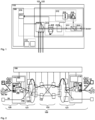
- Both the backbone network 122 and also aggregation networks 121 are schematically shown as comprising a plurality of optical network nodes 123, and, typically, there are different paths through the telecommunications network 100 or its infrastructure that are possible between any of the optical nodes, and the further optical signal 202 might well travel (or be transmitted) using a different path from the path of the user-defined optical signal 201.
- the broadband access network 120 comprises a further optical safety and policy entity or functionality 210' connecting the second location 52 and/or the second optical data transmission fiber 52' to the telecommunications network 100, especially to its aggregation network 121 and/or its backbone network 122, wherein the further optical safety and policy entity or functionality 210' provides for a protection of the optical transmission functionality (especially with regard to the backbone network 122 and/or the aggregation network 121), for a policy decision functionality, and for a policy enforcement functionality regarding the further user-defined optical signal 202.
- an access node 150 is schematically shown; such access nodes 150 are typically used, as part of their respective central office points of delivery 110, 110', to connect end-users 50, 50' to the access network 120, and thereby to the telecommunications network 100.
- a switching fabric 115 (or, rather two instances of a switching fabric) is schematically shown in Figure 2 .
- the end-users 50, 50' are schematically shown as connected to the access network 120 by means of an optical communication link 55, especially a passive optical network, PON.
- a point-to-point connection 56 is schematically shown in Figure 2 .
- an orchestrator entity or functionality 180 is schematically shown in Figure 2 .
- the splitter entity or functionality 211 is not the first entry (towards the telecommunications network 100) of the user-defined optical signal 201 (and/or of the optical initialization signal 205) being fed to the first optical data transmission fiber 51', but a protective attenuator device 211' is provided as the first entry (towards the telecommunications network 100) of the user-defined optical signal 201 (and/or of the optical initialization signal 205).
- the protective attenuator device 211' provides for a comparatively fast attenuation or shutdown of the user-defined optical signal 201 and/or of the optical initialization signal 205 transmitted to the telecommunications network 100 and/or allows for a comparatively coarse optical attenuation in terms of spectral width and/or resolution.
- a coarse channel function is able to be realized by means of a spectral differentiation of pre-configured channels; a fine or flexible spectral function is able to be realized by means of spectral decomposition of sub-channel-granular frequency components to address flexible lambda channels with different width in a flexgrid.
- optical policy enforcement entity or functionality 213 that comprises a variable optical attenuator 217 optionally an SLA-limiter and/or SLA-measurement entity 218.
- service properties are able to be calculated, especially the bandwidth or optical bandwidth (or spectral width) that the communication or connectivity service between the first and second location 51, 52 is able to use.
- a switching entity 219 such as a ROADM (reconfigurable optical add drop multiplexer) is controlled or triggered to transmit the user-defined optical signal 201.
- ROADM reconfigurable optical add drop multiplexer
- an SLA control and the provision of (optical) network safety, as well as a managed optical service control (especially the prevention of alien wavelengths) is able to be realized by means of a policy decision and policy enforcement entity or functionality, provided by the optical safety and policy entity or functionality 210 and its components or entities, thereby especially also realizing a policy decision function, a policy enforcement function, and a network safety enforcement function (NSEF).
- the network safety enforcement function is especially required due to the fact that the network termination device (NT) is located at the customer premises, i.e. at the first location 51. The customer is enforced to apply their own optical module to align the fiber (i.e. the first optical data transmission fiber 51') by their own protocol and user plane traffic.
- the customer may also irradiate any laser light, either at a wavelength or at wavelengths that disturb(s) other lambda channels in the shared optical network or laser light with too high power (which may saturate optical amplifiers, and thus reducing their gain for all channels, so the optical transmission for all channels would be interrupted; or it could interfere with neighboring channels by non-linear crosstalk, e.g. by means of cross-phase multiplexing/XPM or four wave mixing /FWM).
- any laser light either at a wavelength or at wavelengths that disturb(s) other lambda channels in the shared optical network or laser light with too high power (which may saturate optical amplifiers, and thus reducing their gain for all channels, so the optical transmission for all channels would be interrupted; or it could interfere with neighboring channels by non-linear crosstalk, e.g. by means of cross-phase multiplexing/XPM or four wave mixing /FWM).
- the network safety enforcement function protects the optical nodes of the telecommunications network 100 from unintended failures or misbehavior of customers (and from sabotaging attackers).
- a crucial problem for carriers to offer lambda services to customers is the difficulty to control and limit the usage of the optical lambda channels. This is similar to the offering of dark fiber to customers.
- the customer in most cases a wholesale customer with own retail customers, is technically capable to use the basic physical resource of the carrier to perform any protocol and to transmit any bandwidth and to exploit any physical property for his own retail customers.
- the policy enforcement function limits the physical properties of the offered lambda channel by different technical sub devices that have a direct impact on these properties in a controlled manner.
- the customer e.g. wholesale customer
- the carrier uses the policy decision function (PDF) to measure properties of the optical lambda channel, in order to calculate abstracted service parameters therefrom and to compare them with the granted service SLA from the contract.
- PDF policy decision function
- the policy enforcement function (PEF) is composed by different elements to adjust the optical parameters of the traversing optical signal until the PDF and its SLA abstraction function correspond to each other.
- a direct control or an iterative loop of a control circuit is preferably implemented, such as a control loop of the following entities:
- an optical data transmission-based connection (especially a direct optical connection) is able to be established and/or provided between the first location 51 (i.e. typically a user-defined or customer-chosen optical transmitter hardware located there), via the at least one optical data transmission fiber 51', to the optical data transmission functionality of a telecommunications network 100 (i.e.
- the optical safety and policy entity or functionality 210 comprises, for realizing the protection, a variable optical attenuator functionality: It is thereby possible to limit the power of the user-defined optical signal 201 and/or of the optical initialization signal 205 such that the optical transmission functionality of the telecommunications network 100 and/or the functionalities of the optical safety and policy entity or functionality 210 is/are protected.
- variable optical attenuator functionality is or corresponds to a frequency-selective optical attenuator functionality, and especially is able to be adjusted in a frequency-dependent manner, resulting in an adjustable attenuation spectrum and different frequency-dependent attenuations for the user-defined optical signal and potentially other optical signals on the optical data transmission fiber 51'.
- the variable optical attenuator functionality comprises a first variable optical attenuator device and at least a second variable optical attenuator device, wherein the first variable optical attenuator device allows for a comparatively fast attenuation or shutdown of the user-defined optical signal 201 and/or of the optical initialization signal 205 transmitted to the telecommunications network 100 and/or allows for a comparatively coarse optical attenuation in terms of spectral width and/or resolution, and wherein the second variable optical attenuator device corresponds to a more fine-granular variable optical attenuator device in terms of spectral width and/or resolution.
Landscapes
- Engineering & Computer Science (AREA)
- Computer Networks & Wireless Communication (AREA)
- Signal Processing (AREA)
- Small-Scale Networks (AREA)
Claims (11)
- Procédé permettant de fournir une connexion basée sur la transmission de données optique entre un premier emplacement (51), par l'intermédiaire d'au moins une fibre de transmission de données optique (51'), et une fonctionnalité de transmission de données optique d'un réseau de télécommunications (100) afin de permettre l'envoi ou l'entrée d'un signal optique défini par l'utilisateur (201) et/ou d'un signal optique d'initialisation (205) dans la fibre de transmission de données optique (51') et vers la fonctionnalité de transmission de données optique du réseau de télécommunications (100), dans lequel la fonctionnalité de transmission de données optique comprend un réseau d'agrégation (121),dans lequel la fibre de transmission de données optique (51') est connectée à une entité ou fonctionnalité de sécurité et de politique optiques (210) qui relie le premier emplacement (51) au réseau d'agrégation (121),caractérisé en ce que l'entité ou la fonctionnalité de sécurité et de politique optiques (210) réalise une protection- de la fonctionnalité de transmission optique du réseau de télécommunications (100) par rapport au réseau d'agrégation (121), et/ou- de fonctionnalités de l'entité ou de la fonctionnalité de sécurité et de politique optiques (210),dans lequel le procédé comprend les étapes suivantes :- dans une première étape, le signal optique défini par l'utilisateur (201) et/ou le signal optique d'initialisation (205) est envoyé ou entré, au niveau du premier emplacement (51), dans la fibre de transmission de données optique (51'),- dans une deuxième étape, la fonctionnalité de transmission optique du réseau de télécommunications (100) et/ou les fonctionnalités de l'entité ou de la fonctionnalité de sécurité et de politique optiques (210) sont protégées au moyen de l'atténuation par l'entité ou de la fonctionnalité de sécurité et de politique optiques (210) du signal optique défini par l'utilisateur (201) et/ou du signal optique d'initialisation (205) reçus à partir du premier emplacement (51) par l'intermédiaire de la fibre de transmission de données optique (51'), dans lequel l'entité ou la fonctionnalité de sécurité et de politique optiques (210) comprend, pour réaliser la protection, une fonctionnalité d'atténuation optique variable, dans lequel la puissance du signal optique défini par l'utilisateur (201) et/ou du signal optique d'initialisation (205) est limitée par la fonctionnalité d'atténuation optique variable, ce qui protège la fonctionnalité de transmission optique du réseau de télécommunication (100) et/ou les fonctionnalités de l'entité ou de la fonctionnalité de sécurité et de politique optiques (210), dans lequel la fonctionnalité d'atténuation optique variable comprend un premier dispositif d'atténuation optique variable et au moins un deuxième dispositif d'atténuation optique variable, dans lequel le premier dispositif d'atténuation optique variable permet une atténuation ou une coupure relativement rapide du signal optique défini par l'utilisateur (201) et/ou du signal optique d'initialisation (205) transmis au réseau de télécommunications (100) et permet une atténuation optique comparativement grossière en termes de largeur et/ou de résolution spectrales, et dans lequel le deuxième dispositif d'atténuation optique variable correspond à un dispositif d'atténuation optique variable à granularité plus fine en termes de largeur et/ou de résolution spectrales.
- Procédé selon la revendication 1, dans lequel l'entité ou la fonctionnalité de sécurité et de politique optiques (210) réalise - outre la protection de la fonctionnalité de transmission optique du réseau de télécommunications (100) et/ou des fonctionnalités de l'entité ou de la fonctionnalité de sécurité et de politique optiques (210) - une fonctionnalité de décision de politique, et/ou une fonctionnalité d'application de politique concernant le signal optique défini par l'utilisateur (201) et/ou le signal optique d'initialisation (205).
- Procédé selon l'une des revendications précédentes, dans lequel la fonctionnalité d'atténuation optique variable est ou correspond à une fonctionnalité d'atténuation optique sélective en fréquence, et peut notamment être réglée en fonction de la fréquence, ce qui permet d'obtenir un spectre d'atténuation réglable et différentes atténuations en fonction de la fréquence pour le signal optique défini par l'utilisateur et éventuellement d'autres signaux optiques sur la fibre de transmission de données optique (51').
- Procédé selon l'une des revendications précédentes, dans lequel- l'entité ou la fonctionnalité de sécurité et de politique optiques (210) ainsi que- une autre entité ou fonctionnalité de sécurité et de politique optiques (210'), l'autre entité ou fonctionnalité de sécurité et de politique optiques (210') reliant un deuxième emplacement (52) par l'intermédiaire d'une deuxième fibre de transmission de données optique (52') au réseau de télécommunications (100),est utilisée pour initialiser et/ou exploiter un service de communication ou de connectivité entre le premier emplacement (51) et au moins le deuxième emplacement (52) sur la base de la transmission de données optique du signal optique défini par l'utilisateur (201) et/ou du signal optique d'initialisation (205),dans lequel le réseau de télécommunications (100) et son infrastructure sont utilisés à la fois pour- fournir des services de communication d'utilisateur final et/ou une connectivité IP à une multitude d'utilisateurs finaux (50, 50') connectés à un réseau d'accès (120) du réseau de télécommunications (100), et- connecter le premier emplacement (51) et au moins le deuxième emplacement (52) au moyen d'au moins une infrastructure de réseau d'accès et/ou une infrastructure de réseau d'agrégation comprenant une pluralité de nœuds de réseau optique (123), dans lequel, en particulier, entre le premier et le deuxième emplacement (51, 52), le réseau de télécommunications (100) comprend une fonctionnalité de transmission concernant le réseau dorsal (122) et le réseau d'agrégation (121) et le réseau d'accès (120) qui est basée exclusivement ou presque exclusivement sur la transmission de données optique.
- Entité ou fonctionnalité (210) de sécurité et de politique optiques permettant de fournir une connexion basée sur la transmission de données optique entre un premier emplacement (51), par l'intermédiaire d'au moins une fibre de transmission de données optique (51'), à une fonctionnalité de transmission de données optique d'un réseau de télécommunications (100), la fonctionnalité de transmission de données optique comprenant un réseau d'agrégation (121), dans lequel la fibre de transmission de données optique (51') est connectée à l'entité ou la fonctionnalité de sécurité et de politique optiques (210) qui relie le premier emplacement (51) à la fonctionnalité de transmission de données optique du réseau d'agrégation (121) du réseau de télécommunications (100), dans lequel l'entité ou la fonctionnalité de sécurité et de politique optiques (210) est configurée pour recevoir un signal optique défini par l'utilisateur (201) et/ou un signal optique d'initialisation (205) envoyé ou entré dans la fibre de transmission de données optique (51'),
caractérisé en ce que l'entité ou la fonctionnalité de sécurité et de politique optiques (210) est configurée ou comprend des moyens pour réaliser une protection- de la fonctionnalité de transmission optique du réseau de télécommunications (100) par rapport au réseau d'agrégation (121), et/ou- de fonctionnalités de l'entité ou de la fonctionnalité de sécurité et de politique optiques (210),dans lequel l'entité ou la fonctionnalité de sécurité et de politique optiques (210) est configurée de manière à ce que la fonctionnalité de transmission optique du réseau de télécommunications (100) et/ou les fonctionnalités de l'entité ou de la fonctionnalité de sécurité et de politique optiques (210) soient protégées par l'atténuation par l'entité ou la fonctionnalité de sécurité et de politique optiques (210) du signal optique défini par l'utilisateur (201) et/ou du signal optique d'initialisation (205) reçus par l'entité ou la fonctionnalité de sécurité et de politique optiques (210) à partir du premier emplacement (51) par l'intermédiaire de la fibre de transmission de données optique (51'), dans lequel l'entité ou la fonctionnalité de sécurité et de politique optiques (210) comprend, pour réaliser la protection, une fonctionnalité d'atténuation optique variable, dans lequel la fonctionnalité d'atténuation optique variable est configurée pour limiter la puissance du signal optique défini par l'utilisateur (201) et/ou du signal optique d'initialisation (205) et ainsi protéger la fonctionnalité de transmission optique du réseau de télécommunications (100) et/ou les fonctionnalités de l'entité ou de la fonctionnalité de sécurité et de politique optiques (210), dans lequel la fonctionnalité d'atténuation optique variable comprend un premier dispositif d'atténuation optique variable et au moins un deuxième dispositif d'atténuation optique variable, dans lequel le premier dispositif d'atténuation optique variable permet une atténuation ou une coupure relativement rapide du signal optique défini par l'utilisateur (201) et/ou du signal optique d'initialisation (205) transmis au réseau de télécommunications (100) et permet une atténuation optique comparativement grossière en termes de largeur et/ou de résolution spectrales, et dans lequel le deuxième dispositif d'atténuation optique variable correspond à un dispositif d'atténuation optique variable à granularité plus fine en termes de largeur et/ou de résolution spectrales. - Entité ou fonctionnalité de sécurité et de politique optiques (210), selon la revendication 5, comprenant une entité ou fonctionnalité de séparation (211) et une entité ou fonctionnalité de détection optique (212) en tant que première entrée vers le réseau de télécommunications (100) du signal optique défini par l'utilisateur (201) et/ou du signal optique d'initialisation (205) envoyé à la première fibre de transmission de données optique (51'), dans lequel, au moyen de l'entité ou fonctionnalité de séparation (211), un signal de mesure de la puissance optique du signal optique défini par l'utilisateur (201) et/ou du signal optique d'initialisation (205) est dérivé vers l'entité ou fonctionnalité de détection optique (212), dans lequel, en particulier au moyen de l'entité ou de la fonctionnalité de détection optique (212), la partie dérivée du signal optique défini par l'utilisateur (201) et/ou du signal optique d'initialisation (205) est analysée, en particulier au moyen de la décomposition de la partie dérivée du signal optique défini par l'utilisateur (201) et/ou du signal optique d'initialisation (205) en composantes spectrales, en particulier par l'utilisation d'un réseau de guides d'ondes (215) ou d'un autre filtre spectral dans le cadre de l'entité ou de la fonctionnalité de sécurité et de politique optiques (210) ou par l'utilisation d'un indicateur de canal et/ou d'une entité de mesure de la puissance du canal (216) dans le cadre de l'entité ou de la fonctionnalité de sécurité et de politique optiques (210).
- Entité ou fonctionnalité de sécurité et de politique optiques (210) selon la revendication 6,dans lequel l'entité ou la fonctionnalité de sécurité et de politique optiques (210) comprend une entité ou une fonctionnalité d'application de politique optique (213), dans lequel les mesures effectuées et/ou les résultats d'analyse obtenus par l'entité ou la fonctionnalité de détection optique (212) sont fournis à l'entité ou à la fonctionnalité d'application de politique optique (213) qui comprend en particulier un atténuateur optique variable (217) capable de limiter la position spectrale, la largeur spectrale et/ou l'amplitude de signal autorisée du signal optique défini par l'utilisateur (201), dans lequel en particulier, à partir des paramètres optiques mesurés, des propriétés de service sont calculées, en particulier la largeur de bande ou la largeur de bande optique ou la largeur spectrale que le signal optique défini par l'utilisateur (201) et/ou le signal optique d'initialisation (205) peut utiliser,dans lequel en particulier, les propriétés de service sont liées à l'accord de niveau de service, SLA, correspondant.
- Réseau dorsal (122), réseau d'agrégation (121) ou réseau de télécommunication (100) pour fournir une connexion basée sur la transmission de données optique entre un premier emplacement (51), par l'intermédiaire d'au moins une fibre de transmission de données optique (51'), à une fonctionnalité de transmission de données optique d'un réseau de télécommunication (100), le réseau dorsal (122), le réseau d'agrégation (121) ou le réseau de télécommunication (100) comprenant au moins une entité ou fonctionnalité de sécurité et de politique optiques (210) selon l'une des revendications 5 à 7.
- Système permettant de fournir une connexion basée sur la transmission de données optique entre un premier emplacement (51), par l'intermédiaire d'au moins une fibre de transmission de données optique (51'), et une fonctionnalité de transmission de données optique d'un réseau de télécommunications (100), le système comprenant au moins une entité ou fonctionnalité de sécurité et de politique optiques (210) selon l'une des revendications 5 à 7.
- Programme comprenant un code de programme lisible par ordinateur qui, lorsqu'il est exécuté sur un ordinateur sur une entité ou une fonctionnalité de sécurité et de politique optiques (210) selon l'une quelconque des revendications 5 à 7, amène l'entité ou la fonctionnalité (210) de sécurité et de politique optiques à exécuter un procédé selon l'une des revendications 1 à 4.
- Support lisible par ordinateur comprenant des instructions qui, lorsqu'elles sont exécutées par un ordinateur sur une entité ou une fonctionnalité de sécurité et de politique optiques (210) selon l'une quelconque des revendications 5 à 7, amènent l'entité ou la fonctionnalité de sécurité et de politique optiques (210) à exécuter un procédé selon l'une des revendications 1 à 4.
Priority Applications (2)
| Application Number | Priority Date | Filing Date | Title |
|---|---|---|---|
| EP21206265.7A EP4178131B1 (fr) | 2021-11-03 | 2021-11-03 | Procédé pour établir et/ou fournir une connexion basée sur la transmission de données optiques entre un premier emplacement, par l'intermédiaire d'au moins une fibre de transmission de données optiques, à une fonctionnalité de transmission de données optiques d'un réseau de télécommunications, entité ou fonctionnalité de sécurité et de politique, réseau dorsal, réseau d'agrégation ou réseau de télécommunications, système, programme et support lisible par ordinateur |
| PCT/EP2022/080347 WO2023078829A1 (fr) | 2021-11-03 | 2022-10-31 | Procédé d'établissement et/ou de fourniture d'une liaison optique basée sur la transmission de données entre un premier emplacement et une fonctionnalité de transmission de données optiques d'un réseau de télécommunications |
Applications Claiming Priority (1)
| Application Number | Priority Date | Filing Date | Title |
|---|---|---|---|
| EP21206265.7A EP4178131B1 (fr) | 2021-11-03 | 2021-11-03 | Procédé pour établir et/ou fournir une connexion basée sur la transmission de données optiques entre un premier emplacement, par l'intermédiaire d'au moins une fibre de transmission de données optiques, à une fonctionnalité de transmission de données optiques d'un réseau de télécommunications, entité ou fonctionnalité de sécurité et de politique, réseau dorsal, réseau d'agrégation ou réseau de télécommunications, système, programme et support lisible par ordinateur |
Publications (2)
| Publication Number | Publication Date |
|---|---|
| EP4178131A1 EP4178131A1 (fr) | 2023-05-10 |
| EP4178131B1 true EP4178131B1 (fr) | 2024-07-10 |
Family
ID=78516656
Family Applications (1)
| Application Number | Title | Priority Date | Filing Date |
|---|---|---|---|
| EP21206265.7A Active EP4178131B1 (fr) | 2021-11-03 | 2021-11-03 | Procédé pour établir et/ou fournir une connexion basée sur la transmission de données optiques entre un premier emplacement, par l'intermédiaire d'au moins une fibre de transmission de données optiques, à une fonctionnalité de transmission de données optiques d'un réseau de télécommunications, entité ou fonctionnalité de sécurité et de politique, réseau dorsal, réseau d'agrégation ou réseau de télécommunications, système, programme et support lisible par ordinateur |
Country Status (2)
| Country | Link |
|---|---|
| EP (1) | EP4178131B1 (fr) |
| WO (1) | WO2023078829A1 (fr) |
Family Cites Families (3)
| Publication number | Priority date | Publication date | Assignee | Title |
|---|---|---|---|---|
| FR2926940B1 (fr) * | 2008-01-29 | 2010-06-11 | Alcatel Lucent | Procede pour controler l'etablissement d'une connexion dans un reseau optique. |
| EP2330764A1 (fr) * | 2009-12-03 | 2011-06-08 | Nokia Siemens Networks Oy | Réseau optique passif activant des connexions de réseau virtuel direct |
| CA3063688C (fr) * | 2017-06-12 | 2023-04-04 | Deutsche Telekom Ag | Procede et systeme d'etablissement d'un chemin de service dans un reseau de communication |
-
2021
- 2021-11-03 EP EP21206265.7A patent/EP4178131B1/fr active Active
-
2022
- 2022-10-31 WO PCT/EP2022/080347 patent/WO2023078829A1/fr not_active Ceased
Also Published As
| Publication number | Publication date |
|---|---|
| EP4178131A1 (fr) | 2023-05-10 |
| WO2023078829A1 (fr) | 2023-05-11 |
Similar Documents
| Publication | Publication Date | Title |
|---|---|---|
| EP2071863B1 (fr) | Module enfichable doté d'une fonction intégrée d'analyse de données | |
| US7050667B2 (en) | Metropolitan photonic switch | |
| EP2909959B1 (fr) | Procédés et dispositif concentrateur de périphérie de services dans un noeud de réseau optique | |
| Brunner et al. | Demonstration of a switched CV-QKD network | |
| KR101367486B1 (ko) | 파장 분할 다중 액세스 네트워크를 운용하는 장치 및 방법 | |
| US12506555B2 (en) | Monitor window in ASE injection seed | |
| US7254327B1 (en) | Switching status and performance monitoring technology for wavelength selective switch and optical networks | |
| Iovanna et al. | 5G Xhaul and service convergence: transmission, switching and automation enabling technologies | |
| US20250007639A1 (en) | Establishing a transmission functionality for providing, via a telecommunications network, a communication or connectivity service between a first location and a second location based on optical data transmission of a user-defined optical signal | |
| JP5414373B2 (ja) | 光アクセス網、光通信方法および光加入者装置 | |
| EP4178131B1 (fr) | Procédé pour établir et/ou fournir une connexion basée sur la transmission de données optiques entre un premier emplacement, par l'intermédiaire d'au moins une fibre de transmission de données optiques, à une fonctionnalité de transmission de données optiques d'un réseau de télécommunications, entité ou fonctionnalité de sécurité et de politique, réseau dorsal, réseau d'agrégation ou réseau de télécommunications, système, programme et support lisible par ordinateur | |
| EP4178129B1 (fr) | Procédé pour l'initiation de fourniture, au moyen d'un réseau de télécommunications, d'un service de communication ou de connectivité entre un premier emplacement et au moins un second emplacement, sur la base d'une transmission optique de données d'un signal optique défini par l'utilisateur, d'un réseau d'accès à large bande ou d'un réseau de télécommunications, d'un système, d'une entité ou d'une fonctionnalité de sécurité ou de politique optique ou d'un point de livraison de central téléphonique, d'un programme et d'un support lisible par ordinateur | |
| EP4178133B1 (fr) | Procédé de fourniture, au moyen d'un réseau de télécommunications, d'un service de communication ou de connectivité entre un premier emplacement et au moins un second emplacement, sur la base d'une transmission optique de données d'un signal optique défini par l'utilisateur, d'un réseau d'accès à large bande ou d'un réseau de télécommunications, d'un système, d'une entité ou d'une fonctionnalité de sécurité ou de politique optique ou d'un point de livraison de central téléphonique, d'un programme et d'un support lisible par ordinateur | |
| EP2071860B1 (fr) | Procédé et système pour le transport bidirectionnel de données | |
| Takachio et al. | 12.5-GHz-spaced super-dense WDM ring network handling 256 wavelengths with tapped-type OADMs | |
| Turkiewicz et al. | Experimental Demonstration of Extended 5G Digital Fronthaul over a Partially-Disaggregated WDM/SDM Network | |
| Langer et al. | Overview and recent developments of the German R&D-initiative KomNet | |
| Jia et al. | Access Environment Considerations for Coherent Optics Systems | |
| Jia et al. | 7 Access Environment | |
| Breuer | Network upgrade from telecom operators view | |
| Ayre et al. | A Progressive Step towards Optical Transport | |
| Ortega et al. | IST ALPHA project: Architectures for flexible Photonic Home and Access networks | |
| Rao | Interworking and Optical Networking in the European ACTS WOTAN Project | |
| Waldman et al. | Distance-awareness gains in flexible ring topologies |
Legal Events
| Date | Code | Title | Description |
|---|---|---|---|
| PUAI | Public reference made under article 153(3) epc to a published international application that has entered the european phase |
Free format text: ORIGINAL CODE: 0009012 |
|
| STAA | Information on the status of an ep patent application or granted ep patent |
Free format text: STATUS: EXAMINATION IS IN PROGRESS |
|
| 17P | Request for examination filed |
Effective date: 20221013 |
|
| AK | Designated contracting states |
Kind code of ref document: A1 Designated state(s): AL AT BE BG CH CY CZ DE DK EE ES FI FR GB GR HR HU IE IS IT LI LT LU LV MC MK MT NL NO PL PT RO RS SE SI SK SM TR |
|
| GRAP | Despatch of communication of intention to grant a patent |
Free format text: ORIGINAL CODE: EPIDOSNIGR1 |
|
| STAA | Information on the status of an ep patent application or granted ep patent |
Free format text: STATUS: GRANT OF PATENT IS INTENDED |
|
| RIC1 | Information provided on ipc code assigned before grant |
Ipc: H04L 12/28 20060101ALI20240209BHEP Ipc: H04Q 11/00 20060101ALI20240209BHEP Ipc: H04J 14/02 20060101AFI20240209BHEP |
|
| INTG | Intention to grant announced |
Effective date: 20240319 |
|
| GRAS | Grant fee paid |
Free format text: ORIGINAL CODE: EPIDOSNIGR3 |
|
| GRAA | (expected) grant |
Free format text: ORIGINAL CODE: 0009210 |
|
| STAA | Information on the status of an ep patent application or granted ep patent |
Free format text: STATUS: THE PATENT HAS BEEN GRANTED |
|
| AK | Designated contracting states |
Kind code of ref document: B1 Designated state(s): AL AT BE BG CH CY CZ DE DK EE ES FI FR GB GR HR HU IE IS IT LI LT LU LV MC MK MT NL NO PL PT RO RS SE SI SK SM TR |
|
| REG | Reference to a national code |
Ref country code: CH Ref legal event code: EP |
|
| REG | Reference to a national code |
Ref country code: DE Ref legal event code: R096 Ref document number: 602021015407 Country of ref document: DE |
|
| REG | Reference to a national code |
Ref country code: LT Ref legal event code: MG9D |
|
| REG | Reference to a national code |
Ref country code: NL Ref legal event code: MP Effective date: 20240710 |
|
| PG25 | Lapsed in a contracting state [announced via postgrant information from national office to epo] |
Ref country code: PT Free format text: LAPSE BECAUSE OF FAILURE TO SUBMIT A TRANSLATION OF THE DESCRIPTION OR TO PAY THE FEE WITHIN THE PRESCRIBED TIME-LIMIT Effective date: 20241111 |
|
| REG | Reference to a national code |
Ref country code: AT Ref legal event code: MK05 Ref document number: 1702969 Country of ref document: AT Kind code of ref document: T Effective date: 20240710 |
|
| PG25 | Lapsed in a contracting state [announced via postgrant information from national office to epo] |
Ref country code: NL Free format text: LAPSE BECAUSE OF FAILURE TO SUBMIT A TRANSLATION OF THE DESCRIPTION OR TO PAY THE FEE WITHIN THE PRESCRIBED TIME-LIMIT Effective date: 20240710 |
|
| PG25 | Lapsed in a contracting state [announced via postgrant information from national office to epo] |
Ref country code: PT Free format text: LAPSE BECAUSE OF FAILURE TO SUBMIT A TRANSLATION OF THE DESCRIPTION OR TO PAY THE FEE WITHIN THE PRESCRIBED TIME-LIMIT Effective date: 20241111 Ref country code: NL Free format text: LAPSE BECAUSE OF FAILURE TO SUBMIT A TRANSLATION OF THE DESCRIPTION OR TO PAY THE FEE WITHIN THE PRESCRIBED TIME-LIMIT Effective date: 20240710 |
|
| PG25 | Lapsed in a contracting state [announced via postgrant information from national office to epo] |
Ref country code: NO Free format text: LAPSE BECAUSE OF FAILURE TO SUBMIT A TRANSLATION OF THE DESCRIPTION OR TO PAY THE FEE WITHIN THE PRESCRIBED TIME-LIMIT Effective date: 20241010 |
|
| PG25 | Lapsed in a contracting state [announced via postgrant information from national office to epo] |
Ref country code: FI Free format text: LAPSE BECAUSE OF FAILURE TO SUBMIT A TRANSLATION OF THE DESCRIPTION OR TO PAY THE FEE WITHIN THE PRESCRIBED TIME-LIMIT Effective date: 20240710 Ref country code: GR Free format text: LAPSE BECAUSE OF FAILURE TO SUBMIT A TRANSLATION OF THE DESCRIPTION OR TO PAY THE FEE WITHIN THE PRESCRIBED TIME-LIMIT Effective date: 20241011 Ref country code: PL Free format text: LAPSE BECAUSE OF FAILURE TO SUBMIT A TRANSLATION OF THE DESCRIPTION OR TO PAY THE FEE WITHIN THE PRESCRIBED TIME-LIMIT Effective date: 20240710 |
|
| PG25 | Lapsed in a contracting state [announced via postgrant information from national office to epo] |
Ref country code: BG Free format text: LAPSE BECAUSE OF FAILURE TO SUBMIT A TRANSLATION OF THE DESCRIPTION OR TO PAY THE FEE WITHIN THE PRESCRIBED TIME-LIMIT Effective date: 20240710 |
|
| PG25 | Lapsed in a contracting state [announced via postgrant information from national office to epo] |
Ref country code: LV Free format text: LAPSE BECAUSE OF FAILURE TO SUBMIT A TRANSLATION OF THE DESCRIPTION OR TO PAY THE FEE WITHIN THE PRESCRIBED TIME-LIMIT Effective date: 20240710 |
|
| PG25 | Lapsed in a contracting state [announced via postgrant information from national office to epo] |
Ref country code: AT Free format text: LAPSE BECAUSE OF FAILURE TO SUBMIT A TRANSLATION OF THE DESCRIPTION OR TO PAY THE FEE WITHIN THE PRESCRIBED TIME-LIMIT Effective date: 20240710 Ref country code: IS Free format text: LAPSE BECAUSE OF FAILURE TO SUBMIT A TRANSLATION OF THE DESCRIPTION OR TO PAY THE FEE WITHIN THE PRESCRIBED TIME-LIMIT Effective date: 20241110 |
|
| PG25 | Lapsed in a contracting state [announced via postgrant information from national office to epo] |
Ref country code: HR Free format text: LAPSE BECAUSE OF FAILURE TO SUBMIT A TRANSLATION OF THE DESCRIPTION OR TO PAY THE FEE WITHIN THE PRESCRIBED TIME-LIMIT Effective date: 20240710 |
|
| PG25 | Lapsed in a contracting state [announced via postgrant information from national office to epo] |
Ref country code: ES Free format text: LAPSE BECAUSE OF FAILURE TO SUBMIT A TRANSLATION OF THE DESCRIPTION OR TO PAY THE FEE WITHIN THE PRESCRIBED TIME-LIMIT Effective date: 20240710 Ref country code: RS Free format text: LAPSE BECAUSE OF FAILURE TO SUBMIT A TRANSLATION OF THE DESCRIPTION OR TO PAY THE FEE WITHIN THE PRESCRIBED TIME-LIMIT Effective date: 20241010 |
|
| PG25 | Lapsed in a contracting state [announced via postgrant information from national office to epo] |
Ref country code: RS Free format text: LAPSE BECAUSE OF FAILURE TO SUBMIT A TRANSLATION OF THE DESCRIPTION OR TO PAY THE FEE WITHIN THE PRESCRIBED TIME-LIMIT Effective date: 20241010 Ref country code: PL Free format text: LAPSE BECAUSE OF FAILURE TO SUBMIT A TRANSLATION OF THE DESCRIPTION OR TO PAY THE FEE WITHIN THE PRESCRIBED TIME-LIMIT Effective date: 20240710 Ref country code: NO Free format text: LAPSE BECAUSE OF FAILURE TO SUBMIT A TRANSLATION OF THE DESCRIPTION OR TO PAY THE FEE WITHIN THE PRESCRIBED TIME-LIMIT Effective date: 20241010 Ref country code: LV Free format text: LAPSE BECAUSE OF FAILURE TO SUBMIT A TRANSLATION OF THE DESCRIPTION OR TO PAY THE FEE WITHIN THE PRESCRIBED TIME-LIMIT Effective date: 20240710 Ref country code: IS Free format text: LAPSE BECAUSE OF FAILURE TO SUBMIT A TRANSLATION OF THE DESCRIPTION OR TO PAY THE FEE WITHIN THE PRESCRIBED TIME-LIMIT Effective date: 20241110 Ref country code: HR Free format text: LAPSE BECAUSE OF FAILURE TO SUBMIT A TRANSLATION OF THE DESCRIPTION OR TO PAY THE FEE WITHIN THE PRESCRIBED TIME-LIMIT Effective date: 20240710 Ref country code: GR Free format text: LAPSE BECAUSE OF FAILURE TO SUBMIT A TRANSLATION OF THE DESCRIPTION OR TO PAY THE FEE WITHIN THE PRESCRIBED TIME-LIMIT Effective date: 20241011 Ref country code: FI Free format text: LAPSE BECAUSE OF FAILURE TO SUBMIT A TRANSLATION OF THE DESCRIPTION OR TO PAY THE FEE WITHIN THE PRESCRIBED TIME-LIMIT Effective date: 20240710 Ref country code: ES Free format text: LAPSE BECAUSE OF FAILURE TO SUBMIT A TRANSLATION OF THE DESCRIPTION OR TO PAY THE FEE WITHIN THE PRESCRIBED TIME-LIMIT Effective date: 20240710 Ref country code: BG Free format text: LAPSE BECAUSE OF FAILURE TO SUBMIT A TRANSLATION OF THE DESCRIPTION OR TO PAY THE FEE WITHIN THE PRESCRIBED TIME-LIMIT Effective date: 20240710 Ref country code: AT Free format text: LAPSE BECAUSE OF FAILURE TO SUBMIT A TRANSLATION OF THE DESCRIPTION OR TO PAY THE FEE WITHIN THE PRESCRIBED TIME-LIMIT Effective date: 20240710 |
|
| REG | Reference to a national code |
Ref country code: DE Ref legal event code: R097 Ref document number: 602021015407 Country of ref document: DE |
|
| PG25 | Lapsed in a contracting state [announced via postgrant information from national office to epo] |
Ref country code: DK Free format text: LAPSE BECAUSE OF FAILURE TO SUBMIT A TRANSLATION OF THE DESCRIPTION OR TO PAY THE FEE WITHIN THE PRESCRIBED TIME-LIMIT Effective date: 20240710 Ref country code: SM Free format text: LAPSE BECAUSE OF FAILURE TO SUBMIT A TRANSLATION OF THE DESCRIPTION OR TO PAY THE FEE WITHIN THE PRESCRIBED TIME-LIMIT Effective date: 20240710 Ref country code: RO Free format text: LAPSE BECAUSE OF FAILURE TO SUBMIT A TRANSLATION OF THE DESCRIPTION OR TO PAY THE FEE WITHIN THE PRESCRIBED TIME-LIMIT Effective date: 20240710 |
|
| PG25 | Lapsed in a contracting state [announced via postgrant information from national office to epo] |
Ref country code: EE Free format text: LAPSE BECAUSE OF FAILURE TO SUBMIT A TRANSLATION OF THE DESCRIPTION OR TO PAY THE FEE WITHIN THE PRESCRIBED TIME-LIMIT Effective date: 20240710 |
|
| PG25 | Lapsed in a contracting state [announced via postgrant information from national office to epo] |
Ref country code: CZ Free format text: LAPSE BECAUSE OF FAILURE TO SUBMIT A TRANSLATION OF THE DESCRIPTION OR TO PAY THE FEE WITHIN THE PRESCRIBED TIME-LIMIT Effective date: 20240710 |
|
| PG25 | Lapsed in a contracting state [announced via postgrant information from national office to epo] |
Ref country code: SK Free format text: LAPSE BECAUSE OF FAILURE TO SUBMIT A TRANSLATION OF THE DESCRIPTION OR TO PAY THE FEE WITHIN THE PRESCRIBED TIME-LIMIT Effective date: 20240710 Ref country code: IT Free format text: LAPSE BECAUSE OF FAILURE TO SUBMIT A TRANSLATION OF THE DESCRIPTION OR TO PAY THE FEE WITHIN THE PRESCRIBED TIME-LIMIT Effective date: 20240710 |
|
| PLBE | No opposition filed within time limit |
Free format text: ORIGINAL CODE: 0009261 |
|
| STAA | Information on the status of an ep patent application or granted ep patent |
Free format text: STATUS: NO OPPOSITION FILED WITHIN TIME LIMIT |
|
| 26N | No opposition filed |
Effective date: 20250411 |
|
| REG | Reference to a national code |
Ref country code: CH Ref legal event code: PL |
|
| PG25 | Lapsed in a contracting state [announced via postgrant information from national office to epo] |
Ref country code: MC Free format text: LAPSE BECAUSE OF FAILURE TO SUBMIT A TRANSLATION OF THE DESCRIPTION OR TO PAY THE FEE WITHIN THE PRESCRIBED TIME-LIMIT Effective date: 20240710 |
|
| PG25 | Lapsed in a contracting state [announced via postgrant information from national office to epo] |
Ref country code: LU Free format text: LAPSE BECAUSE OF NON-PAYMENT OF DUE FEES Effective date: 20241103 |
|
| REG | Reference to a national code |
Ref country code: CH Ref legal event code: PL |
|
| PG25 | Lapsed in a contracting state [announced via postgrant information from national office to epo] |
Ref country code: CH Free format text: LAPSE BECAUSE OF NON-PAYMENT OF DUE FEES Effective date: 20241130 |
|
| REG | Reference to a national code |
Ref country code: BE Ref legal event code: MM Effective date: 20241130 |
|
| PG25 | Lapsed in a contracting state [announced via postgrant information from national office to epo] |
Ref country code: SE Free format text: LAPSE BECAUSE OF FAILURE TO SUBMIT A TRANSLATION OF THE DESCRIPTION OR TO PAY THE FEE WITHIN THE PRESCRIBED TIME-LIMIT Effective date: 20240710 |
|
| PG25 | Lapsed in a contracting state [announced via postgrant information from national office to epo] |
Ref country code: BE Free format text: LAPSE BECAUSE OF NON-PAYMENT OF DUE FEES Effective date: 20241130 |
|
| PG25 | Lapsed in a contracting state [announced via postgrant information from national office to epo] |
Ref country code: IE Free format text: LAPSE BECAUSE OF NON-PAYMENT OF DUE FEES Effective date: 20241103 |
|
| PGFP | Annual fee paid to national office [announced via postgrant information from national office to epo] |
Ref country code: DE Payment date: 20251118 Year of fee payment: 5 |
|
| PGFP | Annual fee paid to national office [announced via postgrant information from national office to epo] |
Ref country code: GB Payment date: 20251120 Year of fee payment: 5 |
|
| PGFP | Annual fee paid to national office [announced via postgrant information from national office to epo] |
Ref country code: FR Payment date: 20251125 Year of fee payment: 5 |
|
| PG25 | Lapsed in a contracting state [announced via postgrant information from national office to epo] |
Ref country code: HU Free format text: LAPSE BECAUSE OF FAILURE TO SUBMIT A TRANSLATION OF THE DESCRIPTION OR TO PAY THE FEE WITHIN THE PRESCRIBED TIME-LIMIT; INVALID AB INITIO Effective date: 20211103 |
|
| PG25 | Lapsed in a contracting state [announced via postgrant information from national office to epo] |
Ref country code: CY Free format text: LAPSE BECAUSE OF FAILURE TO SUBMIT A TRANSLATION OF THE DESCRIPTION OR TO PAY THE FEE WITHIN THE PRESCRIBED TIME-LIMIT; INVALID AB INITIO Effective date: 20211103 |