EP4192090A1 - Procédé de fonctionnement d'un ou de plusieurs noeuds dans un réseau de communication dans le but de coordonner les transmissions de différents noeuds du réseau en utilisant la validité des données comme métrique de décision - Google Patents
Procédé de fonctionnement d'un ou de plusieurs noeuds dans un réseau de communication dans le but de coordonner les transmissions de différents noeuds du réseau en utilisant la validité des données comme métrique de décision Download PDFInfo
- Publication number
- EP4192090A1 EP4192090A1 EP21212009.1A EP21212009A EP4192090A1 EP 4192090 A1 EP4192090 A1 EP 4192090A1 EP 21212009 A EP21212009 A EP 21212009A EP 4192090 A1 EP4192090 A1 EP 4192090A1
- Authority
- EP
- European Patent Office
- Prior art keywords
- node
- data
- validity
- transmission
- data packet
- Prior art date
- Legal status (The legal status is an assumption and is not a legal conclusion. Google has not performed a legal analysis and makes no representation as to the accuracy of the status listed.)
- Granted
Links
Images

Classifications
-
- H—ELECTRICITY
- H04—ELECTRIC COMMUNICATION TECHNIQUE
- H04W—WIRELESS COMMUNICATION NETWORKS
- H04W24/00—Supervisory, monitoring or testing arrangements
- H04W24/02—Arrangements for optimising operational condition
-
- H—ELECTRICITY
- H04—ELECTRIC COMMUNICATION TECHNIQUE
- H04W—WIRELESS COMMUNICATION NETWORKS
- H04W28/00—Network traffic management; Network resource management
- H04W28/02—Traffic management, e.g. flow control or congestion control
- H04W28/0231—Traffic management, e.g. flow control or congestion control based on communication conditions
- H04W28/0236—Traffic management, e.g. flow control or congestion control based on communication conditions radio quality, e.g. interference, losses or delay
-
- H—ELECTRICITY
- H04—ELECTRIC COMMUNICATION TECHNIQUE
- H04L—TRANSMISSION OF DIGITAL INFORMATION, e.g. TELEGRAPHIC COMMUNICATION
- H04L47/00—Traffic control in data switching networks
- H04L47/10—Flow control; Congestion control
- H04L47/24—Traffic characterised by specific attributes, e.g. priority or QoS
-
- H—ELECTRICITY
- H04—ELECTRIC COMMUNICATION TECHNIQUE
- H04L—TRANSMISSION OF DIGITAL INFORMATION, e.g. TELEGRAPHIC COMMUNICATION
- H04L47/00—Traffic control in data switching networks
- H04L47/10—Flow control; Congestion control
- H04L47/30—Flow control; Congestion control in combination with information about buffer occupancy at either end or at transit nodes
-
- H—ELECTRICITY
- H04—ELECTRIC COMMUNICATION TECHNIQUE
- H04W—WIRELESS COMMUNICATION NETWORKS
- H04W24/00—Supervisory, monitoring or testing arrangements
- H04W24/08—Testing, supervising or monitoring using real traffic
-
- H—ELECTRICITY
- H04—ELECTRIC COMMUNICATION TECHNIQUE
- H04W—WIRELESS COMMUNICATION NETWORKS
- H04W28/00—Network traffic management; Network resource management
- H04W28/02—Traffic management, e.g. flow control or congestion control
- H04W28/10—Flow control between communication endpoints
- H04W28/14—Flow control between communication endpoints using intermediate storage
-
- H—ELECTRICITY
- H04—ELECTRIC COMMUNICATION TECHNIQUE
- H04W—WIRELESS COMMUNICATION NETWORKS
- H04W72/00—Local resource management
- H04W72/12—Wireless traffic scheduling
- H04W72/1221—Wireless traffic scheduling based on age of data to be sent
-
- H—ELECTRICITY
- H04—ELECTRIC COMMUNICATION TECHNIQUE
- H04L—TRANSMISSION OF DIGITAL INFORMATION, e.g. TELEGRAPHIC COMMUNICATION
- H04L47/00—Traffic control in data switching networks
- H04L47/10—Flow control; Congestion control
- H04L47/28—Flow control; Congestion control in relation to timing considerations
- H04L47/286—Time to live
-
- H—ELECTRICITY
- H04—ELECTRIC COMMUNICATION TECHNIQUE
- H04W—WIRELESS COMMUNICATION NETWORKS
- H04W28/00—Network traffic management; Network resource management
- H04W28/02—Traffic management, e.g. flow control or congestion control
- H04W28/0205—Traffic management, e.g. flow control or congestion control at the air interface
-
- H—ELECTRICITY
- H04—ELECTRIC COMMUNICATION TECHNIQUE
- H04W—WIRELESS COMMUNICATION NETWORKS
- H04W28/00—Network traffic management; Network resource management
- H04W28/02—Traffic management, e.g. flow control or congestion control
- H04W28/0278—Traffic management, e.g. flow control or congestion control using buffer status reports
Definitions
- the invention relates to a method for operating one or more nodes in a communication network for the purpose of coordinating transmissions of different nodes in the network.
- MAC layer coordination is a standard task in any wireless network and may be classified into uncoordinated access (e.g., ALOHA), distributed coordination (as used by WiFi and Bluetooth) or central coordination (as used in cellular and satellite networks). While coordination tasks have been proposed in many different forms, the use of information age (Aol) is relatively new and has mainly been discussed in research papers. The extension to age-penalties, i.e., functions that map Aol to a numeric value that determines its importance, is only a few years old and only treated in a subset of research works.
- age-penalties i.e., functions that map Aol to a numeric value that determines its importance
- the object of the invention is to improve coordination of communication between nodes of a communications network, preferably with respect to efficiency, reliability, and overprovisioning.
- the improvements are preferably made in, but not limited to, the context of avionics and satellite communication.
- the invention provides a method for operating a node in a communications network, the node comprising a validity state and estimation module (VSE), a wireless state monitor module (WSM), a wireless configuration space module (WCS), and a wireless configurator module (WCON), wherein the method comprises:
- the invention provides a method for operating a communications network having a plurality of nodes, each node comprising a validity state and estimation module (VSE), a wireless state monitor module (WSM), a wireless configuration space module (WCS), and a wireless configurator module (WCON), wherein the method comprises:
- step d) the respective WCS of the first node and the second node negotiate the parameter configuration space.
- the VSE of the first node requests and receives from the VSE of the second node a validity estimate value.
- the VSE of the first node determines the data validity value also on the received validity estimate value.
- the WSM of the first node requests and receives from the WSM of the second node a physical transmission property data report that includes physical transmission property data as determined by the WSM of the second node, and the WSM of the first node determines the physical transmission property data also based on the physical transmission data report.
- the communications network is chosen from a group consisting of a wireless communications network, a cellular network, a WiFi network, a radio communications network, an avionic communications network or a satellite communications network.
- step a) comprises assigning each data packet a packet data validity value and determining a transmission buffer data validity value based on the data packet validity values of the data packets to be stored in the same transmission buffer and assigning to said transmission buffer the transmission buffer data validity value as the data validity value.
- the data validity value is based on a data packet age of the data packet or on at least one predetermined validity feature that is indicative for the validity of the data packet, when the data packet is processed by another node.
- the data packet age is determined based on a time interval between a point in time at which the data packet was generated or received by the VSE and a point in time at which the data packet is processed by another module or node.
- the node comprises a plurality of transmission buffers, and in step b) each data packet is stored in one of the transmission buffers.
- the invention provides a computer program including instructions that, upon execution by a suitable data processing device, performs one, some or all of the steps of a previously described method.
- the invention provides a node configured for communicating in a communications network, wherein the node comprises a validity state and estimation module (VSE), a wireless state monitor module (WSM), a wireless configuration space module (WCS), and a wireless configurator module (WCON), and the node is configured to perform a previously described method and/or includes a preferred computer program.
- VSE validity state and estimation module
- WSM wireless state monitor module
- WCS wireless configuration space module
- WCON wireless configurator module
- the node is configured as an avionic wireless communication device, a satellite communication device, a vehicle or a sensor for a vehicle.
- the vehicle is an aircraft, a drone, or a high-altitude platform.
- the invention provides a data storage device or data carrier signal including a preferred computer program.
- This disclosure is related to the technical field of wireless communication networks, namely to the transmission coordination on medium access control (MAC) layer.
- MAC medium access control
- nodes preferably wireless transmission devices (“nodes”) are considered that are part of an avionic or satellite network and preferably have the task to transmit information or data packets in a store-and-forward fashion. That is, the nodes receive information or data packets from incoming links that could be wired or wireless, or from an application running on the same device.
- the nodes store these data packets locally in a transmission buffer and transmit them to outgoing links towards their destination.
- the switches can be part of a centrally organized (e.g., cellular) network that is on-board or external to an aircraft, be part a satellite network, or be part of a decentralized network such as WiFi or of a broadcast network such as ADS-B or VDL2.
- the nodes are configured to process data packets from different logical connections usually called network "flows".
- Each flow contains a data stream, i.e., a sequence of packets, that is transported from a source to a destination through the network.
- the nodes have in a known manner a wireless interface via which several destinations can be addressed. Each outgoing destination can be associated with a separate transmission buffer to store data that has not been delivered to it.
- transmissions from different nodes are coordinated to reduce or avoid harmful interference that would make the correct reception of the transmitted data difficult.
- Data validity as understood in this disclosure is considered as a numeric value that is assigned to a data packet and that is indicative of how valid (urgent or useful) this data packet is in the context of the application currently performed.
- Data validity may include a penalty function that maps the "packet age” (also referred to as "age of information”), which is the time elapsed since a packet has been generated, to a data validity value.
- the proposed idea is to preferably use age-penalties or other data validity metrics to decide preferably who transmits in which time-frequency slot, preferably with which transmission power and preferably with which modulation-coding-scheme (MCS) and so on.
- MCS modulation-coding-scheme
- data validity is used to improve parameters for random access procedures, such as access probability or back-off mechanism.
- data validity may be used for very fine-grained resource allocation and parameter selection and also includes decentralized coordination scenarios. It is one aspect of the invention to extend the application of data validity to other network components.
- the coordination of wireless transmissions has a significant impact on the communication performance perceived by data flows, in terms of data rate, delay and perceived link stability. For example, if a node uses a modulation and coding scheme that is not suitable for the current channel quality, it can get a bad data rate due to too low modulation or a high packet loss due to too many errors.
- communication among different nodes is coordinated, either centrally or decentrally.
- communication in avionic context usually serves a distinct technical purpose. For example, often the goal is to sense the state of a specific component, to control an actuator or even to distribute telemetry data, such as an aircraft position, via a wireless channel.
- data validity refers to an "age-penalty" that decides transmission urgency depending on how old a piece of data is.
- validity metrics can be used.
- the network can be actively optimized for real-time data gathering/sensing, e.g., minimizing sensing error or improving position estimation accuracy.
- the networks have improved stability to support the applications running over them and enable more efficient use of wireless spectrum, leading to an overall lower communication cost and more stable data links.
- node can refer to a base station (in cellular networks), an access point (in WiFi networks), end devices (like mobile phones, PCs, sensors, small pieces of hardware, but also aircrafts, drones, high-altitude platforms (HAPs), etc.) or relays that are dedicated to forwarding data.
- base station in cellular networks
- WiFi networks wireless local area network
- end devices like mobile phones, PCs, sensors, small pieces of hardware, but also aircrafts, drones, high-altitude platforms (HAPs), etc.
- HAPs high-altitude platforms
- a set of such nodes is considered, that exchange data preferably wirelessly.
- the wireless transmissions of different nodes are coordinated, which may happen in a centralized or decentralized fashion.
- Coordination can be done by identifying a particular configuration for when and how a node should transmit. For example, in a time-division multiple access (TDMA) system, each node has an exclusively assigned slot. This time slot is a time-span relative to a synchronization signal and each node complies with this assignment by configuring its transmission to fall into the correct period.
- TDMA time-division multiple access
- TDMA assignments In addition to such TDMA assignments, also other parameters can be configured on the nodes, such as the used frequency, modulation and coding scheme, transmission power, multi-antenna use and so forth.
- wireless transmission coordination and configuration is done based on data validity.
- the validity of data thereby captures how useful a piece of data currently is for the application generating the data flow. For example, if the flow corresponds to an application that monitors a fast varying system (e.g., forces on a sensor), then its associated data loses validity when it becomes older.
- a fast varying system e.g., forces on a sensor
- data validity is preferably related to the time elapsed since the data has been injected into the network, which is referred to as data "age".
- the main idea of the invention is the use of data validity when coordinating wireless nodes, i.e., when deciding which node transmits when on which channel and with which transmission parameters. It is considered that each node has incoming data that should be transmitted over a wireless channel. The data can originate from applications on the same node or be external data that should be forwarded.
- the data may be grouped into different traffic flows, where a flow preferably refers to a specific data sequence that originates from one or a set of applications.
- the nodes may store the data as data packets in multiple transmission buffers, in which the data remain until it is forwarded to its destination node.
- Each transmission buffer thereby corresponds to a data structure holding the packets that belong to a specific set of flows.
- the exact grouping may depend on the application - in the extreme case there can be one transmission buffer per application flow, while in the other extreme there can be one transmission buffer for all flows destined to the same destination.
- flows may have unique properties that differentiate them among each other, such that different nodes can identify the same set of flows.
- properties could be, e.g., the destination address and application port, which are typically used in IP networks, a specified flow identifier as is used in cellular networks, Quality of Service (QoS) classes or similar.
- QoS Quality of Service
- a validity state & estimation module VSE
- WSM wireless state monitor
- WCS wireless configuration space
- WCON wireless configurator
- the VSE assigns and holds validity estimates of data packets or transmission buffers.
- the VSE module analyzes the validity of the data packet according to predetermined criteria, such as age or usefulness to the application, and assigns to the data packet a data validity value.
- the data packet is then stored in the local transmission buffer(s).
- the VSE can analyze the packets in a transmission buffer and derive a per-buffer validity value.
- Buffer validity could refer to, e.g., the maximum validity of all packets in the transmission buffer, or the average value. Values may also be reevaluated regularly or in reaction to a request from the WCON.
- VSE modules can exchange validity reports with the VSE modules of other nodes, i.e., can send and receive validity reports to and from other nodes and store the results locally.
- the computing unit can use time stamps on the packets and a local clock to determine the age of each packet. In this case, a lower data age is preferable over a large age.
- the data validity value is preferably an increasing function of the age that determines the priority.
- the VSE When estimating, the VSE assigns to each packet a data validity value that reflects how useful the packet is. This value later determines the treatment that the packet will have in the transmission buffer and how urgent such packet should be transmitted.
- the VSE module may check for each packet entering the buffering system whether it has a timestamp. If not, it may add one to the packet, which is later used to determine the elapsed time since the network was entered by the packet.
- Time stamp and current time value can be used to decide on the already passed delay, the packet urgency etc., based on which the VSE module creates a validity value.
- the exact validity function i.e., the rule that determines the data validity value, might be set on run-time or be pre-configured.
- the node has a computing unit that is capable of determining the data validity value of each packet in the class whenever required.
- the VSE may also exchange data with other VSE in the network via control links.
- a central coordinator node that coordinates the wireless transmissions of a part of the network (i.e., a base station).
- the VSE module of such a node may receive validity reports of other nodes and store the acquired knowledge locally in the form of a validity state.
- the other nodes may transmit their validity estimations to the central node.
- the wireless state monitor is a module that collects data related to physical transmission properties, available parameters or their settings.
- the properties may refer to, e.g., the wireless channel quality, received interference level, signal-to-noise ratio or similar.
- the WSM stores the property state of either the local node or a set of states that are reported from other nodes.
- the WSM modules of different nodes may also exchange data among each other, similar to the VSE.
- the wireless configuration space (WCS) module refers to a definition of a set of available parameters that can be configured and the associated set of allowed values.
- An example could be possible transmission powers of a node, supported modulation and coding schemes or available multi-antenna settings. It may also contain possible frequency channels and time-slots relative to a common time frame or settings for wireless back-off values.
- the WCS module may be statically defined for all nodes due to homogeneous hardware capabilities. In others, there might be an own configuration per node that reflects its capabilities. Again, the WCS modules may also communicate with each other to negotiate a set of allowed configurations and disseminate among each other which configuration options they support.
- the wireless configurator takes the input of all other modules, the VSE, WSM and WCS, to coordinate the transmissions of the node it resides on, and may also configure part of the other network nodes.
- the WCON relies on the current validity values held in the VSE, the wireless channel states known from the WSM and the available configuration space defined by the WCS.
- the WCON may effectively play the role of a central scheduler that assigns each node a time-frequency slot with given modulation and coding schemes and transmission power (e.g. in a cellular scenario), assign semi-static frequency allocation options or control the back-off value of the local node only (e.g., in WiFi scenario), among others.
- the VSE and WSM may report values to each other, while the WCS modules may negotiate available parameters and WCON may be used to issue configurations on another node.
- VDL2 VHF Data Link Mode 2
- IAO International Civil Aviation Organization
- VDL2 is a technology for avionic networks and in particular for communication with air traffic control. It is used on aircraft to dispatch short messages that are capable of replacing voice communications in a more efficient manner.
- VDL2 has a pre-defined set of parameters with little room for adaptation: On physical layer, VDL2 uses D8PSK modulation together with a Reed-Solomon code forward error correction and fixed transmission power.
- MAC layer uses p-persistent carrier-sense multiple access (CSMA).
- CSMA carrier-sense multiple access
- each node senses the channel for other transmissions. If there are none, it declares the channel idle and transmits its own data with fixed probability "p", or waits for a predetermined time period with probability " 1 - p ". If it was waiting, the sensing and probabilistic transmission is repeated.
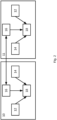
- the node 10 has a VSE 12, a WSM 14, WCS 16 and WCON 18.
- the WSM 14 has two states reflecting the channel is sensed busy or idle. This state is an example for physical transmission property data.
- the WCS 16 defines that the only variable parameter is the probability " p ", which may be chosen such that p low ⁇ p ⁇ p high , wherein p low and p high are predetermined bounds.
- the parameter configuration space comprises the probability " p " as the only parameter.
- the VSE 12 evaluates each piece of data that the application on the considered node 10 wants to transmit to another node 11 and assigns it a data validity value according to an increasing function g ( t - t s ), wherein t is the current time and t s the time stamp of the piece of data.
- the time stamp t s can be assigned when the data packet is first received or generated by the VSE 12.
- the value t - t s is referred to as data "age” and the validity function g ( t - t s ) is an increasing function of age. As g ( t - t s ) increases, so does transmission urgency.
- the value of the validity function g ( t - t s ) is called the data validity value and is specific for the individual data packets.
- the validity function may be a linear function, a polynomial function, or other basic function that is increasing with an increasing argument.
- the WCON 18 uses the data validity values based on g ( t - t s ), and the busy or idle state to determine with which probability " p " to transmit.
- the WCON 18 complies with p-persistent CSMA as defined in the standard. However, it assigns higher transmission probability to data packets with larger g ( t - t s ), resulting in preferentially transmitting data packets that are older and therefore more urgent for transmission.
- the WiFi network includes a first node 10 and a second node 11.
- each node 10, 11 has a broader choice of transmission parameters, such as transmission power, channel to transmit on and modulation and coding schemes (MCS).
- MCS modulation and coding schemes
- the exact available parameter set i.e. the parameter configuration space, depends on the used standard and type of node in the network.
- the different nodes 10, 11 may have different capabilities or may use different sub-standards. These may be communicated to the first node 10, which may act as an access point, when associating with the network, such that a common ground for communication between the first and second nodes 10, 11 can be determined.
- the first node 10 when acting as the access point, may determine the wireless channel to be used, based on the sensed channel occupancies and node capabilities, and negotiates with each node, such as the second node 11, the transmission parameters for their communication. Transmission powers and MCS, however, are adapted based on channel quality reports from ongoing communication.
- all nodes 10, 11 use a distributed communication based on a CSMA with collision avoidance (CSMA/CA) that employs an exponential back-off procedure.
- CSMA/CA CSMA with collision avoidance
- the back-off a random waiting time (the back-off) that is uniformly distributed from an interval [CW min ; CW max ] (wherein the abbreviation "CW' usually stands for contention window), and starts a countdown that fires when the waiting time is over.
- the countdown is paused and is resumed when the channel becomes idle again.
- the first node 10 transmits and waits for an acknowledgement (ACK) by the second node 11. If the ACK is not received, a packet loss is assumed, in which case the CW max parameter is increased. If the transmission of the data packet was successful as indicated by a received ACK, CW max is decreased.
- ACK acknowledgement
- Each node 10, 11 includes a VSE 12, a WSM 14, a WCS 16, and a WCON 18 as previously described.
- the nodes 10, 11 exchange parameter configuration space with each other, to reveal which channels the nodes 10, 11 can use, the underlying standard and supported MCS.
- the WCS 16 determines which settings and standards will be used for future communication between the nodes 10, 11. In other words, the WCS 16 of the nodes 10, 11 negotiate the parameter configuration space that is amenable for transmitting the data packets.
- the WSM 14 gathers physical transmission property data from previous transmissions, such as received signal strength indicators (RSSI), signal to noise (SNR) values, and the like.
- RSSI received signal strength indicators
- SNR signal to noise
- the VSE 12 assigns data validity values to the buffered data packets. Similar to the VDL Mode 2, an increasing function g ( t - t s ) is used, where t is the current time and t s the timestamp of the piece of data and the function g maps the data age to a data validity value that reflects transmission urgency.
- the WCON 18 then takes the date validity values of all buffered data packets, identifies the data packet with the maximum data validity value and selects it for transmission. Taking the input from the WSM 14 and the WCS 16 the WCON 18 chooses an appropriate MCS from the parameter configuration space.
- the WCON 18 may adapt the contention window [CW min ; CW max ] depending on the current data validity value.
- the WCON 18 can use the rule set
- a set of nodes resides in communication cells that are managed by central base stations. Therein, nodes are grouped into device categories, which define operation functionalities supported by the nodes.
- Cellular networks have different wireless resources that are assigned to the nodes for transmission. In 3G for example, each device is assigned a frequency, modulation and coding scheme (MCS), transmission power and separation code that it should use for transmission.
- MCS modulation and coding scheme
- PRBs Physical resource blocks
- MCS modulation and coding scheme
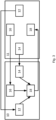
- the cellular network includes a first node 10, preferably acting as base station, and one or more second nodes 11, such as a mobile phone or other end user devices.
- the first node 10 regularly emits a sounding reference signal (SRS) that the second nodes 11 use to achieve time synchronization and measure channel quality.
- SRS sounding reference signal
- the second node 11 When the second node 11, for example, has data packets to transmit in its transmission buffers, said second node 11 emits a transmission buffer state report and reports a channel quality indicator (CQI) using the WSM 14 to the first node 10, i.e. the base station.
- the first node 10, i.e. the base station decides based on the different requests and channel qualities, which second node 11 may transmit on which network resource, i.e., on which channel and with which configuration.
- Both the first and second nodes 10, 11 have a VSE 12, a WSM 14, a WCS 16, and a WCON 18.
- the WCS 16 of each second node 11 reports the category to the WCS 16 of the first node 10, i.e. the base station.
- the first node 10 stores the configuration options for each of the second nodes 11.
- the WSM 14 of all second nodes 11 sense physical transmission property data, namely channel parameters, and report the results to the WSM 14 of the first node 10, which stores the result.
- VSE 12 of the second node 11 reports data validity estimates to the VSE 12 of the first node 10.
- the WCON 18 of the first node 10 depending on the current states of the first node's 10 VSE 12, WCS 16 and WSM 14, then assigns transmission parameters, namely transmission modes, transmission powers and wireless resources to each second node 11.
- the result of the assignment is broadcasted to all second nodes 11, which then may transmit their data, upon receiving a transmission grant message from the first node 10.
- the data validity value is given by a function g i ( t - t s,i , c i ), wherein i designates the i-th second node 11, t s,i is the time stamp of i-th second node 11 and c i is the configuration that the first node 10 assigns to the i-th second node 11.
- the first node 10 performs the assignment of the data validity values to each second node 11 by solving the optimization problem argmax ⁇ g i ( t - t s,i , c i ) with "argmax" being defined as giving the elements of the domain of some target function at which the function values are maximized and the other symbols as previously explained.
- the WCON 18 schedules data packets to transmit the most urgent ones first.
- the first node 10 needs to transmit data packets to the second nodes 11 on the downlink, it does not trigger the VSE report of the second nodes 11 but directly takes the estimates of its local transmission buffers, i.e. per-buffer data validity values.
- the scheduling is similar and the WCON 18 of the first directly configures the transmissions on the first node 10 instead of broadcasting a grant to the second nodes 11.
Landscapes
- Engineering & Computer Science (AREA)
- Computer Networks & Wireless Communication (AREA)
- Signal Processing (AREA)
- Mobile Radio Communication Systems (AREA)
Priority Applications (3)
| Application Number | Priority Date | Filing Date | Title |
|---|---|---|---|
| EP21212009.1A EP4192090B1 (fr) | 2021-12-02 | 2021-12-02 | Procédé de fonctionnement d'un ou de plusieurs noeuds dans un réseau de communication dans le but de coordonner les transmissions de différents noeuds du réseau en utilisant la validité des données comme métrique de décision |
| US18/071,144 US12335155B2 (en) | 2021-12-02 | 2022-11-29 | Method for operating one or more nodes in a communications network for coordinating transmissions of different nodes in the network using data validity as decision metric |
| CN202211518726.5A CN116233882A (zh) | 2021-12-02 | 2022-11-30 | 用于操作通信网络中的一个或多个节点的方法 |
Applications Claiming Priority (1)
| Application Number | Priority Date | Filing Date | Title |
|---|---|---|---|
| EP21212009.1A EP4192090B1 (fr) | 2021-12-02 | 2021-12-02 | Procédé de fonctionnement d'un ou de plusieurs noeuds dans un réseau de communication dans le but de coordonner les transmissions de différents noeuds du réseau en utilisant la validité des données comme métrique de décision |
Publications (2)
| Publication Number | Publication Date |
|---|---|
| EP4192090A1 true EP4192090A1 (fr) | 2023-06-07 |
| EP4192090B1 EP4192090B1 (fr) | 2025-08-27 |
Family
ID=78844618
Family Applications (1)
| Application Number | Title | Priority Date | Filing Date |
|---|---|---|---|
| EP21212009.1A Active EP4192090B1 (fr) | 2021-12-02 | 2021-12-02 | Procédé de fonctionnement d'un ou de plusieurs noeuds dans un réseau de communication dans le but de coordonner les transmissions de différents noeuds du réseau en utilisant la validité des données comme métrique de décision |
Country Status (3)
| Country | Link |
|---|---|
| US (1) | US12335155B2 (fr) |
| EP (1) | EP4192090B1 (fr) |
| CN (1) | CN116233882A (fr) |
Citations (5)
| Publication number | Priority date | Publication date | Assignee | Title |
|---|---|---|---|---|
| US20140010081A1 (en) * | 2000-11-03 | 2014-01-09 | At&T Intellectual Property Ii, L.P. | Tiered contention multiple access (tcma): a method for priority-based shared channel access |
| US20150257024A1 (en) * | 2012-09-17 | 2015-09-10 | Interdigital Patent Holdings, Inc. | Self-optimization of backhaul radio resources and small cell backhaul delay estimation |
| CN111182645A (zh) | 2019-12-30 | 2020-05-19 | 赣江新区智慧物联研究院有限公司 | 一种基于信息年龄的物联网组网方法 |
| CN111884947A (zh) | 2020-07-29 | 2020-11-03 | 电子科技大学 | 一种在接收端基于信息年龄的数据包管理方法 |
| CN111935550A (zh) | 2020-08-06 | 2020-11-13 | 北京邮电大学 | 一种基于时效性的数据包调度方法、装置及电子设备 |
Family Cites Families (3)
| Publication number | Priority date | Publication date | Assignee | Title |
|---|---|---|---|---|
| US20060209763A1 (en) * | 2005-03-21 | 2006-09-21 | Emeott Stephen P | Multi-mode link adaptation |
| US20200059437A1 (en) * | 2018-08-20 | 2020-02-20 | Advanced Micro Devices, Inc. | Link layer data packing and packet flow control scheme |
| US10880234B2 (en) * | 2019-05-21 | 2020-12-29 | Mellanox Technologies Tlv Ltd. | Cut-through switching system |
-
2021
- 2021-12-02 EP EP21212009.1A patent/EP4192090B1/fr active Active
-
2022
- 2022-11-29 US US18/071,144 patent/US12335155B2/en active Active
- 2022-11-30 CN CN202211518726.5A patent/CN116233882A/zh active Pending
Patent Citations (5)
| Publication number | Priority date | Publication date | Assignee | Title |
|---|---|---|---|---|
| US20140010081A1 (en) * | 2000-11-03 | 2014-01-09 | At&T Intellectual Property Ii, L.P. | Tiered contention multiple access (tcma): a method for priority-based shared channel access |
| US20150257024A1 (en) * | 2012-09-17 | 2015-09-10 | Interdigital Patent Holdings, Inc. | Self-optimization of backhaul radio resources and small cell backhaul delay estimation |
| CN111182645A (zh) | 2019-12-30 | 2020-05-19 | 赣江新区智慧物联研究院有限公司 | 一种基于信息年龄的物联网组网方法 |
| CN111884947A (zh) | 2020-07-29 | 2020-11-03 | 电子科技大学 | 一种在接收端基于信息年龄的数据包管理方法 |
| CN111935550A (zh) | 2020-08-06 | 2020-11-13 | 北京邮电大学 | 一种基于时效性的数据包调度方法、装置及电子设备 |
Non-Patent Citations (3)
| Title |
|---|
| JHUNJHUNWALA, P. R.SOMBABU, B.MOHARIR, S.: "Optimal Aol-Aware Scheduling and Cycles in Graphs", IEEE TRANSACTIONS ON COMMUNICATIONS, vol. 68, no. 3, 2020, pages 1593 - 1603, XP011779500, Retrieved from the Internet <URL:https://doi.org/10.1109/TCOMM.2019.2962038> DOI: 10.1109/TCOMM.2019.2962038 |
| TRIPATHI, V.MODIANO, E.: "In 2019 57th Annual Allerton Conference on Communication, Control, and Computing (Allerton", 2019, IEEE., article "A Whittle Index Approach to Minimizing Functions of Age of Information", pages: 1160 - 1167 |
| YIN, B.ZHANG, S.CHENG, Y.: "Application-Oriented Scheduling for Optimizing the Age of Correlated Information: A Deep-Reinforcement-Learning-Based Approach", IEEE INTERNET OF THINGS JOURNAL, vol. 7, no. 9, 2020, pages 8748 - 8759, XP011809233, Retrieved from the Internet <URL:https://doi.Org/10.1109/JIOT.2020.2996562> DOI: 10.1109/JIOT.2020.2996562 |
Also Published As
| Publication number | Publication date |
|---|---|
| EP4192090B1 (fr) | 2025-08-27 |
| CN116233882A (zh) | 2023-06-06 |
| US20230179529A1 (en) | 2023-06-08 |
| US12335155B2 (en) | 2025-06-17 |
Similar Documents
| Publication | Publication Date | Title |
|---|---|---|
| Parkvall et al. | 5G NR release 16: Start of the 5G evolution | |
| US7373162B2 (en) | Methods of controlling transmission power levels in air interface channels | |
| Ni et al. | Wireless broadband access: WIMAX and beyond-Investigation of bandwidth request mechanisms under point-to-multipoint mode of WiMAX networks | |
| US9282544B2 (en) | Mobile communication system and communication control method | |
| US20210337512A1 (en) | Methods and systems for autonomous sidelink resource allocation | |
| US20220346112A1 (en) | Method of logical channel prioritization to support sidelink relay | |
| JP7822384B2 (ja) | 送信手順に関与するntnエンティティ、ユーザ機器、および基地局 | |
| KR20160040197A (ko) | 기반구조 장비, 무선 통신 네트워크, 및 방법 | |
| US10880906B2 (en) | Apparatuses, methods and computer programs for implementing fairness and complexity-constrained a non-orthogonal multiple access (NOMA) scheme | |
| CN103430610B (zh) | 一种调度方法、网络设备和终端设备 | |
| US20070133556A1 (en) | System and method of distributed intelligent scheduling with compensation optimization (DISCO) for wireless ad hoc or personal area network | |
| US20240388387A1 (en) | User equipment, scheduling node, method for user equipment, and method for scheduling node | |
| US20260088958A1 (en) | Base station, terminal, and communication method | |
| CN115088329B (zh) | 信息发送和接收的方法及装置 | |
| JP2022552161A (ja) | ユーザ装置及びスケジューリングノード | |
| WO2020217704A1 (fr) | Dispositif de communication et procédé de communication | |
| KR20180027426A (ko) | 통신 장치 및 통신 방법 | |
| CN119183679A (zh) | 用于流量紧急性指示的方法和装置 | |
| EP2498455A1 (fr) | Procédé et système permettant de coordonner l'accès à un canal de communication de manière indépendante de la technologie afin d'améliorer l'efficacité de canal et fournir des garanties QoS | |
| JP2024507037A (ja) | 無線ネットワークにおける低レイテンシデータ送信を管理するための方法及び装置 | |
| US12335155B2 (en) | Method for operating one or more nodes in a communications network for coordinating transmissions of different nodes in the network using data validity as decision metric | |
| US20260051976A1 (en) | User equipment and scheduling device | |
| Huang et al. | Listen before receive (lbr) assisted network access in laa and wifi heterogeneous networks | |
| CN121444521A (zh) | 信道测量报告中涉及的用户设备和基站 | |
| Kirchhof et al. | Improving MAC protocols for wireless industrial networks via packet prioritization and cooperation |
Legal Events
| Date | Code | Title | Description |
|---|---|---|---|
| PUAI | Public reference made under article 153(3) epc to a published international application that has entered the european phase |
Free format text: ORIGINAL CODE: 0009012 |
|
| STAA | Information on the status of an ep patent application or granted ep patent |
Free format text: STATUS: THE APPLICATION HAS BEEN PUBLISHED |
|
| AK | Designated contracting states |
Kind code of ref document: A1 Designated state(s): AL AT BE BG CH CY CZ DE DK EE ES FI FR GB GR HR HU IE IS IT LI LT LU LV MC MK MT NL NO PL PT RO RS SE SI SK SM TR |
|
| STAA | Information on the status of an ep patent application or granted ep patent |
Free format text: STATUS: REQUEST FOR EXAMINATION WAS MADE |
|
| 17P | Request for examination filed |
Effective date: 20231207 |
|
| RBV | Designated contracting states (corrected) |
Designated state(s): AL AT BE BG CH CY CZ DE DK EE ES FI FR GB GR HR HU IE IS IT LI LT LU LV MC MK MT NL NO PL PT RO RS SE SI SK SM TR |
|
| GRAP | Despatch of communication of intention to grant a patent |
Free format text: ORIGINAL CODE: EPIDOSNIGR1 |
|
| STAA | Information on the status of an ep patent application or granted ep patent |
Free format text: STATUS: GRANT OF PATENT IS INTENDED |
|
| INTG | Intention to grant announced |
Effective date: 20250324 |
|
| RIC1 | Information provided on ipc code assigned before grant |
Ipc: H04L 47/28 20220101ALN20250314BHEP Ipc: H04W 72/12 20230101ALI20250314BHEP Ipc: H04W 28/02 20090101AFI20250314BHEP |
|
| GRAS | Grant fee paid |
Free format text: ORIGINAL CODE: EPIDOSNIGR3 |
|
| GRAA | (expected) grant |
Free format text: ORIGINAL CODE: 0009210 |
|
| STAA | Information on the status of an ep patent application or granted ep patent |
Free format text: STATUS: THE PATENT HAS BEEN GRANTED |
|
| AK | Designated contracting states |
Kind code of ref document: B1 Designated state(s): AL AT BE BG CH CY CZ DE DK EE ES FI FR GB GR HR HU IE IS IT LI LT LU LV MC MK MT NL NO PL PT RO RS SE SI SK SM TR |
|
| REG | Reference to a national code |
Ref country code: CH Ref legal event code: EP |
|
| REG | Reference to a national code |
Ref country code: DE Ref legal event code: R096 Ref document number: 602021037064 Country of ref document: DE |
|
| REG | Reference to a national code |
Ref country code: IE Ref legal event code: FG4D |
|
| REG | Reference to a national code |
Ref country code: NL Ref legal event code: MP Effective date: 20250827 |
|
| PG25 | Lapsed in a contracting state [announced via postgrant information from national office to epo] |
Ref country code: IS Free format text: LAPSE BECAUSE OF FAILURE TO SUBMIT A TRANSLATION OF THE DESCRIPTION OR TO PAY THE FEE WITHIN THE PRESCRIBED TIME-LIMIT Effective date: 20251227 |
|
| PGFP | Annual fee paid to national office [announced via postgrant information from national office to epo] |
Ref country code: DE Payment date: 20251211 Year of fee payment: 5 |
|
| PGFP | Annual fee paid to national office [announced via postgrant information from national office to epo] |
Ref country code: GB Payment date: 20251219 Year of fee payment: 5 |
|
| PG25 | Lapsed in a contracting state [announced via postgrant information from national office to epo] |
Ref country code: NO Free format text: LAPSE BECAUSE OF FAILURE TO SUBMIT A TRANSLATION OF THE DESCRIPTION OR TO PAY THE FEE WITHIN THE PRESCRIBED TIME-LIMIT Effective date: 20251127 |
|
| REG | Reference to a national code |
Ref country code: LT Ref legal event code: MG9D |
|
| PG25 | Lapsed in a contracting state [announced via postgrant information from national office to epo] |
Ref country code: PT Free format text: LAPSE BECAUSE OF FAILURE TO SUBMIT A TRANSLATION OF THE DESCRIPTION OR TO PAY THE FEE WITHIN THE PRESCRIBED TIME-LIMIT Effective date: 20251229 |
|
| PG25 | Lapsed in a contracting state [announced via postgrant information from national office to epo] |
Ref country code: FI Free format text: LAPSE BECAUSE OF FAILURE TO SUBMIT A TRANSLATION OF THE DESCRIPTION OR TO PAY THE FEE WITHIN THE PRESCRIBED TIME-LIMIT Effective date: 20250827 |
|
| PG25 | Lapsed in a contracting state [announced via postgrant information from national office to epo] |
Ref country code: NL Free format text: LAPSE BECAUSE OF FAILURE TO SUBMIT A TRANSLATION OF THE DESCRIPTION OR TO PAY THE FEE WITHIN THE PRESCRIBED TIME-LIMIT Effective date: 20250827 Ref country code: HR Free format text: LAPSE BECAUSE OF FAILURE TO SUBMIT A TRANSLATION OF THE DESCRIPTION OR TO PAY THE FEE WITHIN THE PRESCRIBED TIME-LIMIT Effective date: 20250827 |
|
| PGFP | Annual fee paid to national office [announced via postgrant information from national office to epo] |
Ref country code: FR Payment date: 20251229 Year of fee payment: 5 |
|
| PG25 | Lapsed in a contracting state [announced via postgrant information from national office to epo] |
Ref country code: GR Free format text: LAPSE BECAUSE OF FAILURE TO SUBMIT A TRANSLATION OF THE DESCRIPTION OR TO PAY THE FEE WITHIN THE PRESCRIBED TIME-LIMIT Effective date: 20251128 |
|
| PG25 | Lapsed in a contracting state [announced via postgrant information from national office to epo] |
Ref country code: SE Free format text: LAPSE BECAUSE OF FAILURE TO SUBMIT A TRANSLATION OF THE DESCRIPTION OR TO PAY THE FEE WITHIN THE PRESCRIBED TIME-LIMIT Effective date: 20250827 |
|
| PG25 | Lapsed in a contracting state [announced via postgrant information from national office to epo] |
Ref country code: LV Free format text: LAPSE BECAUSE OF FAILURE TO SUBMIT A TRANSLATION OF THE DESCRIPTION OR TO PAY THE FEE WITHIN THE PRESCRIBED TIME-LIMIT Effective date: 20250827 |
|
| PG25 | Lapsed in a contracting state [announced via postgrant information from national office to epo] |
Ref country code: PL Free format text: LAPSE BECAUSE OF FAILURE TO SUBMIT A TRANSLATION OF THE DESCRIPTION OR TO PAY THE FEE WITHIN THE PRESCRIBED TIME-LIMIT Effective date: 20250827 Ref country code: BG Free format text: LAPSE BECAUSE OF FAILURE TO SUBMIT A TRANSLATION OF THE DESCRIPTION OR TO PAY THE FEE WITHIN THE PRESCRIBED TIME-LIMIT Effective date: 20250827 |
|
| PG25 | Lapsed in a contracting state [announced via postgrant information from national office to epo] |
Ref country code: RS Free format text: LAPSE BECAUSE OF FAILURE TO SUBMIT A TRANSLATION OF THE DESCRIPTION OR TO PAY THE FEE WITHIN THE PRESCRIBED TIME-LIMIT Effective date: 20251127 |
|
| PG25 | Lapsed in a contracting state [announced via postgrant information from national office to epo] |
Ref country code: ES Free format text: LAPSE BECAUSE OF FAILURE TO SUBMIT A TRANSLATION OF THE DESCRIPTION OR TO PAY THE FEE WITHIN THE PRESCRIBED TIME-LIMIT Effective date: 20250827 |
|
| REG | Reference to a national code |
Ref country code: AT Ref legal event code: MK05 Ref document number: 1831584 Country of ref document: AT Kind code of ref document: T Effective date: 20250827 |
|
| PG25 | Lapsed in a contracting state [announced via postgrant information from national office to epo] |
Ref country code: RO Free format text: LAPSE BECAUSE OF FAILURE TO SUBMIT A TRANSLATION OF THE DESCRIPTION OR TO PAY THE FEE WITHIN THE PRESCRIBED TIME-LIMIT Effective date: 20250827 |
|
| PG25 | Lapsed in a contracting state [announced via postgrant information from national office to epo] |
Ref country code: SM Free format text: LAPSE BECAUSE OF FAILURE TO SUBMIT A TRANSLATION OF THE DESCRIPTION OR TO PAY THE FEE WITHIN THE PRESCRIBED TIME-LIMIT Effective date: 20250827 |
|
| PG25 | Lapsed in a contracting state [announced via postgrant information from national office to epo] |
Ref country code: DK Free format text: LAPSE BECAUSE OF FAILURE TO SUBMIT A TRANSLATION OF THE DESCRIPTION OR TO PAY THE FEE WITHIN THE PRESCRIBED TIME-LIMIT Effective date: 20250827 |
|
| PG25 | Lapsed in a contracting state [announced via postgrant information from national office to epo] |
Ref country code: AT Free format text: LAPSE BECAUSE OF FAILURE TO SUBMIT A TRANSLATION OF THE DESCRIPTION OR TO PAY THE FEE WITHIN THE PRESCRIBED TIME-LIMIT Effective date: 20250827 |
|
| PG25 | Lapsed in a contracting state [announced via postgrant information from national office to epo] |
Ref country code: IT Free format text: LAPSE BECAUSE OF FAILURE TO SUBMIT A TRANSLATION OF THE DESCRIPTION OR TO PAY THE FEE WITHIN THE PRESCRIBED TIME-LIMIT Effective date: 20250827 |
|
| PG25 | Lapsed in a contracting state [announced via postgrant information from national office to epo] |
Ref country code: CZ Free format text: LAPSE BECAUSE OF FAILURE TO SUBMIT A TRANSLATION OF THE DESCRIPTION OR TO PAY THE FEE WITHIN THE PRESCRIBED TIME-LIMIT Effective date: 20250827 |
|
| PG25 | Lapsed in a contracting state [announced via postgrant information from national office to epo] |
Ref country code: EE Free format text: LAPSE BECAUSE OF FAILURE TO SUBMIT A TRANSLATION OF THE DESCRIPTION OR TO PAY THE FEE WITHIN THE PRESCRIBED TIME-LIMIT Effective date: 20250827 Ref country code: SK Free format text: LAPSE BECAUSE OF FAILURE TO SUBMIT A TRANSLATION OF THE DESCRIPTION OR TO PAY THE FEE WITHIN THE PRESCRIBED TIME-LIMIT Effective date: 20250827 |