EP4196631B1 - Dispositif de traitement de textile et procédé de traitement de textile - Google Patents
Dispositif de traitement de textile et procédé de traitement de textile Download PDFInfo
- Publication number
- EP4196631B1 EP4196631B1 EP21763288.4A EP21763288A EP4196631B1 EP 4196631 B1 EP4196631 B1 EP 4196631B1 EP 21763288 A EP21763288 A EP 21763288A EP 4196631 B1 EP4196631 B1 EP 4196631B1
- Authority
- EP
- European Patent Office
- Prior art keywords
- hot air
- processing chamber
- textile
- parameter
- steam
- Prior art date
- Legal status (The legal status is an assumption and is not a legal conclusion. Google has not performed a legal analysis and makes no representation as to the accuracy of the status listed.)
- Active
Links
Images


Classifications
-
- D—TEXTILES; PAPER
- D06—TREATMENT OF TEXTILES OR THE LIKE; LAUNDERING; FLEXIBLE MATERIALS NOT OTHERWISE PROVIDED FOR
- D06F—LAUNDERING, DRYING, IRONING, PRESSING OR FOLDING TEXTILE ARTICLES
- D06F34/00—Details of control systems for washing machines, washer-dryers or laundry dryers
- D06F34/14—Arrangements for detecting or measuring specific parameters
- D06F34/26—Condition of the drying air, e.g. air humidity or temperature
-
- D—TEXTILES; PAPER
- D06—TREATMENT OF TEXTILES OR THE LIKE; LAUNDERING; FLEXIBLE MATERIALS NOT OTHERWISE PROVIDED FOR
- D06F—LAUNDERING, DRYING, IRONING, PRESSING OR FOLDING TEXTILE ARTICLES
- D06F2103/00—Parameters monitored or detected for the control of domestic laundry washing machines, washer-dryers or laundry dryers
- D06F2103/28—Air properties
- D06F2103/30—Pressure
-
- D—TEXTILES; PAPER
- D06—TREATMENT OF TEXTILES OR THE LIKE; LAUNDERING; FLEXIBLE MATERIALS NOT OTHERWISE PROVIDED FOR
- D06F—LAUNDERING, DRYING, IRONING, PRESSING OR FOLDING TEXTILE ARTICLES
- D06F2103/00—Parameters monitored or detected for the control of domestic laundry washing machines, washer-dryers or laundry dryers
- D06F2103/28—Air properties
- D06F2103/32—Temperature
-
- D—TEXTILES; PAPER
- D06—TREATMENT OF TEXTILES OR THE LIKE; LAUNDERING; FLEXIBLE MATERIALS NOT OTHERWISE PROVIDED FOR
- D06F—LAUNDERING, DRYING, IRONING, PRESSING OR FOLDING TEXTILE ARTICLES
- D06F2103/00—Parameters monitored or detected for the control of domestic laundry washing machines, washer-dryers or laundry dryers
- D06F2103/28—Air properties
- D06F2103/34—Humidity
-
- D—TEXTILES; PAPER
- D06—TREATMENT OF TEXTILES OR THE LIKE; LAUNDERING; FLEXIBLE MATERIALS NOT OTHERWISE PROVIDED FOR
- D06F—LAUNDERING, DRYING, IRONING, PRESSING OR FOLDING TEXTILE ARTICLES
- D06F2103/00—Parameters monitored or detected for the control of domestic laundry washing machines, washer-dryers or laundry dryers
- D06F2103/60—Parameters monitored or detected for the control of domestic laundry washing machines, washer-dryers or laundry dryers related to auxiliary conditioning or finishing agents, e.g. filling level of perfume tanks
- D06F2103/62—Parameters monitored or detected for the control of domestic laundry washing machines, washer-dryers or laundry dryers related to auxiliary conditioning or finishing agents, e.g. filling level of perfume tanks related to systems for water or steam used for conditioning or finishing
-
- D—TEXTILES; PAPER
- D06—TREATMENT OF TEXTILES OR THE LIKE; LAUNDERING; FLEXIBLE MATERIALS NOT OTHERWISE PROVIDED FOR
- D06F—LAUNDERING, DRYING, IRONING, PRESSING OR FOLDING TEXTILE ARTICLES
- D06F2105/00—Systems or parameters controlled or affected by the control systems of washing machines, washer-dryers or laundry dryers
- D06F2105/16—Air properties
- D06F2105/20—Temperature
-
- D—TEXTILES; PAPER
- D06—TREATMENT OF TEXTILES OR THE LIKE; LAUNDERING; FLEXIBLE MATERIALS NOT OTHERWISE PROVIDED FOR
- D06F—LAUNDERING, DRYING, IRONING, PRESSING OR FOLDING TEXTILE ARTICLES
- D06F2105/00—Systems or parameters controlled or affected by the control systems of washing machines, washer-dryers or laundry dryers
- D06F2105/16—Air properties
- D06F2105/22—Humidity
-
- D—TEXTILES; PAPER
- D06—TREATMENT OF TEXTILES OR THE LIKE; LAUNDERING; FLEXIBLE MATERIALS NOT OTHERWISE PROVIDED FOR
- D06F—LAUNDERING, DRYING, IRONING, PRESSING OR FOLDING TEXTILE ARTICLES
- D06F2105/00—Systems or parameters controlled or affected by the control systems of washing machines, washer-dryers or laundry dryers
- D06F2105/28—Electric heating
-
- D—TEXTILES; PAPER
- D06—TREATMENT OF TEXTILES OR THE LIKE; LAUNDERING; FLEXIBLE MATERIALS NOT OTHERWISE PROVIDED FOR
- D06F—LAUNDERING, DRYING, IRONING, PRESSING OR FOLDING TEXTILE ARTICLES
- D06F2105/00—Systems or parameters controlled or affected by the control systems of washing machines, washer-dryers or laundry dryers
- D06F2105/38—Conditioning or finishing, e.g. control of perfume injection
- D06F2105/40—Conditioning or finishing, e.g. control of perfume injection using water or steam
-
- D—TEXTILES; PAPER
- D06—TREATMENT OF TEXTILES OR THE LIKE; LAUNDERING; FLEXIBLE MATERIALS NOT OTHERWISE PROVIDED FOR
- D06F—LAUNDERING, DRYING, IRONING, PRESSING OR FOLDING TEXTILE ARTICLES
- D06F31/00—Washing installations comprising an assembly of several washing machines or washing units, e.g. continuous flow assemblies
-
- D—TEXTILES; PAPER
- D06—TREATMENT OF TEXTILES OR THE LIKE; LAUNDERING; FLEXIBLE MATERIALS NOT OTHERWISE PROVIDED FOR
- D06F—LAUNDERING, DRYING, IRONING, PRESSING OR FOLDING TEXTILE ARTICLES
- D06F35/00—Washing machines, apparatus, or methods not otherwise provided for
- D06F35/005—Methods for washing, rinsing or spin-drying
- D06F35/008—Methods for washing, rinsing or spin-drying for disinfecting the tub or the drum
-
- D—TEXTILES; PAPER
- D06—TREATMENT OF TEXTILES OR THE LIKE; LAUNDERING; FLEXIBLE MATERIALS NOT OTHERWISE PROVIDED FOR
- D06F—LAUNDERING, DRYING, IRONING, PRESSING OR FOLDING TEXTILE ARTICLES
- D06F58/00—Domestic laundry dryers
- D06F58/32—Control of operations performed in domestic laundry dryers
- D06F58/34—Control of operations performed in domestic laundry dryers characterised by the purpose or target of the control
- D06F58/45—Cleaning or disinfection of machine parts, e.g. of heat exchangers or filters
-
- D—TEXTILES; PAPER
- D06—TREATMENT OF TEXTILES OR THE LIKE; LAUNDERING; FLEXIBLE MATERIALS NOT OTHERWISE PROVIDED FOR
- D06F—LAUNDERING, DRYING, IRONING, PRESSING OR FOLDING TEXTILE ARTICLES
- D06F73/00—Apparatus for smoothing or removing creases from garments or other textile articles by formers, cores, stretchers, or internal frames, with the application of heat or steam
- D06F73/02—Apparatus for smoothing or removing creases from garments or other textile articles by formers, cores, stretchers, or internal frames, with the application of heat or steam having one or more treatment chambers
Definitions
- the present invention relates to a textile processing apparatus and a textile processing method.
- the document EN 10 2008 035 797 A1 discloses a clothing treating apparatus and a method for controlling the same.
- WO 2007/137 857 A1 discloses a method for supplying steam to a space containing textiles.
- a textile processing device comprising a processing chamber, a textile supply unit which is designed to provide a textile to the processing chamber, a steam supply unit which is configured to provide water vapor with a predetermined vapor property to the processing chamber, a vapor detection unit configured to detect a vapor parameter of the water vapor provided to the processing chamber, and a vapor control unit configured to change a vapor property of the water vapor provided to the processing chamber in response to the detected vapor parameter.
- the textile processing device serves to process a textile with at least one processing step.
- the textile is, for example, a piece of clothing, such as trousers, a blouse or a shirt.
- the textile has, for example, been at least partially manufactured or finished in a preceding processing step.
- the textile processing device initially comprises a processing chamber.
- the processing chamber is an at least partially enclosed space in which the textile can be processed, i.e. treated.
- the processing is carried out using steam, among other things, whereby the textile is exposed to steam in the processing chamber, as described below. Steam treatment can in particular smooth the textile and simultaneously disinfect and deodorize it.
- the processing chamber comprises, for example, at least one wall, for example two walls, further, for example, two walls, a floor and a roof.
- the processing chamber serves in particular to provide a processing space for the textile in which a controlled and defined atmosphere can be created at least in sections, as will be explained below.
- the textile processing device further comprises a textile supply unit, through which the textile can be supplied to the processing chamber.
- the textile supply unit represents a holder for the textile, such as a clip, a hook or a coat hanger to which the textile is attached.
- the textile supply unit is designed to supply the textile to the processing chamber by moving it forward, for example by propulsion. Furthermore, for example, the textile supply unit can also be designed to remove the textile from the processing chamber again, in particular after processing.
- the textile supply unit can also be designed to supply the textile from a previous processing step of the textile to the processing chamber and thus to the textile processing device itself.
- the textile processing device also comprises a steam supply unit which is designed to supply water vapor with at least one predetermined steam property to the processing chamber.
- the steam supply unit comprises, for example, one or more steam atomizers or steam nozzles or has access to such steam atomizers or steam nozzles which are designed to supply water vapor, for example from a reservoir, to the processing chamber.
- the steam can be generated, for example, by heating water held in a reservoir and then fed to the nozzle(s).
- the steam has at least one predetermined steam property.
- a steam property is, for example, a steam temperature, a steam pressure, a steam humidity and/or a steam saturation. This is predetermined, for example, by a presetting in the steam supply unit and/or a presetting of the steam generation process.
- a steam property can also be or include a supply duration. For example, the steam can be provided to the processing chamber over a period of one second, ten seconds, 30 seconds, one minute and/or 90 seconds.
- the steam property is a property that the steam has immediately before or when it is provided to the processing chamber.
- the at least one predetermined steam property can be a steam property corresponding to that provided by the textile processing device.
- the textile may be a product made of a synthetic fiber, such as polyamide, which requires and/or allows higher temperatures and/or shorter preparation times and/or lower steam pressures for processing, in which case the predetermined steam property is or includes, for example, a higher steam temperature, such as 130°C, and/or a shorter preparation time, such as 30 seconds, and/or a lower steam pressure, such as 0.2 bar.
- a higher steam temperature such as 130°C
- a shorter preparation time such as 30 seconds
- a lower steam pressure such as 0.2 bar.
- the specified steam property can be or include, for example, a lower steam temperature, such as 120°C, and/or a longer preparation time, such as 90 seconds, and/or a higher steam pressure, such as 1.0 bar.
- the water vapor can be provided to the processing chamber regularly, periodically and/or on an ad hoc basis.
- the water vapor can be provided to the processing chamber every minute, every 30 seconds, every ten seconds or every second.
- the water vapor can be provided each time a textile is provided to the processing chamber. This can be detected, for example, by a switch, a motion sensor and/or a camera.
- the textile processing device further comprises a steam detection unit which is designed to detect at least one steam parameter of the water vapor provided to the processing chamber.
- a steam parameter is, for example, a steam temperature, a steam pressure, a steam humidity and/or a steam saturation of the water vapor provided to the processing chamber.
- a steam parameter is a steam temperature, a steam pressure, a steam humidity and/or a steam saturation of the water vapor directly provided by the steam supply unit or the steam parameter is recorded directly at the steam supply unit.
- a steam parameter can also be a steam temperature, a steam pressure, a steam humidity and/or a steam saturation of the steam-air mixture that occurs in the processing chamber, or the steam parameter is recorded at a location spaced apart from the steam supply unit, such as a midpoint or central point of the processing chamber and/or on or near the textile.
- Such a steam parameter can be determined using suitable sensors, in particular one or more temperature sensors, one or more pressure sensors and/or one or more saturation sensors.
- the sensors can be arranged, for example, in and/or on the processing chamber and/or in and/or on the textile processing device.
- the steam parameter can be recorded regularly, periodically and/or on an ad hoc basis.
- the steam parameter can be recorded every minute, every 30 seconds, every ten seconds, every second, every 500 milliseconds or every millisecond.
- the steam parameter can be recorded each time a textile is provided to the processing chamber. This can be recorded, for example, by a switch, a motion sensor and/or a camera.
- the steam parameter can be recorded depending on the provision of the steam to the processing chamber, for example at the same time as or before or after the provision of the water vapor, for example one second, ten seconds, 30 seconds or one minute before or after the water vapor is provided.
- the detected steam parameter may correspond to or be proportional to at least one of the specified steam properties, but this does not have to be the case.
- the steam property changed by the steam control unit may be consistent with or proportional to the detected steam parameter.
- the steam parameter may not correspond to the steam property and/or may not be proportional to it.
- the textile processing device further comprises a steam control unit configured to change at least one steam property of the water vapor provided to the processing chamber in response to the detected steam parameter.
- the steam control unit can be designed as a simple control element, for example as a PID controller. Alternatively or additionally, the steam control unit can also include and/or have access to a microprocessor- or computer-based control system. The steam control unit can also have access to the steam supply unit in order to change a steam property.
- the steam property is changed in particular by changing a value of the specified steam property.
- the steam control unit can increase or decrease a value of a steam property.
- the steam property can be changed because a detected steam parameter, i.e. an actual parameter, deviates from a target parameter, in particular deviates by a predetermined threshold value.
- the steam property can be changed regularly, periodically and/or on an ad hoc basis.
- the steam property can be changed every minute, every 30 seconds, every ten seconds, every second, every 500 milliseconds or every millisecond.
- the steam property can be changed depending on when the steam parameter is recorded, for example simultaneously with or before or after the steam parameter is recorded, for example one second, ten seconds, 30 seconds or one minute before or after the steam parameter is recorded.
- a steam parameter can be recorded, for example in the vicinity of the textile, immediately after the expiration of the 30-second provision period.
- This recorded steam parameter can be, for example, a steam temperature of 110°C that is set in the atmosphere of the processing chamber after the provision period. This can be 110°C in particular because the textile is made of a particularly dense or heavy material, which means the steam cannot spread ideally.
- a target parameter of 115°C can be stored for the textile, with the threshold value being 3°C. Based on this, in response to the deviation of 5°C between the recorded actual steam parameter value and the target steam parameter value, the steam temperature of the water vapor, which is again provided to the processing chamber after a rest period of, for example, 30 seconds, is changed.
- This change may, for example, include increasing the steam temperature of the water vapor by 3°C from 130°C to 133°C and then providing the water vapor with the increased steam temperature to the processing chamber.
- This textile processing device has the advantage that a textile can be processed particularly gently and individually.
- this textile processing device makes it possible for factors such as textile thickness, textile size and/or textile weight to be automatically taken into account without the need to adjust the textile processing device.
- the textile processing device can be further developed in that the steam supply unit is designed to provide plasma-activated water vapor to the processing chamber.
- the steam supply unit is designed in particular as a plasma steam supply unit.
- Plasma-activated water vapor has the property of having both a disinfecting and a deodorizing effect on the textile.
- Plasma-activated water vapor is, for example, water vapor that has been generated from plasma-activated water and/or water vapor that has been plasma-activated.
- Plasma-activated water vapor can, for example, be generated using a dielectric barrier discharge plasma nozzle (so-called dielectric barrier discharge, DBD) in combination with a water vaporizer.
- DBD dielectric barrier discharge
- a plasma is generated under normal pressure, i.e. atmospheric pressure.
- This training has the advantage that it produces particularly good cleaning results. In particular, this training achieves particularly good disinfection and deodorization of the textile.
- the textile processing device can be further developed in that the steam detection unit is further designed to detect a plasma steam parameter of the plasma-activated water vapor provided to the processing chamber, and wherein the steam control unit is further designed to change a plasma steam property of the plasma-activated water vapor provided to the processing chamber in response to the detected plasma steam parameter.
- a plasma vapor parameter is, in addition to the general vapor parameters described above, a parameter that relates to the plasma activation.
- a plasma vapor parameter is a degree of ionization of the water vapor generated by the plasma activation. This can be detected by suitable sensors in or on the processing chamber, for example a condenser.
- a plasma vapor property is, in addition to the general vapor properties described above, a Property that relates to plasma activation.
- a plasma vapor property is a pulse duration, a frequency and/or a power with which the water or water vapor is exposed during plasma activation.
- the steam control unit is also configured to change a plasma steam property of the plasma-activated water vapor provided to the processing chamber in response to a sensed steam parameter.
- the steam control unit is also designed to provide a steam property of the water vapor provided to the processing chamber, in particular the plasma-activated water vapor provided to the processing chamber, in response to a detected plasma steam parameter.
- Plasma-activated steam has a particularly deodorizing and/or disinfecting effect. This is why a textile that is processed, i.e. treated, with plasma-activated steam becomes particularly clean.
- This training therefore has the advantage that it is particularly suitable for the deodorization and/or disinfection of textiles.
- the textile processing device can be further developed by further comprising a hot air supply unit which is designed to provide hot air with a predetermined hot air property to the processing chamber.
- the hot air supply unit has, for example, a fan and a heater.
- the hot air supply unit is designed to provide the hot air with at least one predetermined hot air property to the processing chamber.
- a hot air property is, for example, a hot air temperature, a hot air residual moisture and/or a hot air quantity. This is predetermined, for example, by a presetting in the hot air supply unit and/or a presetting of the hot air generation process.
- a hot air property can also be or include a provision duration. For example, the hot air can be provided to the processing chamber over a period of one second, ten seconds, 30 seconds, one minute and/or 90 seconds.
- the hot air property is a property that the hot air has immediately before or when it is provided to the processing chamber.
- the at least one predetermined hot air property can be a hot air property corresponding to that provided by the textile processing device.
- the predetermined hot air property can be or include, for example, a higher hot air temperature, such as 150°C, and/or a shorter drying time, such as 20 seconds.
- the specified Hot air properties may include, for example, a higher hot air temperature, such as 180°C, and/or a longer delivery time, such as 60 seconds.
- the hot air can be provided to the processing chamber in particular regularly, periodically and/or on an ad hoc basis.
- the hot air can be provided to the processing chamber every minute, every 30 seconds, every ten seconds or every second.
- the hot air can be provided after each provision of water vapor, in particular plasma-activated water vapor, to the processing chamber.
- the hot air supply unit is used to dry the textile with hot air after processing with steam, in particular plasma-activated steam, and thus to remove any steam or water residues in the textile.
- the hot air supply unit is also used to smooth the textile and, in particular, to iron it by pressing it against a wall of the processing chamber.
- the textile can be dried after the processing step of providing the steam, in particular the plasma-activated steam.
- the textile can be immediately fed to a further processing step, such as packaging.
- the textile processing device can be further developed by further comprising a hot air detection unit which is designed to detect a hot air parameter of the hot air provided to the processing chamber, and a hot air control unit which is designed to to change a hot air property of the hot air supplied to the processing chamber in response to the detected hot air parameter.
- a hot air parameter is a hot air temperature, a hot air residual humidity and/or a hot air quantity of the hot air provided directly by the hot air supply unit or the hot air parameter is recorded directly at the hot air supply unit.
- a hot air parameter can also be a hot air temperature, a hot air residual humidity and/or a hot air quantity of the hot air-air mixture that occurs in the processing chamber, or the hot air parameter is recorded at a location spaced apart from the hot air supply unit, such as a middle or central point of the processing chamber and/or on or near the textile.
- Such a hot air parameter can be determined using suitable sensors, in particular one or more temperature sensors, one or more pressure sensors and/or one or more humidity sensors.
- the sensors can be arranged, for example, in and/or on the processing chamber and/or in and/or on the textile processing device.
- the hot air parameter can be recorded regularly, periodically and/or on an ad hoc basis.
- the hot air parameter can be recorded every minute, every 30 seconds, every ten seconds, every second, every 500 milliseconds or every millisecond.
- the hot air parameter can be determined depending on the provision of the water vapor, in particular the plasma-activated water vapor, to the processing chamber, for example simultaneously with or before or after the provision of the water vapor, for example one second, ten seconds, 30 seconds or one minute before or after the provision of the water vapor.
- the hot air parameter can be determined depending on the provision of the hot air to the processing chamber, for example simultaneously with or before or after the provision of the hot air, for example one second, ten seconds, 30 seconds or one minute before or after the provision of the hot air.
- the recorded hot air parameter may correspond to or be proportional to at least one specified hot air property, but this does not have to be the case.
- the hot air property changed by the hot air control unit may be consistent with or proportional to the detected hot air parameter.
- the hot air parameter may not correspond to the hot air property and/or may not be proportional to it.
- the textile processing device further comprises a hot air control unit which is designed to control the temperature of the hot air in response to the detected hot air parameter to change at least one hot air property of the hot air supplied to the processing chamber.
- the hot air control unit can be designed as a simple control element, for example as a PID controller. Alternatively or additionally, the hot air control unit can also include a microprocessor- or computer-based control and/or have access to it. The hot air control unit can also have access to the hot air supply unit in order to change a hot air property.
- the hot air control unit can correspond to the steam control unit described above or a common control unit can take on both steam control and hot air control tasks. Alternatively, the hot air control unit can also be designed independently of the steam control unit or be independent of it.
- the hot air property is changed in particular by changing a value of the specified hot air property.
- the hot air control unit can increase or decrease a value of a hot air property.
- the hot air property can be changed because a recorded hot air parameter, i.e. an actual parameter, deviates from a target parameter, in particular deviates by a predetermined threshold value.
- the hot air properties can be changed regularly, periodically and/or on an ad hoc basis. For example, the hot air properties can be changed every minute, every 30 seconds, every ten seconds, every second, every 500 milliseconds or every millisecond.
- the hot air property can be determined depending on the detection of the hot air parameter, for example simultaneously with or before or after the detection of the hot air parameter, for example one second, ten seconds, 30 seconds or one minute before or after the detection of the hot air parameter.
- a hot air parameter can be recorded, for example in the vicinity of the textile, immediately after the 20-second provision period has elapsed.
- This recorded hot air parameter can be, for example, a hot air temperature of 120°C that is set in the atmosphere of the processing chamber after the provision period. This can be 120°C in particular because the textile is made of a particularly dense or heavy material, which means that the hot air cannot spread ideally.
- a target parameter of 125°C can be stored for the textile, with the threshold value being 3°C. Based on this, in response to the deviation of 5°C between the recorded actual hot air parameter value and the target hot air parameter value, the hot air temperature of the hot air, which is again provided to the processing chamber after a rest period of, for example, 10 seconds, is changed.
- This change may, for example, include increasing the hot air temperature of the hot air by 3°C from 150°C to 153°C and then supplying the hot air with the increased Hot air temperature must be provided to the processing chamber.
- the textile processing device can be further developed in that the hot air control unit is further designed to change a hot air property of the hot air provided to the processing chamber in response to the detected steam parameter.
- the hot air properties can be changed in particular as described above, whereby not only the recorded hot air parameter is used as the basis for the control or change, but also the recorded steam parameter, which can also be recorded as described above.
- the textile processing device can be further developed in that the hot air control unit is further designed to change a hot air property of the hot air provided to the processing chamber in response to the detected plasma vapor parameter.
- the hot air properties can be changed in particular as described above, whereby not only the recorded hot air parameter is used as the basis for the control or change, but also the recorded Plasma vapor parameter, which can also be measured as described above.
- the textile processing device can be further developed in that the steam control unit is further designed to change a steam property of the water vapor provided to the processing chamber in response to the detected hot air parameter.
- the steam properties can be changed in particular as described above, whereby not only the recorded steam parameter is used as the basis for the control or change, but also the recorded hot air parameter, which can also be recorded as described above.
- the textile processing device can be further developed in that the steam control unit is further designed to change a plasma steam property of the plasma-activated water vapor provided to the processing chamber in response to the detected hot air parameter.
- the change of the plasma vapor properties can be carried out in particular as described above, whereby not only the recorded plasma vapor parameters are not used as the basis for the control or change, but also the recorded hot air parameter, which can also be recorded as described above.
- a textile processing method comprising the steps of providing a textile to a processing chamber, providing water vapor to the processing chamber, detecting a vapor parameter of the water vapor provided to the processing chamber and changing a vapor property of the water vapor provided to the processing chamber in response to the detected vapor parameter.
- the textile processing method can be further developed in that the step of providing water vapor to the processing chamber comprises providing plasma-activated water vapor to the processing chamber.
- the textile processing method can be further developed in that the step of detecting a vapor parameter of the water vapor provided to the processing chamber comprises detecting a plasma vapor parameter of the plasma-activated water vapor provided to the processing chamber, and wherein the step of changing a vapor property comprises changing the plasma-activated water vapor provided to the processing chamber in response to the detected plasma vapor parameter.
- the textile processing method can be further developed by further comprising the step of providing hot air to the processing chamber.
- the textile processing method can be further developed by further comprising the steps of detecting a hot air parameter of the hot air provided to the processing chamber and changing a hot air property of the hot air provided to the processing chamber in response to the detected hot air parameter.
- the object mentioned at the outset is also achieved by using at least one embodiment of an aforementioned textile processing device for disinfecting a textile provided to the processing chamber.
- the object mentioned at the outset is also achieved by using at least one embodiment of an aforementioned textile processing device for deodorizing a textile provided to the processing chamber.
- the object mentioned at the outset is also achieved by using at least one embodiment of an aforementioned textile processing method for disinfecting a textile provided to the processing chamber.
- the object mentioned at the outset is also achieved by using at least one embodiment of an aforementioned textile processing method for deodorizing a textile provided to the processing chamber.
- Fig.1 shows a schematic side external view of embodiments of a textile processing device 1.
- the textile processing device is shown here as an example in tunnel form, in particular as an example as a so-called tunnel finisher, in which several individual treatment and/or processing steps of the textile can be carried out.
- the textile processing device 1 has, for example, from left to right, a water mist section 10, a water vapor section 20 and a hot air section 30.
- a textile 2 to be processed by the textile processing device 1 is provided to the textile processing device 1 along the textile conveying direction T.
- the textile supply unit 40 is shown as an example as a textile conveying unit which, with the aid of a propulsion mechanism (not shown), provides the textile 2 to the textile processing device 1 and conveys it through it, in particular through the three sections: water mist section 10, water vapor section 20 and hot air section 30, and finally also conveys it out of the textile processing device 1.
- a processed textile 3 which can be transferred from the textile supply device 40 to a further processing step after processing.
- the textile processing device 1 further comprises a processing chamber formed in the interior, which is not shown for perspective reasons.
- the textile supply unit 40 is designed to to provide the textile 2 to be processed to the processing chamber.
- the processing chamber extends over the entire width of the textile processing device 1 and in particular also over the entire width of the water mist section 10, the water vapor section 20 and the hot air section 30.
- the textile processing device 1 comprises at least one mist supply unit in the water mist section 10, which is designed to provide water mist with a predetermined mist property to the processing chamber and thus to the textile provided therein.
- This water mist section 10 serves to moisten the textile.
- the textile processing device 1 comprises a steam supply unit which is designed to supply steam with a predetermined steam property to the processing chamber and thus to the textile provided therein, and a steam detection unit which is designed to detect a steam parameter of the steam provided to the processing chamber.
- the steam section 20 serves in particular to disinfect and deodorize the textile.
- the textile processing device 1 further comprises a steam control unit which is designed to change a steam property of the water vapor provided to the processing chamber in response to the detected steam parameter.
- the steam supply unit can in particular be designed to provide plasma-activated water vapor to the processing chamber.
- the vapor detection unit may be configured to detect a plasma vapor parameter of the plasma-activated water vapor provided to the processing chamber, and the vapor control unit may be further configured to change a plasma vapor property of the plasma-activated water vapor provided to the processing chamber in response to the detected plasma vapor parameter.
- the textile processing device 1 comprises a hot air supply unit which is designed to provide hot air with a predetermined hot air property to the processing chamber and thus to the textile provided therein and optionally a hot air detection unit which is designed to detect a hot air parameter of the hot air provided to the processing chamber.
- the hot air section 30 serves in particular to dry and smooth the textile.
- the textile processing device 1 may further comprise a hot air control unit configured to change a hot air property of the hot air provided to the processing chamber in response to the detected hot air parameter.
- the hot air control unit can be designed in particular to change a hot air property of the hot air provided to the processing chamber in response to the steam parameter detected by the steam detection unit.
- the hot air control unit may also be further configured to change a hot air property of the hot air provided to the processing chamber in response to the plasma vapor parameter detected by the vapor detection unit.
- the steam control unit can be designed to change a steam property of the water vapor provided to the processing chamber in response to the hot air parameter detected by the hot air detection unit.
- the steam control unit may be further configured to change a plasma steam property of the plasma-activated water vapor provided to the processing chamber in response to the hot air parameter detected by the hot air detection unit.
- a human operator can select processing programs, for example for a textile made of a synthetic fiber, such as polyester, or for a textile made of a natural fiber, such as cotton, with individual processing properties being specified in the processing programs.
- the operating unit 60 makes it possible to specify at least one mist property of the water mist provided in the water mist section 10, at least one steam property or a plasma steam property of the (plasma-activated) water vapor provided in the water vapor section 20 and/or at least one hot air property of the hot air provided in the hot air section 30.
- individual properties of the above-mentioned or other properties can also be activated/deactivated and/or changed by a human operator using the operating unit 60.
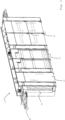
- Fig.2 shows a schematic perspective external view of embodiments of a textile processing device 1 according to Fig.1 .
- the processing chamber 50 extending over the entire width of the textile processing device 1 can be seen in particular. This is delimited by side, floor and roof elements of the respective sections, which are not provided with reference numerals, whereby a controllable climate can be established in the processing chamber 50, which is different from the outside atmosphere around the textile processing device 1 and is configurable.
- three individual processing chambers can be provided, i.e. a water mist chamber, a steam chamber and a hot air chamber, which can optionally have different sizes and/or dimensions.
- These individual processing chambers can also be atmospherically separated from one another by suitable mechanisms, for example by opening and closing partition walls or doors.
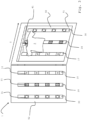
- Fig.3 shows a schematic interior view of embodiments of a textile processing device 1 according to Fig.1 . It is shown in simplified form how a side wall 52 is opened up relative to another side wall 51 of the textile processing device 1, so that a section of the processing chamber 50 is visible. It is also shown in simplified form that the section of the processing chamber 50 shown comprises the water mist section 10, the water vapor section 20 and the hot air section 30.
- the textile 2 is transported through the processing chamber 50 along the textile conveying direction T by the textile conveying unit (not shown in detail).
- the textile is attached to a textile fastening unit 41, which is moved by the textile conveying unit.
- the textile 2 passes along the textile conveying direction T through the water mist section 10, which comprises one or more mist provision units 11 which are designed to provide water mist with a predetermined mist property to the processing chamber 50.
- the textile 2 then passes along the textile conveying direction T through the steam section 20, which comprises one or more steam supply units 21 which are designed to provide steam, in particular plasma-activated steam, with a predetermined steam property or a plasma steam property to the processing chamber 50.
- the steam section 20 comprises one or more steam supply units 21 which are designed to provide steam, in particular plasma-activated steam, with a predetermined steam property or a plasma steam property to the processing chamber 50.
- the textile 2 passes along the textile conveying direction T through the hot air section 30, which comprises one or more hot air supply units 31 which are designed to provide hot air with a predetermined hot air property to the processing chamber 50.
- a detection unit 15 is arranged on the fastening unit 41, which is designed to detect a steam parameter of the water vapor provided to the processing chamber. and/or to detect a plasma vapor parameter of the plasma-activated water vapor provided to the processing chamber and/or to detect a hot air parameter of the hot air provided to the processing chamber.
- a control unit (not shown) is designed to evaluate the parameters detected by the detection unit and, in response, to adapt one or more properties of the water vapor, in particular the plasma-activated water vapor and/or the hot air.
- Fig.4 shows a schematic flow diagram of embodiments of a textile processing method 1000, which is particularly carried out by or through the Fig. 1 to 3 shown textile processing device 1 can be carried out.
- the textile processing method 1000 initially comprises the step 1100 of providing a textile to a processing chamber.
- the textile processing method 1000 includes the step 1200 of providing water vapor to the processing chamber. In a subsequent step, the textile processing method 1000 includes the step 1300 of detecting a vapor parameter of the water vapor provided to the processing chamber.
- the textile processing method 1000 includes the step 1400 of changing a steam property of the water vapor provided to the processing chamber in response to the sensed steam parameter.
- the textile processing method 1000 comprises the step 1500 of providing hot air with a predetermined hot air property to the processing chamber.
- the textile processing method 1000 includes the step 1600 of detecting a hot air parameter of the hot air provided to the processing chamber.
- the textile processing method 1000 includes the step 1700 of changing a hot air property of the hot air provided to the processing chamber in response to the sensed hot air parameter.
- the step 1200 of providing water vapor to the processing chamber may include providing plasma-activated water vapor to the processing chamber.
- the step 1300 of detecting a vapor parameter of the water vapor provided to the processing chamber may include detecting a plasma vapor parameter of the plasma-activated water vapor provided to the processing chamber.
- the step 1400 of changing a vapor property may include changing the plasma activated water vapor provided to the processing chamber in response to the sensed plasma vapor parameter.
- step 1700 the method may begin again at step 1100.
Landscapes
- Engineering & Computer Science (AREA)
- Textile Engineering (AREA)
- Treatment Of Fiber Materials (AREA)
Claims (9)
- Dispositif de traitement de textile, comprenant :- une chambre de traitement (50),- une unité de fourniture de vapeur (21) qui est adaptée pour fournir de la vapeur d'eau avec une propriété de vapeur prédéterminée à la chambre de traitement,- une unité de détection de vapeur, qui est adaptée pour détecter un paramètre de vapeur de la vapeur d'eau fournie à la chambre de traitement (50), et- une unité de fourniture d'air chaud (31) qui est adaptée pour fournir de l'air chaud avec une propriété d'air chaud prédéterminée à la chambre de traitement- une unité de détection d'air chaud, qui est adaptée pour détecter un paramètre d'air chaud de l'air chaud fourni à la chambre de traitement (50),caractérisé par- une unité de fixation de textile (41) qui est adaptée pour fournir un textile à la chambre de traitement (50) ,- une unité de régulation de vapeur qui est adaptée pour modifier une propriété de vapeur de la vapeur d'eau fournie à la chambre de traitement en réponse au paramètre de vapeur détecté, et- une unité de régulation d'air chaud qui est adaptée pour modifier une propriété d'air chaud de l'air chaud fourni à la chambre de traitement en réponse au paramètre d'air chaud détecté, l'unité de régulation d'air chaud étant en outre adaptée pour modifier une propriété d'air chaud de l'air chaud fourni à la chambre de traitement en réponse au paramètre de vapeur détecté.
- Dispositif de traitement de textile selon la revendication 1 précédente, dans lequel l'unité de fourniture de vapeur (30) est adaptée pour fournir de la vapeur d'eau activée par plasma à la chambre de traitement (50).
- Dispositif de traitement de textile selon la revendication 2 précédente, dans lequel l'unité de détection de vapeur est en outre adaptée pour détecter un paramètre de vapeur de plasma de la vapeur d'eau activée par plasma fournie à la chambre de traitement, et
dans lequel l'unité de régulation de vapeur est en outre adaptée pour modifier une propriété de vapeur de plasma de la vapeur d'eau activée par plasma fournie à la chambre de traitement (50) en réponse au paramètre de vapeur de plasma détecté. - Dispositif de traitement de textile selon l'une quelconque des revendications précédentes, dans lequel l'unité de régulation d'air chaud est en outre adaptée pour modifier une propriété d'air chaud de l'air chaud fourni à la chambre de traitement (50) en réponse au paramètre de vapeur de plasma détecté.
- Dispositif de traitement de textile selon l'une quelconque des revendications précédentes, dans lequel l'unité de régulation de vapeur est en outre adaptée pour modifier une propriété de vapeur de la vapeur d'eau fournie à la chambre de traitement (50) en réponse au paramètre d'air chaud détecté.
- Dispositif de traitement de textile selon l'une quelconque des revendications précédentes, dans lequel l'unité de régulation de vapeur est en outre adaptée pour modifier une propriété de vapeur de plasma de la vapeur d'eau activée par plasma fournie à la chambre de traitement (50) en réponse au paramètre d'air chaud détecté.
- Procédé de traitement de textile, comprenant les étapes suivantes :- fournir de la vapeur d'eau à la chambre de traitement;- détecter un paramètre de vapeur de la vapeur d'eau fournie à la chambre de traitement (50) ;- fournir de l'air chaud avec une propriété d'air chaud prédéterminée à la chambre de traitement (50),- détecter un paramètre d'air chaud de l'air chaud fourni à la chambre de traitement,caractérisé en ce que le procédé comprend les étapes suivantes :- fournir un textile à une chambre de traitement ;- modifier une propriété de vapeur de la vapeur d'eau fournie à la chambre de traitement en réponse au paramètre de vapeur détecté ;- modifier une propriété d'air chaud de l'air chaud fourni à la chambre de traitement en réponse au paramètre d'air chaud détecté ; et- modifier une propriété d'air chaud de l'air chaud fourni à la chambre de traitement en réponse au paramètre de vapeur détecté.
- Procédé de traitement de textile selon la revendication 7 précédente, dans lequel l'étape de fourniture de vapeur d'eau à la chambre de traitement (50) comprend une fourniture de vapeur d'eau activée par plasma à la chambre de traitement (50).
- Procédé de traitement de textile selon la revendication 8 précédente, dans lequel l'étape de détection d'un paramètre de vapeur de la vapeur d'eau fournie à la chambre de traitement (50) comprend une détection d'un paramètre de vapeur de plasma de la vapeur d'eau activée par plasma fournie à la chambre de traitement, et
dans lequel l'étape de modification d'une propriété de vapeur comprend une modification de la vapeur d'eau activée par plasma fournie à la chambre de traitement en réponse au paramètre de vapeur de plasma détecté.
Priority Applications (1)
| Application Number | Priority Date | Filing Date | Title |
|---|---|---|---|
| EP24188730.6A EP4431657A3 (fr) | 2020-08-14 | 2021-08-12 | Dispositif et procédé de traitement de textile |
Applications Claiming Priority (2)
| Application Number | Priority Date | Filing Date | Title |
|---|---|---|---|
| DE102020121470.7A DE102020121470B4 (de) | 2020-08-14 | 2020-08-14 | Textilbearbeitungsvorrichtung und Textilbearbeitungsverfahren |
| PCT/EP2021/072519 WO2022034179A1 (fr) | 2020-08-14 | 2021-08-12 | Dispositif de traitement de textile et procédé de traitement de textile |
Related Child Applications (1)
| Application Number | Title | Priority Date | Filing Date |
|---|---|---|---|
| EP24188730.6A Division EP4431657A3 (fr) | 2020-08-14 | 2021-08-12 | Dispositif et procédé de traitement de textile |
Publications (3)
| Publication Number | Publication Date |
|---|---|
| EP4196631A1 EP4196631A1 (fr) | 2023-06-21 |
| EP4196631B1 true EP4196631B1 (fr) | 2024-07-17 |
| EP4196631C0 EP4196631C0 (fr) | 2024-07-17 |
Family
ID=77595522
Family Applications (2)
| Application Number | Title | Priority Date | Filing Date |
|---|---|---|---|
| EP21763288.4A Active EP4196631B1 (fr) | 2020-08-14 | 2021-08-12 | Dispositif de traitement de textile et procédé de traitement de textile |
| EP24188730.6A Pending EP4431657A3 (fr) | 2020-08-14 | 2021-08-12 | Dispositif et procédé de traitement de textile |
Family Applications After (1)
| Application Number | Title | Priority Date | Filing Date |
|---|---|---|---|
| EP24188730.6A Pending EP4431657A3 (fr) | 2020-08-14 | 2021-08-12 | Dispositif et procédé de traitement de textile |
Country Status (4)
| Country | Link |
|---|---|
| EP (2) | EP4196631B1 (fr) |
| CN (1) | CN116194628A (fr) |
| DE (2) | DE102020121470B4 (fr) |
| WO (1) | WO2022034179A1 (fr) |
Family Cites Families (10)
| Publication number | Priority date | Publication date | Assignee | Title |
|---|---|---|---|---|
| US3257739A (en) | 1963-08-28 | 1966-06-28 | Proctor & Schwartz Inc | Drying garments |
| DE3600953A1 (de) | 1986-01-15 | 1987-07-16 | Wfk Testgewebe Gmbh | Verfahren zum glaetten von bekleidungsstuecken sowie tunnelfinisher zur durchfuehrung des verfahrens |
| US20050086826A1 (en) | 2003-06-04 | 2005-04-28 | Frushtick Jeffrey N. | Tunnel finisher with infrared feedback temperature control |
| MX2008015311A (es) * | 2006-06-01 | 2008-12-12 | Electrolux Home Prod Corp | Metodo de suministro de vapor y aparato de tratamiento. |
| KR101366280B1 (ko) * | 2007-08-03 | 2014-02-20 | 엘지전자 주식회사 | 의류처리장치 및 그 제어방법 |
| EP2175065B1 (fr) * | 2008-10-08 | 2014-01-15 | Candy S.p.A. | Dispositif de conditionnement du linge |
| EP3779026A1 (fr) * | 2010-03-03 | 2021-02-17 | LG Electronics, Inc. | Appareil de traitement de vêtements et son procédé de commande |
| KR102110534B1 (ko) * | 2013-12-12 | 2020-05-13 | 엘지전자 주식회사 | 의류처리기기의 제어방법 |
| DE102017006768A1 (de) | 2017-07-18 | 2019-01-24 | Herbert Kannegiesser Gmbh | Verfahren und Vorrichtung zum Behandeln von textilen Gegenständen |
| US10711391B2 (en) | 2018-08-07 | 2020-07-14 | Gulfstream Aerospace Corporation | Clothes steamer for an aircraft cabin |
-
2020
- 2020-08-14 DE DE102020121470.7A patent/DE102020121470B4/de active Active
-
2021
- 2021-08-12 CN CN202180055802.0A patent/CN116194628A/zh active Pending
- 2021-08-12 WO PCT/EP2021/072519 patent/WO2022034179A1/fr not_active Ceased
- 2021-08-12 DE DE202021004232.6U patent/DE202021004232U1/de active Active
- 2021-08-12 EP EP21763288.4A patent/EP4196631B1/fr active Active
- 2021-08-12 EP EP24188730.6A patent/EP4431657A3/fr active Pending
Also Published As
| Publication number | Publication date |
|---|---|
| CN116194628A (zh) | 2023-05-30 |
| DE102020121470A1 (de) | 2022-02-17 |
| DE202021004232U1 (de) | 2023-05-11 |
| EP4431657A2 (fr) | 2024-09-18 |
| DE102020121470B4 (de) | 2024-03-07 |
| EP4196631A1 (fr) | 2023-06-21 |
| EP4196631C0 (fr) | 2024-07-17 |
| WO2022034179A1 (fr) | 2022-02-17 |
| EP4431657A3 (fr) | 2024-11-20 |
Similar Documents
| Publication | Publication Date | Title |
|---|---|---|
| DE2156405C3 (de) | Verfahren und Vorrichtung zum Dämpfen und Glätten von Bekleidungsstücken in einem abgeschlossenen Raum | |
| DE2037592C3 (de) | Verfahren zur Dauerausrüstung von zellulosehaltigen Gewebeartikeln, sowie Vorrichtung zur Durchführung des Verfahrens | |
| DE2240682C2 (de) | Verfahren und Vorrichtung zum Feuchten von Tabak | |
| WO2022034182A1 (fr) | Dispositif de traitement de textile et procédé de traitement de textile | |
| DE69211982T2 (de) | Verfahren und Vorrichtung zur Behandlung von Geweben aus Cellulosefasern | |
| WO2002052094A1 (fr) | Procede et dispositif pour secher des articles vestimentaires | |
| EP0676497B1 (fr) | Procédé et dispositif pour parfumer le linge | |
| DE4325915A1 (de) | Verfahren zum Messen einer Feuchte einer Warenbahn an einem Durchströmungstrockner und Vorrichtung zur Durchführung des Verfahrens | |
| DE2416418A1 (de) | Kontinuierlich arbeitender waeschetrockner | |
| DE2136933C3 (de) | Vorrichtung zum aseptischen Verpacken von sterilem Gut in Packungen, die aus bahnförmigem Material gebildet werden | |
| DE1635342A1 (de) | Verfahren und Vorrichtung zum Ausruesten von Wirk- und Strickwaren | |
| DE3148576C2 (de) | Vorrichtung zur Kontrolle der kontinuierlichen Wärmebehandlung einer textilen Stoffbahn | |
| EP2908712A1 (fr) | Procédé permettant de laver un article à laver et un automate de programmation | |
| DE3114712A1 (de) | "tabaktrockungsvorrichtung" | |
| EP0679754A2 (fr) | Procédé et dispositif pour le traitement de produits textiles pendant le séchage | |
| DE102017006768A1 (de) | Verfahren und Vorrichtung zum Behandeln von textilen Gegenständen | |
| DE3818414C2 (fr) | ||
| DE19531446A1 (de) | Vorrichtung mit mindestens einem Vorratsbehälter für zu behandelndes Gut, vorzugsweise Kunststoffgranulat | |
| EP4196631B1 (fr) | Dispositif de traitement de textile et procédé de traitement de textile | |
| EP1325683B1 (fr) | Procédé et dispositif pour la production d'un courant de fibres dans l'industrie du tabac | |
| DE3627940A1 (de) | Tunnel-finisher | |
| DE19913642A1 (de) | Vorrichtung zum Trocknen und/oder Glätten von befeuchteter Wäsche | |
| DE102013221663A1 (de) | Einrichtung und Verfahren zum Lösen von Tabakgut in einer Anlage der Tabak verarbeitenden Industrie | |
| DE2820914C3 (de) | Verfahren und Vorrichtung zum Nachbehandeln von laufenden Textilbahnen | |
| DE4135909C2 (de) | Verfahren und Vorrichtung zum Mangeln textilen Gutes, insbesondere von Wäsche |
Legal Events
| Date | Code | Title | Description |
|---|---|---|---|
| STAA | Information on the status of an ep patent application or granted ep patent |
Free format text: STATUS: UNKNOWN |
|
| STAA | Information on the status of an ep patent application or granted ep patent |
Free format text: STATUS: THE INTERNATIONAL PUBLICATION HAS BEEN MADE |
|
| PUAI | Public reference made under article 153(3) epc to a published international application that has entered the european phase |
Free format text: ORIGINAL CODE: 0009012 |
|
| STAA | Information on the status of an ep patent application or granted ep patent |
Free format text: STATUS: REQUEST FOR EXAMINATION WAS MADE |
|
| 17P | Request for examination filed |
Effective date: 20230112 |
|
| AK | Designated contracting states |
Kind code of ref document: A1 Designated state(s): AL AT BE BG CH CY CZ DE DK EE ES FI FR GB GR HR HU IE IS IT LI LT LU LV MC MK MT NL NO PL PT RO RS SE SI SK SM TR |
|
| DAV | Request for validation of the european patent (deleted) | ||
| DAX | Request for extension of the european patent (deleted) | ||
| GRAP | Despatch of communication of intention to grant a patent |
Free format text: ORIGINAL CODE: EPIDOSNIGR1 |
|
| STAA | Information on the status of an ep patent application or granted ep patent |
Free format text: STATUS: GRANT OF PATENT IS INTENDED |
|
| INTG | Intention to grant announced |
Effective date: 20240212 |
|
| GRAS | Grant fee paid |
Free format text: ORIGINAL CODE: EPIDOSNIGR3 |
|
| GRAA | (expected) grant |
Free format text: ORIGINAL CODE: 0009210 |
|
| STAA | Information on the status of an ep patent application or granted ep patent |
Free format text: STATUS: THE PATENT HAS BEEN GRANTED |
|
| AK | Designated contracting states |
Kind code of ref document: B1 Designated state(s): AL AT BE BG CH CY CZ DE DK EE ES FI FR GB GR HR HU IE IS IT LI LT LU LV MC MK MT NL NO PL PT RO RS SE SI SK SM TR |
|
| REG | Reference to a national code |
Ref country code: CH Ref legal event code: EP |
|
| REG | Reference to a national code |
Ref country code: DE Ref legal event code: R096 Ref document number: 502021004423 Country of ref document: DE |
|
| REG | Reference to a national code |
Ref country code: IE Ref legal event code: FG4D Free format text: LANGUAGE OF EP DOCUMENT: GERMAN |
|
| U01 | Request for unitary effect filed |
Effective date: 20240723 |
|
| U07 | Unitary effect registered |
Designated state(s): AT BE BG DE DK EE FI FR IT LT LU LV MT NL PT RO SE SI Effective date: 20240902 |
|
| U20 | Renewal fee for the european patent with unitary effect paid |
Year of fee payment: 4 Effective date: 20240830 |
|
| PG25 | Lapsed in a contracting state [announced via postgrant information from national office to epo] |
Ref country code: NO Free format text: LAPSE BECAUSE OF FAILURE TO SUBMIT A TRANSLATION OF THE DESCRIPTION OR TO PAY THE FEE WITHIN THE PRESCRIBED TIME-LIMIT Effective date: 20241017 |
|
| PG25 | Lapsed in a contracting state [announced via postgrant information from national office to epo] |
Ref country code: PL Free format text: LAPSE BECAUSE OF FAILURE TO SUBMIT A TRANSLATION OF THE DESCRIPTION OR TO PAY THE FEE WITHIN THE PRESCRIBED TIME-LIMIT Effective date: 20240717 Ref country code: GR Free format text: LAPSE BECAUSE OF FAILURE TO SUBMIT A TRANSLATION OF THE DESCRIPTION OR TO PAY THE FEE WITHIN THE PRESCRIBED TIME-LIMIT Effective date: 20241018 |
|
| PG25 | Lapsed in a contracting state [announced via postgrant information from national office to epo] |
Ref country code: IS Free format text: LAPSE BECAUSE OF FAILURE TO SUBMIT A TRANSLATION OF THE DESCRIPTION OR TO PAY THE FEE WITHIN THE PRESCRIBED TIME-LIMIT Effective date: 20241117 |
|
| PG25 | Lapsed in a contracting state [announced via postgrant information from national office to epo] |
Ref country code: HR Free format text: LAPSE BECAUSE OF FAILURE TO SUBMIT A TRANSLATION OF THE DESCRIPTION OR TO PAY THE FEE WITHIN THE PRESCRIBED TIME-LIMIT Effective date: 20240717 |
|
| PG25 | Lapsed in a contracting state [announced via postgrant information from national office to epo] |
Ref country code: RS Free format text: LAPSE BECAUSE OF FAILURE TO SUBMIT A TRANSLATION OF THE DESCRIPTION OR TO PAY THE FEE WITHIN THE PRESCRIBED TIME-LIMIT Effective date: 20241017 Ref country code: ES Free format text: LAPSE BECAUSE OF FAILURE TO SUBMIT A TRANSLATION OF THE DESCRIPTION OR TO PAY THE FEE WITHIN THE PRESCRIBED TIME-LIMIT Effective date: 20240717 |
|
| PG25 | Lapsed in a contracting state [announced via postgrant information from national office to epo] |
Ref country code: RS Free format text: LAPSE BECAUSE OF FAILURE TO SUBMIT A TRANSLATION OF THE DESCRIPTION OR TO PAY THE FEE WITHIN THE PRESCRIBED TIME-LIMIT Effective date: 20241017 Ref country code: PL Free format text: LAPSE BECAUSE OF FAILURE TO SUBMIT A TRANSLATION OF THE DESCRIPTION OR TO PAY THE FEE WITHIN THE PRESCRIBED TIME-LIMIT Effective date: 20240717 Ref country code: NO Free format text: LAPSE BECAUSE OF FAILURE TO SUBMIT A TRANSLATION OF THE DESCRIPTION OR TO PAY THE FEE WITHIN THE PRESCRIBED TIME-LIMIT Effective date: 20241017 Ref country code: IS Free format text: LAPSE BECAUSE OF FAILURE TO SUBMIT A TRANSLATION OF THE DESCRIPTION OR TO PAY THE FEE WITHIN THE PRESCRIBED TIME-LIMIT Effective date: 20241117 Ref country code: HR Free format text: LAPSE BECAUSE OF FAILURE TO SUBMIT A TRANSLATION OF THE DESCRIPTION OR TO PAY THE FEE WITHIN THE PRESCRIBED TIME-LIMIT Effective date: 20240717 Ref country code: GR Free format text: LAPSE BECAUSE OF FAILURE TO SUBMIT A TRANSLATION OF THE DESCRIPTION OR TO PAY THE FEE WITHIN THE PRESCRIBED TIME-LIMIT Effective date: 20241018 Ref country code: ES Free format text: LAPSE BECAUSE OF FAILURE TO SUBMIT A TRANSLATION OF THE DESCRIPTION OR TO PAY THE FEE WITHIN THE PRESCRIBED TIME-LIMIT Effective date: 20240717 |
|
| REG | Reference to a national code |
Ref country code: CH Ref legal event code: PL |
|
| PG25 | Lapsed in a contracting state [announced via postgrant information from national office to epo] |
Ref country code: SM Free format text: LAPSE BECAUSE OF FAILURE TO SUBMIT A TRANSLATION OF THE DESCRIPTION OR TO PAY THE FEE WITHIN THE PRESCRIBED TIME-LIMIT Effective date: 20240717 |
|
| PG25 | Lapsed in a contracting state [announced via postgrant information from national office to epo] |
Ref country code: MC Free format text: LAPSE BECAUSE OF FAILURE TO SUBMIT A TRANSLATION OF THE DESCRIPTION OR TO PAY THE FEE WITHIN THE PRESCRIBED TIME-LIMIT Effective date: 20240717 Ref country code: CH Free format text: LAPSE BECAUSE OF NON-PAYMENT OF DUE FEES Effective date: 20240831 |
|
| PG25 | Lapsed in a contracting state [announced via postgrant information from national office to epo] |
Ref country code: CZ Free format text: LAPSE BECAUSE OF FAILURE TO SUBMIT A TRANSLATION OF THE DESCRIPTION OR TO PAY THE FEE WITHIN THE PRESCRIBED TIME-LIMIT Effective date: 20240717 |
|
| PG25 | Lapsed in a contracting state [announced via postgrant information from national office to epo] |
Ref country code: SK Free format text: LAPSE BECAUSE OF FAILURE TO SUBMIT A TRANSLATION OF THE DESCRIPTION OR TO PAY THE FEE WITHIN THE PRESCRIBED TIME-LIMIT Effective date: 20240717 |
|
| PLBE | No opposition filed within time limit |
Free format text: ORIGINAL CODE: 0009261 |
|
| STAA | Information on the status of an ep patent application or granted ep patent |
Free format text: STATUS: NO OPPOSITION FILED WITHIN TIME LIMIT |
|
| 26N | No opposition filed |
Effective date: 20250422 |
|
| PG25 | Lapsed in a contracting state [announced via postgrant information from national office to epo] |
Ref country code: IE Free format text: LAPSE BECAUSE OF NON-PAYMENT OF DUE FEES Effective date: 20240812 |
|
| U20 | Renewal fee for the european patent with unitary effect paid |
Year of fee payment: 5 Effective date: 20250630 |
|
| PG25 | Lapsed in a contracting state [announced via postgrant information from national office to epo] |
Ref country code: CY Free format text: LAPSE BECAUSE OF FAILURE TO SUBMIT A TRANSLATION OF THE DESCRIPTION OR TO PAY THE FEE WITHIN THE PRESCRIBED TIME-LIMIT; INVALID AB INITIO Effective date: 20210812 |
|
| PG25 | Lapsed in a contracting state [announced via postgrant information from national office to epo] |
Ref country code: HU Free format text: LAPSE BECAUSE OF FAILURE TO SUBMIT A TRANSLATION OF THE DESCRIPTION OR TO PAY THE FEE WITHIN THE PRESCRIBED TIME-LIMIT; INVALID AB INITIO Effective date: 20210812 |