EP4199219A1 - Batterie, procédé de fabrication de batterie et appareil électrique - Google Patents
Batterie, procédé de fabrication de batterie et appareil électrique Download PDFInfo
- Publication number
- EP4199219A1 EP4199219A1 EP21953632.3A EP21953632A EP4199219A1 EP 4199219 A1 EP4199219 A1 EP 4199219A1 EP 21953632 A EP21953632 A EP 21953632A EP 4199219 A1 EP4199219 A1 EP 4199219A1
- Authority
- EP
- European Patent Office
- Prior art keywords
- battery
- battery cells
- filling
- electrode terminals
- lengthwise direction
- Prior art date
- Legal status (The legal status is an assumption and is not a legal conclusion. Google has not performed a legal analysis and makes no representation as to the accuracy of the status listed.)
- Pending
Links
- 238000004519 manufacturing process Methods 0.000 title claims abstract description 29
- 239000003792 electrolyte Substances 0.000 claims abstract description 39
- 238000000034 method Methods 0.000 claims abstract description 35
- 238000003466 welding Methods 0.000 claims description 36
- 238000012360 testing method Methods 0.000 claims description 11
- 239000007789 gas Substances 0.000 claims description 9
- 239000001307 helium Substances 0.000 claims description 8
- 229910052734 helium Inorganic materials 0.000 claims description 8
- SWQJXJOGLNCZEY-UHFFFAOYSA-N helium atom Chemical compound [He] SWQJXJOGLNCZEY-UHFFFAOYSA-N 0.000 claims description 8
- 238000007789 sealing Methods 0.000 abstract description 33
- 230000001965 increasing effect Effects 0.000 abstract description 8
- 238000004891 communication Methods 0.000 description 7
- 238000010586 diagram Methods 0.000 description 6
- 238000003754 machining Methods 0.000 description 4
- 230000008569 process Effects 0.000 description 4
- 238000011161 development Methods 0.000 description 3
- XEEYBQQBJWHFJM-UHFFFAOYSA-N Iron Chemical compound [Fe] XEEYBQQBJWHFJM-UHFFFAOYSA-N 0.000 description 2
- 230000000712 assembly Effects 0.000 description 2
- 238000000429 assembly Methods 0.000 description 2
- 238000004134 energy conservation Methods 0.000 description 2
- 230000002708 enhancing effect Effects 0.000 description 2
- VNWKTOKETHGBQD-UHFFFAOYSA-N methane Chemical compound C VNWKTOKETHGBQD-UHFFFAOYSA-N 0.000 description 2
- 238000012986 modification Methods 0.000 description 2
- 230000004048 modification Effects 0.000 description 2
- 230000000149 penetrating effect Effects 0.000 description 2
- 230000009467 reduction Effects 0.000 description 2
- 238000003860 storage Methods 0.000 description 2
- 239000013589 supplement Substances 0.000 description 2
- 229910000838 Al alloy Inorganic materials 0.000 description 1
- RYGMFSIKBFXOCR-UHFFFAOYSA-N Copper Chemical compound [Cu] RYGMFSIKBFXOCR-UHFFFAOYSA-N 0.000 description 1
- XAGFODPZIPBFFR-UHFFFAOYSA-N aluminium Chemical compound [Al] XAGFODPZIPBFFR-UHFFFAOYSA-N 0.000 description 1
- 229910052782 aluminium Inorganic materials 0.000 description 1
- 229910052802 copper Inorganic materials 0.000 description 1
- 239000010949 copper Substances 0.000 description 1
- 238000004146 energy storage Methods 0.000 description 1
- 238000005516 engineering process Methods 0.000 description 1
- 230000007613 environmental effect Effects 0.000 description 1
- 239000002737 fuel gas Substances 0.000 description 1
- 229910052742 iron Inorganic materials 0.000 description 1
- 230000001788 irregular Effects 0.000 description 1
- 239000000463 material Substances 0.000 description 1
- 239000003345 natural gas Substances 0.000 description 1
- 239000004033 plastic Substances 0.000 description 1
- 239000000047 product Substances 0.000 description 1
- 239000007787 solid Substances 0.000 description 1
- 239000010935 stainless steel Substances 0.000 description 1
- 229910001220 stainless steel Inorganic materials 0.000 description 1
- 238000006467 substitution reaction Methods 0.000 description 1
Images




Classifications
-
- H—ELECTRICITY
- H01—ELECTRIC ELEMENTS
- H01M—PROCESSES OR MEANS, e.g. BATTERIES, FOR THE DIRECT CONVERSION OF CHEMICAL ENERGY INTO ELECTRICAL ENERGY
- H01M50/00—Constructional details or processes of manufacture of the non-active parts of electrochemical cells other than fuel cells, e.g. hybrid cells
- H01M50/60—Arrangements or processes for filling or topping-up with liquids; Arrangements or processes for draining liquids from casings
- H01M50/609—Arrangements or processes for filling with liquid, e.g. electrolytes
- H01M50/627—Filling ports
- H01M50/636—Closing or sealing filling ports, e.g. using lids
-
- H—ELECTRICITY
- H01—ELECTRIC ELEMENTS
- H01M—PROCESSES OR MEANS, e.g. BATTERIES, FOR THE DIRECT CONVERSION OF CHEMICAL ENERGY INTO ELECTRICAL ENERGY
- H01M50/00—Constructional details or processes of manufacture of the non-active parts of electrochemical cells other than fuel cells, e.g. hybrid cells
- H01M50/60—Arrangements or processes for filling or topping-up with liquids; Arrangements or processes for draining liquids from casings
- H01M50/609—Arrangements or processes for filling with liquid, e.g. electrolytes
-
- H—ELECTRICITY
- H01—ELECTRIC ELEMENTS
- H01M—PROCESSES OR MEANS, e.g. BATTERIES, FOR THE DIRECT CONVERSION OF CHEMICAL ENERGY INTO ELECTRICAL ENERGY
- H01M10/00—Secondary cells; Manufacture thereof
- H01M10/60—Heating or cooling; Temperature control
- H01M10/61—Types of temperature control
- H01M10/613—Cooling or keeping cold
-
- H—ELECTRICITY
- H01—ELECTRIC ELEMENTS
- H01M—PROCESSES OR MEANS, e.g. BATTERIES, FOR THE DIRECT CONVERSION OF CHEMICAL ENERGY INTO ELECTRICAL ENERGY
- H01M10/00—Secondary cells; Manufacture thereof
- H01M10/04—Construction or manufacture in general
-
- H—ELECTRICITY
- H01—ELECTRIC ELEMENTS
- H01M—PROCESSES OR MEANS, e.g. BATTERIES, FOR THE DIRECT CONVERSION OF CHEMICAL ENERGY INTO ELECTRICAL ENERGY
- H01M10/00—Secondary cells; Manufacture thereof
- H01M10/04—Construction or manufacture in general
- H01M10/0422—Cells or battery with cylindrical casing
-
- H—ELECTRICITY
- H01—ELECTRIC ELEMENTS
- H01M—PROCESSES OR MEANS, e.g. BATTERIES, FOR THE DIRECT CONVERSION OF CHEMICAL ENERGY INTO ELECTRICAL ENERGY
- H01M10/00—Secondary cells; Manufacture thereof
- H01M10/05—Accumulators with non-aqueous electrolyte
- H01M10/052—Li-accumulators
- H01M10/0525—Rocking-chair batteries, i.e. batteries with lithium insertion or intercalation in both electrodes; Lithium-ion batteries
-
- H—ELECTRICITY
- H01—ELECTRIC ELEMENTS
- H01M—PROCESSES OR MEANS, e.g. BATTERIES, FOR THE DIRECT CONVERSION OF CHEMICAL ENERGY INTO ELECTRICAL ENERGY
- H01M50/00—Constructional details or processes of manufacture of the non-active parts of electrochemical cells other than fuel cells, e.g. hybrid cells
- H01M50/10—Primary casings; Jackets or wrappings
- H01M50/102—Primary casings; Jackets or wrappings characterised by their shape or physical structure
- H01M50/107—Primary casings; Jackets or wrappings characterised by their shape or physical structure having curved cross-section, e.g. round or elliptic
-
- H—ELECTRICITY
- H01—ELECTRIC ELEMENTS
- H01M—PROCESSES OR MEANS, e.g. BATTERIES, FOR THE DIRECT CONVERSION OF CHEMICAL ENERGY INTO ELECTRICAL ENERGY
- H01M50/00—Constructional details or processes of manufacture of the non-active parts of electrochemical cells other than fuel cells, e.g. hybrid cells
- H01M50/20—Mountings; Secondary casings or frames; Racks, modules or packs; Suspension devices; Shock absorbers; Transport or carrying devices; Holders
- H01M50/204—Racks, modules or packs for multiple batteries or multiple cells
- H01M50/207—Racks, modules or packs for multiple batteries or multiple cells characterised by their shape
- H01M50/213—Racks, modules or packs for multiple batteries or multiple cells characterised by their shape adapted for cells having curved cross-section, e.g. round or elliptic
-
- H—ELECTRICITY
- H01—ELECTRIC ELEMENTS
- H01M—PROCESSES OR MEANS, e.g. BATTERIES, FOR THE DIRECT CONVERSION OF CHEMICAL ENERGY INTO ELECTRICAL ENERGY
- H01M50/00—Constructional details or processes of manufacture of the non-active parts of electrochemical cells other than fuel cells, e.g. hybrid cells
- H01M50/20—Mountings; Secondary casings or frames; Racks, modules or packs; Suspension devices; Shock absorbers; Transport or carrying devices; Holders
- H01M50/249—Mountings; Secondary casings or frames; Racks, modules or packs; Suspension devices; Shock absorbers; Transport or carrying devices; Holders specially adapted for aircraft or vehicles, e.g. cars or trains
-
- H—ELECTRICITY
- H01—ELECTRIC ELEMENTS
- H01M—PROCESSES OR MEANS, e.g. BATTERIES, FOR THE DIRECT CONVERSION OF CHEMICAL ENERGY INTO ELECTRICAL ENERGY
- H01M50/00—Constructional details or processes of manufacture of the non-active parts of electrochemical cells other than fuel cells, e.g. hybrid cells
- H01M50/30—Arrangements for facilitating escape of gases
-
- H—ELECTRICITY
- H01—ELECTRIC ELEMENTS
- H01M—PROCESSES OR MEANS, e.g. BATTERIES, FOR THE DIRECT CONVERSION OF CHEMICAL ENERGY INTO ELECTRICAL ENERGY
- H01M50/00—Constructional details or processes of manufacture of the non-active parts of electrochemical cells other than fuel cells, e.g. hybrid cells
- H01M50/50—Current conducting connections for cells or batteries
-
- H—ELECTRICITY
- H01—ELECTRIC ELEMENTS
- H01M—PROCESSES OR MEANS, e.g. BATTERIES, FOR THE DIRECT CONVERSION OF CHEMICAL ENERGY INTO ELECTRICAL ENERGY
- H01M50/00—Constructional details or processes of manufacture of the non-active parts of electrochemical cells other than fuel cells, e.g. hybrid cells
- H01M50/50—Current conducting connections for cells or batteries
- H01M50/502—Interconnectors for connecting terminals of adjacent batteries; Interconnectors for connecting cells outside a battery casing
- H01M50/503—Interconnectors for connecting terminals of adjacent batteries; Interconnectors for connecting cells outside a battery casing characterised by the shape of the interconnectors
-
- H—ELECTRICITY
- H01—ELECTRIC ELEMENTS
- H01M—PROCESSES OR MEANS, e.g. BATTERIES, FOR THE DIRECT CONVERSION OF CHEMICAL ENERGY INTO ELECTRICAL ENERGY
- H01M50/00—Constructional details or processes of manufacture of the non-active parts of electrochemical cells other than fuel cells, e.g. hybrid cells
- H01M50/50—Current conducting connections for cells or batteries
- H01M50/502—Interconnectors for connecting terminals of adjacent batteries; Interconnectors for connecting cells outside a battery casing
- H01M50/514—Methods for interconnecting adjacent batteries or cells
- H01M50/516—Methods for interconnecting adjacent batteries or cells by welding, soldering or brazing
-
- H—ELECTRICITY
- H01—ELECTRIC ELEMENTS
- H01M—PROCESSES OR MEANS, e.g. BATTERIES, FOR THE DIRECT CONVERSION OF CHEMICAL ENERGY INTO ELECTRICAL ENERGY
- H01M50/00—Constructional details or processes of manufacture of the non-active parts of electrochemical cells other than fuel cells, e.g. hybrid cells
- H01M50/50—Current conducting connections for cells or batteries
- H01M50/543—Terminals
- H01M50/547—Terminals characterised by the disposition of the terminals on the cells
- H01M50/548—Terminals characterised by the disposition of the terminals on the cells on opposite sides of the cell
-
- H—ELECTRICITY
- H01—ELECTRIC ELEMENTS
- H01M—PROCESSES OR MEANS, e.g. BATTERIES, FOR THE DIRECT CONVERSION OF CHEMICAL ENERGY INTO ELECTRICAL ENERGY
- H01M50/00—Constructional details or processes of manufacture of the non-active parts of electrochemical cells other than fuel cells, e.g. hybrid cells
- H01M50/50—Current conducting connections for cells or batteries
- H01M50/543—Terminals
- H01M50/552—Terminals characterised by their shape
- H01M50/559—Terminals adapted for cells having curved cross-section, e.g. round, elliptic or button cells
-
- H—ELECTRICITY
- H01—ELECTRIC ELEMENTS
- H01M—PROCESSES OR MEANS, e.g. BATTERIES, FOR THE DIRECT CONVERSION OF CHEMICAL ENERGY INTO ELECTRICAL ENERGY
- H01M50/00—Constructional details or processes of manufacture of the non-active parts of electrochemical cells other than fuel cells, e.g. hybrid cells
- H01M50/50—Current conducting connections for cells or batteries
- H01M50/543—Terminals
- H01M50/564—Terminals characterised by their manufacturing process
- H01M50/566—Terminals characterised by their manufacturing process by welding, soldering or brazing
-
- H—ELECTRICITY
- H01—ELECTRIC ELEMENTS
- H01M—PROCESSES OR MEANS, e.g. BATTERIES, FOR THE DIRECT CONVERSION OF CHEMICAL ENERGY INTO ELECTRICAL ENERGY
- H01M50/00—Constructional details or processes of manufacture of the non-active parts of electrochemical cells other than fuel cells, e.g. hybrid cells
- H01M50/60—Arrangements or processes for filling or topping-up with liquids; Arrangements or processes for draining liquids from casings
- H01M50/609—Arrangements or processes for filling with liquid, e.g. electrolytes
- H01M50/627—Filling ports
-
- H—ELECTRICITY
- H01—ELECTRIC ELEMENTS
- H01M—PROCESSES OR MEANS, e.g. BATTERIES, FOR THE DIRECT CONVERSION OF CHEMICAL ENERGY INTO ELECTRICAL ENERGY
- H01M2220/00—Batteries for particular applications
- H01M2220/20—Batteries in motive systems, e.g. vehicle, ship, plane
-
- Y—GENERAL TAGGING OF NEW TECHNOLOGICAL DEVELOPMENTS; GENERAL TAGGING OF CROSS-SECTIONAL TECHNOLOGIES SPANNING OVER SEVERAL SECTIONS OF THE IPC; TECHNICAL SUBJECTS COVERED BY FORMER USPC CROSS-REFERENCE ART COLLECTIONS [XRACs] AND DIGESTS
- Y02—TECHNOLOGIES OR APPLICATIONS FOR MITIGATION OR ADAPTATION AGAINST CLIMATE CHANGE
- Y02E—REDUCTION OF GREENHOUSE GAS [GHG] EMISSIONS, RELATED TO ENERGY GENERATION, TRANSMISSION OR DISTRIBUTION
- Y02E60/00—Enabling technologies; Technologies with a potential or indirect contribution to GHG emissions mitigation
- Y02E60/10—Energy storage using batteries
-
- Y—GENERAL TAGGING OF NEW TECHNOLOGICAL DEVELOPMENTS; GENERAL TAGGING OF CROSS-SECTIONAL TECHNOLOGIES SPANNING OVER SEVERAL SECTIONS OF THE IPC; TECHNICAL SUBJECTS COVERED BY FORMER USPC CROSS-REFERENCE ART COLLECTIONS [XRACs] AND DIGESTS
- Y02—TECHNOLOGIES OR APPLICATIONS FOR MITIGATION OR ADAPTATION AGAINST CLIMATE CHANGE
- Y02P—CLIMATE CHANGE MITIGATION TECHNOLOGIES IN THE PRODUCTION OR PROCESSING OF GOODS
- Y02P70/00—Climate change mitigation technologies in the production process for final industrial or consumer products
- Y02P70/50—Manufacturing or production processes characterised by the final manufactured product
Definitions
- the present application relates to the technical field of energy storage devices, and in particular to a battery, a method for manufacturing a battery, and a power consuming device.
- a filling port is provided in an end cap of the battery cell, and it is necessary to seal the filling port after the electrolyte is filled through the filling port, resulting in a complex process and high cost.
- a filling port of the battery does not occupy a space of an end cap, such that sufficient and flexible arrangements and arrangement spaces may be provided for other elements on the end cap with no influence the structural strength of the end cap, and no additional sealing procedure is required for the filling port, such that the production efficiency is high, and the cost is low.
- a first aspect of an embodiment of the present application provides a battery.
- the battery includes at least two battery cells, wherein each of the battery cell includes electrode terminals arranged at end portions of two sides of the battery cell in a lengthwise direction, wherein a filling port for filling an electrolyte is provided in the electrode terminal on one side in the lengthwise direction of the battery cell, and the electrode terminals of the two battery cells are oppositely arranged in the lengthwise direction of the battery cells and are welded together to seal the filling ports.
- the filling port is provided on the electrode terminal and does not occupy a space of an end cap, such that the arrangement of other elements may be facilitated.
- the size of the electrode terminal may be increased, thereby increasing the overcurrent area of the electrode terminal.
- the two electrode terminals having the filling ports are oppositely arranged and welded together, the entire battery is sealed directly by means of the electrode terminals without an additional sealing procedure, thereby improving the production efficiency and reducing the cost.
- the filling ports are located in the centers of the electrode terminals, so as to facilitate communication between the filling ports of the two battery cells.
- the provision of the filling ports in the centers of the electrode terminals allows the influence of the welding of the electrode terminals on the filling ports to be avoided, and facilitates the communication between two filling ports when the two electrode terminals abut against each other for supplement and balance of the electrolyte between the two battery cells.
- a groove is further provided on a side surface of the electrode terminal that has the filling port, and the size of the groove is greater than that of the filling port in a direction perpendicular to the lengthwise direction of the battery cell.
- the filling ports is offset from the centers of the electrode terminals, so as to stagger the filling ports of the two battery cells.
- the two filling ports When the two filling ports are arranged in a staggered manner, the two filling ports may be completely staggered without communication therebetween, and after the two electrode terminals are welded together, one filling port may be blocked by a portion of the other electrode terminal that has no filling port, such that the electrolyte in the two battery cells is prevented from circulating between the battery cells during use.
- a step portion is provided at the periphery of an end portion of the electrode terminal in the lengthwise direction of the battery cell, and the step portions of the two battery cells are oppositely arranged to form a welding groove.
- the two electrode terminals are welded at the welding groove, and during welding, reflections of welding laser are concentrated in the welding groove, thereby improving the welding quality and enhancing the sealing performance of the battery.
- the filling port has a circular, square, triangular or polygonal cross section.
- the electrode terminals of the two battery cells are welded together, and no additional sealing pin is required for welding and sealing the filling ports. Therefore, the shapes of the filling ports are not limited by the path of laser welding, are not limited to a circular shape, such that the filling ports may be shaped more flexibly.
- the battery cells are cylindrical battery cells, and/or the electrode terminals are cylindrical electrode terminals.
- a second aspect of an embodiment of the present application provides a method for manufacturing a battery.
- the battery includes at least two battery cells, wherein each of the battery cell includes electrode terminals arranged at end portions of two sides of the battery cell in a lengthwise direction.
- the method includes: providing a filling port for filling an electrolyte in the electrode terminal on one side in the lengthwise direction of the battery cell; filling the electrolyte into the battery cell through the filling port; and oppositely arranging the electrode terminals of the two battery cells that have the filling ports in the lengthwise direction of the battery cells and welding the electrode terminals together.
- the method for manufacturing a battery further includes the step of testing the battery for gas tightness in order to ensure that the battery has a good gas tightness.
- the method further includes, prior to the oppositely arranged the electrode terminals of the two battery cells that have the filling ports in the lengthwise direction of the battery cells and welding the electrode terminals together, the step of filling helium into the battery cells through the filling ports.
- Helium is filled into the battery cells through the filling ports, then the electrode terminals of the two battery cells are welded together, and it is unnecessary to additionally provide an air tightness test hole and seal the test hole, thereby reducing battery manufacturing procedures and improving the production efficiency.
- a third aspect of an embodiment of the present application provides a power consuming device, including the battery of the first aspect, or a battery manufactured by the method for manufacturing a battery of the second aspect, the battery being configured for providing electric energy.
- a battery mentioned in an embodiment of the present application refers to a single physical module including one or more battery cells to provide higher voltage and capacity.
- a battery cell includes an electrode assembly, a housing, an end cap assembly, and an electrolyte filled into the battery cell.
- the electrode assembly is arranged in the housing, and the end cap assembly is connected to the housing to enclose the electrode assembly in the housing.
- the end cap assembly includes an end cap and an electrode terminal arranged on the end cap, wherein the electrode assembly is electrically connected to the electrode terminal.
- a plurality of battery cells may be connected in series or in parallel or in series and parallel by means of the electrode terminals, and the series-parallel connection means a combination of serial connection and parallel connection.
- a filling port for filling an electrolyte into the battery cell is usually arranged on the end cap, and since the filling port occupies a space of the end cap, the electrode terminal arranged on the end cap may not be made bigger, and overcurrent area of the electrode terminal is reduced accordingly.
- the filling port is provided in the end cap, which results in a reduction in the structural strength of the end cap, and an additional sealing procedure is required for the filling port.
- a structure of a battery is improved, in which the filling port is provided in the electrode terminal such that the filling port does not occupy the space of the end cap and the electrode terminal may be made bigger, which increases the overcurrent area and has no influence on the structural strength of the end cap.
- Electrode terminals of two battery cells that have filling ports are oppositely arranged and welded together such that no additional sealing procedure is required for the filling ports, thereby improving the production efficiency and reducing the cost.
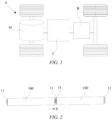
- FIG. 1 is a schematic structural diagram of a power consuming device according to a particular embodiment of the present application.
- the embodiment of the present application provides a battery B and a power consuming device using the battery B as a power source.
- the power consuming device using the battery B as the power source includes a vehicle A, a ship, a small aircraft, etc.
- the battery B is used to provide electric energy to the device, so as to generate a driving force for driving the device.
- the device may also use both electric energy and other types of energy (such as fossil energy) to jointly generate a driving force. Any device that may use the battery B as the power source falls within the scope of protection of the present application.
- the vehicle A in the embodiment of the present application may be a new energy vehicle which may be a battery electric vehicle, a hybrid electric vehicle or an extended range electric vehicle, etc.
- the battery B is arranged inside the vehicle A, and the battery B may be arranged at the bottom, head or tail of the vehicle A.
- the battery B may be configured for supplying power to the vehicle A.
- the battery B may be used as an operating power source for the vehicle A.
- the vehicle A may further include a controller C and a motor M, and the controller C is configured for controlling the battery B to supply power to the motor, for example, to meet a working power demand during start, navigation, and driving of the vehicle.
- the battery B may not only serve as an operating power source for the vehicle A, but also serve as a driving power source for the vehicle A, instead of or partially instead of fuel or natural gas, to provide driving power for the vehicle A.
- FIG. 2 is a schematic structural diagram of the battery B according to some embodiments of the present application.
- the battery B of some embodiments of the present application includes at least two battery cells 100, and electrode terminals 11 of two of the battery cells 100 are welded together.
- the electrode terminals 11 of the battery cell 100 include a positive terminal and a negative terminal which are arranged on two ends of the battery cell 100 in a lengthwise direction X respectively.
- the positive terminals of the two battery cells 100 may be oppositely arranged and welded, so as to connect the two battery cells 100 in parallel; or the negative terminals of the two battery cells 100 are oppositely arranged and welded together, so as to connect the two battery cells 100 in parallel; and it is also possible that the positive terminal of one battery cell 100 and the negative terminal of the other battery cell 100 are oppositely arranged and welded together, so as to connect the two battery cells 100 in series.
- the battery B may include a plurality of battery cells 100.
- the electrode terminals 11 of the two battery cells 100 may be welded, and then the battery cells 100 welded in pairs are connected in parallel or in series or in series and parallel to form the battery B.
- the series-parallel connection means a combination of serial connection and parallel connection.
- the electrode terminals 11 of the two battery cells 100 may be welded together, and then one of electrode terminals 11 of the other battery cell 100 is welded to the electrode terminal 11 on an end of one battery cell 100 of the two battery cells 100 that have been welded together to form the battery B in which three battery cells 100 are welded along a straight line, or so on.
- the plurality of battery cells 100 are welded together along a straight line to form the battery B.
- FIG. 3 is a schematic structural diagram of a battery cell 100 according to some embodiments of the present application.
- the battery cell 100 includes an end cap assembly 1, a housing 2, an electrode assembly arranged in the housing 2, and an electrolyte filled into the battery cell 100 (the electrode assembly and the electrolyte are not shown in the figures below in the accompanying drawings of each embodiment in order to clearly show main invention points of the present application).
- the end cap assembly 1 is connected to the housing 2, and the electrode assembly is enclosed in the housing 2.
- the end cap assembly 1 includes an end cap 12 and an electrode terminal 11 arranged on the end cap 12, wherein the electrode assembly is electrically connected to the electrode terminal 11.
- the end cap 12 covers an opening of the housing 2, so as to provide an enclosed space for the electrode assembly and the electrolyte.
- the housing 2 may have various shapes such as a cylinder and a cuboid.
- the shape of the housing 2 may be determined depending on the specific shape of the electrode assembly. For example, if the electrode assembly is of a cylinder structure, the cylinder structure may be selected for the housing 2; and if the electrode assembly is of a cuboid structure, the cuboid structure may be selected for the housing 2. It may be understood that the housing 2 may have a different shape from the electrode assembly.
- the housing 2 is of a cylinder structure having two open ends, the two open ends are covered with the end cap assemblies 1 respectively, the end cap assemblies 1 on two sides each are provided with the electrode terminals 11, and the electrode terminals 11 on the two sides have opposite polarities.
- the housing 2 may be made of various materials, such as plastic, copper, iron, aluminum, stainless steel and an aluminum alloy, which is not specifically limited in the embodiment of the present application.
- the electrode assembly When the battery cell 100 is assembled, the electrode assembly is placed in the housing 2, then the electrode assembly is electrically connected and fixed to the electrode terminal 11, and the end caps 12 on two sides are fixedly connected to the housing 2, so as to complete the assembly of the battery cell 100. After the assembly is completed, the electrolyte is filled into the battery cell 100.
- the present application provides a battery.
- the battery includes at least two battery cells 100, wherein each of the battery cells 100 includes electrode terminals 11 arranged on end portions of two sides of the battery cell 100 in a lengthwise direction X, the electrode terminal 11 on one side of the battery cell 100 is provided with a filling port 111 for filling an electrolyte in the lengthwise direction X of the battery cell, and the electrode terminals 11 of the two battery cells 100 that have the filling ports 111 are oppositely arranged in the lengthwise direction X and are welded together, so as to seal the filling port 111.
- FIG. 4 is a top view of the battery cell 100 of FIG. 3 ; and FIG. 5 is a sectional view of the embodiment of FIG. 4 taken along line E-E.
- the electrode terminal 11 is arranged on the end cap 12, and the filling port 111 is provided in the electrode terminal 11.
- the filling port 111 is a through hole penetrating the electrode terminal 11, and after the battery cell 100 is assembled, the electrolyte is filled into the battery cell 100 through the filling port 111.
- the filling port 111 is provided in the electrode terminal 11, and the filling port 111 does not occupy a space of the end cap 12, such that the size of the electrode terminal 11 may be increased, thereby increasing the overcurrent area of the electrode terminal 11.
- FIG. 6 is a sectional view of the battery B according to an embodiment of the present application.
- electrode terminals 11 of the two battery cells 100 that have the filling ports 111 are oppositely arranged in the lengthwise direction X of the battery cells and are welded together to form the battery B.
- the electrode terminals 11 of the two battery cells 100 that have the filling ports 111 have the same polarity, and after the two electrode terminals 11 are oppositely arranged and welded together, the two battery cells 100 are connected in parallel to form the battery B.
- the polarities of the two oppositely arranged and welded electrode terminals 11 may also be configured to be opposite, in order to connect the two battery cells 100 in series to form the battery B.
- the filling ports 111 are provided in the electrode terminals 11, the two electrode terminals 11 having the filling ports 111 are oppositely arranged and welded together, the entire battery B is sealed directly by means of the electrode terminals 11, and no additional sealing procedure is needed, thereby improving the production efficiency and reducing the cost. Moreover, by welding the electrode terminals 11 of the two battery cells 100 that have the filling ports 111, no sealing pin is required for welding and sealing, so it is unnecessary to process a step structure to place the sealing pin 111, thereby reducing the work for machining the filling ports 111.
- the cross-sectional shape of the filling port 111 is not limited to a circular shape any more, and may be a variety of shapes suitable for a variety of situations, such as square, polygonal, and irregular, and the circular shape is not excluded.
- Various options are provided for a structural form of the filling port 111; and the machining requirements for the shape of the filling port are reduced, and it is not required to process a strictly circular filling port.
- FIG. 7 is an enlarged view of part I in FIG. 6 .
- the filling port 111 is located in the center of the electrode terminal 11 to facilitate communication between the filling ports 111 of the two battery cells 100.
- the provision of the filling ports 111 in the centers of the electrode terminals 11 allows the influence of the welding of the electrode terminals 11 on the filling ports 111 to be avoided, and facilitates the communication between two filling ports 111 when the two electrode terminals 11 abut against each other for supplement and balance of the electrolyte between the two battery cells 100.
- FIG. 8 is a sectional view of another embodiment of FIG. 4 taken along line E-E.
- the electrode terminal 11 of the battery cell 100 is arranged on the end cap 12, and the filling port 111 is provided in the electrode terminal 11.
- the filling port 111 is a through hole penetrating the electrode terminal 11.
- a groove 112 is further provided on a side surface of the electrode terminal 11 that has the filling port 111, and the groove 112 has a size greater than that of the filling port 111 in a direction perpendicular to the lengthwise direction X of the battery cell.
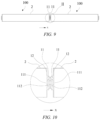
- FIG. 9 is a sectional view of the battery B according to another embodiment of the present application.
- FIG. 10 is an enlarged view of part II in FIG. 9 .
- the electrode terminals 11 of the two battery cells 100 that have the filling ports 111 are oppositely arranged in the lengthwise direction X of the battery cells and are welded together to form the battery B.
- the battery cells 100 are required to be horizontally placed. Since the filling ports 111 have not been sealed, the electrolyte in the battery cells 100 has the risk of flowing out through the filling ports 111 when the battery cells 100 are horizontally placed.
- a groove 112 is provided on an inner side surface of each of the filling ports 111, and after the battery cells 100 are horizontally placed, the electrolyte is first accumulated in the grooves 112 when flowing out of the battery cells 100.
- the two electrode terminals 11 having the filling ports 111 are welded together, thanks to the buffer storage of the electrolyte in the groove 112, the risk of the electrolyte flowing out through the filling ports 111 is reduced during welding, and the influence of the flowed-out electrolyte on the quality of a weld joint is avoided.
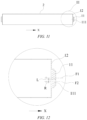
- FIG. 11 is a sectional view of yet another embodiment of FIG. 4 taken along line E-E;
- FIG. 12 is an enlarged view of part III of an embodiment of FIG. 11 .
- the filling ports 111 are provided offset from the centers of electrode terminals 11, so as to arrange the filling ports 111 of two battery cells 100 in a staggered manner.
- a center line F2 of the filling port 111 is offset from a center line F1 of the electrode terminal 11 by a distance L.
- the distance L is greater than a maximum distance R between an inner surface of the filling port 111 and the center line F2 of the filling port 111.
- FIG. 13 is a sectional view of the battery B according to yet another embodiment of the present application, and FIG. 14 is an enlarged view of part IV of an embodiment of FIG. 13 .
- the electrode terminals 11 of the two battery cells 100 that have the filling ports 111 are oppositely arranged in the lengthwise direction X of the battery cells and are welded together to form the battery B.
- the two filling ports 111 are arranged in a staggered manner, that is, the two filling ports 111 are not located on the same straight line in the lengthwise direction X of the battery cells.
- the filling ports 111 of the two battery cells 100 are arranged in a staggered manner, since the distance L by which the center line F2 of the filling ports 111 is offset from the center line F 1 of the electrode terminals 11 is greater than the maximum distance R of the filling ports 111, in this case, when the two filling ports 111 are arranged in a staggered manner, the two filling ports 111 may be completely staggered without communication therebetween, and after the two electrode terminals 11 are welded together, one filling port 111 may be blocked by a portion of the other electrode terminal 11 that has no filling port 111, such that the electrolyte in the two battery cells 100 is prevented from circulating between the battery cells during use.
- the filling ports 111 of the two battery cells 100 shown in FIG. 14 are staggered at an angle of 180 degrees, that is, the center lines of the two filling ports 111 and the center lines of the electrode terminals 11 are located in the same plane.
- the present application is not limited to a staggering angle of 180 degrees, and when the two electrode terminals 11 are oppositely arranged, it is only needed to ensure that two filling ports 111 are completely stagger without communication, such that the electrolyte in the two battery cells 100 may not circulate between the battery cells.
- the filling ports 111 are designed not to communicate with each other.
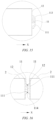
- FIG. 15 is an enlarged view of part III of another embodiment of FIG. 11 .
- the electrode terminal 11 is provided with a step portion 113 along the periphery of an end portion of the battery cell in the lengthwise direction X.
- the step portion 113 is annularly arranged along the end portion of the electrode terminal 11 to from a partial notch at the periphery of the end portion of the electrode terminal 11.
- the step portion 113 in FIG. 15 is an annularly-arranged beveled chamfer, and the cross-sectional shape of the step portion 113 may be another shape capable of forming a notch, such as a square shape, a trapezoid shape, and a circular arc shape.
- FIG. 16 is a partial enlarged sectional view of the welded connection of two battery cells 100 of FIG. 15 .
- the two electrode terminals 11 are welded at the welding groove 114, and during welding, reflections of welding laser are concentrated in the welding groove 114, thereby improving the welding quality, reducing the influences of laser welding on the end cap of the battery, enhancing the sealing performance of the battery B, and improving the yield of finished battery products.
- the filling port 111 has a circular, square, triangular, or polygonal cross section.
- a conventional filling port 111 is sealed by means of a sealing pin, laser welding is needed, and due to the path limitation of laser welding, the filling port 111 may only be made into a circular shape.
- the filling ports 111 are provided in the electrode terminals 11, the electrode terminals 11 of the two battery cells 100 are welded together, and no additional sealing pin is required for welding and sealing the filling ports 111.
- the filling ports 111 may be made into other shapes such as square shape, triangle shape and polygonal shape, is not limited by the path of laser welding, and is not limited to a circular shape, such that the filling ports 111 may be shaped more flexibly.
- FIG. 17 is a sectional view of the battery B according to another embodiment of the present application.
- Electrode terminals 11 of two of the battery cells 100 that have filling ports 111 are oppositely arranged and welded together to connect the two battery cells 100 in parallel, and the electrode terminals 11 of the two battery cells 100 are welded in the same manner as the embodiment shown in FIG. 7 .
- the filling port 111 may have the same structural form as that of FIGS. 10 or 14 , or have a combination of different structural forms.
- FIG. 18 is an enlarged view of part V in FIG. 17 .
- the electrode terminal of the other battery cell 100 that has the filling port 111 is welded to the electrode terminal 11 having no filling port 111 at an end portion of one battery cell 100 of the two battery cells 100 which are welded, and the polarity of the electrode terminal 11 having no filling port 111 is opposite that of the electrode terminal 11 having the filling port, so as to connect the two battery cells 100 in series.
- the electrode terminal 11 having no filling port 111 is of a solid structure, which may seal the filling port 111 of the electrode terminal 11 welded to the electrode terminal.
- the present application is not limited to welded connection of two battery cells 100 or welded connection of three battery cells 100 to form the battery B in the above embodiments, and a plurality of battery cells 100 may be welded as one piece in the above connection manner to form the battery B including the plurality of battery cells 100.
- the battery cells 100 may be cylindrical battery cells and/or the electrode terminals may be cylindrical electrode terminals.
- the present application is not limited thereto and may be adapted to other shapes of battery structures.
- the present application is not limited to the structure of the above embodiments, and may be a combination of the above embodiments.
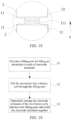
- FIG. 19 is a flow chart of a method for manufacturing a battery according to an embodiment of the present application.
- the present application further relates to a method for manufacturing a battery.
- the battery B includes at least two battery cells 100, wherein each of the battery cells 100 includes electrode terminals 11 arranged at end portions of two sides of the battery cell in the lengthwise direction X.
- the method for manufacturing a battery includes the following steps.
- a filling port 111 for filling an electrolyte is provided in the electrode terminal 11 on one side of the battery cell 100 in the lengthwise direction X of the battery cell.
- step S2 the electrolyte is filled into the battery cell 100 through the filling port 111.
- the electrode terminals 11 of the two battery cells 100 that have the filling ports 111 are oppositely arranged in the lengthwise direction X of the battery cells and are welded together.
- the filling port 111 is provided in the electrode terminal 11, and the filling port 111 does not occupy a space of the end cap 12, such that the size of the electrode terminal 11 may be increased, thereby increasing the overcurrent area of the electrode terminal 11.
- the two electrode terminals 11 having the filling ports 111 are oppositely arranged and welded together.
- the entire battery B is sealed directly by means of the electrode terminals 11 without an additional sealing procedure, thereby reducing the cost and improving the production efficiency.
- the method for manufacturing a battery further includes the step of testing the battery for gas tightness. After the battery cell 100 is assembled, the electrolyte is filled and sealing is completed, a gas tightness test is required to ensure the sealing performance of the battery cell 100 and ensure the yield of the battery cell 100.
- the battery cell 100 is not additionally sealed, and the electrode terminals 11 of the battery cells 100 that have the filling ports 111 are oppositely arranged and welded together to form the battery B, thereby sealing the entire battery B. Therefore, a gas tightness test is required for the entire battery B.
- the method further includes the step of filling helium into the battery cells 100 through the filling ports 111.
- two electrode terminals 11 having the filling ports 111 are welded together to seal the entire battery B. After the welding is completed, the entire battery B is subjected to the gas tightness test to detect helium leakage from the battery B, and if no helium leakage, it is indicated that the entire battery B is well sealed.
- helium is filled into the battery cells 100 through the filling ports 111, then the electrode terminals 11 of the two battery cells 100 are welded together, and it is unnecessary to additionally provide a gas tightness test hole and seal the test hole, thereby reducing battery manufacturing procedures and improving the production efficiency.
- the present application relates to a power consuming device using the battery B as described above or as manufactured by the above method for manufacturing a battery.
Landscapes
- Chemical & Material Sciences (AREA)
- Chemical Kinetics & Catalysis (AREA)
- Electrochemistry (AREA)
- General Chemical & Material Sciences (AREA)
- Engineering & Computer Science (AREA)
- Manufacturing & Machinery (AREA)
- Aviation & Aerospace Engineering (AREA)
- Materials Engineering (AREA)
- Connection Of Batteries Or Terminals (AREA)
- Filling, Topping-Up Batteries (AREA)
- Sealing Battery Cases Or Jackets (AREA)
Applications Claiming Priority (1)
| Application Number | Priority Date | Filing Date | Title |
|---|---|---|---|
| PCT/CN2021/112642 WO2023019374A1 (fr) | 2021-08-14 | 2021-08-14 | Batterie, procédé de fabrication de batterie et appareil électrique |
Publications (2)
| Publication Number | Publication Date |
|---|---|
| EP4199219A1 true EP4199219A1 (fr) | 2023-06-21 |
| EP4199219A4 EP4199219A4 (fr) | 2024-07-24 |
Family
ID=85239333
Family Applications (1)
| Application Number | Title | Priority Date | Filing Date |
|---|---|---|---|
| EP21953632.3A Pending EP4199219A4 (fr) | 2021-08-14 | 2021-08-14 | Batterie, procédé de fabrication de batterie et appareil électrique |
Country Status (6)
| Country | Link |
|---|---|
| US (1) | US20230238674A1 (fr) |
| EP (1) | EP4199219A4 (fr) |
| JP (1) | JP7704847B2 (fr) |
| KR (1) | KR102938785B1 (fr) |
| CN (1) | CN116670879A (fr) |
| WO (1) | WO2023019374A1 (fr) |
Families Citing this family (1)
| Publication number | Priority date | Publication date | Assignee | Title |
|---|---|---|---|---|
| JP7741835B2 (ja) * | 2023-03-06 | 2025-09-18 | プライムプラネットエナジー&ソリューションズ株式会社 | 密閉型蓄電デバイス及びその製造方法並びにその分解方法 |
Family Cites Families (10)
| Publication number | Priority date | Publication date | Assignee | Title |
|---|---|---|---|---|
| JP3445171B2 (ja) * | 1998-11-04 | 2003-09-08 | 日本碍子株式会社 | リチウム二次電池 |
| JP2000200597A (ja) * | 1999-01-05 | 2000-07-18 | Japan Storage Battery Co Ltd | 電 池 |
| DE10064648C2 (de) * | 1999-12-28 | 2003-09-18 | Honda Motor Co Ltd | Batterieeinheit |
| DE102006005532B4 (de) * | 2006-02-07 | 2009-09-24 | Epcos Ag | Anschlusselement für einen elektrischen Kondensator, Kondensator und Kondensatoranschluss |
| JP6057129B2 (ja) * | 2013-03-21 | 2017-01-11 | トヨタ自動車株式会社 | 密閉型電池の製造方法 |
| CN204834764U (zh) * | 2015-06-17 | 2015-12-02 | 深圳市沃特玛电池有限公司 | 一种端面焊的圆柱形高倍率锂离子电池 |
| CN208284552U (zh) * | 2018-06-01 | 2018-12-25 | 苏州安靠电源有限公司 | 注液均匀的端面焊电池 |
| CN112701412B (zh) * | 2019-10-23 | 2024-08-02 | 比亚迪股份有限公司 | 一种电池、电池模组、电池包和电动车 |
| CN112993473B (zh) * | 2019-11-29 | 2023-09-05 | 比亚迪股份有限公司 | 一种电池、电池模组、电池包和电动车 |
| CN112072017B (zh) * | 2020-08-19 | 2025-03-28 | 江苏正力新能电池技术股份有限公司 | 一种基于电芯串的电池模组 |
-
2021
- 2021-08-14 KR KR1020237011272A patent/KR102938785B1/ko active Active
- 2021-08-14 JP JP2023519748A patent/JP7704847B2/ja active Active
- 2021-08-14 EP EP21953632.3A patent/EP4199219A4/fr active Pending
- 2021-08-14 CN CN202180085491.2A patent/CN116670879A/zh active Pending
- 2021-08-14 WO PCT/CN2021/112642 patent/WO2023019374A1/fr not_active Ceased
-
2023
- 2023-03-10 US US18/120,239 patent/US20230238674A1/en active Pending
Also Published As
| Publication number | Publication date |
|---|---|
| KR20230061487A (ko) | 2023-05-08 |
| JP7704847B2 (ja) | 2025-07-08 |
| KR102938785B1 (ko) | 2026-03-12 |
| WO2023019374A1 (fr) | 2023-02-23 |
| EP4199219A4 (fr) | 2024-07-24 |
| JP2023543473A (ja) | 2023-10-16 |
| US20230238674A1 (en) | 2023-07-27 |
| CN116670879A (zh) | 2023-08-29 |
Similar Documents
| Publication | Publication Date | Title |
|---|---|---|
| US20220384916A1 (en) | Battery cell, battery, electrical device, and battery cell manufacturing method and device | |
| US20240154218A1 (en) | Battery cell, battery, and electrical apparatus | |
| US12266806B2 (en) | Battery cell, battery, electrical device, and manufacturing method and device for battery cell | |
| KR102889975B1 (ko) | 배터리 셀, 배터리, 전기 장치, 배터리 셀의 제조 방법 및 기기 | |
| US20250233212A1 (en) | Battery cell, battery, and electric device | |
| KR102804305B1 (ko) | 전지셀 및 그의 제조 방법과 제조 시스템, 전지 및 전기 장치 | |
| CN214411277U (zh) | 圆柱电池单体、电池及用电装置 | |
| US20230155262A1 (en) | Housing, battery cell, battery and electric apparatus | |
| KR20220151694A (ko) | 엔드 커버 어셈블리, 배터리 셀, 배터리 및 배터리 셀의 제조 방법 및 장비 | |
| JP7488909B2 (ja) | 電池セル、電池、電気設備および電池セルの製造方法、製造設備 | |
| US20250096381A1 (en) | Battery cell, battery and electrical apparatus | |
| US12136741B2 (en) | Casing of battery, battery and electricity-consuming apparatus | |
| US20240170809A1 (en) | Tab welding method, welding tool, battery cell, battery, and electric device | |
| KR20240031419A (ko) | 배터리 셀, 배터리, 전기 설비, 배터리 셀의 제조 방법 및 배터리 셀의 제조 설비 | |
| CN222735302U (zh) | 电池单体、电池、用电装置 | |
| US20230238674A1 (en) | Battery, method for manufacturing battery, and power consuming device | |
| US20250219214A1 (en) | Battery cell, battery, and electrical apparatus | |
| EP4318766A1 (fr) | Plaque isolante, élément de batterie, batterie et dispositif | |
| US20240297425A1 (en) | Battery end cover assembly, battery cell, battery, and electrical device | |
| US20240120624A1 (en) | Battery cell, battery, and electrical device | |
| KR20230061538A (ko) | 배터리 셀, 배터리, 용전 기기 및 배터리 셀의 제조방법과 기기 | |
| US20260045661A1 (en) | Battery cell, battery, power consuming apparatus, ultrasonic welding head, and ultrasonic welding apparatus | |
| CN216120520U (zh) | 电池单体、电池和使用电池的装置 | |
| KR20230144578A (ko) | 탭 용접 구조, 배터리 셀 및 전기 설비 | |
| KR20250167032A (ko) | 전지 셀, 전지 셀의 제조 방법, 전지 및 이의 전기 기기 |
Legal Events
| Date | Code | Title | Description |
|---|---|---|---|
| STAA | Information on the status of an ep patent application or granted ep patent |
Free format text: STATUS: THE INTERNATIONAL PUBLICATION HAS BEEN MADE |
|
| PUAI | Public reference made under article 153(3) epc to a published international application that has entered the european phase |
Free format text: ORIGINAL CODE: 0009012 |
|
| STAA | Information on the status of an ep patent application or granted ep patent |
Free format text: STATUS: REQUEST FOR EXAMINATION WAS MADE |
|
| 17P | Request for examination filed |
Effective date: 20230316 |
|
| AK | Designated contracting states |
Kind code of ref document: A1 Designated state(s): AL AT BE BG CH CY CZ DE DK EE ES FI FR GB GR HR HU IE IS IT LI LT LU LV MC MK MT NL NO PL PT RO RS SE SI SK SM TR |
|
| A4 | Supplementary search report drawn up and despatched |
Effective date: 20240620 |
|
| RIC1 | Information provided on ipc code assigned before grant |
Ipc: H01M 10/613 20140101ALI20240614BHEP Ipc: H01M 10/0525 20100101ALI20240614BHEP Ipc: H01M 50/249 20210101AFI20240614BHEP |
|
| RAP1 | Party data changed (applicant data changed or rights of an application transferred) |
Owner name: CONTEMPORARY AMPEREX TECHNOLOGY(HONG KONG) LIMITED |
|
| DAV | Request for validation of the european patent (deleted) | ||
| DAX | Request for extension of the european patent (deleted) |