EP4201672A1 - Harzzusammensetzung, harzfolie, mehrschichtiger körper und karte - Google Patents
Harzzusammensetzung, harzfolie, mehrschichtiger körper und karte Download PDFInfo
- Publication number
- EP4201672A1 EP4201672A1 EP21858123.9A EP21858123A EP4201672A1 EP 4201672 A1 EP4201672 A1 EP 4201672A1 EP 21858123 A EP21858123 A EP 21858123A EP 4201672 A1 EP4201672 A1 EP 4201672A1
- Authority
- EP
- European Patent Office
- Prior art keywords
- resin composition
- mass
- titanium oxide
- resin
- resin sheet
- Prior art date
- Legal status (The legal status is an assumption and is not a legal conclusion. Google has not performed a legal analysis and makes no representation as to the accuracy of the status listed.)
- Pending
Links
- 229920005989 resin Polymers 0.000 title claims abstract description 120
- 239000011347 resin Substances 0.000 title claims abstract description 120
- 239000011342 resin composition Substances 0.000 title claims abstract description 113
- OGIDPMRJRNCKJF-UHFFFAOYSA-N titanium oxide Inorganic materials [Ti]=O OGIDPMRJRNCKJF-UHFFFAOYSA-N 0.000 claims abstract description 100
- GWEVSGVZZGPLCZ-UHFFFAOYSA-N Titan oxide Chemical compound O=[Ti]=O GWEVSGVZZGPLCZ-UHFFFAOYSA-N 0.000 claims abstract description 99
- 239000004431 polycarbonate resin Substances 0.000 claims abstract description 49
- 229920005668 polycarbonate resin Polymers 0.000 claims abstract description 47
- 238000005259 measurement Methods 0.000 claims abstract description 30
- 238000004876 x-ray fluorescence Methods 0.000 claims abstract description 27
- 238000004458 analytical method Methods 0.000 claims abstract description 22
- 238000010304 firing Methods 0.000 claims abstract description 20
- 239000011164 primary particle Substances 0.000 claims abstract description 17
- 239000003086 colorant Substances 0.000 claims description 52
- 229920000728 polyester Polymers 0.000 claims description 36
- 230000003746 surface roughness Effects 0.000 claims description 29
- LYCAIKOWRPUZTN-UHFFFAOYSA-N Ethylene glycol Chemical compound OCCO LYCAIKOWRPUZTN-UHFFFAOYSA-N 0.000 claims description 24
- 239000000126 substance Substances 0.000 claims description 14
- KKEYFWRCBNTPAC-UHFFFAOYSA-N Terephthalic acid Chemical compound OC(=O)C1=CC=C(C(O)=O)C=C1 KKEYFWRCBNTPAC-UHFFFAOYSA-N 0.000 claims description 12
- -1 lactone compound Chemical class 0.000 claims description 12
- 238000002834 transmittance Methods 0.000 claims description 12
- 239000003963 antioxidant agent Substances 0.000 claims description 11
- 230000003078 antioxidant effect Effects 0.000 claims description 11
- 239000002216 antistatic agent Substances 0.000 claims description 10
- 239000006229 carbon black Substances 0.000 claims description 9
- VEIOBOXBGYWJIT-UHFFFAOYSA-N cyclohexane;methanol Chemical compound OC.OC.C1CCCCC1 VEIOBOXBGYWJIT-UHFFFAOYSA-N 0.000 claims description 9
- 238000010521 absorption reaction Methods 0.000 claims description 7
- 239000010410 layer Substances 0.000 description 64
- 239000012792 core layer Substances 0.000 description 36
- VYPSYNLAJGMNEJ-UHFFFAOYSA-N Silicium dioxide Chemical compound O=[Si]=O VYPSYNLAJGMNEJ-UHFFFAOYSA-N 0.000 description 20
- 239000000975 dye Substances 0.000 description 15
- 238000000034 method Methods 0.000 description 14
- 125000003118 aryl group Chemical group 0.000 description 13
- 238000003475 lamination Methods 0.000 description 13
- 230000009477 glass transition Effects 0.000 description 12
- 238000002156 mixing Methods 0.000 description 12
- 229920003232 aliphatic polyester Polymers 0.000 description 11
- PNEYBMLMFCGWSK-UHFFFAOYSA-N aluminium oxide Inorganic materials [O-2].[O-2].[O-2].[Al+3].[Al+3] PNEYBMLMFCGWSK-UHFFFAOYSA-N 0.000 description 11
- 238000001816 cooling Methods 0.000 description 10
- 239000008188 pellet Substances 0.000 description 10
- 239000000377 silicon dioxide Substances 0.000 description 10
- 239000000049 pigment Substances 0.000 description 9
- 230000007547 defect Effects 0.000 description 8
- 238000004519 manufacturing process Methods 0.000 description 7
- 239000002245 particle Substances 0.000 description 7
- 239000007858 starting material Substances 0.000 description 7
- YMWUJEATGCHHMB-UHFFFAOYSA-N Dichloromethane Chemical compound ClCCl YMWUJEATGCHHMB-UHFFFAOYSA-N 0.000 description 6
- 238000007731 hot pressing Methods 0.000 description 6
- 238000004898 kneading Methods 0.000 description 6
- 239000000203 mixture Substances 0.000 description 6
- 230000000052 comparative effect Effects 0.000 description 5
- 238000001125 extrusion Methods 0.000 description 5
- 229910052809 inorganic oxide Inorganic materials 0.000 description 5
- SSADPHQCUURWSW-UHFFFAOYSA-N 3,9-bis(2,6-ditert-butyl-4-methylphenoxy)-2,4,8,10-tetraoxa-3,9-diphosphaspiro[5.5]undecane Chemical compound CC(C)(C)C1=CC(C)=CC(C(C)(C)C)=C1OP1OCC2(COP(OC=3C(=CC(C)=CC=3C(C)(C)C)C(C)(C)C)OC2)CO1 SSADPHQCUURWSW-UHFFFAOYSA-N 0.000 description 4
- 229930185605 Bisphenol Natural products 0.000 description 4
- IISBACLAFKSPIT-UHFFFAOYSA-N bisphenol A Chemical compound C=1C=C(O)C=CC=1C(C)(C)C1=CC=C(O)C=C1 IISBACLAFKSPIT-UHFFFAOYSA-N 0.000 description 4
- 238000000354 decomposition reaction Methods 0.000 description 4
- 239000006185 dispersion Substances 0.000 description 4
- 238000010330 laser marking Methods 0.000 description 4
- 238000000465 moulding Methods 0.000 description 4
- 230000000704 physical effect Effects 0.000 description 4
- 239000000523 sample Substances 0.000 description 4
- 239000000243 solution Substances 0.000 description 4
- 239000000654 additive Substances 0.000 description 3
- 238000005054 agglomeration Methods 0.000 description 3
- 230000002776 aggregation Effects 0.000 description 3
- KPUWHANPEXNPJT-UHFFFAOYSA-N disiloxane Chemical class [SiH3]O[SiH3] KPUWHANPEXNPJT-UHFFFAOYSA-N 0.000 description 3
- 238000001035 drying Methods 0.000 description 3
- 239000000463 material Substances 0.000 description 3
- 239000000155 melt Substances 0.000 description 3
- 229910052751 metal Inorganic materials 0.000 description 3
- 239000002184 metal Substances 0.000 description 3
- 229920001610 polycaprolactone Polymers 0.000 description 3
- 239000004632 polycaprolactone Substances 0.000 description 3
- 238000004544 sputter deposition Methods 0.000 description 3
- PYVOHVLEZJMINC-UHFFFAOYSA-N trihexyl(tetradecyl)phosphanium Chemical compound CCCCCCCCCCCCCC[P+](CCCCCC)(CCCCCC)CCCCCC PYVOHVLEZJMINC-UHFFFAOYSA-N 0.000 description 3
- ZXMGHDIOOHOAAE-UHFFFAOYSA-N 1,1,1-trifluoro-n-(trifluoromethylsulfonyl)methanesulfonamide Chemical group FC(F)(F)S(=O)(=O)NS(=O)(=O)C(F)(F)F ZXMGHDIOOHOAAE-UHFFFAOYSA-N 0.000 description 2
- RNFJDJUURJAICM-UHFFFAOYSA-N 2,2,4,4,6,6-hexaphenoxy-1,3,5-triaza-2$l^{5},4$l^{5},6$l^{5}-triphosphacyclohexa-1,3,5-triene Chemical compound N=1P(OC=2C=CC=CC=2)(OC=2C=CC=CC=2)=NP(OC=2C=CC=CC=2)(OC=2C=CC=CC=2)=NP=1(OC=1C=CC=CC=1)OC1=CC=CC=C1 RNFJDJUURJAICM-UHFFFAOYSA-N 0.000 description 2
- OZJPLYNZGCXSJM-UHFFFAOYSA-N 5-valerolactone Chemical compound O=C1CCCCO1 OZJPLYNZGCXSJM-UHFFFAOYSA-N 0.000 description 2
- 125000001931 aliphatic group Chemical group 0.000 description 2
- 230000015572 biosynthetic process Effects 0.000 description 2
- 229920000402 bisphenol A polycarbonate polymer Polymers 0.000 description 2
- 230000015556 catabolic process Effects 0.000 description 2
- 239000003795 chemical substances by application Substances 0.000 description 2
- 229910017052 cobalt Inorganic materials 0.000 description 2
- 239000010941 cobalt Substances 0.000 description 2
- GUTLYIVDDKVIGB-UHFFFAOYSA-N cobalt atom Chemical compound [Co] GUTLYIVDDKVIGB-UHFFFAOYSA-N 0.000 description 2
- 150000001875 compounds Chemical class 0.000 description 2
- 239000000470 constituent Substances 0.000 description 2
- 238000006731 degradation reaction Methods 0.000 description 2
- 238000013461 design Methods 0.000 description 2
- 239000003063 flame retardant Substances 0.000 description 2
- 238000005227 gel permeation chromatography Methods 0.000 description 2
- 239000001023 inorganic pigment Substances 0.000 description 2
- 238000002844 melting Methods 0.000 description 2
- 230000008018 melting Effects 0.000 description 2
- 239000000178 monomer Substances 0.000 description 2
- 239000012860 organic pigment Substances 0.000 description 2
- OJMIONKXNSYLSR-UHFFFAOYSA-N phosphorous acid Chemical compound OP(O)O OJMIONKXNSYLSR-UHFFFAOYSA-N 0.000 description 2
- 229920001296 polysiloxane Polymers 0.000 description 2
- 230000002265 prevention Effects 0.000 description 2
- 238000007639 printing Methods 0.000 description 2
- 238000012545 processing Methods 0.000 description 2
- 230000009467 reduction Effects 0.000 description 2
- 229910052710 silicon Inorganic materials 0.000 description 2
- 229920002379 silicone rubber Polymers 0.000 description 2
- 239000004945 silicone rubber Substances 0.000 description 2
- 239000002356 single layer Substances 0.000 description 2
- 239000002904 solvent Substances 0.000 description 2
- 239000012756 surface treatment agent Substances 0.000 description 2
- 229920005992 thermoplastic resin Polymers 0.000 description 2
- 239000010936 titanium Substances 0.000 description 2
- 229910052719 titanium Inorganic materials 0.000 description 2
- PAPBSGBWRJIAAV-UHFFFAOYSA-N ε-Caprolactone Chemical compound O=C1CCCCCO1 PAPBSGBWRJIAAV-UHFFFAOYSA-N 0.000 description 2
- GUYIZQZWDFCUTA-UHFFFAOYSA-N (pentadecachlorophthalocyaninato(2-))-copper Chemical compound [Cu+2].N1=C([N-]2)C3=C(Cl)C(Cl)=C(Cl)C(Cl)=C3C2=NC(C2=C(Cl)C(Cl)=C(Cl)C(Cl)=C22)=NC2=NC(C2=C(Cl)C(Cl)=C(Cl)C(Cl)=C22)=NC2=NC2=C(C(Cl)=C(C(Cl)=C3)Cl)C3=C1[N-]2 GUYIZQZWDFCUTA-UHFFFAOYSA-N 0.000 description 1
- WBWXVCMXGYSMQA-UHFFFAOYSA-N 3,9-bis[2,4-bis(2-phenylpropan-2-yl)phenoxy]-2,4,8,10-tetraoxa-3,9-diphosphaspiro[5.5]undecane Chemical compound C=1C=C(OP2OCC3(CO2)COP(OC=2C(=CC(=CC=2)C(C)(C)C=2C=CC=CC=2)C(C)(C)C=2C=CC=CC=2)OC3)C(C(C)(C)C=2C=CC=CC=2)=CC=1C(C)(C)C1=CC=CC=C1 WBWXVCMXGYSMQA-UHFFFAOYSA-N 0.000 description 1
- BVKZGUZCCUSVTD-UHFFFAOYSA-L Carbonate Chemical compound [O-]C([O-])=O BVKZGUZCCUSVTD-UHFFFAOYSA-L 0.000 description 1
- 238000012695 Interfacial polymerization Methods 0.000 description 1
- 239000004420 Iupilon Substances 0.000 description 1
- BPQQTUXANYXVAA-UHFFFAOYSA-N Orthosilicate Chemical compound [O-][Si]([O-])([O-])[O-] BPQQTUXANYXVAA-UHFFFAOYSA-N 0.000 description 1
- JKIJEFPNVSHHEI-UHFFFAOYSA-N Phenol, 2,4-bis(1,1-dimethylethyl)-, phosphite (3:1) Chemical compound CC(C)(C)C1=CC(C(C)(C)C)=CC=C1OP(OC=1C(=CC(=CC=1)C(C)(C)C)C(C)(C)C)OC1=CC=C(C(C)(C)C)C=C1C(C)(C)C JKIJEFPNVSHHEI-UHFFFAOYSA-N 0.000 description 1
- 239000004793 Polystyrene Substances 0.000 description 1
- XUIMIQQOPSSXEZ-UHFFFAOYSA-N Silicon Chemical compound [Si] XUIMIQQOPSSXEZ-UHFFFAOYSA-N 0.000 description 1
- 229910000831 Steel Inorganic materials 0.000 description 1
- UCKMPCXJQFINFW-UHFFFAOYSA-N Sulphide Chemical compound [S-2] UCKMPCXJQFINFW-UHFFFAOYSA-N 0.000 description 1
- RTAQQCXQSZGOHL-UHFFFAOYSA-N Titanium Chemical compound [Ti] RTAQQCXQSZGOHL-UHFFFAOYSA-N 0.000 description 1
- WGLPBDUCMAPZCE-UHFFFAOYSA-N Trioxochromium Chemical compound O=[Cr](=O)=O WGLPBDUCMAPZCE-UHFFFAOYSA-N 0.000 description 1
- HCHKCACWOHOZIP-UHFFFAOYSA-N Zinc Chemical compound [Zn] HCHKCACWOHOZIP-UHFFFAOYSA-N 0.000 description 1
- GXDVEXJTVGRLNW-UHFFFAOYSA-N [Cr].[Cu] Chemical compound [Cr].[Cu] GXDVEXJTVGRLNW-UHFFFAOYSA-N 0.000 description 1
- AUNAPVYQLLNFOI-UHFFFAOYSA-L [Pb++].[Pb++].[Pb++].[O-]S([O-])(=O)=O.[O-][Cr]([O-])(=O)=O.[O-][Mo]([O-])(=O)=O Chemical compound [Pb++].[Pb++].[Pb++].[O-]S([O-])(=O)=O.[O-][Cr]([O-])(=O)=O.[O-][Mo]([O-])(=O)=O AUNAPVYQLLNFOI-UHFFFAOYSA-L 0.000 description 1
- 230000002745 absorbent Effects 0.000 description 1
- 239000002250 absorbent Substances 0.000 description 1
- 230000001133 acceleration Effects 0.000 description 1
- 230000000996 additive effect Effects 0.000 description 1
- 239000000853 adhesive Substances 0.000 description 1
- 230000001070 adhesive effect Effects 0.000 description 1
- 229910052782 aluminium Inorganic materials 0.000 description 1
- 150000001408 amides Chemical class 0.000 description 1
- PYKYMHQGRFAEBM-UHFFFAOYSA-N anthraquinone Natural products CCC(=O)c1c(O)c2C(=O)C3C(C=CC=C3O)C(=O)c2cc1CC(=O)OC PYKYMHQGRFAEBM-UHFFFAOYSA-N 0.000 description 1
- 150000004056 anthraquinones Chemical class 0.000 description 1
- 239000003242 anti bacterial agent Substances 0.000 description 1
- 239000003443 antiviral agent Substances 0.000 description 1
- IRERQBUNZFJFGC-UHFFFAOYSA-L azure blue Chemical compound [Na+].[Na+].[Na+].[Na+].[Na+].[Na+].[Na+].[Na+].[Al+3].[Al+3].[Al+3].[Al+3].[Al+3].[Al+3].[S-]S[S-].[O-][Si]([O-])([O-])[O-].[O-][Si]([O-])([O-])[O-].[O-][Si]([O-])([O-])[O-].[O-][Si]([O-])([O-])[O-].[O-][Si]([O-])([O-])[O-].[O-][Si]([O-])([O-])[O-] IRERQBUNZFJFGC-UHFFFAOYSA-L 0.000 description 1
- VEZXCJBBBCKRPI-UHFFFAOYSA-N beta-propiolactone Chemical compound O=C1CCO1 VEZXCJBBBCKRPI-UHFFFAOYSA-N 0.000 description 1
- HYNYWFRJHNNLJA-UHFFFAOYSA-N bis(trifluoromethylsulfonyl)azanide;trihexyl(tetradecyl)phosphanium Chemical compound FC(F)(F)S(=O)(=O)[N-]S(=O)(=O)C(F)(F)F.CCCCCCCCCCCCCC[P+](CCCCCC)(CCCCCC)CCCCCC HYNYWFRJHNNLJA-UHFFFAOYSA-N 0.000 description 1
- 229910052793 cadmium Inorganic materials 0.000 description 1
- BDOSMKKIYDKNTQ-UHFFFAOYSA-N cadmium atom Chemical compound [Cd] BDOSMKKIYDKNTQ-UHFFFAOYSA-N 0.000 description 1
- CJOBVZJTOIVNNF-UHFFFAOYSA-N cadmium sulfide Chemical compound [Cd]=S CJOBVZJTOIVNNF-UHFFFAOYSA-N 0.000 description 1
- 230000008859 change Effects 0.000 description 1
- KRVSOGSZCMJSLX-UHFFFAOYSA-L chromic acid Substances O[Cr](O)(=O)=O KRVSOGSZCMJSLX-UHFFFAOYSA-L 0.000 description 1
- 229910000423 chromium oxide Inorganic materials 0.000 description 1
- 239000011248 coating agent Substances 0.000 description 1
- 238000000576 coating method Methods 0.000 description 1
- NNSIWZRTNZEWMS-UHFFFAOYSA-N cobalt titanium Chemical compound [Ti].[Co] NNSIWZRTNZEWMS-UHFFFAOYSA-N 0.000 description 1
- 229920001577 copolymer Polymers 0.000 description 1
- IYRDVAUFQZOLSB-UHFFFAOYSA-N copper iron Chemical compound [Fe].[Cu] IYRDVAUFQZOLSB-UHFFFAOYSA-N 0.000 description 1
- VVOLVFOSOPJKED-UHFFFAOYSA-N copper phthalocyanine Chemical compound [Cu].N=1C2=NC(C3=CC=CC=C33)=NC3=NC(C3=CC=CC=C33)=NC3=NC(C3=CC=CC=C33)=NC3=NC=1C1=CC=CC=C12 VVOLVFOSOPJKED-UHFFFAOYSA-N 0.000 description 1
- 238000005520 cutting process Methods 0.000 description 1
- 238000001938 differential scanning calorimetry curve Methods 0.000 description 1
- 239000002270 dispersing agent Substances 0.000 description 1
- 239000000428 dust Substances 0.000 description 1
- 230000000694 effects Effects 0.000 description 1
- 238000002149 energy-dispersive X-ray emission spectroscopy Methods 0.000 description 1
- 229920006351 engineering plastic Polymers 0.000 description 1
- 238000011156 evaluation Methods 0.000 description 1
- 238000000445 field-emission scanning electron microscopy Methods 0.000 description 1
- 239000006081 fluorescent whitening agent Substances 0.000 description 1
- AWJWCTOOIBYHON-UHFFFAOYSA-N furo[3,4-b]pyrazine-5,7-dione Chemical compound C1=CN=C2C(=O)OC(=O)C2=N1 AWJWCTOOIBYHON-UHFFFAOYSA-N 0.000 description 1
- 239000012760 heat stabilizer Substances 0.000 description 1
- 238000010438 heat treatment Methods 0.000 description 1
- 125000000623 heterocyclic group Chemical group 0.000 description 1
- 125000001183 hydrocarbyl group Chemical group 0.000 description 1
- 229910052739 hydrogen Inorganic materials 0.000 description 1
- 239000001257 hydrogen Substances 0.000 description 1
- UCNNJGDEJXIUCC-UHFFFAOYSA-L hydroxy(oxo)iron;iron Chemical compound [Fe].O[Fe]=O.O[Fe]=O UCNNJGDEJXIUCC-UHFFFAOYSA-L 0.000 description 1
- 230000001771 impaired effect Effects 0.000 description 1
- 230000006872 improvement Effects 0.000 description 1
- 230000000977 initiatory effect Effects 0.000 description 1
- 239000011229 interlayer Substances 0.000 description 1
- KFZAUHNPPZCSCR-UHFFFAOYSA-N iron zinc Chemical compound [Fe].[Zn] KFZAUHNPPZCSCR-UHFFFAOYSA-N 0.000 description 1
- DCYOBGZUOMKFPA-UHFFFAOYSA-N iron(2+);iron(3+);octadecacyanide Chemical compound [Fe+2].[Fe+2].[Fe+2].[Fe+3].[Fe+3].[Fe+3].[Fe+3].N#[C-].N#[C-].N#[C-].N#[C-].N#[C-].N#[C-].N#[C-].N#[C-].N#[C-].N#[C-].N#[C-].N#[C-].N#[C-].N#[C-].N#[C-].N#[C-].N#[C-].N#[C-] DCYOBGZUOMKFPA-UHFFFAOYSA-N 0.000 description 1
- JEIPFZHSYJVQDO-UHFFFAOYSA-N iron(III) oxide Inorganic materials O=[Fe]O[Fe]=O JEIPFZHSYJVQDO-UHFFFAOYSA-N 0.000 description 1
- MOUPNEIJQCETIW-UHFFFAOYSA-N lead chromate Chemical compound [Pb+2].[O-][Cr]([O-])(=O)=O MOUPNEIJQCETIW-UHFFFAOYSA-N 0.000 description 1
- 239000003550 marker Substances 0.000 description 1
- 238000000691 measurement method Methods 0.000 description 1
- 230000007246 mechanism Effects 0.000 description 1
- 229910044991 metal oxide Inorganic materials 0.000 description 1
- 150000004706 metal oxides Chemical class 0.000 description 1
- 125000002496 methyl group Chemical group [H]C([H])([H])* 0.000 description 1
- 239000006082 mold release agent Substances 0.000 description 1
- 229910052759 nickel Inorganic materials 0.000 description 1
- PXHVJJICTQNCMI-UHFFFAOYSA-N nickel Substances [Ni] PXHVJJICTQNCMI-UHFFFAOYSA-N 0.000 description 1
- 239000012299 nitrogen atmosphere Substances 0.000 description 1
- 239000012044 organic layer Substances 0.000 description 1
- XRBCRPZXSCBRTK-UHFFFAOYSA-N phosphonous acid Chemical compound OPO XRBCRPZXSCBRTK-UHFFFAOYSA-N 0.000 description 1
- IEQIEDJGQAUEQZ-UHFFFAOYSA-N phthalocyanine Chemical compound N1C(N=C2C3=CC=CC=C3C(N=C3C4=CC=CC=C4C(=N4)N3)=N2)=C(C=CC=C2)C2=C1N=C1C2=CC=CC=C2C4=N1 IEQIEDJGQAUEQZ-UHFFFAOYSA-N 0.000 description 1
- 239000004014 plasticizer Substances 0.000 description 1
- 229920000515 polycarbonate Polymers 0.000 description 1
- 239000004417 polycarbonate Substances 0.000 description 1
- 125000003367 polycyclic group Chemical group 0.000 description 1
- 229920000139 polyethylene terephthalate Polymers 0.000 description 1
- 239000005020 polyethylene terephthalate Substances 0.000 description 1
- 229920000642 polymer Polymers 0.000 description 1
- 229920002223 polystyrene Polymers 0.000 description 1
- 239000000843 powder Substances 0.000 description 1
- 229960003351 prussian blue Drugs 0.000 description 1
- 239000013225 prussian blue Substances 0.000 description 1
- 238000010298 pulverizing process Methods 0.000 description 1
- 238000011002 quantification Methods 0.000 description 1
- 238000011160 research Methods 0.000 description 1
- 239000010703 silicon Substances 0.000 description 1
- 238000004611 spectroscopical analysis Methods 0.000 description 1
- 239000010959 steel Substances 0.000 description 1
- 238000003860 storage Methods 0.000 description 1
- 239000000758 substrate Substances 0.000 description 1
- 238000005979 thermal decomposition reaction Methods 0.000 description 1
- 235000013799 ultramarine blue Nutrition 0.000 description 1
- 238000011179 visual inspection Methods 0.000 description 1
- 238000004846 x-ray emission Methods 0.000 description 1
- 229910052725 zinc Inorganic materials 0.000 description 1
- 239000011701 zinc Substances 0.000 description 1
- 229910052726 zirconium Inorganic materials 0.000 description 1
Images

Classifications
-
- B—PERFORMING OPERATIONS; TRANSPORTING
- B42—BOOKBINDING; ALBUMS; FILES; SPECIAL PRINTED MATTER
- B42D—BOOKS; BOOK COVERS; LOOSE LEAVES; PRINTED MATTER CHARACTERISED BY IDENTIFICATION OR SECURITY FEATURES; PRINTED MATTER OF SPECIAL FORMAT OR STYLE NOT OTHERWISE PROVIDED FOR; DEVICES FOR USE THEREWITH AND NOT OTHERWISE PROVIDED FOR; MOVABLE-STRIP WRITING OR READING APPARATUS
- B42D25/00—Information-bearing cards or sheet-like structures characterised by identification or security features; Manufacture thereof
- B42D25/40—Manufacture
- B42D25/45—Associating two or more layers
- B42D25/46—Associating two or more layers using pressure
-
- B—PERFORMING OPERATIONS; TRANSPORTING
- B32—LAYERED PRODUCTS
- B32B—LAYERED PRODUCTS, i.e. PRODUCTS BUILT-UP OF STRATA OF FLAT OR NON-FLAT, e.g. CELLULAR OR HONEYCOMB, FORM
- B32B27/00—Layered products comprising a layer of synthetic resin
- B32B27/06—Layered products comprising a layer of synthetic resin as the main or only constituent of a layer, which is next to another layer of the same or of a different material
- B32B27/08—Layered products comprising a layer of synthetic resin as the main or only constituent of a layer, which is next to another layer of the same or of a different material of synthetic resin
-
- B—PERFORMING OPERATIONS; TRANSPORTING
- B32—LAYERED PRODUCTS
- B32B—LAYERED PRODUCTS, i.e. PRODUCTS BUILT-UP OF STRATA OF FLAT OR NON-FLAT, e.g. CELLULAR OR HONEYCOMB, FORM
- B32B27/00—Layered products comprising a layer of synthetic resin
- B32B27/18—Layered products comprising a layer of synthetic resin characterised by the use of special additives
- B32B27/20—Layered products comprising a layer of synthetic resin characterised by the use of special additives using fillers, pigments, thixotroping agents
-
- B—PERFORMING OPERATIONS; TRANSPORTING
- B32—LAYERED PRODUCTS
- B32B—LAYERED PRODUCTS, i.e. PRODUCTS BUILT-UP OF STRATA OF FLAT OR NON-FLAT, e.g. CELLULAR OR HONEYCOMB, FORM
- B32B27/00—Layered products comprising a layer of synthetic resin
- B32B27/36—Layered products comprising a layer of synthetic resin comprising polyesters
-
- B—PERFORMING OPERATIONS; TRANSPORTING
- B32—LAYERED PRODUCTS
- B32B—LAYERED PRODUCTS, i.e. PRODUCTS BUILT-UP OF STRATA OF FLAT OR NON-FLAT, e.g. CELLULAR OR HONEYCOMB, FORM
- B32B27/00—Layered products comprising a layer of synthetic resin
- B32B27/36—Layered products comprising a layer of synthetic resin comprising polyesters
- B32B27/365—Layered products comprising a layer of synthetic resin comprising polyesters comprising polycarbonates
-
- B—PERFORMING OPERATIONS; TRANSPORTING
- B42—BOOKBINDING; ALBUMS; FILES; SPECIAL PRINTED MATTER
- B42D—BOOKS; BOOK COVERS; LOOSE LEAVES; PRINTED MATTER CHARACTERISED BY IDENTIFICATION OR SECURITY FEATURES; PRINTED MATTER OF SPECIAL FORMAT OR STYLE NOT OTHERWISE PROVIDED FOR; DEVICES FOR USE THEREWITH AND NOT OTHERWISE PROVIDED FOR; MOVABLE-STRIP WRITING OR READING APPARATUS
- B42D25/00—Information-bearing cards or sheet-like structures characterised by identification or security features; Manufacture thereof
- B42D25/30—Identification or security features, e.g. for preventing forgery
- B42D25/351—Translucent or partly translucent parts, e.g. windows
-
- B—PERFORMING OPERATIONS; TRANSPORTING
- B42—BOOKBINDING; ALBUMS; FILES; SPECIAL PRINTED MATTER
- B42D—BOOKS; BOOK COVERS; LOOSE LEAVES; PRINTED MATTER CHARACTERISED BY IDENTIFICATION OR SECURITY FEATURES; PRINTED MATTER OF SPECIAL FORMAT OR STYLE NOT OTHERWISE PROVIDED FOR; DEVICES FOR USE THEREWITH AND NOT OTHERWISE PROVIDED FOR; MOVABLE-STRIP WRITING OR READING APPARATUS
- B42D25/00—Information-bearing cards or sheet-like structures characterised by identification or security features; Manufacture thereof
- B42D25/30—Identification or security features, e.g. for preventing forgery
- B42D25/36—Identification or security features, e.g. for preventing forgery comprising special materials
-
- B—PERFORMING OPERATIONS; TRANSPORTING
- B42—BOOKBINDING; ALBUMS; FILES; SPECIAL PRINTED MATTER
- B42D—BOOKS; BOOK COVERS; LOOSE LEAVES; PRINTED MATTER CHARACTERISED BY IDENTIFICATION OR SECURITY FEATURES; PRINTED MATTER OF SPECIAL FORMAT OR STYLE NOT OTHERWISE PROVIDED FOR; DEVICES FOR USE THEREWITH AND NOT OTHERWISE PROVIDED FOR; MOVABLE-STRIP WRITING OR READING APPARATUS
- B42D25/00—Information-bearing cards or sheet-like structures characterised by identification or security features; Manufacture thereof
- B42D25/40—Manufacture
- B42D25/45—Associating two or more layers
- B42D25/455—Associating two or more layers using heat
-
- C—CHEMISTRY; METALLURGY
- C08—ORGANIC MACROMOLECULAR COMPOUNDS; THEIR PREPARATION OR CHEMICAL WORKING-UP; COMPOSITIONS BASED THEREON
- C08J—WORKING-UP; GENERAL PROCESSES OF COMPOUNDING; AFTER-TREATMENT NOT COVERED BY SUBCLASSES C08B, C08C, C08F, C08G or C08H
- C08J5/00—Manufacture of articles or shaped materials containing macromolecular substances
- C08J5/18—Manufacture of films or sheets
-
- C—CHEMISTRY; METALLURGY
- C08—ORGANIC MACROMOLECULAR COMPOUNDS; THEIR PREPARATION OR CHEMICAL WORKING-UP; COMPOSITIONS BASED THEREON
- C08K—Use of inorganic or non-macromolecular organic substances as compounding ingredients
- C08K3/00—Use of inorganic substances as compounding ingredients
- C08K3/18—Oxygen-containing compounds, e.g. metal carbonyls
- C08K3/20—Oxides; Hydroxides
- C08K3/22—Oxides; Hydroxides of metals
-
- C—CHEMISTRY; METALLURGY
- C08—ORGANIC MACROMOLECULAR COMPOUNDS; THEIR PREPARATION OR CHEMICAL WORKING-UP; COMPOSITIONS BASED THEREON
- C08K—Use of inorganic or non-macromolecular organic substances as compounding ingredients
- C08K5/00—Use of organic ingredients
- C08K5/49—Phosphorus-containing compounds
- C08K5/50—Phosphorus bound to carbon only
-
- C—CHEMISTRY; METALLURGY
- C08—ORGANIC MACROMOLECULAR COMPOUNDS; THEIR PREPARATION OR CHEMICAL WORKING-UP; COMPOSITIONS BASED THEREON
- C08L—COMPOSITIONS OF MACROMOLECULAR COMPOUNDS
- C08L67/00—Compositions of polyesters obtained by reactions forming a carboxylic ester link in the main chain; Compositions of derivatives of such polymers
- C08L67/04—Polyesters derived from hydroxycarboxylic acids, e.g. lactones
-
- C—CHEMISTRY; METALLURGY
- C08—ORGANIC MACROMOLECULAR COMPOUNDS; THEIR PREPARATION OR CHEMICAL WORKING-UP; COMPOSITIONS BASED THEREON
- C08L—COMPOSITIONS OF MACROMOLECULAR COMPOUNDS
- C08L69/00—Compositions of polycarbonates; Compositions of derivatives of polycarbonates
-
- B—PERFORMING OPERATIONS; TRANSPORTING
- B32—LAYERED PRODUCTS
- B32B—LAYERED PRODUCTS, i.e. PRODUCTS BUILT-UP OF STRATA OF FLAT OR NON-FLAT, e.g. CELLULAR OR HONEYCOMB, FORM
- B32B2250/00—Layers arrangement
- B32B2250/24—All layers being polymeric
- B32B2250/244—All polymers belonging to those covered by group B32B27/36
-
- B—PERFORMING OPERATIONS; TRANSPORTING
- B32—LAYERED PRODUCTS
- B32B—LAYERED PRODUCTS, i.e. PRODUCTS BUILT-UP OF STRATA OF FLAT OR NON-FLAT, e.g. CELLULAR OR HONEYCOMB, FORM
- B32B2264/00—Composition or properties of particles which form a particulate layer or are present as additives
- B32B2264/10—Inorganic particles
- B32B2264/102—Oxide or hydroxide
- B32B2264/1022—Titania
-
- B—PERFORMING OPERATIONS; TRANSPORTING
- B32—LAYERED PRODUCTS
- B32B—LAYERED PRODUCTS, i.e. PRODUCTS BUILT-UP OF STRATA OF FLAT OR NON-FLAT, e.g. CELLULAR OR HONEYCOMB, FORM
- B32B2264/00—Composition or properties of particles which form a particulate layer or are present as additives
- B32B2264/30—Particles characterised by physical dimension
- B32B2264/302—Average diameter in the range from 100 nm to 1000 nm
-
- B—PERFORMING OPERATIONS; TRANSPORTING
- B32—LAYERED PRODUCTS
- B32B—LAYERED PRODUCTS, i.e. PRODUCTS BUILT-UP OF STRATA OF FLAT OR NON-FLAT, e.g. CELLULAR OR HONEYCOMB, FORM
- B32B2264/00—Composition or properties of particles which form a particulate layer or are present as additives
- B32B2264/40—Pretreated particles
- B32B2264/402—Pretreated particles with organic substances
-
- B—PERFORMING OPERATIONS; TRANSPORTING
- B32—LAYERED PRODUCTS
- B32B—LAYERED PRODUCTS, i.e. PRODUCTS BUILT-UP OF STRATA OF FLAT OR NON-FLAT, e.g. CELLULAR OR HONEYCOMB, FORM
- B32B2270/00—Resin or rubber layer containing a blend of at least two different polymers
-
- B—PERFORMING OPERATIONS; TRANSPORTING
- B32—LAYERED PRODUCTS
- B32B—LAYERED PRODUCTS, i.e. PRODUCTS BUILT-UP OF STRATA OF FLAT OR NON-FLAT, e.g. CELLULAR OR HONEYCOMB, FORM
- B32B2307/00—Properties of the layers or laminate
- B32B2307/40—Properties of the layers or laminate having particular optical properties
- B32B2307/41—Opaque
-
- B—PERFORMING OPERATIONS; TRANSPORTING
- B32—LAYERED PRODUCTS
- B32B—LAYERED PRODUCTS, i.e. PRODUCTS BUILT-UP OF STRATA OF FLAT OR NON-FLAT, e.g. CELLULAR OR HONEYCOMB, FORM
- B32B2307/00—Properties of the layers or laminate
- B32B2307/50—Properties of the layers or laminate having particular mechanical properties
- B32B2307/538—Roughness
-
- B—PERFORMING OPERATIONS; TRANSPORTING
- B32—LAYERED PRODUCTS
- B32B—LAYERED PRODUCTS, i.e. PRODUCTS BUILT-UP OF STRATA OF FLAT OR NON-FLAT, e.g. CELLULAR OR HONEYCOMB, FORM
- B32B2307/00—Properties of the layers or laminate
- B32B2307/70—Other properties
- B32B2307/732—Dimensional properties
- B32B2307/737—Dimensions, e.g. volume or area
- B32B2307/7375—Linear, e.g. length, distance or width
- B32B2307/7376—Thickness
-
- B—PERFORMING OPERATIONS; TRANSPORTING
- B32—LAYERED PRODUCTS
- B32B—LAYERED PRODUCTS, i.e. PRODUCTS BUILT-UP OF STRATA OF FLAT OR NON-FLAT, e.g. CELLULAR OR HONEYCOMB, FORM
- B32B2425/00—Cards, e.g. identity cards, credit cards
-
- C—CHEMISTRY; METALLURGY
- C08—ORGANIC MACROMOLECULAR COMPOUNDS; THEIR PREPARATION OR CHEMICAL WORKING-UP; COMPOSITIONS BASED THEREON
- C08J—WORKING-UP; GENERAL PROCESSES OF COMPOUNDING; AFTER-TREATMENT NOT COVERED BY SUBCLASSES C08B, C08C, C08F, C08G or C08H
- C08J2369/00—Characterised by the use of polycarbonates; Derivatives of polycarbonates
-
- C—CHEMISTRY; METALLURGY
- C08—ORGANIC MACROMOLECULAR COMPOUNDS; THEIR PREPARATION OR CHEMICAL WORKING-UP; COMPOSITIONS BASED THEREON
- C08J—WORKING-UP; GENERAL PROCESSES OF COMPOUNDING; AFTER-TREATMENT NOT COVERED BY SUBCLASSES C08B, C08C, C08F, C08G or C08H
- C08J2467/00—Characterised by the use of polyesters obtained by reactions forming a carboxylic ester link in the main chain; Derivatives of such polymers
- C08J2467/02—Polyesters derived from dicarboxylic acids and dihydroxy compounds
-
- C—CHEMISTRY; METALLURGY
- C08—ORGANIC MACROMOLECULAR COMPOUNDS; THEIR PREPARATION OR CHEMICAL WORKING-UP; COMPOSITIONS BASED THEREON
- C08J—WORKING-UP; GENERAL PROCESSES OF COMPOUNDING; AFTER-TREATMENT NOT COVERED BY SUBCLASSES C08B, C08C, C08F, C08G or C08H
- C08J2467/00—Characterised by the use of polyesters obtained by reactions forming a carboxylic ester link in the main chain; Derivatives of such polymers
- C08J2467/04—Polyesters derived from hydroxy carboxylic acids, e.g. lactones
-
- C—CHEMISTRY; METALLURGY
- C08—ORGANIC MACROMOLECULAR COMPOUNDS; THEIR PREPARATION OR CHEMICAL WORKING-UP; COMPOSITIONS BASED THEREON
- C08K—Use of inorganic or non-macromolecular organic substances as compounding ingredients
- C08K3/00—Use of inorganic substances as compounding ingredients
- C08K3/18—Oxygen-containing compounds, e.g. metal carbonyls
- C08K3/20—Oxides; Hydroxides
- C08K3/22—Oxides; Hydroxides of metals
- C08K2003/2237—Oxides; Hydroxides of metals of titanium
-
- C—CHEMISTRY; METALLURGY
- C08—ORGANIC MACROMOLECULAR COMPOUNDS; THEIR PREPARATION OR CHEMICAL WORKING-UP; COMPOSITIONS BASED THEREON
- C08K—Use of inorganic or non-macromolecular organic substances as compounding ingredients
- C08K2201/00—Specific properties of additives
- C08K2201/002—Physical properties
- C08K2201/005—Additives being defined by their particle size in general
-
- C—CHEMISTRY; METALLURGY
- C08—ORGANIC MACROMOLECULAR COMPOUNDS; THEIR PREPARATION OR CHEMICAL WORKING-UP; COMPOSITIONS BASED THEREON
- C08K—Use of inorganic or non-macromolecular organic substances as compounding ingredients
- C08K2201/00—Specific properties of additives
- C08K2201/011—Nanostructured additives
-
- C—CHEMISTRY; METALLURGY
- C08—ORGANIC MACROMOLECULAR COMPOUNDS; THEIR PREPARATION OR CHEMICAL WORKING-UP; COMPOSITIONS BASED THEREON
- C08K—Use of inorganic or non-macromolecular organic substances as compounding ingredients
- C08K2201/00—Specific properties of additives
- C08K2201/017—Additives being an antistatic agent
Definitions
- the present disclosure relates to a resin composition, a resin sheet, a multilayered article and a card.
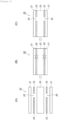
- a multilayered article shown in Figure 1 is known.
- a multilayered article 10 an overlay layer (transparent resin sheet) 11, and white core layers 12 and 13 are shown.
- the multilayered article 10 may further include a laser marking layer and the like.
- an IC chip, an antenna, etc. are usually incorporated in or between the white core layers 12 and 13.
- Use of the white core layers 12 and 13 having light shielding properties allows the IC chip, the antenna, etc., to be invisible from the outside of the card.
- Each of these layers ( Figure 1 (A) ) is bonded by, for example, hot pressing to make a multilayered article ( Figure 1 (B) ).
- Such a security card is described in, for example, Patent Literature 1.
- Patent Literature 1 International Publication No. WO 2018/163889
- titanium oxide that is compounded to achieve light shielding properties may agglomerate in some cases.
- the agglomeration of titanium oxide causes appearance defects due to asperities of a resin sheet or a card product.
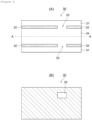
- FIG. 2 An example of the security card (multilayered article) having a clear window is shown in Figure 2 .
- security card (multilayered article) 20 overlay layer (transparent resin sheet) 21, white core layer 22, transparent resin sheet 23, and clear window 24 are shown.
- clear window 24 is provided on the security card for, for example, forgery prevention and improved design, and is a transparent window introduced into a part of the card surface of the card.
- Example of the method for producing a multilayered article having a clear window 24 include arranging white core layer 22 provided with an opening (a region with absence of white core layer) 25 when each layer is laminated ( Figure 2 (A) ), and bonding each layer by hot pressing.
- An object of the present invention is to solve such a problem, i.e., to provide a resin composition which can provide a resin sheet having excellent light shielding properties with titanium oxide sufficiently dispersed, as well as a resin sheet, a multilayered article and a card produced therefrom.
- a resin composition which can provide a resin sheet having excellent light shielding properties with titanium oxide sufficiently dispersed, as well as a resin sheet, a multilayered article and a card produced therefrom, can be provided.
- the present embodiments will be described in detail.
- the following embodiments are examples for explaining the present invention, and the present invention is not limited thereto.
- the "sheet” and “multilayered article” refer to “formed article” having a thin thickness relative to the length and width, being generally a flat formed article including "film”. Further, in the present specification, the "sheet” may include a single layer or a multilayer, and a single layer is preferred.
- part by mass indicates a relative amount of a component
- % by mass indicates an absolute amount of a component
- the resin composition in the present embodiment comprises a polycarbonate resin in an amount of 30 to 95 parts by mass, and titanium oxide in an amount of 5 to 40 parts by mass, the titanium oxide having an average primary particle size of 0.22 to 0.26 ⁇ m based on measurement of an image observed by a scanning electron microscope (SEM), the titanium oxide having an Si content of 1.0 to 1.8 % by mass and an Al content of 1.6 to 2.2 % by mass based on measurement by X-ray fluorescence (XRF) analysis after firing at 700°C for 2 hours.
- SEM scanning electron microscope
- XRF X-ray fluorescence
- titanium oxide for use in the field of resin sheets usually has a surface including an inorganic oxide layer such as silica layer and alumina layer and an organic layer such as silicone layer in order. According to the study by the present inventor, it is presumed that the dispersion of titanium oxide may be improved by reduction in the area of silica layer. Accordingly, the titanium oxide for use in the present embodiment has a less amount of Si after firing than titanium oxide conventionally used in the technical field of the present embodiment.
- the organic silicone layer of the surface is burnt with leaving almost no residue.
- the Si component remains. It is therefore presumed that the titanium oxide for use in the present invention has a less amount of silica layer as inorganic oxide layer. It is presumed that based on the results, the resin composition in the present embodiment has achieved success in improvement in dispersion of titanium oxide.
- the resin composition in the present embodiment comprises a polycarbonate resin.
- the polycarbonate resin serves a function as substrate of a resin sheet.
- the polycarbonate resin is not particularly limited as long as the molecular backbone contains a constitutional unit -[O-R-OCO]-containing a carbonic acid ester bond (R is a hydrocarbon group (for example, an aliphatic group, an aromatic group, or one containing both of an aliphatic group and an aromatic group, having a linear structure or a branched structure)), and various polycarbonate resins may be used.
- R is a hydrocarbon group (for example, an aliphatic group, an aromatic group, or one containing both of an aliphatic group and an aromatic group, having a linear structure or a branched structure)
- various polycarbonate resins may be used.
- an aromatic polycarbonate resin is preferred, and a bisphenol polycarbonate resin is more preferred.
- the bisphenol polycarbonate resin refers to a polycarbonate resin of which 80 mol% or more, preferably 90 mol% or more of the constitutional units are carbonate constitutional units of bisphenol and/or derived from the derivative thereof.
- the bisphenol polycarbonate resin be a bisphenol A polycarbonate resin.
- the molecular weight of the polycarbonate resin is not particularly specified.
- the polycarbonate resin having a viscosity average molecular weight of 10000 to 50000 which is a converted value from the viscosity of a solution measured at a temperature of 25°C, with use of methylene chloride as solvent, may be used without problem.
- the lower limit value of the viscosity average molecular weight is preferably 20000 or more, more preferably 21000 or more, and still more preferably 25000 or more.
- the viscosity average molecular weight is preferably 35000 or less, more preferably 32000 or less, and still more preferably 29000 or less.
- two or more polycarbonate resins having a different viscosity average molecular weight may be mixed for use, and in that case, a polycarbonate having a viscosity average molecular weight out of the preferred range may be mixed.
- the intrinsic viscosity [ ⁇ ] is a value calculated by the following formula based on the measurement of the specific viscosity [ ⁇ sp ] at each solution concentration [C] (g/dL).
- ⁇ lim c ⁇ 0 ⁇ sp / c
- the resin composition in the present embodiment comprises a polycarbonate resin preferably at a proportion of 30 to 95 % by mass, more preferably at a proportion of 40 to 90 % by mass, in the resin composition.
- a proportion of 41 to 79 % by mass is still more preferred, and a proportion of 55 to 75 % by mass is furthermore preferred.
- the resin composition in the present embodiment may comprise one polycarbonate resin alone, or two or more polycarbonate resins. In the case where two or more are contained, it is preferable that the total amount be in the range.
- the resin composition in the present embodiment comprises titanium oxide having an average primary particle size of 0.22 to 0.26 ⁇ m based on measurement of an image observed by a scanning electron microscope (SEM), the titanium oxide having an Si content of 1.0 to 1.8 % by mass and an Al content of 1.6 to 2.2 % by mass based on measurement by X-ray fluorescence (XRF) analysis after firing at 700°C for 2 hours.
- SEM scanning electron microscope
- XRF X-ray fluorescence
- the titanium oxide for use in the present embodiment has an average primary particle size of 0.22 to 0.26 ⁇ m based on measurement of an image observed by a scanning electron microscope (SEM).
- SEM scanning electron microscope
- Use of titanium oxide having such an average primary particle size allows the dispersibility of titanium oxide in a resin component (in particular, polycarbonate resin) to be improved, and a resin sheet excellent in light shielding properties to be obtained.
- the average primary particle size of titanium oxide is preferably 0.23 ⁇ m or more.
- the number average particle size of titanium oxide is preferably 0.25 ⁇ m or less.
- the average primary particle size of titanium oxide is measured according to the description in the following Examples.
- the titanium oxide for use in the present embodiment has an Si content of 1.0 to 1.8 % by mass and an alumina content of 1.6 to 2.2 % by mass based on measurement by X-ray fluorescence (XRF) analysis after firing at 700°C for 2 hours.
- the Si content is preferably 1.2 to 1.6 % by mass.
- the alumina content is preferably 1.7 to 2.0 % by mass.
- a less Si content after firing is achieved by, for example, a thin silica layer.
- the less Si content tends to improve the dispersibility of titanium oxide in the polycarbonate resin.
- the titanium oxide for use in the present embodiment has a mass ratio (Si/Al) between the Si content and the alumina content measured by X-ray fluorescence analysis (XRF) after firing at 700°C for 2 hours of preferably 0.5 to 1.0, more preferably 0.6 to 0.9. With a ratio controlled to the ranges, the dispersibility of titanium oxide in a polycarbonate resin tends to be improved.
- the titanium oxide for use in the present embodiment has a difference between the Si content measured by X-ray fluorescence analysis (XRF) and the Si content measured by X-ray fluorescence analysis (XRF) after firing at 700°C for 2 hours ( ⁇ Si) of preferably 0.3 to 0.8 % by mass, more preferably 0.4 to 0.6 % by mass. With a difference controlled to the ranges, the dispersibility of titanium oxide in a polycarbonate resin tends to be improved.
- XRF X-ray fluorescence analysis
- XRF X-ray fluorescence analysis
- the titanium oxide for use in the present embodiment have an organic substance layer on the surface.
- a polycarbonate resin is usually decomposed with use of titanium oxide having a surface without treatment with an organic substance
- the decomposition of a polycarbonate resin may be effectively suppressed with use of titanium oxide having an organic substance layer treated with an organic substance on the surface.
- the decomposition of a polycarbonate resin during melt extrusion may be effectively suppressed.
- the organic substance (surface treatment agent) include a polymer, and a siloxane compound is preferred.
- hydrogen methylsiloxane, dimethylsiloxane, etc. are preferred.
- the organic substance (surface treatment agent) may be physically adsorbed to the surface of titanium oxide, or may be chemically bonded thereto.
- the organic substance layer may obviously contain an organic substance without departing from the subject matter of the present embodiment.
- the titanium oxide is preferably a rutile-type titanium oxide.
- Use of a rutile-type titanium oxide allows decomposition of the resin composition to be suppressed.
- the titanium oxide may further have an inorganic oxide layer such as a silica layer and an alumina layer between the titanium oxide as core and the organic substance layer.
- the inorganic oxide layer serves to maintain the particulate shape and to suppress decomposition of the resin.
- the surface of titanium oxide have a thin silica layer as inorganic oxide layer.
- Such a constitution allows the titanium oxide to have an Si content of 1.0 to 1.8 % by mass and an alumina content of 1.6 to 2.2 % by mass based on measurement by X-ray fluorescence (XRF) analysis after firing at 700°C for 2 hours.
- XRF X-ray fluorescence
- the Si and alumina contents in the titanium oxide based on measurement by X-ray fluorescence (XRF) analysis after firing at 700°C for 2 hours may be adjusted by a method different from the above.
- the titanium oxide for use in the present embodiment be in a particulate form.
- the resin composition in the present embodiment contains titanium oxide preferably at a proportion of 5 to 40 % by mass, more preferably at a proportion of 10 to 35 % by mass.
- a proportion of 20 to 40 % by mass is still more preferred, and a proportion of 25 to 35 % by mass is furthermore preferred.
- the resin composition in the present embodiment may contain only one type of titanium oxide alone, or may contain two or more types. In the case of containing two or more types, it is preferable that the total amount be in the range.
- the resin composition in the present embodiment may contain a polyester. By containing a polyester, the resin composition in the present embodiment allows a resin sheet to have improved lamination properties.
- the polyester is not particularly limited to be in a specific type, etc., and may be an aliphatic polyester or an aromatic-based polyester containing an aromatic ring.
- the aliphatic polyester is not particularly limited to be in a specific type, etc., and preferably contains a constitutional unit derived from a lactone compound.
- Such an aliphatic polyester has an extremely low glass transition temperature and excellent compatibility with a polycarbonate resin, so that addition in a small amount thereof allows to obtain good lamination properties and degradation of chemical properties and mechanical properties of the polycarbonate resin may be effectively suppressed.
- the ratio of the constitutional unit derived from a lactone compound among aliphatic polyesters relative to the total constitutional units except for a terminal group is preferably 70 mol% or more, more preferably 80 mol% or more, still more preferably 90 mol% or more, furthermore preferably 95 mol% or more, and still furthermore preferably 99 mol% or more.
- lactone compound examples include ⁇ -caprolactone, ⁇ -propionlactone, and ⁇ -valerolactone, and ⁇ -caprolactone is preferred.
- the lactone compound may be a copolymer of two or more of the lactone compounds.
- the aliphatic polyester for use in the present embodiment is a polycaprolactone.
- the weight average molecular weight of the aliphatic polyester compound for use in the present embodiment be 5000 to 90000.
- the weight average molecular weight is more preferably 7000 to 60000, and particularly preferably 8000 to 40000.
- the weight average molecular weight controlled to the lower limit value or more the film formability tends to be improved.
- the weight average molecular weight controlled to the upper limit value or less the lamination properties tend to be improved.
- the weight average molecular weight is a value in terms of polystyrene measured by GPC (gel permeation chromatography) method.
- the aliphatic polyester is contained in the resin composition preferably at a proportion of 0.5 % by mass or more, more preferably at a proportion of 1.0 % by mass or more, and still more preferably at a proportion of 2.0 % by mass or more. It is preferable that the resin composition in the present embodiment contain an aliphatic polyester at a proportion of 9.0 % by mass or less in the resin composition. With a proportion controlled to the lower limit value or more, the lamination properties tend to be improved. With a proportion controlled to the upper limit value or less, the formability during formation of a resin sheet tends to be improved.
- the type of aromatic-based polyester is not particularly limited to a specific one, and a polyester (PCTG) containing a constitutional unit derived from terephthalic acid, a constitutional unit derived from ethylene glycol and a constitutional unit derived from cyclohexane dimethanol is preferred.
- the polyester (PCTG) is a thermoplastic resin excellent in compatibility with a polycarbonate resin, and addition thereof causes a small degradation of durability of the polycarbonate resin. Accordingly, use of the polyester allows to obtain a resin composition excellent in durability as well as lamination properties.
- the polyester (PCTG) is a polyester obtained by substituting a part of ethylene glycol as one of the starting material monomers of polyethylene terephthalate with cyclohexane dimethanol.
- the ratio of the constitutional unit derived from cyclohexane dimethanol is preferably 50 mol% or more and less than 100 mol%, more preferably 60 to 90 mol%.
- the PCTG may contain a starting material monomer other than the constitutional unit derived from terephthalic acid, the constitutional unit derived from ethylene glycol, and the constitutional unit derived from cyclohexane dimethanol, without departing from the subject matter of the present embodiment.
- the PCTG has a total content of the constitutional unit derived from terephthalic acid, the constitutional unit derived from ethylene glycol, and the constitutional unit derived from cyclohexane dimethanol of preferably 90 mol% or more, more preferably 95 mol% or more, and still more preferably 99 mol% or more, relative to the total constitutional units except for a terminal group.
- the intrinsic viscosity of the aromatic-based polyester compound for use in the present embodiment (IV value measured by a capillary viscometer: ISO 1628-1, 1998) be 0.5 to 1.0.
- the intrinsic viscosity is more preferably 0.6 to 0.9, and particularly preferably 0.7 to 0.8. With an intrinsic viscosity controlled to the ranges, the film formability tends to be further improved.
- the aromatic-based polyester in the resin composition, is contained preferably at a proportion of 10 % by mass or more, more preferably at a proportion of 20 % by mass or more, and still more preferably at a proportion of 30 % by mass or more.
- the resin composition in the present embodiment contains an aromatic-based polyester preferably at a proportion of 47.5 % by mass or less, more preferably at a proportion of 45 % by mass or less, and still more preferably at a proportion of 43 % by mass or less, in the resin composition.
- an aromatic-based polyester proportion controlled to the lower limit value or more the lamination properties are improved.
- an aromatic-based polyester proportion controlled to the upper limit value or less the formability during sheet formation tends to be improved.
- the resin composition in the present embodiment contains a polycarbonate resin in an amount of 30 to 95 parts by mass, and titanium oxide in an amount of 5 to 40 parts by mass (preferably 10 parts by mass or more, more preferably 20 parts by mass or more, and preferably 35 parts by mass or less).
- a resin sheet excellent in light shielding properties may be obtained.
- a resin sheet excellent in light shielding properties may be obtained even the thickness of the resin sheet is reduced.
- a polyester in an amount of 0.5 to 47.5 parts by mass (preferably 3.0 to 45 parts by mass) may be further contained.
- Such a blending ratio allows to obtain a resin sheet excellent in lamination properties.
- an antioxidant, another colorant, an antistatic agent, and other components described below may be contained.
- the difference in the content between the polycarbonate resin and titanium oxide is preferably 10 parts by mass or more, and 90 parts by mass or less. With a difference controlled to the range, the film formability tends to be further improved.
- a polycarbonate resin 71 to 95 parts by mass of a polycarbonate resin, 5 to 20 parts by mass of titanium oxide, and 0 to 9 parts by mass (preferably 1 to 9 parts by mass) of a polyester (preferably an aliphatic polyester) are included.
- a resin sheet produced from the resin composition having such a blending may be suitably used for a reflection sheet, a card product, etc.
- a second embodiment of the blending ratio of the resin composition in the present embodiment 41 to 79 parts by mass (preferably 58 to 73 parts by mass) of a polycarbonate resin, 20 to 40 parts by mass (preferably 25 to 35 parts by mass) of titanium oxide, and 0 to 9 parts by mass (preferably 1 part or more, more preferably 2 parts by mass or more) of a polyester (preferably an aliphatic polyester) are included.
- a resin sheet produced from the resin composition having such a blending may be suitably used for the white core layer of a card having a clear window.
- the resin composition in the present embodiment has a high dispersibility of titanium oxide, so that even an extremely thin resin sheet made therefrom is preferred, because it may achieve sufficient light shielding properties.
- a third embodiment of the blending ratio of the resin composition in the present embodiment 32.5 to 85 parts by mass (preferably 35 to 55 parts by mass) of a polycarbonate resin, 5 to 20 parts by mass of titanium oxide, and 10 to 47.5 parts by mass (preferably 20 parts by mass or more) of a polyester (preferably an aromatic-based polyester) are included.
- a resin sheet produced from the resin composition having such a blending may be suitably used for a reflection sheet, a card product, etc.
- the resin composition in the present embodiment satisfy the ratio relative to 100 parts by mass of the total of the polycarbonate resin, titanium oxide and a polyester compounded on an as needed basis.
- the resin composition in the present embodiment preferably has a polycarbonate resin content more than the polyester content, and preferably more than 1 part by mass or more. Further the upper limit value of the difference between the polycarbonate resin content and the polyester content is 76 parts by mass or less. With a difference controlled to the ranges, a thin resin composition more excellent in lamination properties tends to be obtained while maintaining the light shielding properties high.
- the resin composition in the present embodiment only one or two or more types of respective polycarbonate resin, titanium oxide and polyester compounded on an as needed basis may be used. In the case of using two or more types, it is preferable that the total amount be in the ranges.
- the resin composition in the present embodiment may include a colorant other than titanium oxide. Addition of another colorant allows to add some color to the resin composition, so that the appearance (design) of the resin sheet tends to be improved. In addition, it becomes possible to further improve the light shielding performance.
- Examples of the other colorants include inorganic pigments, organic pigments, and organic dyes.
- the inorganic pigments include sulfide-based pigments such as carbon black, cadmium red, and cadmium yellow; silicate-based pigments such as ultramarine blue; oxide-based pigments such as zinc flower, red iron oxide, chromium oxide, iron black, titanium yellow, zinc-iron-based brown, titanium cobalt-based green, cobalt green, cobalt blue, copper-chromium-based black, and copper-iron-based black; chromic acid-based pigments such as chrome yellow and molybdate orange; and ferrocyanide-based pigments such as Prussian blue.
- sulfide-based pigments such as carbon black, cadmium red, and cadmium yellow
- silicate-based pigments such as ultramarine blue
- oxide-based pigments such as zinc flower, red iron oxide, chromium oxide, iron black, titanium yellow, zinc-iron-based brown, titanium cobalt-based green, cobalt green, cobalt blue, copper-chromium-based black,
- organic pigments and organic dyes examples include phthalocyanine-based dyes or pigments such as copper phthalocyanine blue and copper phthalocyanine green; azo-based dyes or pigments such as nickel azo yellow; condensed polycyclic dyes or pigments such as thioindigo-base, perinone-base, perylene-base, quinacridone-base, dioxazine-base, isoindolinone-base, and quinophthalone-base; and anthraquinone-based, heterocycle-based, or methyl-based dyes or pigments.
- phthalocyanine-based dyes or pigments such as copper phthalocyanine blue and copper phthalocyanine green
- azo-based dyes or pigments such as nickel azo yellow
- condensed polycyclic dyes or pigments such as thioindigo-base, perinone-base, perylene-base, quinacridone-base, dioxazine-base, isoindolinone-
- colorants having maximum absorption in the wavelength range of 450 to 650 nm include colorants having maximum absorption in the wavelength range of 450 to 650 nm. Blending a colorant having maximum absorption in the wavelength range of 450 to 650 nm to effectively absorb light in the vicinity of 550 nm as the wavelength that humans may sensitively perceive allows to improve the light shielding properties of the resin sheet.
- examples include an aspect in which the other colorant is a dye.
- the dye include a colorant having a maximum absorption in the wavelength range of 450 to 650 nm.
- the content thereof in the resin composition is preferably 5 ppm by mass or more, more preferably 7 ppm or more, still more preferably 10 ppm by mass or more, furthermore preferably 15 ppm by mass or more, and may be 20 ppm by mass or more.
- the upper limit value of the content of the other colorant is preferably 150 ppm by mass or less, more preferably 120 ppm by mass or less, still more preferably 100 ppm by mass or less, and furthermore preferably 80 ppm by mass or less.
- the resin composition in the present embodiment may contain only one type of other colorant, or may contain two or more types of other colorants. In the case where two or more types are contained, it is preferable that the total amount be within the range.
- the resin composition in the present embodiment may also contain various additives.
- the resin composition in the present embodiment contain an antioxidant.
- the resin composition in the present embodiment contains an antioxidant preferably at a proportion of 0.01 to 0.2 % by mass, more preferably at a proportion of 0.02 to 0.1 % by mass in the resin composition.
- an antioxidant being contained, thermal decomposition during processing may be suppressed, and a change in color tone and a decrease in melt viscosity tend to be prevented.
- the type of the antioxidant is not particularly specified, and examples thereof include a phosphite and a phosphonite, and a phosphite is preferred.
- the antioxidant may be referred to the description in paragraphs 0059 to 0061 of Japanese Patent Laid-Open No. 2018-090677 , and the content thereof is incorporated in the present specification.
- the resin composition in the present embodiment further contain an antistatic agent.
- the resin composition in the present embodiment contains an antistatic agent preferably at a proportion of 0.01 to 1.5 % by mass, more preferably at a proportion of 0.1 to 0.8 % by mass, in the resin composition. With use in the range, the dust adhesion prevention properties and the transportability tend to be further improved.
- antistatic agent examples thereof include a phosphonium salt compound.
- Specific examples of the antistatic agent include the phosphonium salt compounds described in Japanese Patent Laid-Open No. 2016-108424 and International Publication No. WO 2020/122055 , and the contents thereof are incorporated in the present specification.
- the resin composition in the present embodiment may contain components other than the above.
- the other components include at least one additive selected from the group consisting of a heat stabilizer, a flame retardant, an auxiliary flame retardant, a ultraviolet absorbent, and a mold release agent.
- a fluorescent whitening agent, an anti-fogging agent, a fluidity improving agent, a plasticizer, a dispersant, an antibacterial agent, an antiviral agent, etc. may be added as long as the desired many physical properties are not significantly impaired.
- the content thereof in the resin composition in the present embodiment is, for example, 0.001 % by mass or more, and for example, 5.0 % by mass or less, preferably 3.0 % by mass or less, and more preferably 1.0 % by mass or less, based on the mass of the resin composition
- the resin composition in the present embodiment is required to have excellent dispersibility of titanium oxide.
- the resin composition in the present embodiment has preferably 0 to 60 appearance defects in a seed form having a size of 0.1 mm or more included in 1 m 2 sheet face of the resin sheet having a thickness of 50 ⁇ m formed from the resin composition, more preferably 0 to 55 pieces, still more preferably 0 to 50 pieces, furthermore preferably 0 to 45 pieces, still furthermore preferably 0 to 41 pieces, and yet furthermore preferably 0 to 36 pieces.
- Examples of the means for reducing the number of appearance defects in a seed form having a size of 0.1 mm or more observed by a light microscope include use of the specified titanium oxide, and examples of the means for further reduction include the use of a polycarbonate resin having a viscosity average molecular weight of 20000 to 35000 and the pulverization of titanium oxide. Further, controlling the extrusion conditions during melt-kneading (melting temperature, screw structure, screw rotation rate, and discharge rate) to appropriate ranges is also preferred.
- the measurement of the number of appearance defects in a seed form is according to the following method described in Examples.
- the resin composition in the present embodiment have a glass transition temperature measured by the method (DSC) specified in JIS K7121: 1987 of preferably 90°C or more, more preferably 110°C or more, still more preferably 130°C or more, furthermore preferably 140°C or more, and still furthermore preferably 145°C or more.
- the glass transition temperature is preferably 160°C or less, more preferably 155°C or less. With a glass transition temperature controlled to the upper limit value or less, forming may be performed at a lower temperature.
- the resin composition in the present embodiment has a melt volume flow rate (MVR) value at 300°C and under a load of 1.2 kgf as measured according to JIS K7210 of preferably 2.0 cm 3 /10 min or more, more preferably 3.0 cm 3 /10 min or more. With a value controlled to the lower limit value or more, film forming tends to be further improved.
- the upper limit value of the MVR is preferably 20.0 cm 3 /10 min or less, more preferably 15.0 cm 3 /10 min or less, still more preferably 12.0 cm 3 /10 min or less, furthermore preferably 10.0 cm 3 /10 min or less, and still furthermore preferably 7.0 cm 3 /10 min or less.
- the uniform dispersibility of the starting materials of the resin composition in an extruder tends to be improved, so that the amount of foreign materials caused by poor kneading of the starting materials tends to be further reduced.
- the glass transition temperature and melt volume flow rate are measured according to the following description in Examples.
- the resin sheet in the present embodiment is a resin sheet formed from the resin composition.
- the resin sheet in the present embodiment is preferably used as the constituent layer of a card.
- the resin composition in the present embodiment is suitably used as the resin composition for a card.
- the resin sheet in the present embodiment has a lower limit value of the thickness of preferably 20 ⁇ m or more, more preferably 25 ⁇ m or more.
- the upper limit value of the thickness is preferably 2000 ⁇ m or less, more preferably 1500 ⁇ m or less. With a thickness controlled to the lower limit value or more, the light shielding performance of the resin sheet tend to be further improved. With a thickness controlled to the upper limit value or less, a resin sheet further excellent in the lamination properties is obtained.
- the resin sheet in the present embodiment may be an extremely thin resin sheet.
- the extremely thin resin sheet may be suitably used as the white core layer of a card having a clear window.
- the thickness of the extremely thin sheet is preferably 200 ⁇ m or less, more preferably 180 ⁇ m or less, still more preferably 150 ⁇ m or less, furthermore preferably 120 ⁇ m or less, still furthermore preferably 100 ⁇ m or less, yet furthermore preferably 80 ⁇ m or less, and may be 70 ⁇ m or less or 60 ⁇ m or less.
- the resin sheet in the present embodiment is excellent in light shielding properties.
- the total light ray transmittance T is preferably 20% or less, preferably 15% or less, more preferably 12% or less, and still more preferably 10% or less.
- the lower limit value of the total light ray transmittance is preferably 0%, and may be 1% or more.
- the measurement of the total light ray transmittance T is according to the following method described in Examples.
- the resin composition in the present embodiment has a surface roughness Ra of at least one face of preferably 0.4 ⁇ m or more, more preferably 0.5 ⁇ m or more, still more preferably 0.7 ⁇ m or more, and may have the surface roughness Ra of 0.9 ⁇ m or more, 1.0 ⁇ m or more, or 1.1 ⁇ m or more. With a surface roughness controlled to the lower limit value or more, the transportability and lamination properties of the sheet tend to be further excellent. Further, the upper limit value of the surface roughness Ra of at least one face is preferably 3.0 ⁇ m or less, more preferably 2.5 ⁇ m or less, and may have the surface roughness Ra of 2.0 ⁇ m or less, 1.8 ⁇ m or less, or 1.5 ⁇ m or less. With a surface roughness controlled to the upper limit value or less, the printing sharpness tends to be further improved.
- the surface roughness Ra of one face of the resin sheet be in the range (0.4 ⁇ m to 3.0 ⁇ m), and the surface roughness of another face be 0.4 ⁇ m to 1.9 ⁇ m. With such a configuration, the transportability and lamination properties of the resin sheet are more effectively exhibited.
- the resin sheet in the present embodiment has a surface roughness Ra of a first face in the range (0.4 ⁇ m to 3.0 ⁇ m), and a surface roughness of a second face have a surface roughness less than the surface roughness of the first face by preferably 0.1 to 2.5 ⁇ m (by preferably 0.1 to 0.5 ⁇ m, by more preferably 0.15 to 0.35 ⁇ m).
- a surface roughness of a second face have a surface roughness less than the surface roughness of the first face by preferably 0.1 to 2.5 ⁇ m (by preferably 0.1 to 0.5 ⁇ m, by more preferably 0.15 to 0.35 ⁇ m).
- the surface roughness Ra is measured according to the following description in Examples.
- a known method for processing a resin composition into a sheet may be adopted. Specific examples thereof include extrusion molding and solution cast molding, and extrusion molding is preferred. Examples of the extrusion molding include a method including the steps of feeding pellets, flakes or powder of the resin composition in the present embodiment into an extruder for melting and kneading, extruding the composition from a T-die or the like, and cooling and solidifying the resulting semi-molten sheet while compressing with rollers to form a sheet.
- the multilayered article in the present embodiment has the resin sheet in the present embodiment.
- the multilayered article in the present embodiment is favorably used as a multilayered article having a white core layer.
- the constitution of a multilayered sheet described in International Publication No. WO 2018/163889 may be referred, and the content thereof is incorporated in the present specification.
- the multilayered article in the present embodiment is at least one of the interlayer sheets made of the resin sheet in the present embodiment, preferably having at least one or more openings in the sheet face.
- Such an opening may be used, for example, as the clear window of a security card. Since the resin sheet in the present embodiment having even an extremely thin thickness is excellent in light shielding performance, even a multilayered article having a clear window may achieve sufficient light shielding performance.
- the multilayered article in the present embodiment contain preferably at least two resin sheets in the present embodiment, and in the cross-sectional direction of the multilayered article, two of the resin sheets be positioned symmetrically with respect to the central plane in the direction perpendicular to the thickness direction of the cross section.
- two of the resin sheets be positioned symmetrically with respect to the central plane in the direction perpendicular to the thickness direction of the cross section.
- the configuration is shown in Figure 3.
- Figure 3 (A) is a view seen from the cross-sectional direction (thickness direction) of the multilayered article
- Figure 3 (B) is a view seen from the plane direction of the multilayered article (sheet face of the resin sheet).
- a multilayered article 30 an overlay layer (transparent resin sheet) 31, a white core layer (resin sheet in the present embodiment) 32, a clear window (opening) 33, a transparent core layer (transparent resin sheet) 34 are shown.
- a dotted line A-A shown in Figure 3 (A) corresponds to the central face position in the direction perpendicular to the thickness direction of the cross section of the multilayered article.
- the multilayered article shown in Figure 3 has a clear window (opening) 33 in a region with absence of the white core layer (resin sheet in the present embodiment) in the cross-sectional direction of the multilayered article.
- the white core layer (resin sheet in the present embodiment) 32 and the clear window (opening) 33 are positioned symmetrically with respect to the central face (the face passing through the dotted line A-A in Figure 3 ).
- the multilayered article with the clear window 33 shown in Figure 3 can be produced by hot pressing the stack of the overlay layer 31, the white core layer 32, the transparent core layer 34, the white core layer 32, and the overlay layer 31.
- a part of the transparent resin sheets enters (fills into) a portion (opening) of the white core layer 32 between the overlay layer 31 and the transparent core layer 34 so as to form the clear window.
- the multilayered article in the present embodiment can be produced by another method without departing from the subject matter of the present embodiment.
- the transparent resin sheet that constitutes the overlay layer 31 and the transparent core layer 34 is formed from a composition containing a thermoplastic resin, including, for example, a resin composition to form the resin composition in the present embodiment from which titanium oxide is removed. Accordingly, a polycarbonate resin sheet is an example of the transparent resin sheet.
- the multilayered article shown in Figure 3 has a structure including the resin sheet (white core layer) 32 in the present embodiment, the transparent core layer (transparent resin sheet) 34, and the resin sheet (white core layer) 32 in the present embodiment (preferably continuously) laminated in this order, though other aspects are not excluded.
- the multilayered article in the present embodiment is not limited to the layer structure shown in Figure 3 . Accordingly, of course, the multilayered article shown in Figure 3 may also include another layer without departing from the subject matter of the present invention.
- the multilayered article in the present embodiment has, for example, at least one layer containing a laser coloring agent.
- the layer containing a laser coloring agent is preferably used as laser marking layer. It is preferable that the layer containing a laser coloring agent is provided further outside than the resin sheet in the present embodiment. In other words, examples thereof include an aspect in which the layer is provided more adjacent to the surface side than the white core layer 32 in Figure 3 .
- the laser coloring agent a black colorant is preferred, and carbon black is more preferred.
- a metal oxide-based laser marking agent may also be used. Details of the laser marking layer may be referred to the description in Japanese Patent Laid-Open No. 2020-75487 , and the content thereof is incorporated in the present specification.
- Examples of the multilayered article in the present embodiment include one having a layer containing a colorant that emits visible light by irradiation with UV light or infrared light.
- the multilayered article may be used as a security card capable of determining authenticity. In other words, only a card that emits light when irradiated with predetermined light may be identified as true card.
- the configuration may further include a layer containing a colorant that emits visible light having a wavelength different from that of the colorant that emits visible light by irradiation with UV light or infrared light.
- the layer containing a colorant that emits visible light and the layer containing a colorant that emits visible light having a wavelength different from that of the colorant that emits visible light may be different or the same.
- the present embodiment also includes an aspect in which two or more types of colorants that emit visible light and that emit visible light having different wavelengths are contained in the same layer.
- the layer containing a colorant that emits visible light be provided more outside than the resin sheet in the present embodiment.
- examples thereof include an aspect in which the layer is provided more adjacent to the surface than the white core layer 32 in Figure 3 .
- the layer containing a colorant that emits visible light may be referred to the description in Japanese Patent Laid-Open No. 2020-75487 , and the content thereof is incorporated in the present specification.
- the multilayered article in the present embodiment has a surface roughness Ra of preferably 0.1 ⁇ m or more, more preferably 0.5 ⁇ m or more, each. With a surface roughness controlled to the lower limit value or more, the transportability and lamination properties of the multilayered article tend to be further improved. Further, the upper limits of the surface roughness Ra on both sides of the multilayered article are preferably 3.5 ⁇ m or less, more preferably 3.2 ⁇ m or less, respectively. With a surface roughness controlled to the upper limit value or less, the printing sharpness tends to be further improved.
- the thickness of the multilayered article in the present embodiment may be appropriately determined depending on the use, and the total thickness is preferably 0.2 mm or more, more preferably 0.3 mm or more. With a thickness controlled to the lower limit value or more, an IC chip and an antenna tend to be easily introduced.
- the upper limit of the total thickness is preferably 2.0 mm or less, more preferably 1.0 mm or less. With a thickness controlled to the upper limit value or less, the storage properties of a card tend to be further improved.
- the adhesiveness between respective layers may be enhanced with an adhesive or the like without departing from the subject matter of the present embodiment, in addition to hot pressing constituent layers respectively which is abovementioned. Further, respective layers may be co-extruded into a sheet form.
- the resin sheet and/or multilayered article in the present embodiment is preferably used for a card containing these.
- the card is a security card.
- the security card in the embodiment include an identification card (ID card), a passport, a driver's license, a bank card, a credit card, an insurance card, and other identification cards.
- measurement may be performed using another instrument having the same performance.
- E-2000F Bisphenol A polycarbonate resin produced by interfacial polymerization, Iupilon (R), viscosity average molecular weight Mv: 28000, manufactured by Mitsubishi Engineering-Plastics Corporation.
- Titanium oxide was sputtered using a sputtering apparatus. Pt was used as target, and the coating time was set to 30 seconds. The titanium oxide subjected to the above sputtering treatment was observed and photographed using a field emission scanning electron microscope. The observation was performed under conditions at an acceleration voltage of 5 kV and an observation magnification of 35000 times. The total of the major axis and the minor axis of titanium oxide was measured for the resulting image using an image analysis software, and the sum thereof divided by 2 was determined as the particle diameter. The particle size was measured for 50 or more particles, and the average value thereof was calculated.
- the measurements were performed by three experts in the same manner, respectively, and the resulting average value was determined as the average primary particle size.
- a sputtering apparatus E-1030 manufactured by Hitachi High-Tech Corporation was used.
- a field emission scanning electron microscope FE-SEM (SU8220, manufactured by Hitachi High-Tech Corporation) was used.
- An image analysis software WinROOF2013 (manufactured by Mitani Corporation) was used.
- Trihexyltetradecyl phosphonium bis(trifluoromethanesulfonyl)amide: manufactured by MERCK & Co., Ltd, CAS No. 460092-03-9
- Carbon Black M280 MONARCH280 manufactured by Cabot Corporation
- each of the components was blended in a tumbler so as to obtain the composition shown in the following Table 1 or 2 (the content is shown in parts by mass in each table), and the mixture was fed into the root of a twin-screw extruder (TEX30 ⁇ , manufactured by The Japan Steel Works, Ltd.).
- the melt-kneading was performed at a cylinder temperature of 280°C in Examples and Comparative Examples except for Examples 3 and 4, and at a cylinder temperature of 260°C in Examples 3 and 4 to produce pellets.
- the melt volume flow rate was measured according to JIS K7210.
- melt volume flow rate (unit: cm 3 /10 min) was measured based on the amount of resin extruded per 10 minutes from a standard die installed at the bottom of the cylinder under a load of 1.2 kgf applied at 300°C.
- the pellets except for in Examples 3 and 4 were heat-dried in a hot air oven at 120°C for 4 hours before the measurement.
- the pellets in Examples 3 and 4 were heat-dried in a hot air oven at 90°C for 6 hours.
- the glass transition temperature was measured by the method (DSC) specified in JIS K7121: 1987.
- a sample was heated from 30°C to 260°C at a heating rate of 20°C/min under a nitrogen atmosphere using a differential scanning calorimeter. After holding the temperature for 5 minutes, the sample was cooled to 30°C at a rate of 30°C/min. The temperature was held at 30°C for 10 minutes, and raised again to 260°C at a rate of 10°C/min.
- the glass transition temperature (unit: °C) was determined based on the extrapolated glass transition initiation temperature calculated from the DSC curve obtained by the second temperature raise.
- differential scanning calorimeter As the differential scanning calorimeter, a differential scanning calorimeter EXSTAR DSC7020 manufactured by Hitachi High-Tech Science Corporation was used.
- X-ray fluorescence analysis was performed.
- the total amount of Al, Si, Ti and Zr which are detected elements was taken as 100%, and based on the mass proportion of each element, quantification was performed by the fundamental parameter (FP) method.
- FP fundamental parameter
- the measurement was performed at the same spot 3 times to calculate the average value.
- the measurement conditions were as follows.
- X-ray fluorescence analyzer XGT7200V (manufactured by HORIBA, Ltd.) was used.
- a resin sheet was produced by the following method.
- a T-die extruder for molding molten film composed of a twin-screw extruder with a barrel diameter of 32 mm and a screw having a ratio L/D (length/diameter) of 31.5, the pellets were formed into a resin sheet having a width of 300 mm at a discharge rate of 20 kg/h and a screw rotation rate of 200 rpm.
- the cylinder/T-die temperature was set to 280°C, and the extruded molten sheet was nipped with a first cooling roller made of silicone rubber having a diameter of 250 mm and a 10-point average roughness Rzjis (JIS B0601: 2013) of 21 ⁇ m, and a second cooling roller made of embossed metal having a diameter of 250 mm and a 10-point average roughness Rzjis (JIS B0601: 2013) of 18 ⁇ m. Subsequently, the sheet having an embossed pattern on the surface was further passed through a third cooling roller made of metal with a mirror surface, and a resin sheet having a thickness (average thickness) shown in Tables 1 and 2 was formed while the sheet was drawn with a draw roller. On this occasion, the temperature of the first cooling roller was set to 50°C, the temperature of the second and third cooling rollers was set to 120°C in Examples and Comparative Examples except for Examples 3 and 4, and set to 90°C in Examples 3 and 4.
- a first cooling roller made of silicone rubber having a 10-point average roughness Rzjis (JIS B0601: 2013) of 21 ⁇ m, and a second cooling roller made of embossed metal having a 10-point average roughness Rzjis (JIS B0601: 2013) of 18 ⁇ m were used.
- molding was performed with the first cooling roller at a temperature of 50°C, and the second and third cooling rollers at the following temperature conditions.
- the resin sheet made by the method described above was subjected to visual inspection for counting the number of appearance defect in a seed form having a size of 0.1 mm or more along a length of 3 m.
- the size refers to the longest length of a portion of appearance defect in a seed form.
- the evaluation was performed by five experts, and the average value was round off to an integer.
- Examples 3 and 4 heat drying with a hot air oven at 90°C for 6 hours.
- the total light ray transmittance was measured according to ISO-13468-1 (measurement conditions: D65 light source, field of view: 10°) .
- a haze meter HM-150 manufactured by Murakami Color Research Laboratory was used.
- the unit of total light ray transmittance is shown in %.
- the antistatic properties of the resin composition in Example 5 were evaluated as follows.
- the surface resistivity of the front face of the resin sheet in Example 5 was 2.0 ⁇ 10 13 Q/sq., and the surface resistivity of the rear face was 4.0 ⁇ 10 12 ⁇ /sq.
Landscapes
- Chemical & Material Sciences (AREA)
- Health & Medical Sciences (AREA)
- Chemical Kinetics & Catalysis (AREA)
- Medicinal Chemistry (AREA)
- Polymers & Plastics (AREA)
- Organic Chemistry (AREA)
- Engineering & Computer Science (AREA)
- Manufacturing & Machinery (AREA)
- Materials Engineering (AREA)
- Laminated Bodies (AREA)
- Compositions Of Macromolecular Compounds (AREA)
- Manufacture Of Macromolecular Shaped Articles (AREA)
Applications Claiming Priority (2)
| Application Number | Priority Date | Filing Date | Title |
|---|---|---|---|
| JP2020137706A JP6871464B1 (ja) | 2020-08-18 | 2020-08-18 | 樹脂組成物、樹脂シート、多層体、および、カード |
| PCT/JP2021/027661 WO2022038974A1 (ja) | 2020-08-18 | 2021-07-27 | 樹脂組成物、樹脂シート、多層体、および、カード |
Publications (2)
| Publication Number | Publication Date |
|---|---|
| EP4201672A1 true EP4201672A1 (de) | 2023-06-28 |
| EP4201672A4 EP4201672A4 (de) | 2024-02-21 |
Family
ID=75801911
Family Applications (1)
| Application Number | Title | Priority Date | Filing Date |
|---|---|---|---|
| EP21858123.9A Pending EP4201672A4 (de) | 2020-08-18 | 2021-07-27 | Harzzusammensetzung, harzfolie, mehrschichtiger körper und karte |
Country Status (7)
| Country | Link |
|---|---|
| US (1) | US20230242756A1 (de) |
| EP (1) | EP4201672A4 (de) |
| JP (1) | JP6871464B1 (de) |
| KR (1) | KR102570692B1 (de) |
| CN (1) | CN115916532A (de) |
| TW (1) | TWI807390B (de) |
| WO (1) | WO2022038974A1 (de) |
Families Citing this family (3)
| Publication number | Priority date | Publication date | Assignee | Title |
|---|---|---|---|---|
| JP6871464B1 (ja) * | 2020-08-18 | 2021-05-12 | 三菱瓦斯化学株式会社 | 樹脂組成物、樹脂シート、多層体、および、カード |
| JP6913802B1 (ja) * | 2020-08-18 | 2021-08-04 | 三菱瓦斯化学株式会社 | 樹脂組成物、樹脂シート、多層体、および、カード |
| WO2025041411A1 (ja) * | 2023-08-24 | 2025-02-27 | 帝人株式会社 | ポリカーボネート樹脂組成物およびそれからなる成形品 |
Family Cites Families (35)
| Publication number | Priority date | Publication date | Assignee | Title |
|---|---|---|---|---|
| JP4873776B2 (ja) * | 2000-11-30 | 2012-02-08 | ソニー株式会社 | 非接触icカード |
| US7371276B2 (en) * | 2002-08-07 | 2008-05-13 | Ishihara Sangyo Kaisha, Ltd. | Titanium dioxide pigment and method for producing the same and resin composition using the same |
| JP4090405B2 (ja) * | 2002-08-07 | 2008-05-28 | 石原産業株式会社 | 二酸化チタン顔料の製造方法 |
| JP3914858B2 (ja) * | 2002-11-13 | 2007-05-16 | 出光興産株式会社 | 熱可塑性樹脂組成物配合用酸化チタン、熱可塑性樹脂組成物及びその成形体 |
| US7354653B2 (en) * | 2003-12-18 | 2008-04-08 | Eastman Chemical Company | High clarity films with improved thermal properties |
| JP2006124600A (ja) * | 2004-11-01 | 2006-05-18 | Teijin Chem Ltd | 光高反射性ポリカーボネート樹脂組成物およびその製造方法 |
| JP5181408B2 (ja) * | 2004-12-27 | 2013-04-10 | 堺化学工業株式会社 | 表面被覆二酸化チタン顔料とその利用 |
| JP5319047B2 (ja) * | 2005-05-19 | 2013-10-16 | 帝人株式会社 | ポリカーボネート樹脂組成物 |
| FR2912683A1 (fr) * | 2007-02-16 | 2008-08-22 | Arjowiggins Licensing Soc Par | Feuille multicouche thermoplastique opaque |
| JP4142086B1 (ja) * | 2007-09-20 | 2008-08-27 | 日本カラリング株式会社 | カード用オーバーシート |
| JP5407135B2 (ja) * | 2007-10-31 | 2014-02-05 | 凸版印刷株式会社 | リライト表示機能付き情報媒体 |
| KR100905089B1 (ko) * | 2008-05-15 | 2009-06-30 | 제일모직주식회사 | 내광성 및 치수 안정성이 우수한 폴리카보네이트 수지조성물 |
| JP2009048661A (ja) * | 2008-11-17 | 2009-03-05 | Dainippon Printing Co Ltd | Icカードの製造方法 |
| CN102942774B (zh) * | 2009-02-09 | 2015-02-25 | 三菱工程塑胶株式会社 | 聚碳酸酯树脂组合物 |
| JP2012058946A (ja) * | 2010-09-08 | 2012-03-22 | Dainippon Printing Co Ltd | 外部端子付きicモジュール及びこれを使用した外部端子付きicカード |
| JP5480826B2 (ja) | 2011-01-07 | 2014-04-23 | 出光興産株式会社 | ポリカーボネート樹脂組成物及びその成形体 |
| WO2012176533A1 (ja) * | 2011-06-21 | 2012-12-27 | 日本カラリング株式会社 | カード用シート |
| JP2013052579A (ja) * | 2011-09-02 | 2013-03-21 | Nippon Kararingu Kk | カード用レーザーマーキングシート |
| JP6339382B2 (ja) | 2014-03-05 | 2018-06-06 | コリア ミンティング,セキュリティ プリンティング アンド アイディ カード オペレーティング コーポレーション | セキュリティフィルム |
| KR20170074915A (ko) * | 2014-10-24 | 2017-06-30 | 미츠비시 가스 가가쿠 가부시키가이샤 | 광확산 필름 |
| JP2016108424A (ja) | 2014-12-04 | 2016-06-20 | 日本カラリング株式会社 | 帯電防止シート |
| CN109963908B (zh) * | 2016-10-18 | 2022-10-11 | 三菱瓦斯化学株式会社 | 树脂组合物、包含树脂组合物的卡片用树脂片和多层片 |
| EP3530458A4 (de) * | 2016-10-18 | 2020-04-29 | Mitsubishi Gas Chemical Company, Inc. | Thermoplastisches harzfolienlaminat und harzfolie für eine karte |
| JP2018090677A (ja) | 2016-11-30 | 2018-06-14 | 三菱瓦斯化学株式会社 | 芳香族ポリカーボネート樹脂シート又はフィルム |
| CN110352133B (zh) | 2017-03-06 | 2022-10-04 | 三菱瓦斯化学株式会社 | 树脂叠层体和包含树脂叠层体的卡片 |
| JP6911688B2 (ja) * | 2017-10-06 | 2021-07-28 | 三菱ケミカル株式会社 | 樹脂組成物、シート及びカード |
| JP7063056B2 (ja) * | 2018-03-29 | 2022-05-09 | 大日本印刷株式会社 | 化粧シート及びこれを用いた化粧材 |
| JP6716652B2 (ja) | 2018-09-07 | 2020-07-01 | 三菱瓦斯化学株式会社 | ポリカーボネート樹脂、及びそれを用いて形成されたシート、フィルム及び熱成形体 |
| FR3086202A1 (fr) * | 2018-09-25 | 2020-03-27 | Ccl Secure Pty Ltd | Documents de sécurité et dispositifs de sécurité comprenant des compositions absorbant l'infrarouge |
| JP2020075487A (ja) | 2018-09-28 | 2020-05-21 | 三菱瓦斯化学株式会社 | 多層体、真贋判定方法、真贋判定システムおよびプログラム |
| JP2020059826A (ja) * | 2018-10-12 | 2020-04-16 | 凸版印刷株式会社 | 印刷インキおよびid媒体 |
| JP2020079341A (ja) * | 2018-11-12 | 2020-05-28 | 帝人株式会社 | 難燃性ポリカーボネート樹脂組成物 |
| BR112021008979A2 (pt) * | 2018-11-16 | 2021-08-10 | Covestro Intellectual Property Gmbh & Co. Kg | películas plásticas que têm alta opacidade e baixa transparência para documentos de id que têm uma janela transparente |
| WO2020122055A1 (ja) | 2018-12-14 | 2020-06-18 | 三菱瓦斯化学株式会社 | 樹脂組成物、樹脂シート、セキュリティカードおよび樹脂組成物の製造方法 |
| JP6871464B1 (ja) * | 2020-08-18 | 2021-05-12 | 三菱瓦斯化学株式会社 | 樹脂組成物、樹脂シート、多層体、および、カード |
-
2020
- 2020-08-18 JP JP2020137706A patent/JP6871464B1/ja active Active
-
2021
- 2021-07-27 EP EP21858123.9A patent/EP4201672A4/de active Pending
- 2021-07-27 CN CN202180050234.5A patent/CN115916532A/zh active Pending
- 2021-07-27 US US18/021,310 patent/US20230242756A1/en active Pending
- 2021-07-27 KR KR1020237007977A patent/KR102570692B1/ko active Active
- 2021-07-27 WO PCT/JP2021/027661 patent/WO2022038974A1/ja not_active Ceased
- 2021-08-12 TW TW110129751A patent/TWI807390B/zh active
Also Published As
| Publication number | Publication date |
|---|---|
| TW202225324A (zh) | 2022-07-01 |
| US20230242756A1 (en) | 2023-08-03 |
| JP6871464B1 (ja) | 2021-05-12 |
| TWI807390B (zh) | 2023-07-01 |
| JP2022034102A (ja) | 2022-03-03 |
| EP4201672A4 (de) | 2024-02-21 |
| CN115916532A (zh) | 2023-04-04 |
| KR102570692B1 (ko) | 2023-08-25 |
| KR20230038808A (ko) | 2023-03-21 |
| WO2022038974A1 (ja) | 2022-02-24 |
Similar Documents
| Publication | Publication Date | Title |
|---|---|---|
| EP4201672A1 (de) | Harzzusammensetzung, harzfolie, mehrschichtiger körper und karte | |
| JP7474227B2 (ja) | 樹脂シート、多層体、および、カード | |
| CN102985471B (zh) | 具有吸热性和改善的色彩特性的聚合物组合物 | |
| EP2632721B1 (de) | Kunststoff-mehrschichtaufbau mit niedriger energietransmission | |
| EP2130870A1 (de) | Aliphatisches polyesterharz enthaltende zusammensetzung, folie aus aliphatischem polyester, reflexionsfolie und reflexionsplatte | |
| EP1964669B1 (de) | Reflektierender film | |
| EP3530458A1 (de) | Thermoplastisches harzfolienlaminat und harzfolie für eine karte | |
| JP6913802B1 (ja) | 樹脂組成物、樹脂シート、多層体、および、カード | |
| EP3707198B1 (de) | Kunststofffolien mit verminderter uv-aktivität | |
| EP3643510A1 (de) | Harzzusammensetzung zur verwendung für karten mit lasermarkierenden färbenden eigenschaften und damit hergestellte karte | |
| CN118765233A (zh) | 叠层膜 |
Legal Events
| Date | Code | Title | Description |
|---|---|---|---|
| STAA | Information on the status of an ep patent application or granted ep patent |
Free format text: STATUS: THE INTERNATIONAL PUBLICATION HAS BEEN MADE |
|
| PUAI | Public reference made under article 153(3) epc to a published international application that has entered the european phase |
Free format text: ORIGINAL CODE: 0009012 |
|
| STAA | Information on the status of an ep patent application or granted ep patent |
Free format text: STATUS: REQUEST FOR EXAMINATION WAS MADE |
|
| 17P | Request for examination filed |
Effective date: 20230223 |
|
| AK | Designated contracting states |
Kind code of ref document: A1 Designated state(s): AL AT BE BG CH CY CZ DE DK EE ES FI FR GB GR HR HU IE IS IT LI LT LU LV MC MK MT NL NO PL PT RO RS SE SI SK SM TR |
|
| DAV | Request for validation of the european patent (deleted) | ||
| DAX | Request for extension of the european patent (deleted) | ||
| A4 | Supplementary search report drawn up and despatched |
Effective date: 20240119 |
|
| RIC1 | Information provided on ipc code assigned before grant |
Ipc: C08K 3/22 20060101ALI20240115BHEP Ipc: C08K 3/04 20060101ALI20240115BHEP Ipc: B42D 25/30 20140101ALI20240115BHEP Ipc: C08J 5/18 20060101ALI20240115BHEP Ipc: C08L 69/00 20060101ALI20240115BHEP Ipc: C08L 67/00 20060101ALI20240115BHEP Ipc: B32B 27/36 20060101ALI20240115BHEP Ipc: B32B 27/20 20060101AFI20240115BHEP |