EP4206336A1 - Grobblech und thermomechanisches behandlungsverfahren eines vormaterials zur herstellung eines grobblechs - Google Patents
Grobblech und thermomechanisches behandlungsverfahren eines vormaterials zur herstellung eines grobblechs Download PDFInfo
- Publication number
- EP4206336A1 EP4206336A1 EP21218235.6A EP21218235A EP4206336A1 EP 4206336 A1 EP4206336 A1 EP 4206336A1 EP 21218235 A EP21218235 A EP 21218235A EP 4206336 A1 EP4206336 A1 EP 4206336A1
- Authority
- EP
- European Patent Office
- Prior art keywords
- temperature
- rolling
- thickness
- cooling rate
- treatment method
- Prior art date
- Legal status (The legal status is an assumption and is not a legal conclusion. Google has not performed a legal analysis and makes no representation as to the accuracy of the status listed.)
- Withdrawn
Links
Images

Classifications
-
- C—CHEMISTRY; METALLURGY
- C21—METALLURGY OF IRON
- C21D—MODIFYING THE PHYSICAL STRUCTURE OF FERROUS METALS; GENERAL DEVICES FOR HEAT TREATMENT OF FERROUS OR NON-FERROUS METALS OR ALLOYS; MAKING METAL MALLEABLE, e.g. BY DECARBURISATION OR TEMPERING
- C21D9/00—Heat treatment, e.g. annealing, hardening, quenching or tempering, adapted for particular articles; Furnaces therefor
- C21D9/46—Heat treatment, e.g. annealing, hardening, quenching or tempering, adapted for particular articles; Furnaces therefor for sheet metals
-
- B—PERFORMING OPERATIONS; TRANSPORTING
- B21—MECHANICAL METAL-WORKING WITHOUT ESSENTIALLY REMOVING MATERIAL; PUNCHING METAL
- B21D—WORKING OR PROCESSING OF SHEET METAL OR METAL TUBES, RODS OR PROFILES WITHOUT ESSENTIALLY REMOVING MATERIAL; PUNCHING METAL
- B21D1/00—Straightening, restoring form or removing local distortions of sheet metal or specific articles made therefrom; Stretching sheet metal combined with rolling
- B21D1/06—Removing local distortions
-
- C—CHEMISTRY; METALLURGY
- C21—METALLURGY OF IRON
- C21D—MODIFYING THE PHYSICAL STRUCTURE OF FERROUS METALS; GENERAL DEVICES FOR HEAT TREATMENT OF FERROUS OR NON-FERROUS METALS OR ALLOYS; MAKING METAL MALLEABLE, e.g. BY DECARBURISATION OR TEMPERING
- C21D1/00—General methods or devices for heat treatment, e.g. annealing, hardening, quenching or tempering
- C21D1/02—Hardening articles or materials formed by forging or rolling, with no further heating beyond that required for the formation
-
- C—CHEMISTRY; METALLURGY
- C21—METALLURGY OF IRON
- C21D—MODIFYING THE PHYSICAL STRUCTURE OF FERROUS METALS; GENERAL DEVICES FOR HEAT TREATMENT OF FERROUS OR NON-FERROUS METALS OR ALLOYS; MAKING METAL MALLEABLE, e.g. BY DECARBURISATION OR TEMPERING
- C21D1/00—General methods or devices for heat treatment, e.g. annealing, hardening, quenching or tempering
- C21D1/18—Hardening; Quenching with or without subsequent tempering
-
- C—CHEMISTRY; METALLURGY
- C21—METALLURGY OF IRON
- C21D—MODIFYING THE PHYSICAL STRUCTURE OF FERROUS METALS; GENERAL DEVICES FOR HEAT TREATMENT OF FERROUS OR NON-FERROUS METALS OR ALLOYS; MAKING METAL MALLEABLE, e.g. BY DECARBURISATION OR TEMPERING
- C21D6/00—Heat treatment of ferrous alloys
- C21D6/004—Heat treatment of ferrous alloys containing Cr and Ni
-
- C—CHEMISTRY; METALLURGY
- C21—METALLURGY OF IRON
- C21D—MODIFYING THE PHYSICAL STRUCTURE OF FERROUS METALS; GENERAL DEVICES FOR HEAT TREATMENT OF FERROUS OR NON-FERROUS METALS OR ALLOYS; MAKING METAL MALLEABLE, e.g. BY DECARBURISATION OR TEMPERING
- C21D6/00—Heat treatment of ferrous alloys
- C21D6/005—Heat treatment of ferrous alloys containing Mn
-
- C—CHEMISTRY; METALLURGY
- C21—METALLURGY OF IRON
- C21D—MODIFYING THE PHYSICAL STRUCTURE OF FERROUS METALS; GENERAL DEVICES FOR HEAT TREATMENT OF FERROUS OR NON-FERROUS METALS OR ALLOYS; MAKING METAL MALLEABLE, e.g. BY DECARBURISATION OR TEMPERING
- C21D6/00—Heat treatment of ferrous alloys
- C21D6/008—Heat treatment of ferrous alloys containing Si
-
- C—CHEMISTRY; METALLURGY
- C21—METALLURGY OF IRON
- C21D—MODIFYING THE PHYSICAL STRUCTURE OF FERROUS METALS; GENERAL DEVICES FOR HEAT TREATMENT OF FERROUS OR NON-FERROUS METALS OR ALLOYS; MAKING METAL MALLEABLE, e.g. BY DECARBURISATION OR TEMPERING
- C21D8/00—Modifying the physical properties of ferrous metals or ferrous alloys by deformation combined with, or followed by, heat treatment
- C21D8/02—Modifying the physical properties of ferrous metals or ferrous alloys by deformation combined with, or followed by, heat treatment during manufacturing of plates or strips
-
- C—CHEMISTRY; METALLURGY
- C21—METALLURGY OF IRON
- C21D—MODIFYING THE PHYSICAL STRUCTURE OF FERROUS METALS; GENERAL DEVICES FOR HEAT TREATMENT OF FERROUS OR NON-FERROUS METALS OR ALLOYS; MAKING METAL MALLEABLE, e.g. BY DECARBURISATION OR TEMPERING
- C21D8/00—Modifying the physical properties of ferrous metals or ferrous alloys by deformation combined with, or followed by, heat treatment
- C21D8/02—Modifying the physical properties of ferrous metals or ferrous alloys by deformation combined with, or followed by, heat treatment during manufacturing of plates or strips
- C21D8/0221—Modifying the physical properties of ferrous metals or ferrous alloys by deformation combined with, or followed by, heat treatment during manufacturing of plates or strips characterised by the working steps
- C21D8/0226—Hot rolling
-
- C—CHEMISTRY; METALLURGY
- C21—METALLURGY OF IRON
- C21D—MODIFYING THE PHYSICAL STRUCTURE OF FERROUS METALS; GENERAL DEVICES FOR HEAT TREATMENT OF FERROUS OR NON-FERROUS METALS OR ALLOYS; MAKING METAL MALLEABLE, e.g. BY DECARBURISATION OR TEMPERING
- C21D8/00—Modifying the physical properties of ferrous metals or ferrous alloys by deformation combined with, or followed by, heat treatment
- C21D8/02—Modifying the physical properties of ferrous metals or ferrous alloys by deformation combined with, or followed by, heat treatment during manufacturing of plates or strips
- C21D8/0221—Modifying the physical properties of ferrous metals or ferrous alloys by deformation combined with, or followed by, heat treatment during manufacturing of plates or strips characterised by the working steps
- C21D8/0242—Flattening; Dressing; Flexing
-
- C—CHEMISTRY; METALLURGY
- C21—METALLURGY OF IRON
- C21D—MODIFYING THE PHYSICAL STRUCTURE OF FERROUS METALS; GENERAL DEVICES FOR HEAT TREATMENT OF FERROUS OR NON-FERROUS METALS OR ALLOYS; MAKING METAL MALLEABLE, e.g. BY DECARBURISATION OR TEMPERING
- C21D8/00—Modifying the physical properties of ferrous metals or ferrous alloys by deformation combined with, or followed by, heat treatment
- C21D8/02—Modifying the physical properties of ferrous metals or ferrous alloys by deformation combined with, or followed by, heat treatment during manufacturing of plates or strips
- C21D8/0247—Modifying the physical properties of ferrous metals or ferrous alloys by deformation combined with, or followed by, heat treatment during manufacturing of plates or strips characterised by the heat treatment
- C21D8/0263—Modifying the physical properties of ferrous metals or ferrous alloys by deformation combined with, or followed by, heat treatment during manufacturing of plates or strips characterised by the heat treatment following hot rolling
-
- C—CHEMISTRY; METALLURGY
- C22—METALLURGY; FERROUS OR NON-FERROUS ALLOYS; TREATMENT OF ALLOYS OR NON-FERROUS METALS
- C22C—ALLOYS
- C22C38/00—Ferrous alloys, e.g. steel alloys
- C22C38/001—Ferrous alloys, e.g. steel alloys containing N
-
- C—CHEMISTRY; METALLURGY
- C22—METALLURGY; FERROUS OR NON-FERROUS ALLOYS; TREATMENT OF ALLOYS OR NON-FERROUS METALS
- C22C—ALLOYS
- C22C38/00—Ferrous alloys, e.g. steel alloys
- C22C38/002—Ferrous alloys, e.g. steel alloys containing In, Mg, or other elements not provided for in one single group C22C38/001 - C22C38/60
-
- C—CHEMISTRY; METALLURGY
- C22—METALLURGY; FERROUS OR NON-FERROUS ALLOYS; TREATMENT OF ALLOYS OR NON-FERROUS METALS
- C22C—ALLOYS
- C22C38/00—Ferrous alloys, e.g. steel alloys
- C22C38/02—Ferrous alloys, e.g. steel alloys containing silicon
-
- C—CHEMISTRY; METALLURGY
- C22—METALLURGY; FERROUS OR NON-FERROUS ALLOYS; TREATMENT OF ALLOYS OR NON-FERROUS METALS
- C22C—ALLOYS
- C22C38/00—Ferrous alloys, e.g. steel alloys
- C22C38/04—Ferrous alloys, e.g. steel alloys containing manganese
-
- C—CHEMISTRY; METALLURGY
- C22—METALLURGY; FERROUS OR NON-FERROUS ALLOYS; TREATMENT OF ALLOYS OR NON-FERROUS METALS
- C22C—ALLOYS
- C22C38/00—Ferrous alloys, e.g. steel alloys
- C22C38/06—Ferrous alloys, e.g. steel alloys containing aluminium
-
- C—CHEMISTRY; METALLURGY
- C22—METALLURGY; FERROUS OR NON-FERROUS ALLOYS; TREATMENT OF ALLOYS OR NON-FERROUS METALS
- C22C—ALLOYS
- C22C38/00—Ferrous alloys, e.g. steel alloys
- C22C38/18—Ferrous alloys, e.g. steel alloys containing chromium
- C22C38/40—Ferrous alloys, e.g. steel alloys containing chromium with nickel
- C22C38/42—Ferrous alloys, e.g. steel alloys containing chromium with nickel with copper
-
- C—CHEMISTRY; METALLURGY
- C22—METALLURGY; FERROUS OR NON-FERROUS ALLOYS; TREATMENT OF ALLOYS OR NON-FERROUS METALS
- C22C—ALLOYS
- C22C38/00—Ferrous alloys, e.g. steel alloys
- C22C38/18—Ferrous alloys, e.g. steel alloys containing chromium
- C22C38/40—Ferrous alloys, e.g. steel alloys containing chromium with nickel
- C22C38/44—Ferrous alloys, e.g. steel alloys containing chromium with nickel with molybdenum or tungsten
-
- C—CHEMISTRY; METALLURGY
- C22—METALLURGY; FERROUS OR NON-FERROUS ALLOYS; TREATMENT OF ALLOYS OR NON-FERROUS METALS
- C22C—ALLOYS
- C22C38/00—Ferrous alloys, e.g. steel alloys
- C22C38/18—Ferrous alloys, e.g. steel alloys containing chromium
- C22C38/40—Ferrous alloys, e.g. steel alloys containing chromium with nickel
- C22C38/46—Ferrous alloys, e.g. steel alloys containing chromium with nickel with vanadium
-
- C—CHEMISTRY; METALLURGY
- C22—METALLURGY; FERROUS OR NON-FERROUS ALLOYS; TREATMENT OF ALLOYS OR NON-FERROUS METALS
- C22C—ALLOYS
- C22C38/00—Ferrous alloys, e.g. steel alloys
- C22C38/18—Ferrous alloys, e.g. steel alloys containing chromium
- C22C38/40—Ferrous alloys, e.g. steel alloys containing chromium with nickel
- C22C38/48—Ferrous alloys, e.g. steel alloys containing chromium with nickel with niobium or tantalum
-
- C—CHEMISTRY; METALLURGY
- C22—METALLURGY; FERROUS OR NON-FERROUS ALLOYS; TREATMENT OF ALLOYS OR NON-FERROUS METALS
- C22C—ALLOYS
- C22C38/00—Ferrous alloys, e.g. steel alloys
- C22C38/18—Ferrous alloys, e.g. steel alloys containing chromium
- C22C38/40—Ferrous alloys, e.g. steel alloys containing chromium with nickel
- C22C38/50—Ferrous alloys, e.g. steel alloys containing chromium with nickel with titanium or zirconium
-
- C—CHEMISTRY; METALLURGY
- C22—METALLURGY; FERROUS OR NON-FERROUS ALLOYS; TREATMENT OF ALLOYS OR NON-FERROUS METALS
- C22C—ALLOYS
- C22C38/00—Ferrous alloys, e.g. steel alloys
- C22C38/18—Ferrous alloys, e.g. steel alloys containing chromium
- C22C38/40—Ferrous alloys, e.g. steel alloys containing chromium with nickel
- C22C38/54—Ferrous alloys, e.g. steel alloys containing chromium with nickel with boron
-
- C—CHEMISTRY; METALLURGY
- C22—METALLURGY; FERROUS OR NON-FERROUS ALLOYS; TREATMENT OF ALLOYS OR NON-FERROUS METALS
- C22C—ALLOYS
- C22C38/00—Ferrous alloys, e.g. steel alloys
- C22C38/18—Ferrous alloys, e.g. steel alloys containing chromium
- C22C38/40—Ferrous alloys, e.g. steel alloys containing chromium with nickel
- C22C38/58—Ferrous alloys, e.g. steel alloys containing chromium with nickel with more than 1.5% by weight of manganese
Definitions
- the invention relates to a thermomechanical treatment method for producing heavy plate from a steel alloy.
- thermomechanical treatment process In order to increase the toughness, especially the low-temperature toughness, of a heavy plate made of a steel alloy, WO2011/079341A2 a thermomechanical treatment process is known in which the heavy plate is hot-rolled in several stages and between two hot-rolling passes is accelerated cooled to below the Ar3 temperature and inductively heated to above the Ac3 temperature.
- thermomechanical treatment method for the production of heavy plate with which a low-stress heavy plate with high toughness values can be created in a reproducible manner.
- the invention solves the problem set by the features of claim 1.
- This optimized, comparatively high yield strength ratio R p0.2 /R m which can be between 0.70 and 0.90, for example, offers the advantage that the formability of the material increases as the yield strength ratio increases, but it should not be too high so that a certain "safety cushion" can still be given in the event of overloading with regard to material overload or cracks.
- the structure of the steel material can be further positively influenced by the accelerated cooling and the proportion of bainitic structures can be increased.
- the heavy plate according to the invention with a steel alloy each having in % by weight 0.01 to 0.20 carbon (C), 0.5 to 2.50 manganese (Mn), 0.05 to 0.80 silicon (Si), 0.01 to 0.20 aluminum (Al), ⁇ 0.05 phosphorus (P), ⁇ 0.01 Sulfur (S) and the remainder iron (Fe) and impurities unavoidable due to production, for example with a maximum of 0.05% by weight each and a maximum of 0.15% by weight in total have a high yield strength ratio R p0.2 /R m .
- this steel alloy can be used in % by weight individually or in combination from the group: 0 to 1.5 Chromium (Cr) 0 to 1.0 Molybdenum (Mo) 0 to 1.0 copper (Cu) 0 to 5.0 Nickel (Ni) 0 to 0.30 vanadium (V) 0 to 0.20 Titanium (Ti) 0 to 0.20 niobium (Nb) 0 to 0.005 boron (B) 0 to 0.015 nitrogen (N) 0 to 0.01 Calcium (Ca) exhibit.
- Chromium (Cr) 0 to 1.0 Molybdenum (Mo) 0 to 1.0 copper (Cu) 0 to 5.0 Nickel (Ni) 0 to 0.30 vanadium (V) 0 to 0.20 Titanium (Ti) 0 to 0.20 niobium (Nb) 0 to 0.005 boron (B) 0 to 0.015 nitrogen (N) 0 to 0.01 Calcium (Ca) exhibit.
- the steel alloy in each case in % by weight) 0.02 to 0.1 carbon (C), 1.0 to 2.0 manganese (Mn), 0.1 to 0.80 silicon (Si), 0.010 to 0.15 aluminum (Al), ⁇ 0.050 Phosphorus (P) and ⁇ 0.010 Sulfur (S) on. This can further improve the mechanical properties.
- the steel alloy can be used individually or in combination from the group (each in % by weight): 0 to 0.75 copper (Cu) 0 to 3.0 Nickel (Ni) 0 to 0.20 vanadium (V) 0 to 0.003 boron (B) exhibit.
- T1 the desired structural formation in the steel alloy according to the invention can still be achieved in the process be produced more reproducibly in order to achieve a high yield point ratio R p0.2 /R m with high toughness.
- the ratio of the first cooling rate KR1 to the second cooling rate KR2 is at least 2:1, this can enable the desired microstructure, consisting of ferrite, bainite and possibly martensite, to be produced more reproducibly and thus a high yield strength ratio R p0.2 /R m at high to achieve toughness.
- the ratio of the first cooling rate KR1 to the second cooling rate KR2 is at least 3:1.
- the microstructure can be shifted further in the direction of martensite, which can be significantly influenced by the KR1 - therefore the value of the tensile strength can be higher, the higher the cooling rate ratio was selected.
- the yield point on the other hand, can be negatively influenced by this.
- the cooling rate ratio can be selected depending on the customer's requirements for the mechanical values of the desired product.
- the second cooling rate (KR2) is ⁇ 5° C./s, in particular ⁇ 3° C./s, the structure formation and the mechanical properties are influenced comparatively little.
- End forming is preferably carried out to a thickness of the heavy plate in the range from 8 to 150 mm (millimeters), in particular in the range from 25 to 120 mm.
- the straightening preferably takes place at a straightening temperature within a temperature range from the first temperature (T1) to the first temperature (T1) minus 100°C.
- the invention solves the problem set by the features of claim 11.
- the heavy plate can have a yield point ratio R p0.2 /R m of ⁇ 0.9 as a result of the thermomechanical treatment process.
- the yield point ratio R p0.2 /R m ⁇ 0.90.
- the heavy plate has a yield point ratio R p0.2 /R m of >0.70.
- the heavy plate preferably has a thickness in the range from 8 to 150 mm, in particular in the range from 25 to 120 mm.
- the respective cooling rate (KR1, KR2) or heating rate from the initial temperature to the final temperature is an average value, namely a cooling rate or heating rate averaged over the thickness of the starting material from the initial temperature to the final temperature.
- Both heavy plates A, B have the same steel alloy 0.060% by weight (C) carbon, 0.34% by weight (Si) silicon, 1.63% by weight (Mn) manganese, 0.012% by weight (P) phosphorus, 0.001% by weight (S) sulphur, 0.04% by weight (Al) aluminum, 0.40% by weight (Cr) chromium, 0.01% by weight (Ni) nickel, 0.20% by weight (Mo) molybdenum, 0.035% by weight (Nb) niobium, 0.014% by weight (Ti)titanium, 0.0003% by weight (B) boron, 0.0045% by weight (N) nitrogen, 0.0018% by weight (Ca) calcium and the remainder iron (Fe) and impurities that are unavoidable as a result of production, each with a maximum of 0.05% by weight and a maximum of
- first temperature profile 1 and the second temperature profile 2 differ at the end of the process of multi-stage cooling 3 to room temperature RT.
- the previous procedural steps are the same.
- the starting material, namely the slab, of the respective heavy plate A, B is heated 4 to above the Ac3 temperature, namely 1100° C. (degrees Celsius), for example with a slab heating device.
- the starting material is then partially formed by first rolling W1.
- quenching preferably water quenching
- the starting material is cooled from the first final rolling temperature, which is above Ac3, to below the Ar3 temperature, namely - as in 1 recognizable - the primary material is cooled or quenched to below Ar1 temperature.
- the starting material leaves the second rolling W2 with a second final rolling temperature EW2 ⁇ Ar3, namely 830 °C.
- EW2 ⁇ Ar3 a second final rolling temperature
- other heating sources are also conceivable, for example sources with radiant heat. This rapid heating, be it inductive or with radiant heat etc., takes place at a minimum of 12°C/min.
- This second roll W2 which can also be referred to as end rolls, is followed by two different multi-stage coolings 3 to room temperature RT (which is usually between 0 and 60 degrees Celsius, for example 20 degrees Celsius in these processes).
- a first stage 7a of cooling 3 after finish rolling W2 the starting material of heavy plate A is cooled or quenched from the second finish rolling temperature to a temperature T, namely 100° C., in an accelerated manner by water quenching at 20° C./s. After that, the starting material is straightened at this temperature T. The quenching is followed by cooling at 0.1° C./s in still air at ambient temperature to room temperature RT as the subsequent second stage 7b of the multi-stage cooling 3 .
- the multi-stage cooling 3 according to the invention can be seen from the starting material of the heavy plate B.
- the starting material is accelerated at a first cooling rate KR1, namely 20 °C/s, by water quenching from the second final rolling temperature EW2 to a first temperature T1, namely 420 °C (degrees Celsius). cooled or quenched.
- the starting material is warm-straightened with a degree of plasticization of 50%.
- the starting material has a temperature of around 420 °C (degrees Celsius) when straightened.
- a certain cooling before the start of straightening cannot be ruled out.
- hot straightening takes place at 320 degrees Celsius on the primary material.
- the primary material is cooled to room temperature (RT) at a second cooling rate KR2, namely 0.1° C./s in still air at ambient temperature.
- RT room temperature
- KR2 second cooling rate
- accelerated cooling can be understood to mean faster cooling than cooling at room temperature and still air, which is also often referred to as quenching.
- a block or a billet is also conceivable as the starting material.
- first and/or second rolling can consist of one or more part-rolls with possibly several part-rolling steps (passes), which is possible, for example, by reversing rolling.
- Heavy plate B therefore has higher toughness values compared to heavy plate A and a desired yield strength ratio R p0.2 /R m in the range from 0.70 to 0.90.
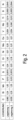
- figure 2 shows two different alloy compositions according to the invention, the elements of which are each given in % by weight.
- the remainder of these alloys is iron (Fe) and impurities that are unavoidable due to production, each with a maximum of 0.05% by weight and a maximum of 0.15% by weight in total.
- Alloy 1 has slightly higher levels of carbon and chromium and can therefore achieve higher mechanical properties. Depending on customer requirements, however, a lower tensile strength can also be desired, as alloy 2 shows. Heavy plates with these alloys 1 and 2 were produced.
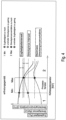
- figure 4 shows schematically the optimal range of the first temperature T1, referred to as the cooling stop temperature, and provides corresponding explanations.
- the customer needs a heavy plate with a specific range of tensile strength (R m ) and yield point R p0.2 (0.2% proof stress) - these should each be within a certain range in order to to process the product accordingly.
- the inventors have recognized that by suitably setting the cooling stop temperature (T1), the mechanical properties can be influenced and, in particular, the yield point ratio (STV), namely R p0.2 /R m , can be optimized. If the first temperature T1 is too low, for example below 250° C., the tensile strength becomes too high and/or the yield point becomes too low. On the other hand, if the first temperature T1 is too high, the tensile strength falls again or the yield point may even become too high, as a result of which the yield point ratio becomes comparatively unfavorable.
- An optimal range for T1 must therefore be selected, which according to the invention is in the range from 250°C to 500°C, in particular in the range from 300°C to 450°C.
- the mechanical properties can be further influenced by suitable setting of the straightening temperature—and in particular the yield point ratio (STV), namely R p0.2 /R m , can be further optimized.
- STV yield point ratio
Landscapes
- Chemical & Material Sciences (AREA)
- Engineering & Computer Science (AREA)
- Mechanical Engineering (AREA)
- Materials Engineering (AREA)
- Metallurgy (AREA)
- Organic Chemistry (AREA)
- Physics & Mathematics (AREA)
- Thermal Sciences (AREA)
- Crystallography & Structural Chemistry (AREA)
- Heat Treatment Of Steel (AREA)
- Metal Rolling (AREA)
Abstract
Es wird ein Grobblech und ein thermomechanisches Behandlungsverfahren eines Vormaterials, insbesondere einer Bramme, zur Herstellung des Grobblechs bestehend aus einer Stahllegierung gezeigt. Ein Optimum an Zähigkeitswerten und Streckgrenzenverhältnis R<sub>p0,2</sub>/R<sub>m</sub> kann gefunden werden, in dem in einer ersten Stufe (8a) nach dem zweiten Walzen (W2) von einer zweiten Endwalztemperatur, insbesondere ≥ Ar3, des zweiten Walzens (W2) auf eine erste Temperatur (T1) zwischen 250 und 500 °C, insbesondere auf 300 bis 450 °C, mit einer ersten Abkühlrate (KR1) abgekühlt und in einer nachfolgenden zweiten Stufe (8b) auf Raumtemperatur (RT) mit einer zweiten Abkühlrate (KR2) abgekühlt wird, wobei nach der ersten Stufe (8a), insbesondere während der zweiten Stufe (8b), gerichtet, insbesondere warmgerichtet, wird, und wobei die erste Abkühlrate (KR1) > der zweiten Abkühlrate (KR2) ist.
Description
- Die Erfindung betrifft eine thermomechanisches Behandlungsverfahren zur Herstellung von Grobblech aus einer Stahllegierung.
- Um die Zähigkeit, besonders die Tieftemperaturzähigkeit, eines Grobblechs aus einer Stahllegierung zu erhöhen, ist aus der
WO2011/079341A2 ein thermomechanisches Behandlungsverfahren bekannt, bei dem das Grobblech mehrstufig warmgewalzt und zwischen zwei Warmwalzstichen beschleunigt auf unter Ar3-Temperatur abgekühlt und induktiv auf über Ac3-Temperatur erwärmt wird. - Nach dem letzten Warmwalzstich erfolgt eine zweistufige Abkühlung auf Raumtemperatur, zunächst mit einer beschleunigen Abkühlrate durch Wasserabschrecken bis zu einer Kühlstopptemperatur unterhalb von Ar3 und abschließend mit einer Abkühlung auf Raumtemperatur.
- Trotz hoher Tieftemperaturzähigkeit können diese Grobbleche nachteilig je nach Herstellungsroute einen hohen Anteil an inneren Spannungen aufweisen. Dies hat negative Einflüsse auf die Verarbeitbarkeit - beispielsweise beim Brennschnitt.
- Es ist daher die Aufgabe der Erfindung, ein thermomechanisches Behandlungsverfahren zur Herstellung von Grobblech zu schaffen, mit dem reproduzierbar ein spannungsarmes Grobblech mit hohen Zähigkeitswerten geschaffen werden kann.
- Die Erfindung löst die gestellte Aufgabe durch die Merkmale des Anspruchs 1.
- Dadurch, dass in einer ersten Stufe nach dem zweiten Walzen von einer zweiten Endwalztemperatur, insbesondere ≥ Ar3, des zweiten Walzens auf eine erste Temperatur zwischen 250 und 500 °C, insbesondere auf 300 bis 450 °C, mit einer ersten Abkühlrate KR1 abgekühlt und in einer nachfolgenden zweiten Stufe auf Raumtemperatur mit einer zweiten Abkühlrate KR2 abgekühlt wird, wobei nach der ersten Stufe, insbesondere während der zweiten Stufe, gerichtet, insbesondere warmgerichtet, wird, und wobei die erste Abkühlrate KR1 > der zweiten Abkühlrate KR2 ist, kann sowohl eine ausreichend hohe Zugfestigkeit Rm sichergestellt, als auch eine optimierte, vergleichsweise hohe Streckgrenze Rp0,2 erzielt werden.
- Dieses optimierte, vergleichsweise hohe Streckgrenzenverhältnis Rp0,2/Rm, welches beispielsweise zwischen 0,70 und 0,90 liegen kann, bietet den Vorteil, dass die Umformbarkeit des Materials bei steigendem Streckgrenzenverhältnis ansteigt, allerdings sollte es nicht zu hoch sein, sodass ein gewisses "Sicherheitspolster" bei Überlastung hinsichtlich Materialüberbeanspruchung oder Risse noch gegeben sein kann. Insbesondere kann durch die beschleunigte Abkühlung das Gefüge des Stahlmaterials weiter positiv beeinflusst und der Anteil an bainitischen Strukturen erhöht werden. Das erfindungsgemäße Grobblech mit einer Stahllegierung, aufweisend jeweils in Gew.-%
0,01 bis 0,20 Kohlenstoff (C), 0,5 bis 2,50 Mangan (Mn), 0,05 bis 0,80 Silizium (Si), 0,01 bis 0,20 Aluminium (Al), < 0,05 Phosphor (P), < 0,01 Schwefel (S) - Optional kann diese Stahllegierung jeweils in Gew.-% einzeln oder in Kombination aus der Gruppe:
0 bis 1,5 Chrom (Cr) 0 bis 1,0 Molybdän (Mo) 0 bis 1,0 Kupfer (Cu) 0 bis 5,0 Nickel (Ni) 0 bis 0,30 Vanadium (V) 0 bis 0,20 Titan (Ti) 0 bis 0,20 Niob (Nb) 0 bis 0,005 Bor (B) 0 bis 0,015 Stickstoff (N) 0 bis 0,01 Kalzium (Ca) - In einer bevorzugten Ausführungsform weist die Stahllegierung (jeweils in Gew.-%)
0,02 bis 0,1 Kohlenstoff (C), 1,0 bis 2,0 Mangan (Mn), 0,1 bis 0,80 Silizium (Si), 0,010 bis 0,15 Aluminium (Al), < 0,050 Phosphor (P) und < 0,010 Schwefel (S) - Optional kann die Stahllegierung einzeln oder in Kombination aus der Gruppe (jeweils in Gew.-%):
0 bis 0,75 Kupfer (Cu) 0 bis 3,0 Nickel (Ni) 0 bis 0,20 Vanadium (V) 0 bis 0,003 Bor (B) - Vorzugsweise ist die erste Temperatur (T1) in Grad Celsius

- Vorzugsweise ist die erste Temperatur (T1) in Grad Celsius

- Bei allen Formelangaben sind die Dicken in mm und die Temperaturen in °C und die Abkühlraten in °C/s zu verwenden.
- Beträgt das Verhältnis von der ersten Abkühlrate KR1 zur zweiten Abkühlrate KR2 mindestens 2:1, kann dies ermöglichen die gewünschte Gefügeausbildung, bestehend aus Ferrit, Bainit und gegebenenfalls Martensit, reproduzierbarer zu erzeugen und damit ein hohes Streckgrenzenverhältnis Rp0,2/Rm bei hoher Zähigkeit zu erreichen. Dies insbesondere, wenn das Verhältnis von der ersten Abkühlrate KR1 zur zweiten Abkühlrate KR2 mindestens 3:1, ist. Die Gefügebildung kann weiter in Richtung Martensit verschoben werden, welche durch die KR1 maßgeblich beeinflusst werden kann - daher kann der Wert der Zugfestigkeit umso höher liegen, je höher das Abkühlratenverhältnis gewählt wurde. Die Streckgrenze hingegen kann dadurch negativ beeinflusst werden. Je nach Kundenforderung an die mechanischen Werte des gewünschten Produkts kann das Abkühlratenverhältnis ausgewählt werden.
- Wenn die zweite Abkühlrate (KR2) ≤ 5 °C/s, insbesondere ≤ 3 °C/s, beträgt, werden die Gefügebildung und die mechanischen Eigenschaften vergleichsweise wenig beeinflusst.
- Beispielsweise wird nach dem Ende der Schnellkühlung, nämlich der Abkühlung mit der ersten Abkühlrate (KR1), also bei einer Temperatur im Bereich von T1 bzw. geringfügig darunter, mit einem Plastifizierungsgrad von 40 bis 80% gerichtet, insbesondere warmgerichtet. Dies kann ein optimales Verhältnis aus der Ebenheit (hoher Plastifizierungsgrad vorteilhaft), der Streckgrenze und Zähigkeit bewirken. Ein zu hoher Plastifizierungsgrad könnte zu unerwünscht hohen Werten für das Streckgrenzenverhältnis führen. Überraschenderweise kann dieses "warme" Richten, also ein Richten deutlich über der Raumtemperatur (beispielsweise im Bereich von 250 bis 500°C) gute mechanische Eigenschaften bewirken.
- Es wird vermutet, dass zwar eine geringere Kaltverfestigung als beim "kalten" Richten bewirkt wird, andererseits aber der Effekt von Ausscheidungen durch das "warme" Richten deutlich stärker ausgeprägt auftritt und dies überraschend ebenfalls zu den optimierten Eigenschaften der guten Umformeigenschaften führen kann.
- Vorzugsweise wird auf eine Dicke des Grobblechs im Bereich von 8 bis 150 mm (Millimeter), insbesondere im Bereich von 25 bis 120 mm, endumgeformt.
- Vorzugsweise erfolgt das Richten bei einer Richttemperatur innerhalb eines Temperaturbereichs von erster Temperatur (T1) bis erster Temperatur (T1) abzüglich 100 °C.
- Es ist zudem die Aufgabe der Erfindung ein Grobblech zu schaffen, das trotz hoher Zähigkeitswerte ein vergleichsweise hohes Streckgrenzenverhältnis Rp0,2/Rm aufweist.
- Die Erfindung löst die gestellte Aufgabe durch die Merkmale des Anspruchs 11.
- Erfindungsgemäß kann durch das thermomechanische Behandlungsverfahren das Grobblech ein Streckgrenzenverhältnis Rp0,2/Rm von < 0,9 aufweisen. Vorzugsweise ist das Streckgrenzenverhältnis Rp0,2/Rm < 0,90.
- In einer bevorzugten Ausführungsform weist das Grobblech ein Streckgrenzenverhältnis Rp0,2/Rm von > 0,70 auf.
- Vorzugsweise weist das Grobblech eine Dicke im Bereich von 8 bis 150 mm, insbesondere im Bereich von 25 bis 120 mm, auf.
- Im Allgemeinen wird erwähnt, dass bei einem Vormaterial aufgrund dessen vergleichsweise hohen Dicke sich über die Dicke des Vormaterials verschiedenste Abkühlraten und/oder Heizraten ausbilden. Beispielsweise kann eine Abkühlrate auf der Außenseite des Vormaterials wesentlich höher sein als jene Abkühlrate in seinem Kern. Daher ist die jeweilige Abkühlrate (KR1, KR2) oder Heizrate von der Anfangstemperatur bis zur Endtemperatur ein Durchschnittswert, nämlich eine über die Dicke des Vormaterials gemittelte Abkühlrate oder Heizrate von der Anfangstemperatur bis zur Endtemperatur.
- In den Figuren ist beispielsweise der Erfindungsgegenstand anhand einer Ausführungsvariante näher dargestellt. Es zeigen
-
Fig. 1 Temperaturprofile von zwei thermomechanischen Behandlungsverfahren, -
Fig. 2 zwei unterschiedliche erfindungsgemäße Legierungszusammensetzungen, -
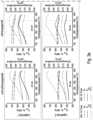
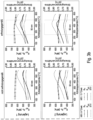
Figuren 3a und3b eine Gegenüberstellung von mechanischen Kennwerten für die Legierungen ausFigur 2 bei unterschiedlichen Dicken, hergestellt nach unterschiedlichen Verfahren, wobeiFigur 3a ein Grobblech mit 25 mm Dicke undFigur 3b ein Grobblech mit 50 mm Dicke zeigen und -
Fig. 4 eine schematische Darstellung des optimalen Prozessfensters für die erfindungsgemäße ersten Temperatur T1 (Kühlstopptemperatur). - Nach
Fig. 1 werden zwei Temperaturprofile 1, 2 eines thermomechanisches Behandlungsverfahren zur Herstellung eines Grobblechs A, B aus einer Stahllegierung dargestellt. Beide Grobbleche A, B weisen die gleiche Stahllegierung mit0,060 Gew.-% (C) Kohlenstoff, 0,34 Gew.-% (Si) Silizium, 1,63 Gew.-% (Mn) Mangan, 0,012 Gew.-% (P) Phosphor, 0,001 Gew.-% (S) Schwefel, 0,04 Gew.-% (Al) Aluminium, 0,40 Gew.-% (Cr) Chrom, 0,01 Gew.-% (Ni) Nickel, 0,20 Gew.-% (Mo) Molybdän, 0,035 Gew.-% (Nb) Niob, 0,014 Gew.-% (Ti) Titan, 0,0003 Gew.-% (B) Bor, 0,0045 Gew.-% (N) Stickstoff, 0,0018 Gew.-% (Ca) Kalzium - Nach
Fig. 1 ist zu erkennen, dass das erste Temperaturprofil 1 und das zweite Temperaturprofil 2 sich am Ende des Verfahrens der mehrstufigen Abkühlung 3 auf Raumtemperatur RT unterscheiden. Die vorangehenden Verfahrens-Schritte sind gleich. So durchläuft das Vormaterial, nämlich Bramme, des jeweiligen Grobblechs A, B eine Erwärmung 4 auf über Ac3-Temperatur, nämlich 1100 °C (Grad Celsius), beispielsweise mit einer Einrichtung zur Brammenerwärmung. - Das Vormaterial wird anschließend durch erstes Walzen W1 teilumgeformt.
- Dem schließt ein beschleunigtes Abkühlen 5, nämlich Abschrecken vorzugsweise Wasserabschreckung, an, mit dem das Vormaterial von der ersten Walzendtemperatur, die über Ac3 liegt, auf unter Ar3-Temperatur abgekühlt wird, nämlich - wie in
Fig. 1 zu erkennen - wird das Vormaterial auf unter Ar1 Temperatur abgekühlt bzw. abgeschreckt. - Dem folgt unmittelbar eine schnelle, bevorzugt induktive, Erwärmung 6 auf über Ac3-Temperatur, mit welcher Temperatur als Walzanfangstemperatur das Vormaterial einem zweiten Walzen W2 auf eine Dicke des Grobblechs (Enddicke des Vormaterials) endumgeformt wird
- Das Vormaterial verlässt das zweite Walzen W2 mit einer zweiten Endwalztemperatur EW2 ≥ Ar3, nämlich 830 °C. Anstatt des induktiven Erwärmens ist sind auch andere Heizquellen vorstellbar, beispielsweise Quellen mit Strahlungswärme. Dieses schnelle Erwärmen, sei es nun induktiv oder mit Strahlungswärme etc., erfolgt mit mindestens 12°C/min.
- An dieses zweite Walzen W2, was auch als Endwalzen bezeichnet werden kann, schließen zwei unterschiedliche mehrstufige Abkühlungen 3 auf Raumtemperatur RT (welche üblicherweise bei diesen Verfahren zwischen 0 und 60 Grad Celsius liegt, beispielsweise 20 Grad Celsius beträgt) an.
- So wird das Vormaterial des Grobblechs A in einer ersten Stufe 7a der Abkühlung 3 nach dem Endwalzen W2 von der zweiten Endwalztemperatur auf eine Temperatur T, nämlich 100 °C, beschleunigt durch Wasserabschrecken mit 20 °C/s abgekühlt bzw. abgeschreckt. Danach wird das Vormaterial bei dieser Temperatur T gerichtet. An das Abschrecken schließt eine Abkühlung mit 0,1 °C/s an ruhender Luft bei Umgebungstemperatur auf Raumtemperatur RT als darauffolgende zweite Stufe 7b der mehrstufigen Abkühlung 3 an.
- Die erfindungsgemäße mehrstufige Abkühlung 3 ist am Vormaterial des Grobblechs B zu erkennen. Hier wird nach dem Endwalzen W2 in einer ersten Stufe 8a das Vormaterial mit einer ersten Abkühlrate KR1, nämlich 20 °C/s, durch Wasserabschrecken von der zweiten Endwalztemperatur EW2 auf eine erste Temperatur T1, nämlich auf 420 °C (Grad Celsius), beschleunigt abgekühlt bzw. abgeschreckt.
- Danach wird das Vormaterial warmgerichtet, und zwar mit einem Plastifizierungsgrad von 50%. Das Vormaterial weist beim Richten um die 420 °C (Grad Celsius) auf. Eine gewisse Abkühlung bis zum Beginn des Richtens kann aber nicht ausgeschlossen werden. Spätestens erfolgt das Warmrichten bei 320 Grad Celsius am Vormaterial.
- In einer nachfolgenden zweiten Stufe 8b wird das Vormaterial mit einer zweiten Abkühlrate KR2, nämlich 0,1 °C/s an ruhender Luft bei Umgebungstemperatur auf Raumtemperatur (RT) abgekühlt. Das Warmrichtern kann aber auch in der zweiten Stufe erfolgen.
- Wie zudem in der
Fig. 1 zu erkennen ist, ist die erste Abkühlrate KR1 > zweite Abkühlrate KR2, nämlich um einen Faktor von 200 größer als die zweite Abkühlrate KR2. - Im Allgemeinen wird erwähnt, dass unter einem beschleunigten Abkühlen eine schnellere Abkühlung als eine Abkühlung bei Raumtemperatur und ruhender Luft verstanden werden kann, was auch oftmals als Abschrecken bezeichnet wird.
- Als Vormaterial ist auch ein Block oder ein Knüppel denkbar.
- Zudem kann das erste und/oder zweite Walzen aus einem oder mehreren Teilwalzen mit eventuell mehreren Teilwalzschritten (Stichen) bestehen, was beispielsweise durch ein reversierendes Walzen möglich ist.
- Dieser Verfahrensunterschied in der mehrstufigen Abkühlung 3 führt bei den Grobblechen zu den angeführten mechanischen Kennwerten. Spannung σ und Dehnung ε wurden mit mittels Zugversuch (Zugprüfung laut Norm DIN EN 10002-1) und die Zähigkeit wurde mittels einer Kerbschlagbiegeprüfung laut Norm DIN EN ISO 148-1 ermittelt.
- Grobblech A (nicht erfindungsgemäßes Verfahren mit Temperaturprofil 1) weist folgende Werte auf:
- Rp0,2 = 444 N/mm2
- Rm = 673 N/mm2
- Rp0,2/Rm = 0,66
- Grobblech B (erfindungsgemäßes Verfahren mit Temperaturprofil 2) weist folgende Werte auf:
- Rp0,2 = 502 N/mm2
- Rm = 668 N/mm2
- Rp0,2/Rm = 0,75
- Grobblech B weist daher im Vergleich mit Grobblech A höhere Zähigkeitswerte und ein gewünschtes Streckgrenzenverhältnis Rp0,2/Rm im Bereich von 0,70 bis 0,90 auf.
- Weitere Ausführungsbeispiele sind in den
Figuren 2 ,3a und3b dargestellt. -
Figur 2 zeigt zwei unterschiedliche erfindungsgemäße Legierungszusammensetzungen, deren Elemente jeweils in Gew.-% angegeben sind. Als Rest weisen diese Legierungen Eisen (Fe) sowie herstellungsbedingt unvermeidliche Verunreinigungen mit jeweils maximal 0,05 Gew.-% und gesamt höchstens 0,15 Gew.-% auf. - Legierung 1 weist etwas höhere Werte an Kohlenstoff und Chrom auf und kann daher höhere mechanische Eigenschaften erreichen. Je nach Kundenwunsch kann aber auch eine niedrigere Zugfestigkeit gewünscht sein, wie Legierung 2 zeigt. Es wurden Grobbleche mit diesen Legierungen 1 und 2 hergestellt.
- Bei den erfindungsgemäßen Beispielen (jeweils auf der rechten Seite der
Figuren 3a und3b ) wurde das Richten bei T1 mit einem Plastifizierungsgrad von 50% durchgeführt. Bei den nicht erfindungsgemäßen Vergleichsbeispielen (jeweils auf der linken Seite derFiguren 3a und3b ) wurde das Richten bei T durchgeführt. - Zusätzlich wurde die erste Abkühlrate KR1 variiert, wobei bei den Beispielen mit 25mm Dicken, welche in
Figur 3a dargestellt; diese sind einmal mit KR1=18°C/s und einmal mit KR1=29°C/s gewählt worden. - In
Figur 3b werden die Ergebnisse der Bleche mit 50mm Dicke dargestellt, wobei die erste Abkühlrate (KR1) einmal 10 °C/s und einmal 13 °C/s betrug. - Man kann in den
Figur 3a und3b deutlich erkennen, dass je nach Varianz der ersten Temperatur T1 bzw. Kühlstopptemperatur im erfindungsgemäßen Bereich von 250 bis 500°C sich ausgezeichnete mechanische Ergebnisse, insbesondere ein optimiertes Streckgrenzenverhältnis (Rp0,2/Rm), einstellen. - Dies kann mit beiden Legierungen realisiert werden, wobei die Legierung 2 hier vergleichsweise niedrigere mechanische Eigenschaften, insbesondere Zugfestigkeit, aufweist.
-
Figur 4 zeigt schematisch den optimalen Bereich der ersten Temperatur T1, bezeichnet als Kühlstopptemperatur, und liefert entsprechende Erklärungen. Der Kunde benötigt je nach Anforderung/Spezifikation für sein gewünschtes Bauteil ein Grobblech mit einem spezifischen Fenster an Zugfestigkeit (Rm) und Streckgrenze Rp0,2 (0,2 %-Dehngrenze) - diese sollten jeweils in einem gewissen Bereich liegen, um das Produkt entsprechend verarbeiten zu können. - Die Erfinder haben erkannt, dass durch geeignete Einstellung der Kühlstopptemperatur (T1) die mechanischen Eigenschaften beeinflusst werden können, als auch insbesondere das Streckgrenzenverhältnis (STV), nämlich Rp0,2/Rm, optimiert werden kann. Dabei werden bei einer zu niedrigeren erste Temperatur T1 zum Beispiel unter 250°C die Zugfestigkeit zu hoch und/oder die Streckgrenze zu niedrig. Auf der anderen Seite, bei einer zu hohen ersten Temperatur T1, sinkt wiederum die Zugfestigkeit ab bzw. wird die Streckgrenze gegebenenfalls sogar zu hoch, wodurch das Streckgrenzenverhältnis vergleichsweise ungünstig wird. Daher muss ein optimaler Bereich für T1 gewählt werden, welcher erfindungsgemäß im Bereich von 250°C bis 500°C, insbesondere im Bereich von 300°C bis 450°C, liegt.
- Gegebenenfalls können durch geeignete Einstellung der Richttemperatur die mechanischen Eigenschaften weiter beeinflusst werden - als auch kann insbesondere das Streckgrenzenverhältnis (STV), nämlich Rp0,2/Rm, weiter optimiert werden.
- Im Allgemeinen wird erwähnt, dass gemäß der DIN EN 10052 folgende Definitionen bestehen:
- Ac3: Temperatur, bei der die Umwandlung des Ferrits in Austenit bei einem Wärmen endet.
- Ar1: Temperatur, bei der die Umwandlung des Austenits in Ferrit oder in Ferrit und Zementit bei einem Abkühlen endet.
- Ar3: Temperatur, bei der die Bildung des Ferrits bei einem Abkühlen beginnt.
Claims (13)
- Thermomechanisches Behandlungsverfahren eines Vormaterials, insbesondere einer Bramme, zur Herstellung eines Grobblechs bestehend aus einer Stahllegierung, aufweisend jeweils in Gew.-%
0,01 bis 0,20 Kohlenstoff (C), 0,5 bis 2,50 Mangan (Mn), 0,05 bis 0,80 Silizium (Si), 0,01 bis 0,20 Aluminium (Al), < 0,05 Phosphor (P), < 0,01 Schwefel (S), 0 bis 1,5 Chrom (Cr) 0 bis 1,0 Molybdän (Mo) 0 bis 1,0 Kupfer (Cu) 0 bis 5,0 Nickel (Ni) 0 bis 0,30 Vanadium (V) 0 bis 0,20 Titan (Ti) 0 bis 0,20 Niob (Nb) 0 bis 0,005 Bor (B) 0 bis 0,015 Stickstoff (N) 0 bis 0,01 Kalzium (Ca) Erwärmen auf über Ac3-Temperatur und Teilumformen durch ein erstes Walzen (W1),beschleunigtes Abkühlen nach dem ersten Walzen (W1) von einer ersten Walzendtemperatur auf unter Ar3-Temperatur, insbesondere auf unter Ar1-Temperatur,Erwärmen nach diesem beschleunigten Abkühlen auf eine zweite Walzanfangstemperatur für ein zweites Walzen (W2) über Ac3-Temperatur und Endumformen durch dieses zweite Walzen (W2) auf eine Dicke des Grobblechs undmehrstufige Abkühlung mit zumindest einem Richten nach dem Endumformen, indemin einer ersten Stufe (8a) nach dem zweiten Walzen (W2) von einer zweiten Endwalztemperatur, insbesondere ≥ Ar3, des zweiten Walzens (W2) auf eine erste Temperatur (T1) zwischen 250 und 500 °C, insbesondere auf 300 bis 450 °C, mit einer ersten Abkühlrate (KR1) abgekühlt undin einer nachfolgenden zweiten Stufe (8b) auf Raumtemperatur (RT) mit einer zweiten Abkühlrate (KR2) abgekühlt wird,wobei nach der ersten Stufe (8a), insbesondere während der zweiten Stufe (8b), gerichtet, insbesondere warmgerichtet, wird,und wobei die erste Abkühlrate (KR1) > der zweiten Abkühlrate (KR2) ist. - Thermomechanisches Behandlungsverfahren nach Anspruch 1, dadurch gekennzeichnet, dass die erste Temperatur (T1) in Grad Celsius
 TMmin = 450DeltaTmin = -390Cmin = 0,032Nmin = 0,85und
Dicke = Dicke des Grobblechs in Millimetern ist. - Thermomechanisches Behandlungsverfahren nach Anspruch 1 oder 2, dadurch gekennzeichnet, dass die erste Temperatur (T1) in Grad Celsius
 TMmax = 730DeltaTmax = -210Cmax = 0,025Nmax = 0,95und
Dicke = Dicke des Grobblechs in Millimetern ist. - Thermomechanisches Behandlungsverfahren nach einem der Ansprüche 1 bis 3, dadurch gekennzeichnet, dass das Verhältnis von der ersten Abkühlrate (KR1) zur zweiten Abkühlrate (KR2) mindestens 2:1, insbesondere mindestens 3:1, beträgt.
- Thermomechanisches Behandlungsverfahren nach einem der Ansprüche 1 bis 4, dadurch gekennzeichnet, dass die zweite Abkühlrate (KR2) ≤ 5 °C/s, insbesondere ≤ 3 °C/s, ist.
- Thermomechanisches Behandlungsverfahren nach einem der Ansprüche 1 bis 5, dadurch gekennzeichnet, dass mit einem Plastifizierungsgrad von 40 bis 80 % gerichtet, insbesondere warmgerichtet, wird.
- Thermomechanisches Behandlungsverfahren nach einem der Ansprüche 1 bis 6, dadurch gekennzeichnet, dass auf eine Dicke des Grobblechs im Bereich von 8 bis 150 mm, insbesondere im Bereich von 25 bis 120 mm, endumgeformt wird.
- Thermomechanisches Behandlungsverfahren nach einem der Ansprüche 1 bis7, dadurch gekennzeichnet, dass die Stahllegierung jeweils in Gew.-%
0,02 bis 0,1 Kohlenstoff (C), 1,0 bis 2,0 Mangan (Mn), 0,1 bis 0,80 Silizium (Si), 0,010 bis 0,15 Aluminium (Al), < 0,050 Phosphor (P) und < 0,010 Schwefel (S) - Thermomechanisches Behandlungsverfahren nach einem der Ansprüche 1 bis 8, dadurch gekennzeichnet, dass die Stahllegierung jeweils in Gew.-% optional einzeln oder in Kombination aus der Gruppe:
0 bis 0,75 Kupfer (Cu) 0 bis 3,0 Nickel (Ni) 0 bis 0,20 Vanadium (V) 0 bis 0,003 Bor (B) - Thermomechanisches Behandlungsverfahren nach einem der Ansprüche 1 bis 9, dadurch gekennzeichnet, dass das Richten bei einer Richttemperatur innerhalb eines Temperaturbereichs von erster Temperatur (T1) bis erster Temperatur (T1) abzüglich 100 °C erfolgt.
- Grobblech, hergestellt durch das thermomechanische Behandlungsverfahren nach einem der Ansprüche 1 bis 10, dadurch gekennzeichnet, dass das Grobblech ein Streckgrenzenverhältnis (Rp0,2/Rm) von < 0,9, insbesondere von < 0,90, aufweist.
- Grobblech nach Anspruch 11, dadurch gekennzeichnet, dass das Grobblech ein Streckgrenzenverhältnis (Rp0,2/Rm) von > 0,70 aufweist.
- Grobblech nach Anspruch 11 oder 12, dadurch gekennzeichnet, dass das Grobblech eine Dicke im Bereich von 8 bis 150 mm, insbesondere im Bereich von 25 bis 120 mm, aufweist.
Priority Applications (7)
| Application Number | Priority Date | Filing Date | Title |
|---|---|---|---|
| EP21218235.6A EP4206336A1 (de) | 2021-12-29 | 2021-12-29 | Grobblech und thermomechanisches behandlungsverfahren eines vormaterials zur herstellung eines grobblechs |
| EP22844550.8A EP4457371A1 (de) | 2021-12-29 | 2022-12-29 | Grobblech und thermomechanisches behandlungsverfahren eines vormaterials zur herstellung des grobblechs |
| JP2024536395A JP2025500932A (ja) | 2021-12-29 | 2022-12-29 | 厚板、及び厚板を製造するための出発原料の加工熱処理方法 |
| PCT/EP2022/088053 WO2023126507A1 (de) | 2021-12-29 | 2022-12-29 | Grobblech und thermomechanisches behandlungsverfahren eines vormaterials zur herstellung des grobblechs |
| US18/721,572 US20250059617A1 (en) | 2021-12-29 | 2022-12-29 | Heavy plate and thermomechanical treatment method for a starting material for the production of the heavy plate |
| CN202280085351.XA CN118434886A (zh) | 2021-12-29 | 2022-12-29 | 厚板及用于制造厚板的针对初加工材料的热机械处理方法 |
| KR1020247025496A KR20240132324A (ko) | 2021-12-29 | 2022-12-29 | 중판 및 중판의 제조를 위한 출발 물질에 대한 열기계적 처리 방법 |
Applications Claiming Priority (1)
| Application Number | Priority Date | Filing Date | Title |
|---|---|---|---|
| EP21218235.6A EP4206336A1 (de) | 2021-12-29 | 2021-12-29 | Grobblech und thermomechanisches behandlungsverfahren eines vormaterials zur herstellung eines grobblechs |
Publications (1)
| Publication Number | Publication Date |
|---|---|
| EP4206336A1 true EP4206336A1 (de) | 2023-07-05 |
Family
ID=80123361
Family Applications (2)
| Application Number | Title | Priority Date | Filing Date |
|---|---|---|---|
| EP21218235.6A Withdrawn EP4206336A1 (de) | 2021-12-29 | 2021-12-29 | Grobblech und thermomechanisches behandlungsverfahren eines vormaterials zur herstellung eines grobblechs |
| EP22844550.8A Pending EP4457371A1 (de) | 2021-12-29 | 2022-12-29 | Grobblech und thermomechanisches behandlungsverfahren eines vormaterials zur herstellung des grobblechs |
Family Applications After (1)
| Application Number | Title | Priority Date | Filing Date |
|---|---|---|---|
| EP22844550.8A Pending EP4457371A1 (de) | 2021-12-29 | 2022-12-29 | Grobblech und thermomechanisches behandlungsverfahren eines vormaterials zur herstellung des grobblechs |
Country Status (6)
| Country | Link |
|---|---|
| US (1) | US20250059617A1 (de) |
| EP (2) | EP4206336A1 (de) |
| JP (1) | JP2025500932A (de) |
| KR (1) | KR20240132324A (de) |
| CN (1) | CN118434886A (de) |
| WO (1) | WO2023126507A1 (de) |
Citations (5)
| Publication number | Priority date | Publication date | Assignee | Title |
|---|---|---|---|---|
| JPS6320414A (ja) * | 1986-07-14 | 1988-01-28 | Sumitomo Metal Ind Ltd | 高靭性高張力鋼板の製造法 |
| EP2340897A1 (de) * | 2009-12-23 | 2011-07-06 | Voestalpine Grobblech GmbH | Thermomechanisches Behandlungsverfahren für Grobbleche |
| JP2012207237A (ja) * | 2011-03-29 | 2012-10-25 | Jfe Steel Corp | 多層盛溶接部の靭性に優れた降伏強さ500MPa級厚鋼板およびその製造方法 |
| JP2013139610A (ja) * | 2012-01-05 | 2013-07-18 | Jfe Steel Corp | 引張強さ780MPa以上の高張力厚鋼板およびその製造方法 |
| JP2015218360A (ja) * | 2014-05-16 | 2015-12-07 | 新日鐵住金株式会社 | 圧延鋼材及びその製造方法 |
Family Cites Families (5)
| Publication number | Priority date | Publication date | Assignee | Title |
|---|---|---|---|---|
| FR2860738B1 (fr) | 2003-10-13 | 2006-02-03 | Vai Clecim | Procede d'augmentation de la precision du controle de la trajectoire du produit dans une machine a planer a rouleaux imbriques et installation de planage permettant la mise en oeuvre du procede. |
| CN103320692B (zh) * | 2013-06-19 | 2016-07-06 | 宝山钢铁股份有限公司 | 超高韧性、优良焊接性ht550钢板及其制造方法 |
| KR102307903B1 (ko) * | 2019-11-04 | 2021-09-30 | 주식회사 포스코 | 저온 충격인성이 우수한 고강도 강재 및 그 제조방법 |
| CN113737088B (zh) * | 2020-05-28 | 2022-10-21 | 宝山钢铁股份有限公司 | 低屈强比、高韧性及高焊接性800MPa级钢板及其制造方法 |
| EP3964592A1 (de) | 2020-09-07 | 2022-03-09 | ThyssenKrupp Steel Europe AG | Warmgewalztes stahlflachprodukt und verfahren zur herstellung eines warmgewalzten stahlflachprodukts |
-
2021
- 2021-12-29 EP EP21218235.6A patent/EP4206336A1/de not_active Withdrawn
-
2022
- 2022-12-29 EP EP22844550.8A patent/EP4457371A1/de active Pending
- 2022-12-29 JP JP2024536395A patent/JP2025500932A/ja active Pending
- 2022-12-29 CN CN202280085351.XA patent/CN118434886A/zh active Pending
- 2022-12-29 KR KR1020247025496A patent/KR20240132324A/ko active Pending
- 2022-12-29 WO PCT/EP2022/088053 patent/WO2023126507A1/de not_active Ceased
- 2022-12-29 US US18/721,572 patent/US20250059617A1/en active Pending
Patent Citations (6)
| Publication number | Priority date | Publication date | Assignee | Title |
|---|---|---|---|---|
| JPS6320414A (ja) * | 1986-07-14 | 1988-01-28 | Sumitomo Metal Ind Ltd | 高靭性高張力鋼板の製造法 |
| EP2340897A1 (de) * | 2009-12-23 | 2011-07-06 | Voestalpine Grobblech GmbH | Thermomechanisches Behandlungsverfahren für Grobbleche |
| WO2011079341A2 (de) | 2009-12-23 | 2011-07-07 | Voestalpine Grobblech Gmbh | Thermomechanisches behandlungsverfahren |
| JP2012207237A (ja) * | 2011-03-29 | 2012-10-25 | Jfe Steel Corp | 多層盛溶接部の靭性に優れた降伏強さ500MPa級厚鋼板およびその製造方法 |
| JP2013139610A (ja) * | 2012-01-05 | 2013-07-18 | Jfe Steel Corp | 引張強さ780MPa以上の高張力厚鋼板およびその製造方法 |
| JP2015218360A (ja) * | 2014-05-16 | 2015-12-07 | 新日鐵住金株式会社 | 圧延鋼材及びその製造方法 |
Non-Patent Citations (1)
| Title |
|---|
| MEICHSNER WALTER ET AL: "Secondary steelmaking to ensure stringent quality demands in strand cast steels", THYSSEN TECHNISCHE BERICHTE,, vol. 22, no. 1, 1 January 1990 (1990-01-01), pages 13 - 34, XP009189819, ISSN: 0340-5060 * |
Also Published As
| Publication number | Publication date |
|---|---|
| KR20240132324A (ko) | 2024-09-03 |
| WO2023126507A1 (de) | 2023-07-06 |
| US20250059617A1 (en) | 2025-02-20 |
| EP4457371A1 (de) | 2024-11-06 |
| JP2025500932A (ja) | 2025-01-15 |
| CN118434886A (zh) | 2024-08-02 |
Similar Documents
| Publication | Publication Date | Title |
|---|---|---|
| DE3586662T2 (de) | Hochfester, niedrig gekohlter stahl, gegenstaende daraus und verfahren zur herstellung dieses stahls. | |
| DE2551791C3 (de) | Anwendung eines Verfahrens zur Herstellung von Kaltbändern | |
| DE2426920C2 (de) | Verfahren zum Herstellen von schweißbarem Stabstahl und Verwendung des Verfahrens | |
| DE10259230A1 (de) | Verfahren zum Herstellen eines Stahlprodukts | |
| DE2362658C3 (de) | Verfahren zum Herstellen von Stahlblech mit hervorragender Preßverformbarkeit | |
| DE102008056844A1 (de) | Manganstahlband und Verfahren zur Herstellung desselben | |
| WO2015144529A1 (de) | Verfahren zur erzeugung eines hochfesten stahlflachprodukts | |
| DE60300561T3 (de) | Verfahren zur Herstellung eines warmgewalzten Stahlbandes | |
| EP2690183A1 (de) | Warmgewalztes Stahlflachprodukt und Verfahren zu seiner Herstellung | |
| EP0352597A1 (de) | Verfahren zur Erzeugung von Warmband oder Grobblechen | |
| DE112020006043T5 (de) | Kaltgewalztes stahlblech mit ultrahoher festigkeit und verfahren zu dessen herstellung | |
| DE102018132860A1 (de) | Verfahren zur Herstellung von konventionell warmgewalzten, profilierten Warmbanderzeugnissen | |
| EP3325678B1 (de) | Umformbarer leichtbaustahl mit verbesserten mechanischen eigenschaften und verfahren zur herstellung von halbzeug aus diesem stahl | |
| DE69521284T2 (de) | Verfahren zum Herstellen von Stahlblechen hoher Schlagfestigkeit für den Automobilbau | |
| DE102018132901A1 (de) | Verfahren zur Herstellung von konventionell warmgewalzten Warmbanderzeugnissen | |
| DE102016115618A1 (de) | Verfahren zur Herstellung eines höchstfesten Stahlbandes mit verbesserten Eigenschaften bei der Weiterverarbeitung und ein derartiges Stahlband | |
| DE3440752C2 (de) | ||
| DE102007030207A1 (de) | Verwendung einer hochfesten Stahllegierung zur Herstellung von Strahlrohren mit hoher Festigkeit und guter Umformbarkeit | |
| DE2133744A1 (de) | Die verwendung eines vollberuhigten stahles fuer bauteile aus warmgewalztem band | |
| EP1918403B1 (de) | Verfahren zum Herstellen von Stahl-Flachprodukten aus einem ein martensitisches Gefüge bildenden Stahl | |
| DE102018132908A1 (de) | Verfahren zur Herstellung von thermo-mechanisch hergestellten Warmbanderzeugnissen | |
| WO2023126506A1 (de) | Grobblech und thermomechanisches behandlungsverfahren eines vormaterials zur herstellung des grobblechs | |
| EP1398390B1 (de) | Ferritisch/martensitischer Stahl mit hoher Festigkeit und sehr feinem Gefüge | |
| EP3853385A1 (de) | Verfahren zur herstellung ultrahochfester stahlbleche und stahlblech hierfür | |
| DE112008001181B4 (de) | Verwendung einer Stahllegierung für Achsrohre sowie Achsrohr |
Legal Events
| Date | Code | Title | Description |
|---|---|---|---|
| PUAI | Public reference made under article 153(3) epc to a published international application that has entered the european phase |
Free format text: ORIGINAL CODE: 0009012 |
|
| STAA | Information on the status of an ep patent application or granted ep patent |
Free format text: STATUS: THE APPLICATION HAS BEEN PUBLISHED |
|
| AK | Designated contracting states |
Kind code of ref document: A1 Designated state(s): AL AT BE BG CH CY CZ DE DK EE ES FI FR GB GR HR HU IE IS IT LI LT LU LV MC MK MT NL NO PL PT RO RS SE SI SK SM TR |
|
| STAA | Information on the status of an ep patent application or granted ep patent |
Free format text: STATUS: THE APPLICATION IS DEEMED TO BE WITHDRAWN |
|
| 18D | Application deemed to be withdrawn |
Effective date: 20240106 |