EP4206336A1 - Tôle forte et procédé de traitement thermomécanique d'une matière de départ destiné à la fabrication d'une tôle forte - Google Patents
Tôle forte et procédé de traitement thermomécanique d'une matière de départ destiné à la fabrication d'une tôle forte Download PDFInfo
- Publication number
- EP4206336A1 EP4206336A1 EP21218235.6A EP21218235A EP4206336A1 EP 4206336 A1 EP4206336 A1 EP 4206336A1 EP 21218235 A EP21218235 A EP 21218235A EP 4206336 A1 EP4206336 A1 EP 4206336A1
- Authority
- EP
- European Patent Office
- Prior art keywords
- temperature
- rolling
- thickness
- cooling rate
- treatment method
- Prior art date
- Legal status (The legal status is an assumption and is not a legal conclusion. Google has not performed a legal analysis and makes no representation as to the accuracy of the status listed.)
- Withdrawn
Links
Images


Classifications
-
- C—CHEMISTRY; METALLURGY
- C21—METALLURGY OF IRON
- C21D—MODIFYING THE PHYSICAL STRUCTURE OF FERROUS METALS; GENERAL DEVICES FOR HEAT TREATMENT OF FERROUS OR NON-FERROUS METALS OR ALLOYS; MAKING METAL MALLEABLE, e.g. BY DECARBURISATION OR TEMPERING
- C21D9/00—Heat treatment, e.g. annealing, hardening, quenching or tempering, adapted for particular articles; Furnaces therefor
- C21D9/46—Heat treatment, e.g. annealing, hardening, quenching or tempering, adapted for particular articles; Furnaces therefor for sheet metals
-
- B—PERFORMING OPERATIONS; TRANSPORTING
- B21—MECHANICAL METAL-WORKING WITHOUT ESSENTIALLY REMOVING MATERIAL; PUNCHING METAL
- B21D—WORKING OR PROCESSING OF SHEET METAL OR METAL TUBES, RODS OR PROFILES WITHOUT ESSENTIALLY REMOVING MATERIAL; PUNCHING METAL
- B21D1/00—Straightening, restoring form or removing local distortions of sheet metal or specific articles made therefrom; Stretching sheet metal combined with rolling
- B21D1/06—Removing local distortions
-
- C—CHEMISTRY; METALLURGY
- C21—METALLURGY OF IRON
- C21D—MODIFYING THE PHYSICAL STRUCTURE OF FERROUS METALS; GENERAL DEVICES FOR HEAT TREATMENT OF FERROUS OR NON-FERROUS METALS OR ALLOYS; MAKING METAL MALLEABLE, e.g. BY DECARBURISATION OR TEMPERING
- C21D1/00—General methods or devices for heat treatment, e.g. annealing, hardening, quenching or tempering
- C21D1/02—Hardening articles or materials formed by forging or rolling, with no further heating beyond that required for the formation
-
- C—CHEMISTRY; METALLURGY
- C21—METALLURGY OF IRON
- C21D—MODIFYING THE PHYSICAL STRUCTURE OF FERROUS METALS; GENERAL DEVICES FOR HEAT TREATMENT OF FERROUS OR NON-FERROUS METALS OR ALLOYS; MAKING METAL MALLEABLE, e.g. BY DECARBURISATION OR TEMPERING
- C21D1/00—General methods or devices for heat treatment, e.g. annealing, hardening, quenching or tempering
- C21D1/18—Hardening; Quenching with or without subsequent tempering
-
- C—CHEMISTRY; METALLURGY
- C21—METALLURGY OF IRON
- C21D—MODIFYING THE PHYSICAL STRUCTURE OF FERROUS METALS; GENERAL DEVICES FOR HEAT TREATMENT OF FERROUS OR NON-FERROUS METALS OR ALLOYS; MAKING METAL MALLEABLE, e.g. BY DECARBURISATION OR TEMPERING
- C21D6/00—Heat treatment of ferrous alloys
- C21D6/004—Heat treatment of ferrous alloys containing Cr and Ni
-
- C—CHEMISTRY; METALLURGY
- C21—METALLURGY OF IRON
- C21D—MODIFYING THE PHYSICAL STRUCTURE OF FERROUS METALS; GENERAL DEVICES FOR HEAT TREATMENT OF FERROUS OR NON-FERROUS METALS OR ALLOYS; MAKING METAL MALLEABLE, e.g. BY DECARBURISATION OR TEMPERING
- C21D6/00—Heat treatment of ferrous alloys
- C21D6/005—Heat treatment of ferrous alloys containing Mn
-
- C—CHEMISTRY; METALLURGY
- C21—METALLURGY OF IRON
- C21D—MODIFYING THE PHYSICAL STRUCTURE OF FERROUS METALS; GENERAL DEVICES FOR HEAT TREATMENT OF FERROUS OR NON-FERROUS METALS OR ALLOYS; MAKING METAL MALLEABLE, e.g. BY DECARBURISATION OR TEMPERING
- C21D6/00—Heat treatment of ferrous alloys
- C21D6/008—Heat treatment of ferrous alloys containing Si
-
- C—CHEMISTRY; METALLURGY
- C21—METALLURGY OF IRON
- C21D—MODIFYING THE PHYSICAL STRUCTURE OF FERROUS METALS; GENERAL DEVICES FOR HEAT TREATMENT OF FERROUS OR NON-FERROUS METALS OR ALLOYS; MAKING METAL MALLEABLE, e.g. BY DECARBURISATION OR TEMPERING
- C21D8/00—Modifying the physical properties of ferrous metals or ferrous alloys by deformation combined with, or followed by, heat treatment
- C21D8/02—Modifying the physical properties of ferrous metals or ferrous alloys by deformation combined with, or followed by, heat treatment during manufacturing of plates or strips
-
- C—CHEMISTRY; METALLURGY
- C21—METALLURGY OF IRON
- C21D—MODIFYING THE PHYSICAL STRUCTURE OF FERROUS METALS; GENERAL DEVICES FOR HEAT TREATMENT OF FERROUS OR NON-FERROUS METALS OR ALLOYS; MAKING METAL MALLEABLE, e.g. BY DECARBURISATION OR TEMPERING
- C21D8/00—Modifying the physical properties of ferrous metals or ferrous alloys by deformation combined with, or followed by, heat treatment
- C21D8/02—Modifying the physical properties of ferrous metals or ferrous alloys by deformation combined with, or followed by, heat treatment during manufacturing of plates or strips
- C21D8/0221—Modifying the physical properties of ferrous metals or ferrous alloys by deformation combined with, or followed by, heat treatment during manufacturing of plates or strips characterised by the working steps
- C21D8/0226—Hot rolling
-
- C—CHEMISTRY; METALLURGY
- C21—METALLURGY OF IRON
- C21D—MODIFYING THE PHYSICAL STRUCTURE OF FERROUS METALS; GENERAL DEVICES FOR HEAT TREATMENT OF FERROUS OR NON-FERROUS METALS OR ALLOYS; MAKING METAL MALLEABLE, e.g. BY DECARBURISATION OR TEMPERING
- C21D8/00—Modifying the physical properties of ferrous metals or ferrous alloys by deformation combined with, or followed by, heat treatment
- C21D8/02—Modifying the physical properties of ferrous metals or ferrous alloys by deformation combined with, or followed by, heat treatment during manufacturing of plates or strips
- C21D8/0221—Modifying the physical properties of ferrous metals or ferrous alloys by deformation combined with, or followed by, heat treatment during manufacturing of plates or strips characterised by the working steps
- C21D8/0242—Flattening; Dressing; Flexing
-
- C—CHEMISTRY; METALLURGY
- C21—METALLURGY OF IRON
- C21D—MODIFYING THE PHYSICAL STRUCTURE OF FERROUS METALS; GENERAL DEVICES FOR HEAT TREATMENT OF FERROUS OR NON-FERROUS METALS OR ALLOYS; MAKING METAL MALLEABLE, e.g. BY DECARBURISATION OR TEMPERING
- C21D8/00—Modifying the physical properties of ferrous metals or ferrous alloys by deformation combined with, or followed by, heat treatment
- C21D8/02—Modifying the physical properties of ferrous metals or ferrous alloys by deformation combined with, or followed by, heat treatment during manufacturing of plates or strips
- C21D8/0247—Modifying the physical properties of ferrous metals or ferrous alloys by deformation combined with, or followed by, heat treatment during manufacturing of plates or strips characterised by the heat treatment
- C21D8/0263—Modifying the physical properties of ferrous metals or ferrous alloys by deformation combined with, or followed by, heat treatment during manufacturing of plates or strips characterised by the heat treatment following hot rolling
-
- C—CHEMISTRY; METALLURGY
- C22—METALLURGY; FERROUS OR NON-FERROUS ALLOYS; TREATMENT OF ALLOYS OR NON-FERROUS METALS
- C22C—ALLOYS
- C22C38/00—Ferrous alloys, e.g. steel alloys
- C22C38/001—Ferrous alloys, e.g. steel alloys containing N
-
- C—CHEMISTRY; METALLURGY
- C22—METALLURGY; FERROUS OR NON-FERROUS ALLOYS; TREATMENT OF ALLOYS OR NON-FERROUS METALS
- C22C—ALLOYS
- C22C38/00—Ferrous alloys, e.g. steel alloys
- C22C38/002—Ferrous alloys, e.g. steel alloys containing In, Mg, or other elements not provided for in one single group C22C38/001 - C22C38/60
-
- C—CHEMISTRY; METALLURGY
- C22—METALLURGY; FERROUS OR NON-FERROUS ALLOYS; TREATMENT OF ALLOYS OR NON-FERROUS METALS
- C22C—ALLOYS
- C22C38/00—Ferrous alloys, e.g. steel alloys
- C22C38/02—Ferrous alloys, e.g. steel alloys containing silicon
-
- C—CHEMISTRY; METALLURGY
- C22—METALLURGY; FERROUS OR NON-FERROUS ALLOYS; TREATMENT OF ALLOYS OR NON-FERROUS METALS
- C22C—ALLOYS
- C22C38/00—Ferrous alloys, e.g. steel alloys
- C22C38/04—Ferrous alloys, e.g. steel alloys containing manganese
-
- C—CHEMISTRY; METALLURGY
- C22—METALLURGY; FERROUS OR NON-FERROUS ALLOYS; TREATMENT OF ALLOYS OR NON-FERROUS METALS
- C22C—ALLOYS
- C22C38/00—Ferrous alloys, e.g. steel alloys
- C22C38/06—Ferrous alloys, e.g. steel alloys containing aluminium
-
- C—CHEMISTRY; METALLURGY
- C22—METALLURGY; FERROUS OR NON-FERROUS ALLOYS; TREATMENT OF ALLOYS OR NON-FERROUS METALS
- C22C—ALLOYS
- C22C38/00—Ferrous alloys, e.g. steel alloys
- C22C38/18—Ferrous alloys, e.g. steel alloys containing chromium
- C22C38/40—Ferrous alloys, e.g. steel alloys containing chromium with nickel
- C22C38/42—Ferrous alloys, e.g. steel alloys containing chromium with nickel with copper
-
- C—CHEMISTRY; METALLURGY
- C22—METALLURGY; FERROUS OR NON-FERROUS ALLOYS; TREATMENT OF ALLOYS OR NON-FERROUS METALS
- C22C—ALLOYS
- C22C38/00—Ferrous alloys, e.g. steel alloys
- C22C38/18—Ferrous alloys, e.g. steel alloys containing chromium
- C22C38/40—Ferrous alloys, e.g. steel alloys containing chromium with nickel
- C22C38/44—Ferrous alloys, e.g. steel alloys containing chromium with nickel with molybdenum or tungsten
-
- C—CHEMISTRY; METALLURGY
- C22—METALLURGY; FERROUS OR NON-FERROUS ALLOYS; TREATMENT OF ALLOYS OR NON-FERROUS METALS
- C22C—ALLOYS
- C22C38/00—Ferrous alloys, e.g. steel alloys
- C22C38/18—Ferrous alloys, e.g. steel alloys containing chromium
- C22C38/40—Ferrous alloys, e.g. steel alloys containing chromium with nickel
- C22C38/46—Ferrous alloys, e.g. steel alloys containing chromium with nickel with vanadium
-
- C—CHEMISTRY; METALLURGY
- C22—METALLURGY; FERROUS OR NON-FERROUS ALLOYS; TREATMENT OF ALLOYS OR NON-FERROUS METALS
- C22C—ALLOYS
- C22C38/00—Ferrous alloys, e.g. steel alloys
- C22C38/18—Ferrous alloys, e.g. steel alloys containing chromium
- C22C38/40—Ferrous alloys, e.g. steel alloys containing chromium with nickel
- C22C38/48—Ferrous alloys, e.g. steel alloys containing chromium with nickel with niobium or tantalum
-
- C—CHEMISTRY; METALLURGY
- C22—METALLURGY; FERROUS OR NON-FERROUS ALLOYS; TREATMENT OF ALLOYS OR NON-FERROUS METALS
- C22C—ALLOYS
- C22C38/00—Ferrous alloys, e.g. steel alloys
- C22C38/18—Ferrous alloys, e.g. steel alloys containing chromium
- C22C38/40—Ferrous alloys, e.g. steel alloys containing chromium with nickel
- C22C38/50—Ferrous alloys, e.g. steel alloys containing chromium with nickel with titanium or zirconium
-
- C—CHEMISTRY; METALLURGY
- C22—METALLURGY; FERROUS OR NON-FERROUS ALLOYS; TREATMENT OF ALLOYS OR NON-FERROUS METALS
- C22C—ALLOYS
- C22C38/00—Ferrous alloys, e.g. steel alloys
- C22C38/18—Ferrous alloys, e.g. steel alloys containing chromium
- C22C38/40—Ferrous alloys, e.g. steel alloys containing chromium with nickel
- C22C38/54—Ferrous alloys, e.g. steel alloys containing chromium with nickel with boron
-
- C—CHEMISTRY; METALLURGY
- C22—METALLURGY; FERROUS OR NON-FERROUS ALLOYS; TREATMENT OF ALLOYS OR NON-FERROUS METALS
- C22C—ALLOYS
- C22C38/00—Ferrous alloys, e.g. steel alloys
- C22C38/18—Ferrous alloys, e.g. steel alloys containing chromium
- C22C38/40—Ferrous alloys, e.g. steel alloys containing chromium with nickel
- C22C38/58—Ferrous alloys, e.g. steel alloys containing chromium with nickel with more than 1.5% by weight of manganese
Definitions
- the invention relates to a thermomechanical treatment method for producing heavy plate from a steel alloy.
- thermomechanical treatment process In order to increase the toughness, especially the low-temperature toughness, of a heavy plate made of a steel alloy, WO2011/079341A2 a thermomechanical treatment process is known in which the heavy plate is hot-rolled in several stages and between two hot-rolling passes is accelerated cooled to below the Ar3 temperature and inductively heated to above the Ac3 temperature.
- thermomechanical treatment method for the production of heavy plate with which a low-stress heavy plate with high toughness values can be created in a reproducible manner.
- the invention solves the problem set by the features of claim 1.
- This optimized, comparatively high yield strength ratio R p0.2 /R m which can be between 0.70 and 0.90, for example, offers the advantage that the formability of the material increases as the yield strength ratio increases, but it should not be too high so that a certain "safety cushion" can still be given in the event of overloading with regard to material overload or cracks.
- the structure of the steel material can be further positively influenced by the accelerated cooling and the proportion of bainitic structures can be increased.
- the heavy plate according to the invention with a steel alloy each having in % by weight 0.01 to 0.20 carbon (C), 0.5 to 2.50 manganese (Mn), 0.05 to 0.80 silicon (Si), 0.01 to 0.20 aluminum (Al), ⁇ 0.05 phosphorus (P), ⁇ 0.01 Sulfur (S) and the remainder iron (Fe) and impurities unavoidable due to production, for example with a maximum of 0.05% by weight each and a maximum of 0.15% by weight in total have a high yield strength ratio R p0.2 /R m .
- this steel alloy can be used in % by weight individually or in combination from the group: 0 to 1.5 Chromium (Cr) 0 to 1.0 Molybdenum (Mo) 0 to 1.0 copper (Cu) 0 to 5.0 Nickel (Ni) 0 to 0.30 vanadium (V) 0 to 0.20 Titanium (Ti) 0 to 0.20 niobium (Nb) 0 to 0.005 boron (B) 0 to 0.015 nitrogen (N) 0 to 0.01 Calcium (Ca) exhibit.
- Chromium (Cr) 0 to 1.0 Molybdenum (Mo) 0 to 1.0 copper (Cu) 0 to 5.0 Nickel (Ni) 0 to 0.30 vanadium (V) 0 to 0.20 Titanium (Ti) 0 to 0.20 niobium (Nb) 0 to 0.005 boron (B) 0 to 0.015 nitrogen (N) 0 to 0.01 Calcium (Ca) exhibit.
- the steel alloy in each case in % by weight) 0.02 to 0.1 carbon (C), 1.0 to 2.0 manganese (Mn), 0.1 to 0.80 silicon (Si), 0.010 to 0.15 aluminum (Al), ⁇ 0.050 Phosphorus (P) and ⁇ 0.010 Sulfur (S) on. This can further improve the mechanical properties.
- the steel alloy can be used individually or in combination from the group (each in % by weight): 0 to 0.75 copper (Cu) 0 to 3.0 Nickel (Ni) 0 to 0.20 vanadium (V) 0 to 0.003 boron (B) exhibit.
- T1 the desired structural formation in the steel alloy according to the invention can still be achieved in the process be produced more reproducibly in order to achieve a high yield point ratio R p0.2 /R m with high toughness.
- the ratio of the first cooling rate KR1 to the second cooling rate KR2 is at least 2:1, this can enable the desired microstructure, consisting of ferrite, bainite and possibly martensite, to be produced more reproducibly and thus a high yield strength ratio R p0.2 /R m at high to achieve toughness.
- the ratio of the first cooling rate KR1 to the second cooling rate KR2 is at least 3:1.
- the microstructure can be shifted further in the direction of martensite, which can be significantly influenced by the KR1 - therefore the value of the tensile strength can be higher, the higher the cooling rate ratio was selected.
- the yield point on the other hand, can be negatively influenced by this.
- the cooling rate ratio can be selected depending on the customer's requirements for the mechanical values of the desired product.
- the second cooling rate (KR2) is ⁇ 5° C./s, in particular ⁇ 3° C./s, the structure formation and the mechanical properties are influenced comparatively little.
- End forming is preferably carried out to a thickness of the heavy plate in the range from 8 to 150 mm (millimeters), in particular in the range from 25 to 120 mm.
- the straightening preferably takes place at a straightening temperature within a temperature range from the first temperature (T1) to the first temperature (T1) minus 100°C.
- the invention solves the problem set by the features of claim 11.
- the heavy plate can have a yield point ratio R p0.2 /R m of ⁇ 0.9 as a result of the thermomechanical treatment process.
- the yield point ratio R p0.2 /R m ⁇ 0.90.
- the heavy plate has a yield point ratio R p0.2 /R m of >0.70.
- the heavy plate preferably has a thickness in the range from 8 to 150 mm, in particular in the range from 25 to 120 mm.
- the respective cooling rate (KR1, KR2) or heating rate from the initial temperature to the final temperature is an average value, namely a cooling rate or heating rate averaged over the thickness of the starting material from the initial temperature to the final temperature.
- Both heavy plates A, B have the same steel alloy 0.060% by weight (C) carbon, 0.34% by weight (Si) silicon, 1.63% by weight (Mn) manganese, 0.012% by weight (P) phosphorus, 0.001% by weight (S) sulphur, 0.04% by weight (Al) aluminum, 0.40% by weight (Cr) chromium, 0.01% by weight (Ni) nickel, 0.20% by weight (Mo) molybdenum, 0.035% by weight (Nb) niobium, 0.014% by weight (Ti)titanium, 0.0003% by weight (B) boron, 0.0045% by weight (N) nitrogen, 0.0018% by weight (Ca) calcium and the remainder iron (Fe) and impurities that are unavoidable as a result of production, each with a maximum of 0.05% by weight and a maximum of
- first temperature profile 1 and the second temperature profile 2 differ at the end of the process of multi-stage cooling 3 to room temperature RT.
- the previous procedural steps are the same.
- the starting material, namely the slab, of the respective heavy plate A, B is heated 4 to above the Ac3 temperature, namely 1100° C. (degrees Celsius), for example with a slab heating device.
- the starting material is then partially formed by first rolling W1.
- quenching preferably water quenching
- the starting material is cooled from the first final rolling temperature, which is above Ac3, to below the Ar3 temperature, namely - as in 1 recognizable - the primary material is cooled or quenched to below Ar1 temperature.
- the starting material leaves the second rolling W2 with a second final rolling temperature EW2 ⁇ Ar3, namely 830 °C.
- EW2 ⁇ Ar3 a second final rolling temperature
- other heating sources are also conceivable, for example sources with radiant heat. This rapid heating, be it inductive or with radiant heat etc., takes place at a minimum of 12°C/min.
- This second roll W2 which can also be referred to as end rolls, is followed by two different multi-stage coolings 3 to room temperature RT (which is usually between 0 and 60 degrees Celsius, for example 20 degrees Celsius in these processes).
- a first stage 7a of cooling 3 after finish rolling W2 the starting material of heavy plate A is cooled or quenched from the second finish rolling temperature to a temperature T, namely 100° C., in an accelerated manner by water quenching at 20° C./s. After that, the starting material is straightened at this temperature T. The quenching is followed by cooling at 0.1° C./s in still air at ambient temperature to room temperature RT as the subsequent second stage 7b of the multi-stage cooling 3 .
- the multi-stage cooling 3 according to the invention can be seen from the starting material of the heavy plate B.
- the starting material is accelerated at a first cooling rate KR1, namely 20 °C/s, by water quenching from the second final rolling temperature EW2 to a first temperature T1, namely 420 °C (degrees Celsius). cooled or quenched.
- the starting material is warm-straightened with a degree of plasticization of 50%.
- the starting material has a temperature of around 420 °C (degrees Celsius) when straightened.
- a certain cooling before the start of straightening cannot be ruled out.
- hot straightening takes place at 320 degrees Celsius on the primary material.
- the primary material is cooled to room temperature (RT) at a second cooling rate KR2, namely 0.1° C./s in still air at ambient temperature.
- RT room temperature
- KR2 second cooling rate
- accelerated cooling can be understood to mean faster cooling than cooling at room temperature and still air, which is also often referred to as quenching.
- a block or a billet is also conceivable as the starting material.
- first and/or second rolling can consist of one or more part-rolls with possibly several part-rolling steps (passes), which is possible, for example, by reversing rolling.
- Heavy plate B therefore has higher toughness values compared to heavy plate A and a desired yield strength ratio R p0.2 /R m in the range from 0.70 to 0.90.
- figure 2 shows two different alloy compositions according to the invention, the elements of which are each given in % by weight.
- the remainder of these alloys is iron (Fe) and impurities that are unavoidable due to production, each with a maximum of 0.05% by weight and a maximum of 0.15% by weight in total.
- Alloy 1 has slightly higher levels of carbon and chromium and can therefore achieve higher mechanical properties. Depending on customer requirements, however, a lower tensile strength can also be desired, as alloy 2 shows. Heavy plates with these alloys 1 and 2 were produced.
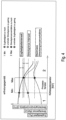
- figure 4 shows schematically the optimal range of the first temperature T1, referred to as the cooling stop temperature, and provides corresponding explanations.
- the customer needs a heavy plate with a specific range of tensile strength (R m ) and yield point R p0.2 (0.2% proof stress) - these should each be within a certain range in order to to process the product accordingly.
- the inventors have recognized that by suitably setting the cooling stop temperature (T1), the mechanical properties can be influenced and, in particular, the yield point ratio (STV), namely R p0.2 /R m , can be optimized. If the first temperature T1 is too low, for example below 250° C., the tensile strength becomes too high and/or the yield point becomes too low. On the other hand, if the first temperature T1 is too high, the tensile strength falls again or the yield point may even become too high, as a result of which the yield point ratio becomes comparatively unfavorable.
- An optimal range for T1 must therefore be selected, which according to the invention is in the range from 250°C to 500°C, in particular in the range from 300°C to 450°C.
- the mechanical properties can be further influenced by suitable setting of the straightening temperature—and in particular the yield point ratio (STV), namely R p0.2 /R m , can be further optimized.
- STV yield point ratio
Landscapes
- Chemical & Material Sciences (AREA)
- Engineering & Computer Science (AREA)
- Mechanical Engineering (AREA)
- Materials Engineering (AREA)
- Metallurgy (AREA)
- Organic Chemistry (AREA)
- Physics & Mathematics (AREA)
- Thermal Sciences (AREA)
- Crystallography & Structural Chemistry (AREA)
- Heat Treatment Of Steel (AREA)
- Metal Rolling (AREA)
Priority Applications (7)
| Application Number | Priority Date | Filing Date | Title |
|---|---|---|---|
| EP21218235.6A EP4206336A1 (fr) | 2021-12-29 | 2021-12-29 | Tôle forte et procédé de traitement thermomécanique d'une matière de départ destiné à la fabrication d'une tôle forte |
| JP2024536395A JP2025500932A (ja) | 2021-12-29 | 2022-12-29 | 厚板、及び厚板を製造するための出発原料の加工熱処理方法 |
| US18/721,572 US20250059617A1 (en) | 2021-12-29 | 2022-12-29 | Heavy plate and thermomechanical treatment method for a starting material for the production of the heavy plate |
| CN202280085351.XA CN118434886A (zh) | 2021-12-29 | 2022-12-29 | 厚板及用于制造厚板的针对初加工材料的热机械处理方法 |
| EP22844550.8A EP4457371A1 (fr) | 2021-12-29 | 2022-12-29 | Plaque lourde et procédé de manipulation thermomécanique pour un matériau de départ pour la production d'une plaque lourde |
| KR1020247025496A KR20240132324A (ko) | 2021-12-29 | 2022-12-29 | 중판 및 중판의 제조를 위한 출발 물질에 대한 열기계적 처리 방법 |
| PCT/EP2022/088053 WO2023126507A1 (fr) | 2021-12-29 | 2022-12-29 | Plaque lourde et procédé de manipulation thermomécanique pour un matériau de départ pour la production d'une plaque lourde |
Applications Claiming Priority (1)
| Application Number | Priority Date | Filing Date | Title |
|---|---|---|---|
| EP21218235.6A EP4206336A1 (fr) | 2021-12-29 | 2021-12-29 | Tôle forte et procédé de traitement thermomécanique d'une matière de départ destiné à la fabrication d'une tôle forte |
Publications (1)
| Publication Number | Publication Date |
|---|---|
| EP4206336A1 true EP4206336A1 (fr) | 2023-07-05 |
Family
ID=80123361
Family Applications (2)
| Application Number | Title | Priority Date | Filing Date |
|---|---|---|---|
| EP21218235.6A Withdrawn EP4206336A1 (fr) | 2021-12-29 | 2021-12-29 | Tôle forte et procédé de traitement thermomécanique d'une matière de départ destiné à la fabrication d'une tôle forte |
| EP22844550.8A Pending EP4457371A1 (fr) | 2021-12-29 | 2022-12-29 | Plaque lourde et procédé de manipulation thermomécanique pour un matériau de départ pour la production d'une plaque lourde |
Family Applications After (1)
| Application Number | Title | Priority Date | Filing Date |
|---|---|---|---|
| EP22844550.8A Pending EP4457371A1 (fr) | 2021-12-29 | 2022-12-29 | Plaque lourde et procédé de manipulation thermomécanique pour un matériau de départ pour la production d'une plaque lourde |
Country Status (6)
| Country | Link |
|---|---|
| US (1) | US20250059617A1 (fr) |
| EP (2) | EP4206336A1 (fr) |
| JP (1) | JP2025500932A (fr) |
| KR (1) | KR20240132324A (fr) |
| CN (1) | CN118434886A (fr) |
| WO (1) | WO2023126507A1 (fr) |
Citations (5)
| Publication number | Priority date | Publication date | Assignee | Title |
|---|---|---|---|---|
| JPS6320414A (ja) * | 1986-07-14 | 1988-01-28 | Sumitomo Metal Ind Ltd | 高靭性高張力鋼板の製造法 |
| EP2340897A1 (fr) * | 2009-12-23 | 2011-07-06 | Voestalpine Grobblech GmbH | Procédé de traitement thermomécanique pour tôles épaisses |
| JP2012207237A (ja) * | 2011-03-29 | 2012-10-25 | Jfe Steel Corp | 多層盛溶接部の靭性に優れた降伏強さ500MPa級厚鋼板およびその製造方法 |
| JP2013139610A (ja) * | 2012-01-05 | 2013-07-18 | Jfe Steel Corp | 引張強さ780MPa以上の高張力厚鋼板およびその製造方法 |
| JP2015218360A (ja) * | 2014-05-16 | 2015-12-07 | 新日鐵住金株式会社 | 圧延鋼材及びその製造方法 |
Family Cites Families (5)
| Publication number | Priority date | Publication date | Assignee | Title |
|---|---|---|---|---|
| FR2860738B1 (fr) | 2003-10-13 | 2006-02-03 | Vai Clecim | Procede d'augmentation de la precision du controle de la trajectoire du produit dans une machine a planer a rouleaux imbriques et installation de planage permettant la mise en oeuvre du procede. |
| CN103320692B (zh) * | 2013-06-19 | 2016-07-06 | 宝山钢铁股份有限公司 | 超高韧性、优良焊接性ht550钢板及其制造方法 |
| KR102307903B1 (ko) * | 2019-11-04 | 2021-09-30 | 주식회사 포스코 | 저온 충격인성이 우수한 고강도 강재 및 그 제조방법 |
| CN113737088B (zh) * | 2020-05-28 | 2022-10-21 | 宝山钢铁股份有限公司 | 低屈强比、高韧性及高焊接性800MPa级钢板及其制造方法 |
| EP3964592A1 (fr) | 2020-09-07 | 2022-03-09 | ThyssenKrupp Steel Europe AG | Produit en acier plat laminé à chaud et procédé de fabrication d'un produit en acier plat laminé à chaud |
-
2021
- 2021-12-29 EP EP21218235.6A patent/EP4206336A1/fr not_active Withdrawn
-
2022
- 2022-12-29 KR KR1020247025496A patent/KR20240132324A/ko active Pending
- 2022-12-29 US US18/721,572 patent/US20250059617A1/en active Pending
- 2022-12-29 CN CN202280085351.XA patent/CN118434886A/zh active Pending
- 2022-12-29 JP JP2024536395A patent/JP2025500932A/ja active Pending
- 2022-12-29 WO PCT/EP2022/088053 patent/WO2023126507A1/fr not_active Ceased
- 2022-12-29 EP EP22844550.8A patent/EP4457371A1/fr active Pending
Patent Citations (6)
| Publication number | Priority date | Publication date | Assignee | Title |
|---|---|---|---|---|
| JPS6320414A (ja) * | 1986-07-14 | 1988-01-28 | Sumitomo Metal Ind Ltd | 高靭性高張力鋼板の製造法 |
| EP2340897A1 (fr) * | 2009-12-23 | 2011-07-06 | Voestalpine Grobblech GmbH | Procédé de traitement thermomécanique pour tôles épaisses |
| WO2011079341A2 (fr) | 2009-12-23 | 2011-07-07 | Voestalpine Grobblech Gmbh | Procédé de traitement thermomécanique |
| JP2012207237A (ja) * | 2011-03-29 | 2012-10-25 | Jfe Steel Corp | 多層盛溶接部の靭性に優れた降伏強さ500MPa級厚鋼板およびその製造方法 |
| JP2013139610A (ja) * | 2012-01-05 | 2013-07-18 | Jfe Steel Corp | 引張強さ780MPa以上の高張力厚鋼板およびその製造方法 |
| JP2015218360A (ja) * | 2014-05-16 | 2015-12-07 | 新日鐵住金株式会社 | 圧延鋼材及びその製造方法 |
Non-Patent Citations (1)
| Title |
|---|
| MEICHSNER WALTER ET AL: "Secondary steelmaking to ensure stringent quality demands in strand cast steels", THYSSEN TECHNISCHE BERICHTE,, vol. 22, no. 1, 1 January 1990 (1990-01-01), pages 13 - 34, XP009189819, ISSN: 0340-5060 * |
Also Published As
| Publication number | Publication date |
|---|---|
| US20250059617A1 (en) | 2025-02-20 |
| CN118434886A (zh) | 2024-08-02 |
| KR20240132324A (ko) | 2024-09-03 |
| JP2025500932A (ja) | 2025-01-15 |
| WO2023126507A1 (fr) | 2023-07-06 |
| EP4457371A1 (fr) | 2024-11-06 |
Similar Documents
| Publication | Publication Date | Title |
|---|---|---|
| DE3586662T2 (de) | Hochfester, niedrig gekohlter stahl, gegenstaende daraus und verfahren zur herstellung dieses stahls. | |
| DE2551791C3 (de) | Anwendung eines Verfahrens zur Herstellung von Kaltbändern | |
| DE2426920C2 (de) | Verfahren zum Herstellen von schweißbarem Stabstahl und Verwendung des Verfahrens | |
| DE10259230A1 (de) | Verfahren zum Herstellen eines Stahlprodukts | |
| DE2362658C3 (de) | Verfahren zum Herstellen von Stahlblech mit hervorragender Preßverformbarkeit | |
| DE102008056844A1 (de) | Manganstahlband und Verfahren zur Herstellung desselben | |
| WO2015144529A1 (fr) | Procédé pour fabriquer un produit plat en acier très résistant | |
| DE60300561T3 (de) | Verfahren zur Herstellung eines warmgewalzten Stahlbandes | |
| EP2690183A1 (fr) | Produit plat en acier laminé à chaud et son procédé de fabrication | |
| EP0352597A1 (fr) | Procédé de fabrication de feuillard laminé à chaud ou tôles fortes | |
| DE112020006043T5 (de) | Kaltgewalztes stahlblech mit ultrahoher festigkeit und verfahren zu dessen herstellung | |
| DE102018132860A1 (de) | Verfahren zur Herstellung von konventionell warmgewalzten, profilierten Warmbanderzeugnissen | |
| EP3325678B1 (fr) | Acier léger deformable de construction présentant des propriétés mécaniques améliorées et procédé de fabrication de produit semi-fini à partir de cet acier | |
| EP2340897A1 (fr) | Procédé de traitement thermomécanique pour tôles épaisses | |
| DE69521284T2 (de) | Verfahren zum Herstellen von Stahlblechen hoher Schlagfestigkeit für den Automobilbau | |
| DE102018132901A1 (de) | Verfahren zur Herstellung von konventionell warmgewalzten Warmbanderzeugnissen | |
| DE102016115618A1 (de) | Verfahren zur Herstellung eines höchstfesten Stahlbandes mit verbesserten Eigenschaften bei der Weiterverarbeitung und ein derartiges Stahlband | |
| DE3440752C2 (fr) | ||
| DE2133744A1 (de) | Die verwendung eines vollberuhigten stahles fuer bauteile aus warmgewalztem band | |
| EP1918403B1 (fr) | Procédé de fabrication de produits plats en acier à partir d'un acier formant une structure marténsitique | |
| DE102018132908A1 (de) | Verfahren zur Herstellung von thermo-mechanisch hergestellten Warmbanderzeugnissen | |
| WO2023126506A1 (fr) | Plaque lourde et procédé de manipulation thermomécanique de matériau de départ de production de plaque lourde | |
| EP1398390B1 (fr) | Acier ferritique-martensitique possédant une resistance élevée ayant une fine microstructure | |
| WO2020058244A1 (fr) | Procédé de fabrication de tôles en acier ultrarésistantes et tôle en acier correspondante | |
| DE112008001181B4 (de) | Verwendung einer Stahllegierung für Achsrohre sowie Achsrohr |
Legal Events
| Date | Code | Title | Description |
|---|---|---|---|
| PUAI | Public reference made under article 153(3) epc to a published international application that has entered the european phase |
Free format text: ORIGINAL CODE: 0009012 |
|
| STAA | Information on the status of an ep patent application or granted ep patent |
Free format text: STATUS: THE APPLICATION HAS BEEN PUBLISHED |
|
| AK | Designated contracting states |
Kind code of ref document: A1 Designated state(s): AL AT BE BG CH CY CZ DE DK EE ES FI FR GB GR HR HU IE IS IT LI LT LU LV MC MK MT NL NO PL PT RO RS SE SI SK SM TR |
|
| STAA | Information on the status of an ep patent application or granted ep patent |
Free format text: STATUS: THE APPLICATION IS DEEMED TO BE WITHDRAWN |
|
| 18D | Application deemed to be withdrawn |
Effective date: 20240106 |