EP4216172A1 - Procédé et système permettant de détecter un type d'occupation de siège - Google Patents
Procédé et système permettant de détecter un type d'occupation de siège Download PDFInfo
- Publication number
- EP4216172A1 EP4216172A1 EP22152751.8A EP22152751A EP4216172A1 EP 4216172 A1 EP4216172 A1 EP 4216172A1 EP 22152751 A EP22152751 A EP 22152751A EP 4216172 A1 EP4216172 A1 EP 4216172A1
- Authority
- EP
- European Patent Office
- Prior art keywords
- seat
- implemented method
- computer implemented
- image
- processor device
- Prior art date
- Legal status (The legal status is an assumption and is not a legal conclusion. Google has not performed a legal analysis and makes no representation as to the accuracy of the status listed.)
- Pending
Links
Images

Classifications
-
- B—PERFORMING OPERATIONS; TRANSPORTING
- B60—VEHICLES IN GENERAL
- B60N—SEATS SPECIALLY ADAPTED FOR VEHICLES; VEHICLE PASSENGER ACCOMMODATION NOT OTHERWISE PROVIDED FOR
- B60N2/00—Seats specially adapted for vehicles; Arrangement or mounting of seats in vehicles
- B60N2/002—Seats provided with an occupancy detection means mounted therein or thereon
-
- G—PHYSICS
- G06—COMPUTING OR CALCULATING; COUNTING
- G06V—IMAGE OR VIDEO RECOGNITION OR UNDERSTANDING
- G06V10/00—Arrangements for image or video recognition or understanding
- G06V10/20—Image preprocessing
- G06V10/25—Determination of region of interest [ROI] or a volume of interest [VOI]
-
- G—PHYSICS
- G06—COMPUTING OR CALCULATING; COUNTING
- G06V—IMAGE OR VIDEO RECOGNITION OR UNDERSTANDING
- G06V10/00—Arrangements for image or video recognition or understanding
- G06V10/20—Image preprocessing
- G06V10/34—Smoothing or thinning of the pattern; Morphological operations; Skeletonisation
-
- G—PHYSICS
- G06—COMPUTING OR CALCULATING; COUNTING
- G06V—IMAGE OR VIDEO RECOGNITION OR UNDERSTANDING
- G06V10/00—Arrangements for image or video recognition or understanding
- G06V10/40—Extraction of image or video features
- G06V10/44—Local feature extraction by analysis of parts of the pattern, e.g. by detecting edges, contours, loops, corners, strokes or intersections; Connectivity analysis, e.g. of connected components
- G06V10/443—Local feature extraction by analysis of parts of the pattern, e.g. by detecting edges, contours, loops, corners, strokes or intersections; Connectivity analysis, e.g. of connected components by matching or filtering
- G06V10/449—Biologically inspired filters, e.g. difference of Gaussians [DoG] or Gabor filters
- G06V10/451—Biologically inspired filters, e.g. difference of Gaussians [DoG] or Gabor filters with interaction between the filter responses, e.g. cortical complex cells
- G06V10/454—Integrating the filters into a hierarchical structure, e.g. convolutional neural networks [CNN]
-
- G—PHYSICS
- G06—COMPUTING OR CALCULATING; COUNTING
- G06V—IMAGE OR VIDEO RECOGNITION OR UNDERSTANDING
- G06V10/00—Arrangements for image or video recognition or understanding
- G06V10/70—Arrangements for image or video recognition or understanding using pattern recognition or machine learning
- G06V10/764—Arrangements for image or video recognition or understanding using pattern recognition or machine learning using classification, e.g. of video objects
-
- G—PHYSICS
- G06—COMPUTING OR CALCULATING; COUNTING
- G06V—IMAGE OR VIDEO RECOGNITION OR UNDERSTANDING
- G06V10/00—Arrangements for image or video recognition or understanding
- G06V10/70—Arrangements for image or video recognition or understanding using pattern recognition or machine learning
- G06V10/82—Arrangements for image or video recognition or understanding using pattern recognition or machine learning using neural networks
-
- G—PHYSICS
- G06—COMPUTING OR CALCULATING; COUNTING
- G06V—IMAGE OR VIDEO RECOGNITION OR UNDERSTANDING
- G06V20/00—Scenes; Scene-specific elements
- G06V20/50—Context or environment of the image
- G06V20/59—Context or environment of the image inside of a vehicle, e.g. relating to seat occupancy, driver state or inner lighting conditions
- G06V20/593—Recognising seat occupancy
Definitions
- the present disclosure relates to methods and systems for detecting a type of seat occupancy, in particular in a vehicle.
- Digital imaging devices such as digital cameras, are used in automotive applications to detect passenger occupancies in a vehicle.
- the present disclosure provides a computer implemented method, a computer system and a non-transitory computer readable medium according to the independent claims. Embodiments are given in the subclaims, the description and the drawings.
- the present disclosure is directed at a computer implemented method for detecting a type of seat occupancy, comprising capturing, by means of an imaging device, an image of a seat, the image comprising depth data and intensity data, performing, by means of a processor device, a classifier algorithm on the captured image to determine a level of seat occupancy. If the determination indicates that the level of seat occupancy is above a predetermined threshold, the method comprises processing, by means of the processor device, the depth data with a convolutional neural network, to determine a type of occupation. If the determination indicates that the level of seat occupancy is below the predetermined threshold, the method comprises processing, by means of the processor device, the intensity data with a convolutional neural network to determine a type of occupation.
- the method is in particular suitable for detecting a type of seat occupancy in a vehicle.
- the vehicle comprises an imaging device, that is adapted to capture one or more images, in particular of the passenger compartment of the vehicle.
- the imaging device may be, for example, located on the inside of the roof of the vehicle, in particular the roof liner, and covering at least a portion of the passenger compartment comprising at least one seat.
- the imaging device covers the entire passenger compartment with all seats present therein, in a top view or bird's eye view. Particularly there is only a single imaging device provided.
- the imaging device is adapted to capture one or more images comprising depth data and intensity data.
- the imaging device may be, for example, a time-of-flight camera, a stereo camera or a radar camera.
- the depth data represent, for each pixel, a depth information, which corresponds to a real distance in height, and the intensity data represent a luminescence for the corresponding pixel.
- a classifier algorithm is processed on the captured image to determine a level of seat occupancy.
- a level or a degree of seat occupancy may refer to a value how much, in particular how much of the area of the seat is occupied.
- the classifier algorithm may use in particular only the depth data to determine a level of seat occupancy. This may be done, for example, by comparing a height profile derived from the depth data with a reference height profile to detect differences in the captured height profile.
- the level of seat occupancy may correspond to a degree of deviation of the captured height profile from the reference height profile of the seat.
- the method comprises processing, by means of the processor device, the depth data with a convolutional neural network, to determine a type of occupation.
- a type of occupation in this case means, for example, to determine whether a person or a large object, such as a child seat, is present on the seat.
- the method comprises processing, by means of the processor device, the intensity data with a convolutional neural network to determine a type of occupation.
- a type of occupation in this case means, for example, that the seat is fully empty or only occupied by a small item, but not a person or a child seat.
- the predetermined threshold of seat occupancy may be set at 50% of seat occupancy. Alternatively, it may be set at 30% of seat occupancy. Further alternatively, it may be set at 10% seat occupancy.
- the threshold may correspond to a certain object size, for example an object that is not larger than 5 cm, 10 cm or 15 cm in width, height and/or depth may be considered as being below the threshold and a correspondingly larger item may be considered as being above the threshold.
- depth data are particularly suitable to determine an occupancy by a person or a large object
- intensity data are particularly suitable to distinguish whether the seat is empty or if a small item is present on the seat.
- the method may be repeated periodically or in particular upon starting of an engine, shutting down an engine, unlocking a vehicle or locking a vehicle.
- the method further comprises performing, by means of the processor device, a resizing algorithm on the depth data and/or the intensity data.
- the depth data and/or the intensity data may be resized to be particularly well processable by the convolutional neural network.
- the classifier algorithm is adapted to determine an estimated seat distance from the image. Therein, the estimated seat distance is used to resize intensity data.
- the method further comprises performing, by means of the processor device, a smoothing algorithm on the depth data.
- a smoothing algorithm may, for example, be a median filter. By smoothing the depth data, unwanted noise, which is usually present in depth data more than in intensity data, is filtered out, leading to better results.
- the method further comprises performing, by means of the processor device, a crop algorithm on the depth data and/or the intensity data.
- the crop algorithm may in particular be performed before the resizing and or smoothing algorithm. By cropping the respective data to only the relevant seat area, computational resources are preserved.
- performing a crop algorithm on the depth data comprises performing a static crop algorithm of the depth data.
- the depth data are cropped with a static factor as this channel is particularly provided to distinguish whether there is a person or a child seat occupying the seat, which has to take into account surroundings of the seat, in particular parts of the seat that not only comprise the bottom rest area.
- the cropping algorithm is very quick.
- performing a crop algorithm on the intensity data comprises performing a dynamic crop algorithm of the intensity data.
- the intensity data are particularly provided to distinguish whether the seat is totally unoccupied or if there is a small item present on the seat. Therefore, it is helpful to dynamically crop the intensity data image, to be able to identify also small objects.
- the classifier algorithm is adapted to determine an estimated seat region from the image. Therein, the estimated seat region is used to dynamically crop the intensity data.
- the seat region which is particularly possible based on the depth data, it is particularly easy to determine the exact location on which a small object may have been placed on the seat, in particular the bottom rest in the image.
- the convolutional neural network processing the intensity data is a Siamese convolutional neural network.
- Such a Siamese convolutional neural network is particularly suitable to distinguish between an unoccupied seat and a small object being placed on the seat.
- the convolutional neural network processing the intensity data uses a first reference image of an unoccupied seat to determine a type of occupation.
- the reference image may be a previously captured image of the same seat in an unoccupied status.
- the method further comprises defining, by means of the processor device, a previously captured image as a second reference image, if it has been determined for a first predetermined number of times that that the level of seat occupation is above the predetermined threshold, in particular that the seat is occupied.
- adding a second reference image to the first reference image, with or without replacing the first reference image improves the detection probability.
- the second reference image may in particular be the last captured reference image for which is has been determined that the level of seat occupation is below the predetermined threshold. Therefore, captured images are regularly stored in a memory device. Thus, the second reference image is particularly recent.
- defining a previously captured image as a second reference image comprises processing, by means of the processor device, a plurality of previously captured images with a convolutional neural network to determine a most relevant previously captured image to be defined as a second reference image.
- multiple images from both, a determination that the level of seat occupation is below the predetermined threshold and a determination that the of seat occupation is above the predetermined threshold are used together and compared to determine one most relevance captured image.
- the method further comprises requesting, by means of the processor device, a user to unoccupy the seat, capturing, by means of the imaging device, an image of the unoccupied seat and defining, by means of the processor device, the captured image of the unoccupied seat as a third reference image.
- the user is requested to unoccupy the seat, i.e. to remove items from the seat and clear it.
- the request may for example be output on an infotainment device of the vehicle.
- infotainment device of the vehicle Thereby, it is possible to have a reference image that is most up to date.
- the third reference image may be used with or without replacing previous reference images.
- the present disclosure is directed at a computer system, said computer system being configured to carry out several or all steps of the computer implemented method described herein.
- the computer system may comprise a processor device, at least one memory device and at least one non-transitory data storage device.
- the non-transitory data storage device and/or the memory device may comprise a computer program for instructing the computer to perform several or all steps or aspects of the computer implemented method described herein.
- the present disclosure is directed at a non-transitory computer readable medium comprising instructions for carrying out several or all steps or aspects of the computer implemented method described herein.
- the computer readable medium may be configured as: an optical medium, such as a compact disc (CD) or a digital versatile disk (DVD); a magnetic medium, such as a hard disk drive (HDD); a solid state drive (SSD); a read only memory (ROM), such as a flash memory; or the like.
- the computer readable medium may be configured as a data storage that is accessible via a data connection, such as an inter-net connection.
- the computer readable medium may, for example, be an online data repository or a cloud storage.
- the present disclosure is also directed at a computer program for instructing a computer to perform several or all steps or aspects of the computer implemented method described herein.
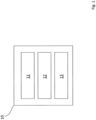
- Fig. 1 depicts an embodiment of a computer system 10 for detecting a type of seat occupancy.
- the computer system 10 comprises a processor device 11, an imaging device 12 and a memory device 13.
- the computer system 10 is configured to capture, by means of the imaging device 12, an image of a seat, the image comprising depth data and intensity data, and to perform, by means of the processor device 11, a classifier algorithm on the captured image to determine a level of seat occupancy.
- the computer system 10 is configured to process, by means of the processor device 11, the depth data with a convolutional neural network, to determine a type of occupation.
- the computer system 10 is configured to process, by means of the processor device 11, the intensity data with a convolutional neural network to determine a type of occupation.
- the computer system 10 is further configured to perform, by means of the processor device 11, a resizing algorithm on the depth data and/or the intensity data.
- the classifier algorithm is adapted to determine an estimated seat distance from the image and the estimated seat distance is used to resize intensity data.
- the computer system 10 is further configured to perform, by means of the processor device 11, a smoothing algorithm on the depth data.
- the computer system 10 is further configured to perform, by means of the processor device 11, a crop algorithm on the depth data and/or the intensity data.
- performing a crop algorithm on the depth data comprises performing a static crop algorithm of the depth data and performing a crop algorithm on the intensity data comprises performing a dynamic crop algorithm of the intensity data.
- the computer system 10 is further configured in that the classifier algorithm is adapted to determine an estimated seat region from the image and the estimated seat region is used to dynamically crop the intensity data.
- the computer system 10 is further configured in that the convolutional neural network processing the intensity data is a Siamese convolutional neural network.
- the computer system 10 is further configured in that the convolutional neural network processing the intensity data uses a first reference image of an unoccupied seat to determine a type of occupation.
- the computer system 10 is further configured to define, by means of the processor device 11, a previously captured image as a second reference image, if it has been determined for a first predetermined number of times that that the level of seat occupation is below the predetermined threshold.
- the computer system 10 is further configured in that defining a previously captured image as a second reference image comprises processing, by means of the processor device 11, a plurality of previously captured images with a convolutional neural network to determine a most relevant previously captured image to be defined as a second reference image.
- the computer system 10 is further configured to request, by means of the processor device 11, a user to unoccupy the seat, to capture, by means of the imaging device 12, an image of the unoccupied seat and to define, by means of the processor device 11, the captured image of the unoccupied seat as a third reference image.
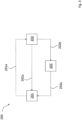
- Fig. 2 depicts a flow chart of an embodiment of a method 100 for detecting a type of seat occupancy.
- the method 100 starts at step 101 where an image of a seat is captured, wherein the image comprises depth data and intensity data.
- a classifier algorithm is performed on the captured image to determine a level of seat occupancy.
- step 103 proceeds along the upper path, based on the depth data.
- step 104 to proceed along the lower path, based on the intensity data.
- a static crop algorithm of the depth data is performed.
- a smoothing and resizing algorithm on the depth data is performed.
- the depth data are processed with a convolutional neural network to determine a type of occupation. This step 107 may lead to the determination 110 that a person is present on the seat.
- the step 107 may lead to the determination 111 that a child seat is present on the seat.
- the step 107 may lead to the determination 112, that an object is present on the seat, in particular a large object.
- a dynamic crop algorithm of the intensity data is performed by using an estimated seat region 102a from the classifier in step 102.
- a resizing algorithm on the intensity data is performed using an estimated seat distance 102b from the classifier in step 102.
- the intensity data are processed with a Siamese convolutional neural network to determine a type of occupation by using a reference intensity image 109 of an empty seat.
- This step 108 may lead to the determination 112 that, despite the level of seat occupancy being below the predetermined threshold, an object is actually present on the seat, in particular a small object.
- the step 108 may lead to the determination 113 that nothing is present on the seat, i.e. the seat is in fact unoccupied.
- Fig. 3 depicts a flow chart of another embodiment of a method 200 for detecting a type of seat occupancy.
- the method 200 as shown in Fig. 3 depicts the selection of a reference image as used in step 109 in Fig. 2 .
- the first reference image as used in step 109 may be prerecorded and preprocessed, for example, at the end of production of the vehicle.
- an appearance of the empty seat may change, either continuously, by attenuation of color, or abruptly, by stains or an applied sating mat.
- step 109 is extended by the method as shown in Fig. 3 and as described in the following.
- the standard mode is in step 201, in which one or more reference images are used and the performance is normal. If, however, at some point, no unoccupied seat has been determined for a first predetermined period of time or a first predetermined number of times, it is assumed in path 201 a, that the appearance of the unoccupied seat has changed and the method 200 transitions to step 202, which is called redefine mode.
- a threshold is defined which defines the maximum distance for empty seats.
- captured images are regularly stored during the default mode, i.e. in normal operation.
- only such captured images may be stored in which large variations of distance estimations with respect to the reference image occur or after a change in detection type.
- the stored images are then compared with each other and images with distances below the above-mentioned threshold are clustered together. These cluster may then be analyzed by the number of images and the interval of first and last occurrence.
- the image with the smallest mean distance to the other images of the cluster is chosen as the most relevant one and used as a reference image.
- the system remains in redefine mode 202 until such a cluster is found or alternatively an unoccupied seat is detected and then follows path 202a back to default mode 201.
- the system changes from redefine mode 202 along path 202b to unknown or HMI mode 203.
- this unknown mode 203 the user is requested to clear the seat, whereupon an image is captured, which is then taken as a reference image, transitioning along path 203a back to default mode 201.
Landscapes
- Engineering & Computer Science (AREA)
- Theoretical Computer Science (AREA)
- Multimedia (AREA)
- Physics & Mathematics (AREA)
- General Physics & Mathematics (AREA)
- Evolutionary Computation (AREA)
- Computer Vision & Pattern Recognition (AREA)
- General Health & Medical Sciences (AREA)
- Health & Medical Sciences (AREA)
- Artificial Intelligence (AREA)
- Software Systems (AREA)
- Computing Systems (AREA)
- Databases & Information Systems (AREA)
- Medical Informatics (AREA)
- Transportation (AREA)
- Aviation & Aerospace Engineering (AREA)
- Mechanical Engineering (AREA)
- Life Sciences & Earth Sciences (AREA)
- Biodiversity & Conservation Biology (AREA)
- Biomedical Technology (AREA)
- Molecular Biology (AREA)
- Image Analysis (AREA)
Priority Applications (3)
| Application Number | Priority Date | Filing Date | Title |
|---|---|---|---|
| EP22152751.8A EP4216172A1 (fr) | 2022-01-21 | 2022-01-21 | Procédé et système permettant de détecter un type d'occupation de siège |
| US18/095,694 US12437561B2 (en) | 2022-01-21 | 2023-01-11 | Method and system for detecting a type of seat occupancy |
| CN202310085470.1A CN116486382A (zh) | 2022-01-21 | 2023-01-19 | 检测座椅占用类型的方法和系统 |
Applications Claiming Priority (1)
| Application Number | Priority Date | Filing Date | Title |
|---|---|---|---|
| EP22152751.8A EP4216172A1 (fr) | 2022-01-21 | 2022-01-21 | Procédé et système permettant de détecter un type d'occupation de siège |
Publications (1)
| Publication Number | Publication Date |
|---|---|
| EP4216172A1 true EP4216172A1 (fr) | 2023-07-26 |
Family
ID=79927388
Family Applications (1)
| Application Number | Title | Priority Date | Filing Date |
|---|---|---|---|
| EP22152751.8A Pending EP4216172A1 (fr) | 2022-01-21 | 2022-01-21 | Procédé et système permettant de détecter un type d'occupation de siège |
Country Status (3)
| Country | Link |
|---|---|
| US (1) | US12437561B2 (fr) |
| EP (1) | EP4216172A1 (fr) |
| CN (1) | CN116486382A (fr) |
Families Citing this family (1)
| Publication number | Priority date | Publication date | Assignee | Title |
|---|---|---|---|---|
| EP4439485A1 (fr) * | 2023-03-30 | 2024-10-02 | Aptiv Technologies AG | Aide au montage de siège enfant basée sur la vision interactive |
Citations (3)
| Publication number | Priority date | Publication date | Assignee | Title |
|---|---|---|---|---|
| US20190171892A1 (en) * | 2017-12-04 | 2019-06-06 | Aptiv Technologies Limited | System and method for generating a confidence value for at least one state in the interior of a vehicle |
| WO2020165908A2 (fr) * | 2019-02-17 | 2020-08-20 | Guardian Optical Technologies Ltd | Système, dispositif et procédés de détection et d'obtention d'informations sur des objets dans un véhicule |
| US20210008958A1 (en) * | 2019-07-10 | 2021-01-14 | Ambarella International Lp | Efficient vehicle ac based on car occupancy detected by computer vision |
Family Cites Families (10)
| Publication number | Priority date | Publication date | Assignee | Title |
|---|---|---|---|---|
| AU2003219926A1 (en) * | 2002-02-26 | 2003-09-09 | Canesta, Inc. | Method and apparatus for recognizing objects |
| DE10238222A1 (de) * | 2002-08-21 | 2004-03-04 | Robert Bosch Gmbh | Verfahren und Anordnung zur Erfassung des Belegungszustandes eines Sitzes |
| DE10362402B3 (de) * | 2002-08-28 | 2022-03-03 | Carl Zeiss Meditec Ag | Mikroskopiesystem und Mikroskopieverfahren |
| DE10239761B4 (de) * | 2002-08-29 | 2007-10-25 | Sartorius Ag | Verfahren und Vorrichtung zur Identifikation der Art der Belegung einer Auflagefläche |
| US20060291697A1 (en) * | 2005-06-21 | 2006-12-28 | Trw Automotive U.S. Llc | Method and apparatus for detecting the presence of an occupant within a vehicle |
| US7472007B2 (en) * | 2005-09-02 | 2008-12-30 | Delphi Technologies, Inc. | Method of classifying vehicle occupants |
| WO2013101057A1 (fr) * | 2011-12-29 | 2013-07-04 | Intel Corporation | Reconnaissance d'objet et notification |
| CN108399382A (zh) * | 2018-02-13 | 2018-08-14 | 阿里巴巴集团控股有限公司 | 车险图像处理方法和装置 |
| EP3796209B1 (fr) * | 2019-09-17 | 2025-05-21 | Aptiv Technologies AG | Procédé et système pour déterminer une activité d'un occupant d'un véhicule |
| US11193312B1 (en) * | 2019-09-30 | 2021-12-07 | Ambarella International Lp | Child safety lock |
-
2022
- 2022-01-21 EP EP22152751.8A patent/EP4216172A1/fr active Pending
-
2023
- 2023-01-11 US US18/095,694 patent/US12437561B2/en active Active
- 2023-01-19 CN CN202310085470.1A patent/CN116486382A/zh active Pending
Patent Citations (3)
| Publication number | Priority date | Publication date | Assignee | Title |
|---|---|---|---|---|
| US20190171892A1 (en) * | 2017-12-04 | 2019-06-06 | Aptiv Technologies Limited | System and method for generating a confidence value for at least one state in the interior of a vehicle |
| WO2020165908A2 (fr) * | 2019-02-17 | 2020-08-20 | Guardian Optical Technologies Ltd | Système, dispositif et procédés de détection et d'obtention d'informations sur des objets dans un véhicule |
| US20210008958A1 (en) * | 2019-07-10 | 2021-01-14 | Ambarella International Lp | Efficient vehicle ac based on car occupancy detected by computer vision |
Non-Patent Citations (1)
| Title |
|---|
| FRITZSCHE M ET AL: "Vehicle occupancy monitoring with optical range-sensors", INTELLIGENT VEHICLES SYMPOSIUM, 2004 IEEE PARMA, ITALY JUNE 14-17, 2004, PISCATAWAY, NJ, USA,IEEE, 14 June 2004 (2004-06-14), pages 90 - 94, XP010727448, ISBN: 978-0-7803-8310-4, DOI: 10.1109/IVS.2004.1336361 * |
Also Published As
| Publication number | Publication date |
|---|---|
| US12437561B2 (en) | 2025-10-07 |
| CN116486382A (zh) | 2023-07-25 |
| US20230237814A1 (en) | 2023-07-27 |
Similar Documents
| Publication | Publication Date | Title |
|---|---|---|
| RU2607774C2 (ru) | Способ управления в системе захвата изображения, устройство управления и машиночитаемый носитель данных | |
| US10070053B2 (en) | Method and camera for determining an image adjustment parameter | |
| US20150086071A1 (en) | Methods and systems for efficiently monitoring parking occupancy | |
| CN111417960A (zh) | 信息处理装置、信息处理方法及程序 | |
| JP2010003177A (ja) | 画像処理装置 | |
| KR20120102144A (ko) | 디지털 이미지들에서 물체들을 검출하기 위한 방법, 디바이스 및 컴퓨터 프로그램 제품 | |
| JP6255944B2 (ja) | 画像解析装置、画像解析方法及び画像解析プログラム | |
| US12437561B2 (en) | Method and system for detecting a type of seat occupancy | |
| US8855360B2 (en) | System and method for face tracking | |
| CN110913209B (zh) | 摄像头遮挡检测方法、装置、电子设备及监控系统 | |
| US20090322875A1 (en) | Surveillance system, surveillance method and computer readable medium | |
| JP4140126B2 (ja) | 領域分割および対象物抽出装置 | |
| US11887315B2 (en) | Method and apparatus for tracking an object | |
| CN110796129A (zh) | 一种文本行区域检测方法及装置 | |
| JP5002575B2 (ja) | 非定常度推定装置、非定常度推定方法、非定常度推定プログラム | |
| JPWO2018037479A1 (ja) | 画像処理装置、ステレオカメラ装置及び画像処理方法 | |
| CN115643451A (zh) | 视频流中的对象的掩蔽 | |
| US12374098B2 (en) | Encoding of training data for training of a neural network | |
| CN118506292A (zh) | 摄像头遮挡检测方法、装置、计算机设备及可读存储介质 | |
| CN109993143B (zh) | 图像采集设备的安装方法、装置、电子设备及存储介质 | |
| JP4071336B2 (ja) | 監視用画像処理装置 | |
| EP4216173A1 (fr) | Procédé et système de détection d'occupation d'un siège | |
| KR102839049B1 (ko) | 깊이 이미지 기반 객체 탐지 시스템 및 이의 환경 적응형 딥러닝 모델 생성 및 적용 방법 | |
| KR102131243B1 (ko) | 딥러닝 및 연결성 그래프에 기초한 식물 영역 추출 시스템 및 방법 | |
| US11640712B2 (en) | Information processing apparatus, video image summarization method, and storage medium |
Legal Events
| Date | Code | Title | Description |
|---|---|---|---|
| PUAI | Public reference made under article 153(3) epc to a published international application that has entered the european phase |
Free format text: ORIGINAL CODE: 0009012 |
|
| STAA | Information on the status of an ep patent application or granted ep patent |
Free format text: STATUS: THE APPLICATION HAS BEEN PUBLISHED |
|
| AK | Designated contracting states |
Kind code of ref document: A1 Designated state(s): AL AT BE BG CH CY CZ DE DK EE ES FI FR GB GR HR HU IE IS IT LI LT LU LV MC MK MT NL NO PL PT RO RS SE SI SK SM TR |
|
| STAA | Information on the status of an ep patent application or granted ep patent |
Free format text: STATUS: REQUEST FOR EXAMINATION WAS MADE |
|
| 17P | Request for examination filed |
Effective date: 20231129 |
|
| RBV | Designated contracting states (corrected) |
Designated state(s): AL AT BE BG CH CY CZ DE DK EE ES FI FR GB GR HR HU IE IS IT LI LT LU LV MC MK MT NL NO PL PT RO RS SE SI SK SM TR |
|
| RAP1 | Party data changed (applicant data changed or rights of an application transferred) |
Owner name: APTIV TECHNOLOGIES AG |
|
| RAP3 | Party data changed (applicant data changed or rights of an application transferred) |
Owner name: APTIV TECHNOLOGIES AG |
|
| STAA | Information on the status of an ep patent application or granted ep patent |
Free format text: STATUS: EXAMINATION IS IN PROGRESS |
|
| 17Q | First examination report despatched |
Effective date: 20250624 |