EP4218789A2 - Compositions pour le nettoyage du colon et le traitement de troubles gastrointestinaux - Google Patents
Compositions pour le nettoyage du colon et le traitement de troubles gastrointestinaux Download PDFInfo
- Publication number
- EP4218789A2 EP4218789A2 EP23159398.9A EP23159398A EP4218789A2 EP 4218789 A2 EP4218789 A2 EP 4218789A2 EP 23159398 A EP23159398 A EP 23159398A EP 4218789 A2 EP4218789 A2 EP 4218789A2
- Authority
- EP
- European Patent Office
- Prior art keywords
- cys
- seq
- tyr
- xaa
- glu leu
- Prior art date
- Legal status (The legal status is an assumption and is not a legal conclusion. Google has not performed a legal analysis and makes no representation as to the accuracy of the status listed.)
- Pending
Links
Images









Classifications
-
- A—HUMAN NECESSITIES
- A61—MEDICAL OR VETERINARY SCIENCE; HYGIENE
- A61K—PREPARATIONS FOR MEDICAL, DENTAL OR TOILETRY PURPOSES
- A61K38/00—Medicinal preparations containing peptides
- A61K38/04—Peptides having up to 20 amino acids in a fully defined sequence; Derivatives thereof
- A61K38/10—Peptides having 12 to 20 amino acids
-
- A—HUMAN NECESSITIES
- A61—MEDICAL OR VETERINARY SCIENCE; HYGIENE
- A61K—PREPARATIONS FOR MEDICAL, DENTAL OR TOILETRY PURPOSES
- A61K38/00—Medicinal preparations containing peptides
- A61K38/04—Peptides having up to 20 amino acids in a fully defined sequence; Derivatives thereof
- A61K38/12—Cyclic peptides, e.g. bacitracins; Polymyxins; Gramicidins S, C; Tyrocidins A, B or C
-
- A—HUMAN NECESSITIES
- A61—MEDICAL OR VETERINARY SCIENCE; HYGIENE
- A61K—PREPARATIONS FOR MEDICAL, DENTAL OR TOILETRY PURPOSES
- A61K45/00—Medicinal preparations containing active ingredients not provided for in groups A61K31/00 - A61K41/00
- A61K45/06—Mixtures of active ingredients without chemical characterisation, e.g. antiphlogistics and cardiaca
-
- A—HUMAN NECESSITIES
- A61—MEDICAL OR VETERINARY SCIENCE; HYGIENE
- A61K—PREPARATIONS FOR MEDICAL, DENTAL OR TOILETRY PURPOSES
- A61K9/00—Medicinal preparations characterised by special physical form
- A61K9/0012—Galenical forms characterised by the site of application
- A61K9/0031—Rectum, anus
-
- A—HUMAN NECESSITIES
- A61—MEDICAL OR VETERINARY SCIENCE; HYGIENE
- A61K—PREPARATIONS FOR MEDICAL, DENTAL OR TOILETRY PURPOSES
- A61K9/00—Medicinal preparations characterised by special physical form
- A61K9/0012—Galenical forms characterised by the site of application
- A61K9/0053—Mouth and digestive tract, i.e. intraoral and peroral administration
-
- A—HUMAN NECESSITIES
- A61—MEDICAL OR VETERINARY SCIENCE; HYGIENE
- A61P—SPECIFIC THERAPEUTIC ACTIVITY OF CHEMICAL COMPOUNDS OR MEDICINAL PREPARATIONS
- A61P1/00—Drugs for disorders of the alimentary tract or the digestive system
- A61P1/10—Laxatives
-
- A—HUMAN NECESSITIES
- A61—MEDICAL OR VETERINARY SCIENCE; HYGIENE
- A61P—SPECIFIC THERAPEUTIC ACTIVITY OF CHEMICAL COMPOUNDS OR MEDICINAL PREPARATIONS
- A61P13/00—Drugs for disorders of the urinary system
- A61P13/10—Drugs for disorders of the urinary system of the bladder
-
- A—HUMAN NECESSITIES
- A61—MEDICAL OR VETERINARY SCIENCE; HYGIENE
- A61P—SPECIFIC THERAPEUTIC ACTIVITY OF CHEMICAL COMPOUNDS OR MEDICINAL PREPARATIONS
- A61P15/00—Drugs for genital or sexual disorders; Contraceptives
- A61P15/02—Drugs for genital or sexual disorders; Contraceptives for disorders of the vagina
-
- A—HUMAN NECESSITIES
- A61—MEDICAL OR VETERINARY SCIENCE; HYGIENE
- A61P—SPECIFIC THERAPEUTIC ACTIVITY OF CHEMICAL COMPOUNDS OR MEDICINAL PREPARATIONS
- A61P15/00—Drugs for genital or sexual disorders; Contraceptives
- A61P15/08—Drugs for genital or sexual disorders; Contraceptives for gonadal disorders or for enhancing fertility, e.g. inducers of ovulation or of spermatogenesis
-
- A—HUMAN NECESSITIES
- A61—MEDICAL OR VETERINARY SCIENCE; HYGIENE
- A61P—SPECIFIC THERAPEUTIC ACTIVITY OF CHEMICAL COMPOUNDS OR MEDICINAL PREPARATIONS
- A61P35/00—Antineoplastic agents
-
- C—CHEMISTRY; METALLURGY
- C07—ORGANIC CHEMISTRY
- C07K—PEPTIDES
- C07K7/00—Peptides having 5 to 20 amino acids in a fully defined sequence; Derivatives thereof
- C07K7/04—Linear peptides containing only normal peptide links
- C07K7/08—Linear peptides containing only normal peptide links having 12 to 20 amino acids
-
- A—HUMAN NECESSITIES
- A61—MEDICAL OR VETERINARY SCIENCE; HYGIENE
- A61K—PREPARATIONS FOR MEDICAL, DENTAL OR TOILETRY PURPOSES
- A61K38/00—Medicinal preparations containing peptides
Definitions
- This invention relates to peptides, compositions and methods for colon cleansing and treatments of disorders of the gastrointestinal tract and other visceral organs.
- the present invention features peptides, compositions, and related methods for colon cleansing treatments as well as other conditions and disorders are described herein.
- the peptides may be used to prepare subjects for colonoscopy treatment.
- the peptides or pharmaceutically acceptable salts may be used to prepare subjects for surgery, such as bowel surgery.
- the peptides may be used to treat colon cancer, Hereditary Nonpolyposis Colorectal Cancer (HNPCC), i.e.
- HNPCC Hereditary Nonpolyposis Colorectal Cancer
- GP gastroparesis
- polyps pain, general abdominal pain, post-operative ileus, opioid-induced constipation, functional dyspepsia
- diverticular disease including including but not limited to SUDD (symptomatic uncomplicated diverticular disease) and SCAD (segmental colitis associated with diverticulosis), diverticulosis, diarrhea-predominant irritable bowel syndrome, pain associated with irritable bowel syndrom (IBS), ulcerative colitis, ulcerative proctitis, Crohn's Disease, inflammatory bowel disease (IBD), chronic or acute radiation protopathy, rectal pain, chronic proctalgia, proctalgia fugax, anal pain, chronic anal fissure, post-operative anal pain, overactive bladder syndrome, stress incontinence, interstitial cystitis, bladder pain syndrome, colorectal cancer, pain associated with cancer, general pelvic pain, endometriosis, orchialgia, chronic prostatitis, diver
- One aspect of the present invention provides a peptide or a pharmaceutically acceptable salt thereof, wherein the peptide comprises the amino acid sequence: Xaa 1 Xaa 2 Xaa 3 Xaa 4 Xaa 5 Xaa 6 Xaa 7 Xaa 8 Xaa 9 Xaa 10 Xaa 11 Xaa 12 Xaa 13 Xaa 14 Ala 15 Xaa 16 Xaa 17 Gly 18 Xaa 1 Xaa 20 Xaa 21 (SEQ ID NO: 1), or a pharmaceutically acceptable salt thereof; wherein
- a second aspect of the present invention provides pharmaceutical compositions comprising a peptide of the present invention.
- a third aspect of the present invention provides methods for treating a gastrointestinal disorder, which include administering a pharmaceutical composition according to the present invention.
- the pharmaceutical compositions according to the present invention may be used as a preparation for a colonoscopy, or treatment of gastrointestinal disorders and pain.
- the composition is a solid, oral composition.
- GC-C Guanylate cyclase C
- the receptor has an extracellular ligand-binding domain, a single transmembrane region and a C-terminal guanylyl cyclase domain.
- the intracellular catalytic domain catalyzes the production of cGMP from GTP.
- cGMP which is secreted bidirectionally from the epithelium into the mucosa and lumen, has also been shown to dampen afferent C fiber firing, suggesting a potential mechanism for the observed analgesic effects of GC-C agonists on visceral pain.
- Linaclotide a peptide GC-C agonist that is orally administered and currently approved in the United States for the treatment of irritable bowel syndrome with constipation (IBS-c) and chronic idiopatheic constipation (CIC), has numerous effects on lower GI physiology including: (1) reduced visceral pain, (2) reduced bloating, and (3) increased GI transit, which can lead to increased stool frequency and improved stool consistency.
- Orally administered linaclotide acts locally by activating GC-C receptors at the luminal surface.
- the peptides described and claimed herein may bind and activate the GC-C receptor or may be characterized as GC-C peptide agonists.
- C12 is C12 alkyl carboxylic acid
- C14 is C14 alkyl carboxylic acid
- C16 is C16 alkyl carboxylic acid
- C18 is C18 alkyl carboxylic acid
- (4-F)Phe is 4-fluorophenylalanine
- Cth is cystathionine
- Ag is allylglycine
- Hag is allylglycine with a reduced dicarba bond
- Pent is pentenoic acid
- Pen is penicillamine
- Cha is cyclohexylalanine
- Sar is sarcosine
- OH-Pro is hydroxyproline
- Nme-Tyr is N-methyl tyrosine
- 4-Mepip is 1-methyl-piperidine-4-carboxylic acid
- Dpr is di-aminopropionic acid
- BE is glutamic acid wherein the side chain carboxylic acid forms the peptide linkage
- BK is lysine wherein the side chain
- peptide bonding include without limitation:
- the present invention provides a peptide or a pharmaceutically acceptable salt thereof useful for the methods described herein, wherein the peptide comprises the amino acid sequence:
- the N-terminus of the peptide is acetylated or modified at the N-terminus to provide added stability to the peptide.
- the N-terminus is capped with pentenoic acid, biotin, 4-Mepip (1-methyl-4-carboxylic acid), C12 alkyl carboxylic acid, C14 alkyl carboxylic acid, C16 alkyl carboxylic acid, or C18 alkyl carboxylic acid.
- the C-terminus of the peptide is amidated or modified at the C-terminus to provide added stability to the peptide.
- the N-terminus of the peptide is acetylated or capped and the C-terminus is amidated.
- the dicarba bond and other covalent bonds described herein may in some instances provide greater stability of the peptide than a disulfide bond.
- the dicarba bonds may be reduced (CH 2 -CH 2 -CH 2 -CH 2 ).
- the enhanced stability of the peptides allows for storage at room temperature for extended periods of time.
- Xaa 7 and Xaa 12 are both Ag and a dicarba bond is present between Ag 7 and Ag 12 ;
- Xaa 7 and Xaa 12 are both Cys and a disulfide bond is present between Cys 7 and Cys 12 ;
- Xaa 8 and Xaa 16 are both Cys and a disulfide bond is present between Cys 8 and Cys 1s ;
- Xaa 11 and Xaa 19 are both Cys and a disulfide bond is present between Cys 11 and Cys 19 ; or any combination thereof.
- Xaa 7 is Cth
- Xaa 12 is Cys and a bond is present between Cth 7 and Cys 12
- Xaa 8 is Cth
- Xaa 16 is Cys and a bond is present between Cth 8 and Cys 16 ; or any combination thereof.
- Xaa 7 is allylglycine or Cys.
- Xaa 8 is Cys or cystathionine.
- Xaa 9 is Glu
- Xaa 10 is Leu.
- Xaa 12 is Cys or allylglycine.
- Xaa 1 is Val or Pro.
- Xaa 17 is Tyr or Thr.
- Xaa 20 is Tyr or is absent.
- Xaa 21 is absent.
- Xaa 14 is not Pro.
- Xaa 17 is not Phe.
- a peptide or pharmaceutically acceptable salt thereof is provided, wherein the peptide comprises the amino acid sequence:
- dicarba bond between two Ag residues can be either the cis or trans isomer at the dicarba bond.
- a peptide or pharmaceutically acceptable salt thereof is provided, wherein the peptide comprises peptide comprises no more than 50, 40, 30 or 20 amino acids. In further embodiments, the peptide comprises no more than 19, 18, 17, 16, 15 or 14 amino acids.
- the present invention provides a peptide or a pharmaceutically acceptable salt thereof, wherein the peptide consists of the amino acid sequence Xaa 1 Xaa 2 Xaa 3 Xaa 4 Xaa 5 Xaa 6 Xaa 7 Xaa 8 Xaa 9 Xaa 10 Xaa 11 Xaa 12 Xaa 13 Xaa 14 Ala 15 Xaa 16 Xaa 17 Gly 18 Xaa 19 Xaa 20 Xaa 21 (SEQ ID NO: 1), or a pharmaceutically acceptable salt thereof; wherein
- the N-terminus of the peptide is acetylated to provide added stability to the peptide.
- the N-terminus is capped with pentenoic acid, biotin, 4-Mepip (1-methyl-piperidine-4-carboxylic acid), C12 alkyl carboxylic acid, C14 alkyl carboxylic acid, C16 alkyl carboxylic acid, or C18 alkyl carboxylic acid.
- the C-terminus of the peptide is amidated to provide added stability to the peptide.
- Xaa 7 and Xaa 12 are both Ag and a dicarba bond is present between Ag 7 and Ag 12 ;
- Xaa 7 and Xaa 12 are both Cys and a disulfide bond is present between Cys 7 and Cys 12 ;
- Xaa 8 and Xaa 16 are both Cys and a disulfide bond is present between Cys 8 and Cys 16 ;
- Xaa 11 and Xaa 19 are both Cys, and a disulfide bond is present between Cys 11 and Cys 19 ; or any combination thereof.
- Xaa 7 is allylglycine or Cys.
- Xaa 8 is Cys or cystathionine.
- Xaa 9 is Glu
- Xaa 10 is Leu.
- Xaa 12 is Cys or allylglycine.
- Xaa 1 is Val or Pro.
- Xaa 17 is Tyr or Thr.
- Xaa 20 is Tyr or is absent.
- Xaa 21 is absent.
- a peptide or pharmaceutically acceptable salt thereof is provided, wherein the peptide consists of the amino acid sequence:
- the present invention provides a peptide or a pharmaceutically acceptable salt thereof useful for the methods described herein, wherein the peptide comprises or consists of the amino acid sequence: Xaa 1 Xaa 2 Xaa 3 Xaa 4 Xaa 5 Xaa 6 Xaa 7 Xaa 8 Xaa 9 Xaa 10 Cys 11 Xaa 12 Asn 13 Xaa 14 Ala 15 Cys 16 Xaa 17 Gly 18 Cys 19 Xaa 20 Xaa 21 (SEQ ID NO: 93), or a pharmaceutically acceptable salt thereof; wherein
- the peptide or a pharmaceutically acceptable salt thereof wherein the peptide comprises or consists of the amino acid sequence: Xaa 1 Xaa 2 Xaa 3 Xaa 4 Xaa 5 Xaa 6 Xaa 7 Xaa 8 Xaa 9 Xaa 10 Cys 11 Xaa 12 Asn 13 Xaa 14 Ala 15 Cys 16 Xaa 17 Gly 18 Cys 19 Xaa 20 Xaa 21 (SEQ ID NO:93), or a pharmaceutically acceptable salt thereof; wherein
- the peptide is isolated. In other embodiments, the peptide is purified.
- a pharmaceutically acceptable salt of the peptide is provided.
- the pharmaceutically acceptable salt is a chloride, acetate, phosphate or sulfate salt.
- the N-terminus of the peptides described herein is acetylated or capped. This modification may provide enhanced stability to the peptide.
- the N-terminal peptide is a cysteine residue that has been modified into an imidazolidinone derivative.
- the peptides disclosed herein may also be used for detection opportunities or colon cancer treatment.
- a linker is conjugated to the N-terminus.
- the linker may then be conjugated to a dye, or may be conjugated to a dye prior to bonding with the peptide.
- One skilled in the art would recognize a peptide conjugated dye would be useful in detection of peptide binding interactions.
- Another embodiment includes conjugating the peptides disclosed herein to a toxin by way of a linker.
- a toxin conjugated and coated with a peptide or pharmaceutically acceptable salt as described herein would be useful as a colon cancer treatment. Such a formulation would result in systemic circulation for a long-acting treatment.
- One skilled in the art would recognize the use of a long-acting peptide or pharmaceutically acceptable salt thereof as described herein in the treatment of colon cancer.
- peptides or precursor peptides of the invention can be produced recombinantly in any known protein expression system, including, without limitation, bacteria (e.g., E. coli or Bacillus subtilis), insect cell systems (e.g., Drosophila Sf9 cell systems), yeast cell systems (e.g., S. cerevisiae, S. saccharomyces) or filamentous fungal expression systems, or animal cell expression systems (e.g., mammalian cell expression systems). If the peptide or variant peptide is to be produced recombinantly, e.g., E.
- the nucleic acid molecule encoding the peptide may also encode a leader sequence that permits the secretion of the mature peptide from the cell.
- the sequence encoding the peptide can include the pre sequence and the pro sequence of, for example, a naturally-occurring bacterial heat-stable enterotoxin (ST) peptide.
- ST enterotoxin
- the sequence encoding a peptide described herein can be inserted into a vector capable of delivering and maintaining the nucleic acid molecule in a bacterial cell.
- the DNA molecule may be inserted into an autonomously replicating vector (suitable vectors include, for example, pGEM3Z and pcDNA3, and derivatives thereof).
- the vector nucleic acid may be a bacterial or bacteriophage DNA such as bacteriophage lambda or M13 and derivatives thereof. Construction of a vector containing a nucleic acid described herein can be followed by transformation of a host cell such as a bacterium. Suitable bacterial hosts include but are not limited to, E . coli, B. subtilis, Pseudomonas and Salmonella.
- the genetic construct also includes, in addition to the encoding nucleic acid molecule, elements that allow expression, such as a promoter and regulatory sequences.
- the expression vectors may contain transcriptional control sequences that control transcriptional initiation, such as promoter, enhancer, operator, and repressor sequences. A variety of transcriptional control sequences are well known to those in the art.
- the expression vector can also include a translation regulatory sequence (e.g., an untranslated 5' sequence, an untranslated 3' sequence, or an internal ribosome entry site).
- the vector can be capable of autonomous replication or it can integrate into host DNA to ensure stability during peptide production.
- the protein coding sequence that includes a peptide described herein can also be fused to a nucleic acid encoding a peptide affinity tag, e.g., glutathione S-transferase (GST), maltose E binding protein, protein A, FLAG tag, hexa-histidine, myc tag or the influenza HA tag, in order to facilitate purification.
- GST glutathione S-transferase
- the affinity tag or reporter fusion joins the reading frame of the peptide of interest to the reading frame of the gene encoding the affinity tag such that a translational fusion is generated. Expression of the fusion gene results in translation of a single peptide that includes both the peptide of interest and the affinity tag.
- DNA sequence encoding a protease recognition site will be fused between the reading frames for the affinity tag and the peptide of interest.
- peptides may be chemically produced.
- Peptides can be synthesized by a number of different methods including solution and solid phase synthesis using traditional BOC or FMOC protection.
- the peptide can be synthesized on 2-Chlorotritylchloride or Wang resin using consecutive amino acid couplings.
- protecting groups can be used including, without limitation, the following protecting groups: Fluorenylmethyloxycarbonyl or tert -butyloxycarbonyl (alpha-amino groups, N-terminus); trityl or tert -butyl (thiol groups of Cys); tert -butyl ( ⁇ -carboxyl of glutamic acid and the hydroxyl group of threonine, if present); trityl ( ⁇ -amid function of the asparagine side chain and the phenolic group of tyrosine, if present); trityl or tert -butyldimethylsilyl (hydroxygroup of serine, if present) and tert -Butyloxycarbonyl (N-terminus prior to subsequent side chain modifications).
- protecting groups Fluorenylmethyloxycarbonyl or tert -butyloxycarbonyl (alpha-amino groups, N-terminus); trityl or tert
- Coupling, deprotecting and cleavage can be effected through various methods.
- coupling is effected with DIC and HOBt in the presence of a tertiary amine, and the peptide can be deprotected and cleaved from the solid support in using cocktail K (trifluoroacetic acid 81%, phenol 5%, thioanisole 5%, 1,2-ethanedithiol 2.5%, water 3%, dimethylsulphide 2%, ammonium iodide 1.5% w/w).
- cocktail K trifluoroacetic acid 81%, phenol 5%, thioanisole 5%, 1,2-ethanedithiol 2.5%, water 3%, dimethylsulphide 2%, ammonium iodide 1.5% w/w.
- the peptide can be isolated through various methods. In one embodiment, after removal of trifluoroacetic acid and other volatiles the peptide can be precipitated using an organic solvent.
- Disulfide bonds between Cys residues can be formed using various methods.
- disulfide bonds between Cys residue can be formed using dimethyl sulfoxide ( Tam et al. (1991) J. Am. Chem. Soc. 113:6657-62 ) or using an air oxidation strategy.
- the resulting peptide can be purified through various methods including, without limitation, by reverse-phase chromatography and lyophilized.
- Peptides can be made, isolated or used either in form of the free base or as pharmaceutically acceptable salts thereof.
- salts include, without limitation, acetate, chloride, sulfate and phosphate salts of the peptide.
- compositions of peptides and GC-C receptor agonists Compositions of peptides and GC-C receptor agonists
- compositions are provided wherein the peptides, alone or in combination, can be combined with any pharmaceutically acceptable carrier or medium.
- the peptide or pharmaceutically acceptable salt thereof can be formulated into a pharmaceutically acceptable composition.
- the peptide or pharmaceutically acceptable salt thereof can be formulated into a non-pharmaceutically acceptable composition.
- the peptides can be combined with materials that do not produce an adverse, allergic or otherwise unwanted reaction when administered to a patient.
- the carriers or mediums used can include solvents, dispersants, coatings, absorption promoting agents, controlled release agents, and one or more inert excipients (which include starches, polyols, granulating agents, microcrystalline cellulose (e.g., celphere, Celphere beads ® ), diluents, lubricants, binders, disintegrating agents, and the like), etc.
- inert excipients which include starches, polyols, granulating agents, microcrystalline cellulose (e.g., celphere, Celphere beads ® ), diluents, lubricants, binders, disintegrating agents, and the like), etc.
- tablet dosages of the disclosed compositions may be coated by standard aqueous or nonaqueous techniques.
- excipients for use as the pharmaceutically acceptable carriers and the pharmaceutically acceptable inert carriers and the aforementioned additional ingredients include, but are not limited to binders, fillers, disintegrants, lubricants, anti-microbial agents, and coating agents.
- binder refers to any pharmaceutically acceptable binder that may be used in the practice of the invention.
- pharmaceutically acceptable binders include, without limitation, a starch (e.g., corn starch, potato starch and pregelatinized starch (e.g., STARCH 1500 ® and STARCH 1500 LM ® , sold by Colorcon, Ltd.) and other starches), maltodextrin, gelatin, natural and synthetic gums such as acacia, powdered tragacanth, guar gum, cellulose and its derivatives (e.g., methylcellulose, hydroxyethyl cellulose, hydroxyethyl methylcellulose, hydroxypropyl cellulose and hydroxypropyl methylcellulose (hypromellose), ethyl cellulose, cellulose acetate, carboxymethyl cellulose calcium, sodium carboxymethyl cellulose, carboxymethylcellulose, powdered cellulose, microfine cellulose, microcrystalline cellulose (e.g.
- AVICEL TM such as, AVICEL-PH-101 TM , -103 TM and -105 TM , sold by FMC Corporation, Marcus Hook, PA, USA)
- polyvinyl alcohol such as, AVICEL-PH-101 TM , -103 TM and -105 TM , sold by FMC Corporation, Marcus Hook, PA, USA
- polyvinyl alcohol such as, AVICEL-PH-101 TM , -103 TM and -105 TM , sold by FMC Corporation, Marcus Hook, PA, USA
- polyvinyl alcohol such as, AVICEL-PH-101 TM , -103 TM and -105 TM , sold by FMC Corporation, Marcus Hook, PA, USA
- polyvinyl alcohol such as, AVICEL-PH-101 TM , -103 TM and -105 TM
- polyvinyl alcohol such as, AVICEL-PH-101 TM , -103 TM and -105 TM
- binders examples include polyvinyl alcohol, polyvinylpyrrolidone (povidone), a starch, maltodextrin or a cellulose ether (such as, for example, methylcellulose, ethylcellulose, carboxymethylcellulose, hydroxyethyl cellulose, hydroxyethyl methylcellulose, hydroxypropyl cellulose and hydroxypropyl methylcellulose).
- a cellulose ether such as, for example, methylcellulose, ethylcellulose, carboxymethylcellulose, hydroxyethyl cellulose, hydroxyethyl methylcellulose, hydroxypropyl cellulose and hydroxypropyl methylcellulose.
- filler refers to any pharmaceutically acceptable filler that may be used in the practice of the invention.
- pharmaceutically acceptable fillers include, without limitation, talc, calcium carbonate (e.g., granules or powder), dibasic calcium phosphate, tribasic calcium phosphate, calcium sulfate (e.g., granules or powder), microcrystalline cellulose (e.g., Avicel PH101 or Celphere CP-305), microfine cellulose, powdered cellulose, dextrates, kaolin, mannitol, silicic acid, sorbitol, starch (e.g., Starch 1500), pre-gelatinized starch, lactose, glucose, fructose, galactose, trehalose, sucrose, maltose, isomalt, raffinose, maltitol, melezitose, stachyose, lactitol, palatinite, x
- Examples of pharmaceutically acceptable fillers that may be particularly used for coating the peptides include, without limitation, talc, microcrystalline cellulose (e.g., Avicel PH101 or Celphere CP-305), powdered cellulose, dextrates, kaolin, mannitol, silicic acid, sorbitol, starch, pre-gelatinized starch, lactose, glucose, fructose, galactose, trehalose, sucrose, maltose, isomalt, dibasic calcium phosphate, raffinose, maltitol, melezitose, stachyose, lactitol, palatinite, xylitol, mannitol, myoinositol, and mixtures thereof.
- microcrystalline cellulose e.g., Avicel PH101 or Celphere CP-305
- powdered cellulose dextrates
- kaolin e.g., kaolin
- additives refers to any pharmaceutically acceptable additive.
- Pharmaceutically acceptable additives include, without limitation, disintegrants, dispersing additives, lubricants, glidants, antioxidants, coating additives, diluents, surfactants, flavoring additives, humectants, absorption promoting additives, controlled release additives, anti-caking additives, anti-microbial agents (e.g., preservatives), colorants, desiccants, plasticizers and dyes.
- an “excipient” is any pharmaceutically acceptable additive, filler, binder or agent.
- compositions of the present invention may also optionally include other therapeutic ingredients, anti-caking agents, preservatives, sweetening agents, colorants, flavors, desiccants, plasticizers, dyes, glidants, anti-adherents, anti-static agents, surfactants (wetting agents), anti-oxidants, film-coating agents, and the like. Any such optional ingredient must be compatible with the compound described herein to insure the stability of the formulation.
- the composition may contain other additives as needed, including for example lactose, glucose, fructose, galactose, trehalose, sucrose, maltose, raffinose, maltitol, melezitose, stachyose, lactitol, palatinite, starch, xylitol, mannitol, myoinositol, and the like, and hydrates thereof, and amino acids, for example alanine, glycine and betaine, and peptides and proteins, for example albumen.
- additives including for example lactose, glucose, fructose, galactose, trehalose, sucrose, maltose, raffinose, maltitol, melezitose, stachyose, lactitol, palatinite, starch, xylitol, mannitol, myoinositol, and the like, and hydrates thereof, and amino
- compositions can include, for example, various additional solvents, dispersants, coatings, absorption promoting additives, controlled release additives, and one or more inert additives (which include, for example, starches, polyols, granulating additives, microcrystalline cellulose, diluents, lubricants, binders, disintegrating additives, and the like), etc. If desired, tablet dosages of the disclosed compositions may be coated by standard aqueous or non-aqueous techniques.
- Compositions can also include, for example, anti-caking additives, preservatives, sweetening additives, colorants, flavors, desiccants, plasticizers, dyes, and the like.
- Suitable disintegrants include, for example, agar-agar, calcium carbonate, microcrystalline cellulose, croscarmellose sodium, crospovidone, povidone, polacrilin potassium, sodium starch glycolate, potato or tapioca starch, other starches, pre-gelatinized starch, clays, other algins, other celluloses, gums, and mixtures thereof.
- Suitable lubricants include, for example, calcium stearate, magnesium stearate, mineral oil, light mineral oil, glycerin, sorbitol, mannitol, polyethylene glycol, other glycols, stearic acid, sodium lauryl sulfate, talc, hydrogenated vegetable oil (e.g., peanut oil, cottonseed oil, sunflower oil, sesame oil, olive oil, corn oil and soybean oil), zinc stearate, ethyl oleate, ethyl laurate, agar, syloid silica gel (AEROSIL 200, W.R.
- AEROSIL 200 ethyl oleate
- W.R syloid silica gel
- Suitable glidants include, for example, leucine, colloidal silicon dioxide, magnesium trisilicate, powdered cellulose, starch, talc, and tribasic calcium phosphate.
- Suitable anti-caking additives include, for example, calcium silicate, magnesium silicate, silicon dioxide, colloidal silicon dioxide, talc, and mixtures thereof.
- Suitable anti-microbial additives that may be used, e.g., as a preservative for the peptides compositions, include, for example, benzalkonium chloride, benzethonium chloride, benzoic acid, benzyl alcohol, butyl paraben, cetylpyridinium chloride, cresol, chlorobutanol, dehydroacetic acid, ethylparaben, methylparaben, phenol, phenylethyl alcohol, phenoxyethanol, phenylmercuric acetate, phenylmercuric nitrate, potassium sorbate, propylparaben, sodium benzoate, sodium dehydroacetate, sodium propionate, sorbic acid, thimersol, thymo, and mixtures thereof.
- Suitable antioxidants include, for example, BHA (butylated hydroxyanisole), BHT (butylated hydroxytoluene), vitamin E, propyl gallate, ascorbic acid and salts or esters thereof, tocopherol and esters thereof, alpha-lipoic acid and beta-carotene.
- Suitable coating additives include, for example, sodium carboxymethyl cellulose, cellulose acetate phthalate, ethylcellulose, gelatin, pharmaceutical glaze, hydroxypropyl cellulose, hydroxypropyl methylcellulose, hydroxypropyl methyl cellulose phthalate, methylcellulose, polyethylene glycol, polyvinyl acetate phthalate, shellac, sucrose, titanium dioxide, carnauba wax, microcrystalline wax, and mixtures thereof.
- Suitable protective coatings include Aquacoat (e.g., Aquacoat Ethylcellulose Aquaeous Dispersion, 15% w/w, FMC Biopolymer, ECD-30), Eudragit (e.g., Eudragit E PO PE-EL, Roehm Pharma Polymers) and Opadry (e.g Opadry AMB dispersion, 20% w/w, Colorcon).
- Aquacoat e.g., Aquacoat Ethylcellulose Aquaeous Dispersion, 15% w/w, FMC Biopolymer, ECD-30
- Eudragit e.g., Eudragit E PO PE-EL, Roehm Pharma Polymers
- Opadry e.g Opadry AMB dispersion, 20% w/w, Colorcon
- suitable additives for the peptides composition include one or more of sucrose, talc, magnesium stearate, crospovidone or BHA.
- compositions of the present invention can also include other excipients, agents, and categories thereof including but not limited to L-histidine, Pluronic ® , Poloxamers (such as Lutrol ® and Poloxamer 188), ascorbic acid, glutathione, permeability enhancers (e.g., lipids, sodium cholate, acylcamitine, salicylates, mixed bile salts, fatty acid micelles, chelators, fatty acid, surfactants, medium chain glycerides), protease inhibitors (e.g., soybean trypsin inhibitor, organic acids), pH lowering agents and absorption enhancers effective to promote bioavailability (including but not limited to those described in US 6086918 and US 5912014 ), materials for chewable tablets (like dextrose, fructose, lactose monohydrate, lactose and aspartame, lactose and cellulose, maltodextrin, maltose, mannitol,
- glycerol palmitostearate glyceryl monostearate, indigo carmine, lecithin, manitol, methyl and propyl parabens, mono ammonium glycyrrhizinate, natural and artificial orange flavor, pharmaceutical glaze, poloxamer 188, Polydextrose, polysorbate 20, polysorbate 80, polyvidone, pregelatinized corn starch, pregelatinized starch, red iron oxide, saccharin sodium, sodium carboxymethyl ether, sodium chloride, sodium citrate, sodium phosphate, strawberry flavor, synthetic black iron oxide, synthetic red iron oxide, titanium dioxide, and white wax.
- a pharmaceutical composition comprising a peptide described herein and one or more stabilizing agents selected from Mg 2+ , Ca 2+ , Zn 2+ , Mn 2+ , K + , Na + or AlH, a combination thereof, and/or a sterically hindered primary amine.
- the agent is Mg 2+ , Ca 2+ or Zn 2+ or a combination thereof
- the cation is provided, without limitation, as magnesium acetate, magnesium chloride, magnesium phosphate, magnesium sulfate, calcium acetate, calcium chloride, calcium phosphate, calcium sulfate, zinc acetate, zinc chloride, zinc phosphate, zinc sulfate, manganese acetate, manganese chloride, manganese phosphate, manganese sulfate, potassium acetate, potassium chloride, potassium phosphate, potassium sulfate, sodium acetate, sodium chloride, sodium phosphate, sodium sulfate, aluminum acetate, aluminum chloride, aluminum phosphate or aluminum sulfate.
- the cation is provided as magnesium chloride, calcium chloride, calcium phosphate, calcium sulfate, zinc acetate, manganese chloride, potassium chloride, sodium chloride or aluminum chloride. In other embodiments, the cation is provided as calcium chloride, magnesium chloride or zinc acetate.
- the stabilizing agent is a sterically hindered primary amine.
- the sterically hindered primary amine is an amino acid.
- the amino acid is a naturally-occurring amino acid.
- the naturally-occurring amino acid is selected from the group consisting of: histidine, phenylalanine, alanine, glutamic acid, aspartic acid, glutamine, leucine, methionine, asparagine, tyrosine, threonine, isoleucine, tryptophan, glycine and valine; yet further, the naturally-occurring amino acid is leucine, isoleucine, alanine or methionine.
- the sterically hindered primary amine is a non-naturally occurring amino acid (e.g., 1-aminocyclohexane carboxylic acid).
- the sterically hindered primary amine is cyclohexylamine, 2-methylbutylamine or a polymeric amine such as chitosan.
- one or more sterically hindered primary amines may be used in a composition.
- the sterically hindered primary amine has the formula: wherein R 1 , R 2 and R 3 are independently selected from: H, C(O)OH, C 1 -C 6 alkyl, C 1 -C 6 alkylether, C 1 -C 6 alkylthioether, C 1 -C 6 alkyl carboxylic acid, C 1 -C 6 alkyl carboxylamide and alkylaryl, wherein any group can be singly or multiply substituted with: halogen or amino, and provided that no more than two of R 1 , R 2 and R 3 are H. In another embodiment, no more than one of R 1 , R 2 and R 3 is H.
- a pharmaceutical composition comprising a pharmaceutically acceptable carrier, peptide, a cation selected from Mg 2+ , Ca 2+ , Zn 2+ , Mn 2+ , K + , Na + or Al 3+ , or a mixture thereof, and a sterically hindered primary amine.
- the cation is Mg 2+ , Ca 2+ or Zn 2+ or a mixture thereof.
- the pharmaceutical composition further comprises a pharmaceutically acceptable binder and/or a pharmaceutically acceptable glidant, lubricant or additive that acts as both a glidant and lubricant and/or an antioxidant.
- the pharmaceutical composition is applied to a carrier.
- the carrier is a filler.
- the molar ratio of cation: sterically hindered primary amine: peptide in the aqueous solution applied to the carrier is 5-100:5-50:1. In some cases, the molar ratio of cation: sterically hindered primary amine may be equal to or greater than 2: 1 (e.g., between 5:1 and 2:1).
- the molar ratio of cation:sterically hindered primary amine: peptide applied to the carrier is 100:50:1, 100:30:1, 80:40:1, 80:30:1, 80:20:1, 60:30:1, 60:20:1, 50:30:1, 50:20:1, 40:20:1, 20:20:1, 10:10:1, 10:5:1 or 5:10:1.
- binder e.g., methylcellulose
- binder e.g., methylcellulose
- a cation selected from Mg 2+ , Ca 2+ , Zn 2+ , Mn 2+ , K + , Na + and Al 3+ is useful for suppressing the formation of an oxidation product of GC-C receptor agonist polypeptides during storage. It has also been found that a sterically hindered primary amine is useful for suppressing the formation of a formaldehyde imine adduct ("formaldehyde imine product") of the GC-C receptor agonist polypeptides during storage.
- the GC-C receptor agonist polypeptide formulations comprising a cation selected from Mg 2+ , Ca 2+ , Zn 2+ , Mn 2+ , K + , Na + or Al 3+ -for example, a divalent cation selected from Zn 2+ , Mg 2+ and Ca 2+ -and/or a sterically hindered primary amine, such as an amino acid, have a sufficient shelf life (as measured by chromatographic purity and/or by a weight/weight assay) for manufacturing, storing and distributing the drug.
- a sterically hindered amine alone can increase the formation of a hydrolysis product of GC-C receptor agonist polypeptides during storage
- the combination of a sterically hindered primary amine and a cation e.g., but not limited to, the combination of leucine and Ca 2+ , suppresses the formation of the hydrolysis product of the GC-C receptor agonist polypeptide as well as the oxidation product of GC-C receptor agonist polypeptide during storage, leading to an even greater overall stability as determined by a weight/weight assay and/or by chromatographic purity.
- the pharmaceutical composition further comprises a pharmaceutically acceptable binder or additive, and/or a pharmaceutically acceptable glidant, lubricant or additive that acts as both a glidant and lubricant and/or an antioxidant.
- Suitable pharmaceutical compositions in accordance with the invention will generally include an amount of the active compound(s) with an acceptable pharmaceutical diluent or excipient, such as a sterile aqueous solution, to give a range of final concentrations, depending on the intended use.
- an acceptable pharmaceutical diluent or excipient such as a sterile aqueous solution.
- the techniques of preparation are generally well known in the art, as exemplified by Remington's Pharmaceutical Sciences (18th Edition, Mack Publishing Company, 1995 ).
- the peptides described herein are administered orally or rectally, e.g., as a tablet, capsule, sachet containing a predetermined amount of the active ingredient pellet, gel, paste, syrup, bolus, electuary, slurry, powder, lyophilized powder, granules, as a solution or a suspension in an aqueous liquid or a non-aqueous liquid; as an oil-in-water liquid emulsion or a water-in-oil liquid emulsion, via a liposomal formulation (see, e.g., EP 736299 ) or in some other form.
- a liposomal formulation see, e.g., EP 736299
- Orally administered compositions can include binders, lubricants, inert diluents, lubricating, surface active or dispersing agents, flavoring agents, and humectants.
- Orally administered formulations such as tablets may optionally be coated or scored and may be formulated so as to provide sustained, delayed or controlled release of the active ingredient therein.
- the peptides can be co-administered with other agents used to treat gastrointestinal disorders including but not limited to the agents described herein.
- suitable pharmaceutical compositions may comprise one or more other therapeutic agents.
- therapeutic agents include, without limitation, analgesic agents; anti-secretory agents, including proton pump inhibitors, acid pump antagonists, H2 receptor antagonists; PDE5 inhibitors; ODC inhibitors; GABA-B antagonists; bile acid sequestrants; prokinetic and promotility agents; antidepressants; antibiotics; antiemetics; opioids; and mucosal-protecting agents.
- the peptides or the pharmaceutically acceptable salts thereof may be useful in methods for colon cleansing treatments or the treatment of gastrointestinal disorders. In some embodiments, the peptides or pharmaceutically acceptable salts thereof may be useful in a method for cleansing the colon prior to a colonoscopy or surgical procedure. In further embodiments, the peptides may be used to prepare subjects for colonoscopy treatment. In some embodiments, the peptides or pharmaceutically acceptable salts may be used to prepare subjects for surgery, such as bowel surgery. In other embodiments, the peptides may be used to treat gastrointestinal disorders, visceral disorders, colon cancer, Hereditary Nonpolyposis Colorectal Cancer (HNPCC), i.e.
- HNPCC Hereditary Nonpolyposis Colorectal Cancer
- GP gastroparesis
- polyps pain, general abdominal pain, post-operative ileus, opioid-induced constipation, functional dyspepsia
- diverticular disease including including but not limited to SUDD (symptomatic uncomplicated diverticular disease) and SCAD (segmental colitis associated with diverticulosis), diverticulosis, diarrhea-predominant irritable bowel syndrome, pain associated with irritable bowel syndrom (IBS), ulcerative colitis, ulcerative proctitis, Crohn's Disease, inflammatory bowel disease (IBD), chronic or acute radiation protopathy, rectal pain, chronic proctalgia, proctalgia fugax, anal pain, chronic anal fissure, post-operative anal pain, overactive bladder syndrome, stress incontinence, interstitial cystitis, bladder pain syndrome, colorectal cancer, pain associated with cancer, general pelvic pain, endometriosis, orchialgia, chronic prostatitis, diver
- a method of treatment is provided for gastrointestinal disorders.
- the gastrointestinal disorder is colon cancer or polyps.
- the gastrointestinal disorder is Hereditary Nonpolyposis Colorectal Cancer (HNPCC), i.e. Lynch syndrome.
- HNPCC Hereditary Nonpolyposis Colorectal Cancer
- the gastrointestinal disorder is gastrointestinal pain.
- the gastrointestinal disorder is visceral or abdominal pain or pain associated with cancer.
- the gastrointestinal disorder is rectal cancer.
- the gastrointestinal disorder is functional dyspepsia.
- a method for cleansing the colon of a subject in preparation for a colonoscopy procedure comprising administering to the subject an effective dose of a colon cleansing composition, wherein the colon cleansing composition comprises a pharmaceutically acceptable excipient, diluent or carrier, and a peptide or a pharmaceutically acceptable salt thereof, wherein the peptide or a pharmaceutically acceptable salt thereof comprises the amino acid sequence: Xaa 1 Xaa 2 Xaa 3 Xaa 4 Xaa 5 Xaa 6 Xaa 7 Xaa 8 Xaa 9 Xaa 10 Xaa 11 Xaa 12 Xaa 13 Xaa 14 Ala 15 Xaa 16 Xaa 17 Gly 18 Xaa 19 Xaa 20 Xaa 21 (SEQ ID NO: 1), or a pharmaceutically acceptable salt thereof; wherein
- a method for cleansing the colon of a subject in preparation for a colonoscopy procedure comprising administering to the subject an effective dose of a colon cleansing composition, wherein the colon cleansing composition comprises a pharmaceutically acceptable excipient, diluent or carrier, and a peptide or a pharmaceutically acceptable salt thereof, wherein the peptide or a pharmaceutically acceptable salt thereof comprises the amino acid sequence:
- the peptides and compositions described herein provide a treatment for preparing a patient prior to a colonoscopy.
- the peptides and pharmaceutically acceptable salts described herein may be used as a method for colon cleansing in preparation for a colonoscopy procedure.
- the method for colon cleansing comprises administering an effective first dose, such as between 5 ⁇ g and 100 mg of the peptide or pharmaceutically acceptable salt.
- an effective second dose is administered, such as between 5 ⁇ g and 100 mg of the peptide or pharmaceutically acceptable salt to substantially cleanse the colon.
- the peptide or pharmaceutically acceptable salt thereof is administered in a single dose of between 5 ⁇ g and 200 mg.
- peptides and pharmaceutically acceptable salts described herein can be used alone or in combination therapy for the treatment, prevention or reduction of visceral pain associated with a gastrointestinal disorder, cancer, general pelvic pain, bladder pain, overactive bladder, endometriosis, orchialgia, chronic prostatitis, prostatodynia, vulvodynia, urethral syndrome, penile pain, and perianal pain or pain associated with another disorder as described herein.
- the peptides and pharmaceutically acceptable salts described herein can be administered in combination with other agents.
- the peptides can be administered with an analgesic peptide, soluble guanylate cyclase (sGC) stimulator or compound.
- the analgesic peptide or compound can be covalently attached to a peptide described herein or it can be a separate agent that is administered together with or sequentially with a peptide described herein in a combination therapy.
- peptides and pharmaceutically acceptable salts described herein may also be administered in combination with other agents used to treat GI disorders including antidepressants, promotility or prokinetic agents, antiemetics, antibiotics, proton pump inhibitors, acid blockers (e.g., histamine H2 receptor antagonists), acid pump antagonists, PDE5 inhibitors, ODC inhibitors, GABA-B agonists, bile acid sequestrants, COX-2 inhibitors, NSAIDS, corticosteroids, opioids, beta-3 adrenergic receptor agonists, anti-cholinergic agents including but not limited to muscarinic receptor antagonists, tricyclic antidepressants and mucosal protecting agents.
- agents used to treat GI disorders including antidepressants, promotility or prokinetic agents, antiemetics, antibiotics, proton pump inhibitors, acid blockers (e.g., histamine H2 receptor antagonists), acid pump antagonists, PDE5 inhibitors, ODC inhibitors, GABA-B agonists,
- the therapeutic combinations of the peptides include Celecoxib, other nonsteroidal anti-inflammatory drugs (NSAIDS), including Sulidac and isomers, and phosphodiesterase (PDE) inhibitors and omithine decarboxylase (ODC) inhibitors (e.g. d,l- ⁇ -difluoromethylomithine DFMO) for colon polyps- sporadic and Lynch syndrome; Mesalamine or 5-aminosalicylic acid (5-asa), or steroids, Budesonide for inflammatory bowel disease (e.g. Crohns disease and ulcerative colitis); opioids, tramadol, and tramadol isomers and analogs for chronic pain, including cancer pain; or Eluxalodine.
- NNSA nonsteroidal anti-inflammatory drugs
- PDE phosphodiesterase
- ODC omithine decarboxylase
- useful analgesic agents that may be used with the peptides described herein include Ca channel blockers (e.g., ziconotide), 5HT receptor antagonists (e.g., 5HT3, 5HT4 and 5HT1 receptor antagonists), 5HT4 agonists (e.g., tegaserod (Zelnorm ® ), mosapride, metoclopramide, zacopride, cisapride, renzapride, benzimidazolone derivatives such as BIMU 1 and BIMU 8, and firexapride), 5HT1 agonists (e.g., sumatriptan and buspirone), opioid receptor agonists (e.g., loperamide, fedotozine, enkephalin pentapeptide, morphine, diphenyloxylate, frakefamide, trimebutine and fentanyl), CCK receptor agonists (e.g., loxiglumide and de
- one or more other therapeutic agents may be used in combination with the peptides described herein.
- agents include antidepressants, promotility or prokinetic agents, antiemetics, antibiotics, proton pump inhibitors, acid blockers (e.g., histamine H2 receptor antagonists), acid pump antagonists, PDE5 inhibitors, ODC inhibitors, GABA-B agonists, bile acid sequestrants, opioids and mucosal protecting agents.
- antidepressants include, without limitation, tricyclic antidepressants such as amitriptyline (Elavil ® ), desipramine (Norpramin ® ), imipramine (Tofranil ® ), amoxapine (Asendin ® ), nortriptyline; the selective serotonin reuptake inhibitors (SSRI's) such as paroxetine (Paxil ® ), fluoxetine (Prozac ® ), sertraline (Zoloft ® ), and citralopram (Celexa ® ); and others such as doxepin (Sinequan ® ) and trazodone (Desyrel ® ).
- tricyclic antidepressants such as amitriptyline (Elavil ® ), desipramine (Norpramin ® ), imipramine (Tofranil ® ), amoxapine (Asendin ® ), nortriptyline
- promotility and prokinetic agents include, without limitation, itopride, octreotide, bethanechol, metoclopramide (Reglan ® ), domperidone (Motilium ® ), erythromycin (and derivatives thereof) and cisapride (Propulsid ® ).
- An example of antiemetics includes, without limitation, prochlorperazine.
- antibiotics examples include those that may be used to treat Heliobacter pylori infections, such as amoxicillin, tetracycline, metronidazole, or clarithromycin. Other antibiotics such as erythromycin and derivatives thereof may also be used in combination with the peptides described herein.
- Examples of proton pump inhibitors include, without limitation, omeprazole (Prilosec ® ), esomeprazole (Nexium ® ), lansoprazole (Prevacid ® ), pantoprazole (Protonix ® ) and rabeprazole (Aciphex ® ).
- Examples of H2 receptor blockers include, without limitation, including cimetidine, ranitidine, famotidine and nizatidine.
- Examples of acid pump antagonists include, without limitation, revaprazan, CS-526 ( J. Pharmacol. Exp. Ther. (2007) 323:308-317 ), PF-03716556 ( J. Pharmacol. Exp. Ther. (2009) 328(2):671-9 ), and YH1885 ( Drug Metab. Dispos. (2001) 29(1):54-9 ).
- PDE5 inhibitors include, without limitation, avanafil, lodenafil, mirodenafil, sildenafil citrate, tadalafil, vardenafil and udenafil.
- GABA-B agonists include, without limitation, baclofen and XP19986 ( CAS Registry No. 847353-30-4 ).
- bile acid sequestrants include, without limitation, GT102-279, cholestyramine, colesevelam, colesevelam hydrochloride, ursodeoxycholic acid, colestipol, colestilan, sevelamer, polydiallylamine cross-linked with epichlorohydrin, dialkylaminoalkyl derivatives of a cross-linked dextran, and N-(cycloalkyl)alkylamines.
- mucosal protecting agents include, without limitation, sucralfate (Carafate), teprenone, polaprezinc, cetraxate and bismuth subsalicyclate.
- Combination therapy can be achieved by administering two or more active agents, e.g., a peptide or pharmaceutically acceptable salt described herein and another therapeutic peptide or compound, each of which is formulated and administered separately, or by administering two or more active agents in a single formulation.
- active agents e.g., a peptide or pharmaceutically acceptable salt described herein and another therapeutic peptide or compound, each of which is formulated and administered separately, or by administering two or more active agents in a single formulation.
- two active agents can be formulated together and administered in conjunction with a separate formulation containing a third active agent. While the two or more active agents in the combination therapy can be administered simultaneously, they need not be.
- administration of a first active agent (or combination of active agents) can precede administration of a second agent (or combination of agents) by minutes, hours, days, or weeks.
- the two or more active agents can be administered within minutes of each other or within 1, 2, 3, 6, 9, 12, 15, 18, or 24 hours of each other or within 1, 2, 3, 4, 5, 6, 7, 8, 9, 10, 12, 14 days of each other or within 2, 3, 4, 5, 6, 7, 8, 9, or 10 weeks of each other. In some cases even longer intervals are possible. While in many cases it is desirable that the two or more active agents used in a combination therapy be present in within the patient's body at the same time, this need not be so.
- the dose range for adult humans may be generally from 5 ⁇ g to 100 mg/day orally or rectally for the peptides and pharmaceutically acceptable salts described herein.
- Tablets, capsules, or other forms of presentation provided in discrete units may conveniently contain an amount of compound described herein which is effective at such dosage or as a multiple of the same, for instance, units containing 25 ⁇ g to 2 mg or around 100 ⁇ g to 1 mg.
- the precise amount of compound prescribed to a patient will be the responsibility of the attendant physician. However, the dose employed will depend on a number of factors, including the age and sex of the patient, the precise disorder being treated, and its severity.
- the dosage unit is administered with food at anytime of the day, without food at anytime of the day, with food after an overnight fast (e.g. with breakfast), at bedtime after a low fat snack.
- the dosage unit is administered prior to or subsequent to food consumption (e.g., a meal).
- the dosage unit is administered approximately 15 minutes to 1 hour prior to food consumption.
- the dosage unit is administered once a day, twice a day, three times a day, four times a day, five times a day or six times a day. In certain embodiments the dosage unit and daily dose are equivalent.
- a composition containing the peptides described herein is provided in a split dose.
- the split dose is administered the night before and the day of the colonoscopy.
- the dosage is provided in a single dose the night or day before or on the day of the colonoscopy.
- the precise amount of each of the two or more active ingredients in a dosage unit will depend on the desired dosage of each component.
- a dosage unit that will, when administered according to a particular dosage schedule (e.g., a dosage schedule specifying a certain number of units and a particular timing for administration), deliver the same dosage of each component as would be administered if the patient was being treated with only a single component.
- the pharmaceutical composition can include additional ingredients including but not limited to the active ingredients and excipients described herein.
- one or more therapeutic agents of the dosage unit may exist in an extended or control release formulation and additional therapeutic agents may not exist in extended release formulation.
- a peptide or agonist described herein may exist in a controlled release formulation or extended release formulation in the same dosage unit with another agent that may or may not be in either a controlled release or extended release formulation.
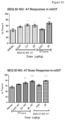
- Example 1 cGMP accumulation in T84 cells for analysis of GC-C activity
- CMOS complementary metal-oxide-semiconductor
- T84 cells were grown overnight in 96 well tissue culture plates.
- the T84 cells were washed twice with 200 ⁇ L of DMEM + 20 mM MES (pH 5) or DMEM + 50 mM sodium bicarbonate (pH8) pr DMEM with no additive for pH 7. These buffers do not contain serum.
- the cells were incubated with 180 ⁇ L of 1 mM isobutylmethylxanthine (IBMX) in either the pH 5, 7 or 8 buffers for 10 minutes at 37°C to inhibit any phosphodiesterase activity.
- IBMX isobutylmethylxanthine
- the peptides were then diluted in either pH 5, 7 or 8 buffer to a 10x concentration.
- the peptide solution of 20 ⁇ L was diluted to a final volume of 200 ⁇ L with the T84 cells, bringing each peptide concentration to 1x.
- An eleven point curve analysis was conducted for each peptide, with final peptide concentrations tested in each assay, in nM: 10000, 3000, 1000, 300, 100, 30, 10, 3, 1, 0.3, 0.1.
- ST Core has the amino acid sequence: Cys Cys Glu Leu Cys Cys Asn Pro Ala Cys Thr Gly Cys Tyr (SEQ ID NO:94).
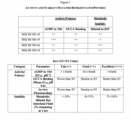
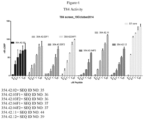
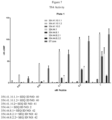
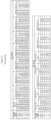
- cGMP concentrations were determined from each sample using the LC/MS conditions in Table 4 and a calculated standard curve. EC 50 values were calculated from concentration-response curves generated with GraphPad Prism Software. Results for selected peptides may be found in Figures 1-14 , 23 and 24 .
- All GC-C binding was done in a final volume of 200 ⁇ L of media at pH 5, 7 or 8.
- Media at pH 5 was prepared using DMEM and 0.5% BSA and 20 mM of 2-(N-morpholino)ethanesulfonic acid (MES).
- Media at pH 7 was prepared using DMEM and 0.5% BSA.
- Media at pH 8 was prepared using DMEM and 0.5% BSA with 20 mM of sodium bicarbonate.
- T84 cells were used at a rate of 250,000 cells per reaction.
- the cells were grown to confluence on T-150 flasks using DMEM-F12 50/50 media and 5 mM L-glutamine and 5% FBS. Cells were scraped off using DMEM and 0.5% BSA and counted to determine how much volume to add to give 250,000 cells per reaction in a final volume of 200 ⁇ L. Then 200,000 CPM per reaction of I125-STp, cold peptide competitor and then T84 cells to start the reaction. Samples were then incubated at 37° C for 1 hour. After 1 hour the entire sample was added to the pre-blocked GF-C plates and suctioned through.
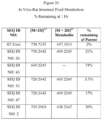
- Rat intestinal fluid was obtained by adding PBS to ligated rat jejunal loops for thirty minutes. The fluid was then collected, pooled and kept on ice before centrifugation at 4° C. The supernatant was removed and flash frozen. Then 60 ⁇ M of peptide (100 ⁇ g/mL) was added to rat intestinal fluid along with PBS and 0.5% BSA. The control incubations were performed in PBS. Then 50 ⁇ L aliquots from all samples were taken in duplicate at 0, 10, 30 and 60 minutes and stopped with 12% trichloroacetic acid containing internal standard.
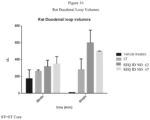
- peptide was prepared in 200 ⁇ L of PBS. This solution was injected into ligated rat duodenal loops, which were approxiamately 3-5 cm in length. Three animals per peptide, per time point were used. At 30 minutes and 60 minutes the loops were excised, measured and weighed. Then the fluid ws collected and flash frozen in Eppendorf tubes and the loops were re-weighed to determine their empty weight. Samples were then thawed and spun and the supernatant was removed from each sample. Then 50 ⁇ L aliquots were removed and added to 12% trichloroacetic acid containing an internal standard.
- Dicarba peptides were made using standard Fmoc-/Trt/Otbu protected amino acids.
- the dicarba peptides were synthesized on a Protein Technologies Symphony X ® with the amino acids dissolved in dimethyl formamide (DMF) at a concentration of 0.5 M.
- the Fmoc-Cys(Trt)-OH was dissolved into a solution containing 0.5 M oxyma pure in DMF.
- HCTU was dissolved in NMP to 0.5 M, and a 1.0 M DIPEA in NMP was also used.
- DIC is dissolved in NMP to 0.5 M.
- Fmoc deprotection was performed using a solution containing 20% piperidine in DMF.
- Fmoc-Cys(Trt)-O-Wang resin (0.2 mmol, 0.29 mmol/g) was treated with 20% piperidine in DMF (3 ⁇ 6 mL, 3 min, 1 ⁇ 6 mL, 10 min). The resulting resin was washed with DMF (6 ⁇ 10 mL, 30 s). A solution containing Fmoc-Xaa-OH, HCTU, and DIPEA in NMP that has been pre-mixed for 30 seconds was added and the mixture was agitated for 30 minutes. The resin was filtered and washed once with DMF.
- the material would be subjected to the aforementioned protocol and the peptide was elongated to the full sequence.
- the resin was washed with CH 2 Cl 2 (3 ⁇ 10 mL) and hexanes (3 ⁇ 10 mL), and dried under diminished pressure overnight.
- the material was subjected to the aforementioned protocol and the peptide was elongated until macrocyclization.
- the resulting resin was washed with NMP (3 ⁇ 10 mL), and treated with 20% piperidine in DMF (3 ⁇ 15 mL, 10 min).
- the resin was washed with DMF (5 ⁇ 10 mL), CH 2 Cl 2 (3 ⁇ 10 mL) and hexanes (3 ⁇ 10 mL), and dried under diminished pressure.
- the resin was treated with a solution containing 90:5:5 TFA-TIPS-H 2 O (20 mL). After 2 hours, the resin was filtered and washed with TFA (3 mL) and concentrated by 50%. Cold (-78 °C) ether was added to the solution (50 mL) and the resulting mixture was centrifuged @ 3500 rpm for 10 min. The ether was decanted and the solid was subjected to 2 additional washes and centrifuged with cold (-78 °C) ether. The resulting solid was dried under diminished pressure, dissolved into 1:1 H 2 O-ACN, frozen and lyophilized.
- the peptides were purified on a Waters Autopure ® system using 0.1% TFA in water and 0.1% TFA in acetonitrile on a Waters PST C18 RP column (250 ⁇ 30 mm, 10 ⁇ , 130 ⁇ ) at a flow rate of 40 mL/min. A linear gradient was used with 5-45% acetonitrile over 40 or 60 minutes. Fractions containing the desired product were pooled and oxidized.
- the material was synthesized on a Protein Technologies Symphony X ® with amino acids dissolved in DMF at 0.5M.
- Fmoc-Cys(Trt)-OH was dissolved into a solution containing 0.5 M oxyma pure in DMF.
- HCTU was dissolved in NMP to 0.5 M, and a 1.0 M DIPEA in NMP was also used.
- DIC was dissolved in NMP to 0.5 M.
- Fmoc-deprotection was performed using a solution containing 20% piperidine in DMF.
- Rink amide resin (0.2 mmol, 0.24 mmol/g) was treated with 20% piperidine in DMF (3 ⁇ 6 mL, 3 min, 1 ⁇ 6 mL, 10 min). The resulting resin was washed with DMF (6 ⁇ 10 mL, 30 s). A solution containing Fmoc-Xaa-OH, HCTU, and DIPEA in NMP that has been pre-mixed for 30 seconds was added and the mixture was agitated for 30 minutes. The resin was filtered and washed once with NMP.
- the resin was treated with 20% piperidine in DMF (3 ⁇ 6 mL, 3 min, 1 ⁇ 6 mL, 10 min). The resulting resin was washed with DMF (6 ⁇ 10 mL, 30 s). A solution containing alloc-HCys((Fmoc-Ala-OH)-3-yl)-all (227 mg, 0.4 mmol), PyAOP (209 mg 0.4 mmol) and DIPEA (139 ⁇ l, 125 mg, 0.8mmol) in 5 mL of NMP was added to the resin. After 90 min, the resin was filtered and washed with DMF (6 ⁇ 10 mL). The peptide was then elongated using the aforementioned protocol.
- the resin (0.2 mmol) was suspended in 10 mL of DMF and a solution containing Pd(PPh3)4 (300 mg, 0.26 mmol) in 10 mL of CH2Cl2 was added followed by 0.25 mL (2 mmol) of phenyl silane. The resulting mixture was shaken in the absence of light for 2 hours. A small sample was cleaved to ensure complete deprotection. The resulting resin was filtered and washed with CH2Cl2 (3 ⁇ 10 mL) and DMF (3x 10 mL). The resin was treated with a solution containing 0.5% sodium diethyldithiocarbamate in DMF (10 mL, 4 ⁇ 15 min), and washed with DMF (3x 10 mL).
- the resin was treated with a 20% piperidine in DMF solution (2 ⁇ 5 min, 1 ⁇ 10 min, 15 mL) and washed with DMF (6 ⁇ 15 mL).
- DMF 6 ⁇ 15 mL
- the resulting resin was washed with DMF (3 ⁇ 15 mL) and placed back onto the SymphonyX to complete the synthesis.
- the resin was treated with a solution containing 90:5:3:2 TFA-TIPS-DODT-H 2 O (20 mL). After 2 hours, the resin was filtered and washed with TFA (3 mL) and concentrated by 50%. Cold (-78 °C) ether was added to the solution (50 mL) and the resulting mixture was centrifuged @ 3500 rpm for 10 minutes. The ether was decanted and the solid was subject to 2 additional washes and centrifuged with cold (-78 °C) ether. The resulting solid was dried under diminished pressure, dissolved into 1:1 H2O-ACN, frozen and lyophilized.
- the peptides were then purified on a Waters autopure system using 0.1% TFA in water and 0.1% TFA in acetonitrile on a Waters PST C18 RP column (250 ⁇ 30 mm, 10 ⁇ , 130 ⁇ ) at a flow rate of 40 mL/min. A linear gradient was used 5-45% acetonitrile over 40 or 60 minutes. Fractions containing the desired product were pooled and oxidized.
- Oxidation was performed adding 5 mL of DMSO to a solution containing 100 mL of 0.05 N NH 4 HCO 3 (pH ⁇ 8) in 9:1 water-acetonitrile. After 72 hours, oxidation appeared complete by HPLC and the material was acidified with acetic acid, frozen and lyophilized.
- the peptides were purified on a Waters Autopure ® system using 0.1% TFA in water and 0.1% TFA in acetonitrile on a Waters PST C18 RP column (250 ⁇ 30 mm, 10 ⁇ , 130 ⁇ ) at a flow rate of 40 mL/min. A linear gradient was used from 5-40% acetonitrile over 60 minutes. Fractions containing the desired product were pooled and lyophilized.
- Peptides were synthesized using standard Fmoc-/Trt/Otbu protected amino acids. Material was synthesized on a Protein Technologies Symphony X ® with amino acids dissolved in DMF at 0.5M. Fmoc-Cys(Trt)-OH was dissolved into a solution containing 0.5 M oxyma pure in DMF. HCTU was dissolved NMP to 0.5 M, and a 1.0 M DIEA in NMP was also used. DIC was dissolved in NMP to 0.5 M. Fmoc-deprotection was performed using a solution containing 20% piperidine in DMF. Uncommon amino acids were coupled manually as described below.
- the resin was treated with 218 mg (1.0 mmol) di-tert-butyl dicarbonate in 5 mL of DMF. After 4 h, a small sample ( ⁇ 10 mg) was removed and acetylated with 10 ⁇ L of acetic anhydride and 30 ⁇ L of DIPEA in DMF to check for completion. The resulting resin was washed with DMF (5 ⁇ 10 mL) and treated with 100 ⁇ L of acetic anhydride and 300 ⁇ L of DIPEA in DMF for 50 min. the resulting resin was washed with DMF (6 ⁇ 10 mL)
- the protected resin was treated with a solution containing 2% hydrazine monohydrate in DMF (5 ⁇ 5 mL, 5 min). The resulting resin was washed with DMF (6 ⁇ 10 ml).
- the resin was treated with 521 mg (1.0 mmol) of PyAOP and 348 ⁇ L (258 mg, 2.0 mmol) of DIPEA in 5 mL of DMF. The resulting mixture was heated via microwave heating (200W) to 100 °C for 10 min. The resulting resin was cooled, filtered and washed with DMF (6 ⁇ 10 mL) and CH 2 Cl 2 (6 ⁇ 10 mL) and dried under diminished pressure.
- the resin was treated with a solution containing 90:5:3:2 TFA-TIPS-DODT-H2O (20 mL). After 2 h, the resin was filtered and washed with TFA (3 mL) and concentrated by 50%. Cold (-78 °C) either was added to the solution (50 mL) and the resulting mixture was centrifuged @ 3500 rpm for 10 min. The ether was decanted and the solid was subject to 2 addition washes/centrifuge with cold (-78 °C) ether. The resulting solid was dried under diminished pressure, dissolved into 1:1 H2O-ACN, frozen and lyophilized.
- the crude peptide (280 mg) was dissolved in water and the mixture was treated with solid NH 4 HCO 3 to adjust the pH to be >7. Afterwhich 20 mL of acetonitrile was added followed by 10 mL of DMSO. After 24 h, oxidation appeared complete by HPLC and the material was acidified to pH ⁇ 2 with trifluoroacetic acid, filtered, frozen and lyophilized.
- the peptide was purified on a Waters Autopure ® system using 0.1% TFA in water and 0.1% TFA in acetonitrile was used on a Waters PST C18 RP column (250 x 30 mm, 5 ⁇ , 130 ⁇ ) at a flow rate of 40 mL/min. A linear gradient from 5% 0.1% TFA in acetonitrile to 25% 0.1 % TFA in acetonitrile over 40 min was used Fractions containing desired product were pooled, frozen and lyophilized. The material was subjected to a second pass purification.
- the peptide was purified on a Waters Autopure ® system using 0.1% TFA in water and 0.1% TFA in acetonitrile was used on a Waters PST C18 RP column (250 ⁇ 19 mm, 5 u, 130 A) at a flow rate of 20 mL/min. A linear gradient from 15% 0.1% TFA in acetonitrile to 25% 0.1% TFA in acetonitrile over 60 min was used. Fractions containing desired product were pooled, frozen and lyophilized to give a colorless solid.
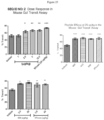
- the purpose of the assay was to test the effect of the guanylate cyclase C agonist peptides on in vivo gastrointestinal transit in mice. Orally-dosed guanylate cyclase C agonists have been demonstrated to increase the % Distance Travelled by a charcoal meal in mice.
- Test peptide and vehicle were administered in 200 ⁇ L doses by oral gavage. Seven minutes after dosing the test peptides, 200 ⁇ L of the charcoal/gum arabic suspension was dosed by oral gavage. After 15 minutes, mice were sacrificed by CO 2 overdose. The gastrointestinal tract was removed from the esophagus to the caecum. The total length of the small intestine was measured from the pyloric junction to the ileocaecal junction. The distance travelled by the charcoal was measured from the pyloric junction to the charcoal front. The Distance Travelled (%) was determined as (distance travelled by charcoal/total length of the small intestine) ⁇ 100.
- Embodiments 1-53 Preferred embodiments of the present invention are described below and are referred to as Embodiments 1-53.
- Embodiment 1 A peptide or a pharmaceutically acceptable salt thereof, wherein the peptide comprises the amino acid sequence Xaa 1 Xaa 2 Xaa 3 Xaa 4 Xaa 5 Xaa 6 Xaa 7 Xaa 8 Xaa 9 Xaa 10 Xaa 11 Xaa 12 Xaa 13 Xaa 14 Ala 15 Xaa 16 Xaa 17 Gly 18 Xaa 1 Xaa 20 Xaa 21 (SEQ ID NO: 1), or a pharmaceutically acceptable salt thereof; wherein
- Embodiment 2 The peptide or pharmaceutically acceptable salt thereof according to Embodiment 1, wherein the N-terminus is capped with acetic acid, pentenoic acid, biotin, 4-Mepip, C12 alkyl carboxylic acid, C14 alkyl carboxylic acid, C16 alkyl carboxylic acid, or C18 alkyl carboxylic acid.
- Embodiment 3 The peptide or pharmaceutically acceptable salt thereof according to any one of Embodiments 1 or 2, wherein the C-terminus is amidated.
- Embodiment 4 The peptide or pharmaceutically acceptable salt thereof according to any one of Embodiments 1-3, wherein
- Embodiment 5 The peptide or pharmaceutically acceptable salt thereof according to any one of Embodiments 1-3, wherein Xaa 7 is allylglycine, Cth or Cys.
- Embodiment 6 The peptide or pharmaceutically acceptable salt thereof according to any one of Embodiments 1-3, wherein Xaa 8 is Cys or cystathionine.
- Embodiment 7 The peptide or pharmaceutically acceptable salt thereof according to any one of Embodiments 1-6, wherein Xaa 9 is Glu.
- Embodiment 8 The peptide or pharmaceutically acceptable salt thereof according to any one of Embodiments 1-7, wherein Xaa 10 is Leu.
- Embodiment 9 The peptide or pharmaceutically acceptable salt thereof according to any one of Embodiments 1-8, wherein Xaa 12 is Cys or allylglycine.
- Embodiment 10 The peptide or pharmaceutically acceptable salt thereof according to any one of Embodiments 1-9, wherein Xaa 14 is Val or Pro.
- Embodiment 11 The peptide or pharmaceutically acceptable salt thereof according to any one of Embodiments 1-10, wherein Xaa 17 is Tyr or Thr.
- Embodiment 12 The peptide or pharmaceutically acceptable salt thereof according to any one of Embodiments 1-11, wherein Xaa 20 is Tyr or is absent.
- Embodiment 13 The peptide or pharmaceutically acceptable salt thereof according to any one of Embodiments 1-12, wherein Xaa 21 is absent.
- Embodiment 14 The peptide or pharmaceutically acceptable salt thereof according to Embodiment 1, wherein:
- Embodiment 15 The peptide or pharmaceutically acceptable salt thereof according to Embodiment 13, wherein the peptide comprises the amino acid sequence:
- Embodiment 16 The peptide or a pharmaceutically acceptable salt thereof according to Embodiment 1, wherein the peptide comprises the amino acid sequence:
- Embodiment 17 A peptide or a pharmaceutically acceptable salt thereof, wherein the peptide consists of the amino acid sequence Xaa 1 Xaa 2 Xaa 3 Xaa 4 Xaa 5 Xaa 6 Xaa 7 Xaa 8 Xaa 9 Xaa 10 Xaa 11 Xaa 12 Xaa 13 Xaa 14 Ala 15 Xaa 16 Xaa 17 Gly 18 Xaa 19 Xaa 20 Xaa 21 (SEQ ID NO: 1), or a pharmaceutically acceptable salt thereof; wherein
- Embodiment 18 The peptide or pharmaceutically acceptable salt thereof according to Embodiment 17, wherein the N-terminus is capped with acetic acid, pentenoic acid, biotin, 4-Mepip, C12 alkyl carboxylic acid, C14 alkyl carboxylic acid, C16 alkyl carboxylic acid, or C18 alkyl carboxylic acid.
- Embodiment 19 The peptide or pharmaceutically acceptable salt thereof according to any one of Embodiments 17 or 18, wherein the C-terminus is amidated.
- Embodiment 20 The peptide or pharmaceutically acceptable salt thereof according to any one of Embodiments 17-19, wherein
- Embodiment 21 The peptide or pharmaceutically acceptable salt thereof according to any one of Embodiments 17-19, wherein Xaa 7 is allylglycine or Cys.
- Embodiment 22 The peptide or pharmaceutically acceptable salt thereof according to any one of Embodiments 17-19, wherein Xaa 8 is Cys or cystathionine.
- Embodiment 23 The peptide or pharmaceutically acceptable salt thereof according to any one of Embodiment 17-22, wherein Xaa 9 is Glu.
- Embodiment 24 The peptide or pharmaceutically acceptable salt thereof according to any one of Embodiments 17-23, wherein Xaa 10 is Leu.
- Embodiment 25 The peptide or pharmaceutically acceptable salt thereof according to any one of Embodiments 17-24, wherein Xaa 12 is Cys or allylglycine.
- Embodiment 26 The peptide or pharmaceutically acceptable salt thereof according to any one of Embodiments 17-25, wherein Xaa 14 is Val or Pro.
- Embodiment 27 The peptide or pharmaceutically acceptable salt thereof according to any one of Embodiments 17-26, wherein Xaa 17 is Tyr or Thr.
- Embodiment 28 The peptide or pharmaceutically acceptable salt thereof according to any one of Embodiments 17-27, wherein Xaa 20 is Tyr or is absent.
- Embodiment 29 The peptide or pharmaceutically acceptable salt thereof according to any one of Embodiments 17-28, wherein Xaa 21 is absent.
- Embodiment 30 The peptide or pharmaceutically acceptable salt thereof according to Embodiment 17, wherein:
- Embodiment 31 The peptide or pharmaceutically acceptable salt thereof according to Embodiment 30, wherein the peptide consists of the amino acid sequence
- Embodiment 32 The peptide or a pharmaceutically acceptable salt thereof according to Embodiment 17, wherein the peptide consists of the amino acid sequence:
- Embodiment 33 A peptide or a pharmaceutically acceptable salt thereof, wherein the peptide comprises the amino acid sequence: Xaa 1 Xaa 2 Xaa 3 Xaa 4 Xaa 5 Xaa 6 Xaa 7 Xaa 8 Xaa 9 Xaa 10 Cys 11 Xaa 12 Asn 13 Xaa 14 Ala 15 Cys 16 Xaa 17 Gly 18 Cys 19 Xaa 20 Xaa 21 (SEQ ID NO: 93), or a pharmaceutically acceptable salt thereof; wherein
- Embodiment 34 The peptide or pharmaceutically acceptable salt thereof according to Embodiment 33, wherein the N-terminus is capped with acetic acid, pentenoic acid, 4-Mepip, C12 alkyl carboxylic acid, C14 alkyl carboxylic acid, C16 alkyl carboxylic acid, or C18 alkyl carboxylic acid.
- Embodiment 35 The peptide or pharmaceutically acceptable salt thereof according to Embodiment 33, wherein the C-terminus is amidated.
- Embodiment 36 A pharmaceutical composition comprising a peptide or a pharmaceutically acceptable salt thereof, and at least one pharmaceutically acceptable excipient, diluent or carrier, wherein the peptide or pharmaceutically acceptable salt thereof comprises the amino acid sequence: Xaa 1 Xaa 2 Xaa 3 Xaa 4 Xaa 5 Xaa 6 Xaa 7 Xaa 8 Xaa 9 Xaa 10 Xaa 11 Xaa 12 Xaa 13 Xaa 14 Ala 15 Xaa 16 Xaa 17 Gly 18 Xaa 19 Xaa 20 Xaa 21 (SEQ ID NO: 1), or a pharmaceutically acceptable salt thereof; wherein
- Embodiment 37 The pharmaceutical composition according to Embodiment 36, wherein the peptide or pharmaceutically acceptable salt thereof consists of the amino acid sequence:
- Embodiment 38 The pharmaceutical composition according to Embodiment 36, wherein the peptide or pharmaceutically acceptable salt thereof consists of the amino acid sequence:
- Embodiment 39 The pharmaceutical composition according to any one of Embodiments 36-38, wherein the N-terminus of the peptide is capped with acetic acid, pentenoic acid, 4-Mepip, C12 alkyl carboxylic acid, C14 alkyl carboxylic acid, C16 alkyl carboxylic acid or C18 alkyl carboxylic acid; the C-terminus of the peptide is amidated; or any combination thereof.
- Embodiment 40 The pharmaceutical composition according to any one of Embodiments 36-39, wherein the pharmaceutical composition is a solid dosage formulation.
- Embodiment 41 The pharmaceutical composition according to Embodiment 40, wherein the pharmaceutical composition is formulated as an oral solid dosage formulation.
- Embodiment 42 A method of cleansing the colon of a subject in preparation for a colonoscopy procedure comprising administering to the subject an effective dose of a colon cleansing composition; wherein the colon cleansing composition comprises a pharmaceutically acceptable excipient, diluent or carrier, and a peptide or a pharmaceutically acceptable salt thereof, wherein the peptide or a pharmaceutically acceptable salt thereof comprises the amino acid sequence: Xaa 1 Xaa 2 Xaa 3 Xaa 4 Xaa 5 Xaa 6 Xaa 7 Xaa 8 Xaa 9 Xaa 10 Xaa 11 Xaa 12 Xaa 13 Xaa 14 Ala 15 Xaa 16 Xaa 17 Gly 18 Xaa 19 Xaa 20 Xaa 21 (SEQ ID NO: 1), or a pharmaceutically acceptable salt thereof; wherein
- Embodiment 43 The method according to Embodiment 42, wherein the method further comprises:
- Embodiment 44 The method according to Embodiment 43, wherein the effective second dose is administered the morning after the effective first dose is administered.
- Embodiment 45 The method according to Embodiment 42, wherein the colon cleansing composition comprises a peptide or a pharmaceutically acceptable salt thereof comprises the amino acid sequence:
- Embodiment 46 The method according to Embodiment 42, wherein the colon cleansing composition comprises a peptide or a pharmaceutically acceptable salt thereof comprises the amino acid sequence:
- Embodiment 47 A method of producing the peptide of any one of Embodiments 1-35, comprising providing a cell harboring a nucleic acid molecule encoding the polypeptide, culturing the cell under conditions in which the peptide is expressed, and isolating the expressed peptide.
- Embodiment 48 A method of producing the peptide of any of Embodiments 1-35, comprising chemically synthesizing the peptide and purifying the synthesized peptide.
- Embodiment 49 A method of treating a gastrointestinal or visceral disorder comprising administering to a subject a peptide of any of Embodiments 1-35.
- Embodiment 50 A method of treating a disorder selected from colon cancer, Hereditary Nonpolyposis Colorectal Cancer (HNPCC), Lynch syndrome, gastroparesis (GP), polyps, pain, general abdominal pain, post-operative ileus, opioid-induced constipation, functional dyspepsia, diverticular disease including including but not limited to SUDD (symptomatic uncomplicated diverticular disease) and SCAD (segmental colitis associated with diverticulosis), diverticulosis, diarrhea-predominant irritable bowel syndrome, pain associated with irritable bowel syndrom (IBS), ulcerative colitis, ulcerative proctitis, Crohn's Disease, inflammatory bowel disease (IBD), chronic or acute radiation protopathy, rectal pain, chronic proctalgia, proctalgia fugax, anal pain, chronic anal fissure, post-operative anal pain, overactive bladder syndrome, stress incontinence, interstitial cystitis, bladder pain syndrome,
- Embodiment 51 The method of Embodiment 51, further comprising administering to the subject a pharmaceutical composition comprising an active ingredient selected from opioids, tramadol, beta-3 adrenergic receptor agonists, anti-cholinergic agents, and tricyclic antidepressants.
- a pharmaceutical composition comprising an active ingredient selected from opioids, tramadol, beta-3 adrenergic receptor agonists, anti-cholinergic agents, and tricyclic antidepressants.
- Embodiment 52 A pharmaceutical composition for use in cleansing the colon in a subject in preparation for a colonoscopy procedure, wherein the pharmaceutical composition comprises a pharmaceutically acceptable excipient, diluent or carrier, and a peptide or a pharmaceutically acceptable salt thereof, wherein the peptide or a pharmaceutically acceptable salt thereof comprises the amino acid sequence: Xaa 1 Xaa 2 Xaa 3 Xaa 4 Xaa 5 Xaa 6 Xaa 7 Xaa 8 Xaa 9 Xaa 10 Xaa 11 Xaa 12 Xaa 13 Xaa 14 Ala 15 Xaa 16 Xaa 17 Gly 18 Xaa 19 Xaa 20 Xaa 21 (SEQ ID NO: 1), or a pharmaceutically acceptable salt thereof; wherein
- Embodiment 53 A pharmaceutical composition for use in treating a disorder selected from colon cancer, Hereditary Nonpolyposis Colorectal Cancer (HNPCC), Lynch syndrome, gastroparesis (GP), polyps, pain, general abdominal pain, post-operative ileus, opioid-induced constipation, functional dyspepsia, diverticular disease including including but not limited to SUDD (symptomatic uncomplicated diverticular disease) and SCAD (segmental colitis associated with diverticulosis), diverticulosis, diarrhea-predominant irritable bowel syndrome, pain associated with irritable bowel syndrom (IBS), ulcerative colitis, ulcerative proctitis, Crohn's Disease, inflammatory bowel disease (IBD), chronic or acute radiation protopathy, rectal pain, chronic proctalgia, proctalgia fugax, anal pain, chronic anal fissure, post-operative anal pain, overactive bladder syndrome, stress incontinence, interstitial cystitis, bladder
Landscapes
- Health & Medical Sciences (AREA)
- Chemical & Material Sciences (AREA)
- Life Sciences & Earth Sciences (AREA)
- Medicinal Chemistry (AREA)
- General Health & Medical Sciences (AREA)
- Veterinary Medicine (AREA)
- Public Health (AREA)
- Animal Behavior & Ethology (AREA)
- Pharmacology & Pharmacy (AREA)
- Organic Chemistry (AREA)
- Bioinformatics & Cheminformatics (AREA)
- Engineering & Computer Science (AREA)
- Epidemiology (AREA)
- Proteomics, Peptides & Aminoacids (AREA)
- General Chemical & Material Sciences (AREA)
- Chemical Kinetics & Catalysis (AREA)
- Nuclear Medicine, Radiotherapy & Molecular Imaging (AREA)
- Immunology (AREA)
- Gastroenterology & Hepatology (AREA)
- Biophysics (AREA)
- Genetics & Genomics (AREA)
- Molecular Biology (AREA)
- Biochemistry (AREA)
- Reproductive Health (AREA)
- Gynecology & Obstetrics (AREA)
- Endocrinology (AREA)
- Nutrition Science (AREA)
- Physiology (AREA)
- Pregnancy & Childbirth (AREA)
- Urology & Nephrology (AREA)
- Medicines That Contain Protein Lipid Enzymes And Other Medicines (AREA)
- Peptides Or Proteins (AREA)
- Acyclic And Carbocyclic Compounds In Medicinal Compositions (AREA)
- Medicines Containing Material From Animals Or Micro-Organisms (AREA)
- Preparation Of Compounds By Using Micro-Organisms (AREA)
- Micro-Organisms Or Cultivation Processes Thereof (AREA)
- Pharmaceuticals Containing Other Organic And Inorganic Compounds (AREA)
- Medicines Containing Antibodies Or Antigens For Use As Internal Diagnostic Agents (AREA)
Applications Claiming Priority (3)
| Application Number | Priority Date | Filing Date | Title |
|---|---|---|---|
| US201562156077P | 2015-05-01 | 2015-05-01 | |
| EP16721609.2A EP3288578B8 (fr) | 2015-05-01 | 2016-04-29 | Composition pour le nettoyage du côlon et le traitement de troubles gastro-intestinaux |
| PCT/US2016/030061 WO2016178979A1 (fr) | 2015-05-01 | 2016-04-29 | Composition pour le nettoyage du côlon et le traitement de troubles gastro-intestinaux |
Related Parent Applications (1)
| Application Number | Title | Priority Date | Filing Date |
|---|---|---|---|
| EP16721609.2A Division EP3288578B8 (fr) | 2015-05-01 | 2016-04-29 | Composition pour le nettoyage du côlon et le traitement de troubles gastro-intestinaux |
Publications (2)
| Publication Number | Publication Date |
|---|---|
| EP4218789A2 true EP4218789A2 (fr) | 2023-08-02 |
| EP4218789A3 EP4218789A3 (fr) | 2023-09-27 |
Family
ID=55953439
Family Applications (2)
| Application Number | Title | Priority Date | Filing Date |
|---|---|---|---|
| EP23159398.9A Pending EP4218789A3 (fr) | 2015-05-01 | 2016-04-29 | Compositions pour le nettoyage du colon et le traitement de troubles gastrointestinaux |
| EP16721609.2A Active EP3288578B8 (fr) | 2015-05-01 | 2016-04-29 | Composition pour le nettoyage du côlon et le traitement de troubles gastro-intestinaux |
Family Applications After (1)
| Application Number | Title | Priority Date | Filing Date |
|---|---|---|---|
| EP16721609.2A Active EP3288578B8 (fr) | 2015-05-01 | 2016-04-29 | Composition pour le nettoyage du côlon et le traitement de troubles gastro-intestinaux |
Country Status (23)
| Country | Link |
|---|---|
| US (2) | US10618938B2 (fr) |
| EP (2) | EP4218789A3 (fr) |
| JP (4) | JP6930919B2 (fr) |
| KR (2) | KR20250042844A (fr) |
| CN (2) | CN114716514A (fr) |
| CA (2) | CA2984437C (fr) |
| CY (1) | CY1126031T1 (fr) |
| DK (1) | DK3288578T5 (fr) |
| EA (1) | EA201792401A1 (fr) |
| ES (1) | ES2947591T3 (fr) |
| FI (1) | FI3288578T3 (fr) |
| HR (1) | HRP20230381T1 (fr) |
| HU (1) | HUE061954T2 (fr) |
| LT (1) | LT3288578T (fr) |
| MA (1) | MA41985B1 (fr) |
| MD (1) | MD3288578T2 (fr) |
| MX (2) | MX2017013928A (fr) |
| PL (1) | PL3288578T3 (fr) |
| PT (1) | PT3288578T (fr) |
| RS (1) | RS64160B1 (fr) |
| SI (1) | SI3288578T1 (fr) |
| SM (1) | SMT202300114T1 (fr) |
| WO (1) | WO2016178979A1 (fr) |
Families Citing this family (5)
| Publication number | Priority date | Publication date | Assignee | Title |
|---|---|---|---|---|
| HRP20220479T1 (hr) | 2016-06-01 | 2022-05-27 | Athira Pharma, Inc. | Spojevi |
| AU2022396412A1 (en) * | 2021-11-24 | 2024-05-30 | Ironwood Pharmaceuticals, Inc. | Synthetic process for production of modified gcc receptor agonists |
| US20250197449A1 (en) * | 2021-11-24 | 2025-06-19 | Ironwood Pharmaceuticals, Inc. | Synthetic Process for Production of Modified GCC Receptor Agonists |
| KR20240111797A (ko) | 2021-11-29 | 2024-07-17 | 아이언우드 파마슈티컬스, 인코포레이티드 | 내장 통증의 치료를 위한 제약 조성물 |
| WO2026050206A1 (fr) * | 2024-08-27 | 2026-03-05 | Ironwood Pharmaceuticals, Inc. | Combinaisons d'agonistes du récepteur de glp-1 et de guanylate cyclase c (gc-c) |
Citations (2)
| Publication number | Priority date | Publication date | Assignee | Title |
|---|---|---|---|---|
| EP0736299A1 (fr) | 1995-04-03 | 1996-10-09 | Cerbios-Pharma S.A. | Procédé de préparation d'une formulation thérapeutique, solide et sèche de liposomes, dispersible dans l'eau pour administration orale |
| US5912014A (en) | 1996-03-15 | 1999-06-15 | Unigene Laboratories, Inc. | Oral salmon calcitonin pharmaceutical products |
Family Cites Families (9)
| Publication number | Priority date | Publication date | Assignee | Title |
|---|---|---|---|---|
| ATE477268T1 (de) * | 2003-01-28 | 2010-08-15 | Ironwood Pharmaceuticals Inc | Zusammensetzungen zur behandlung von magen-darm- störungen |
| US7494979B2 (en) * | 2003-06-13 | 2009-02-24 | Ironwood Pharmaceuticals, Inc. | Method for treating congestive heart failure and other disorders |
| WO2007022531A2 (fr) * | 2005-08-19 | 2007-02-22 | Microbia, Inc. | Compositions et methodes de traitement de troubles gastro-intestinaux |
| WO2010025510A1 (fr) * | 2008-09-03 | 2010-03-11 | Xenome Ltd | Bibliothèques de conjugués peptidiques et leurs méthodes de fabrication |
| WO2011103311A2 (fr) * | 2010-02-17 | 2011-08-25 | Ironwood Pharmaceuticals, Inc | Traitements de troubles gastro-intestinaux |
| CA3100941C (fr) * | 2011-03-01 | 2024-03-05 | Synergy Pharmaceuticals Inc. | Procede de preparation d'agonistes du guanylate cyclase c |
| EP3718557A3 (fr) * | 2013-02-25 | 2020-10-21 | Bausch Health Ireland Limited | Agoniste du récepteur de la guanylate cyclase sp-333 à utiliser lors du nettoyage du côlon |
| EA201592263A1 (ru) * | 2013-06-05 | 2016-05-31 | Синерджи Фармасьютикалз, Инк. | Ультрачистые агонисты гуанилатциклазы c, способ их получения и использования |
| WO2016015055A1 (fr) | 2014-07-25 | 2016-01-28 | Ironwood Pharmaceuticals, Inc. | Compositions de nettoyage du côlon |
-
2016
- 2016-04-29 HU HUE16721609A patent/HUE061954T2/hu unknown
- 2016-04-29 US US15/570,838 patent/US10618938B2/en active Active
- 2016-04-29 EP EP23159398.9A patent/EP4218789A3/fr active Pending
- 2016-04-29 ES ES16721609T patent/ES2947591T3/es active Active
- 2016-04-29 EA EA201792401A patent/EA201792401A1/ru unknown
- 2016-04-29 EP EP16721609.2A patent/EP3288578B8/fr active Active
- 2016-04-29 MX MX2017013928A patent/MX2017013928A/es unknown
- 2016-04-29 LT LTEPPCT/US2016/030061T patent/LT3288578T/lt unknown
- 2016-04-29 KR KR1020257008457A patent/KR20250042844A/ko active Pending
- 2016-04-29 PT PT167216092T patent/PT3288578T/pt unknown
- 2016-04-29 PL PL16721609.2T patent/PL3288578T3/pl unknown
- 2016-04-29 KR KR1020177034808A patent/KR102783759B1/ko active Active
- 2016-04-29 HR HRP20230381TT patent/HRP20230381T1/hr unknown
- 2016-04-29 CA CA2984437A patent/CA2984437C/fr active Active
- 2016-04-29 CA CA3172777A patent/CA3172777A1/fr active Pending
- 2016-04-29 SM SM20230114T patent/SMT202300114T1/it unknown
- 2016-04-29 DK DK16721609.2T patent/DK3288578T5/da active
- 2016-04-29 JP JP2017557067A patent/JP6930919B2/ja active Active
- 2016-04-29 SI SI201631712T patent/SI3288578T1/sl unknown
- 2016-04-29 CN CN202210288669.XA patent/CN114716514A/zh active Pending
- 2016-04-29 RS RS20230311A patent/RS64160B1/sr unknown
- 2016-04-29 MA MA41985A patent/MA41985B1/fr unknown
- 2016-04-29 MD MDE20180232T patent/MD3288578T2/ro unknown
- 2016-04-29 FI FIEP16721609.2T patent/FI3288578T3/fi active
- 2016-04-29 WO PCT/US2016/030061 patent/WO2016178979A1/fr not_active Ceased
- 2016-04-29 CN CN201680032088.2A patent/CN108040482B/zh active Active
-
2017
- 2017-10-30 MX MX2022013283A patent/MX2022013283A/es unknown
-
2020
- 2020-09-30 JP JP2020165328A patent/JP2020203954A/ja not_active Withdrawn
-
2022
- 2022-07-04 JP JP2022107644A patent/JP2022121734A/ja active Pending
-
2023
- 2023-05-26 CY CY20231100253T patent/CY1126031T1/el unknown
-
2024
- 2024-01-26 US US18/424,114 patent/US20240199697A1/en active Pending
-
2025
- 2025-08-12 JP JP2025134346A patent/JP2025169325A/ja active Pending
Patent Citations (3)
| Publication number | Priority date | Publication date | Assignee | Title |
|---|---|---|---|---|
| EP0736299A1 (fr) | 1995-04-03 | 1996-10-09 | Cerbios-Pharma S.A. | Procédé de préparation d'une formulation thérapeutique, solide et sèche de liposomes, dispersible dans l'eau pour administration orale |
| US5912014A (en) | 1996-03-15 | 1999-06-15 | Unigene Laboratories, Inc. | Oral salmon calcitonin pharmaceutical products |
| US6086918A (en) | 1996-03-15 | 2000-07-11 | Unigene Laboratories, Inc. | Oral peptide pharmaceutical products |
Non-Patent Citations (5)
| Title |
|---|
| "Remington's Pharmaceutical Sciences", 1995, MACK PUBLISHING COMPANY |
| DRUG METAB. DISPOS., vol. 29, no. 1, 2001, pages 54 - 9 |
| J. PHARMACOL. EXP. THER., vol. 323, 2007, pages 308 - 317 |
| J. PHARMACOL. EXP. THER., vol. 328, no. 2, 2009, pages 671 - 9 |
| TAM ET AL., J. AM. CHEM. SOC., vol. 113, 1991, pages 6657 - 62 |
Also Published As
Similar Documents
| Publication | Publication Date | Title |
|---|---|---|
| US20230340025A1 (en) | Treatments for Gastrointestinal Disorders | |
| AU2010314866B2 (en) | Treatments for gastrointestinal disorders | |
| US20240199697A1 (en) | Compositions for Colon Cleansing and the Treatment of Gastrointestinal Disorders | |
| US8735360B2 (en) | Treatments for gastrointestinal disorders | |
| JP7862355B2 (ja) | 結腸洗浄及び胃腸障害の治療のための組成物 | |
| HK40097176A (en) | Compositions for colon cleansing and the treatment of gastrointestnal disorders | |
| HK40080323A (en) | Compositions for colon cleansing and the treatment of gastrointestinal disorders | |
| EA048992B1 (ru) | Композиции для очищения толстого кишечника и лечения желудочно-кишечных расстройств | |
| BR112017023539B1 (pt) | Peptídeos ou sais farmaceuticamente aceitáveis do mesmo, seus métodos de produção, seus usos e composições farmaceuticas | |
| EA053280B1 (ru) | Композиции для очищения толстого кишечника и лечения желудочно-кишечных расстройств |
Legal Events
| Date | Code | Title | Description |
|---|---|---|---|
| PUAI | Public reference made under article 153(3) epc to a published international application that has entered the european phase |
Free format text: ORIGINAL CODE: 0009012 |
|
| STAA | Information on the status of an ep patent application or granted ep patent |
Free format text: STATUS: THE APPLICATION HAS BEEN PUBLISHED |
|
| AC | Divisional application: reference to earlier application |
Ref document number: 3288578 Country of ref document: EP Kind code of ref document: P |
|
| AK | Designated contracting states |
Kind code of ref document: A2 Designated state(s): AL AT BE BG CH CY CZ DE DK EE ES FI FR GB GR HR HU IE IS IT LI LT LU LV MC MK MT NL NO PL PT RO RS SE SI SK SM TR |
|
| PUAL | Search report despatched |
Free format text: ORIGINAL CODE: 0009013 |
|
| AK | Designated contracting states |
Kind code of ref document: A3 Designated state(s): AL AT BE BG CH CY CZ DE DK EE ES FI FR GB GR HR HU IE IS IT LI LT LU LV MC MK MT NL NO PL PT RO RS SE SI SK SM TR |
|
| P01 | Opt-out of the competence of the unified patent court (upc) registered |
Effective date: 20230817 |
|
| RIC1 | Information provided on ipc code assigned before grant |
Ipc: C07K 7/64 20060101ALI20230821BHEP Ipc: A61K 38/12 20060101ALI20230821BHEP Ipc: A61K 38/10 20060101AFI20230821BHEP Ipc: C07K 7/54 20060101ALI20230821BHEP |
|
| REG | Reference to a national code |
Ref country code: HK Ref legal event code: DE Ref document number: 40097176 Country of ref document: HK |
|
| STAA | Information on the status of an ep patent application or granted ep patent |
Free format text: STATUS: REQUEST FOR EXAMINATION WAS MADE |
|
| 17P | Request for examination filed |
Effective date: 20240326 |
|
| STAA | Information on the status of an ep patent application or granted ep patent |
Free format text: STATUS: EXAMINATION IS IN PROGRESS |
|
| 17Q | First examination report despatched |
Effective date: 20260302 |