EP4219489A2 - Inhibiteurs de protéine kinase activée par mitogène, procédés de fabrication et procédés d'utilisation de ceux-ci - Google Patents
Inhibiteurs de protéine kinase activée par mitogène, procédés de fabrication et procédés d'utilisation de ceux-ci Download PDFInfo
- Publication number
- EP4219489A2 EP4219489A2 EP23156415.4A EP23156415A EP4219489A2 EP 4219489 A2 EP4219489 A2 EP 4219489A2 EP 23156415 A EP23156415 A EP 23156415A EP 4219489 A2 EP4219489 A2 EP 4219489A2
- Authority
- EP
- European Patent Office
- Prior art keywords
- pyridin
- compound
- ethyl
- group
- tert
- Prior art date
- Legal status (The legal status is an assumption and is not a legal conclusion. Google has not performed a legal analysis and makes no representation as to the accuracy of the status listed.)
- Pending
Links
Images




Classifications
-
- C—CHEMISTRY; METALLURGY
- C07—ORGANIC CHEMISTRY
- C07F—ACYCLIC, CARBOCYCLIC OR HETEROCYCLIC COMPOUNDS CONTAINING ELEMENTS OTHER THAN CARBON, HYDROGEN, HALOGEN, OXYGEN, NITROGEN, SULFUR, SELENIUM OR TELLURIUM
- C07F7/00—Compounds containing elements of Groups 4 or 14 of the Periodic Table
- C07F7/02—Silicon compounds
- C07F7/08—Compounds having one or more C—Si linkages
- C07F7/0803—Compounds with Si-C or Si-Si linkages
- C07F7/081—Compounds with Si-C or Si-Si linkages comprising at least one atom selected from the elements N, O, halogen, S, Se or Te
- C07F7/0812—Compounds with Si-C or Si-Si linkages comprising at least one atom selected from the elements N, O, halogen, S, Se or Te comprising a heterocyclic ring
-
- A—HUMAN NECESSITIES
- A61—MEDICAL OR VETERINARY SCIENCE; HYGIENE
- A61P—SPECIFIC THERAPEUTIC ACTIVITY OF CHEMICAL COMPOUNDS OR MEDICINAL PREPARATIONS
- A61P11/00—Drugs for disorders of the respiratory system
-
- A—HUMAN NECESSITIES
- A61—MEDICAL OR VETERINARY SCIENCE; HYGIENE
- A61P—SPECIFIC THERAPEUTIC ACTIVITY OF CHEMICAL COMPOUNDS OR MEDICINAL PREPARATIONS
- A61P31/00—Antiinfectives, i.e. antibiotics, antiseptics, chemotherapeutics
-
- A—HUMAN NECESSITIES
- A61—MEDICAL OR VETERINARY SCIENCE; HYGIENE
- A61P—SPECIFIC THERAPEUTIC ACTIVITY OF CHEMICAL COMPOUNDS OR MEDICINAL PREPARATIONS
- A61P35/00—Antineoplastic agents
-
- C—CHEMISTRY; METALLURGY
- C07—ORGANIC CHEMISTRY
- C07D—HETEROCYCLIC COMPOUNDS
- C07D213/00—Heterocyclic compounds containing six-membered rings, not condensed with other rings, with one nitrogen atom as the only ring hetero atom and three or more double bonds between ring members or between ring members and non-ring members
- C07D213/02—Heterocyclic compounds containing six-membered rings, not condensed with other rings, with one nitrogen atom as the only ring hetero atom and three or more double bonds between ring members or between ring members and non-ring members having three double bonds between ring members or between ring members and non-ring members
- C07D213/04—Heterocyclic compounds containing six-membered rings, not condensed with other rings, with one nitrogen atom as the only ring hetero atom and three or more double bonds between ring members or between ring members and non-ring members having three double bonds between ring members or between ring members and non-ring members having no bond between the ring nitrogen atom and a non-ring member or having only hydrogen or carbon atoms directly attached to the ring nitrogen atom
- C07D213/60—Heterocyclic compounds containing six-membered rings, not condensed with other rings, with one nitrogen atom as the only ring hetero atom and three or more double bonds between ring members or between ring members and non-ring members having three double bonds between ring members or between ring members and non-ring members having no bond between the ring nitrogen atom and a non-ring member or having only hydrogen or carbon atoms directly attached to the ring nitrogen atom with hetero atoms or with carbon atoms having three bonds to hetero atoms with at the most one bond to halogen, e.g. ester or nitrile radicals, directly attached to ring carbon atoms
- C07D213/72—Nitrogen atoms
- C07D213/73—Unsubstituted amino or imino radicals
-
- C—CHEMISTRY; METALLURGY
- C07—ORGANIC CHEMISTRY
- C07D—HETEROCYCLIC COMPOUNDS
- C07D213/00—Heterocyclic compounds containing six-membered rings, not condensed with other rings, with one nitrogen atom as the only ring hetero atom and three or more double bonds between ring members or between ring members and non-ring members
- C07D213/02—Heterocyclic compounds containing six-membered rings, not condensed with other rings, with one nitrogen atom as the only ring hetero atom and three or more double bonds between ring members or between ring members and non-ring members having three double bonds between ring members or between ring members and non-ring members
- C07D213/04—Heterocyclic compounds containing six-membered rings, not condensed with other rings, with one nitrogen atom as the only ring hetero atom and three or more double bonds between ring members or between ring members and non-ring members having three double bonds between ring members or between ring members and non-ring members having no bond between the ring nitrogen atom and a non-ring member or having only hydrogen or carbon atoms directly attached to the ring nitrogen atom
- C07D213/60—Heterocyclic compounds containing six-membered rings, not condensed with other rings, with one nitrogen atom as the only ring hetero atom and three or more double bonds between ring members or between ring members and non-ring members having three double bonds between ring members or between ring members and non-ring members having no bond between the ring nitrogen atom and a non-ring member or having only hydrogen or carbon atoms directly attached to the ring nitrogen atom with hetero atoms or with carbon atoms having three bonds to hetero atoms with at the most one bond to halogen, e.g. ester or nitrile radicals, directly attached to ring carbon atoms
- C07D213/72—Nitrogen atoms
- C07D213/75—Amino or imino radicals, acylated by carboxylic or carbonic acids, or by sulfur or nitrogen analogues thereof, e.g. carbamates
-
- C—CHEMISTRY; METALLURGY
- C07—ORGANIC CHEMISTRY
- C07D—HETEROCYCLIC COMPOUNDS
- C07D401/00—Heterocyclic compounds containing two or more hetero rings, having nitrogen atoms as the only ring hetero atoms, at least one ring being a six-membered ring with only one nitrogen atom
- C07D401/02—Heterocyclic compounds containing two or more hetero rings, having nitrogen atoms as the only ring hetero atoms, at least one ring being a six-membered ring with only one nitrogen atom containing two hetero rings
- C07D401/12—Heterocyclic compounds containing two or more hetero rings, having nitrogen atoms as the only ring hetero atoms, at least one ring being a six-membered ring with only one nitrogen atom containing two hetero rings linked by a chain containing hetero atoms as chain links
-
- C—CHEMISTRY; METALLURGY
- C07—ORGANIC CHEMISTRY
- C07D—HETEROCYCLIC COMPOUNDS
- C07D405/00—Heterocyclic compounds containing both one or more hetero rings having oxygen atoms as the only ring hetero atoms, and one or more rings having nitrogen as the only ring hetero atom
- C07D405/02—Heterocyclic compounds containing both one or more hetero rings having oxygen atoms as the only ring hetero atoms, and one or more rings having nitrogen as the only ring hetero atom containing two hetero rings
- C07D405/12—Heterocyclic compounds containing both one or more hetero rings having oxygen atoms as the only ring hetero atoms, and one or more rings having nitrogen as the only ring hetero atom containing two hetero rings linked by a chain containing hetero atoms as chain links
-
- C—CHEMISTRY; METALLURGY
- C07—ORGANIC CHEMISTRY
- C07D—HETEROCYCLIC COMPOUNDS
- C07D405/00—Heterocyclic compounds containing both one or more hetero rings having oxygen atoms as the only ring hetero atoms, and one or more rings having nitrogen as the only ring hetero atom
- C07D405/14—Heterocyclic compounds containing both one or more hetero rings having oxygen atoms as the only ring hetero atoms, and one or more rings having nitrogen as the only ring hetero atom containing three or more hetero rings
-
- C—CHEMISTRY; METALLURGY
- C07—ORGANIC CHEMISTRY
- C07D—HETEROCYCLIC COMPOUNDS
- C07D409/00—Heterocyclic compounds containing two or more hetero rings, at least one ring having sulfur atoms as the only ring hetero atoms
- C07D409/14—Heterocyclic compounds containing two or more hetero rings, at least one ring having sulfur atoms as the only ring hetero atoms containing three or more hetero rings
-
- C—CHEMISTRY; METALLURGY
- C07—ORGANIC CHEMISTRY
- C07D—HETEROCYCLIC COMPOUNDS
- C07D413/00—Heterocyclic compounds containing two or more hetero rings, at least one ring having nitrogen and oxygen atoms as the only ring hetero atoms
- C07D413/02—Heterocyclic compounds containing two or more hetero rings, at least one ring having nitrogen and oxygen atoms as the only ring hetero atoms containing two hetero rings
- C07D413/12—Heterocyclic compounds containing two or more hetero rings, at least one ring having nitrogen and oxygen atoms as the only ring hetero atoms containing two hetero rings linked by a chain containing hetero atoms as chain links
-
- C—CHEMISTRY; METALLURGY
- C07—ORGANIC CHEMISTRY
- C07D—HETEROCYCLIC COMPOUNDS
- C07D417/00—Heterocyclic compounds containing two or more hetero rings, at least one ring having nitrogen and sulfur atoms as the only ring hetero atoms, not provided for by group C07D415/00
- C07D417/02—Heterocyclic compounds containing two or more hetero rings, at least one ring having nitrogen and sulfur atoms as the only ring hetero atoms, not provided for by group C07D415/00 containing two hetero rings
- C07D417/06—Heterocyclic compounds containing two or more hetero rings, at least one ring having nitrogen and sulfur atoms as the only ring hetero atoms, not provided for by group C07D415/00 containing two hetero rings linked by a carbon chain containing only aliphatic carbon atoms
-
- C—CHEMISTRY; METALLURGY
- C07—ORGANIC CHEMISTRY
- C07D—HETEROCYCLIC COMPOUNDS
- C07D417/00—Heterocyclic compounds containing two or more hetero rings, at least one ring having nitrogen and sulfur atoms as the only ring hetero atoms, not provided for by group C07D415/00
- C07D417/14—Heterocyclic compounds containing two or more hetero rings, at least one ring having nitrogen and sulfur atoms as the only ring hetero atoms, not provided for by group C07D415/00 containing three or more hetero rings
Definitions
- the present disclosure relates to inhibitors of mitogen-activated protein kinases (MAPKs), including inhibitors which target individual kinases such as MAPK13 with high specificity, and inhibitors with broader specificity, i.e., inhibit multiple MAPKs, such as inhibitors which target a combination of MAPK13 and MAPK14, MAPK13 AND MAPK12, and inhibitors which target a combination of MAPK 11, MAPK12, MAPK13 and MAPK14.
- MAPKs mitogen-activated protein kinases
- a compound can exhibit high specificity for an individual MAPK, such as, for example, an inhibitor can specifically target MAPK13.
- a compound can target multiple MAPKs, such as, for example, MAPK11, MAPK12, MAPK13 and MAPK14, or a combined inhibitor targeting MAPK13 and MAPK14 or MAPK 13 and MAPK12.
- Inhibitors of the present teachings are disclosed in Table 1; some inhibitory properties are disclosed in Table 2.
- the present inventors disclose compounds having a structure of Formula I as set forth below, as well as pharmaceutically acceptable salts thereof, solvates thereof, polymorphs thereof, tautomers thereof, stereoisomers thereof, and prodrugs thereof.
- Compounds of Formula I can have a structure wherein A can be selected from the group consisting of H and -NH(CO)R 2 ;
- ring G 1 can be selected from the group consisting of a thiazole, a pyrazole, an oxazole, an isoxazole, and an imidazole.
- R 1 can be selected from the group consisting of H, phenyl, 4-tolyl, halophenyl, 2-cyclopropylmethyl and C 1-8 alkyl.
- the C 1-8 alkyl of R 6 can be methyl.
- M 1 can be CH
- M 2 can be CH 3
- M 3 can be CH 3
- R 6 can be absent.
- G 2 is a benzene ring and E 1 is a halogen
- the combination of G 2 and E 1 can be selected from the group consisting of 3-chlorophenyl, 4-chlorophenyl, 3-fluorophenyl and 4-fluorophenyl.
- ring G 2 can be a pyrazole.
- some non-limiting examples of compounds of formula I comprising a pyrazole moiety include:
- some non-limiting examples of compounds comprising a pyrazole moiety include and
- ring G 2 can be an oxazole.
- a compound of formula I can be any compound of formula I.
- non-limiting examples of compounds of formula I comprising an oxazole moiety include:
- ring G 2 can be a 6-membered aromatic ring.
- non-limiting examples of compounds of formula I comprising a 6-member aromatic ring for G 2 include:
- the present inventors disclose compounds having a structure of Formula II as set forth below, as well as pharmaceutically acceptable salts thereof, solvates thereof, polymorphs thereof, tautomers thereof, stereoisomers thereof, and prodrugs thereof.
- Compounds of Formula II can have a structure wherein A can be selected from the group consisting of H and -NH(CO)R 2 ;
- ring G 3 can be selected from the group consisting of benzene, pyridine and pyrimidine.
- each of Z 1 and Z 2 can be NH.
- R 5 can be F.
- a halogen can be ortho- to Z 1 .
- non-limiting examples of compounds of formula II include
- the present inventors disclose compounds having a structure of Formula III as set forth below, as well as pharmaceutically acceptable salts thereof, solvates thereof, polymorphs thereof, tautomers thereof, stereoisomers thereof, and prodrugs thereof.
- Compounds of Formula III can have a structure wherein A can be selected from the group consisting of H and -NH(CO)R 2 ;
- ring G 3 can be selected from the group consisting of benzene, pyridine and pyrimidine.
- R 1 can be selected from the group consisting of H, phenyl, 4-tolyl, halophenyl, 2-cyclopropylmethyl and C 1-8 alkyl.
- each of Z 1 and Z 2 can be NH.
- R 5 can be fluorine
- a halogen can be ortho- to Z 1 .
- non-limiting examples of compounds of formula III include and
- a compound of the present teachings can include, without limitation, 1-(5-tert-Butyl-2-p-tolyl-2H-pyrazol-3-yl)-3-[5-(2-pyridin-4-yl-ethyl)-thiazol-2-yl]-urea, 1-[5-(3-Methyl-oxetan-3-yl)-2-p-tolyl-2H-pyrazol-3-yl]-3-[5-(2-pyridin-4-yl-ethyl)-thiazol-2-yl]-urea, 1- ⁇ 5-[2-(2-Amino-pyridin-4-yl)-ethyl]-thiazol-2-yl ⁇ -3-(5-tert-butyl-2-p-tolyl-2H-pyrazol-3-yl)-urea, 1-[5-(3-Methyl-thietan-3-yl)-2-p-tolyl-2H-pyrazol-3-yl
- a compound of the present teachings can have a structure as set forth in Table 1. In case of a discrepancy between a compound structure and its IUPAC name, the IUPAC name will be considered definitive.
- Table 1 Analog # IUPAC Chemical Name Chemical Structure 270 1-(5-tert-Butyl-2-p-tolyl-2H-pyrazol-3-yl)-3-[5-(2-pyridin-4-yl-ethyl)-thiazol-2-yl]-urea 271 1-[5-(3-Methyl-oxetan-3-yl)-2-p-tolyl-2H-pyrazol-3-yl]-3-[5-(2-pyridin-4-yl-ethyl)-thiazol-2-yl]-urea 272 1- ⁇ 5-[2-(2-Amino-pyridin-4-yl)-ethyl]-thiazol-2-yl ⁇ -3-(5-tert-butyl-2-p
- the present teachings include uses of the compounds.
- the present teachings include methods of treating a cancer in a subject in need thereof.
- the cancer can be, for example, a breast cancer.
- the methods can comprise administering to a subject in need a therapeutically effective amount of a MAPK13 inhibitor of the present teachings.
- the methods can comprise administering to a subject in need a therapeutically effective amount of an inhibitor of MAPK13 and at least one other MAPK of the present teachings, such as, without limitation, an inhibitor of MAPK 13 and MAPK 14.
- examples of inhibitors of MAPK13 that can be used to treat cancer can include compounds 340, 354, 364, 398, 400, 355, 356, 343, 352, 383, 380, 385, 322, 350, 284, 348 and 336.
- examples of inhibitors of MAPK13 and MAPK14 that can be used to treat cancer can include compounds 286, 347, 341, 381, 326, 351, 285, 335, 339, 369, 344, 273, 342, 334, 390, 353, 349, 345, 287, 366, 337, 382, 281, 368, 325, 319, 331, 330, 333, 332, 314, 311, 283, 282, 288, 384, 399, 300, 321, 397, 313, 268, 426, 262, 304, 424, 423, 303, 427, 267, 320, 306, 259, 392, 261, 260, 329, 393, 396, 425, 310, 391, 402, 394 and 395.
- examples of inhibitors of MAPK13 and MAPK14 that can be used to treat cancer can include compounds 260, 329, 393, 396, 425, 310, 391, 402, 394, and 395.
- a method of treating cancer can include administering, to a subject in need, a therapeutically effective amount of compound 282
- a method of treating cancer can include administering, to a subject in need, a therapeutically effective amount of compound 396
- the present teachings include the use of any compound disclosed herein for the treatment of cancer.
- any compound disclosed herein can be used as an anti-cancer therapeutic.
- any compound disclosed herein can be used the manufacture of a medicament for the treatment of cancer.
- the present teachings include methods of treating a respiratory disease in a subject in need thereof.
- these methods include administering to a subject in need thereof a therapeutically effective amount of a MAPK13 inhibitor disclosed herein.
- these methods include administering to a subject in need thereof a therapeutically effective amount of an inhibitor of MAPK13 and at least one other MAPK, such as, in non-limiting example, a combined inhibitor of MAPK13 and MAPK14.
- Non-limiting examples of MAPK13 inhibitors of the present teachings that can be used for treating a respiratory disease include compounds 340, 354, 364, 398, 400, 355, 356, 343, 352, 383, 380, 385, 322, 350, 284, 348 and 336.
- Non-limiting examples of an inhibitor of MAPK 13 and MAPK14 include compounds 286, 347, 341, 381, 326, 351, 285, 335, 339, 369, 344, 273, 342, 334, 390, 353, 349, 345, 287, 366, 337, 382, 281, 368, 325, 319, 331, 330, 333, 332, 314, 311, 283, 282, 288, 384, 399, 300, 321, 397, 313, 268, 426, 262, 304, 424, 423, 303, 427, 267, 320, 306, 259, 392, 261, 260, 329, 393, 396, 425, 310, 391, 402, 394 and 395.
- Non-limiting examples of an inhibitor of MAPK 13 and MAPK14 include compounds 260, 329, 393, 396, 425, 310, 391, 402, 394, and 395.
- the respiratory disease can be, without limitation, asthma, rhinitis, sinusitis, COPD, pulmonary fibrosis and a combination thereof.
- a compound of the present teachings can be used for the manufacture of a medicament for the treatment of a respiratory disease.
- the present disclosure is based, at least in part, on the discoveries that novel generation of MAPK13 inhibitors and combined MAPK13-other-kinase (e.g., combined MAPK13-MAPK14 or combined MAPK13-MAPK12) inhibitors have enhanced selectivity, potency and effectiveness regarding MAPK13 and combined MAPK13-other-kinase (e.g., combined MAPK13-MAPK14 or combined MAPK13-MAPK12) inhibitors in controlling respiratory mucus productiondisease often manifested by respiratory inflammation and mucus production and breast cancer often manifested by cancer cell growthproliferation and invasion.
- combined MAPK13-other-kinase e.g., combined MAPK13-MAPK14 or combined MAPK13-MAPK12
- compositions for blocking mucus production and inflammation in respiratory diseases including asthma, rhinitis, sinusitis, chronic obstructive pulmonary disease (COPD), and pulmonary fibrosis, and in respiratory infections or reactions to other environmental stimuli, and in other disorders of excess mucus secretion at other tissue sites, including breast and gastrointestinal tract.
- respiratory diseases including asthma, rhinitis, sinusitis, chronic obstructive pulmonary disease (COPD), and pulmonary fibrosis
- COPD chronic obstructive pulmonary disease
- compositions for blocking or preventing cancer including progression due to epithelial cell growth and migration in carcinomas such as breast cancer.
- a MAPK13 inhibiting agent or combined MAPK13-other-kinase (e.g., combined MAPK13-MAPK14 or combined MAPK13-MAPK12) inhibiting agent can be an agent or compound that acts as both a MAPK13 inhibitor and as an inhibitor for another kinase such as MAPK14 or MAPK12.
- the MAPK13 inhibiting agent can have MAPK13 inhibiting activity and another kinase (e.g., MAPK14 or MAPK12) inhibiting activity.
- An example of a MAPK13-MAPK14-MAPK12 inhibitor is compound 396.
- a MAPK13-MAPK14 inhibitor can block mucus production and inflammation.
- An example of a MAPK13-MAPK12 inhibitor is compound 282.
- a MAPK13-MAPK12 inhibitor can block cancer cell proliferation and invasiveness.
- a MAPK13 inhibiting agent can be combined with one or more MAPK13 inhibiting agents or one or more inhibiting agents for another kinase such as MAPK14 or an unrelated kinase to provide an additive effect on respiratory disease or cancer or other inflammatory or fibrotic or degenerative disease.
- diseases include arthritis, diabetes, and dementia based on existing literature.
- compounds are disclosed that have activity as inhibitors of mitogen-activated protein kinases (MAPKs).
- a compound of the present teachings can be highly specific for an individual MAPK, e.g., MAPK13, or can inhibit multiple MAPKs, e.g., MAPK13 and MAPK14.
- the present teachings also include pharmaceutically acceptable salts, solvates, polymorphs, tautomers and stereoisomer of disclosed compounds.
- the disclosed compounds have therapeutic uses in the treatment of various diseases, such as, for example, respiratory diseases and cancer.
- the present teachings also include methods of synthesizing the compounds, and methods of assaying the compounds for biochemical or biological activity.
- prodrug is used in its broadest sense and encompasses compounds that are converted in vivo to the compounds of the present teachings.
- Such prodrug compounds include, for example, compounds comprising an ester in place of a free hydroxy group, or an N-oxide in place of ring Nitrogen.
- ester prodrugs include alkyl esters, phosphate esters and esters formed from amino acids, such as valine.
- pharmaceutically acceptable ester includes biologically acceptable esters of a compound of the present teachings such as sulphonic, phosphonic and carboxylic acid derivatives.
- a pharmaceutical composition can comprise any of the compounds, pharmaceutically acceptable salts solvates, polymorphs, tautomers and stereoisomer thereof described herein, and a pharmaceutically acceptable excipient.
- An excipient of the present teachings can be any excipient known to skilled artisans, such as, without limitation, an excipient described in Rowe, R.C., et al., Handbook of Pharmaceutical Excipients, Fourth Edition, Pharmaceutical Press, 2003 .
- a pharmaceutical composition of the present teachings can include a MAPK inhibitor disclosed herein and an excipient such as, but not limited to, a cyclodextrin, a PEG, a non-ionic surfactant, or an oil.
- compositions of the present teachings can be prepared by procedures known in the art.
- the compounds can be formulated into tablets, capsules, powders, suspensions, solutions for parenteral administration including intravenous, intramuscular, and subcutaneous administration, and into solutions for application onto patches for transdermal application with common and conventional carriers, binders, diluents, and excipients.
- powder particle size can be within the range of 0.1 -50 microns.
- powder particle size can be 1-5 microns.
- a powder composition can be administered directly to the lung.
- a composition can be administered using a dry powder inhaler (DPI) apparatus.
- DPI dry powder inhaler
- Inert pharmaceutically acceptable carriers useful to form pharmaceutical formulations in accordance with the present teachings include starch, mannitol, calcium sulfate, dicalcium phosphate, magnesium stearate, silicic derivatives, and/or sugars such as sucrose, lactose, and glucose.
- Binding agents can include carboxymethyl cellulose and other cellulose derivatives, gelatin, natural and synthetic gums including alginates such as sodium alginate, polyethylene glycol, waxes and the like.
- Diluents useful in the present teachings can include a suitable oil, saline, sugar solutions such as aqueous dextrose or aqueous glucose, and glycols such as polyethylene or polypropylene glycol.
- excipients can include lubricants such as sodium oleate, sodium acetate, sodium stearate, sodium chloride, sodium benzoate, talc, and magnesium stearate, and the like; disintegrating agents including agar, calcium carbonate, sodium bicarbonate, starch, xanthan gum, and the like; and adsorptive carriers such as bentonite and kaolin. Coloring and flavoring agents can also be added to a pharmaceutical formulation.
- lubricants such as sodium oleate, sodium acetate, sodium stearate, sodium chloride, sodium benzoate, talc, and magnesium stearate, and the like
- disintegrating agents including agar, calcium carbonate, sodium bicarbonate, starch, xanthan gum, and the like
- adsorptive carriers such as bentonite and kaolin.
- Coloring and flavoring agents can also be added to a pharmaceutical formulation.
- radicals on organic compounds can be further optionally substituted with one or more groups, which can be independently selected from the group consisting of halogen, cyano, hydroxyl, C 1-8 alkyl ether; C 1-8 alkyl hydroxyl; amine; C 1-8 carboxylic acid; C 1-8 carboxyl; C 1-8 alkyl amide, C 1-8 alkyl urea, C 1-8 alkyl carbamate, C 1-8 alkyl (e.g., straight chain or branched), optionally containing unsaturation (e.g., alkene or alkyne); a C 2-8 cycloalkyl optionally containing unsaturation or one oxygen or nitrogen atom; straight chain or branched C 1-8 alkyl amine; heterocyclyl; heterocyclic
- Non-limiting examples of administration methods include oral, i.v., i.m., inhaled, and aerosol.
- a MAPK inhibitor of the present teachings can be administered in a solution which can be administered by well-established means such as, without limitation, oral administration or by injection; or in a powder, which can be ingested orally or inhaled.
- a MAPK inhibitor of the present teachings can be administered in a dosage range which can be determined using well known methods.
- a dosage range for administering a MAPK inhibitor of the present teachings can be, for example and without limitation, 5-5000 mg, and can be administered, for example, once per day, twice per day, three times per day, or four times per day.
- Agents and compositions described herein can be administered according to methods described herein in a variety of means known to the art.
- the agents and composition can be used therapeutically either as exogenous materials or as endogenous materials.
- Exogenous agents are those produced or manufactured outside of the body and administered to the body.
- Endogenous agents are those produced or manufactured inside the body by some type of device (biologic or other) for delivery within or to other organs in the body.
- administration can be parenteral, pulmonary, oral, topical, intradermal, intramuscular, intraperitoneal, intravenous, subcutaneous, intranasal, epidural, ophthalmic, buccal, or rectal administration.
- Agents and compositions described herein can be administered in a variety of methods well known in the arts. Administration can include, for example, methods involving oral ingestion, direct injection (e.g., systemic or stereotactic), implantation of cells engineered to secrete the factor of interest, drug-releasing biomaterials, polymer matrices, gels, permeable membranes, osmotic systems, multilayer coatings, microparticles, implantable matrix devices, mini-osmotic pumps, implantable pumps, injectable gels and hydrogels, liposomes, micelles (e.g., up to 30 ⁇ m), nanospheres (e.g., less than 1 ⁇ m), microspheres (e.g., 1-100 ⁇ m), reservoir devices, a combination of any of the above, or other suitable delivery vehicles to provide the desired release profile in varying proportions. Other methods of controlled-release delivery of agents or compositions will be known to the skilled artisan and are within the scope of the present disclosure.
- Delivery systems may include, for example, an infusion pump which may be used to administer the agent or composition in a manner similar to that used for delivering insulin or chemotherapy to specific organs or tumors.
- an agent or composition can be administered in combination with a biodegradable, biocompatible polymeric implant that releases the agent over a controlled period of time at a selected site.
- polymeric materials include polyanhydrides, polyorthoesters, polyglycolic acid, polylactic acid, polyethylene vinyl acetate, and copolymers and combinations thereof.
- a controlled release system can be placed in proximity of a therapeutic target, thus requiring only a fraction of a systemic dosage.
- Agents can be encapsulated and administered in a variety of carrier delivery systems.
- carrier delivery systems include microspheres, hydrogels, polymeric implants, smart polymeric carriers, and liposomes (see generally, Uchegbu and Schatzlein, eds. (2006) Polymers in Drug Delivery, CRC, ISBN-10: 0849325331 ).
- Carrier-based systems for molecular or biomolecular agent delivery can: provide for intracellular delivery; tailor biomolecule/agent release rates; increase the proportion of biomolecule that reaches its site of action; improve the transport of the drug to its site of action; allow colocalized deposition with other agents or excipients; improve the stability of the agent in vivo; prolong the residence time of the agent at its site of action by reducing clearance; decrease the nonspecific delivery of the agent to nontarget tissues; decrease irritation caused by the agent; decrease toxicity due to high initial doses of the agent; alter the immunogenicity of the agent; decrease dosage frequency, improve taste of the product; or improve shelf life of the product.
- a therapeutically effective amount of a MAPK13 inhibiting agent can be administered at least once per week, at least one per day, at least twice a day, or at least 3 times per day.
- Candidate substances for screening according to the methods described herein include, but are not limited to, fractions of tissues or cells, nucleic acids, polypeptides, siRNAs, antisense molecules, aptamers, ribozymes, triple helix compounds, antibodies, and small (e.g., less than about 2000 MW, or less than about 1000 MW, or less than about 800 MW) organic molecules or inorganic molecules including but not limited to salts or metals.
- Candidate molecules encompass numerous chemical classes, for example, organic molecules, such as small organic compounds having a molecular weight of more than 50 and less than about 2,500 Daltons.
- Candidate molecules can comprise functional groups necessary for structural interaction with proteins, particularly hydrogen bonding, and typically include at least an amine, carbonyl, hydroxyl, heteroaryl, or carboxyl group, and usually at least two of the functional chemical groups.
- the candidate molecules can comprise cyclical carbon or heterocyclic structures and/or aromatic or polyaromatic structures substituted with one or more of the above functional groups.
- a candidate molecule can be a compound in a library database of compounds.
- One of skill in the art will be generally familiar with, for example, numerous databases for commercially available compounds for screening (see e.g., ZINC database, UCSF, with 2.7 million compounds over 12 distinct subsets of molecules; Irwin and Shoichet (2005) J Chem Inf Model 45, 177-182 ).
- One of skill in the art will also be familiar with a variety of search engines to identify commercial sources or desirable compounds and classes of compounds for further testing (see e.g., ZINC database; eMolecules.com; and electronic libraries of commercial compounds provided by vendors, for example: ChemBridge, Princeton BioMolecular, Ambinter SARL, Enamine, ASDI, Life Chemicals etc.).
- Candidate molecules for screening according to the methods described herein include both lead-like compounds and drug-like compounds.
- a lead-like compound is generally understood to have a relatively smaller scaffold-like structure (e.g., molecular weight of about 150 to about 350 kD) with relatively fewer features (e.g., less than about 3 hydrogen donors and/or less than about 6 hydrogen acceptors; hydrophobicity character xlogP of about -2 to about 4) (see e.g., Angewante (1999) Chemie Int. ed. Engl. 24, 3943-3948 ).
- a drug-like compound is generally understood to have a relatively larger scaffold (e.g., molecular weight of about 150 to about 550 kD) with relatively more numerous features (e.g., less than about 10 hydrogen acceptors and/or less than about 8 rotatable bonds; hydrophobicity character xlogP of less than about 5) (see e.g., Lipinski (2000) J. Pharm. Tox. Methods 44, 235-249 ). Initial screening can be performed with lead-like compounds.
- a relatively larger scaffold e.g., molecular weight of about 150 to about 550 kD
- relatively more numerous features e.g., less than about 10 hydrogen acceptors and/or less than about 8 rotatable bonds; hydrophobicity character xlogP of less than about 5
- Initial screening can be performed with lead-like compounds.
- a candidate drug-like compound should have at least three of the following characteristics: (i) a weight less than 500 Daltons; (ii) a log of P less than 5; (iii) no more than 5 hydrogen bond donors (expressed as the sum of OH and NH groups); and (iv) no more than 10 hydrogen bond acceptors (the sum of N and O atoms).
- drug-like molecules typically have a span (breadth) of between about 8 ⁇ to about 15 ⁇ .
- a pharmaceutically acceptable salt of the present teachings can include acid addition salts, base addition salts, and the salts of quaternary amines and pyridiniums.
- An acid addition salts can be formed from a compound of the present teachings and a pharmaceutically acceptable inorganic or organic acid including but not limited to hydrochloric, hydrobromic, sulfuric, phosphoric, methanesulfonic, toluenesulphonic, benzenesulphonic, acetic, propionic, ascorbic, citric, malonic, fumaric, maleic, lactic, salicylic, sulfamic, or tartaric acids.
- the counter ion of quaternary amines and pyridiniums can include, for example, chloride, bromide, iodide, sulfate, phosphate, methansulfonate, citrate, acetate, malonate, fumarate, sulfamate, or tartrate.
- a base addition salts can include but are not limited to salts such as sodium, potassium, calcium, lithium, magnesium, ammonium and alkylammonium.
- a salt of a MAPK inhibitor of the present teachings can be, for example and without limitation, a hydrochloride salt, a hydrobromide salt, a tosylate salt, a mesylate salt, a sulfate salt, a bisulfate salt, a fumarate salt, or a maleate salt.
- basic nitrogen-containing groups can be quaternised with such agents as lower alkyl halides, such as methyl, ethyl, propyl, and butyl chlorides, bromides and iodides; dialkyl sulfates like dimethyl and diethyl sulfate; and others.
- a salt of the present teachings can be made by methods well-known to skilled artisans for example by treating the compound with an appropriate acid or base in the presence of a suitable solvent.
- a compound of the present teachings can be in crystalline form and/or as a solvate (e.g. hydrate).
- solvate refers to a complex of variable stoichiometry formed by a solute (such as a compound of the present teachings) and a solvent that does not interfere with the biological activity of the solute.
- Solvents can be, for example, water, ethanol or acetic acid. Methods of solvation are generally known within the art.
- the aqueous layer was cooled in an ice-bath and acidified with 12 N hydrochloric acid to pH 3 and then extracted with ether (3X500 ml). The solvent was removed in vacuo to afford the carboxylic acid (10) as a liquid (14 g).
- Carboxylic acid 10 (9 g) was dissolved in acetonitrile (180 ml) and cooled in an ice-bath. DBU (13 g) was added followed by slow addition of benzyl bromide (14 g) and the solution stirred overnight at room temperature. The solvent was removed in vacuo to reduce volume by one-half and then the residue was partitioned between ether and aqueous 1N hydrochloric acid.
- Solvent removal afforded 9.4 g of a pale yellow oil that was purified using silica gel chromatography, eluting with a gradient comprised of 5% to 90% ethyl acetate in hexane to obtain 12 as a pale yellow oil (4.68 g).
- N-(5-tert-Butyl-2-chloro-phenyl)-acetamide (16).
- N-(3-tert-Butyl-phenyl)-acetamide (15) (28 g, 146 mMol) was placed in a round bottom flask fitted with an overhead stirrer. To this was added N-chlorosuccinimide (20.3 g, 152 mMol), p-toluenesulfonic acid hydrate (13.9 g, 73 mMol), palladium acetate (1.64 g, 7.32 mMol), and toluene (450 mL).
- MAPK13 expression correlates with decreased survival in breast cancer, and MAPK13 gene knockdown and knockout attenuates breast cancer cell growth in vitro and in vivo ( Wada, M., et al., Oncogene 36:6649-6657, 2017 ). Moreover, MAPK13 function is independent of estrogen-receptor (ER), progesterone-receptor (PR), or ERBB2/HER2 status, suggesting relevance to ER-PR-HER2-negative (triple-negative) breast cancers. However, to our knowledge, there were no MAPK13 inhibitors available to test this application ( O'Callaghan, C., et al., Int. J. Cell Biol. 2014: 1-12 ).
- the inventors are defining a new signal transduction pathway that regulates the formation and function of secretory (mucin-producing) epithelial cells in airway and breast tissues ( FIG. 1 ).
- Key elements of this pathway include IL-13-driven expression and activation of MAPK13 that is required for epithelial progenitor cell differentiation towards mucous cells (typical of airway disease) ( Tyner, J.W., et al., J. Clin. Invest. 116:309-321 ; Kim, E.Y., et al., Nat. Med. 14:633-640, PMCID: PMC2575848 .; Alevy, Y., et al., J. Clin. Invest.
- MAPK13 activation is often localized to basal-like progenitor-stem cells, raising the issue of relevance to basal-like triple-negative breast cancer cells.
- definition of biological significance for MAPK 13 function has heretofore been difficult because of the lack of an available small-molecule kinase inhibitor (SMKI) for MAPK13.
- SMKI small-molecule kinase inhibitor
- MAPK13 control of cell proliferation that extended to other types of secretory epithelial cells, notably breast cancer cells.
- MAPK13 gene-knockdown decreases proliferation and invasiveness of breast cancer cells in culture while MAPK13 gene-knockout decreases growth and metastasis of breast cancer in MMTV-PyMT transgenic mice ( Wada, M., et al., Oncogene 36:6649-6657, 2017 ).
- FIG. 1 illustrates that MAPK11-14 gene expression is linked to cancers and breast cancer survival.
- MAPK11-14 mRNA level in normal versus tumor tissue for indicated types of cancer for indicated types of cancer.
- c Corresponding survival rates in patients with breast cancer with low versus high expression of MAPK14 mRNA.
- the inventors have identified a type 2 immune signaling pathway that requires MAPK13 function, and we proceeded to develop MAPK13 inhibitors that effectively attenuated IL-13-driven transition of airway progenitor epithelial cells towards mucous cell metaplasia/hyperplasia ( Tyner, J.W., et al., J. Clin. Invest. 116:309-321 ; Kim, E.Y., et al., Nat. Med. 14:633-640, PMCID: PMC2575848 .; Alevy, Y., et al., J. Clin. Invest.
- the initial strategy was based on scaffold hopping from a MAPK14 inhibitor (Compound 43, also known as BIRB-796), where replacing the bulky naphthalene moiety with the narrower thiazole allowed for a better fit into the more restricted MAPK13 pocket for binding ATP ( FIG.
- Compound 282 incorporated changes particularly in the hinge-binding region to generate structures with the goal of promoting potency and selectivity for a drug with characteristics suitable for oral dosing.
- Compound 282 forms potential hydrogen bonds between acetamide-NH and M110 in the hinge region in addition to urea-O with D168 in the DFG region, urea-NH with E72 in the alpha-C-helix, and pyrazol-NH with D168-O as well as three sets of hydrophobic interactions as keys to structure-function for drug design.
- the compounds were tested for inhibition of IL-13-stimulated mucus formation in primary-culture human and porcine airway epithelial cells as part of our search for blockade of mucous cell metaplasia.
- compounds also were assessed for evidence of toxicity based on cell integrity using transepithelial electrical resistance and on cell metabolism using resazurin assay at 21 d of compound treatment.
- therapeutic ratio IC50 / lowest concentration exhibiting any decrease in TEER or increase in resazurin value
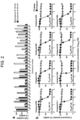
- FIG. 2 illustrates Initial identification of compounds that effectively control breast cancer cell growth.
- (b) Dose-response (1-1000 nM for 3 d) for the most active compounds (n 8) from screen described in (a).
- the inventors also found that IL-13 stimulation of airway epithelial cells resulted in relatively selective and marked activation of MAPK13 and ERK2 using phosphokinase-antibody arrays for MAPK and RTK activation and that IL-13 stimulation of MDA-MB-231 cells caused significant increases in cell proliferation.
- MAPK13-ERK2 is a candidate pathway for regulating airway and perhaps breast epithelial cell proliferation, the latter even without IL-13.
- Table 3 Characteristics of hit compounds for blocking MAPK13 and MAPK14 enzyme activity and MCF-7 and MDA-MB-231 cell proliferation in culture. Compound No.
- IC 50 compound concentration for 50% decrease in cell number at 3 d in culture
- FIG. 3 illustrates the inventor's design plan for Compound 282 that exhibits favorable binding and selectivity.
- Compound 43 (BIRB-796) represents the starting point for scaffold hopping to compounds such as Compound 282 (with modifications in magenta) to decrease MAPK13 IC50.
- BBI Biolayer interferometry
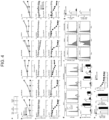
- FIG. 4 illustrates that compound 282 blocks breast cancer cell proliferation and invasiveness in vitro.
- the inventors identified a novel pathway for mucus production that includes IL-13 activation of mitogen-activated protein kinase 13 (MAPK13) and downstream induction of mucin MUC5AC and its mucin granule companion CLCA1 as signatures of mucous cell metaplasia and mucus formation ( Alevy, Y. et al., J. Clin. Invest. 122, 4555-4568 (2012 ); Patel, A. C. et al., Physiol. Ge-nomics 25, 502-513 (2006 )). This combination of events was defined in airway epithelial cell culture and viral-infection mouse models but was also detected in patients with excess mucus production due to COPD and asthma ( Alevy, Y.
- MAPK13 mitogen-activated protein kinase 13
- MAPK13 structure Determination of MAPK13 structure suggested that a well-characterized MAPK14 inhibitor (BIRB-796; Compound 43 in our series) could be modified to create a new MAPK13 inhibitor ( FIG. 6a ).
- the inventors have identified compounds that are potent inhibitors of MAPK13 versus MAPK14 , MAPK14 versus MAPK13, and both MAPK13 and MAPK14 (Tables 4-6), with particularly favorable values represented by Compound 354 for MAPK 13 versus MAPK14 inhibition and Compound 396 for combined MAPK13 and MAPK14 (MAPK13-14) inhibition ( FIG. 6a ).
- Structure determinations of analog-MAPK13 co-crystals confirmed DFG-out binding mode ( FIG.
- Compound 396 as an ideal lead candidate based on enzyme inhibition, binding, kinetics, and kinome selectivity, and fit with a strategy to block MAPK13-14 for down-regulation of both alternative type 2 and conventional immune responses that drive inflammatory airway disease.
- Structure-based drug design identifies a small-molecule MAPK13 inhibitor.
- Compound 43 (BIRB-796) represents the starting point for scaffold hopping to Compound 354 and Compound 396 to improve potency against MAPK13 (changes indicated in magenta).
- Structure for Compound 43 (by modeling) bound to MAPK13 (by x-ray crystallography) illustrating target regions for drug design and DFG-out binding mode.
- BBI Biolayer interferometry
- Analysis for slow on-off binding of Compound 396 to MAPK13.
- Screen for kinase inhibition for Compounds 43 and 396 (0.1 ⁇ M). Values represent mean ⁇ s.e.m.
- Compound 396 were also assessed for inhibition of inflammatory mucus production using human tracheobronchial epithelial cells (hTECs) under air-liquid interface primary-culture conditions with IL-13-dependent induction of MUC5AC mucin formation ( FIG. 7a,b ).
- MAPK14 inhibitors such as Compound 401 (VX-745) 22 showed no significant inhibition of MUC5AC production
- MAPK13 inhibitors such as Compound 354 and 398 and combined MAPK13-14 inhibitors such as Compound 396 and 397 achieved marked attenuation of MUC5AC production at concentrations that caused no cell toxicity ( FIG. 7c ).
- pTECs porcine tracheobronchial epithelial cells
- IC50 values ranged from 0.05-0.009 among three human donors but were no different for IL-13 versus IL-4 stimulation of hTECs (data not shown), thereby demonstrating blockade against both of these cytokines at least via the Type II IL-4R (IL-13R).
- IL-13R Type II IL-4R
- MAPK13 inhibitors block mucus production in human airway epithelial cells.
- Ratio of IC 50 for MUC5AC inhibition to initial concentration exhibiting any decrease in TEER or resazurin assay value Table 8 Compound efficacy for blocking MUC5AC mucin formation in IL-13-stimulated pTEC cultures.
- Compound # MUC5AC IC 50 (nM) 1 Cell Therapeutic Ratio 2 43 Pending Pending 282 0.022 45,454 354 0.289 >3,460 396 0.420 2,381 397 1.000 1,000 398 0.281 >3,558 399 0.263 3,802 400 0.010 >10,000 401 >1000 >1 1
- IC50 compound concentration that causes 50% decrease in MUC5AC level from IL-13 versus no IL-13 treatment at 21 d in culture.
- Ratio of IC 50 for MUC5AC inhibition to initial concentration exhibiting any decrease in TEER or resazurin assay value 2 Ratio of IC 50 for MUC5AC inhibition to initial concentration exhibiting any decrease in TEER or resa
- Compound 396 blocks airway inflammation and mucus production in IL-13-challenge and SeV-infection pig modela.
- Compound 396 was selected for blockade of mucus production in pigs in vivo.
- we developed a model of airway inflammation and mucus production whereby Yucatan mini-pigs undergo cytokine challenge using recombinant porcine IL-13 delivered to specific right lung segments (in caudal and accessory lobes) via flexible fiber-optic bronchoscopy on two separate occasions (Study Days 0 and 14) with response monitored in bronchoalveolar lavage (BAL) samples ( FIG. 8b ).
- Anti-mucus and anti-inflammatory effects were decreased at 0.2 mg/kg and were preserved at 20 mg/kg dosing ( FIG. 7 ). No adverse effects (e.g., change in animal behavior, appetite, body weight, vital signs, gastrointestinal and urinary function, and complete blood count) were observed at any of these doses of the compound.
- pigs were infected with Sendai virus (SeV), which is a natural pathogen in this species.
- SeV Sendai virus
- infection with SeV via bronchoscopy resulted in at least 1 ⁇ 10 4 -fold increases in viral titer for 7 d and a consequent increase in MUC5AC and CLCA1 levels in BAL samples ( FIG. 8e ).
- delivery of Compound 396 with i.p. administration of 2 mg/kg resulted in plasma concentrations that block MAPK13 activity in enzyme assay and mucus production in airway epithelial cell culture (Tables 4-8 and FIG. 7c ).
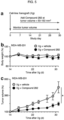
- the inventors developed a protocol to determine the effect of Compound 396 at 2 mg/kg given i.p. twice daily either 2 d before or 10 d after SeV infection followed by analysis of lung tissue samples ( FIG. 9a ).
- Compound 396 markedly attenuates inflammation and mucus production and other key aspects of the epithelial and type 2 immune response underlying airway disease, including ESC reprogramming to more fully and permanently correct the susceptibility to inflammatory mucus production.
- Compound 396 blocks airway inflammation and mucus production in respiratory-virus-infection mouse model.
- PK Pharmacokinetic
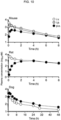
- FIG. 10 presents a Pharmacokinetic (PK) analysis of Compound 396 in mice, rats, and dogs. Plasma concentrations were determined after intravenous, intraperitoneal, or oral dosing (2 mg/kg).
- FIG. 11 shows that Compound 396 blocks airway inflammation and mucus production with dose-dependency in an IL-13-challenge pig model.
- Protocol scheme for IL-13 challenge of right lung segments on Study Days 0 and 14 with BAL sample of right and left lung on indicated Study Days and either vehicle or compound treatment on Study Days 12-17 is the same as Fig. 3 .
- MAPK13 inhibitors were developed as part of an analog series generated with a scaffold hopping strategy as introduced previously. Compounds were reconstituted in DMSO vehicle for cell experiments done in vitro and as a micronized dry powder with lactose carrier for experiments done in vivo. For each preparation, compound purity was verified using LC-MS and NMR. X-ray crystallography and biolayer interferometry were performed as described previously ( Huang, P. et al. Lab Chip 15, 3125-3131 (2015 )).
- Epithelial cell culture Human tracheal and bronchial epithelial cells (hTECs) were isolated by enzymatic digestion, seeded onto permeable filter supports, and grown as described previously. For the present experiments, cells were cultured in 24-well Transwell plates (6.5-mm diameter inserts, 0.4 ⁇ m pore size) from Corning (Corning, NY) with UNC BEGM medium supplemented with Primocin (100 ⁇ g/ml, (InvivoGen, San Diego, CA), retinoic acid (1 ⁇ 10 -8 M, Sigma, St. Louis, MO) with or without human IL-13 (10 ng/ml, Peprotech, Rocky Hill, NJ) under submerged conditions for 2 d and then air-liquid interface conditions for 21 d.
- Primocin 100 ⁇ g/ml
- retinoic acid 1 ⁇ 10 -8 M
- human IL-13 10 ng/ml, Peprotech, Rocky Hill, NJ
- TEER Transepithelial electrical resistance
- PMCID PMC3533556
- Patel D. A., et al., PloS ONE 7, e36594 (2012 )
- IL-13 was withdrawn from the medium for 2 d, the apical cell surface was washed with DPBS as described previously 33, and either methacholine (20 ⁇ M), histamine (20 ⁇ M), or ATPgS (100 ⁇ M) were added to the apical compartment for 30 min at 37 °C before analysis of apical cell supernatant. All conditions were performed as 3-4 replicates.
- the assay for N-CLCA1-N was performed using rabbit anti-human CLCA1 (amino acid 33-63) antibody (Abgent) and HRP-conjugated goat anti-rabbit IgG antibody (Santa Cruz Biotechnology).
- the assay for C-CLCA1 was performed using mouse anti-human CLCA1 mAb (clone 7D6) (1) and HRP-conjugated goat anti-mouse IgG (Life Technologies). All assay reactions were developed using the GLO substrate kit (R&D Company, Minneapolis, MN) and quantified by comparison to a standard curve with recombinant proteins.
- Western blotting for C-CLCA1 was performed using mouse anti-human CLCA1 mAb (clone 7D6) and for N-CLCA1 using mouse anti-human CLCA1 mAb (clone 8D3) generated as described previously 9.
- Immunostaining Cells were fixed, permeabilized, and treated for epitope retrieval and lung sections were incubated with citrate-based Antigen Unmasking Solution for antigen retrieval as described previously ( Alevy, Y., et al., J. Clin. Invest. 122:4555-4568, PMCID: PMC3533556 ). Immunostaining was performed using mouse anti-MUC5AC biotin-conjugated mAb (clone 45M1, Thermo Fisher Scientific) detected with Alexa-555-conjugated streptavidin (Life Technologies), rabbit anti-human N-CLCA1 (amino acids 33-63) antibody (Abgent) detected with Alexa 488-conjugated goat anti-rabbit secondary antibody. All slides were also counterstained Prolong Gold with DAPI (Life Technologies) and then imaged by confocal or conventional microscopy.
- the column was allowed to equilibrate for 5 min before starting the next run.
- the capillary voltage was set to 3500 and the gas temp was set to 300.
- the gas flow, nebulizer, sheath gas heater and sheath gas flow were set to 5L/min, 45psi, 250 and 11 respectively.
- the fragmentor was set to 80V.
- the scan range was 75-600 Da.
- MRM mode identification was performed with collision gas energy of 10V for the following MS/MS transitions (precursor m/z/product m/z): compound 89, 469/256 and 469/214; compound 270, 461/256 and 461/206.
- Pig model Male and female Yucatan pigs (21-25 kg and 7-8 weeks of age) were obtained from Sinclair Research (Columbia, MO) and housed in environmentally controlled animal care facilities. Pigs were acclimated for 1 week before experiments. Animal husbandry and experimental procedures were approved by the Animal Studies Committees of Washington University School of Medicine in accordance with the guidelines from the National Institutes of Health. Pigs were anesthetized using tiletamine/zolasepam (Telazol, 4.4 mg/kg), ketamine (2.2 mg/kg), and xylazine (2.2 mg/kg) administered intramuscularly, intubated with a 6.5-7.0-mm ID endotracheal tube, and maintained under 2-3% isoflurane anesthesia.
- Pigs were mechanically ventilated using a Drager anesthesia workstation for each challenge procedure. Segmental cytokine challenge was performed on Study Days 0 and 14 using recombinant porcine IL-13 (0.25 mg in 6 ml of PBS) with 2 ml delivered to each of three subsegments (right caudal and accessory lobes) via a fiber-optic bronchoscope (Olympus Model LF-2, 3.8-mm OD). Pigs were maintained with reverse Trendelenberg position for 30 min to prevent drainage from the right lung before anesthesia was discontinued. The subsequent response to IL-13 challenge was monitored in bronchoalveolar lavage (BAL) fluid and cells at Study Days 2, 4, 7, 14, 16, and 18.
- BAL bronchoalveolar lavage
- Controls included samples from three unchallenged subsegments (left caudal lobes) on Study Day 0 and each of the other Study Day sampling times.
- BAL was performed by instillation and aspiration of 10-ml aliquots of PBS into left and right anterior lung segments. In some experiments, lungs were removed for tissue analysis on Study Days 2 or 16.
- pigs were dosed orally with Compound 396 (0.2-20 mg/kg twice per day) in 10 ml of Ensure nutrition shake or with an equivalent amount of Ensure alone on Study Days 12-17.
- BAL and tissue samples were processed for ELISA, cell count, staining, and real-time qPCR assay as described above.
- Sendai virus (SeV) was delivered in the same manner via bronchoscopy using 1.3 ⁇ 10 7 pfu in 1 ml of PBS) with 0.7 ml delivered to each of three subsegments and BAL performed with 6-ml aliquots of PBS in each segment.
- mice Male and female wild-type C57BL/6J mice (000664) mice were obtained from The Jackson Laboratory. All mice were maintained and co-housed in a barrier facility using cages fitted with micro-isolator lids. Animal husbandry and experimental procedures were approved by the Animal Studies Committees of Washington University School of Medicine in accordance with the guidelines from the National Institutes of Health. SeV was obtained from ATCC (Sendai/52 Fushimi strain, ATCC VR-105) and prepared and titered by plaque-forming assay and qPCR assay as described previously Kim, E. Y. et al., Nat. Med. 14, 633-640 (2008 ).
- mice were infected with SeV (5 ⁇ 10 5 viruses based on qPCR assay for viral RNA equivalent to 1 ⁇ 10 5 PFU based on plaque-forming assay for infectious virus) or EV-D68 (1.5 ⁇ 10 8 viruses equivalent to 0.5 ⁇ 10 6 ePFU) as described previously ( Zhang, Y. et al., Immunol. 202, 2332-2347 (2019 )).
- Dosing was performing intranasally using SeV in 30 ⁇ l of PBS or an equivalent amount of UV-inactivated virus or PBS alone under ketamine/xylazine anesthesia at 6-9 wk of age.
- mice Results from male and female mice were pooled since no significant differences were found between sexes as reported initially ( van Nunen, M. C. J. & van der Veen, J., Arch Intele Virusforsch 22, 388-397 (1967 )). and confirmed and confirmed recently ( Zhang, Y. et al., Immunol. 202, 2332-2347 (2019 )) and in the present experiments (data not shown).
- Mouse lungs were frozen at -70 °C for homogenization in PBS with a cell disrupter (Mini-Beadbeater-96, Biospec Products) followed by viral plaque-forming assay to track PFU level normalized to gm of lung tissue (recognizing that one mouse lung weighs approximately 100 mg). Viral titers for stock solutions and lung infections were monitored by PCR assay using primers defined previously ( Zhang, Y. et al., Immunol. 202, 2332-2347 (2019 )).
- FACS Single cell suspensions were generated from minced lung tissue that was subjected to collagenase (Liberase Blendzyme III, Roche), hyaluronidase (Sigma), and DNAse I (grade II, Roche) digestion for 45 min at 37 °C as described previously ( Byers, D. E. et al., J. Clin. Invest. 123, 3967-3982 (2013 )). Following FcR blockade, lung cell suspensions were incubated with labeled antibodies and were sorted using a Moflo (DAKO-Cytomation) high-speed cell sorter. Nonviable cells were excluded from analysis by AAD staining.
- NKT cells were immunostained using APC-conjugated PBS-57-loaded mouse CD1d tetramer conjugated provided by the NIH Tetramer Core Facility and PE-conjugated anti-porcine CD3 ⁇ mAb as described previously ( Kim, E. Y. et al., Nat. Med. 14, 633-640 (2008 ); Renukaradhya, G. J. et al., J. Clin. Immunol. 31, 228-239 (2011 )).
- Lung monocytes were immunostained using FITC-conjugated anti-porcine CD14 mAb from AbD Serotec as described previously for porcine PBMCs ( Fairbairn, L. et al. J. Immunol.
- MAPK13 and combined MAPK13-other-kinase e.g., combined MAPK13-MAPK14
- MAPK13-other-kinase e.g., combined MAPK13-MAPK14
- MAPK13-MAPK14 MAPK13-other-kinase inhibitors
Landscapes
- Chemical & Material Sciences (AREA)
- Organic Chemistry (AREA)
- Health & Medical Sciences (AREA)
- Pharmacology & Pharmacy (AREA)
- Animal Behavior & Ethology (AREA)
- Chemical Kinetics & Catalysis (AREA)
- General Chemical & Material Sciences (AREA)
- Medicinal Chemistry (AREA)
- Nuclear Medicine, Radiotherapy & Molecular Imaging (AREA)
- Veterinary Medicine (AREA)
- Public Health (AREA)
- Life Sciences & Earth Sciences (AREA)
- General Health & Medical Sciences (AREA)
- Pulmonology (AREA)
- Engineering & Computer Science (AREA)
- Bioinformatics & Cheminformatics (AREA)
- Communicable Diseases (AREA)
- Oncology (AREA)
- Pharmaceuticals Containing Other Organic And Inorganic Compounds (AREA)
- Plural Heterocyclic Compounds (AREA)
Applications Claiming Priority (3)
| Application Number | Priority Date | Filing Date | Title |
|---|---|---|---|
| US201862677741P | 2018-05-30 | 2018-05-30 | |
| PCT/US2019/034751 WO2019232275A1 (fr) | 2018-05-30 | 2019-05-30 | Inhibiteurs de protéines kinases activés par mitogène, procédés de production et procédés d'utilisation associés |
| EP19811129.6A EP3802525A4 (fr) | 2018-05-30 | 2019-05-30 | Inhibiteurs de protéines kinases activés par mitogène, procédés de production et procédés d'utilisation associés |
Related Parent Applications (1)
| Application Number | Title | Priority Date | Filing Date |
|---|---|---|---|
| EP19811129.6A Division EP3802525A4 (fr) | 2018-05-30 | 2019-05-30 | Inhibiteurs de protéines kinases activés par mitogène, procédés de production et procédés d'utilisation associés |
Publications (2)
| Publication Number | Publication Date |
|---|---|
| EP4219489A2 true EP4219489A2 (fr) | 2023-08-02 |
| EP4219489A3 EP4219489A3 (fr) | 2023-11-15 |
Family
ID=68698473
Family Applications (2)
| Application Number | Title | Priority Date | Filing Date |
|---|---|---|---|
| EP23156415.4A Pending EP4219489A3 (fr) | 2018-05-30 | 2019-05-30 | Inhibiteurs de protéine kinase activée par mitogène, procédés de fabrication et procédés d'utilisation de ceux-ci |
| EP19811129.6A Withdrawn EP3802525A4 (fr) | 2018-05-30 | 2019-05-30 | Inhibiteurs de protéines kinases activés par mitogène, procédés de production et procédés d'utilisation associés |
Family Applications After (1)
| Application Number | Title | Priority Date | Filing Date |
|---|---|---|---|
| EP19811129.6A Withdrawn EP3802525A4 (fr) | 2018-05-30 | 2019-05-30 | Inhibiteurs de protéines kinases activés par mitogène, procédés de production et procédés d'utilisation associés |
Country Status (4)
| Country | Link |
|---|---|
| US (2) | US11407771B2 (fr) |
| EP (2) | EP4219489A3 (fr) |
| CA (1) | CA3142097A1 (fr) |
| WO (1) | WO2019232275A1 (fr) |
Families Citing this family (3)
| Publication number | Priority date | Publication date | Assignee | Title |
|---|---|---|---|---|
| CN114144410A (zh) | 2019-07-19 | 2022-03-04 | 阿纳格纳斯生物技术股份有限公司 | 多芳基脲衍生物及其在治疗肌肉疾病中的用途 |
| EP4029501A1 (fr) | 2021-01-19 | 2022-07-20 | Anagenesis Biotechnologies | Combinaison de dérivés polyaromatiques de l'urée et d'inhibiteur glucocorticoïde ou hdac pour le traitement de maladies ou d'affections associées aux cellules musculaires et/ou aux cellules satellites |
| EP4289427A1 (fr) * | 2022-06-10 | 2023-12-13 | Anagenesis Biotechnologies | Dihydro[1,8]naphthyridin-7-one et pyrido[3,2-b][1,4]oxazin-3-one pour une utilisation dans le traitement du cancer, et des métastases en particulier. |
Citations (1)
| Publication number | Priority date | Publication date | Assignee | Title |
|---|---|---|---|---|
| US9187470B2 (en) | 2012-07-17 | 2015-11-17 | Washington University | Anti-mucus drugs and uses therefor |
Family Cites Families (15)
| Publication number | Priority date | Publication date | Assignee | Title |
|---|---|---|---|---|
| US20070244120A1 (en) * | 2000-08-18 | 2007-10-18 | Jacques Dumas | Inhibition of raf kinase using substituted heterocyclic ureas |
| US20120046290A1 (en) * | 1997-12-22 | 2012-02-23 | Jacques Dumas | Inhibition of p38 kinase activity using substituted heterocyclic ureas |
| AU2006201959B2 (en) | 1997-12-22 | 2008-09-04 | Bayer Healthcare Llc | Inhibition of Raf Kinase using Substituted Heterocyclic Ureas |
| US6605623B1 (en) * | 1998-12-18 | 2003-08-12 | Bristol-Myers Squibb Pharma Co. | N-ureidoalkyl-piperidines as modulators of chemokine receptor activity |
| AU2003243921B2 (en) * | 2002-06-27 | 2009-05-07 | Novo Nordisk A/S | Aryl carbonyl derivatives as therapeutic agents |
| CN101130526B (zh) * | 2002-06-27 | 2013-07-10 | 诺沃挪第克公司 | 用作治疗剂的芳基羰基衍生物 |
| GB0320244D0 (en) | 2003-05-06 | 2003-10-01 | Aventis Pharma Inc | Pyrazoles as inhibitors of tumour necrosis factor |
| WO2005002673A1 (fr) | 2003-07-03 | 2005-01-13 | Astex Therapeutics Limited | Inhibiteurs de raf kinase |
| DK1663978T3 (da) | 2003-07-23 | 2008-04-07 | Bayer Pharmaceuticals Corp | Fluorsubstitueret omega-carboxyaryl-diphenylurinstof til behandling og forebyggelse af sygdomme og lidelser |
| US20060035893A1 (en) | 2004-08-07 | 2006-02-16 | Boehringer Ingelheim International Gmbh | Pharmaceutical compositions for treatment of respiratory and gastrointestinal disorders |
| GB0818033D0 (en) | 2008-10-02 | 2008-11-05 | Respivert Ltd | Novel compound |
| JP5670912B2 (ja) | 2008-12-11 | 2015-02-18 | レスピバート・リミテツド | p38MAPキナーゼ阻害剤 |
| GB0905955D0 (en) | 2009-04-06 | 2009-05-20 | Respivert Ltd | Novel compounds |
| GB201005589D0 (en) * | 2010-04-01 | 2010-05-19 | Respivert Ltd | Novel compounds |
| GB201009731D0 (en) | 2010-06-10 | 2010-07-21 | Pulmagen Therapeutics Inflamma | Kinase inhibitors |
-
2019
- 2019-05-30 US US17/059,251 patent/US11407771B2/en active Active
- 2019-05-30 EP EP23156415.4A patent/EP4219489A3/fr active Pending
- 2019-05-30 WO PCT/US2019/034751 patent/WO2019232275A1/fr not_active Ceased
- 2019-05-30 EP EP19811129.6A patent/EP3802525A4/fr not_active Withdrawn
- 2019-05-30 CA CA3142097A patent/CA3142097A1/fr active Pending
-
2022
- 2022-07-13 US US17/863,657 patent/US12006337B2/en active Active
Patent Citations (1)
| Publication number | Priority date | Publication date | Assignee | Title |
|---|---|---|---|---|
| US9187470B2 (en) | 2012-07-17 | 2015-11-17 | Washington University | Anti-mucus drugs and uses therefor |
Non-Patent Citations (35)
| Title |
|---|
| "Remington: the Science and Practice of Pharmacy", 1995 |
| ALEVY, Y ET AL., J. CLIN. INVEST., vol. 122, pages 4555 - 4568 |
| AM J MED, vol. 115, 2003, pages 6 - 11 |
| ANGEWANTE, CHEMIE INT. ED. ENGL., vol. 24, 1999, pages 3943 - 3948 |
| ASPORD, C. ET AL., J. EXP. MED., vol. 204, 2007, pages 1037 - 1047 |
| BYERS, D. E. ET AL., J. CLIN. INVEST., vol. 123, 2013, pages 3967 - 3982 |
| BYERS, D.E. ET AL., J. CLIN. INVEST., vol. 122, 2012, pages 4555 - 4568 |
| CHEN, L., CANCER RES., vol. 69, 2009, pages 8853 - 8861 |
| FAIRBAIRN, L. ET AL., J. IMMUNOL., vol. 190, 2013, pages 6389 - 6396 |
| GAGGIANESI, M. ET AL., CANCER RES., vol. 77, 2017, pages 3268 - 3279 |
| GEROVAC, B.J. ET AL., AM. J. RESPIR. CRIT. CARE MED., 2018 |
| GRONEBERG, D. A. ET AL., HISTOPATHOLOGY, vol. 40, 2002, pages 367 - 373 |
| HARDMAN, J.G. ET AL.: "Goodman & Gilman's The Pharmacological Basis of Therapeutics", 1996, MCGRAW-HILL |
| HOGG, J. C. ET AL., AM J RESPIR CRIT CARE MED, vol. 176, pages 454 - 459 |
| HOGG, J. C. ET AL., N. ENG. J. MED., vol. 350, 2004, pages 2645 - 2653 |
| HOLTZMAN, M.J. ET AL., NAT. REV. IMMUNOL., vol. 14, pages 686 - 698 |
| HUANG, P. ET AL., LAB CHIP, vol. 15, 2015, pages 3125 - 3131 |
| IRWINSHOICHET, J CHEM INF MODEL, vol. 45, 2005, pages 177 - 182 |
| KIM, E. Y. ET AL., NAT. MED., vol. 14, 2008, pages 633 - 640 |
| LIPINSKI, J. PHARM. TOX. METHODS, vol. 44, 2000, pages 235 - 249 |
| MISKA, J. ET AL., J. EXP. MED., vol. 215, 2018, pages 841 - 858 |
| O'CALLAGHAN, C. ET AL., INT. J. CELL BIOL., 2014, pages 1 - 12 |
| PARK, M.H. ET AL., ANN SURG ONCOL, vol. 24, 2017, pages 3780 - 3787 |
| PATEL, A. C. ET AL., PHYSIOL. GE-NOMICS, vol. 25, 2006, pages 502 - 513 |
| PATEL, A.C. ET AL., GENOMICS, vol. 25, 2006, pages 502 - 513 |
| PATEL, D. A. ET AL., PLOS ONE, vol. 7, 2012, pages e36594 |
| RENUKARADHYA, G. ET AL., J. CLIN. IMMUNOL., vol. 31, 2011, pages 228 - 239 |
| SAMBROOK, J. ET AL.: "Molecular Cloning: A Laboratory Manual", 2001, COLD SPRING HARBOR LABORATORY PRESS |
| SPECTOR, D.L.: "Cells: A Laboratory Manual", 1998, COLD SPRING HARBOR LABORATORY PRESS |
| SUZUKI, A. ET AL., CYTOKINE, vol. 75, 2015, pages 79 - 88 |
| VAN NUNEN, M. C. J.VAN DER VEEN, J., ARCH GESAMTE VIRUSFORSCH, vol. 22, 1967, pages 388 - 397 |
| VENMAR, K.T., CANCER RES., vol. 74, 2010, pages 4329 - 4340 |
| WADA, M. ET AL., ONCOGENE, vol. 36, 2017, pages 6649 - 6657 |
| WU, K. ET AL., J. EXP. MED., vol. 212, 2015, pages 681 - 697 |
| ZHANG, Y. ET AL., IMMUNOL, vol. 202, 2019, pages 2332 - 2347 |
Also Published As
| Publication number | Publication date |
|---|---|
| US12006337B2 (en) | 2024-06-11 |
| US20210214378A1 (en) | 2021-07-15 |
| US11407771B2 (en) | 2022-08-09 |
| EP3802525A1 (fr) | 2021-04-14 |
| US20230192728A1 (en) | 2023-06-22 |
| WO2019232275A1 (fr) | 2019-12-05 |
| EP3802525A4 (fr) | 2022-06-29 |
| EP4219489A3 (fr) | 2023-11-15 |
| CA3142097A1 (fr) | 2019-12-05 |
Similar Documents
| Publication | Publication Date | Title |
|---|---|---|
| US12006337B2 (en) | Mitogen-activated protein kinase inhibitors, methods of making, and methods of use thereof | |
| JP5976778B2 (ja) | キナーゼ阻害剤としてのピラゾリル−ピリミジン誘導体 | |
| US7173029B2 (en) | Fused heteroaryl derivatives | |
| US12358906B2 (en) | Urea compounds and compositions as SMARCA2/BRM ATPase inhibitors | |
| US8916577B2 (en) | Tricyclic derivatives, process for their preparation and their use as kinase inhibitors | |
| US8999982B2 (en) | Pharmaceutically active compounds as Axl inhibitors | |
| US10800741B2 (en) | Quinoline compound, preparation method and medical use therefor | |
| US10844038B2 (en) | 1,2-dithiolane compounds useful in neuroprotection, autoimmune and cancer diseases and conditions | |
| KR20170085590A (ko) | 신규 치환된 인다졸, 그의 제조 방법, 상기 신규 치환된 인다졸을 함유하는 제약 제제, 및 약물을 제조하기 위한 상기 신규 치환된 인다졸의 용도 | |
| KR20100064381A (ko) | 아미드 화합물 | |
| RU2770824C2 (ru) | Противоопухолевый агент | |
| US12018023B2 (en) | Heterocondensed pyridones compounds and their use as IDH inhibitors | |
| US20120270918A1 (en) | Pyrazole Derivatives, Preparation Thereof, and Therapeutic Use Thereof | |
| EP1711177B1 (fr) | Derives de 1h-thieno 2,3-c¨pyrazole utilises en tant qu'inhibiteurs de kinases | |
| EP3590516B1 (fr) | Activateur d'effet antitumoral utilisant un composé pyrazolo[3,4-d]pyrimidine | |
| EP2476682B1 (fr) | Dérivé de 8-oxodihydropurine | |
| KR20160040301A (ko) | 증식성 질환의 치료를 위한 1h― 피라졸로[3,4―b]피리딘의 유도체 및 그의 약학 조성물 | |
| US20210009597A1 (en) | Heterocycle compounds as tyro3, axl and mertk (tam) family of receptor tyrosine kinase inhibitors | |
| AU2014209559B2 (en) | Targeting GLI proteins in human cancer by small molecules | |
| JP5303271B2 (ja) | キナーゼ阻害剤として有用な1H−チエノ[2,3−c]ピラゾール化合物 | |
| HK40045602A (en) | Urea compounds and compositions as smarca2/brm-atpase inhibitors | |
| HK40045602B (en) | Urea compounds and compositions as smarca2/brm-atpase inhibitors | |
| HK1143371A (en) | Amide compound |
Legal Events
| Date | Code | Title | Description |
|---|---|---|---|
| PUAI | Public reference made under article 153(3) epc to a published international application that has entered the european phase |
Free format text: ORIGINAL CODE: 0009012 |
|
| STAA | Information on the status of an ep patent application or granted ep patent |
Free format text: STATUS: THE APPLICATION HAS BEEN PUBLISHED |
|
| AC | Divisional application: reference to earlier application |
Ref document number: 3802525 Country of ref document: EP Kind code of ref document: P |
|
| AK | Designated contracting states |
Kind code of ref document: A2 Designated state(s): AL AT BE BG CH CY CZ DE DK EE ES FI FR GB GR HR HU IE IS IT LI LT LU LV MC MK MT NL NO PL PT RO RS SE SI SK SM TR |
|
| PUAL | Search report despatched |
Free format text: ORIGINAL CODE: 0009013 |
|
| AK | Designated contracting states |
Kind code of ref document: A3 Designated state(s): AL AT BE BG CH CY CZ DE DK EE ES FI FR GB GR HR HU IE IS IT LI LT LU LV MC MK MT NL NO PL PT RO RS SE SI SK SM TR |
|
| RIC1 | Information provided on ipc code assigned before grant |
Ipc: A61P 35/00 20060101ALI20231012BHEP Ipc: A61P 31/00 20060101ALI20231012BHEP Ipc: A61P 11/00 20060101ALI20231012BHEP Ipc: A61K 31/435 20060101ALI20231012BHEP Ipc: C07D 409/14 20060101ALI20231012BHEP Ipc: C07D 407/14 20060101ALI20231012BHEP Ipc: C07D 405/12 20060101ALI20231012BHEP Ipc: C07D 405/14 20060101ALI20231012BHEP Ipc: C07F 7/10 20060101ALI20231012BHEP Ipc: C07D 213/73 20060101ALI20231012BHEP Ipc: C07D 213/75 20060101ALI20231012BHEP Ipc: C07D 413/12 20060101ALI20231012BHEP Ipc: C07D 401/12 20060101ALI20231012BHEP Ipc: C07D 417/14 20060101AFI20231012BHEP |
|
| STAA | Information on the status of an ep patent application or granted ep patent |
Free format text: STATUS: REQUEST FOR EXAMINATION WAS MADE |
|
| 17P | Request for examination filed |
Effective date: 20240510 |
|
| RBV | Designated contracting states (corrected) |
Designated state(s): AL AT BE BG CH CY CZ DE DK EE ES FI FR GB GR HR HU IE IS IT LI LT LU LV MC MK MT NL NO PL PT RO RS SE SI SK SM TR |
|
| STAA | Information on the status of an ep patent application or granted ep patent |
Free format text: STATUS: EXAMINATION IS IN PROGRESS |
|
| 17Q | First examination report despatched |
Effective date: 20260219 |