EP4224802B1 - Terminal de ligne optique et procédé d'enregistrement - Google Patents
Terminal de ligne optique et procédé d'enregistrement Download PDFInfo
- Publication number
- EP4224802B1 EP4224802B1 EP20961575.6A EP20961575A EP4224802B1 EP 4224802 B1 EP4224802 B1 EP 4224802B1 EP 20961575 A EP20961575 A EP 20961575A EP 4224802 B1 EP4224802 B1 EP 4224802B1
- Authority
- EP
- European Patent Office
- Prior art keywords
- optical network
- specific period
- unit
- cycle
- authentication
- Prior art date
- Legal status (The legal status is an assumption and is not a legal conclusion. Google has not performed a legal analysis and makes no representation as to the accuracy of the status listed.)
- Active
Links
Images




Classifications
-
- H—ELECTRICITY
- H04—ELECTRIC COMMUNICATION TECHNIQUE
- H04L—TRANSMISSION OF DIGITAL INFORMATION, e.g. TELEGRAPHIC COMMUNICATION
- H04L12/00—Data switching networks
- H04L12/28—Data switching networks characterised by path configuration, e.g. LAN [Local Area Networks] or WAN [Wide Area Networks]
- H04L12/2854—Wide area networks, e.g. public data networks
- H04L12/2856—Access arrangements, e.g. Internet access
- H04L12/2869—Operational details of access network equipments
- H04L12/2878—Access multiplexer, e.g. DSLAM
- H04L12/2879—Access multiplexer, e.g. DSLAM characterised by the network type on the uplink side, i.e. towards the service provider network
- H04L12/2885—Arrangements interfacing with optical systems
-
- H—ELECTRICITY
- H04—ELECTRIC COMMUNICATION TECHNIQUE
- H04B—TRANSMISSION
- H04B10/00—Transmission systems employing electromagnetic waves other than radio-waves, e.g. infrared, visible or ultraviolet light, or employing corpuscular radiation, e.g. quantum communication
- H04B10/80—Optical aspects relating to the use of optical transmission for specific applications, not provided for in groups H04B10/03 - H04B10/70, e.g. optical power feeding or optical transmission through water
- H04B10/85—Protection from unauthorised access, e.g. eavesdrop protection
-
- H—ELECTRICITY
- H04—ELECTRIC COMMUNICATION TECHNIQUE
- H04Q—SELECTING
- H04Q11/00—Selecting arrangements for multiplex systems
- H04Q11/0001—Selecting arrangements for multiplex systems using optical switching
- H04Q11/0062—Network aspects
- H04Q11/0067—Provisions for optical access or distribution networks, e.g. Gigabit Ethernet Passive Optical Network (GE-PON), ATM-based Passive Optical Network (A-PON), PON-Ring
-
- H—ELECTRICITY
- H04—ELECTRIC COMMUNICATION TECHNIQUE
- H04Q—SELECTING
- H04Q11/00—Selecting arrangements for multiplex systems
- H04Q11/0001—Selecting arrangements for multiplex systems using optical switching
- H04Q11/0062—Network aspects
- H04Q2011/0064—Arbitration, scheduling or medium access control aspects
-
- H—ELECTRICITY
- H04—ELECTRIC COMMUNICATION TECHNIQUE
- H04Q—SELECTING
- H04Q11/00—Selecting arrangements for multiplex systems
- H04Q11/0001—Selecting arrangements for multiplex systems using optical switching
- H04Q11/0062—Network aspects
- H04Q2011/0086—Network resource allocation, dimensioning or optimisation
Definitions
- the present invention relates to a station side optical line terminal and a registration method.
- PON passive optical network
- OLT optical line terminal
- ONU optical network unit
- Fig. 10 is a diagram illustrating a configuration example of a conventional PON system 1000.
- the PON system 1000 includes an OLT 100 and a plurality of ONUs 200-1 to 200-N (N is an integer of 2 or more).
- the OLT 100 and the ONUs 200-1 to 200-N are communicably connected via an optical multiplexer/demultiplexer 300 including an optical transmission line, an optical splitter, and the like.
- the plurality of ONUs 200-1 to 200-N will be simply referred to as "ONUs 200" when they are not distinguished from one another.
- the OLT 100 transmits a downlink signal 110 that is continuous light toward the ONU 200.
- Each ONU 200 selectively receives a signal in an arbitrary time slot allocated to each ONU 200 among the downlink signals 110 transmitted from the OLT 100 via the optical multiplexer/demultiplexer 300.
- each ONU 200 transmits an uplink signal 210 that is a temporally intermittent burst signal in a time slot allocated in advance by the OLT 100 according to a band required by each ONU 200.
- Fig. 11 is a diagram for illustrating authentication processing and uplink communication on a conventional time axis.
- the authentication processing of the ONU 200 is periodically performed by the OLT 100, for example, and searches for an unconnected ONU 200. During this time, data communication in uplink communication cannot be performed. Specifically, the OLT 100 transmits a terminal authentication signal called a discovery gate to the ONU 200. With the reception of the terminal authentication signal, the ONU 200 transmits an authentication request signal called a register request to the OLT 100.
- the unauthenticated ONU 200 is not time-synchronized with the OLT 100 or another ONU 200. Therefore, if the unauthenticated ONUs 200 receive the terminal authentication signals and simultaneously transmit the authentication request signals to the OLT 100, the terminal authentication signals may collide in the optical multiplexer/demultiplexer 300. Therefore, each unauthenticated ONU 200 suppresses the collision of the terminal authentication signals by randomly delaying the time for transmitting the authentication request signal. Note that the time for randomly delaying the transmission timing of the authentication request signal is referred to as a random delay time.
- the OLT 100 Upon receiving the authentication request signal in a specific period called a discovery window, the OLT 100 authenticates the ONU 200 that has transmitted the authentication request signal and registers the signal.
- This specific period has a predetermined time width and is periodically provided on the time axis.
- the specific period is set with a value obtained by adding a total value of a difference between a minimum value and a maximum value of a propagation delay between the OLT 100 and the ONU 200 and a maximum value of a random delay time allocated to the ONU 200, a delay time of processing of the ONU 200 or the OLT 100, and the like (see, for example, Non Patent Literature 1).
- JP2010278525A discloses a method of registering subscriber terminal that is provided to improve line efficiency by reducing the width of a periodically-provided discovery window for inhibiting communication between registered optical network unit (ONU) and optical line terminal (OLT).
- ONU registered optical network unit
- OLT optical line terminal
- US2016/294620A1 provides a method of registering or de-registering, by an optical line terminal (OLT), one or more optical network units (ONUs) in an optical communications network, the method including setting sub-channels for registration or de-registration among two or more sub-channels, and a size of a contention window in the one or more sub-channels; transmitting, to one or more ONUs, a registration information message including information of the one or more set sub-channels and the size of the contention window; receiving, through one of the set sub-channels, a registration or de-registration request message from the one or more ONUs, which receive the registration information message; and registering and de-registering the one or more ONUs.
- OLT optical line terminal
- ONUs optical network units
- US2017279527A1 discloses a method and an apparatus for setting a quiet window in a passive optical network system wherein, a first response time from a time after an optical line terminal (OLT) transmits a serial number request up to a time in which the OLT receives a first response signal to the serial number request is measured, and a second response time up to a time in which the OLT receives a final response signal to the serial number request is measured.
- OLT optical line terminal
- the time width of the specific period for receiving the authentication request signal may be increased in advance (see, for example, Non Patent Literature 2).
- the time width and the cycle of the specific period set once cannot be changed, the time zone in which the uplink communication cannot be performed increases depending on the time width of the specific period to be set, and the band utilization efficiency of the uplink communication decreases.
- an object of the present invention is to provide a technique capable of improving band utilization efficiency of uplink communication.
- An aspect of the present invention is an optical line terminal according to claim 1
- An aspect of the present invention is a registration method according to claim 6
- Fig. 1 is a diagram illustrating a configuration example of an optical communication system 1 in a first embodiment.
- the optical communication system 1 of the first embodiment is, for example, a PON system.
- the OLT 10 dynamically changes at least one of a time width ⁇ t and a cycle T of a specific period called a discovery window. As a result, the OLT 10 can improve a decrease in the band utilization efficiency of the uplink communication.
- Each ONU 20 selectively receives a signal in an arbitrary time slot allocated to each ONU 20 among the downlink signals transmitted from the OLT 10 via the optical multiplexer/demultiplexer 30.
- each ONU 20 transmits an uplink signal that is a temporally intermittent burst signal in a time slot allocated in advance by the OLT 10 according to a band required by each ONU 20.
- the storage unit 13 stores a set value of the time width ⁇ t of the specific period (hereinafter referred to as a "first set value”) and a set value of the cycle T (hereinafter referred to as a "second set value").
- the change unit 16 changes the setting of the first set value stored in the storage unit 13 to the calculated value of the time width ⁇ t calculated by the calculation unit 15.
- the change unit 16 changes the setting of the second set value stored in the storage unit 13 to the calculated value of the cycle T calculated by the calculation unit 15.
- the change unit 16 only needs to change at least one of the first set value and the second set value, and does not need to change both set values. That is, the change unit 16 changes the setting of one or both of the first set value and the second set value.
- a set value of the random delay time is stored in the storage unit 23. This set value is updated by the control unit 22.
- the calculation unit 15 calculates the random delay amount such that the probability P of the number of ONUs 20 expected to be authenticated in one specific period is equal to or greater than a preset threshold Pth with respect to the current unauthenticated number n.
- the probability P is a probability of the number of ONUs 20 expected to be authenticated in the next specific period with respect to the current unauthenticated number n.
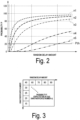
- Fig. 2 is a graph illustrating an example of random delay information.
- the horizontal axis represents the random delay amount
- the vertical axis represents a value in which a probability P(E(n)/n) is expressed as a percentage.
- Fig. 2 illustrates a relationship between the probability P and the random delay amount for five unauthenticated numbers n1, n2, n3, n4, and n5 as an example of the random delay information.
- the magnitude relationship of the five unauthenticated numbers n is represented as n1 ⁇ n2 ⁇ n3 ⁇ n4 ⁇ n5.
- Fig. 3 is a diagram illustrating random delay information in a table format. As illustrated in Figs.
- the random delay amount in which the probability P is equal to or larger than the threshold Pth increases as the unauthenticated number n increases.
- the random delay amount in which the probability P satisfies the threshold Pth is reduced as the unauthenticated number n decreases. Therefore, when the authentication processing is performed several times and the unauthenticated number n gradually decreases, the random delay amount becomes a small value.
- the calculation unit 15 acquires information of the current unauthenticated number n from the authentication unit 14, and calculates a random delay amount in which the probability P is the probability Pth or more in the acquired current unauthenticated number n from, for example, random delay information in a table format.
- the calculation unit 15 can calculate the time width ⁇ t according to the authentication status of the ONU 20 as an example.
- the calculation unit 15 calculates the time width ⁇ t with the portion of the propagation delay amount as an initial value and the portion of the random delay amount as a calculated value.
- the present invention is not limited thereto, and the calculation unit 15 may change the time width ⁇ t by varying a part of the propagation delay amount.
- the calculation unit 15 may calculate the propagation delay amount on the basis of the maximum transmission distance set by the user carrier. In this case, the calculation unit 15 may calculate the time width ⁇ t using a portion of the propagation delay amount as a calculated value and a portion of the random delay amount as a calculated value or the maximum value W. Note that the calculation value of the random delay amount calculated by the calculation unit 15 may be a random delay amount in which the probability P is equal to or greater than the probability Pth, but it is preferable that the random delay amount be small.
- the cycle T of the specific period is calculated based on the time change of the new authentication number. For example, in a case where the new authentication number is equal to or smaller than a threshold value Uth at a preset time interval ⁇ K, the calculation unit 15 may widen the interval of the authentication phase, that is, calculate a cycle longer than the currently set cycle T (second set value) as the cycle T.
- the case where the new authentication number is equal to or smaller than the threshold Uth includes a case where the new authentication number is zero.
- the calculation unit 15 calculates the cycle T of a specific period so that an interval of a next authentication phase becomes wider than an interval of a current authentication phase.
- Fig. 5 is a diagram illustrating an example of a trend of a timing of new authentication of the ONU 20 in the past.
- the calculation unit 15 may calculate the period T of the specific period in accordance with the tendency of the timing of the new authentication. For example, the calculation unit 15 may obtain in advance information indicating the tendency of the timing of new authentication of the ONU 20 for each predetermined period such as each day or each time, and calculate the cycle T so as to provide a specific period at the timing when the ONU 20 is newly authenticated and not to provide the specific period at the timing when the ONU 20 is not newly authenticated.
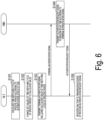
- Fig. 6 is a diagram illustrating a flow of the registration method of the ONU 20 in the first embodiment.
- the optical communication system 1 repeats steps S101 to S105 to change at least one of the time width ⁇ t and the cycle T for each specific period.
- both the time width ⁇ t and the cycle T are changed as an example.
- the OLT 10 calculates the time width ⁇ t and the cycle T of the specific period in accordance with the authentication status of the ONU 20 (step S101).
- the OLT 10 changes the setting of the first set value and the cycle T stored in the storage unit 13 to the calculated values calculated in step S101 (step S102).
- the time width ⁇ t and the cycle T of the specific period of the present embodiment are not fixed values, and are dynamically changed, for example, for each specific period. Accordingly, the OLT 10 can improve a decrease in the band utilization efficiency of the uplink communication.
- the OLT 10 transmits a terminal authentication signal including the calculated values of the time width ⁇ t and the cycle T calculated in step S101 to the ONU 20 (step S103).
- the ONU 20 receives the terminal authentication signal from the OLT 10 and transmits an authentication request signal with a random delay time corresponding to each calculated value included in the received terminal authentication signal (step S104).
- the OLT 10 registers (discovers) the ONU 20 that has transmitted the received authentication request signal (step S105).
- the OLT 10 dynamically changes at least one of the time width ⁇ t and the cycle T of the specific period that is a period for receiving an authentication request signal from a new ONU 20.
- the OLT 10 can reduce the time zone in which the uplink communication cannot be performed and improve the band utilization efficiency of the uplink communication.
- Fig. 8 is a diagram illustrating a modification example of the OLT 10 according to the first embodiment. As illustrated in Fig. 8 , the OLT 10 may further include a monitoring control unit 40. Hereinafter, a modification example of the OLT 10 is referred to as an OLT 10A.
- the OLT 10A includes the communication unit 11, a control unit 12A, and the monitoring control unit 40.
- the control unit 12A includes, for example, the storage unit 13, the authentication unit 14, a calculation unit 15A, and the change unit 16.
- the monitoring control unit 40 transmits an initialization signal to the control unit 12A.
- the monitoring control unit 40 detects the restart of the OLT 10A, and transmits an initialization signal to the control unit 12A in a case where the restart is detected.
- the monitoring control unit 40 transmits an initialization signal to the control unit 12A.
- the calculation unit 15A has the same function as the calculation unit 15. In a case of receiving the initialization signal from monitoring control unit 40, the calculation unit 15A executes the initialization operation.
- the initialization operation is an operation of changing the time width ⁇ t of the specific period and the cycle T of the specific period to preset values. For example, in a case of receiving the initialization signal from the monitoring control unit 40, the calculation unit 15A changes the time width ⁇ t of the specific period to the maximum value of the settable time width ⁇ t, and changes the cycle T of the specific period to the minimum value of the settable cycle.
- the OLT 10A can perform authentication of a larger number of new ONUs 20 by executing the initialization operation.
- Fig. 9 is a diagram illustrating an example configuration of an optical communication system 1B according to a second embodiment.
- the OLT 10 and the ONU 20 communicate using a plurality of wavelengths.
- parts having functions similar to those described in the first embodiment will be denoted by similar names and reference numerals, and a specific description regarding the functions will be omitted.
- the optical communication system 1B includes an OLT 10B and a plurality of ONUs 20B-1 to 20B-N.
- the OLT 10B and the ONUs 20B-1 to 20B-N are communicably connected via an optical multiplexer/demultiplexer 30 including an optical transmission line, an optical splitter, and the like.
- an optical multiplexer/demultiplexer 30 including an optical transmission line, an optical splitter, and the like.
- the plurality of ONUs 20B-1 to 20B-N will be simply referred to as "ONU 20B" when they are not distinguished from one another.
- the OLT 10B and the plurality of ONUs 20B-1 to 20B-N communicate with each other by a communication scheme using a wavelength division multiplexing technology. Therefore, the ONUs 20B-1 to 20B-N transmit optical signals of different wavelengths. Note that it is not necessary for all the ONUs 20B-1 to 20B-N to transmit optical signals having different wavelengths, and some of the ONUs may transmit optical signals having different wavelengths. In the following description, a case where all the ONUs 20B-1 to 20B-N transmit optical signals of different wavelengths will be described as an example.
- the OLT 10B includes a communication unit 11B and a control unit 12B.
- a part or all of the control unit 12B may be realized, for example, by a processor such as a CPU executing a program stored in the storage unit 13B, or may be realized by using hardware such as an LSI or an ASIC).
- the communication unit 11B performs bidirectional communication with the ONU 20B using a wavelength division multiplexing technique.
- the communication unit 11B includes a plurality of optical transceivers 50 and a multiplexer/demultiplexer 60.
- the plurality of optical transceivers 50 are connected to the control unit 12B.
- the plurality of optical transceivers 50 generate optical signals having different wavelengths and transmit the optical signals to the multiplexer/demultiplexer 60.
- the plurality of optical transceivers 50 receive the optical signal demultiplexed and output for each wavelength from the multiplexer/demultiplexer 60.
- the multiplexer/demultiplexer 60 combines a plurality of optical signals having different wavelengths generated by the plurality of optical transceivers 50 to generate a downlink WDM signal.
- the downlink WDM signal is transmitted to the ONUs 20B-1 to 20B-N.
- the multiplexer/demultiplexer 60 receives an uplink WDM signal obtained by multiplexing each uplink signal from each ONU 20B by the optical multiplexer/demultiplexer 30. Then, the multiplexer/demultiplexer 60 demultiplexes the uplink WDM signal and outputs the demultiplexed signal to each optical transceiver 50.
- the control unit 12B has the same configuration as the control unit 12.
- the control unit 12B may include the monitoring control unit 40 described above.
- the control unit 12B may manage the number of ONUs 20B registered for each wavelength, and set the time width ⁇ t and the cycle T of the specific period based on the authentication status of the managed ONU 10B.
- the control unit 12B may set the unauthenticated number n to a value obtained by dividing the number of ONUs 20B in the entire optical communication system 1B by the number of wavelengths.
- the maximum registration number of the ONUs 20B for each wavelength may be registered in advance.
- the number of ONUs 10B registered in the OLT 20B may be the sum of all wavelengths, and the control unit 12B may collectively control the time width ⁇ T and the cycle T.
- the ONU 20 of the present embodiment includes a communication unit 21B, the control unit 22, and the storage unit 23.
Landscapes
- Engineering & Computer Science (AREA)
- Computer Networks & Wireless Communication (AREA)
- Signal Processing (AREA)
- Computer Security & Cryptography (AREA)
- Physics & Mathematics (AREA)
- Electromagnetism (AREA)
- Small-Scale Networks (AREA)
- Optical Communication System (AREA)
Claims (6)
- Terminal de ligne optique (10, 10A, 10B) comportant :une unité de communication (11, 11B) configurée pour communiquer avec une pluralité d'unités de réseau optique ; etune unité de commande (12, 12A, 12B) configurée pour modifier dynamiquement au moins l'un(e) d'une largeur temporelle d'une période spécifique qui est une largeur temporelle dans la fenêtre de découverte de traitement d'authentification de la pluralité d'unités de réseau optique et d'un cycle de la période spécifique qui est un cycle dans la fenêtre de découverte de traitement d'authentification de la pluralité d'unités de réseau optique, la période spécifique étant une période pendant laquelle un signal de demande d'authentification est reçu d'une nouvelle unité de réseau optique via l'unité de communication,caractérisé en ce quel'unité de commande (12, 12A, 12B) est adaptée pour modifier au moins l'un(e) d'une largeur temporelle de la période spécifique et d'un cycle de la période spécifique sur la base d'états d'authentification de la pluralité d'unités de réseau optique,dans lequel l'unité de commande (12, 12A, 12B) est adaptée pour modifier la largeur temporelle de sorte qu'une probabilité de l'unité de réseau optique qui devrait être authentifiée dans une période spécifique devienne supérieure ou égale à un seuil prédéfini par rapport à un nombre non authentifié qui est le nombre d'unités de réseau optique non authentifiées.
- Terminal de ligne optique (10, 10A, 10B) selon la revendication 1, dans lequel
l'unité de commande (12, 12A, 12B) est configurée pour modifier le cycle de la période spécifique sur la base d'une modification au fil du temps du nombre d'unités de réseau optique nouvellement authentifiées. - Terminal de ligne optique (10, 10A, 10B) selon la revendication 2, dans lequel
l'unité de commande (12, 12A, 12B) est configurée pour modifier le cycle de la période spécifique pour le faire passer à un cycle plus long que le cycle actuel dans un cas où le nombre d'unités de réseau optique nouvellement authentifiées est inférieur ou égal à un seuil dans un intervalle de temps prédéfini. - Terminal de ligne optique (10, 10A, 10B) selon l'une quelconque des revendications 1 à 3, dans lequel
l'unité de communication (11, 11B) est configurée pour transmettre au moins l'un(e) de la largeur temporelle et du cycle modifié(e) par l'unité de commande à l'unité de réseau optique. - Terminal de ligne optique (10B) selon l'une quelconque des revendications 1 à 4, dans lequell'unité de communication (11B) est configurée pour communiquer avec la pluralité d'unités de réseau optique en utilisant une pluralité de longueurs d'onde, etl'unité de commande (12B) est configurée pour gérer le nombre d'unités de réseau optique pour chacune des longueurs d'onde, et pour modifier au moins l'un(e) d'une largeur temporelle et d'un cycle de la période spécifique sur la base d'un état d'authentification de l'unité de réseau optique gérée.
- Procédé d'enregistrement dans lequel un terminal de ligne optique enregistre une nouvelle unité de réseau optique, le procédé comportant :une étape de modification (S102) consistant à modifier dynamiquement au moins l'un(e) d'une largeur temporelle d'une période spécifique qui est une largeur temporelle dans la fenêtre de découverte de traitement d'authentification de la pluralité d'unités de réseau optique pour recevoir un signal de demande d'authentification de la nouvelle unité de réseau optique et d'un cycle de la période spécifique qui est un cycle dans la fenêtre de découverte de traitement d'authentification de la pluralité d'unités de réseau optique ; etune étape d'enregistrement (S105) consistant à enregistrer l'unité de réseau optique qui a transmis le signal de demande d'authentification reçu dans un cas où le signal de demande d'authentification est reçu de la nouvelle unité de réseau optique dans la période spécifique modifiée dans l'étape de modification,caractérisé en ce quel'étape de modification (S102) consiste à modifier au moins l'un(e) d'une largeur temporelle de la période spécifique et d'un cycle de la période spécifique sur la base d'états d'authentification d'une pluralité d'unités de réseau optique, dans lequel l'étape de modification (S102) consiste à modifier la largeur temporelle de sorte qu'une probabilité de l'unité de réseau optique qui devrait être authentifiée dans une période spécifique devienne supérieure ou égale à un seuil prédéfini par rapport à un nombre non authentifié qui est le nombre d'unités de réseau optique non authentifiées.
Applications Claiming Priority (1)
| Application Number | Priority Date | Filing Date | Title |
|---|---|---|---|
| PCT/JP2020/042238 WO2022102047A1 (fr) | 2020-11-12 | 2020-11-12 | Terminal de ligne optique et procédé d'enregistrement |
Publications (3)
| Publication Number | Publication Date |
|---|---|
| EP4224802A1 EP4224802A1 (fr) | 2023-08-09 |
| EP4224802A4 EP4224802A4 (fr) | 2024-06-19 |
| EP4224802B1 true EP4224802B1 (fr) | 2025-06-25 |
Family
ID=81600979
Family Applications (1)
| Application Number | Title | Priority Date | Filing Date |
|---|---|---|---|
| EP20961575.6A Active EP4224802B1 (fr) | 2020-11-12 | 2020-11-12 | Terminal de ligne optique et procédé d'enregistrement |
Country Status (5)
| Country | Link |
|---|---|
| US (1) | US12598005B2 (fr) |
| EP (1) | EP4224802B1 (fr) |
| JP (1) | JP7481655B2 (fr) |
| CN (1) | CN116636182B (fr) |
| WO (1) | WO2022102047A1 (fr) |
Families Citing this family (2)
| Publication number | Priority date | Publication date | Assignee | Title |
|---|---|---|---|---|
| EP4425953A1 (fr) * | 2023-02-28 | 2024-09-04 | Nokia Solutions and Networks Oy | Accord de composants de récepteur dans un terminal de ligne optique |
| WO2025041339A1 (fr) * | 2023-08-24 | 2025-02-27 | 日本電信電話株式会社 | Dispositif de multiplexage de signal optique, dispositif de commande, système d'émission optique, procédé de confirmation et programme |
Family Cites Families (10)
| Publication number | Priority date | Publication date | Assignee | Title |
|---|---|---|---|---|
| US7301968B2 (en) * | 2001-03-02 | 2007-11-27 | Pmc-Sierra Israel Ltd. | Communication protocol for passive optical network topologies |
| US7688843B2 (en) * | 2002-09-13 | 2010-03-30 | Pmc-Sierra Israel Ltd. | Operations method in an ethernet passive optical network that includes a network unit with multiple entities |
| JP4700094B2 (ja) * | 2008-10-24 | 2011-06-15 | 株式会社日立製作所 | 光アクセスシステム及び光回線装置 |
| JP5277072B2 (ja) * | 2009-05-26 | 2013-08-28 | 株式会社オー・エフ・ネットワークス | 加入者端末登録方法、加入者端末及びネットワーク |
| JP5423815B2 (ja) * | 2010-01-28 | 2014-02-19 | 富士通株式会社 | 認証装置、認証システム及び認証方法 |
| CN103229453A (zh) * | 2012-12-28 | 2013-07-31 | 华为技术有限公司 | 一种认证方法、设备和系统 |
| JP6093282B2 (ja) * | 2013-10-23 | 2017-03-08 | 日本電信電話株式会社 | 光通信システム、通信制御方法及び局側光回線終端装置 |
| KR102286577B1 (ko) * | 2015-04-03 | 2021-08-06 | 한국전자통신연구원 | 광통신 네트워크에서 다수의 서브 채널들을 이용한 광네트워크유닛의 등록/등록해제 장치 및 방법 |
| WO2017013789A1 (fr) * | 2015-07-23 | 2017-01-26 | 三菱電機株式会社 | Appareil de station maître, appareil de station esclave, système de communication optique, et procédé de communication |
| KR102433853B1 (ko) * | 2016-03-28 | 2022-08-19 | 한국전자통신연구원 | 수동형 광 네트워크 시스템에서의 콰이어트 윈도우 설정 방법 및 그 장치 |
-
2020
- 2020-11-12 WO PCT/JP2020/042238 patent/WO2022102047A1/fr not_active Ceased
- 2020-11-12 US US18/035,007 patent/US12598005B2/en active Active
- 2020-11-12 JP JP2022561777A patent/JP7481655B2/ja active Active
- 2020-11-12 EP EP20961575.6A patent/EP4224802B1/fr active Active
- 2020-11-12 CN CN202080107083.8A patent/CN116636182B/zh active Active
Also Published As
| Publication number | Publication date |
|---|---|
| US20230403082A1 (en) | 2023-12-14 |
| EP4224802A1 (fr) | 2023-08-09 |
| JP7481655B2 (ja) | 2024-05-13 |
| WO2022102047A1 (fr) | 2022-05-19 |
| EP4224802A4 (fr) | 2024-06-19 |
| CN116636182A (zh) | 2023-08-22 |
| JPWO2022102047A1 (fr) | 2022-05-19 |
| CN116636182B (zh) | 2025-01-07 |
| US12598005B2 (en) | 2026-04-07 |
Similar Documents
| Publication | Publication Date | Title |
|---|---|---|
| US10433325B2 (en) | Method for scheduling a transmission of packets within a network | |
| EP2159942B1 (fr) | Procédé de synchronisation horaire et appareil de relais | |
| CN105723638A (zh) | 用于检测受通信网中的节点之间的路径延迟不对称性中的改变所影响的定时参考的方法 | |
| EP4224802B1 (fr) | Terminal de ligne optique et procédé d'enregistrement | |
| WO2017101438A1 (fr) | Procédé de planification de largeur de bande, procédé d'enregistrement d'une unité de réseau optique (onu), dispositif et terminal de ligne optique (olt) | |
| US20210212126A1 (en) | Random access channel (rach) optimization for interference coordination in an integrated access and backhaul (iab) network | |
| US10574430B2 (en) | Relay transmission system, relay transmission method, and relay transmission device | |
| EP2583390A1 (fr) | Procédé et appareil pour changer un mode dans un réseau optique | |
| JP6026442B2 (ja) | バンドパスフィルターを介して通信するデバイスの送信インターフェースを構成するための方法 | |
| EP3055935B1 (fr) | Contrôleur de communication et procédé de commande de longueur d'onde | |
| US10454660B2 (en) | Transmission system, transmission method and transmission device | |
| JP6586066B2 (ja) | 光伝送システム及び通信発生パターン推定方法 | |
| US10555330B2 (en) | Terminal station apparatus and band allocation method | |
| JP2007295151A (ja) | Ponシステムとこれに使用する局側装置及び端末装置 | |
| CN111193715A (zh) | 无源光网络的业务调度方法、装置、电子设备及存储介质 | |
| JP6542715B2 (ja) | 送信制御方法及び通信システム | |
| JP5482931B1 (ja) | 加入者側装置登録方法及び光ネットワークシステム | |
| JP2025144815A (ja) | Olt及び帯域割当方法 | |
| CN121842691A (zh) | 面向工业互联网的5g低时延通信优化系统 | |
| JP2018056759A (ja) | 光伝送システム及び光中継伝送方法 | |
| JP2014121078A (ja) | 光通信網システムおよび光通信網システムの制御方法 |
Legal Events
| Date | Code | Title | Description |
|---|---|---|---|
| STAA | Information on the status of an ep patent application or granted ep patent |
Free format text: STATUS: THE INTERNATIONAL PUBLICATION HAS BEEN MADE |
|
| PUAI | Public reference made under article 153(3) epc to a published international application that has entered the european phase |
Free format text: ORIGINAL CODE: 0009012 |
|
| STAA | Information on the status of an ep patent application or granted ep patent |
Free format text: STATUS: REQUEST FOR EXAMINATION WAS MADE |
|
| 17P | Request for examination filed |
Effective date: 20230505 |
|
| AK | Designated contracting states |
Kind code of ref document: A1 Designated state(s): AL AT BE BG CH CY CZ DE DK EE ES FI FR GB GR HR HU IE IS IT LI LT LU LV MC MK MT NL NO PL PT RO RS SE SI SK SM TR |
|
| DAV | Request for validation of the european patent (deleted) | ||
| DAX | Request for extension of the european patent (deleted) | ||
| A4 | Supplementary search report drawn up and despatched |
Effective date: 20240521 |
|
| RIC1 | Information provided on ipc code assigned before grant |
Ipc: H04Q 11/00 20060101ALI20240514BHEP Ipc: H04L 12/44 20060101AFI20240514BHEP |
|
| GRAP | Despatch of communication of intention to grant a patent |
Free format text: ORIGINAL CODE: EPIDOSNIGR1 |
|
| STAA | Information on the status of an ep patent application or granted ep patent |
Free format text: STATUS: GRANT OF PATENT IS INTENDED |
|
| RIC1 | Information provided on ipc code assigned before grant |
Ipc: H04Q 11/00 20060101ALI20250122BHEP Ipc: H04L 12/44 20060101AFI20250122BHEP |
|
| INTG | Intention to grant announced |
Effective date: 20250213 |
|
| GRAS | Grant fee paid |
Free format text: ORIGINAL CODE: EPIDOSNIGR3 |
|
| GRAA | (expected) grant |
Free format text: ORIGINAL CODE: 0009210 |
|
| STAA | Information on the status of an ep patent application or granted ep patent |
Free format text: STATUS: THE PATENT HAS BEEN GRANTED |
|
| AK | Designated contracting states |
Kind code of ref document: B1 Designated state(s): AL AT BE BG CH CY CZ DE DK EE ES FI FR GB GR HR HU IE IS IT LI LT LU LV MC MK MT NL NO PL PT RO RS SE SI SK SM TR |
|
| REG | Reference to a national code |
Ref country code: GB Ref legal event code: FG4D |
|
| REG | Reference to a national code |
Ref country code: CH Ref legal event code: EP |
|
| REG | Reference to a national code |
Ref country code: CH Ref legal event code: EP |
|
| REG | Reference to a national code |
Ref country code: IE Ref legal event code: FG4D |
|
| REG | Reference to a national code |
Ref country code: DE Ref legal event code: R096 Ref document number: 602020053594 Country of ref document: DE |
|
| RAP4 | Party data changed (patent owner data changed or rights of a patent transferred) |
Owner name: NTT, INC. |
|
| PG25 | Lapsed in a contracting state [announced via postgrant information from national office to epo] |
Ref country code: FI Free format text: LAPSE BECAUSE OF FAILURE TO SUBMIT A TRANSLATION OF THE DESCRIPTION OR TO PAY THE FEE WITHIN THE PRESCRIBED TIME-LIMIT Effective date: 20250625 |
|
| REG | Reference to a national code |
Ref country code: LT Ref legal event code: MG9D |
|
| PG25 | Lapsed in a contracting state [announced via postgrant information from national office to epo] |
Ref country code: NO Free format text: LAPSE BECAUSE OF FAILURE TO SUBMIT A TRANSLATION OF THE DESCRIPTION OR TO PAY THE FEE WITHIN THE PRESCRIBED TIME-LIMIT Effective date: 20250925 Ref country code: GR Free format text: LAPSE BECAUSE OF FAILURE TO SUBMIT A TRANSLATION OF THE DESCRIPTION OR TO PAY THE FEE WITHIN THE PRESCRIBED TIME-LIMIT Effective date: 20250926 |
|
| PG25 | Lapsed in a contracting state [announced via postgrant information from national office to epo] |
Ref country code: BG Free format text: LAPSE BECAUSE OF FAILURE TO SUBMIT A TRANSLATION OF THE DESCRIPTION OR TO PAY THE FEE WITHIN THE PRESCRIBED TIME-LIMIT Effective date: 20250625 |
|
| PG25 | Lapsed in a contracting state [announced via postgrant information from national office to epo] |
Ref country code: HR Free format text: LAPSE BECAUSE OF FAILURE TO SUBMIT A TRANSLATION OF THE DESCRIPTION OR TO PAY THE FEE WITHIN THE PRESCRIBED TIME-LIMIT Effective date: 20250625 |
|
| PG25 | Lapsed in a contracting state [announced via postgrant information from national office to epo] |
Ref country code: RS Free format text: LAPSE BECAUSE OF FAILURE TO SUBMIT A TRANSLATION OF THE DESCRIPTION OR TO PAY THE FEE WITHIN THE PRESCRIBED TIME-LIMIT Effective date: 20250925 |
|
| PG25 | Lapsed in a contracting state [announced via postgrant information from national office to epo] |
Ref country code: LV Free format text: LAPSE BECAUSE OF FAILURE TO SUBMIT A TRANSLATION OF THE DESCRIPTION OR TO PAY THE FEE WITHIN THE PRESCRIBED TIME-LIMIT Effective date: 20250625 |
|
| REG | Reference to a national code |
Ref country code: NL Ref legal event code: MP Effective date: 20250625 |
|
| PG25 | Lapsed in a contracting state [announced via postgrant information from national office to epo] |
Ref country code: NL Free format text: LAPSE BECAUSE OF FAILURE TO SUBMIT A TRANSLATION OF THE DESCRIPTION OR TO PAY THE FEE WITHIN THE PRESCRIBED TIME-LIMIT Effective date: 20250625 |
|
| PG25 | Lapsed in a contracting state [announced via postgrant information from national office to epo] |
Ref country code: PT Free format text: LAPSE BECAUSE OF FAILURE TO SUBMIT A TRANSLATION OF THE DESCRIPTION OR TO PAY THE FEE WITHIN THE PRESCRIBED TIME-LIMIT Effective date: 20251027 |
|
| REG | Reference to a national code |
Ref country code: AT Ref legal event code: MK05 Ref document number: 1807777 Country of ref document: AT Kind code of ref document: T Effective date: 20250625 |
|
| PG25 | Lapsed in a contracting state [announced via postgrant information from national office to epo] |
Ref country code: IS Free format text: LAPSE BECAUSE OF FAILURE TO SUBMIT A TRANSLATION OF THE DESCRIPTION OR TO PAY THE FEE WITHIN THE PRESCRIBED TIME-LIMIT Effective date: 20251025 |
|
| PGFP | Annual fee paid to national office [announced via postgrant information from national office to epo] |
Ref country code: DE Payment date: 20251127 Year of fee payment: 6 |
|
| PGFP | Annual fee paid to national office [announced via postgrant information from national office to epo] |
Ref country code: GB Payment date: 20251127 Year of fee payment: 6 |
|
| PG25 | Lapsed in a contracting state [announced via postgrant information from national office to epo] |
Ref country code: AT Free format text: LAPSE BECAUSE OF FAILURE TO SUBMIT A TRANSLATION OF THE DESCRIPTION OR TO PAY THE FEE WITHIN THE PRESCRIBED TIME-LIMIT Effective date: 20250625 Ref country code: SM Free format text: LAPSE BECAUSE OF FAILURE TO SUBMIT A TRANSLATION OF THE DESCRIPTION OR TO PAY THE FEE WITHIN THE PRESCRIBED TIME-LIMIT Effective date: 20250625 |
|
| PGFP | Annual fee paid to national office [announced via postgrant information from national office to epo] |
Ref country code: FR Payment date: 20251126 Year of fee payment: 6 |
|
| PG25 | Lapsed in a contracting state [announced via postgrant information from national office to epo] |
Ref country code: CZ Free format text: LAPSE BECAUSE OF FAILURE TO SUBMIT A TRANSLATION OF THE DESCRIPTION OR TO PAY THE FEE WITHIN THE PRESCRIBED TIME-LIMIT Effective date: 20250625 |
|
| REG | Reference to a national code |
Ref country code: DE Ref legal event code: R081 Ref document number: 602020053594 Country of ref document: DE Owner name: NTT, INC., JP Free format text: FORMER OWNER: NIPPON TELEGRAPH AND TELEPHONE CORPORATION, TOKYO, JP |
|
| PG25 | Lapsed in a contracting state [announced via postgrant information from national office to epo] |
Ref country code: PL Free format text: LAPSE BECAUSE OF FAILURE TO SUBMIT A TRANSLATION OF THE DESCRIPTION OR TO PAY THE FEE WITHIN THE PRESCRIBED TIME-LIMIT Effective date: 20250625 |
|
| PG25 | Lapsed in a contracting state [announced via postgrant information from national office to epo] |
Ref country code: EE Free format text: LAPSE BECAUSE OF FAILURE TO SUBMIT A TRANSLATION OF THE DESCRIPTION OR TO PAY THE FEE WITHIN THE PRESCRIBED TIME-LIMIT Effective date: 20250625 |
|
| PG25 | Lapsed in a contracting state [announced via postgrant information from national office to epo] |
Ref country code: SK Free format text: LAPSE BECAUSE OF FAILURE TO SUBMIT A TRANSLATION OF THE DESCRIPTION OR TO PAY THE FEE WITHIN THE PRESCRIBED TIME-LIMIT Effective date: 20250625 |
|
| PG25 | Lapsed in a contracting state [announced via postgrant information from national office to epo] |
Ref country code: ES Free format text: LAPSE BECAUSE OF FAILURE TO SUBMIT A TRANSLATION OF THE DESCRIPTION OR TO PAY THE FEE WITHIN THE PRESCRIBED TIME-LIMIT Effective date: 20250625 |
|
| PG25 | Lapsed in a contracting state [announced via postgrant information from national office to epo] |
Ref country code: RO Free format text: LAPSE BECAUSE OF FAILURE TO SUBMIT A TRANSLATION OF THE DESCRIPTION OR TO PAY THE FEE WITHIN THE PRESCRIBED TIME-LIMIT Effective date: 20250625 |
|
| PG25 | Lapsed in a contracting state [announced via postgrant information from national office to epo] |
Ref country code: DK Free format text: LAPSE BECAUSE OF FAILURE TO SUBMIT A TRANSLATION OF THE DESCRIPTION OR TO PAY THE FEE WITHIN THE PRESCRIBED TIME-LIMIT Effective date: 20250625 |
|
| PG25 | Lapsed in a contracting state [announced via postgrant information from national office to epo] |
Ref country code: IT Free format text: LAPSE BECAUSE OF FAILURE TO SUBMIT A TRANSLATION OF THE DESCRIPTION OR TO PAY THE FEE WITHIN THE PRESCRIBED TIME-LIMIT Effective date: 20250625 |
|
| PLBE | No opposition filed within time limit |
Free format text: ORIGINAL CODE: 0009261 |
|
| STAA | Information on the status of an ep patent application or granted ep patent |
Free format text: STATUS: NO OPPOSITION FILED WITHIN TIME LIMIT |