EP4230657A1 - Protéine de fusion et vaccin - Google Patents
Protéine de fusion et vaccin Download PDFInfo
- Publication number
- EP4230657A1 EP4230657A1 EP21882789.7A EP21882789A EP4230657A1 EP 4230657 A1 EP4230657 A1 EP 4230657A1 EP 21882789 A EP21882789 A EP 21882789A EP 4230657 A1 EP4230657 A1 EP 4230657A1
- Authority
- EP
- European Patent Office
- Prior art keywords
- rbd
- vaccine
- fusion protein
- sars
- cov
- Prior art date
- Legal status (The legal status is an assumption and is not a legal conclusion. Google has not performed a legal analysis and makes no representation as to the accuracy of the status listed.)
- Pending
Links
Images


Classifications
-
- A—HUMAN NECESSITIES
- A61—MEDICAL OR VETERINARY SCIENCE; HYGIENE
- A61K—PREPARATIONS FOR MEDICAL, DENTAL OR TOILETRY PURPOSES
- A61K39/00—Medicinal preparations containing antigens or antibodies
- A61K39/12—Viral antigens
- A61K39/215—Coronaviridae, e.g. avian infectious bronchitis virus
-
- A—HUMAN NECESSITIES
- A61—MEDICAL OR VETERINARY SCIENCE; HYGIENE
- A61P—SPECIFIC THERAPEUTIC ACTIVITY OF CHEMICAL COMPOUNDS OR MEDICINAL PREPARATIONS
- A61P31/00—Antiinfectives, i.e. antibiotics, antiseptics, chemotherapeutics
- A61P31/12—Antivirals
- A61P31/14—Antivirals for RNA viruses
-
- A—HUMAN NECESSITIES
- A61—MEDICAL OR VETERINARY SCIENCE; HYGIENE
- A61K—PREPARATIONS FOR MEDICAL, DENTAL OR TOILETRY PURPOSES
- A61K39/00—Medicinal preparations containing antigens or antibodies
- A61K39/12—Viral antigens
-
- A—HUMAN NECESSITIES
- A61—MEDICAL OR VETERINARY SCIENCE; HYGIENE
- A61P—SPECIFIC THERAPEUTIC ACTIVITY OF CHEMICAL COMPOUNDS OR MEDICINAL PREPARATIONS
- A61P31/00—Antiinfectives, i.e. antibiotics, antiseptics, chemotherapeutics
- A61P31/12—Antivirals
- A61P31/14—Antivirals for RNA viruses
- A61P31/16—Antivirals for RNA viruses for influenza or rhinoviruses
-
- A—HUMAN NECESSITIES
- A61—MEDICAL OR VETERINARY SCIENCE; HYGIENE
- A61P—SPECIFIC THERAPEUTIC ACTIVITY OF CHEMICAL COMPOUNDS OR MEDICINAL PREPARATIONS
- A61P37/00—Drugs for immunological or allergic disorders
- A61P37/02—Immunomodulators
- A61P37/04—Immunostimulants
-
- C—CHEMISTRY; METALLURGY
- C07—ORGANIC CHEMISTRY
- C07K—PEPTIDES
- C07K14/00—Peptides having more than 20 amino acids; Gastrins; Somatostatins; Melanotropins; Derivatives thereof
- C07K14/005—Peptides having more than 20 amino acids; Gastrins; Somatostatins; Melanotropins; Derivatives thereof from viruses
-
- C—CHEMISTRY; METALLURGY
- C12—BIOCHEMISTRY; BEER; SPIRITS; WINE; VINEGAR; MICROBIOLOGY; ENZYMOLOGY; MUTATION OR GENETIC ENGINEERING
- C12N—MICROORGANISMS OR ENZYMES; COMPOSITIONS THEREOF; PROPAGATING, PRESERVING, OR MAINTAINING MICROORGANISMS; MUTATION OR GENETIC ENGINEERING; CULTURE MEDIA
- C12N9/00—Enzymes; Proenzymes; Compositions thereof; Processes for preparing, activating, inhibiting, separating or purifying enzymes
- C12N9/14—Hydrolases (3)
- C12N9/24—Hydrolases (3) acting on glycosyl compounds (3.2)
- C12N9/2402—Hydrolases (3) acting on glycosyl compounds (3.2) hydrolysing O- and S- glycosyl compounds (3.2.1)
-
- C—CHEMISTRY; METALLURGY
- C12—BIOCHEMISTRY; BEER; SPIRITS; WINE; VINEGAR; MICROBIOLOGY; ENZYMOLOGY; MUTATION OR GENETIC ENGINEERING
- C12Y—ENZYMES
- C12Y302/00—Hydrolases acting on glycosyl compounds, i.e. glycosylases (3.2)
- C12Y302/01—Glycosidases, i.e. enzymes hydrolysing O- and S-glycosyl compounds (3.2.1)
- C12Y302/01018—Exo-alpha-sialidase (3.2.1.18), i.e. trans-sialidase
-
- A—HUMAN NECESSITIES
- A61—MEDICAL OR VETERINARY SCIENCE; HYGIENE
- A61K—PREPARATIONS FOR MEDICAL, DENTAL OR TOILETRY PURPOSES
- A61K39/00—Medicinal preparations containing antigens or antibodies
- A61K2039/505—Medicinal preparations containing antigens or antibodies comprising antibodies
-
- A—HUMAN NECESSITIES
- A61—MEDICAL OR VETERINARY SCIENCE; HYGIENE
- A61K—PREPARATIONS FOR MEDICAL, DENTAL OR TOILETRY PURPOSES
- A61K39/00—Medicinal preparations containing antigens or antibodies
- A61K2039/54—Medicinal preparations containing antigens or antibodies characterised by the route of administration
- A61K2039/541—Mucosal route
- A61K2039/543—Mucosal route intranasal
-
- A—HUMAN NECESSITIES
- A61—MEDICAL OR VETERINARY SCIENCE; HYGIENE
- A61K—PREPARATIONS FOR MEDICAL, DENTAL OR TOILETRY PURPOSES
- A61K39/00—Medicinal preparations containing antigens or antibodies
- A61K2039/545—Medicinal preparations containing antigens or antibodies characterised by the dose, timing or administration schedule
-
- A—HUMAN NECESSITIES
- A61—MEDICAL OR VETERINARY SCIENCE; HYGIENE
- A61K—PREPARATIONS FOR MEDICAL, DENTAL OR TOILETRY PURPOSES
- A61K39/00—Medicinal preparations containing antigens or antibodies
- A61K2039/55—Medicinal preparations containing antigens or antibodies characterised by the host/recipient, e.g. newborn with maternal antibodies
-
- A—HUMAN NECESSITIES
- A61—MEDICAL OR VETERINARY SCIENCE; HYGIENE
- A61K—PREPARATIONS FOR MEDICAL, DENTAL OR TOILETRY PURPOSES
- A61K39/00—Medicinal preparations containing antigens or antibodies
- A61K2039/555—Medicinal preparations containing antigens or antibodies characterised by a specific combination antigen/adjuvant
- A61K2039/55511—Organic adjuvants
- A61K2039/55516—Proteins; Peptides
-
- A—HUMAN NECESSITIES
- A61—MEDICAL OR VETERINARY SCIENCE; HYGIENE
- A61K—PREPARATIONS FOR MEDICAL, DENTAL OR TOILETRY PURPOSES
- A61K39/00—Medicinal preparations containing antigens or antibodies
- A61K2039/57—Medicinal preparations containing antigens or antibodies characterised by the type of response, e.g. Th1, Th2
- A61K2039/575—Medicinal preparations containing antigens or antibodies characterised by the type of response, e.g. Th1, Th2 humoral response
-
- A—HUMAN NECESSITIES
- A61—MEDICAL OR VETERINARY SCIENCE; HYGIENE
- A61K—PREPARATIONS FOR MEDICAL, DENTAL OR TOILETRY PURPOSES
- A61K39/00—Medicinal preparations containing antigens or antibodies
- A61K2039/58—Medicinal preparations containing antigens or antibodies raising an immune response against a target which is not the antigen used for immunisation
-
- A—HUMAN NECESSITIES
- A61—MEDICAL OR VETERINARY SCIENCE; HYGIENE
- A61K—PREPARATIONS FOR MEDICAL, DENTAL OR TOILETRY PURPOSES
- A61K39/00—Medicinal preparations containing antigens or antibodies
- A61K2039/60—Medicinal preparations containing antigens or antibodies characteristics by the carrier linked to the antigen
- A61K2039/6031—Proteins
- A61K2039/6075—Viral proteins
-
- A—HUMAN NECESSITIES
- A61—MEDICAL OR VETERINARY SCIENCE; HYGIENE
- A61K—PREPARATIONS FOR MEDICAL, DENTAL OR TOILETRY PURPOSES
- A61K39/00—Medicinal preparations containing antigens or antibodies
- A61K2039/70—Multivalent vaccine
-
- C—CHEMISTRY; METALLURGY
- C07—ORGANIC CHEMISTRY
- C07K—PEPTIDES
- C07K2319/00—Fusion polypeptide
-
- C—CHEMISTRY; METALLURGY
- C07—ORGANIC CHEMISTRY
- C07K—PEPTIDES
- C07K2319/00—Fusion polypeptide
- C07K2319/40—Fusion polypeptide containing a tag for immunodetection, or an epitope for immunisation
- C07K2319/42—Fusion polypeptide containing a tag for immunodetection, or an epitope for immunisation containing a HA(hemagglutinin)-tag
-
- C—CHEMISTRY; METALLURGY
- C12—BIOCHEMISTRY; BEER; SPIRITS; WINE; VINEGAR; MICROBIOLOGY; ENZYMOLOGY; MUTATION OR GENETIC ENGINEERING
- C12N—MICROORGANISMS OR ENZYMES; COMPOSITIONS THEREOF; PROPAGATING, PRESERVING, OR MAINTAINING MICROORGANISMS; MUTATION OR GENETIC ENGINEERING; CULTURE MEDIA
- C12N2760/00—MICROORGANISMS OR ENZYMES; COMPOSITIONS THEREOF; PROPAGATING, PRESERVING, OR MAINTAINING MICROORGANISMS; MUTATION OR GENETIC ENGINEERING; CULTURE MEDIA ssRNA viruses negative-sense
- C12N2760/00011—Details
- C12N2760/16011—Orthomyxoviridae
- C12N2760/16111—Influenzavirus A, i.e. influenza A virus
- C12N2760/16122—New viral proteins or individual genes, new structural or functional aspects of known viral proteins or genes
-
- C—CHEMISTRY; METALLURGY
- C12—BIOCHEMISTRY; BEER; SPIRITS; WINE; VINEGAR; MICROBIOLOGY; ENZYMOLOGY; MUTATION OR GENETIC ENGINEERING
- C12N—MICROORGANISMS OR ENZYMES; COMPOSITIONS THEREOF; PROPAGATING, PRESERVING, OR MAINTAINING MICROORGANISMS; MUTATION OR GENETIC ENGINEERING; CULTURE MEDIA
- C12N2760/00—MICROORGANISMS OR ENZYMES; COMPOSITIONS THEREOF; PROPAGATING, PRESERVING, OR MAINTAINING MICROORGANISMS; MUTATION OR GENETIC ENGINEERING; CULTURE MEDIA ssRNA viruses negative-sense
- C12N2760/00011—Details
- C12N2760/16011—Orthomyxoviridae
- C12N2760/16111—Influenzavirus A, i.e. influenza A virus
- C12N2760/16134—Use of virus or viral component as vaccine, e.g. live-attenuated or inactivated virus, VLP, viral protein
-
- C—CHEMISTRY; METALLURGY
- C12—BIOCHEMISTRY; BEER; SPIRITS; WINE; VINEGAR; MICROBIOLOGY; ENZYMOLOGY; MUTATION OR GENETIC ENGINEERING
- C12N—MICROORGANISMS OR ENZYMES; COMPOSITIONS THEREOF; PROPAGATING, PRESERVING, OR MAINTAINING MICROORGANISMS; MUTATION OR GENETIC ENGINEERING; CULTURE MEDIA
- C12N2770/00—MICROORGANISMS OR ENZYMES; COMPOSITIONS THEREOF; PROPAGATING, PRESERVING, OR MAINTAINING MICROORGANISMS; MUTATION OR GENETIC ENGINEERING; CULTURE MEDIA ssRNA viruses positive-sense
- C12N2770/00011—Details
- C12N2770/20011—Coronaviridae
-
- C—CHEMISTRY; METALLURGY
- C12—BIOCHEMISTRY; BEER; SPIRITS; WINE; VINEGAR; MICROBIOLOGY; ENZYMOLOGY; MUTATION OR GENETIC ENGINEERING
- C12N—MICROORGANISMS OR ENZYMES; COMPOSITIONS THEREOF; PROPAGATING, PRESERVING, OR MAINTAINING MICROORGANISMS; MUTATION OR GENETIC ENGINEERING; CULTURE MEDIA
- C12N2770/00—MICROORGANISMS OR ENZYMES; COMPOSITIONS THEREOF; PROPAGATING, PRESERVING, OR MAINTAINING MICROORGANISMS; MUTATION OR GENETIC ENGINEERING; CULTURE MEDIA ssRNA viruses positive-sense
- C12N2770/00011—Details
- C12N2770/20011—Coronaviridae
- C12N2770/20022—New viral proteins or individual genes, new structural or functional aspects of known viral proteins or genes
-
- C—CHEMISTRY; METALLURGY
- C12—BIOCHEMISTRY; BEER; SPIRITS; WINE; VINEGAR; MICROBIOLOGY; ENZYMOLOGY; MUTATION OR GENETIC ENGINEERING
- C12N—MICROORGANISMS OR ENZYMES; COMPOSITIONS THEREOF; PROPAGATING, PRESERVING, OR MAINTAINING MICROORGANISMS; MUTATION OR GENETIC ENGINEERING; CULTURE MEDIA
- C12N2770/00—MICROORGANISMS OR ENZYMES; COMPOSITIONS THEREOF; PROPAGATING, PRESERVING, OR MAINTAINING MICROORGANISMS; MUTATION OR GENETIC ENGINEERING; CULTURE MEDIA ssRNA viruses positive-sense
- C12N2770/00011—Details
- C12N2770/20011—Coronaviridae
- C12N2770/20034—Use of virus or viral component as vaccine, e.g. live-attenuated or inactivated virus, VLP, viral protein
-
- C—CHEMISTRY; METALLURGY
- C12—BIOCHEMISTRY; BEER; SPIRITS; WINE; VINEGAR; MICROBIOLOGY; ENZYMOLOGY; MUTATION OR GENETIC ENGINEERING
- C12N—MICROORGANISMS OR ENZYMES; COMPOSITIONS THEREOF; PROPAGATING, PRESERVING, OR MAINTAINING MICROORGANISMS; MUTATION OR GENETIC ENGINEERING; CULTURE MEDIA
- C12N2770/00—MICROORGANISMS OR ENZYMES; COMPOSITIONS THEREOF; PROPAGATING, PRESERVING, OR MAINTAINING MICROORGANISMS; MUTATION OR GENETIC ENGINEERING; CULTURE MEDIA ssRNA viruses positive-sense
- C12N2770/00011—Details
- C12N2770/20011—Coronaviridae
- C12N2770/20071—Demonstrated in vivo effect
Definitions
- the present invention relates to a fusion protein that is useful as a vaccine antigen against an infection caused by SARS-CoV-2 and the like, and a vaccine using the fusion protein.
- SARS-CoV-2 novel coronavirus
- Non-Patent Document 1 Vaccine development for SARS-CoV-2 is progressing rapidly around the world. The only vaccine that has been approved as of October 2020 is Sputnik V that has been approved in Russia (Non-Patent Document 1).
- Non-Patent Document 1 THE LANCET, VOLUME 396, ISSUE 10255, P887-897, SEPTEMBER 26, 2020
- Sputnik V is still in the stage of conducting clinical trials, and there are raised questions about safety and efficacy. In addition, even if vaccination is started, there is still a risk that the effect is small or heavy side effects are found, and it is not clear whether the vaccination is a decisive blow to prevent the spread of the infection. Thus, additional options for vaccines against SARS-CoV-2 are desired.
- RBD receptor-binding domain
- an object of the present invention is to provide a new component that is useful as a vaccine antigen against an infection caused by SARS-CoV-2 and the like.
- the present inventor has found that a fusion protein obtained by fusing an antigen against which a human already has antibodies, specifically, hemagglutinin and/or neuraminidase, to a receptor-binding domain of SARS-CoV-2 can exhibit an antibody titer-inducing property alone.
- the present inventor has found that the antibody titer-inducing property can be exhibited by fusing an antigen of a virus and/or a bacterium to an antigen against which a vaccinated subject has antibodies in the body.
- the present invention has been completed by further conducting studies based on this finding.
- the present invention provides inventions of the following embodiments.
- a new component that is useful as a vaccine antigen against a target for SARS-CoV-2 infection prevention and/or onset prevention, and a vaccine using the same.
- a fusion protein of the present invention is characterized by containing an antigen of a virus and/or a bacterium and an antibody possessed by a human who is a vaccinated subject in the body.
- a particularly preferred form of the fusion protein of the present invention is characterized by containing a receptor-binding domain of SARS-CoV-2 and hemagglutinin and/or neuraminidase.
- Examples of the antigen of a virus and/or a bacterium that is a target for infection prevention constituting the fusion protein of the present invention include a receptor-binding domain (RBD) protein of coronavirus; PspA derived from pneumococcus; an F protein and a G protein derived from RS virus, and an env protein derived from HIV, and preferably include a receptor-binding domain (RBD) protein of coronavirus.
- RBD receptor-binding domain
- the coronavirus is morphologically spherical with a diameter of about 100 to 200 nm and has protrusions on the surface.
- the coronavirus is classified into Nidovirales, Coronavirinae, Coronaviridae.
- the envelope of the lipid bilayer membrane there is a genome of positive-stranded single-stranded RNA wound around a nucleocapsid protein (also referred to as a nucleocapsid), and a spike protein (hereinafter also referred to as "spike”), an envelope protein (hereinafter also referred to as "envelope”), and a membrane protein are arranged on the surface of the envelope.
- the size of the viral genome is about 30 kb, the longest among RNA viruses.
- Coronaviruses are classified into groups of alpha, beta, gamma, and delta according to genetic characteristics. As coronaviruses infecting humans, 4 types of human coronaviruses 229E, OC43, NL63, and HKU-1 as causative viruses of cold, and severe acute respiratory syndrome (SARS) coronavirus that occurred in 2002 and Middle East respiratory syndrome (MERS) coronavirus that occurred in 2012, which cause serious pneumonia, are known. Human coronaviruses 229E and NL63 are classified into the alpha-coronavirus genus, and human coronaviruses OC43, HKU-1, SARS coronavirus, and MERS coronavirus are classified into the beta-coronavirus genus. In the present invention, the coronavirus is preferably coronavirus belonging to the beta-coronavirus genus, and more preferably SARS coronavirus.
- SARS-CoV-2 has been isolated and identified as a causative virus of the novel coronavirus infection that occurred in Wuhan in 2019.
- SARS-CoV-2 has been mutated repeatedly from the early Wuhan strain, and mutant strains such as a strain detected in the United Kingdom, a strain detected in South Africa, and a strain detected in India have been found. There is also a possibility that there are a mutant strain that have not yet been detected or new mutant strains will occur in the future. Therefore, in the present invention, the SARS coronavirus is not limited to the above SARS-CoV-2 strain, and includes other SARS-CoV-2 mutant strains that will be newly detected in the future.
- the receptor-binding domain (RBD) of SARS-CoV-2 is a region of a spike protein of SARS-CoV-2 that plays a particularly important role in infection.
- the RBD of SARS-CoV-2 constituting a preferred fusion protein of the present invention includes the following (1-1) to (1-3):
- SEQ ID NO: 1 represents an amino acid sequence of a spike protein (YP_009724390.1) of SARS-CoV-2 (hereinafter also referred to as "specific SARS-Cov-2”) listed as NC_045512 in NCBI, and an amino acid sequence from position 319 to 541 thereof corresponds to the RBD.
- polypeptides of (1-1) to (1-3) include not only polypeptides obtained by artificial substitution but also polypeptides originally having such an amino acid sequence.
- polypeptides of (1-2) and (1-3) are allowed to have a difference in amino acid sequence as compared with the polypeptide of (1-1) as long as they have the same complex-forming ability with ACE2 as the polypeptide of (1-1), and are also referred to as a different form of the polypeptide of (1-1).
- the amino acid difference in the polypeptide of (1-2) may include only one kind of difference (e.g., substitution) among substitution, addition, insertion, and deletion, or may include two or more kinds of the differences (e.g., substitution and insertion).
- the number of amino acid differences may be 1 or several, and is, for example, 1 to 15, preferably 1 to 10, more preferably 1 to 8, still more preferably 1 to 7 or 1 to 6, still more preferably 1 to 5 or 1 to 4, still more preferably 1 to 3, particularly preferably 1 or 2, and most preferably 1.
- sequence identity between the amino acid sequence of the polypeptide of (1-3) and the amino acid sequence shown in (1-1) may be 80% or more, but is preferably 85% or more, more preferably 90% or more, still more preferably 95% or more, still more preferably 96% or more, still more preferably 97% or more, particularly preferably 98% or more, and most preferably 99% or more.
- sequence identity refers to a value of identity of an amino acid sequence obtained by bl2seq program of BLASTPACKAGE [sgi32 bit edition, Version 2.0.12; available from National Center for Biotechnology Information (NCBI)] ( Tatiana A. Tatsusova, Thomas L. Madden, FEMS Microbiol. Lett., Vol. 174, p247?250, 1999 ). Parameters may be set to Gap insertion Cost value: 11 and Gap extension Cost value: 1.
- examples of the amino acid substitution introduced into the amino acid sequence shown in SEQ ID NO: 1 include a substitution with another non-polar amino acid if the amino acid before substitution is a non-polar amino acid, a substitution with another non-charged amino acid if the amino acid before substitution is a non-charged amino acid, a substitution with another acidic amino acid if the amino acid before substitution is an acidic amino acid, and a substitution with another basic amino acid if the amino acid before substitution is a basic amino acid.
- An antigen against which a vaccinated subject has antibodies in the body constituting the fusion protein of the present invention can be fused to the antigen of a virus and/or a bacterium that is a target for infection prevention and/or onset prevention described above, whereby the fusion protein of the present invention can be provided with or improved in a property of inducing specific antibodies against the antigen of a virus and/or a bacterium that is a target for infection prevention and/or onset prevention.
- the antigen against which a vaccinated subject has antibodies in the body may be an antigen of antibodies that has been possessed by the subject in the body by past infection or vaccination.
- Such an antigen may be an antigen against a virus and/or a bacterium different from the virus and/or bacterium, which should prevent the infection and/or onset of the disease, and examples thereof include CRM197 (particularly, when the fusion protein of the present invention is used for a vaccine antigen of a transdermal vaccine) and IgA retained in the upper respiratory tract (particularly, when the fusion protein of the present invention is used for a vaccine antigen of a nasal vaccine).
- Preferred examples of such an antigen include hemagglutinin and neuraminidase.
- Each of hemagglutinin and neuraminidase constituting the preferred fusion protein of the present invention can be fused to the above RBD, whereby the fusion protein of the present invention can be provided with or improved in a property of inducing specific antibodies against the RBD of SARS-CoV-2 (hereinafter also referred to as "RBD-specific antibody titer-inducing property").
- RBD-specific antibody titer-inducing property hereinafter also referred to as "RBD-specific antibody titer-inducing property"
- the hemagglutinin and/or neuraminidase used for the fusion protein of the present invention is not particularly limited, and one or more can be selected from those known as glycoproteins present on the surface of a virus.
- hemagglutinin is preferred, hemagglutinin derived from an influenza virus is more preferred, hemagglutinin (H1 type hemagglutinin to H16 type hemagglutinin) derived from an influenza A virus is still more preferred, H1 type, H3 type, H5 type, or H7 type hemagglutinin is still more preferred, and H1 type hemagglutinin is most preferred.
- Amino acid sequences of these hemagglutinin and neuraminidase can be obtained from the official database.
- Preferred amino acid sequences of hemagglutinin used for the fusion protein of the present invention include the following (2 -1) to (2-3):
- SEQ ID NO: 2 represents an amino acid sequence of an H1 subunit of influenza A H1N1 type (A/California/04/2009) listed as ACV82259.1 in NCBI, and an amino acid sequence from position 18 to 523 excluding the leader sequence of the N-terminal portion and the extracellular domain of the C-terminal portion thereof is used as the amino acid sequence of the polypeptide of (2-1).
- polypeptides of (2-1) to (2-3) include not only polypeptides obtained by artificial substitutions but also polypeptides originally having such an amino acid sequence.
- the polypeptides of (2-2) and (2-3) are allowed to have differences in amino acid sequence as compared with the polypeptide of (2-1) as long as they improve the RBD-specific antibody titer-inducing property, and are also referred to as a different form of the polypeptide of (2-1).
- the phrase "improving the RBD-specific antibody titer-inducing property" means that an RBD-specific antibody titer in the case where a fusion protein is formed with the above RBD is made higher than an RBD-specific antibody titer in the case of the RBD alone.
- the RBD-specific antibody titer in the case where a fusion protein is formed with the above RBD is made equal to or higher than that of the polypeptide of (2-1), more preferably 80% or more, still more preferably 90% or more, still more preferably 95% or more, and still more preferably 100% or more, with an RBD-specific antibody titer induced when the polypeptide of (2-1) is fused to the RBD being 100%.
- the amino acid difference in the polypeptide of (2-2) may include only one kind of difference (e.g., substitution) among substitution, addition, insertion, and deletion, or may include two or more kinds of the differences (e.g., substitution and insertion).
- the number of amino acid differences may be 1 or several, and is, for example, 1 to 15, preferably 1 to 10, more preferably 1 to 8, still more preferably 1 to 7 or 1 to 6, still more preferably 1 to 5 or 1 to 4, still more preferably 1 to 3, particularly preferably 1 or 2, and most preferably 1.
- sequence identity in (2-3) is the same as the sequence identity in (1-3).
- the embodiment of the amino acid substitutions when amino acid substitutions are introduced into the polypeptides of (2-2) and (2-3) is the same as the embodiment of the amino acid substitutions in the polypeptides of (1-2) and (1-3).
- the fusion protein of the present invention may have other structures in addition to the antigen of a virus and/or a bacterium that is a target for infection prevention described above (preferably, the above RBD) and the antigen against which a vaccinated subject has antibodies in the body (preferably, hemagglutinin and/or neuraminidase).
- the other structures include a linker peptide that binds the antigen of a virus and/or a bacterium that is a target for infection prevention described above (the above RBD) and the antigen against which a vaccinated subject has antibodies in the body described above (preferably hemagglutinin or neuraminidase, particularly preferably hemagglutinin).
- the fusion peptide of the present invention can be provided with or improved in a property of inducing specific antibodies against an antigen of a virus and/or a bacterium that is a target for infection prevention
- the fusion peptide can be used as a vaccine antigen against the virus and/or the bacterium that is a target for infection prevention.
- the fusion protein of the present invention is a fusion protein containing RBD of SARS-CoV-2 and hemagglutinin and/or neuraminidase
- the fusion protein can be used as a vaccine antigen against SARS-CoV-2 since the fusion protein can be provided with or improved in the RBD-specific antibody titer-inducing property.
- Fusion protein includes step 1 of introducing DNA encoding an antigen of a virus and/or a bacterium that is a target for infection prevention and/or onset prevention and DNA encoding an antigen against which a vaccinated subject has antibodies in the body into host cells to obtain a transformant; step 2 of culturing the transformant; and step 3 of recovering from the cultured transformant product containing the receptor-binding domain and the hemagglutinin and/or neuraminidase.
- a preferred embodiment of the method for producing the fusion protein described above includes step 1 of introducing DNA encoding a receptor-binding domain of SARS-CoV-2 and DNA encoding hemagglutinin and/or neuraminidase into host cells to obtain a transformant; step 2 of culturing the transformant; and step 3 of recovering from the cultured transformant product containing the receptor-binding domain and the hemagglutinin and/or neuraminidase.
- DNA encoding an antigen of a virus and/or a bacterium that is a target for infection prevention and DNA encoding an antigen against which a vaccinated subject has antibodies in the body can be introduced by inserting them in an appropriate form into expression vectors and incorporating the obtained recombinant vectors into host cells.
- RBD receptor-binding domain
- recombinant vectors containing DNA encoding RBD and DNA encoding hemagglutinin and/or neuraminidase can be produced and introduced into host cells.
- base sequence information of each gene of a target polypeptide specifically, an antigen of a virus and/or a bacterium that is a target for infection prevention and an antigen against which a vaccinated subject has antibodies in the body (preferably, base sequence information of each gene encoding RBD and hemagglutinin and/or neuraminidase) is acquired from a known database (GenBank or the like), a target gene is cloned using a known method, base sequence information is acquired by performing base sequence analysis, nucleic acid is extracted from each microorganism having a target antigen of a virus and/or a bacterium that is a target for infection prevention and a target antigen against which a vaccinated subject has antibodies in the body (preferably, each microorganism having RBD and hemagglutinin and/or neuraminidase) based on the obtained base sequence information, a gene is acquired using a known means such
- a mutation is introduced into a gene encoding the polypeptide.
- a method for introducing a specific mutation into a specific site of a base sequence is known, and for example, site-directed mutation introduction of DNA, site-directed mutagenesis, and the like (specifically, a Kunkel method, a Gapped duplex method, a megaprimer PCR method, and the like) can be used.
- the above DNA is preferably one in which the codon usage frequency is optimized for a host, and more preferably DNA in which the codon usage frequency is optimized for mammalian cells.
- a total of the host optimal codon usage frequency of each codon may be adopted.
- the optimal codon is defined as a codon having the highest usage frequency among codons corresponding to the same amino acid.
- the recombinant vector is obtained by inserting the above DNA into an appropriate expression vector by restriction enzyme cleavage, ligation, and the like.
- the expression vector is not particularly limited, and a vector constructed for genetic recombination from a phage, a plasmid, or a virus capable of autonomously replicating in a host is suitable.
- the recombinant vector includes a control factor such as a promoter operably linked to the above DNA.
- the control factor typically includes a promoter, but may further include a transcription element such as an enhancer, a CCAAT box, a TATA box, or an SPI site as necessary.
- operably linking means that various control factors such as a promoter and an enhancer that control the above DNA are linked to the above DNA in a state in which they can operate in a host cell.
- the host is not particularly limited as long as the recombinant vector is stable, can autonomously replicate, and can express a trait of an exogenous gene, but suitable examples thereof include bacteria belonging to the genus Escherichia such as Escherichia coli, the genus Bacillus such as Bacillus subtilis, the genus Pseudomonas such as Pseudomonas putida, and the like; and yeast, and the host may be an animal cell such as a 293 cell, a 293T cell, an Expi293F cell, or a CHO cell, an insect cell, a plant cell, and the like. Among them, Escherichia coli is particularly preferable.
- Conditions for introducing the recombinant vector into a host cell in order to obtain a transformant may be appropriately set according to the type of the host cell, and the like.
- examples of the conditions include a method using a competent cell by calcium ion treatment and an electroporation method.
- examples of the conditions include an electroporation method, a spheroplast method, and a lithium acetate method.
- examples of the conditions include an electroporation method, a calcium phosphate method, and a lipofection method.
- examples of the conditions include a calcium phosphate method, a lipofection method, and an electroporation method.
- examples of the conditions include an electroporation method, an Agrobacterium method, a particle gun method, and a PEG method.
- Whether or not the above recombinant vector is incorporated into a host cell can be confirmed by a known method such as a PCR method, a Southern hybridization method, or a Northern hybridization method.
- a fusion protein containing an antigen of a virus and/or a bacterium that is a target for infection prevention and/or onset prevention and an antigen against which a vaccinated subject has antibodies in the body preferably, a fusion protein containing RBD and hemagglutinin and/or neuraminidase
- a fusion protein containing RBD and hemagglutinin and/or neuraminidase can be produced as product.
- Conditions for culturing the transformant may be appropriately set in consideration of nutritional physiological properties of the host, and liquid culture is preferable. In the case of industrial production, aerobic stirring culture is preferable. As a nutrient source of a medium, those required for growth of the transformant can be used. A culture temperature can be appropriately set within a range in which the transformant can grow and the transformant produces a fusion protein.
- a culture may be a culture supernatant, or a cultured cell, or a cultured bacterial cell or a disrupted product thereof.
- a target fusion protein (product) is produced in a host cell, the product can be extracted by disrupting the host cell.
- a culture solution can be used as it is, or the host cell can be removed by centrifugation or the like.
- the product can be recovered by isolation and/or purification using a general biochemical method used for isolation and purification of proteins, for example, ammonium sulfate precipitation, gel filtration, ion exchange chromatography, affinity chromatography, or the like alone or in appropriate combination.
- the fusion protein of the present invention can be provided with or improved in a property of inducing specific antibodies against an antigen of a virus and/or a bacterium that is a target for infection prevention and/or onset prevention (preferably, an RBD-specific antibody titer-inducing property of SARS-CoV-2) as described above, and is useful as a vaccine antigen against a virus and/or a bacterium that is a target for infection prevention and/or onset prevention (preferably, SARS-CoV-2), the present invention also provides a vaccine containing the above fusion protein.
- an antigen of a virus and/or a bacterium that is a target for infection prevention and/or onset prevention preferably, an RBD-specific antibody titer-inducing property of SARS-CoV-2
- the present invention also provides a vaccine containing the above fusion protein.
- the vaccine of the present invention can contain other components such as buffer, tonicity agents, soothing agents, preservatives, and antioxidants according to the purpose and use, and the like, in addition to the above fusion protein as a vaccine antigen against a virus and/or a bacterium (preferably, SARS-CoV-2) that is a target for infection prevention and/or onset prevention.
- a virus and/or a bacterium preferably, SARS-CoV-2
- Examples of the buffer include such as phosphate, acetate, carbonate, and citrate.
- Examples of the tonicity agents include sodium chloride, glycerin, and D-mannitol.
- Examples of the soothing agents include benzyl alcohol.
- Examples of the preservatives include thimerosal, para-hydroxybenzoates, phenoxyethanol, chlorobutanol, benzyl alcohol, phenethyl alcohol, dehydroacetic acid, sorbic acid, antibiotics, synthetic antibacterial agents, and the like.
- Examples of the antioxidants include sulfite and ascorbic acid.
- the vaccine of the present invention can also contain light-absorbing dye (riboflavin, adenine, adenosine, and the like), stabilizers (chelating agents, reducing agents, and the like), carbohydrate (sorbitol, lactose, mannitol, starch, sucrose, glucose, dextran, and the like), casein digest, various vitamins, flavoring agents, adjuvants, and the like.
- light-absorbing dye riboflavin, adenine, adenosine, and the like
- stabilizers chelating agents, reducing agents, and the like
- carbohydrate sorbitol, lactose, mannitol, starch, sucrose, glucose, dextran, and the like
- casein digest various vitamins, flavoring agents, adjuvants, and the like.
- the fusion protein of the present invention described above can be provided with or improved in a specific antibody titer-inducing property against a virus and/or a bacterium that is a target for infection prevention and/or onset prevention (preferably, an RBD-specific antibody titer-inducing property of SARS-CoV-2), the specific antibody titer-inducing property can be effectively induced even if no adjuvant is blended in the vaccine. Therefore, preferred embodiments of the vaccine of the present invention include those containing no adjuvant.
- the vaccine of the present invention in addition to the above fusion protein as a vaccine antigen against a virus and/or a bacterium (preferably, SARS-CoV-2) that is a target for infection prevention and/or onset prevention, one or more vaccine antigens against a microorganism that causes another disease may be further blended.
- a virus and/or a bacterium preferably, SARS-CoV-2
- one or more vaccine antigens against a microorganism that causes another disease may be further blended.
- a dosage form of the vaccine of the present invention is not particularly limited, and can be appropriately determined based on an administration method, storage conditions, and the like.
- Specific examples of the dosage form include liquid preparations and solid preparations, and more specifically, oral administration agents such as tablets, capsules, powders, granules, pills, solutions, and syrups; and parenteral administration agents such as injections and sprays.
- a method for administering the vaccine of the present invention is not particularly limited, and examples thereof include injection administration such as intramuscular, intraperitoneal, intradermal, and subcutaneous administration; inhalation administration from the nasal cavity and the oral cavity; and oral administration.
- injection administration such as intramuscular, intraperitoneal, intradermal, and subcutaneous administration
- inhalation administration from the nasal cavity and the oral cavity and oral administration.
- the vaccine of the present invention since the vaccine of the present invention does not require an adjuvant, it is particularly preferable that the vaccine is administered by inhalation administration from the nasal cavity, that is, by nasal administration, in view of the absence of an adjuvant to be used clinically in a vaccine for nasal administration.
- a subject to which the vaccine of the present invention is applied may be a subject that should receive infection prevention and/or onset prevention against a virus and/or a bacterium, and a subject as an antigen having antibodies in the body against a virus and/or a bacterium different from the virus and/or bacterium against which infection prevention and/or onset prevention should be performed, and is preferably a subject that can develop SARS-CoV-2 symptoms by COVID-19 virus infection and has antibodies against an influenza virus.
- influenza virus include a virus, which is the source of hemagglutinin and/or neuraminidase, components of the fusion protein.
- Examples of animals as such subjects to which the vaccine of the present invention is applied include mammals, and more specifically, humans; pet animals such as dogs and cats; and experimental animals such as rats, mice, and hamsters.
- the vaccine of the present invention has high versatility for humans.
- a dose of the vaccine of the present invention is not particularly limited, and can be appropriately determined according to the type of an active ingredient, an administration method, and a subject receiving administration (conditions such as age, body weight, sex, and presence or absence of underlying disease).
- the vaccine of the present invention can be used for the purpose of, for example, preventing the onset of an infection (particularly preferably COVID-19) by a virus and/or a bacterium that is a target for infection prevention, preventing and minimizing symptoms and pathological conditions associated with the infection, and treating and reducing the symptoms and the pathological conditions, and preferably, the vaccine can be used for the purpose of the prevention and minimization described above.
- the amino acid sequence of the RBD of SARS-CoV-2 used in the following Test Examples is an amino acid sequence from position 319 to 541 of SEQ ID NO: 1
- the amino acid sequence of hemagglutinin is an amino acid sequence from position 18 to 523 of SEQ ID NO: 2
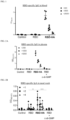
- mice The upper respiratory tracts of mice were infected with Cal7, creating a situation in which the mice have antibodies against influenza viruses, as well as adults. After 30 days and 51 days from infection, the mice were subcutaneously immunized with RBD or RBD-HA. After 58 days from infection, blood was collected, and RBD-specific IgG in plasma was evaluated by ELISA.
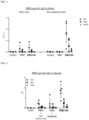
- mice The upper respiratory tracts of mice were infected with Cal7. After 30 days and 51 days from infection, the mice were nasally immunized with RBD or RBD-HA, or were nasally immunized with RBD together with c-di-GMP (RBD + c-di-GMP). After 58 days from infection, the nasal wash and blood were collected, and RBD-specific IgA in the nasal wash and RBD-specific IgG in plasma were evaluated by ELISA.
- RBD-HA can be an excellent vaccine antigen.
- mice were subcutaneously immunized with HA together with alum twice (Day 0 and Day 14) every 2 weeks to prepare HA-immunized mice. Mice were subcutaneously immunized with each of RBD and RBD-HA on Day 21 and Day 42. On Day 49, blood was collected, and RBD-specific IgG in plasma was evaluated by ELISA.
- mice were subcutaneously immunized with HA together with alum twice (Day 0 and Day 14) every 2 weeks. On Day 21, mice were subcutaneously immunized with each of RBD + CpG nucleic acid, RBD + AddaVax, and RBD-HA. On Day 49, blood was collected, and RBD-specific IgG in plasma was evaluated by ELISA.
- Results are shown in Fig. 4 .
- an RBD-specific antibody with a higher intensity was induced than that in the RBD + CpG nucleic acid group and the RBD + AddaVax group with an adjuvant.
- Results are shown in Fig. 5 . It was found that the RBD-HA group even without an adjuvant can induce neutralizing antibodies equivalent to that of the RBD + alum group with an adjuvant.
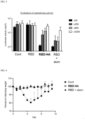
- mice The upper respiratory tracts of mice were infected with Cal7. After 30 days from infection, the mice were subcutaneously immunized with each of RBD-HA and RBD + alum. After 65 days from infection, the mice were infected with SARS-CoV-2 through the lower respiratory tracts from the nose (20 ⁇ L), and changes in body weight were evaluated.
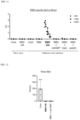
- mice The upper respiratory tracts of mice were infected with Cal7. After 30 days from infection, the mice were subcutaneously immunized with each of RBD, RBD-HA, and RBD + HA. Fourteen days later, blood was collected, and RBD-specific IgG in plasma was evaluated by ELISA.
- Results are shown in Fig. 7 .
- An RBD-specific antibody titer was observed only in the RBD-HA group. This suggested that RBD could not be delivered to dendritic cells only by mixing RBD and HA, even if anti-HA antibodies were present.
- mice were immunized with ovalbumin (OVA) or HA together with aluminum hydroxide twice, and IgG was purified from mouse serum.
- the obtained purified IgG was mixed with RBD or RBD-HA, and the mixture was subcutaneously administered to naive mice. Fourteen days later, blood was collected, and RBD-specific IgG in plasma was evaluated by ELISA.
- mice The upper respiratory tracts of mice were infected with Cal7. After 30 days and 51 days from infection, the mice were nasally immunized with each of RBD, RBD-HA, RBD + c-di-GMP, RBD + CpG nucleic acid, and RBD + poly(I:C) (6 ⁇ L). After 58 days from infection, blood was collected, and RBD-specific IgG in plasma was evaluated by ELISA.
- Results are shown in Fig. 9 .
- Production of antibody titers was not observed in the RBD group.
- the RBD + CpG nucleic acid group, and the RBD + poly(I:C) group in which an adjuvant was used in combination no RBD-specific IgG in plasma was produced.
- the RBD-HA group RBD-specific IgG in plasma was strongly induced even without using an adjuvant. From this, RBD-HA can be an excellent antigen in a nasal vaccine.
- mice The upper respiratory tracts of mice were infected with Cal7. After 30 days and 51 days from infection, the mice were nasally immunized with each of RBD, RBD-HA, RBD + c-di-GMP, RBD + CpG nucleic acid, and RBD + poly(I:C) (6 ⁇ L). After 65 days from infection, the nasal wash was collected, and RBD-specific IgA in the nasal wash was evaluated by ELISA.
- Results are shown in Fig. 11 . As in the results of Test Examples 9 and 10, RBD-specific IgA was observed in the nasal wash only in the RBD-HA group.
- mice The upper respiratory tracts of mice were infected with Cal7. After 30 days and 51 days from infection, the mice were nasally immunized with each of RBD-HA and RBD + c-di-GMP (6 ⁇ L). After 65 days from infection, the mice were infected with SARS-CoV-2 (5 ⁇ L) through the upper respiratory tract from the nose, and 3 days later, SARS-CoV-2 in the nasal wash was measured.
- Results are shown in Fig. 12 .
- SARS-CoV-2 was observed in the nasal wash.
- SARS-CoV-2 was not observed in the RBD + c-di-GMP group or the RBD-HA group. From this, it was shown that RBD-HA can protect against SARS-CoV-2 in the upper respiratory tract without adding an adjuvant such as c-di-GMP.
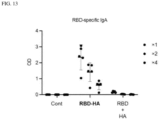
- mice The upper respiratory tracts of mice were infected with Cal7. After 30 days and 51 days from infection, the mice were nasally immunized with each of RBD, RBD-HA, and RBD+HA (6 ⁇ L). After 65 days from infection, the nasal wash was collected, and RBD-specific IgA in the nasal wash was evaluated by ELISA.
- Results are shown in Fig. 13 .
- RBD-specific IgA in the nasal wash observed in the RBD-HA group was not observed in the RBD + HA group. From this, it was considered that RBD could not be delivered to dendritic cells only by mixing RBD and HA, even if anti-HA antibodies were present. Thus, it was shown that RBD and HA need to be fused.
Landscapes
- Health & Medical Sciences (AREA)
- Life Sciences & Earth Sciences (AREA)
- Chemical & Material Sciences (AREA)
- Organic Chemistry (AREA)
- General Health & Medical Sciences (AREA)
- Virology (AREA)
- Medicinal Chemistry (AREA)
- Genetics & Genomics (AREA)
- Engineering & Computer Science (AREA)
- Bioinformatics & Cheminformatics (AREA)
- Zoology (AREA)
- Wood Science & Technology (AREA)
- Biochemistry (AREA)
- Molecular Biology (AREA)
- Immunology (AREA)
- Microbiology (AREA)
- Veterinary Medicine (AREA)
- Public Health (AREA)
- Animal Behavior & Ethology (AREA)
- Pharmacology & Pharmacy (AREA)
- General Engineering & Computer Science (AREA)
- Communicable Diseases (AREA)
- Epidemiology (AREA)
- Biomedical Technology (AREA)
- Biophysics (AREA)
- Mycology (AREA)
- Proteomics, Peptides & Aminoacids (AREA)
- Pulmonology (AREA)
- Biotechnology (AREA)
- Gastroenterology & Hepatology (AREA)
- Chemical Kinetics & Catalysis (AREA)
- General Chemical & Material Sciences (AREA)
- Nuclear Medicine, Radiotherapy & Molecular Imaging (AREA)
- Oncology (AREA)
- Medicines Containing Antibodies Or Antigens For Use As Internal Diagnostic Agents (AREA)
- Peptides Or Proteins (AREA)
Applications Claiming Priority (2)
| Application Number | Priority Date | Filing Date | Title |
|---|---|---|---|
| JP2020175599 | 2020-10-19 | ||
| PCT/JP2021/038496 WO2022085648A1 (fr) | 2020-10-19 | 2021-10-18 | Protéine de fusion et vaccin |
Publications (2)
| Publication Number | Publication Date |
|---|---|
| EP4230657A1 true EP4230657A1 (fr) | 2023-08-23 |
| EP4230657A4 EP4230657A4 (fr) | 2024-12-11 |
Family
ID=81289902
Family Applications (1)
| Application Number | Title | Priority Date | Filing Date |
|---|---|---|---|
| EP21882789.7A Pending EP4230657A4 (fr) | 2020-10-19 | 2021-10-18 | Protéine de fusion et vaccin |
Country Status (7)
| Country | Link |
|---|---|
| US (1) | US20240091341A1 (fr) |
| EP (1) | EP4230657A4 (fr) |
| JP (1) | JPWO2022085648A1 (fr) |
| KR (1) | KR20230091094A (fr) |
| CN (1) | CN116568324A (fr) |
| AU (1) | AU2021363921A1 (fr) |
| WO (1) | WO2022085648A1 (fr) |
Families Citing this family (2)
| Publication number | Priority date | Publication date | Assignee | Title |
|---|---|---|---|---|
| EP4501947A1 (fr) * | 2022-03-31 | 2025-02-05 | The Research Foundation for Microbial Diseases of Osaka University | Protéine de fusion et vaccin |
| EP4592322A1 (fr) * | 2022-09-23 | 2025-07-30 | Chuang, Woei-jer | Protéine de fusion ciblant l'intégrine alpha(iib)beta3 et contenant un activateur tissulaire du plasminogène ou un variant de celui-ci et son utilisation |
Family Cites Families (4)
| Publication number | Priority date | Publication date | Assignee | Title |
|---|---|---|---|---|
| WO2011136506A2 (fr) * | 2010-04-30 | 2011-11-03 | 중앙대학교 산학협력단 | Procédé de production d'antigènes complexes recombinants à l'aide de nanoparticules de rotavirus humain |
| BR112015001390B1 (pt) * | 2012-07-26 | 2024-04-30 | The Henry M. Jackson Foundation For The Advancement Of Military Medicine, Inc | Proteína de fusão, ácido nucleico isolado e uso de uma composição de vacina |
| WO2018092887A1 (fr) * | 2016-11-17 | 2018-05-24 | 国立感染症研究所長が代表する日本国 | Vaccin contre des maladies infectieuses utilisant des particules de paramyxovirus non infectieuses |
| CA3170740A1 (fr) * | 2020-05-29 | 2021-12-02 | Curevac Ag | Vaccins combines a base d'acide nucleique |
-
2021
- 2021-10-18 US US18/032,545 patent/US20240091341A1/en active Pending
- 2021-10-18 JP JP2022557539A patent/JPWO2022085648A1/ja not_active Withdrawn
- 2021-10-18 WO PCT/JP2021/038496 patent/WO2022085648A1/fr not_active Ceased
- 2021-10-18 KR KR1020237012669A patent/KR20230091094A/ko active Pending
- 2021-10-18 AU AU2021363921A patent/AU2021363921A1/en not_active Abandoned
- 2021-10-18 CN CN202180070737.9A patent/CN116568324A/zh active Pending
- 2021-10-18 EP EP21882789.7A patent/EP4230657A4/fr active Pending
Also Published As
| Publication number | Publication date |
|---|---|
| AU2021363921A9 (en) | 2024-02-08 |
| CN116568324A (zh) | 2023-08-08 |
| JPWO2022085648A1 (fr) | 2022-04-28 |
| WO2022085648A1 (fr) | 2022-04-28 |
| AU2021363921A1 (en) | 2023-06-01 |
| KR20230091094A (ko) | 2023-06-22 |
| EP4230657A4 (fr) | 2024-12-11 |
| US20240091341A1 (en) | 2024-03-21 |
Similar Documents
| Publication | Publication Date | Title |
|---|---|---|
| EP4410843A1 (fr) | Protéine de fusion recombinante dérivée de la région hr de la protéine s2 du sras-cov-2 et application de la protéine de fusion recombinée | |
| US20100145015A1 (en) | Compositions and methods for increasing immunogenicity of glycoprotein vaccines | |
| WO2023138334A1 (fr) | Vaccin à nouvelle protéine de coronavirus recombinante, son procédé de préparation et son application | |
| EP4230657A1 (fr) | Protéine de fusion et vaccin | |
| AU2021361384A1 (en) | Temperature-sensitive betacoronavirus strain and vaccine | |
| KR20150036685A (ko) | 약독화된 돼지 인플루엔자 백신 및 이의 제조 방법 및 용도 | |
| US20240252621A1 (en) | Virus-like particle vaccine for coronavirus | |
| US12076393B2 (en) | Vaccine composition for prevention or treatment of SARS-coronavirus-2 infection | |
| CN114163505A (zh) | 猪瘟、猪伪狂犬病毒二联亚单位疫苗及其制备方法 | |
| HU196131B (en) | Process for preparing polypeptide vaccine | |
| EP4501947A1 (fr) | Protéine de fusion et vaccin | |
| CN113248575B (zh) | 一种针对SARS-CoV-2的重组蛋白疫苗及其制备方法 | |
| WO2023138333A1 (fr) | Vaccin recombinant à base de protéine sars-cov-2, son procédé de préparation et son utilisation | |
| CN118178630A (zh) | 一种融合蛋白在制备SARS-CoV-2广谱疫苗中的应用、以及含有该广谱疫苗的免疫套装 | |
| CN113248576A (zh) | 一种针对冠状病毒的核酸疫苗及其制备方法 | |
| KR20190039065A (ko) | 조작된 인플루엔자 헤마글루티닌 폴리펩티드의 변형 | |
| KR20220040423A (ko) | 재조합 단백질을 포함하는 사스-코로나바이러스-2 감염증 예방 또는 치료용 백신 조성물 | |
| CA2090005C (fr) | Immunisation croisee contre le virus de la grippe a | |
| CN113461828B (zh) | 针对2019-nCoV的重组蛋白疫苗及其制备方法 | |
| RU2827202C1 (ru) | Рекомбинантная плазмидная ДНК pVL3-HA/H5, несущая ген гемагглютинина вируса гриппа A (H5N8), рекомбинантный штамм клеточной линии яичника китайского хомячка CHO-K1-H5 и рекомбинантный гемагглютинин вируса гриппа A (H5N8), продуцируемый штаммом CHO-K1-H5 и предназначенный для создания профилактических препаратов и серологической диагностики вируса гриппа A H5N8 | |
| US11826421B2 (en) | Bacteriophage-based vaccines and engineered bacteriophage | |
| KR20250031238A (ko) | 외래 항원을 발현하는 재조합 인플루엔자 바이러스 벡터 및 이를 포함하는 백신 조성물 | |
| EP4653011A1 (fr) | Préparation et utilisation d'un vaccin d'arnm et d'un vaccin de sous-unité protéique recombinant contre le sars-cov-2 ou un mutant | |
| EP4619413A2 (fr) | Vaccins contre le virus de la grippe b et leurs utilisations | |
| CN121620537A (zh) | Rsv和hmpv融合f蛋白及其用途 |
Legal Events
| Date | Code | Title | Description |
|---|---|---|---|
| STAA | Information on the status of an ep patent application or granted ep patent |
Free format text: STATUS: THE INTERNATIONAL PUBLICATION HAS BEEN MADE |
|
| PUAI | Public reference made under article 153(3) epc to a published international application that has entered the european phase |
Free format text: ORIGINAL CODE: 0009012 |
|
| STAA | Information on the status of an ep patent application or granted ep patent |
Free format text: STATUS: REQUEST FOR EXAMINATION WAS MADE |
|
| 17P | Request for examination filed |
Effective date: 20230427 |
|
| AK | Designated contracting states |
Kind code of ref document: A1 Designated state(s): AL AT BE BG CH CY CZ DE DK EE ES FI FR GB GR HR HU IE IS IT LI LT LU LV MC MK MT NL NO PL PT RO RS SE SI SK SM TR |
|
| DAV | Request for validation of the european patent (deleted) | ||
| DAX | Request for extension of the european patent (deleted) | ||
| A4 | Supplementary search report drawn up and despatched |
Effective date: 20241108 |
|
| RIC1 | Information provided on ipc code assigned before grant |
Ipc: A61P 31/14 20060101ALI20241105BHEP Ipc: C12N 9/24 20060101ALI20241105BHEP Ipc: C07K 14/165 20060101ALI20241105BHEP Ipc: C07K 14/11 20060101ALI20241105BHEP Ipc: A61K 39/39 20060101ALI20241105BHEP Ipc: A61K 39/215 20060101ALI20241105BHEP Ipc: C07K 19/00 20060101AFI20241105BHEP |