EP4501947A1 - Protéine de fusion et vaccin - Google Patents
Protéine de fusion et vaccin Download PDFInfo
- Publication number
- EP4501947A1 EP4501947A1 EP23781006.4A EP23781006A EP4501947A1 EP 4501947 A1 EP4501947 A1 EP 4501947A1 EP 23781006 A EP23781006 A EP 23781006A EP 4501947 A1 EP4501947 A1 EP 4501947A1
- Authority
- EP
- European Patent Office
- Prior art keywords
- vaccine
- combination
- fusion protein
- pspa
- amino acid
- Prior art date
- Legal status (The legal status is an assumption and is not a legal conclusion. Google has not performed a legal analysis and makes no representation as to the accuracy of the status listed.)
- Pending
Links
Images

Classifications
-
- C—CHEMISTRY; METALLURGY
- C07—ORGANIC CHEMISTRY
- C07K—PEPTIDES
- C07K14/00—Peptides having more than 20 amino acids; Gastrins; Somatostatins; Melanotropins; Derivatives thereof
- C07K14/005—Peptides having more than 20 amino acids; Gastrins; Somatostatins; Melanotropins; Derivatives thereof from viruses
-
- A—HUMAN NECESSITIES
- A61—MEDICAL OR VETERINARY SCIENCE; HYGIENE
- A61K—PREPARATIONS FOR MEDICAL, DENTAL OR TOILETRY PURPOSES
- A61K39/00—Medicinal preparations containing antigens or antibodies
- A61K39/02—Bacterial antigens
- A61K39/09—Lactobacillales, e.g. aerococcus, enterococcus, lactobacillus, lactococcus, streptococcus
- A61K39/092—Streptococcus
-
- A—HUMAN NECESSITIES
- A61—MEDICAL OR VETERINARY SCIENCE; HYGIENE
- A61K—PREPARATIONS FOR MEDICAL, DENTAL OR TOILETRY PURPOSES
- A61K39/00—Medicinal preparations containing antigens or antibodies
- A61K39/12—Viral antigens
-
- A—HUMAN NECESSITIES
- A61—MEDICAL OR VETERINARY SCIENCE; HYGIENE
- A61K—PREPARATIONS FOR MEDICAL, DENTAL OR TOILETRY PURPOSES
- A61K39/00—Medicinal preparations containing antigens or antibodies
- A61K39/12—Viral antigens
- A61K39/155—Paramyxoviridae, e.g. parainfluenza virus
-
- A—HUMAN NECESSITIES
- A61—MEDICAL OR VETERINARY SCIENCE; HYGIENE
- A61K—PREPARATIONS FOR MEDICAL, DENTAL OR TOILETRY PURPOSES
- A61K39/00—Medicinal preparations containing antigens or antibodies
- A61K39/12—Viral antigens
- A61K39/215—Coronaviridae, e.g. avian infectious bronchitis virus
-
- A—HUMAN NECESSITIES
- A61—MEDICAL OR VETERINARY SCIENCE; HYGIENE
- A61K—PREPARATIONS FOR MEDICAL, DENTAL OR TOILETRY PURPOSES
- A61K39/00—Medicinal preparations containing antigens or antibodies
- A61K39/385—Haptens or antigens, bound to carriers
-
- A—HUMAN NECESSITIES
- A61—MEDICAL OR VETERINARY SCIENCE; HYGIENE
- A61P—SPECIFIC THERAPEUTIC ACTIVITY OF CHEMICAL COMPOUNDS OR MEDICINAL PREPARATIONS
- A61P31/00—Antiinfectives, i.e. antibiotics, antiseptics, chemotherapeutics
- A61P31/04—Antibacterial agents
-
- A—HUMAN NECESSITIES
- A61—MEDICAL OR VETERINARY SCIENCE; HYGIENE
- A61P—SPECIFIC THERAPEUTIC ACTIVITY OF CHEMICAL COMPOUNDS OR MEDICINAL PREPARATIONS
- A61P31/00—Antiinfectives, i.e. antibiotics, antiseptics, chemotherapeutics
- A61P31/12—Antivirals
- A61P31/14—Antivirals for RNA viruses
-
- C—CHEMISTRY; METALLURGY
- C07—ORGANIC CHEMISTRY
- C07K—PEPTIDES
- C07K14/00—Peptides having more than 20 amino acids; Gastrins; Somatostatins; Melanotropins; Derivatives thereof
- C07K14/195—Peptides having more than 20 amino acids; Gastrins; Somatostatins; Melanotropins; Derivatives thereof from bacteria
- C07K14/315—Peptides having more than 20 amino acids; Gastrins; Somatostatins; Melanotropins; Derivatives thereof from bacteria from Streptococcus (G), e.g. Enterococci
-
- C—CHEMISTRY; METALLURGY
- C12—BIOCHEMISTRY; BEER; SPIRITS; WINE; VINEGAR; MICROBIOLOGY; ENZYMOLOGY; MUTATION OR GENETIC ENGINEERING
- C12N—MICROORGANISMS OR ENZYMES; COMPOSITIONS THEREOF; PROPAGATING, PRESERVING, OR MAINTAINING MICROORGANISMS; MUTATION OR GENETIC ENGINEERING; CULTURE MEDIA
- C12N15/00—Mutation or genetic engineering; DNA or RNA concerning genetic engineering, vectors, e.g. plasmids, or their isolation, preparation or purification; Use of hosts therefor
- C12N15/09—Recombinant DNA-technology
- C12N15/11—DNA or RNA fragments; Modified forms thereof; Non-coding nucleic acids having a biological activity
- C12N15/62—DNA sequences coding for fusion proteins
-
- C—CHEMISTRY; METALLURGY
- C12—BIOCHEMISTRY; BEER; SPIRITS; WINE; VINEGAR; MICROBIOLOGY; ENZYMOLOGY; MUTATION OR GENETIC ENGINEERING
- C12N—MICROORGANISMS OR ENZYMES; COMPOSITIONS THEREOF; PROPAGATING, PRESERVING, OR MAINTAINING MICROORGANISMS; MUTATION OR GENETIC ENGINEERING; CULTURE MEDIA
- C12N9/00—Enzymes; Proenzymes; Compositions thereof; Processes for preparing, activating, inhibiting, separating or purifying enzymes
- C12N9/14—Hydrolases (3)
- C12N9/24—Hydrolases (3) acting on glycosyl compounds (3.2)
- C12N9/2402—Hydrolases (3) acting on glycosyl compounds (3.2) hydrolysing O- and S- glycosyl compounds (3.2.1)
-
- A—HUMAN NECESSITIES
- A61—MEDICAL OR VETERINARY SCIENCE; HYGIENE
- A61K—PREPARATIONS FOR MEDICAL, DENTAL OR TOILETRY PURPOSES
- A61K39/00—Medicinal preparations containing antigens or antibodies
- A61K2039/54—Medicinal preparations containing antigens or antibodies characterised by the route of administration
- A61K2039/541—Mucosal route
- A61K2039/543—Mucosal route intranasal
-
- A—HUMAN NECESSITIES
- A61—MEDICAL OR VETERINARY SCIENCE; HYGIENE
- A61K—PREPARATIONS FOR MEDICAL, DENTAL OR TOILETRY PURPOSES
- A61K39/00—Medicinal preparations containing antigens or antibodies
- A61K2039/55—Medicinal preparations containing antigens or antibodies characterised by the host/recipient, e.g. newborn with maternal antibodies
-
- A—HUMAN NECESSITIES
- A61—MEDICAL OR VETERINARY SCIENCE; HYGIENE
- A61K—PREPARATIONS FOR MEDICAL, DENTAL OR TOILETRY PURPOSES
- A61K39/00—Medicinal preparations containing antigens or antibodies
- A61K2039/58—Medicinal preparations containing antigens or antibodies raising an immune response against a target which is not the antigen used for immunisation
-
- A—HUMAN NECESSITIES
- A61—MEDICAL OR VETERINARY SCIENCE; HYGIENE
- A61K—PREPARATIONS FOR MEDICAL, DENTAL OR TOILETRY PURPOSES
- A61K39/00—Medicinal preparations containing antigens or antibodies
- A61K2039/60—Medicinal preparations containing antigens or antibodies characteristics by the carrier linked to the antigen
- A61K2039/6031—Proteins
- A61K2039/6068—Other bacterial proteins, e.g. OMP
-
- A—HUMAN NECESSITIES
- A61—MEDICAL OR VETERINARY SCIENCE; HYGIENE
- A61K—PREPARATIONS FOR MEDICAL, DENTAL OR TOILETRY PURPOSES
- A61K39/00—Medicinal preparations containing antigens or antibodies
- A61K2039/60—Medicinal preparations containing antigens or antibodies characteristics by the carrier linked to the antigen
- A61K2039/6031—Proteins
- A61K2039/6075—Viral proteins
-
- A—HUMAN NECESSITIES
- A61—MEDICAL OR VETERINARY SCIENCE; HYGIENE
- A61K—PREPARATIONS FOR MEDICAL, DENTAL OR TOILETRY PURPOSES
- A61K39/00—Medicinal preparations containing antigens or antibodies
- A61K2039/62—Medicinal preparations containing antigens or antibodies characterised by the link between antigen and carrier
- A61K2039/627—Medicinal preparations containing antigens or antibodies characterised by the link between antigen and carrier characterised by the linker
-
- A—HUMAN NECESSITIES
- A61—MEDICAL OR VETERINARY SCIENCE; HYGIENE
- A61K—PREPARATIONS FOR MEDICAL, DENTAL OR TOILETRY PURPOSES
- A61K38/00—Medicinal preparations containing peptides
-
- C—CHEMISTRY; METALLURGY
- C07—ORGANIC CHEMISTRY
- C07K—PEPTIDES
- C07K2319/00—Fusion polypeptide
-
- C—CHEMISTRY; METALLURGY
- C12—BIOCHEMISTRY; BEER; SPIRITS; WINE; VINEGAR; MICROBIOLOGY; ENZYMOLOGY; MUTATION OR GENETIC ENGINEERING
- C12N—MICROORGANISMS OR ENZYMES; COMPOSITIONS THEREOF; PROPAGATING, PRESERVING, OR MAINTAINING MICROORGANISMS; MUTATION OR GENETIC ENGINEERING; CULTURE MEDIA
- C12N2760/00—MICROORGANISMS OR ENZYMES; COMPOSITIONS THEREOF; PROPAGATING, PRESERVING, OR MAINTAINING MICROORGANISMS; MUTATION OR GENETIC ENGINEERING; CULTURE MEDIA ssRNA viruses negative-sense
- C12N2760/00011—Details
- C12N2760/16011—Orthomyxoviridae
- C12N2760/16111—Influenzavirus A, i.e. influenza A virus
- C12N2760/16122—New viral proteins or individual genes, new structural or functional aspects of known viral proteins or genes
-
- C—CHEMISTRY; METALLURGY
- C12—BIOCHEMISTRY; BEER; SPIRITS; WINE; VINEGAR; MICROBIOLOGY; ENZYMOLOGY; MUTATION OR GENETIC ENGINEERING
- C12N—MICROORGANISMS OR ENZYMES; COMPOSITIONS THEREOF; PROPAGATING, PRESERVING, OR MAINTAINING MICROORGANISMS; MUTATION OR GENETIC ENGINEERING; CULTURE MEDIA
- C12N2760/00—MICROORGANISMS OR ENZYMES; COMPOSITIONS THEREOF; PROPAGATING, PRESERVING, OR MAINTAINING MICROORGANISMS; MUTATION OR GENETIC ENGINEERING; CULTURE MEDIA ssRNA viruses negative-sense
- C12N2760/00011—Details
- C12N2760/16011—Orthomyxoviridae
- C12N2760/16111—Influenzavirus A, i.e. influenza A virus
- C12N2760/16134—Use of virus or viral component as vaccine, e.g. live-attenuated or inactivated virus, VLP, viral protein
-
- C—CHEMISTRY; METALLURGY
- C12—BIOCHEMISTRY; BEER; SPIRITS; WINE; VINEGAR; MICROBIOLOGY; ENZYMOLOGY; MUTATION OR GENETIC ENGINEERING
- C12N—MICROORGANISMS OR ENZYMES; COMPOSITIONS THEREOF; PROPAGATING, PRESERVING, OR MAINTAINING MICROORGANISMS; MUTATION OR GENETIC ENGINEERING; CULTURE MEDIA
- C12N2760/00—MICROORGANISMS OR ENZYMES; COMPOSITIONS THEREOF; PROPAGATING, PRESERVING, OR MAINTAINING MICROORGANISMS; MUTATION OR GENETIC ENGINEERING; CULTURE MEDIA ssRNA viruses negative-sense
- C12N2760/00011—Details
- C12N2760/18011—Paramyxoviridae
- C12N2760/18511—Pneumovirus, e.g. human respiratory syncytial virus
- C12N2760/18522—New viral proteins or individual genes, new structural or functional aspects of known viral proteins or genes
-
- C—CHEMISTRY; METALLURGY
- C12—BIOCHEMISTRY; BEER; SPIRITS; WINE; VINEGAR; MICROBIOLOGY; ENZYMOLOGY; MUTATION OR GENETIC ENGINEERING
- C12N—MICROORGANISMS OR ENZYMES; COMPOSITIONS THEREOF; PROPAGATING, PRESERVING, OR MAINTAINING MICROORGANISMS; MUTATION OR GENETIC ENGINEERING; CULTURE MEDIA
- C12N2760/00—MICROORGANISMS OR ENZYMES; COMPOSITIONS THEREOF; PROPAGATING, PRESERVING, OR MAINTAINING MICROORGANISMS; MUTATION OR GENETIC ENGINEERING; CULTURE MEDIA ssRNA viruses negative-sense
- C12N2760/00011—Details
- C12N2760/18011—Paramyxoviridae
- C12N2760/18511—Pneumovirus, e.g. human respiratory syncytial virus
- C12N2760/18534—Use of virus or viral component as vaccine, e.g. live-attenuated or inactivated virus, VLP, viral protein
-
- C—CHEMISTRY; METALLURGY
- C12—BIOCHEMISTRY; BEER; SPIRITS; WINE; VINEGAR; MICROBIOLOGY; ENZYMOLOGY; MUTATION OR GENETIC ENGINEERING
- C12N—MICROORGANISMS OR ENZYMES; COMPOSITIONS THEREOF; PROPAGATING, PRESERVING, OR MAINTAINING MICROORGANISMS; MUTATION OR GENETIC ENGINEERING; CULTURE MEDIA
- C12N2770/00—MICROORGANISMS OR ENZYMES; COMPOSITIONS THEREOF; PROPAGATING, PRESERVING, OR MAINTAINING MICROORGANISMS; MUTATION OR GENETIC ENGINEERING; CULTURE MEDIA ssRNA viruses positive-sense
- C12N2770/00011—Details
- C12N2770/20011—Coronaviridae
- C12N2770/20022—New viral proteins or individual genes, new structural or functional aspects of known viral proteins or genes
-
- C—CHEMISTRY; METALLURGY
- C12—BIOCHEMISTRY; BEER; SPIRITS; WINE; VINEGAR; MICROBIOLOGY; ENZYMOLOGY; MUTATION OR GENETIC ENGINEERING
- C12N—MICROORGANISMS OR ENZYMES; COMPOSITIONS THEREOF; PROPAGATING, PRESERVING, OR MAINTAINING MICROORGANISMS; MUTATION OR GENETIC ENGINEERING; CULTURE MEDIA
- C12N2770/00—MICROORGANISMS OR ENZYMES; COMPOSITIONS THEREOF; PROPAGATING, PRESERVING, OR MAINTAINING MICROORGANISMS; MUTATION OR GENETIC ENGINEERING; CULTURE MEDIA ssRNA viruses positive-sense
- C12N2770/00011—Details
- C12N2770/20011—Coronaviridae
- C12N2770/20034—Use of virus or viral component as vaccine, e.g. live-attenuated or inactivated virus, VLP, viral protein
-
- C—CHEMISTRY; METALLURGY
- C12—BIOCHEMISTRY; BEER; SPIRITS; WINE; VINEGAR; MICROBIOLOGY; ENZYMOLOGY; MUTATION OR GENETIC ENGINEERING
- C12Y—ENZYMES
- C12Y302/00—Hydrolases acting on glycosyl compounds, i.e. glycosylases (3.2)
- C12Y302/01—Glycosidases, i.e. enzymes hydrolysing O- and S-glycosyl compounds (3.2.1)
- C12Y302/01018—Exo-alpha-sialidase (3.2.1.18), i.e. trans-sialidase
Definitions
- the present invention relates to a fusion protein useful as a vaccine antigen against infectious diseases and a vaccine using the same.
- nasal vaccines are expected as a next-generation vaccine that can protect the infection itself, such as inducing antibody production even in the upper respiratory tract, which is an initial infection site of many pathogens including novel coronavirus.
- IgA Intranasal IgA not only binds to and eliminates pathogens, but also transports the pathogens into the nasal lymphatic tissue through transcytosis, to efficiently induce antigen-specific immune responses. Therefore, the present inventor has considered that, by fusing a target vaccine antigen to a protein (carrier protein) recognized by IgA present in the nasal cavity, IgA itself becomes an antigen delivery carrier (carrier antibody) and delivers the vaccine antigen to the nasal lymphatic tissue, thereby making it possible to induce mucosal immunity efficiently.
- carrier protein carrier protein
- carrier antibody antigen delivery carrier
- an object of the present invention is to provide a fusion protein which is useful as a vaccine antigen against infectious diseases.
- a fusion protein containing (a) a combination of an N-terminal domain of a coronavirus and hemagglutinin and/or neuraminidase, (b) a combination of a receptor binding domain of a coronavirus and pneumococcal surface protein A (PspA), (c) a combination of a G protein of an RS virus and hemagglutinin and/or neuraminidase, or (d) a combination of PspA and hemagglutinin and/or neuraminidase is useful as a vaccine antigen against infectious diseases.
- the present invention has been completed by further conducting studies based on this finding.
- a fusion protein containing: (a) a combination of an N-terminal domain of a coronavirus and hemagglutinin and/or neuraminidase; (b) a combination of a receptor binding domain of a coronavirus and PspA; (c) a combination of a G protein of an RS virus and hemagglutinin and/or neuraminidase; or (d) a combination of PspA and hemagglutinin and/or neuraminidase.
- Item 2 The fusion protein according to item 1, wherein the fusion protein contains the combination (a) or the combination (b), and is used as a vaccine antigen against a coronavirus.
- Item 3 The fusion protein according to item 1, wherein the fusion protein contains the combination (c), and is used as a vaccine antigen against an RS virus.
- Item 4 The fusion protein according to item 1, wherein the fusion protein contains the combination (d), and is used as a vaccine antigen against Streptococcus pneumoniae.
- Item 5 A vaccine containing the fusion protein according to any one of items 1 to 4.
- Item 6 The vaccine according to item 5, wherein the vaccine does not contain an adjuvant.
- Item 7 The vaccine according to item 5 or 6, wherein the vaccine contains the combination (a), the combination (c), or the combination (d), and is administered to a subject having an antibody against an influenza virus.
- Item 8 The vaccine according to item 5 or 6, wherein the vaccine contains the combination (b), and is administered to a subject having an antibody against Streptococcus pneumoniae.
- Item 9 The vaccine according to any one of items 5 to 8, wherein the vaccine is nasally administered.
- An immunization method including administering, to a subject having an antibody against an influenza virus, a vaccine containing a fusion protein containing: (a) a combination of an N-terminal domain of a coronavirus and hemagglutinin and/or neuraminidase; (c) a combination of a G protein of an RS virus and hemagglutinin and/or neuraminidase; or (d) a combination of PspA and hemagglutinin and/or neuraminidase.
- Item 11 An immunization method including administering, to a subject having an antibody against Streptococcus pneumoniae, a vaccine containing a fusion protein containing (b) a combination of a receptor binding domain of a coronavirus and PspA.
- fusion protein which is useful as a vaccine antigen against infectious diseases.
- the fusion protein of the present invention contains an antigen (hereinafter, also described as "target antigen”) of a virus and/or a bacterium to be a target for infection prevention and an antigen (hereinafter, also described as "carrier protein”) of an antibody that a human to be vaccinated has in the body.
- target antigen an antigen of a virus and/or a bacterium to be a target for infection prevention
- carrier protein an antigen of an antibody that a human to be vaccinated has in the body.
- the fusion protein of the present invention contains (a) a combination of an N-terminal domain of a coronavirus and hemagglutinin and/or neuraminidase, (b) a combination of a receptor binding domain of a coronavirus and PspA, (c) a combination of a G protein of an RS virus and hemagglutinin and/or neuraminidase, or (d) a combination of PspA and hemagglutinin and/or neuraminidase.
- the target antigen can be designed to be an N-terminal domain (NTD) of a coronavirus in the combination (a), a receptor binding domain (RBD) of a coronavirus in the combination (b), a G protein of an RS virus in the combination (c), and PspA in the combination (d).
- NTD N-terminal domain
- RBD receptor binding domain
- the carrier protein can be designed to be hemagglutinin and/or neuraminidase in the combinations (a), (c), and (d), and PspA in the combination (b).
- the coronavirus from which the target antigens used in the combinations (a) and (b) are derived is morphologically spherical with a diameter of about 100 to 200 nm, and has protrusions on the surface thereof.
- the coronavirus is classified into the order of Nidovirales, the subfamily of Coronavirinae, the family of Coronavirinae.
- the envelope of the lipid bilayer membrane there is a genome of positive-stranded single-stranded RNA wound around a nucleocapsid protein (also referred to as “nucleocapsid”), and a spike protein (hereinafter, also referred to as “spike”), an envelope protein (hereinafter, also referred to as “envelope”), and a membrane protein are arranged on the surface of the envelope.
- the size of the viral genome is about 30 kb, the longest among RNA viruses.
- Coronaviruses are classified into groups of alpha, beta, gamma, and delta according to genetic characteristics. As coronaviruses infecting humans, four types of human coronaviruses 229E, OC43, NL63, and HKU-1 as causative viruses of cold, and severe acute respiratory syndrome (SARS) coronavirus that occurred in 2002 and Middle East respiratory syndrome (MERS) coronavirus that occurred in 2012, which cause serious pneumonia, are known. Human coronaviruses 229E and NL63 are classified into the alpha coronavirus genus, and human coronaviruses OC43, HKU-1, SARS coronavirus, and MERS coronavirus are classified into the beta coronavirus genus.
- the coronavirus is preferably a coronavirus belonging to the beta coronavirus genus, and more preferably a SARS coronavirus.
- SARS-CoV-2 classified as SARS coronavirus has been isolated and identified as a causative virus of the novel coronavirus infection that occurred in Wuhan in 2019.
- SARS-CoV-2 has been mutated repeatedly from the early Wuhan strain, and mutant strains such as a strain detected in the United Kingdom, a strain detected in South Africa, and a strain detected in India have been found. There is also a possibility that a mutant strain that has not yet been detected or a new mutant strain will occur in the future. Therefore, in the present invention, the SARS coronavirus is not limited to the above-described SARS-CoV-2 strains, and includes other SARS-CoV-2 mutant strains newly detected in the future.
- NTD N-terminal domain of SARS-CoV-2 used in the combination (a) is a region of the N-terminal of the amino acid of the spike protein (S protein) and has a binding target site for the infectivity-enhancing antibody, and NTDs are crosslinked by the infectivity-enhancing antibody. More specifically, when the infectivity-enhancing antibody binds to NTD, the conformation of RBD is changed to a more open conformation as compared with a case where the infectivity-enhancing antibody does not bind to NTD, thereby controlling RBD to more easily bind to angiotensin converting enzyme 2 (ACE2) ( Cell, Volume 184, Issue 13, 24 June 2021, Pages 3452 to 3466 ).
- ACE2 angiotensin converting enzyme 2
- NTD of SARS-CoV-2 examples include the following (1-1) to (1-3):
- SEQ ID NO: 1 represents an amino acid sequence of a spike protein (YP_009724390.1) of SARS-CoV-2 listed as NC_045512 in NCBI, and an amino acid sequence from position 1 to 303 thereof corresponds to the NTD.
- the RBD of SARS-CoV-2 used in the combination (b) is a region having a binding site in the spike protein of SARS-CoV-2 with ACE2.
- the RBD of SARS-CoV-2 includes the following (2-1) to (2-3):
- SEQ ID NO: 1 represents an amino acid sequence of a spike protein (YP_009724390.1) of SARS-CoV-2 listed as NC_045512 in NCBI, and an amino acid sequence from position 319 to 541 thereof corresponds to the RBD, as described in the polypeptide of (1-1).
- the RS virus from which the target antigen used in the combination (c) is derived causes RS virus infection such as infantile acute respiratory tract infection (bronchiolitis, pneumonia, and the like).
- the G protein of the RS virus contributes to adhesion to the host cell surface. In the present invention, it is preferable to use a conserved region among regions of the G protein of the RS virus.
- Examples of the conserved region of the G protein of the RS virus include the following (3-1) to (3-3):
- SEQ ID NO: 2 represents an amino acid sequence of a G protein of an RS virus listed in UniProtKB-P03423.
- the PspA of Streptococcus pneumoniae used in the combination (d) exhibits pathogenicity due to its complement inhibitory activity of inhibiting binding of a complement C3 to the pneumococcal bacterial cell surface.
- PspA examples include the following (4-1) to (4-3):
- SEQ ID NO: 3 represents an amino acid sequence of a PspA listed in GenBank as Accession No. AF071814.
- polypeptides of (1-1) to (1-3), (2-1) to (2-3), (3-1) to (3-3), and (4-1) to (4-3) include not only polypeptides obtained by artificial substitution, but also polypeptides originally having such amino acid sequences.
- polypeptides of (1-2) and (1-3) are allowed to have a difference in amino acid sequence as compared with the polypeptide of (1-1) as long as they have an ability to form a complex in which the polypeptides are crosslinked by an infectivity-enhancing antibody, as in the polypeptide of (1-1), and are also referred to as a different form of the polypeptide of (1-1).
- the polypeptides of (2-2) and (2-3) are allowed to have a difference in amino acid sequence as compared with the polypeptide of (2-1) as long as they have an ability to form a complex with ACE2, as in the polypeptide of (2-1), and are also referred to as a different form of the polypeptide of (2-1).
- polypeptides of (3-2) and (3-3) are allowed to have a difference in amino acid sequence as compared with the polypeptide of (3-1) as long as they have an ability to adhere to the host cell surface, as in the polypeptide of (3-1), and are also referred to as a different form of the polypeptide of (3-1).
- the polypeptides of (4-2) and (4-3) are allowed to have a difference in amino acid sequence as compared with the polypeptide of (4-1) as long as they have an ability to inhibit binding of a complement factor C3 to Streptococcus pneumoniae, as in the polypeptide of (4-1), and are also referred to as a different form of the polypeptide of (4-1).
- the difference in amino acid in the polypeptides of (1-2), (2-2), (3-2), and (4-2) may include only one difference (for example, substitution) among substitution, addition, insertion, and deletion, or may include two or more differences (for example, substitution and insertion).
- the number of amino acid differences may be 1 or several, and is, for example, 1 to 15, preferably 1 to 10, more preferably 1 to 8, still more preferably 1 to 7 or 1 to 6, still even more preferably 1 to 5 or 1 to 4, still further more preferably 1 to 3, particularly preferably 1 or 2, and most preferably 1.
- sequence identity between each of the amino acid sequences of the polypeptides of (1-3), (2-3), (3-3), and (4-3) and each of the amino acid sequences set forth in (1-1), (2-1), (3-1), and (4-1) may be 80% or more, and is preferably 85% or more, more preferably 90% or more, still more preferably 95% or more, still even more preferably 96% or more, still further more preferably 97% or more, particularly preferably 98% or more, 99% or more, or 99.5% or more.
- sequence identity indicates a value of identity of an amino acid sequence obtained by a bl2seq program ( Tatiana A. Tatsusova, Thomas L. Madden, FEMS Microbiol. Lett., Vol. 174, p. 247 to 250, 1999 ) of BLAST PACKAGE [sgi32 bit edition, Version 2.0.12; available from National Center for Biotechnology Information (NCBI)].
- the parameters may be set to Gap insertion Cost value: 11 and Gap extension Cost value: 1.
- the carrier protein is an antigen that constitutes the fusion protein of the present invention, and is an antigen against an antibody that a subject to be vaccinated has in the body. Specifically, the carrier protein is an antigen against an antibody that the subject has in the body due to past infection or vaccination.
- the carrier protein may be an antigen against an antibody that the subject has in the body. Examples of the carrier protein include influenza virus, RS virus, Streptococcus pneumoniae, and coronavirus.
- the carrier protein is fused with a target antigen in each of the combinations (a) to (d), whereby the fusion protein of the present invention is provided with or improved in a property of inducing a specific antibody against an antigen of a virus and/or a bacteria to be a target for infection prevention and/or onset prevention (hereinafter, also described as “target antigen-specific antibody inducing property").
- hemagglutinin is preferred, hemagglutinin derived from influenza virus is more preferred, hemagglutininin derived from influenza A virus (H1 type hemagglutinin to H16 type hemagglutinin) or hemagglutinin derived from influenza B virus is still more preferred, H1 type, H3 type, H5 type, or H7 type hemagglutinin is still even more preferred, H1 type or H3 type hemagglutinin is further more preferred, and H1 type hemagglutinin is most preferred.
- the amino acid sequences of these hemagglutinins and neuraminidases can be obtained from the official database.
- Preferred amino acid sequences of the hemagglutinin used in the combinations (a), (c) and (d) include the following (5-1) to (5-3):
- SEQ ID NO: 4 represents an amino acid sequence of a H1 subunit of influenza A H1N1 type (A/California/04/2009) listed as ACV82259.1 in NCBI, and an amino acid sequence from position 18 to 523 obtained by excluding the leader sequence of the N-terminal portion and the extracellular domain of the C-terminal portion is used as the amino acid sequence of the polypeptide of (5-1).
- amino acid sequence of the PspA used in the combination (b) examples include the following (6-1) to (6-3):
- SEQ ID NO: 3 represents an amino acid sequence of a PspA listed in GenBank as Accession No. AF071814, as described in the polypeptide of (4-1).
- polypeptides of (5-1) to (5-3) and (6-1) to (6-3) include not only polypeptides obtained by artificial substitution, but also polypeptides originally having such an amino acid sequence.
- the polypeptides of (5-2), (5-3), (6-1), and (6-2) are allowed to have a difference in amino acid sequence as compared with the polypeptides of (5-1) and (6-1) as long as they improve the target antigen-specific antibody titer inducing property, and are also referred to as a different form of the polypeptides of (5-1) and (6-1).
- the phrase "to improve the target antigen-specific antibody inducing property" means that the target antigen-specific antibody titer in a case where a fusion protein is formed together with the above target antigen is made higher than the specific antibody titer in a case where the target antigen is used alone.
- the target antigen-specific antibody titer when a fusion protein is formed together with the target antigen is equal to or higher than that in a case where the polypeptides of the above (5-1) and (6-1) are fused, more preferably, when the target antigen-specific antibody titer that is induced in a case where the polypeptides of the above (5-1) and (6-1) are fused with the target antigen is 100%, for example, about 80 to 120% or 90 to 110%.
- the difference in amino acid in the polypeptides of (5-2) and (6-2) may include only difference (for example, substitution) among substitution, addition, insertion, and deletion, or may include two or more differences (for example, substitution and insertion).
- the number of amino acid differences may be 1 or several, and is, for example, 1 to 15, preferably 1 to 10, more preferably 1 to 8, still more preferably 1 to 7 or 1 to 6, still even more preferably 1 to 5 or 1 to 4, still further more preferably 1 to 3, particularly preferably 1 or 2, and most preferably 1.
- sequence identity in the above (5-3) and (6-3) is the same as the sequence identity described in the above (1-3) to (4-3).
- the aspect of the amino acid substitution when an amino acid substitution is introduced into the polypeptides of (5-2), (5-3), (6-1), and (6-2) is the same as the aspect of the amino acid substitution in the polypeptides of (1-2) to (4-2) and (1-3) to (4-3).
- the fusion protein of the present invention may have other structures in addition to the target antigen and the carrier protein.
- Examples of other structures include linker peptides that bind the target antigen and the carrier protein.
- Examples of the linker peptide include linker peptides consisting of the following amino acid sequences.
- the fusion peptide of the present invention can provide or improve a property of inducing a specific antibody against an antigen of a virus and/or a bacterium to be a target for infection prevention, as described above, and thus can be used as a vaccine antigen against the virus and/or the bacterium to be a target for infection prevention.
- Fusion protein includes: a step 1 of introducing a DNA encoding a target antigen and a DNA encoding a carrier protein in each of the combinations (a) to (d) into a host cell to obtain a transformant; a step 2 of culturing the transformant; and a step 3 of recovering a product containing the target antigen and the carrier protein from the cultured transformant.
- the DNA encoding a target antigen to be a target for infection prevention and a DNA encoding a carrier protein can be introduced by inserting these DNAs into an expression vector in an appropriate form, and incorporating the obtained recombinant vector into a host cell.
- a recombinant vector in which a DNA encoding a target antigen to be a target for infection prevention, a DNA encoding a linker peptide, and a DNA encoding a carrier protein are incorporated in this order can be produced and introduced into a host cell.
- base sequence information of each gene of a target polypeptide is acquired from a known database (for example, GenBank) or the like; a target gene is cloned using a known method; base sequence information is acquired by performing base sequence analysis; a nucleic acid is extracted from a microorganism having a target antigen or a carrier protein based on the obtained base sequence information; and a gene is acquired using a known means such as PCR, thereby making it possible to produce a fusion gene (hybrid gene) in which the respective genes are artificially linked.
- a known database for example, GenBank
- a target gene is cloned using a known method
- base sequence information is acquired by performing base sequence analysis
- a nucleic acid is extracted from a microorganism having a target antigen or a carrier protein based on the obtained base sequence information
- a gene is acquired using a known means such as PCR, thereby making it possible to produce a fusion gene (hybrid gene) in which the respective
- a mutation is introduced into a gene encoding the polypeptide.
- a method for introducing a specific mutation into a specific site of a base sequence are known, and for example, site-directed mutation introduction of DNA, site-directed mutagenesis, and the like (specifically, a Kunkel method, a Gapped duplex method, a megaprimer PCR method, and the like) can be used.
- the above DNA is preferably one in which the codon usage frequency is mainly optimized for a host, and more preferably one in which the codon usage frequency is optimized for a mammalian cell.
- a total of the host optimal codon usage frequency of each codon may be adopted.
- the optimal codon is defined as a codon having the highest usage frequency among codons corresponding to the same amino acid.
- the recombinant vector is obtained by inserting the above DNA into an appropriate expression vector by restriction enzyme cleavage, ligation, or the like.
- the expression vector is not particularly limited, and those constructed for genetic recombination from phage, plasmid, or virus capable of autonomously growing in a host are suitable.
- the recombinant vector includes a control factor such as a promoter operably linked to the above DNA.
- the control factor typically includes a promoter, but may further include a transcription element such as an enhancer, a CCAAT box, a TATA box, or an SPI site as necessary.
- operably linking means that various control factors such as a promoter and an enhancer that control the above DNA are linked to the above DNA in a state in which they can operate in a host cell.
- the host is not particularly limited as long as the recombinant vector is stable and can autonomously grow and express the trait of an exogenous gene.
- Suitable examples of the host include bacteria belonging to the genus Escherichia such as Escherichia coli, the genus Bacillus such as Bacillus subtilis, and the genus Pseudomonas such as Pseudomonas putida; and yeasts, but the host may also be animal cells such as 293 cells, 293T cells, Expi293F cells, and CHO cells, insect cells, plant cells, and the like. Among them, Escherichia coli is particularly preferable.
- Conditions for introducing the recombinant vector into a host cell in order to obtain a transformant may be appropriately set according to the type of the host cell and the like.
- Examples of the method using a bacteria as a host cell include a method using a competent cell treated by calcium ion treatment and an electroporation method.
- Examples of the method in the case of using a yeast as a host cell include an electroporation method, a spheroplast method, and a lithium acetate method.
- Examples of the method in the case of using an animal cell as a host cell include an electroporation method, a calcium phosphate method, and a lipofection method.
- Examples of the method in the case of using an insect cell as a host cell include a calcium phosphate method, a lipofection method, and an electroporation method.
- Examples of the method in the case of using a plant cell as a host cell include an electroporation method, an Agrobacterium method, a particle gun method, and a PEG method.
- Whether or not the recombinant vector is incorporated into a host cell can be confirmed by a known method such as a PCR method, a Southern hybridization method, or a Northern hybridization method.
- a fusion protein containing a target antigen and a carrier protein can be produced as a product by culturing a transformant.
- the culture conditions of the transformant may be appropriately set in consideration of the nutritional physiological properties of the host, and liquid culture is preferable. In the case of industrial production, aeration stirring culture is preferable. As a nutrient source of the medium, those required for growth of the transformant can be used.
- the culture temperature can be appropriately set within a range in which the transformant can grow and the transformant produces the fusion protein.
- the product is recovered.
- the culture may be a culture supernatant, or a cultured cell, a cultured bacterial cell, or a disrupted product thereof.
- a target fusion protein (product) is produced in a host cell
- the product can be extracted by disrupting the host cell.
- a culture solution can be used as it is, or the host cell can be removed by centrifugation or the like.
- the product can be recovered by isolation and/or purification using a general biochemical method used for isolation and purification of proteins, for example, ammonium sulfate precipitation, gel filtration, ion exchange chromatography, affinity chromatography, or the like alone or in appropriate combination.
- the fusion protein of the present invention can provide or improve a property of inducing a specific antibody against a target antigen as described above, and is useful as a vaccine antigen against a virus and/or a bacterium to be a target for infection prevention and/or onset prevention, the present invention also provides a vaccine containing the above fusion protein.
- the vaccine of the present invention may contain other components such as a buffer, a tonicity agent, a soothing agent, a preservative, and an antioxidant depending on the purpose, use, and the like, in addition to the fusion protein as a vaccine antigen.
- buffer examples include buffers such as phosphate, acetate, carbonate, and citrate.
- tonicity agent examples include sodium chloride, glycerin, and D-mannitol.
- soothing agent examples include benzyl alcohol.
- preservative examples include thimerosal, para-hydroxybenzoates, phenoxyethanol, chlorobutanol, benzyl alcohol, phenethyl alcohol, dehydroacetic acid, sorbic acid, antibiotics, and synthetic antibacterial agents.
- antioxidant examples include sulfite and ascorbic acid.
- the vaccine of the present invention may also contain a light-absorbing dye (riboflavin, adenine, adenosine, and the like), a stabilizer (a chelating agent, a reducing agent, and the like), a carbohydrate (sorbitol, lactose, mannitol, starch, sucrose, glucose, dextran, and the like), casein digest, various vitamins, a flavoring agent, an adjuvant, and the like.
- a light-absorbing dye riboflavin, adenine, adenosine, and the like
- a stabilizer a chelating agent, a reducing agent, and the like
- a carbohydrate sorbitol, lactose, mannitol, starch, sucrose, glucose, dextran, and the like
- casein digest various vitamins, a flavoring agent, an adjuvant, and the like.
- a preferred aspect of the vaccine of the present invention includes those containing no adjuvant.
- one or more vaccine antigens against a microorganism that causes another disease may be blended in addition to the above fusion protein as a vaccine antigen against a virus and/or a bacterium to be a target for infection prevention and/or onset prevention.
- the dosage form of the vaccine of the present invention is not particularly limited, and can be appropriately determined based on the administration method, storage conditions, and the like.
- Specific examples of the dosage form include liquid preparations and solid preparations, and more specifically, oral administration agents such as tablets, capsules, powders, granules, pills, solutions, and syrups; and parenteral administration agents such as injections, sprays, application agents, and patches.
- the method for administering the vaccine of the present invention is not particularly limited, and examples thereof include injection administration such as intramuscular, intraperitoneal, intradermal, and subcutaneous administration, inhalation administration from the nasal cavity and the oral cavity, and oral administration.
- injection administration such as intramuscular, intraperitoneal, intradermal, and subcutaneous administration
- inhalation administration from the nasal cavity and the oral cavity and oral administration.
- the vaccine of the present invention does not require an adjuvant, and is particularly preferably administered by inhalation administration from the nasal cavity, that is, by nasal administration.
- the subject to which the vaccine of the present invention is applied may be a subject that is to receive infection prevention and/or onset prevention against a virus and/or a bacteria, and that has an antibody against a virus and/or a bacteria different from the virus and/or bacteria to be a target of the infection prevention and/or onset prevention in the body thereof.
- animals as such a subject to which the vaccine of the present invention is applied include mammals, and more specifically, humans; pet animals such as dogs and cats; and experimental animals such as rats, mice, hamsters, and monkeys.
- the vaccine of the present invention has high versatility for humans.
- the dose of the vaccine of the present invention is not particularly limited, and can be appropriately determined according to the type of the active ingredient, the administration method, and the administration subject (conditions such as age, body weight, sex, and presence or absence of underlying disease).
- the vaccine of the present invention can be used for the purpose of, for example, preventing the onset of an infectious disease caused by a virus and/or a bacterium to be a target for infection prevention, preventing and minimizing symptoms and pathological conditions associated with the infectious disease, and treating and reducing the symptoms and pathological conditions, and preferably, the vaccine is used for the purpose of the prevention and minimization described above.
- NTD-HA N-terminal domain of an S protein derived from a novel coronavirus
- NTD-HA N-terminal domain of NTD and HA
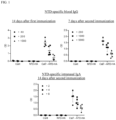
- the upper respiratory tracts of mice were previously infected with Cal7 to thereby create a situation in which the mice have an antibody against an influenza virus as well as adults. Specifically, the upper respiratory tracts of mice were infected with Cal7, and 30 days and 51 days after infection, the mice were nasally immunized with NTD-HA (Cal7-NTD-HA). Unvaccinated mice were used as controls (Cont).
- mice that were not infected with Cal7 and were nasally immunized with NTD-HA were also prepared (NTD-HA).
- NTD-HA phosphate buffered saline
- PBS phosphate buffered saline
- Blood was collected 44 days after infection (14 days after the first immunization) and 58 days after infection (7 days after the second immunization), and NTD-specific IgG in plasma was evaluated by ELISA.
- nasal cavity wash specimens were collected 65 days after infection (14 days after the second immunization), and NTD-specific IgA in the nasal cavity was evaluated by ELISA.
- Fig. 1 The results of induction of NTD-specific IgG in plasma and the results of induction of NTD-specific IgA in the nasal cavity are shown in Fig. 1 .
- the magnification shown in Fig. 1 indicates the dilution rate of the plasma or the dilution rate of the nasal cavity wash specimen (the same applies to the following graphs).
- Fig. 1 when mice were nasally immunized with NTD-HA after infection with Cal7, NTD-specific blood IgG and NTD-specific intranasal IgA were observed without using an adjuvant.
- mice having no history of infection with influenza virus were nasally immunized with NTD-HA, no antibody titer was observed.
- a receptor binding domain (RBD) of an S protein derived from a novel coronavirus was used as a target antigen, and RBD-PspA, which is a fusion protein of RBD and PspA, was used as a vaccine antigen.
- RBD-PspA which is a fusion protein of RBD and PspA.
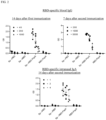
- the upper respiratory tracts of mice were previously infected with Streptococcus pneumoniae to thereby create a situation in which the mice have an antibody against Streptococcus pneumoniae. Specifically, the upper respiratory tracts of mice were infected with Streptococcus pneumoniae, and 30 days and 51 days after infection, the mice were nasally immunized with RBD or RBD-PspA (Sp ⁇ RBD or Sp ⁇ RBD-PspA, respectively).
- mice infected with Streptococcus pneumoniae but not vaccinated were used as controls (Sp ⁇ PBS).
- mice that were not infected with Streptococcus pneumoniae and were nasally immunized with RBD-PspA were also prepared (RBD-PspA).
- RBD-PspA phosphate buffered saline
- PBS phosphate buffered saline
- Blood was collected 44 days after infection (14 days after the first immunization) and 58 days after infection (7 days after the second immunization), and RBD-specific IgG in plasma was evaluated by ELISA.
- nasal cavity wash specimens were collected 65 days after infection (14 days after the second immunization) and RBD-specific IgA in the nasal cavity was evaluated by ELISA.
- FIG. 2 The results of induction of RBD-specific IgG in plasma and the results of induction of RBD-specific IgA in the nasal cavity are shown in Fig. 2 .
- Fig. 2 when mice were nasally immunized with RBD-PspA after infection with Streptococcus pneumoniae, RBD-specific blood IgG and RBD-specific intranasal IgA were observed without using an adjuvant.
- mice having no history of infection with Streptococcus pneumoniae were nasally immunized with RBD-PspA, no antibody titer was observed.
- G-HA which is a fusion protein of a G protein conserved region and HA
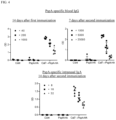
- the upper respiratory tracts of mice were previously infected with Cal7 to thereby create a situation in which the mice have an antibody against an influenza virus as well as adults. Specifically, the upper respiratory tracts of mice were infected with Cal7, and 30 days and 51 days after infection, the mice were nasally immunized with G-HA (Cal7-G-HA). Unvaccinated mice were used as controls (Cont). In addition, mice that were not infected with Cal7 and were nasally immunized with G-HA were also prepared (G-HA).
- phosphate buffered saline PBS
- Blood was collected 44 days after infection (14 days after the first immunization) and 58 days after infection (7 days after the second immunization), and G protein-specific IgG in plasma was evaluated by ELISA.
- nasal cavity wash specimens were collected 65 days after infection (14 days after the second immunization), and G protein-specific IgA in the nasal cavity was evaluated by ELISA.
- Fig. 3 The results of induction of G protein-specific IgG in plasma and the results of induction of G protein-specific IgA in the nasal cavity are shown in Fig. 3 .
- Fig. 3 when mice were nasally immunized with G-HA after infection with Cal7, G protein-specific blood IgG and G protein-specific intranasal IgA were observed without using an adjuvant.
- mice having no history of infection with influenza virus were nasally immunized with G-HA, no antibody titer was observed.
- PspA derived from Streptococcus pneumoniae was used as a target antigen
- PspA-HA which is a fusion protein of PspA and HA
- the upper respiratory tracts of mice were previously infected with Cal7 to thereby create a situation in which the mice have an antibody against an influenza virus as well as adults. Specifically, the upper respiratory tracts of mice were infected with Cal7, and 30 days and 51 days after infection, the mice were nasally immunized with PspA-HA (Cal7 ⁇ PspA-HA). Unvaccinated mice were used as controls (Cont).
- mice that were not infected with Cal7 and were nasally immunized with PspA-HA were also prepared (PspA-HA).
- PBS phosphate buffered saline
- nasal cavity wash specimens were collected 65 days after infection (14 days after the second immunization) and PspA-specific IgA in the nasal cavity was evaluated by ELISA.
- Fig. 4 The results of induction of PspA-specific IgG in plasma and the results of induction of PspA-specific IgA in the nasal cavity are shown in Fig. 4 .
- Fig. 4 when mice were nasally immunized with PspA-HA after infection with Cal7, PspA-specific blood IgG and PspA-specific intranasal IgA were observed without using an adjuvant.
- mice having no history of infection with influenza virus were nasally immunized with PspA-HA, no antibody titer was observed.
- PspA derived from Streptococcus pneumoniae was used as a target antigen
- PspA-HA which is a fusion protein of PspA and HA
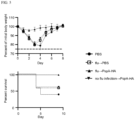
- the upper respiratory tracts of mice were previously infected with Cal7 to thereby create a situation in which the mice have an antibody against an influenza virus as well as adults. Specifically, the upper respiratory tracts of mice were infected with Cal7, and 30 days and 51 days after infection, the mice were nasally immunized with PspA-HA (flu ⁇ PspA-HA). Unvaccinated mice were used as controls (flu ⁇ PBS).
- mice that were not infected with Cal7 and were nasally immunized with PspA-HA were also prepared (no flu infection ⁇ PspA-HA).
- the lower respiratory tracts of mice were infected with Streptococcus pneumoniae 65 days after infection (14 days after the second immunization), and the vaccine effect was evaluated using the body weight loss and the survival rate as indices.
- mice were infected with Streptococcus pneumoniae after nasal immunization with PspA-HA, in the group (flu ⁇ PspA-HA) in which mice suffering from influenza virus were nasally immunized with PspA-HA, the body weight loss was hardly observed as compared with the control group (flu ⁇ PBS) and the group (no flu infection ⁇ PspA-HA) in which mice having no history of influenza virus were nasally immunized with PspA-HA.
- the survival of all the mice was confirmed in the group in which the mice having a history of influenza virus were nasally immunized with PspA-HA, whereas the survival rate decreased to 40% and 60% in the control group (flu ⁇ PBS) and the group in which the mice having no history of influenza virus were nasally immunized with PBS and PspA-HA, respectively (PBS and no flu infection ⁇ PspA-HA).
Landscapes
- Health & Medical Sciences (AREA)
- Life Sciences & Earth Sciences (AREA)
- Chemical & Material Sciences (AREA)
- Organic Chemistry (AREA)
- General Health & Medical Sciences (AREA)
- Medicinal Chemistry (AREA)
- Genetics & Genomics (AREA)
- Virology (AREA)
- Veterinary Medicine (AREA)
- Public Health (AREA)
- Animal Behavior & Ethology (AREA)
- Pharmacology & Pharmacy (AREA)
- Molecular Biology (AREA)
- Microbiology (AREA)
- Engineering & Computer Science (AREA)
- Biochemistry (AREA)
- Epidemiology (AREA)
- Mycology (AREA)
- Immunology (AREA)
- Bioinformatics & Cheminformatics (AREA)
- Zoology (AREA)
- Wood Science & Technology (AREA)
- Communicable Diseases (AREA)
- Biophysics (AREA)
- Biomedical Technology (AREA)
- Chemical Kinetics & Catalysis (AREA)
- Proteomics, Peptides & Aminoacids (AREA)
- Gastroenterology & Hepatology (AREA)
- Oncology (AREA)
- General Chemical & Material Sciences (AREA)
- Nuclear Medicine, Radiotherapy & Molecular Imaging (AREA)
- Biotechnology (AREA)
- General Engineering & Computer Science (AREA)
- Pulmonology (AREA)
- Physics & Mathematics (AREA)
- Plant Pathology (AREA)
- Peptides Or Proteins (AREA)
- Medicines Containing Antibodies Or Antigens For Use As Internal Diagnostic Agents (AREA)
Applications Claiming Priority (2)
| Application Number | Priority Date | Filing Date | Title |
|---|---|---|---|
| JP2022057799 | 2022-03-31 | ||
| PCT/JP2023/013408 WO2023190998A1 (fr) | 2022-03-31 | 2023-03-30 | Protéine de fusion et vaccin |
Publications (1)
| Publication Number | Publication Date |
|---|---|
| EP4501947A1 true EP4501947A1 (fr) | 2025-02-05 |
Family
ID=88202133
Family Applications (1)
| Application Number | Title | Priority Date | Filing Date |
|---|---|---|---|
| EP23781006.4A Pending EP4501947A1 (fr) | 2022-03-31 | 2023-03-30 | Protéine de fusion et vaccin |
Country Status (4)
| Country | Link |
|---|---|
| US (1) | US20260041751A1 (fr) |
| EP (1) | EP4501947A1 (fr) |
| JP (1) | JPWO2023190998A1 (fr) |
| WO (1) | WO2023190998A1 (fr) |
Family Cites Families (4)
| Publication number | Priority date | Publication date | Assignee | Title |
|---|---|---|---|---|
| US8992939B2 (en) * | 2003-07-11 | 2015-03-31 | Novavax, Inc. | Highly efficient influenza matrix (M1) proteins |
| WO2016109656A1 (fr) * | 2014-12-30 | 2016-07-07 | Georgia State University Research Foundation, Inc. | Vaccins antigrippal recombinés contre le virus de la grippe et le virus respiratoire syncytial |
| JP2022064869A (ja) * | 2020-10-14 | 2022-04-26 | 一般財団法人阪大微生物病研究会 | 多価ワクチン抗原及びポリクローナル抗体 |
| US20240091341A1 (en) * | 2020-10-19 | 2024-03-21 | The Research Foundation For Microbial Diseases Of Osaka University | Fusion protein and vaccine |
-
2023
- 2023-03-30 EP EP23781006.4A patent/EP4501947A1/fr active Pending
- 2023-03-30 WO PCT/JP2023/013408 patent/WO2023190998A1/fr not_active Ceased
- 2023-03-30 US US18/852,392 patent/US20260041751A1/en active Pending
- 2023-03-30 JP JP2024512865A patent/JPWO2023190998A1/ja active Pending
Also Published As
| Publication number | Publication date |
|---|---|
| JPWO2023190998A1 (fr) | 2023-10-05 |
| WO2023190998A1 (fr) | 2023-10-05 |
| WO2023190998A8 (fr) | 2024-07-11 |
| US20260041751A1 (en) | 2026-02-12 |
Similar Documents
| Publication | Publication Date | Title |
|---|---|---|
| US10369211B2 (en) | Influenza H5 vaccines | |
| US6685946B2 (en) | Cold-adapted equine influenza viruses | |
| WO2012054907A2 (fr) | Nouvelles protéines d'hémagglutinine 5 (h5) pour le traitement et la prévention d'infections par la grippe | |
| US20100145015A1 (en) | Compositions and methods for increasing immunogenicity of glycoprotein vaccines | |
| EP3699186A1 (fr) | Mutant de protéine hémagglutinine du virus de la grippe de sous-type h3n2 et son utilisation | |
| KR20150036685A (ko) | 약독화된 돼지 인플루엔자 백신 및 이의 제조 방법 및 용도 | |
| EP4230657A1 (fr) | Protéine de fusion et vaccin | |
| CN101300023A (zh) | 用于治疗/预防流感病原体在物种间传播的疫苗的用途 | |
| WO1993015763A1 (fr) | Polypeptides de vaccination | |
| EP4501947A1 (fr) | Protéine de fusion et vaccin | |
| CN101015691B (zh) | 重组噬菌体流感疫苗 | |
| CN118530314B (zh) | 广谱型流感疫苗抗原片段、重组益生菌及应用 | |
| EP2958586B1 (fr) | Protéines h5 du virus de la grippe h5n1 pour utilisation en tant que médicament | |
| EP1005487B1 (fr) | Proteine 74 kilodalton de membrane externe provenant de moraxella catarrhalis | |
| KR102812333B1 (ko) | 외래 항원을 발현하는 재조합 인플루엔자 바이러스 벡터 및 이를 포함하는 백신 조성물 | |
| CN113248575B (zh) | 一种针对SARS-CoV-2的重组蛋白疫苗及其制备方法 | |
| AU704703B2 (en) | Respiratory syncytial virus protein G expressed on bacterial membrane | |
| KR20190039065A (ko) | 조작된 인플루엔자 헤마글루티닌 폴리펩티드의 변형 | |
| KR20220040423A (ko) | 재조합 단백질을 포함하는 사스-코로나바이러스-2 감염증 예방 또는 치료용 백신 조성물 | |
| HUT54732A (en) | Process for producing vaccine polypeptides | |
| RU2776196C1 (ru) | Штамм вируса гриппа ИнфлюБакт-H7/PspA для производства комбинированной вакцины против вируса гриппа А и бактериальной пневмонии, вызываемой Streptococcus pneumoniae | |
| EP4375290A1 (fr) | Vecteur d'expression de protéine de spicule recombinante de variant de la covid-19 d'origine végétale et protéine recombinante l'utilisant | |
| US20240316184A1 (en) | Plant-based covid-19 variant recombinant spike protein expression vector and recombinant protein using same | |
| KR20250031238A (ko) | 외래 항원을 발현하는 재조합 인플루엔자 바이러스 벡터 및 이를 포함하는 백신 조성물 | |
| CN113461828A (zh) | 针对2019-nCoV的重组蛋白疫苗及其制备方法 |
Legal Events
| Date | Code | Title | Description |
|---|---|---|---|
| STAA | Information on the status of an ep patent application or granted ep patent |
Free format text: STATUS: THE INTERNATIONAL PUBLICATION HAS BEEN MADE |
|
| PUAI | Public reference made under article 153(3) epc to a published international application that has entered the european phase |
Free format text: ORIGINAL CODE: 0009012 |
|
| STAA | Information on the status of an ep patent application or granted ep patent |
Free format text: STATUS: REQUEST FOR EXAMINATION WAS MADE |
|
| 17P | Request for examination filed |
Effective date: 20240926 |
|
| AK | Designated contracting states |
Kind code of ref document: A1 Designated state(s): AL AT BE BG CH CY CZ DE DK EE ES FI FR GB GR HR HU IE IS IT LI LT LU LV MC ME MK MT NL NO PL PT RO RS SE SI SK SM TR |
|
| DAV | Request for validation of the european patent (deleted) | ||
| DAX | Request for extension of the european patent (deleted) |