EP4234736B1 - Tôle d'acier plaquée - Google Patents
Tôle d'acier plaquée Download PDFInfo
- Publication number
- EP4234736B1 EP4234736B1 EP21882428.2A EP21882428A EP4234736B1 EP 4234736 B1 EP4234736 B1 EP 4234736B1 EP 21882428 A EP21882428 A EP 21882428A EP 4234736 B1 EP4234736 B1 EP 4234736B1
- Authority
- EP
- European Patent Office
- Prior art keywords
- steel sheet
- phase
- plating layer
- plated steel
- plating
- Prior art date
- Legal status (The legal status is an assumption and is not a legal conclusion. Google has not performed a legal analysis and makes no representation as to the accuracy of the status listed.)
- Active
Links
Images
Classifications
-
- B—PERFORMING OPERATIONS; TRANSPORTING
- B32—LAYERED PRODUCTS
- B32B—LAYERED PRODUCTS, i.e. PRODUCTS BUILT-UP OF STRATA OF FLAT OR NON-FLAT, e.g. CELLULAR OR HONEYCOMB, FORM
- B32B15/00—Layered products comprising a layer of metal
- B32B15/01—Layered products comprising a layer of metal all layers being exclusively metallic
- B32B15/012—Layered products comprising a layer of metal all layers being exclusively metallic one layer being formed of an iron alloy or steel, another layer being formed of aluminium or an aluminium alloy
-
- B—PERFORMING OPERATIONS; TRANSPORTING
- B32—LAYERED PRODUCTS
- B32B—LAYERED PRODUCTS, i.e. PRODUCTS BUILT-UP OF STRATA OF FLAT OR NON-FLAT, e.g. CELLULAR OR HONEYCOMB, FORM
- B32B15/00—Layered products comprising a layer of metal
- B32B15/01—Layered products comprising a layer of metal all layers being exclusively metallic
- B32B15/013—Layered products comprising a layer of metal all layers being exclusively metallic one layer being formed of an iron alloy or steel, another layer being formed of a metal other than iron or aluminium
-
- B—PERFORMING OPERATIONS; TRANSPORTING
- B32—LAYERED PRODUCTS
- B32B—LAYERED PRODUCTS, i.e. PRODUCTS BUILT-UP OF STRATA OF FLAT OR NON-FLAT, e.g. CELLULAR OR HONEYCOMB, FORM
- B32B15/00—Layered products comprising a layer of metal
- B32B15/04—Layered products comprising a layer of metal comprising metal as the main or only constituent of a layer, which is next to another layer of the same or of a different material
-
- B—PERFORMING OPERATIONS; TRANSPORTING
- B32—LAYERED PRODUCTS
- B32B—LAYERED PRODUCTS, i.e. PRODUCTS BUILT-UP OF STRATA OF FLAT OR NON-FLAT, e.g. CELLULAR OR HONEYCOMB, FORM
- B32B15/00—Layered products comprising a layer of metal
- B32B15/04—Layered products comprising a layer of metal comprising metal as the main or only constituent of a layer, which is next to another layer of the same or of a different material
- B32B15/043—Layered products comprising a layer of metal comprising metal as the main or only constituent of a layer, which is next to another layer of the same or of a different material of metal
-
- B—PERFORMING OPERATIONS; TRANSPORTING
- B32—LAYERED PRODUCTS
- B32B—LAYERED PRODUCTS, i.e. PRODUCTS BUILT-UP OF STRATA OF FLAT OR NON-FLAT, e.g. CELLULAR OR HONEYCOMB, FORM
- B32B15/00—Layered products comprising a layer of metal
- B32B15/18—Layered products comprising a layer of metal comprising iron or steel
-
- C—CHEMISTRY; METALLURGY
- C21—METALLURGY OF IRON
- C21D—MODIFYING THE PHYSICAL STRUCTURE OF FERROUS METALS; GENERAL DEVICES FOR HEAT TREATMENT OF FERROUS OR NON-FERROUS METALS OR ALLOYS; MAKING METAL MALLEABLE, e.g. BY DECARBURISATION OR TEMPERING
- C21D9/00—Heat treatment, e.g. annealing, hardening, quenching or tempering, adapted for particular articles; Furnaces therefor
- C21D9/46—Heat treatment, e.g. annealing, hardening, quenching or tempering, adapted for particular articles; Furnaces therefor for sheet metals
-
- C—CHEMISTRY; METALLURGY
- C22—METALLURGY; FERROUS OR NON-FERROUS ALLOYS; TREATMENT OF ALLOYS OR NON-FERROUS METALS
- C22C—ALLOYS
- C22C18/00—Alloys based on zinc
-
- C—CHEMISTRY; METALLURGY
- C22—METALLURGY; FERROUS OR NON-FERROUS ALLOYS; TREATMENT OF ALLOYS OR NON-FERROUS METALS
- C22C—ALLOYS
- C22C18/00—Alloys based on zinc
- C22C18/04—Alloys based on zinc with aluminium as the next major constituent
-
- C—CHEMISTRY; METALLURGY
- C22—METALLURGY; FERROUS OR NON-FERROUS ALLOYS; TREATMENT OF ALLOYS OR NON-FERROUS METALS
- C22C—ALLOYS
- C22C21/00—Alloys based on aluminium
-
- C—CHEMISTRY; METALLURGY
- C22—METALLURGY; FERROUS OR NON-FERROUS ALLOYS; TREATMENT OF ALLOYS OR NON-FERROUS METALS
- C22C—ALLOYS
- C22C38/00—Ferrous alloys, e.g. steel alloys
-
- C—CHEMISTRY; METALLURGY
- C22—METALLURGY; FERROUS OR NON-FERROUS ALLOYS; TREATMENT OF ALLOYS OR NON-FERROUS METALS
- C22C—ALLOYS
- C22C38/00—Ferrous alloys, e.g. steel alloys
- C22C38/02—Ferrous alloys, e.g. steel alloys containing silicon
-
- C—CHEMISTRY; METALLURGY
- C22—METALLURGY; FERROUS OR NON-FERROUS ALLOYS; TREATMENT OF ALLOYS OR NON-FERROUS METALS
- C22C—ALLOYS
- C22C38/00—Ferrous alloys, e.g. steel alloys
- C22C38/04—Ferrous alloys, e.g. steel alloys containing manganese
-
- C—CHEMISTRY; METALLURGY
- C22—METALLURGY; FERROUS OR NON-FERROUS ALLOYS; TREATMENT OF ALLOYS OR NON-FERROUS METALS
- C22C—ALLOYS
- C22C38/00—Ferrous alloys, e.g. steel alloys
- C22C38/06—Ferrous alloys, e.g. steel alloys containing aluminium
-
- C—CHEMISTRY; METALLURGY
- C23—COATING METALLIC MATERIAL; COATING MATERIAL WITH METALLIC MATERIAL; CHEMICAL SURFACE TREATMENT; DIFFUSION TREATMENT OF METALLIC MATERIAL; COATING BY VACUUM EVAPORATION, BY SPUTTERING, BY ION IMPLANTATION OR BY CHEMICAL VAPOUR DEPOSITION, IN GENERAL; INHIBITING CORROSION OF METALLIC MATERIAL OR INCRUSTATION IN GENERAL
- C23C—COATING METALLIC MATERIAL; COATING MATERIAL WITH METALLIC MATERIAL; SURFACE TREATMENT OF METALLIC MATERIAL BY DIFFUSION INTO THE SURFACE, BY CHEMICAL CONVERSION OR SUBSTITUTION; COATING BY VACUUM EVAPORATION, BY SPUTTERING, BY ION IMPLANTATION OR BY CHEMICAL VAPOUR DEPOSITION, IN GENERAL
- C23C2/00—Hot-dipping or immersion processes for applying the coating material in the molten state without affecting the shape; Apparatus therefor
- C23C2/02—Pretreatment of the material to be coated, e.g. for coating on selected surface areas
-
- C—CHEMISTRY; METALLURGY
- C23—COATING METALLIC MATERIAL; COATING MATERIAL WITH METALLIC MATERIAL; CHEMICAL SURFACE TREATMENT; DIFFUSION TREATMENT OF METALLIC MATERIAL; COATING BY VACUUM EVAPORATION, BY SPUTTERING, BY ION IMPLANTATION OR BY CHEMICAL VAPOUR DEPOSITION, IN GENERAL; INHIBITING CORROSION OF METALLIC MATERIAL OR INCRUSTATION IN GENERAL
- C23C—COATING METALLIC MATERIAL; COATING MATERIAL WITH METALLIC MATERIAL; SURFACE TREATMENT OF METALLIC MATERIAL BY DIFFUSION INTO THE SURFACE, BY CHEMICAL CONVERSION OR SUBSTITUTION; COATING BY VACUUM EVAPORATION, BY SPUTTERING, BY ION IMPLANTATION OR BY CHEMICAL VAPOUR DEPOSITION, IN GENERAL
- C23C2/00—Hot-dipping or immersion processes for applying the coating material in the molten state without affecting the shape; Apparatus therefor
- C23C2/02—Pretreatment of the material to be coated, e.g. for coating on selected surface areas
- C23C2/022—Pretreatment of the material to be coated, e.g. for coating on selected surface areas by heating
-
- C—CHEMISTRY; METALLURGY
- C23—COATING METALLIC MATERIAL; COATING MATERIAL WITH METALLIC MATERIAL; CHEMICAL SURFACE TREATMENT; DIFFUSION TREATMENT OF METALLIC MATERIAL; COATING BY VACUUM EVAPORATION, BY SPUTTERING, BY ION IMPLANTATION OR BY CHEMICAL VAPOUR DEPOSITION, IN GENERAL; INHIBITING CORROSION OF METALLIC MATERIAL OR INCRUSTATION IN GENERAL
- C23C—COATING METALLIC MATERIAL; COATING MATERIAL WITH METALLIC MATERIAL; SURFACE TREATMENT OF METALLIC MATERIAL BY DIFFUSION INTO THE SURFACE, BY CHEMICAL CONVERSION OR SUBSTITUTION; COATING BY VACUUM EVAPORATION, BY SPUTTERING, BY ION IMPLANTATION OR BY CHEMICAL VAPOUR DEPOSITION, IN GENERAL
- C23C2/00—Hot-dipping or immersion processes for applying the coating material in the molten state without affecting the shape; Apparatus therefor
- C23C2/04—Hot-dipping or immersion processes for applying the coating material in the molten state without affecting the shape; Apparatus therefor characterised by the coating material
- C23C2/06—Zinc or cadmium or alloys based thereon
-
- C—CHEMISTRY; METALLURGY
- C23—COATING METALLIC MATERIAL; COATING MATERIAL WITH METALLIC MATERIAL; CHEMICAL SURFACE TREATMENT; DIFFUSION TREATMENT OF METALLIC MATERIAL; COATING BY VACUUM EVAPORATION, BY SPUTTERING, BY ION IMPLANTATION OR BY CHEMICAL VAPOUR DEPOSITION, IN GENERAL; INHIBITING CORROSION OF METALLIC MATERIAL OR INCRUSTATION IN GENERAL
- C23C—COATING METALLIC MATERIAL; COATING MATERIAL WITH METALLIC MATERIAL; SURFACE TREATMENT OF METALLIC MATERIAL BY DIFFUSION INTO THE SURFACE, BY CHEMICAL CONVERSION OR SUBSTITUTION; COATING BY VACUUM EVAPORATION, BY SPUTTERING, BY ION IMPLANTATION OR BY CHEMICAL VAPOUR DEPOSITION, IN GENERAL
- C23C2/00—Hot-dipping or immersion processes for applying the coating material in the molten state without affecting the shape; Apparatus therefor
- C23C2/04—Hot-dipping or immersion processes for applying the coating material in the molten state without affecting the shape; Apparatus therefor characterised by the coating material
- C23C2/12—Aluminium or alloys based thereon
-
- C—CHEMISTRY; METALLURGY
- C23—COATING METALLIC MATERIAL; COATING MATERIAL WITH METALLIC MATERIAL; CHEMICAL SURFACE TREATMENT; DIFFUSION TREATMENT OF METALLIC MATERIAL; COATING BY VACUUM EVAPORATION, BY SPUTTERING, BY ION IMPLANTATION OR BY CHEMICAL VAPOUR DEPOSITION, IN GENERAL; INHIBITING CORROSION OF METALLIC MATERIAL OR INCRUSTATION IN GENERAL
- C23C—COATING METALLIC MATERIAL; COATING MATERIAL WITH METALLIC MATERIAL; SURFACE TREATMENT OF METALLIC MATERIAL BY DIFFUSION INTO THE SURFACE, BY CHEMICAL CONVERSION OR SUBSTITUTION; COATING BY VACUUM EVAPORATION, BY SPUTTERING, BY ION IMPLANTATION OR BY CHEMICAL VAPOUR DEPOSITION, IN GENERAL
- C23C2/00—Hot-dipping or immersion processes for applying the coating material in the molten state without affecting the shape; Apparatus therefor
- C23C2/26—After-treatment
-
- C—CHEMISTRY; METALLURGY
- C23—COATING METALLIC MATERIAL; COATING MATERIAL WITH METALLIC MATERIAL; CHEMICAL SURFACE TREATMENT; DIFFUSION TREATMENT OF METALLIC MATERIAL; COATING BY VACUUM EVAPORATION, BY SPUTTERING, BY ION IMPLANTATION OR BY CHEMICAL VAPOUR DEPOSITION, IN GENERAL; INHIBITING CORROSION OF METALLIC MATERIAL OR INCRUSTATION IN GENERAL
- C23C—COATING METALLIC MATERIAL; COATING MATERIAL WITH METALLIC MATERIAL; SURFACE TREATMENT OF METALLIC MATERIAL BY DIFFUSION INTO THE SURFACE, BY CHEMICAL CONVERSION OR SUBSTITUTION; COATING BY VACUUM EVAPORATION, BY SPUTTERING, BY ION IMPLANTATION OR BY CHEMICAL VAPOUR DEPOSITION, IN GENERAL
- C23C2/00—Hot-dipping or immersion processes for applying the coating material in the molten state without affecting the shape; Apparatus therefor
- C23C2/26—After-treatment
- C23C2/28—Thermal after-treatment, e.g. treatment in oil bath
-
- C—CHEMISTRY; METALLURGY
- C23—COATING METALLIC MATERIAL; COATING MATERIAL WITH METALLIC MATERIAL; CHEMICAL SURFACE TREATMENT; DIFFUSION TREATMENT OF METALLIC MATERIAL; COATING BY VACUUM EVAPORATION, BY SPUTTERING, BY ION IMPLANTATION OR BY CHEMICAL VAPOUR DEPOSITION, IN GENERAL; INHIBITING CORROSION OF METALLIC MATERIAL OR INCRUSTATION IN GENERAL
- C23C—COATING METALLIC MATERIAL; COATING MATERIAL WITH METALLIC MATERIAL; SURFACE TREATMENT OF METALLIC MATERIAL BY DIFFUSION INTO THE SURFACE, BY CHEMICAL CONVERSION OR SUBSTITUTION; COATING BY VACUUM EVAPORATION, BY SPUTTERING, BY ION IMPLANTATION OR BY CHEMICAL VAPOUR DEPOSITION, IN GENERAL
- C23C2/00—Hot-dipping or immersion processes for applying the coating material in the molten state without affecting the shape; Apparatus therefor
- C23C2/26—After-treatment
- C23C2/28—Thermal after-treatment, e.g. treatment in oil bath
- C23C2/285—Thermal after-treatment, e.g. treatment in oil bath for remelting the coating
-
- C—CHEMISTRY; METALLURGY
- C23—COATING METALLIC MATERIAL; COATING MATERIAL WITH METALLIC MATERIAL; CHEMICAL SURFACE TREATMENT; DIFFUSION TREATMENT OF METALLIC MATERIAL; COATING BY VACUUM EVAPORATION, BY SPUTTERING, BY ION IMPLANTATION OR BY CHEMICAL VAPOUR DEPOSITION, IN GENERAL; INHIBITING CORROSION OF METALLIC MATERIAL OR INCRUSTATION IN GENERAL
- C23C—COATING METALLIC MATERIAL; COATING MATERIAL WITH METALLIC MATERIAL; SURFACE TREATMENT OF METALLIC MATERIAL BY DIFFUSION INTO THE SURFACE, BY CHEMICAL CONVERSION OR SUBSTITUTION; COATING BY VACUUM EVAPORATION, BY SPUTTERING, BY ION IMPLANTATION OR BY CHEMICAL VAPOUR DEPOSITION, IN GENERAL
- C23C2/00—Hot-dipping or immersion processes for applying the coating material in the molten state without affecting the shape; Apparatus therefor
- C23C2/26—After-treatment
- C23C2/28—Thermal after-treatment, e.g. treatment in oil bath
- C23C2/29—Cooling or quenching
-
- C—CHEMISTRY; METALLURGY
- C23—COATING METALLIC MATERIAL; COATING MATERIAL WITH METALLIC MATERIAL; CHEMICAL SURFACE TREATMENT; DIFFUSION TREATMENT OF METALLIC MATERIAL; COATING BY VACUUM EVAPORATION, BY SPUTTERING, BY ION IMPLANTATION OR BY CHEMICAL VAPOUR DEPOSITION, IN GENERAL; INHIBITING CORROSION OF METALLIC MATERIAL OR INCRUSTATION IN GENERAL
- C23C—COATING METALLIC MATERIAL; COATING MATERIAL WITH METALLIC MATERIAL; SURFACE TREATMENT OF METALLIC MATERIAL BY DIFFUSION INTO THE SURFACE, BY CHEMICAL CONVERSION OR SUBSTITUTION; COATING BY VACUUM EVAPORATION, BY SPUTTERING, BY ION IMPLANTATION OR BY CHEMICAL VAPOUR DEPOSITION, IN GENERAL
- C23C2/00—Hot-dipping or immersion processes for applying the coating material in the molten state without affecting the shape; Apparatus therefor
- C23C2/34—Hot-dipping or immersion processes for applying the coating material in the molten state without affecting the shape; Apparatus therefor characterised by the shape of the material to be treated
- C23C2/36—Elongated material
- C23C2/40—Plates; Strips
-
- C—CHEMISTRY; METALLURGY
- C23—COATING METALLIC MATERIAL; COATING MATERIAL WITH METALLIC MATERIAL; CHEMICAL SURFACE TREATMENT; DIFFUSION TREATMENT OF METALLIC MATERIAL; COATING BY VACUUM EVAPORATION, BY SPUTTERING, BY ION IMPLANTATION OR BY CHEMICAL VAPOUR DEPOSITION, IN GENERAL; INHIBITING CORROSION OF METALLIC MATERIAL OR INCRUSTATION IN GENERAL
- C23C—COATING METALLIC MATERIAL; COATING MATERIAL WITH METALLIC MATERIAL; SURFACE TREATMENT OF METALLIC MATERIAL BY DIFFUSION INTO THE SURFACE, BY CHEMICAL CONVERSION OR SUBSTITUTION; COATING BY VACUUM EVAPORATION, BY SPUTTERING, BY ION IMPLANTATION OR BY CHEMICAL VAPOUR DEPOSITION, IN GENERAL
- C23C30/00—Coating with metallic material characterised only by the composition of the metallic material, i.e. not characterised by the coating process
-
- C—CHEMISTRY; METALLURGY
- C23—COATING METALLIC MATERIAL; COATING MATERIAL WITH METALLIC MATERIAL; CHEMICAL SURFACE TREATMENT; DIFFUSION TREATMENT OF METALLIC MATERIAL; COATING BY VACUUM EVAPORATION, BY SPUTTERING, BY ION IMPLANTATION OR BY CHEMICAL VAPOUR DEPOSITION, IN GENERAL; INHIBITING CORROSION OF METALLIC MATERIAL OR INCRUSTATION IN GENERAL
- C23C—COATING METALLIC MATERIAL; COATING MATERIAL WITH METALLIC MATERIAL; SURFACE TREATMENT OF METALLIC MATERIAL BY DIFFUSION INTO THE SURFACE, BY CHEMICAL CONVERSION OR SUBSTITUTION; COATING BY VACUUM EVAPORATION, BY SPUTTERING, BY ION IMPLANTATION OR BY CHEMICAL VAPOUR DEPOSITION, IN GENERAL
- C23C30/00—Coating with metallic material characterised only by the composition of the metallic material, i.e. not characterised by the coating process
- C23C30/005—Coating with metallic material characterised only by the composition of the metallic material, i.e. not characterised by the coating process on hard metal substrates
-
- Y—GENERAL TAGGING OF NEW TECHNOLOGICAL DEVELOPMENTS; GENERAL TAGGING OF CROSS-SECTIONAL TECHNOLOGIES SPANNING OVER SEVERAL SECTIONS OF THE IPC; TECHNICAL SUBJECTS COVERED BY FORMER USPC CROSS-REFERENCE ART COLLECTIONS [XRACs] AND DIGESTS
- Y10—TECHNICAL SUBJECTS COVERED BY FORMER USPC
- Y10T—TECHNICAL SUBJECTS COVERED BY FORMER US CLASSIFICATION
- Y10T428/00—Stock material or miscellaneous articles
- Y10T428/12—All metal or with adjacent metals
- Y10T428/12493—Composite; i.e., plural, adjacent, spatially distinct metal components [e.g., layers, joint, etc.]
- Y10T428/12535—Composite; i.e., plural, adjacent, spatially distinct metal components [e.g., layers, joint, etc.] with additional, spatially distinct nonmetal component
- Y10T428/12583—Component contains compound of adjacent metal
- Y10T428/1259—Oxide
-
- Y—GENERAL TAGGING OF NEW TECHNOLOGICAL DEVELOPMENTS; GENERAL TAGGING OF CROSS-SECTIONAL TECHNOLOGIES SPANNING OVER SEVERAL SECTIONS OF THE IPC; TECHNICAL SUBJECTS COVERED BY FORMER USPC CROSS-REFERENCE ART COLLECTIONS [XRACs] AND DIGESTS
- Y10—TECHNICAL SUBJECTS COVERED BY FORMER USPC
- Y10T—TECHNICAL SUBJECTS COVERED BY FORMER US CLASSIFICATION
- Y10T428/00—Stock material or miscellaneous articles
- Y10T428/12—All metal or with adjacent metals
- Y10T428/12493—Composite; i.e., plural, adjacent, spatially distinct metal components [e.g., layers, joint, etc.]
- Y10T428/1266—O, S, or organic compound in metal component
- Y10T428/12667—Oxide of transition metal or Al
-
- Y—GENERAL TAGGING OF NEW TECHNOLOGICAL DEVELOPMENTS; GENERAL TAGGING OF CROSS-SECTIONAL TECHNOLOGIES SPANNING OVER SEVERAL SECTIONS OF THE IPC; TECHNICAL SUBJECTS COVERED BY FORMER USPC CROSS-REFERENCE ART COLLECTIONS [XRACs] AND DIGESTS
- Y10—TECHNICAL SUBJECTS COVERED BY FORMER USPC
- Y10T—TECHNICAL SUBJECTS COVERED BY FORMER US CLASSIFICATION
- Y10T428/00—Stock material or miscellaneous articles
- Y10T428/12—All metal or with adjacent metals
- Y10T428/12493—Composite; i.e., plural, adjacent, spatially distinct metal components [e.g., layers, joint, etc.]
- Y10T428/12736—Al-base component
- Y10T428/1275—Next to Group VIII or IB metal-base component
- Y10T428/12757—Fe
-
- Y—GENERAL TAGGING OF NEW TECHNOLOGICAL DEVELOPMENTS; GENERAL TAGGING OF CROSS-SECTIONAL TECHNOLOGIES SPANNING OVER SEVERAL SECTIONS OF THE IPC; TECHNICAL SUBJECTS COVERED BY FORMER USPC CROSS-REFERENCE ART COLLECTIONS [XRACs] AND DIGESTS
- Y10—TECHNICAL SUBJECTS COVERED BY FORMER USPC
- Y10T—TECHNICAL SUBJECTS COVERED BY FORMER US CLASSIFICATION
- Y10T428/00—Stock material or miscellaneous articles
- Y10T428/12—All metal or with adjacent metals
- Y10T428/12493—Composite; i.e., plural, adjacent, spatially distinct metal components [e.g., layers, joint, etc.]
- Y10T428/12771—Transition metal-base component
- Y10T428/12785—Group IIB metal-base component
- Y10T428/12792—Zn-base component
- Y10T428/12799—Next to Fe-base component [e.g., galvanized]
-
- Y—GENERAL TAGGING OF NEW TECHNOLOGICAL DEVELOPMENTS; GENERAL TAGGING OF CROSS-SECTIONAL TECHNOLOGIES SPANNING OVER SEVERAL SECTIONS OF THE IPC; TECHNICAL SUBJECTS COVERED BY FORMER USPC CROSS-REFERENCE ART COLLECTIONS [XRACs] AND DIGESTS
- Y10—TECHNICAL SUBJECTS COVERED BY FORMER USPC
- Y10T—TECHNICAL SUBJECTS COVERED BY FORMER US CLASSIFICATION
- Y10T428/00—Stock material or miscellaneous articles
- Y10T428/12—All metal or with adjacent metals
- Y10T428/12493—Composite; i.e., plural, adjacent, spatially distinct metal components [e.g., layers, joint, etc.]
- Y10T428/12771—Transition metal-base component
- Y10T428/12861—Group VIII or IB metal-base component
- Y10T428/12951—Fe-base component
- Y10T428/12958—Next to Fe-base component
-
- Y—GENERAL TAGGING OF NEW TECHNOLOGICAL DEVELOPMENTS; GENERAL TAGGING OF CROSS-SECTIONAL TECHNOLOGIES SPANNING OVER SEVERAL SECTIONS OF THE IPC; TECHNICAL SUBJECTS COVERED BY FORMER USPC CROSS-REFERENCE ART COLLECTIONS [XRACs] AND DIGESTS
- Y10—TECHNICAL SUBJECTS COVERED BY FORMER USPC
- Y10T—TECHNICAL SUBJECTS COVERED BY FORMER US CLASSIFICATION
- Y10T428/00—Stock material or miscellaneous articles
- Y10T428/12—All metal or with adjacent metals
- Y10T428/12493—Composite; i.e., plural, adjacent, spatially distinct metal components [e.g., layers, joint, etc.]
- Y10T428/12771—Transition metal-base component
- Y10T428/12861—Group VIII or IB metal-base component
- Y10T428/12951—Fe-base component
- Y10T428/12972—Containing 0.01-1.7% carbon [i.e., steel]
-
- Y—GENERAL TAGGING OF NEW TECHNOLOGICAL DEVELOPMENTS; GENERAL TAGGING OF CROSS-SECTIONAL TECHNOLOGIES SPANNING OVER SEVERAL SECTIONS OF THE IPC; TECHNICAL SUBJECTS COVERED BY FORMER USPC CROSS-REFERENCE ART COLLECTIONS [XRACs] AND DIGESTS
- Y10—TECHNICAL SUBJECTS COVERED BY FORMER USPC
- Y10T—TECHNICAL SUBJECTS COVERED BY FORMER US CLASSIFICATION
- Y10T428/00—Stock material or miscellaneous articles
- Y10T428/24—Structurally defined web or sheet [e.g., overall dimension, etc.]
- Y10T428/24942—Structurally defined web or sheet [e.g., overall dimension, etc.] including components having same physical characteristic in differing degree
- Y10T428/2495—Thickness [relative or absolute]
-
- Y—GENERAL TAGGING OF NEW TECHNOLOGICAL DEVELOPMENTS; GENERAL TAGGING OF CROSS-SECTIONAL TECHNOLOGIES SPANNING OVER SEVERAL SECTIONS OF THE IPC; TECHNICAL SUBJECTS COVERED BY FORMER USPC CROSS-REFERENCE ART COLLECTIONS [XRACs] AND DIGESTS
- Y10—TECHNICAL SUBJECTS COVERED BY FORMER USPC
- Y10T—TECHNICAL SUBJECTS COVERED BY FORMER US CLASSIFICATION
- Y10T428/00—Stock material or miscellaneous articles
- Y10T428/24—Structurally defined web or sheet [e.g., overall dimension, etc.]
- Y10T428/24942—Structurally defined web or sheet [e.g., overall dimension, etc.] including components having same physical characteristic in differing degree
- Y10T428/2495—Thickness [relative or absolute]
- Y10T428/24967—Absolute thicknesses specified
-
- Y—GENERAL TAGGING OF NEW TECHNOLOGICAL DEVELOPMENTS; GENERAL TAGGING OF CROSS-SECTIONAL TECHNOLOGIES SPANNING OVER SEVERAL SECTIONS OF THE IPC; TECHNICAL SUBJECTS COVERED BY FORMER USPC CROSS-REFERENCE ART COLLECTIONS [XRACs] AND DIGESTS
- Y10—TECHNICAL SUBJECTS COVERED BY FORMER USPC
- Y10T—TECHNICAL SUBJECTS COVERED BY FORMER US CLASSIFICATION
- Y10T428/00—Stock material or miscellaneous articles
- Y10T428/26—Web or sheet containing structurally defined element or component, the element or component having a specified physical dimension
- Y10T428/263—Coating layer not in excess of 5 mils thick or equivalent
- Y10T428/264—Up to 3 mils
- Y10T428/265—1 mil or less
Definitions
- the present invention relates to a plated steel sheet.
- a plated steel sheet is used from the viewpoint of antirust, and a hot-dip galvanized steel sheet such as a galvannealed steel sheet is mainly used in the Japanese market.
- the galvannealed steel sheet is a plated steel sheet in which weldability and post-coating corrosion resistance are improved by performing an alloying heat treatment on a steel sheet after hot-dip galvanizing and diffusing Fe from the steel sheet (base steel sheet) into a plating layer.
- further improvement of corrosion resistance such as post-coating corrosion resistance or red rust resistance is required for the hot-dip galvanized steel sheet.
- Examples of a method of improving the corrosion resistance of the hot-dip galvanized steel sheet include addition of Al to a Zn-based plating.
- a hot-dip Al-Zn-based alloy plated steel sheet has been widely put into practice.
- this hot-dip Al-Zn-based alloy plated steel sheet is used as a vehicle exterior panel
- the plated steel sheet is provided to automobile manufacturers and the like in a state where it is plated in a continuous hot-dip plating facility, is processed into a panel component shape, and subsequently undergoes automotive general coating of chemical conversion treatment, further electrodeposition coating, intermediate coating, and top coating in general.
- Patent Document 1 discloses a hot-dip Zn-based plated steel sheet having excellent post-coating corrosion resistance.
- Patent Document 1 discloses that a plating layer includes Zn, Al, Mg, and Si, and when the total area ratio of a lamellar structure in which a layered Zn phase and a layered Al phase are alternately arranged in the plating layer is 5% or more, coating blistering in the coated state is suppressed.
- Patent Document 2 discloses a hot-dip Al-Zn-based alloy plated steel sheet including a plating layer, in which the plating layer includes, by mass%, Al: 25% to 90% and Sn: 0.01% to 10% and further includes 0.01% to 10% of one kind or more selected from the group consisting of Mg, Ca, and Sr.
- Patent Document 2 discloses that, since an Al oxide film formed around the ⁇ -Al phase is fractured by Sn such that the solubility of the ⁇ -Al phase increases, uniform corrosion of the plating layer in which the ⁇ -Al phase and a Zn-rich phase are dissolved occurs. As a result, selective corrosion of the Zn-rich phase can be suppressed, and post-coating corrosion resistance is improved.
- Patent Document 3 discloses a chemical conversion steel sheet including, as a substrate, a hot-dip Zn-Al-Mg alloy plated steel sheet where the proportion of [Al/Zn/Zn 2 Mg ternary eutectic structure] in an outermost surface of a plating layer is 60 area% or more, in which a surface of the plating layer is covered with a chemical conversion film.
- a component for a vehicle may be used in an environment where water accumulates and is required to have sufficient corrosion resistance even in this harsh environment.
- a Zn-Al-Mg-based plating including a predetermined amount or more of Al has excellent sacrificial protection but has a problem in post-coating corrosion resistance in that coating film peeling is likely to occur in the environment where water accumulates.
- Patent Documents 1 to 4 do not consider the post-coating corrosion resistance in the harsh environment.
- Patent Document 3 corrosion resistance is improved by controlling a configuration of the chemical conversion film.
- the Al/Zn/Zn 2 Mg ternary eutectic structure is set as a primary phase in the plating layer. Therefore, it is presumed that, when a typical chemical conversion treatment is performed, chemical convertibility is improved but post-coating corrosion resistance cannot be sufficiently obtained.
- Patent Document 5 discloses a coated steel product having a steel product and a coating layer including a Zn-Al-Mg alloy layer disposed on a surface of the steel product, in which the Zn-Al-Mg alloy layer has a Zn phase, the Zn phase contains a Mg-Sn intermetallic compound phase, and the coating layer consists of Zn: more than 65.0%, Al: from more than 5.0% to less than 25.0%, Mg: from more than 3.0% to less than 12.5%, Sn: 0.1% to 20.0% in terms of percent (%) by mass, given amounts of optional elements, and impurities, and has a chemical composition that satisfies the following Formulas 1 to 5: Bi + In ⁇ Sn Y + La + Ce ⁇ Ca Si ⁇ Sn 0 ⁇ Cr + Ti + Ni + Co + V + Nb + Cu + Mn ⁇ 0.25 0 ⁇ Sr + Sb + Pb + B ⁇ 0.5 .
- Formulas 1 to 5 Bi + In ⁇ S
- An object of the present invention is to provide a plated steel sheet having excellent post-coating corrosion resistance on the premise of a hot-dip zinc-based plated steel sheet.
- a plated steel sheet having excellent post-coating corrosion resistance can be provided.
- a plated steel sheet according to one embodiment of the present invention includes: a steel sheet; and a plating layer that is formed on at least a part of a surface of the steel sheet.
- a chemical composition of the plating layer includes, by mass%, Al: 6.00% to 35.00%, Mg: 3.00% to 15.00%, La + Ce: 0.0001% to 0.5000% in total, Si: 0% to 2.00%, Ca: 0% to 2.00%, Fe: 0% to 2.00%, Sb: 0% to 0.50%, Sr: 0% to 0.50%, Pb: 0% to 0.50%, Sn: 0% to 1.00%, Cu: 0% to 1.00%, Ti: 0% to 1.00%, Ni: 0% to 1.00%, Mn: 0% to 1.00%, and a remainder of Zn and impurities.
- the area ratio of a lamellar structure in which an (Al-Zn) phase and a MgZn 2 phase are arranged in layers is 10% to 95%, the lamellar spacing of the lamellar structure is 2.5 ⁇ m or less, and the area ratio of an (Al-Zn) dendrite is 10% or less.
- the plating layer is important, and the kind of the steel sheet is not particularly limited.
- the kind of the steel sheet may be determined depending on the product to be applied and the strength, sheet thickness, and the like that are required.
- a hot-rolled steel sheet defined in JIS G3193:2008 or a cold-rolled steel sheet defined in JIS G3141:2017 can be used.
- the plating layer is provided on at least a part of the surface of the steel sheet.
- the plating layer may be formed on a single surface or both surfaces of the steel sheet.
- the adhesion amount of the plating layer is preferably 15 g/m 2 to 250 g/m 2 .
- Al is an element that is effective for securing post-coating corrosion resistance in the plating layer including aluminum (Al), zinc (Zn), and magnesium (Mg).
- Al is an element necessary to form the lamellar structure in the plating layer of the plated steel sheet according to the embodiment.
- Al is an element that contributes to the formation of the alloy layer (Al-Fe alloy layer) and is effective for securing plating adhesion.
- the Al content is 6.00% or more.
- the Al content is preferably 11.00% or more.
- the Al content is 35.00% or less.
- the Al content is preferably 30.00% or less.
- Mg is an element having an effect of improving the post-coating corrosion resistance of the plating layer.
- Mg is an element necessary to form the lamellar structure in the plating layer of the plated steel sheet according to the embodiment.
- the Mg content is 3.00% or more.
- the Mg content is preferably 5.00% or more.
- the Mg content is 15.00% or less.
- the Mg content is preferably 11.00% or less.
- La and Ce are elements that are effective for stabilizing the lamellar structure in the plating layer.
- the lamellar structure can be formed in a region other than a surface layer area in the plating layer even without including La and Ce in the plating layer.
- the total amount of La and Ce is less than 0.0001%, the lamellar structure is not formed in the surface layer area. Therefore, the area ratio of the lamellar structure in the surface of the plating layer cannot be sufficiently secured.
- the total amount of La and Ce is more than 0.5000%, the viscosity of the plating bath increases, it is difficult to prepare the plating bath in many cases, and plated steel having excellent plating characteristics cannot be manufactured. Therefore, the total amount of La and Ce is preferably 0.5000% or less.
- Si is an element that forms a compound together with Mg and contributes to improvement of post-coating corrosion resistance.
- Si is an element having an effect of improving adhesion between the steel sheet and the plating layer by suppressing the formation of an excessively thick alloy layer between the steel sheet and the plating layer when the plating layer is formed on the steel sheet. Therefore, Si may be included.
- the Si content is preferably 0.10% or more.
- the Si content is more preferably 0.20% or more.
- the Si content is 2.00% or less.
- the Si content is more preferably 1.50% or less. Si does not need to be included, and the lower limit of the content is 0%.
- Ca When Ca is included in the plating layer, the amount of dross that is more likely to be formed during a plating operation along with an increase in Mg content decreases, and plating manufacturability is improved. Therefore, Ca may be included. Ca does not need to be included, and the lower limit thereof is 0%. In order to obtain the effect, the Ca content is preferably 0.03% or more and more preferably 0.10% or more.
- the Ca content when the Ca content is high, the lamellar structure is not sufficiently formed, the area ratio of Ca-based intermetallic compounds including a CaZn 11 phase formed as other intermetallic compound phases is 10% or more, and post-coating corrosion resistance deteriorates.
- the post-coating corrosion resistance of a flat portion of the plating layer itself tends to deteriorate, and the corrosion resistance of the vicinity of a welded part may also deteriorate. Therefore, the Ca content is 2.00% or less.
- the Ca content is preferably 1.00% or less.
- Fe is incorporated into the plating layer as an impurity when the plating layer is manufactured. About up to 2.00% of Fe may be included. When the Fe content is in this range, there is little adverse effect on characteristics of the plated steel sheet according to the embodiment. Therefore, the Fe content is preferably 2.00% or less. The Fe content is more preferably 1.50% or less and still more preferably 1.00% or less.
- the Fe content may be 0.10% or more.
- the chemical composition of the plating layer in the plated steel sheet according to the embodiment basically includes the above-described chemical composition and a remainder consisting of Zn and impurities.
- the amount of the impurities is preferably 5.0% or less and more preferably 3.0% or less.
- the plating layer in the plated steel sheet according to the embodiment may further include, for example, Sb, Pb, Cu, Sn, Ti, Sr, Ni, and Mn in the following ranges instead of a part of Zn (whether the elements are added on purpose or are included as impurities does not matter). Since these elements do not need to be included, the lower limit of the amount of each of the elements is 0%.
- Sr, Sb, and Pb When Sr, Sb, and Pb are included in the plating layer, the external appearance of the plating layer changes, spangle is formed, and improvement of metallic gloss is verified. Therefore, Sr, Sb, and Pb may be included. In order to obtain the effect, it is preferable that 0.01% or more of one or more kinds among Sb, Sr, and Pb is included.
- the amount of each of these elements is more than 0.50%, various intermetallic compound phases are formed, and workability and corrosion resistance deteriorate.
- the amount of each of these elements is excessive, the viscosity of the plating bath increases, it is difficult to prepare the plating bath in many cases, and a plated steel sheet having excellent plating characteristics cannot be manufactured. Therefore, it is preferable that the Sr content is 0.50% or less, the Sb content is 0.50% or less, and the Pb content is 0.50% or less.
- Sn is an element that increases a Mg dissolution rate in the plating layer including Zn, Al, and Mg.
- the Sn content is preferably 1.00% or less.
- the elements are elements contributing to improvement of corrosion resistance. Therefore, the elements may be included.
- the amount of one or more kinds of Cu, Ni, Ti, and Mn is preferably 0.01% or more.
- the amount of each of these elements is preferably 1.00% or less.
- the chemical composition of the plating layer is measured using the following method.
- an acid solution is obtained by peeling and dissolving the plating layer with an acid including an inhibitor that suppresses the corrosion of the base metal (steel).
- the chemical composition of the plating layer can be obtained.
- the kind of the acid is not particularly limited as long as it is an acid that can dissolve the plating layer.
- the chemical composition is measured as an average chemical composition.
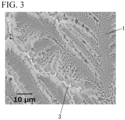
- the lamellar structure in which the (Al-Zn) phase and the MgZn 2 phase are arranged in layers is provided, and the area ratio of the lamellar structure is 10% to 95%.
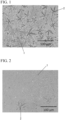
- the area ratio of the (Al-Zn) dendrite is 10% or less (for comparison, FIG. 1 shows a structure image in a surface of a plating layer of a plated steel sheet in the related art).
- the (Al-Zn) dendrite As a primary phase and the Zn/Al/MgZn 2 ternary eutectic structure are formed in the plating layer.
- the (Al-Zn) dendrite has low corrosion resistance. Therefore, even in a case where the steel sheet is coated, for example, when defects occur in the coating film, corrosion propagates into the plating layer and coating blistering occurs. On the other hand, when the corrosion resistance of the surface of the plating layer is high, even in a case where defects occur in the coating film, the propagation of corrosion in the surface of the plating layer can be suppressed.
- the lamellar structure in which the (Al-Zn) phase and the MgZn 2 phase are arranged in layers has high corrosion resistance and the corrosion resistance is improved by forming the lamellar structure in which the (Al-Zn) phase and the MgZn 2 phase are arranged in layers in the surface at a predetermined area ratio or more.
- the area ratio of the lamellar structure is 95% or less.
- the area ratio of the (Al-Zn) dendrite that deteriorates post-coating corrosion resistance is 10% or less.
- the area ratio of the (Al-Zn) dendrite is preferably as small as possible and may be 0%.
- the (Al-Zn) phase and the MgZn 2 phase are arranged in layers, for example, as shown in FIG. 3 .
- the lamellar spacing for obtaining sufficient performance is 2.5 ⁇ m or less (2500 nm or less) and preferably 500 nm or less.
- This lamellar structure is also called a "feathery structure".
- the Zn/Al/MgZn 2 ternary eutectic structure includes, by area%, Zn phase: 45% to 60%, MgZn 2 phase: 35% to 45%, and Al phase: 3% to 10%.
- the fractions of the respective phases in the lamellar structure include, by area%, Zn phase: 0% to 10%, MgZn 2 phase: 40% to 65%, and Al phase: 30% to 45%.
- the plating layer in the plated steel sheet according to the embodiment may include, in the surface, a massive MgZn 2 phase, the Zn/Al/MgZn 2 ternary eutectic structure, and other intermetallic compounds as phases other than the lamellar structure and the (Al-Zn) dendrite described above.
- the total amount of the remainder is preferably 50% or less and more preferably 30% or less.
- the massive MgZn 2 phase contributes to improvement of post-coating corrosion resistance.
- the area ratio of the massive MgZn 2 phase is preferably 5% or more.
- the area ratio of the MgZn 2 phase is preferably 40% or less.
- the area ratio of the Zn/Al/MgZn 2 ternary eutectic structure is preferably 45% or less. When the area ratio of the Zn/Al/MgZn 2 ternary eutectic structure is more than 45%, post-coating corrosion resistance may deteriorate.
- the MgSi 2 phase or other intermetallic compounds deteriorate post-coating corrosion resistance. Therefore, the area ratio of each of the MgSi 2 phase or other intermetallic compounds is preferably 10.0% or less. The total area ratio is more preferably 10.0% or less.
- the other intermetallic compound phases include a CaZn 11 phase, an Al 2 CaSi 2 phase, and an Al 2 CaZn 2 phase.
- the structures of the plating layer are measured using the following method.
- a sample having a size of 25 mm in a direction perpendicular to a rolling direction and 15 mm in the rolling direction is collected from the plated steel sheet according to the embodiment, and this sample is embedded in a resin and polished such that the surface of the plating layer of the sample is an observed section.
- a SEM image and an element distribution image by EDS are obtained.
- one visual field is imaged from each of five samples having different cross sectional EDS mapping images of the plating layers, that is, five visual fields (magnification: 1500-fold, 60 ⁇ m ⁇ 50 ⁇ m/One Visual Field) in total are imaged, and the area ratio of each of the structures is calculated by image analysis.
- a lamellar structure of a Zn phase, an ⁇ phase, and MgZn 2 having a lamellar spacing of 4 ⁇ m or less is determined as the Zn/Al/MgZn 2 ternary eutectic structure.
- the structure is determined as the other intermetallic compound.
- the lamellar spacing of the lamellar structure is obtained by measuring the spacing between a phase having the smallest area ratio and a phase adjacent thereto among phases forming the lamellar structure in the SEM observation and calculating the average value of spacings measured at 10 positions.
- the area ratios of the Zn phase, the MgZn 2 phase, and the Al phase forming the lamellar structure and the Zn/Al/MgZn 2 ternary eutectic structure can be obtained using a method in which a region where the corresponding structure is present on the cross sectional SEM image is surrounded by a line using image processing software or the like to calculate the area of the region surrounded by the line.
- the plated steel sheet according to the embodiment has the above-described characteristics, the effects can be obtained irrespective of the manufacturing method.
- the steel sheet can be stably manufactured, which is preferable.
- the steel sheet according to the embodiment can be manufactured with a manufacturing method including the following processes (I) to (IV).
- a steel sheet (hot-rolled steel sheet or cold-rolled steel sheet) obtained using a well-known method is annealed (reduction annealing) before the plating process.
- Annealing conditions may be well-known conditions.
- the steel sheet is heated to 750°C to 900°C in a 5% H 2 -N 2 gas atmosphere having a dew point of -10°C or higher and is held at this state for 30 seconds to 240 seconds.
- the steel sheet In the plating process, in the process of temperature decrease after annealing, the steel sheet is dipped in the plating bath to form the plating layer. As a result, the plated base sheet is formed.
- the plating bath includes, by mass%, Al: 6.00% to 35.00%, Mg: 3.00% to 15.00%, La + Ce: 0.0001% to 0.5000%, Si: 0% to 2.00%, Ca: 0% to 2.00%, and a remainder consisting of Zn and impurities. Further, Fe, Sb, Sr, Pb, Sn, Cu, Ti, Ni, and Mn may be optionally included.
- the composition of the plating bath is substantially the same as the composition of the plating layer to be formed, and thus may be adjusted according to the chemical composition of the plating layer that is desired to be obtained.
- the plated base sheet after the plating process (the plated base sheet that is pulled from the plating bath) is cooled after adjusting the plating adhesion amount by wiping gas such as N 2 .
- the plated base sheet is cooled to a cooling stop temperature which is from (Al-Zn/MgZn 2 binary eutectic temperature - 30)°C to (Al-Zn/MgZn 2 binary eutectic temperature - 10)°C such that an average cooling rate is 15 °C/sec or faster.
- the upper limit of the average cooling rate does not need to be limited, but the average cooling rate may be 40 °C/sec or slower due to restrictions in facility or the like.
- the Al-Zn/MgZn 2 binary eutectic temperature can be obtained from, for example, a liquidus projection of Zn-Al-Mg ternary phase diagram.
- the plated base sheet after stopping the controlled cooling is cooled to 335°C or lower such that the average cooling rate to 335°C is 5 °C/sec or slower.
- the product nucleus of the lamellar structure formed in the controlled cooling process grows, and a predetermined area ratio of the lamellar structure in the surface is obtained.
- the plated steel sheet according to the embodiment can be obtained.
- a cold-rolled steel sheet (0.2% C-2.0% Si-2.3% Mn) having a sheet thickness of 1.6 mm was prepared.
- This steel sheet was cut into 100 mm ⁇ 200 mm, and subsequently annealing and hot-dip plating were performed using a batch type hot-dip plating test apparatus.
- annealing was performed at 860°C for 120 seconds in an atmosphere formed of gas including 5% of H 2 gas and a remainder of N 2 and having a dew point of 0°C.
- the steel sheet was air-cooled with N 2 gas such that the steel sheet temperature reached the bath temperature + 20°C, and was dipped in the plating bath having a bath temperature shown in Table 1 for about 3 seconds.
- the plating adhesion amount was adjusted to 40 g/m 2 to 80 g/m 2 with N 2 gas, and the plated base sheet was cooled to room temperature by controlled cooling and slow cooling under conditions shown in Table 2. All of the controlled cooling stop temperatures were in a range of (Al-Zn/MgZn 2 binary eutectic temperature - 30)°C to (Al-Zn/MgZn 2 binary eutectic temperature - 10)°C.
- composition of the formed plating layer was as shown in Table 1.
- the remainder of Table 1 consisted of Zn and 5.0% or less of impurities.
- the area ratios of the respective phases in the plating layer and the lamellar spacing of the lamellar structure were measured using the following method.
- a sample having a size of 25 mm in a direction perpendicular to a rolling direction and 15 mm in the rolling direction was collected from the obtained plated steel sheet, and this sample was embedded in a resin and polished such that the surface of the plating layer of the sample was an observed section. Next, an SEM image and an element distribution image by EDS were obtained.
- one visual field was imaged from each of five samples having different cross sectional EDS mapping images of the plating layers, that is, five visual fields (magnification: 1500-fold, 60 ⁇ m ⁇ 50 ⁇ m/One Visual Field) in total were imaged, and the area ratio of each of the structures was calculated by image analysis.
- the lamellar structure was a structure including, by area%, Zn phase: 0% to 10%, MgZn 2 phase: 40% to 65%, and Al phase: 30% to 45%.
- a sample of 50 mm ⁇ 100 mm was collected from the plated steel sheet, and a zinc phosphating process (SD5350 system, manufactured by Nippon Paint Industrial Coatings Co., Ltd.) was performed thereon.
- an electrodeposition coating (PN110 POWERNICS (registered tradename) GREY, manufactured by Nippon Paint Industrial Coatings Co., Ltd.) having a thickness of 20 ⁇ m was formed and was baked at a baking temperature of 150°C for 20 minutes.
- the steel sheet was provided for V-bending using a die having an angle of 60° and a radius of curvature of 10 mm, was unbent, and was dipped in a 5% NaAl aqueous solution at 50°C for 500 hours.
- the obtained steel sheet was spot-welded under the following conditions, a cross section of a welded part was observed, and the lengths of cracks (LME cracks) were evaluated.
- the steel sheet was cut in a sheet thickness direction parallel to the direction where the electrode angle was provided. After the cutting, the cross section of the welded part that was mirror-finished by mechanical polishing and chemical polishing was observed with an optical microscope, and the LME crack length of a portion outside a corona bond was measured.
- Example 2 Classification No. Plating Layer Components (mass%), Remainder Consisting of Zn and Impurities Al Mg Si Ca Fe La, Ce Other Elements La Ce Total Kind Content Comparative Example 1 5.00 3.00 0.20 0.20 0.10 0.0001 0.0003 0.0004 - 0.00 Invention Example 2 6.00 3.00 0.20 0.20 0.20 0.0042 0.0010 0.0052 Ni: 0.10 0.10 Invention Example 3 10.00 5.00 0.10 0.00 0.10 0.0042 0.0060 0.0102 - 0.00 Comparative Example 4 10.00 1.00 0.10 0.00 0.10 0.0042 0.0010 0.0052 - 0.00 Invention Example 5 10.00 5.00 1.00 0.00 0.10 0.0042 0.0020 0.0062 Sb: 0.05 0.05 Comparative Example 6 11.00 3.00 0.00 0.20 0.10 0.0042 0.0030 0.0072 - 0.00 Invention Example 7 12.00 5.00 1.50 0.00 0.10 0.0060 0.0010 0.0070 - 0.00 Invention Example 8
- plated steel having higher post-coating corrosion resistance than a plated steel sheet for a vehicle in the related art can be provided, and the service life of a plated steel sheet for a vehicle can be increased, which can contribute to the development of the industry.
Landscapes
- Chemical & Material Sciences (AREA)
- Engineering & Computer Science (AREA)
- Organic Chemistry (AREA)
- Materials Engineering (AREA)
- Mechanical Engineering (AREA)
- Metallurgy (AREA)
- Chemical Kinetics & Catalysis (AREA)
- Physics & Mathematics (AREA)
- Thermal Sciences (AREA)
- Oil, Petroleum & Natural Gas (AREA)
- Crystallography & Structural Chemistry (AREA)
- Coating With Molten Metal (AREA)
- Heat Treatment Of Articles (AREA)
- Other Surface Treatments For Metallic Materials (AREA)
- Electroplating Methods And Accessories (AREA)
Claims (4)
- Tôle d'acier plaquée comprenant:une tôle d'acier; etune couche de placage qui est formée sur au moins une partie d'une surface de la tôle d'acier, dans laquelle une composition chimique de la couche de placage inclut, en % en masse,Al: 6,00 % à 35,00 %,Mg: 3,00 % à 15,00 %,La + Ce: 0,0001 % à 0,5000 % au total,Si: 0 % à 2,00 %,Ca: 0 % à 2,00 %,Fe: 0 % à 2,00 %,Sb: 0 % à 0,50 %,Sr: 0 % à 0,50 %,Pb: 0 % à 0,50 %,Sn: 0 % à 1,00 %,Cu: 0 % à 1,00 %,Ti: 0 % à 1,00 %,Ni: 0 % à 1,00 %,Mn: 0 % à 1,00 %, etun reste de Zn et d'impuretés, etdans une surface de la couche de placage, un rapport d'aire d'une structure lamellaire dans laquelle une phase de Al-Zn et une phase de MgZn2 sont disposées en couches est de 10 % à 95 %,un espacement lamellaire de la structure lamellaire est de 2,5 µm ou moins, etun rapport d'aire d'une dendrite de Al-Zn est de 10 % ou moins,dans laquelle la composition chimique de la couche de placage et les rapports d'aire de la phase de Al-Zn, de la phase de MgZn2, de la dendrite de Al-Zn, et l'espacement lamellaire sont mesurés comme décrit dans la description.
- Tôle d'acier plaquée selon la revendication 1,dans laquelle la composition chimique de la couche de placage inclut, en % en masse, un ou plusieurs types parmiAl: 11,00 % à 30,00 %,Mg: 5,00 % à 11,00 %, etLa+Ce: 0,0010 % à 0,1000 % au total.
- Tôle d'acier plaquée selon la revendication 1 ou 2,
dans laquelle, dans la surface de la couche de placage, le rapport d'aire de la structure lamellaire est de 60 % à 95 %. - Tôle d'acier plaquée selon la revendication 3,
dans laquelle, dans la surface de la couche de placage, le rapport d'aire de la structure lamellaire est de 80 % à 95 %.
Applications Claiming Priority (2)
| Application Number | Priority Date | Filing Date | Title |
|---|---|---|---|
| JP2020175786 | 2020-10-20 | ||
| PCT/JP2021/030398 WO2022085287A1 (fr) | 2020-10-20 | 2021-08-19 | Tôle d'acier plaquée |
Publications (3)
| Publication Number | Publication Date |
|---|---|
| EP4234736A1 EP4234736A1 (fr) | 2023-08-30 |
| EP4234736A4 EP4234736A4 (fr) | 2024-04-10 |
| EP4234736B1 true EP4234736B1 (fr) | 2025-01-22 |
Family
ID=81291254
Family Applications (1)
| Application Number | Title | Priority Date | Filing Date |
|---|---|---|---|
| EP21882428.2A Active EP4234736B1 (fr) | 2020-10-20 | 2021-08-19 | Tôle d'acier plaquée |
Country Status (7)
| Country | Link |
|---|---|
| US (1) | US11987863B2 (fr) |
| EP (1) | EP4234736B1 (fr) |
| JP (1) | JP7360082B2 (fr) |
| KR (1) | KR102738107B1 (fr) |
| CN (1) | CN116113719B (fr) |
| MX (1) | MX2023002315A (fr) |
| WO (1) | WO2022085287A1 (fr) |
Families Citing this family (8)
| Publication number | Priority date | Publication date | Assignee | Title |
|---|---|---|---|---|
| KR102529740B1 (ko) * | 2021-06-18 | 2023-05-08 | 주식회사 포스코 | 내식성 및 표면 품질이 우수한 고내식 도금 강판 및 이의 제조방법 |
| EP4613908A4 (fr) * | 2022-12-26 | 2026-01-14 | Nippon Steel Corp | Tôle d'acier plaquée |
| JP7606152B1 (ja) * | 2023-04-11 | 2024-12-25 | 日本製鉄株式会社 | めっき鋼材 |
| JP7606153B1 (ja) * | 2023-04-11 | 2024-12-25 | 日本製鉄株式会社 | めっき鋼材 |
| AU2024257566A1 (en) * | 2023-04-17 | 2025-10-16 | Nippon Steel Corporation | Hot-dip plated steel material |
| WO2025095006A1 (fr) * | 2023-11-01 | 2025-05-08 | 日本製鉄株式会社 | Joint soudé |
| WO2025095010A1 (fr) * | 2023-11-01 | 2025-05-08 | 日本製鉄株式会社 | Tôle d'acier plaqué |
| WO2025182227A1 (fr) * | 2024-02-27 | 2025-09-04 | Jfeスチール株式会社 | TÔLE D'ACIER PLAQUÉE À BASE DE Zn-Al-Mg |
Family Cites Families (17)
| Publication number | Priority date | Publication date | Assignee | Title |
|---|---|---|---|---|
| JPS6350780U (fr) | 1986-09-20 | 1988-04-06 | ||
| JP4136286B2 (ja) * | 1999-08-09 | 2008-08-20 | 新日本製鐵株式会社 | 耐食性に優れたZn−Al−Mg−Si合金めっき鋼材およびその製造方法 |
| JP4579715B2 (ja) | 2004-03-08 | 2010-11-10 | 日新製鋼株式会社 | 耐食性,塗膜密着性,接着性に優れた化成処理鋼板 |
| JP4776951B2 (ja) | 2005-03-11 | 2011-09-21 | 新日本製鐵株式会社 | 溶接性に優れた溶接用亜鉛系合金めっき鋼材 |
| JP5230318B2 (ja) * | 2008-09-18 | 2013-07-10 | 新日鐵住金株式会社 | 高耐食性を有し加工性に優れためっき鋼材およびその製造方法 |
| KR20140074231A (ko) * | 2012-12-07 | 2014-06-17 | 동부제철 주식회사 | 내식성, 가공성 및 외관이 우수한 합금도금강판 및 그 제조방법 |
| JP6112131B2 (ja) | 2014-04-23 | 2017-04-12 | Jfeスチール株式会社 | 溶融Al−Zn系めっき鋼板及びその製造方法 |
| MX2017002714A (es) * | 2014-09-05 | 2017-05-09 | Nippon Steel & Sumitomo Metal Corp | Lamina de acero chapada que contiene cuasicristal y metodo para producir la lamina de acero chapada que contiene cuasicristal. |
| PL3575433T3 (pl) * | 2017-01-27 | 2024-05-06 | Nippon Steel Corporation | Powlekany produkt stalowy |
| JP6583317B2 (ja) * | 2017-03-14 | 2019-10-02 | Jfeスチール株式会社 | 皮膜被覆溶融Zn−Al−Mg系めっき鋼板およびその製造方法 |
| WO2018169085A1 (fr) * | 2017-03-17 | 2018-09-20 | 新日鐵住金株式会社 | Tôle d'acier plaquée |
| KR102031466B1 (ko) * | 2017-12-26 | 2019-10-11 | 주식회사 포스코 | 표면품질 및 내식성이 우수한 아연합금도금강재 및 그 제조방법 |
| TWI654338B (zh) * | 2017-12-28 | 2019-03-21 | 日商新日鐵住金股份有限公司 | Fused Zn-based plated steel sheet with excellent corrosion resistance after painting |
| JP6350780B1 (ja) | 2017-12-28 | 2018-07-04 | 新日鐵住金株式会社 | 塗装後耐食性に優れた溶融Zn系めっき鋼板 |
| JP2020175786A (ja) | 2019-04-18 | 2020-10-29 | 株式会社デンソー | 車両誤発進抑制装置 |
| KR102516012B1 (ko) * | 2019-04-19 | 2023-03-31 | 닛폰세이테츠 가부시키가이샤 | 도금 강판 |
| JP7445128B2 (ja) * | 2020-04-30 | 2024-03-07 | 日本製鉄株式会社 | 加工性と耐食性に優れる溶融Zn-Al-Mg系めっき鋼材 |
-
2021
- 2021-08-19 KR KR1020237006212A patent/KR102738107B1/ko active Active
- 2021-08-19 CN CN202180051908.3A patent/CN116113719B/zh active Active
- 2021-08-19 JP JP2022556435A patent/JP7360082B2/ja active Active
- 2021-08-19 EP EP21882428.2A patent/EP4234736B1/fr active Active
- 2021-08-19 US US18/040,903 patent/US11987863B2/en active Active
- 2021-08-19 WO PCT/JP2021/030398 patent/WO2022085287A1/fr not_active Ceased
- 2021-08-19 MX MX2023002315A patent/MX2023002315A/es unknown
Also Published As
| Publication number | Publication date |
|---|---|
| KR20230043162A (ko) | 2023-03-30 |
| JP7360082B2 (ja) | 2023-10-12 |
| MX2023002315A (es) | 2023-03-21 |
| EP4234736A1 (fr) | 2023-08-30 |
| US11987863B2 (en) | 2024-05-21 |
| CN116113719A (zh) | 2023-05-12 |
| KR102738107B1 (ko) | 2024-12-05 |
| WO2022085287A1 (fr) | 2022-04-28 |
| CN116113719B (zh) | 2025-07-08 |
| EP4234736A4 (fr) | 2024-04-10 |
| US20230295775A1 (en) | 2023-09-21 |
| JPWO2022085287A1 (fr) | 2022-04-28 |
Similar Documents
| Publication | Publication Date | Title |
|---|---|---|
| US11634790B2 (en) | Plated steel sheet | |
| US11987863B2 (en) | Plated steel sheet | |
| JP6394843B1 (ja) | めっき鋼板 | |
| CN110431249B (zh) | 镀覆钢板 | |
| US11584981B2 (en) | Plated steel sheet | |
| JP7401827B2 (ja) | 溶融Zn系めっき鋼板 | |
| EP2388353B1 (fr) | MATÉRIAU ACIER ENDUIT D' ALLIAGE Zn-Al-Mg-Si-Cr PAR IMMERSION A CHAUD AYANT UNE EXCELLENTE RÉSISTANCE À LA CORROSION | |
| EP0763608B1 (fr) | Tole d'acier prevenant la corrosion pour citernes a combustible et procede d'elaboration de cette tole | |
| US11697266B2 (en) | Plated steel | |
| CA2838318A1 (fr) | Plaque d'acier galvanisee par immersion a chaud a haute resistance a la corrosion, ayant un aspect hautement uniforme et son procede de fabrication | |
| EP4582580A1 (fr) | Matériau d'acier plaqué | |
| EP4484603A1 (fr) | Matériau d'acier plaqué | |
| CN118043491A (zh) | 耐蚀性和弯曲性优异的镀覆钢板及其制造方法 | |
| JP3383122B2 (ja) | 耐熱性、高温強度、耐食性に優れた溶融アルミめっき鋼板及びその製造法 | |
| TWI917978B (zh) | 鍍敷鋼材及太陽能發電用架台 | |
| JP7633587B1 (ja) | めっき鋼材および太陽光発電用架台 | |
| TW202548051A (zh) | 鍍敷鋼材及太陽能發電用架台 |
Legal Events
| Date | Code | Title | Description |
|---|---|---|---|
| STAA | Information on the status of an ep patent application or granted ep patent |
Free format text: STATUS: THE INTERNATIONAL PUBLICATION HAS BEEN MADE |
|
| PUAI | Public reference made under article 153(3) epc to a published international application that has entered the european phase |
Free format text: ORIGINAL CODE: 0009012 |
|
| STAA | Information on the status of an ep patent application or granted ep patent |
Free format text: STATUS: REQUEST FOR EXAMINATION WAS MADE |
|
| 17P | Request for examination filed |
Effective date: 20230208 |
|
| AK | Designated contracting states |
Kind code of ref document: A1 Designated state(s): AL AT BE BG CH CY CZ DE DK EE ES FI FR GB GR HR HU IE IS IT LI LT LU LV MC MK MT NL NO PL PT RO RS SE SI SK SM TR |
|
| DAV | Request for validation of the european patent (deleted) | ||
| DAX | Request for extension of the european patent (deleted) | ||
| A4 | Supplementary search report drawn up and despatched |
Effective date: 20240312 |
|
| RIC1 | Information provided on ipc code assigned before grant |
Ipc: C23C 30/00 20060101ALI20240305BHEP Ipc: C23C 2/28 20060101ALI20240305BHEP Ipc: C23C 2/02 20060101ALI20240305BHEP Ipc: C23C 2/40 20060101ALI20240305BHEP Ipc: C23C 2/26 20060101ALI20240305BHEP Ipc: C23C 2/06 20060101ALI20240305BHEP Ipc: C22C 18/04 20060101AFI20240305BHEP |
|
| GRAP | Despatch of communication of intention to grant a patent |
Free format text: ORIGINAL CODE: EPIDOSNIGR1 |
|
| STAA | Information on the status of an ep patent application or granted ep patent |
Free format text: STATUS: GRANT OF PATENT IS INTENDED |
|
| INTG | Intention to grant announced |
Effective date: 20240919 |
|
| GRAS | Grant fee paid |
Free format text: ORIGINAL CODE: EPIDOSNIGR3 |
|
| GRAA | (expected) grant |
Free format text: ORIGINAL CODE: 0009210 |
|
| STAA | Information on the status of an ep patent application or granted ep patent |
Free format text: STATUS: THE PATENT HAS BEEN GRANTED |
|
| AK | Designated contracting states |
Kind code of ref document: B1 Designated state(s): AL AT BE BG CH CY CZ DE DK EE ES FI FR GB GR HR HU IE IS IT LI LT LU LV MC MK MT NL NO PL PT RO RS SE SI SK SM TR |
|
| REG | Reference to a national code |
Ref country code: GB Ref legal event code: FG4D |
|
| REG | Reference to a national code |
Ref country code: CH Ref legal event code: EP |
|
| REG | Reference to a national code |
Ref country code: IE Ref legal event code: FG4D |
|
| REG | Reference to a national code |
Ref country code: DE Ref legal event code: R096 Ref document number: 602021025247 Country of ref document: DE |
|
| REG | Reference to a national code |
Ref country code: NL Ref legal event code: MP Effective date: 20250122 |
|
| PG25 | Lapsed in a contracting state [announced via postgrant information from national office to epo] |
Ref country code: NL Free format text: LAPSE BECAUSE OF FAILURE TO SUBMIT A TRANSLATION OF THE DESCRIPTION OR TO PAY THE FEE WITHIN THE PRESCRIBED TIME-LIMIT Effective date: 20250122 |
|
| PG25 | Lapsed in a contracting state [announced via postgrant information from national office to epo] |
Ref country code: RS Free format text: LAPSE BECAUSE OF FAILURE TO SUBMIT A TRANSLATION OF THE DESCRIPTION OR TO PAY THE FEE WITHIN THE PRESCRIBED TIME-LIMIT Effective date: 20250422 |
|
| PG25 | Lapsed in a contracting state [announced via postgrant information from national office to epo] |
Ref country code: FI Free format text: LAPSE BECAUSE OF FAILURE TO SUBMIT A TRANSLATION OF THE DESCRIPTION OR TO PAY THE FEE WITHIN THE PRESCRIBED TIME-LIMIT Effective date: 20250122 |
|
| PG25 | Lapsed in a contracting state [announced via postgrant information from national office to epo] |
Ref country code: PL Free format text: LAPSE BECAUSE OF FAILURE TO SUBMIT A TRANSLATION OF THE DESCRIPTION OR TO PAY THE FEE WITHIN THE PRESCRIBED TIME-LIMIT Effective date: 20250122 |
|
| PG25 | Lapsed in a contracting state [announced via postgrant information from national office to epo] |
Ref country code: ES Free format text: LAPSE BECAUSE OF FAILURE TO SUBMIT A TRANSLATION OF THE DESCRIPTION OR TO PAY THE FEE WITHIN THE PRESCRIBED TIME-LIMIT Effective date: 20250122 |
|
| REG | Reference to a national code |
Ref country code: LT Ref legal event code: MG9D |
|
| PG25 | Lapsed in a contracting state [announced via postgrant information from national office to epo] |
Ref country code: IS Free format text: LAPSE BECAUSE OF FAILURE TO SUBMIT A TRANSLATION OF THE DESCRIPTION OR TO PAY THE FEE WITHIN THE PRESCRIBED TIME-LIMIT Effective date: 20250522 Ref country code: NO Free format text: LAPSE BECAUSE OF FAILURE TO SUBMIT A TRANSLATION OF THE DESCRIPTION OR TO PAY THE FEE WITHIN THE PRESCRIBED TIME-LIMIT Effective date: 20250422 |
|
| REG | Reference to a national code |
Ref country code: AT Ref legal event code: MK05 Ref document number: 1761524 Country of ref document: AT Kind code of ref document: T Effective date: 20250122 |
|
| PG25 | Lapsed in a contracting state [announced via postgrant information from national office to epo] |
Ref country code: HR Free format text: LAPSE BECAUSE OF FAILURE TO SUBMIT A TRANSLATION OF THE DESCRIPTION OR TO PAY THE FEE WITHIN THE PRESCRIBED TIME-LIMIT Effective date: 20250122 |
|
| PG25 | Lapsed in a contracting state [announced via postgrant information from national office to epo] |
Ref country code: LV Free format text: LAPSE BECAUSE OF FAILURE TO SUBMIT A TRANSLATION OF THE DESCRIPTION OR TO PAY THE FEE WITHIN THE PRESCRIBED TIME-LIMIT Effective date: 20250122 Ref country code: PT Free format text: LAPSE BECAUSE OF FAILURE TO SUBMIT A TRANSLATION OF THE DESCRIPTION OR TO PAY THE FEE WITHIN THE PRESCRIBED TIME-LIMIT Effective date: 20250522 |
|
| PG25 | Lapsed in a contracting state [announced via postgrant information from national office to epo] |
Ref country code: BG Free format text: LAPSE BECAUSE OF FAILURE TO SUBMIT A TRANSLATION OF THE DESCRIPTION OR TO PAY THE FEE WITHIN THE PRESCRIBED TIME-LIMIT Effective date: 20250122 Ref country code: GR Free format text: LAPSE BECAUSE OF FAILURE TO SUBMIT A TRANSLATION OF THE DESCRIPTION OR TO PAY THE FEE WITHIN THE PRESCRIBED TIME-LIMIT Effective date: 20250423 |
|
| PG25 | Lapsed in a contracting state [announced via postgrant information from national office to epo] |
Ref country code: AT Free format text: LAPSE BECAUSE OF FAILURE TO SUBMIT A TRANSLATION OF THE DESCRIPTION OR TO PAY THE FEE WITHIN THE PRESCRIBED TIME-LIMIT Effective date: 20250122 |
|
| PG25 | Lapsed in a contracting state [announced via postgrant information from national office to epo] |
Ref country code: SE Free format text: LAPSE BECAUSE OF FAILURE TO SUBMIT A TRANSLATION OF THE DESCRIPTION OR TO PAY THE FEE WITHIN THE PRESCRIBED TIME-LIMIT Effective date: 20250122 |
|
| PG25 | Lapsed in a contracting state [announced via postgrant information from national office to epo] |
Ref country code: SM Free format text: LAPSE BECAUSE OF FAILURE TO SUBMIT A TRANSLATION OF THE DESCRIPTION OR TO PAY THE FEE WITHIN THE PRESCRIBED TIME-LIMIT Effective date: 20250122 |
|
| PG25 | Lapsed in a contracting state [announced via postgrant information from national office to epo] |
Ref country code: DK Free format text: LAPSE BECAUSE OF FAILURE TO SUBMIT A TRANSLATION OF THE DESCRIPTION OR TO PAY THE FEE WITHIN THE PRESCRIBED TIME-LIMIT Effective date: 20250122 |
|
| PGFP | Annual fee paid to national office [announced via postgrant information from national office to epo] |
Ref country code: DE Payment date: 20250820 Year of fee payment: 5 |
|
| PG25 | Lapsed in a contracting state [announced via postgrant information from national office to epo] |
Ref country code: IT Free format text: LAPSE BECAUSE OF FAILURE TO SUBMIT A TRANSLATION OF THE DESCRIPTION OR TO PAY THE FEE WITHIN THE PRESCRIBED TIME-LIMIT Effective date: 20250122 |
|
| PGFP | Annual fee paid to national office [announced via postgrant information from national office to epo] |
Ref country code: FR Payment date: 20250828 Year of fee payment: 5 |
|
| PG25 | Lapsed in a contracting state [announced via postgrant information from national office to epo] |
Ref country code: EE Free format text: LAPSE BECAUSE OF FAILURE TO SUBMIT A TRANSLATION OF THE DESCRIPTION OR TO PAY THE FEE WITHIN THE PRESCRIBED TIME-LIMIT Effective date: 20250122 Ref country code: CZ Free format text: LAPSE BECAUSE OF FAILURE TO SUBMIT A TRANSLATION OF THE DESCRIPTION OR TO PAY THE FEE WITHIN THE PRESCRIBED TIME-LIMIT Effective date: 20250122 |
|
| REG | Reference to a national code |
Ref country code: DE Ref legal event code: R097 Ref document number: 602021025247 Country of ref document: DE |
|
| PG25 | Lapsed in a contracting state [announced via postgrant information from national office to epo] |
Ref country code: RO Free format text: LAPSE BECAUSE OF FAILURE TO SUBMIT A TRANSLATION OF THE DESCRIPTION OR TO PAY THE FEE WITHIN THE PRESCRIBED TIME-LIMIT Effective date: 20250122 |
|
| PG25 | Lapsed in a contracting state [announced via postgrant information from national office to epo] |
Ref country code: SK Free format text: LAPSE BECAUSE OF FAILURE TO SUBMIT A TRANSLATION OF THE DESCRIPTION OR TO PAY THE FEE WITHIN THE PRESCRIBED TIME-LIMIT Effective date: 20250122 |
|
| PLBE | No opposition filed within time limit |
Free format text: ORIGINAL CODE: 0009261 |
|
| STAA | Information on the status of an ep patent application or granted ep patent |
Free format text: STATUS: NO OPPOSITION FILED WITHIN TIME LIMIT |
|
| REG | Reference to a national code |
Ref country code: CH Ref legal event code: L10 Free format text: ST27 STATUS EVENT CODE: U-0-0-L10-L00 (AS PROVIDED BY THE NATIONAL OFFICE) Effective date: 20251203 |
|
| 26N | No opposition filed |
Effective date: 20251023 |
|
| REG | Reference to a national code |
Ref country code: CH Ref legal event code: H13 Free format text: ST27 STATUS EVENT CODE: U-0-0-H10-H13 (AS PROVIDED BY THE NATIONAL OFFICE) Effective date: 20260324 |
|
| PG25 | Lapsed in a contracting state [announced via postgrant information from national office to epo] |
Ref country code: MC Free format text: LAPSE BECAUSE OF FAILURE TO SUBMIT A TRANSLATION OF THE DESCRIPTION OR TO PAY THE FEE WITHIN THE PRESCRIBED TIME-LIMIT Effective date: 20250122 |
|
| PG25 | Lapsed in a contracting state [announced via postgrant information from national office to epo] |
Ref country code: LU Free format text: LAPSE BECAUSE OF NON-PAYMENT OF DUE FEES Effective date: 20250819 |
|
| PG25 | Lapsed in a contracting state [announced via postgrant information from national office to epo] |
Ref country code: CH Free format text: LAPSE BECAUSE OF NON-PAYMENT OF DUE FEES Effective date: 20250831 |
|
| GBPC | Gb: european patent ceased through non-payment of renewal fee |
Effective date: 20250819 |