EP4235317A1 - Procédé de commande d'une machine par un agent de commande basé sur l'apprentissage, ainsi que dispositif de commande - Google Patents
Procédé de commande d'une machine par un agent de commande basé sur l'apprentissage, ainsi que dispositif de commande Download PDFInfo
- Publication number
- EP4235317A1 EP4235317A1 EP22159152.2A EP22159152A EP4235317A1 EP 4235317 A1 EP4235317 A1 EP 4235317A1 EP 22159152 A EP22159152 A EP 22159152A EP 4235317 A1 EP4235317 A1 EP 4235317A1
- Authority
- EP
- European Patent Office
- Prior art keywords
- performance
- control
- machine
- evaluator
- pol
- Prior art date
- Legal status (The legal status is an assumption and is not a legal conclusion. Google has not performed a legal analysis and makes no representation as to the accuracy of the status listed.)
- Pending
Links
Images

Classifications
-
- G—PHYSICS
- G05—CONTROLLING; REGULATING
- G05B—CONTROL OR REGULATING SYSTEMS IN GENERAL; FUNCTIONAL ELEMENTS OF SUCH SYSTEMS; MONITORING OR TESTING ARRANGEMENTS FOR SUCH SYSTEMS OR ELEMENTS
- G05B19/00—Program-control systems
- G05B19/02—Program-control systems electric
- G05B19/418—Total factory control, i.e. centrally controlling a plurality of machines, e.g. direct or distributed numerical control [DNC], flexible manufacturing systems [FMS], integrated manufacturing systems [IMS] or computer integrated manufacturing [CIM]
- G05B19/41875—Total factory control, i.e. centrally controlling a plurality of machines, e.g. direct or distributed numerical control [DNC], flexible manufacturing systems [FMS], integrated manufacturing systems [IMS] or computer integrated manufacturing [CIM] characterised by quality surveillance of production
-
- G—PHYSICS
- G05—CONTROLLING; REGULATING
- G05B—CONTROL OR REGULATING SYSTEMS IN GENERAL; FUNCTIONAL ELEMENTS OF SUCH SYSTEMS; MONITORING OR TESTING ARRANGEMENTS FOR SUCH SYSTEMS OR ELEMENTS
- G05B13/00—Adaptive control systems, i.e. systems automatically adjusting themselves to have a performance which is optimum according to some preassigned criterion
- G05B13/02—Adaptive control systems, i.e. systems automatically adjusting themselves to have a performance which is optimum according to some preassigned criterion electric
- G05B13/0265—Adaptive control systems, i.e. systems automatically adjusting themselves to have a performance which is optimum according to some preassigned criterion electric the criterion being a learning criterion
- G05B13/027—Adaptive control systems, i.e. systems automatically adjusting themselves to have a performance which is optimum according to some preassigned criterion electric the criterion being a learning criterion using neural networks only
-
- G—PHYSICS
- G05—CONTROLLING; REGULATING
- G05B—CONTROL OR REGULATING SYSTEMS IN GENERAL; FUNCTIONAL ELEMENTS OF SUCH SYSTEMS; MONITORING OR TESTING ARRANGEMENTS FOR SUCH SYSTEMS OR ELEMENTS
- G05B13/00—Adaptive control systems, i.e. systems automatically adjusting themselves to have a performance which is optimum according to some preassigned criterion
- G05B13/02—Adaptive control systems, i.e. systems automatically adjusting themselves to have a performance which is optimum according to some preassigned criterion electric
- G05B13/0265—Adaptive control systems, i.e. systems automatically adjusting themselves to have a performance which is optimum according to some preassigned criterion electric the criterion being a learning criterion
-
- G—PHYSICS
- G05—CONTROLLING; REGULATING
- G05B—CONTROL OR REGULATING SYSTEMS IN GENERAL; FUNCTIONAL ELEMENTS OF SUCH SYSTEMS; MONITORING OR TESTING ARRANGEMENTS FOR SUCH SYSTEMS OR ELEMENTS
- G05B13/00—Adaptive control systems, i.e. systems automatically adjusting themselves to have a performance which is optimum according to some preassigned criterion
- G05B13/02—Adaptive control systems, i.e. systems automatically adjusting themselves to have a performance which is optimum according to some preassigned criterion electric
- G05B13/04—Adaptive control systems, i.e. systems automatically adjusting themselves to have a performance which is optimum according to some preassigned criterion electric involving the use of models or simulators
-
- G—PHYSICS
- G05—CONTROLLING; REGULATING
- G05B—CONTROL OR REGULATING SYSTEMS IN GENERAL; FUNCTIONAL ELEMENTS OF SUCH SYSTEMS; MONITORING OR TESTING ARRANGEMENTS FOR SUCH SYSTEMS OR ELEMENTS
- G05B2219/00—Program-control systems
- G05B2219/30—Nc systems
- G05B2219/32—Operator till task planning
- G05B2219/32194—Quality prediction
Definitions
- control agents in particular artificial neural networks, are trained using a large amount of training data to generate a control signal for controlling the technical system that is optimized with regard to a predetermined target function for a respective state of the technical system.
- a control agent trained to control a technical system is often also referred to as a policy or as an agent for short.
- the target function can be used to evaluate a performance to be optimized, e.g. output, efficiency, resource consumption, yield, pollutant emissions, product quality and/or other operating parameters of the technical system.
- a target function is often also referred to as a reward function, cost function or loss function.
- a corresponding control device, a computer program product and a computer-readable, preferably non-volatile, storage medium are provided for carrying out the method according to the invention.
- the method according to the invention and the control device according to the invention can be executed or implemented, for example, by means of one or more computers, processors, application-specific integrated circuits (ASIC), digital signal processors (DSP) and/or so-called "Field Programmable Gate Arrays” (FPGA).
- ASIC application-specific integrated circuits
- DSP digital signal processors
- FPGA Field Programmable Gate Arrays
- An advantage of the invention can be seen in particular in the fact that by simply entering or changing an operating weight value during operation of the machine M, different control strategies can be set, which are optimized for different weightings of a performance compared to a deviation from a predefined control sequence.
- the trained control agent can be temporarily adjusted during operation to give greater weight to proximity to the specified control sequence than to machine performance. This can be advantageous in particular during safety-critical operating phases of the machine. In less critical operating phases, on the other hand, the performance can be weighted higher than the proximity to the specified control sequence in order to promote performance optimization accordingly.
- the weight value can be changed successively when controlling the machine in such a way that the performance is weighted increasingly higher than the deviation.
- the deviation from the specified control sequence can initially be weighted higher than the performance. In this way, an operational risk due to untested control sequences can be reduced. If and to the extent that the control sequences then prove to be reliable, the performance optimization can be favored step by step and the performance can usually be increased in this way.
- the performance evaluator can determine a respective performance and/or the action evaluator can determine a respective deviation using a respective status signal.
- the additional consideration of a status signal allows the respective performance and/or the respective deviation to be determined more precisely.
- a performance value can be read in for a multiplicity of state signals and control signals, which quantifies a performance resulting from the application of a respective control signal to a state of the machine specified by a respective state signal.
- the performance evaluator can then be trained to reproduce an associated performance value using a status signal and a control signal.
- a performance evaluator can be implemented using methods of machine learning, in particular supervised learning.
- the performance assessor can be trained using a Q-learning method and/or another Q-function-based method of reinforcement learning to determine a performance cumulated over a future period.
- Q-learning processes and Q-function-based processes a large number of efficient numerical optimization methods are available.
- a large number of status signals and control signals can be read.
- the action evaluator can then be trained to use a status signal and a control signal to reproduce the control signal after information reduction, with a reproduction error being determined.
- the deviation can then be determined using the reproduction error.
- the above feature is based on the observation that reproduction errors are often smaller in areas of state and control action that are well covered by training data than in areas that are poorly covered.
- the reproduction error can thus generally be understood as a measure of the extent to which a respective state-specific control action is covered by the training data. Insofar as the training data is based on a predetermined control sequence in many cases, the reproduction error can be used as a relatively accurate measure of the deviation from the predetermined control sequence.
- the deviation can be determined by the action evaluator by means of a variational autoencoder, by means of an autoencoder, by means of generative opposing networks and/or by a comparison with predetermined control signals, which is particularly dependent on the status signal.
- a variational autoencoder By using an autoencoder or in particular a variational autoencoder, an information-reduced and/or less redundant representation of fed-in status signals and/or control signals can be determined.
- a measure of how precisely the control signals in particular can be reconstructed from the reduced variables can be determined in a simple manner.
- the reproducibility of control signals can be used as a measure of the deviation from a specified control sequence.
- a gradient-based optimization method e.g. a gradient descent method, a stochastic optimization method, a particle swarm optimization and/or a genetic optimization method can preferably be used to train the control agent, the performance evaluator and/or the action evaluator.
- a gradient descent method e.g. a gradient descent method, a stochastic optimization method, a particle swarm optimization and/or a genetic optimization method
- a large number of efficient implementations are available for the methods mentioned.
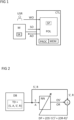
- figure 1 1 illustrates a control device CTL according to the invention when controlling a machine M, eg a robot, a motor, a manufacturing plant, a factory, a power supply device, a gas turbine, a wind turbine, a steam turbine, a milling machine or another device or plant.
- a machine M eg a robot, a motor, a manufacturing plant, a factory, a power supply device, a gas turbine, a wind turbine, a steam turbine, a milling machine or another device or plant.
- a component or a subsystem of a machine or a plant can also be regarded as a machine M.
- the machine M has a sensor system SK for preferably continuously detecting and/or measuring system states or subsystem states of the machine M.
- control device CTL is in figure 1 shown externally to the machine M and coupled with it.
- control device CTL can also be fully or partially integrated into the machine M.
- the control device CTL has one or more processors PROC for executing method steps of the control device CTL and one or more memories MEM coupled to the processor PROC for storing the data to be processed by the control device CTL.
- control device CTL has a learning-based control agent POL, which is trained or can be trained using methods of reinforcement learning.
- a control agent is often also referred to as a policy, or simply as an agent.
- the control agent POL is implemented as an artificial neural network.
- control agent POL and thus the control device CTL are trained in a data-driven manner in advance using predetermined training data and are thus configured for the optimized control of the machine M.
- control agent POL can also be trained further while the machine M is in operation, with status signals, control signals and/or performance data from the machine M being in operation being able to be used as training data.
- the training of the control agent POL aims in particular at two control criteria.
- the machine M controlled by the control agent POL should on the one hand achieve the highest possible performance, while on the other hand the control should not deviate too much from a predefined control sequence SP.
- the performance can relate, for example, to power, efficiency, resource consumption, yield, pollutant emissions, product quality and/or other operating parameters of machine M.
- a predefined control sequence SP can be specified, for example, by predefined sequences of states and/or control actions.
- a predefined control sequence SP can also be taken into account during training insofar as the training data originate from machine M, a machine similar thereto, or a simulation of machine M while it was controlled by a reference control agent.
- coverage of the states and/or control actions passed through by the machine M when controlled by the control agent POL by the training data can serve as a criterion for closeness of the control to the reference control agent and thus to the specified control sequence SP.
- a checked, validated and/or rule-based control agent can preferably be used as the reference control agent.
- control agent POL is to be trained in such a way that a relative weighting of the two optimization criteria, performance and proximity to the specified control sequence SP, can be changed by a weight value during ongoing operation of the trained control agent POL.
- a sequence of this training is explained in more detail below.
- operating status signals SO For optimized control of the machine M by the trained control agent POL, operating status signals SO, ie status signals determined during ongoing operation of the machine M, are transmitted to the control device CTL.
- the operating status signals SO each specify a status, in particular an operating status of the machine M, and are preferably each represented by a numerical status vector or a time series of status values or status vectors.
- Measurement data, sensor data, environmental data or other data occurring during operation of the machine M or influencing operation can be represented by the operating status signals SO.
- the operating status signals SO can also relate to a product quality or another product property.
- the operating status signals SO can be measured at least in part by the sensor system SK or can be determined in a simulative manner using a simulator for the machine M.
- an operating weight value WO e.g. from a user USR of the machine M
- the performance of the machine M is weighted by the operating weight value WO in relation to a deviation of the machine M controlled by the control agent POL from the predefined control sequence SP.
- the operating weight value WO can also be generated by the control device CTL as a function of an operating condition or operating phase of the machine M.
- the operating status signals SO transmitted to the control device CTL are fed into the trained control agent POL as input signals together with the operating weight value WO.
- the trained control agent POL generates a respective optimized operating control signal AO on the basis of a respectively supplied operating status signal SO and operating weight value WO.
- the latter specifies one or more control actions that can be carried out on the machine M.
- the generated operating control signals AO are transmitted to the machine M by the control agent POL or by the control device CTL.
- the machine M is controlled in an optimized manner by the transmitted operating control signals AO by the operating control signals AO specified Control actions are performed by the machine M.
- the trained control agent POL can be temporarily set during operation of the machine M to weight proximity to the specified control sequence SP more highly than the performance of the machine M when determining optimized operating control signals AO be advantageous during safety-critical operating phases of the machine M.
- the performance can be weighted more highly than the proximity to the specified control sequence SP, in order to promote performance optimization accordingly.
- the proximity to the predefined control sequence SP can initially be weighted higher than the performance. In this way, an operational risk due to untested control sequences can be reduced. If and to the extent that the control sequences then prove to be reliable, the performance optimization can be favored step by step and the performance can usually be increased in this way.
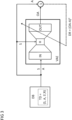
- figure 2 illustrates a training of a transition model NN to determine a performance of the machine M.
- the transition model NN is part of a performance evaluator PEV, which is explained in more detail below.
- the transition model NN can be trained in a data-driven manner and is intended to model a state transition when a control action is applied to a specified state of the machine M. Such a transition model is often also referred to as a dynamic model or system model.
- the transition model NN can be implemented in the control device CTL or completely or partially externally thereto. In the present exemplary embodiment, the transition model NN is implemented as an artificial neural network.
- the transition model NN is to be trained to use a respective state and a respective control action to predict a subsequent state of the machine M resulting from the application of the control action and a resulting performance value as precisely as possible.
- the training data records TD originate from a control of the machine M, a machine similar thereto, or a simulation of the machine M by a reference control agent.
- the control processes carried out by the reference control agent serve, among other things, to specify a predetermined control sequence SP reflected in the training data sets TD.
- the training data sets TD each include a status signal S, a control signal A, a subsequent status signal S' and a performance value R.
- the status signals S each specify a status of the machine M
- the control signals A each specify a control action that can be carried out on the machine M.
- a subsequent state of the machine M resulting from application of the respective control action to the respective state is specified by a respective subsequent state signal S′.
- the same operating data of the machine M can be specified by a status signal S and a subsequent status signal S' as by the above-mentioned operating status signals SO.
- the respectively associated performance value R finally quantifies a respective performance of an execution of the respective control action in the respective state.
- the performance value R can in particular be a currently resulting power, a currently resulting efficiency, a currently resulting resource consumption, a currently resulting yield, a currently resulting pollutant emission, a currently resulting product quality and/or other operating parameters resulting from taking the current control action of the machine M concern.
- a performance value is also referred to as a reward or -- complementary to this -- costs or loss.
- the transition model NN is supplied with status signals S and control signals A as input signals.
- the transition model NN is to be trained in such a way that its output signals reproduce a resulting subsequent state and a resulting performance value as precisely as possible.
- the training is preferably carried out using a method of monitored machine learning.
- Training is generally understood to mean an optimization of a mapping of input signals, here S and A, of a machine learning model, here NN, to its output signals. This mapping is optimized according to predetermined, learned and/or to-be-learned criteria during a training phase. A success of a control action or, in the case of prediction models, a prediction error can be used as criteria, particularly in the case of control models.
- the training can be used, for example, to set or optimize network structures of neurons in a neural network and/or weights of connections between the neurons in such a way that the specified criteria are met as well as possible. The training can thus be regarded as an optimization problem. A large number of efficient optimization methods are available for such optimization problems in the field of machine learning. Optimization is always understood to mean an approximation to an optimum.
- artificial neural networks recurrent neural networks, convolutional neural networks, perceptrons, Bayesian neural networks, autoencoders, variational autoencoders, deep learning architectures, support vector machines, data-driven regression models, k-nearest-neighbor classifiers, physical models or decision trees.
- transition model NN state signals S and control signals A from the training data are supplied as input signals to this model--as already mentioned above.
- the transition model NN For each input data record (S, A) comprising a status signal S and a control signal A, the transition model NN outputs an output signal OS′ as a subsequent status signal and an output signal OR as a performance value.
- the training of the transition model NN strives for the output signals OS' to match the actual subsequent state signals S' and the output signals OR to match the actual performance values R as well as possible, at least on average.
- a deviation DP is determined between a respective output signal pair (OS', OR) and the respective corresponding pair (S', R) contained in the training data.
- the deviation DP here represents a prediction error of the transition model NN.
- the deviation DP is, as in figure 2 indicated by a dashed arrow, returned to the transition model NN.
- the transition model NN is trained on the basis of the returned deviation DP to minimize this deviation DP and thus the prediction error, at least on average.
- a large number of efficient optimization methods are available for minimizing the deviation DP, for example gradient-based optimization methods, stochastic gradient descent methods, particle swarm optimization and/or genetic optimization methods.
- the transition model NN is trained to predict a resulting subsequent state and a resulting performance value as well as possible for a specified state and a specified control action.
- FIG 3 illustrates a data-driven training of an action evaluator VAE.
- the action evaluator VAE can be implemented in the control device CTL or completely or partly externally to it.
- the action evaluator VAE is used to determine a deviation of a control from a predefined control sequence SP and is implemented in the present exemplary embodiment by a variational autoencoder.
- the specified control sequence SP is defined to a certain extent by the training data obtained using the reference control agent.
- the variational autoencoder VAE is used to evaluate a respective state-specific control action with regard to its reproducibility.
- This reproducibility proves to be a relatively accurate measure of a similarity of a respective state-specific control action to the control actions present in the training data or as a measure of a probability of occurring in the training data.
- the variational autoencoder VAE is implemented as a feed-forward neural network and includes an input layer IN, a hidden layer H and an output layer OUT.
- the variational autoencoder VAE can have further hidden layers. It is characteristic of an autoencoder that the hidden layer H is significantly smaller, i.e. has fewer neurons, than the input layer IN or the output layer OUT.
- the variational autoencoder VAE is to be trained using training data sets TD read from the database DB, using fed-in status signals S and control signals A--after an information reduction caused by the smaller hidden layer H--the fed-in To reproduce control signals A as accurately as possible, at least on average. In particular, a reproduction error DR should also be determined.
- the status signals S and control signals A from the training data are fed into the input layer IN as input signals and are processed by the layers IN, H and OUT.
- the processed data are finally output by the output layer OUT as output signals OA, which are intended to reproduce the input control signals A as precisely as possible according to the training goal.
- Status signals S are preferably also fed to the hidden layer H.
- a so-called latent parameter space or a latent representation in particular of the control signals A or the control actions specified thereby, is realized by the training.
- the data present in the hidden layer H correspond to an abstract and information-reduced representation of the state-specific control actions contained in the training data.
- an optimization method is carried out which adjusts the processing parameters of the variational autoencoder VAE in such a way that the reproduction error DR is minimized.
- the calculated distances DR - as in figure 3 indicated by a dashed arrow - fed back to the variational autoencoder VAE A large number of efficient standard procedures can be used to carry out the training.
- the trained variational autoencoder VAE can be used to evaluate any pair of a respective status signal S and a respective control signal A in terms of how well the respective control signal A can be reconstructed from the information-reduced representation in the hidden layer H. It is to be expected that state control action pairs that occur frequently in the training data have a lower reproduction error DR than state control action pairs that occur rarely in the training data.
- the reproduction error DR of the trained variational autoencoder VAE can thus be used as a measure of how well a respective state-control action pair is covered by the training data, or how often or how likely it occurs there, or how strong it is from the given one Control sequence SP differs.
- figure 4 illustrates a training of the control agent POL using the trained transition model NN and the trained action evaluator VAE.
- the trained transition model NN and the trained variational autoencoder VAE are shown. The different instances can correspond in particular to different calls or evaluations of routines by means of which the control agent POL, the trained transition model NN or the trained action evaluator VAE is implemented.
- control agent POL should be trained to output a control signal A for a respective status signal S of the machine M, which optimizes the resulting performance of the machine M on the one hand and on the other hand with regard to a proximity to or a deviation from the specified control sequence SP is.
- the proximity to the specified control sequence SP can also be represented by a negatively weighted deviation from the specified control sequence SP, and vice versa.
- the optimization is aimed at higher performance and greater proximity to or smaller deviation from the specified control sequence SP.
- the weighting of the two optimization criteria, performance and proximity or deviation should be adjustable using a weighting value W.
- a generator GEN of the control device CTL In order to train the control agent POL for different weight values, a generator GEN of the control device CTL generates a large number of weight values W, preferably on a random basis. In the present exemplary embodiment, the generated weight values W lie in the interval from 0 to 1.
- the weight values W generated by the generator GEN are fed both into the control agent POL to be trained and into a target function TF to be optimized by the training.
- status signals S from the database DB are fed in large quantities as input signals into the control agent POL.
- the status signals S are also fed into the trained transition model NN and into the trained action evaluator VAE as input signals.
- a respective status signal S specifies a respective status of the machine M. Based on the respective status, subsequent statuses of the machine M resulting from the use of control actions are predicted by the trained transition model NN. In addition, the respective state and the resulting subsequent states are evaluated by the trained variational autoencoder VAE.
- An output signal A is derived from the respective status signal S by the control agent POL and is output as a control signal.
- the control signal A is then fed together with the respective state signal S into the trained transition model NN, which predicts a subsequent state from this and outputs a subsequent state signal S1 specifying this and an associated performance value R1.
- control signal A is fed together with the respective status signal S into the trained variational autoencoder VAE, which uses this to determine and output a reproduction error D0 for the control signal A.
- the subsequent status signal S1 is in turn fed into the control agent POL, which derives a control signal A1 for the subsequent status from it.
- the control signal A1 together with the respective subsequent state signal S1, is converted into the trained Transition model NN is fed in, which predicts a further subsequent state from this and outputs a subsequent state signal S2 specifying this and an associated performance value R2.
- control signal A1 is fed together with the subsequent state signal S1 into the trained variational autoencoder VAE, which uses this to determine and output a reproduction error D1 for the control signal A1.
- the reproduction errors D0 and D1 can be used as a measure of a deviation of the control signals A and A1 from the specified control sequence SP.
- the above method steps can be repeated iteratively, with performance values and reproduction errors being determined for further subsequent states.
- the iteration can be terminated if a termination condition is met, e.g. if a specified number of iterations is exceeded.
- a future-extrapolated control trajectory comprising several time steps, proceeding from subsequent state to subsequent state, with associated performance values R1, R2, . . . and reproduction errors D0, D1, .
- Such an extrapolation is often also referred to as a roll-out or virtual roll-out.
- the overall performance RET is preferably assigned to the respective status signal S and/or control signal A at the beginning of the respective control trajectory and thus evaluates the ability of the control agent POL to determine a control signal A for the respective status signal S, which initiates a control sequence that is performant over several time steps.
- the overall performance RET is calculated as a weighted sum of the performance values R1, R2, .
- G for example, a value of 0.99, 0.9, 0.8 or 0, 5 are used.
- the transition model NN and the above discounting method together form a performance evaluator PEV, which uses control signals A, A1, . . . and state signals S, S1, .
- the performance evaluator PEV can also be implemented using a Q-learning method and trained to determine the overall performance RET accumulated over a future period.
- a total reproduction error D accumulated over several time steps is determined from the reproduction errors D0, D1, . . . of the respective control trajectory.
- the latter serves as a measure for the deviation of this control trajectory from the specified control sequence SP.
- the overall performance RET determined in each case and the overall reproduction error D determined in each case are fed together into the target function TF to be optimized.
- the overall performance RET determined in each case and the overall reproduction error determined in each case are determined by the target function TF D is weighted according to the same respective weight value W, which was also fed into the control agent POL together with the respective status signal S.
- the control agent POL can be trained to output a control signal when a status signal and a weight value are input, which optimizes the target function TF at least on average according to the input weight value.
- the respectively determined target value TV is preferably assigned to the respective status signal S and/or control signal A at the start of the respective control trajectory.
- the respective target value TV thus evaluates a current ability of the control agent POL for the respective status signal S to initiate a control sequence that optimizes performance according to the weight value W and is close to the specified control sequence SP.
- the processing parameters of the control agent POL are set or configured in such a way that the target values TV are maximized at least on average.
- the specific implementation of the training can be based on a variety of efficient Standard procedures, especially reinforcement learning, can be used.
- control agent POL After the control agent POL has been successfully trained, it can, as in connection with figure 1 described, are used for the optimized control of the machine M.
- the weighting of the optimization criteria of performance and proximity to the specified control sequence SP can be set and changed in a simple manner during operation. In this way, depending on the operating requirement or operating phase, the control of the machine M can be coordinated as to whether the performance or the reliability should be weighted more heavily.
Landscapes
- Engineering & Computer Science (AREA)
- Artificial Intelligence (AREA)
- Evolutionary Computation (AREA)
- Physics & Mathematics (AREA)
- Automation & Control Theory (AREA)
- General Physics & Mathematics (AREA)
- Health & Medical Sciences (AREA)
- Software Systems (AREA)
- Medical Informatics (AREA)
- Computer Vision & Pattern Recognition (AREA)
- General Engineering & Computer Science (AREA)
- Manufacturing & Machinery (AREA)
- Quality & Reliability (AREA)
- Feedback Control In General (AREA)
Priority Applications (4)
| Application Number | Priority Date | Filing Date | Title |
|---|---|---|---|
| EP22159152.2A EP4235317A1 (fr) | 2022-02-28 | 2022-02-28 | Procédé de commande d'une machine par un agent de commande basé sur l'apprentissage, ainsi que dispositif de commande |
| CN202380023951.8A CN118843838A (zh) | 2022-02-28 | 2023-01-30 | 通过基于学习的控制代理来控制机器的方法及控制装置 |
| PCT/EP2023/052164 WO2023160952A1 (fr) | 2022-02-28 | 2023-01-30 | Procédé de commande d'une machine au moyen d'un agent de commande basé sur l'apprentissage, et dispositif de commande |
| US18/839,631 US20250164942A1 (en) | 2022-02-28 | 2023-01-30 | Method for controlling a machine by means of a learning-based control agent, and controller |
Applications Claiming Priority (1)
| Application Number | Priority Date | Filing Date | Title |
|---|---|---|---|
| EP22159152.2A EP4235317A1 (fr) | 2022-02-28 | 2022-02-28 | Procédé de commande d'une machine par un agent de commande basé sur l'apprentissage, ainsi que dispositif de commande |
Publications (1)
| Publication Number | Publication Date |
|---|---|
| EP4235317A1 true EP4235317A1 (fr) | 2023-08-30 |
Family
ID=80595491
Family Applications (1)
| Application Number | Title | Priority Date | Filing Date |
|---|---|---|---|
| EP22159152.2A Pending EP4235317A1 (fr) | 2022-02-28 | 2022-02-28 | Procédé de commande d'une machine par un agent de commande basé sur l'apprentissage, ainsi que dispositif de commande |
Country Status (4)
| Country | Link |
|---|---|
| US (1) | US20250164942A1 (fr) |
| EP (1) | EP4235317A1 (fr) |
| CN (1) | CN118843838A (fr) |
| WO (1) | WO2023160952A1 (fr) |
Cited By (2)
| Publication number | Priority date | Publication date | Assignee | Title |
|---|---|---|---|---|
| EP4600765A1 (fr) | 2024-02-08 | 2025-08-13 | Siemens Aktiengesellschaft | Commande d'une machine avec dispositif de commande basé sur l'apprentissage |
| EP4600764A1 (fr) | 2024-02-08 | 2025-08-13 | Siemens Aktiengesellschaft | Commande d'une machine avec dispositif de commande basé sur l'apprentissage |
Families Citing this family (1)
| Publication number | Priority date | Publication date | Assignee | Title |
|---|---|---|---|---|
| EP3940596B1 (fr) * | 2020-07-15 | 2025-10-15 | Siemens Aktiengesellschaft | Procédé de configuration d'un agent de commande pour un système technique ainsi que dispositif de commande |
Citations (2)
| Publication number | Priority date | Publication date | Assignee | Title |
|---|---|---|---|---|
| US20150370227A1 (en) * | 2014-06-19 | 2015-12-24 | Hany F. Bassily | Controlling a Target System |
| EP3940596A1 (fr) * | 2020-07-15 | 2022-01-19 | Siemens Aktiengesellschaft | Procédé de configuration d'un agent de commande pour un système technique ainsi que dispositif de commande |
-
2022
- 2022-02-28 EP EP22159152.2A patent/EP4235317A1/fr active Pending
-
2023
- 2023-01-30 CN CN202380023951.8A patent/CN118843838A/zh active Pending
- 2023-01-30 US US18/839,631 patent/US20250164942A1/en active Pending
- 2023-01-30 WO PCT/EP2023/052164 patent/WO2023160952A1/fr not_active Ceased
Patent Citations (2)
| Publication number | Priority date | Publication date | Assignee | Title |
|---|---|---|---|---|
| US20150370227A1 (en) * | 2014-06-19 | 2015-12-24 | Hany F. Bassily | Controlling a Target System |
| EP3940596A1 (fr) * | 2020-07-15 | 2022-01-19 | Siemens Aktiengesellschaft | Procédé de configuration d'un agent de commande pour un système technique ainsi que dispositif de commande |
Cited By (4)
| Publication number | Priority date | Publication date | Assignee | Title |
|---|---|---|---|---|
| EP4600765A1 (fr) | 2024-02-08 | 2025-08-13 | Siemens Aktiengesellschaft | Commande d'une machine avec dispositif de commande basé sur l'apprentissage |
| EP4600764A1 (fr) | 2024-02-08 | 2025-08-13 | Siemens Aktiengesellschaft | Commande d'une machine avec dispositif de commande basé sur l'apprentissage |
| WO2025168305A1 (fr) | 2024-02-08 | 2025-08-14 | Siemens Aktiengesellschaft | Commande d'une machine à l'aide d'un dispositif de commande basé sur l'apprentissage |
| WO2025168288A1 (fr) * | 2024-02-08 | 2025-08-14 | Siemens Aktiengesellschaft | Commande de machine au moyen d'un dispositif de commande basé sur l'apprentissage |
Also Published As
| Publication number | Publication date |
|---|---|
| WO2023160952A1 (fr) | 2023-08-31 |
| CN118843838A (zh) | 2024-10-25 |
| US20250164942A1 (en) | 2025-05-22 |
Similar Documents
| Publication | Publication Date | Title |
|---|---|---|
| EP3940596B1 (fr) | Procédé de configuration d'un agent de commande pour un système technique ainsi que dispositif de commande | |
| EP2135140B1 (fr) | Procédé de commande et/ou de réglage assisté par ordinateur d'un système technique | |
| EP2112568B1 (fr) | Procédé de commande et/ou réglage assistées par ordinateur d'un système technique | |
| WO2023160952A1 (fr) | Procédé de commande d'une machine au moyen d'un agent de commande basé sur l'apprentissage, et dispositif de commande | |
| DE102019126286B4 (de) | System und Verfahren zum Optimieren der Verbrennung eines Kessels | |
| DE102019126310A1 (de) | System und Verfahren zum Optimieren der Verbrennung eines Kessels | |
| DE102016011520B4 (de) | Produktionsausrüstung mit Maschinenlernsystem und Montage-und Prüfeinheit | |
| WO2013170843A1 (fr) | Procédé pour l'apprentissage d'un réseau de neurones artificiels | |
| WO2024110126A1 (fr) | Procédé et dispositif de commande de machine pour commander une machine | |
| EP4174720B1 (fr) | Procédé et dispositif de commande d'un système technique | |
| WO2019057489A1 (fr) | Procédé et générateur de données d'entraînement destinés à configurer un système technique et équipement de commande destiné à commander le système technique (ts) | |
| DE102020107001A1 (de) | Verfahren und Vorrichtung zur Ermittlung des Zustands eines elektrischen Bordnetzes eines Fahrzeugs | |
| DE102020107003A1 (de) | Verfahren und Vorrichtung zur Überwachung eines elektrischen Bordnetzes eines Fahrzeugs | |
| DE202019103233U1 (de) | Vorrichtung zum Einstellen eines Hyperparameters | |
| EP4273636A1 (fr) | Procédé et dispositif de commande permettant de commander une machine | |
| WO2024002823A1 (fr) | Dispositif de commande de machine et procédé de configuration du dispositif de commande de machine | |
| EP4036663B1 (fr) | Dispositif de commande permettant de commander un système technique et procédé de configuration du dispositif de commande | |
| EP3489773B1 (fr) | Procédé de commande assisté par ordinateur d'un système technique, en particulier d'une installation de production d'énergie | |
| WO2025168288A1 (fr) | Commande de machine au moyen d'un dispositif de commande basé sur l'apprentissage | |
| EP4050430A1 (fr) | Dispositif de commande permettant de commander un système technique et procédé de configuration du dispositif de commande | |
| CN118232333B (zh) | 一种基于深度强化学习的电网断面调控方法和装置 | |
| EP4600765A1 (fr) | Commande d'une machine avec dispositif de commande basé sur l'apprentissage | |
| DE102023111115B3 (de) | Steuervorrichtung für eine Leistungsvorrichtung, Leistungsanordnung mit einer solchen Steuervorrichtung und Verfahren zum Betreiben einer Leistungsvorrichtung | |
| EP4686984A1 (fr) | Procédé et commande de machine pour commander une machine | |
| WO2024002693A1 (fr) | Procédé d'évaluation d'incertitudes de modèles au moyen d'un réseau neuronal et d'une architecture du réseau neuronal |
Legal Events
| Date | Code | Title | Description |
|---|---|---|---|
| PUAI | Public reference made under article 153(3) epc to a published international application that has entered the european phase |
Free format text: ORIGINAL CODE: 0009012 |
|
| STAA | Information on the status of an ep patent application or granted ep patent |
Free format text: STATUS: THE APPLICATION HAS BEEN PUBLISHED |
|
| AK | Designated contracting states |
Kind code of ref document: A1 Designated state(s): AL AT BE BG CH CY CZ DE DK EE ES FI FR GB GR HR HU IE IS IT LI LT LU LV MC MK MT NL NO PL PT RO RS SE SI SK SM TR |
|
| STAA | Information on the status of an ep patent application or granted ep patent |
Free format text: STATUS: REQUEST FOR EXAMINATION WAS MADE |
|
| 17P | Request for examination filed |
Effective date: 20240226 |
|
| RBV | Designated contracting states (corrected) |
Designated state(s): AL AT BE BG CH CY CZ DE DK EE ES FI FR GB GR HR HU IE IS IT LI LT LU LV MC MK MT NL NO PL PT RO RS SE SI SK SM TR |
|
| GRAP | Despatch of communication of intention to grant a patent |
Free format text: ORIGINAL CODE: EPIDOSNIGR1 |
|
| STAA | Information on the status of an ep patent application or granted ep patent |
Free format text: STATUS: GRANT OF PATENT IS INTENDED |
|
| INTG | Intention to grant announced |
Effective date: 20260116 |
|
| GRAS | Grant fee paid |
Free format text: ORIGINAL CODE: EPIDOSNIGR3 |
|
| GRAA | (expected) grant |
Free format text: ORIGINAL CODE: 0009210 |
|
| STAA | Information on the status of an ep patent application or granted ep patent |
Free format text: STATUS: THE PATENT HAS BEEN GRANTED |