EP4242327A2 - Code-barres de séquences combinatoires pour le criblage à haut débit - Google Patents
Code-barres de séquences combinatoires pour le criblage à haut débit Download PDFInfo
- Publication number
- EP4242327A2 EP4242327A2 EP23187546.9A EP23187546A EP4242327A2 EP 4242327 A2 EP4242327 A2 EP 4242327A2 EP 23187546 A EP23187546 A EP 23187546A EP 4242327 A2 EP4242327 A2 EP 4242327A2
- Authority
- EP
- European Patent Office
- Prior art keywords
- adapter
- dna
- nucleotide sequence
- sequencing
- sample
- Prior art date
- Legal status (The legal status is an assumption and is not a legal conclusion. Google has not performed a legal analysis and makes no representation as to the accuracy of the status listed.)
- Pending
Links
- 238000013537 high throughput screening Methods 0.000 title 1
- 108020004414 DNA Proteins 0.000 claims abstract description 385
- 239000002773 nucleotide Substances 0.000 claims abstract description 237
- 125000003729 nucleotide group Chemical group 0.000 claims abstract description 237
- 238000000034 method Methods 0.000 claims abstract description 98
- 238000012165 high-throughput sequencing Methods 0.000 claims abstract description 67
- 238000002360 preparation method Methods 0.000 claims abstract description 42
- 238000012163 sequencing technique Methods 0.000 claims description 170
- 239000012634 fragment Substances 0.000 claims description 130
- 108091093088 Amplicon Proteins 0.000 claims description 118
- 238000006243 chemical reaction Methods 0.000 claims description 44
- 238000011176 pooling Methods 0.000 claims description 22
- 108091008146 restriction endonucleases Proteins 0.000 claims description 13
- FGUUSXIOTUKUDN-IBGZPJMESA-N C1(=CC=CC=C1)N1C2=C(NC([C@H](C1)NC=1OC(=NN=1)C1=CC=CC=C1)=O)C=CC=C2 Chemical compound C1(=CC=CC=C1)N1C2=C(NC([C@H](C1)NC=1OC(=NN=1)C1=CC=CC=C1)=O)C=CC=C2 FGUUSXIOTUKUDN-IBGZPJMESA-N 0.000 claims 5
- GNFTZDOKVXKIBK-UHFFFAOYSA-N 3-(2-methoxyethoxy)benzohydrazide Chemical compound COCCOC1=CC=CC(C(=O)NN)=C1 GNFTZDOKVXKIBK-UHFFFAOYSA-N 0.000 claims 1
- 101100405319 Arabidopsis thaliana NSI gene Proteins 0.000 description 124
- 101150016222 SNAT1 gene Proteins 0.000 description 124
- 230000003321 amplification Effects 0.000 description 97
- 238000003199 nucleic acid amplification method Methods 0.000 description 97
- 102000053602 DNA Human genes 0.000 description 22
- 230000000295 complement effect Effects 0.000 description 21
- 238000005516 engineering process Methods 0.000 description 12
- ISAKRJDGNUQOIC-UHFFFAOYSA-N Uracil Chemical compound O=C1C=CNC(=O)N1 ISAKRJDGNUQOIC-UHFFFAOYSA-N 0.000 description 10
- UYTPUPDQBNUYGX-UHFFFAOYSA-N guanine Chemical compound O=C1NC(N)=NC2=C1N=CN2 UYTPUPDQBNUYGX-UHFFFAOYSA-N 0.000 description 10
- 238000003752 polymerase chain reaction Methods 0.000 description 10
- 108091028043 Nucleic acid sequence Proteins 0.000 description 9
- 101100405318 Saccharomyces cerevisiae (strain ATCC 204508 / S288c) NSI1 gene Proteins 0.000 description 7
- OPTASPLRGRRNAP-UHFFFAOYSA-N cytosine Chemical compound NC=1C=CNC(=O)N=1 OPTASPLRGRRNAP-UHFFFAOYSA-N 0.000 description 6
- RWQNBRDOKXIBIV-UHFFFAOYSA-N thymine Chemical compound CC1=CNC(=O)NC1=O RWQNBRDOKXIBIV-UHFFFAOYSA-N 0.000 description 6
- GFFGJBXGBJISGV-UHFFFAOYSA-N Adenine Chemical compound NC1=NC=NC2=C1N=CN2 GFFGJBXGBJISGV-UHFFFAOYSA-N 0.000 description 5
- 229930024421 Adenine Natural products 0.000 description 5
- 229960000643 adenine Drugs 0.000 description 5
- 238000013467 fragmentation Methods 0.000 description 5
- 238000006062 fragmentation reaction Methods 0.000 description 5
- 238000000126 in silico method Methods 0.000 description 5
- 229940035893 uracil Drugs 0.000 description 5
- 238000012408 PCR amplification Methods 0.000 description 4
- 239000011324 bead Substances 0.000 description 4
- 230000015572 biosynthetic process Effects 0.000 description 4
- 238000003786 synthesis reaction Methods 0.000 description 4
- 108091032973 (ribonucleotides)n+m Proteins 0.000 description 3
- 108090000790 Enzymes Proteins 0.000 description 3
- 102000004190 Enzymes Human genes 0.000 description 3
- 108091034117 Oligonucleotide Proteins 0.000 description 3
- 229940104302 cytosine Drugs 0.000 description 3
- 230000002255 enzymatic effect Effects 0.000 description 3
- 239000000203 mixture Substances 0.000 description 3
- 238000007481 next generation sequencing Methods 0.000 description 3
- 238000005498 polishing Methods 0.000 description 3
- 102000054765 polymorphisms of proteins Human genes 0.000 description 3
- 102000040430 polynucleotide Human genes 0.000 description 3
- 108091033319 polynucleotide Proteins 0.000 description 3
- 239000002157 polynucleotide Substances 0.000 description 3
- 238000012175 pyrosequencing Methods 0.000 description 3
- 238000007480 sanger sequencing Methods 0.000 description 3
- 229940113082 thymine Drugs 0.000 description 3
- YBJHBAHKTGYVGT-ZKWXMUAHSA-N (+)-Biotin Chemical group N1C(=O)N[C@@H]2[C@H](CCCCC(=O)O)SC[C@@H]21 YBJHBAHKTGYVGT-ZKWXMUAHSA-N 0.000 description 2
- KDCGOANMDULRCW-UHFFFAOYSA-N 7H-purine Chemical compound N1=CNC2=NC=NC2=C1 KDCGOANMDULRCW-UHFFFAOYSA-N 0.000 description 2
- 238000001712 DNA sequencing Methods 0.000 description 2
- 230000006820 DNA synthesis Effects 0.000 description 2
- 102000016928 DNA-directed DNA polymerase Human genes 0.000 description 2
- 108010014303 DNA-directed DNA polymerase Proteins 0.000 description 2
- 108020004682 Single-Stranded DNA Proteins 0.000 description 2
- 108091027568 Single-stranded nucleotide Proteins 0.000 description 2
- JLCPHMBAVCMARE-UHFFFAOYSA-N [3-[[3-[[3-[[3-[[3-[[3-[[3-[[3-[[3-[[3-[[3-[[5-(2-amino-6-oxo-1H-purin-9-yl)-3-[[3-[[3-[[3-[[3-[[3-[[5-(2-amino-6-oxo-1H-purin-9-yl)-3-[[5-(2-amino-6-oxo-1H-purin-9-yl)-3-hydroxyoxolan-2-yl]methoxy-hydroxyphosphoryl]oxyoxolan-2-yl]methoxy-hydroxyphosphoryl]oxy-5-(5-methyl-2,4-dioxopyrimidin-1-yl)oxolan-2-yl]methoxy-hydroxyphosphoryl]oxy-5-(6-aminopurin-9-yl)oxolan-2-yl]methoxy-hydroxyphosphoryl]oxy-5-(6-aminopurin-9-yl)oxolan-2-yl]methoxy-hydroxyphosphoryl]oxy-5-(6-aminopurin-9-yl)oxolan-2-yl]methoxy-hydroxyphosphoryl]oxy-5-(6-aminopurin-9-yl)oxolan-2-yl]methoxy-hydroxyphosphoryl]oxyoxolan-2-yl]methoxy-hydroxyphosphoryl]oxy-5-(5-methyl-2,4-dioxopyrimidin-1-yl)oxolan-2-yl]methoxy-hydroxyphosphoryl]oxy-5-(4-amino-2-oxopyrimidin-1-yl)oxolan-2-yl]methoxy-hydroxyphosphoryl]oxy-5-(5-methyl-2,4-dioxopyrimidin-1-yl)oxolan-2-yl]methoxy-hydroxyphosphoryl]oxy-5-(5-methyl-2,4-dioxopyrimidin-1-yl)oxolan-2-yl]methoxy-hydroxyphosphoryl]oxy-5-(6-aminopurin-9-yl)oxolan-2-yl]methoxy-hydroxyphosphoryl]oxy-5-(6-aminopurin-9-yl)oxolan-2-yl]methoxy-hydroxyphosphoryl]oxy-5-(4-amino-2-oxopyrimidin-1-yl)oxolan-2-yl]methoxy-hydroxyphosphoryl]oxy-5-(4-amino-2-oxopyrimidin-1-yl)oxolan-2-yl]methoxy-hydroxyphosphoryl]oxy-5-(4-amino-2-oxopyrimidin-1-yl)oxolan-2-yl]methoxy-hydroxyphosphoryl]oxy-5-(6-aminopurin-9-yl)oxolan-2-yl]methoxy-hydroxyphosphoryl]oxy-5-(4-amino-2-oxopyrimidin-1-yl)oxolan-2-yl]methyl [5-(6-aminopurin-9-yl)-2-(hydroxymethyl)oxolan-3-yl] hydrogen phosphate Polymers Cc1cn(C2CC(OP(O)(=O)OCC3OC(CC3OP(O)(=O)OCC3OC(CC3O)n3cnc4c3nc(N)[nH]c4=O)n3cnc4c3nc(N)[nH]c4=O)C(COP(O)(=O)OC3CC(OC3COP(O)(=O)OC3CC(OC3COP(O)(=O)OC3CC(OC3COP(O)(=O)OC3CC(OC3COP(O)(=O)OC3CC(OC3COP(O)(=O)OC3CC(OC3COP(O)(=O)OC3CC(OC3COP(O)(=O)OC3CC(OC3COP(O)(=O)OC3CC(OC3COP(O)(=O)OC3CC(OC3COP(O)(=O)OC3CC(OC3COP(O)(=O)OC3CC(OC3COP(O)(=O)OC3CC(OC3COP(O)(=O)OC3CC(OC3COP(O)(=O)OC3CC(OC3COP(O)(=O)OC3CC(OC3COP(O)(=O)OC3CC(OC3CO)n3cnc4c(N)ncnc34)n3ccc(N)nc3=O)n3cnc4c(N)ncnc34)n3ccc(N)nc3=O)n3ccc(N)nc3=O)n3ccc(N)nc3=O)n3cnc4c(N)ncnc34)n3cnc4c(N)ncnc34)n3cc(C)c(=O)[nH]c3=O)n3cc(C)c(=O)[nH]c3=O)n3ccc(N)nc3=O)n3cc(C)c(=O)[nH]c3=O)n3cnc4c3nc(N)[nH]c4=O)n3cnc4c(N)ncnc34)n3cnc4c(N)ncnc34)n3cnc4c(N)ncnc34)n3cnc4c(N)ncnc34)O2)c(=O)[nH]c1=O JLCPHMBAVCMARE-UHFFFAOYSA-N 0.000 description 2
- 208000005652 acute fatty liver of pregnancy Diseases 0.000 description 2
- 238000007796 conventional method Methods 0.000 description 2
- 238000013461 design Methods 0.000 description 2
- 238000001514 detection method Methods 0.000 description 2
- 238000002474 experimental method Methods 0.000 description 2
- 238000010348 incorporation Methods 0.000 description 2
- 238000005304 joining Methods 0.000 description 2
- 238000007857 nested PCR Methods 0.000 description 2
- 102000039446 nucleic acids Human genes 0.000 description 2
- 108020004707 nucleic acids Proteins 0.000 description 2
- 150000007523 nucleic acids Chemical group 0.000 description 2
- 229920000642 polymer Polymers 0.000 description 2
- 238000005464 sample preparation method Methods 0.000 description 2
- 102000012410 DNA Ligases Human genes 0.000 description 1
- 108010061982 DNA Ligases Proteins 0.000 description 1
- 102000004594 DNA Polymerase I Human genes 0.000 description 1
- 108010017826 DNA Polymerase I Proteins 0.000 description 1
- 241000196324 Embryophyta Species 0.000 description 1
- 108091060211 Expressed sequence tag Proteins 0.000 description 1
- 241000233866 Fungi Species 0.000 description 1
- 102100036263 Glutamyl-tRNA(Gln) amidotransferase subunit C, mitochondrial Human genes 0.000 description 1
- 108091027305 Heteroduplex Proteins 0.000 description 1
- 101001001786 Homo sapiens Glutamyl-tRNA(Gln) amidotransferase subunit C, mitochondrial Proteins 0.000 description 1
- 102000003960 Ligases Human genes 0.000 description 1
- 108090000364 Ligases Proteins 0.000 description 1
- 241000124008 Mammalia Species 0.000 description 1
- 108010086093 Mung Bean Nuclease Proteins 0.000 description 1
- 102100030569 Nuclear receptor corepressor 2 Human genes 0.000 description 1
- 101710153660 Nuclear receptor corepressor 2 Proteins 0.000 description 1
- 108091081548 Palindromic sequence Proteins 0.000 description 1
- 108091093037 Peptide nucleic acid Proteins 0.000 description 1
- CZPWVGJYEJSRLH-UHFFFAOYSA-N Pyrimidine Chemical compound C1=CN=CN=C1 CZPWVGJYEJSRLH-UHFFFAOYSA-N 0.000 description 1
- 108020004511 Recombinant DNA Proteins 0.000 description 1
- 108091028664 Ribonucleotide Proteins 0.000 description 1
- 241000239226 Scorpiones Species 0.000 description 1
- 108010027697 Type I Site-Specific Deoxyribonucleases Proteins 0.000 description 1
- 108010064978 Type II Site-Specific Deoxyribonucleases Proteins 0.000 description 1
- 108010067022 Type III Site-Specific Deoxyribonucleases Proteins 0.000 description 1
- 238000000137 annealing Methods 0.000 description 1
- 101150058790 bcp gene Proteins 0.000 description 1
- 230000009286 beneficial effect Effects 0.000 description 1
- 229960002685 biotin Drugs 0.000 description 1
- 235000020958 biotin Nutrition 0.000 description 1
- 239000011616 biotin Substances 0.000 description 1
- 238000004113 cell culture Methods 0.000 description 1
- 239000003153 chemical reaction reagent Substances 0.000 description 1
- 239000002299 complementary DNA Substances 0.000 description 1
- 238000012217 deletion Methods 0.000 description 1
- 230000037430 deletion Effects 0.000 description 1
- 239000005547 deoxyribonucleotide Substances 0.000 description 1
- 125000002637 deoxyribonucleotide group Chemical group 0.000 description 1
- 238000011161 development Methods 0.000 description 1
- 238000001962 electrophoresis Methods 0.000 description 1
- 239000000839 emulsion Substances 0.000 description 1
- 238000003205 genotyping method Methods 0.000 description 1
- 229920001519 homopolymer Polymers 0.000 description 1
- 125000002887 hydroxy group Chemical group [H]O* 0.000 description 1
- 238000003780 insertion Methods 0.000 description 1
- 230000037431 insertion Effects 0.000 description 1
- 239000003446 ligand Substances 0.000 description 1
- 238000011068 loading method Methods 0.000 description 1
- 238000013507 mapping Methods 0.000 description 1
- 244000005700 microbiome Species 0.000 description 1
- 238000002156 mixing Methods 0.000 description 1
- 238000012986 modification Methods 0.000 description 1
- 230000004048 modification Effects 0.000 description 1
- 238000010369 molecular cloning Methods 0.000 description 1
- 230000035772 mutation Effects 0.000 description 1
- 230000000737 periodic effect Effects 0.000 description 1
- 125000002467 phosphate group Chemical group [H]OP(=O)(O[H])O[*] 0.000 description 1
- 230000037452 priming Effects 0.000 description 1
- 238000012545 processing Methods 0.000 description 1
- 238000010839 reverse transcription Methods 0.000 description 1
- 239000002336 ribonucleotide Substances 0.000 description 1
- 125000002652 ribonucleotide group Chemical group 0.000 description 1
- 238000005096 rolling process Methods 0.000 description 1
- 238000010008 shearing Methods 0.000 description 1
- 239000007790 solid phase Substances 0.000 description 1
- 238000000527 sonication Methods 0.000 description 1
- 125000006850 spacer group Chemical group 0.000 description 1
- 238000003860 storage Methods 0.000 description 1
- 239000000126 substance Substances 0.000 description 1
- 230000002194 synthesizing effect Effects 0.000 description 1
- 238000011144 upstream manufacturing Methods 0.000 description 1
- XLYOFNOQVPJJNP-UHFFFAOYSA-N water Substances O XLYOFNOQVPJJNP-UHFFFAOYSA-N 0.000 description 1
- 238000012070 whole genome sequencing analysis Methods 0.000 description 1
Images





Classifications
-
- C—CHEMISTRY; METALLURGY
- C12—BIOCHEMISTRY; BEER; SPIRITS; WINE; VINEGAR; MICROBIOLOGY; ENZYMOLOGY; MUTATION OR GENETIC ENGINEERING
- C12Q—MEASURING OR TESTING PROCESSES INVOLVING ENZYMES, NUCLEIC ACIDS OR MICROORGANISMS; COMPOSITIONS OR TEST PAPERS THEREFOR; PROCESSES OF PREPARING SUCH COMPOSITIONS; CONDITION-RESPONSIVE CONTROL IN MICROBIOLOGICAL OR ENZYMOLOGICAL PROCESSES
- C12Q1/00—Measuring or testing processes involving enzymes, nucleic acids or microorganisms; Compositions therefor; Processes of preparing such compositions
- C12Q1/68—Measuring or testing processes involving enzymes, nucleic acids or microorganisms; Compositions therefor; Processes of preparing such compositions involving nucleic acids
- C12Q1/6869—Methods for sequencing
-
- C—CHEMISTRY; METALLURGY
- C12—BIOCHEMISTRY; BEER; SPIRITS; WINE; VINEGAR; MICROBIOLOGY; ENZYMOLOGY; MUTATION OR GENETIC ENGINEERING
- C12P—FERMENTATION OR ENZYME-USING PROCESSES TO SYNTHESISE A DESIRED CHEMICAL COMPOUND OR COMPOSITION OR TO SEPARATE OPTICAL ISOMERS FROM A RACEMIC MIXTURE
- C12P19/00—Preparation of compounds containing saccharide radicals
- C12P19/26—Preparation of nitrogen-containing carbohydrates
- C12P19/28—N-glycosides
- C12P19/30—Nucleotides
- C12P19/34—Polynucleotides, e.g. nucleic acids, oligoribonucleotides
-
- C—CHEMISTRY; METALLURGY
- C12—BIOCHEMISTRY; BEER; SPIRITS; WINE; VINEGAR; MICROBIOLOGY; ENZYMOLOGY; MUTATION OR GENETIC ENGINEERING
- C12Q—MEASURING OR TESTING PROCESSES INVOLVING ENZYMES, NUCLEIC ACIDS OR MICROORGANISMS; COMPOSITIONS OR TEST PAPERS THEREFOR; PROCESSES OF PREPARING SUCH COMPOSITIONS; CONDITION-RESPONSIVE CONTROL IN MICROBIOLOGICAL OR ENZYMOLOGICAL PROCESSES
- C12Q1/00—Measuring or testing processes involving enzymes, nucleic acids or microorganisms; Compositions therefor; Processes of preparing such compositions
- C12Q1/68—Measuring or testing processes involving enzymes, nucleic acids or microorganisms; Compositions therefor; Processes of preparing such compositions involving nucleic acids
-
- C—CHEMISTRY; METALLURGY
- C12—BIOCHEMISTRY; BEER; SPIRITS; WINE; VINEGAR; MICROBIOLOGY; ENZYMOLOGY; MUTATION OR GENETIC ENGINEERING
- C12Q—MEASURING OR TESTING PROCESSES INVOLVING ENZYMES, NUCLEIC ACIDS OR MICROORGANISMS; COMPOSITIONS OR TEST PAPERS THEREFOR; PROCESSES OF PREPARING SUCH COMPOSITIONS; CONDITION-RESPONSIVE CONTROL IN MICROBIOLOGICAL OR ENZYMOLOGICAL PROCESSES
- C12Q1/00—Measuring or testing processes involving enzymes, nucleic acids or microorganisms; Compositions therefor; Processes of preparing such compositions
- C12Q1/68—Measuring or testing processes involving enzymes, nucleic acids or microorganisms; Compositions therefor; Processes of preparing such compositions involving nucleic acids
- C12Q1/6844—Nucleic acid amplification reactions
- C12Q1/6853—Nucleic acid amplification reactions using modified primers or templates
- C12Q1/6855—Ligating adaptors
Definitions
- the present invention relates to the field of molecular biology, in particular to the preparation of sample DNA for sequencing methods. More specifically, the present invention relates to the use of nucleotide sequence identifiers for high throughput sequencing.
- nucleotide sequence identifier (sequence-based barcode or sequence index are terms that are interchangeable and have the same meaning.
- a nucleotide sequence identifier is a particular nucleotide sequence that is used as an identifier.
- a nucleotide sequence identifier is included in the adapter downstream of the primer binding site such that when sequenced from the primer binding site, the nucleotide sequence of the identifier sequence is determined.
- Different adapters comprising different nucleotide sequence identifiers are ligated to different samples, after which the samples can be pooled.
- the nucleotide sequence identifier is sequenced along with part of the sequence of the fragment to which the adapter is ligated. The presence or absence of the nucleotide sequence identifier thus determines the presence or absence of a sample DNA in the pool.
- the sequence of the internal sequence that is sequenced along with the nucleotide sequence identifier further enables to assign that sequence to a particular sample from which it originated, as the nucleotide sequence identifier serves to identify the sample DNA origin.
- MIDs multiplexed identifier sequences
- the MIDs are 10-mer sequences that are incorporated into the adapters to assign sequence reads to individual samples. Over 100 different MIDs are currently in use (454 Life Science Corp (2009) Technical Bulletin No. 005-2009 ). Similar nucleotide sequence identifiers are available for other sequencing systems.
- nucleotide sequence identifiers are incorporated in the 5'-end of a primer, are e.g. described by Rigola et al. PLoS ONE. 2009; 4(3): e4761 and in WO 2007/037678 .
- the nucleotide sequence identifiers do not have significant complementarity with the target sequence.
- a primer thus comprises at the 5'-end a section comprising a nucleotide sequence identifier and at the 3'-end the sequence which is complementary to the target sequence.
- the amplicon will include the nucleotide sequence identifier.
- the nucleotide sequence identifier When samples are subsequently pooled, and subjected to high-throughput sequencing methods, the nucleotide sequence identifier will serve to identify the origin of the sequenced amplicon. Hence, the origin of the amplicon is determined by determining the nucleotide sequence identifier. Concomitantly, the internal sequence which has been amplified and is also sequenced along with the nucleotide sequence identifier can also be traced back to the samples from which they originate.
- an adapter or primer which comprises a nucleotide sequence identifier the concept is the same, namely to determine the sample origin of sequences produced using high throughput sequencing platforms from a plurality of DNA samples that have been multiplexed, e.g. combined or pooled, somewhere in the sample preparation process.
- Split barcodes are nucleotide sequence identifiers that are present on at least two adapters and/or primers.
- a sample DNA (or combination of sample DNAs) is prepared using e.g. a primer pair and/or a pair of adapters, each primer or adapter of the pair comprising a nucleotide sequence identifier.
- the amplicon or adapter ligated DNA fragment that is produced comprises the at least two nucleotide sequence identifiers.
- For each different sample a unique combination of nucleotide identifiers can be used.
- isolating DNA includes isolating a plurality of DNA molecules (e.g. 10's, 100's, 1000's, 10's of thousands, 100's of thousands, millions, or more molecules).
- a "nucleotide sequence" may include any polymer or oligomer of nucleotides such as pyrimidine and purine bases, preferably cytosine, thymine, and uracil, and adenine and guanine, respectively and combinations thereof (See Albert L. Lehninger, Principles of Biochemistry, at 793-800 (Worth Pub. 1982) which is herein incorporated by reference in its entirety for all purposes).
- the present invention contemplates any deoxyribonucleotide, ribonucleotide or peptide nucleic acid component, and any chemical variants thereof, such as methylated, hydroxymethylated or glycosylated forms of these bases, and the like.
- the polymers or oligomers may be heterogeneous or homogenous in composition, and may be isolated from naturally occurring sources or may be artificially or synthetically produced.
- a nucleotide sequence may be DNA or RNA, or a mixture thereof, and may exist permanently or transitionally in single-stranded or double-stranded form, including homoduplex, heteroduplex, and hybrid states.
- sample DNA is a sample which is derived from an organism and which comprises DNA.
- a “sample DNA” may comprise cells from an organism which comprises DNA, but also isolated DNA from the cells from an organism. As long as the “sample DNA” comprises DNA that can be used in the method of the invention such a sample DNA may be used in the invention.
- Organisms from which sample DNA may be obtained are for example plants, mammals, fungi, and microorganisms.
- Sample DNA may also comprise expressed sequence tags or cDNA, wherein RNA as it is expressed in cells of organisms is converted into double stranded DNA via reverse transcription.
- the sample DNA may also comprise pooled sample DNAs obtained from different sites of an organism, and/or from several different organisms. Pooled sample DNAs may be pooled e.g. in a 3-D pooling scheme such that the origin of each sample that is comprised in a sample DNA may be determined (e.g. as described in WO2007/037678 ).
- Fractioning DNA includes any technique that, when applied to a sample DNA, results in DNA fragments. Techniques well known in the art are sonication, shearing and/or enzymatic restriction, but other techniques can also be envisaged.
- a “restriction endonuclease” or “restriction enzyme” is an enzyme that recognizes a specific nucleotide sequence (recognition site), e.g. in a double-stranded DNA molecule, and will cleave both strands of the DNA molecule at or near every recognition site, leaving a blunt or a 3'- or 5'-overhanging end.
- the specific nucleotide sequence which is recognized may determine the frequency of cleaving, e.g. a nucleotide sequence of 6 nucleotides occurs on average every 4096 nucleotides, whereas a nucleotide sequence of 4 nucleotides occurs much more frequent, on average every 256 nucleotides.
- Type I restriction enzymes cut at a site that differs, and is some distance (at least 1000 bp) away, from their recognition site.
- the recognition site is asymmetrical and is composed of two portions-one containing 3-4 nucleotides, and another containing 4-5 nucleotides-separated by a spacer of about 6-8 nucleotides.
- Type II restriction enzymes have recognition sites that are usually undivided and palindromic and 4-8 nucleotides in length. They recognize and cleave DNA at the same site.
- Type IIs cut outside their recognition sequence and Type IIB cleaves DNA on both sides of their recognition site to cut out the recognition site.
- Type III restriction enzymes e.g. EcoP15
- Type IV restriction enzymes cut methylated DNA.
- “Polishing” includes any technique used to make double stranded nucleotide sequences which may have 3' or 5' overhangs blunt ended. For example, in case a sample DNA is fragmented using sonification or using enzymes which result in staggered (overhanging) ends. DNA Polymerase I, Large (Klenow) Fragment can be used to fill in 5' overhangs (also called 3' recessed ends) and chew back 3' overhangs or Mung Bean Nuclease can be used to chew back 3' or 5' overhangs.
- “Ligating” involves the joining of separate double stranded nucleotide sequences.
- the double stranded DNA molecules may be blunt ended, or may have compatible overhangs (sticky overhangs) such that the overhangs can hybridise with each other.
- the joining of the DNA fragments may be enzymatic, with a ligase enzyme, DNA ligase.
- a non-enzymatic ligation may also be used, as long as DNA fragments are joined, i.e. forming a covalent bond.
- a phosphodiester bond between the hydroxyl and phosphate group of the separate strands is formed in a ligation reaction.
- Double stranded nucleotide sequences may have to be phosphorylated prior to ligation.
- Amplification primers refer to single stranded nucleotide sequences which can prime the synthesis of DNA. DNA polymerase cannot synthesize DNA de novo without primers. An amplification primer hybridises to the DNA, i.e. base pairs are formed. Nucleotides that can form base pairs, that are complementary to one another, are e.g. cytosine and guanine, thymine and adenine, adenine and uracil, guanine and uracil. The complementarity between the amplification primer and the existing DNA strand does not have to be 100%, i.e. not all bases of a primer need to base pair with the existing DNA strand. The sequence of the existing DNA strand, e.g.
- primer binding site PBS
- PBS primer binding site
- nucleotides are incorporated using the existing strand as a template (template directed DNA synthesis).
- primerers synthetic oligonucleotide molecules which are used in an amplification reaction.
- the newly synthesized nucleotide sequences in the amplification reaction may be referred to as being an internal sequence. In case a PCR reaction is performed, the internal sequence typically is the sequence in between the two primer binding sites.
- a primer can be used in an amplification step to introduce additional sequences to the DNA. This can be achieved by providing primers with additional sequences such as an identifier, a sequencing adapter or a capturing ligand such as a biotin moiety. Modifications can be introduced by providing them at the 5' end of the primer, upstream from the part of the primer that sources to prime the synthesis of DNA.
- Amplification refers to a polynucleotide amplification reaction, namely, a population of polynucleotides that are replicated from one or more starting sequences.
- Amplifying may refer to a variety of amplification reactions, including but not limited to polymerase chain reaction (PCR), linear polymerase reactions, nucleic acid sequence- based amplification, rolling circle amplification and like reactions.
- PCR polymerase chain reaction
- amplification primers are used for amplification, the result of the amplification reaction being an amplicon.
- Sequening primers refer to single stranded nucleotide sequences which can prime the synthesis of DNA and are used to sequence DNA.
- An amplification primer may also be used as a sequencing primer.
- a sequencing primer can be used as an amplification primer.
- DNA polymerase cannot synthesize DNA de novo without primers.
- a sequencing primer hybridises to the DNA, i.e. base pairs are formed. Nucleotides that can form base pairs, that are complementary to one another, are e.g. cytosine and guanine, thymine and adenine, adenine and uracil, guanine and uracil.
- the complementarity between the amplification primer and the existing DNA strand does not have to be 100%, i.e. not all bases of a primer need to base pair with the existing DNA strand.
- the sequence of the existing DNA strand e.g. sample DNA or an adapter ligated DNA fragment, to which a sequencing primer (partially) hybridises is often referred to as sequencing primer binding site (SEQ).
- SEQ sequencing primer binding site
- a chain termination method can be used, e.g. Sanger sequencing or Dye termination sequencing. In any case, these and other methods may be contemplated, as long as the order of the nucleotides of a DNA template may be determined by synthesizing DNA with a sequencing primer and detecting incorporated nucleotides and/or synthesised fragments.
- Sequequencing refers to determining the order of nucleotides (base sequences) in a nucleic acid sample, e.g. DNA or RNA. Many techniques are available such as Sanger sequencing and High Throughput Sequencing technologies (HTS). Sanger sequencing may involve sequencing via detection through (capillary) electrophoresis, in which up to 384 capillaries may be sequence analysed in one run. High throughput sequencing involves the parallel sequencing of thousands or millions or more sequences at once. HTS can be defined as Next Generation sequencing, i.e.
- adapters that are ligated to fragments may contain sections that can be used in subsequent sequencing steps (so-called sequencing adapters).
- primers that are used to amplify a subset of fragments prior to sequencing may contain parts within their sequence that introduce sections that can later be used in the sequencing step, for instance by introducing through an amplification step a sequencing adapter or a capturing moiety in an amplicon that can be used in a subsequent sequencing step.
- amplification steps may be omitted.
- An “adapter” is a short double-stranded DNA molecule with a limited number of base pairs, e.g. about 10 to about 100 base pairs in length, which are designed such that they can be ligated to the ends of DNA fragments or amplicons.
- Adapters are generally composed of two synthetic oligonucleotides which have nucleotide sequences which are at least partially complementary to each other.
- An adapter may have blunt ends, may have staggered ends, or a blunt end and a staggered end.
- a staggered end is a 3' or 5' overhang.
- one end of the adapter molecule may be designed such that it is compatible with the end of a restriction fragment and can be ligated thereto; the other end of the adapter can be designed so that it cannot be ligated, but this does need not to be the case, for instance when an adapter is to be ligated in between DNA fragments.
- adapters can be ligated to fragments to provide for a starting point for subsequent manipulation of the adapter-ligated fragment, for instance for amplification or sequencing. In the latter case, so-called sequencing adapters may be ligated to the fragments
- a use is provided of a combination of at least two nucleotide sequence identifiers in the preparation of a sample DNA for high throughput sequencing.
- a method comprising a step in which a combination of at least two nucleotide sequence identifiers is used in the preparation of a sample DNA for high throughput sequencing.
- a sample DNA is prepared such that at least two NSls are included in the sample DNA, i.e. the at least two NSls are included e.g. in an amplicon and/or adapter ligated DNA fragment or amplicon thereof.
- the at least two NSIs are thus included in a nucleotide sequence of the sample DNA such that a single polynucleotide molecule comprises the at least two NSIs.
- the combination of the NSls serves as unique identifiers ('split barcode') for the sample DNA.
- nucleotide sequence identifiers that differ by just one base (such as e.g. GATC and GATT in case of 4-mers), as this could result in a wrong assignment in case of a one base amplification- or sequencing error.
- nucleotide sequence identifiers that have two identical consecutive bases (e.g. AATGC having two consecutive A's in case of a 5-mer) because certain NGS platforms have higher error rates for so called "homopolymer" sequences.
- AATGC having two consecutive A's in case of a 5-mer
- the combination of the two NSIs determines the origin of prepared sample DNA.
- the number of NSIs and thus e.g. the number of different primers and/or adapters that has to be used can be reduced considerably.
- 100 NSIs are used, e.g. 100 different forward primers comprising the NSIs are combined with one reverse primer.
- 10 NSls would suffice, and thus 10 different forward primers with 10 different reverse primers can be used of which 100 unique combinations can be made.
- the total number of primers that has to be used is reduced considerably, the number being reduced from 101 primers to 20 primers.
- reducing the complexity of the sample preparation workflow, increasing the likelihood of equal representation of samples reducing the workload and required storage capacity and reducing the experimental costs.
- the use is provided of a combination of at least two NSls in the preparation of a sample DNA for high throughput sequencing, wherein in the high throughput sequencing a plurality of prepared sample DNAs is used, wherein each preparation of a sample DNA comprises a unique combination of the at least two NSIs wherein a first NSI is selected from a group of NSIs and a second NSI is selected from the group of NSIs.
- the group of NSls used comprises all NSIs. For each sample DNA, a nucleotide sequence identifier is selected from the group. This means that for a sample DNA for the at least two NSIs, the same NSI may be selected in the combination of NSIs. In addition, for a sample DNA for the at least two NSIs, different NSIs may be selected in the combination of NSIs. As long as the combination of the NSIs is unique for each sample DNA, such a combination may be used.
- the group of NSls may also comprise at least two subgroups of NSIs, wherein each first and second NSI may be selected from a different subgroup. In addition to the first and second NSIs, further NSls may be used selected from the group of NSIs.
- a group of NSls may comprise at least 4, 10, 100 or 1000 NSIs.
- a group of NSls may be virtually provided, i.e. not physical.
- the group may for example be provided in silico and/or in physico.
- a group of NSls may be provided as a list of sequences.
- NSIs may be selected from that list and used for designing in silico a primer and/or adapter. It is thus understood that the subsequent steps of providing a group of NSIs and providing an adapter may comprise providing a group of NSls in silico, selecting from that group an NSI in silico, designing an adapter in silico, and next providing in physico the adapter comprising the NSI.
- the NSIs may also be provided in physico and be used directly, for example, in a scenario wherein an adapter is used which consists of a nucleotide sequence identifier.
- the NSIs may be provided in physico and be linked (e.g. ligated or otherwise) to other nucleotide strands such that an adapter and/or amplification primer is generated, thereby providing an adapter and/or amplification primer comprising an NSI.
- the rationale of the invention is that a large number of unique combinations is created by using at least two different nucleotide sequence identifiers that are incorporated in each sample and exploiting the power of multiplication in order to reduce upfront reagent costs. This is shown in table 1 for a number of mathematically optimal situations for two NSis. Table 1. Optimal combinations of NSIs with two NSIs. # of unique combinations (A) # of different NSIs (B) # of different NSIs (C) # of different NSIs, B+C (D) # of barcodes saved (A-D) 100 10 10 10 20 80 1,024 32 32 64 960 4,096 64 64 64 128 3,968 16,384 128 128 256 16,128
- the prepared sample DNA is a sample DNA that has underwent processing by which the at least two nucleotide sequence identifiers are included in the DNA, i.e. the at least two NSls are included in a DNA molecule comprising the two NSls and a DNA sequence from the sample DNA.
- the DNA molecule may be a double stranded DNA molecule or a single stranded DNA molecule. It is understood that the prepared sample DNA may comprise a plurality of different DNA molecules, each DNA molecule comprising the unique combination of NSls such that the each DNA molecule can be assigned to a sample DNA it originates from. In the high throughput sequencing method, of each of the DNA molecules from the plurality of DNA molecules a sequence may be determined with high throughput sequencing.
- the prepared sample DNA comprises an amplicon.
- at least two NSls are included in primers used to prepare an amplicon.
- the amplicon thus comprises at least two NSls from the at least two different primers used.
- Amplicons may be prepared for instance in a PCR reaction.
- An amplicon may also be prepared from a nested PCR, i.e. preparing a first amplicon with a first set of primers in a first PCR reaction followed by a second PCR reaction with a second set of primers, which primers are different from the first set of primers and which primers amplify the amplicon of the first PCR reaction.
- a nested PCR may for example be performed to amplify DNA sequences which have a very low concentration, or may for example serve to provide an additional identifier or additional identifiers.
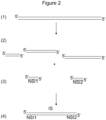
- the prepared sample DNA comprises an adapter ligated DNA fragment, sample DNA is fragmented and adapters ligated to the DNA fragments. At least two adapters are ligated to a DNA fragment, and each of the at least two adapters comprises a NSI.
- the prepared sample DNA comprises an amplicon and an adapter ligated fragment.
- the prepared sample DNA comprises an amplified adapter ligated fragment and/or an adapter ligated amplicon.
- a sample DNA may be subsequently subjected to fragmentation, adapter ligation, and amplification.
- a sample DNA may for instance subsequently be subjected to amplification, fragmentation, and adapter ligation.
- at least two of all the amplification primers and/or adapters used in the preparation of the sample DNA comprise an NSI.
- the method according to the invention comprises:
- a sample preparation method may be contemplated according to the invention.
- separate different adapter ligation steps and/or separate amplification steps may be combined in order to incorporate at least two NSls in a prepared sample DNA.
- the preparation of a sample DNA may also comprise steps that do not involve the addition of NSIs.
- steps that may be performed in the subsequent sequencing step may also be included and vice versa. Steps required for the subsequent sequencing step may also be included in the preparation of the sample DNA.
- sequencing primers can be used that bind to sequencing primer binding sites present in a template.
- adapters and/or amplification primers used in the preparation of a sample DNA may comprise sequencing primer binding sites in addition.
- sequencing primer binding sites may be added in the high throughput sequencing method providing these additional sequences at a later stage.
- sequences from the sample DNA may also be sequenced.
- Such sequences may also be referred to as internal sequences, as these are sequences which are captured and/or amplified with the sample DNA preparation method and may represent unknown sequences from sample DNAs that are of interest.
- These internal sequences may also be sequenced along with the NSIs, and thus the origin of the sample comprising these internal sequences can be determined by the combination of the NSls. This way, for example polymorphisms may be detected between different samples, such as small nucleotide polymorphisms, deletions, insertions etc, by comparing the internal sequences and/or comparing the internal sequences with a reference sequence.
- these internal sequences may also assist in the assignment of different reads to a prepared sample DNA, for instance in the scenario as described below where different sequencing reads are used to build a contig.
- High throughput sequencing involves the parallel sequencing of thousands or millions or more sequences at once. Whichever high throughput sequencing method used, the NSIs of the prepared sample DNAs are determined such that each combination of NSls may be assigned to a prepared sample DNA. For example, contigs may be built by aligning and combining different sequencing reads by which the at least two NSls may be coupled, and thus can be assigned to a single DNA molecule comprising the at least two NSIs. Also, two sequencing reactions may be performed on the complementary strands of a prepared sample DNA which is preferred in case the internal sequences of the fragment are required from both ends, when for instance the internal sequence is relatively large.
- the two sequencing read can be assigned to the prepared sample DNA, comprising the at least two NSIs and a DNA sequence from the sample DNA
- such high throughput sequencing methods can be contemplated.
- the at least two NSls may be determined from a single sequencing read in a high throughput sequencing method.
- a first sequence in a so called paired-end sequencing method, in a first sequencing reaction a first sequence may be determined including an NSI using one of the strands as a template. After the first sequencing reaction, a complementary strand may be generated from the strand first used as a template. A second sequencing reaction can subsequently be performed using this newly generated strand as a second template.
- two DNA template strands are used in this method.
- the structure of a first sequencing template strand can be 3'- Sequence primer binding site 1 - NSI 1 - internal sequence - reverse complement NSI 2 - reverse complement sequence primer binding site 2-5'.
- a reverse complement of the first sequencing template strand can be generated, which can subsequently be used in a second sequencing reaction.
- the second sequencing reaction thus having the following template: 3'- Sequence primer binding site 2 - NSI 2 - reverse complement internal sequence - reverse complement NSI 1 - reverse complement sequence primer binding site 1-5'. Because both sequence reads co-localize (e.g. in the same well, the same bead), the two sequence reads comprising NSI 1 and NSI 2 can be assigned to the same prepared sample DNA and used to identify the prepared sample DNA.
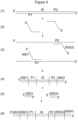
- Such scenarios of sample preparation and subsequent sequencing are depicted in figures 5 , 7 and 10 .
- a single DNA template of the prepared sample DNA is used.
- a single DNA template according to the invention is meant a single stranded DNA molecule which comprise the at least two nucleotide sequence identifiers.
- a single DNA template from a prepared sample DNA may comprise a plurality of single DNA template molecules, e.g. comprising different internal sequences derived from a sample DNA with each different internal sequence being linked with the unique combination of NSIs.
- the prepared sample DNA is an amplicon (or plurality of amplicons)
- the amplicon comprises two strands of DNA. In this embodiment, only one of the strands of an amplicon is used in the sequencing reaction to determine the NSI sequences.
- NSIs may flank the internal sequence of the prepared sample DNA. NSIs may also be on one side of (an internal sequence of) a prepared sample DNA.
- a single DNA template molecule of a prepared sample DNA can have the following structure: 3'- Sequence primer binding site - NSI 1 - internal sequence - NSI 2 -5' or 3'- Sequence primer binding site - NSI 1 - NSI 2 - internal sequence -5'.
- the prepared sample DNA may comprise additional sequences. The order of the sequence primer binding site, NSIs, and internal sequence is what is of interest in this structural representation.
- the sequence primer binding site may be incorporated during the preparation of a sample DNA and/or may be incorporated in the high throughput sequencing method.
- the length and/or quality of sequences generated in high throughput sequencing may be limited.
- the sequencing length may be restricted such that both NSIs flanking the internal sequence can not be determined. It may be advantageous to have the NSls on one side of the internal sequence, i.e. the part of the single DNA template that is sequenced first, such that both sequences can be determined in a single read.
- the NSls may also be on both sides of the internal sequence.
- the single DNA template used may comprise two sequencing primer binding sites, wherein each sequencing primer binding site is located 3' of a different nucleotide sequence identifier.
- a single DNA template may comprise a first section and a second section, with an internal sequence derived from the sample DNA in between.
- the first section comprises a sequencing primer binding site with 5' located thereof an NSI and optional further NSIs
- the second section comprises a second sequencing primer binding site with 5' located thereof an NSI and optional further NSIs.
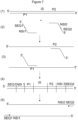
- a single DNA template of a prepared sample DNA can have the following structure: 3'- Sequence primer binding site 1 - NSI 1 - internal sequence - Sequence primer binding site 1 NSI 2 -5'.
- the prepared sample DNA may comprise additional sequences.
- the order of the sequence primer binding sites, NSIs, and internal sequence is what is of interest in this structural representation.
- the sequencing primer binding site can be located directly 3' of a nucleotide sequence identifier but additional sequences may also be present between a sequencing primer binding site and a nucleotide sequence identifier.
- two different sequencing reactions may be performed consecutively in the high throughput sequencing method.
- One sequencing reaction will determine one (or more) NSI, and a second sequencing reaction a second NSI (or more).
- the two sequencing reactions of this embodiment performed in a high throughput sequencing method using the same template may be referred to as "single-read double tagging" sequencing hereinafter.
- Such scenarios of single-read double tagging are depicted in figures 6 , 8 and 9 .
- the different samples or part of the different samples may be pooled such that steps that may be performed simultaneously can be performed simultaneously.
- the sample origin may still be determined as no samples or part of different samples are pooled by which the sample origin may no longer be traced back.
- NSIs are added in different steps
- each sample DNA is first subjected to a step that adds one of 6 different NSIs (A-F).
- Samples that comprise unique identifiers may be pooled (A1, B1, C1, D1, E1, F1) and each pool may now undergo the addition of one of the 6 identifiers, each group of six having a unique second identifier (A2, B2, C2, D2, E2, or F2), whereby A1 and A2 etc. may or may not be identical.
- prepared sample DNAs may be pooled (partially or as a whole) in any possible way, because the at least two unique identifiers are now incorporated.
- a method for identifying the sample origin of amplicons from a plurality of sample DNAs comprising the steps of:
- a method for identifying the sample origin of adapter ligated DNA fragments from a plurality of sample DNAs comprising the steps of:
- a method for identifying the sample origin of adapter ligated amplicons comprising the steps of:
- ligating adapters and amplifying are combined, wherein the sample origin of a prepared sample DNA can be determined by determining 2-4 NSIs of a prepared sample DNA.
- a method for identifying the sample origin of amplified adapter ligated DNA fragments from a plurality of sample DNAs comprising the steps of:
- the end result is an amplified adapter ligated fragment, which may comprise at least two NSIs, or even 3 or 4 NSI. Including more NSIs may be advantageous as this may reduce the number of NSls even further. For example, wherein for 10,000 samples, 100 NSls are required in a combination of two NSIs (100x100), 10 NSIs are required in a combination of four NSIs (10x10x10x10).
- a method for identifying the sample origin of adapter ligated amplicons comprising the steps of:
- the sequence of the identifier sequences is determined from a single DNA template of the prepared sample DNA. It is understood that the prepared sample DNA in the methods above comprises amplicons, adapter ligated fragments, adapter ligated amplicons and/or amplified adapter ligated fragments.
- the first second and optional further identifier sequences are at least 3' or 5' of an internal sequence.
- the combination of identifier sequences required to uniquely identify the sample origin is at least either 3' or 5' of the internal sequence.
- a DNA sequencing template can thus be prepared which will have the identifier sequences flanked by the sequence primer binding site and the internal sequence.
- the 3' end of such a DNA sequencing template may be represented by the following scheme: '3-SEQ1- NSI4-NSI3-NSI2-NS1I-IS - (etc.).
- DNA templates may be generated by only adding sequence identifiers on one end of the internal sequence. For example, by adding adapters to only one end of a DNA fragment, and/or by using asymmetric adapters, or by using amplification primer sets wherein only one primer comprises a sequence identifier. Alternatively, adapters and/or amplification primers may be added to both 5' and 3' end of the DNA fragment, such that at both ends all the sequence identifiers are located.
- Such a DNA template may be represented by the following scheme "'3-SEQ1- NSI4-NSI3-NSI2-NS1I- IS -NSI1-NSI2-NSI3-NSI4-5'. Combinations of these different strategies are also possible, having in one or more separate steps an NSI added to both ends of the IS and to only one end.
- Such a DNA template may be represented by the following scheme "'3-SEQ1- NSI2-NSI1- IS -NSI1-5'.As long as a strategy is used wherein a DNA template is generated in which a unique combination of sequence identifiers is flanked by the sequence primer binding site and the internal sequence, such a DNA template will suffice.
- amplification primers and/or adapters with and without nucleotide sequence identifiers can be used.
- NSI2 and NSI4 which are optional, would correspond to NSI1 and NS3
- suitable DNA templates are generated (i.e. it would still need to a sequence primer binding site, which may be added in a sample preparation for high through put sequencing).
- the NSI2 and NSI4 sequences may not be included.
- NSI2 may not be included, and the NSI4 corresponds to NS3, or NS12 may correspond to NSI1 and NSI4 is not included. In this scenario, only one end of the DNA template may comprise all of the NSIs.
- the single DNA template may comprise two sequencing primer binding sites, wherein each sequencing primer binding site is located 3' of a different nucleotide sequence identifier, and wherein in the high throughput sequencing method two different sequencing reactions are performed with two sequencing primers from the two sequencing primer binding sites of the single DNA template.
- the two different sequencing primer binding sites and corresponding 5' NSI or NSIs can be flanking an internal sequence of a prepared sample DNA.
- a prepared sample DNA may be an amplicon, adapter ligated fragment, adapter ligated amplicons and/or amplified adapter ligated fragment as described above.
- the single DNA template comprises two sequencing primer binding sites, wherein at least one sequencing primer binding site is located 3' of the at least two nucleotide sequence identifiers, and wherein in the high throughput sequencing method two different sequencing reactions are performed with two sequencing primers from the two sequencing primer binding sites of the single DNA template.
- the single DNA template may comprise two sequencing primer binding sites, wherein each sequencing primer binding site is located 3' of one or more nucleotide sequence identifiers, and wherein in the high throughput sequencing method two different sequencing reactions are performed with two sequencing primers from the two sequencing primer binding sites of the single DNA template.
- the two different sequencing primer binding sites and corresponding 5' NSI or NSIs can be flanking an internal sequence of a prepared sample DNA.
- Each of the one or more nucleotide sequence identifiers may be the same.
- Such a configuration may be represented as follows: '-3'-SEQ1-NS1-NS2-IS-SEQ2-NS1-NS2-5'.
- Such a prepared sample DNA may be an amplicon, adapter ligated fragment, adapter ligated amplicons and/or amplified adapter ligated fragment as described above.
- the single DNA template may comprise two sequencing primer binding sites, wherein one sequencing primer binding site is located 3' of two or more nucleotide sequence identifiers, and wherein the other sequencing primer binding site may be located adjacent to the internal sequence.
- two different sequencing reactions are performed with two sequencing primers from the two sequencing primer binding sites of the single DNA template.
- the two different sequencing primer binding sites and corresponding may be flanking an internal sequence of a prepared sample DNA.
- Such a configuration may be represented schematically as follows: '-3'-SEQ1-IS-SEQ2-NS1-NS2-5'. This way, by sequencing from a single template in one sequencing run the internal sequence may be determined and in the other sequencing run the unique combination of sequence identifiers may be determined.
- the universal tail 1 (bold arrow) may be the sequence primer site 1 (i.e. the primer site that is used in sequencing) and universal tail 2 (striped arrow) may be the sequence primer site 1 (i.e. the primer site that is used in sequencing), examples are P5 and P7 primers respectively as used in Illumina GA paired end sequencing.
- the universal tail 1 (bold arrow) may be the sequence primer site 1 (i.e.
- the primer site that is used in sequencing and universal tail 2 may be the sequence primer site 2 (i.e. the primer site that is used in sequencing), examples are P5 and P7 primers respectively as used in Illumina GA with two primer event from the same strand.
- the concept can be used any method involving amplification with a pair of primers. Examples thereof are amplicon sequencing (e.g. detection of mutations, natural polymorphisms), multiplexed SNP genotyping involving PCR primers such as KASP primers, Scorpions primers etc.
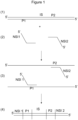
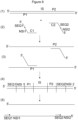
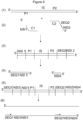
- Part A describes sample preparation using two restriction enzymes to digest the DNA
- part B describes sample preparation using a combination of a restriction enzyme and blunt-end adaptor ligation.
- Alternative methods for sample preparation that involve the use of two barcoded adaptors are within the scope of the current invention.
- the concept can be used any method involving ligation of two adaptors, such as restriction fragment sequencing, AFLP, RAD, WGP, whole genome sequencing, paired-end sequencing, reduced representations sequencing etc.
Landscapes
- Life Sciences & Earth Sciences (AREA)
- Chemical & Material Sciences (AREA)
- Organic Chemistry (AREA)
- Health & Medical Sciences (AREA)
- Proteomics, Peptides & Aminoacids (AREA)
- Zoology (AREA)
- Wood Science & Technology (AREA)
- Engineering & Computer Science (AREA)
- Molecular Biology (AREA)
- Biochemistry (AREA)
- Genetics & Genomics (AREA)
- Microbiology (AREA)
- Biotechnology (AREA)
- General Health & Medical Sciences (AREA)
- General Engineering & Computer Science (AREA)
- Bioinformatics & Cheminformatics (AREA)
- Physics & Mathematics (AREA)
- Analytical Chemistry (AREA)
- Biophysics (AREA)
- Immunology (AREA)
- Chemical Kinetics & Catalysis (AREA)
- General Chemical & Material Sciences (AREA)
- Measuring Or Testing Involving Enzymes Or Micro-Organisms (AREA)
Applications Claiming Priority (5)
| Application Number | Priority Date | Filing Date | Title |
|---|---|---|---|
| US35291010P | 2010-06-09 | 2010-06-09 | |
| US45700510P | 2010-12-06 | 2010-12-06 | |
| EP18189888.3A EP3425062B1 (fr) | 2010-06-09 | 2011-06-08 | Code-barres de séquences combinatoires pour le criblage à haut débit |
| EP11738836.3A EP2580351B1 (fr) | 2010-06-09 | 2011-06-08 | Code-barres de séquences combinatoires pour criblage à haut débit |
| PCT/NL2011/050411 WO2011155833A2 (fr) | 2010-06-09 | 2011-06-08 | Code-barres de séquences combinatoires pour criblage à haut débit |
Related Parent Applications (2)
| Application Number | Title | Priority Date | Filing Date |
|---|---|---|---|
| EP11738836.3A Division EP2580351B1 (fr) | 2010-06-09 | 2011-06-08 | Code-barres de séquences combinatoires pour criblage à haut débit |
| EP18189888.3A Division EP3425062B1 (fr) | 2010-06-09 | 2011-06-08 | Code-barres de séquences combinatoires pour le criblage à haut débit |
Publications (2)
| Publication Number | Publication Date |
|---|---|
| EP4242327A2 true EP4242327A2 (fr) | 2023-09-13 |
| EP4242327A3 EP4242327A3 (fr) | 2023-11-29 |
Family
ID=44583315
Family Applications (3)
| Application Number | Title | Priority Date | Filing Date |
|---|---|---|---|
| EP18189888.3A Active EP3425062B1 (fr) | 2010-06-09 | 2011-06-08 | Code-barres de séquences combinatoires pour le criblage à haut débit |
| EP23187546.9A Pending EP4242327A3 (fr) | 2010-06-09 | 2011-06-08 | Code-barres de séquences combinatoires pour le criblage à haut débit |
| EP11738836.3A Active EP2580351B1 (fr) | 2010-06-09 | 2011-06-08 | Code-barres de séquences combinatoires pour criblage à haut débit |
Family Applications Before (1)
| Application Number | Title | Priority Date | Filing Date |
|---|---|---|---|
| EP18189888.3A Active EP3425062B1 (fr) | 2010-06-09 | 2011-06-08 | Code-barres de séquences combinatoires pour le criblage à haut débit |
Family Applications After (1)
| Application Number | Title | Priority Date | Filing Date |
|---|---|---|---|
| EP11738836.3A Active EP2580351B1 (fr) | 2010-06-09 | 2011-06-08 | Code-barres de séquences combinatoires pour criblage à haut débit |
Country Status (8)
| Country | Link |
|---|---|
| US (1) | US9080210B2 (fr) |
| EP (3) | EP3425062B1 (fr) |
| JP (1) | JP6110297B2 (fr) |
| CN (1) | CN102933721B (fr) |
| DK (2) | DK3425062T3 (fr) |
| ES (2) | ES2697974T3 (fr) |
| FI (1) | FI3425062T3 (fr) |
| WO (1) | WO2011155833A2 (fr) |
Families Citing this family (164)
| Publication number | Priority date | Publication date | Assignee | Title |
|---|---|---|---|---|
| EP2425240A4 (fr) | 2009-04-30 | 2012-12-12 | Good Start Genetics Inc | Procédés et compositions d'évaluation de marqueurs génétiques |
| WO2010127186A1 (fr) | 2009-04-30 | 2010-11-04 | Prognosys Biosciences, Inc. | Produits de construction d'acide nucléique et leurs procédés d'utilisation |
| US8835358B2 (en) | 2009-12-15 | 2014-09-16 | Cellular Research, Inc. | Digital counting of individual molecules by stochastic attachment of diverse labels |
| US10787701B2 (en) | 2010-04-05 | 2020-09-29 | Prognosys Biosciences, Inc. | Spatially encoded biological assays |
| HRP20151294T1 (hr) | 2010-04-05 | 2016-03-11 | Prognosys Biosciences, Inc. | Biološka testiranja sa prostornim kodiranjem |
| US20190300945A1 (en) | 2010-04-05 | 2019-10-03 | Prognosys Biosciences, Inc. | Spatially Encoded Biological Assays |
| US12545960B2 (en) | 2010-05-18 | 2026-02-10 | Natera, Inc. | Methods for simultaneous amplification of target loci |
| US11322224B2 (en) * | 2010-05-18 | 2022-05-03 | Natera, Inc. | Methods for non-invasive prenatal ploidy calling |
| US10316362B2 (en) | 2010-05-18 | 2019-06-11 | Natera, Inc. | Methods for simultaneous amplification of target loci |
| WO2012088456A2 (fr) | 2010-12-22 | 2012-06-28 | Natera, Inc. | Procédés de recherche de paternité prénatale, non invasive |
| US9163281B2 (en) * | 2010-12-23 | 2015-10-20 | Good Start Genetics, Inc. | Methods for maintaining the integrity and identification of a nucleic acid template in a multiplex sequencing reaction |
| GB201106254D0 (en) | 2011-04-13 | 2011-05-25 | Frisen Jonas | Method and product |
| DK2814959T3 (en) | 2012-02-17 | 2018-04-23 | Hutchinson Fred Cancer Res | COMPOSITIONS AND PROCEDURES FOR EXACTLY IDENTIFYING MUTATIONS |
| US10941396B2 (en) | 2012-02-27 | 2021-03-09 | Becton, Dickinson And Company | Compositions and kits for molecular counting |
| EP3744857A1 (fr) | 2012-03-20 | 2020-12-02 | University Of Washington Through Its Center For Commercialization | Méthodes permettant de faire baisser le taux d'erreurs observées lors d'un séquençage massif d'adn eu parallèle en faisant appel à un séquençage par consensus duplex |
| US8209130B1 (en) | 2012-04-04 | 2012-06-26 | Good Start Genetics, Inc. | Sequence assembly |
| US10227635B2 (en) | 2012-04-16 | 2019-03-12 | Molecular Loop Biosolutions, Llc | Capture reactions |
| US20160040229A1 (en) | 2013-08-16 | 2016-02-11 | Guardant Health, Inc. | Systems and methods to detect rare mutations and copy number variation |
| US10876152B2 (en) | 2012-09-04 | 2020-12-29 | Guardant Health, Inc. | Systems and methods to detect rare mutations and copy number variation |
| GB2533006B (en) | 2012-09-04 | 2017-06-07 | Guardant Health Inc | Systems and methods to detect copy number variation |
| US11913065B2 (en) | 2012-09-04 | 2024-02-27 | Guardent Health, Inc. | Systems and methods to detect rare mutations and copy number variation |
| DE112013004650T5 (de) * | 2012-09-24 | 2015-06-18 | Cb Biotechnologies, Inc. | Multiplexpyrosequenzierung unter Verwendung nichtinterferierender, rauschbeendender Polynukleotididentifikationstags |
| WO2014060483A1 (fr) | 2012-10-17 | 2014-04-24 | Spatial Transcriptomics Ab | Procédés et produit d'optimisation de la détection localisée ou spatiale de l'expression génique dans un échantillon de tissu |
| EP2746405B1 (fr) * | 2012-12-23 | 2015-11-04 | HS Diagnomics GmbH | Procédés et ensembles d'amorces de séquençage de PCR à haut rendement |
| DE102013200309B3 (de) * | 2013-01-11 | 2014-01-02 | Technische Universität Dresden | Verfahren zur Zusammenstellung eines Sets von Nukleinsäure-Barcodes sowie Verfahren zur Zuordnung von Nukleinsäuresequenzen nach der Sequenzierung |
| GB201302900D0 (en) * | 2013-02-19 | 2013-04-03 | Genome Res Ltd | Nucleic acid marker molecules for identifying and detecting cross contaminationof nucleic acid samples |
| US10612088B2 (en) * | 2013-03-14 | 2020-04-07 | The Broad Institute, Inc. | Massively multiplexed RNA sequencing |
| GB2528205B (en) * | 2013-03-15 | 2020-06-03 | Guardant Health Inc | Systems and methods to detect rare mutations and copy number variation |
| EP3013983B1 (fr) | 2013-06-25 | 2023-02-15 | Prognosys Biosciences, Inc. | Essais biologiques à codage spatial faisant appel à un dispositif microfluidique |
| ES2711168T3 (es) | 2013-08-28 | 2019-04-30 | Becton Dickinson Co | Análisis masivo en paralelo de células individuales |
| US9582877B2 (en) | 2013-10-07 | 2017-02-28 | Cellular Research, Inc. | Methods and systems for digitally counting features on arrays |
| US10851414B2 (en) | 2013-10-18 | 2020-12-01 | Good Start Genetics, Inc. | Methods for determining carrier status |
| WO2015070187A2 (fr) * | 2013-11-11 | 2015-05-14 | The Translational Genomics Research Institute | Systèmes et procédés utilisables dans le cadre de stratégies d'indexation fondées sur des queues universelles pour le séquençage de produits |
| CA2929596C (fr) * | 2013-11-13 | 2022-07-05 | Nugen Technologies, Inc. | Compositions et procedes pour l'identification d'une lecture de sequencage en double |
| ES2660989T3 (es) | 2013-12-28 | 2018-03-27 | Guardant Health, Inc. | Métodos y sistemas para detectar variantes genéticas |
| US12492429B2 (en) | 2014-04-21 | 2025-12-09 | Natera, Inc. | Detecting mutations and ploidy in chromosomal segments |
| EP3957749A1 (fr) | 2014-04-21 | 2022-02-23 | Natera, Inc. | Détection de mutations spécifiques d'un tumeur dans les biopsies par séquençage exome entier et dans les échantillons acellulaires |
| US11408024B2 (en) | 2014-09-10 | 2022-08-09 | Molecular Loop Biosciences, Inc. | Methods for selectively suppressing non-target sequences |
| US9938522B2 (en) | 2014-09-25 | 2018-04-10 | Genewiz, Inc. | High throughput sequencing of end regions of long linear DNAs |
| CN105524983B (zh) * | 2014-09-30 | 2019-06-21 | 大连晶泰生物技术有限公司 | 基于高通量测序的标记和捕获多个样本的一个或多个特定基因的方法和试剂盒 |
| JP2018504899A (ja) * | 2014-12-24 | 2018-02-22 | キージーン・エン・フェー | 主鎖媒介性メイトペアシーケンシング |
| EP4095261B1 (fr) | 2015-01-06 | 2025-05-28 | Molecular Loop Biosciences, Inc. | Criblage de variantes structurales |
| AU2016220404B2 (en) | 2015-02-17 | 2021-05-27 | Mgi Tech Co., Ltd. | DNA sequencing using controlled strand displacement |
| US10697010B2 (en) | 2015-02-19 | 2020-06-30 | Becton, Dickinson And Company | High-throughput single-cell analysis combining proteomic and genomic information |
| WO2016138496A1 (fr) | 2015-02-27 | 2016-09-01 | Cellular Research, Inc. | Codage à barres moléculaire à adressage spatial |
| WO2016160844A2 (fr) | 2015-03-30 | 2016-10-06 | Cellular Research, Inc. | Procédés et compositions pour codage à barres combinatoire |
| US10774374B2 (en) | 2015-04-10 | 2020-09-15 | Spatial Transcriptomics AB and Illumina, Inc. | Spatially distinguished, multiplex nucleic acid analysis of biological specimens |
| US10385387B2 (en) | 2015-04-20 | 2019-08-20 | Pacific Biosciences Of California, Inc. | Methods for selectively amplifying and tagging nucleic acids |
| CN107580632B (zh) * | 2015-04-23 | 2021-12-28 | 贝克顿迪金森公司 | 用于全转录组扩增的方法和组合物 |
| WO2016196229A1 (fr) | 2015-06-01 | 2016-12-08 | Cellular Research, Inc. | Méthodes de quantification d'arn |
| US10513732B2 (en) * | 2015-07-13 | 2019-12-24 | New York University | Sequencing methods and kits |
| CN108026524A (zh) | 2015-09-11 | 2018-05-11 | 赛卢拉研究公司 | 用于核酸文库标准化的方法和组合物 |
| JP6560088B2 (ja) * | 2015-09-30 | 2019-08-14 | 富士フイルム株式会社 | プライマーの設計方法、dna増幅方法および解析方法 |
| US11207393B2 (en) | 2015-10-16 | 2021-12-28 | President And Fellows Of Harvard College | Regulatory T cell PD-1 modulation for regulating T cell effector immune responses |
| SG11201803646YA (en) * | 2015-11-04 | 2018-05-30 | Atreca Inc | Combinatorial sets of nucleic acid barcodes for analysis of nucleic acids associated with single cells |
| PL3387152T3 (pl) | 2015-12-08 | 2022-05-09 | Twinstrand Biosciences, Inc. | Ulepszone adaptory, sposoby i kompozycje do sekwencjonowania dupleksowego |
| WO2017106768A1 (fr) | 2015-12-17 | 2017-06-22 | Guardant Health, Inc. | Procédés de détermination du nombre de copies du gène tumoral par analyse d'adn acellulaire |
| WO2017117440A1 (fr) * | 2015-12-30 | 2017-07-06 | Bio-Rad Laboratories, Inc. | Préparation de banque de pcr séparée en gouttelettes |
| EP3199642A1 (fr) * | 2016-02-01 | 2017-08-02 | Fraunhofer-Gesellschaft zur Förderung der angewandten Forschung e.V. | Sélection de plantes à l'aide de séquençage haut débit |
| JP2019512271A (ja) | 2016-03-21 | 2019-05-16 | デイナ ファーバー キャンサー インスティチュート,インコーポレイテッド | T細胞疲弊状態特異的遺伝子発現調節因子およびその使用 |
| EP4488686A3 (fr) | 2016-04-14 | 2025-04-30 | Guardant Health, Inc. | Procédés de détection précoce du cancer |
| US11384382B2 (en) | 2016-04-14 | 2022-07-12 | Guardant Health, Inc. | Methods of attaching adapters to sample nucleic acids |
| CN106555226B (zh) * | 2016-04-14 | 2019-07-23 | 大连晶泰生物技术有限公司 | 一种构建高通量测序文库的方法和试剂盒 |
| ES2956757T3 (es) | 2016-05-02 | 2023-12-27 | Becton Dickinson Co | Codificación con códigos de barras moleculares precisa |
| US10301677B2 (en) | 2016-05-25 | 2019-05-28 | Cellular Research, Inc. | Normalization of nucleic acid libraries |
| EP3465502B1 (fr) | 2016-05-26 | 2024-04-10 | Becton, Dickinson and Company | Méthodes d'ajustement de compte des étiquettes moléculaires |
| US10202641B2 (en) | 2016-05-31 | 2019-02-12 | Cellular Research, Inc. | Error correction in amplification of samples |
| US10640763B2 (en) | 2016-05-31 | 2020-05-05 | Cellular Research, Inc. | Molecular indexing of internal sequences |
| CA3034924C (fr) | 2016-09-26 | 2025-11-18 | Becton, Dickinson And Company | Mesure d'expression de proteines a l'aide de reactifs avec des sequences d'oligonucleotides a code-barres |
| CN117056774B (zh) | 2016-11-08 | 2026-01-27 | 贝克顿迪金森公司 | 用于细胞标记分类的方法 |
| CN109952612B (zh) | 2016-11-08 | 2023-12-01 | 贝克顿迪金森公司 | 用于表达谱分类的方法 |
| EP3541826B1 (fr) | 2016-11-15 | 2023-09-27 | Quest Diagnostics Investments LLC | Procédés de détection de mutations d'adn à l'aide d'une extraction de pointe mitra |
| CA3044033A1 (fr) | 2016-11-15 | 2018-05-24 | Quest Diagnostics Investments Llc | Methodes de detection de mutations de fibrose kystique a l'aide d'une extraction de pointe mitra |
| CN110573253B (zh) | 2017-01-13 | 2021-11-02 | 赛卢拉研究公司 | 流体通道的亲水涂层 |
| CN110382708A (zh) | 2017-02-01 | 2019-10-25 | 赛卢拉研究公司 | 使用阻断性寡核苷酸进行选择性扩增 |
| US11584958B2 (en) | 2017-03-31 | 2023-02-21 | Grail, Llc | Library preparation and use thereof for sequencing based error correction and/or variant identification |
| CN106834286B (zh) * | 2017-04-05 | 2020-02-21 | 北京泛生子基因科技有限公司 | 一步法快速构建扩增子文库的引物组合 |
| EP3635107B1 (fr) | 2017-05-14 | 2025-10-15 | Foresee Genomics Ltd | Construction d'adn pour séquençage et son procédé de préparation |
| JP7536450B2 (ja) | 2017-06-05 | 2024-08-20 | ベクトン・ディキンソン・アンド・カンパニー | 単一細胞用のサンプルインデックス付加 |
| JP7604530B2 (ja) * | 2017-07-10 | 2024-12-23 | アジレント・テクノロジーズ・インク | 核酸識別子の夾雑を検出するためのアッセイ方法および組成物 |
| US10633651B2 (en) | 2017-07-10 | 2020-04-28 | Agilent Technologies, Inc. | Assay methods and compositions for detecting contamination of nucleic acid identifiers |
| WO2019060716A1 (fr) | 2017-09-25 | 2019-03-28 | Freenome Holdings, Inc. | Méthodes et systèmes d'extraction d'échantillon |
| AU2018359670B2 (en) | 2017-11-06 | 2021-08-26 | Illumina, Inc. | Nucleic acid indexing techniques |
| SG11202003885UA (en) | 2017-11-08 | 2020-05-28 | Twinstrand Biosciences Inc | Reagents and adapters for nucleic acid sequencing and methods for making such reagents and adapters |
| CN111492068B (zh) | 2017-12-19 | 2025-03-21 | 贝克顿迪金森公司 | 与寡核苷酸相关联的颗粒 |
| CN108165646A (zh) * | 2017-12-26 | 2018-06-15 | 河北省农林科学院谷子研究所 | 一种适用于谷子的简化基因组建库方法 |
| EP3788170B1 (fr) | 2018-05-03 | 2025-01-01 | Becton, Dickinson and Company | Codage à barres moléculaire sur des extrémités de transcrit en regard |
| CA3097976A1 (fr) | 2018-05-03 | 2019-11-07 | Becton, Dickinson And Company | Analyse multi-omique d'echantillons a haut debit |
| WO2020014693A1 (fr) | 2018-07-12 | 2020-01-16 | Twinstrand Biosciences, Inc. | Procédés et réactifs pour caractériser une édition génomique et une expansion clonale, et applications associées |
| US11519033B2 (en) | 2018-08-28 | 2022-12-06 | 10X Genomics, Inc. | Method for transposase-mediated spatial tagging and analyzing genomic DNA in a biological sample |
| ES2992135T3 (es) | 2018-10-01 | 2024-12-09 | Becton Dickinson Co | Determinar secuencias de transcripción 5 |
| JP7618548B2 (ja) | 2018-11-08 | 2025-01-21 | ベクトン・ディキンソン・アンド・カンパニー | ランダムプライミングを使用した単一細胞の全トランスクリプトーム解析 |
| WO2020100079A2 (fr) * | 2018-11-14 | 2020-05-22 | Foresee Genomic Ltd | Multimère de séquençage et leurs procédés de préparation et d'utilisation |
| EP3894590B1 (fr) | 2018-12-10 | 2025-10-22 | 10X Genomics, Inc. | Procédés d'utilisation de réseaux maître/copie pour la détection spatiale |
| US12529094B2 (en) | 2018-12-10 | 2026-01-20 | 10X Genomics, Inc. | Imaging system hardware |
| US11492660B2 (en) | 2018-12-13 | 2022-11-08 | Becton, Dickinson And Company | Selective extension in single cell whole transcriptome analysis |
| US11649485B2 (en) | 2019-01-06 | 2023-05-16 | 10X Genomics, Inc. | Generating capture probes for spatial analysis |
| US11926867B2 (en) | 2019-01-06 | 2024-03-12 | 10X Genomics, Inc. | Generating capture probes for spatial analysis |
| US11371076B2 (en) | 2019-01-16 | 2022-06-28 | Becton, Dickinson And Company | Polymerase chain reaction normalization through primer titration |
| EP4242322B1 (fr) | 2019-01-23 | 2024-08-21 | Becton, Dickinson and Company | Oligonucléotides associés à des anticorps |
| CN113454234B (zh) | 2019-02-14 | 2025-03-18 | 贝克顿迪金森公司 | 杂合体靶向和全转录物组扩增 |
| US20200318174A1 (en) | 2019-04-03 | 2020-10-08 | Agilent Technologies, Inc. | Compositions and methods for identifying and characterizing gene translocations, rearrangements and inversions |
| WO2020214642A1 (fr) | 2019-04-19 | 2020-10-22 | Becton, Dickinson And Company | Procédés d'association de données phénotypiques et de données de séquençage monocellule |
| EP3976820A1 (fr) | 2019-05-30 | 2022-04-06 | 10X Genomics, Inc. | Procédés de détection de l'hétérogénéité spatiale d'un échantillon biologique |
| AU2020283042B2 (en) | 2019-05-31 | 2026-02-19 | Freenome Holdings, Inc. | Methods and systems for high-depth sequencing of methylated nucleic acid |
| CN120099137A (zh) | 2019-07-22 | 2025-06-06 | 贝克顿迪金森公司 | 单细胞染色质免疫沉淀测序测定 |
| WO2021092433A2 (fr) | 2019-11-08 | 2021-05-14 | 10X Genomics, Inc. | Amélioration de la spécificité de la liaison d'un analyte |
| JP7522189B2 (ja) | 2019-11-08 | 2024-07-24 | ベクトン・ディキンソン・アンド・カンパニー | 免疫レパートリーシーケンシングのための完全長v(d)j情報を得るためのランダムプライミングの使用 |
| CN115135984B (zh) | 2019-12-23 | 2025-12-23 | 10X基因组学有限公司 | 可逆固定试剂及其使用方法 |
| EP4081656A1 (fr) | 2019-12-23 | 2022-11-02 | 10X Genomics, Inc. | Compositions et méthodes d'utilisation d'échantillons biologiques fixés dans des dosages basés sur des compartiments |
| WO2021133849A1 (fr) | 2019-12-23 | 2021-07-01 | 10X Genomics, Inc. | Procédés d'analyse spatiale utilisant une ligature à matrice d'arn |
| EP4090764A1 (fr) | 2020-01-13 | 2022-11-23 | Becton, Dickinson and Company | Capture de cellules à l'aide d'oligonucléotides contenant de la du |
| US11649497B2 (en) | 2020-01-13 | 2023-05-16 | Becton, Dickinson And Company | Methods and compositions for quantitation of proteins and RNA |
| US12365942B2 (en) | 2020-01-13 | 2025-07-22 | 10X Genomics, Inc. | Methods of decreasing background on a spatial array |
| US12405264B2 (en) | 2020-01-17 | 2025-09-02 | 10X Genomics, Inc. | Electrophoretic system and method for analyte capture |
| US11702693B2 (en) | 2020-01-21 | 2023-07-18 | 10X Genomics, Inc. | Methods for printing cells and generating arrays of barcoded cells |
| US11732299B2 (en) | 2020-01-21 | 2023-08-22 | 10X Genomics, Inc. | Spatial assays with perturbed cells |
| US20210230681A1 (en) | 2020-01-24 | 2021-07-29 | 10X Genomics, Inc. | Methods for spatial analysis using proximity ligation |
| WO2021155057A1 (fr) | 2020-01-29 | 2021-08-05 | Becton, Dickinson And Company | Puits à code-barres pour la cartographie spatiale de cellules individuelles par séquençage |
| US11821035B1 (en) | 2020-01-29 | 2023-11-21 | 10X Genomics, Inc. | Compositions and methods of making gene expression libraries |
| US12076701B2 (en) | 2020-01-31 | 2024-09-03 | 10X Genomics, Inc. | Capturing oligonucleotides in spatial transcriptomics |
| US12110541B2 (en) | 2020-02-03 | 2024-10-08 | 10X Genomics, Inc. | Methods for preparing high-resolution spatial arrays |
| US11898205B2 (en) | 2020-02-03 | 2024-02-13 | 10X Genomics, Inc. | Increasing capture efficiency of spatial assays |
| US11732300B2 (en) | 2020-02-05 | 2023-08-22 | 10X Genomics, Inc. | Increasing efficiency of spatial analysis in a biological sample |
| WO2021158925A1 (fr) | 2020-02-07 | 2021-08-12 | 10X Genomics, Inc. | Évaluation quantitative et automatisée de la performance de perméabilisation pour la transcriptomique spatiale |
| US12281357B1 (en) | 2020-02-14 | 2025-04-22 | 10X Genomics, Inc. | In situ spatial barcoding |
| US11475981B2 (en) | 2020-02-18 | 2022-10-18 | Tempus Labs, Inc. | Methods and systems for dynamic variant thresholding in a liquid biopsy assay |
| US11211144B2 (en) | 2020-02-18 | 2021-12-28 | Tempus Labs, Inc. | Methods and systems for refining copy number variation in a liquid biopsy assay |
| US11211147B2 (en) | 2020-02-18 | 2021-12-28 | Tempus Labs, Inc. | Estimation of circulating tumor fraction using off-target reads of targeted-panel sequencing |
| US11891654B2 (en) | 2020-02-24 | 2024-02-06 | 10X Genomics, Inc. | Methods of making gene expression libraries |
| EP4111168A1 (fr) | 2020-02-25 | 2023-01-04 | Becton Dickinson and Company | Sondes bi-spécifiques permettant l'utilisation d'échantillons monocellulaires en tant que contrôle de compensation de couleur unique |
| CA3178302A1 (fr) | 2020-03-31 | 2021-10-07 | Freenome Holdings, Inc. | Procedes et systemes pour detecter un cancer colorectal par l'intermediaire d'une analyse de methylation d'acide nucleique |
| ES2965354T3 (es) | 2020-04-22 | 2024-04-12 | 10X Genomics Inc | Métodos para análisis espacial que usan eliminación de ARN elegido como diana |
| EP4150118A1 (fr) | 2020-05-14 | 2023-03-22 | Becton Dickinson and Company | Amorces pour profilage de répertoire immunitaire |
| EP4153775B1 (fr) | 2020-05-22 | 2024-07-24 | 10X Genomics, Inc. | Mesure spatio-temporelle simultanée de l'expression génique et de l'activité cellulaire |
| EP4553168A3 (fr) | 2020-05-22 | 2025-08-27 | 10x Genomics, Inc. | Analyse spatiale pour détecter des variantes de séquence |
| WO2021242834A1 (fr) | 2020-05-26 | 2021-12-02 | 10X Genomics, Inc. | Procédé de réinitialisation d'un réseau |
| US12157913B2 (en) | 2020-06-02 | 2024-12-03 | Becton, Dickinson And Company | Oligonucleotides and beads for 5 prime gene expression assay |
| US12031177B1 (en) | 2020-06-04 | 2024-07-09 | 10X Genomics, Inc. | Methods of enhancing spatial resolution of transcripts |
| WO2021252499A1 (fr) | 2020-06-08 | 2021-12-16 | 10X Genomics, Inc. | Méthodes de détermination de marge chirurgicale et méthodes d'utilisation associées |
| EP4165207B1 (fr) | 2020-06-10 | 2024-09-25 | 10X Genomics, Inc. | Methode pour determiner la position d'un analyte dans un echantillon biologique |
| EP4172362B1 (fr) | 2020-06-25 | 2024-09-18 | 10X Genomics, Inc. | Analyse spatiale de la méthylation de l'adn |
| US11981960B1 (en) | 2020-07-06 | 2024-05-14 | 10X Genomics, Inc. | Spatial analysis utilizing degradable hydrogels |
| US11761038B1 (en) | 2020-07-06 | 2023-09-19 | 10X Genomics, Inc. | Methods for identifying a location of an RNA in a biological sample |
| US12209280B1 (en) | 2020-07-06 | 2025-01-28 | 10X Genomics, Inc. | Methods of identifying abundance and location of an analyte in a biological sample using second strand synthesis |
| US11932901B2 (en) | 2020-07-13 | 2024-03-19 | Becton, Dickinson And Company | Target enrichment using nucleic acid probes for scRNAseq |
| WO2022026909A1 (fr) | 2020-07-31 | 2022-02-03 | Becton, Dickinson And Company | Dosage à cellule unique pour chromatine accessible par transposase |
| US11981958B1 (en) | 2020-08-20 | 2024-05-14 | 10X Genomics, Inc. | Methods for spatial analysis using DNA capture |
| US11926822B1 (en) | 2020-09-23 | 2024-03-12 | 10X Genomics, Inc. | Three-dimensional spatial analysis |
| WO2022076237A1 (fr) | 2020-10-05 | 2022-04-14 | Freenome Holdings, Inc. | Marqueurs pour la détection précoce de troubles prolifératifs de cellules du côlon |
| WO2022074058A1 (fr) | 2020-10-06 | 2022-04-14 | Keygene N.V. | Addition de séquence ciblée |
| US11827935B1 (en) | 2020-11-19 | 2023-11-28 | 10X Genomics, Inc. | Methods for spatial analysis using rolling circle amplification and detection probes |
| US11739443B2 (en) | 2020-11-20 | 2023-08-29 | Becton, Dickinson And Company | Profiling of highly expressed and lowly expressed proteins |
| EP4263859A1 (fr) | 2020-12-15 | 2023-10-25 | Becton, Dickinson and Company | Analyse du sécrétome de cellule unique |
| EP4729631A2 (fr) | 2020-12-21 | 2026-04-22 | 10X Genomics, Inc. | Procédés, compositions et systèmes de capture de sondes et/ou de codes à barres |
| AU2021409465A1 (en) | 2020-12-21 | 2023-08-03 | Freenome Holdings, Inc. | Markers for the early detection of colon cell proliferative disorders |
| EP4428246B1 (fr) | 2021-04-14 | 2025-12-24 | 10X Genomics, Inc. | Procédés de mesure de la localisation erronée d'un analyte |
| EP4320271B1 (fr) | 2021-05-06 | 2025-03-19 | 10X Genomics, Inc. | Procédés pour augmenter la résolution d'une analyse spatiale |
| EP4582555A3 (fr) | 2021-06-03 | 2025-10-22 | 10X Genomics, Inc. | Procédés, compositions, kits et systèmes pour améliorer la capture d'analytes pour une analyse spatiale |
| ES3011462T3 (en) | 2021-09-01 | 2025-04-07 | 10X Genomics Inc | Methods for blocking a capture probe on a spatial array |
| WO2023086880A1 (fr) | 2021-11-10 | 2023-05-19 | 10X Genomics, Inc. | Procédés, compositions et kits pour déterminer l'emplacement d'un analyte dans un échantillon biologique |
| EP4305195A2 (fr) | 2021-12-01 | 2024-01-17 | 10X Genomics, Inc. | Procédés, compositions et systèmes pour la détection améliorée d'analytes in situ et analyse spatiale |
| WO2024102809A1 (fr) | 2022-11-09 | 2024-05-16 | 10X Genomics, Inc. | Procédés, compositions et kits pour déterminer l'emplacement de plusieurs analytes dans un échantillon biologique |
| WO2026015513A1 (fr) | 2024-07-08 | 2026-01-15 | Cornell University | Analyse conjointe de dommages à l'adn et d'expression d'arn dans des cellules individuelles |
Citations (3)
| Publication number | Priority date | Publication date | Assignee | Title |
|---|---|---|---|---|
| EP0534858A1 (fr) | 1991-09-24 | 1993-03-31 | Keygene N.V. | Amplification sélective des fragments de restriction: procédé général pour le "fingerprinting" d'ADN |
| WO2006137733A1 (fr) | 2005-06-23 | 2006-12-28 | Keygene N.V. | Strategies permettant l'identification et la detection a haut rendement de polymorphismes |
| WO2007037678A2 (fr) | 2005-09-29 | 2007-04-05 | Keygene N.V. | Criblage a haut debit de populations mutagenisees |
Family Cites Families (8)
| Publication number | Priority date | Publication date | Assignee | Title |
|---|---|---|---|---|
| US4683195A (en) * | 1986-01-30 | 1987-07-28 | Cetus Corporation | Process for amplifying, detecting, and/or-cloning nucleic acid sequences |
| US5565340A (en) * | 1995-01-27 | 1996-10-15 | Clontech Laboratories, Inc. | Method for suppressing DNA fragment amplification during PCR |
| JP2003527087A (ja) * | 1999-08-13 | 2003-09-16 | イェール・ユニバーシティ | バイナリーコード化配列タグ |
| US20060263789A1 (en) | 2005-05-19 | 2006-11-23 | Robert Kincaid | Unique identifiers for indicating properties associated with entities to which they are attached, and methods for using |
| CN101365803B (zh) * | 2005-12-22 | 2013-03-20 | 关键基因股份有限公司 | 采用高通量测序技术的改进的转录谱描述策略 |
| WO2008093098A2 (fr) | 2007-02-02 | 2008-08-07 | Illumina Cambridge Limited | Procedes pour indexer des echantillons et sequencer de multiples matrices nucleotidiques |
| WO2009036525A2 (fr) | 2007-09-21 | 2009-03-26 | Katholieke Universiteit Leuven | Outils et procédés pour tests génétiques ayant recours à un séquençage de dernière génération |
| WO2010021936A1 (fr) * | 2008-08-16 | 2010-02-25 | The Board Of Trustees Of The Leland Stanford Junior University | Étalonnage par pcr numérique pour un séquençage à rendement élevé |
-
2011
- 2011-06-08 DK DK18189888.3T patent/DK3425062T3/da active
- 2011-06-08 EP EP18189888.3A patent/EP3425062B1/fr active Active
- 2011-06-08 DK DK11738836.3T patent/DK2580351T3/en active
- 2011-06-08 US US13/702,667 patent/US9080210B2/en active Active
- 2011-06-08 ES ES11738836T patent/ES2697974T3/es active Active
- 2011-06-08 ES ES18189888T patent/ES2960184T3/es active Active
- 2011-06-08 EP EP23187546.9A patent/EP4242327A3/fr active Pending
- 2011-06-08 CN CN201180028072.1A patent/CN102933721B/zh active Active
- 2011-06-08 FI FIEP18189888.3T patent/FI3425062T3/fi active
- 2011-06-08 JP JP2013514131A patent/JP6110297B2/ja active Active
- 2011-06-08 WO PCT/NL2011/050411 patent/WO2011155833A2/fr not_active Ceased
- 2011-06-08 EP EP11738836.3A patent/EP2580351B1/fr active Active
Patent Citations (3)
| Publication number | Priority date | Publication date | Assignee | Title |
|---|---|---|---|---|
| EP0534858A1 (fr) | 1991-09-24 | 1993-03-31 | Keygene N.V. | Amplification sélective des fragments de restriction: procédé général pour le "fingerprinting" d'ADN |
| WO2006137733A1 (fr) | 2005-06-23 | 2006-12-28 | Keygene N.V. | Strategies permettant l'identification et la detection a haut rendement de polymorphismes |
| WO2007037678A2 (fr) | 2005-09-29 | 2007-04-05 | Keygene N.V. | Criblage a haut debit de populations mutagenisees |
Non-Patent Citations (4)
| Title |
|---|
| ALBERT L. LEHNINGER: "Principles of Biochemistry", 1982, ACADEMIC PRESS, pages: 793 - 800 |
| AUSUBEL ET AL.: "Current Protocols in Molecular Biology", 1987, JOHN WILEY & SONS |
| RIGOLA ET AL., PLOS ONE, vol. 4, no. 3, 2009, pages e4761 |
| SAMBROOK ET AL.: "Molecular Cloning. A Laboratory Manual", 1989, COLD SPRING HARBOR LABORATORY PRESS |
Also Published As
| Publication number | Publication date |
|---|---|
| EP2580351A2 (fr) | 2013-04-17 |
| EP3425062A1 (fr) | 2019-01-09 |
| ES2960184T3 (es) | 2024-03-01 |
| CN102933721B (zh) | 2015-12-02 |
| US20130137587A1 (en) | 2013-05-30 |
| DK2580351T3 (en) | 2018-11-26 |
| JP6110297B2 (ja) | 2017-04-05 |
| CN102933721A (zh) | 2013-02-13 |
| FI3425062T3 (fi) | 2023-09-01 |
| ES2697974T3 (es) | 2019-01-30 |
| DK3425062T3 (da) | 2023-09-04 |
| WO2011155833A2 (fr) | 2011-12-15 |
| JP2013528058A (ja) | 2013-07-08 |
| EP2580351B1 (fr) | 2018-08-29 |
| WO2011155833A3 (fr) | 2012-02-16 |
| US9080210B2 (en) | 2015-07-14 |
| EP3425062B1 (fr) | 2023-08-02 |
| EP4242327A3 (fr) | 2023-11-29 |
Similar Documents
| Publication | Publication Date | Title |
|---|---|---|
| EP2580351B1 (fr) | Code-barres de séquences combinatoires pour criblage à haut débit | |
| US11098356B2 (en) | Methods and compositions for nucleic acid sequencing | |
| EP2513333B1 (fr) | Séquençage du génome total basé sur des enzymes de restriction | |
| EP2038425B1 (fr) | Cartographie physique à haut débit par aflp | |
| EP2559774A1 (fr) | Procédé amélioré pour l'amplification d'acides nucléiques cible au moyen d'une approche à plusieurs amorces | |
| AU2016255570A1 (en) | Compositions and methods for constructing strand specific cDNA libraries | |
| HK40100544A (en) | Combinatorial sequence barcodes for high throughput screening | |
| HK40002692A (en) | Combinatorial sequence barcodes for high throughput screening | |
| HK40002692B (en) | Combinatorial sequence barcodes for high throughput screening | |
| US20080124707A1 (en) | Nucleic acid concatenation | |
| WO2018009677A1 (fr) | Enrichissement rapide de cible par pcr relais multiplexée avec des amorces à bulles modifiées |
Legal Events
| Date | Code | Title | Description |
|---|---|---|---|
| PUAI | Public reference made under article 153(3) epc to a published international application that has entered the european phase |
Free format text: ORIGINAL CODE: 0009012 |
|
| STAA | Information on the status of an ep patent application or granted ep patent |
Free format text: STATUS: REQUEST FOR EXAMINATION WAS MADE |
|
| 17P | Request for examination filed |
Effective date: 20230725 |
|
| AC | Divisional application: reference to earlier application |
Ref document number: 2580351 Country of ref document: EP Kind code of ref document: P Ref document number: 3425062 Country of ref document: EP Kind code of ref document: P |
|
| AK | Designated contracting states |
Kind code of ref document: A2 Designated state(s): AL AT BE BG CH CY CZ DE DK EE ES FI FR GB GR HR HU IE IS IT LI LT LU LV MC MK MT NL NO PL PT RO RS SE SI SK SM TR |
|
| REG | Reference to a national code |
Ref country code: DE Ref legal event code: R079 Free format text: PREVIOUS MAIN CLASS: C12Q0001686900 Ipc: C12Q0001680000 |
|
| PUAL | Search report despatched |
Free format text: ORIGINAL CODE: 0009013 |
|
| AK | Designated contracting states |
Kind code of ref document: A3 Designated state(s): AL AT BE BG CH CY CZ DE DK EE ES FI FR GB GR HR HU IE IS IT LI LT LU LV MC MK MT NL NO PL PT RO RS SE SI SK SM TR |
|
| RIC1 | Information provided on ipc code assigned before grant |
Ipc: C12Q 1/6869 20180101ALI20231025BHEP Ipc: C12N 15/10 20060101ALI20231025BHEP Ipc: C12Q 1/68 20180101AFI20231025BHEP |
|
| REG | Reference to a national code |
Ref country code: HK Ref legal event code: DE Ref document number: 40100544 Country of ref document: HK |