EP4244686B1 - Dispositif d'interface pour connecter des contrôleurs de processus à des dispositifs homologues d'opc ua - Google Patents
Dispositif d'interface pour connecter des contrôleurs de processus à des dispositifs homologues d'opc ua Download PDFInfo
- Publication number
- EP4244686B1 EP4244686B1 EP21777319.1A EP21777319A EP4244686B1 EP 4244686 B1 EP4244686 B1 EP 4244686B1 EP 21777319 A EP21777319 A EP 21777319A EP 4244686 B1 EP4244686 B1 EP 4244686B1
- Authority
- EP
- European Patent Office
- Prior art keywords
- process controller
- opc
- peer
- interface
- port
- Prior art date
- Legal status (The legal status is an assumption and is not a legal conclusion. Google has not performed a legal analysis and makes no representation as to the accuracy of the status listed.)
- Active
Links
Images
Classifications
-
- G—PHYSICS
- G05—CONTROLLING; REGULATING
- G05B—CONTROL OR REGULATING SYSTEMS IN GENERAL; FUNCTIONAL ELEMENTS OF SUCH SYSTEMS; MONITORING OR TESTING ARRANGEMENTS FOR SUCH SYSTEMS OR ELEMENTS
- G05B19/00—Program-control systems
- G05B19/02—Program-control systems electric
- G05B19/418—Total factory control, i.e. centrally controlling a plurality of machines, e.g. direct or distributed numerical control [DNC], flexible manufacturing systems [FMS], integrated manufacturing systems [IMS] or computer integrated manufacturing [CIM]
- G05B19/4185—Total factory control, i.e. centrally controlling a plurality of machines, e.g. direct or distributed numerical control [DNC], flexible manufacturing systems [FMS], integrated manufacturing systems [IMS] or computer integrated manufacturing [CIM] characterised by the network communication
- G05B19/4186—Total factory control, i.e. centrally controlling a plurality of machines, e.g. direct or distributed numerical control [DNC], flexible manufacturing systems [FMS], integrated manufacturing systems [IMS] or computer integrated manufacturing [CIM] characterised by the network communication by protocol, e.g. MAP, TOP
-
- G—PHYSICS
- G05—CONTROLLING; REGULATING
- G05B—CONTROL OR REGULATING SYSTEMS IN GENERAL; FUNCTIONAL ELEMENTS OF SUCH SYSTEMS; MONITORING OR TESTING ARRANGEMENTS FOR SUCH SYSTEMS OR ELEMENTS
- G05B19/00—Program-control systems
- G05B19/02—Program-control systems electric
- G05B19/04—Program control other than numerical control, i.e. in sequence controllers or logic controllers
- G05B19/042—Program control other than numerical control, i.e. in sequence controllers or logic controllers using digital processors
- G05B19/0423—Input/output
-
- G—PHYSICS
- G05—CONTROLLING; REGULATING
- G05B—CONTROL OR REGULATING SYSTEMS IN GENERAL; FUNCTIONAL ELEMENTS OF SUCH SYSTEMS; MONITORING OR TESTING ARRANGEMENTS FOR SUCH SYSTEMS OR ELEMENTS
- G05B19/00—Program-control systems
- G05B19/02—Program-control systems electric
- G05B19/04—Program control other than numerical control, i.e. in sequence controllers or logic controllers
- G05B19/042—Program control other than numerical control, i.e. in sequence controllers or logic controllers using digital processors
- G05B19/0428—Safety, monitoring
-
- G—PHYSICS
- G05—CONTROLLING; REGULATING
- G05B—CONTROL OR REGULATING SYSTEMS IN GENERAL; FUNCTIONAL ELEMENTS OF SUCH SYSTEMS; MONITORING OR TESTING ARRANGEMENTS FOR SUCH SYSTEMS OR ELEMENTS
- G05B2219/00—Program-control systems
- G05B2219/30—Nc systems
- G05B2219/31—From computer integrated manufacturing till monitoring
- G05B2219/31112—Interface, SIOMS standard I-O for mechatronic systems, device drivers
-
- G—PHYSICS
- G05—CONTROLLING; REGULATING
- G05B—CONTROL OR REGULATING SYSTEMS IN GENERAL; FUNCTIONAL ELEMENTS OF SUCH SYSTEMS; MONITORING OR TESTING ARRANGEMENTS FOR SUCH SYSTEMS OR ELEMENTS
- G05B2219/00—Program-control systems
- G05B2219/30—Nc systems
- G05B2219/31—From computer integrated manufacturing till monitoring
- G05B2219/31121—Fielddevice, field controller, interface connected to fieldbus
-
- G—PHYSICS
- G05—CONTROLLING; REGULATING
- G05B—CONTROL OR REGULATING SYSTEMS IN GENERAL; FUNCTIONAL ELEMENTS OF SUCH SYSTEMS; MONITORING OR TESTING ARRANGEMENTS FOR SUCH SYSTEMS OR ELEMENTS
- G05B2219/00—Program-control systems
- G05B2219/30—Nc systems
- G05B2219/33—Director till display
- G05B2219/33149—Publisher subscriber, publisher, leader broadcasts data to followers, subscriber
-
- G—PHYSICS
- G05—CONTROLLING; REGULATING
- G05B—CONTROL OR REGULATING SYSTEMS IN GENERAL; FUNCTIONAL ELEMENTS OF SUCH SYSTEMS; MONITORING OR TESTING ARRANGEMENTS FOR SUCH SYSTEMS OR ELEMENTS
- G05B2219/00—Program-control systems
- G05B2219/30—Nc systems
- G05B2219/34—Director, elements to supervisory
- G05B2219/34263—OLE object linking and embedding, OPC ole for process control
-
- Y—GENERAL TAGGING OF NEW TECHNOLOGICAL DEVELOPMENTS; GENERAL TAGGING OF CROSS-SECTIONAL TECHNOLOGIES SPANNING OVER SEVERAL SECTIONS OF THE IPC; TECHNICAL SUBJECTS COVERED BY FORMER USPC CROSS-REFERENCE ART COLLECTIONS [XRACs] AND DIGESTS
- Y02—TECHNOLOGIES OR APPLICATIONS FOR MITIGATION OR ADAPTATION AGAINST CLIMATE CHANGE
- Y02P—CLIMATE CHANGE MITIGATION TECHNOLOGIES IN THE PRODUCTION OR PROCESSING OF GOODS
- Y02P90/00—Enabling technologies with a potential contribution to greenhouse gas [GHG] emissions mitigation
- Y02P90/02—Total factory control, e.g. smart factories, flexible manufacturing systems [FMS] or integrated manufacturing systems [IMS]
Definitions
- the present invention relates to managing communications between process controllers and peer devices for the purpose of industrial process automation.
- Automated industrial plans typically comprise many field devices that are in a direct relationship with an industrial production process. These field devices are controlled by one or more process controllers. While several different kinds and architectures of fieldbuses have been used in the past to connect the field devices to the process controllers, many "industry 4.0" concepts assume that communication between process controllers and field devise will converge on IP communication in combination with Open Platform Communications Unified Architecture, OPC UA. Client-server architectures for OPC UA communications are known from WO 2009/083 133 A1 .
- OPA UA field devices Much of the functionality of OPA UA field devices is provided by means of "methods" of the respective devices that are to be called by the process controller. For example, if a function of an actuator field device enables to control a valve, a call to a respective method “move” allows to position the piston of the valve. Field devices may implement many more actions (like “shutdown” or “reset”) that may be triggered by calling respective methods.
- US 2018/347 842 A1 discloses a method that generates a native node and a foreign node that includes a foreign data structure that is defined with a foreign protocol and that represents information of a foreign device in a foreign namespace.
- the method links the native node and the foreign node in a native namespace and foreign namespace by a translation function.
- US 2020/210 869 A1 discloses a gateway for facilitating an integration of process equipment within an industrial environment supporting an open industry standard. Field devices having characteristics, capabilities and/or requirements that are expressed by a description language for industrial process equipment such as EDDL are integrated into a contemporary communication environment enabling a direct data access.
- WO 2016/155 856 A1 discloses a system and method for process controlling of plants and plant control systems by beams of an OPC UA based Machine-to-Machine network.
- the process control system transmits programmable logic controller command messages to the plant control system by encoding the PLC command messages for the OPC UA transport layer and transmitting it in the OPC UA transport layer by means of a defined bit sequence.
- US 9,170,579 B1 discloses a digital energy system that monitors and controls a plurality of industrial energy devices.
- a server monitors industrial energy devices by obtaining values for one or more variables.
- the server sends a write request for the industrial energy device to an interface device with a value for a defined variable in a device definition for the industrial energy device.
- an interface device with a process controller interface, a peer device interface and a logic unit.
- the invention provides an interface device for connecting at least one process controller to one or more peer devices.
- Such peer devices may be field devices.
- Such field devices may, in particular, be devices that are in direct interaction with an industrial process.
- the field devices may comprise measurement instrument that measures a physical quantity in the industrial process, such as a temperature, a pressure, a voltage, an amperage or a concentration of at least one substance.
- the peer devices may also be other process controllers, such as programmable logic controllers, PLC.
- PLC programmable logic controller
- a process control system may be segmented into relatively autonomous PLC-based subsystems.
- a central process controller may then, for example, communicate with these subsystems to orchestrate the process as a whole.
- the role of the process controller may, for example, be to orchestrate the operation of one or more peer devices of whatever kind towards a particular goal.
- a low-level controller may have the job of actuating one or more field devices such that a certain quantity, such as a temperature or a pressure measured by another field device, is maintained at a given set-point.
- a higher-level controller may in turn control those given set-points such that another goal for the industrial process as a whole is met.
- the interface device comprises a process controller interface for bidirectional communication with the process controller.
- the interface device further comprises a peer device interface for bidirectional OPC UA communication with the peer devices.
- the peer device interface and the process controller interface may be physically distinct interfaces, and/or they may operate according to different communication standards. But this is not required. Rather, both interfaces may operate according to the same communication standard and even within the same network. For example, if both the process controller and the peer device speak OPC UA and are connected to the same Ethernet network, the process controller interface and the peer device interface may be distinct virtual network interfaces on a same underlying physical Ethernet card.
- the interface device comprises a logic unit.
- This logic unit implements a kind of "if-this-then-that" (IFTTT) logic.
- IFTTT "if-this-then-that"
- the logic unit determines one or more to-be-performed actions from the one or more inputs according to a predetermined logic.
- such action may comprise communicating data that has been received from the process controller, respectively from the peer device, to the peer device, respectively to the process controller.
- the action may also comprise to cause the peer device to alter the course of the industrial process somehow.
- the logic unit determines, according to the predetermined logic, one or more outputs which, when supplied to the process controller, and/or to the peer devices, cause the to-be-performed actions to be performed. For example, if the communicating of data between the process controller and the peer device is to be mediated and/or brokered, some sort of translation of the data may be involved on a physical layer and/or on a logical layer. If the course of the physical process is to be altered, the logic unit may transform this desire into one or more concrete commands that need to be issued to the peer device, such as a field device.
- the determined outputs are supplied to the process controller, and/or to the one or more peer devices.
- the output may be a call instruction that causes invocation of this method when supplied to an application programming interface, API, of the peer device.
- API application programming interface
- the peer device is also a process controller, such as a PLC, there may be a situation where the two process controllers speak different languages and need the interface device for mutual communication.
- the interface device introduces a layer of abstraction between the peer device and the process controller.
- such abstraction facilitates communication in case either the process controller or the peer device is upgraded to a respective new device.
- process controllers on the one hand and field devices as peer devices on the other hand typically have different lifecycles and physical lifetimes. Therefore, they are quite likely to fall due for replacement at different times. Because the devices frequently have a longer physical life than it corresponds to their innovation lifecycle, at a time where the device falls due for replacement, its manufacturer may already have switched to marketing a newer model, phasing out the old model.
- the plant operator no longer has a spare of the old model in stock, he may be faced with a choice between finding a secondary source from where the old model may still be bought at a higher price, or buying a newer model and making adaptations to the device that he continues to use. For example, if a field device is replaced with a new model, the new model may have different capabilities, and a different syntax may be required to interact with it. If a process controller is replaced with a new model, the new process controller may expect certain modern features to be present in field devices, and may not be aware of legacy field devices that lack these modern features.
- the interface device provides a place where the adaptations may be made, so that no changes need to be made to the process controller or to the field device that is still used even after the respective other device has been replaced. Depending on the age of the respective devices, it may be a lot easier to translate the output of one device for the use by the other device than it is to make the one device provide matching output for the other device in the first place.
- one single interface device may translate between one or more process controllers and a plurality of peer devices. So there is only one place where something needs to be changed even if multiple process controllers and peer devices are involved.
- the process controller interface comprises at least one I/O port that is mapped to a variable of the logic unit.
- the process controller interface Upon a write request to the I/O port by the process controller, the process controller interface reads an input written to the I/O port by the process controller, and updates the value of the variable according to this input.
- the logic unit may then use the value of the variable in any suitable manner when communicating with the peer device. From the input written to the I/O port by the process controller, a call to at least one UPC UA method of a field device as a peer device may be determined as a to-be-performed action through the predetermined logic of the logic unit.
- the logic unit may determine, from the I/O port to which the write request was made, a parameter of the field device that the process controller intends to set, and call the OPC UA method of the field device that is to be used to set this parameter, with the input written to the I/O port as an argument.
- parameters of a process controller as a peer device may be set.
- a superordinate process controller may set a set-point in a lower-level process controller.
- the logic unit supplies the value of the variable to the process controller by means of the I/O port.
- the logic unit may determine, by virtue of its predetermined logic, from the read request to the I/O port by the process controller, a call to at least one OPC UA method of a peer device that causes an update of the variable as a to-be-performed action.
- the logic unit may determine, from the I/O port to which the read request was made, a parameter of the peer device that the process controller intends to read. The logic unit may then call the OPC UA method of the peer device that is to be used to read this parameter, store the returned parameter in the variable, and deliver this to the process controller via the I/O port.
- the interface devices enables even process controllers that have only I/O ports available for inputting and outputting of data and are thus purely data-driven, and not aware of OPC UA in any way, to communicate with OPC UA peer devices.
- OPC UA peer devices There is no limitation as to which features of the peer device a process controller may use, as long as the interface provides some mapping between data exchanged through the I/O port and the respective to-be-performed actions on the OPC UA peer device.
- the method of the OPC UA device that is called may be encoded in the input written to the I/O port by the process controller, or in the value of the variable derived therefrom. Therefore, in response to determining that said input or said variable meets or exceeds a predetermined threshold, the logic unit determines a call to a first OPC UA method of a peer device as a to-be-performed action. In response to determining that said input, and/or said variable, does not meet said predetermined threshold, the logic unit determines a call to a second OPC UA method of a peer device as a to-be-performed action.
- the interface device acts somewhat akin to a telephone computer that enables a customer who only has a touch-tone telephone to perform arbitrary actions on the available peer devices.
- the process controller dials the interface device and is greeted with a menu like, "Welcome to the peer devices in this plant. To list available peer devices, press 1. To read data from a particular peer device, press 2. To change a parameter on a particular peer device, press 3."
- this may be realized in the predetermined logic of the logic unit by means of an "if... then... else” control structure or a "case” control structure with respect to an input written to the I/O port.
- the logic unit is further configured to subscribe to at least one message topic published by the at least one peer device in a publish-subscribe model, and determine one or more to-be-performed actions in response to receiving a message of the subscribed message topic. For example, the logic unit may forward information from the received message to a process controller that has previously instructed the logic unit to subscribe to said message topic. The instruction to subscribe and the obtained published information may be conveyed back and forth between the process controller and the interface device in any suitable manner. Even pure data-driven communication via inputs written to I/O ports and outputs read back from I/O ports is sufficient.
- one and the same published message topic of a peer device may be of interest to several process controllers. Published messages will then need to travel across the network to the interface device only once and can then be distributed onwards to the process controllers that are interested in them.
- the interface device needs to call a method of the peer device to obtain an updated value of this parameter only once.
- the updated value may then be stored in a variable of the logic unit and distributed further to any process controller that needs it.
- the interface device has control over the frequency with which an updated value of the parameter is obtained from the peer device, no matter how frequently the process controller requests this parameter. In this manner, the load on the OPC UA servers within the peer devices may be throttled.
- field devices as peer devices are typically low-power devices with limited compute and networking resources. Therefore, their OPC UA servers may be equipped to handle a few simultaneous requests at most.
- the interface device may have much more powerful compute and networking resources, so it does not matter if this receives a lot more requests.
- the to-be-performed actions that the logic unit determined in response to an input from the process controller, and/or from the peer devices, may, for example comprise:
- the actions are not limited to these or other primitives. Rather, in response to one single input or constellation of inputs, a whole sequence of actions may unfold by virtue of the predetermined logic of the logic unit. For example, in response to a process controller signaling that a vessel needs to be purged, the interface device may orchestrate a repeated filling and draining of the vessel by actuating various valves, and continue to do so until the concentration of a particular substance drops below a pre-set threshold value.
- the functionality of the interface device is not limited to facilitating what was previously done in the cooperation between the process controller and the one or more peer devices. Rather, new functionality may be added.
- the predetermined conditions evaluated by the logic unit may comprise, as a prerequisite for at least one to be-performed action, at least one interlock condition for a physical state variable in an industrial plant that comprises the peer device. For example, if the process controller outputs the instruction to turn on an electron beam evaporator or a mass spectrometer on a vacuum chamber in which thin films are manufactured, the interface device may read out an OPC UA pressure gauge field device on the chamber in order to check whether the vacuum in the chamber is sufficient. If the electron beam evaporator or the mass spectrometer is operated without a sufficiently good vacuum, it may suffer damage.
- the one or more outputs that the predetermined logic determines may also be based on information obtained from multiple peer devices.
- the predetermined logic may aggregate measurement values from multiple temperature sensors to form an average temperature that is then communicated to the process controller.
- the logic unit is further configured to map OPC UA methods provided by multiple peer devices to handles within one common OPC UA namespace.
- it may then determine a call to the corresponding OPC UA method of a peer device as a to-be-performed action.
- the process controller is relieved from having to know in which namespace the method resides.
- it is often not important which of several available peer devices perform a specific action; rather, what matters is that the action is performed. For example, if three parallel pumps are available for draining a vessel, but only the capacity of one pump is needed, the logic unit may choose in a "round-robin" manner which pump to use, so as to distribute the wear and tear more equally across the pumps.
- the logic unit is configured to accept interpretable, compilable or executable code, such as Python code, and use this as predetermined logic for determining to-be-performed actions, and/or for determining outputs for performing these actions.
- interpretable, compilable or executable code such as Python code
- the logic may be adapted to interface between a particular legacy process controller that only supports data-driven communications over a plurality of I/O ports and a constellation of modern OPC UA peer devices.
- the interface device may be implemented on one or more computers with appropriate hardware interfaces for communicating with the process controller and with the peer devices. For example, most computers already come with an Ethernet interface that may be used to communicate with OPC UA peer devices. For communicating with process controllers that use data-driven I/O, an appropriate hardware interface may be connected to the computer as an interface card or plugged in to the computer via a Thunderbolt or USB connection. The main functionality of the interface device may then be embodied in software. Therefore, the invention also relates to a computer program with machine-readable instructions that, when executed by one or more computers, upgrade the one or more computers to the interface device described above.
- the computer program may, for example, be marketed on a non-transitory computer-readable storage medium or in the form of a download product that, e.g., allows instant fulfillment after a purchase in an online store. Therefore, the invention also relates to a non-transitory computer-readable storage medium or a download product with the computer program. The invention also relates to one or more computers with the computer program, and/or with the non-transitory computer storage medium and/or download product.
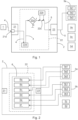
- Figure 1 shows an exemplary embodiment of the interface device 2 in a setting where it is in communication with a process controller 1 and multiple peer devices 3a-3d.
- Figure 1 only shows one direction of communication: An input 4 is provided by the process controller 1, and this ultimately results in an output 5 being transmitted to one or more peer devices 3a-3d. But it is also possible that an input 4, like a message of a subscribed message topic, is provided by one or more peer devices 3a-3d and results in an output 5 being transmitted to the process controller 1.
- the interface device 2 comprises a process controller interface 21 that is connectable to the process controller 1, a logic unit 22 and a peer device interface that is connectable to the peer devices 3a-3d, e.g., via an Ethernet network.
- the process controller interface comprises an I/O port 21a that may be written to and read from by the process controller 1 in a data-driven manner.
- the I/O port 21a is mapped to a variable 22d of the logic unit 22. That is, an input 4 written to the I/O port 21a updates the variable 22d, and the current value of the variable 22d may be queried by reading from I/O port 21a.
- the input 4 is checked against condition 22a in logic unit 22. If the condition is fulfilled (truth value 1), one or more to-be-performed actions 22c are determined from the input 4 based on predetermined logic 22b.
- the predetermined logic 22b also converts the to-be-performed actions 22c into an output 5 that is then sent to the appropriate peer device 3a-3d.
- the to-be-performed action 22c comprises invoking method 3a2 of peer device 3a1 that provides methods 3a1, 3a2 and 3a3. Consequently, the output 5 comprises a call instruction to the method 3a2.
- Figure 2 illustrates the aggregation of multiple methods 3a1-3a3, 3b1-3b3 provided by several peer devices 3a-3d into one single OPC UA namespace 6 within logic unit 22. Each method 3a1-3a3, 3b1-3b3 is mapped to one handle 6a-6f in the unified namespace 6.
- a process controller 1 does not need to know on which peer device 3a-3d the to-be-invoked method 3a1-3a3, 3b1-3b3 is implemented.
Landscapes
- Engineering & Computer Science (AREA)
- Physics & Mathematics (AREA)
- General Physics & Mathematics (AREA)
- Automation & Control Theory (AREA)
- General Engineering & Computer Science (AREA)
- Manufacturing & Machinery (AREA)
- Quality & Reliability (AREA)
- Programmable Controllers (AREA)
- Information Transfer Systems (AREA)
- Communication Control (AREA)
- Testing And Monitoring For Control Systems (AREA)
Claims (12)
- Dispositif (2) d'interface destiné à connecter au moins un contrôleur (1) de processus à un ou plusieurs dispositifs homologues (3a-3d), comportant :• une interface (21) de contrôleur de processus servant à une communication bidirectionnelle avec le contrôleur (1) de processus ;• une interface (23) de dispositifs homologues servant à une communication OPC UA bidirectionnelle avec les dispositifs homologues (3a-3d) ; et• une unité (22) de logique qui est configurée pour: en réaction au fait qu'une ou plusieurs entrées (4) provenant du contrôleur (1) de processus, et/ou du ou des dispositifs homologues (3a-3d), remplissent une ou plusieurs conditions prédéterminées (22a),∘ déterminer une ou plusieurs actions (22c) à effectuer à partir de l'entrée ou des entrées selon une logique prédéterminée (22b) ;∘ déterminer, selon la logique prédéterminée (22b), une ou plusieurs sorties (5) qui, lorsqu'elles sont fournies au contrôleur (1) de processus, et/ou aux dispositifs homologues (3a-3d), provoquent la réalisation des actions (22c) à effectuer ; et∘ fournir ces sorties (5) au contrôleur (1) de processus, et/ou au(x) dispositif(s) homologue(s) (3a-3d),caractérisé en ce que l'interface (21) de contrôleur de processus comporte au moins un port (21a) d'E/S qui est associé à une variable (22d) de l'unité (22) de logique, et l'interface (21) de contrôleur de processus étant configurée pour permettre à un contrôleur (1) de processus qui ne possède que des ports d'E/S disponibles pour l'entrée et la sortie de données et est donc purement piloté par les données, et n'ayant aucune perception de l'OPC UA, de communiquer avec le dispositif homologue (3a-3d) d'OPC UA :• suite à une demande d'écriture vers le port (21a) d'E/S par le contrôleur (1) de processus, en lisant une entrée (4) écrite dans le port (21a) d'E/S par le contrôleur (1) de processus, et en mettant à jour la valeur de la variable (22d) selon cette entrée (4) ; et• suite à une demande de lecture vers le port (21a) d'E/S par le contrôleur (1) de processus, et/ou suite à une mise à jour de la variable (22d) par l'unité de logique (2), en fournissant la valeur de la variable (22d) au contrôleur (1) de processus au moyen du port (21a) d'E/S,la logique prédéterminée (22b) comportant spécifiquement :• la détermination, à partir de l'entrée (4) écrite dans le port (21a) d'E/S par le contrôleur (1) de processus, d'un appel à au moins une méthode (3a1-3a3) d'OPC UA d'un dispositif homologue (3a-3d) en tant qu'action (22c) à effectuer ; et/ou• la détermination, à partir de la demande de lecture vers le port (21a) d'E/S par le contrôleur (1) de processus, d'un appel à au moins une méthode (3a1-3a3) d'OPC UA d'un dispositif homologue (3a-3d) qui provoque une mise à jour de la variable (22d) en tant qu'action (22c) à effectuer.
- Dispositif (2) d'interface destiné à connecter au moins un contrôleur (1) de processus à un ou plusieurs dispositifs homologues (3a-3d), comportant :• une interface (21) de contrôleur de processus servant à une communication bidirectionnelle avec le contrôleur (1) de processus ;• une interface (23) de dispositifs homologues servant à une communication OPC UA bidirectionnelle avec les dispositifs homologues (3a-3d) ; et• une unité (22) de logique qui est configurée pour: en réaction au fait qu'une ou plusieurs entrées (4) provenant du contrôleur (1) de processus, et/ou du ou des dispositifs homologues (3a-3d), remplissent une ou plusieurs conditions prédéterminées (22a),∘ déterminer une ou plusieurs actions (22c) à effectuer à partir de l'entrée ou des entrées selon une logique prédéterminée (22b) ;∘ déterminer, selon la logique prédéterminée (22b), une ou plusieurs sorties (5) qui, lorsqu'elles sont fournies au contrôleur (1) de processus, et/ou aux dispositifs homologues (3a-3d), provoquent la réalisation des actions (22c) à effectuer ; et∘ fournir ces sorties (5) au contrôleur (1) de processus, et/ou au(x) dispositif(s) homologue(s) (3a-3d),caractérisé en ce que l'interface (21) de contrôleur de processus comporte au moins un port (21a) d'E/S qui est associé à une variable (22d) de l'unité (22) de logique, et l'interface (21) de contrôleur de processus étant configurée pour permettre à un contrôleur (1) de processus qui ne possède que des ports d'E/S disponibles pour l'entrée et la sortie de données et est donc purement piloté par les données, et n'ayant aucune perception de l'OPC UA, de communiquer avec le dispositif homologue (3a-3d) d'OPC UA :• suite à une demande d'écriture vers le port (21a) d'E/S par le contrôleur (1) de processus, en lisant une entrée (4) écrite dans le port (21a) d'E/S par le contrôleur (1) de processus, et en mettant à jour la valeur de la variable (22d) selon cette entrée (4) ; et• suite à une demande de lecture vers le port (21a) d'E/S par le contrôleur (1) de processus, et/ou suite à une mise à jour de la variable (22d) par l'unité de logique (2), en fournissant la valeur de la variable (22d) au contrôleur (1) de processus au moyen du port (21a) d'E/S,l'unité (22) de logique étant configurée pour :• en réponse à la détermination du fait que la variable (22d), et/ou l'entrée (4) écrite dans le port (21a) d'E/S par le contrôleur (1) de processus, atteignent ou dépassent un seuil prédéterminé, déterminer un appel à une première méthode (3a1-3a3) d'OPC UA d'un dispositif homologue (3a-3d) en tant qu'action (22c) à effectuer ; et• en réponse à la détermination du fait que la variable (22d), et/ou l'entrée (4) écrite dans le port (21a) d'E/S par le contrôleur (1) de processus, n'atteignent pas ledit seuil prédéterminé, déterminer un appel à une seconde méthode (3a1-3a3) d'OPC UA d'un dispositif homologue (3a-3d) en tant qu'action (22c) à effectuer.
- Dispositif (2) d'interface selon l'une quelconque des revendications 1 à 2, l'unité (22) de logique étant en outre configurée pour: s'abonner à au moins un thème de messages publié par le ou les dispositifs homologues (3a-3d) dans un modèle publication-abonnement, et déterminer une ou plusieurs actions (22c) à effectuer en réponse à la réception d'un message du thème de messages ayant fait l'objet de l'abonnement.
- Dispositif (2) d'interface selon la revendication 3, l'action ou les actions (22c) à effectuer comportant la mise à jour de la valeur d'une variable (22d) de l'unité (22) de logique d'après le message reçu du thème de messages ayant fait l'objet de l'abonnement.
- Dispositif (2) d'interface selon l'une quelconque des revendications 1 à 4, les actions (22c) à effectuer comportant celles de :• obtenir au moins une valeur de mesure ou la valeur d'un paramètre opérationnel à partir d'au moins un dispositif (3a-3d) de terrain ; et/ou• régler au moins un paramètre opérationnel d'au moins un dispositif (3a-3d) de terrain ; et/ou• faire en sorte que le dispositif (3a-3d) de terrain exerce au moins une influence physique sur la réalisation d'un processus industriel auquel le dispositif (3a-3d) de terrain participe.
- Dispositif (2) d'interface selon l'une quelconque des revendications 1 à 5, la ou les conditions prédéterminées (22a) comportant, en tant que pré-requis pour au moins une action (22c) à effectuer, au moins une condition de verrouillage réciproque pour une variable d'état physique dans une installation industrielle qui comprend le dispositif homologue (3a-3d).
- Dispositif (2) d'interface selon l'une quelconque des revendications 1 à 6, la logique prédéterminée (22b) comportant la détermination de la ou des sorties (5) d'après des informations obtenues à partir de multiples dispositifs homologues (3a-3d).
- Dispositif (2) d'interface selon l'une quelconque des revendications 1 à 7, l'unité (22) de logique étant en outre configurée pour: associer des méthodes (3a1-3a3, 3b1-3b3) d'OPC UA fournies par de multiples dispositifs homologues (3a-3d) à des descripteurs (6a-6f) à l'intérieur d'un espace (6) de nommage commun d'OPC UA, et déterminer, en réponse à une entrée (4) provenant du contrôleur (1) de processus qui est indicative d'une intention d'appeler un tel descripteur (6a-6f), un appel à la méthode (3a1-3a3, 3b1-3b3) d'OPC UA correspondante d'un dispositif homologue (3a-3d) en tant qu'action (22c) à effectuer.
- Dispositif (2) d'interface selon l'une quelconque des revendications 1 à 8, l'unité (22) de logique étant configurée pour accepter du code interprétable, compilable ou exécutable et utiliser celui-ci comme logique prédéterminée pour déterminer des actions (22c) à effectuer, et/ou pour déterminer des sorties pour la réalisation de ces actions (22c).
- Programme d'ordinateur, comportant des instructions lisibles par machine qui, lorsqu'elles sont exécutées par un ou plusieurs ordinateurs, mettent à niveau l'ordinateur ou les ordinateurs pour donner le dispositif d'interface selon l'une quelconque des revendications 1 à 9.
- Support de stockage non transitoire lisible par ordinateur ou produit de téléchargement muni du programme d'ordinateur selon la revendication 10.
- Un ou plusieurs ordinateurs munis du programme d'ordinateur selon la revendication 10, et/ou du support de stockage non transitoire lisible par ordinateur et/ou du produit de téléchargement selon la revendication 11.
Applications Claiming Priority (2)
| Application Number | Priority Date | Filing Date | Title |
|---|---|---|---|
| EP20207190.8A EP4002030B1 (fr) | 2020-11-12 | 2020-11-12 | Dispositif d'interface pour connecter des contrôleurs de processus à des dispositifs homologues d'opc ua |
| PCT/EP2021/075375 WO2022100909A1 (fr) | 2020-11-12 | 2021-09-15 | Dispositif d'interface destiné à connecter des contrôleurs de processus à des dispositifs homologues opc ua |
Publications (3)
| Publication Number | Publication Date |
|---|---|
| EP4244686A1 EP4244686A1 (fr) | 2023-09-20 |
| EP4244686C0 EP4244686C0 (fr) | 2024-11-06 |
| EP4244686B1 true EP4244686B1 (fr) | 2024-11-06 |
Family
ID=73401389
Family Applications (2)
| Application Number | Title | Priority Date | Filing Date |
|---|---|---|---|
| EP20207190.8A Active EP4002030B1 (fr) | 2020-11-12 | 2020-11-12 | Dispositif d'interface pour connecter des contrôleurs de processus à des dispositifs homologues d'opc ua |
| EP21777319.1A Active EP4244686B1 (fr) | 2020-11-12 | 2021-09-15 | Dispositif d'interface pour connecter des contrôleurs de processus à des dispositifs homologues d'opc ua |
Family Applications Before (1)
| Application Number | Title | Priority Date | Filing Date |
|---|---|---|---|
| EP20207190.8A Active EP4002030B1 (fr) | 2020-11-12 | 2020-11-12 | Dispositif d'interface pour connecter des contrôleurs de processus à des dispositifs homologues d'opc ua |
Country Status (6)
| Country | Link |
|---|---|
| US (1) | US20230280710A1 (fr) |
| EP (2) | EP4002030B1 (fr) |
| CN (1) | CN116472503B (fr) |
| AU (1) | AU2021378446B2 (fr) |
| CA (1) | CA3198539C (fr) |
| WO (1) | WO2022100909A1 (fr) |
Family Cites Families (10)
| Publication number | Priority date | Publication date | Assignee | Title |
|---|---|---|---|---|
| DE102007062986B4 (de) | 2007-12-21 | 2013-12-24 | Abb Research Ltd. | Verfahren und Einrichtung zur Client-Server-Kommunikation gemäß dem Standardprotokoll OPC UA |
| US9320067B2 (en) * | 2008-11-24 | 2016-04-19 | Qualcomm Incorporated | Configuration of user equipment for peer-to-peer communication |
| US20140012913A1 (en) * | 2012-07-05 | 2014-01-09 | Devrim Varoglu | Peer-Peer Device Activation and Setup |
| US9170579B1 (en) * | 2013-01-30 | 2015-10-27 | Blue Pillar, Inc. | System, method and computer program product for monitoring and controlling industrial energy equipment |
| JP6577128B2 (ja) * | 2015-03-27 | 2019-09-18 | ビューラー アーゲー | 適応可能なクロスプラント制御および操作システム、およびその対応する方法 |
| US10048713B2 (en) * | 2015-11-19 | 2018-08-14 | Rockwell Automation Technologies Inc. | Energy operations across domains |
| US10495336B2 (en) * | 2015-11-19 | 2019-12-03 | Rockwell Automation Technologies, Inc. | Energy operations across domains |
| GB2575758B (en) * | 2017-05-01 | 2023-04-12 | Fisher Rosemount Systems Inc | Open architecture industrial control system |
| CN109257208A (zh) * | 2018-09-04 | 2019-01-22 | 深圳市智能机器人研究院 | 一种基于opc ua的信息集成系统及方法 |
| US20200210869A1 (en) * | 2018-12-28 | 2020-07-02 | Siemens Aktiengesellschaft | Gateway and method for transforming a description of an industrial process equipment into a data information model |
-
2020
- 2020-11-12 EP EP20207190.8A patent/EP4002030B1/fr active Active
-
2021
- 2021-09-15 CA CA3198539A patent/CA3198539C/fr active Active
- 2021-09-15 CN CN202180076290.6A patent/CN116472503B/zh active Active
- 2021-09-15 AU AU2021378446A patent/AU2021378446B2/en active Active
- 2021-09-15 WO PCT/EP2021/075375 patent/WO2022100909A1/fr not_active Ceased
- 2021-09-15 EP EP21777319.1A patent/EP4244686B1/fr active Active
-
2023
- 2023-05-11 US US18/315,585 patent/US20230280710A1/en active Pending
Also Published As
| Publication number | Publication date |
|---|---|
| AU2021378446B2 (en) | 2024-02-15 |
| US20230280710A1 (en) | 2023-09-07 |
| CA3198539C (fr) | 2024-02-06 |
| EP4002030B1 (fr) | 2025-10-15 |
| EP4244686C0 (fr) | 2024-11-06 |
| EP4002030A1 (fr) | 2022-05-25 |
| AU2021378446A9 (en) | 2024-05-02 |
| CN116472503B (zh) | 2024-05-10 |
| CN116472503A (zh) | 2023-07-21 |
| CA3198539A1 (fr) | 2022-05-19 |
| EP4244686A1 (fr) | 2023-09-20 |
| WO2022100909A1 (fr) | 2022-05-19 |
| AU2021378446A1 (en) | 2023-06-29 |
Similar Documents
| Publication | Publication Date | Title |
|---|---|---|
| US7747416B2 (en) | System and method for batch process control with diverse distributed control system protocols | |
| US10890887B2 (en) | Platform for continued use of existing software for the actuation of industrial field devices | |
| CN101004587B (zh) | 用于正常和失配状况期间无缝切换的冗余控制器同步方法 | |
| GB2589710A (en) | Industrial control system hyperconverged architecture | |
| EP1643325B1 (fr) | Structure de répertoires dans un environnement à l architecture commandée par des données distribuées | |
| US8185580B2 (en) | Method for handling different versions of an application, and an automation system | |
| US7330473B1 (en) | System and methodology providing network data exchange between industrial control components | |
| JP2017515418A (ja) | 独立した基礎ネットワークにマップされた論理モデルを提供するゲートウェイ | |
| US11914351B2 (en) | Integration of a plurality of installation modules each having at least one process-technical unit to form a modularly constructed overall installation | |
| EP4244686B1 (fr) | Dispositif d'interface pour connecter des contrôleurs de processus à des dispositifs homologues d'opc ua | |
| EP4336350B1 (fr) | Routage dynamique et orchestration de bord pour données d'automatisation industrielle | |
| CN105264447B (zh) | 带有中央计算单元的过程自动化系统 | |
| US12443172B2 (en) | Container registry and subscription service for industrial systems | |
| CN117501677A (zh) | 将可配置逻辑用于技术设备的模块化设置的方法、装置、计算机程序和计算机可读介质 | |
| US11099548B2 (en) | Suggesting and/or creating agents in an industrial automation system | |
| EP4220318B1 (fr) | Passerelles permettant de connecter des systèmes de commande dirigés des données à des entités ua opc | |
| EP4625078A1 (fr) | Services de connectivité de bus de terrain | |
| US12147217B2 (en) | Automation device firmware as a service via a container implementation | |
| CN114787778A (zh) | 更新表示真实世界对象的数字对象 |
Legal Events
| Date | Code | Title | Description |
|---|---|---|---|
| STAA | Information on the status of an ep patent application or granted ep patent |
Free format text: STATUS: UNKNOWN |
|
| STAA | Information on the status of an ep patent application or granted ep patent |
Free format text: STATUS: THE INTERNATIONAL PUBLICATION HAS BEEN MADE |
|
| PUAI | Public reference made under article 153(3) epc to a published international application that has entered the european phase |
Free format text: ORIGINAL CODE: 0009012 |
|
| STAA | Information on the status of an ep patent application or granted ep patent |
Free format text: STATUS: REQUEST FOR EXAMINATION WAS MADE |
|
| 17P | Request for examination filed |
Effective date: 20230607 |
|
| AK | Designated contracting states |
Kind code of ref document: A1 Designated state(s): AL AT BE BG CH CY CZ DE DK EE ES FI FR GB GR HR HU IE IS IT LI LT LU LV MC MK MT NL NO PL PT RO RS SE SI SK SM TR |
|
| DAV | Request for validation of the european patent (deleted) | ||
| DAX | Request for extension of the european patent (deleted) | ||
| GRAP | Despatch of communication of intention to grant a patent |
Free format text: ORIGINAL CODE: EPIDOSNIGR1 |
|
| STAA | Information on the status of an ep patent application or granted ep patent |
Free format text: STATUS: GRANT OF PATENT IS INTENDED |
|
| INTG | Intention to grant announced |
Effective date: 20240527 |
|
| GRAS | Grant fee paid |
Free format text: ORIGINAL CODE: EPIDOSNIGR3 |
|
| GRAA | (expected) grant |
Free format text: ORIGINAL CODE: 0009210 |
|
| STAA | Information on the status of an ep patent application or granted ep patent |
Free format text: STATUS: THE PATENT HAS BEEN GRANTED |
|
| AK | Designated contracting states |
Kind code of ref document: B1 Designated state(s): AL AT BE BG CH CY CZ DE DK EE ES FI FR GB GR HR HU IE IS IT LI LT LU LV MC MK MT NL NO PL PT RO RS SE SI SK SM TR |
|
| REG | Reference to a national code |
Ref country code: GB Ref legal event code: FG4D |
|
| REG | Reference to a national code |
Ref country code: CH Ref legal event code: EP |
|
| REG | Reference to a national code |
Ref country code: DE Ref legal event code: R096 Ref document number: 602021021492 Country of ref document: DE |
|
| REG | Reference to a national code |
Ref country code: IE Ref legal event code: FG4D |
|
| U01 | Request for unitary effect filed |
Effective date: 20241125 |
|
| U07 | Unitary effect registered |
Designated state(s): AT BE BG DE DK EE FI FR IT LT LU LV MT NL PT RO SE SI Effective date: 20241129 |
|
| PG25 | Lapsed in a contracting state [announced via postgrant information from national office to epo] |
Ref country code: HR Free format text: LAPSE BECAUSE OF FAILURE TO SUBMIT A TRANSLATION OF THE DESCRIPTION OR TO PAY THE FEE WITHIN THE PRESCRIBED TIME-LIMIT Effective date: 20241106 Ref country code: IS Free format text: LAPSE BECAUSE OF FAILURE TO SUBMIT A TRANSLATION OF THE DESCRIPTION OR TO PAY THE FEE WITHIN THE PRESCRIBED TIME-LIMIT Effective date: 20250306 |
|
| PG25 | Lapsed in a contracting state [announced via postgrant information from national office to epo] |
Ref country code: ES Free format text: LAPSE BECAUSE OF FAILURE TO SUBMIT A TRANSLATION OF THE DESCRIPTION OR TO PAY THE FEE WITHIN THE PRESCRIBED TIME-LIMIT Effective date: 20241106 |
|
| PG25 | Lapsed in a contracting state [announced via postgrant information from national office to epo] |
Ref country code: GR Free format text: LAPSE BECAUSE OF FAILURE TO SUBMIT A TRANSLATION OF THE DESCRIPTION OR TO PAY THE FEE WITHIN THE PRESCRIBED TIME-LIMIT Effective date: 20250207 |
|
| PG25 | Lapsed in a contracting state [announced via postgrant information from national office to epo] |
Ref country code: PL Free format text: LAPSE BECAUSE OF FAILURE TO SUBMIT A TRANSLATION OF THE DESCRIPTION OR TO PAY THE FEE WITHIN THE PRESCRIBED TIME-LIMIT Effective date: 20241106 |
|
| PG25 | Lapsed in a contracting state [announced via postgrant information from national office to epo] |
Ref country code: RS Free format text: LAPSE BECAUSE OF FAILURE TO SUBMIT A TRANSLATION OF THE DESCRIPTION OR TO PAY THE FEE WITHIN THE PRESCRIBED TIME-LIMIT Effective date: 20250206 |
|
| PG25 | Lapsed in a contracting state [announced via postgrant information from national office to epo] |
Ref country code: SM Free format text: LAPSE BECAUSE OF FAILURE TO SUBMIT A TRANSLATION OF THE DESCRIPTION OR TO PAY THE FEE WITHIN THE PRESCRIBED TIME-LIMIT Effective date: 20241106 |
|
| PG25 | Lapsed in a contracting state [announced via postgrant information from national office to epo] |
Ref country code: SK Free format text: LAPSE BECAUSE OF FAILURE TO SUBMIT A TRANSLATION OF THE DESCRIPTION OR TO PAY THE FEE WITHIN THE PRESCRIBED TIME-LIMIT Effective date: 20241106 |
|
| PG25 | Lapsed in a contracting state [announced via postgrant information from national office to epo] |
Ref country code: CZ Free format text: LAPSE BECAUSE OF FAILURE TO SUBMIT A TRANSLATION OF THE DESCRIPTION OR TO PAY THE FEE WITHIN THE PRESCRIBED TIME-LIMIT Effective date: 20241106 |
|
| PLBE | No opposition filed within time limit |
Free format text: ORIGINAL CODE: 0009261 |
|
| STAA | Information on the status of an ep patent application or granted ep patent |
Free format text: STATUS: NO OPPOSITION FILED WITHIN TIME LIMIT |
|
| PGFP | Annual fee paid to national office [announced via postgrant information from national office to epo] |
Ref country code: NO Payment date: 20250923 Year of fee payment: 5 |
|
| 26N | No opposition filed |
Effective date: 20250807 |
|
| PGFP | Annual fee paid to national office [announced via postgrant information from national office to epo] |
Ref country code: GB Payment date: 20250919 Year of fee payment: 5 |
|
| U20 | Renewal fee for the european patent with unitary effect paid |
Year of fee payment: 5 Effective date: 20250924 |