EP4249468B1 - Verfahren zur synthese von halogenidsalzen - Google Patents
Verfahren zur synthese von halogenidsalzen Download PDFInfo
- Publication number
- EP4249468B1 EP4249468B1 EP22163288.8A EP22163288A EP4249468B1 EP 4249468 B1 EP4249468 B1 EP 4249468B1 EP 22163288 A EP22163288 A EP 22163288A EP 4249468 B1 EP4249468 B1 EP 4249468B1
- Authority
- EP
- European Patent Office
- Prior art keywords
- halide
- heteroatom
- group
- substituent
- aryl
- Prior art date
- Legal status (The legal status is an assumption and is not a legal conclusion. Google has not performed a legal analysis and makes no representation as to the accuracy of the status listed.)
- Active
Links
Images




Classifications
-
- C—CHEMISTRY; METALLURGY
- C07—ORGANIC CHEMISTRY
- C07D—HETEROCYCLIC COMPOUNDS
- C07D213/00—Heterocyclic compounds containing six-membered rings, not condensed with other rings, with one nitrogen atom as the only ring hetero atom and three or more double bonds between ring members or between ring members and non-ring members
- C07D213/02—Heterocyclic compounds containing six-membered rings, not condensed with other rings, with one nitrogen atom as the only ring hetero atom and three or more double bonds between ring members or between ring members and non-ring members having three double bonds between ring members or between ring members and non-ring members
- C07D213/04—Heterocyclic compounds containing six-membered rings, not condensed with other rings, with one nitrogen atom as the only ring hetero atom and three or more double bonds between ring members or between ring members and non-ring members having three double bonds between ring members or between ring members and non-ring members having no bond between the ring nitrogen atom and a non-ring member or having only hydrogen or carbon atoms directly attached to the ring nitrogen atom
- C07D213/06—Heterocyclic compounds containing six-membered rings, not condensed with other rings, with one nitrogen atom as the only ring hetero atom and three or more double bonds between ring members or between ring members and non-ring members having three double bonds between ring members or between ring members and non-ring members having no bond between the ring nitrogen atom and a non-ring member or having only hydrogen or carbon atoms directly attached to the ring nitrogen atom containing only hydrogen and carbon atoms in addition to the ring nitrogen atom
- C07D213/16—Heterocyclic compounds containing six-membered rings, not condensed with other rings, with one nitrogen atom as the only ring hetero atom and three or more double bonds between ring members or between ring members and non-ring members having three double bonds between ring members or between ring members and non-ring members having no bond between the ring nitrogen atom and a non-ring member or having only hydrogen or carbon atoms directly attached to the ring nitrogen atom containing only hydrogen and carbon atoms in addition to the ring nitrogen atom containing only one pyridine ring
- C07D213/18—Salts thereof
-
- C—CHEMISTRY; METALLURGY
- C07—ORGANIC CHEMISTRY
- C07C—ACYCLIC OR CARBOCYCLIC COMPOUNDS
- C07C279/00—Derivatives of guanidine, i.e. compounds containing the group, the singly-bound nitrogen atoms not being part of nitro or nitroso groups
- C07C279/02—Guanidine; Salts, complexes or addition compounds thereof
-
- C—CHEMISTRY; METALLURGY
- C01—INORGANIC CHEMISTRY
- C01G—COMPOUNDS CONTAINING METALS NOT COVERED BY SUBCLASSES C01D OR C01F
- C01G21/00—Compounds of lead
- C01G21/16—Halides
-
- C—CHEMISTRY; METALLURGY
- C07—ORGANIC CHEMISTRY
- C07C—ACYCLIC OR CARBOCYCLIC COMPOUNDS
- C07C209/00—Preparation of compounds containing amino groups bound to a carbon skeleton
- C07C209/68—Preparation of compounds containing amino groups bound to a carbon skeleton from amines, by reactions not involving amino groups, e.g. reduction of unsaturated amines, aromatisation, or substitution of the carbon skeleton
-
- C—CHEMISTRY; METALLURGY
- C07—ORGANIC CHEMISTRY
- C07C—ACYCLIC OR CARBOCYCLIC COMPOUNDS
- C07C211/00—Compounds containing amino groups bound to a carbon skeleton
- C07C211/62—Quaternary ammonium compounds
- C07C211/63—Quaternary ammonium compounds having quaternised nitrogen atoms bound to acyclic carbon atoms
-
- C—CHEMISTRY; METALLURGY
- C07—ORGANIC CHEMISTRY
- C07C—ACYCLIC OR CARBOCYCLIC COMPOUNDS
- C07C211/00—Compounds containing amino groups bound to a carbon skeleton
- C07C211/62—Quaternary ammonium compounds
- C07C211/64—Quaternary ammonium compounds having quaternised nitrogen atoms bound to carbon atoms of six-membered aromatic rings
-
- C—CHEMISTRY; METALLURGY
- C07—ORGANIC CHEMISTRY
- C07C—ACYCLIC OR CARBOCYCLIC COMPOUNDS
- C07C227/00—Preparation of compounds containing amino and carboxyl groups bound to the same carbon skeleton
- C07C227/14—Preparation of compounds containing amino and carboxyl groups bound to the same carbon skeleton from compounds containing already amino and carboxyl groups or derivatives thereof
-
- C—CHEMISTRY; METALLURGY
- C07—ORGANIC CHEMISTRY
- C07C—ACYCLIC OR CARBOCYCLIC COMPOUNDS
- C07C227/00—Preparation of compounds containing amino and carboxyl groups bound to the same carbon skeleton
- C07C227/14—Preparation of compounds containing amino and carboxyl groups bound to the same carbon skeleton from compounds containing already amino and carboxyl groups or derivatives thereof
- C07C227/18—Preparation of compounds containing amino and carboxyl groups bound to the same carbon skeleton from compounds containing already amino and carboxyl groups or derivatives thereof by reactions involving amino or carboxyl groups, e.g. hydrolysis of esters or amides, by formation of halides, salts or esters
-
- C—CHEMISTRY; METALLURGY
- C07—ORGANIC CHEMISTRY
- C07C—ACYCLIC OR CARBOCYCLIC COMPOUNDS
- C07C229/00—Compounds containing amino and carboxyl groups bound to the same carbon skeleton
- C07C229/02—Compounds containing amino and carboxyl groups bound to the same carbon skeleton having amino and carboxyl groups bound to acyclic carbon atoms of the same carbon skeleton
- C07C229/04—Compounds containing amino and carboxyl groups bound to the same carbon skeleton having amino and carboxyl groups bound to acyclic carbon atoms of the same carbon skeleton the carbon skeleton being acyclic and saturated
- C07C229/06—Compounds containing amino and carboxyl groups bound to the same carbon skeleton having amino and carboxyl groups bound to acyclic carbon atoms of the same carbon skeleton the carbon skeleton being acyclic and saturated having only one amino and one carboxyl group bound to the carbon skeleton
- C07C229/08—Compounds containing amino and carboxyl groups bound to the same carbon skeleton having amino and carboxyl groups bound to acyclic carbon atoms of the same carbon skeleton the carbon skeleton being acyclic and saturated having only one amino and one carboxyl group bound to the carbon skeleton the nitrogen atom of the amino group being further bound to hydrogen atoms
-
- C—CHEMISTRY; METALLURGY
- C07—ORGANIC CHEMISTRY
- C07C—ACYCLIC OR CARBOCYCLIC COMPOUNDS
- C07C229/00—Compounds containing amino and carboxyl groups bound to the same carbon skeleton
- C07C229/02—Compounds containing amino and carboxyl groups bound to the same carbon skeleton having amino and carboxyl groups bound to acyclic carbon atoms of the same carbon skeleton
- C07C229/04—Compounds containing amino and carboxyl groups bound to the same carbon skeleton having amino and carboxyl groups bound to acyclic carbon atoms of the same carbon skeleton the carbon skeleton being acyclic and saturated
- C07C229/06—Compounds containing amino and carboxyl groups bound to the same carbon skeleton having amino and carboxyl groups bound to acyclic carbon atoms of the same carbon skeleton the carbon skeleton being acyclic and saturated having only one amino and one carboxyl group bound to the carbon skeleton
- C07C229/10—Compounds containing amino and carboxyl groups bound to the same carbon skeleton having amino and carboxyl groups bound to acyclic carbon atoms of the same carbon skeleton the carbon skeleton being acyclic and saturated having only one amino and one carboxyl group bound to the carbon skeleton the nitrogen atom of the amino group being further bound to acyclic carbon atoms or to carbon atoms of rings other than six-membered aromatic rings
- C07C229/12—Compounds containing amino and carboxyl groups bound to the same carbon skeleton having amino and carboxyl groups bound to acyclic carbon atoms of the same carbon skeleton the carbon skeleton being acyclic and saturated having only one amino and one carboxyl group bound to the carbon skeleton the nitrogen atom of the amino group being further bound to acyclic carbon atoms or to carbon atoms of rings other than six-membered aromatic rings to carbon atoms of acyclic carbon skeletons
-
- C—CHEMISTRY; METALLURGY
- C07—ORGANIC CHEMISTRY
- C07C—ACYCLIC OR CARBOCYCLIC COMPOUNDS
- C07C257/00—Compounds containing carboxyl groups, the doubly-bound oxygen atom of a carboxyl group being replaced by a doubly-bound nitrogen atom, this nitrogen atom not being further bound to an oxygen atom, e.g. imino-ethers, amidines
- C07C257/10—Compounds containing carboxyl groups, the doubly-bound oxygen atom of a carboxyl group being replaced by a doubly-bound nitrogen atom, this nitrogen atom not being further bound to an oxygen atom, e.g. imino-ethers, amidines with replacement of the other oxygen atom of the carboxyl group by nitrogen atoms, e.g. amidines
- C07C257/12—Compounds containing carboxyl groups, the doubly-bound oxygen atom of a carboxyl group being replaced by a doubly-bound nitrogen atom, this nitrogen atom not being further bound to an oxygen atom, e.g. imino-ethers, amidines with replacement of the other oxygen atom of the carboxyl group by nitrogen atoms, e.g. amidines having carbon atoms of amidino groups bound to hydrogen atoms
-
- C—CHEMISTRY; METALLURGY
- C07—ORGANIC CHEMISTRY
- C07C—ACYCLIC OR CARBOCYCLIC COMPOUNDS
- C07C277/00—Preparation of guanidine or its derivatives, i.e. compounds containing the group, the singly-bound nitrogen atoms not being part of nitro or nitroso groups
-
- C—CHEMISTRY; METALLURGY
- C07—ORGANIC CHEMISTRY
- C07D—HETEROCYCLIC COMPOUNDS
- C07D233/00—Heterocyclic compounds containing 1,3-diazole or hydrogenated 1,3-diazole rings, not condensed with other rings
- C07D233/54—Heterocyclic compounds containing 1,3-diazole or hydrogenated 1,3-diazole rings, not condensed with other rings having two double bonds between ring members or between ring members and non-ring members
- C07D233/56—Heterocyclic compounds containing 1,3-diazole or hydrogenated 1,3-diazole rings, not condensed with other rings having two double bonds between ring members or between ring members and non-ring members with only hydrogen atoms or radicals containing only hydrogen and carbon atoms, attached to ring carbon atoms
- C07D233/58—Heterocyclic compounds containing 1,3-diazole or hydrogenated 1,3-diazole rings, not condensed with other rings having two double bonds between ring members or between ring members and non-ring members with only hydrogen atoms or radicals containing only hydrogen and carbon atoms, attached to ring carbon atoms with only hydrogen atoms or radicals containing only hydrogen and carbon atoms, attached to ring nitrogen atoms
-
- C—CHEMISTRY; METALLURGY
- C01—INORGANIC CHEMISTRY
- C01P—INDEXING SCHEME RELATING TO STRUCTURAL AND PHYSICAL ASPECTS OF SOLID INORGANIC COMPOUNDS
- C01P2002/00—Crystal-structural characteristics
- C01P2002/70—Crystal-structural characteristics defined by measured X-ray, neutron or electron diffraction data
- C01P2002/72—Crystal-structural characteristics defined by measured X-ray, neutron or electron diffraction data by d-values or two theta-values, e.g. as X-ray diagram
Definitions
- the present disclosure relates to a method for synthesis of halide salts.
- halide salts there are known organic halide salts, including halide salts of ammonia derivatives as well as inorganic halide salts, including metal-halide salts.
- the methods for synthesis of the halide salts are of constant development.
- the improved purity of the synthesized halide salts can reduce the post-synthesis treatment procedures, such as extraction, precipitation, filtration, charcoal treatment, distillation, etc.
- halide salts of high purity are used in various sectors of industry.
- inorganic halide salts - such as lead bromide
- organic halide salts such as ammonium halide derivatives, e.g., methylammonium iodide (MAI)
- MAI methylammonium iodide
- a publication o EP application EP3719001 describes a method for synthesis of organic iodides of general formula R x NI; the method consists in synthesizing hydrogen iodide (HI) in situ by mixing molecular iodine with formic acid in the molar ratio of I 2 : COOH no less than 1.01:1; next introducing, into the synthesizes HI, a compound being a donor of organic cation: R x N + , providing the molar ratio of R x N + :I 2 of no less than 1.01:1, and next maintaining the reaction mixture at a temperature of not less than 20°C to obtain the reaction product being the salt with the general formula R x NI.
- HI hydrogen iodide
- a publication of European patent EP2072496 describes a method for obtaining pure halide quaternary ammonium salt by reducing the amount of a protonic acid salt of a tertiary amine in the quaternary ammonium salt.
- the method consists in adding an oxide or hydroxide of metal to the quaternary ammonium salt contaminated with a protonic acid salt of a tertiary amine, and next removing the tertiary amine and water by distillation or heating while introducing nitrogen, argon or air, and metal salt produced by filtration or column purification.
- the synthesis involves reacting an acid with a respective halide.
- a part of tertiary amine of basis character an organic basis
- can left unreacted and thereby can react with the acid to produce a protonic acid salt, permitting the acid salt to remain in the main product of quaternary ammonium salt as the contamination.
- deacidification of the product solutions is necessary since complete removal of organic bases is possible only after said salts of the tertiary amine have been decomposed.
- preparing heavy metal halide salts may involve reacting two soluble metal salts, e.g. heavy metal nitrate with alkali metal halide, to form one soluble salt and one insoluble salt with may be removed by precipitation.
- two soluble metal salts e.g. heavy metal nitrate with alkali metal halide
- lead nitrate solution and potassium iodide solution can react to produce solid lead iodide, leaving soluble potassium nitrate in the solution.
- the precipitate is typically contaminated with the soluble salt, thus, it may require further purification by washing and filtration procedures.
- said cation (Z n+ ) is an inorganic cation of a metal selected from the group consisting of Cs + , Ag + , Pb 2+ , Sn 2+ , Bi 3+ , and Sn 4+ .
- said cation (Z n+ ) is Pb 2+ .
- said cation (Z n+ ) is an organic cation of the general formula (III), (IV), or (V): wherein:
- the organic substituent independently for each of R, R 1 , R 2 , R 3 , and R 4 is selected from C 1 -C 16 alkyl, C 6 aryl or C 10 aryl, C 7-26 aralkyl, or heterocycle substituent.
- the organic substituent independently for each of R, R 1 , R 2 , R 3 , and R 4 is selected from:
- the organic substituent independently for each of R, R 1 , R 2 , R 3 and R 4 is selected from:
- said cation (Z n+ ) is the organic cation of the formula (VI), (VII), or (VIII):
- the method comprises heating the reactants to the temperature of 25 to 130°C until obtaining the halide salt.
- reacting of the reactants is carried out in the absence of a solvent.
- reacting of the reactants is carried out in the presence of a solvent.
- the solvent is selected from the group consisting of water, and acetone.
- the solvent is selected from the group consisting of water, alcohols, and acetonitriles.
- the method further comprises recrystallizing the obtained halide salt.
- the method for synthesis of halide salts involves reacting a formate salt of the general formula Z n+ (HCOO) n with a diatom halogen: X 2 , preferably Br 2 or I 2 as schematically shown in Fig. 1 .
- the formate salt: Z n+ (COOH - ) n reduces the molecular (diatom) halide X 2 to ions: X - to form the halide salt of the general formula Zn n+ (X - ) n
- the formate ions: HCOO - transform to gaseous and/or liquid byproducts comprising C, O and/or H. It is suspected that the reaction by products comprises CO and/or CO 2 , and H2O and/or H2, and more likely H 2 O.
- the chemical formulas of the byproducts are under investigation.
- the reaction may occur with providing the stoichiometric ratio of the substrates. However, if one of the substrates, either the formate salt (Z n+ (COOH - ) n ) or the halide (X 2 ) is provided in excess, the reaction proceeds until total consumption of the other - deficient substrate. Thereby, no particular limitation for a ratio of these two substrates is required to carry out the synthesis of the halide salts, e.g. the halogen X 2 can be added in the amount ranging from 0,5 to 1,2 molar equivalents of the formate salt Z n+ (HCOO) n .
- the reactants: Z n+ (COOH - ) n and X 2 are heated to the temperature of at least 25°C, and preferably to the temperature of at least 60°C or more, and more preferably the reactants are heated to a temperature between 25 and 130°C, and preferably between 60 and 130°C.
- the mixture of Z n+ (COOH - ) n and X 2 can be heated to a temperature such as 25°C, 30°C, 40°C, 50°C, 60°C, 70°C, 75°C, 80°C, 85°C, 90°C, or 95° C, and most preferably 70° C, to obtain the halide salt.
- Z n+ (COOH - ) n and X 2 can be agitated, e.g. stirred or shacked - to provide an increased level of molecules interactions.
- agitation is not necessarily required.
- Agitation of the reactants is preferably carried out throughout all the reaction duration. Agitating can be preferably performed from a few seconds to a few hours, and preferably from 1 minute to 4 hours, e.g., from 30 minutes to 1 hour.
- the optimum synthesis conditions and times of the reaction may vary depending on the reactants used. Unless otherwise specified, solvents or solvent-free conditions, temperatures, pressures, and other reaction conditions may be readily selected by one of ordinary skill in the art to obtain optimum results for a particular reaction.
- the reaction product may be purified by re-crystallization.
- the halide salt - being the reaction product can be obtained in pure form, in liquid or solid state - depending on its melting point, by simple removal of a reaction media such as solvent - if present, under reduced pressure and temperature below boiling or sublimation or decomposition point of the obtained halide salt. If the substrates are used in the stoichiometric ratio, both the substrates can be consumed in total, thereby, not contaminating the product, which enables one to achieved improved purity of the obtained halide salt.
- the organic cation Z n+ of the halide salt is a derivative of amine, being either aliphatic amine, aromatic amine, aliphatic-aromatic amine, or aryloamine, including, where applicable, primary amine, secondary amine, tertiary amine; or derivative of imine such as e.g., formamidinium cation.
- the halide salt is obtained from the corresponding formate salt, comprising said organic cation Z n+ , as shown schematically in Fig. 1 .
- the organic cation (Z n+ ) is represented by the general formula (III), (IV), or (V): wherein
- R 1 , R 2 , R 3 , R 4 each independently represents hydrogen or an organic substituent, wherein at least one of R 1 , R 2 , R 3 is not hydrogen; the organic substituent, independently for each of R, R 1 , R 2 , R 3 , and R 4 , is preferably selected from:
- Non-limiting examples of the organic cation Z n+ used in the composition of the formic salt Z n+ (HCOO - ) to obtain the halide salt Z n+ (X - ), according to the present invention include: ammonium cations, including alkylammonium cations, dialkylammonium cations, and trialkylammonium cations, amidinium cations, formamidinium cations; for instance Z n+ can denote: methylammonium CH 3 (H 3 )N + , ethylammonium CH 3 CH 2 (H 3 )N + , propylammonium C 3 H 7 (H 3 )N + , butylammonium C 4 H 9 (H 3 )N + , pentylammonium H 3 C 5 H 11 N + , hexylammonium H 3 C 6 H 13 N + , heptylammonium C 7 H 15 (H 3 )
- non-limiting examples of the organic cation Z n+ include the cations represented by the following formula (VI), (VII), or (VIII):
- halide salts including bromide salts and iodide salts, depending on the halide used: Br 2 , I 2 , such as methylammonium halide, dimethylammonium halide, propylammonium halide, methylethylammonium halide, butylammonium halide, pentylammonium halide, hexylammonium halide, heptylammonium halide, octylammonium halide formamidinium halide, guanidinium halide, acetamidinium halide, benzylammonium halide, benzyl- methyl ammonium halide, phenethylammonium halide, N,N-dimethylpropane-1,3-diammonium halide, N,N-diethylethane
- Br 2 , I 2 such as methylammonium halide, di
- the inorganic cation Z n+ of the halide salt constitutes a cation of metal Me n+ , such as Me + , Me 2+ , Me 3+ and Me 4+ .
- Non-limiting examples of the inorganic cation Z n+ used as the component of the formic salt Z n+ (HCOO - ) - to obtain the halide salt Z n+ (X - ) according to the present invention ( Fig. 1 ) include the inorganic cations selected from the group consisting of: Cs + , Ag + , Pb 2+ , Sn 2+ , Bi 3+ , and Sn 4+ . More preferably the inorganic cation is Pb 2+ .
- halide salts including bromide salts and iodide salts, depending on the halide used: Br 2 , I 2 , such as cesium halide (CsX), silver halide (AgX), lead (II) halide (PbX 2 ), tin (II) halide (SnX 2 ), bismuth (III) halide (BiX 3 ) and tin (IV) halide (SnX 4 ), including: CsI, CsBr, AgI, AgBr, PbBr 2 , PbI 2 , SnBr 2 , SnI 2 , BiBr 3 , BiI 3 SnBr 4 , SnI 4 .
- the reaction can be carried out in solvent-free conditions, for example for the respective formates (Z n+ (HCOO - ) n ) being liquids in ambient conditions.
- Fig. 2 presents the embodiment of synthesis the halide salt, carried out in solvent-free conditions.
- the methylammonium formate - liquid at room temperature reacts with iodine (I 2 ) (solid), in the atmosphere of air or under inert gas (e.g. argon), under heating to a temperature of 25-130 °C and agitating, in solvent-free conditions.
- I 2 iodine
- the obtained product can constitute pure methylammonium iodide crystals - in the case of using the stoichiometric ratio of the substrates - due to the total consumption of both the substrates, in solvent-free conditions, however, if the molar ratio of the substrates used is non-stoichiometric, e.g. 1: 1 then the reaction can be carried out until total consumption of the deficient substrate.
- This embodiment thereby indicates that the solvent molecules are not necessarily needed to conduct the reaction.
- the reaction can be carried out in a solvent environment - for example for the respective formates (Z n+ (HCOO - ) n ) being solids in ambient conditions, the solvent allows interacting one reactant (Z n+ (HCOO - ) n ) with the other reactant (X 2 ) - as the molcules of the substrates can move in the solvent.
- the solvent aims at providing respective solubility of the reactants to improve the amounts of molecules interactions to better the product yield.
- Non-limiting examples of the solvents that can be used according to the present disclosure include polar solvents, non-polar solvents, being either protic or a-protic, organic or inorganic compounds. Further, a mixture of two or more solvent components can be used as the solvent.
- Non-limiting exemplary embodiments of the solvent, respectively inorganic and organic are water, methanol, ethanol, isopropanol, ethers, e.g. tetrahydrofuran or acetonitrile, or any mixture thereof, such as ethanol-water mixture, ethanol-ether mixture, isopropanol-water mixture, or acetonitrile-water mixture.
- polar solvents being either protic or a-protic, organic or inorganic compounds.
- a mixture of two or more solvent components can be used as the solvent.
- Non-limiting exemplary embodiments of the solvent, respectively inorganic and organic are water, methanol, ethanol, isopropanol, ethers, e.g.
- alcoholic solvents can be used in pure form or in the form of their mixture with water, e.g. in form of water-alcohol azeotropes, such as a mixture of 95.63 wt% ethanol and 4.37wt% water. Also, substantially pure ethanol can be used as the organic polar solvent.
- the amount of solvent used is not particularly limited. For example, the amount of the solvent may range between 5 to 30 parts by volume (v/W), and preferably amount of the solvent may range between 6 to 8 parts by volume (v/W).
- solvent is to provide desired dissolution of at least one of the reactants, whereby the other reactant (undissolved) remains suspended in the reaction mixture, or to provide the desired dissolution of both the reactants.
- the use of the solvent thereby allows for desired agitation of the reactants to facilitate their chemical interaction.
- the respective formate: (Z n+ (HCOO - ) n ) for synthesis the corresponding halide salt can be supplied to a reaction chamber in a form of commercially available products, such as, e.g. commercially available ammonium formate, formamidinium formate methylammonium formate.
- the respective formate: (Z n+ (HCOO - ) n ) can be prepared in situ (in the reaction chamber), e.g., by using known methods.
- the exemplary scheme for the synthesis of halide salt comprising the organic cation according to the present disclosure, involving in situ preparation of the salt of formic acid is schematically shown in Fig. 3 .
- R y NH 3-y represents amine compound, which can be e.g., methylamine, which reacts with formic acid (Reaction 1) leading to the respective salt formate: R y NH 3-y + HCOO - , such as e.g. methylammonium formate.
- Reaction 1 can be carried out in water - as the solvent.
- other solvents can be used such as polar/non-polar organic solvent; or Reaction 1 can be carried out in solvent-free conditions.
- Reaction 2 can be carried out in solvent-free conditions as well. If both reactions 1 and 2 are conducted as solvent-free, the obtained halide salt is already crystalline; this can be done preferably if one of the substrates is liquid in ambient conditions, or in the temperature of reaction. Furthermore, if the solvent is present, either in Reaction 1 or in Reaction 2, or both reactions, the obtained halide salt, can be obtained by crystallizing the post-reaction mixture.
- the orders in Reaction 1 have no particular limitation.
- the primary/secondary/tertiary/quaternary amine can be reacted with formic acid in the organic or inorganic polar or non-polar solvent.
- the amount of the amine in Reaction 1 ranges from 0.1 molar equivalents to 2.0 molar equivalents with respect to the formic acid.
- the ammonium formate salts can be isolated in a liquid or solid state.
- the addition of formic acid to the amine is preferably performed at a temperature ranging between -40°C to 80°C, in order to avoid condensation reaction with loss of water and amide formation.
- the said polar organic or inorganic solvent in Reaction 1 is preferably water, methanol, ethanol, isopropanol, tetrahydrofuran or acetonitrile, and more preferably water.
- the amount of the said organic solvent is not particularly limited, e.g., it can range between 5 to 30 parts by volume (v/W), such as 6 to 8 parts by volume.
- halogen (X 2 ) in Reaction 2 can be added preferably in the amount ranging between 0.5 to 1.2molar equivalents of the formate salt, for example of 0.5 to 1 molar equivalents.
- the temperature in the reaction chamber during Reaction 2 is preferably maintained in the range of 60°C to 130° C, for example, the temperature of Reaction 2 can be maintained at 60°C, 70°C, 75°C, 80°C, 85°C, 90°C, or 95°C, and more preferably 70°C.
- the duration of Reaction 2 depending on the given formate salt, may range, e.g,. from 1 minute to 4 hours, for example, 30 minutes to 1 hour.
- the obtained halide salt can be obtained in pure form in liquid or solid state by simple removal of the reaction media, such as solvent, under reduced pressure and temperature below boiling or sublimation or decomposition point of the obtained halide salt.
- Figs 4, 5 present respective spectra of the obtained porduct.
- Fig. 6 presents the respective spectrum of the obtained product
- Fig. 7 presents IR spectrum of the obtained product (methylammonium bromide).
- Figs 8, 9 , 10 present respective spectra of the obtained product (formamidinium iodide).
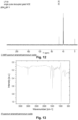
- Figs 11 , 12, 13 present respective spectra of the obtained porduct (tetramethylammonium iodide).
- Figs 20, 21 , 22 present respective spectra of the obtained product (pyridinium iodide).
- Figs 17 , 18, 19 present respective spectra of the obtained product (imidazolium iodide).
- Figs 14, 15 , 16 present respective spectra of the obtained product (triethylammonium iodide).
- Fig. 23 presents respective spectrum of the obtained product (aniline hydroiodide).
- Figs 34, 35 , 36 present respective spectra of the obtained product (benzylamine hydroiodide ).
- Figs 31 , 32, 33 present respective spectra of the obtained product (glycine hydroiodide).
- Figs 25 , 26, 27 present respective spectra of the obtained product (3-aminopropionic acid hydroiodide).
- Figs 28, 29 , 30 present respective spectra of the obtained product (N-methylglycine hydroiodide).
- Fig. 37 presents the respective X-ray diffraction pattern of the obtained product (lead (II) iodide).
- Fig. 38 presents the respective X-ray diffraction pattern of the obtained product (lead (II) bromide).
Landscapes
- Chemical & Material Sciences (AREA)
- Organic Chemistry (AREA)
- Chemical Kinetics & Catalysis (AREA)
- Inorganic Chemistry (AREA)
- Organic Low-Molecular-Weight Compounds And Preparation Thereof (AREA)
Claims (15)
- Verfahren zur Synthese von Halogenidsalzen der allgemeinen Formel (I):
Zn+X- n Formel I
wobei:X- ein Halogenanion darstellt, undZn+ ein Kation darstellt, das eine Wertigkeit n aufweist,das Verfahren umfassend ein Reagieren eines ersten Reaktanten, der ein Formiatsalz der allgemeinen Formel (II) ist:
Zn+(COOH-)n Formel IIwobei ein zweiter Reaktant ein Diatomeenhalogen ist: X2. - Verfahren nach Anspruch 1, wobei das Diatomeenhalogen X2 ausgewählt ist aus Br2 und I2.
- Verfahren nach einem der vorhergehenden Ansprüche, wobei das Kation (Zn+) ein anorganisches Kation eines Metalls ist, das ausgewählt ist aus der Gruppe, bestehend aus Cs+, Ag+, Pb2+, Sn2+, Bi3+ und Sn4+.
- Verfahren nach einem der vorhergehenden Ansprüche, wobei das Kation (Zn+) Pb2+ ist.
- Verfahren nach Anspruch 1 oder 2, wobei das Kation (Zn+) ein organisches Kation der allgemeinen Formel (III), (IV) oder (V) ist:
 R, R1, R2, R3, R4 jeweils unabhängig Wasserstoff oder eine organische Substituentengruppierung darstellen, wobei mindestens eines von R1, R2, R3 nicht Wasserstoff ist;a die Anzahl von R-Gruppierungen bezeichnet,A fünfgliedrigen oder sechsgliedrigen aliphatischen oder aromatischen Kohlenwasserstoffring darstellt, der optional mindestens ein Heteroatom aufweist, das das Kohlenstoffatom substituiert, das ausgewählt ist aus Sauerstoff, Stickstoff und Schwefel,Y einen anderen Substituenten des Rings A als Wasserstoff darstelltb - die Anzahl von Y-Gruppierungen bezeichnet, wobei b null oder eine ganze Zahl in dem Bereich von 1 bis 4 ist, wenn A den fünfgliedrigen Ring darstellt, oder b null oder eine ganze Zahl in dem Bereich von 1 bis 5 ist, wenn A den sechsgliedrigen Ring darstellt.
 - Verfahren nach Anspruch 5, wobei der organische Substituent unabhängig für jedes von R, R1, R2, R3 und R4 ausgewählt ist aus C1-C16-Alkyl, C6-Aryl oder C10-Aryl, C7-26-Aralkyl oder Heterocyclus-Substituent.
- Verfahren nach Anspruch 5 oder 6, wobei der organische Substituent unabhängig für jedes von R, R1, R2, R3 und R4 ausgewählt ist aus:C1-C16-Alkyl, das eine acyclische, geradkettige oder verzweigte Kohlenwasserstoffkette bedeutet, umfassend 1 bis 16 Kohlenstoffatome in der Kette, optional umfassend mindestens ein Heteroatom, das das Kohlenstoffatom oder Wasserstoffatom in der C1-C16-Alkylgruppierung substituiert, wobei das Heteroatom ausgewählt ist aus der Gruppe, bestehend aus Phosphor, Silicium, Sauerstoff, Stickstoff, Schwefel, Jod, Chlor, Brom und Fluor;C6-Aryl oder C10-Aryl die ein aromatisches monocyclisches System bedeuten, umfassend sechs Kohlenstoffatome, die das Ringsystem bilden, oder ein aromatisches bicyclisches System, umfassend zehn Kohlenstoffatome, die das bicyclische System bilden, optional umfassend mindestens ein Heteroatom, das das Kohlenstoffatom oder Wasserstoffatom in der C6-Aryl- oder C10-Arylgruppierung substituiert, wobei das Heteroatom ausgewählt ist aus der Gruppe, bestehend aus Phosphor, Silicium, Sauerstoff, Stickstoff, Schwefel, Jod, Chlor, Brom und Fluor;C7-26-Aralkyl, das den C6-Aryl- oder C10-Arylsubstituenten bedeutet, der über das C1-C16-Alkyl an das Stickstoffatom des organischen Kations gebunden ist, optional umfassend mindestens ein Heteroatom, das das Kohlenstoffatom oder Wasserstoffatom substituiert, wobei das Heteroatom ausgewählt ist aus der Gruppe, bestehend aus: Phosphor, Silicium, Sauerstoff, Stickstoff, Schwefel, Jod, Chlor, Brom und Fluor; undHeterocyclus-Substituent, der einen einwertigen Substituenten bedeutet, der durch Entfernen von Wasserstoff von einer fünf-, sechs- oder siebengliedrigen gesättigten oder ungesättigten alicyclischen Gruppierung oder einer aromatischen Heterocyclus-Gruppierung abgeleitet ist, umfassend Kohlenstoffatome und ein bis vier Ringheteroatome, ausgewählt aus Stickstoff, Sauerstoff und Schwefel.
- Verfahren nach einem der Ansprüche 5 bis 7, wobei der organische Substituent unabhängig für jedes von R, R1, R2, R3 und R4 ausgewählt ist aus:C1-C16-Alkylsubstituent, ausgewählt aus der Gruppe bestehend aus Methyl, Ethyl, Propyl, Isopropyl, n-Butyl, tert-Butyl, Isobutyl, sec-Butyl, n-Pentyl, Isopenthyl, Neopenthyl, Methylethyl, Diispropylethyl, 2-Methylhexyl, 3-Methylheptyl, 2,3-Dimethylpentyl, 4-Ethyl-2-Methyloctyl, 4-Isopropylnonyl, Hexyl, 2-Methylpentyl, 3-Methylpentyl, 2,2-Dimethylbutyl und 2,3-Dimethylbutyl, 1-Methylhexyl, 2-Methylhexyl, 1,1-Dimethylpentyl, 1,2-Dimethylpentyl, 1,3-Dimethylpentyl, 2,2-Dimethylpentyl, 3-Ethylpentyl, 2,2,3-Trimethylbutyl, 2-Methylheptyl, 3-Methylheptyl, 2,3-Dimethylhexyl, 3,4-Dimethylhexyl, 2,3,4-Trimethylpentyl, 3,3-Dimethylhexyl, 2,2-Trimethylpentyl, 2,4-Dimethylhexyl, 2,2,4-Trimethylpentyl, 2,3,3-Trimethylpentyl, 3,3,4-Trimethylpentyl, 3,4,4-Trimethylpentyl, 2,4,4-Trimethylpentyl, 2-Methylheptyl, 3-Methylheptyl, 2,3-Dimethylhexyl, 3,4-Dimethylhexyl, 2,3,4-Trimethylpentyl, 3,3-Dimethylhexyl, 2,2-Trimethylpentyl, 2,4-Dimethylhexyl, optional umfassend mindestens ein Heteroatom, das das Kohlenstoffatom oder Wasserstoffatom in der C1-C16-Alkylgruppierung substituiert, wobei das Heteroatom ausgewählt ist aus der Gruppe, bestehend aus Phosphor, Silicium, Sauerstoff, Stickstoff, Schwefel, Jod, Chlor, Brom und Fluor;C6-Aryl oder C10-Arylsubstituent, ausgewählt aus der Gruppe, bestehend aus Phenyl und Naphthyl, optional umfassend mindestens ein Heteroatom, das das Kohlenstoffatom oder Wasserstoffatom in der C6- oder C10-Arylgruppierung substituiert, wobei das Heteroatom ausgewählt ist aus der Gruppe, bestehend aus: Phosphor, Silicium, Sauerstoff, Stickstoff, Schwefel, Jod, Chlor, Brom und Fluor;C7-26-Aralkylsubstituent, ausgewählt aus der Gruppe, bestehend aus Benzyl, Butylphenyl, Ethylphenyl, Propylphenyl, Pentylphenyl, Hexylphenyl, Ethylnaphtyl und Methylnaphtyl, optional umfassend mindestens ein Heteroatom, das das Kohlenstoffatom oder Wasserstoffatom substituiert, wobei das Heteroatom ausgewählt ist aus der Gruppe, bestehend aus Phosphor, Silicium, Sauerstoff, Stickstoff, Schwefel, Jod, Chlor, Brom und Fluor; undHeterocyclus-Substituent, ausgewählt aus der Gruppe, bestehend aus Furan, Tetrahydrofuran, Thiophen, Diazepin, Isoxazol, Piperidin, Dioxan, Pyridin und Pyrimidin.
- Verfahren nach einem der Ansprüche 5 bis 8, wobei das Kation (Zn+) das organische Kation der Formel (VI), (VII) oder (VIII) ist:

- Verfahren nach einem der vorhergehenden Ansprüche umfassend ein Erhitzen der Reaktanten auf die Temperatur von 25 bis 130°C, bis das Halogenidsalz erlangt wird.
- Verfahren nach einem der vorhergehenden Ansprüche, wobei ein Reagieren der Reaktanten in Abwesenheit eines Lösungsmittels durchgeführt wird.
- Verfahren nach einem der Ansprüche 1 bis 10, wobei das Reagieren der Reaktanten in Anwesenheit eines Lösungsmittels durchgeführt wird.
- Verfahren nach einem der Ansprüche 3 oder 4 und 12, wobei das Lösungsmittel ausgewählt ist aus der Gruppe, bestehend aus Wasser und Aceton.
- Verfahren nach einem der Ansprüche 5 bis 9 und Anspruch 12, wobei das Lösungsmittel ausgewählt ist aus der Gruppe bestehend aus Wasser, Alkoholen und Acetonitrilen.
- Verfahren nach einem der vorhergehenden Ansprüche, ferner umfassend ein Umkristallisieren des erlangten Halogenidsalzes.
Priority Applications (7)
| Application Number | Priority Date | Filing Date | Title |
|---|---|---|---|
| EP22163288.8A EP4249468B1 (de) | 2022-03-21 | 2022-03-21 | Verfahren zur synthese von halogenidsalzen |
| CN202380029490.5A CN118973961A (zh) | 2022-03-21 | 2023-03-20 | 一种卤化物盐的合成方法 |
| JP2024556488A JP2025510156A (ja) | 2022-03-21 | 2023-03-20 | ハロゲン化物塩を合成するための方法 |
| PCT/EP2023/056991 WO2023180219A1 (en) | 2022-03-21 | 2023-03-20 | A method for synthesis of halide salts |
| US18/849,648 US20250214937A1 (en) | 2022-03-21 | 2023-03-20 | A method for synthesis of halide salts |
| AU2023237545A AU2023237545A1 (en) | 2022-03-21 | 2023-03-20 | A method for synthesis of halide salts |
| KR1020247034932A KR20240167038A (ko) | 2022-03-21 | 2023-03-20 | 할라이드 염의 합성 방법 |
Applications Claiming Priority (1)
| Application Number | Priority Date | Filing Date | Title |
|---|---|---|---|
| EP22163288.8A EP4249468B1 (de) | 2022-03-21 | 2022-03-21 | Verfahren zur synthese von halogenidsalzen |
Publications (3)
| Publication Number | Publication Date |
|---|---|
| EP4249468A1 EP4249468A1 (de) | 2023-09-27 |
| EP4249468C0 EP4249468C0 (de) | 2025-05-07 |
| EP4249468B1 true EP4249468B1 (de) | 2025-05-07 |
Family
ID=80928671
Family Applications (1)
| Application Number | Title | Priority Date | Filing Date |
|---|---|---|---|
| EP22163288.8A Active EP4249468B1 (de) | 2022-03-21 | 2022-03-21 | Verfahren zur synthese von halogenidsalzen |
Country Status (7)
| Country | Link |
|---|---|
| US (1) | US20250214937A1 (de) |
| EP (1) | EP4249468B1 (de) |
| JP (1) | JP2025510156A (de) |
| KR (1) | KR20240167038A (de) |
| CN (1) | CN118973961A (de) |
| AU (1) | AU2023237545A1 (de) |
| WO (1) | WO2023180219A1 (de) |
Families Citing this family (1)
| Publication number | Priority date | Publication date | Assignee | Title |
|---|---|---|---|---|
| CN120289331A (zh) * | 2025-06-12 | 2025-07-11 | 辽宁优选新能源科技有限公司 | 一种简易且能控制晶型的高纯甲脒氢碘酸盐的制备方法 |
Family Cites Families (2)
| Publication number | Priority date | Publication date | Assignee | Title |
|---|---|---|---|---|
| EP2072496B1 (de) | 2006-09-19 | 2017-11-15 | Otsuka Chemical Co., Ltd. | Verfahren zur herstellung eines hochreinen quaternären ammoniumsalzes |
| PL429454A1 (pl) | 2019-04-02 | 2020-10-05 | Saule Spółka Z Ograniczoną Odpowiedzialnością | Sposób otrzymywania jodków organicznych, kompozycja perowskitotwórcza z jodkiem organicznym otrzymanym tym sposobem oraz ogniwo fotowoltaiczne z warstwą perowskitową wytworzoną z tej kompozycji |
-
2022
- 2022-03-21 EP EP22163288.8A patent/EP4249468B1/de active Active
-
2023
- 2023-03-20 JP JP2024556488A patent/JP2025510156A/ja active Pending
- 2023-03-20 US US18/849,648 patent/US20250214937A1/en active Pending
- 2023-03-20 WO PCT/EP2023/056991 patent/WO2023180219A1/en not_active Ceased
- 2023-03-20 KR KR1020247034932A patent/KR20240167038A/ko active Pending
- 2023-03-20 CN CN202380029490.5A patent/CN118973961A/zh active Pending
- 2023-03-20 AU AU2023237545A patent/AU2023237545A1/en active Pending
Also Published As
| Publication number | Publication date |
|---|---|
| KR20240167038A (ko) | 2024-11-26 |
| JP2025510156A (ja) | 2025-04-14 |
| EP4249468C0 (de) | 2025-05-07 |
| EP4249468A1 (de) | 2023-09-27 |
| US20250214937A1 (en) | 2025-07-03 |
| WO2023180219A1 (en) | 2023-09-28 |
| AU2023237545A1 (en) | 2024-10-10 |
| CN118973961A (zh) | 2024-11-15 |
Similar Documents
| Publication | Publication Date | Title |
|---|---|---|
| JP5813647B2 (ja) | エルゴチオネインなどの合成方法 | |
| WO2013042109A1 (en) | Processes for preparing n-ethyl-2-methylpyridinium bromide and n-ethyl-3-methylpyridinium bromide | |
| EP4249468B1 (de) | Verfahren zur synthese von halogenidsalzen | |
| US10562871B2 (en) | Synthesis of sulfur containing ammonium and phosphonium borates | |
| US20080275265A1 (en) | Process for the Preparation of (Aminoalkylamino)Alkyl Halides and Conversion to Amifostine | |
| KR101056461B1 (ko) | 복소환식 메르캅토 화합물의 제조 방법 | |
| JPH0421691A (ja) | ホスファチジルコリン誘導体の製造方法 | |
| EP3881848B1 (de) | Verfahren zur herstellung von orotsäurederivat | |
| KR20190061478A (ko) | 리튬 플루오로술포닐이미드의 제조방법 및 이를 이용한 리튬 플루오로술포닐이미드 | |
| CN120152981A (zh) | 草铵膦或其衍生物的制备方法 | |
| EP4371992A1 (de) | Verfahren zur herstellung von glufosinat | |
| JPH03176435A (ja) | パーフルオロアルキルブロミドの合成 | |
| JPS6136753B2 (de) | ||
| FI69469B (fi) | Foerfarande foer framstaellning av n-fosfonometylglycin eller dess tioanalog och deras salter | |
| GB2108106A (en) | Novel macrocyclic compounds and salts thereof useful for dissolving barium sulphate scale | |
| RU2703286C1 (ru) | Соли (5-гидрокси-3,4-бис(гидроксиметил)-6-метилпиридин-2-ил)метансульфокислоты и способ их получения | |
| JP2011148752A (ja) | トリアリールボランの製造方法及びトリアリールボラン錯体の製造方法 | |
| JPH054923B2 (de) | ||
| SE454775B (sv) | Sett att framstella bensylalkoholderivat | |
| AU2022314096A1 (en) | Preparation method for hepatitis b virus nucleocapsid inhibitor | |
| WO2025247785A1 (en) | Crystalline salt of macropa-(och2ch2)-ph-ncs | |
| PL214826B1 (pl) | 4-Benzylo-4-(2-hydroksyetylo)morfoliniowe ciecze jonowe z anionem alkilokarboksylanowym nasyconym oraz sposób ich otrzymywania | |
| JP2012246231A (ja) | 複素環化合物の製造方法 | |
| CN111187293A (zh) | S-3-三甲基硅基丙氨酸的制备方法 | |
| PL212810B1 (pl) | Cyklaminiany 1,3-dialkiloimidazoliowe oraz sposób wytwarzania cyklaminianów 1,3-dialkiloimidazoliowych |
Legal Events
| Date | Code | Title | Description |
|---|---|---|---|
| PUAI | Public reference made under article 153(3) epc to a published international application that has entered the european phase |
Free format text: ORIGINAL CODE: 0009012 |
|
| STAA | Information on the status of an ep patent application or granted ep patent |
Free format text: STATUS: THE APPLICATION HAS BEEN PUBLISHED |
|
| AK | Designated contracting states |
Kind code of ref document: A1 Designated state(s): AL AT BE BG CH CY CZ DE DK EE ES FI FR GB GR HR HU IE IS IT LI LT LU LV MC MK MT NL NO PL PT RO RS SE SI SK SM TR |
|
| STAA | Information on the status of an ep patent application or granted ep patent |
Free format text: STATUS: REQUEST FOR EXAMINATION WAS MADE |
|
| 17P | Request for examination filed |
Effective date: 20240325 |
|
| RBV | Designated contracting states (corrected) |
Designated state(s): AL AT BE BG CH CY CZ DE DK EE ES FI FR GB GR HR HU IE IS IT LI LT LU LV MC MK MT NL NO PL PT RO RS SE SI SK SM TR |
|
| REG | Reference to a national code |
Ref country code: DE Ref legal event code: R079 Free format text: PREVIOUS MAIN CLASS: C07C0211630000 Ipc: C07C0227140000 Ref country code: DE Ref legal event code: R079 Ref document number: 602022014098 Country of ref document: DE Free format text: PREVIOUS MAIN CLASS: C07C0211630000 Ipc: C07C0227140000 |
|
| RIC1 | Information provided on ipc code assigned before grant |
Ipc: C07C 277/00 20060101ALI20240805BHEP Ipc: C07C 209/68 20060101ALI20240805BHEP Ipc: C01G 21/16 20060101ALI20240805BHEP Ipc: C07C 279/02 20060101ALI20240805BHEP Ipc: C07D 233/58 20060101ALI20240805BHEP Ipc: C07D 213/18 20060101ALI20240805BHEP Ipc: C07C 227/14 20060101AFI20240805BHEP |
|
| GRAP | Despatch of communication of intention to grant a patent |
Free format text: ORIGINAL CODE: EPIDOSNIGR1 |
|
| STAA | Information on the status of an ep patent application or granted ep patent |
Free format text: STATUS: GRANT OF PATENT IS INTENDED |
|
| INTG | Intention to grant announced |
Effective date: 20240918 |
|
| GRAS | Grant fee paid |
Free format text: ORIGINAL CODE: EPIDOSNIGR3 |
|
| GRAJ | Information related to disapproval of communication of intention to grant by the applicant or resumption of examination proceedings by the epo deleted |
Free format text: ORIGINAL CODE: EPIDOSDIGR1 |
|
| GRAL | Information related to payment of fee for publishing/printing deleted |
Free format text: ORIGINAL CODE: EPIDOSDIGR3 |
|
| STAA | Information on the status of an ep patent application or granted ep patent |
Free format text: STATUS: REQUEST FOR EXAMINATION WAS MADE |
|
| INTC | Intention to grant announced (deleted) | ||
| GRAP | Despatch of communication of intention to grant a patent |
Free format text: ORIGINAL CODE: EPIDOSNIGR1 |
|
| STAA | Information on the status of an ep patent application or granted ep patent |
Free format text: STATUS: GRANT OF PATENT IS INTENDED |
|
| GRAA | (expected) grant |
Free format text: ORIGINAL CODE: 0009210 |
|
| STAA | Information on the status of an ep patent application or granted ep patent |
Free format text: STATUS: THE PATENT HAS BEEN GRANTED |
|
| INTG | Intention to grant announced |
Effective date: 20250320 |
|
| AK | Designated contracting states |
Kind code of ref document: B1 Designated state(s): AL AT BE BG CH CY CZ DE DK EE ES FI FR GB GR HR HU IE IS IT LI LT LU LV MC MK MT NL NO PL PT RO RS SE SI SK SM TR |
|
| REG | Reference to a national code |
Ref country code: GB Ref legal event code: FG4D |
|
| REG | Reference to a national code |
Ref country code: CH Ref legal event code: EP |
|
| REG | Reference to a national code |
Ref country code: DE Ref legal event code: R096 Ref document number: 602022014098 Country of ref document: DE |
|
| REG | Reference to a national code |
Ref country code: IE Ref legal event code: FG4D |
|
| U01 | Request for unitary effect filed |
Effective date: 20250530 |
|
| U07 | Unitary effect registered |
Designated state(s): AT BE BG DE DK EE FI FR IT LT LU LV MT NL PT RO SE SI Effective date: 20250611 |
|
| PG25 | Lapsed in a contracting state [announced via postgrant information from national office to epo] |
Ref country code: ES Free format text: LAPSE BECAUSE OF FAILURE TO SUBMIT A TRANSLATION OF THE DESCRIPTION OR TO PAY THE FEE WITHIN THE PRESCRIBED TIME-LIMIT Effective date: 20250507 |
|
| PG25 | Lapsed in a contracting state [announced via postgrant information from national office to epo] |
Ref country code: NO Free format text: LAPSE BECAUSE OF FAILURE TO SUBMIT A TRANSLATION OF THE DESCRIPTION OR TO PAY THE FEE WITHIN THE PRESCRIBED TIME-LIMIT Effective date: 20250807 Ref country code: GR Free format text: LAPSE BECAUSE OF FAILURE TO SUBMIT A TRANSLATION OF THE DESCRIPTION OR TO PAY THE FEE WITHIN THE PRESCRIBED TIME-LIMIT Effective date: 20250808 |
|
| PG25 | Lapsed in a contracting state [announced via postgrant information from national office to epo] |
Ref country code: PL Free format text: LAPSE BECAUSE OF FAILURE TO SUBMIT A TRANSLATION OF THE DESCRIPTION OR TO PAY THE FEE WITHIN THE PRESCRIBED TIME-LIMIT Effective date: 20250507 |
|
| PG25 | Lapsed in a contracting state [announced via postgrant information from national office to epo] |
Ref country code: HR Free format text: LAPSE BECAUSE OF FAILURE TO SUBMIT A TRANSLATION OF THE DESCRIPTION OR TO PAY THE FEE WITHIN THE PRESCRIBED TIME-LIMIT Effective date: 20250507 |
|
| PG25 | Lapsed in a contracting state [announced via postgrant information from national office to epo] |
Ref country code: RS Free format text: LAPSE BECAUSE OF FAILURE TO SUBMIT A TRANSLATION OF THE DESCRIPTION OR TO PAY THE FEE WITHIN THE PRESCRIBED TIME-LIMIT Effective date: 20250807 |
|
| PG25 | Lapsed in a contracting state [announced via postgrant information from national office to epo] |
Ref country code: IS Free format text: LAPSE BECAUSE OF FAILURE TO SUBMIT A TRANSLATION OF THE DESCRIPTION OR TO PAY THE FEE WITHIN THE PRESCRIBED TIME-LIMIT Effective date: 20250907 |
|
| PG25 | Lapsed in a contracting state [announced via postgrant information from national office to epo] |
Ref country code: SM Free format text: LAPSE BECAUSE OF FAILURE TO SUBMIT A TRANSLATION OF THE DESCRIPTION OR TO PAY THE FEE WITHIN THE PRESCRIBED TIME-LIMIT Effective date: 20250507 |
|
| PG25 | Lapsed in a contracting state [announced via postgrant information from national office to epo] |
Ref country code: CZ Free format text: LAPSE BECAUSE OF FAILURE TO SUBMIT A TRANSLATION OF THE DESCRIPTION OR TO PAY THE FEE WITHIN THE PRESCRIBED TIME-LIMIT Effective date: 20250507 |
|
| PG25 | Lapsed in a contracting state [announced via postgrant information from national office to epo] |
Ref country code: SK Free format text: LAPSE BECAUSE OF FAILURE TO SUBMIT A TRANSLATION OF THE DESCRIPTION OR TO PAY THE FEE WITHIN THE PRESCRIBED TIME-LIMIT Effective date: 20250507 |
|
| REG | Reference to a national code |
Ref country code: CH Ref legal event code: W10 Free format text: ST27 STATUS EVENT CODE: U-0-0-W10-W00 (AS PROVIDED BY THE NATIONAL OFFICE) Effective date: 20260304 |
|
| PLBE | No opposition filed within time limit |
Free format text: ORIGINAL CODE: 0009261 |
|
| STAA | Information on the status of an ep patent application or granted ep patent |
Free format text: STATUS: NO OPPOSITION FILED WITHIN TIME LIMIT |
|
| REG | Reference to a national code |
Ref country code: CH Ref legal event code: L10 Free format text: ST27 STATUS EVENT CODE: U-0-0-L10-L00 (AS PROVIDED BY THE NATIONAL OFFICE) Effective date: 20260318 |
|
| RAP2 | Party data changed (patent owner data changed or rights of a patent transferred) |
Owner name: PEROLINK GMBH |
|
| U1K | Transfer of rights of the unitary patent after the registration of the unitary effect |
Owner name: PEROLINK GMBH; DE |
|
| 26N | No opposition filed |
Effective date: 20260210 |
|
| U20 | Renewal fee for the european patent with unitary effect paid |
Year of fee payment: 5 Effective date: 20260317 |