EP4257675A2 - Administration de substances à des cellules anucléées - Google Patents
Administration de substances à des cellules anucléées Download PDFInfo
- Publication number
- EP4257675A2 EP4257675A2 EP23174770.0A EP23174770A EP4257675A2 EP 4257675 A2 EP4257675 A2 EP 4257675A2 EP 23174770 A EP23174770 A EP 23174770A EP 4257675 A2 EP4257675 A2 EP 4257675A2
- Authority
- EP
- European Patent Office
- Prior art keywords
- cell
- anucleate
- constriction
- payload
- width
- Prior art date
- Legal status (The legal status is an assumption and is not a legal conclusion. Google has not performed a legal analysis and makes no representation as to the accuracy of the status listed.)
- Pending
Links
Images




Classifications
-
- C—CHEMISTRY; METALLURGY
- C12—BIOCHEMISTRY; BEER; SPIRITS; WINE; VINEGAR; MICROBIOLOGY; ENZYMOLOGY; MUTATION OR GENETIC ENGINEERING
- C12M—APPARATUS FOR ENZYMOLOGY OR MICROBIOLOGY; APPARATUS FOR CULTURING MICROORGANISMS FOR PRODUCING BIOMASS, FOR GROWING CELLS OR FOR OBTAINING FERMENTATION OR METABOLIC PRODUCTS, i.e. BIOREACTORS OR FERMENTERS
- C12M23/00—Constructional details, e.g. recesses, hinges
- C12M23/02—Form or structure of the vessel
- C12M23/16—Microfluidic devices; Capillary tubes
-
- A—HUMAN NECESSITIES
- A61—MEDICAL OR VETERINARY SCIENCE; HYGIENE
- A61K—PREPARATIONS FOR MEDICAL, DENTAL OR TOILETRY PURPOSES
- A61K35/00—Medicinal preparations containing materials or reaction products thereof with undetermined constitution
- A61K35/12—Materials from mammals; Compositions comprising non-specified tissues or cells; Compositions comprising non-embryonic stem cells; Genetically modified cells
- A61K35/14—Blood; Artificial blood
- A61K35/18—Erythrocytes
-
- A—HUMAN NECESSITIES
- A61—MEDICAL OR VETERINARY SCIENCE; HYGIENE
- A61P—SPECIFIC THERAPEUTIC ACTIVITY OF CHEMICAL COMPOUNDS OR MEDICINAL PREPARATIONS
- A61P33/00—Antiparasitic agents
- A61P33/02—Antiprotozoals, e.g. for leishmaniasis, trichomoniasis, toxoplasmosis
- A61P33/06—Antimalarials
-
- A—HUMAN NECESSITIES
- A61—MEDICAL OR VETERINARY SCIENCE; HYGIENE
- A61P—SPECIFIC THERAPEUTIC ACTIVITY OF CHEMICAL COMPOUNDS OR MEDICINAL PREPARATIONS
- A61P7/00—Drugs for disorders of the blood or the extracellular fluid
- A61P7/06—Antianaemics
-
- C—CHEMISTRY; METALLURGY
- C12—BIOCHEMISTRY; BEER; SPIRITS; WINE; VINEGAR; MICROBIOLOGY; ENZYMOLOGY; MUTATION OR GENETIC ENGINEERING
- C12M—APPARATUS FOR ENZYMOLOGY OR MICROBIOLOGY; APPARATUS FOR CULTURING MICROORGANISMS FOR PRODUCING BIOMASS, FOR GROWING CELLS OR FOR OBTAINING FERMENTATION OR METABOLIC PRODUCTS, i.e. BIOREACTORS OR FERMENTERS
- C12M35/00—Means for application of stress for stimulating the growth of microorganisms or the generation of fermentation or metabolic products; Means for electroporation or cell fusion
- C12M35/04—Mechanical means, e.g. sonic waves, stretching forces, pressure or shear stimuli
-
- C—CHEMISTRY; METALLURGY
- C12—BIOCHEMISTRY; BEER; SPIRITS; WINE; VINEGAR; MICROBIOLOGY; ENZYMOLOGY; MUTATION OR GENETIC ENGINEERING
- C12N—MICROORGANISMS OR ENZYMES; COMPOSITIONS THEREOF; PROPAGATING, PRESERVING, OR MAINTAINING MICROORGANISMS; MUTATION OR GENETIC ENGINEERING; CULTURE MEDIA
- C12N15/00—Mutation or genetic engineering; DNA or RNA concerning genetic engineering, vectors, e.g. plasmids, or their isolation, preparation or purification; Use of hosts therefor
- C12N15/09—Recombinant DNA-technology
- C12N15/87—Introduction of foreign genetic material using processes not otherwise provided for, e.g. co-transformation
-
- C—CHEMISTRY; METALLURGY
- C12—BIOCHEMISTRY; BEER; SPIRITS; WINE; VINEGAR; MICROBIOLOGY; ENZYMOLOGY; MUTATION OR GENETIC ENGINEERING
- C12N—MICROORGANISMS OR ENZYMES; COMPOSITIONS THEREOF; PROPAGATING, PRESERVING, OR MAINTAINING MICROORGANISMS; MUTATION OR GENETIC ENGINEERING; CULTURE MEDIA
- C12N5/00—Undifferentiated human, animal or plant cells, e.g. cell lines; Tissues; Cultivation or maintenance thereof; Culture media therefor
- C12N5/06—Animal cells or tissues; Human cells or tissues
- C12N5/0602—Vertebrate cells
- C12N5/0634—Cells from the blood or the immune system
- C12N5/0641—Erythrocytes
-
- C—CHEMISTRY; METALLURGY
- C12—BIOCHEMISTRY; BEER; SPIRITS; WINE; VINEGAR; MICROBIOLOGY; ENZYMOLOGY; MUTATION OR GENETIC ENGINEERING
- C12N—MICROORGANISMS OR ENZYMES; COMPOSITIONS THEREOF; PROPAGATING, PRESERVING, OR MAINTAINING MICROORGANISMS; MUTATION OR GENETIC ENGINEERING; CULTURE MEDIA
- C12N5/00—Undifferentiated human, animal or plant cells, e.g. cell lines; Tissues; Cultivation or maintenance thereof; Culture media therefor
- C12N5/06—Animal cells or tissues; Human cells or tissues
- C12N5/0602—Vertebrate cells
- C12N5/0634—Cells from the blood or the immune system
- C12N5/0644—Platelets; Megakaryocytes
-
- C—CHEMISTRY; METALLURGY
- C12—BIOCHEMISTRY; BEER; SPIRITS; WINE; VINEGAR; MICROBIOLOGY; ENZYMOLOGY; MUTATION OR GENETIC ENGINEERING
- C12N—MICROORGANISMS OR ENZYMES; COMPOSITIONS THEREOF; PROPAGATING, PRESERVING, OR MAINTAINING MICROORGANISMS; MUTATION OR GENETIC ENGINEERING; CULTURE MEDIA
- C12N2521/00—Culture process characterised by the use of hydrostatic pressure, flow or shear forces
-
- C—CHEMISTRY; METALLURGY
- C12—BIOCHEMISTRY; BEER; SPIRITS; WINE; VINEGAR; MICROBIOLOGY; ENZYMOLOGY; MUTATION OR GENETIC ENGINEERING
- C12N—MICROORGANISMS OR ENZYMES; COMPOSITIONS THEREOF; PROPAGATING, PRESERVING, OR MAINTAINING MICROORGANISMS; MUTATION OR GENETIC ENGINEERING; CULTURE MEDIA
- C12N2527/00—Culture process characterised by the use of mechanical forces, e.g. strain, vibration
-
- Y—GENERAL TAGGING OF NEW TECHNOLOGICAL DEVELOPMENTS; GENERAL TAGGING OF CROSS-SECTIONAL TECHNOLOGIES SPANNING OVER SEVERAL SECTIONS OF THE IPC; TECHNICAL SUBJECTS COVERED BY FORMER USPC CROSS-REFERENCE ART COLLECTIONS [XRACs] AND DIGESTS
- Y02—TECHNOLOGIES OR APPLICATIONS FOR MITIGATION OR ADAPTATION AGAINST CLIMATE CHANGE
- Y02A—TECHNOLOGIES FOR ADAPTATION TO CLIMATE CHANGE
- Y02A50/00—TECHNOLOGIES FOR ADAPTATION TO CLIMATE CHANGE in human health protection, e.g. against extreme weather
- Y02A50/30—Against vector-borne diseases, e.g. mosquito-borne, fly-borne, tick-borne or waterborne diseases whose impact is exacerbated by climate change
Definitions
- the subject matter described herein relates to delivery of materials to anucleate cells, for example delivering macromolecules to red blood cell cytoplasm.
- RBCs red blood cells
- RBCs are anucleate (e.g., lacking a nucleus) and have a half-life of approximately 127 days in circulation. This long half-life and relative abundance make RBCs an attractive candidate for novel therapeutics platforms. Modification of RBCs to provide clinically beneficial functions can allow them to be used to facilitate longitudinal therapeutic benefits. These therapeutic benefits are especially applicable in the context of therapies against intracellular parasites, such as those that cause malaria, and in the treatment of genetic defects affecting RBC function (e.g., sickle cell disease).
- RBCs The long half-life of RBCs can allow for the persistence of a drug or treatment for significantly longer than synthetic carriers and thus allows for prolonged, sustained release of the drug, as well as minimal injections or administrations.
- Red blood cells further have the capability to access most sites in the human body, potentially expanding the applications of existing treatment regimens that may be restricted to a specific administration route.
- the delivered material can be used to control the immune response.
- red blood cells presents several challenges, as their unique structural and physiological properties make it difficult to deliver material into their cytoplasm.
- Conventional techniques such as electroporation and lipofection in isolation can be ineffective in these cell types due to a lack of repair mechanisms and endocytic pathways.
- Alternative methods using osmotic shock can kill or severely destabilize red blood cells, severely reducing the half-life of the red blood cell.
- the methods and systems described herein have overcome the barriers to penetration of RBCs while preserving the viability and function of these cells compared to other methods.
- Using a rapid deformation based microfluidic system loading of red blood cells with macromolecules of different sizes has been shown.
- delivery to some mammalian cells, such as cancer cell lines and fibroblasts has been previously demonstrated using this technique, the designs of those particular microfluidic systems were incompatible with RBCs, due to the dramatically different physical properties of the cell types being processed.
- multiple parameters including the use of one or more of smaller constriction sizes, high pressure, and different buffers, successful delivery of materials to RBCs was achieved.
- the current subject matter is not material specific and can enable delivery of a diversity of materials, such as nucleic acids, proteins, small molecule drugs, to the cytosol of anucleate cells.
- materials such as nucleic acids, proteins, small molecule drugs
- the current subject matter can be implemented in a diversity of applications that deliver material to study red blood cell diseases and facilitate the use red blood cells as a therapeutics platform.
- Embodiments of the current invention are directed to a microfluidics system for causing perturbations in a cell membrane, the system comprising at least one microfluidics channel defining a lumen and being configured such that a cell suspended in a buffer can pass therethrough, wherein the microfluidics channel comprises at least one cell-deforming constriction comprising a length, a depth, and a width, wherein the wide of the constriction is less than 4 micrometers.
- said cell is anucleate.
- said cell is one or more of a red blood cell, an erythrocyte, a reticulocyte, or a platelet.
- said cell suspended in a buffer comprises unmodified blood.
- said cell is a healthy cell.
- said cell is a diseased or infected cell.
- Certain embodiments of the present disclosure are directed to a microfluidics system described herein for causing perturbations in a cell membrane, the system comprising at least one microfluidics channel defining a lumen and being configured such that a cell suspended in a buffer can pass therethrough, wherein the microfluidics channel comprises at least one cell-deforming constriction comprising a length, a depth, and a width, wherein the wide of the constriction is less than 4 micrometers.
- the width of the constriction is between 0.5 micrometers and 4 micrometers. In further embodiments of this aspect of the disclosure, the width of the constriction is between 3 micrometers and 4 micrometers.
- the width of the constrictions is less than the largest diameter of the cell. In some embodiments of this aspect of the disclosure, the width is about 20% to about 99% of the largest diameter of the cell. In a further embodiment of this aspect of the disclosure, the length of the constrictions is 30 micrometers or less. In a further embodiment of this aspect of the disclosure, the length is between 10 micrometers and 30 micrometers. In certain embodiments of this aspect of the disclosure, the length of the constriction is between 10 micrometers and 20 micrometers. In a further embodiment of this aspect of the disclosure, the depth of constriction is between 1 ⁇ m and 1mm. In a further embodiment, the depth of constriction is about 20 ⁇ m. In certain embodiments of this aspect of the disclosure, the depth of constriction and the width of constriction are equal.
- Certain embodiments of the present disclosure are directed to a microfluidics system described herein for causing perturbations in a cell membrane, the system comprising at least one microfluidics channel defining a lumen and being configured such that a cell suspended in a buffer can pass therethrough, wherein the microfluidics channel comprises at least one cell-deforming constriction comprising a length, a depth, and a width, wherein the wide of the constriction is less than 4 micrometers.
- the microfluidics system comprises multiple microfluidics channels.
- the microfluidics system comprises multiple microfluidics channels arranged in parallel.
- the microfluidics system comprises multiple cell-deforming constrictions. In a further embodiment of this aspect of the disclosure the microfluidics system comprises multiple cell-deforming constrictions arranged in series in the same microfluidics channel.
- Certain embodiments of the present disclosure include a microfluidics system for causing perturbations in a cell membrane, the system comprising at least one microfluidics channel defining a lumen and being configured such that a cell suspended in a buffer can pass therethrough, wherein the microfluidics channel comprises at least one cell-deforming constriction comprising a length, a depth, and a width, wherein the wide of the constriction is less than 4 micrometers.
- Certain embodiments of this aspect of the disclosure include microfluidics systems further comprising a cell driver adapted to apply a pressure to the buffer for passing the cell suspended in the buffer through the cell-deforming constriction.
- the cell driver is adapted to apply a pressure greater than 90 psi to the buffer. In further embodiments of this aspect of the disclosure, the cell driver is adapted to apply a pressure of 120 psi. In still further embodiments of this aspect of the disclosure, the cell driver is selected from a group comprising a pressure pump, a gas cylinder, a compressor, a vacuum, a syringe, a syringe pump, a peristaltic pump, a pipette, a piston, a capillary actor, a human heart, human muscle, gravity, and a microfluidic pump.
- Certain embodiments of the present disclosure include a microfluidics system for causing perturbations in a cell membrane, the system comprising at least one microfluidics channel defining a lumen and being configured such that a cell suspended in a buffer can pass therethrough, wherein the microfluidics channel comprises at least one cell-deforming constriction comprising a length, a depth, and a width, wherein the wide of the constriction is less than 4 micrometers.
- Further embodiments of this aspect of the disclosure include microfluidics systems wherein a cross-section of the channel is selected from the group consisting of circular, elliptical, an elongated slit, square, hexagonal, and triangular.
- Certain embodiments of the present disclosure are directed to methods comprising passing a cell suspended in a buffer through a microfluidic channel that includes a cell-deforming constriction such that a pressure is applied to the cell causing perturbations of the cell large enough for a payload to pass through, wherein a width of the constriction is less than 4 micrometers and incubating the cell in a payload-containing solution for a predetermined time before or after the cell passes through the constriction.
- the cell is a nucleate.
- the cell is one or more of red blood cells, erythrocytes, reticulocytes, or platelets.
- the cell suspended in a buffer includes unmodified blood.
- the cell is a healthy cell.
- the cell is an infected or diseased cell.
- Certain embodiments of the present disclosure are directed to methods comprising passing a cell suspended in a buffer through a microfluidic channel that includes a cell-deforming constriction such that a pressure is applied to the cell causing perturbations of the cell large enough for a payload to pass through, wherein a width of the constriction is less than 4 micrometers and incubating the cell in a payload-containing solution for a predetermined time before or after the cell passes through the constriction.
- the width of the constriction is between 0.5 micrometers and 4 micrometers.
- the width of the constriction is between 3 micrometers and 4 micrometers.
- the width of constriction is less than the largest diameter of the cell. In certain embodiments of this aspect of the disclosure, the width of constriction is about 20% to about 99% of the largest diameter of the cell.
- Certain embodiments of the present disclosure are directed to methods comprising passing a cell suspended in a buffer through a microfluidic channel that includes a cell-deforming constriction such that a pressure is applied to the cell causing perturbations of the cell large enough for a payload to pass through, wherein a width of the constriction is less than 4 micrometers and incubating the cell in a payload-containing solution for a predetermined time before or after the cell passes through the constriction.
- the pressure applied to the cell is greater than 90 psi.
- the pressure applied to the cell is120 psi.
- the buffer is a hypotonic buffer than causes the cell to swell.
- Certain embodiments of the present disclosure are directed to methods comprising passing a cell suspended in a buffer through a microfluidic channel that includes a cell-deforming constriction such that a pressure is applied to the cell causing perturbations of the cell large enough for a payload to pass through, wherein a width of the constriction is less than 4 micrometers and incubating the cell in a payload-containing solution for a predetermined time before or after the cell passes through the constriction.
- the payload-containing solution comprises one or more or proteins, small molecules, nucleic acids, lipids, carbohydrates, macromolecules, vitamins, polymers, fluorescent dyes, fluorophores, carbon nanotubes, quantum dots, nanoparticles, or steroids.
- the payload-containing solution comprises proteins or dextran polymers. In certain embodiments of this aspect of the disclosure, the payload-containing solution comprises proteins and dextran polymers. In a further embodiment of this aspect of the disclosure, the payload-containing solution comprises a small molecule or a protein. In certain embodiments of this aspect of the disclosure, the payload-containing solution comprises a small molecule and a protein.
- the payload-containing solution includes one or more of chloroquine, atovaquone-proguanil, artemether/lymefantrine, quinine sulfate, mefloquine, hydroxychloroquine, primaquine, quinidine, artesunate, artemisinin, sulfadoxine/pryimethamine, amodiaquine, sulfonamides, halofantrine, doxycycline, tetracycline, clindamycin, hydroxyurea, hydrea, vitamin E, L-glutamine, acyclovir, ganciclovir, valacyclovir, or penciclovir, tri-peptides or tetra-peptides.
- Certain embodiments of the present disclosure are directed to methods comprising passing a cell suspended in a buffer through a microfluidic channel that includes a cell-deforming constriction such that a pressure is applied to the cell causing perturbations of the cell large enough for a payload to pass through, wherein a width of the constriction is less than 4 micrometers and incubating the cell in a payload-containing solution for a predetermined time before or after the cell passes through the constriction.
- a cross section of the microfluidic channel is selected from the group consisting of circular, elliptical, an elongated slit, square, hexagonal, and triangular.
- incubating the cell in a payload-containing solution comprises incubating the cell for 0.0001 second to 20 minutes.
- Certain embodiments of the present disclosure are directed to a method of treating an infection or disease, comprising passing a cell suspended in a buffer through a microfluidic channel that includes a cell-deforming constriction such that a pressure is applied to the cell causing perturbations of the cell large enough for a payload to pass through, wherein a width of the constriction is less than 4 micrometers, incubating the cell in a payload-containing solution for a predetermined time before or after the cell passes through the constriction, waiting for a predetermined amount of time for the perturbations of the cell to close such that the payload is contained intracellularly, and administering the cell to a patient in need thereof.
- the cell is anucleate.
- the cell is one or more of red blood cells, erythrocytes, reticulocytes, or platelets.
- the cell suspended in a buffer includes unmodified blood.
- the cell is a healthy cell.
- the cell is a diseased or infected cell.
- Certain embodiments of the present disclosure are directed to a method of treating an infection or disease, comprising passing a cell suspended in a buffer through a microfluidic channel that includes a cell-deforming constriction such that a pressure is applied to the cell causing perturbations of the cell large enough for a payload to pass through, wherein a width of the constriction is less than 4 micrometers, incubating the cell in a payload-containing solution for a predetermined time before or after the cell passes through the constriction, waiting for a predetermined amount of time for the perturbations of the cell to close such that the payload is contained intracellularly, and administering the cell to a patient in need thereof.
- the width of the constriction is between 0.5 micrometers and 4 micrometers. In a further embodiment of this aspect of the disclosure, the width of the constriction is between 3 micrometers and 4 micrometers. In certain embodiments of this aspect of the disclosure, the width of constriction is less than the largest diameter of the cell. In certain embodiments of this aspect of the disclosure, the width of constriction is about 20% to about 99% of the largest diameter of the cell.
- Certain embodiments of the present disclosure are directed to a method of treating an infection or disease, comprising passing a cell suspended in a buffer through a microfluidic channel that includes a cell-deforming constriction such that a pressure is applied to the cell causing perturbations of the cell large enough for a payload to pass through, wherein a width of the constriction is less than 4 micrometers, incubating the cell in a payload-containing solution for a predetermined time before or after the cell passes through the constriction, waiting for a predetermined amount of time for the perturbations of the cell to close such that the payload is contained intracellularly, and administering the cell to a patient in need thereof.
- the pressure applied to the cell is greater than 90 psi. In certain embodiments of this aspect of the disclosure, the pressure applied to the cell is 120 psi. In further embodiments of this aspect of the disclosure, the buffer is a hypotonic buffer that causes the cell to swell. In certain embodiments of this aspect of the disclosure, a cross-section of the microfluidic channel is selected from the group consisting of circular, elliptical, an elongated slit, square, hexagonal, and triangular. In further embodiments, incubating the cell in a payload-containing solution comprises incubating the cell for 0.0001 seconds to 20 minutes.
- Certain embodiments of the present disclosure are directed to a method of treating an infection or disease, comprising passing a cell suspended in a buffer through a microfluidic channel that includes a cell-deforming constriction such that a pressure is applied to the cell causing perturbations of the cell large enough for a payload to pass through, wherein a width of the constriction is less than 4 micrometers, incubating the cell in a payload-containing solution for a predetermined time before or after the cell passes through the constriction, waiting for a predetermined amount of time for the perturbations of the cell to close such that the payload is contained intracellularly, and administering the cell to a patient in need thereof.
- the payload-containing solution comprises one or more of one or more or proteins, small molecules, nucleic acids, lipids, carbohydrates, macromolecules, vitamins, polymers, fluorescent dyes, fluorophores, carbon nanotubes, quantum dots, nanoparticles, or steroids.
- the payload-containing solution comprises a small molecule or a protein.
- the payload-containing solution comprises a small molecule and a protein.
- the payload containing solution includes one or more of hydroxyurea, hydrea, vitamin E, L-glutamine, acyclovir, ganciclovir, valacyclovir, penciclovir, tri-peptides, or tetra-peptides.
- the cell is a sickle-cell disease affected cell.
- the payload-containing solution includes one or more of chloroquine, atovaquone-proguanil, artemether/lymefantrine, quinine sulfate, mefloquine, hydroxychloroquine, primaquine, quinidine, artesunate, artemisinin, sulfadoxine/pryimethamine, amodiaquine, sulfonamides, halofantrine, doxycycline, tetracycline, or clindamycin.
- the cell is infected with a malaria causing parasite.
- the malaria-causing parasite is P . falciparum.
- Certain embodiments of the present disclosure are directed to a method of treating an infection or disease, comprising passing a cell suspended in a buffer through a microfluidic channel that includes a cell-deforming constriction such that a pressure is applied to the cell causing perturbations of the cell large enough for a payload to pass through, wherein a width of the constriction is less than 4 micrometers, incubating the cell in a payload-containing solution for a predetermined time before or after the cell passes through the constriction, waiting for a predetermined amount of time for the perturbations of the cell to close such that the payload is contained intracellularly, and administering the cell to a patient in need thereof.
- the patient in need thereof suffers from sickle cell disease.
- the patient in need thereof is infected with a malaria-causing parasite.
- the patient in need thereof is infected with P. falciparum.
- FIG. 1A and FIG. 1B illustrate an example of a microfluidic system (5) that can be used for the delivery of material, such as macromolecules, to anucleate cells, such as RBCs.
- the microfluidic system (5) including a channel defining a tubular lumen.
- the microfluidic channel includes a constriction (15) with a centerpoint (40), an entrance portion (35), and an exit portion (45).
- a cell (20) suspended in a buffer (25) a cell passing through the constriction (15) (shown as 20 1 ), a perturbed cell (20 2 ) and an amount of time the membrane remains disrupted after processing ( ⁇ ).
- FIG. 2A and FIG. 2B illustrate an example of a microfluidic system that can be used for the delivery of materials, such as macromolecules, to anucleate cells, such as RBCs.
- Shown in FIG. 2A is a microfluidic channel including a constriction with a length (L) and a width (W), and an entrance portion including an angle of constriction ( ⁇ ). Also shown is an amount of time the membrane remains disrupted after processing ( ⁇ ), and delivery material (square).
- FIG. 2B illustrates another view of the microfluidic channel including a constriction with a length, a width, and a depth.
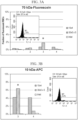
- FIG. 3A- FIG. 3C show a series of plots illustrating delivery of materials to RBCs using example microfluidic systems and a series of images of red blood cells during delivery of materials to RBCs.
- 70kDa dextran-fluorescein ( FIG. 3A ) and 10 kDa dextran-allophycocyanin (APC, FIG. 3B ) were delivered using one of two device designs; one with a 10 ⁇ m length - 4 ⁇ m width single constriction (10 ⁇ m x 4 ⁇ m), and another with a 30 ⁇ m length - 5 ⁇ m width constriction, with 5 constrictions in parallel (30 ⁇ m x 5 ⁇ m, x 5). Histogram inserts in FIG. 3A and FIG.
- FIG. 3B show the delivered population (M1, FIG. 3A and M7, FIG. 3B ) compared to the undelivered population.
- FIG. 3C shows Giemsa-stained film smears of RBC samples infected with a synchronized culture of P. falciparum parasites at various stages of parasite growth.
- Time point 1 (T1) reflects ring-stage parasites ( ⁇ 18 hours post-invasion)
- time point 2 reflects trophozoite-stage parasites ( ⁇ T1 + 8 hours)
- time point 3 reflects trophozoite-stage parasites (T1 + 22 hours)
- time point 4 schizont-stage parasites T1 + 30 hours).
- FIG. 4A- FIG. 4B illustrate delivery of 10 kDa Dextran-APC ( FIG. 4A , left panel), 70 kDa Dextran-fluorescein ( FIG. 4A , middle panel) and a recombinant cyan fusion protein (CFP) - yellow fusion protein (YFP) fusion (62 kDa CFP-YFP fusion) ( FIG. 4A , right panel), to RBCs infected (top portion of bar graphs) or uninfected (bottom portion of bar graphs) with trophozoite-stage P. falciparum parasites using a microfluidic device with a 30 ⁇ m x 5 ⁇ m, x 5 design.
- FIG. 4B shows a photo of P. falciparum- infected, untreated RBCs.
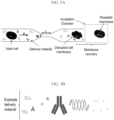
- FIG. 5A- FIG. 5B illustrate the example microfluidic system described and shown in FIG. 1A- FIG. 1B and FIG. 2A- FIG. 2B ( FIG. 5A ), and example delivery materials including lipids, polymers, nanoparticles, RNA, DNA, antibodies, proteins, impermeable small molecules, and fluorophores ( FIG. 5B ).
- Red blood cells can be ideal drug carriers due to their long half-life in circulation (up to 127 days). However, red blood cells can be especially hard to manipulate due to the lack of active membrane recovery processes such as an inability to transcribe mRNA ( Sharei et al., Integr Biol (Camb). 2014 Apr;6(4):470-475 ), a lack of other active processes such as endocytosis, as well as their flexible nature and bi concave shape.
- Example implementations of the current subject matter overcome these challenges in order to deliver materials to red blood cells by not relying on active endocytosis and through the use of unique combinations of conditions for the systems described herein. As such, the current invention is based at least in part on the unexpected finding that RBCs can restore perturbations in their membranes, despite a lack of active membrane repair processes.
- the present disclosure relates to a microfluidics system capable of delivering materials to the cytosol of anucleate cells, such as RBCs, and methods of use.
- the microfluidics system comprises at least one microfluidic channel defining a lumen and being configured such that a cell suspended in a buffer can pass therethrough, wherein the microfluidic channel comprises at least one cell-deforming constriction comprising a width, a depth, and a length, wherein a width is less than 4 ⁇ m.
- Embodiments of the invention also pertain to methods of delivering compounds and material (e.g., a payload or cargo) to the cytosol of an anucleate cell (e.g., a red blood cell), comprising passing an anucleate cell suspended in a buffer through a microfluidics channel described herein that includes a cell-deforming constriction such that a pressure is applied to the anucleate cell causing perturbations of the anucleate cell large enough for a payload to pass through, and incubating the anucleate cell in a payload-containing solution for an amount of time after the cell passes through the constriction to allow for the payload to enter into the cytosol of the anucleate cell.
- an anucleate cell e.g., a red blood cell
- FIG. 1 For embodiments of the inventions, are directed to methods of treating an infection or disease comprising passing an anucleate cell suspended in a buffer through a microfluidic device comprising a cell-deforming constriction and incubating the cell in a payload-containing solution for a predetermined amount of time, waiting for the perturbations to close such that the payload is contained intracellularly, and administering the cell to a patient in need.
- said payload-containing solution includes a drug used in the treatment of malaria or sickle cell anemia.
- phrases such as "at least one of” or “one or more of” may occur followed by a conjunctive list of elements or features.
- the term “and/or” may also occur in a list of two or more elements or features. Unless otherwise implicitly or explicitly contradicted by the context in which it is used, such a phrase is intended to mean any of the listed elements or features individually or any of the recited elements or features in combination with any of the other recited elements or features.
- the phrases “at least one of A and B;” “one or more of A and B;” and “A and/or B” are each intended to mean "A alone, B alone, or A and B together.”
- a similar interpretation is also intended for lists including three or more claims.
- phrases “at least one of A, B, and C;” “one or more of A, B, and C;” and “A, B, and/or C” are each intended to mean “A alone, B alone, C alone, A and B together, A and C together, B and C together, or A and B and C together.”
- use of the term “based on,” above and in the claims is intended to mean, “based at least in part on,” such that an unrecited feature or element is also permissible.
- microfluidics systems refers to systems in which low volumes (e.g., ⁇ L, nL, pL, fL) of fluids are processed to achieve the discrete treatment of small volumes of liquids. Certain implementations described herein include multiplexing, automation, and high throughput screening.
- the fluids e.g., a buffer, a solution, a payload-containing solution, or a cell suspension
- the fluids can be moved, mixed, separated, or otherwise processed.
- microfluidics systems are used to apply mechanical constriction to a cell suspended in a buffer, inducing perturbations in the cell (e.g., holes) that allow a payload or compound to enter the cytosol of the cell.
- a “constriction” refers to a portion of a microfluidics channel defined by an entrance portion, a centerpoint, and an exit portion, wherein the centerpoint is defined by a width, a length, and a depth.
- width of constriction refers to the width of the microfluidics channel at the centerpoint.
- the constriction has a width of less than about 6 ⁇ m.
- the constriction may be less than about 6 ⁇ m, 0.7 ⁇ m, 0.8 ⁇ m, 0.9 ⁇ m, 1 ⁇ m, 1.5 ⁇ m, or less than 2 ⁇ m.
- the constriction has a width of less than about 4 ⁇ m.
- the constriction has a width between about 0.5 ⁇ m and about 4 ⁇ m. In further embodiments, the constriction has a width between about 3 ⁇ m and 4 ⁇ m. In further embodiments, the constriction has a width between about 2 ⁇ m and 4 ⁇ m. In further aspects, the constriction has a width of about 3.9 ⁇ m or less. In further aspects, the constriction has a width of about 3 ⁇ m. In certain embodiments, the constriction is configured such that a single cell passes through the constriction at a time.
- length of constriction refers to the length of the microfluidics channel at the centerpoint. In certain aspects of the invention, the length of the constriction is about 30 ⁇ m or less. In some embodiments, the length of the constriction is between about 10 ⁇ m and about 30 ⁇ m. In certain embodiments, the length of the constriction is between about 10 ⁇ m and about 20 ⁇ m. For example, the length of the constriction may be about 11 ⁇ m, 12 ⁇ m, 13 ⁇ m, 14 ⁇ m, 15 ⁇ m, 20 ⁇ m, or about 25 ⁇ m, including all integers, decimals, and fractions between 10 ⁇ m and 30 ⁇ m.
- the length of the constriction can vary to increase the length of time a cell is under constriction ( e.g., greater lengths result in longer constrictions times at a given flow rate).
- the length of the constriction can vary to decrease the length of time a cell is under constriction ( e.g., shorter lengths result in shorter constriction times at a given flow rate).
- depth of constriction refers to the depth of the microfluidics channel at the centerpoint.
- the depth of constriction can be adjusted to provide a tighter constriction and thereby enhance delivery, similar to adjustments of the constriction width.
- the depth of the constriction is between about 1 ⁇ m and about 1mm, including all integers, decimals, and fractions between 1 ⁇ m and 1mm. In some embodiments, the depth is about 20 ⁇ m. In some embodiments the depth is uniform throughout the channel. In certain embodiments, the depth is decreased at the point of constriction to result in a greater constriction of the cell. In some embodiments, the depth is increased at the point of constriction to result in a lesser constriction of the cell.
- the depth of the constriction is greater than the width of the constriction. In certain embodiments, the depth of constriction is less than the width of the constriction. In some embodiments, the depth of constriction and the width of the constriction are equal.
- the dimensions of the microfluidic device are denoted by length, width, and number of constrictions.
- a microfluidics device with a constriction length of 30 ⁇ m, a width of 5 ⁇ m, and 5 constrictions is represented herein as 30 x 5 x 5 (L x W x # of constrictions).
- the microfluidics system comprises at least one microfluidics channel comprising at least one constriction. In some embodiments, the microfluidics system comprises multiple microfluidics channels each comprising at least one constriction.
- the microfluidics system may comprise 2, 3, 4, 5, 6, 7, 8, 9, 10, 50, 100, 500, 1000, or greater microfluidics channels, including all integers from 10 to 50, 50 to 100, 100 to 500, 500 to 1000, and the like.
- the multiple microfluidics channels each comprising one constriction are arranged in parallel. In certain aspects, the multiple microfluidics channels each comprising one constriction are arranged linearly in series.
- the microfluidics system comprises one microfluidics channel comprising multiple constrictions.
- one microfluidics channel may comprise 2, 3, 4, 5, 10, 20, or greater constrictions.
- the microfluidics system comprises multiple microfluidics channels comprising multiple constrictions.
- the multiple microfluidics channels comprising multiple constrictions are arranged in parallel.
- the multiple microfluidics channels comprising multiple constrictions are arranged linearly in series.
- the entrance portion may comprise a "constriction angle" that can vary to increase or decrease how quickly the diameter of the channel decreases towards the centerpoint of the constriction.
- the constriction angle can vary to minimize clogging of the microfluidics system while cells are passing therethrough.
- the constriction angle may be between 1 and 140 degrees.
- the constriction angle may be between 1 and 90 degrees.
- the exit portion may also comprise an angle to reduce the likelihood of turbulence/eddies that can result in non-laminar flow.
- the angle of the exit portion may be between 1 and 140 degrees. In certain embodiments, the angle of the exit portion may be between 1 and 90 degrees.
- the cross-section of the microfluidics channel, the entrance portion, the centerpoint, and the exit portion may vary.
- various cross-sections include circular, elliptical, an elongated slit, square, hexagonal, or triangular cross-sections.
- the velocity at which the anucleate cells (e.g., RBCs) pass through the microfluidics channels described herein can also be varied to control delivery of the delivery material to the cells. For example, adjusting the velocity of the cells through the microfluidics channel can vary the amount of time that pressure is applied to the cells, and can vary how rapidly the pressure is applied to the cell.
- the cells can pass through the microfluidics system at a rate of at least 0.1 mm/s. In further embodiments, the cells can pass through the microfluidics system at a rate between 0.1 mm/s and 5 m/s, including all integers and decimals therein.
- the cells can pass through the microfluidics system at a rate between 10 mm/s and 500 mm/s, including all integers and decimals therein. In some embodiments, the cells can pass through the system at a rate greater than 5 m/s.
- a cell driver is a device or component that applies a pressure or force to the buffer or solution in order to drive a cell through a constriction.
- a pressure can be applied by a cell driver at the inlet.
- a vacuum pressure can be applied by a cell driver at the outlet.
- the cell driver is adapted to supply a pressure greater than 90 psi.
- the pressure supplied by the cell driver can be greater than 91, 92, 93, 94, 95, 100, 110, 120, 130, or 150 psi.
- the cell driver is adapted to apply a pressure of 120 psi.
- the cell driver is selected from a group consisting of a pressure pump, a gas cylinder, a compressor, a vacuum pump, a syringe pump, a peristaltic pump, a pipette, a piston, a capillary actor, a human heart, human muscle, gravity, a microfluidics pumps, and a syringe. Modifications to the pressure applied by the cell driver also affect the velocity at which the cells pass through the microfluidics channel ( e.g., increases in the amount of pressure will result in increased cell velocities).
- Perturbations When a cell (e.g., an anucleate cell) passes through the constriction, its membrane is perturbed causing temporary disruptions in the membrane and resulting in the uptake of the payload that is present in the surrounding media. As used herein, these temporary disruptions are referred to as "perturbations.” Perturbations created by the methods described herein are breaches in a cell that allow material from outside the cell to move into the cell. Non-limiting examples of perturbations include a hole, a tear, a cavity, an aperture, a pore, a break, a gap, or a perforation. The perturbations (e.g., pores or holes) created by the methods described herein are not formed as a result of assembly of protein subunits to form a multimeric pore structure such as that created by complement or bacterial hemolysins.
- anucleate cells refer to cells lacking a nucleus. Such cells can include, but are not limited to, platelets, red blood cells or erythrocytes (used interchangeably herein), and reticulocytes. Reticulocytes are immature ( e.g., not yet biconcave) red blood cells, typically comprising about 1% of the red blood cells in the human body. Reticulocytes are also anucleate. In certain embodiments, the systems and methods described herein are used the treatment and/or processing of enriched (e.g., comprising a greater percentage of the total cellular population than would be found in nature), purified, or isolated ( e.g.
- anucleate cells e.g. RBCs, reticulocytes, and/or platelets.
- RBCs reticulocytes
- platelets anucleate cells
- the systems and methods described herein are used the treatment and/or processing of whole blood containing RBCs, reticulocytes, platelets as well as other blood cells. Purification or enrichment of these cell types is accomplished using known methods such as density gradient systems (e.g., Ficoll-Hypaque), fluorescence activated cell sorting (FACS), magnetic cell sorting, or in vitro differentiation of erythroblasts and erythroid precursors.
- density gradient systems e.g., Ficoll-Hypaque
- FACS fluorescence activated cell sorting
- magnetic cell sorting or in vitro differentiation of erythroblasts and erythroid precursors.
- Red blood cells comprise 40-45% of the total blood volume are structurally and functionally unique and are more flexible than cells with a nucleus.
- RBCs are the primary means for oxygen delivery throughout the human body, and the cytoplasm of an erythrocyte is rich in the oxygen-carrier biomolecule, hemoglobin. As such, RBCs lack most organelles (including a nucleus), which significantly alters their physical properties compared to enucleated cells.
- the biconcave shape of RBCs also contributes to their unique physical properties.
- RBCs are biconcave discs with an average disc thickness of 2-2.5 ⁇ m, and a minimum thickness in the center of 0.8-1 ⁇ m. This geometry provides extra surface area and enables shape change without increasing surface area.
- RBCs also play an important role in providing properties essential for physiological cell function (e.g., surface deformability stability, flexibility, adhesion, and immune recognition).
- RBCs also contain a carbohydrate-rich, glycoprotein-polysaccharide covering on their exterior, referred to as glycoalyx. This glycocalyx covering is only found in some bacteria, epithelial cells and RBCs. It is a porous layer that is resistant to penetration, and serves to protect against vascular thrombosis ( e.g., atherothrombosis) and other diseases.
- phospholipid bilayer cholesterol is distributed evenly between the inner and outer leaflets, and five major phospholipids (phosphatidylcholine, sphingomyelin, phosphatidylethanolamine, phosphoinositol, phosphatidylserine) are asymmetrically distributed among the bilayer. This asymmetrical distribution of phospholipids is critical for cell integrity and function (e.g., exposure of a phospholipid potentiates adhesion of RBCs to vascular endothelial cells, therefore preventing normal transit through the microvasculature).
- phospholipids phosphatidylcholine, sphingomyelin, phosphatidylethanolamine, phosphoinositol, phosphatidylserine
- RBCs have a deformability phenomenon not present in any other cell of mammalian organisms. This phenomenon allows them to behave like elastic bodies and change their shape extensively, characteristics that change with age.
- RBCs change rigidity as they age. Irreducible complexation of hemoglobin with spectrin is a prominent marker of the in vivo aging process for RBCs, and may be tightly correlated with increased RBC rigidity, decreased deformability, echinocytosis, and erythrophagocytosis (Aging and death signaling in mature red cells: from basic science to transfusion practice; Marianna H. Antonelou, Anastasios G. Kriebardis, and Issidora S. Papassiderr; Blood Transfus. 2010 Jun; 8 (Suppl 3): s39-s47).
- the successful processing of RBCs by the microfluidics systems described herein was an unexpected experimental outcome.
- the systems introduce material to the cytosol of cells through the mechanical introduction of perturbations in the cell membrane, which allows the materials to pass through and remain intracellular after the restoration of cell membrane integrity.
- the successful processing of RBCs by the systems described herein which depends on the successful repair of the cellular membrane, occurred in RBCs despite a lack of active membrane repair processes.
- RBCs As described above, the shape of an RBC is distinct from other mammalian cells. As a consequence of their asymmetric, biconcave shape, RBCs have the potential to enter and pass through the constriction in different orientations. This property is not present in other cells, which have a more or less spherical shape when in suspension. This is an unexpected element from a delivery stand point. For example, RBCs progressing through the constriction of the microfluidics devices described herein at their widest dimension are more likely to have the cell membrane disrupted, while RBCs progressing through the constriction at their narrowest dimension are less likely to have the cell membrane disrupted.
- anucleate cells are processed with the microfluidics systems described herein in which the microfluidics channel comprises a constriction with a width of at least about 6 ⁇ m or less.
- RBCs may be processed with a constriction width of about 1, 2, 3, 4, 5, or about 6 ⁇ m.
- the constriction width is between 1 ⁇ m and 4 ⁇ m. In further embodiments, the constriction width is between 2 ⁇ m and 4 ⁇ m.
- a buffer refers to standard buffers or standard physiologically-compatible buffered solutions used to suspend the cells as they are processed.
- a buffer can be any buffer commonly used in the art including, but not limited to, maleic acid, phosphoric acid, citric acid, malic acid, formic acid, lactic acid, succinic acid, acetic acid, pivalic acid, phosphoric acid, L-histidine, MES, bis-tris, MOPSO, PIPES, imidazole, MOPS, BES, TES, HEPES, DIPSO, TAPSO, TEA, NaCl, KCl, Na 2 HPO 4 , KH 2 PO 4 , Na 2 CO 3 , or NaHCO 3 .
- buffered solutions include phosphate buffered saline (PBS), and media commonly used in cell culture such as RPMI, DMEM, or IMDM.
- PBS phosphate buffered saline
- media commonly used in cell culture such as RPMI, DMEM, or IMDM.
- hypotonic and/or hypoosmolar buffers are advantageous as they cause RBCs to swell rendering them more receptive to being squeezed as they proceed through the device and be more susceptible to membrane poration using mechanical deformation.
- Surfactants can also be added to a buffer in order to reduce clogging of the microfluidics channel during operation.
- Surfactants can include poloxamer, animal-derived serum, and albumin protein, among others.
- normal RBCs refer to healthy, unaltered RBCs such as those not affected by a genetic or non-genetic abnormality or not infected with a pathogen such as a virus, bacteria, or parasite.
- Normal RBCs can be obtained from healthy individuals, such as individuals not infected with a pathogen and not suffering from a disease.
- Normal RBCs can be obtained from ex vivo culture systems, in which the resultant RBC population is not infected with any pathogen and is not experimentally altered to mimic a disease state.
- Altered RBCs refer to infected or diseased RBCs.
- Infected RBCs can refer to an RBC or population of RBCs that are infected with a bacteria, virus, or parasite ( e.g., P. falciparum ).
- Diseased RBCs can refer to an RBC or population of RBCs affected by a genetic or non-genetic abnormality resulting in decreased RBC function, number, or viability (e.g. sickle cell anemia).
- Altered RBCs e.g., infected or diseased RBCs
- Altered RBCs can be obtained from an individual suffering from an infection or disease.
- Altered RBCs can be obtained from ex vivo culture systems in which the resultant populations of RBCs is exposed to a pathogen (e.g. P. falciparum ) or is experimentally altered to mimic a diseased state.
- both normal (e.g. uninfected or non-diseased) RBCs and altered (e.g. infected or diseased) RBCs are successfully treated with the microfluidics systems described herein and cargo effectively delivered to both populations of RBCs.
- RBCs infected with P. falciparum and RBCs uninfected with P. falciparum were successfully treated and the level of cargo delivery was comparable between the two populations.
- the level of cargo delivery is increased in normal RBCs compared to altered RBCs.
- the level of cargo delivery is decreased in normal RBCs compared to altered RBCs.
- a payload refers to the material that is being delivered to the anucleate cell (e.g. an RBC).
- a payload may refer to a protein, a small molecule, a nucleic acid (e.g. RNA and/or DNA), a lipid, a carbohydrate, a macromolecule, a vitamin, a polymer, fluorescent dyes and fluorophores, carbon nanotubes, quantum dots, nanoparticles, and steroids.
- the payload may refer to a protein or small molecule drug.
- RBCs delivered with drug can act as long-term drug carriers in the body.
- a protein or small molecule drug is delivered into malaria-causing parasite-infected cells (e.g. P. falciparum infected RBCs) to confer a clinical benefit to subjects suffering from malaria.
- malaria-causing parasite-infected cells e.g. P. falciparum infected RBCs
- small molecule drugs e.g., purine-based antiviral agents ( DeBellis et al., 2003, Blood Cells Mol. Dis.
- peptides e.g., tri- or tetra- peptides ( Votano et al., 1977, Science 196:1216-1219 ; hereby incorporated by reference) are delivered to RBCs affected with sickle cell anemia in order to confer a clinical benefit to subjects suffering from sickle cell anemia.
- an infected cell refers to a cell infected with a parasite that causes malaria. Such parasites are found in the Plasmodium genus and can include P. falciparum, P. vivax, P. ovale, P malariae, and P. knowlesi.
- an infected cell refers to a cell infected with P. falciparum.
- a diseased cell refers to a cell ( e.g.
- an anucleate cell affected by anemias including iron-deficiency anemia aplastic anemia, thalassemia, and sickle cell anemia, polycythemia vera, and thrombocytopenias including idiopathic thrombocytopenic purpura.
- a diseased cell refers to a cell affected by sickle cell anemia.
- Non-limiting examples of drugs used in the treatment of malaria that can be delivered to RBCs infected with malaria-causing parasites (e.g. P. falciparum infected RBCs) include chloroquine (also known as Aralen TM ), atovaquone-proguanil (also known as Malarone), artemether/lymefantrine (also known as Coartem), quinine sulfate (also known as Qualaquin, QM-260, and Quinamm), mefloquine (also known as Lariam), hydroxychloroquine (also known as Plaquineil Sulfate and Qunieprox), primaquine, quinidine (also known as Quin-G, Cardioquin, Quinora, Quinidex Extentabs, Quinaglute Dura-Tabs, Quin-Release), artesunate, artemisinin, sulfadoxine/pryimethamine (also known as Fansidar), amodiaquine, sulfon
- proteins and/or enzymes are delivered to RBCs for the treatment of sickle cell disease.
- drugs used in the treatment of sickle cell disease e.g. sickle cell anemia
- drugs used in the treatment of sickle cell disease include hydroxyurea, hydrea, vitamin E, droxia, Aqual Sol E, L-glutamine, Aquavite E, GlutaSolve, Alpha E, E-400 clear, Nutr E Sol, E-600, E Gems, Aqua E, Aqua Gem E, SYMPT-XG, Nutrestore, purine-based antiviral agents including acyclovir, ganciclovir, valacyclovir, penciclovir, and tri-and tetra-peptides.
- a payload is delivered to a population of RBCs in order to treat a condition that does not necessarily affect the population of RBCs themselves.
- RBCs can act as long term drug carriers, or "drug depots.”
- drug depot refers to a long-term circulating RBC population that has been processed by the microfluidics systems described herein and contains a payload, compound, or cargo that is slowly released throughout an organism.
- the population of RBCs comprising the drug depot can be infected and/or diseased, uninfected and/or non-diseased, or a combination of infected and/or diseased and uninfected and/or diseased.
- the half-life of an RBC is approximately 127 days. Therefore at least a portion of the population of drug-depot RBCs can persist for about 254 days.
- the population of drug depot RBCs can be replenished at a predetermined time point during treatment. In some embodiments, the population of drug depot RBCs can be replenished more than once at predetermined time points during treatment. For example, drug depot RBCs can be replenished 2, 3, 4, 5, 6, 7, 8, 9, 10 or more times during treatment. In some embodiments, the number of RBCs to be used as a drug depot can be increased to increase to concentration of payload to be released overtime.
- the concentration of payload delivered to the RBCs to be used as a drug depot can be increased in order to increase the concentration of payload to be released overtime.
- the drug-depot RBCs can be used for the treatment of numerous diseases or disorders, including but not limited to cancer
- RBC drug depots can be used as the sole treatment for a disease or disorder. In some embodiments, RBC drug depots can be used in combination with a conventional therapy for a given disease or disorder. In some embodiments, RBC drug depots can be utilized as a maintenance therapy after the completion of conventional therapy for a given disease or disorder. In further embodiments, RBC drug depots can be utilized prior to the initiation of conventional therapy. In some embodiments, RBC drug depots can be utilized both prior to the initiation and after the completion of a conventional therapy for a given disease or disorder. In further embodiments, RBC drug depots can be utilized prior to the onset of a disease or disorder in order to prevent the onset of the disease or disorder.
- a "patient” includes any mammalian subject from which a sample can be acquired.
- the mammal is a human.
- the methods of the present disclosure can also be employed for the treatment of non-human primates (e.g. monkeys, baboons, and chimpanzees) mice, rats, bovines, horses, cats, dogs, pigs, rabbits, goats, deer, sheep, ferrets, gerbils, guinea pigs, hamsters, bats, birds (e.g., chickens, turkeys, and ducks), fish and reptiles.
- a "patient in need thereof' is a patient suffering from a disease or infection, including but not limited to cancer.
- cells are incubated in a payload-containing solution or buffer for a period of time after undergoing processing with the microfluidics systems described herein.
- cells can be incubated in a payload-containing solution or buffer for 1 to 10 minutes or longer.
- the incubation time period can be 2, 3, 4, 5, 6, 7, 8, or 9 minutes (or any decimal thereof) or longer.
- the incubation time period is 15, 20, 30, 60 minutes or longer.
- cells are incubated in a payload-containing solution or buffer for a period of time before undergoing processing with the microfluidics systems described herein.
- cells are processed as described herein while in a payload-containing solution or buffer.
- the devices, technologies, and methods described herein are implemented ex vivo, for example in a laboratory, centralized manufacturing facility, or cell-processing facility.
- the devices, technologies, and methods are used as a bedside system in which patient samples, e.g., blood samples, or fractionated blood cell populations, are processed using a microfluidic device described herein, or a syringe adapted to include a constriction of appropriate size to deliver molecules to patient cells (e.g., RBCs).
- a bedside dialysis system is analogous to a bedside dialysis system.
- EXAMPLE 1 OPTIMIZATION OF MICROFLUIDIC SYSTEMS FOR DELIVERY OF MATERIALS TO ANUCLEATE CELLS
- Microfluidic systems capable of delivering a variety of compounds to anucleate cells were constructed. As described below, these microfluidic systems were constructed to allow for the passage of an anucleate cell suspended in a buffer through a constriction configured to cause perturbations in the cell large enough for a payload (e.g., compound or macromolecule) to pass through the cellular membrane and into the cytosol, resulting in a delivered cell.
- a payload e.g., compound or macromolecule
- the microfluidic system (5) includes a channel that defines a tubular lumen.
- the microfluidic channel includes a constriction (15) that can be configured such that only a single cell (20) can pass through the constriction at one time.
- the cell can pass through the channel suspended in a buffer (25) that also includes delivery materials (30), although the delivery materials can be added to the buffer before or after the cells pass through the constriction.
- the constriction applies pressure (e.g., mechanical compression) to the cell, thereby squeezing the cell (shown as cell 20 1 ).
- the pressure applied to the cell by the constriction causes perturbations (e.g., holes) in the cell membrane, resulting in a perturbed cell (20 2 ).
- the perturbed cell begins to take up material in the buffer through the perturbations, including the delivery material, resulting in a delivered cell (20 3 ).
- the cell membrane recovers over time, and at least a portion of the delivery material remains trapped inside the cell.
- the ability of the microfluidic system to deform anucleate cells (e.g. RBCs) in order to deliver materials to the cytosol was optimized through modulation of parameters that define the centerpoint of the constriction (e.g. width, length, and depth), the pressure applied to the buffer to force the cell through the constriction, and the nature of the buffer.
- the constriction includes an entrance portion, a centerpoint, and an exit portion.
- the centerpoint of constriction is defined by three measurements; a length (L), a width (W), and a depth.
- Optimal delivery of materials to RBCs required a width of less than 4 ⁇ m.
- a pressure in excess of 90 pounds/inch 2 (psi) (e.g. 120 psi) resulted in perturbations sufficient for a payload to pass through the cell membrane and into the cytosol.
- psi pounds/inch 2
- One challenge of utilizing mechanical constriction to deliver material to RBCs is their asymmetric, biconcave shape. This shape results in RBCs having a narrow dimension and a wide dimension, while many other cells have a relatively spherical shape while in suspension. Consequently, RBCs in a homeostatic state could pass through the constriction in different orientations, potentially reducing the efficacy of the microfluidic system.
- This challenge can be overcome through the use of a hypotonic buffer (e.g.
- PBS PBS which causes the RBCs to swell and exist in a more spherical shape.
- hypotonic buffers can mitigate the effects of an RBC's asymmetric shape on the efficacy of the microfluidics systems described herein. Additionally, arrangement of multiple microfluidics channels and constriction in series or in parallel allowed for the development of microfluidics systems described herein that can deliver materials to RBCs.
- FIG. 3C shows thin film smears of red blood cell samples stained with Giemsa, highlighting the malarial parasites at various growth stages.
- Time point 1 reflects ring-stage parasites ( ⁇ 18 hours post-invasion)
- time point 2 reflects trophozoite-stage parasites ( ⁇ T1 + 8 hours)
- time point 3 reflects trophozoite-stage parasites (T1 + 22 hours)
- time point 4 schizont-stage parasites (T1 + 30 hours).
- RBCs at different stages of infection were harvested at the indicated time points and suspended in PBS at a density of 1x10 8 cells/mL. A given sample exposed to P. falciparum had both infected and uninfected cells.
- microfluidics systems 70 kDa fluorescein-labeled dextran or 10 kDa APC-labeled dextran was delivered to the suspensions of infected and uninfected RBCs using microfluidics systems with one of two designs.
- One microfluidics system design comprised a single constriction with a length of 10 ⁇ m and a width of 4 ⁇ m (10 x 4).
- the other microfluidics system design comprised 5 constrictions arranged in parallel, each with a length of 30 ⁇ m and a width of 5 ⁇ m (30 x 5x5).
- each microfluidics design to load 70 kDa FITC-labeled dextran ( FIG. 3A ) or 10 kDa APC-labeled dextran ( FIG. 3B ) into a mixed population of uninfected, enucleated red blood cells and infected, enucleated red blood cells at growth time points 1-4, was measured by flow cytometry.
- inlet cells cells that had not passed through the constriction but had been exposed to the fluorescent delivery materials
- the histograms included in FIG. 3A and FIG. 3B illustrate the appearance of a delivered population relative to the undelivered group. The larger histogram peaks represent the undelivered population while the smaller peaks with higher fluorescence intensity represent the delivered population.
- the conditions identified above were used to measure loading of the APC and fluorescein dextran conjugates and a 62 kDa recombinant protein, cyan fusion protein (CFP) - yellow fusion protein (YFP) fusion (CFP-YFP fusion) into parasitized vs. non-parasitized RBCs.
- the CFP-YFP fusion protein is charged, globular, and has a defined 3-dimensional structure representative of numerous proteins that can be delivered to confer clinical benefit and was thus used to mimic delivery of a physiologically-relevant protein.
- RBCs were infected with malaria and cells were harvested at the trophozoite-stage of growth for analysis.
- FIG. 4B is a stained picture of P. falciparum -infected cells.
- microfluidics devices and systems can be used to deliver a broad range of materials including lipids, polymers, nanoparticles, RNA, DNA, antibodies, proteins, impermeable small molecules, and fluorophores as shown in FIG. 5 .
- the current subject matter is not limited to a laboratory or centralized manufacturing facility but also can be implemented as a bedside system, which can process patient samples in line, similar to a dialysis machine.
- a syringe type implementation can be possible.
- the current subject matter can be used on RBCs (including erythrocytes and reticulocytes), purified RBCs, and unmodified blood (e.g., blood that has undergone limited processing).
Landscapes
- Health & Medical Sciences (AREA)
- Engineering & Computer Science (AREA)
- Life Sciences & Earth Sciences (AREA)
- Chemical & Material Sciences (AREA)
- Genetics & Genomics (AREA)
- Organic Chemistry (AREA)
- Zoology (AREA)
- Bioinformatics & Cheminformatics (AREA)
- Biomedical Technology (AREA)
- Wood Science & Technology (AREA)
- Biotechnology (AREA)
- General Health & Medical Sciences (AREA)
- General Engineering & Computer Science (AREA)
- Microbiology (AREA)
- Biochemistry (AREA)
- Hematology (AREA)
- Cell Biology (AREA)
- Immunology (AREA)
- Sustainable Development (AREA)
- Veterinary Medicine (AREA)
- Pharmacology & Pharmacy (AREA)
- Animal Behavior & Ethology (AREA)
- Medicinal Chemistry (AREA)
- Public Health (AREA)
- Clinical Laboratory Science (AREA)
- Dispersion Chemistry (AREA)
- Mechanical Engineering (AREA)
- Biophysics (AREA)
- Molecular Biology (AREA)
- Plant Pathology (AREA)
- Physics & Mathematics (AREA)
- Nuclear Medicine, Radiotherapy & Molecular Imaging (AREA)
- General Chemical & Material Sciences (AREA)
- Chemical Kinetics & Catalysis (AREA)
- Tropical Medicine & Parasitology (AREA)
- Developmental Biology & Embryology (AREA)
- Epidemiology (AREA)
- Virology (AREA)
- Diabetes (AREA)
- Medicinal Preparation (AREA)
Applications Claiming Priority (3)
| Application Number | Priority Date | Filing Date | Title |
|---|---|---|---|
| US201562190677P | 2015-07-09 | 2015-07-09 | |
| PCT/US2016/041653 WO2017008063A1 (fr) | 2015-07-09 | 2016-07-08 | Administration de substances à des cellules anucléées |
| EP16822078.8A EP3320082B1 (fr) | 2015-07-09 | 2016-07-08 | Administration de substances à des cellules anucléées |
Related Parent Applications (1)
| Application Number | Title | Priority Date | Filing Date |
|---|---|---|---|
| EP16822078.8A Division EP3320082B1 (fr) | 2015-07-09 | 2016-07-08 | Administration de substances à des cellules anucléées |
Publications (2)
| Publication Number | Publication Date |
|---|---|
| EP4257675A2 true EP4257675A2 (fr) | 2023-10-11 |
| EP4257675A3 EP4257675A3 (fr) | 2024-01-03 |
Family
ID=57685865
Family Applications (2)
| Application Number | Title | Priority Date | Filing Date |
|---|---|---|---|
| EP23174770.0A Pending EP4257675A3 (fr) | 2015-07-09 | 2016-07-08 | Administration de substances à des cellules anucléées |
| EP16822078.8A Active EP3320082B1 (fr) | 2015-07-09 | 2016-07-08 | Administration de substances à des cellules anucléées |
Family Applications After (1)
| Application Number | Title | Priority Date | Filing Date |
|---|---|---|---|
| EP16822078.8A Active EP3320082B1 (fr) | 2015-07-09 | 2016-07-08 | Administration de substances à des cellules anucléées |
Country Status (8)
| Country | Link |
|---|---|
| US (2) | US11299698B2 (fr) |
| EP (2) | EP4257675A3 (fr) |
| JP (2) | JP6925984B2 (fr) |
| CN (1) | CN107922911A (fr) |
| AU (2) | AU2016289530B2 (fr) |
| CA (1) | CA2988996A1 (fr) |
| SG (1) | SG10201912910PA (fr) |
| WO (1) | WO2017008063A1 (fr) |
Cited By (1)
| Publication number | Priority date | Publication date | Assignee | Title |
|---|---|---|---|---|
| CN113337402A (zh) * | 2011-10-17 | 2021-09-03 | 麻省理工学院 | 细胞内传递 |
Families Citing this family (82)
| Publication number | Priority date | Publication date | Assignee | Title |
|---|---|---|---|---|
| KR102243597B1 (ko) | 2013-08-16 | 2021-04-26 | 메사추세츠 인스티튜트 오브 테크놀로지 | 세포로의 선택적 물질 전달 |
| KR20170074235A (ko) | 2014-10-31 | 2017-06-29 | 메사추세츠 인스티튜트 오브 테크놀로지 | 면역 세포로의 생체분자의 전달 |
| CN107002089B (zh) | 2014-11-14 | 2021-09-07 | 麻省理工学院 | 化合物和组合物向细胞中的破坏和场实现的递送 |
| CN107250373A (zh) | 2015-01-12 | 2017-10-13 | 麻省理工学院 | 通过微流体递送实现的基因编辑 |
| AU2016289530B2 (en) | 2015-07-09 | 2021-05-06 | Massachusetts Institute Of Technology | Delivery of materials to anucleate cells |
| EP3344575B1 (fr) | 2015-09-04 | 2020-04-15 | SQZ Biotechnologies Company | Administration intracellulaire de biomolécules à des cellules comprenant une paroi cellulaire |
| WO2017173373A1 (fr) | 2016-03-31 | 2017-10-05 | Massachusetts Institute Of Technology | Procédés et dispositifs microfluidiques à écoulement traversant présentant des interactions de surface de perturbation de membrane pour une administration intracellulaire |
| CA3023092A1 (fr) * | 2016-05-03 | 2017-11-09 | Sqz Biotechnologies Company | Administration intracellulaire de biomolecules pour induire une tolerance |
| US11999931B2 (en) | 2016-08-20 | 2024-06-04 | The Regents Of The University Of California | High-throughput system and method for the temporary permeabilization of cells |
| WO2018201160A1 (fr) | 2017-04-28 | 2018-11-01 | Agrospheres, Inc. | Compositions et procédés d'immobilisation d'enzyme |
| EP3615659A4 (fr) | 2017-04-28 | 2021-01-06 | Agrospheres, Inc. | Compositions et procédés pour l'encapsulation et l'administration évolutive de produits agrochimiques |
| PT3638021T (pt) * | 2017-06-14 | 2025-04-28 | Univ Louisville Res Found Inc | Métodos de preservação de células |
| CA3073449A1 (fr) | 2017-09-25 | 2019-03-28 | Agrospheres, Inc. | Compositions et procedes de production et d'administration evolutive de produits biologiques |
| CR20200251A (es) | 2017-11-17 | 2020-07-17 | Iovance Biotherapeutics Inc | Expansión de til de aspirados con aguja fina y biopsias por punción |
| EP3714041A1 (fr) | 2017-11-22 | 2020-09-30 | Iovance Biotherapeutics, Inc. | Expansion de lymphocytes de sang périphérique (pbl) à partir de sang périphérique |
| US11365390B2 (en) | 2017-12-19 | 2022-06-21 | Xcell Biosciences, Inc. | Methods of modulating cell phenotype by way of regulating the gaseous environment |
| US20200392444A1 (en) * | 2017-12-21 | 2020-12-17 | Politecnico Di Milano | Erythrocytes for drug delivery |
| JP2021509812A (ja) | 2018-01-05 | 2021-04-08 | プレートレット バイオジェネシス, インコーポレイテッド | 巨核球を産生するための組成物および方法 |
| US11713446B2 (en) | 2018-01-08 | 2023-08-01 | Iovance Biotherapeutics, Inc. | Processes for generating TIL products enriched for tumor antigen-specific T-cells |
| WO2019136459A1 (fr) | 2018-01-08 | 2019-07-11 | Iovance Biotherapeutics, Inc. | Procédés de génération de produits de til enrichis pour des lymphocytes t spécifiques d'un antigène tumoral |
| EP3737743A1 (fr) | 2018-01-08 | 2020-11-18 | Iovance Biotherapeutics, Inc. | Procédés de génération de produits de til enrichis pour des lymphocytes t spécifiques d'un antigène tumoral |
| AU2019234549B2 (en) | 2018-03-12 | 2026-02-12 | Sqz Biotechnologies Company | Methods for treating HPV-associated diseases |
| EP3813853A4 (fr) | 2018-06-29 | 2022-04-06 | Platelet Biogenesis, Inc. | Compositions pour l'administration de médicaments et leurs méthodes d'utilisation |
| CN109239406B (zh) * | 2018-10-08 | 2020-03-31 | 西安交通大学 | 一种用于细胞器药物定位投递检测装置及投药检测方法 |
| US12611427B2 (en) | 2018-11-05 | 2026-04-28 | Iovance Biotherapeutics, Inc. | Treatment of NSCLC patients refractory for anti-PD-1 antibody |
| WO2020096927A1 (fr) | 2018-11-05 | 2020-05-14 | Iovance Biotherapeutics, Inc. | Expansion de til utilisant des inhibiteurs de la voie akt |
| MY210603A (en) | 2018-11-05 | 2025-10-01 | Iovance Biotherapeutics Inc | Processes for production of tumor infiltrating lymphocytes and uses of the same in immunotherapy |
| JP7854297B2 (ja) | 2018-11-05 | 2026-05-01 | アイオバンス バイオセラピューティクス,インコーポレイテッド | 改良された腫瘍反応性t細胞の選択 |
| US20210403571A1 (en) | 2018-11-15 | 2021-12-30 | Erytech Pharma | Synergistic combinations of methionine depletion agents and immune checkpoint modulators |
| CA3123392A1 (fr) | 2018-12-19 | 2020-06-25 | Iovance Biotherapeutics, Inc. | Procedes pour la multiplication de lymphocytes infiltrant les tumeurs a l'aide de paires de recepteurs de cytokines modifies et leurs utilisations |
| WO2020154696A1 (fr) * | 2019-01-25 | 2020-07-30 | Sqz Biotechnologies Company | Vaccins dérivés de cellules anucléées |
| CA3131701A1 (fr) | 2019-02-28 | 2020-09-03 | Sqz Biotechnologies Company | Administration de biomolecules a des pbmc pour modifier une reponse immunitaire |
| WO2020180733A1 (fr) | 2019-03-01 | 2020-09-10 | Iovance Biotherapeutics, Inc. | Expansion de lymphocytes infiltrant les tumeurs à partir de tumeurs liquides et leurs utilisations thérapeutiques |
| KR20210149791A (ko) | 2019-04-08 | 2021-12-09 | 에스큐지 바이오테크놀로지스 컴퍼니 | 페이로드를 세포 내로 전달하기 위한 시스템에서 이용하기 위한 카트리지 |
| US12465912B2 (en) | 2019-04-11 | 2025-11-11 | The Chinese University Of Hong Kong | Systems and methods for controlled membrane disruption |
| WO2020232029A1 (fr) | 2019-05-13 | 2020-11-19 | Iovance Biotherapeutics, Inc. | Procédés et compositions pour sélectionner des lymphocytes infiltrant les tumeurs et leurs utilisations en immunothérapie |
| WO2020252215A1 (fr) | 2019-06-12 | 2020-12-17 | Cellfe, Inc. | Procédés et systèmes de marquage et d'imagerie de cellule |
| IT201900009831A1 (it) * | 2019-06-21 | 2020-12-21 | Milano Politecnico | Eritrociti per la veicolazione di farmaci |
| US12516291B2 (en) | 2019-12-11 | 2026-01-06 | Iovance Biotherapeutics, Inc. | Processes for the production of tumor infiltrating lymphocytes (TILs) and methods of using the same |
| EP4127195A4 (fr) * | 2020-03-26 | 2024-12-11 | Agency for Science, Technology and Research | Procédé et système pour introduire une ou plusieurs substances exogènes dans une cellule immunitaire |
| CA3177413A1 (fr) | 2020-05-04 | 2021-11-11 | Michelle SIMPSON-ABELSON | Selection de lymphocytes t reactifs a une tumeur ameliores |
| CA3176826A1 (fr) | 2020-05-04 | 2021-11-11 | Iovance Biotherapeutics, Inc. | Procedes de production de lymphocytes infiltrant les tumeurs et leurs utilisations en immunotherapie |
| JP2023527690A (ja) | 2020-05-11 | 2023-06-30 | エフ・ホフマン-ラ・ロシュ・アクチェンゲゼルシャフト | 改変pbmcと免疫抱合体との併用療法 |
| AU2021270347A1 (en) | 2020-05-11 | 2022-12-15 | Erytech Pharma | Red cell extracellular vesicles (RCEVs) containing cargoes and methods of use and production thereof |
| KR20230026340A (ko) * | 2020-05-22 | 2023-02-24 | 에스큐지 바이오테크놀로지스 컴퍼니 | 세포를 자동으로 처리하기 위한 현장 의료 시스템 |
| US20250255961A1 (en) | 2020-07-29 | 2025-08-14 | Stemcell Technologies Canada Inc. | Methods to stimulate immune responses to mutant ras using nucleated cells |
| KR20230058388A (ko) * | 2020-07-29 | 2023-05-03 | 에스큐지 바이오테크놀로지스 컴퍼니 | 무핵 세포를 사용해 돌연변이체 ras에 대한 면역 반응을 자극하는 방법 |
| JP2023546359A (ja) | 2020-10-06 | 2023-11-02 | アイオバンス バイオセラピューティクス,インコーポレイテッド | 腫瘍浸潤リンパ球療法によるnsclc患者の治療 |
| WO2022076606A1 (fr) | 2020-10-06 | 2022-04-14 | Iovance Biotherapeutics, Inc. | Traitement de patients souffrant de cpnpc avec des thérapies de lymphocytes infiltrant les tumeurs |
| CA3201944A1 (fr) | 2020-11-18 | 2022-05-27 | Cellfe, Inc. | Procedes et systemes pour la livraison de charges utiles dans des cellules biologiques par mecanoporation |
| EP4259164A1 (fr) | 2020-12-11 | 2023-10-18 | Iovance Biotherapeutics, Inc. | Traitement de patients atteints de cancer par des thérapies de lymphocytes infiltrant les tumeurs en combinaison avec des inhibiteurs de braf et/ou des inhibiteurs de mek |
| AU2021401302A1 (en) | 2020-12-17 | 2023-07-06 | Iovance Biotherapeutics, Inc. | Treatment with tumor infiltrating lymphocyte therapies in combination with ctla-4 and pd-1 inhibitors |
| EP4262827A1 (fr) | 2020-12-17 | 2023-10-25 | Iovance Biotherapeutics, Inc. | Traitement de cancers à l'aide de lymphocytes infiltrant les tumeurs |
| US12227729B2 (en) | 2020-12-24 | 2025-02-18 | Cellfe, Inc. | Methods and systems for high-throughput cell processing |
| US12150982B2 (en) | 2020-12-29 | 2024-11-26 | Stemcell Technologies Canada Inc. | Formulations of PBMCs |
| US12018240B2 (en) * | 2020-12-29 | 2024-06-25 | Stemcell Technologies Canada Inc. | High-throughput microfluidic chip having parallelized constrictions for perturbing cell membranes |
| EP4271711A1 (fr) | 2020-12-29 | 2023-11-08 | SQZ Biotechnologies Company | Procédés pour le traitement de cancers avec des pbmc modifiées |
| US20220296691A1 (en) | 2020-12-29 | 2022-09-22 | Sqz Biotechnologies Company | Methods for treating cancer with activating antigen carriers |
| EP4271407A1 (fr) | 2020-12-29 | 2023-11-08 | SQZ Biotechnologies Company | Formulations d'activation de porteurs d'antigène |
| WO2022165260A1 (fr) | 2021-01-29 | 2022-08-04 | Iovance Biotherapeutics, Inc. | Procédés de fabrication de lymphocytes infiltrant les tumeurs modifiés et leur utilisation dans la thérapie cellulaire adoptive |
| JP2024512029A (ja) | 2021-03-25 | 2024-03-18 | アイオバンス バイオセラピューティクス,インコーポレイテッド | T細胞共培養効力アッセイのための方法及び組成物、ならびに細胞療法製品との使用 |
| CA3215830A1 (fr) | 2021-04-19 | 2022-10-27 | Rafael CUBAS | Recepteurs costimulateurs chimeriques, recepteurs de chimiokines et leur utilisation dans des immunotherapies cellulaires |
| EP4373270A2 (fr) | 2021-07-22 | 2024-05-29 | Iovance Biotherapeutics, Inc. | Procédé de cryoconservation de fragments de tumeur solide |
| JP2024527961A (ja) | 2021-07-28 | 2024-07-26 | アイオバンス バイオセラピューティクス,インコーポレイテッド | Kras阻害剤と併用した腫瘍浸潤リンパ球療法によるがん患者の治療 |
| US20250327027A1 (en) | 2021-07-29 | 2025-10-23 | Stemcell Technologies Canada Inc. | Methods to generate enhanced tumor infiltrating lymphocytes through microfluidic delivery |
| WO2023077015A2 (fr) | 2021-10-27 | 2023-05-04 | Iovance Biotherapeutics, Inc. | Systèmes et méthodes pour coordonner la fabrication de cellules pour l'immunothérapie spécifique d'un patient |
| CA3237410A1 (fr) | 2021-11-10 | 2023-05-19 | Friedrich Graf Finck VON FINCKENSTEIN | Procedes de traitement de multiplication utilisant des lymphocytes infiltrant les tumeurs cd8 |
| JP2024545582A (ja) | 2021-11-11 | 2024-12-10 | ステムセル テクノロジーズ カナダ インコーポレイテッド | マイクロ流体送達による増強された腫瘍浸潤リンパ球を作製する方法 |
| EP4469065A1 (fr) | 2022-01-28 | 2024-12-04 | Iovance Biotherapeutics, Inc. | Compositions et procédés de lymphocytes infiltrant les tumeurs associés à la cytokine |
| CA3243416A1 (fr) | 2022-01-28 | 2023-08-03 | Iovance Biotherapeutics, Inc. | Lymphocytes d’infiltration de tumeur modifiés pour exprimer des charges utiles |
| CN114621979B (zh) * | 2022-02-15 | 2024-04-09 | 北京大学 | 基于柔性可变截面微通道的细胞力学转染的方法和装置 |
| WO2023196877A1 (fr) | 2022-04-06 | 2023-10-12 | Iovance Biotherapeutics, Inc. | Traitement de patients souffrant de cpnpc avec des thérapies lymphocytaires infiltrant les tumeurs |
| JP2025512401A (ja) | 2022-04-15 | 2025-04-17 | アイオバンス バイオセラピューティクス,インコーポレイテッド | 特定のサイトカインの組み合わせ及び/またはAKTi処理を使用したTIL拡張プロセス |
| CA3251533A1 (fr) | 2022-05-10 | 2023-11-16 | Iovance Biotherapeutics, Inc. | Traitement de patients atteints d'un cancer avec des thérapies lymphocytaires infiltrant les tumeurs en combinaison avec un agoniste d'il-15r |
| WO2024026491A2 (fr) | 2022-07-28 | 2024-02-01 | Sqz Biotechnologies Company | Formulations de cellules présentatrices d'antigène améliorées |
| EP4561620A1 (fr) | 2022-07-28 | 2025-06-04 | Stemcell Technologies Canada Inc. | Méthodes de traitement du cancer avec des cellules présentatrices d'antigène améliorées |
| US20260021181A1 (en) | 2022-08-01 | 2026-01-22 | Iovance Biotherapeutics, Inc. | Chimeric costimulatory receptors, chemokine receptors, and the use of same in cellular immunotherapies |
| WO2024098024A1 (fr) | 2022-11-04 | 2024-05-10 | Iovance Biotherapeutics, Inc. | Expansion de lymphocytes infiltrant les tumeurs à partir de tumeurs liquides et leurs utilisations thérapeutiques |
| JP2025539816A (ja) | 2022-11-21 | 2025-12-09 | アイオバンス バイオセラピューティクス,インコーポレイテッド | 腫瘍浸潤リンパ球の増幅のための2次元プロセス及びそれからの治療法 |
| WO2024118836A1 (fr) | 2022-11-30 | 2024-06-06 | Iovance Biotherapeutics, Inc. | Procédés de production de lymphocytes infiltrant les tumeurs à étape rep raccourcie |
| WO2025101484A1 (fr) | 2023-11-06 | 2025-05-15 | Iovance Biotherapeutics, Inc. | Traitement de cancers endométriaux avec des thérapies lymphocytaires infiltrant les tumeurs |
| CN119280187A (zh) * | 2024-11-20 | 2025-01-10 | 中国人民解放军军事科学院军事医学研究院 | 一种具肝靶向性的血影制剂及其制备方法和应用 |
Family Cites Families (135)
| Publication number | Priority date | Publication date | Assignee | Title |
|---|---|---|---|---|
| DE2502621C3 (de) | 1975-01-23 | 1978-09-14 | Kernforschungsanlage Juelich Gmbh, 5170 Juelich | Messung elastischer und dielektrischer Eigenschaften der Membran lebender Zellen |
| US4376634A (en) | 1980-05-30 | 1983-03-15 | Mallinckrodt, Inc. | Assay kit having syringe, dilution device and reagents within sealed container |
| US4478824A (en) | 1983-08-08 | 1984-10-23 | Franco Robert S | Method for altering red blood cell function and survival |
| FR2569477B1 (fr) | 1984-08-24 | 1987-01-02 | Descartes Universite Rene | Appareil et procede pour la determination de la deformabilite des globules rouges du sang |
| JP2720161B2 (ja) | 1988-02-01 | 1998-02-25 | 株式会社アドバンス | 細胞変形能測定装置 |
| JP2685544B2 (ja) | 1988-11-11 | 1997-12-03 | 株式会社日立製作所 | 血液フィルタおよび血液検査方法並びに血液検査装置 |
| JP2532707B2 (ja) | 1990-03-08 | 1996-09-11 | 佑二 菊池 | 血液回路及びこれを用いた血液測定装置及び血液測定方法 |
| US5643577A (en) | 1990-04-24 | 1997-07-01 | The University Of Newcastle Research Associates Limited | Oral vaccine comprising antigen surface-associated with red blood cells |
| US5658892A (en) | 1993-01-15 | 1997-08-19 | The General Hospital Corporation | Compound delivery using high-pressure impulse transients |
| US5427663A (en) | 1993-06-08 | 1995-06-27 | British Technology Group Usa Inc. | Microlithographic array for macromolecule and cell fractionation |
| US6218166B1 (en) | 1994-12-09 | 2001-04-17 | John Wayne Cancer Institute | Adjuvant incorporation into antigen carrying cells: compositions and methods |
| CA2214649C (fr) | 1995-03-08 | 2007-06-12 | Zeling Cai | Systeme et procedes de presentation des antigenes pour l'activation des lymphocytes t |
| US6051409A (en) | 1995-09-25 | 2000-04-18 | Novartis Finance Corporation | Method for achieving integration of exogenous DNA delivered by non-biological means to plant cells |
| US6133503A (en) | 1995-10-31 | 2000-10-17 | The Regents Of The University Of California | Mammalian artificial chromosomes and methods of using same |
| AU725669B2 (en) | 1995-12-04 | 2000-10-19 | Puget Sound Blood Center | Non-immunogenic and toleragenic platelet and red blood cell compositions |
| US5951976A (en) | 1996-03-28 | 1999-09-14 | Whitenead Institute For Biomedical Research | Opsonin-enhanced cells, and methods of modulating an immune response to an antigen |
| US5885470A (en) | 1997-04-14 | 1999-03-23 | Caliper Technologies Corporation | Controlled fluid transport in microfabricated polymeric substrates |
| EP0882448B1 (fr) | 1997-05-05 | 2005-01-12 | DIDECO S.r.l. | Méthode d'encapsulation d'agents biologiquement actifs dans des erythrocytes et appareil |
| US5842787A (en) | 1997-10-09 | 1998-12-01 | Caliper Technologies Corporation | Microfluidic systems incorporating varied channel dimensions |
| SE9704076D0 (sv) | 1997-11-06 | 1997-11-06 | Holdingbolaget Vid Goeteborgs | Method for permeabilisation of cell structures and use thereof |
| GB9816583D0 (en) * | 1998-07-31 | 1998-09-30 | Univ Ulster | Nucleic acid carrier |
| WO2000078920A1 (fr) | 1999-06-21 | 2000-12-28 | The General Hospital Corporation | Procedes et dispositifs de culture cellulaire et systemes d'assitance d'organes |
| JP2002325572A (ja) | 2000-12-25 | 2002-11-12 | Univ Osaka | 外来物質の導入方法 |
| AU2002252073A1 (en) | 2001-02-22 | 2002-09-12 | The Scepens Eye Research Institute, Inc. | Tolerogenic antigen presenting cells and in treating immune-inflammatory conditions |
| WO2003020039A1 (fr) | 2001-08-28 | 2003-03-13 | Rush-Presbyterian-St. Luke's Medical Center | Tolerance immunitaire a des antigenes predetermines |
| CA2468424A1 (fr) | 2001-11-27 | 2003-06-05 | Cecilia Farre | Procede d'administration parallele combinee d'agents et d'electroporation pour structures cellulaires et utilisation associee |
| US20030133922A1 (en) | 2002-01-15 | 2003-07-17 | Kasha John R. | Oral tolerance using allogeneic platelets in ITP |
| US7148059B1 (en) | 2002-02-22 | 2006-12-12 | Ionoptix Corporation | Myocyte culture pacing apparatus |
| US7501278B2 (en) | 2002-06-05 | 2009-03-10 | Panasonic Corporation | Extracellular potential measuring device and method for fabricating the same |
| GB0214528D0 (en) | 2002-06-24 | 2002-08-07 | Univ Aberdeen | Materials and methods for induction of immune tolerance |
| EP2359689B1 (fr) | 2002-09-27 | 2015-08-26 | The General Hospital Corporation | Dispositif microfluidique pour la séparation de cellules et usage du dispositif |
| GB0224442D0 (en) | 2002-10-21 | 2002-11-27 | Molmed Spa | A delivery system |
| CA2513072A1 (fr) | 2003-01-09 | 2004-07-29 | Invitrogen Corporation | Liberation et activation de cellules de complexes de polypeptides et d'acides nucleiques |
| US20060134067A1 (en) | 2003-02-18 | 2006-06-22 | Maxcyte, Inc. | Loading of cells with antigens by electroporation |
| EP1668355A4 (fr) | 2003-08-28 | 2011-11-09 | Celula Inc | Procedes et appareil pour le tri de cellules mettant en oeuvre un commutateur optique dans un reseau de canaux microfluidiques |
| WO2005123905A1 (fr) | 2004-06-17 | 2005-12-29 | Ken Nakata | Procédé de mise en culture de cellules par contrainte de stimulus biomécanique et son dispositif |
| DE602005023616D1 (de) | 2004-07-27 | 2010-10-28 | Dsm Ip Assets Bv | Verfahren zur herstellung von verbundfasern aus kohlenstoffnanoröhren und ultrahochmolekularem polyethylen |
| FR2873925B1 (fr) * | 2004-08-05 | 2006-10-13 | Erytech Pharma Soc Par Actions | Procede et dispositif de lyse-rescellement pour l'incorporation de principe actif notamment asparaginase ou inositol hexaphosphate, dans des erythrocytes |
| CN100591761C (zh) | 2004-08-19 | 2010-02-24 | 加的夫大学学院咨询有限公司 | 呈递抗原的人γδT细胞的制备和在免疫治疗中的用途 |
| US20060134772A1 (en) | 2004-11-18 | 2006-06-22 | The Regents Of The University Of California | System for locating cells and for cellular analysis |
| US8420078B2 (en) | 2005-03-10 | 2013-04-16 | Yeda Research And Development Co. Ltd. | Methods and immunogenic cell preparations for treating antigen-associated diseases |
| US7704743B2 (en) | 2005-03-30 | 2010-04-27 | Georgia Tech Research Corporation | Electrosonic cell manipulation device and method of use thereof |
| KR100760309B1 (ko) | 2005-07-06 | 2007-10-05 | 한국과학기술원 | 미소필터를 이용한 미소입자 변형성 분석기 |
| US7993821B2 (en) | 2005-08-11 | 2011-08-09 | University Of Washington | Methods and apparatus for the isolation and enrichment of circulating tumor cells |
| US9005974B2 (en) | 2005-12-09 | 2015-04-14 | Academish Medisch Centrum Bij De Universiteit Van Amsterdam | Means and methods for influencing the stability of cells |
| WO2007097934A2 (fr) | 2006-02-17 | 2007-08-30 | Elusys Therapeutics, Inc. | Procédés et compositions permettant d'utiliser des érythrocytes comme véhicules de délivrance de médicaments |
| US8293524B2 (en) | 2006-03-31 | 2012-10-23 | Fluxion Biosciences Inc. | Methods and apparatus for the manipulation of particle suspensions and testing thereof |
| US20070249038A1 (en) | 2006-04-21 | 2007-10-25 | Andrea Adamo | Microfluidic device for single cell targeted operations |
| CA2662826A1 (fr) | 2006-08-17 | 2008-02-21 | Massachusetts Institute Of Technology | Procede et dispositif pour injection microfluidique |
| US20120264108A1 (en) | 2007-01-05 | 2012-10-18 | The Regents Of The University Of California | Intracellular Molecular Delivery Based On Nanostructure Injectors |
| WO2008098094A1 (fr) | 2007-02-06 | 2008-08-14 | Network Biosystems, Inc. | Dispositifs et procédés pour effectuer des dosages in vitro miniaturisés |
| US20080311140A1 (en) | 2007-05-29 | 2008-12-18 | Baylor College Of Medicine | Antigen specific immunosuppression by dendritic cell therapy |
| US8841135B2 (en) | 2007-06-20 | 2014-09-23 | University Of Washington | Biochip for high-throughput screening of circulating tumor cells |
| US8420891B2 (en) | 2007-06-21 | 2013-04-16 | National University Corporation Nagoya University | Method for introducing foreign substance into cell having cell wall |
| FR2919804B1 (fr) | 2007-08-08 | 2010-08-27 | Erytech Pharma | Composition et vaccin therapeutique anti-tumoral |
| GB0718160D0 (en) | 2007-09-18 | 2007-10-24 | Medical Res Council | Methods |
| EP2057998A1 (fr) | 2007-10-31 | 2009-05-13 | Universitätsklinikum Hamburg-Eppendorf | Utilisation de cellules modifiées dans le traitement de la sclérose en plaques |
| KR100891487B1 (ko) | 2007-11-01 | 2009-04-01 | 한국과학기술원 | 미세유체제어기술 기반으로 한 난모세포 또는 난자의 핵제거 시스템 |
| CN101874201B (zh) | 2007-11-28 | 2012-08-15 | 柯尼卡美能达精密光学株式会社 | 血液流动性测量装置及血液流动性测量方法 |
| WO2009122359A1 (fr) | 2008-04-04 | 2009-10-08 | Koninklijke Philips Electronics N.V. | Dispositif et procédé pour déformer mécaniquement des cellules |
| US20090280518A1 (en) | 2008-05-12 | 2009-11-12 | Massachusetts Institute Of Technology | System for high throughput measurement of mechanical properties of cells |
| JP2010002582A (ja) | 2008-06-19 | 2010-01-07 | Konica Minolta Business Technologies Inc | 画像形成装置 |
| JP5137129B2 (ja) | 2008-07-23 | 2013-02-06 | 国立大学法人山口大学 | 血液細胞の力学的特性測定装置 |
| US9115340B2 (en) | 2008-08-08 | 2015-08-25 | Agency For Science Technology & Research | Microfluidic continuous flow device |
| US8211656B2 (en) | 2008-08-13 | 2012-07-03 | The Invention Science Fund I, Llc | Biological targeting compositions and methods of using the same |
| US8187864B2 (en) | 2008-10-01 | 2012-05-29 | The Governing Council Of The University Of Toronto | Exchangeable sheets pre-loaded with reagent depots for digital microfluidics |
| US20110091973A1 (en) | 2008-12-09 | 2011-04-21 | Glaser Larry F | Modified and fusion enhanced erythrocytes, cells and uses thereof |
| US9157550B2 (en) | 2009-01-05 | 2015-10-13 | The Board Of Trustees Of The University Of Illinois | Microfluidic systems and methods |
| WO2010105135A1 (fr) | 2009-03-13 | 2010-09-16 | Tufts University | Procédés, appareils et trousses pour introduire du matériel génétique dans des cellules vivantes |
| US9017991B2 (en) | 2009-03-13 | 2015-04-28 | Tufts University | Methods tip assemblies and kits for introducing material into cells |
| US20120107925A1 (en) | 2009-03-20 | 2012-05-03 | Mo Huang Li | Devices for separating cells and methods of using them |
| JP4849278B2 (ja) | 2009-03-27 | 2012-01-11 | セイコーエプソン株式会社 | 細胞処理デバイス、細胞処理カートリッジおよび体液処理システム |
| WO2010129671A2 (fr) | 2009-05-08 | 2010-11-11 | Chauncey Sayre | Procédé et appareil pour transformer un type de cellule en un autre type de cellule |
| GB0909754D0 (en) | 2009-06-05 | 2009-07-22 | Magnani Mauro | Drug delivery systems |
| EP2449135B1 (fr) | 2009-06-30 | 2016-01-06 | Sangamo BioSciences, Inc. | Criblage rapide de nucléases biologiquement actives et isolement de cellules modifiées par nucléases |
| CA2766907A1 (fr) | 2009-07-06 | 2011-01-13 | Novartis Ag | Molecules d'arn autorepliquantes et leurs utilisations |
| KR101125060B1 (ko) | 2009-07-22 | 2012-03-21 | 한국과학기술원 | 입자를 포획하는 미세유체 소자 및 이를 이용한 입자 포획 방법 |
| US9364831B2 (en) | 2009-08-08 | 2016-06-14 | The Regents Of The University Of California | Pulsed laser triggered high speed microfluidic switch and applications in fluorescent activated cell sorting |
| AU2010311515B2 (en) | 2009-10-27 | 2014-02-20 | Erytech Pharma | Composition to induce specific immune tolerance |
| CN102791865B (zh) | 2009-12-21 | 2015-07-01 | 凯津公司 | 用于转染原生质体的改进技术 |
| MX344460B (es) | 2009-12-23 | 2016-12-14 | Cytovera Inc * | Sistema y método para la filtración de partículas. |
| US9005579B2 (en) | 2010-01-05 | 2015-04-14 | Contrafect Corporation | Methods and compositions for enhanced immunological therapy and targeting of gram-positive bacteria |
| US8844570B2 (en) | 2010-02-01 | 2014-09-30 | California Institute Of Technology | Generating binary states using a microfluidic channel |
| JP5704590B2 (ja) | 2010-02-05 | 2015-04-22 | 国立大学法人東京農工大学 | サイズ選択マイクロキャビティアレイを用いた循環腫瘍細胞の検出 |
| SG183468A1 (en) | 2010-03-04 | 2012-09-27 | Univ Singapore | Microfluidics sorter for cell detection and isolation |
| US20110293558A1 (en) | 2010-03-22 | 2011-12-01 | Massachusetts Institute Of Technology | Material properties of t cells and related methods and compositions |
| WO2012074588A2 (fr) * | 2010-08-30 | 2012-06-07 | President And Fellows Of Harvard College | Libération contrôlée par cisaillement pour lésions sténosées et traitements thrombolytiques |
| DE11787873T1 (de) | 2010-11-25 | 2013-12-12 | Imnate Sarl | Immugene Peptide zur Verwendung bei der Vorbeugung und/oder Behandlung von Infektionskrankheiten, Autoimmunerkrankungen, Immunreaktionen auf Allofaktoren, allergischen Erkrankungen, Tumoren, Transplantatabstossungen und Immunreaktionen auf virale Vektoren |
| CA2825093A1 (fr) | 2011-01-19 | 2012-07-26 | The University Of British Columbia | Appareil et procede de separation de particules |
| MX363013B (es) | 2011-02-25 | 2019-03-04 | Recombinetics Inc | Animales genéticamente modificados y métodos para su obtención. |
| DK2681306T3 (en) | 2011-02-28 | 2019-04-23 | Harvard College | CELL CULTURE SYSTEM |
| CN102250842A (zh) | 2011-05-23 | 2011-11-23 | 昆明理工大学 | 一种电穿孔转染昆虫细胞的方法 |
| US9902990B2 (en) | 2011-05-27 | 2018-02-27 | The University Of British Columbia | Microfluidic cell trap and assay apparatus for high-throughput analysis |
| MX2013013243A (es) | 2011-07-05 | 2014-05-30 | Sotio As | Medios y metodos para activar la inmunoterapia celular del cancer utilizando celulas cancerosas destruidas mediante presion hidrostatica y celulas dendriticas. |
| US20130065314A1 (en) | 2011-08-25 | 2013-03-14 | Phytocentric Biotech Inc. | Algal transformation systems, compositions and methods |
| PT2768942T (pt) | 2011-10-17 | 2020-01-21 | Massachusetts Inst Technology | Entrega intracelular |
| CN104684546A (zh) * | 2012-06-07 | 2015-06-03 | 哈佛大学校长及研究员协会 | 用于药物靶向的纳米疗法 |
| US9255245B2 (en) | 2012-07-03 | 2016-02-09 | Agilent Technologies, Inc. | Sample probes and methods for sampling intracellular material |
| AU2013335451C1 (en) | 2012-10-23 | 2024-07-04 | Toolgen Incorporated | Composition for cleaving a target DNA comprising a guide RNA specific for the target DNA and Cas protein-encoding nucleic acid or Cas protein, and use thereof |
| CN102925337B (zh) | 2012-11-08 | 2014-06-18 | 武汉友芝友生物制药有限公司 | 一种微流体细胞捕获芯片及其制备方法 |
| US8697359B1 (en) | 2012-12-12 | 2014-04-15 | The Broad Institute, Inc. | CRISPR-Cas systems and methods for altering expression of gene products |
| GB201300049D0 (en) | 2013-01-03 | 2013-02-20 | Transimmune Ag | Method for obtaining immuno-stimulatory dendritic cells |
| GB201300052D0 (en) | 2013-01-03 | 2013-02-20 | Transimmune Ag | Method for obtaining immuno-suppressive dendritic cells |
| US20140295490A1 (en) * | 2013-01-30 | 2014-10-02 | Asta Fluidic Technologies, Inc. | Fetal red blood cell detection |
| US9725709B2 (en) | 2013-03-12 | 2017-08-08 | OpenCell Technologies, Inc. | Intracellular delivery and transfection methods and devices |
| CN105452471A (zh) | 2013-03-15 | 2016-03-30 | 加利福尼亚大学董事会 | 使用光热平台向活细胞中的高通量运输物递送 |
| KR20140115560A (ko) * | 2013-03-21 | 2014-10-01 | 인하대학교 산학협력단 | 기계적 스트레스를 이용한 단세포 생물체 개질 방법 및 이에 사용되는 장치 |
| WO2014165707A2 (fr) | 2013-04-03 | 2014-10-09 | Memorial Sloan-Kettering Cancer Center | Génération efficace de lymphocytes t ciblant une tumeur dérivés de cellules souches pluripotentes |
| KR101508974B1 (ko) | 2013-05-14 | 2015-04-07 | 한국과학기술연구원 | 종양 세포의 검출장치 및 검출방법 |
| KR102243597B1 (ko) | 2013-08-16 | 2021-04-26 | 메사추세츠 인스티튜트 오브 테크놀로지 | 세포로의 선택적 물질 전달 |
| CA2927947A1 (fr) | 2013-10-22 | 2015-04-30 | Cellanyx Diagnostics, Llc | Systemes, dispositifs et procedes pour la culture, la manipulation et l'analyse microfluidiques de tissus et de cellules |
| US10137673B2 (en) * | 2013-12-31 | 2018-11-27 | Canon U.S. Life Sciences, Inc. | Methods and systems for continuous flow cell lysis in a microfluidic device |
| MA39819A (fr) | 2014-04-01 | 2017-02-08 | Rubius Therapeutics Inc | Méthodes et compositions d'immunomodulation |
| WO2015161276A2 (fr) | 2014-04-18 | 2015-10-22 | Editas Medicine, Inc. | Méthodes, compositions et constituants associés à crispr/cas pour l'immunothérapie du cancer |
| EP3164482B1 (fr) | 2014-07-03 | 2024-05-22 | Massachusetts Institute of Technology | Dispositif et procédé pour l'optimisation rapide de l'électroporation cellulaire |
| KR20170074235A (ko) | 2014-10-31 | 2017-06-29 | 메사추세츠 인스티튜트 오브 테크놀로지 | 면역 세포로의 생체분자의 전달 |
| CN107002089B (zh) | 2014-11-14 | 2021-09-07 | 麻省理工学院 | 化合物和组合物向细胞中的破坏和场实现的递送 |
| WO2016094715A2 (fr) | 2014-12-10 | 2016-06-16 | Berkeley Lights, Inc. | Déplacement et sélection de micro-objets dans un appareil micro-fluidique |
| CA2973117C (fr) | 2015-01-07 | 2019-04-16 | Indee. Inc. | Procede de transfection microfluidique mecanique et hydrodynamique et appareil correspondant |
| CN107250373A (zh) | 2015-01-12 | 2017-10-13 | 麻省理工学院 | 通过微流体递送实现的基因编辑 |
| US20180135012A1 (en) | 2015-05-13 | 2018-05-17 | Rubius Therapeutics, Inc. | Membrane-receiver complex therapeutics |
| GB201513278D0 (en) | 2015-07-03 | 2015-09-09 | Transimmune Ag And Yale University | Device and method for obtaining immunostimulatory antigen-presenting cells |
| AU2016289530B2 (en) | 2015-07-09 | 2021-05-06 | Massachusetts Institute Of Technology | Delivery of materials to anucleate cells |
| EP3344575B1 (fr) | 2015-09-04 | 2020-04-15 | SQZ Biotechnologies Company | Administration intracellulaire de biomolécules à des cellules comprenant une paroi cellulaire |
| PL3344747T3 (pl) | 2015-09-04 | 2023-06-19 | Sqz Biotechnologies Company | Wewnątrzkomórkowe dostarczanie biocząsteczek za pośrednictwem powierzchni z porami |
| CA3009369A1 (fr) | 2015-12-22 | 2017-06-29 | Sangui Bio Pty. Ltd | Methodes therapeutiques utilisant les erythrocytes |
| SI3402491T1 (sl) | 2016-01-11 | 2022-05-31 | Rubius Therapeutics, Inc. | Sestavki in postopki v zvezi z multimodalnimi terapevtskimi celičnimi sistemi za indikacije raka |
| JP7033535B2 (ja) | 2016-01-12 | 2022-03-10 | スクイーズ バイオテクノロジーズ カンパニー | 複合体の細胞内送達 |
| AU2017259988B2 (en) | 2016-05-03 | 2023-04-27 | Sqz Biotechnologies Company | Intracellular delivery of biomolecules to induce tolerance |
| CA3023092A1 (fr) | 2016-05-03 | 2017-11-09 | Sqz Biotechnologies Company | Administration intracellulaire de biomolecules pour induire une tolerance |
| US20170326213A1 (en) | 2016-05-16 | 2017-11-16 | Augusta University Research Institute, Inc. | Protein-Coupled Red Blood Cell Compositions and Methods of Their Use |
| CN106244543A (zh) | 2016-07-29 | 2016-12-21 | 北京时合生物科技有限公司 | 一种pbmc体外诱导分化成为树突状细胞的方法 |
| WO2018089497A1 (fr) | 2016-11-08 | 2018-05-17 | Georgia Tech Research Corporation | Procédés d'administration intracellulaire par convection |
| WO2020154696A1 (fr) | 2019-01-25 | 2020-07-30 | Sqz Biotechnologies Company | Vaccins dérivés de cellules anucléées |
| US20230130686A1 (en) | 2021-10-25 | 2023-04-27 | Massachusetts Institute Of Technology | Devices and systems for delivery of materials to cells |
-
2016
- 2016-07-08 AU AU2016289530A patent/AU2016289530B2/en active Active
- 2016-07-08 EP EP23174770.0A patent/EP4257675A3/fr active Pending
- 2016-07-08 SG SG10201912910PA patent/SG10201912910PA/en unknown
- 2016-07-08 CN CN201680040081.5A patent/CN107922911A/zh active Pending
- 2016-07-08 JP JP2017565959A patent/JP6925984B2/ja active Active
- 2016-07-08 WO PCT/US2016/041653 patent/WO2017008063A1/fr not_active Ceased
- 2016-07-08 CA CA2988996A patent/CA2988996A1/fr active Pending
- 2016-07-08 EP EP16822078.8A patent/EP3320082B1/fr active Active
-
2018
- 2018-01-09 US US15/865,901 patent/US11299698B2/en active Active
-
2021
- 2021-08-04 JP JP2021127977A patent/JP7255904B2/ja active Active
- 2021-08-05 AU AU2021212058A patent/AU2021212058A1/en not_active Abandoned
-
2022
- 2022-03-08 US US17/689,745 patent/US12441969B2/en active Active
Non-Patent Citations (4)
| Title |
|---|
| DEBELLIS ET AL., BLOOD CELLS MOL. DIS., vol. 31, 2003, pages 286 - 290 |
| MARIANNA H. ANTONELOUANASTASIOS G. KRIEBARDISISSIDORA S. PAPASSIDERR: "Aging and death signaling in mature red cells: from basic science to transfusion practice", BLOOD TRANSFUS., vol. 8, no. 3, June 2010 (2010-06-01), pages s39 - s47 |
| SHAREI ET AL., INTEGR BIOL (CAMB), vol. 6, no. 4, April 2014 (2014-04-01), pages 470 - 475 |
| VOTANO ET AL., SCIENCE, vol. 196, 1977, pages 1216 - 1219 |
Cited By (2)
| Publication number | Priority date | Publication date | Assignee | Title |
|---|---|---|---|---|
| CN113337402A (zh) * | 2011-10-17 | 2021-09-03 | 麻省理工学院 | 细胞内传递 |
| CN113337402B (zh) * | 2011-10-17 | 2024-11-29 | 麻省理工学院 | 细胞内传递 |
Also Published As
| Publication number | Publication date |
|---|---|
| AU2016289530B2 (en) | 2021-05-06 |
| JP2018518961A (ja) | 2018-07-19 |
| CN107922911A (zh) | 2018-04-17 |
| EP3320082B1 (fr) | 2023-05-24 |
| WO2017008063A1 (fr) | 2017-01-12 |
| EP4257675A3 (fr) | 2024-01-03 |
| AU2016289530A1 (en) | 2018-01-18 |
| EP3320082A1 (fr) | 2018-05-16 |
| US12441969B2 (en) | 2025-10-14 |
| CA2988996A1 (fr) | 2017-01-12 |
| JP2021176334A (ja) | 2021-11-11 |
| JP6925984B2 (ja) | 2021-08-25 |
| EP3320082A4 (fr) | 2019-02-27 |
| US20220195364A1 (en) | 2022-06-23 |
| AU2021212058A1 (en) | 2021-08-26 |
| US20180201889A1 (en) | 2018-07-19 |
| SG10201912910PA (en) | 2020-02-27 |
| JP7255904B2 (ja) | 2023-04-11 |
| US11299698B2 (en) | 2022-04-12 |
Similar Documents
| Publication | Publication Date | Title |
|---|---|---|
| US12441969B2 (en) | Delivery of materials to anucleate cells | |
| Babatunde et al. | Role of extracellular vesicles in cellular cross talk in malaria | |
| Gothoskar | Resealed erythrocytes: a review | |
| US11116738B2 (en) | Methods for treating neutropenia using retinoid agonists | |
| Karabasz et al. | In vitro toxicity studies of biodegradable, polyelectrolyte nanocapsules | |
| Gumbleton et al. | Targeting caveolae for vesicular drug transport | |
| Nguyen et al. | The relation between extracellular vesicles released from red blood cells, their cargo, and the clearance by macrophages | |
| CN113521006B (zh) | 蒿甲醚脂质体、红细胞膜包脂质体、靶向肽修饰仿生脂质体及其制备方法和治疗疟疾的应用 | |
| Gregersen et al. | Lipid nanoparticles containing labile PEG-lipids transfect primary human skin cells more efficiently in the presence of apoE | |
| Patel et al. | An overview of resealed erythrocyte drug delivery | |
| HK40101675A (en) | Delivery of materials to anucleate cells | |
| Shah | Novel drug delivery carrier: Resealed erythrocytes | |
| Solanki et al. | RESEALLED erythrocytes: a BIOCARRIAR for drug delivery | |
| Mishra et al. | Resealed erythrocytes: An engineering approach for drug delivery and drug targeting | |
| Yadav et al. | An overview on resealed erythrocytes: An innovative drug delivery | |
| Li et al. | Glutaraldehyde modified red blood cells delivering artesunate to the liver as a dual therapeutic and prophylactic antimalaria strategy | |
| Warule et al. | Loaded erythrocyte: a review article | |
| Lewis et al. | Erythrocytes As Micro Vesicles | |
| Shaikh et al. | Novel Drug Delivery Carrier Resealed Erythrocytes | |
| Sahdev et al. | Important Role, Isolation and Basic Concept of Resealed Erythrocytes | |
| Kolhe et al. | Resealed erythrocytes: an advanced review | |
| Mahaparale et al. | Resealed RBC’s: Method, Evaluation, Route of Administration and Application | |
| Haller | Modulation of pharmacokinetics of nanodimensional drug carriers | |
| Gupta | Resealed erythrocytes: carrier for smart drug delivery | |
| Vishal | Drug Targeting By Erythrocytes: A Carrier System |
Legal Events
| Date | Code | Title | Description |
|---|---|---|---|
| PUAI | Public reference made under article 153(3) epc to a published international application that has entered the european phase |
Free format text: ORIGINAL CODE: 0009012 |
|
| STAA | Information on the status of an ep patent application or granted ep patent |
Free format text: STATUS: THE APPLICATION HAS BEEN PUBLISHED |
|
| AC | Divisional application: reference to earlier application |
Ref document number: 3320082 Country of ref document: EP Kind code of ref document: P |
|
| AK | Designated contracting states |
Kind code of ref document: A2 Designated state(s): AL AT BE BG CH CY CZ DE DK EE ES FI FR GB GR HR HU IE IS IT LI LT LU LV MC MK MT NL NO PL PT RO RS SE SI SK SM TR |
|
| REG | Reference to a national code |
Ref country code: DE Ref legal event code: R079 Free format text: PREVIOUS MAIN CLASS: C12N0005078000 Ipc: C12M0003020000 |
|
| PUAL | Search report despatched |
Free format text: ORIGINAL CODE: 0009013 |
|
| AK | Designated contracting states |
Kind code of ref document: A3 Designated state(s): AL AT BE BG CH CY CZ DE DK EE ES FI FR GB GR HR HU IE IS IT LI LT LU LV MC MK MT NL NO PL PT RO RS SE SI SK SM TR |
|
| RIC1 | Information provided on ipc code assigned before grant |
Ipc: C12N 5/078 20100101ALI20231128BHEP Ipc: C12N 15/87 20060101ALI20231128BHEP Ipc: C12M 3/02 20060101AFI20231128BHEP |
|
| REG | Reference to a national code |
Ref country code: HK Ref legal event code: DE Ref document number: 40101675 Country of ref document: HK |
|
| STAA | Information on the status of an ep patent application or granted ep patent |
Free format text: STATUS: REQUEST FOR EXAMINATION WAS MADE |
|
| 17P | Request for examination filed |
Effective date: 20240701 |
|
| RBV | Designated contracting states (corrected) |
Designated state(s): AL AT BE BG CH CY CZ DE DK EE ES FI FR GB GR HR HU IE IS IT LI LT LU LV MC MK MT NL NO PL PT RO RS SE SI SK SM TR |