EP4263456B1 - Material mit einem stapel mit einer dünnen, dielektrischen oxidunterschicht auf zinkbasis und verfahren zur abscheidung dieses materials - Google Patents
Material mit einem stapel mit einer dünnen, dielektrischen oxidunterschicht auf zinkbasis und verfahren zur abscheidung dieses materials Download PDFInfo
- Publication number
- EP4263456B1 EP4263456B1 EP21851972.6A EP21851972A EP4263456B1 EP 4263456 B1 EP4263456 B1 EP 4263456B1 EP 21851972 A EP21851972 A EP 21851972A EP 4263456 B1 EP4263456 B1 EP 4263456B1
- Authority
- EP
- European Patent Office
- Prior art keywords
- zinc
- dielectric
- functional layer
- silicon
- une
- Prior art date
- Legal status (The legal status is an assumption and is not a legal conclusion. Google has not performed a legal analysis and makes no representation as to the accuracy of the status listed.)
- Active
Links
Images



Classifications
-
- C—CHEMISTRY; METALLURGY
- C03—GLASS; MINERAL OR SLAG WOOL
- C03C—CHEMICAL COMPOSITION OF GLASSES, GLAZES OR VITREOUS ENAMELS; SURFACE TREATMENT OF GLASS; SURFACE TREATMENT OF FIBRES OR FILAMENTS MADE FROM GLASS, MINERALS OR SLAGS; JOINING GLASS TO GLASS OR OTHER MATERIALS
- C03C17/00—Surface treatment of glass, not in the form of fibres or filaments, by coating
- C03C17/34—Surface treatment of glass, not in the form of fibres or filaments, by coating with at least two coatings having different compositions
- C03C17/36—Surface treatment of glass, not in the form of fibres or filaments, by coating with at least two coatings having different compositions at least one coating being a metal
- C03C17/3602—Surface treatment of glass, not in the form of fibres or filaments, by coating with at least two coatings having different compositions at least one coating being a metal the metal being present as a layer
- C03C17/3613—Coatings of type glass/inorganic compound/metal/inorganic compound/metal/other
-
- C—CHEMISTRY; METALLURGY
- C03—GLASS; MINERAL OR SLAG WOOL
- C03C—CHEMICAL COMPOSITION OF GLASSES, GLAZES OR VITREOUS ENAMELS; SURFACE TREATMENT OF GLASS; SURFACE TREATMENT OF FIBRES OR FILAMENTS MADE FROM GLASS, MINERALS OR SLAGS; JOINING GLASS TO GLASS OR OTHER MATERIALS
- C03C17/00—Surface treatment of glass, not in the form of fibres or filaments, by coating
- C03C17/34—Surface treatment of glass, not in the form of fibres or filaments, by coating with at least two coatings having different compositions
- C03C17/36—Surface treatment of glass, not in the form of fibres or filaments, by coating with at least two coatings having different compositions at least one coating being a metal
-
- C—CHEMISTRY; METALLURGY
- C03—GLASS; MINERAL OR SLAG WOOL
- C03C—CHEMICAL COMPOSITION OF GLASSES, GLAZES OR VITREOUS ENAMELS; SURFACE TREATMENT OF GLASS; SURFACE TREATMENT OF FIBRES OR FILAMENTS MADE FROM GLASS, MINERALS OR SLAGS; JOINING GLASS TO GLASS OR OTHER MATERIALS
- C03C17/00—Surface treatment of glass, not in the form of fibres or filaments, by coating
- C03C17/34—Surface treatment of glass, not in the form of fibres or filaments, by coating with at least two coatings having different compositions
- C03C17/36—Surface treatment of glass, not in the form of fibres or filaments, by coating with at least two coatings having different compositions at least one coating being a metal
- C03C17/3602—Surface treatment of glass, not in the form of fibres or filaments, by coating with at least two coatings having different compositions at least one coating being a metal the metal being present as a layer
- C03C17/3626—Surface treatment of glass, not in the form of fibres or filaments, by coating with at least two coatings having different compositions at least one coating being a metal the metal being present as a layer one layer at least containing a nitride, oxynitride, boronitride or carbonitride
-
- C—CHEMISTRY; METALLURGY
- C03—GLASS; MINERAL OR SLAG WOOL
- C03C—CHEMICAL COMPOSITION OF GLASSES, GLAZES OR VITREOUS ENAMELS; SURFACE TREATMENT OF GLASS; SURFACE TREATMENT OF FIBRES OR FILAMENTS MADE FROM GLASS, MINERALS OR SLAGS; JOINING GLASS TO GLASS OR OTHER MATERIALS
- C03C17/00—Surface treatment of glass, not in the form of fibres or filaments, by coating
- C03C17/34—Surface treatment of glass, not in the form of fibres or filaments, by coating with at least two coatings having different compositions
- C03C17/36—Surface treatment of glass, not in the form of fibres or filaments, by coating with at least two coatings having different compositions at least one coating being a metal
- C03C17/3602—Surface treatment of glass, not in the form of fibres or filaments, by coating with at least two coatings having different compositions at least one coating being a metal the metal being present as a layer
- C03C17/3657—Surface treatment of glass, not in the form of fibres or filaments, by coating with at least two coatings having different compositions at least one coating being a metal the metal being present as a layer the multilayer coating having optical properties
- C03C17/366—Low-emissivity or solar control coatings
-
- C—CHEMISTRY; METALLURGY
- C03—GLASS; MINERAL OR SLAG WOOL
- C03C—CHEMICAL COMPOSITION OF GLASSES, GLAZES OR VITREOUS ENAMELS; SURFACE TREATMENT OF GLASS; SURFACE TREATMENT OF FIBRES OR FILAMENTS MADE FROM GLASS, MINERALS OR SLAGS; JOINING GLASS TO GLASS OR OTHER MATERIALS
- C03C17/00—Surface treatment of glass, not in the form of fibres or filaments, by coating
- C03C17/34—Surface treatment of glass, not in the form of fibres or filaments, by coating with at least two coatings having different compositions
- C03C17/36—Surface treatment of glass, not in the form of fibres or filaments, by coating with at least two coatings having different compositions at least one coating being a metal
- C03C17/3602—Surface treatment of glass, not in the form of fibres or filaments, by coating with at least two coatings having different compositions at least one coating being a metal the metal being present as a layer
- C03C17/3681—Surface treatment of glass, not in the form of fibres or filaments, by coating with at least two coatings having different compositions at least one coating being a metal the metal being present as a layer the multilayer coating being used in glazing, e.g. windows or windscreens
Definitions
- the invention relates to a material comprising a substrate coated on one side with a stack of thin layers with reflection properties in the infrared and/or in solar radiation comprising a single metallic functional layer, in particular based on silver or a metal alloy containing silver and two anti-reflective coatings, said anti-reflective coatings each comprising at least one dielectric layer, said functional layer being arranged between the two anti-reflective coatings.
- the single metallic functional layer is thus arranged between two antireflective coatings, each generally comprising several layers, each of which is made of a dielectric material of the nitride type, and in particular silicon or aluminum nitride, or oxide. From an optical point of view, the purpose of these coatings which surround the single metallic functional layer is to "antireflect" this metallic functional layer.
- this radiation treatment of the stack does not structurally modify the substrate.
- the invention is based on the discovery of a particular configuration of layers framing a metallic functional layer which makes it possible to reduce the resistance per square at identical functional layer thickness, or even to reduce the thickness of the functional layer to obtain improved thermal properties, and this after a heat treatment of the material or a radiation treatment of the stack according to known techniques.
- An aim of the invention is thus to succeed in developing a new type of stack of layers with a single functional layer, a stack which presents, after heat treatment of the material or treatment of the stack by radiation, a low resistance per square (and therefore a low emissivity), a high light transmission, as well as a homogeneity of appearance, both in transmission and in reflection.
- Said zinc-based oxide sublayer is the very thin layer mentioned above: it has a thickness corresponding to at least a monomolecular layer of Zn 1 O 1 and a maximum thickness of only a few nanometers.
- the zinc oxide is neither sub-stoichiometric nor over-stoichiometric, in order to have the lowest possible absorption coefficient in the visible range; this simplifies the manufacture and the control of the effects of the heat treatment of the material or the effects of the treatment of the stack by radiation.
- Said nitride dielectric underlayer is a barrier layer which prevents the penetration of elements from the substrate towards the metallic functional layer during processing.
- Said stack comprises a single functional layer which is a continuous layer.
- said material does not comprise a discontinuous metallic functional layer; in fact, such a discontinuous metallic functional layer does not support a heat treatment of the material or a treatment of the stack by radiation without modification of its state and such a modification of state is difficult to control for such a layer.
- Said metallic functional layer preferably has a physical thickness which is between 8.0 and 22.0 nm, or even between 9.0 and 16.4 nm, or even between 9.5 and 12.4 nm.
- a metallic functional layer preferably comprises, predominantly, at least 50% in atomic ratio, at least one of the metals chosen from the list: Ag, Au, Cu, Pt; one, several, or each metallic functional layer is preferably made of silver.
- metal layer within the meaning of the present invention, it is to be understood that the layer is absorbent as indicated above and that it does not contain any oxygen atom or nitrogen atom.
- dielectric layer in the sense of the present invention, it is to be understood that from the point of view of its nature, the material is "non-metallic", i.e. is not a metal. In the context of the invention, this term designates a material having an n/k ratio over the entire visible wavelength range (from 380 nm to 780 nm) equal to or greater than 5.
- n denotes the real refractive index of the material at a given wavelength and the coefficient k represents the imaginary part of the refractive index at a given wavelength; the ratio n/k being calculated at a given wavelength identical for n and for k.
- in contact means that no layer is interposed between the two layers considered.
- the reactive elements oxygen, or nitrogen, or both if they are both present are not considered and the non-reactive element or elements (for example silicon or zinc or silicon and zirconium together) which is indicated as constituting the base, is present at more than 85 atomic % of the total of the non-reactive elements in the layer.
- This expression thus includes what is commonly called in the art considered “doping”, while the doping element, or each doping element, can be present in an amount of up to 10 atomic %, but without the total dopant exceeding 15 atomic %.
- nitride dielectric sublayer when said nitride dielectric sublayer is based on silicon-zirconium Si x N y Zr z , it has an atomic ratio of silicon to zirconium, x/z, of between 2.2 and 5.6, or even between 2.9 and 5.6, or even between 3.0 and 4.8; thus, its index is slightly higher, of the order of 0.2 to 0.5, than that of a silicon-based nitride dielectric sublayer Si 3 N 4 ; preferably furthermore, when said silicon-zirconium-based nitride dielectric sublayer Si x N y Zr z it does not contain oxygen.
- nitride sublayer is based on silicon-zirconium Si x N y Zr z , it is possible that a primary dielectric sublayer of silicon-based nitride Si 3 N 4 is located under and in contact with this silicon-zirconium nitride sublayer Si x N y Zr z , with a physical thickness of said primary dielectric sublayer of silicon-based nitride Si 3 N 4 which is between 5.0 and 30.0 nm, or even between 5.0 and 20.0 nm, or even between 5.0 and 10.0 nm.
- said antireflective coating located under said functional layer and/or said antireflective coating located above said functional layer does not comprise any layer in the metallic state. Indeed, it is not desired for such a layer to be able to react, and in particular to oxidize, during the treatment.
- said antireflective coating located under said functional layer and/or said antireflective coating located above said functional layer does not comprise any absorbent layer;
- absorbent layer within the meaning of the present invention, it should be understood that the layer is a material having an average k coefficient, over the entire visible wavelength range (from 380 nm to 780 nm), greater than 0.5 and having an electrical resistivity in the bulk state (as known in the literature) which is greater than 10 -5 ⁇ .cm. Indeed, it is not desired for such a layer to be able to react, and in particular to oxidize, during treatment.
- said silicon-based nitride dielectric sublayer Si 3 N 4 does not comprise zirconium.
- said dielectric sublayer based on silicon nitride Si 3 N 4 does not contain oxygen.
- Said zinc-based oxide ZnO underlayer and/or said zinc-based oxide ZnO overlayer is preferably made of aluminium-doped zinc oxide ZnO, i.e. it does not contain any other elements than Zn, Al and O.
- said antireflective coating located above said functional layer further comprises a dielectric intermediate overlayer located between said zinc-based oxide ZnO overlayer and said dielectric overlayer, this dielectric intermediate overlayer being oxidized and preferably comprising a titanium oxide.
- the present invention further relates to multiple glazing comprising a material according to the invention, and at least one other substrate, the substrates being held together by a frame structure, said glazing providing a separation between an exterior space and an interior space, in which at least one interposed gas blade is arranged between the two substrates.
- Each substrate can be clear or colored. At least one of the substrates in particular can be made of mass-colored glass. The choice of the type of coloring will depend on the level of light transmission and/or the colorimetric appearance sought for the glazing once its manufacture is complete.
- a substrate of the glazing in particular the substrate carrying the stack, may be curved and/or toughened after the stack has been deposited. It is preferable in a multiple glazing configuration for the stack to be arranged so as to be turned towards the interlayer gas blade side.
- the glazing can also be triple glazing consisting of three sheets of glass separated two by two by a gas layer.
- the substrate supporting the stack can be on face 2 and/or face 5, when we consider that the incident direction of the sunlight passes through the faces in increasing order of their number.
- Said treatment is preferably carried out in an atmosphere not comprising oxygen.
- Said zinc-based oxide ZnO underlayer is preferably deposited from a ceramic target comprising ZnO and in an atmosphere containing no oxygen or at most 10.0% oxygen.
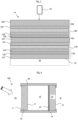
- the functional layer 140 is located directly on the underlying antireflective coating 120 and directly under the overlying antireflective coating 160: there is no under-blocking coating located between the underlying antireflective coating 120 and the functional layer 140 nor any over-blocking coating located between the functional layer 140 and the antireflective coating 160.
- the same is preferably true for the other functional layers that may be present: it is in direct contact with the anti-reflective coating located directly below and anti-reflective coating located directly above.
- the 160 anti-reflective coating located above the single metallic functional layer in Figures 1 and 2 can end with a terminal protective layer (not illustrated), called “overcoat” in English, which is the layer of the stack which is furthest from face 29.
- the stack 14 of thin layers can be positioned on face 3 (on the innermost sheet of the building considering the incident direction of the sunlight entering the building and on its face facing the gas blade), that is to say on an inner face 29 of the substrate 30 in contact with the intercalary gas blade 15, the other face 31 of the substrate 30 being in contact with the interior space IS.
- one of the substrates has a laminated structure.
- FIG 6 further illustrates with the “ALT” curve the resistance per square of these stacks after deposition and after having undergone laser treatment consisting here of a scrolling of the substrate 30 at a speed of 4 m/min under a laser line 20 of 0.08 mm wide, 11.6 mm long and of total power of 433 W with the laser line oriented perpendicular to the face 29 and in the direction of the stack 14, that is to say by arranging the laser line above the stack, as visible in figure 1 (the right black arrow illustrating the orientation of the emitted light).
- the sheet resistance of the stack with a zinc-based oxide sublayer ZnO 129 and a dielectric sublayer of mixed oxide based on zinc and tin Sn i Zn j O 128 is therefore better (lower) than without this dielectric sublayer of mixed oxide based on zinc and tin Sn i Zn j O 128.
- This figure 6 clearly shows on the left side an effect when the zinc-based oxide sublayer ZnO 129 is present (with a minimum thickness, to constitute a layer, which is of the order of 0.3 nm) and that this effect tends to no longer be interesting before 5.0 nm.
- the table of the figure 7 summarizes the thicknesses of layers 125, 127', 129 and 165 of the five examples of this second series.
- the two exterior substrates 10, 30 of this triple glazing are each coated, on its interior face 11, 29 facing the intermediate gas blade 15, 25, with an insulating coating 14, 26 consisting of the functional single-layer stack described above: the functional single-layer stacks are thus on faces called “face 2” and “face 5”).
- the central substrate 20 of this triple glazing is not coated with any coating on either of these faces.
- the last line of the table of the figure 7 , as well as the figure 8 illustrate the evolution, in ordinate in figure 8 , of the solar factor, g, in percent, as a function of the thickness, t 129 , in nanometers of the zinc-based oxide sublayer ZnO 129 on the abscissa, this solar factor being measured immediately after the laser treatment of the two substrates 10, 30, then their integration to form the triple glazing.
- the solar factor is thus improved when the zinc-based oxide sublayer ZnO 129 is between 0.3 and 4.4 nm.
- the solar factor is particularly favorable for a thickness of this zinc-based oxide sublayer ZnO 129 between 1.0 and 3.0 nm, or even between 1.5 and 2.4 nm.
- the solar factor of the triple glazing rose to 57.7%; i.e. a gain of + 0.5 in solar factor by reducing the thickness of the zinc-based oxide sublayer ZnO 129 from 5.0 nm to 1.0 nm; this gain can be further increased by further reducing the thickness of the zinc-based oxide sublayer ZnO 129 to 0.5 nm, or even 0.3 nm.
- the inner substrate 30 of this double glazing is coated on its inner face 29 facing the intermediate gas blade 15 with an insulating coating 14 consisting of the functional single-layer stack described above: the functional single-layer stack are thus on the face called “face 3”).
- the table of the figure 9 summarizes the exact thickness of layers 125, 127', 129 and 165, in nm, for the six examples of zinc-based oxide underlayer ZnO 129, with a physical thickness varying from 1.0 nm to 6.0 nm.
- the last line of the table of the figure 9 , as well as the figure 10 illustrate the evolution on the ordinate of the solar factor, g, in percent, as a function of the thickness, t 129 , in nanometers of this sublayer of zinc-based oxide ZnO 129 on the abscissa, this solar factor being measured immediately after the laser treatment of the substrate 30, then its integration to form the double glazing.
- the solar factor is thus improved when the sublayer of zinc-based oxide ZnO 129 is between 0.3 and 4.4 nm.
- the solar factor is particularly favorable for a thickness of zinc-based oxide ZnO 129 between 1.0 and 3.0 nm, or even between 1.5 and 2.4 nm.
Landscapes
- Chemical & Material Sciences (AREA)
- Life Sciences & Earth Sciences (AREA)
- Engineering & Computer Science (AREA)
- Chemical Kinetics & Catalysis (AREA)
- General Chemical & Material Sciences (AREA)
- Geochemistry & Mineralogy (AREA)
- Materials Engineering (AREA)
- Organic Chemistry (AREA)
- Laminated Bodies (AREA)
- Surface Treatment Of Glass (AREA)
- Chemical Vapour Deposition (AREA)
Claims (12)
- Material, umfassend ein Glassubstrat (30), das auf einer Fläche (29) mit einer Stapelung von Dünnschichten (14) mit Reflexionseigenschaften in dem Infrarotbereich und/oder in der Sonnenstrahlung beschichtet ist, die eine einzelne funktionelle Metallschicht (140), insbesondere auf Basis von Silber oder einer Metalllegierung, die Silber enthält, und zwei Antireflexbeschichtungen (120, 160) aufweist, wobei die Antireflexbeschichtungen jeweils mindestens eine dielektrische Schicht (125, 165) aufweisen, wobei die funktionelle Schicht (140) zwischen den zwei Antireflexbeschichtungen (120, 160) angeordnet ist,
dadurch gekennzeichnet, dass die Antireflexbeschichtung (120), die unter der funktionellen Schicht (140) in Richtung des Substrats (30) gelegen ist, aufweist:- eine Unterschicht aus Oxid auf Basis von Zink ZnO (129), die unter und in Kontakt mit der funktionellen Schicht (140) gelegen ist, mit einer physikalischen Dicke der Unterschicht auf Basis von Zinkoxid ZnO (129), die zwischen 0,3 und 4,4 nm, oder sogar zwischen 0,3 und 2,9 nm, oder sogar zwischen 0,5 und 2,4 nm, liegt;- eine dielektrische Unterschicht aus Mischoxid auf Basis von Zink und Zinn SniZnjO (128), mit einer physikalischen Dicke der dielektrischen Unterschicht aus Mischoxid auf Basis von Zink und Zinn SniZnjO (128), die zwischen 3,0 und 50,0 nm, oder sogar zwischen 4,0 und 40,0 nm, oder sogar zwischen 5,0 und 35,0 nm, liegt;- eine dielektrische Unterschicht aus Nitrid auf Basis von Silizium Si3N4 (127) oder auf Basis von Siliziumzirkonium SixNyZrz (127'), die unter und in Kontakt mit der dielektrischen Unterschicht aus Mischoxid auf Basis von Zink und Zinn SniZnjO (128) gelegen ist, mit einer physikalischen Dicke der Unterschicht aus Nitrid auf Basis von Silizium Si3N4 (127) oder auf Basis von Siliziumzirkonium SixNyZrz (127'), die zwischen 5,0 und 50,0 nm, oder sogar zwischen 10,0 und 40,0 nm, oder sogar zwischen 15,0 und 25,0 nm, liegt;und dass die über der funktionellen Schicht (140) gegenüber dem Substrat (30) gelegene Antireflexbeschichtung (160) aufweist:- eine Überschicht aus Oxid auf Basis von Zink ZnO (161), die auf und in Kontakt mit der funktionellen Schicht (140) gelegen ist, mit einer physikalischen Dicke der Überschicht aus Oxid auf Basis von Zink ZnO (161), die zwischen 2,0 und 10,0 nm, oder sogar zwischen 2,0 und 8,0 nm, oder sogar zwischen 2,5 und 5,4 nm, liegt; und- eine dielektrische Überschicht (165), die auf der Überschicht aus Oxid auf Basis von Zink ZnO (161) gelegen ist, und vorzugsweise eine dielektrische Überschicht aus Nitrid auf Basis von Silizium, Si3N4. - Material nach Anspruch 1, wobei die dielektrische Unterschicht aus Nitrid auf Basis von Siliziumzirkonium SixNyZrz (127') besteht und ein Atomverhältnis von Silizium zu Zirkonium, x/z, zwischen 2,2 und 5,6, oder sogar zwischen 2,9 und 5,6, oder sogar zwischen 3,0 und 4,8, vorweist, wobei die dielektrische Unterschicht auf Basis von Siliziumzirkonium SixNyZrz (127') vorzugsweise keinen Sauerstoff aufweist.
- Material nach Anspruch 1 oder 2, wobei die funktionelle Metallschicht (140) oder jede metallische Funktion eine physikalische Dicke vorweist, die zwischen 8,0 und 22,0 nm, oder sogar zwischen 9,0 und 16,4 nm, oder sogar zwischen 9,5 und 12,4 nm, liegt.
- Material nach einem der Ansprüche 1 bis 3, wobei die Antireflexbeschichtung (120), die unter der funktionellen Metallschicht (140) gelegen ist, und/oder die Antireflexbeschichtung (160), die über der funktionellen Metallschicht (140) gelegen ist, überhaupt keine Schicht in dem metallischen Zustand aufweist.
- Material nach einem der Ansprüche 1 bis 4, wobei die Unterschicht aus Nitrid auf Basis von Siliziumzirkonium SixNyZrz (127') und eine primäre dielektrische Unterschicht aus Nitrid auf Siliziumbasis Si3N4 (125) sich unter und in Kontakt mit dieser Unterschicht aus Nitrid auf Basis von Siliziumzirkonium SixNyZrz (127') mit einer physikalischen Dicke der primären dielektrischen Unterschicht aus Nitrid auf Basis von Silizium Si3N4 (125), die zwischen 5,0 und 30,0 nm, oder sogar zwischen 5,0 und 20,0 nm, oder sogar zwischen 5,0 und 10,0 nm, liegt.
- Material nach Anspruch 1, wobei die dielektrische Unterschicht aus Nitrid auf Basis von Silizium Si3N4 (127) besteht und keinen Sauerstoff aufweist.
- Material nach einem der Ansprüche 1 bis 6, wobei die Unterschicht aus Oxid auf Basis von Zink ZnO (129) und/oder die Überschicht aus Oxid auf Basis von Zink ZnO (161) aus mit Aluminium dotiertem Zinkoxid ZnO besteht.
- Material nach einem der Ansprüche 1 bis 7, wobei die Antireflexbeschichtung (160), die über der funktionellen Schicht (140) gelegen ist, ferner eine dielektrische Zwischenüberschicht (163) aufweist, die zwischen der Überschicht aus Oxid auf Basis von Zink ZnO (161) und der dielektrischen Überschicht (165) gelegen ist, wobei diese dielektrische Zwischenüberschicht (163) oxidiert ist und vorzugsweise ein Titanoxid umfasst.
- Mehrfachverglasung, die mindestens ein Material nach einem der Ansprüche 1 bis 8 und mindestens ein anderes Substrat (10) aufweist, wobei die Substrate (10, 30) durch eine Rahmenstruktur (90) zusammengehalten werden, wobei die Verglasung eine Trennung zwischen einem Außenraum (ES) und einem Innenraum (IS) herstellt, wobei mindestens ein Zwischenlagengasspalt (15) zwischen den zwei Substraten angeordnet ist.
- Verfahren zum Gewinnen eines Materials, das ein Glassubstrat (30) aufweist, das auf einer Fläche (29) mit einer Stapelung von Dünnschichten (14) mit Reflexionseigenschaften in dem Infrarot- und/oder in dem Sonnenstrahlungsbereich beschichtet ist, die eine einzelne funktionelle Metallschicht (140), insbesondere auf Basis von Silber oder einer Metalllegierung, die Silber enthält, und zwei Antireflexbeschichtungen (120, 160) aufweist, wobei die Antireflexbeschichtungen jeweils mindestens eine dielektrische Schicht (127, 165) aufweisen, wobei die funktionelle Schicht (140) zwischen den zwei Antireflexbeschichtungen (120, 160) angeordnet ist, das Verfahren umfassend die folgenden Schritte der Reihe nach:- Abscheiden auf eine Fläche (29) des Substrats (30) einer Stapelung von Dünnschichten (14) mit Reflexionseigenschaften in dem Infrarot- und/oder in dem Sonnenstrahlungsbereich, die mindestens eine funktionelle Metallschicht (140), insbesondere auf Basis von Silber oder einer Metalllegierung, die Silber enthält, und mindestens zwei Antireflexbeschichtungen (120, 160) aufweist, um ein Material nach einem der Ansprüche 1 bis 7 auszubilden, dann- Behandeln der Stapelung von Dünnschichten (14) mithilfe einer Quelle, die eine Strahlung und insbesondere eine Infrarotstrahlung produziert.
- Verfahren nach Anspruch 10, wobei das Behandeln in einer Atmosphäre durchgeführt wird, umfassend keinen Sauerstoff.
- Verfahren nach Anspruch 10 oder 11, wobei die Unterschicht aus Oxid auf Basis von Zink ZnO (129) von einem Keramikziel, umfassend ZnO und in einer Atmosphäre, die keinen Sauerstoff aufweist oder höchstens 10,0 % Sauerstoff aufweist, abgeschieden wird.
Applications Claiming Priority (2)
| Application Number | Priority Date | Filing Date | Title |
|---|---|---|---|
| FR2013688A FR3117928B1 (fr) | 2020-12-18 | 2020-12-18 | Materiau comportant un empilement a sous-couche dielectrique fine d’oxide a base de zinc et procede de depot de ce materiau |
| PCT/FR2021/052361 WO2022129798A1 (fr) | 2020-12-18 | 2021-12-16 | Materiau comportant un empilement a sous-couche dielectrique fine d'oxide a base de zinc et procede de depot de ce materiau |
Publications (2)
| Publication Number | Publication Date |
|---|---|
| EP4263456A1 EP4263456A1 (de) | 2023-10-25 |
| EP4263456B1 true EP4263456B1 (de) | 2024-10-30 |
Family
ID=75690332
Family Applications (1)
| Application Number | Title | Priority Date | Filing Date |
|---|---|---|---|
| EP21851972.6A Active EP4263456B1 (de) | 2020-12-18 | 2021-12-16 | Material mit einem stapel mit einer dünnen, dielektrischen oxidunterschicht auf zinkbasis und verfahren zur abscheidung dieses materials |
Country Status (4)
| Country | Link |
|---|---|
| EP (1) | EP4263456B1 (de) |
| FR (1) | FR3117928B1 (de) |
| PL (1) | PL4263456T3 (de) |
| WO (1) | WO2022129798A1 (de) |
Citations (5)
| Publication number | Priority date | Publication date | Assignee | Title |
|---|---|---|---|---|
| WO2005016842A2 (fr) | 2003-08-13 | 2005-02-24 | Saint-Gobain Glass France | Substrat transparent comportant un revetement antireflet |
| WO2010073042A1 (en) | 2008-12-24 | 2010-07-01 | Pilkington Group Limited | Heat treatable coated glass pane |
| WO2012143704A1 (en) | 2011-04-21 | 2012-10-26 | Pilkington Group Limited | Heat treatable coated glass pane |
| WO2013156721A1 (fr) | 2012-04-17 | 2013-10-24 | Saint-Gobain Glass France | Procede d'obtention d'un substrat revetu |
| WO2019186131A1 (en) | 2018-03-28 | 2019-10-03 | Pilkington Group Limited | Coated glass pane |
Family Cites Families (7)
| Publication number | Priority date | Publication date | Assignee | Title |
|---|---|---|---|---|
| FR2728559B1 (fr) | 1994-12-23 | 1997-01-31 | Saint Gobain Vitrage | Substrats en verre revetus d'un empilement de couches minces a proprietes de reflexion dans l'infrarouge et/ou dans le domaine du rayonnement solaire |
| FR2946639B1 (fr) | 2009-06-12 | 2011-07-15 | Saint Gobain | Procede de depot de couche mince et produit obtenu. |
| WO2014125083A1 (fr) * | 2013-02-14 | 2014-08-21 | Agc Glass Europe | Vitrage antisolaire |
| GB201314699D0 (en) * | 2013-08-16 | 2013-10-02 | Pilkington Group Ltd | Heat treatable coated glass pane |
| FR3039537A1 (fr) * | 2015-07-30 | 2017-02-03 | Saint Gobain | Vitrage comprenant une couche de blocage epaisse |
| FR3054892A1 (fr) * | 2016-08-02 | 2018-02-09 | Saint Gobain | Substrat muni d'un empilement a proprietes thermiques comportant au moins une couche comprenant du nitrure de silicium-zirconium enrichi en zirconium, son utilisation et sa fabrication. |
| FR3103810B1 (fr) * | 2019-11-29 | 2021-12-10 | Saint Gobain | Materiau comportant un empilement a sous-couche dielectrique fine d’oxide a base de zinc et procede de depot de ce materiau |
-
2020
- 2020-12-18 FR FR2013688A patent/FR3117928B1/fr active Active
-
2021
- 2021-12-16 PL PL21851972.6T patent/PL4263456T3/pl unknown
- 2021-12-16 EP EP21851972.6A patent/EP4263456B1/de active Active
- 2021-12-16 WO PCT/FR2021/052361 patent/WO2022129798A1/fr not_active Ceased
Patent Citations (5)
| Publication number | Priority date | Publication date | Assignee | Title |
|---|---|---|---|---|
| WO2005016842A2 (fr) | 2003-08-13 | 2005-02-24 | Saint-Gobain Glass France | Substrat transparent comportant un revetement antireflet |
| WO2010073042A1 (en) | 2008-12-24 | 2010-07-01 | Pilkington Group Limited | Heat treatable coated glass pane |
| WO2012143704A1 (en) | 2011-04-21 | 2012-10-26 | Pilkington Group Limited | Heat treatable coated glass pane |
| WO2013156721A1 (fr) | 2012-04-17 | 2013-10-24 | Saint-Gobain Glass France | Procede d'obtention d'un substrat revetu |
| WO2019186131A1 (en) | 2018-03-28 | 2019-10-03 | Pilkington Group Limited | Coated glass pane |
Also Published As
| Publication number | Publication date |
|---|---|
| PL4263456T3 (pl) | 2025-02-17 |
| FR3117928A1 (fr) | 2022-06-24 |
| FR3117928B1 (fr) | 2023-12-29 |
| WO2022129798A1 (fr) | 2022-06-23 |
| EP4263456A1 (de) | 2023-10-25 |
Similar Documents
| Publication | Publication Date | Title |
|---|---|---|
| EP3145888B1 (de) | Substrat mit einer mehrfachschicht mit partieller metallfolie, verglasungseinheit, verwendung und verfahren | |
| EP2897918B1 (de) | Substrat mit einem stapel mit thermischen eigenschaften und einer absorbierenden schicht | |
| EP3494420B1 (de) | Substrat mit einem stapel mit thermischen eigenschaften mit mindestens einer schicht mit zirkoniumreichem silicium-zirkonium-nitrid, verwendung und herstellung davon | |
| CA2949809A1 (fr) | Substrat muni d'un empilement a couches metalliques partielles, vitrage, utilisation et procede | |
| EP3201150B1 (de) | Substrat mit einer mehrfachschicht mit thermischen eigenschaften und einer substöchiometrischen zwischenschicht | |
| FR3026403A1 (fr) | Substrat muni d'un empilement a proprietes thermiques et a couche intermediaire sur stoechiometrique | |
| EP4229017B1 (de) | Material mit einem stapel mit eingeschlossener metallischer absorptionsschicht und verfahren zur ablagerung dieses materials | |
| EP4172123A1 (de) | Material mit einem stapel mit einer dünnen dielektrischen schicht aus zinkbasiertem oxid und verfahren zur anwendung des besagten materials | |
| CA2949805A1 (fr) | Substrat muni d'un empilement a couche metallique partielle, vitrage, utilisation et procede | |
| EP4065531A1 (de) | Material mit einem stapel mit einer dünnen dielektrischen unterschicht aus zinkoxid und verfahren zur abscheidung dieses materials | |
| EP4263456B1 (de) | Material mit einem stapel mit einer dünnen, dielektrischen oxidunterschicht auf zinkbasis und verfahren zur abscheidung dieses materials | |
| EP4263455B1 (de) | Material mit einem stapel mit einer dünnen, dielektrischen oxidunterschicht auf zinkbasis und verfahren zur abscheidung dieses materials | |
| EP4065530B1 (de) | Material mit einem stapel mit einer dünnen dielektrischen oxidunterschicht auf zinkbasis und verfahren zum aufbringen dieses materials | |
| FR3111891A1 (fr) | Materiau comportant un empilement a sous-couche dielectrique fine d’oxide a base de zinc et procede de depot de ce materiau | |
| FR3109776A1 (fr) | Materiau comportant un empilement a sous-couche dielectrique fine d’oxide a base de zinc et procede de depot de ce materiau | |
| EP4172122A1 (de) | Material mit einem stapel mit einer dünnen dielektrischen schicht aus zinkbasiertem oxid und verfahren zur abscheidung dieses materials | |
| FR3114264A1 (fr) | Materiau comportant un empilement a couche metallique absorbante et surcouche dielectrique et procede de depot de ce materiau | |
| WO2024056765A1 (fr) | Materiau comportant un empilement comprenant un module de six couches | |
| FR3157264A1 (fr) | Utilisation d’un vitrage multiple reversible et vitrage multiple pour l’utilisation | |
| FR3133787A1 (fr) | Materiau comportant un empilement a couche absorbante metallique et procede de depot de ce materiau |
Legal Events
| Date | Code | Title | Description |
|---|---|---|---|
| STAA | Information on the status of an ep patent application or granted ep patent |
Free format text: STATUS: UNKNOWN |
|
| STAA | Information on the status of an ep patent application or granted ep patent |
Free format text: STATUS: THE INTERNATIONAL PUBLICATION HAS BEEN MADE |
|
| PUAI | Public reference made under article 153(3) epc to a published international application that has entered the european phase |
Free format text: ORIGINAL CODE: 0009012 |
|
| STAA | Information on the status of an ep patent application or granted ep patent |
Free format text: STATUS: REQUEST FOR EXAMINATION WAS MADE |
|
| 17P | Request for examination filed |
Effective date: 20230718 |
|
| AK | Designated contracting states |
Kind code of ref document: A1 Designated state(s): AL AT BE BG CH CY CZ DE DK EE ES FI FR GB GR HR HU IE IS IT LI LT LU LV MC MK MT NL NO PL PT RO RS SE SI SK SM TR |
|
| DAV | Request for validation of the european patent (deleted) | ||
| DAX | Request for extension of the european patent (deleted) | ||
| GRAP | Despatch of communication of intention to grant a patent |
Free format text: ORIGINAL CODE: EPIDOSNIGR1 |
|
| STAA | Information on the status of an ep patent application or granted ep patent |
Free format text: STATUS: GRANT OF PATENT IS INTENDED |
|
| INTG | Intention to grant announced |
Effective date: 20240605 |
|
| GRAS | Grant fee paid |
Free format text: ORIGINAL CODE: EPIDOSNIGR3 |
|
| GRAA | (expected) grant |
Free format text: ORIGINAL CODE: 0009210 |
|
| STAA | Information on the status of an ep patent application or granted ep patent |
Free format text: STATUS: THE PATENT HAS BEEN GRANTED |
|
| AK | Designated contracting states |
Kind code of ref document: B1 Designated state(s): AL AT BE BG CH CY CZ DE DK EE ES FI FR GB GR HR HU IE IS IT LI LT LU LV MC MK MT NL NO PL PT RO RS SE SI SK SM TR |
|
| REG | Reference to a national code |
Ref country code: GB Ref legal event code: FG4D Free format text: NOT ENGLISH |
|
| REG | Reference to a national code |
Ref country code: CH Ref legal event code: EP |
|
| REG | Reference to a national code |
Ref country code: IE Ref legal event code: FG4D Free format text: LANGUAGE OF EP DOCUMENT: FRENCH |
|
| REG | Reference to a national code |
Ref country code: DE Ref legal event code: R096 Ref document number: 602021021188 Country of ref document: DE |
|
| P01 | Opt-out of the competence of the unified patent court (upc) registered |
Free format text: CASE NUMBER: APP_65801/2024 Effective date: 20241212 |
|
| REG | Reference to a national code |
Ref country code: LT Ref legal event code: MG9D |
|
| REG | Reference to a national code |
Ref country code: NL Ref legal event code: MP Effective date: 20241030 |
|
| PG25 | Lapsed in a contracting state [announced via postgrant information from national office to epo] |
Ref country code: HR Free format text: LAPSE BECAUSE OF FAILURE TO SUBMIT A TRANSLATION OF THE DESCRIPTION OR TO PAY THE FEE WITHIN THE PRESCRIBED TIME-LIMIT Effective date: 20241030 Ref country code: IS Free format text: LAPSE BECAUSE OF FAILURE TO SUBMIT A TRANSLATION OF THE DESCRIPTION OR TO PAY THE FEE WITHIN THE PRESCRIBED TIME-LIMIT Effective date: 20250228 Ref country code: PT Free format text: LAPSE BECAUSE OF FAILURE TO SUBMIT A TRANSLATION OF THE DESCRIPTION OR TO PAY THE FEE WITHIN THE PRESCRIBED TIME-LIMIT Effective date: 20250228 |
|
| PG25 | Lapsed in a contracting state [announced via postgrant information from national office to epo] |
Ref country code: NL Free format text: LAPSE BECAUSE OF FAILURE TO SUBMIT A TRANSLATION OF THE DESCRIPTION OR TO PAY THE FEE WITHIN THE PRESCRIBED TIME-LIMIT Effective date: 20241030 Ref country code: FI Free format text: LAPSE BECAUSE OF FAILURE TO SUBMIT A TRANSLATION OF THE DESCRIPTION OR TO PAY THE FEE WITHIN THE PRESCRIBED TIME-LIMIT Effective date: 20241030 |
|
| REG | Reference to a national code |
Ref country code: AT Ref legal event code: MK05 Ref document number: 1736763 Country of ref document: AT Kind code of ref document: T Effective date: 20241030 |
|
| PG25 | Lapsed in a contracting state [announced via postgrant information from national office to epo] |
Ref country code: BG Free format text: LAPSE BECAUSE OF FAILURE TO SUBMIT A TRANSLATION OF THE DESCRIPTION OR TO PAY THE FEE WITHIN THE PRESCRIBED TIME-LIMIT Effective date: 20241030 |
|
| PG25 | Lapsed in a contracting state [announced via postgrant information from national office to epo] |
Ref country code: ES Free format text: LAPSE BECAUSE OF FAILURE TO SUBMIT A TRANSLATION OF THE DESCRIPTION OR TO PAY THE FEE WITHIN THE PRESCRIBED TIME-LIMIT Effective date: 20241030 |
|
| PG25 | Lapsed in a contracting state [announced via postgrant information from national office to epo] |
Ref country code: NO Free format text: LAPSE BECAUSE OF FAILURE TO SUBMIT A TRANSLATION OF THE DESCRIPTION OR TO PAY THE FEE WITHIN THE PRESCRIBED TIME-LIMIT Effective date: 20250130 |
|
| PG25 | Lapsed in a contracting state [announced via postgrant information from national office to epo] |
Ref country code: LV Free format text: LAPSE BECAUSE OF FAILURE TO SUBMIT A TRANSLATION OF THE DESCRIPTION OR TO PAY THE FEE WITHIN THE PRESCRIBED TIME-LIMIT Effective date: 20241030 Ref country code: GR Free format text: LAPSE BECAUSE OF FAILURE TO SUBMIT A TRANSLATION OF THE DESCRIPTION OR TO PAY THE FEE WITHIN THE PRESCRIBED TIME-LIMIT Effective date: 20250131 Ref country code: AT Free format text: LAPSE BECAUSE OF FAILURE TO SUBMIT A TRANSLATION OF THE DESCRIPTION OR TO PAY THE FEE WITHIN THE PRESCRIBED TIME-LIMIT Effective date: 20241030 |
|
| PG25 | Lapsed in a contracting state [announced via postgrant information from national office to epo] |
Ref country code: RS Free format text: LAPSE BECAUSE OF FAILURE TO SUBMIT A TRANSLATION OF THE DESCRIPTION OR TO PAY THE FEE WITHIN THE PRESCRIBED TIME-LIMIT Effective date: 20250130 |
|
| PG25 | Lapsed in a contracting state [announced via postgrant information from national office to epo] |
Ref country code: SM Free format text: LAPSE BECAUSE OF FAILURE TO SUBMIT A TRANSLATION OF THE DESCRIPTION OR TO PAY THE FEE WITHIN THE PRESCRIBED TIME-LIMIT Effective date: 20241030 |
|
| PG25 | Lapsed in a contracting state [announced via postgrant information from national office to epo] |
Ref country code: MC Free format text: LAPSE BECAUSE OF FAILURE TO SUBMIT A TRANSLATION OF THE DESCRIPTION OR TO PAY THE FEE WITHIN THE PRESCRIBED TIME-LIMIT Effective date: 20241030 |
|
| PG25 | Lapsed in a contracting state [announced via postgrant information from national office to epo] |
Ref country code: DK Free format text: LAPSE BECAUSE OF FAILURE TO SUBMIT A TRANSLATION OF THE DESCRIPTION OR TO PAY THE FEE WITHIN THE PRESCRIBED TIME-LIMIT Effective date: 20241030 |
|
| PG25 | Lapsed in a contracting state [announced via postgrant information from national office to epo] |
Ref country code: EE Free format text: LAPSE BECAUSE OF FAILURE TO SUBMIT A TRANSLATION OF THE DESCRIPTION OR TO PAY THE FEE WITHIN THE PRESCRIBED TIME-LIMIT Effective date: 20241030 |
|
| PG25 | Lapsed in a contracting state [announced via postgrant information from national office to epo] |
Ref country code: RO Free format text: LAPSE BECAUSE OF FAILURE TO SUBMIT A TRANSLATION OF THE DESCRIPTION OR TO PAY THE FEE WITHIN THE PRESCRIBED TIME-LIMIT Effective date: 20241030 |
|
| PG25 | Lapsed in a contracting state [announced via postgrant information from national office to epo] |
Ref country code: SK Free format text: LAPSE BECAUSE OF FAILURE TO SUBMIT A TRANSLATION OF THE DESCRIPTION OR TO PAY THE FEE WITHIN THE PRESCRIBED TIME-LIMIT Effective date: 20241030 |
|
| REG | Reference to a national code |
Ref country code: DE Ref legal event code: R026 Ref document number: 602021021188 Country of ref document: DE |
|
| PG25 | Lapsed in a contracting state [announced via postgrant information from national office to epo] |
Ref country code: CZ Free format text: LAPSE BECAUSE OF FAILURE TO SUBMIT A TRANSLATION OF THE DESCRIPTION OR TO PAY THE FEE WITHIN THE PRESCRIBED TIME-LIMIT Effective date: 20241030 |
|
| PG25 | Lapsed in a contracting state [announced via postgrant information from national office to epo] |
Ref country code: IT Free format text: LAPSE BECAUSE OF FAILURE TO SUBMIT A TRANSLATION OF THE DESCRIPTION OR TO PAY THE FEE WITHIN THE PRESCRIBED TIME-LIMIT Effective date: 20241030 |
|
| REG | Reference to a national code |
Ref country code: CH Ref legal event code: PL |
|
| PLBI | Opposition filed |
Free format text: ORIGINAL CODE: 0009260 |
|
| PLAX | Notice of opposition and request to file observation + time limit sent |
Free format text: ORIGINAL CODE: EPIDOSNOBS2 |
|
| PG25 | Lapsed in a contracting state [announced via postgrant information from national office to epo] |
Ref country code: LU Free format text: LAPSE BECAUSE OF NON-PAYMENT OF DUE FEES Effective date: 20241216 |
|
| 26 | Opposition filed |
Opponent name: AGC GLASS EUROPE Effective date: 20250725 |
|
| PG25 | Lapsed in a contracting state [announced via postgrant information from national office to epo] |
Ref country code: SE Free format text: LAPSE BECAUSE OF FAILURE TO SUBMIT A TRANSLATION OF THE DESCRIPTION OR TO PAY THE FEE WITHIN THE PRESCRIBED TIME-LIMIT Effective date: 20241030 |
|
| REG | Reference to a national code |
Ref country code: BE Ref legal event code: MM Effective date: 20241231 |
|
| PG25 | Lapsed in a contracting state [announced via postgrant information from national office to epo] |
Ref country code: BE Free format text: LAPSE BECAUSE OF NON-PAYMENT OF DUE FEES Effective date: 20241231 |
|
| PG25 | Lapsed in a contracting state [announced via postgrant information from national office to epo] |
Ref country code: CH Free format text: LAPSE BECAUSE OF NON-PAYMENT OF DUE FEES Effective date: 20241231 |
|
| PG25 | Lapsed in a contracting state [announced via postgrant information from national office to epo] |
Ref country code: IE Free format text: LAPSE BECAUSE OF NON-PAYMENT OF DUE FEES Effective date: 20241216 |
|
| PLBB | Reply of patent proprietor to notice(s) of opposition received |
Free format text: ORIGINAL CODE: EPIDOSNOBS3 |
|
| PGFP | Annual fee paid to national office [announced via postgrant information from national office to epo] |
Ref country code: DE Payment date: 20251104 Year of fee payment: 5 |
|
| PGFP | Annual fee paid to national office [announced via postgrant information from national office to epo] |
Ref country code: GB Payment date: 20251030 Year of fee payment: 5 |
|
| PGFP | Annual fee paid to national office [announced via postgrant information from national office to epo] |
Ref country code: FR Payment date: 20251110 Year of fee payment: 5 |
|
| PGFP | Annual fee paid to national office [announced via postgrant information from national office to epo] |
Ref country code: PL Payment date: 20251105 Year of fee payment: 5 |