EP4266775A1 - Drahtloskommunikationsverfahren und endgerätevorrichtung - Google Patents
Drahtloskommunikationsverfahren und endgerätevorrichtung Download PDFInfo
- Publication number
- EP4266775A1 EP4266775A1 EP20966639.5A EP20966639A EP4266775A1 EP 4266775 A1 EP4266775 A1 EP 4266775A1 EP 20966639 A EP20966639 A EP 20966639A EP 4266775 A1 EP4266775 A1 EP 4266775A1
- Authority
- EP
- European Patent Office
- Prior art keywords
- terminal
- psach
- resource
- prb
- slot
- Prior art date
- Legal status (The legal status is an assumption and is not a legal conclusion. Google has not performed a legal analysis and makes no representation as to the accuracy of the status listed.)
- Granted
Links
Images




Classifications
-
- H—ELECTRICITY
- H04—ELECTRIC COMMUNICATION TECHNIQUE
- H04W—WIRELESS COMMUNICATION NETWORKS
- H04W72/00—Local resource management
- H04W72/02—Selection of wireless resources by user or terminal
-
- H—ELECTRICITY
- H04—ELECTRIC COMMUNICATION TECHNIQUE
- H04L—TRANSMISSION OF DIGITAL INFORMATION, e.g. TELEGRAPHIC COMMUNICATION
- H04L5/00—Arrangements affording multiple use of the transmission path
- H04L5/003—Arrangements for allocating sub-channels of the transmission path
- H04L5/0037—Inter-user or inter-terminal allocation
-
- H—ELECTRICITY
- H04—ELECTRIC COMMUNICATION TECHNIQUE
- H04L—TRANSMISSION OF DIGITAL INFORMATION, e.g. TELEGRAPHIC COMMUNICATION
- H04L5/00—Arrangements affording multiple use of the transmission path
- H04L5/003—Arrangements for allocating sub-channels of the transmission path
- H04L5/0053—Allocation of signalling, i.e. of overhead other than pilot signals
-
- H—ELECTRICITY
- H04—ELECTRIC COMMUNICATION TECHNIQUE
- H04L—TRANSMISSION OF DIGITAL INFORMATION, e.g. TELEGRAPHIC COMMUNICATION
- H04L5/00—Arrangements affording multiple use of the transmission path
- H04L5/0091—Signalling for the administration of the divided path, e.g. signalling of configuration information
- H04L5/0094—Indication of how sub-channels of the path are allocated
-
- H—ELECTRICITY
- H04—ELECTRIC COMMUNICATION TECHNIQUE
- H04W—WIRELESS COMMUNICATION NETWORKS
- H04W28/00—Network traffic management; Network resource management
- H04W28/16—Central resource management; Negotiation of resources or communication parameters, e.g. negotiating bandwidth or QoS [Quality of Service]
- H04W28/26—Resource reservation
-
- H—ELECTRICITY
- H04—ELECTRIC COMMUNICATION TECHNIQUE
- H04W—WIRELESS COMMUNICATION NETWORKS
- H04W72/00—Local resource management
- H04W72/12—Wireless traffic scheduling
- H04W72/1263—Mapping of traffic onto schedule, e.g. scheduled allocation or multiplexing of flows
-
- H—ELECTRICITY
- H04—ELECTRIC COMMUNICATION TECHNIQUE
- H04W—WIRELESS COMMUNICATION NETWORKS
- H04W72/00—Local resource management
- H04W72/20—Control channels or signalling for resource management
- H04W72/25—Control channels or signalling for resource management between terminals via a wireless link, e.g. sidelink
-
- H—ELECTRICITY
- H04—ELECTRIC COMMUNICATION TECHNIQUE
- H04L—TRANSMISSION OF DIGITAL INFORMATION, e.g. TELEGRAPHIC COMMUNICATION
- H04L5/00—Arrangements affording multiple use of the transmission path
- H04L5/0001—Arrangements for dividing the transmission path
- H04L5/0003—Two-dimensional division
- H04L5/0005—Time-frequency
- H04L5/0007—Time-frequency the frequencies being orthogonal, e.g. OFDM(A) or DMT
-
- H—ELECTRICITY
- H04—ELECTRIC COMMUNICATION TECHNIQUE
- H04W—WIRELESS COMMUNICATION NETWORKS
- H04W4/00—Services specially adapted for wireless communication networks; Facilities therefor
- H04W4/30—Services specially adapted for particular environments, situations or purposes
- H04W4/40—Services specially adapted for particular environments, situations or purposes for vehicles, e.g. vehicle-to-pedestrians [V2P]
-
- H—ELECTRICITY
- H04—ELECTRIC COMMUNICATION TECHNIQUE
- H04W—WIRELESS COMMUNICATION NETWORKS
- H04W92/00—Interfaces specially adapted for wireless communication networks
- H04W92/16—Interfaces between hierarchically similar devices
- H04W92/18—Interfaces between hierarchically similar devices between terminal devices
Definitions
- Embodiments of the present disclosure relate to the communication field, and more specifically, to a wireless communication and a terminal device.
- a first terminal needs to send a reference resource set to a second terminal to assist the second terminal in resource selection.
- a reference resource set is an urgent problem to be solved.
- Embodiments of the present disclosure provide a wireless communication method and a terminal device.
- a first terminal may transmit a reference resource set to a second terminal through a PSACH, thereby improving the resource selection performance of the second terminal.
- a wireless communication method includes:
- a wireless communication method in a second aspect, includes:
- a terminal device configured to perform the method in the first aspect above.
- the terminal device includes a functional module for performing the method in the first aspect above.
- a terminal device configured to perform the method in the second aspect above.
- the terminal device includes a functional module for performing the method in the second aspect above.
- a terminal device including a processor and a memory.
- the memory is used to store a computer program
- the processor is used to call and run the computer program stored in the memory to perform the method in the first aspect above.
- a terminal device including a processor and a memory.
- the memory is used to store a computer program
- the processor is used to call and run the computer program stored in the memory to perform the method in the second aspect above.
- a seventh aspect there is provided an apparatus for implementing the method in any one of the first aspect to the second aspect above.
- the apparatus includes a processor, configured to call and run a computer program from a memory, to call a device installed with the apparatus to perform the method in any one of the above first to second aspects.
- a computer-readable storage medium for storing a computer program, and the computer program causes a computer to perform the method in any one of the above first aspect to the second aspect.
- a computer program product including computer program instructions, and the computer program instructions cause a computer to perform the method in any one of the above first to second aspects.
- a computer program which, when running on a computer, causes the computer to perform the method in any one of the above first to second aspects.
- the first terminal can transmit the reference resource set to the second terminal through the PSACH, thereby improving the resource selection performance of the second terminal.
- GSM Global System of Mobile communication
- CDMA Code Division Multiple Access
- WCDMA Wideband Code Division Multiple Access
- GPRS General Packet Radio Service
- LTE Long Term Evolution
- LTE-A Advanced Long Term Evolution
- NR New Radio
- evolution system of NR system LTE-based access to unlicensed spectrum (LTE-U) system, NR-based access to unlicensed spectrum (NR-U) system, Non-Terrestrial Networks (NTN) system, Universal Mobile Telecommunication System (UMTS), Wireless Local Area Networks (WLAN), Wireless Fidelity (WiFi), 5th-Generation (5G) system, or other communication systems, etc.
- UMTS Universal Mobile Telecommunication System
- WLAN Wireless Local Area Networks
- WiFi Wireless Fidelity
- 5G 5th-Generation
- D2D Device to Device
- M2M Machine to Machine
- MTC Machine Type Communication
- V2V Vehicle to Vehicle
- V2X Vehicle to everything
- the communication systems in embodiments of the present disclosure may be applied to a Carrier Aggregation (CA) scenario, may also be applied to a Dual Connectivity (DC) scenario, and may also be applied to a standalone (SA) network deployment scenario.
- CA Carrier Aggregation
- DC Dual Connectivity
- SA standalone
- the communication system in embodiments of the present disclosure may be applied in unlicensed spectrum.
- the unlicensed spectrum may also be considered as shared spectrum.
- the communication system in embodiments of the present disclosure can also be applied in licensed spectrum.
- the licensed spectrum may also be considered as non-shared spectrum.
- Embodiments of the present disclosure are described in combination with a terminal device and a network device.
- the terminal device may also be called User Equipment (UE), access terminal, user unit, user station, mobile station, mobile terminal, remote station, remote terminal, mobile device, user terminal, terminal, wireless communication device, user agent or user device, etc.
- UE User Equipment
- the terminal device may be a station (ST) in a WLAN, a cellular phone, a cordless phone, a Session Initiation Protocol (SIP) phone, a Wireless Local Loop (WLL) station, or a Personal Digital Assistant (PDA) device, a handheld device with wireless communication capabilities, a computing device or other processing device connected to a wireless modem, a vehicle-mounted device, a wearable device, or a terminal device in a next-generation communication system, such as a terminal device in the NR network or a terminal device in a future evolved Public Land Mobile Network (PLMN) network.
- ST station
- WLAN Wireless Local Loop
- PDA Personal Digital Assistant
- the terminal device may be deployed on land, including indoor or outdoor, handheld, wearable or vehicle-mounted; or, the terminal device may be deployed on water (such as on ships, etc.); or, the terminal device may be deployed in the air (such as on aircraft, balloons, and satellites, etc.).
- the terminal device may be a mobile phone, a tablet computer (Pad), a computer with wireless transceiver function, a virtual reality (VR) terminal device, an augmented reality (AR) terminal device, a wireless terminal device in industrial control, a wireless terminal device in self driving, a wireless terminal devices in remote medical, a wireless terminal device in smart grid, a wireless terminal device in transportation safety, a wireless terminal device in smart city, or a wireless terminal device in smart home, etc.
- a virtual reality (VR) terminal device an augmented reality (AR) terminal device
- a wireless terminal device in industrial control a wireless terminal device in self driving, a wireless terminal devices in remote medical, a wireless terminal device in smart grid, a wireless terminal device in transportation safety, a wireless terminal device in smart city, or a wireless terminal device in smart home, etc.
- VR virtual reality
- AR augmented reality
- the terminal device may also be a wearable device.
- the wearable device can also be referred to as a wearable smart device, which is a general term for applying wearable technology to intelligently design everyday wear and develop wearable devices, such as glasses, gloves, watches, clothing and shoes.
- a wearable device is a portable device that is worn directly on the body or integrated into users' clothes or accessories.
- the wearable device is not only a hardware device, but also realize powerful functions through software support, data interaction, and cloud interaction.
- Generalized wearable smart devices include full-featured and large-sized devices which can realize complete or partial functions that do not depend on smart phones, such as smart watches or smart glasses, and devices that only focus on a certain type of application functions, and need to cooperate with other devices like smart phones, such as smart bracelets for sign monitoring, or smart jewelry.
- the network device may be a device for communicating with a mobile device.
- the network device may be an Access Point (AP) in WLAN, a base station (BTS, Base Transceiver Station) in GSM or CDMA, or a base station (NB, NodeB) in WCDMA, an evolved base station in LTE (Evolutional Node B, eNB or eNodeB,), or a relay station or an access point, or a vehicle-mounted device, a wearable device, a network device or a base station (gNB) in an NR network, or a network device in future evolved PLMN network or a network device in a NTN network.
- AP Access Point
- BTS Base Transceiver Station
- NB NodeB
- LTE Long Term Evolutional Node B
- gNB network device
- future evolved PLMN network or a network device in a NTN network.
- the network device may have mobile characteristics, for example, the network device may be a mobile device.
- the network device may be a satellite, or a balloon station.
- the satellite may be a Low Earth Orbit (LEO) satellite, a Medium Earth Orbit (MEO) satellite, a Geostationary Earth Orbit (GEO) satellite, or a High Elliptical Orbit (HEO) satellite, etc.
- the network device may also be a base station deployed on land, or water, etc.
- the network device provides services for a cell
- the terminal device communicates with the network device through transmission resources (for example, frequency domain resources, or spectrum resources) used by the cell.
- the cell may be a cell corresponding to the network device (for example, base station).
- the cell may belong to a macro base station or a base station corresponding to a small cell.
- the small cell here may include: a metro cell, a micro cell, a pico cell, a femto cell, etc. These small cells have the characteristics of small coverage and low transmit power, and are suitable for providing high-speed data transmission services.
- system and “network” are often used interchangeably herein.
- the term “and/or” herein is only an association relationship to describe associated objects, indicating that there can be three kinds of relationships, for example, A and/or B can mean three cases: A alone, B alone, and A and B together.
- the character “j” herein generally indicates that the related objects after and before the character are in an "or” relationship.
- indication/indicate may be a direct indication, an indirect indication, or representing an association relationship.
- a indicates B can mean that A indicates B directly, for example, B may be obtained through A; or A indicates B can mean that A indicates B indirectly, for example, A indicates C and B may be obtained through C; or, A indicates B can mean that A and B have an association relationship.
- correlate/corresponding may indicate a direct correspondence or indirect correspondence between two objects, or may indicate an association relationship between the two objects, or may be a relationship of indicating and being indicated, configuring and being configured, etc.
- "predefine/predefinition” may be realized by pre-saving a corresponding code, table or other methods that can be used to indicate related information in a device (for example, including a terminal device and a network device).
- a device for example, including a terminal device and a network device.
- the present disclosure does not limit its specific implementation.
- the "predefine/predefinition” may refer to being defined in a protocol.
- a "protocol” may refer to a standard or a protocol in the communication field, for example, it may include an LTE protocol, an NR protocol, and related protocols applied to future communication systems, and the present disclosure does not impose any limitation on this.
- FIG. 1 is a schematic diagram of a communication system to which the embodiments of the present disclosure are applicable.
- Transmission resource for vehicle-mounted terminals (vehicle-mounted terminals 121 and 122) are allocated by a base station 110, and the vehicle-mounted terminals transmit data on the sidelink according to the resources allocated by the base station 110.
- the base station 110 may allocate resources for a single transmission to the terminals, or may allocate resources for semi-static transmission to the terminals.
- FIG. 2 is a schematic diagram of another communication system to which the embodiments of the present disclosure are applicable.
- Vehicle-mounted terminals vehicle-mounted terminal 131 and vehicle-mounted terminal 132 autonomously select transmission resources from sidelink resources for data transmission.
- the vehicle-mounted terminals may select transmission resources randomly, or select transmission resources by sensing.
- the sidelink communications may be divided into: an in-coverage sidelink communication as shown in FIG. 3 ; a partial coverage sidelink communication as shown in FIG. 4 ; and an out-of-coverage sidelink communication as shown in FIG. 5 .
- all terminals performing sidelink communications are within the coverage of the same base station, and thus all the terminals may receive configuration signaling from the base station to perform sidelink communications based on the same sidelink configuration.
- some terminals performing sidelink communications are located within the coverage of the base station. These terminals can receive configuration signaling of the base station, and perform sidelink communications according to the configuration of the base station. However, terminals located outside the coverage of the network cannot receive configuration signaling from the base station. In this case, the terminals outside the network coverage determine the sidelink configuration according to pre-configuration information and information carried in Physical Sidelink Broadcast Channel (PSBCH) sent by a terminal within the network coverage, and carry out sidelink communications.
- PSBCH Physical Sidelink Broadcast Channel
- all terminals performing sidelink communications are located outside the network coverage, and all terminals determine sidelink configuration according to pre-configuration information to perform sidelink communications.
- a terminal-to-terminal communication is a sidelink (SL) transmission technology based on Device to Device (D2D), and is different from a conventional cellular system in which communication data is received or sent through a base station.
- the terminal-to-terminal communication has higher spectral efficiency and lower transmission delay.
- the Internet of Vehicles system adopts a device to device direct communication method. Two transmission modes are defined in 3GPP, which are respectively referred to as: a first mode and a second mode. The embodiments of the present disclosure may be applied to the second mode.
- a transmission resource for a terminal is allocated by a base station.
- the terminal transmits data on the sidelink according to the resource(s) allocated by the base station.
- the base station may allocate resource(s) for a single transmission to the terminal, or the base station may allocate resource(s) for semi-static transmission to the terminal.
- a terminal is located within the coverage of the network, and the network allocates a transmission resource for sidelink transmission to the terminal.
- a terminal selects a resource from a resource pool for data transmission.
- a terminal is located outside the coverage of the cell, and the terminal autonomously selects a transmission resource from a pre-configured resource pool for sidelink transmission.
- the terminal autonomously selects a transmission resource from a resource pool configured by the network to perform sidelink transmission.
- a user may be in a mixed mode, that is, the user may use the first mode to obtain a resource, and may at the same time use the second mode to obtain a resource.
- NR-V2X In NR-V2X, autonomous driving is supported, and thus higher requirements are placed on data interaction between vehicles, such as higher throughput, lower latency, higher reliability, greater coverage, more flexible resource allocation, etc.
- a broadcast transmission mode is supported.
- NR-V2X a unicast transmission mode and a groupcast transmission mode are introduced.
- a unicast transmission there is only one terminal as the receiving terminal.
- a unicast transmission is performed between UE1 and UE2.
- its receiving terminals are all terminals in a communication group, or all terminals within a certain transmission distance.
- UE1, UE2, UE3 and UE4 form a communication group.
- UE1 transmits data, and other terminal devices in the group are all receiving terminals.
- the receiving terminal is any terminal around the transmitting terminal.
- UE1 is a transmitting terminal, and other terminals around it (UE2-UE6) are all receiving terminals.
- a resource pool is introduced in the sidelink transmission system.
- the so-called resource pool is a collection of transmission resources. Whether transmission resources are transmission resources configured by a network or transmission resources autonomously selected by a terminal, they are all resources in a resource pool.
- a resource pool may be configured through pre-configuration or network configuration, and one or more resource pools may be configured. Resource pools may be divided into a transmitting resource pool and a receiving resource pool.
- the transmitting resource pool means that transmission resources in the resource pool are used to transmit sidelink data; the receiving resource pool means that the terminal receives sidelink data on a transmission resource in the resource pool.
- SCI Sidelink Control Information
- a second-stage SCI is introduced.
- a first-stage SCI is carried in a Physical Sidelink Control Channel (PSCCH) to indicate a transmission resource of a Physical Sidelink Shared Channel (PSSCH), reserved resource information, Modulation and Coding Scheme (MCS) level, priority and so on.
- the second-stage SCI is transmitted in a resource of the PSSCH, is demodulated using Demodulation Reference Signal (DMRS) of the PSSCH, and is used to indicate a transmitting end identity (ID) (also called a source ID), a receiving end ID (also called a destination ID), a Hybrid Automatic Repeat reQuest (HARQ) ID, New Data Indicator (NDI) and/or other information used for data demodulation.
- ID transmitting end identity
- HARQ Hybrid Automatic Repeat reQuest
- NDI New Data Indicator
- the first symbol is usually used as an Auto Gain Control (AGC)
- the PSCCH starts from the second symbol of a slot
- the last symbol is used as a Guard Period (GP).
- the second-stage SCI is mapped from the first DMRS symbol of the PSSCH, first in the frequency domain and then in the time domain.
- the PSCCH occupies three symbols (symbol 1, symbol 2, and symbol 3), and the DMRS of the PSSCH occupies symbol 4 and symbol 11, the second-stage SCI is mapped from symbol 4, and is frequency division multiplexed with DMRS on symbol 4.
- the second-stage SCI is mapped to symbol 4, symbol 5, and symbol 6.
- the resource size occupied by the second-stage SCI depends on the number of bits in the second-stage SCI.
- PSFCH Physical Sidelink Feedback Channel
- NR-V2X supports sequence type PSFCH, called PSFCH format 0.
- PSFCH format 0. This type of PSFCH occupies one Physical Resource Block (PRB) in the frequency domain and one Orthogonal frequency-division multiplexing (OFDM) symbol in the time domain, and uses the same sequence type as Physical Uplink Control Channel (PUCCH) format 0.
- PRB Physical Resource Block
- OFDM Orthogonal frequency-division multiplexing
- PUCCH Physical Uplink Control Channel
- a PSFCH resource is configured with 1, 2 or 4 slots as a period, and in a slot where there exists a PSFCH resources, the PSFCH resource is located in the last OFDM symbol that can be used for sidelink transmission in the slot.
- PSFCH is only used to carry HARQ feedback information, and the capacity of one PSFCH is one bit.
- a PSFCH transmission resource is determined according to a time-frequency position of its corresponding PSSCH transmission resource.
- the following two PSFCH resource determination methods are supported, and the specific method for determining PSFCH resource is configured according to higher-layer signaling.
- Method 1 The PSFCH transmission resource is determined according to the first subchannel of a PSSCH frequency domain resource.
- Mode 2 The PSFCH transmission resource is determined according to all subchannels occupied by the PSSCH frequency domain.
- the resource determination method 1 since the transmission resource of PSFCH is determined only according to the first subchannel occupied by PSSCH, no matter how many subchannels occupied by PSSCH, the corresponding number of feedback resource(s) of PSFCH is fixed.
- the number of transmission resource(s) of PSFCH is determined according to the number of subchannels occupied by PSSCH, and therefore, the more subchannels occupied by PSSCH, the more transmission resources of PSFCH.
- Method 2 is more suitable for scenarios requiring more sidelink HARQ feedback resources, for example, the second type sidelink HARQ feedback mode in groupcast.
- a corresponding PSFCH transmission resource set R PRB , CS PSFCH may be determined according to the slot and subchannel for transmitting the PSSCH.
- the indexes of the PSFCH transmission resources in the resource set are determined first in an ascending order of Resource blocks (RBs) and then in an ascending order of Cyclic Shift (CS).
- the transmission resource of PSFCH is determined by the following formula 1: P ID + M ID mod R PRB , CS PSFCH
- a PSFCH resource is configured by R16 sidelink PSFCH configuration (SL-PSFCH-Config-r16) signaling, where PSFCH period (sl-PSFCH-Period-r16) is used to configure the period of a PSFCH resource, PSFCH RB set (sl-PSFCH-RB-Set-r16) is used to configure a PRB that can be used for PSFCH transmission on an OFDM symbol where the PSFCH resource is located, and the number of cyclic shift pairs (sl-NumMuxCS-Pair-r16) is used to configure the allowed number of cyclic shift pairs of the PFSCH sequence in one PRB, the minimum time interval of PSFCH (sl-MinTimeGapPSFCH-r16) is used to configure the minimum time interval of PSFCH and its associated PSSCH, the frequency hopping ID of PSFCH (sl-PSFCH-HopID-r16) is used to configure the frequency hopping ID of PSF
- a terminal device randomly selects a transmission resource in a resource pool, or selects a transmission resource according to a sensing result.
- This resource selection method can avoid interference between terminals to a certain extent, but there are still problems as described below:
- a reference resource set may be transmitted by one terminal (UE-A) to another terminal (UE-B) to assist UE-B in resource selection.
- the reference resource set may be obtained by the UE-A according to a resource sensing result, or base station indication, and so on to obtain an available resource set, or may be determined according to detected SCI.
- the reference resource set may be a resource set suitable for use by UE-B.
- UE-B When UE-B selects a resource for transmitting sidelink data to a target receiving terminal, UE-B may preferentially select the resource from the available resource set, thereby improving the reliability for the receiving terminal to receive the sidelink data.
- the resource set may also be a resource set that is not suitable for UE-B, and UE-B avoids selecting a resource in the resource set when performing resource selection, thereby avoiding hidden terminal, half-duplex restriction, etc.
- the terminal undertaking the UE-A function is called a resource coordinator terminal.
- the terminal Compared with the existing method in which a terminal autonomously selects a transmission resource in the second mode, in the above resource allocation method, the terminal performs resource selection in combination with the reference resource set transmitted by another terminal during the resource selection procedure, thereby improving transmission reliability.
- UE-A needs to transmit the reference resource set to UE-B.
- UE-B In the above procedure, as to what physical channel or physical resource UE-A uses to transmit the reference resource set, there is currently no solution.
- the present disclosure proposes a method.
- FIG. 12 is a schematic flowchart of a wireless communication method 200 according to an embodiment of the present disclosure. As shown in FIG. 12 , the method 200 may include at least part of the following content:
- a first terminal transmits a reference resource set to a second terminal through a PSACH.
- the reference resource set is used for the second terminal to perform resource selection or resource reselection, or the reference resource set is used for triggering the second terminal to perform resource selection or resource reselection.
- the second terminal receives the reference resource set transmitted by the first terminal through the PSACH.
- the first terminal needs to transmit the reference resource set to the second terminal, and the first terminal may transmit the reference resource set to the second terminal by using a physical channel in sequence format.
- the certain condition may be based on, for example, receiving trigger signaling transmitted by the second terminal through a Physical Sidelink Triggering Channel (PSTCH).
- the trigger signaling may be used to trigger the first terminal to transmit the reference resource set to the second terminal.
- the certain condition may be determining that a resource already used by the second terminal or a resource reserved in the future has relatively high interference or half-duplex restriction.
- the physical channel in sequence format used to carry the reference resource set is a Physical Sidelink Assistant Channel (PSACH).
- PSACH Physical Sidelink Assistant Channel
- the physical channel may also be a physical channel in other sequence format, and embodiments of the present disclosure do not impose specific limitation on this.
- the first terminal determines a PRB set available for PSACH transmission.
- the period of the PRB set available for PSACH transmission in a resource pool is the same as the period of the PRB set available for PSFCH transmission in the resource pool.
- a slot where the PSACH resource set is located is the same as a slot where the PSFCH in this period is located, and in this slot, the PRB set available for PSACH transmission is located at the last two OFDM symbols available for sidelink.
- a PRB for PSACH and a PRB for PSFCH are configured by different higher layer parameters.
- at least one PRB included in the PRB set used for PSACH transmission is different or at least partly different from at least one PRB included in the PRB set used for PSFCH transmission.
- the PRB set available for PSACH transmission in a resource pool is located at the last OFDM symbol that can be used for sidelink communication in each slot, that is, it is located in the last guard period (GP) symbol in the slot that can be used for sidelink.
- GP guard period
- all PRBs within a guard period (GP) symbol can be used for PSACH transmission.
- the PRB set available for PSACH transmission in a resource pool is located in the last OFDM symbol available for sidelink communication in each slot.
- the PRB set used for PSACH transmission in one slot includes all PRBs in the last OFDM symbol available for sidelink communication.
- the period of the PRB set available for PSACH transmission in a resource pool is the same as the period of the PRB set available for PSFCH transmission in the resource pool.
- a slot where the PSACH resource set is located is the same as the slot where the PSFCH in this period is located, and in this slot, the PRB set available for PSACH transmission is located at the last two OFDM symbols available for sidelink.
- at least one PRB included in the PRB set used for PSACH transmission is the same as at least one PRB included in the PRB set used for PSFCH transmission.
- the PRB set used for PSACH transmission may be the same as or associated one-to-one with the PRB set used for PSTCH transmission.
- the first terminal transmits the reference resource set through the PSACH according to the received trigger signaling of the second terminal, but the second terminal transmits the trigger signaling through a PSCCH or PSSCH, or if the first terminal transmits the reference resource set in a case that the first terminal determines that the resource(s) already used by the second terminal or the resource(s) reserved in the future has(have) high interference or half-duplex restriction, and at this time, the PRB set for transmitting PSTCH is configured in the resource pool, it is preferable that the PRB set for PSACH transmission and the PRB set for PSTCH transmission are configured by different higher layer parameters.
- the first terminal determines a transmission resource for the PSACH.
- the transmission resource for the PSACH may include a time domain resource and a frequency domain resource.
- the time domain resource may include a slot and/or an OFDM symbol, for example.
- the frequency domain resource may include a PRB, for example.
- the transmission resource for the PSACH may also include a code domain resource, that is, a cyclic shift of a sequence. For example, for a sequence using a specific cyclic shift in one PRB, the cyclic shift is applied to a specific root sequence.
- n ID is a value indicated by a PSFCH frequency modulation identifier (sl-PSFCH-HopID-r16).
- the root sequence used for transmitting PSACH and the root sequence used for transmitting PSTCH in the resource pool may be different, that is, n ID is a value indicated by another Radio Resource Control (RRC) signaling different from sl-PSFCH-HopID-r16.
- RRC Radio Resource Control
- the first terminal may specifically determine the transmission resource for the PSACH through the following methods 1 to 4.
- the PRB used for transmitting the PSACH belongs to the PRB set used for PSACH transmission determined by the first terminal.
- Method 1 the first terminal determines the transmission resource for the PSACH according to a time-frequency resource position of a first PSSCH transmitted by the second terminal.
- the reference resource set contains at most N resources used for PSCCH and/or PSSCH transmission, corresponding to N reserved resources indicated by the second terminal most recently through a PSCCH for scheduling the first PSSCH, and N is a positive integer, and N ⁇ 2.
- the reference resource set contains at most M resources used for PSCCH and/or PSSCH transmission, corresponding to M reserved resources indicated by the second terminal most recently through signaling (such as the first PSSCH) other than PSCCH, M is a positive integer.
- the first terminal determines the transmission resource for the PSACH according to the time-frequency resource position of the first PSSCH transmitted by the second terminal.
- the first PSSCH transmitted by the second terminal is the PSSCH used by the second terminal to indicate the N reserved resources and scheduled by the PSCCH.
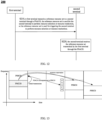
- a corresponding relationship between the PRB used for transmitting the PSACH and the PSSCH used to indicate the reserved resources and scheduled by the PSCCH may be as shown in FIG. 13 , or the first PSSCH is the PSSCH used to indicate the M reserved resources.
- the reference resource set includes N resources used for PSCCH and/or PSSCH transmission, and the N resources correspond to the N reserved resources indicated by the second terminal through the PSCCH for scheduling the first PSSCH, N is a positive integer, and N ⁇ 2; or, the reference resource set includes M resources used for PSCCH and/or PSSCH transmission, and the M resources correspond to the M reserved resources indicated by the second terminal through the first PSSCH, M is a positive integer.
- the first terminal determines that the PSACH carrying the reference resource set is transmitted on the PSACH resource on a time unit m, wherein the time interval between n and m is not smaller than a first threshold.
- the time unit includes a symbol and/or a slot.
- the first threshold may be pre-configured or specified by a protocol, or the first threshold is configured or indicated by the network device.
- the first threshold may be 0, that is, the interval between n and m may be 0.
- a PRB for the PSACH corresponding to one subchannel in one slot may be as shown in formula 3. i + j ⁇ N PSACH ⁇ M sub ch , slot PSACH , i + 1 + j ⁇ N PSACH ⁇ M sub ch , slot PSACH ⁇ 1 where M sub ch , slot PSACH represents the number of PRBs for the PSACH corresponding to one subchannel in one slot, and N PSACH represents the period of a PSACH resource.
- the start of a PSSCH is located at slot i, and slot i occupies one or more subchannels from a j-th subchannel, 0 ⁇ i ⁇ N PSACH , 0 ⁇ j ⁇ N subch , N subch represents the number of subchannels included in the resource pool used by the first terminal.
- the one slot in the above formula 3 and formula 4 is the slot where the first PSSCH is located.
- the first terminal may specifically determine the PRB used for transmitting the PSACH from at least one PRB;
- the at least one PRB is at least one PRB for the PSACH corresponding to one subchannel in the slot where the first PSSCH is located.
- the at least one PRB is at least one PRB for the PSACH corresponding to one subchannel in the slot where the first PSSCH is located as determined according to formula 3 above.
- the first terminal determines the PRB used for transmitting the PSACH from the at least one PRB according to a source terminal identity indicated in SCI for scheduling the first PSSCH.
- the first terminal determines the PRB used for transmitting the PSACH from the at least one PRB according to the following formula 5: P ID mod M subch , slot PSACH wherein P ID indicates the source terminal identity indicated in the SCI for scheduling the first PSSCH, M subch , slot PSACH indicates the number of PRB(s) for the PSACH corresponding to one subchannel in one slot, that is, M subch , slot PSACH indicates the at least one PRB.
- the first terminal determines the PRB used for transmitting the PSACH from the at least one PRB according to the source terminal identity indicated in the SCI for scheduling the first PSSCH and the member identity of the first terminal.
- the first terminal determines the PRB used for transmitting the PSACH from the at least one PRB according to the following formula 6: P ID + M ID mod M subch , slot PSACH where P ID indicates the source terminal identity indicated in the SCI for scheduling the first PSSCH, M ID indicates the member identity of the first terminal, M subch , slot PSACH indicates the number of PRB(s) for the PSACH corresponding to one subchannel in one slot, that is, M subch , slot PSACH indicates the at least one PRB.
- the first terminal determines a cyclic shift for transmitting the PSACH according to the number of at least one resource in the reference resource set and the state of each resource in the reference resource set.
- m 0 in formula 7 is pre-configured or specified by a protocol, or configured by a network device, that is, m 0 is a known parameter.
- the value of m cs in formula 7 may be determined according to Table 2 below.
- the first terminal may determine the at least one cyclic shift group according to the following formula 8: M subch , slot PSACH ⁇ N CS PSACH wherein M subch , slot PSACH represents the number of PRB(s) for the PSACH corresponding to one subchannel in one slot, and N CS PSACH represents the number of cyclic shift groups allowed for each PRB available for PSACH transmission.
- the one slot in formula 8 may be the slot where the first PSSCH is located.
- the first terminal may determine the cyclic shift group for transmitting the PSACH from the at least one cyclic shift group according to the following formula 9: P ID mod M subch , slot PSACH ⁇ N CS PSACH wherein P ID represents the source terminal identity indicated in the SCI for scheduling the first PSSCH, and M subch , slot PSACH ⁇ N CS PSACH represents the at least one cyclic shift group.
- the first terminal may determine the cyclic shift group for transmitting the PSACH from the at least one cyclic shift group according to the following formula 10: P ID + M ID mod M subch , slot PSACH ⁇ N CS PSACH wherein P ID represents the source terminal identity indicated in the SCI for scheduling the first PSSCH, M ID represents the member identity of the first terminal, and M subch , slot PSACH ⁇ N CS PSACH represents the at least one cyclic shift group.
- m cs in formula 11 may be determined according to Table 3 below.
- Method 2 the first terminal determines the transmission resource for the PSACH according to time-frequency resource positions of Q reserved resources indicated by the second terminal, wherein Q is a positive integer.
- the resources in the reference resource set transmitted by the first terminal correspond to one or more reserved resources indicated by the second terminal.
- the reference resource set includes Q resources used for PSCCH and/or PSSCH transmission, the Q resources correspond to the Q reserved resources indicated by the second terminal through a PSCCH, and Q ⁇ 2; or, the Q resources correspond to the Q reserved resources indicated by the second terminal through a PSSCH.
- a corresponding relationship between the PRB used for transmitting the PSACH and the reserved resources may be as shown in FIG. 14 .
- the first terminal determines a slot j for transmitting the PSACH according to a slot m corresponding to the Q reserved resources; wherein the slot m is a slot where the Q reserved resources are located, or the slot m is a slot where the first reserved resource among the Q reserved resources is located, and the slot j is the maximum value of a slot index where there exists a PSACH resource before m-T proc,1 -T proc,0 , T proc,0 is the time for the second terminal to decode the reference resource set, T proc,1 is the time for the second terminal to respond according to the reference resource set.
- T proc,0 and/or T proc,1 may be pre-configured or specified in a protocol, or T proc,0 and/or T proc,1 may be configured or indicated by the network device.
- the first terminal the PRB used for transmitting the PSACH from at least one PRB according to a source terminal identity indicated in SCI used for indicating the Q reserved resources; wherein the at least one PRB is at least one PRB for the PSACH corresponding to one subchannel in one slot.
- the above formula 5 may be referred to, and according to the source terminal identity indicated in the SCI used for indicating the Q reserved resources, the PRB used for transmitting the PSACH is determined from the at least one PRB.
- the first terminal determines the PRB used for transmitting the PSACH from at least one PRB according to a member identity of the first terminal and a source terminal identity indicated in SCI used for indicating the Q reserved resources; wherein the at least one PRB is at least one PRB for the PSACH corresponding to one subchannel in one slot.
- the above formula 6 may be referred to, and according to the source terminal identity indicated in the SCI used for indicating the Q reserved resources and the member identity of the first terminal, the PRB used for transmitting the PSACH is determined from the at least one PRB.
- the first terminal determines a cyclic shift for transmitting the PSACH according to the number of at least one resource in the reference resource set and a state of each resource in the reference resource set.
- the above formula 7 may be referred to, and according to the number of at least one resource in the reference resource set and the state of each resource in the reference resource set, the cyclic shift used for transmitting PSACH may be determined.
- the first terminal may determine at least one cyclic shift group according to the number of at least one PRB for the PSACH corresponding to one subchannel in one slot and the number of cyclic shift groups allowed for each PRB available for PSACH transmission.
- the first terminal may determine, by referring to the above formula 9, a cyclic shift group for transmitting the PSACH from the at least one cyclic shift group according to a source terminal identity indicated in SCI used for indicating the Q reserved resources.
- the first terminal may, based on the above formula 8, determine the at least one cyclic shift group according to the number of PRB(s) for the PSACH corresponding to one subchannel in the slot where the first PSSCH is located and the number of cyclic shift groups allowed for each PRB available for PSACH transmission.
- the first terminal may, by referring to the above formula 10, determine the cyclic shift group used for transmitting the PSACH from the at least one cyclic shift group according to the source terminal identity indicated in the SCI used to indicate the Q reserved resources and the member identity of the first terminal.
- m cs in formula 12 may be determined according to Table 4 or Table 5 below.
- Method 3 the first terminal determines the PRB used for transmitting the PSACH according to a PRB set used by the second terminal for PSTCH transmission.
- the PRB set used for PSACH transmission and the PRB set used for PSTCH transmission are the same or associated with other one by one.
- the first terminal receives trigger signaling transmitted by the second terminal through the PSTCH on a k1-th PRB in a PSTCH resource set in a slot n, wherein the trigger signaling is used to trigger the first terminal to transmit the reference resource set;
- a PSACH resource set exists on the slot m; or, a PSACH resource set associated with the PSTCH resource set exists on the slot m; and/or, an interval between n and m is not less than a first threshold.
- k2 is equal to k1; or, k2 is equal to the sum of k1 and an offset value, the offset value is pre-configured or specified by a protocol, or the offset value is configured by a network device.
- the offset value may be 0, that is, the interval between the slot n and the slot m may be 0.
- Method 4 in a case where a first condition is met and a PSACH resource is configured in a resource pool used by the first terminal, the first terminal determines a PSACH resource corresponding to a PSSCH scheduled by the first PSCCH as a resource for transmitting the PSACH; wherein the first terminal successfully decodes the first PSCCH transmitted by the second terminal, and the second terminal reserves, through the first PSCCH, P resources for Transport Block (TB) retransmission, and P is a positive integer.
- TB Transport Block
- the first condition includes but is not limited to at least one of the following:
- the second terminal detects the PSACH carrying the reference resource set on a target PSACH resource.
- the target PSACH resource includes but is not limited to at least one of the following:
- the second terminal in a case where one or more resources in the reference resource set conflict with a resource reserved by another terminal, the second terminal reselects a reserved resource; or, in a case where the second terminal determines that there is a half-duplex restriction according to the reference resource set, the second terminal reselects a reserved resource.
- the first terminal may transmit the reference resource set to the second terminal through the PSACH, thereby improving the resource selection performance of the second terminal.
- the first terminal may determine the resource for transmitting the PSACH according to the time-frequency resource position where the PSCCH/PSSCH for indicating resource reservation by the second terminal is located, or the time-frequency location of a resource reserved by the second terminal, or the time-frequency resource position where the second terminal transmits trigger signaling.
- the transmission of the reference resource set can be realized with a small signaling overhead by making minor changes to the standard or protocol, thereby improving the performance of the resource selection of the second terminal.
- FIG. 15 shows a schematic block diagram of a terminal device 300 according to an embodiment of the present disclosure.
- the terminal device is a first terminal, and the terminal device 300 includes a communication unit 310.
- the communication unit 310 is configured to transmit a reference resource set to a second terminal through a PSACH; wherein the reference resource set is used for the second terminal to perform resource selection or resource reselection, or the reference resource set is used to trigger the second terminal to perform resource selection or resource reselection.
- the terminal device 300 further includes: a processing unit 320 configured to determine a Physical Resource Block (PRB) set available for PSACH transmission.
- PRB Physical Resource Block
- a period of a PRB set used for PSACH transmission in a resource pool is the same as a period of a PRB set available for physical sidelink triggering channel PSFCH transmission in the resource pool, and the PRB set used for PSACH transmission is located at the last two Orthogonal Frequency-Division Multiplexing (OFDM) symbols available for sidelink communication in one slot.
- OFDM Orthogonal Frequency-Division Multiplexing
- At least one PRB included in the PRB set used for PSACH transmission is the same as at least one PRB included in the PRB set used for PSFCH transmission, or the at least one PRB included in the PRB set used for PSACH transmission is at least in part different from the at least one PRB included in the PRB set used for PSFCH transmission.
- a PRB set available for PSACH transmission in a resource pool is located at the last OFDM symbol available for sidelink communication in each slot.
- the PRB set for PSACH transmission in a slot includes all PRBs in the last OFDM symbol available for sidelink communication.
- the terminal device further includes: a processing unit 320 configured to determine a transmission resource for the PSACH, wherein a PRB used for transmitting the PSACH belongs to the PRB set for PSACH transmission determined by the first terminal.
- a processing unit 320 configured to determine a transmission resource for the PSACH, wherein a PRB used for transmitting the PSACH belongs to the PRB set for PSACH transmission determined by the first terminal.
- the processing unit 320 is configured to: determine the transmission resource for the PSACH according to a time-frequency resource position of a first Physical Sidelink Shared Channel (PSSCH) transmitted by the second terminal.
- PSSCH Physical Sidelink Shared Channel
- processing unit 320 is configured to:
- the processing unit 320 is configured to: determine, from the at least one PRB, the PRB used for transmitting the PSACH according to a source terminal identity indicated in Sidelink Control Information (SCI) used for scheduling the first PSSCH.
- SCI Sidelink Control Information
- the processing unit 320 is configured to: determine, from the at least one PRB, the PRB used for transmitting the PSACH according to a member identity of the first terminal and a source terminal identity indicated in SCI used for scheduling the first PSSCH.
- the processing unit 320 is further configured to determine the at least one PRB for the PSACH corresponding to one subchannel in the slot where the first PSSCH is located: i + j ⁇ N PSACH ⁇ M sub ch , slot PSACH , i + 1 + j ⁇ N PSACH ⁇ M sub ch , slot PSACH ⁇ 1 ; wherein M sub ch , slot PSACH represents the number of the at least one PRB for the PSACH corresponding to one subchannel in the slot where the first PSSCH is located, N PSACH represents a period of a PSACH resource, a start of the first PSSCH is located in slot i, the slot i occupies one or more subchannels starting from a j-th subchannel, 0 ⁇ i ⁇ N PSACH , 0 ⁇ j ⁇ N subch , N subch represents the number of subchannels included in a resource pool used by the first terminal.
- the processing unit 320 is further configured to determine a cyclic shift for transmitting the PSACH according to the number of at least one resource in the reference resource set and a state of each resource in the reference resource set.
- processing unit 320 is configured to:
- the terminal device 300 further includes a processing unit 320;
- the terminal device 300 further includes a processing unit 320;
- processing unit 320 is configured to:
- processing unit 320 is further configured to:
- the reference resource set includes N resources used for Physical Sidelink Control Channel (PSCCH) and/or PSSCH transmission, and the N resources correspond to N reserved resources indicated by the second terminal through a PSCCH used for scheduling the first PSSCH, N is a positive integer, and N ⁇ 2; or, the reference resource set includes M resources used for PSCCH and/or PSSCH transmission, and the M resources correspond to M reserved resources indicated by the second terminal through the first PSSCH, and M is a positive integer.
- PSCCH Physical Sidelink Control Channel
- M M resources used for PSCCH and/or PSSCH transmission, and the M resources correspond to M reserved resources indicated by the second terminal through the first PSSCH, and M is a positive integer.
- the first PSSCH is located at a time unit n
- the transmission resource for the PSACH is located at a time unit m
- an interval between n and m is not smaller than a first threshold, and the time unit includes a symbol and/or a slot.
- the processing unit 320 is configured to: determine the transmission resource for the PSACH according to time-frequency resource positions of Q reserved resources indicated by the second terminal, wherein Q is a positive integer.
- the reference resource set includes Q resources used for PSCCH and/or PSSCH transmission, the Q resources correspond to the Q reserved resources indicated by the second terminal through a PSCCH, and Q ⁇ 2, or, the Q resources correspond to the Q reserved resources indicated by the second terminal through a PSSCH.
- processing unit 320 is configured to:
- processing unit 320 is configured to:
- processing unit 320 is configured to:
- At least one PRB for the PSACH corresponding to one subchannel in one slot i + j ⁇ N PSACH ⁇ M sub ch , slot PSACH , i + 1 + j ⁇ N PSACH ⁇ M sub ch , slot PSACH ⁇ 1 ;
- M sub ch , slot PSACH represents the number of at least one PRB for the PSACH corresponding to one subchannel in one slot
- N PSACH represents a period of a PSACH resources
- a start of a PSSCH is located at slot i
- slot i occupies one or more subchannels starting from a j-th subchannel, 0 ⁇ i ⁇ N PSACH , 0 ⁇ j ⁇ N subch
- N subch represents the number of subchannels included in a resource pool used by the first terminal.
- the processing unit 320 is further configured to: determine a cyclic shift for transmitting the PSACH according to the number of at least one resource in the reference resource set and a state of each resource in the reference resource set.
- processing unit 320 is configured to:
- the terminal device 300 further includes processing unit 320;
- the terminal device 300 further includes processing unit 320;
- processing unit 320 is configured to:
- the processing unit 320 is configured to: determine the PRB used for transmitting the PSACH according to a PRB set used by the second terminal for Physical Sidelink Triggering Channel (PSTCH) transmission.
- PSTCH Physical Sidelink Triggering Channel
- the communication unit 310 is further configured to receive trigger signaling transmitted by the second terminal through the PSTCH on a k1-th PRB in a PSTCH resource set in a slot n, wherein the trigger signaling is used to trigger the first terminal to transmit the reference resource set;
- a PSACH resource set exists on the slot m; or, a PSACH resource set associated with the PSTCH resource set exists on the slot m; and/or, an interval between n and m is not less than a first threshold.
- k2 is equal to k1; or, k2 is equal to the sum of k1 and an offset value, the offset value is pre-configured or specified by a protocol, or the offset value is configured by a network device.
- processing unit 320 is configured to:
- the first condition includes at least one of the following that:
- the above-mentioned communication unit may be a communication interface or a transceiver, or an input-output interface of a communication chip or a system on chip.
- the above-mentioned processing unit may be one or more processors.
- terminal device 300 may correspond to the first terminal in the method embodiments of the present disclosure, and the above-mentioned and other operations and/or functions of each unit in the terminal device 300 are to realize the corresponding processes of the first terminal in the method 200 shown in FIG. 12 , and for the sake of brevity, details are not repeated here.
- FIG. 16 shows a schematic block diagram of a terminal device 400 according to an embodiment of the present disclosure.
- the terminal device is a second terminal, and the terminal device 400 includes a communication unit 410.
- the communication unit 410 is configured to receive a reference resource set transmitted from a first terminal through a Physical Sidelink Assistant Channel (PSACH); wherein the reference resource set is used for the second terminal to perform resource selection or resource reselection, or the reference resource set is used to trigger the second terminal to perform resource selection or resource reselection.
- PSACH Physical Sidelink Assistant Channel
- the communication unit 410 is configured to: detect the PSACH carrying the reference resource set on a target PSACH resource.
- the target PSACH resource includes at least one of the following:
- the terminal device further includes a processing unit 420 configured to:
- the above-mentioned communication unit may be a communication interface or a transceiver, or an input-output interface of a communication chip or a system on chip.
- the above-mentioned processing unit may be one or more processors.
- terminal device 400 may correspond to the second terminal in the method embodiments of the present disclosure, and the above-mentioned and other operations and/or functions of each unit in the terminal device 400 are to realize the corresponding processes of the second terminal in the method 200 shown in FIG. 12 , and for the sake of brevity, details are not repeated here.
- FIG. 17 is a schematic structural diagram of a communication device 500 provided by an embodiment of the present disclosure.
- the communication device 500 shown in FIG. 17 includes a processor 510, and the processor 510 may call and run a computer program from a memory, so as to implement the methods in the embodiments of the present disclosure.
- the communication device 500 may further include a memory 520.
- the processor 510 may call and run a computer program from the memory 520, so as to implement the methods in the embodiments of the present disclosure.
- the memory 520 may be an independent device independent of the processor 510, or may be integrated in the processor 510.
- the communication device 500 may further include a transceiver 530, and the processor 510 may control the transceiver 530 to communicate with other devices, specifically, to send information or data to other devices, or receive information or data sent from other devices.
- the transceiver 530 may include a transmitter and a receiver.
- the transceiver 530 may further include one or more antennas.
- the communication device 500 may specifically be the terminal device of the embodiments of the present disclosure, and the communication device 500 may implement the corresponding processes implemented by the first terminal in each method embodiment of the present disclosure.
- the communication device 500 may implement the corresponding processes implemented by the first terminal in each method embodiment of the present disclosure.
- repeated descriptions are omitted.
- the communication device 500 may specifically be the terminal device in the embodiments of the present disclosure, and the communication device 500 may implement the corresponding processes implemented by the second terminal in each method embodiment of the present disclosure.
- the communication device 500 may implement the corresponding processes implemented by the second terminal in each method embodiment of the present disclosure.
- repeated descriptions are omitted.
- FIG. 18 is a schematic structural diagram of an apparatus according to an embodiment of the present disclosure.
- the apparatus 600 shown in FIG. 18 includes a processor 610, and the processor 610 may call and run a computer program from a memory, so as to implement the methods in the embodiments of the present disclosure.
- the apparatus 600 may further include a memory 620.
- the processor 610 may call and run a computer program from the memory 620, so as to implement the methods in the embodiments of the present disclosure.
- the memory 620 may be an independent device independent of the processor 610, or may be integrated in the processor 610.
- the device 600 may further include an input interface 630.
- the processor 610 may control the input interface 630 to communicate with other apparatuses or chips, specifically, may obtain information or data sent by other apparatuses or chips.
- the device 600 may further include an output interface 640.
- the processor 610 may control the output interface 640 to communicate with other apparatuses or chips, specifically, may output information or data to other apparatuses or chips.
- the apparatus may be applied to the terminal device in the embodiments of the present disclosure, and the apparatus may implement the corresponding processes implemented by the first terminal in the method embodiments of the present disclosure.
- the apparatus may implement the corresponding processes implemented by the first terminal in the method embodiments of the present disclosure.
- the apparatus may be applied to the terminal device in the embodiments of the present disclosure, and the apparatus may implement the corresponding process implemented by the second terminal in the method embodiments of the present disclosure.
- the apparatus may implement the corresponding process implemented by the second terminal in the method embodiments of the present disclosure.
- the apparatus mentioned in the embodiments of the present disclosure may also be a chip.
- it may be a system level chip, a system chip, a chip system, or a system on chip.
- FIG. 19 is a schematic block diagram of a communication system 700 provided by an embodiment of the present disclosure. As shown in FIG. 19 , the communication system 700 includes a first terminal 710 and a second terminal 720.
- the first terminal 710 may be used to realize the corresponding functions realized by the first terminal in the above methods
- the second terminal 720 may be used to realize the corresponding functions realized by the second terminal in the above methods.
- details are not repeated here.
- the processor in embodiments of the present disclosure may be an integrated circuit chip with signal processing capability.
- the steps of the foregoing method embodiments can be completed by hardware integrated logic circuits in the processor or instructions in the form of software.
- the above-mentioned processor may be a general-purpose processor, a Digital Signal Processor (DSP), an Application Specific Integrated Circuit (ASIC), a Field Programmable Gate Array (FPGA) or other programmable logic device, discrete gate or transistor logic device, discrete hardware component.
- DSP Digital Signal Processor
- ASIC Application Specific Integrated Circuit
- FPGA Field Programmable Gate Array
- the methods, steps, and logical block diagrams disclosed in the embodiments of the present disclosure can be implemented or executed.
- the general-purpose processor may be a microprocessor or the processor may also be any conventional processor or the like.
- the steps of the methods disclosed in the embodiments of the present disclosure may be directly embodied as being executed and completed by a hardware decoding processor, or executed by a combination of hardware and software modules in the decoding processor.
- the software module can be located in a storage medium in the field, such as random access memory, flash memory, read-only memory, programmable read-only memory, or electrically erasable programmable memory, register.
- the storage medium is located in the memory, and the processor reads the information in the memory to perform the steps of the above methods in combination with hardware.
- the memory in the embodiments of the present disclosure may be volatile memory or non-volatile memory, or may include both volatile and non-volatile memory.
- the non-volatile memory can be Read-Only Memory (ROM), Programmable ROM (PROM), Erasable PROM (EPROM), Electrically EPROM (EEPROM) or flash memory.
- the volatile memory may be a Random Access Memory (RAM), which is used as an external cache.
- RAM Random Access Memory
- many forms of RAM are available, such as Static RAM (SRAM), Dynamic RAM (DRAM), Synchronous DRAM (SDRAM), Double Data Rate SDRAM (DDR SDRAM), Enhanced SDRAM (ESDRAM), Synchlink DRAM (SLDRAM)), or Direct Rambus RAM (DR RAM).
- SRAM Static RAM
- DRAM Dynamic RAM
- SDRAM Synchronous DRAM
- DDR SDRAM Double Data Rate SDRAM
- ESDRAM Enhanced SDRAM
- SLDRAM Synchlink DRAM
- DR RAM Direct Rambus RAM
- the memory in embodiments of the present disclosure may also be Static RAM (SRAM), Dynamic RAM (DRAM), Synchronous DRAM (SDRAM), Double Data Rate SDRAM (DDR SDRAM), Enhanced SDRAM (ESDRAM), Synchlink DRAM (SLDRAM), or Direct Rambus RAM (DR RAM), and so on. That is to say, the memory in embodiments of the present disclosure is intended to include but not limited to these and any other suitable types of memory.
- SRAM Static RAM
- DRAM Dynamic RAM
- SDRAM Synchronous DRAM
- DDR SDRAM Double Data Rate SDRAM
- ESDRAM Enhanced SDRAM
- SLDRAM Synchlink DRAM
- DR RAM Direct Rambus RAM
- An embodiment of the present disclosure also provides a computer-readable storage medium for storing computer programs.
- the computer-readable storage medium may be applied to the terminal device in embodiments of the present disclosure, and the computer programs cause a computer to perform the corresponding processes implemented by the first terminal in each method embodiment of the present disclosure.
- the computer programs cause a computer to perform the corresponding processes implemented by the first terminal in each method embodiment of the present disclosure.
- repeated descriptions are omitted here.
- the computer-readable storage medium may be applied to the terminal device in embodiments of the present disclosure, and the computer programs cause a computer to perform the corresponding processes implemented by the second terminal in each method embodiment of the present disclosure.
- the computer programs cause a computer to perform the corresponding processes implemented by the second terminal in each method embodiment of the present disclosure.
- repeated descriptions are omitted here.
- An embodiment of the present disclosure provides a computer program product, including computer program instructions.
- the computer program product may be applied to the terminal device in embodiments of the present disclosure, and the computer program instructions cause a computer to perform the corresponding processes implemented by the first terminal in each method embodiment of the present disclosure.
- the computer program instructions cause a computer to perform the corresponding processes implemented by the first terminal in each method embodiment of the present disclosure.
- repeated descriptions are omitted here.
- the computer program product may be applied to the terminal device in embodiments of the present disclosure, and the computer program instructions cause a computer to perform the corresponding processes implemented by the second terminal in each method embodiment of the present disclosure.
- the computer program instructions cause a computer to perform the corresponding processes implemented by the second terminal in each method embodiment of the present disclosure.
- repeated descriptions are omitted here.
- An embodiment of the present disclosure also provides a computer program.
- the computer program may be applied to the terminal device in embodiments of the present disclosure, and when the computer program runs on a computer, the computer is caused to perform the corresponding processes implemented by the first terminal device in each method embodiment of the present disclosure.
- the computer program runs on a computer, the computer is caused to perform the corresponding processes implemented by the first terminal device in each method embodiment of the present disclosure.
- the computer program may be applied to the terminal device in embodiments of the present disclosure, and when the computer program runs on a computer, the computer is caused to perform the corresponding processes implemented by the second terminal in each method embodiment of the present disclosure.
- the computer program runs on a computer, the computer is caused to perform the corresponding processes implemented by the second terminal in each method embodiment of the present disclosure.
- the disclosed systems, devices and methods may be implemented in other ways.
- the device embodiments described above are merely illustrative.
- the division of the units is only a kind of logical function division. In practice, other division manner may be used.
- multiple units or components may be combined or integrated into another system, or some features may be ignored or not performed.
- the illustrated or discussed mutual coupling or direct coupling or communication connection may be indirect coupling or communication connection through some interfaces, devices or units, and may be in electrical, mechanical or other forms.
- the units described as separated parts may or may not be physically separated, and the parts displayed as units may or may not be physical units, that is, the units may be located in one place, or may be distributed over multiple network units. Some or all of the units may be selected according to actual needs to achieve the objectives of the solutions in the embodiments.
- the functional units in the embodiments of the present disclosure may be integrated in one processing unit, or the units may exist alone physically, or two or more units may be integrated in one unit.
- the functions may also be stored in a computer-readable storage medium if being implemented in the form of a software functional unit and sold or used as an independent product. Based on such understanding, the essence of the technical solutions of the present disclosure, or the part contributing to the prior art or part of the technical solutions, may be embodied in the form of a software product.
- the computer software product is stored in a storage medium including a number of instructions such that a computer device (which may be a personal computer, a server, or a network device, etc.) performs all or part of steps of the method described in each of the embodiments of the present disclosure.
- the foregoing storage medium includes: any medium that is capable of storing program codes such as a USB disk, a mobile hard disk, a Read-Only Memory (ROM), a Random Access Memory (RAM), a magnetic disk or an optical disk, and the like.
Landscapes
- Engineering & Computer Science (AREA)
- Signal Processing (AREA)
- Computer Networks & Wireless Communication (AREA)
- Quality & Reliability (AREA)
- Mobile Radio Communication Systems (AREA)
Applications Claiming Priority (1)
| Application Number | Priority Date | Filing Date | Title |
|---|---|---|---|
| PCT/CN2020/139632 WO2022134076A1 (zh) | 2020-12-25 | 2020-12-25 | 无线通信的方法和终端设备 |
Publications (3)
| Publication Number | Publication Date |
|---|---|
| EP4266775A1 true EP4266775A1 (de) | 2023-10-25 |
| EP4266775A4 EP4266775A4 (de) | 2024-02-14 |
| EP4266775B1 EP4266775B1 (de) | 2025-04-09 |
Family
ID=82158711
Family Applications (1)
| Application Number | Title | Priority Date | Filing Date |
|---|---|---|---|
| EP20966639.5A Active EP4266775B1 (de) | 2020-12-25 | 2020-12-25 | Drahtloskommunikationsverfahren und endgerätevorrichtung |
Country Status (4)
| Country | Link |
|---|---|
| US (1) | US20230354269A1 (de) |
| EP (1) | EP4266775B1 (de) |
| CN (1) | CN116548039B (de) |
| WO (1) | WO2022134076A1 (de) |
Families Citing this family (2)
| Publication number | Priority date | Publication date | Assignee | Title |
|---|---|---|---|---|
| US12279144B2 (en) * | 2021-01-19 | 2025-04-15 | Mediatek Singapore Pte. Ltd. | Resource allocation enhancements for sidelink communications |
| US12010687B2 (en) * | 2022-01-10 | 2024-06-11 | Qualcomm Incorporated | Techniques for enhanced sidelink feedback transmission |
Family Cites Families (12)
| Publication number | Priority date | Publication date | Assignee | Title |
|---|---|---|---|---|
| KR100414932B1 (ko) * | 1998-01-24 | 2004-04-03 | 삼성전자주식회사 | 이동통신시스템의데이타통신방법 |
| EP3821658A1 (de) * | 2018-08-09 | 2021-05-19 | Convida Wireless, Llc | Ressourcenverwaltung für 5g ev2x |
| KR102814698B1 (ko) * | 2019-01-10 | 2025-05-29 | 삼성전자주식회사 | 무선 통신 시스템에서 단말 간 직접 통신을 위한 전송 자원을 할당하는 장치 및 방법 |
| CN111436033B (zh) * | 2019-01-11 | 2023-05-09 | 中国移动通信有限公司研究院 | 传输的操作方法及终端 |
| CN113544991B (zh) * | 2019-03-05 | 2023-08-01 | Lg电子株式会社 | 用于在nr v2x中发送psfch的方法和设备 |
| KR102353395B1 (ko) * | 2019-03-21 | 2022-01-19 | 아서스테크 컴퓨터 인코포레이션 | 무선 통신 시스템에 있어서 디바이스-대-디바이스 피드백 송신을 핸들링하는 방법 및 장치 |
| CN111867059A (zh) * | 2019-04-30 | 2020-10-30 | 夏普株式会社 | 由用户设备执行的方法以及用户设备 |
| EP4179811A1 (de) * | 2020-07-10 | 2023-05-17 | Telefonaktiebolaget LM ERICSSON (PUBL) | Ressourcenauswahlkoordination für new radio (nr)-sidelink (sl) |
| WO2022071741A1 (ko) * | 2020-09-29 | 2022-04-07 | 엘지전자 주식회사 | Nr v2x에서 보조 정보를 기반으로 sl 통신을 수행하는 방법 및 장치 |
| WO2022077506A1 (zh) * | 2020-10-16 | 2022-04-21 | 华为技术有限公司 | 资源重选辅助的方法与装置和资源重选的方法与装置 |
| KR102670902B1 (ko) * | 2020-10-30 | 2024-05-31 | 엘지전자 주식회사 | Nr v2x에서 자원 충돌과 관련된 정보를 송수신하는 방법 및 장치 |
| CN114584267B (zh) * | 2020-12-02 | 2024-07-16 | 上海朗帛通信技术有限公司 | 一种被用于无线通信的节点中的方法和装置 |
-
2020
- 2020-12-25 CN CN202080107416.7A patent/CN116548039B/zh active Active
- 2020-12-25 WO PCT/CN2020/139632 patent/WO2022134076A1/zh not_active Ceased
- 2020-12-25 EP EP20966639.5A patent/EP4266775B1/de active Active
-
2023
- 2023-06-22 US US18/212,804 patent/US20230354269A1/en active Pending
Also Published As
| Publication number | Publication date |
|---|---|
| CN116548039B (zh) | 2025-02-25 |
| EP4266775A4 (de) | 2024-02-14 |
| EP4266775B1 (de) | 2025-04-09 |
| CN116548039A (zh) | 2023-08-04 |
| WO2022134076A1 (zh) | 2022-06-30 |
| US20230354269A1 (en) | 2023-11-02 |
Similar Documents
| Publication | Publication Date | Title |
|---|---|---|
| US12610383B2 (en) | Physical sidelink feedback channel (PSFCH) transmission method and terminal device | |
| US11895676B2 (en) | Resource set transmission method and terminal device | |
| CN116347601A (zh) | 无线通信的方法和终端设备 | |
| US20230232375A1 (en) | Method for determining resource set and terminal device | |
| US20230354269A1 (en) | Wireless communication method and terminal device | |
| EP4203580A1 (de) | Ressourcensatzübertragungsverfahren und endgeräte | |
| EP4138496A1 (de) | Ressourcenzuweisungsverfahren und endgerät | |
| US20240323904A1 (en) | Wireless communication method and terminal device | |
| US20230328695A1 (en) | Wireless communication method and terminal device | |
| CN117136568A (zh) | 无线通信的方法和终端设备 | |
| CN115699642A (zh) | 无线通信方法和终端设备 | |
| CN119366153A (zh) | 无线通信的方法和终端设备 | |
| EP4247086A1 (de) | Ressourcenbestimmungsverfahren, erste endgerätevorrichtung und zweite endgerätevorrichtung | |
| CN115968033A (zh) | 通信方法、装置、设备以及存储介质 | |
| EP4395376B1 (de) | Drahtloskommunikationsverfahren und endgerätevorrichtung | |
| US20240334408A1 (en) | Method for wireless communication and terminal device | |
| US20240365287A1 (en) | Method for wireless communication and terminal device | |
| CN117730594A (zh) | 无线通信的方法和终端设备 |
Legal Events
| Date | Code | Title | Description |
|---|---|---|---|
| STAA | Information on the status of an ep patent application or granted ep patent |
Free format text: STATUS: THE INTERNATIONAL PUBLICATION HAS BEEN MADE |
|
| PUAI | Public reference made under article 153(3) epc to a published international application that has entered the european phase |
Free format text: ORIGINAL CODE: 0009012 |
|
| STAA | Information on the status of an ep patent application or granted ep patent |
Free format text: STATUS: REQUEST FOR EXAMINATION WAS MADE |
|
| 17P | Request for examination filed |
Effective date: 20230719 |
|
| AK | Designated contracting states |
Kind code of ref document: A1 Designated state(s): AL AT BE BG CH CY CZ DE DK EE ES FI FR GB GR HR HU IE IS IT LI LT LU LV MC MK MT NL NO PL PT RO RS SE SI SK SM TR |
|
| REG | Reference to a national code |
Ref country code: DE Ref legal event code: R079 Free format text: PREVIOUS MAIN CLASS: H04W0072020000 Ipc: H04L0005000000 Ref document number: 602020049379 Country of ref document: DE |
|
| A4 | Supplementary search report drawn up and despatched |
Effective date: 20240116 |
|
| RIC1 | Information provided on ipc code assigned before grant |
Ipc: H04W 76/23 20180101ALI20240110BHEP Ipc: H04W 4/40 20180101ALI20240110BHEP Ipc: H04W 72/25 20230101ALI20240110BHEP Ipc: H04W 72/02 20090101ALI20240110BHEP Ipc: H04L 5/00 20060101AFI20240110BHEP |
|
| DAV | Request for validation of the european patent (deleted) | ||
| DAX | Request for extension of the european patent (deleted) | ||
| RIC1 | Information provided on ipc code assigned before grant |
Ipc: H04W 92/18 20090101ALI20240925BHEP Ipc: H04W 76/23 20180101ALI20240925BHEP Ipc: H04W 4/40 20180101ALI20240925BHEP Ipc: H04W 72/25 20230101ALI20240925BHEP Ipc: H04W 72/02 20090101ALI20240925BHEP Ipc: H04L 5/00 20060101AFI20240925BHEP |
|
| GRAP | Despatch of communication of intention to grant a patent |
Free format text: ORIGINAL CODE: EPIDOSNIGR1 |
|
| STAA | Information on the status of an ep patent application or granted ep patent |
Free format text: STATUS: GRANT OF PATENT IS INTENDED |
|
| INTG | Intention to grant announced |
Effective date: 20241211 |
|
| GRAS | Grant fee paid |
Free format text: ORIGINAL CODE: EPIDOSNIGR3 |
|
| GRAA | (expected) grant |
Free format text: ORIGINAL CODE: 0009210 |
|
| STAA | Information on the status of an ep patent application or granted ep patent |
Free format text: STATUS: THE PATENT HAS BEEN GRANTED |
|
| AK | Designated contracting states |
Kind code of ref document: B1 Designated state(s): AL AT BE BG CH CY CZ DE DK EE ES FI FR GB GR HR HU IE IS IT LI LT LU LV MC MK MT NL NO PL PT RO RS SE SI SK SM TR |
|
| REG | Reference to a national code |
Ref country code: GB Ref legal event code: FG4D |
|
| REG | Reference to a national code |
Ref country code: CH Ref legal event code: EP |
|
| REG | Reference to a national code |
Ref country code: DE Ref legal event code: R096 Ref document number: 602020049379 Country of ref document: DE |
|
| REG | Reference to a national code |
Ref country code: IE Ref legal event code: FG4D |
|
| REG | Reference to a national code |
Ref country code: NL Ref legal event code: MP Effective date: 20250409 |
|
| PG25 | Lapsed in a contracting state [announced via postgrant information from national office to epo] |
Ref country code: NL Free format text: LAPSE BECAUSE OF FAILURE TO SUBMIT A TRANSLATION OF THE DESCRIPTION OR TO PAY THE FEE WITHIN THE PRESCRIBED TIME-LIMIT Effective date: 20250409 |
|
| REG | Reference to a national code |
Ref country code: AT Ref legal event code: MK05 Ref document number: 1784550 Country of ref document: AT Kind code of ref document: T Effective date: 20250409 |
|
| P01 | Opt-out of the competence of the unified patent court (upc) registered |
Free format text: CASE NUMBER: UPC_APP_5279_4266775/2025 Effective date: 20250829 |
|
| PG25 | Lapsed in a contracting state [announced via postgrant information from national office to epo] |
Ref country code: ES Free format text: LAPSE BECAUSE OF FAILURE TO SUBMIT A TRANSLATION OF THE DESCRIPTION OR TO PAY THE FEE WITHIN THE PRESCRIBED TIME-LIMIT Effective date: 20250409 Ref country code: FI Free format text: LAPSE BECAUSE OF FAILURE TO SUBMIT A TRANSLATION OF THE DESCRIPTION OR TO PAY THE FEE WITHIN THE PRESCRIBED TIME-LIMIT Effective date: 20250409 Ref country code: PT Free format text: LAPSE BECAUSE OF FAILURE TO SUBMIT A TRANSLATION OF THE DESCRIPTION OR TO PAY THE FEE WITHIN THE PRESCRIBED TIME-LIMIT Effective date: 20250811 |
|
| REG | Reference to a national code |
Ref country code: LT Ref legal event code: MG9D |
|
| PG25 | Lapsed in a contracting state [announced via postgrant information from national office to epo] |
Ref country code: GR Free format text: LAPSE BECAUSE OF FAILURE TO SUBMIT A TRANSLATION OF THE DESCRIPTION OR TO PAY THE FEE WITHIN THE PRESCRIBED TIME-LIMIT Effective date: 20250710 Ref country code: NO Free format text: LAPSE BECAUSE OF FAILURE TO SUBMIT A TRANSLATION OF THE DESCRIPTION OR TO PAY THE FEE WITHIN THE PRESCRIBED TIME-LIMIT Effective date: 20250709 |
|
| PG25 | Lapsed in a contracting state [announced via postgrant information from national office to epo] |
Ref country code: PL Free format text: LAPSE BECAUSE OF FAILURE TO SUBMIT A TRANSLATION OF THE DESCRIPTION OR TO PAY THE FEE WITHIN THE PRESCRIBED TIME-LIMIT Effective date: 20250409 |
|
| PG25 | Lapsed in a contracting state [announced via postgrant information from national office to epo] |
Ref country code: BG Free format text: LAPSE BECAUSE OF FAILURE TO SUBMIT A TRANSLATION OF THE DESCRIPTION OR TO PAY THE FEE WITHIN THE PRESCRIBED TIME-LIMIT Effective date: 20250409 |
|
| PG25 | Lapsed in a contracting state [announced via postgrant information from national office to epo] |
Ref country code: HR Free format text: LAPSE BECAUSE OF FAILURE TO SUBMIT A TRANSLATION OF THE DESCRIPTION OR TO PAY THE FEE WITHIN THE PRESCRIBED TIME-LIMIT Effective date: 20250409 |
|
| PG25 | Lapsed in a contracting state [announced via postgrant information from national office to epo] |
Ref country code: AT Free format text: LAPSE BECAUSE OF FAILURE TO SUBMIT A TRANSLATION OF THE DESCRIPTION OR TO PAY THE FEE WITHIN THE PRESCRIBED TIME-LIMIT Effective date: 20250409 |
|
| PG25 | Lapsed in a contracting state [announced via postgrant information from national office to epo] |
Ref country code: RS Free format text: LAPSE BECAUSE OF FAILURE TO SUBMIT A TRANSLATION OF THE DESCRIPTION OR TO PAY THE FEE WITHIN THE PRESCRIBED TIME-LIMIT Effective date: 20250709 |
|
| PG25 | Lapsed in a contracting state [announced via postgrant information from national office to epo] |
Ref country code: IS Free format text: LAPSE BECAUSE OF FAILURE TO SUBMIT A TRANSLATION OF THE DESCRIPTION OR TO PAY THE FEE WITHIN THE PRESCRIBED TIME-LIMIT Effective date: 20250809 |
|
| PG25 | Lapsed in a contracting state [announced via postgrant information from national office to epo] |
Ref country code: LV Free format text: LAPSE BECAUSE OF FAILURE TO SUBMIT A TRANSLATION OF THE DESCRIPTION OR TO PAY THE FEE WITHIN THE PRESCRIBED TIME-LIMIT Effective date: 20250409 |
|
| PGFP | Annual fee paid to national office [announced via postgrant information from national office to epo] |
Ref country code: DE Payment date: 20251212 Year of fee payment: 6 |
|
| PGFP | Annual fee paid to national office [announced via postgrant information from national office to epo] |
Ref country code: GB Payment date: 20251211 Year of fee payment: 6 |
|
| REG | Reference to a national code |
Ref country code: DE Ref legal event code: R097 Ref document number: 602020049379 Country of ref document: DE |
|
| PG25 | Lapsed in a contracting state [announced via postgrant information from national office to epo] |
Ref country code: DK Free format text: LAPSE BECAUSE OF FAILURE TO SUBMIT A TRANSLATION OF THE DESCRIPTION OR TO PAY THE FEE WITHIN THE PRESCRIBED TIME-LIMIT Effective date: 20250409 Ref country code: SM Free format text: LAPSE BECAUSE OF FAILURE TO SUBMIT A TRANSLATION OF THE DESCRIPTION OR TO PAY THE FEE WITHIN THE PRESCRIBED TIME-LIMIT Effective date: 20250409 |
|
| PG25 | Lapsed in a contracting state [announced via postgrant information from national office to epo] |
Ref country code: CZ Free format text: LAPSE BECAUSE OF FAILURE TO SUBMIT A TRANSLATION OF THE DESCRIPTION OR TO PAY THE FEE WITHIN THE PRESCRIBED TIME-LIMIT Effective date: 20250409 |
|
| PG25 | Lapsed in a contracting state [announced via postgrant information from national office to epo] |
Ref country code: EE Free format text: LAPSE BECAUSE OF FAILURE TO SUBMIT A TRANSLATION OF THE DESCRIPTION OR TO PAY THE FEE WITHIN THE PRESCRIBED TIME-LIMIT Effective date: 20250409 |
|
| PG25 | Lapsed in a contracting state [announced via postgrant information from national office to epo] |
Ref country code: SK Free format text: LAPSE BECAUSE OF FAILURE TO SUBMIT A TRANSLATION OF THE DESCRIPTION OR TO PAY THE FEE WITHIN THE PRESCRIBED TIME-LIMIT Effective date: 20250409 |
|
| PG25 | Lapsed in a contracting state [announced via postgrant information from national office to epo] |
Ref country code: IT Free format text: LAPSE BECAUSE OF FAILURE TO SUBMIT A TRANSLATION OF THE DESCRIPTION OR TO PAY THE FEE WITHIN THE PRESCRIBED TIME-LIMIT Effective date: 20250409 |
|
| PLBE | No opposition filed within time limit |
Free format text: ORIGINAL CODE: 0009261 |
|
| STAA | Information on the status of an ep patent application or granted ep patent |
Free format text: STATUS: NO OPPOSITION FILED WITHIN TIME LIMIT |
|
| REG | Reference to a national code |
Ref country code: CH Ref legal event code: L10 Free format text: ST27 STATUS EVENT CODE: U-0-0-L10-L00 (AS PROVIDED BY THE NATIONAL OFFICE) Effective date: 20260218 |
|
| PG25 | Lapsed in a contracting state [announced via postgrant information from national office to epo] |
Ref country code: RO Free format text: LAPSE BECAUSE OF FAILURE TO SUBMIT A TRANSLATION OF THE DESCRIPTION OR TO PAY THE FEE WITHIN THE PRESCRIBED TIME-LIMIT Effective date: 20250409 |
|
| 26N | No opposition filed |
Effective date: 20260112 |