EP4275344B1 - Procédé destiné à déterminer une longueur de bits d'un échantillon iq - Google Patents
Procédé destiné à déterminer une longueur de bits d'un échantillon iq Download PDFInfo
- Publication number
- EP4275344B1 EP4275344B1 EP21723384.0A EP21723384A EP4275344B1 EP 4275344 B1 EP4275344 B1 EP 4275344B1 EP 21723384 A EP21723384 A EP 21723384A EP 4275344 B1 EP4275344 B1 EP 4275344B1
- Authority
- EP
- European Patent Office
- Prior art keywords
- data frame
- sample
- packet analyzer
- determining
- bit length
- Prior art date
- Legal status (The legal status is an assumption and is not a legal conclusion. Google has not performed a legal analysis and makes no representation as to the accuracy of the status listed.)
- Active
Links
Images

Classifications
-
- H—ELECTRICITY
- H04—ELECTRIC COMMUNICATION TECHNIQUE
- H04L—TRANSMISSION OF DIGITAL INFORMATION, e.g. TELEGRAPHIC COMMUNICATION
- H04L43/00—Arrangements for monitoring or testing data switching networks
- H04L43/02—Capturing of monitoring data
- H04L43/022—Capturing of monitoring data by sampling
-
- H—ELECTRICITY
- H04—ELECTRIC COMMUNICATION TECHNIQUE
- H04L—TRANSMISSION OF DIGITAL INFORMATION, e.g. TELEGRAPHIC COMMUNICATION
- H04L43/00—Arrangements for monitoring or testing data switching networks
- H04L43/02—Capturing of monitoring data
- H04L43/026—Capturing of monitoring data using flow identification
-
- H—ELECTRICITY
- H04—ELECTRIC COMMUNICATION TECHNIQUE
- H04L—TRANSMISSION OF DIGITAL INFORMATION, e.g. TELEGRAPHIC COMMUNICATION
- H04L43/00—Arrangements for monitoring or testing data switching networks
- H04L43/06—Generation of reports
- H04L43/062—Generation of reports related to network traffic
-
- H—ELECTRICITY
- H04—ELECTRIC COMMUNICATION TECHNIQUE
- H04W—WIRELESS COMMUNICATION NETWORKS
- H04W88/00—Devices specially adapted for wireless communication networks, e.g. terminals, base stations or access point devices
- H04W88/08—Access point devices
- H04W88/085—Access point devices with remote components
-
- H—ELECTRICITY
- H04—ELECTRIC COMMUNICATION TECHNIQUE
- H04W—WIRELESS COMMUNICATION NETWORKS
- H04W92/00—Interfaces specially adapted for wireless communication networks
- H04W92/04—Interfaces between hierarchically different network devices
- H04W92/12—Interfaces between hierarchically different network devices between access points and access point controllers
Definitions
- the current disclosure relates to network analysis and more particularly, relates to analysis of data packets.
- base stations can be deployed by integrating various devices from different vendors, for example, a distributed unit of a base station may be from one vendor and radio units of the corresponding base station may be from another vendor.
- a distributed unit of a base station may be from one vendor and radio units of the corresponding base station may be from another vendor.
- radio units of the corresponding base station may be from another vendor.
- EP 2 281 373 A2 discloses compression of baseband signals in base transceiver systems.
- a signal compression method and apparatus for a base transceiver system (BTS) in a wireless communication network provides efficient transfer of compressed signal samples over serial data links in the system.
- BTS base transceiver system
- an RF unit of the BTS compresses baseband signal samples resulting from analog to digital conversion of a received analog signal followed by digital downconversion.
- the compressed signal samples are transferred over the serial data link to the baseband processor then decompressed prior to normal signal processing.
- the baseband processor compresses baseband signal samples and transfers the compressed signal samples to the RF unit.
- the RF unit decompresses the compressed samples prior to digital upconversion and digital to analog conversion to form an analog signal for transmission over an antenna. Compression and decompression can be incorporated into operations of conventional base stations and distributed antenna systems, including OBSAI or CPRI compliant systems.
- the current disclosure relates network analysis, particularly analysis of packets between a distributed unit and at least one radio unit of a base station.
- central unit processes non-real time protocols and services
- the distributed unit processes physical level protocols and latency-critical real time services.
- the radio unit(s) carry out link layer and physical layer signal processing when transmitting and receiving radio signals. Accordingly, this allows for development and deployment of base stations with components from different vendors. However, due to this, it is important to ensure that the configurations of the various components are compatible with each other to ensure that the base station is operating correctly.
- One such way of evaluating this is via analysis of live packets transmitted between the distributed unit and the radio units. This can be performed using packet sniffers and analyzers.
- Packet sniffers and analyzers are used to intercept or capture packets mid transmission between the distributed unit and the radio units, and then utilize these packets to perform network analysis.
- the packet analyzer requires information about packet format. This is particularly relevant to IQ data frames as defined in OR_AN (Open Radio Access Networks) specifications.
- the IQ data frame includes a plurality of optional parameters which may or may not be present in the data frame.
- the length of the IQ sample may be set between 6-16 bits and therefore may not be known to the packet analyzer. Determining the bit length of the IQ sample is important to verify the configurations of the distributed unit and the radio unit. Conventionally, this is provided to the packet analyzer manually and there is subject to human error. Additionally, in some circumstances, this information may not be known and accordingly may not be provided to the packet analyzer. Accordingly, there is a need for a method and packet analyzer which automatically determines the bit length of the IQ sample.
- FIG. 1 illustrates an example system 100 incorporating a packet analyzer device 110 for intercepting and analyzing data frames.
- the example system 100 includes a base station 120.
- the base station 120 may be connected to a cellular network (not shown in figure 1 ) comprising of other base stations and the network core.
- base station 120 may be a part of a radio access network of a wireless communication system, e.g. a cellular communication system.
- the wireless communication system may operate according to specifications of Universal Mobile Telecommunication System or any one of its evolution versions, e.g. Long-Term Evolution (LTE) or LTE-Advanced, a second-generation mobile telecommunication system such as Global System for Mobile Communications, or a system operating strictly on unlicensed frequency bands.
- LTE Long-Term Evolution
- LTE-Advanced a second-generation mobile telecommunication system
- An example of a system operating on the unlicensed bands is IEEE 802.11 (Wi-Fi) and, as a consequence, the base station may be considered broadly as an
- the base station 120 comprises a central unit (CU) 130, one or more distributed units (shown in figure 1 as distributed unit 140), and one or more radio units (shown in figure 1 as radio units 155, 165).
- the central unit 130 and the distributed unit (DU) 140 may be jointly referred to as baseband unit (BBU).
- BBU baseband unit
- the central unit 130 processes non-real time protocols and services
- the distributed unit 140 processes physical level protocols and latency-critical real time services.
- the radio units (RU 155 and RU 165) carry out link layer and physical layer signal processing when transmitting and receiving radio signals.
- the connections between the various radio units (155, 165) and the distributed unit 140 are based on ethernet and focus on various aspects in relation to the radio units such as antenna data, beamforming control, management, and synchronization.
- Examples of protocols used between the distributed unit 140 and the radio units (155 and 165) include O-RAN with eCPRI or IEEE1914.3 (RoE) as antenna data transport layer and optional UDP over IPv4 or IPv6 as the routable transport layer, etc.
- O-RAN with eCPRI or IEEE1914.3 (RoE) as antenna data transport layer
- UDP over IPv4 or IPv6 as the routable transport layer
- the packet analyzer device 110 is configured to intercept or capture one or more data frames or packets between the distributed unit 140 and at least one of the radio units (155 and 165). The packet analyzer device 110 processes the captured data frames to perform network analysis. The packet analyzer device 110 is configured to determine a bit length of an IQ sample in a first data frame from the one or more captured data frames. Based on the bit length of the IQ sample in the first data frame, the packet analyzer device 110 can check if the configuration between the distributed unit 140 and the radio units (155 and 165) is correct. Additionally, the packet analyzer device 110 is configured to parse the IQ data in the first data frame based on the determined bit length. These aspects in relation to the determination of the bit length of the IQ sample further explained in the description of figure 2 .
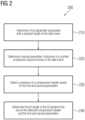
- Figure 2 illustrates a method 200 of determining a bit length of an IQ sample associated with a first data frame.
- the first data frame is transmitted over the user plane between the distributed unit 140 and the radio units (155 and 165) and is used for transmitting IQ data (i.e. I data and Q data).
- the first data frame includes I and Q data, the bitlength of the IQ data being unknown to the packet analyzer 110.
- the first data frame is based on eCPRI specifications on the transport layer and on ORAN specifications on the application layer.
- the application layer payload is based on IQ data format as mentioned ORAN specifications and this is wrapped in the transport layer payload which is in accordance with the eCPRI specifications.
- the first data frame includes fields as mentioned in the eCPRI and OR_AN specifications.
- the method 200 is implemented by the packet analyzer device 110.
- the packet analyzer device 110 determines a first parameter associated with a payload length of the first data frame.
- the first parameter is provided in a header of the first data frame.
- the data frame is based on eCPRI (Common Public Radio Interface) interface specifications.
- the payload length (also referred to as payload size) in specified in a common header in accordance with the eCPRI specifications.
- An example eCPRI common header format 300 is illustrated in figure 3 .
- the eCPRI common header format 300 includes a eCPRI protocol revision parameter 310 indicative of protocol version, reserved section 320 which includes one or more reserved bits in accordance to the eCPRI specifications, an eCPRI messages concatenation indicator 330, a eCPRI message type parameter 340 which indicates the type of services conveyed by the data frame and a eCPRI payload size parameter 350 which indicates the size in bytes of the payload part corresponding to the data frame. It does not include any padding bytes.
- the packet analyzer device 110 determines a second parameter indicative of a number of physical resource blocks in the first data frame.
- the second parameter is provided in the first data frame.
- the number of physical data blocks is provided as variable numPRBu of size 1 byte in the sixteenth octet of the data frame.
- the packet analyzer device 110 detects a presence of a compression header based on the first and second parameters. For example, the packet analyzer performs a modulo operation on the first parameter indicative of the payload size of the data frame, using the second parameter indicative of the number of physical resource blocks in the data frame, to check if the payload size is a multiple of the number of physical resource blocks. If the module operation returns a zero (i.e. the payload size is a multiple of the number of physical resource blocks), then there are no extra bytes and accordingly, the packet analyzer 110 determines that no compression header is present. However, if the module operation returns a reminder, (i.e. the payload size is not a multiple of the number of physical resource blocks), then the packet analyzer 110 determines that there is a compression header in the data frame.
- the packet analyzer device 110 determines the bit length of the IQ sample from one of the detected compression header and the first and second parameters.
- the bit length also referred to as bit width
- the data frame is based on ORAN IQ data frame format as specified in the ORAN specifications, and accordingly, the compression header is present in the seventeenth octet of the data frame.
- the bit length of the IQ sample is calculated from the first and second parameters.
- the bit length is between 6 - 16 bits
- the bit length is determined by iteratively calculating a multiple of a counter (which is increased by 1 each iteration), 2 (for I and Q data), 12 (since there are 12 IQ samples per physical resource block), dividing the result by 8 (to convert the result into bytes and compare the final result to a division of the first parameter (indicative of payload length) by the second parameter (indicative of number of physical resource blocks). Accordingly, when the above condition is met, the value of the counter is reflective of the bit length of the IQ sample.
- the IQ data may also include a compression parameter and accordingly, 1 byte is subtracted from the division of the first parameter by the second parameter prior to comparing the same with the value of the iteratively calculated multiple. This is illustrated using the logic provided below:
- the bitlength (also referred to as bit width) of the IQ sample of the first data frame may be determined automatically, without any manual intervention.
- the determined bitlength may be used in subsequent network analysis of the first data frame.
- the determined bit length may be used to check the configuration of the distributed unit and to verify if the bitlength as set in the configuration of the distributed unit matches with the bitlength as determined from the first data frame by the packet analyzer.
- determined bit length may be used to check the configuration of the radio unit and to verify if the bitlength as set in the configuration of the radio unit matches with the bitlength as determined from the first data frame by the packet analyzer.
- the actual I data and Q data IQ data
- the presence of compression parameter can be determined using the first and the second parameters as shown above.
- the value of the second parameter may not be reflective of the actual number of the physical resource blocks in the data frame.
- the packet analyzer device checks if the value of the second parameter as determined from the first data frame is equal to zero (a predefined value). Then, if the value of the second parameter is zero, the packet analyzer device 110 modifies the value of the second parameter, based on the sub carrier spacing and the bandwidth frequency associated with the first data frame.
- the packet analyzer 110 includes a look up table comprising a list of number of physical resource block values index against values of sub carrier spacing and the bandwidth frequency. Accordingly, based on the sub carrier spacing and the bandwidth frequency, the packet analyzer 110 device determines a value of number of physical resource block. For example, when the bandwidth frequency is 100Mz and sub carrier spacing is 30 kHz, the packet analyzer 110 device replaces the value of the second parameter with the value 273.
- the above method 200 is explained in relation to packet analyzer device 110, the above method may be realized in another device or a plurality of devices.
- the method 200 may be implemented in a network management device or a network analyzer which is configured to receive one or more data frames captured by a packet capture service.
- the present disclosure can take a form of a computer program product comprising program modules accessible from computer-usable or computer-readable medium storing program code for use by or in connection with one or more computers, processing units, or instruction execution system.
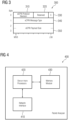
- the current disclosure describes a packet analyzer device 400 as shown in figure 4 .
- the packet analyzer device 400 is capable of or configured to determine a bit length of an IQ sample associated with a first data frame.
- the packet analyzer device 400 comprises a network interface 410 capable of intercepting or capturing one or more data frames transmitted between a distributed unit and at least one radio unit.
- the packet analyzer device 400 further includes one or more processors 420 connected to a memory module 430.
- the memory module 430 (also referred to as non-transitory storage medium 430) includes a plurality of instructions which when executed on the one or more processors 320, cause the one or more processors 420 to determine a first parameter associated with a payload length of the first data frame , determine a second parameter indicative of a number of physical resource blocks in the first data frame , detect a presence of a compression header based on the first and second parameters, and determine the bit length of the IQ sample from one of the detected compression header and the first and second parameters.
- the above-mentioned description in relation to method 200 applies to the determination of the bit length by the one or more processors 420 mentioned here.
- the one or more processors 420 are further configured to determine a presence of compression parameter based on the first and the second parameters. In another example, the one or more processors 420 are configured to extracting a value of the bit length of the IQ sample from the compression header upon detecting the presence of the compression header. In another example, the one or more processors 420 are further configured to compare a value of the second parameter against a predefined value and modifying the value of the second parameter based on the comparison, wherein the value of the second parameter is modified based on the sub carrier spacing and the bandwidth frequency associated with the first data frame.
- a computer-usable or computer-readable non-transitory storage medium can be any apparatus that can contain, store, communicate, propagate, or transport the program for use by or in connection with the instruction execution system, apparatus, or device.
- the medium can be electronic, magnetic, optical, electromagnetic, infrared, or semiconductor system (or apparatus or device) or a propagation mediums in and of themselves as signal carriers are not included in the definition of physical computer-readable medium include a semiconductor or solid state memory, magnetic tape, a removable computer diskette, random access memory (RAM), a read only memory (ROM), a rigid magnetic disk and optical disk such as compact disk read-only memory (CD-ROM), compact disk read/write, and DVD.
- RAM random access memory
- ROM read only memory
- CD-ROM compact disk read-only memory
- DVD compact disk read/write
Landscapes
- Engineering & Computer Science (AREA)
- Computer Networks & Wireless Communication (AREA)
- Signal Processing (AREA)
- Mobile Radio Communication Systems (AREA)
Claims (10)
- Procédé (200) de détermination de la longueur de bits d'un échantillon en phase et en quadrature, par exemple un échantillon IQ, associé à une première trame de données, le procédé (200) comprenant :
saisir une ou plusieurs trames de données entre une unité distribuée et une unité radio par un analyseur de paquets, la longueur de bits de l'échantillon IQ étant inconnue de l'analyseur de paquets, la une ou les plusieurs trames de données comprenant la première trame de données,a. déterminer (210) un premier paramètre associé à une longueur de données utiles de la première trame de données ;b. déterminer (220) un deuxième paramètre indiquant un nombre de blocs de ressources physiques dans la première trame de données ;c. détecter (230) la présence d'une entête de compression dans la première trame de données sur la base des premier et deuxième paramètres en effectuant, par l'analyseur de paquets, une opération modulo sur le premier paramètre indiquant la dimension de données utiles de la première trame de données, en utilisant le deuxième paramètre indiquant le nombre de blocs de ressources physiques dans la première trame de données, pour contrôler si la dimension de données utiles est un multiple du nombre de blocs de ressources physiques ; etd. déterminer (240) la longueur de bits de l'échantillon IQ à partir de l'entête de compression détectée et des premier et deuxième paramètres, et dans lequel la longueur de bits déterminée de l'échantillon IQ de la première trame de données est utilisée pour contrôler une configuration de l'une de l'unité distribuée et de l'unité radio. - Procédé suivant l'une quelconque des revendications précédentes, comprenant en outre déterminer la longueur de bits de l'échantillon IQ dans la première trame de données à partir de la une ou des plusieurs trames de données.
- Procédé suivant l'une quelconque des revendications précédentes, comprenant en outre si l'opération modulée retourne à zéro, alors il n'y a pas de d'octets supplémentaires et l'analyseur de paquets détermine qu'une entête de compression n'est pas présente,
si l'opération modulée retourne un reste, alors l'analyseur (110) de paquets détermine qu'il y a une entête de compression dans la première trame de données. - Procédé (200) suivant la revendication 1, comprenant en outre déterminer la présence d'un paramètre de compression sur la base des premier et deuxième paramètres.
- Procédé (200) suivant la revendication 1, dans lequel déterminer (240) la longueur de bits de l'échantillon IQ à partir de l'un de l'entête de compression détectée et des premier et deuxième paramètres comprend extraire de l'entête de compression détectée une valeur de la longueur de bits de l'échantillon IQ.
- Procédé (200) suivant la revendication 1, dans lequel le procédé (200) est mis en œuvre par un dispositif (110) d'analyseur de paquets, dans lequel l'analyseur (110) de paquets est configuré pour intercepter une ou plusieurs trames de données transmises entre une unité (140) distribuée et une unité (155) radio, la une ou les plusieurs trames de données comprenant la première trame de données.
- Procédé (200) suivant la revendication 1, dans lequel le procédé comprend en outre comparer une valeur du deuxième paramètre à une valeur définie à l'avance et modifier la valeur du deuxième paramètre sur la base de la comparaison, dans lequel la valeur du deuxième paramètre est modifiée sur la base de l'écart entre sous porteuses et de la fréquence de la largeur de bande associés à la première trame de données.
- Procédé suivant la revendication précédente, comprenant vérifier si la longueur de bits, telle que fixée dans la configuration de l'unité radio et/ou de l'unité distribuée, correspond à la longueur de bits, telle que déterminée à partir de la première trame de données par l'analyseur de paquets.
- Dispositif (400) d'analyseur de paquets apte à déterminer une longueur de bits d'un échantillon IQ associé à une première trame de données, le dispositif (400) d'analyseur de paquets fonctionnant pour effectuer les stades du procédé suivant l'une quelconque des revendications précédentes.
- Support (430) de mémoire non transitoire pour déterminer la longueur de bits d'un échantillon IQ associé à une première trame de réseau, le support (430) de mémoire non transitoire comprenant une pluralité d'instructions qui, lorsqu'elles sont exécutées sur un ou sur plusieurs processeurs (420), font que le un ou les plusieurs processeurs (420) exécutent les stades du procédé suivant l'une quelconque des revendications 1 à 8.
Applications Claiming Priority (1)
| Application Number | Priority Date | Filing Date | Title |
|---|---|---|---|
| PCT/IB2021/053450 WO2022229669A1 (fr) | 2021-04-27 | 2021-04-27 | Procédé destiné à déterminer une longueur de bits d'un échantillon iq |
Publications (3)
| Publication Number | Publication Date |
|---|---|
| EP4275344A1 EP4275344A1 (fr) | 2023-11-15 |
| EP4275344B1 true EP4275344B1 (fr) | 2024-09-04 |
| EP4275344C0 EP4275344C0 (fr) | 2024-09-04 |
Family
ID=75787150
Family Applications (1)
| Application Number | Title | Priority Date | Filing Date |
|---|---|---|---|
| EP21723384.0A Active EP4275344B1 (fr) | 2021-04-27 | 2021-04-27 | Procédé destiné à déterminer une longueur de bits d'un échantillon iq |
Country Status (4)
| Country | Link |
|---|---|
| US (1) | US12452148B2 (fr) |
| EP (1) | EP4275344B1 (fr) |
| CN (1) | CN117242753A (fr) |
| WO (1) | WO2022229669A1 (fr) |
Families Citing this family (2)
| Publication number | Priority date | Publication date | Assignee | Title |
|---|---|---|---|---|
| WO2025082617A1 (fr) * | 2023-10-20 | 2025-04-24 | Telefonaktiebolaget Lm Ericsson (Publ) | Envoi et traitement d'échantillons compressés |
| CN120857186A (zh) * | 2024-04-25 | 2025-10-28 | 华为技术有限公司 | 通信方法及通信装置 |
Family Cites Families (3)
| Publication number | Priority date | Publication date | Assignee | Title |
|---|---|---|---|---|
| US8005152B2 (en) * | 2008-05-21 | 2011-08-23 | Samplify Systems, Inc. | Compression of baseband signals in base transceiver systems |
| US8989088B2 (en) | 2011-01-07 | 2015-03-24 | Integrated Device Technology Inc. | OFDM signal processing in a base transceiver system |
| KR20230029664A (ko) * | 2020-06-30 | 2023-03-03 | 퀄컴 인코포레이티드 | 개방 라디오 액세스 네트워크 프론트홀을 위한 향상된 블록 부동 소수점 압축 |
-
2021
- 2021-04-27 US US18/288,572 patent/US12452148B2/en active Active
- 2021-04-27 WO PCT/IB2021/053450 patent/WO2022229669A1/fr not_active Ceased
- 2021-04-27 EP EP21723384.0A patent/EP4275344B1/fr active Active
- 2021-04-27 CN CN202180097564.XA patent/CN117242753A/zh active Pending
Also Published As
| Publication number | Publication date |
|---|---|
| US20240205114A1 (en) | 2024-06-20 |
| CN117242753A (zh) | 2023-12-15 |
| WO2022229669A1 (fr) | 2022-11-03 |
| US12452148B2 (en) | 2025-10-21 |
| EP4275344C0 (fr) | 2024-09-04 |
| EP4275344A1 (fr) | 2023-11-15 |
Similar Documents
| Publication | Publication Date | Title |
|---|---|---|
| USRE48134E1 (en) | Interceptor system for characterizing digital data in telecommunication system | |
| US11943050B2 (en) | PHY error indication messaging | |
| EP3307015B1 (fr) | Procédé et dispositif servant à une conversion de protocole | |
| CN103875206B (zh) | 一种数据传输方法和数据转发设备及系统 | |
| EP4049476B1 (fr) | Dispositif pour tester une station de base | |
| EP3713292B1 (fr) | Dispositif terminal, dispositif station de base, et procédé | |
| US20220201796A1 (en) | Communication apparatus, controller, system, and method | |
| WO2020171744A1 (fr) | Procédés et unités d'un système de station de base pour transmission sur des liens fronthaul | |
| CN112953674B (zh) | 一种速率匹配方法、网络设备以及用户设备 | |
| EP4275344B1 (fr) | Procédé destiné à déterminer une longueur de bits d'un échantillon iq | |
| EP3713293B1 (fr) | Dispositif terminal, appareil de station de base et procédés | |
| CN111133792B (zh) | 基站设备和数据分组发送方法 | |
| US11310352B2 (en) | Joint use of ethernet header compression and robust header compression | |
| US20220007151A1 (en) | Relay device, relay method, and relay program | |
| TW200525967A (en) | A reconfigurable frame parser | |
| EP3468298B1 (fr) | Procédé et dispositif de transmission de données et dispositif et système de conversion photoélectrique | |
| EP3439358A1 (fr) | Procédé de traitement de service vocal et station de base | |
| CN114024598B (zh) | 前传接口测试方法及装置 | |
| EP4369616A2 (fr) | Appareil et procédés pour amorçage de g3-plc dans des réseaux hybrides | |
| RU2565498C2 (ru) | Способ уменьшения передачи служебных сигналов в системах радиосвязи | |
| CN106454754B (zh) | 数据传输方法及宽带集群系统 | |
| CN114124323A (zh) | 一种随机接入方法、装置及系统、存储介质、电子装置 | |
| CN114339840B (zh) | 5g分流接入网系统、通信系统及5g通信分流方法 | |
| Choi et al. | Software implementation of O-RAN fronthaul interface | |
| US10880753B1 (en) | Master base station and resourece allocation indicating method |
Legal Events
| Date | Code | Title | Description |
|---|---|---|---|
| STAA | Information on the status of an ep patent application or granted ep patent |
Free format text: STATUS: UNKNOWN |
|
| STAA | Information on the status of an ep patent application or granted ep patent |
Free format text: STATUS: THE INTERNATIONAL PUBLICATION HAS BEEN MADE |
|
| PUAI | Public reference made under article 153(3) epc to a published international application that has entered the european phase |
Free format text: ORIGINAL CODE: 0009012 |
|
| STAA | Information on the status of an ep patent application or granted ep patent |
Free format text: STATUS: REQUEST FOR EXAMINATION WAS MADE |
|
| 17P | Request for examination filed |
Effective date: 20230811 |
|
| AK | Designated contracting states |
Kind code of ref document: A1 Designated state(s): AL AT BE BG CH CY CZ DE DK EE ES FI FR GB GR HR HU IE IS IT LI LT LU LV MC MK MT NL NO PL PT RO RS SE SI SK SM TR |
|
| REG | Reference to a national code |
Ipc: H04L0043022000 Ref country code: DE Ref legal event code: R079 Ref document number: 602021018310 Country of ref document: DE Free format text: PREVIOUS MAIN CLASS: H04L0043180000 Ipc: H04L0043022000 |
|
| GRAP | Despatch of communication of intention to grant a patent |
Free format text: ORIGINAL CODE: EPIDOSNIGR1 |
|
| STAA | Information on the status of an ep patent application or granted ep patent |
Free format text: STATUS: GRANT OF PATENT IS INTENDED |
|
| RIC1 | Information provided on ipc code assigned before grant |
Ipc: H04L 43/062 20220101ALI20240416BHEP Ipc: H04L 43/026 20220101ALI20240416BHEP Ipc: H04L 43/022 20220101AFI20240416BHEP |
|
| DAV | Request for validation of the european patent (deleted) | ||
| DAX | Request for extension of the european patent (deleted) | ||
| INTG | Intention to grant announced |
Effective date: 20240507 |
|
| RIN1 | Information on inventor provided before grant (corrected) |
Inventor name: KAIKKONEN, JAAKKO |
|
| GRAS | Grant fee paid |
Free format text: ORIGINAL CODE: EPIDOSNIGR3 |
|
| GRAA | (expected) grant |
Free format text: ORIGINAL CODE: 0009210 |
|
| STAA | Information on the status of an ep patent application or granted ep patent |
Free format text: STATUS: THE PATENT HAS BEEN GRANTED |
|
| AK | Designated contracting states |
Kind code of ref document: B1 Designated state(s): AL AT BE BG CH CY CZ DE DK EE ES FI FR GB GR HR HU IE IS IT LI LT LU LV MC MK MT NL NO PL PT RO RS SE SI SK SM TR |
|
| REG | Reference to a national code |
Ref country code: GB Ref legal event code: FG4D |
|
| REG | Reference to a national code |
Ref country code: CH Ref legal event code: EP |
|
| REG | Reference to a national code |
Ref country code: IE Ref legal event code: FG4D |
|
| REG | Reference to a national code |
Ref country code: DE Ref legal event code: R096 Ref document number: 602021018310 Country of ref document: DE |
|
| U01 | Request for unitary effect filed |
Effective date: 20240904 |
|
| U07 | Unitary effect registered |
Designated state(s): AT BE BG DE DK EE FI FR IT LT LU LV MT NL PT RO SE SI Effective date: 20240911 |
|
| PG25 | Lapsed in a contracting state [announced via postgrant information from national office to epo] |
Ref country code: NO Free format text: LAPSE BECAUSE OF FAILURE TO SUBMIT A TRANSLATION OF THE DESCRIPTION OR TO PAY THE FEE WITHIN THE PRESCRIBED TIME-LIMIT Effective date: 20241204 |
|
| PG25 | Lapsed in a contracting state [announced via postgrant information from national office to epo] |
Ref country code: PL Free format text: LAPSE BECAUSE OF FAILURE TO SUBMIT A TRANSLATION OF THE DESCRIPTION OR TO PAY THE FEE WITHIN THE PRESCRIBED TIME-LIMIT Effective date: 20240904 Ref country code: GR Free format text: LAPSE BECAUSE OF FAILURE TO SUBMIT A TRANSLATION OF THE DESCRIPTION OR TO PAY THE FEE WITHIN THE PRESCRIBED TIME-LIMIT Effective date: 20241205 |
|
| PG25 | Lapsed in a contracting state [announced via postgrant information from national office to epo] |
Ref country code: HR Free format text: LAPSE BECAUSE OF FAILURE TO SUBMIT A TRANSLATION OF THE DESCRIPTION OR TO PAY THE FEE WITHIN THE PRESCRIBED TIME-LIMIT Effective date: 20240904 |
|
| PG25 | Lapsed in a contracting state [announced via postgrant information from national office to epo] |
Ref country code: ES Free format text: LAPSE BECAUSE OF FAILURE TO SUBMIT A TRANSLATION OF THE DESCRIPTION OR TO PAY THE FEE WITHIN THE PRESCRIBED TIME-LIMIT Effective date: 20240904 Ref country code: RS Free format text: LAPSE BECAUSE OF FAILURE TO SUBMIT A TRANSLATION OF THE DESCRIPTION OR TO PAY THE FEE WITHIN THE PRESCRIBED TIME-LIMIT Effective date: 20241204 |
|
| PG25 | Lapsed in a contracting state [announced via postgrant information from national office to epo] |
Ref country code: RS Free format text: LAPSE BECAUSE OF FAILURE TO SUBMIT A TRANSLATION OF THE DESCRIPTION OR TO PAY THE FEE WITHIN THE PRESCRIBED TIME-LIMIT Effective date: 20241204 Ref country code: PL Free format text: LAPSE BECAUSE OF FAILURE TO SUBMIT A TRANSLATION OF THE DESCRIPTION OR TO PAY THE FEE WITHIN THE PRESCRIBED TIME-LIMIT Effective date: 20240904 Ref country code: NO Free format text: LAPSE BECAUSE OF FAILURE TO SUBMIT A TRANSLATION OF THE DESCRIPTION OR TO PAY THE FEE WITHIN THE PRESCRIBED TIME-LIMIT Effective date: 20241204 Ref country code: HR Free format text: LAPSE BECAUSE OF FAILURE TO SUBMIT A TRANSLATION OF THE DESCRIPTION OR TO PAY THE FEE WITHIN THE PRESCRIBED TIME-LIMIT Effective date: 20240904 Ref country code: GR Free format text: LAPSE BECAUSE OF FAILURE TO SUBMIT A TRANSLATION OF THE DESCRIPTION OR TO PAY THE FEE WITHIN THE PRESCRIBED TIME-LIMIT Effective date: 20241205 Ref country code: ES Free format text: LAPSE BECAUSE OF FAILURE TO SUBMIT A TRANSLATION OF THE DESCRIPTION OR TO PAY THE FEE WITHIN THE PRESCRIBED TIME-LIMIT Effective date: 20240904 |
|
| PG25 | Lapsed in a contracting state [announced via postgrant information from national office to epo] |
Ref country code: IS Free format text: LAPSE BECAUSE OF FAILURE TO SUBMIT A TRANSLATION OF THE DESCRIPTION OR TO PAY THE FEE WITHIN THE PRESCRIBED TIME-LIMIT Effective date: 20250104 |
|
| PG25 | Lapsed in a contracting state [announced via postgrant information from national office to epo] |
Ref country code: SM Free format text: LAPSE BECAUSE OF FAILURE TO SUBMIT A TRANSLATION OF THE DESCRIPTION OR TO PAY THE FEE WITHIN THE PRESCRIBED TIME-LIMIT Effective date: 20240904 |
|
| PG25 | Lapsed in a contracting state [announced via postgrant information from national office to epo] |
Ref country code: CZ Free format text: LAPSE BECAUSE OF FAILURE TO SUBMIT A TRANSLATION OF THE DESCRIPTION OR TO PAY THE FEE WITHIN THE PRESCRIBED TIME-LIMIT Effective date: 20240904 |
|
| PG25 | Lapsed in a contracting state [announced via postgrant information from national office to epo] |
Ref country code: SK Free format text: LAPSE BECAUSE OF FAILURE TO SUBMIT A TRANSLATION OF THE DESCRIPTION OR TO PAY THE FEE WITHIN THE PRESCRIBED TIME-LIMIT Effective date: 20240904 |
|
| U20 | Renewal fee for the european patent with unitary effect paid |
Year of fee payment: 5 Effective date: 20250417 |
|
| PLBE | No opposition filed within time limit |
Free format text: ORIGINAL CODE: 0009261 |
|
| STAA | Information on the status of an ep patent application or granted ep patent |
Free format text: STATUS: NO OPPOSITION FILED WITHIN TIME LIMIT |
|
| 26N | No opposition filed |
Effective date: 20250605 |
|
| REG | Reference to a national code |
Ref country code: CH Ref legal event code: H13 Free format text: ST27 STATUS EVENT CODE: U-0-0-H10-H13 (AS PROVIDED BY THE NATIONAL OFFICE) Effective date: 20251125 |
|
| PG25 | Lapsed in a contracting state [announced via postgrant information from national office to epo] |
Ref country code: MC Free format text: LAPSE BECAUSE OF FAILURE TO SUBMIT A TRANSLATION OF THE DESCRIPTION OR TO PAY THE FEE WITHIN THE PRESCRIBED TIME-LIMIT Effective date: 20240904 |
|
| GBPC | Gb: european patent ceased through non-payment of renewal fee |
Effective date: 20250427 |
|
| PG25 | Lapsed in a contracting state [announced via postgrant information from national office to epo] |
Ref country code: GB Free format text: LAPSE BECAUSE OF NON-PAYMENT OF DUE FEES Effective date: 20250427 |
|
| PG25 | Lapsed in a contracting state [announced via postgrant information from national office to epo] |
Ref country code: CH Free format text: LAPSE BECAUSE OF NON-PAYMENT OF DUE FEES Effective date: 20250430 |
|
| PG25 | Lapsed in a contracting state [announced via postgrant information from national office to epo] |
Ref country code: IE Free format text: LAPSE BECAUSE OF NON-PAYMENT OF DUE FEES Effective date: 20250427 |