EP4289770A1 - Système et procédé de groupement et de palettisation de fûts - Google Patents
Système et procédé de groupement et de palettisation de fûts Download PDFInfo
- Publication number
- EP4289770A1 EP4289770A1 EP23168196.6A EP23168196A EP4289770A1 EP 4289770 A1 EP4289770 A1 EP 4289770A1 EP 23168196 A EP23168196 A EP 23168196A EP 4289770 A1 EP4289770 A1 EP 4289770A1
- Authority
- EP
- European Patent Office
- Prior art keywords
- containers
- grouping station
- relative arrangement
- grouping
- pallet
- Prior art date
- Legal status (The legal status is an assumption and is not a legal conclusion. Google has not performed a legal analysis and makes no representation as to the accuracy of the status listed.)
- Pending
Links
Images

Classifications
-
- B—PERFORMING OPERATIONS; TRANSPORTING
- B65—CONVEYING; PACKING; STORING; HANDLING THIN OR FILAMENTARY MATERIAL
- B65G—TRANSPORT OR STORAGE DEVICES, e.g. CONVEYORS FOR LOADING OR TIPPING, SHOP CONVEYOR SYSTEMS OR PNEUMATIC TUBE CONVEYORS
- B65G47/00—Article or material-handling devices associated with conveyors; Methods employing such devices
- B65G47/02—Devices for feeding articles or materials to conveyors
- B65G47/04—Devices for feeding articles or materials to conveyors for feeding articles
- B65G47/06—Devices for feeding articles or materials to conveyors for feeding articles from a single group of articles arranged in orderly pattern, e.g. workpieces in magazines
- B65G47/08—Devices for feeding articles or materials to conveyors for feeding articles from a single group of articles arranged in orderly pattern, e.g. workpieces in magazines spacing or grouping the articles during feeding
- B65G47/084—Devices for feeding articles or materials to conveyors for feeding articles from a single group of articles arranged in orderly pattern, e.g. workpieces in magazines spacing or grouping the articles during feeding grouping articles in a predetermined 2-dimensional pattern
-
- B—PERFORMING OPERATIONS; TRANSPORTING
- B65—CONVEYING; PACKING; STORING; HANDLING THIN OR FILAMENTARY MATERIAL
- B65G—TRANSPORT OR STORAGE DEVICES, e.g. CONVEYORS FOR LOADING OR TIPPING, SHOP CONVEYOR SYSTEMS OR PNEUMATIC TUBE CONVEYORS
- B65G57/00—Stacking of articles
- B65G57/02—Stacking of articles by adding to the top of the stack
- B65G57/16—Stacking of articles of particular shape
- B65G57/20—Stacking of articles of particular shape three-dimensional [3D], e.g. cubiform or cylindrical
- B65G57/22—Stacking of articles of particular shape three-dimensional [3D], e.g. cubiform or cylindrical in layers each of predetermined arrangement
- B65G57/24—Stacking of articles of particular shape three-dimensional [3D], e.g. cubiform or cylindrical in layers each of predetermined arrangement the layers being transferred as a whole, e.g. on pallets
Definitions
- the present invention relates to a grouper and a system for manipulating and palletizing containers with such a grouper.
- the invention further relates to a method for grouping and palletizing containers.
- the containers or piece goods transported one after the other must each be subjected to different displacement and/or rotational movements, which can be done, for example, with so-called portal gripping systems or also with Articulated arm gripping systems can be done.
- a movement space such as a transfer table or in the area of a wide belt conveyor
- the articles, containers or piece goods conveyed by a horizontal conveyor are individually captured by the grippers and moved and/or rotated to a defined position, if necessary with simultaneous further transport in the horizontal conveying direction .
- multi-phase movements are required for every detection of a container or piece of goods: the gripper arm must be on the container or piece of goods must be lowered before the gripping tongs close and can grasp the container or piece of goods. A sliding and/or rotating movement then takes place in the horizontal direction before the gripper is opened again and lifted upwards to release the piece goods or containers. Due to the rapidly clocked multitude of such movement sequences, it has proven to be advantageous to arrange two or more such arrangements and the handling and/or manipulation devices assigned to them one behind the other, possibly fed by two or more parallel feed conveyor belts with articles, piece goods or items conveyed thereon in rows bound.
- these two or more than two such arrangements can work together to produce the desired layer pattern from several containers.
- these two or even more than two arrangements are arranged one behind the other in a direction of movement of the containers and together form a grouping station.
- containers can be fed to the respective grouping station in just three parallel rows, which then brings the containers together in a predetermined arrangement, which is coordinated with a pallet position.
- An object of the invention is therefore to provide a development which has the disadvantages mentioned at least to a reduced extent.
- the invention relates to a grouper for containers.
- the containers can each contain several items that are covered by packaging material, such as flat ones Packaging blanks, strapping and/or thermoplastic packaging material are held together.
- the grouper includes at least a first grouping station and at least a second grouping station. It is provided that the at least one second grouping station is located above the at least one first grouping station or that the at least one second grouping station is located above the at least one first grouping station when the grouper is in operation. Thus, the at least one second grouping station can be at a higher level in the vertical direction compared to the at least one first grouping station when the grouper is in operation.
- the grouping stations can each transfer several containers into a relative arrangement corresponding to a pallet layer to be formed from the respective multiple containers by selectively rotating containers and/or displacing them obliquely to their previous direction of movement. It is therefore conceivable that individual containers of the several containers intended for the respective relative arrangement are rotated without these individual containers being offset obliquely to their previous direction of movement.
- individual containers of the several containers intended for the respective relative arrangement are offset obliquely to their previous direction of movement without these individual containers being rotated. It can also be the case that individual containers of the several containers intended for the respective relative arrangement are rotated and offset obliquely to their previous direction of movement. Furthermore, individual containers of the several containers can be moved through the respective grouping station in a horizontal direction without these individual containers of the several containers being rotated by the respective grouping station or offset obliquely to their previous direction of movement.
- the grouping stations bring individual of the several containers into the corresponding relative arrangement by rotating and/or displacing them obliquely to their previous direction of movement, whereas further containers of the several containers can be brought into the corresponding relative arrangement without rotating and without oblique displacement by means of the respective grouping station in the horizontal direction be moved because these additional containers of the several containers are already in a corresponding position are located, which is suitable for transferring the respective several containers into the relative arrangement.
- Embodiments in which the at least one second grouping station stands on the at least one first grouping station or in which the at least one second grouping station is carried by the at least one first grouping station have proven successful.
- embodiments have proven useful in which the at least one second grouping station is located above the at least one first grouping station in such a way that the at least one first grouping station and the at least one second grouping station are aligned with one another in the vertical direction.
- the at least one first grouping station may include a frame structure that defines a periphery of the at least one first grouping station.
- the at least one second grouping station can also include a frame structure which defines a periphery of the at least one second grouping station.
- the frame structure of the at least one second grouping station can stand on the frame structure of the at least one first grouping station.
- the frame structure of the at least one first grouping station is in surface contact with the frame structure of the at least one second grouping station.
- Embodiments in which the frame structure of the at least one first grouping station is attached to the frame structure of the at least one second grouping station have proven successful. For this purpose, screw connections, snap connections and/or other connections may be provided.
- the at least one first grouping station and/or the at least one second grouping station comprise a delta kinematics robot or several delta kinematics robots, which are used to transfer a plurality of containers into a relative arrangement corresponding to a pallet layer to be formed from the respective several containers are trained.
- the invention also relates to a system for manipulating and palletizing containers.
- the system includes a grouper according to an embodiment of the previous description.
- the system further comprises a specific palletizer, which is used to receive containers in the relative arrangement from the at least one first grouping station and to receive Containers are formed in the relative arrangement of the at least one second grouping station and can place containers received in the relative arrangement as a pallet layer on an assigned pallet.
- the specific palletizer can therefore be assigned to both the at least one first grouping station and the at least one second grouping station.
- the particular palletizer may include a transfer unit and a loading unit that are vertically movable relative to each other.
- the specific palletizer can be configured and designed in such a way that the specific palletizer receives containers in the relative arrangement from both the at least one first grouping station and from the at least one second grouping station via its transfer unit, transfers them to its loading unit and via its loading unit as a pallet layer can be placed on an assigned pallet.
- the invention also relates to a method for grouping and palletizing containers with a system according to one of the previously described embodiments.
- several containers are brought into a relative arrangement via the grouper in accordance with a pallet layer to be formed from the respective several containers.
- the respective multiple containers are received in the relative arrangement by the specific palletizer and placed as a pallet layer on an assigned pallet.
- the specific palletizer includes a transfer unit and a loading unit. It may be that the transfer unit receives containers in the relative arrangement from the at least one first grouping station and transfers them to the loading unit, which deposits the containers received in the relative arrangement from the at least one first grouping station as a pallet layer on an assigned pallet. It is provided here that the transfer unit and the loading unit are moved in the vertical direction relative to one another in order to transfer the containers received in the relative arrangement from the at least one first grouping station.
- the transfer unit is moved in the direction of the at least one second grouping station and containers in the relative arrangement are moved from the at least receives a second grouping station and transfers them to the loading unit, which deposits the containers received in the relative arrangement from the at least one second grouping station as a pallet layer on an assigned pallet.
- the transfer unit In order to move the transfer unit in the direction of the at least one second grouping station, the transfer unit can be raised in the vertical direction along a lifting column on which the transfer unit is arranged. It may be that the transfer unit comprises at least one slider which carries out an infeed movement and thereby centers the containers received in the relative arrangement before the transfer unit transfers the containers received in the relative arrangement to the loading unit.
- transfer unit and the loading unit are moved in the vertical direction relative to one another in order to transfer the containers received in the relative arrangement from the at least one second grouping station.
- a plurality of first containers are transferred via the at least one first grouping station into a relative arrangement corresponding to a pallet layer to be formed from the respective plurality of first containers.
- several second containers are transferred into a relative arrangement corresponding to a pallet layer to be formed from the respective several second containers, with the first containers differing from the second containers in terms of a number and/or or type of items that are part of the respective container.
- the specific palletizer both receives several first containers in the relative arrangement from the at least one first grouping station and places them as a pallet layer on an assigned pallet, as well as receives several second containers in the relative arrangement from the at least one second grouping station and placed as another pallet layer on the same pallet. This allows mixed pallets to be produced in a simple and uncomplicated manner.
- the first containers differ from the second containers in terms of their type, with the first containers being containers whose articles are each formed by beverage cans and the second containers being such containers , whose articles are each formed by beverage bottles. It may also be that the first Containers differ from the second containers in terms of their type, the first containers being those containers whose articles are formed by beverage containers with a first drink and the second containers being those containers whose articles are formed by beverage containers a second drink that differs from the first drink.
- containers are fed to the grouper in more than three parallel rows, with individual of the more than three parallel rows being assigned to the at least one first grouping station and the remaining rows of the more than three parallel rows being assigned to the at least one second grouping station.
- the specific palletizer preferably automatically suspends the receipt of containers from this grouping station at least until the malfunction is rectified and continues to operate containers in the relative arrangement of the trouble-free operated at least one first grouping station or at least one second grouping station receives and deposits it as a pallet layer on an assigned pallet.
- the specific palletizer and the grouper can therefore be operatively connected to one another via a control and/or regulating device in order to enable the receipt of containers from this grouping station in the event of a malfunction of the at least one first grouping station or the at least one second grouping station at least until the malfunction is eliminated to automatically suspend and, with continued operation, to receive containers in the relative arrangement from the trouble-free operated at least one first grouping station or at least one second grouping station and to deposit them as a pallet layer on an assigned pallet.
- the specific palletizer and the grouper are operated over a certain period of time in a first operating mode, in which the specific palletizer receives the respective several containers in the relative arrangement exclusively from the at least one first grouping station and as a pallet layer on an assigned pallet discontinues. Furthermore, the specific palletizer and the grouper can then be operated in a second operating mode, in which the specific palletizer receives the respective multiple containers in the relative arrangement exclusively from the at least one second grouping station and deposits them as a pallet layer on an assigned pallet.
- Such embodiments have a high degree of flexibility since the at least one first grouping station and the at least one second grouping station can be adapted to different containers to be manipulated. Due to the uncomplicated switching between the different operating modes described, the grouper can be easily adapted to different containers to be manipulated without having to carry out complex conversion work on the grouper. This also prevents the grouper from coming to a standstill for a certain period of time.
- the Fig. 1 shows a schematic view of an embodiment of a grouper 1 according to the invention and a system 10 according to the invention for manipulating and palletizing containers.
- the containers In order to be able to place several stacked layers of containers on a pallet, the containers must first be brought into a relative orientation to one another, which corresponds to their orientation or orientation as a layer on the respective pallet.
- Such layers are preferably to be formed in such a way that, if possible, there are no gaps or gaps of only small dimensions between adjacent containers in order to be able to arrange a large number of containers on the respective pallet.
- the respective relative arrangement of containers in a respective pallet layer is known to a control and/or regulating device S. Corresponding information about this is thus stored on the control and/or regulating device S.
- all containers that are to be placed on a pallet in a stacked arrangement are first moved in parallel rows via a feed device 20 and fed to the grouper 1.
- the feed device 20 can have conveyor belts or other conveyor devices in order to feed the containers to the grouper 1 in several parallel rows.
- the grouper 5, which is connected to the control and/or regulating device S, is designed to transfer several containers into a relative arrangement corresponding to a pallet layer to be formed from the respective several containers.
- the grouper 1 is connected to the previously mentioned control and/or regulating device S, which has information about a relative arrangement corresponding to a pallet layer to be formed from the respective several containers. Like it Fig. 1 As can be seen, the grouper 1 is formed from a first grouping station 3 and a second grouping station 5. The second grouping station 5 is located above the first grouping station 3 or is arranged in the vertical direction above the first grouping station 5. The grouper 1 can therefore also be set up in small rooms, since the grouper 1 is very compact and requires little space.
- the first grouping station 3 and the second grouping station 5 can be designed as modules and have a frame construction. The frame structure of the second grouping station 5 can be placed on the frame structure of the first grouping station 3, so that the second grouping station 5 is carried by the first grouping station 5.
- Both the first grouping station 3 and the second grouping station 5 can each transfer containers into a relative arrangement that corresponds to the relative arrangement in the pallet layer.
- Part of both grouping stations 3 and 5 is a respective manipulator, with the help of which the mentioned relative arrangement of the containers is produced.
- Each grouping station 3 or 5 also includes a horizontal conveyor device which moves the respective containers while the respective manipulator transfers the containers into the described relative arrangement to one another.
- the containers can thus be moved uninterruptedly in the horizontal direction via the respective grouping station 3 or 5 when the respective manipulator of the respective grouping station 3 or 5 transfers the respective several containers into the relative arrangement.
- a manipulator can be designed, for example, as a delta kinematics robot, as a gantry robot or as an articulated arm robot.
- the reference number 50 denotes in the Fig. 1 a specific palletizer.
- This particular palletizer 50 can receive containers in the relative arrangement from both the first grouping station 3 and the second grouping station 5 and then as a pallet layer on an in Fig. 1 Do not place with the pallet shown.
- the specific palletizer 50 includes a transfer unit 56, which is arranged on a first lifting column 52 and can be raised in the vertical direction along the first lifting column 52 and lowered in the vertical direction. By raising and lowering in the vertical direction, the transfer unit 56 can thus switch back and forth between the first grouping station 3 and the second grouping station 5.
- the specific palletizer 50 includes a loading unit 58, which is arranged on a second lifting column 54 and can be raised in the vertical direction along the second lifting column 54 and lowered in the vertical direction.
- Containers in the relative arrangement are received by the grouper 1 via the transfer unit 56.
- the transfer unit 56 then transfers the containers received in the relative arrangement to the loading unit 58, which can place the transferred containers on a pallet. If containers are to be received in the relative arrangement via the specific palletizer 50 and brought to the pallet, the transfer unit 56 and the loading unit 58 are at least temporarily moved relative to one another in the vertical direction. Like it Fig. 1 As can be seen, the first lifting column 52 reaches both the first grouping station 3 and the second grouping station 5 in the vertical direction. Thus, in a first step, the specific palletizer 50 can first receive containers in the relative arrangement from the first grouping station 3 via the transfer unit 56 and hand them over to the loading unit 58.
- the transfer unit 56 can be moved in the vertical direction along the first lifting column 52 to the second grouping station 5 in order to receive containers again in the relative arrangement from there.
- the loading unit 58 moves along the second lifting column 54 in the direction of the transfer unit 56.
- the transfer unit 56 transfers the containers that have already been received by the grouper 1 in the relative arrangement to the Loading unit 58, which in turn places these containers as a layer or pallet layer on an assigned pallet.
- Such a grouper 1 which includes a first grouping station 3 and a second grouping station 5 arranged above the first grouping station 3, results in numerous advantages in practice with regard to the performance and flexibility of the entire system 10.
- the specific palletizer 50 can alternately receive containers in the relative arrangement from the first grouping station 3 and the second grouping station 5, move them towards a respective pallet and place them on the respective pallet.
- Such embodiments have high throughput. While one of the two grouping stations 3 or 5 transfers an already formed relative arrangement of containers to the specific palletizer 50, the further grouping station 3 or 5 can already form a new relative arrangement of containers and send this to the specific palletizer 50 in a subsequent step hand over.
- the grouper 1 has a compact structure, since the second grouping station 5 is arranged above the first grouping station 3. Even when space is limited, palletizing with a high throughput is achieved. Since the specific palletizer 50 can be assigned to both grouping stations 3 and 5 with such a structure of a grouper 1, no further transfer mechanism is required in order to transfer an already formed relative arrangement of containers from the grouper 1 to the specific palletizer 50. In the relative arrangement, the containers can be received directly by the specific palletizer 50 from both the first grouping station 3 and the second grouping station 5, without an additional transfer device being arranged between the specific palletizer 50 and the grouping stations 3 and 5, respectively. The specific palletizer 50 therefore follows immediately after the grouper 1, without any further working device being arranged between the specific palletizer 50 and the grouper 1.
- the system 10 according to the exemplary embodiment Fig. 1 is also able to create so-called mixed palettes.
- a mixed pallet there can be first containers and second containers, with the first containers from the second containers with regard to the number and/or type of items that are part of the respective container.
- Mixed pallets are known to those skilled in the art and for this reason all possible variations will not be explained further here.
- first containers only include beverage cans as items and second containers only include beverage bottles as items.
- articles of a first container are formed by beverage bottles in which a first beverage is contained.
- articles of a second container are formed by beverage bottles in which a second beverage is contained that differs from the first beverage.
- the system 10 can work in a second operating mode at the instigation of the control and/or regulating device S.
- first containers are provided to the first grouping station 3 via a feed device and second containers, which differ from the first containers, are provided to the second grouping station 5 via a feed device. Furthermore, in such a second operating mode it is also provided that first supplied containers are manipulated via the first grouping station 3 and second supplied containers are manipulated via the second grouping station 5, whereby the first containers differ from the second containers, as already mentioned above .
- the palletizer 50 alternately picks up containers in the relative arrangement from the first grouping station 3 and the second grouping station 5 in accordance with the previous description of the first operating mode. Since different containers are brought into their relative arrangement via the first grouping station 3 and the second grouping station 5, the palletizer 50 forms a mixed pallet when the palletizer 50 collects the containers picked up from the first grouping station 3 and the second grouping station 5 in their respective relative arrangement placed on the assigned pallet as the respective pallet layer.
- the first grouping station 3 can, for example, manipulate containers that only contain beverage cans.
- the second grouping station 5 can, for example, manipulate containers that only contain beverage bottles as items. Since the palletizer 50 alternately picks up containers from the two grouping stations 3 and 5 and then deposits them as a layer of pallets on the respective pallet, Mixed pallets can be formed in a simple manner using the system 10. According to the previous description of the first operating mode, the system 10 continues to have an uncomplicated and compact structure.
- the system 10 is also designed to automatically switch to a third operating mode if necessary. Such an automatic change is initiated via the control and/or regulating device S, if this should be necessary.
- a sensor system 6 which in the present case can be designed in particular as an optical detection device or as a camera 7.
- the control and/or regulating device S can use the sensor system 6 or the camera 7 to check whether the grouping stations 3 or 5 produce relative arrangements of containers that meet specified target criteria.
- control and/or regulating device S If the control and/or regulating device S detects an error as part of such a check or if the control and/or regulating device S concludes that there is a fault in one of the two grouping stations 3 and 5 due to an identified error in the relative arrangement of containers , the control and/or regulating device S can temporarily shut down the respective grouping station 3 or 5.
- the further grouping station 3 or 5 which operates trouble-free, can continue to be operated via the control and/or regulating device S.
- the specific palletizer 50 is controlled by the control and / or regulating device S in such a way that the specific palletizer 50 only packs in the relative arrangement of the respective grouping station 3 or 5 picks up, which continues to work without any problems.
- a clock speed of the specific palletizer 50 that has been designed to accept containers in the relative arrangement can be adjusted for this purpose via the control and / or regulating device S.
- palletizing can be continued using the system 10 even if one of the two grouping stations 3 and 5 has a fault.
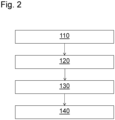
- the Fig. 2 shows individual steps in the flowchart as they can be carried out individually or in accordance with Fig. 2
- the combination shown can be provided in various embodiments of the method 100 according to the invention.
- the method 100 according to the exemplary embodiment Fig. 2 can be done using the previous Fig. 1 described system 10 can be implemented or carried out.
- a grouper 1 via a feed device 20 containers are provided, which are intended for palletization.
- the grouper 1 includes a first grouping station 3 and a second grouping station 5, which is located above the first grouping station 3.
- 3 containers are brought into a relative arrangement corresponding to a pallet layer to be formed from the respective several containers via the first grouping station and are received by a specific palletizer 50 or handed over to a specific palletizer 50.
- step 130 it is provided that the specific palletizer 50 moves the containers received from the first grouping station 3 towards a pallet and deposits them on the pallet as a pallet layer.
- step 130 at the same time as this movement, further containers are brought into a relative arrangement corresponding to a pallet layer to be formed from the respective further containers via the second grouping station 5, which is located above the first grouping station 3, and made available to the palletizer 50 for receipt.
- the palletizer 50 finally accepts the additional containers in the relative arrangement from the second grouping station 5, which is located above the first grouping station 3, moves these additional containers towards a pallet and places these additional containers on the previous one the pallet layer offset from the pallet.
Landscapes
- Engineering & Computer Science (AREA)
- Mechanical Engineering (AREA)
- Stacking Of Articles And Auxiliary Devices (AREA)
Applications Claiming Priority (1)
| Application Number | Priority Date | Filing Date | Title |
|---|---|---|---|
| DE102022114569.7A DE102022114569A1 (de) | 2022-06-09 | 2022-06-09 | System und Verfahren zum Gruppieren und Palettieren von Gebinden |
Publications (1)
| Publication Number | Publication Date |
|---|---|
| EP4289770A1 true EP4289770A1 (fr) | 2023-12-13 |
Family
ID=86052336
Family Applications (1)
| Application Number | Title | Priority Date | Filing Date |
|---|---|---|---|
| EP23168196.6A Pending EP4289770A1 (fr) | 2022-06-09 | 2023-04-17 | Système et procédé de groupement et de palettisation de fûts |
Country Status (3)
| Country | Link |
|---|---|
| EP (1) | EP4289770A1 (fr) |
| CN (1) | CN220764856U (fr) |
| DE (1) | DE102022114569A1 (fr) |
Families Citing this family (1)
| Publication number | Priority date | Publication date | Assignee | Title |
|---|---|---|---|---|
| DE102024109725A1 (de) * | 2024-04-08 | 2025-10-09 | Krones Aktiengesellschaft | Palettierverfahren und damit hergestellter Palettenstapel |
Citations (6)
| Publication number | Priority date | Publication date | Assignee | Title |
|---|---|---|---|---|
| CH678616A5 (en) * | 1990-06-05 | 1991-10-15 | Sig Schweiz Industrieges | Transfer device for biscuit or confectionary packaging machine - has several coaxial discs fitted to common base each supporting radial arm with attached gripper |
| JPH05317999A (ja) * | 1992-05-22 | 1993-12-03 | Honda Motor Co Ltd | パネルの自動積込み装置 |
| US20060182545A1 (en) * | 2005-01-14 | 2006-08-17 | Ray Christopher A | Vertically staggered pallet stacking assembly line and method |
| WO2009011634A1 (fr) | 2007-07-13 | 2009-01-22 | Lars Erik Trygg | Appareil et procédé de groupage d'unités |
| EP2821187A2 (fr) * | 2013-07-01 | 2015-01-07 | KUKA Systems GmbH | Dispositif et procédé de traitement |
| US20160288342A1 (en) * | 2015-03-31 | 2016-10-06 | Seiko Epson Corporation | Robot system |
Family Cites Families (2)
| Publication number | Priority date | Publication date | Assignee | Title |
|---|---|---|---|---|
| DE102008050395A1 (de) | 2008-10-02 | 2010-04-08 | Krones Ag | Vorrichtung und Verfahren zum ökonomischen Formen von Gebindelagen |
| DE102017204997A1 (de) | 2017-03-24 | 2018-09-27 | Krones Aktiengesellschaft | Vorrichtung und Verfahren zum Umgang mit in mindestens einer Reihe bewegten Stückgütern |
-
2022
- 2022-06-09 DE DE102022114569.7A patent/DE102022114569A1/de active Pending
-
2023
- 2023-04-17 EP EP23168196.6A patent/EP4289770A1/fr active Pending
- 2023-06-06 CN CN202321419628.6U patent/CN220764856U/zh active Active
Patent Citations (6)
| Publication number | Priority date | Publication date | Assignee | Title |
|---|---|---|---|---|
| CH678616A5 (en) * | 1990-06-05 | 1991-10-15 | Sig Schweiz Industrieges | Transfer device for biscuit or confectionary packaging machine - has several coaxial discs fitted to common base each supporting radial arm with attached gripper |
| JPH05317999A (ja) * | 1992-05-22 | 1993-12-03 | Honda Motor Co Ltd | パネルの自動積込み装置 |
| US20060182545A1 (en) * | 2005-01-14 | 2006-08-17 | Ray Christopher A | Vertically staggered pallet stacking assembly line and method |
| WO2009011634A1 (fr) | 2007-07-13 | 2009-01-22 | Lars Erik Trygg | Appareil et procédé de groupage d'unités |
| EP2821187A2 (fr) * | 2013-07-01 | 2015-01-07 | KUKA Systems GmbH | Dispositif et procédé de traitement |
| US20160288342A1 (en) * | 2015-03-31 | 2016-10-06 | Seiko Epson Corporation | Robot system |
Also Published As
| Publication number | Publication date |
|---|---|
| DE102022114569A1 (de) | 2023-12-14 |
| CN220764856U (zh) | 2024-04-12 |
Similar Documents
| Publication | Publication Date | Title |
|---|---|---|
| EP3218290B1 (fr) | Procédé et agencement pour le transport d'objets, de colis de détail et/ou de fûts dans au moins deux sections de voie de transport | |
| EP2144831B1 (fr) | Procédé pour charger et décharger une palette et palettiseuse correspondante | |
| DE69628245T2 (de) | Palettiervorrichtung und Palettierverfahren | |
| EP3406549B1 (fr) | Dispositif et procédé de transfert d'au moins une couche palettisable sur une surface d'empilement | |
| EP3072837A1 (fr) | Procédé et dispositif destinés à la manipulation d'articles, marchandises au détail ou de gerbes | |
| DE4217079A1 (de) | Einrichtung zur selektiven palettisierung von gegenstaenden mit unterschiedlichen eigenschaften | |
| DE102013113754A1 (de) | Verfahren zur Bildung von Gebinden und zu deren Palettierung sowie Förder- und Handhabungsvorrichtung für Artikel und Gebinde | |
| EP2144832A1 (fr) | Procédé et dispositif d'empilage sur un support | |
| EP2848562B1 (fr) | Procédé et dispositif de déplacement horizontal d'articles entre des modules voisins | |
| DE102008046325A1 (de) | Verfahren und Vorrichtung zum mannlosen, vollautomatisierten Kommissionieren von Artikeln in Auftragsladehilfsmittel | |
| EP3652092B1 (fr) | Procédé et dispositif de manipulation de marchandises de détail, d'articles et/ou d'emballages | |
| DE102008020622A1 (de) | Vorrichtung und Verfahren zum Umsortieren von Stückgutzusammenstellungen | |
| EP0498263A1 (fr) | Dispositif d'empilage ou de désempilage | |
| DE2338306A1 (de) | Verfahren und vorrichtung zum umgruppieren von ziegeln | |
| EP3652093B1 (fr) | Procédé et dispositif pour manipuler des marchandises, articles et/ou paquets | |
| WO2019042715A1 (fr) | Procédé et dispositif permettant la manutention de marchandises de détail déplacées les unes derrière les autres en au moins une rangée | |
| DE3524344A1 (de) | Verfahren und vorrichtung zum ent- und beladen von paletten | |
| DE102017118928A1 (de) | Lagenbildungs- und Palettiermodul und Verfahren zum Gruppieren und Palettieren von Stückgütern | |
| EP3770086B1 (fr) | Procédé et dispositif de manipulation des marchandises déplacées les unes après les autres dans au moins une rangée | |
| EP4186829B1 (fr) | Dispositif de préhension et procédé de manipulation de marchandises de détail | |
| EP4289770A1 (fr) | Système et procédé de groupement et de palettisation de fûts | |
| WO2024052043A1 (fr) | Système et procédé de transport et de manipulation d'articles | |
| EP3378804A1 (fr) | Dispositif et procédé de manipulation d'au moins une rangée de marchandises en mouvement | |
| WO2019076708A1 (fr) | Procédé et dispositif de manipulation et/ou de regroupement de marchandises de détail | |
| EP3623323B1 (fr) | Procédé et dispositif de manipulation des marchandises, des articles et / ou des emballages |
Legal Events
| Date | Code | Title | Description |
|---|---|---|---|
| PUAI | Public reference made under article 153(3) epc to a published international application that has entered the european phase |
Free format text: ORIGINAL CODE: 0009012 |
|
| STAA | Information on the status of an ep patent application or granted ep patent |
Free format text: STATUS: THE APPLICATION HAS BEEN PUBLISHED |
|
| AK | Designated contracting states |
Kind code of ref document: A1 Designated state(s): AL AT BE BG CH CY CZ DE DK EE ES FI FR GB GR HR HU IE IS IT LI LT LU LV MC ME MK MT NL NO PL PT RO RS SE SI SK SM TR |
|
| STAA | Information on the status of an ep patent application or granted ep patent |
Free format text: STATUS: REQUEST FOR EXAMINATION WAS MADE |
|
| 17P | Request for examination filed |
Effective date: 20240610 |
|
| RBV | Designated contracting states (corrected) |
Designated state(s): AL AT BE BG CH CY CZ DE DK EE ES FI FR GB GR HR HU IE IS IT LI LT LU LV MC ME MK MT NL NO PL PT RO RS SE SI SK SM TR |