EP4300228A1 - Ligne de remplissage pour la fabrication de produits alimentaires à partir d'une masse pâteuse - Google Patents
Ligne de remplissage pour la fabrication de produits alimentaires à partir d'une masse pâteuse Download PDFInfo
- Publication number
- EP4300228A1 EP4300228A1 EP23181707.3A EP23181707A EP4300228A1 EP 4300228 A1 EP4300228 A1 EP 4300228A1 EP 23181707 A EP23181707 A EP 23181707A EP 4300228 A1 EP4300228 A1 EP 4300228A1
- Authority
- EP
- European Patent Office
- Prior art keywords
- control
- machine
- filling
- control mode
- machine control
- Prior art date
- Legal status (The legal status is an assumption and is not a legal conclusion. Google has not performed a legal analysis and makes no representation as to the accuracy of the status listed.)
- Pending
Links
Images



Classifications
-
- B—PERFORMING OPERATIONS; TRANSPORTING
- B65—CONVEYING; PACKING; STORING; HANDLING THIN OR FILAMENTARY MATERIAL
- B65B—MACHINES, APPARATUS OR DEVICES FOR, OR METHODS OF, PACKAGING ARTICLES OR MATERIALS; UNPACKING
- B65B57/00—Automatic control, checking, warning, or safety devices
- B65B57/10—Automatic control, checking, warning, or safety devices responsive to absence, presence, abnormal feed, or misplacement of articles or materials to be packaged
- B65B57/16—Automatic control, checking, warning, or safety devices responsive to absence, presence, abnormal feed, or misplacement of articles or materials to be packaged and operating to stop, or to control the speed of, the machine as a whole
-
- B—PERFORMING OPERATIONS; TRANSPORTING
- B65—CONVEYING; PACKING; STORING; HANDLING THIN OR FILAMENTARY MATERIAL
- B65B—MACHINES, APPARATUS OR DEVICES FOR, OR METHODS OF, PACKAGING ARTICLES OR MATERIALS; UNPACKING
- B65B57/00—Automatic control, checking, warning, or safety devices
-
- A—HUMAN NECESSITIES
- A22—BUTCHERING; MEAT TREATMENT; PROCESSING POULTRY OR FISH
- A22C—PROCESSING MEAT, POULTRY, OR FISH
- A22C11/00—Sausage making ; Apparatus for handling or conveying sausage products during manufacture
- A22C11/02—Sausage filling or stuffing machines
- A22C11/0245—Controlling devices
-
- B—PERFORMING OPERATIONS; TRANSPORTING
- B65—CONVEYING; PACKING; STORING; HANDLING THIN OR FILAMENTARY MATERIAL
- B65B—MACHINES, APPARATUS OR DEVICES FOR, OR METHODS OF, PACKAGING ARTICLES OR MATERIALS; UNPACKING
- B65B25/00—Packaging other articles presenting special problems
-
- B—PERFORMING OPERATIONS; TRANSPORTING
- B65—CONVEYING; PACKING; STORING; HANDLING THIN OR FILAMENTARY MATERIAL
- B65B—MACHINES, APPARATUS OR DEVICES FOR, OR METHODS OF, PACKAGING ARTICLES OR MATERIALS; UNPACKING
- B65B65/00—Details peculiar to packaging machines and not otherwise provided for; Arrangements of such details
- B65B65/003—Packaging lines, e.g. general layout
-
- B—PERFORMING OPERATIONS; TRANSPORTING
- B65—CONVEYING; PACKING; STORING; HANDLING THIN OR FILAMENTARY MATERIAL
- B65B—MACHINES, APPARATUS OR DEVICES FOR, OR METHODS OF, PACKAGING ARTICLES OR MATERIALS; UNPACKING
- B65B9/00—Enclosing successive articles, or quantities of material, e.g. liquids or semiliquids, in flat, folded, or tubular webs of flexible sheet material; Subdividing filled flexible tubes to form packages
- B65B9/10—Enclosing successive articles, or quantities of material, in preformed tubular webs, or in webs formed into tubes around filling nozzles, e.g. extruded tubular webs
-
- G—PHYSICS
- G05—CONTROLLING; REGULATING
- G05B—CONTROL OR REGULATING SYSTEMS IN GENERAL; FUNCTIONAL ELEMENTS OF SUCH SYSTEMS; MONITORING OR TESTING ARRANGEMENTS FOR SUCH SYSTEMS OR ELEMENTS
- G05B19/00—Program-control systems
- G05B19/02—Program-control systems electric
- G05B19/418—Total factory control, i.e. centrally controlling a plurality of machines, e.g. direct or distributed numerical control [DNC], flexible manufacturing systems [FMS], integrated manufacturing systems [IMS] or computer integrated manufacturing [CIM]
- G05B19/41845—Total factory control, i.e. centrally controlling a plurality of machines, e.g. direct or distributed numerical control [DNC], flexible manufacturing systems [FMS], integrated manufacturing systems [IMS] or computer integrated manufacturing [CIM] characterised by system universality, reconfigurability, modularity
-
- G—PHYSICS
- G05—CONTROLLING; REGULATING
- G05B—CONTROL OR REGULATING SYSTEMS IN GENERAL; FUNCTIONAL ELEMENTS OF SUCH SYSTEMS; MONITORING OR TESTING ARRANGEMENTS FOR SUCH SYSTEMS OR ELEMENTS
- G05B19/00—Program-control systems
- G05B19/02—Program-control systems electric
- G05B19/418—Total factory control, i.e. centrally controlling a plurality of machines, e.g. direct or distributed numerical control [DNC], flexible manufacturing systems [FMS], integrated manufacturing systems [IMS] or computer integrated manufacturing [CIM]
- G05B19/41865—Total factory control, i.e. centrally controlling a plurality of machines, e.g. direct or distributed numerical control [DNC], flexible manufacturing systems [FMS], integrated manufacturing systems [IMS] or computer integrated manufacturing [CIM] characterised by job scheduling, process planning, material flow
-
- B—PERFORMING OPERATIONS; TRANSPORTING
- B65—CONVEYING; PACKING; STORING; HANDLING THIN OR FILAMENTARY MATERIAL
- B65B—MACHINES, APPARATUS OR DEVICES FOR, OR METHODS OF, PACKAGING ARTICLES OR MATERIALS; UNPACKING
- B65B3/00—Packaging plastic material, semiliquids, liquids or mixed solids and liquids, in individual containers or receptacles, e.g. bags, sacks, boxes, cartons, cans, or jars
- B65B3/26—Methods or devices for controlling the quantity of the material fed or filled
Definitions
- the invention relates to a filling line for producing food from a pasty mass, in particular filled food or food filled in casings.
- the filling line includes a first filling machine with a first machine control, at least a second filling machine with a second machine control, which can be operated selectively in cooperation with the first filling machine and independently of the first filling machine, and a data interface for connecting the first machine control and the second in terms of control technology Machine control.
- Such filling lines are well known. They include a network of at least two filling machines and preferably one or more attachments. Attachments for use in filling lines include, for example, casing holding devices for automatically twisting off e.g. B. sausages, casing devices, product formers, transport devices, hanging devices and portioning devices for producing balls or patties, for example. Two or more filling machines in conjunction with such an attachment are used for various applications, such as so-called alginate applications, in which a first filling machine conveys a pasty mass and a second filling machine conveys an alginate gel, which is used to coat the pasty masses.
- alginate applications in which a first filling machine conveys a pasty mass and a second filling machine conveys an alginate gel, which is used to coat the pasty masses.
- two filling machines are also used in conjunction with such an attachment in co-extrusion to produce filled products, in which the first filling machine conveys the casing of the later product and the second filling machine conveys the internal filling.
- Further applications for filling lines with two or more filling machines include the re-portioning of pasty mass or Product to correct the target weight.
- Applications of such filling lines with more than two filling machines include, for example, the production of foods with a variety of different fillings, such as burritos. The different fillings are provided by different filling machines.
- Such filling lines and filling machines are not limited to the production of food.
- the joint operation of the first filling machine with at least one second filling machine within the filling line usually requires precise adjustment and coordination of both machines for joint operation.
- recipe-relevant process parameters are regularly adjusted and overwritten even after the machines or filling line have been set up or new recipes have been initialized.
- Recipe-relevant process parameters include recipe numbers, which are assigned to individual recipes and associated process parameters, speeds, target weights, target sizes as well as options for hopper level detection, vacuum, pressure or temperature controls.
- the adaptation of one of the recipe-relevant process parameters on the first machine control simultaneously requires an adaptation or overwriting of the recipe-relevant process parameters of the remaining machines in the filling line associated with the changed process parameter.
- the sometimes iterative coordination of the machines within the filling line requires continuous access to both the first machine control and the second machine control. At least one of the machine controls of the filling line is often difficult to access for an operator due to limited positioning options and the arrangement of the machines in the filling line relative to one another, which is necessary for the production process.
- the solutions known from the prior art do not enable exact coordination of all recipe-relevant process parameters of the two or more filling machines at the start of production, for example when the currently produced recipe is changed or even continuously in production operation.
- the object of the present invention is to improve the flexibility of the arrangement of a filling line of the type mentioned at the beginning with limited positioning options in the production environment.
- operation should be improved and full control of at least the first filling machine and the second filling machine should always be guaranteed both before the start of the process and during production.
- the invention solves the problem mentioned at the outset in a first aspect by a filling line according to claim 1.
- the invention proposes that the first machine control and the second machine control are set up to do so, depending on one provided on the first machine control and / or the second machine control Control information to be operated reciprocally either in a slave control mode or in a master control mode.
- the first machine control and the second machine control are set up in slave control mode to transmit read and write rights with regard to recipe-relevant process parameters to the machine control operated in master control mode.
- the read and write rights are in particular full read and write rights, which enable complete remote access to the recipe settings.
- Various recipes are stored in the recipe settings in the form of recipe-relevant process parameters.
- Such process parameters include, in particular, filling performance, filling material pressure, filling material temperature, filling speed, filling acceleration, filling delay, portioning performance, portioning length, portion delay, filling drive load, settings for weight groups, suction quantities, target pressure, target temperature, feeder speed and feeder mode (cycling, continuous, stirring), feeder advance and follow-up, Acceleration, soft start and braking ramps.
- vacuum filling machine Process parameters include further settings relating to the vacuum of the vacuum pump
- the first machine control and the second machine control are set up in master control mode to implement the transferred read and write rights.
- read and write rights i.e. the control technology ability to read out recipe-relevant process parameters and overwrite them if necessary
- the machine control in master control mode it is possible for the machine control in master control mode to have full access to the machine control in slave control mode.
- This transfer and implementation of the read and write rights advantageously eliminates the need for spatial access to the machine control in slave control mode, both when changing recipes and during ongoing operation.
- the respective manipulated variables of the functional modules of the first filling machine or the second filling machine are derived from the recipe-relevant process parameters by the first and/or the second machine control.
- the functional modules include, for example, a feeder drive of the feeder curve or a pump of the filling machine.
- the filling line has a first filling machine and at least one further filling machine, both of which are set up both for operation in master control mode with read and write rights and for operation in slave control mode, in which they have their own read and write rights transferred to the machine control in master control mode.
- a first filling machine and at least one further filling machine both of which are set up both for operation in master control mode with read and write rights and for operation in slave control mode, in which they have their own read and write rights transferred to the machine control in master control mode.
- an individual decision can be made as to which of the two machine controls is easier for an operator to access and should be equipped with appropriate read and write rights in the master control mode as required. If the control technology of the first filling machine or the second filling machine is separated from the data interface, the two machines can then be operated via their own machine control alone or in cooperation with other food machines, for example additional filling machines or attachments.
- control information for a filling line can be done in various ways, as is explained in particular in the preferred embodiments listed below.
- control information can be provided by a user interface, switches, plug or magnetic contacts or RFID.
- control information is, for example, control commands, control signals or software settings.
- Such machine controls preferably include a storage medium in which all of the process parameters are stored recipe-related in the recipe settings.
- the stored recipe-relevant process parameters also depend on the respective machine configuration of the filling line.
- the first machine control and the second machine control are preferably set up in the master control mode to calculate the manipulated variables of the functional modules of the first filling machine and the second filling machine from the recipe-relevant process parameters and to directly control the functional modules.
- the machine control in master control mode is only set up to overwrite recipe-relevant process parameters and transfer these changes to the machine control in slave control mode.
- the first machine control and the second machine control in slave control mode are set up to calculate manipulated variables of their own function modules from the transferred and overwritten process parameters.
- the read and write rights also include machine configurations and/or operating modes.
- An example of an operating mode in relation to a filling machine is hopper loading, which can be done via a belt or via a lifting device.
- Further operating modes include the operating mode depending on the machine configuration and in this regard in particular filling, portioning, twisting or co-extrusion.
- Machine configurations also include temperature control, monitoring, for example, of the filling hopper via level sensors and filling level modes, pre-cleaning of the conveyor system, filling hopper, vacuum ventilation time, vacuum threshold values for switching off the machine or settings for a vacuum hopper and the like.
- machine settings for special control signals for example about the availability or current production of the respective filling machine or settings for analog outputs of the respective filling machine, for example for downstream belts and settings for metal detection, can also be provided.
- Settings for a separating valve or a separator of the second filling machine downstream in the process can also be stored in the machine configurations.
- the control of the filling line is further optimized by the read and write rights of the machine control operated in master control mode.
- the control of the filling line can now also be completely adjusted with regard to the machine configuration and operating modes only by a machine control operated in master control mode and overwritten if necessary.
- Some of the machine configurations and operating modes also have a direct influence on the food product produced and these can therefore be compared with those relevant to the recipe Summarize process parameters as so-called recipe parameters.
- An example of such machine configurations are the settings for a separator valve.
- the invention enables full access to all recipe parameters. Access to the machine configurations also increases system security with regard to any monitoring functionalities, for example monitoring the filling hopper via fill level sensors.
- the reading rights include status monitoring of the respective filling machine operated in slave control mode and/or process monitoring of the entire filling line.
- monitoring condition current information relating to the process of the respective machine can be recorded using sensors that are already integrated or can be retrofitted. It is not always necessary to upgrade existing machines, as power consumption can also be used to obtain information for condition monitoring. All information through which a deviation from the desired process can be registered is of interest. These can be temperature, power and resource consumption as well as natural vibration or flow fluctuations.
- Process monitoring refers to data collection along the entire production chain of the filling line. It also consists of monitoring energy consumption and the consumption of food to be processed, machine utilization and the availability of the food to be processed.
- the machine controls in the master control mode are each set up to receive and process diagnostic data and/or error messages from the machine control in the slave control mode through the condition monitoring and/or the process monitoring. Due to the full monitoring of the machine operated in slave control mode, accessibility of the machine control in slave control mode is not necessary even in the event of operational disruptions. All diagnostic-relevant data is transmitted from the machine control in slave control mode to the machine control in master control mode via the data interface. This means that the machine control in master control mode gives a user full remote access to the machine operated in slave control mode.
- the machine control in the master control mode By appropriately processing the received diagnostic data and/or error messages, it is in particular possible for the machine control in the master control mode to switch off the filling machine operated in the slave control mode if necessary or to change or overwrite recipe-relevant process parameters, machine configuration or operating modes accordingly. Furthermore, it is possible for the machine control in the master control mode to briefly interrupt the operation of the entire filling line or the filling machines themselves, for example to or fill up natural casing.
- diagnostic data is time-critical signals, so operation is improved through fast data communication.
- the data interface is particularly preferably set up for real-time data transmission between the first machine control and the second machine control.
- the data interface includes a CAN bus and a bus line and/or an Ethercat, an Ethernet line and/or an Ethernet connection, in particular Ethernet IP, and a potential-free contact, a Modbus, a Profibus, RS-232, EIB/ KNX and DMX.
- real-time data transmission is understood to mean the operation of a computing system in which programs for processing the resulting data are ready for operation in such a way that the processing results are available within a predetermined period of time.
- the data can be generated randomly or at predetermined times.
- real-time data transmission within a filling line enables a reaction time of the machine control operated in the master control mode in relation to states of the filling machine operated in the slave control mode of a few milliseconds to seconds.
- the real-time data transmission makes it possible to react to a state of the machine in slave control mode during ongoing operation, for example by adapting or overwriting process parameters that are particularly relevant to the recipe. This response time is determined by the low-delay and low-delay transmission speed of the data interface.
- the control information is first control information that indicates a target operation in the master control mode, with a second control information indicating a target operation in the slave control mode.
- the respective target operation is thus displayed to the first machine control and the second machine control by providing first control information and second control information.
- the first control information is preferably provided to the first machine control and the second control information is preferably provided to the second machine control.
- Each of the two machine controls is therefore provided with its own control information and the machine controls are set up to switch to a control mode corresponding to the target operation when this control information is received.
- the data interface has at least a first slot and a second slot, with the control information being assigned to the first slot.
- the data interface preferably comprises a CAN bus, which has the slots or cooperates with the slots.
- the first control information is assigned to the first slot and the second control information is assigned to the second slot.
- the data interface has a storage medium for storing the assignment of the control information to the first slot and is set up to provide and transmit the control information to the machine control connected to the first slot. If the first slot is assigned the first control information and the second slot is assigned the second control information, the storage medium is set up to store the assignment of the first control information to the first slot and the second control information to the second slot. The data interface is also set up to provide and transmit the first control information to the machine control connected to the first slot and to transmit the second control information to the machine control connected to the second slot.
- second control information is also assigned to the first machine control and/or the second machine control, which indicates the suitability of the respective machine control for operation in slave control mode.
- the first machine control and/or the second machine control are set up to be operated in the master control mode and to have read and write rights in the event that the second machine control connected via the data interface has such a second Tax information is assigned.
- Such second control information can, for example, be stored in operating software of the respective machine control or be provided by manual input, for example using a keyboard.
- control information can be provided by the data interface, for example, by one or more master nodes of a so-called multimaster bus.
- multimaster bus centralized or decentralized communication is necessary to ensure that only one master has control over the bus at any given time.
- a master node also known as an active node or master node, is set up to independently initiate a communication process on the bus. For example, the control information assigned to the respective slots can be provided via such a communication process.
- the first machine control and the second machine control each have a scanning function and are set up to query the control information assigned to the slot or the additional machine control connected via the data interface when connected to the data interface.
- Such an assignment of the control information to the slots can be done, for example, by a slot identifier via the respective data interface.
- the first machine control and the second machine control each have a scanning function, they can communicate with passive nodes or nodes of the data interface, also called slave nodes, in the case of a CAN bus connection. These are set up, for example, to respond to inquiries using such a scanning function.
- the corresponding answer can, for example, include control information that is assigned to a slot or a machine control.
- a node address or node ID is assigned to the machine control intended for operation in slave control mode. This assignment is made, for example, depending on the respective slot.
- the machine control in master control mode then asks for new node IDs or a specific node ID that indicates the target operation in slave control mode.
- the filling line further comprises a computer program and a processor for executing the computer program, which is connected to the first machine control and/or the second machine control.
- the processor is set up to provide at least the first control information to the first machine control and/or the second machine control when the computer program is executed.
- the control information is in particular a control signal.
- Such a processor can in particular also be integrated into the first machine control and/or the second machine control.
- control information can be provided to the first machine control and/or second machine control by a corresponding computer program and executing this computer program. This control information then indicates a target operation of the machine controls, with the machine controls being set up to be operated reciprocally either in master control mode or in slave control mode upon receipt of this control information.
- the first machine control and the second machine control are also set up to query slot occupancy via the data interface via a scan function and, in the event that the first slot and the second slot are occupied, depending on the control information in the master Switch control mode to slave control mode.
- the two machine controls therefore advantageously only switch to the master control mode or the slave control mode if a corresponding machine control is also connected to the data interface for each of the target control modes. Consequently, if the slot occupancy differs - for example, if the first and fourth slots are occupied - the connection via the data interface to conventional operation via the respective machine control of the first filling machine and the second filling machine is still possible.
- the first filling machine has a first control panel and the second filling machine has a second control panel.
- the first machine control and the second machine control can thus be operated independently of one another via the control panel during individual operation.
- the machine controls are each set up to lock the control panel of the machine control operated in slave control mode. This protects the machine control operating in slave control mode from unauthorized access.
- the first control panel is set up to provide control information, in particular the first control information, to the first machine control by manual input.
- the second control panel is set up to provide control information, in particular the first control information, to the second machine control by manual input. It is therefore advantageously provided that the respective control information can be provided both via the first control panel and via the second control panel.
- the control information is in particular a manual control command.
- the second control information can also be provided by manual input via the respective control panel.
- the first machine control and the second machine control are also set up to provide the second control information in the master control mode.
- the second control information here is in particular a control signal. It is therefore sufficient to simply provide the first control information to the first machine control or the second machine control, which is set up to provide the second control information in response to this first control information to the machine control to be operated reciprocally in slave control mode. It should It should be understood that the respective machine control itself does not yet have to be actively operated in the master control mode, but has received the corresponding control information and thus the information about the target control mode is informed in the master control mode.
- the first machine control and the second machine control are then set up to first query a second slot occupancy or, in principle, an assignment of the second control information, which indicates target operation in the slave control mode, via a scan function and to operate it in the master control mode become. If only a second slot occupancy is queried, the first machine control and the second machine control are then set up to query the second control information.
- the filling line is set up to produce filled food products in a co-extrusion process.
- the first filling machine provides the filling material for the casing and the second filling machine provides the filling material for the core.
- a change in the process parameters of the first filling machine simultaneously creates a need to change the recipe-relevant process parameters of the second filling machine. If the portion weight of the filling material for the core changes, the portion weight of the filling material for the casing must also be adjusted at the same time. This always closely coordinated adaptation or overwriting of the recipe-relevant process parameters makes it particularly necessary to have complete access to all of the recipe-relevant process parameters of the machine control operated in slave control mode.
- the filling line further comprises an attachment with a third machine control, which is connected in terms of control technology to the first machine control and the second machine control via the data interface.
- recipe-relevant process parameters also include the portion volume, the portion shape and the portioning speed.
- recipe-relevant process parameters also include the clip time or the clip position.
- recipe-relevant process parameters also include knife speed.
- the third machine control is preferably set up to be operated in slave control mode with a control connection via the data interface, whereby the Operation depends on the control information provided. Two of the three machine controls are always operated in slave control mode.
- the operation of the attachment can therefore also be carried out in close coordination with the operation of the first filling machine and the second filling machine by transferring read and write rights. For example, all recipe-relevant process parameters of the attachment, the first filling machine and the second filling machine can then be read out and overwritten via the first machine control. Diagnostic processes can also be carried out in relation to the first filling machine, the second filling machine and the attachment using the first machine control. The controllability and operation of the filling line as a whole are thus further improved.
- the attachment can also be set up to operate independently of the first filling machine and the second filling machine.
- Such close coordination as is the case with two filling machines in the co-extrusion process, is not absolutely necessary for an attachment.
- Attachments for passing on or dispensing the food produced by the filling line are usually arranged in a more accessible manner, so that remote access to the machine control is not necessary.
- the first filling machine and the second filling machine each have a display unit that cooperates with the machine control and the control panel.
- the display unit is preferably set up in the master control mode to display the implemented read and write rights as well as the read and write rights of the machine control in the master control mode. This further simplifies the operability of the filling line.
- the first machine control and the second machine control are set up to identify all of the recipe-relevant process parameters associated with the first recipe-relevant process parameter when overwriting or changing a first recipe-relevant process parameter and correspond to the first recipe-relevant one Adjust process parameters.
- the recipe-relevant process parameters associated with the first recipe-relevant process parameter can be assigned to the first filling machine and the second filling machine and, if necessary, further attachments. This means that the overall coordination of food production by the filling machine is optimized. For example, if the portion weight of the filling material for the core is reduced, the portion weight of the filling material for the casing is also reduced in the same way.
- the speed of, for example, an attachment that picks up the portioned food and transports it away can also be adjusted according to the changed portion size.
- the method makes reference to what was initially referred to the advantages described on the filling line.
- Advantages and preferred embodiments described in relation to the first aspect are also advantages and preferred embodiments in relation to the second aspect and vice versa.
- the data interface comprises at least a first slot and a second slot, with the control information being assigned to the first slot.
- Providing the control information according to step c) further includes the transmission of the control information when connected to the first slot through the data interface or querying the control information assigned to the first slot using a scan function of the first machine control and the second machine control.
- the target operating mode of the filling machines can be assigned in a simple manner depending on the slot occupancy of the data interface.
- the control information can be transmitted by querying the control information assigned to the first slot using a scan function. For example, in the case of a CAN bus connection, this queries a passive node for a corresponding signal.
- providing the control information according to step c) includes providing the control information at the first Machine control and/or the second machine control by manual input via a control panel.
- Corresponding control information can therefore be provided by an operator directly via a user interface if required.
- the control information is first control information that indicates a target operation in the master control mode
- providing the control information according to step c) further comprises providing a second control information that indicates a target operation in the slave control mode.
- the provision is preferably carried out by the machine control operated or to be operated in the master control mode.
- the first machine control and the second machine control are shown their respective target operation by providing first control information and second control information.
- the first control information is preferably provided to the first machine control and the second control information is preferably provided to the second machine control.
- Each of the two machine controls is therefore provided with its own control information and the machine controls are set up to switch to a control mode corresponding to the target operation when this control information is received.
- the read and write rights further include machine configurations and/or operating modes, wherein the operation of the first machine control or the second machine control in the master control mode according to step e) further includes the reading and overwriting of the machine configuration and/or operating modes by the im Machine control operated in master control mode includes.
- the control of the filling line is further optimized by the read and write rights of the machine control operated in master control mode.
- the control of the filling line can now also be completely adjusted with regard to the machine configuration and operating modes only by the machine control operated in master control mode and overwritten if necessary.
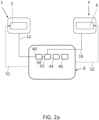
- the filling line 100 comprises a first filling machine 1 with a first machine control 2 and a second filling machine 4.
- the second filling machine 4 comprises a second machine control 6.
- the first filling machine 1 and the second filling machine 4 can be operated both in cooperation with one another and independently of one another.
- the filling line 100 also has a data interface 8, by means of which the first filling machine 1 and the second filling machine 4 are connected to one another in terms of control technology.
- the filling line 100 preferably includes another food machine in the form of an attachment 10.
- the attachment 10 is, for example, a separating device.
- the attachment 10 preferably has its own third machine control 12 and can therefore be operated both in cooperation with the first filling machine 1 and the second filling machine 4 and independently of them.
- the first filling machine 1 is connected to the data interface 8 via a first data line 14.
- the second filling machine 4 is connected to the data interface 8 via a second data line 16.
- the data lines 14, 16 are in particular wired lines which enable data transmission in any Enable production environments in a reliable manner.
- the first data line 14 and the second data line 16 are set up to be data lines in real time, the data lines 14, 16 being, for example, bus lines or Ethernet lines.
- the data interface 8 is preferably designed either as a CAN bus or as EtherCAT.
- the first filling machine 1 comprises a housing 17 and a funnel 18, which is preferably pivotally mounted on the housing 17.
- the first machine control 2 has a scanning function 19 and the data interface 8 has a storage medium 21 for storing the assignment of the control information S1.
- the scanning function 19 is set up to query the information stored in the storage medium 21.
- the second filling machine 4 similarly includes a housing 20 and a funnel 22, which is preferably pivotably mounted on the housing 20.
- the second machine control 6 preferably also has a scanning function, not shown.
- the first filling machine 1 includes a control panel 24 and a display unit 26 assigned to the control panel 24.
- the first control panel 24 and the first display unit 26 are connected to the first machine control 2 in terms of control technology.
- the second filling machine 4 also includes a control panel 28 and a display unit 30 assigned to the control panel 28.
- the second control panel 28 and the second display unit 30 are connected to the second machine control 6 in terms of control technology.
- the filling line 100 is set up in particular for producing filled foods from a pasty mass in a coextrusion process. However, it should be understood that the invention is not limited to filling lines for the co-extrusion process.
- the first filling machine 1 has a first filling tube 32 and the second filling machine 4 has a second filling tube 34.
- the first filling machine 1 takes over the portioning of the filling material intended for the casing via the first filling tube 32 and the second filling machine 4 takes over the portioning of the filling material intended for the core.
- the filling material is a pasty mass.
- the attachment 10 has a mold module 36, which is connected to the first filling tube 32 and the second filling tube 34.
- the attachment 10 is set up by means of the molding module 36 to bring together the filling material for the core and for the shell and, for example, to deliver a continuous strand.
- the attachment 10 is preferably designed as a separating device and is also set up for this purpose, instead of one continuous strand to provide portions of the filled food by separating the continuous strand.
- control panel 24 of the first filling machine 1 is easily accessible and, on the other hand, access to the control panel 28 of the second filling machine 4 is made more difficult due to the course of the filling pipes 32, 34 and the arrangement of the attachment 10. This is where the invention comes in and enables remote access to the second machine control 6 by the first machine control 2.
- the control connection via the data interface 8 of the first filling machine 1 and the second filling machine 4 enables the operation of the first machine control 2 and the second machine control 6 in two different control modes by providing at least one piece of control information S1, S2.
- the target control modes include a master control mode and a slave control mode. Operation in slave control mode causes read and write rights regarding recipe-relevant process parameters to be transferred to the machine control operated in master control mode.
- the machine control operated in master control mode is in turn set up to implement the transferred read and write rights, so that one of the two machine controls 1, 4 has access to the recipe-relevant process parameters of both machine controls 1, 4 and has corresponding read and write rights.
- the data interface 8 has a total of four slots 40, 42, 44, 46.
- the first machine control 2 is connected to the first slot 40.
- the second machine control 6 is connected to the second slot 42.
- the data interface 8 is set up to provide the first control information S1, which indicates target operation in the master control mode.
- the first control information S1 is assigned to the first slot 40, so that the data interface 8 provides the control information S1 to the first machine control 2 when the first machine control 2 is connected to the first slot 40.
- the data interface 8 is set up to provide second control information S2, which indicates target operation in slave control mode.
- the second control information S2 is assigned to the second slot 42, so that when the second machine control 6 is connected to the second slot 42, the data interface 8 is set up to provide the second control information S2 to the second machine control 6.
- the first control information S1 is provided via a first data line 14 and the second control information S2 is provided via a data line 16.
- At least the first slot 40 and the second slot 42 are connected to one another in terms of control technology via a first signal connection 50.
- Recipe-relevant process parameters are provided in real time from the second machine control 6 in slave control mode to the first machine control 2 via the first data line 14, the second data line 16 and the first signal connection 50 both before the start of production and continuously during ongoing production operation.
- the first machine control 2 After receiving the first control information S1, which indicates a target operation in the master control mode, the first machine control 2 is preferably set up to use a scan function 19 (cf. Fig. 1 ) to query the occupancy of further slots 42, 44, 46.
- a scan function 19 cf. Fig. 1
- the first machine control 2 is also in master control mode to carry out either condition monitoring of the second filling machine 4 or process monitoring of the entire filling line 100 (cf. Fig. 1 ) furnished.
- the first machine control 2 is in particular also set up to receive and process diagnostic data and/or error messages from the second machine control 6.
- the first machine control 2 is set up to stop or switch off the second filling machine 4 or to adapt recipe-relevant process parameters if necessary, depending on these processed diagnostic data and/or error messages.
- Fig. 2b shows a schematic sketch regarding the data transmission of the filling line Fig. 1 according to a second embodiment.
- the same or similar units have in the Figures 2a and 2 B identical reference numbers. It is comprehensively based on the description of the exemplary embodiment Fig. 2a referred to and only the differences between the exemplary embodiments are discussed in detail below.
- the exemplary embodiments according to Figures 2a and 2 B differ in the type of provision of the second control information S2.
- the first control information S1 is provided in a known manner through the data interface 8 of the first machine control 2.
- the first machine control 2 according to Fig. 2b is then set up to provide the second machine control 4 with second control information S2.
- this second control information S2 indicates a target operation in slave control mode.
- the second control information S2 can be provided by the first machine control 2 via the data lines 14, 16 and the data interface 8, as well as wirelessly via a Bluetooth connection or a radio connection between the first machine control 2 and the second machine control 6.
- the filling line 100' comprises, in a known manner, a first filling machine 1 with a first machine control 2 and a second filling machine 4.
- the second filling machine 4 comprises a second machine control 6.
- the first filling machine 1 and the second filling machine 4 are both in cooperation with one another and independent operable from each other.
- the filling line 100' also has a data interface 8, by means of which the first filling machine 1 and the second filling machine 4 are connected to one another in terms of control technology.
- the filling line 100' includes another food machine in the form of an attachment 10.
- the attachment 10 is, for example, a separating device.
- the attachment 10 preferably has its own third machine control 12 and can therefore be operated both in cooperation with the first filling machine 1 and the second filling machine 4 and independently of them.
- the first filling machine 1 is connected to the data interface 8 via a first data line 14.
- the second filling machine 4 is connected to the data interface 8 via a second data line 16.
- the data lines 14, 16 are in particular wired lines which enable reliable and robust data transmission.
- the first data line 14 and the second data line 16 are set up to be data lines in real time, the data lines 14, 16 being, for example, bus lines or Ethernet lines.
- the data interface 8 is preferably designed either as a CAN bus or as EtherCAT.
- the first filling machine 1 comprises, in a known manner, a housing 17 and a funnel 18, which is preferably pivotally mounted on the housing 17.
- the first machine control 2 has a scanning function 19 and the data interface 8 has a storage medium 21 for storing the assignment of the control information S1.
- the second filling machine 4 similarly includes a housing 20 and a funnel 22, which is preferably pivotably mounted on the housing 20.
- the second machine control 6 preferably also has a scanning function, not shown.
- the first filling machine 1 comprises a control panel 24 and a display unit 26 assigned to the control panel 24.
- the control panel 24 and the display unit 26 are connected to the first machine control 2 in terms of control technology.
- the second filling machine 4 also includes a control panel 28 and a display unit 30 assigned to the control panel 28.
- the control panel 28 and the display unit 30 are connected to the second machine control 6 in terms of control technology.
- the filling line 100' is set up in particular for producing filled foods from a pasty mass in a co-extrusion process.
- the first filling machine 1 has a first filling tube 32 and the second filling machine 4 has a second filling tube 34.
- the attachment 10 has a mold module 36, which is connected to the first filling tube 32 and the second filling tube 34 and is designed to combine the pasty mass intended for the casing and the pasty mass intended for the core to form a filled food and, for example, a continuous one to give up the strand.
- the attachment 10 is preferably designed as a separating device and is further designed to provide portions of the filled food by separating the continuous strand instead of a continuous strand.
- control panel 24 of the first filling machine 1 is easily accessible and the control panel 28 of the second filling machine 4, however, is made more difficult due to the course of the filling pipes 32, 34 and the arrangement of the attachment 10.
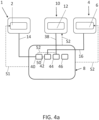
- the data interface 8 is also set up to connect the attachment 10 to the first filling machine 1 and the second filling machine 4 in terms of control technology via a third data line 38.
- the control connection of the first filling machine 1 and the second filling machine 4 via the data interface 8 enables the operation of the machine controls 2, 4 in two different target control modes by providing at least one piece of control information S1, S2.
- the target control modes include the previously described master control mode and slave control mode.
- the data interface 8 has a total of four slots 40, 42, 44, 46.
- the first machine control 2 is connected to the first slot 40.
- the second machine control 6 is connected to the second slot 42.
- the third machine control 12 is connected to the third slot 44 via a third data line 38.
- the data interface 8 is set up to provide the first control information S1, which indicates target operation in the master control mode.
- the first control information S1 is the first Slot 40 assigned, so that the data interface 8 provides the control information S1 of the first machine control 2 when the first machine control 2 is connected to the first slot 40.
- the data interface 8 is set up to provide second control information S2, which indicates target operation in slave control mode.
- the second control information S2 is assigned to the second slot 42, so that when the second machine control 6 is connected to the second slot 42, the data interface 8 is set up to provide the second control information S2 to the second machine control 6.
- the first control information S1 is provided via a first data line 14 and the second control information S2 is provided via a data line 16.
- the data interface 8 is set up to also provide the third machine control 12 of the attachment 10 with second control information S2 - that is, a signal indicating the target operation in the slave control mode.
- second control information S2 is also assigned to the third slot 44, so that the data interface 8 also provides second control information S2 when the third machine control 12 is connected to the third slot 44.
- the first slot 40 and the second slot 42 are connected to one another in terms of control technology via a first signal connection 50. Furthermore, the first slot 40 and the third slot 44 are connected to one another in terms of control technology via a first signal connection 52.
- Recipe-relevant process parameters are provided in real time from the second machine control 6 in slave control mode to the first machine control 2 via the data lines 14, 16, 38 and the signal connections 50, 52. Provision is preferably made before the start of production and also during ongoing operations.
- the first machine control 2 After receiving the first control information S1, which indicates a target operation in the master control mode, the first machine control 2 is preferably set up to query the occupancy of further slots 42, 44, 46 using a scan function 19.
- the first machine control 2 is in master control mode to carry out either condition monitoring of the second filling machine 4 and/or the attachment 10 or process monitoring of the entire filling line 100' (cf. Fig. 3 ) furnished.
- the first machine control 2 is also set up in particular to Receive and process diagnostic data and/or error messages from the second machine control 6 and the third machine control 12.
- the first machine control 2 is set up to stop or switch off the second filling machine 4 or the attachment 10 depending on these processed diagnostic data and/or error messages or, if necessary, to adapt recipe-relevant process parameters.
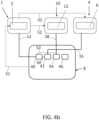
- Fig. 4b shows a basic sketch of the data transmission of the filling line 100' (cf. Fig. 3 ) according to a second embodiment.
- the same or similar units have in the Figures 4a and 4b identical reference numbers. It is comprehensively based on the description of the exemplary embodiment Fig. 4a referred to and only the differences between the exemplary embodiments are discussed in detail below.
- the exemplary embodiments according to Figures 4a and 4b differ in the type of provision of the second control information S2.
- the first control information S1 is provided in both exemplary embodiments by the data interface 8 of the first machine control 2.
- the first machine control 2 according to Fig. 4b is then set up to provide the second machine control 4 and the third machine control 12 with second control information S2.
- this second control information S2 indicates a target operation in slave control mode.
- the second control information S2 can be provided by the first machine control 2 via the data lines 14, 16, 38 and the data interface 8, as well as wirelessly via a Bluetooth connection or a radio connection between the first machine control 2 and the second machine control 6 and the third Machine control 12.
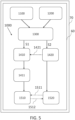
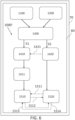
- Fig. 5 shows a method 1000 for operating a filling line according to Fig. 1 schematic.
- the method 1000 is preferably carried out by a computer program 60 on a processor 70.
- the method 1000 includes the control connection of a first machine control 2 (cf. Fig. 1 ) a filling machine with a data interface in step 1100.
- the method 1000 further includes the control-related connection of a second machine control 6 (cf. Fig. 1 ) a second filling machine 4 with the data interface in step 1100.
- the method further includes providing control information S1 to the first machine control 2 (cf. Fig. 1 , 2a , 2 B ) in step 1300.
- the method 1000 includes initializing a first target control mode in the first machine controller 2 (cf. Fig. 1 ) in step 1410.
- the first target control mode is in this case a master control mode, which is determined by the first control information S1 is shown.
- the method 1000 includes initializing a second target control mode in the second machine control 6 (cf. Fig. 1 ) in step 1420 depending on the second control information S2 provided in step 1420.
- the second target control mode is in the present case a slave control mode.
- the second machine control 6 (cf. Fig. 1 ) is set up in the slave control mode to give read and write rights, in particular full read and write rights, with regard to recipe-relevant process parameters to the first machine control 2 (cf. Fig. 1 ) to be transferred in step 1421.
- the first machine control 2 (cf. Fig. 1 ) is set up in master control mode to implement the transferred read and write rights in step 1411.
- This implementation includes, in particular, the visualization of the process parameters on a display unit 26 and the adjustability via a control panel 24 (cf. Fig. 1 ).
- the display function of the first machine control 2 or its display unit 26 (cf. Fig. 1 ) is thus expanded to include the implemented process parameters.
- the method 1000 includes the reciprocal operation of the first machine control 2 (cf. Fig. 1 ) in the master control mode in step 1510 and the operation of the second machine control 6 (cf. Fig. 1 ) in slave control mode in step 1520.
- the first machine controller is 2 (cf. Fig. 1 ) is set up to overwrite recipe-relevant process parameters in step 1512 and to read them out continuously during operation in step 1511.
- Fig. 6 shows method 1000', which is a further development of method 1000 according to Fig. 5 is.
- the method 1000' is preferably carried out by a computer program 60 on a processor 70.
- the method 1000' differs from the method 1000 only in a functional expansion of the first machine control 2 (cf. Fig. 1 ) in master control mode.
- the present description of the method is based on Fig. 5 Reference is made and only the differences in the process steps are discussed.
- the first machine control 2 when operating in the master control mode according to step 1510, the first machine control 2 is set up to continuously monitor the condition of the second filling machine and to carry out diagnostic processes based on the condition monitoring in step 1513. Based on the diagnostic processes, the first machine control 2 is in the master mode. Control mode is also set up to switch off the second filling machine 4 in the event of a fault, to stop it or to adapt recipe-relevant process parameters as required according to step 1514. The adaptation of recipe-relevant process parameters as well as stopping or switching off if necessary also affects the operation of the first filling machine, which is also controlled by the first machine control 2 (cf. Fig. 1 ) is controlled.
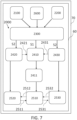
- Fig. 7 shows a method 2000 for operating a filling line according to Fig. 3 .
- the method 2000 is preferably carried out by a computer program 60 on a processor 70.
- the method 2000 includes the control connection of a first machine control 2 of a filling machine 1 with a data interface 8 (cf. Fig. 3 ) in step 2100.
- the method 2000 further includes the control-related connection of a second machine control 6 of a second filling machine 4 to the data interface 8 (cf. Fig. 3 ) in step 2100.
- method 2000 includes the control-related connection of a third machine control 12 of an attachment 10 to the data interface 8 (cf. Fig. 3 ) in step 2600.
- the method 2000 includes the provision of control information S1 in the present case on the first machine control 2 (cf. Fig. 4a , 4b ) in step 2300.
- the method 2000 includes initializing a first target control mode in the first machine controller 2 (cf. Fig. 3 ) in step 2410.
- the first target control mode is a master control mode, which is indicated by the first control information S1.
- the method 2000 includes initializing a second target control mode in the second machine control 6 in step 2420 and the third machine control 12 (cf. Fig. 3 ) in step 2430 depending on the second control information S2 provided.
- the second target control mode is a slave control mode.
- the second machine control 6 and the third machine control 12 are set up in the slave control mode to give read and write rights regarding recipe-relevant process parameters to the first machine control 2 (cf. Fig. 3 ) to be transmitted in step 2421 and step 2431.
- the first machine control 2 (cf. Fig. 3 ) is set up in master control mode to implement the transferred read and write rights in step 2411.
- This implementation includes, in particular, the visualization of the process parameters on a display unit 26 and the adjustability via a control panel 24 according to Fig. 2 .
- the representation of the display unit 26 cooperating with the first machine control 2 (cf. Fig. 3 ) is thus expanded to include the implemented process parameters.
- the method 2000 includes reciprocally operating the first machine control 2 in master control mode in step 2510, operating the second machine control 6 in slave control mode in step 2520 and operating the third machine control 12 (cf. Fig. 3 ) in slave control mode in Step 2530.
- the first machine controller is 2 (cf. Fig. 3 ) is set up to overwrite recipe-relevant process parameters with respect to the second machine control in step 2512 and with respect to the third machine control in step 2532.
- the first machine control 2 (cf. Fig. 3 ) is set up to continuously read out recipe-relevant process parameters during operation in relation to the second machine control in step 2511 and in relation to the third machine control in step 2531.
Landscapes
- Engineering & Computer Science (AREA)
- Mechanical Engineering (AREA)
- Life Sciences & Earth Sciences (AREA)
- Wood Science & Technology (AREA)
- Zoology (AREA)
- Food Science & Technology (AREA)
- General Engineering & Computer Science (AREA)
- Manufacturing & Machinery (AREA)
- Quality & Reliability (AREA)
- Physics & Mathematics (AREA)
- General Physics & Mathematics (AREA)
- Automation & Control Theory (AREA)
- General Factory Administration (AREA)
Applications Claiming Priority (1)
| Application Number | Priority Date | Filing Date | Title |
|---|---|---|---|
| DE102022115961.2A DE102022115961B3 (de) | 2022-06-27 | 2022-06-27 | Fülllinie zum Herstellen von Nahrungsmitteln aus einer pastösen Masse, insbesondere gefüllten Nahrungsmitteln bzw. in Hüllen gefüllten Nahrungsmitteln |
Publications (1)
| Publication Number | Publication Date |
|---|---|
| EP4300228A1 true EP4300228A1 (fr) | 2024-01-03 |
Family
ID=86895318
Family Applications (1)
| Application Number | Title | Priority Date | Filing Date |
|---|---|---|---|
| EP23181707.3A Pending EP4300228A1 (fr) | 2022-06-27 | 2023-06-27 | Ligne de remplissage pour la fabrication de produits alimentaires à partir d'une masse pâteuse |
Country Status (3)
| Country | Link |
|---|---|
| US (1) | US12552570B2 (fr) |
| EP (1) | EP4300228A1 (fr) |
| DE (1) | DE102022115961B3 (fr) |
Citations (5)
| Publication number | Priority date | Publication date | Assignee | Title |
|---|---|---|---|---|
| DE10222584A1 (de) * | 2002-05-22 | 2003-12-11 | Infineon Technologies Ag | Verfahren und System zur Vergabe und Verwaltung von Zugriffsrechten für die Master in Multimaster Bussystemen |
| US20100045684A1 (en) * | 2006-11-16 | 2010-02-25 | Tokyo Electron Limited | Host control device, slave control device, screen operation right giving method, and storage medium containing screen operation right giving program |
| EP3045399A1 (fr) * | 2015-01-19 | 2016-07-20 | Cama1 S.p.A. | Une machine d'emballage avec un Convoyeur à bande magnétique |
| CN110830276A (zh) * | 2018-08-09 | 2020-02-21 | 通号城市轨道交通技术有限公司 | 一种基于冷冗余机制的EtherCAT通信系统及方法 |
| EP3643178A1 (fr) * | 2018-10-22 | 2020-04-29 | Heinrich Frey Maschinenbau GmbH | Dispositif de distribution d'un produit pâteux ou visqueux |
Family Cites Families (23)
| Publication number | Priority date | Publication date | Assignee | Title |
|---|---|---|---|---|
| JPH0672797B2 (ja) | 1984-04-25 | 1994-09-14 | 株式会社石田衡器製作所 | 組合せ計量装置と包装機との連動システム |
| US6054155A (en) * | 1997-12-15 | 2000-04-25 | Townsend Engineering Company | Brine formulation for curing extruded sausage strand |
| JP4169836B2 (ja) | 1998-08-04 | 2008-10-22 | 株式会社イシダ | 計量包装システム |
| US6745103B1 (en) * | 2001-10-17 | 2004-06-01 | Sweetheart Cup Company Inc. | Machine and system for packaging food products |
| DK1371293T3 (da) * | 2002-06-10 | 2007-08-06 | Handtmann Albert Maschf | Apparat og fremgangsmåde til fremstilling af en streng af en pastös masse og ekstruderhoved til et sådant apparat og en sådan fremgangsmåde |
| ES2299788T3 (es) * | 2004-12-14 | 2008-06-01 | ALBERT HANDTMANN MASCHINENFABRIK GMBH & CO. KG | Dispositivo de conformado y procedimiento de conformado para formar cabezas de extremos de embutidos. |
| EP1712135B1 (fr) * | 2005-04-11 | 2007-08-22 | Albert Handtmann Maschinenfabrik GmbH & Co. KG | Procédé et dispositif pour la production de saucisses |
| PL1738649T3 (pl) * | 2005-06-30 | 2008-04-30 | Handtmann Albert Maschf | Urządzenie i sposób wytwarzania pasma kiełbasy o dowolnym kształcie |
| JP4934439B2 (ja) | 2007-01-19 | 2012-05-16 | 勝三 川西 | 計量包装システムとそれに用いられる計量機及び包装機 |
| ATE434384T1 (de) * | 2007-07-20 | 2009-07-15 | Handtmann Albert Maschf | Vorrichtung und verfahren zum herstellen von würsten |
| ES2332825T5 (es) * | 2007-11-20 | 2013-10-24 | Albert Handtmann Maschinenfabrik Gmbh & Co. Kg | Llenadora por vacío para la producción de embutidos y procedimiento de llenado de productos alimenticios con una llenadora por vacío |
| US8429754B2 (en) * | 2007-12-21 | 2013-04-23 | The Invention Science Fund I, Llc | Control technique for object production rights |
| EP2075659A1 (fr) * | 2007-12-31 | 2009-07-01 | Tetra Laval Holdings & Finance SA | Architecture de système d'emballage intégré |
| DE102009038208A1 (de) * | 2009-08-20 | 2011-02-24 | Vemag Maschinenbau Gmbh | Liniensynchronsisierung |
| EP2742804B1 (fr) * | 2012-12-14 | 2015-11-18 | Albert Handtmann Maschinenfabrik GmbH & Co. KG | Procédé de fabrication d'un aliment par coextrusion et utilisation d'un adhésif comme lubrifiant pendant la coextrusion |
| PL2781160T3 (pl) * | 2013-03-21 | 2017-08-31 | Albert Handtmann Maschinenfabrik Gmbh & Co. Kg | Urządzenie do wytwarzania współwytłaczanych produktów żywnościowych |
| US20150119217A1 (en) * | 2013-10-31 | 2015-04-30 | Tipper Tie, Inc. | Systems with film speed control and related devices, methods and computer program products |
| US10645939B1 (en) * | 2013-12-06 | 2020-05-12 | J & B Sausage Company, Inc. | Low profile water bath co-extrusion process for sausage manufacturing, and machines for use therewith |
| EP3393788B1 (fr) * | 2016-03-02 | 2019-10-02 | Viskase Companies, Inc. | Film d'emballage alimentaire et son procédé de fabrication |
| US11327475B2 (en) * | 2016-05-09 | 2022-05-10 | Strong Force Iot Portfolio 2016, Llc | Methods and systems for intelligent collection and analysis of vehicle data |
| WO2018196970A1 (fr) * | 2017-04-26 | 2018-11-01 | Bühler AG | Système de production de chocolat industriel, adaptatif, à auto-optimisation, et procédé correspondant |
| PL3732975T3 (pl) * | 2019-05-03 | 2024-11-18 | Albert Handtmann Maschinenfabrik Gmbh & Co. Kg | Rozdzielacz strumienia napełniającego |
| EP4159040A4 (fr) * | 2020-05-29 | 2024-06-19 | Rheon Automatic Machinery Co., Ltd. | Dispositif de transfert pour matière alimentaire |
-
2022
- 2022-06-27 DE DE102022115961.2A patent/DE102022115961B3/de active Active
-
2023
- 2023-06-27 EP EP23181707.3A patent/EP4300228A1/fr active Pending
- 2023-06-27 US US18/342,648 patent/US12552570B2/en active Active
Patent Citations (5)
| Publication number | Priority date | Publication date | Assignee | Title |
|---|---|---|---|---|
| DE10222584A1 (de) * | 2002-05-22 | 2003-12-11 | Infineon Technologies Ag | Verfahren und System zur Vergabe und Verwaltung von Zugriffsrechten für die Master in Multimaster Bussystemen |
| US20100045684A1 (en) * | 2006-11-16 | 2010-02-25 | Tokyo Electron Limited | Host control device, slave control device, screen operation right giving method, and storage medium containing screen operation right giving program |
| EP3045399A1 (fr) * | 2015-01-19 | 2016-07-20 | Cama1 S.p.A. | Une machine d'emballage avec un Convoyeur à bande magnétique |
| CN110830276A (zh) * | 2018-08-09 | 2020-02-21 | 通号城市轨道交通技术有限公司 | 一种基于冷冗余机制的EtherCAT通信系统及方法 |
| EP3643178A1 (fr) * | 2018-10-22 | 2020-04-29 | Heinrich Frey Maschinenbau GmbH | Dispositif de distribution d'un produit pâteux ou visqueux |
Non-Patent Citations (1)
| Title |
|---|
| ALBERT HANDTMANN MASCHINENFABRIK GMBH & CO KG: "ConPro system", INTERNET CITATION, 6 August 2013 (2013-08-06), pages 1 - 12, XP002710032, Retrieved from the Internet <URL:http://www.handtmann.de/uploads/media/ConPro_System.pdf> [retrieved on 20130806] * |
Also Published As
| Publication number | Publication date |
|---|---|
| DE102022115961B3 (de) | 2023-07-13 |
| US20230415942A1 (en) | 2023-12-28 |
| US12552570B2 (en) | 2026-02-17 |
Similar Documents
| Publication | Publication Date | Title |
|---|---|---|
| DE69710201T3 (de) | Netzwerkzugangs-interface für prozesssteuerungsnetzwerk | |
| DE69308942T2 (de) | Steuerungseinrichtung mit Übermittlung von Steuerungsstrukturdefinitionen | |
| EP2948857B1 (fr) | Noeud de bus et système de bus ainsi que procédé d'identification des noeud de bus du système de bus | |
| DE102004025877A1 (de) | Stapelausführungsmaschine mit unabhängigen Stapelausführungsprozessen | |
| DE10012258A1 (de) | Selbst-Abstimmung in einer verteilten Prozeß-Regelumgebung | |
| DE10049504A1 (de) | Verfahren und System zur tranparenten Unterstützung von entfernten Eingabe-/Ausgabeeinrichtungen in einem Prozeßsteuersystem | |
| DE69521508T2 (de) | Verfahren zum bereitstellen von informationen über die fähigkeiten eines slave-gerätes in einem master-gerät | |
| EP2137030A2 (fr) | Système de communication d'un véhicule et procédé pour faire fonctionner un système de communication | |
| EP3273315B1 (fr) | Plateforme destinee a reutiliser un logiciel existant pour la commande d'appareils de terrain industriels | |
| DE102018216111A1 (de) | Übertragungsverfahren | |
| EP0916466A1 (fr) | Machine d'injection avec connexion LAN | |
| DE112007000820B4 (de) | Hochansprechende Master-Slave-Ventileinstellung | |
| DE102022115961B3 (de) | Fülllinie zum Herstellen von Nahrungsmitteln aus einer pastösen Masse, insbesondere gefüllten Nahrungsmitteln bzw. in Hüllen gefüllten Nahrungsmitteln | |
| EP1903530B1 (fr) | Agencement doté d'un appareil sous vide et son procédé de fonctionnement | |
| DE102020134176A1 (de) | Kommunikationssystem für eine landwirtschaftliche maschine und verfahren zur herstellung einer landwirtschaftlichen maschine | |
| DE102007051912A1 (de) | Verfahren und Vorrichtung zur Konfiguration eines Fahrzeugnetzwerkes | |
| EP4338050A1 (fr) | Gestion de conteneurs de temps de transport pour un système d'automatisation industriel | |
| DE60220669T2 (de) | System und verfahren zum vorladen einer bussteuerung mit einem befehlsplan | |
| EP2687930B1 (fr) | Unité d'automatisation destinée à la commande d'un appareil ou d'une installation | |
| EP3076254A1 (fr) | Procede de fonctionnement d'un systeme de commande pour un processus technique et systeme de commande | |
| DE602004009382T2 (de) | Verfahren und anordnung zur planung der verkehrsabfolge in einem telekommunikationssystem | |
| EP3052998B1 (fr) | Système d'entrée/sortie pour système d'automatisme industriel et procédé de fourniture d'une représentation d'un système d'entrée/sortie | |
| EP3742241A1 (fr) | Procédé de configuration d'au moins un appareil d'une machine industrielle | |
| DE102019219031B4 (de) | Übertragungsverfahren | |
| EP4027280B1 (fr) | Procédé de traitement des données de configuration d'une pluralité d'entités, procédé et dispositifs correspondants, ainsi que produit-programme informatique et séquence de signaux |
Legal Events
| Date | Code | Title | Description |
|---|---|---|---|
| PUAI | Public reference made under article 153(3) epc to a published international application that has entered the european phase |
Free format text: ORIGINAL CODE: 0009012 |
|
| STAA | Information on the status of an ep patent application or granted ep patent |
Free format text: STATUS: THE APPLICATION HAS BEEN PUBLISHED |
|
| AK | Designated contracting states |
Kind code of ref document: A1 Designated state(s): AL AT BE BG CH CY CZ DE DK EE ES FI FR GB GR HR HU IE IS IT LI LT LU LV MC ME MK MT NL NO PL PT RO RS SE SI SK SM TR |
|
| STAA | Information on the status of an ep patent application or granted ep patent |
Free format text: STATUS: REQUEST FOR EXAMINATION WAS MADE |
|
| 17P | Request for examination filed |
Effective date: 20240703 |
|
| RBV | Designated contracting states (corrected) |
Designated state(s): AL AT BE BG CH CY CZ DE DK EE ES FI FR GB GR HR HU IE IS IT LI LT LU LV MC ME MK MT NL NO PL PT RO RS SE SI SK SM TR |
|
| STAA | Information on the status of an ep patent application or granted ep patent |
Free format text: STATUS: EXAMINATION IS IN PROGRESS |
|
| 17Q | First examination report despatched |
Effective date: 20251205 |