EP4300974A2 - Codage vidéo échelonnable à fréquence de trame - Google Patents
Codage vidéo échelonnable à fréquence de trame Download PDFInfo
- Publication number
- EP4300974A2 EP4300974A2 EP23210896.9A EP23210896A EP4300974A2 EP 4300974 A2 EP4300974 A2 EP 4300974A2 EP 23210896 A EP23210896 A EP 23210896A EP 4300974 A2 EP4300974 A2 EP 4300974A2
- Authority
- EP
- European Patent Office
- Prior art keywords
- shutter
- interval
- sub
- frame
- flag
- Prior art date
- Legal status (The legal status is an assumption and is not a legal conclusion. Google has not performed a legal analysis and makes no representation as to the accuracy of the status listed.)
- Granted
Links
Images

Classifications
-
- H—ELECTRICITY
- H04—ELECTRIC COMMUNICATION TECHNIQUE
- H04N—PICTORIAL COMMUNICATION, e.g. TELEVISION
- H04N19/00—Methods or arrangements for coding, decoding, compressing or decompressing digital video signals
- H04N19/30—Methods or arrangements for coding, decoding, compressing or decompressing digital video signals using hierarchical techniques, e.g. scalability
- H04N19/31—Methods or arrangements for coding, decoding, compressing or decompressing digital video signals using hierarchical techniques, e.g. scalability in the temporal domain
-
- H—ELECTRICITY
- H04—ELECTRIC COMMUNICATION TECHNIQUE
- H04N—PICTORIAL COMMUNICATION, e.g. TELEVISION
- H04N19/00—Methods or arrangements for coding, decoding, compressing or decompressing digital video signals
- H04N19/10—Methods or arrangements for coding, decoding, compressing or decompressing digital video signals using adaptive coding
- H04N19/102—Methods or arrangements for coding, decoding, compressing or decompressing digital video signals using adaptive coding characterised by the element, parameter or selection affected or controlled by the adaptive coding
- H04N19/132—Sampling, masking or truncation of coding units, e.g. adaptive resampling, frame skipping, frame interpolation or high-frequency transform coefficient masking
-
- H—ELECTRICITY
- H04—ELECTRIC COMMUNICATION TECHNIQUE
- H04N—PICTORIAL COMMUNICATION, e.g. TELEVISION
- H04N19/00—Methods or arrangements for coding, decoding, compressing or decompressing digital video signals
- H04N19/10—Methods or arrangements for coding, decoding, compressing or decompressing digital video signals using adaptive coding
- H04N19/134—Methods or arrangements for coding, decoding, compressing or decompressing digital video signals using adaptive coding characterised by the element, parameter or criterion affecting or controlling the adaptive coding
- H04N19/146—Data rate or code amount at the encoder output
-
- H—ELECTRICITY
- H04—ELECTRIC COMMUNICATION TECHNIQUE
- H04N—PICTORIAL COMMUNICATION, e.g. TELEVISION
- H04N19/00—Methods or arrangements for coding, decoding, compressing or decompressing digital video signals
- H04N19/10—Methods or arrangements for coding, decoding, compressing or decompressing digital video signals using adaptive coding
- H04N19/169—Methods or arrangements for coding, decoding, compressing or decompressing digital video signals using adaptive coding characterised by the coding unit, i.e. the structural portion or semantic portion of the video signal being the object or the subject of the adaptive coding
- H04N19/17—Methods or arrangements for coding, decoding, compressing or decompressing digital video signals using adaptive coding characterised by the coding unit, i.e. the structural portion or semantic portion of the video signal being the object or the subject of the adaptive coding the unit being an image region, e.g. an object
- H04N19/172—Methods or arrangements for coding, decoding, compressing or decompressing digital video signals using adaptive coding characterised by the coding unit, i.e. the structural portion or semantic portion of the video signal being the object or the subject of the adaptive coding the unit being an image region, e.g. an object the region being a picture, frame or field
-
- H—ELECTRICITY
- H04—ELECTRIC COMMUNICATION TECHNIQUE
- H04N—PICTORIAL COMMUNICATION, e.g. TELEVISION
- H04N19/00—Methods or arrangements for coding, decoding, compressing or decompressing digital video signals
- H04N19/10—Methods or arrangements for coding, decoding, compressing or decompressing digital video signals using adaptive coding
- H04N19/169—Methods or arrangements for coding, decoding, compressing or decompressing digital video signals using adaptive coding characterised by the coding unit, i.e. the structural portion or semantic portion of the video signal being the object or the subject of the adaptive coding
- H04N19/187—Methods or arrangements for coding, decoding, compressing or decompressing digital video signals using adaptive coding characterised by the coding unit, i.e. the structural portion or semantic portion of the video signal being the object or the subject of the adaptive coding the unit being a scalable video layer
-
- H—ELECTRICITY
- H04—ELECTRIC COMMUNICATION TECHNIQUE
- H04N—PICTORIAL COMMUNICATION, e.g. TELEVISION
- H04N19/00—Methods or arrangements for coding, decoding, compressing or decompressing digital video signals
- H04N19/30—Methods or arrangements for coding, decoding, compressing or decompressing digital video signals using hierarchical techniques, e.g. scalability
-
- H—ELECTRICITY
- H04—ELECTRIC COMMUNICATION TECHNIQUE
- H04N—PICTORIAL COMMUNICATION, e.g. TELEVISION
- H04N19/00—Methods or arrangements for coding, decoding, compressing or decompressing digital video signals
- H04N19/46—Embedding additional information in the video signal during the compression process
-
- H—ELECTRICITY
- H04—ELECTRIC COMMUNICATION TECHNIQUE
- H04N—PICTORIAL COMMUNICATION, e.g. TELEVISION
- H04N19/00—Methods or arrangements for coding, decoding, compressing or decompressing digital video signals
- H04N19/70—Methods or arrangements for coding, decoding, compressing or decompressing digital video signals characterised by syntax aspects related to video coding, e.g. related to compression standards
Definitions
- the present document relates generally to images. More particularly, an embodiment of the present invention relates to frame-rate scalable video coding.
- ⁇ dynamic range' may relate to a capability of the human visual system (HVS) to perceive a range of intensity (e.g., luminance, luma) in an image, e.g., from darkest grays (blacks) to brightest whites (highlights).
- HVS human visual system
- DR relates to a 'scene-referred' intensity.
- DR may also relate to the ability of a display device to adequately or approximately render an intensity range of a particular breadth.
- DR relates to a ⁇ display-referred' intensity.
- the term may be used in either sense, e.g. interchangeably.
- HDR high dynamic range
- images where n ⁇ 8 are considered images of standard dynamic range (SDR), while images where n > 8 may be considered images of enhanced dynamic range.
- HDR images may also be stored and distributed using high-precision (e.g., 16-bit) floating-point formats, such as the OpenEXR file format developed by Industrial Light and Magic.
- HDR10 or Dolby Vision existing HDR devices
- Example embodiments that relate to frame-rate scalability for video coding are described herein.
- numerous specific details are set forth in order to provide a thorough understanding of the various embodiments of present invention. It will be apparent, however, that the various embodiments of the present invention may be practiced without these specific details.
- well-known structures and devices are not described in exhaustive detail, in order to avoid unnecessarily occluding, obscuring, or obfuscating embodiments of the present invention.
- a system with a processor receives a coded bitstream comprising coded video frames, wherein one or more coded frames are encoded in a first frame rate and a first shutter angle.
- the processor receives a first flag indicating the presence of a group of coded frames to be decoded at a second frame rate and a second shutter angle, it accesses from the coded bitstream values of the second frame rate and the second shutter angle for the group of coded frames, and generates decoded frames at the second frame rate and the second shutter angle based on the group of coded frames, the first frame rate, the first shutter angle, the second frame rate and the second shutter angle.
- a decoder with a processor in a second embodiment, a decoder with a processor:
- an encoded video stream structure comprises:
- FIG. 1 depicts an example process of a conventional video delivery pipeline (100) showing various stages from video capture to video content display.
- a sequence of video frames (102) is captured or generated using image generation block (105).
- Video frames (102) may be digitally captured (e.g. by a digital camera) or generated by a computer (e.g. using computer animation) to provide video data (107).
- video frames (102) may be captured on film by a film camera. The film is converted to a digital format to provide video data (107).
- a production phase (110) video data (107) is edited to provide a video production stream (112).
- Block (115) post-production editing may include adjusting or modifying colors or brightness in particular areas of an image to enhance the image quality or achieve a particular appearance for the image in accordance with the video creator's creative intent. This is sometimes called "color timing" or "color grading.”
- Other editing e.g. scene selection and sequencing, image cropping, addition of computer-generated visual special effects, judder or blur control, frame rate control, etc.
- video images are viewed on a reference display (125).
- video data of final production (117) may be delivered to encoding block (120) for delivering downstream to decoding and playback devices such as television sets, set-top boxes, movie theaters, and the like.
- coding block (120) may include audio and video encoders, such as those defined by ATSC, DVB, DVD, Blu-Ray, and other delivery formats, to generate coded bit stream (122).
- the coded bit stream (122) is decoded by decoding unit (130) to generate a decoded signal (132) representing an identical or close approximation of signal (117).
- the receiver may be attached to a target display (140) which may have completely different characteristics than the reference display (125).
- a display management block (135) may be used to map the dynamic range of decoded signal (132) to the characteristics of the target display (140) by generating display-mapped signal (137).
- Scalable coding is already part of a number of video coding standards, such as, MPEG-2, AVC, and HEVC.
- scalable coding is extended to improve performance and flexibility, especially as it relates to very high resolution HDR content.
- shutter angle denotes an adjustable shutter setting which controls the proportion of time that film is exposed to light during each frame interval.
- shutter angle 360 exposure time frame interval .
- the term comes from legacy, mechanical, rotary shutters; however, modern digital cameras can also adjust their shutter electronically. Cinematographers may use the shutter angle to control the amount of motion blur or judder that is recorded in each frame. Note that instead of using "exposure time” one may also use alternative terms, like “exposure duration, " "shutter interval,” and “shutter speed.” Similarly, instead of using "frame interval” one may use the term “frame duration.” Alternatively, one may replace "frame interval” with "1/frame rate.”
- the value of exposure time is typically less than or equal to the duration of a frame. For example, a shutter angle of 180 degrees indicates that the exposure time is half of the frame duration. In some situations, exposure time may be greater than the frame duration of coded video, for example, when the encoded frame rate is 120 fps and the frame rate of the associated video content prior to encoding and display is 60 fps.
- original content is shot (or generated) at an original frame rate (e.g., 120 fps) with a shutter angle of 360 degrees.
- an original frame rate e.g. 120 fps
- a receiving device one can render video output at a variety of frame rates equal to or lower than the original frame rate by judicial combination of the original frames, e.g., by averaging or other known in the art operations.
- the combining process may be performed with non-linear encoded signals, (e.g., using gamma, PQ or HLG), but best image quality is obtained by combining frames in the linear light domain by first, converting the non-linear encoded signals into linear-light representations, next, combining the converted frames, and finally re-encoding the output with the non-linear transfer function.
- This process provides a more accurate simulation of a physical camera exposure than combining in the non-linear domain.
- the maximum value of target_shutter_angle is 360 degrees and corresponds to the maximal motion blur.
- the minimum value of target_shutter_angle can be expressed as 360 *(target_frame_rate/original_frame_rate) and corresponds to minimal motion blur.
- the maximum value of n_frames can be expressed as (original frame_rate/target frame_rate).
- the values of target_frame_rate and target_shutter_angle should be selected such that the value of n_frames is a non-zero integer.
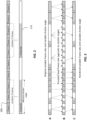
- FIG. 2 depicts an example process of combining consecutive original frames to render a target frame rate at a target shutter angle according to an embodiment.
- the process Given an input sequence (205) at 120 fps and a shutter angle of 360 degrees, the process generates an output video sequence (210) at 24 fps and a shutter angle of 216 degrees by combining three of the input frames in a set of five consecutive frames (e.g., the first three consecutive frames), and dropping the other two.
- output frame-01 of (210) may be generated by combining alternative input frames (205), such as frames 1, 3, and 5, or frames 2,4, and 5, and the like; however, it is expected that combining consecutive frames will yield video output of better quality.
- variable frame rate It is desirable to support original content with variable frame rate, for example, to manage artistic and stylistic effect. It is also desirable that the variable input frame rate of the original content is packaged in a "container" that has a fixed frame rate to simplify content production, exchange, and distribution. As an example, three embodiments on how to represent the variable frame rate video data in a fixed frame rate container are presented. For purposes of clarity and without limitation, the following descriptions use fixed 120 fps container, but the approaches can easily be extended to an alternative frame rate container.
- the first embodiment is an explicit description of original content having variable (non-constant) frame rate packaged in a container having constant frame rate.
- original content that has different frames rate say, at 24, 30, 40, 60, or 120 fps, for different scenes, may be packaged in a container having a constant frame rate of 120 fps.
- each input frame can be duplicated either 5 ⁇ , 4 ⁇ , 3 ⁇ , 2 ⁇ , or 1 ⁇ times to package it into a common 120 fps container.
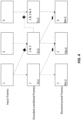
- FIG. 3 depicts an example of an input video sequence A with variable frame rate and variable shutter angle which is represented in a coded bitstream B with a fixed frame rate. Then, in a decoder, the decoder reconstructs output video sequence C at the desired frame rate and shutter angle, which may change from scene to scene. For example, as depicted in FIG. 3 , to construct sequence B, some of the input frames are duplicated, some are coded as is (with no duplication), and some are copied four times. Then, to construct sequence C, any one frame from each set of duplicate frames is selected to generate output frames, matching the original frame rate and shutter angle.
- metadata is inserted in the bitstream to indicate the original (base) frame rate and shutter angle.
- the metadata may be signaled using high level syntax such as a Sequence Parameter Set (SPS), a Picture Parameter Set (PPS), a Slice or Tile Group header, and the like.
- SPS Sequence Parameter Set
- PPS Picture Parameter Set
- RCS Picture Parameter Set
- RCS Slice or Tile Group header
- This embodiment enables an end user to view rendered content at the frame rates intended by the content creators.
- This embodiment does not provide for backwards compatibility with devices that do not support the frame rate of the container, e.g., 120 fps.
- Tables 2 and 3 depict example syntax of raw byte sequence payload (RBSB) for a sequence parameter set and Tile Group header, where the proposed new syntax elements are depicted in an italic font.
- the remaining syntax follows the syntax in the proposed specification of the Versatile Video Codec (WC) (Ref. [2]).
- sps_vfr_enabled_flag 1 specifies that the coded video sequence (CVS) may contain variable frame rate content.
- sps_vfr_enabled_flag 0 specifies that the CVS contains fixed frame rate content.
- the second embodiment enables the use case in which original content having a fixed frame rate and shutter angle may be rendered by a decoder at an alternative frame rate and variable simulated shutter angle, such as illustrated in FIG. 2 .
- a decoder can render out multiple frame rates that are less than or equal to 120 fps. For example, as described in Table 1, to decode 24 fps with a 216-degrees simulated shutter angle, the decoder may combine three decoded frames and display at 24 fps.
- Table 4 expands upon Table 1 and illustrates how to combine different numbers of encoded frames to render at the output target frame rates and the desired target shutter angles.
- Combining the frames may be performed by simple pixel averaging, by weighted pixel averaging, where pixels from a certain frame may be weighted more than pixels of other frames and the sum of all weights sums to one, or by other filter interpolation schemes known in the art.
- the function Ce(a,b) denotes the combination of encoded frames a to b, where the combining can be performed by averaging, weighted averaging, filtering, and the like.
- Table 4 Example of combining input frames at 120 fps to generate output frames at target fps and shutter angle values
- Input s1 s2 s3 s4 s5 s6 s7 s8 s9 s10 Enc. e1 e2 e3 e4 e5 e6 e7 e8 e9 e10 Dec. 120fps @360 e1 e2 e3 e4 e5 e6 e7 e8 e9 e10 Dec. 60fps @360 Ce(1,2) Ce(3,4) Ce(5,6) Ce(7,8) Ce(9,10) @ 180 e1 e3 e5 e7 e9 Dec.
- the decoder can combine different sets of decoded frames. For example, from Table 1, given an original stream of 120 fps @ 360-degrees, to generate a stream at 40 fps and a 240-degrees shutter angle, a decoder needs to combine two frames out of three possible frames. Thus, it may combine either the first and the second frames or the second and the third frames.
- decode_phase decode_phase_idx ⁇ 360 / n_frames
- decode_phase_idx indicates the offset index within a set of sequential frames having index values in [0, n frames_max-1], where n_frames is given by equation (2)
- n_frames_max orig_frame_rate / target_frame_rate .
- the rendered variable frame rate intended by the content creator may be signaled as metadata, such as a supplemental enhancement information (SEI) message or as video usability information (VUI).
- SEI supplemental enhancement information
- VUI video usability information
- the rendered frame rate may be controlled by the receiver or a user.
- An example of frame rate conversion SEI messaging that specifies the preferred frame rate and shutter angle of the content creator is shown in Table 5.
- the SEI message can also indicate if combining frames is performed in the coded signal domain (e.g., gamma, PQ, etc.) or the linear light domain. Note that postprocessing requires a frame buffer in addition to the decoder picture buffer (DPB).
- the SEI message may indicate how many extra frame buffers are needed, or some alternative method for combining frames. For example, to reduce complexity, frames may be recombined at reduced spatial resolution.
- a decoder may need to combine more than three decoded frames, which increases the number of buffer space required by the decoder.
- certain combinations of frame rates and shutter angles may be off limits to the set of allowed decoding parameters (e.g., by setting appropriate coding Profiles and Levels).
- a decoder may decide to display the same frame five times to be displayed at 120 fps output frame rate. This is exactly the same as showing the frame a single time at 24 fps output frame rate.
- the advantage of keeping a constant output frame rate is that a display can run at a constant clock speed, which makes all the hardware much simpler. If the display can dynamically vary the clock speed then it may make more sense to only show the frame once (for 1/24 th of a second), instead of repeating the same frame five times (each 1/120 th of a second). The former approach may result in slightly higher picture quality, better optical efficiency, or better power efficiency. Similar considerations are also applicable to other frame rates.
- Table 5 depicts an example of a frame rate conversion SEI messaging syntax according to an embodiment.
- Table 5 Example of SEI message syntax allowing frame-rate conversion framerate_conversion( payloadSize ) ⁇ Descriptor framerate_conversion_cancel_flag u(1) if( !frame_conversion_cancel_flag) ⁇ base_frame _ rate u(9) base_shutter_angle u(9) decode_phase_idx_present_flag u(1) if ( decode_phase_idx_present_flag ) ⁇ decode_phase_idx u(3) ⁇ conversion_domain_idc u(1) num_frame_buffer u(3) framerate _ conversion_persistence_flag u(1) ⁇ ⁇
- a third embodiment is a coding scheme that allows the extraction of sub-frame rates from the bitstream, thus supporting backward compatibility.
- this is achieved by temporal scalability.
- Temporal-layer scalability is enabled by assigning different values to a temporal_id syntax element for the decoded frames. The bitstream can thereby be extracted simply on the basis of temporal_id values.
- the HEVC-style approach to temporal scalability does not enable rendering output frame rates with different shutter angles. For example, a 60 fps base frame rate extracted from an 120 fps original will always have a shutter angle of 180 degrees.
- a new algorithm that supports multiple target frame rates and target shutter angles in a manner that is backward compatible (BC) is described.
- the proposal is to preprocess the original 120 fps content at a base frame rate at several shutter angles. Then, at the decoder, other frame rates at various other shutter angles can be simply derived.
- encoder computes new frames by combining up to three of the original input frames. For example, encoded frame 2 (En-2) representing the input at 40 fps and 240 degrees is generated by combining input frames 1 and 2, and encoded frame 3 (En-3) representing the input at 40 fps and 360 degrees is generated by combining frame En-2 to input frame 3.
- decoded frame 2 (Dec-2) is generated by subtracting frame En-1 from frame En-2
- decoded frame 3 (Dec-3) is generated by subtracting frame En-2 from frame En-3.
- the three decoded frames represent an output at base frame rate of 120 fps and shutter angle 360 degrees. Additional frame rates and shutter angles can be extrapolated using the decoded frames as depicted in Table 6.
- the function Cs(a,b) denotes the combination of input frames a to b, where the combining can be performed by averaging, weighted averaging, filtering, and the like.
- a decoder can simply select the one frame at the desired shutter angle (e.g., e2 for a shutter angle at 144 degrees).
- the decoder will need to determine how to properly combine (say, by addition or subtraction) the decoded frames. For example, to decode at 30 fps and a shutter angle of 180 degrees, the following steps may be followed:
- An advantage of the proposed method is that it provides options for both content creators and users; i.e., in enables directorial/editorial choice and user choice.
- preprocessing content in the encoder allows for a base frame rate to be created with various shutter angles.
- Each shutter angle can be assigned a temporal_id value in the range [0, (n_frames -1)], where n_frames has a value equal to 120 divided by the base frame rate.
- temporal_id is in the range [0,4].
- the choice may be made to optimize compression efficiency, or for aesthetic reasons.
- multiple bitstreams with different base layers can be encoded and stored and offered to users to select.
- multiple backward compatible frame rates may be supported.
- a target shutter angle is not specified, a default target shutter angle, among those shutter angles permissible for the source and target frame rates, as close as possible to 180 degrees is recommended.
- preferred target shutter angles for fps at 120, 60, 40, 30, and 24 are 360, 180, 120, 180, and 216 degrees.
- One embodiment of this invention is to adaptively choose the encoding scheme based on the desired base layer frame rate. For movie content this may be 24 fps, for example, while for sports it may be 60 fps.
- Example syntax for the BC embodiment of the current invention is shown below and in Tables 8 and 9.
- pic_struct a syntax element that indicates whether a picture should be displayed as a frame or as one or more fields, and whether a decoded picture should be repeated.
- a copy of Table D.2, "Interpretation of pic struct," from HEVC is provided for ease of reference in the Appendix.
- the existing pic_struct syntax element can support only a specific subset of content frame rates when using a fixed frame rate coding container. For example, when using a fixed frame rate container of 60 fps, the existing pic_struct syntax, when fixed_pic_rate_within_cvs_flag is equal to 1, can support 30 fps by using frame doubling, and 24 fps by using frame doubling and frame tripling in alternating combination on every other frame. However, when using a fixed frame rate container of 120 fps, the current pic_struct syntax cannot support frame rates of 24 fps nor 30 fps. To alleviate this problem, two new methods are proposed: one is an extension of the HEVC version, and the other is not.
- VVC is still under development, thus one can design syntax with maximal freedom.
- pic_struct it is proposed to remove the options for frame doubling and frame tripling, use a specific value of pic_struct to indicate arbitrary frame repetition, and add a new syntax element, num_frame_repetition_minus2, that specifies the number of frames to repeat.
- An example of the proposed syntax is described in the following Tables, where Table 10 denotes changes over Table D.2.3 in HEVC and Table 11 denotes changes of Table D.2 shown in the Appendix.
- num_frame_repetition_minus2 plus 2 indicates that when fixed_pic_rate_within_cvs_flag is equal to 1, the frame should be displayed num_frame_repetition_minus2 plus 2 times consectutively on displays with a frame refresh interval equal to DpbOutputElementalInterval[ n ] as given by Equation E-73.
- Table 11 Example of revised of pic_struct according to method 1 Value Indicated display of picture Restrictions 0 (progressive) Frame field _seq_flag shall be equal to 0 1 Top field field _seq_flag shall be equal to 1 2 Bottom field field _seq_flag shall be equal to 1 3 Top field, bottom field, in that order field _seq_flag shall be equal to 0 4 Bottom field, top field, in that order field _seq_flag shall be equal to 0 5 Top field, bottom field, top field repeated, in that order field _seq_flag shall be equal to 0 6 Bottom field, top field, bottom field repeated, in that order field _seq_flag shall be equal to 0 7 Frame repetition field_seq_flag shall be equal to 0 fixed_pic_rate_within_cvs_flag shall be equal to 1 8 Top field paired with previous bottom field in output order field _seq_flag shall be equal to 1 9 Bottom field
- AVC and HEVC decoders are already deployed, thus it may be desired to simply extend the existing pic_struct syntax without removing old options.
- a new pic_struct 13
- "frame repetition extension” value 13
- a new syntax element num_frame_repetition_minus4
- An example of the proposed syntax is described in Tables 12 and 13.
- the proposed syntax is identical with the one in Table D.2 (as shown in the Appendix), thus those values are omitted for simplicity.
- num_frame_repetition_minus4 plus 4 indicates that when fixed_pic_rate_within_cvs_flag is equal to 1, the frame should be displayed num_frame_repetition_minus4 plus 4 times consectutively on displays with a frame refresh interval equal to DpbOutputElementalInterval[ n ] as given by Equation E-73.
- Table 13 Example of revised pic_struct, method 2 Value Indicated display of picture Restrictions 0-12 As in Table D.2 As in Table D.2 13 Frame repetition extension field_seq_flag shall be equal to 0 fixed_pic_rate_within_cvs_flag shall be equal to 1
- parameter frame_field_info_present_flag is present in the video usability information (VUI), but the syntax elements pic_struct, source_scan_type, and duplicate_flag are in the pic_timing() SEI message.
- VUI video usability information
- Table 14 Example VUI parameter syntax with support for the revised pic_struct syntax element vui_parameters( ) ⁇ Descriptor ...
- VUI Video Usability Information
- Embodiments allow for different shutter angles to be used for different temporal layers, and a decoder can use shutter angle information to improve the final look on the display.
- HEVC supports temporal sub layers that essentially use frame dropping techniques to go from a higher frame rate to lower frame rate.
- the major problem with this is that the effective shutter angle is reduced with each frame drop.
- 60 fps can be derived from a 120 fps video by dropping every other frame; 30 fps can be derived by dropping 3 out of 4 frames; and 24 fps can be derived by dropping 4 out of 5 frames.
- the shutter angles for 60 fps, 30 fps, and 24 fps are 180, 90, and 72 degrees, respectively [3].
- shutter angles below 180 degrees are generally unacceptable, especially with frame rates below 50 Hz.
- smart techniques may be applied to improve the final look.
- An example of the proposed syntax is shown in Table 15, where the E.2.1 VUI parameters syntax Table in HEVC (Ref. [1]) is modified to support shutter angle information as noted. Note that in another embodiment, instead of expressing shutter_angle syntax in absolute degrees, it can alternatively be expressed as ratio of frame rate over shutter speed (see equation (1)).
- the frame rate needs to be increased based on the brightness of the content.
- the video frame rate can be indicated in the VUI (contained in SPS) using the vui_time_scale , vui_num_units_in_tick and elemental_duration_in_tc_minus1[temporal_id_max] syntax elements, for example, as shown in Table 16 below (see Section E.2.1 in Ref.[1]).
- Table 16 VUI syntax elements to indicate frame rate in HEVC vui_parameters( ) ⁇ Descriptor ... vui_timing_info_present_flag u(1) if( vui_timing_info_present_flag) ⁇ vui_num_units_in_tick u(32) vui_time_scale u(32) vui_poc_proportional_to_timing_flag u(1) if( vui_poc_proportional_to_timing_flag ) vui_num_ticks_poc_diff_one_minus1 ue(v) vui_hrd_parameters_present_flag u(1) if( vui_hrd_parameters_present_flag) hrd_parameters( 1, sps_max_sub_layers_minus1 ) ⁇ ....
- ClockTick is derived as follows and is called a clock tick:
- ClockTick vui_num_units_in_tick ⁇
- the frame rate can only be changed at specific time instants, for example, in HEVC, only at intra random access point (IRAP) frames or at the start of a new CVS.
- IRAP intra random access point
- a new SEI message for "gradual refresh rate” is proposed, as shown in Table 17.
- Table 17 Example syntax to support gradual refresh frame rate in SEI messaging gradual_refresh_rate( payloadSize) ⁇ Descriptor num_units_in_tick u(32) time_scale u(32) ⁇
- num_units_in_tick is the same as vui_num_units_in_tick
- time_scale is the same as that of vui_time_scale.
- picture_duration num_units_in_tick ⁇ time_scale .
- Table 15 provides an example of VUI parameter syntax with shutter angle support.
- Table 18 lists identical syntax elements, but now as part of an SEI message for shutter angle information. Note that SEI messaging is being used only as an example and similar messaging may be constructed at other layers of high-level syntax, such as the Sequence Parameter Set (SPS), the Picture Parameter Set (PPS), the Slice or Tile Group header, and the like.
- SPS Sequence Parameter Set
- PPS Picture Parameter Set
- RPS Picture Parameter Set
- Slice or Tile Group header and the like.
- frame_rate time_scale / num_units_in_tick ⁇ elemental_duration_in_tc_minus 1 Tid + 1 .
- the value of shutter angle may not be an integer, for example, it may be 135.75 degrees.
- u(9) unsigned 9-bits
- u(16) or some other suitable bit-depth (e.g., 12 bits, 14 bits, or more than 16 bits).
- exposure_duration fN ⁇ ClockTick
- frame_duration fM ⁇ ClockTick
- fN and fM are floating-point values and fN ⁇ fM.
- Table 19 shows an example of SEI messaging indicated by equation (11).
- shutter angle must be larger than 0 for a real-world camera.
- the use of u(16) un
- Shutter angle is expressed in degrees greater than 0 but less than or equal to 360 degrees. For example, a shutter angle of 180 degrees indicates that the exposure duration is 1 ⁇ 2 the frame duration.
- fixed_shutter_angle_numer_minus1 shall be less than or equal to the value of fixed_shutter_angle_demom_minus1.
- variable shutterAngle 360 ⁇ fixed_shutter_angle_numer_minus 1 + 1 ⁇ fixed_shutter_angle_demon_minus 1 + 1 )
- sub_layer_shutter_angle_numer_minus1[ i ] shall be less than or equal to the value of sub_layer_shutter_angle_denom_minus1[ i ].
- frame duration (e.g., frame_duration) may be specified by some other means.
- frame_rate time_scale / num_units_in_tick ⁇ elemental_duration_in_tc_minus1 Tid + 1
- frame_duration 1 / frame_rate .
- syntax elements e.g., to indicate to a display that is should not perform any motion processing such as denoising, frame interpolation, and the like.
- fixed_shutter_angle_denom_minus1 and sub_layer_shutter_angle_denom_minus1[ i ] can also be replaced by the syntax elements fixed_shutter_angle_denom and sub_layer_shutter_angle_denom[ i ] as well.
- the SEI message can be renamed as Exposure Duration SEI message.
- fixed_exposure_during_numer_minus1 shall be less than or equal to the value of fixed_exposure_duration_demom_minus1.
- sub_layer_exposure_duration_numer_minus1[ i ] shall be less than or equal to the value of sub_layer_exposure_duration_demom_minus1[ i ].
- clockTick in another embodiment, as shown in Table 21, one may explicitly define clockTick by the syntax elements expo_num_units_in_tick and expo_time_scale.
- clockTick shall be less than or equal to ClockTick when num_units_in_tick and time_scale are present.
- sub_layer_exposure_duration_numer_minus1[ i ] shall be less than or equal to the value of sub_layer_exposure_duration_demom_minus1[ i ].
- one may define the parameter ShutterInterval (i.e., exposure duration) by the syntax elements sii_num_units_in_shutter_interval and sii_time_scale, where ShutterInterval sii_num_units_in_shutter_interval ⁇ sii_time_scale .
- the shutter interval information SEI message indicates the shutter interval for the associated video content prior to encoding and display - e.g., for camera-captured content, the amount of time that an image sensor was exposed to produce a picture.
- ShutterInterval should be interpreted as unknown or unspecified.
- NOTE 1 - A value of ShutterInterval equal to 0 may indicate that the associated video content contains screen capture content, computer generated content, or other non-camera-capture content.
- a value of ShutterInterval greater than the value of the inverse of the coded picture rate, the coded picture interval, may indicate that the coded picture rate is greater than the picture rate at which the associated video content was created - e.g., when the coded picture rate is 120 Hz and the picture rate of the associated video content prior to encoding and display is 60 Hz.
- the coded interval for the given temporal sub-layer Tid may be indicated by ClockTick and elemental_duration_in_tc_minus1[ Tid ].
- PictureInterval Tid ClockTick ⁇ elemental_duration_in_tc_minus1 Tid + 1 .
- subLayerShutterInterval[ i ] for HighestTid is derived as follows.
- subLayerShutterInterval i ShutterInterval ⁇ sub_layer_shutter_interval_number i ⁇ sub_layer_shutter_interval_denom i
- subLayerShutterInterval[ i ] should be interpreted as unkown or unspecified.
- subLayerShutterInterval i ShutterInterval .
- the shutter interval information SEI message indicates the shutter interval for the associated video content prior to encoding and display - e.g., for camera-captured content, the amount of time that an image sensor was exposed to produce a picture.
- ShutterInterval should be interpreted as unknown or unspecified.
- NOTE 1 - A value of ShutterInterval equal to 0 may indicate that the associated video content contain screen capture content, computer generated content, or other non-camera-capture content.
- a value of ShutterInterval greater than the value of the inverse of the coded picture rate, the coded picture interval may indicate that the coded picture rate is greater than the picture rate at which the associated video content was created - e.g., when the coded picture rate is 120 Hz and the picture rate of the associated video content prior to encoding and display is 60 Hz.
- the coded picture interval for the given temporal sub-layer Tid may be indicated by ClockTick and elemental_duration_in_tc_minus1[ Tid ].
- PictureInterval Tid ClockTick ⁇ elemental_duration_in_tc_minus 1 Tid + 1 .
- subLayerShutterInterval i sub_layer_num_units_units_in_shutter_interval i ⁇ sii_time_scale
- subLayerShutterInterval[ i ] should be interpreted as unknown or unspecified.
- subLayerShutterInterval i ShutterInterval .
- Table 24 provides a summary of the six approaches discussed in Tables 18-23 for providing SEI messaging related to shutter angle or exposure duration.
- Table 25 describes an example of the syntax of the proposed PPT timing message, which matches the syntax of the presentation time stamp (PTS) variable being used in MPEG-2 transport (H.222) (Ref [4]).
- Table 25 Example syntax for picture presentation time messaging picture_presentation_time ( payloadSize ) ⁇ Descriptor PPT u(33) ⁇
- Presentation times shall be related to decoding times as follows:
- the PPT is a 33-bit number coded in three separate fields. It indicates the time of presentation, tp n ( k ), in the system target decoder of a presentation unit k of elementary stream n.
- the value of PPT is specified in units of the period of the system clock frequency divided by 300 (yielding 90 kHz).
- the picture presentation time is derived from the PPT according to equation below.
- PPT k system _ clock _ frequency ⁇ tp n k / 300 % 2 33 where tp n ( k ) is the presentation time of presentation unit P n (k).
- a shutter interval information (SII) SEI message exists for any picture in a coded video sequence (CVS), then it is suggested that it must exist in the first access unit of the CVS.
- a temporal index (which is used to identify a sub-layer index) does not exist in an AVC single-layer bitstream.
- a shutter interval information SEI message shall be present for every picture to assign a value for sii_sub_layer_idx to each picture to identify the sub-layer index of the current picture.
- Other shutter interval related information shall be presented only for the first access unit of the CVS and persist until a new CVS begins or the bitstream ends.
- an access unit is defined as a set of NAL units that are consecutive in decoding order and contain exactly one primary coded picture.
- an access unit may also contain one or more redundant coded pictures, one auxiliary coded picture, or other NAL units not containing slices or slice data partitions of a coded picture. The decoding of an access unit always results in a decoded picture.
- Example syntax element values for the case in which shutter interval is fixed for the CVS is shown in Table 26.
- Example syntax element values for the first and subsequent shutter interval information SEI message for the case in which shutter interval may be different for different sub-layers is shown in Table 27.
- cells with "(none)" indicate that no value is signalled in the shutter interval information SEI message for the corresponding syntax element.
- Table 26 Example of shutter interval information SEI message syntax element values for fixed shutter interval for IDR access unit syntax element 1st shutter interval info SEI message in the CVS sii_sub_layer_idx 0 shutter_interval_info_present_flag 1 sii_time_scale u(32) fixed_shutter_interval_within_cvs_flag 1 sii_num_units_in_shutter_interval u(32) sii_max_sub_layers_minus 1 (none) sub_layer_num_units_in_shutter_interval[ i ] (none)
- Table 27 Example of shutter interval information SEI message syntax element values for non-fixed shutter interval for IDR access unit syntax element 1st shutter interval info SEI message in the CVS Subsequent shutter interval info SEI messages in the CVS sii_sub_layer_idx 0 0 ue(v) > 0 shutter_interval_info_present flag 1 0 (none) sii_time_scale
- Table 28 depicts an example syntax structure for SII SEI messaging in AVC.
- the shutter interval information SEI message indicates the shutter interval for the associated video source pictures prior to encoding and display, e.g., for camera-captured content, the shutter interval is amount of time that an image sensor is exposed to produce each source picture.
- the indicated shutter interval denoted by the variable shutterInterval, in units of seconds, is equal to the quotient of sii_num_units_in_shutter_interval divided by sii_time_scale. For example, to represent a shutter interval equal to 0.04 seconds, sii_time_scale may be equal to 27 000 000 and sii_num_units_in_shutter_interval may be equal to 1 080 000.
- variable subLayerShutterInterval[ i ] corresponding to the indicated shutter interval of each picture in the sub-layer representation with TemporalId equal to i in the CVS, is thus derived as follows:
- a shutter interval information SEI message When a shutter interval information SEI message is present for any access unit in a CVS, a shutter interval information SEI message shall be present for the IDR access unit that is the first access unit of the CVS. All shutter interval information SEI messages that apply to the same access unit shall have the same content.
- sii_time_scale and fixed_shutter_interval_within_cvs_flag persist from the first access unit of the CVS until a new CVS begins or the bitstream ends.
- a shutter interval information SEI message shall be present for every picture in the CVS.
- Embodiments of the present invention may be implemented with a computer system, systems configured in electronic circuitry and components, an integrated circuit (IC) device such as a microcontroller, a field programmable gate array (FPGA), or another configurable or programmable logic device (PLD), a discrete time or digital signal processor (DSP), an application specific IC (ASIC), and/or apparatus that includes one or more of such systems, devices or components.
- IC integrated circuit
- FPGA field programmable gate array
- PLD configurable or programmable logic device
- DSP discrete time or digital signal processor
- ASIC application specific IC
- the computer and/or IC may perform, control, or execute instructions relating to frame-rate scalability, such as those described herein.
- the computer and/or IC may compute any of a variety of parameters or values that relate to frame-rate scalability described herein.
- the image and video embodiments may be implemented in hardware, software, firmware and various combinations thereof.
- Certain implementations of the invention comprise computer processors which execute software instructions which cause the processors to perform a method of the invention.
- processors in a display, an encoder, a set top box, a transcoder or the like may implement methods related to frame-rate scalability as described above by executing software instructions in a program memory accessible to the processors.
- Embodiments of the invention may also be provided in the form of a program product.
- the program product may comprise any non-transitory and tangible medium which carries a set of computer-readable signals comprising instructions which, when executed by a data processor, cause the data processor to execute a method of the invention.
- Program products according to the invention may be in any of a wide variety of non-transitory and tangible forms.
- the program product may comprise, for example, physical media such as magnetic data storage media including floppy diskettes, hard disk drives, optical data storage media including CD ROMs, DVDs, electronic data storage media including ROMs, flash RAM, or the like.
- the computer-readable signals on the program product may optionally be compressed or encrypted.
- a component e.g. a software module, processor, assembly, device, circuit, etc.
- reference to that component should be interpreted as including as equivalents of that component any component which performs the function of the described component (e.g., that is functionally equivalent), including components which are not structurally equivalent to the disclosed structure which performs the function in the illustrated example embodiments of the invention.
- pic_struct indicates whether a picture should be displayed as a frame or as one or more fields and, for the display of frames when fixed_pic_rate_within_cvs_flag is equal to 1, may indicate a frame doubling or tripling repetition period for displays that use a fixed frame refresh interval equal to DpbOutputElementalInterval[ n ] as given by Equation E-73.
- the interpretation of pic_struct is specified in Table D.2. Values of pic_struct that are not listed in Table D.2 are reserved for future use by ITU-T
- pic_struct When present, it is a requirement of bitstream conformance that the value of pic_struct shall be constrained such that exactly one of the following conditions is true:
- NOTE 3 Frame doubling can be used to facilitate the display, for example, of 25 Hz progressive-scan video on a 50 Hz progressive-scan display or 30 Hz progressive-scan video on a 60 Hz progressive-scan display.
- Using frame doubling and frame tripling in alternating combination on every other frame can be used to facilitate the display of 24 Hz progressive-scan video on a 60 Hz progressive-scan display.
- Association indicators for fields provide hints to associate fields of complementary parity together as frames.
- the parity of a field can be top or bottom, and the parity of two fields is considered complementary when the parity of one field is top and the parity of the other field is bottom.
Landscapes
- Engineering & Computer Science (AREA)
- Multimedia (AREA)
- Signal Processing (AREA)
- Compression Or Coding Systems Of Tv Signals (AREA)
- Holo Graphy (AREA)
- Television Systems (AREA)
- Particle Accelerators (AREA)
- Mechanical Light Control Or Optical Switches (AREA)
- Fuel Cell (AREA)
- Indication In Cameras, And Counting Of Exposures (AREA)
- Two-Way Televisions, Distribution Of Moving Picture Or The Like (AREA)
- Liquid Crystal (AREA)
Priority Applications (1)
| Application Number | Priority Date | Filing Date | Title |
|---|---|---|---|
| HRP20250133TT HRP20250133T1 (hr) | 2019-03-11 | 2021-06-15 | Signalizacija informacija o intervalu zatvarača |
Applications Claiming Priority (8)
| Application Number | Priority Date | Filing Date | Title |
|---|---|---|---|
| US201962816521P | 2019-03-11 | 2019-03-11 | |
| US201962850985P | 2019-05-21 | 2019-05-21 | |
| US201962883195P | 2019-08-06 | 2019-08-06 | |
| US201962904744P | 2019-09-24 | 2019-09-24 | |
| US16/901,911 US10999585B2 (en) | 2019-03-11 | 2020-06-15 | Frame-rate scalable video coding |
| US17/212,701 US11323728B2 (en) | 2019-03-11 | 2021-03-25 | Frame-rate scalable video coding |
| EP21825958.8A EP4150909B1 (fr) | 2019-03-11 | 2021-06-15 | Signalisation d'informations d'intervalle d'obturateur |
| PCT/US2021/037449 WO2021257578A1 (fr) | 2019-03-11 | 2021-06-15 | Codage vidéo évolutif en fréquence d'images |
Related Parent Applications (2)
| Application Number | Title | Priority Date | Filing Date |
|---|---|---|---|
| EP21825958.8A Division EP4150909B1 (fr) | 2019-03-11 | 2021-06-15 | Signalisation d'informations d'intervalle d'obturateur |
| EP21825958.8A Division-Into EP4150909B1 (fr) | 2019-03-11 | 2021-06-15 | Signalisation d'informations d'intervalle d'obturateur |
Publications (3)
| Publication Number | Publication Date |
|---|---|
| EP4300974A2 true EP4300974A2 (fr) | 2024-01-03 |
| EP4300974A3 EP4300974A3 (fr) | 2024-03-20 |
| EP4300974B1 EP4300974B1 (fr) | 2025-01-15 |
Family
ID=70166175
Family Applications (8)
| Application Number | Title | Priority Date | Filing Date |
|---|---|---|---|
| EP22166777.7A Active EP4064706B1 (fr) | 2019-03-11 | 2020-03-11 | Signalisation d'informations liees a l'angle d'un obturateur |
| EP23177309.4A Active EP4236325B1 (fr) | 2019-03-11 | 2020-03-11 | Signalisation d'informations liees a l'angle d'un obturateur |
| EP20717040.8A Active EP3850847B1 (fr) | 2019-03-11 | 2020-03-11 | Signalisation d'informations liees a l'angle d'un obturateur |
| EP23211188.0A Pending EP4300975A3 (fr) | 2019-03-11 | 2020-03-11 | Signalisation d'informations relatives à l'angle d'obturateur |
| EP24216475.4A Pending EP4492793A3 (fr) | 2019-03-11 | 2021-06-15 | Codage vidéo échelonnable à fréquence de trame |
| EP21825958.8A Active EP4150909B1 (fr) | 2019-03-11 | 2021-06-15 | Signalisation d'informations d'intervalle d'obturateur |
| EP23210896.9A Active EP4300974B1 (fr) | 2019-03-11 | 2021-06-15 | Signalisation d'informations d'intervalle d'obturateur |
| EP24216473.9A Pending EP4531398A1 (fr) | 2019-03-11 | 2021-06-15 | Codage vidéo échelonnable à fréquence de trame |
Family Applications Before (6)
| Application Number | Title | Priority Date | Filing Date |
|---|---|---|---|
| EP22166777.7A Active EP4064706B1 (fr) | 2019-03-11 | 2020-03-11 | Signalisation d'informations liees a l'angle d'un obturateur |
| EP23177309.4A Active EP4236325B1 (fr) | 2019-03-11 | 2020-03-11 | Signalisation d'informations liees a l'angle d'un obturateur |
| EP20717040.8A Active EP3850847B1 (fr) | 2019-03-11 | 2020-03-11 | Signalisation d'informations liees a l'angle d'un obturateur |
| EP23211188.0A Pending EP4300975A3 (fr) | 2019-03-11 | 2020-03-11 | Signalisation d'informations relatives à l'angle d'obturateur |
| EP24216475.4A Pending EP4492793A3 (fr) | 2019-03-11 | 2021-06-15 | Codage vidéo échelonnable à fréquence de trame |
| EP21825958.8A Active EP4150909B1 (fr) | 2019-03-11 | 2021-06-15 | Signalisation d'informations d'intervalle d'obturateur |
Family Applications After (1)
| Application Number | Title | Priority Date | Filing Date |
|---|---|---|---|
| EP24216473.9A Pending EP4531398A1 (fr) | 2019-03-11 | 2021-06-15 | Codage vidéo échelonnable à fréquence de trame |
Country Status (18)
| Country | Link |
|---|---|
| US (14) | US11523127B2 (fr) |
| EP (8) | EP4064706B1 (fr) |
| JP (12) | JP7087100B2 (fr) |
| KR (9) | KR20250009017A (fr) |
| CN (14) | CN114666595B (fr) |
| BR (2) | BR112020019362A2 (fr) |
| CA (4) | CA3231109A1 (fr) |
| DK (5) | DK4064706T3 (fr) |
| ES (5) | ES2992606T3 (fr) |
| FI (4) | FI4236325T3 (fr) |
| HR (5) | HRP20241421T1 (fr) |
| HU (5) | HUE059347T2 (fr) |
| IL (5) | IL295131B2 (fr) |
| MX (4) | MX2022016068A (fr) |
| PH (1) | PH12020551511A1 (fr) |
| PL (5) | PL3850847T3 (fr) |
| PT (5) | PT4064706T (fr) |
| WO (2) | WO2020185853A2 (fr) |
Families Citing this family (14)
| Publication number | Priority date | Publication date | Assignee | Title |
|---|---|---|---|---|
| CN110198474B (zh) * | 2018-02-27 | 2022-03-15 | 中兴通讯股份有限公司 | 一种码流处理方法及装置 |
| KR102776564B1 (ko) * | 2019-03-11 | 2025-03-06 | 돌비 레버러토리즈 라이쎈싱 코오포레이션 | 프레임 레이트 스케일러블 비디오 코딩 |
| EP4064706B1 (fr) * | 2019-03-11 | 2023-06-14 | Dolby Laboratories Licensing Corporation | Signalisation d'informations liees a l'angle d'un obturateur |
| WO2021026255A1 (fr) | 2019-08-06 | 2021-02-11 | Dolby Laboratories Licensing Corporation | Codage vidéo à taille de toile extensible |
| US11812165B2 (en) * | 2021-06-16 | 2023-11-07 | Mediatek Inc. | Method and apparatus for dynamically changing frame rate of sensor output frames according to whether motion blur condition is met |
| US12513395B2 (en) * | 2022-01-10 | 2025-12-30 | Gopro, Inc. | Systems, apparatus, and methods for stabilization and blending of exposures |
| US12159379B1 (en) * | 2022-07-25 | 2024-12-03 | Gopro, Inc. | Systems and methods for simulating motion blur |
| WO2024135530A1 (fr) * | 2022-12-23 | 2024-06-27 | パナソニック インテレクチュアル プロパティ コーポレーション オブ アメリカ | Dispositif d'encodage, dispositif de décodage, dispositif de sortie de train de bits, procédé d'encodage et procédé de décodage |
| CN120982105A (zh) * | 2023-04-06 | 2025-11-18 | Lg电子株式会社 | 图像编码/解码方法、发送比特流的方法以及存储比特流的记录介质 |
| KR20260028121A (ko) * | 2023-06-29 | 2026-03-03 | 돌비 레버러토리즈 라이쎈싱 코오포레이션 | 소스 픽처 타이밍 정보를 시그널링하기 위한 메타데이터 |
| US12323732B2 (en) * | 2023-07-05 | 2025-06-03 | Pixelworks, Inc. | Methods and systems for judder adjustment in major motion pictures |
| US20250040256A1 (en) * | 2023-07-24 | 2025-01-30 | Avago Technologies International Sales Pte. Limited | Semiconductor device with electrostatic discharge protection |
| WO2026010373A1 (fr) * | 2024-07-02 | 2026-01-08 | 엘지전자 주식회사 | Procédé et dispositif de codage/décodage d'image, et support d'enregistrement sur lequel un flux binaire est enregistré |
| WO2026010974A1 (fr) * | 2024-07-02 | 2026-01-08 | Bytedance Inc. | Signalisation d'informations de fiabilité de contenu multimédia |
Family Cites Families (87)
| Publication number | Priority date | Publication date | Assignee | Title |
|---|---|---|---|---|
| JP4596221B2 (ja) * | 2001-06-26 | 2010-12-08 | ソニー株式会社 | 画像処理装置および方法、記録媒体、並びにプログラム |
| JP3960789B2 (ja) * | 2001-12-07 | 2007-08-15 | オリンパス株式会社 | シャッタディレイ調整方法および撮像装置 |
| US7561793B2 (en) * | 2002-11-12 | 2009-07-14 | Eastman Kodak Company | User interface for controlling cropping in electronic camera |
| JP4579503B2 (ja) * | 2003-05-09 | 2010-11-10 | キヤノン株式会社 | 固体撮像素子 |
| US20060104356A1 (en) * | 2004-11-15 | 2006-05-18 | Microsoft Corporation | Timing for decoder buffer examination |
| JP4509917B2 (ja) | 2005-11-21 | 2010-07-21 | 株式会社メガチップス | 画像処理装置及びカメラシステム |
| JP4343913B2 (ja) * | 2006-03-06 | 2009-10-14 | 日本電信電話株式会社 | 画像通信システム,画像配信システム,画像通信方法,画像配信システム制御プログラムおよびそのプログラム記録媒体 |
| EP2140687A2 (fr) * | 2007-04-03 | 2010-01-06 | Gary Demos | Compensation de mouvement de champ d'écoulement pour compression vidéo |
| CN101658038B (zh) * | 2007-04-12 | 2013-07-10 | 汤姆森许可贸易公司 | 针对可缩放视频编码的视频可用信息的方法和设备 |
| JP5098502B2 (ja) * | 2007-08-08 | 2012-12-12 | 株式会社ニコン | 固体撮像装置 |
| WO2009048503A2 (fr) * | 2007-10-05 | 2009-04-16 | Thomson Licensing | Procédés et appareils pour inclure des informations d'état qualitatif de la vidéo (vui) dans un système de codage vidéo multi-vues (mvc) |
| US8170097B2 (en) * | 2007-12-04 | 2012-05-01 | Sony Corporation | Extension to the AVC standard to support the encoding and storage of high resolution digital still pictures in series with video |
| US8698908B2 (en) | 2008-02-11 | 2014-04-15 | Nvidia Corporation | Efficient method for reducing noise and blur in a composite still image from a rolling shutter camera |
| JP5350090B2 (ja) * | 2009-06-17 | 2013-11-27 | キヤノン株式会社 | 撮像装置およびその制御方法 |
| US9179136B2 (en) * | 2009-11-20 | 2015-11-03 | Broadcom Corporation | Method and system for synchronizing 3D shutter glasses to a television refresh rate |
| JP5432799B2 (ja) * | 2010-03-30 | 2014-03-05 | オリンパスイメージング株式会社 | 撮像装置、撮像システム、撮像方法 |
| JP2011217272A (ja) | 2010-04-01 | 2011-10-27 | Canon Inc | 映像処理装置及びその制御方法 |
| US8736700B2 (en) * | 2010-09-30 | 2014-05-27 | Apple Inc. | Techniques for synchronizing audio and video data in an image signal processing system |
| JP2012195734A (ja) * | 2011-03-16 | 2012-10-11 | Sony Corp | 固体撮像装置、撮像装置、電子機器、及び、固体撮像装置の駆動方法 |
| CN103597839B (zh) | 2011-05-31 | 2017-10-20 | 杜比实验室特许公司 | 视频压缩方法、视频重构方法和系统、及编码器 |
| US10237565B2 (en) | 2011-08-01 | 2019-03-19 | Qualcomm Incorporated | Coding parameter sets for various dimensions in video coding |
| JP2013046013A (ja) * | 2011-08-26 | 2013-03-04 | Sony Corp | 固体撮像素子および電子機器 |
| CN103907347B (zh) | 2011-08-31 | 2018-01-30 | 诺基亚技术有限公司 | 多视图视频编码和解码 |
| CN102427509A (zh) * | 2011-09-16 | 2012-04-25 | 杭州海康威视数字技术股份有限公司 | 一种控制补光灯同步摄像机的装置及方法 |
| US9196016B2 (en) | 2012-01-18 | 2015-11-24 | Linkedin Corporation | Systems and methods for improving video stutter in high resolution progressive video |
| KR101950657B1 (ko) | 2012-04-13 | 2019-02-20 | 미쓰비시덴키 가부시키가이샤 | 화상 부호화 장치, 화상 복호 장치, 화상 부호화 방법, 화상 복호 방법 및 기록 매체 |
| US20140003534A1 (en) | 2012-07-02 | 2014-01-02 | Sony Corporation | Video coding system with temporal scalability and method of operation thereof |
| US10110890B2 (en) | 2012-07-02 | 2018-10-23 | Sony Corporation | Video coding system with low delay and method of operation thereof |
| US9912941B2 (en) | 2012-07-02 | 2018-03-06 | Sony Corporation | Video coding system with temporal layers and method of operation thereof |
| CN116708767A (zh) * | 2013-01-04 | 2023-09-05 | Ge视频压缩有限责任公司 | 高效可伸缩编码概念 |
| KR102271879B1 (ko) * | 2013-01-07 | 2021-07-01 | 한국전자통신연구원 | 영상 부호화/복호화 방법 및 장치 |
| US9325992B2 (en) * | 2013-01-07 | 2016-04-26 | Qualcomm Incorporated | Signaling of clock tick derivation information for video timing in video coding |
| US10003815B2 (en) | 2013-06-03 | 2018-06-19 | Qualcomm Incorporated | Hypothetical reference decoder model and conformance for cross-layer random access skipped pictures |
| US10009628B2 (en) * | 2013-06-07 | 2018-06-26 | Apple Inc. | Tuning video compression for high frame rate and variable frame rate capture |
| KR101728285B1 (ko) | 2013-06-12 | 2017-04-18 | 미쓰비시덴키 가부시키가이샤 | 화상 부호화 장치, 화상 부호화 방법, 화상 복호 장치, 화상 복호 방법 및 기억 매체 |
| JP6571314B2 (ja) | 2013-06-18 | 2019-09-04 | パナソニック インテレクチュアル プロパティ コーポレーション オブ アメリカPanasonic Intellectual Property Corporation of America | 送信方法 |
| JP6605789B2 (ja) | 2013-06-18 | 2019-11-13 | パナソニック インテレクチュアル プロパティ コーポレーション オブ アメリカ | 送信方法、受信方法、送信装置、および、受信装置 |
| US10250897B2 (en) * | 2013-07-14 | 2019-04-02 | Sharp Kabushiki Kaisha | Tile alignment signaling and conformance constraints |
| US20150016547A1 (en) * | 2013-07-15 | 2015-01-15 | Sony Corporation | Layer based hrd buffer management for scalable hevc |
| JP6625318B2 (ja) | 2013-08-29 | 2019-12-25 | パナソニック インテレクチュアル プロパティ コーポレーション オブ アメリカPanasonic Intellectual Property Corporation of America | 送信方法および受信方法 |
| US10063886B2 (en) | 2013-10-07 | 2018-08-28 | Vid Scale, Inc. | Combined scalability processing for multi-layer video coding |
| US10187662B2 (en) * | 2013-10-13 | 2019-01-22 | Sharp Kabushiki Kaisha | Signaling parameters in video parameter set extension and decoder picture buffer operation |
| JP6538324B2 (ja) | 2013-10-18 | 2019-07-03 | パナソニック株式会社 | 画像符号化方法および画像符号化装置 |
| US8830367B1 (en) * | 2013-10-21 | 2014-09-09 | Gopro, Inc. | Frame manipulation to reduce rolling shutter artifacts |
| CN103595922A (zh) * | 2013-11-04 | 2014-02-19 | 西北核技术研究所 | 一种基于电子快门曝光编码的成像方法 |
| WO2015076277A1 (fr) | 2013-11-22 | 2015-05-28 | ソニー株式会社 | Dispositif d'émission, procédé d'émission, dispositif de réception et procédé de réception |
| JP6652320B2 (ja) | 2013-12-16 | 2020-02-19 | パナソニック インテレクチュアル プロパティ コーポレーション オブ アメリカPanasonic Intellectual Property Corporation of America | 送信方法、受信方法、送信装置及び受信装置 |
| US9860540B2 (en) | 2014-01-03 | 2018-01-02 | Qualcomm Incorporated | Inference of nooutputofpriorpicsflag in video coding |
| US10368097B2 (en) | 2014-01-07 | 2019-07-30 | Nokia Technologies Oy | Apparatus, a method and a computer program product for coding and decoding chroma components of texture pictures for sample prediction of depth pictures |
| US10567765B2 (en) | 2014-01-15 | 2020-02-18 | Avigilon Corporation | Streaming multiple encodings with virtual stream identifiers |
| WO2015107684A1 (fr) * | 2014-01-20 | 2015-07-23 | 株式会社日立製作所 | Dispositif de relecture d'informations, procédé de relecture d'informations, dispositif de mémorisation d'informations et procédé de mémorisation d'informations |
| WO2015115946A1 (fr) * | 2014-01-30 | 2015-08-06 | Telefonaktiebolaget L M Ericsson (Publ) | Procédés d'encodage/décodage de contenu vidéo tridimensionnel |
| US9948952B2 (en) * | 2014-02-21 | 2018-04-17 | Lg Electronics Inc. | Broadcast signal transmitting device and broadcast signal receiving device |
| ES2913983T3 (es) | 2014-03-17 | 2022-06-07 | Nokia Technologies Oy | Un aparato, un método y un programa informático para codificación y decodificación de vídeo |
| JP6542201B2 (ja) | 2014-04-25 | 2019-07-10 | シャープ株式会社 | 画像復号装置および画像復号方法 |
| US20170105019A1 (en) | 2014-05-30 | 2017-04-13 | Thomson Licensing | High frame rate tiling compression technique |
| JP2016005244A (ja) * | 2014-06-19 | 2016-01-12 | 株式会社ニコン | 画像符号化装置、画像復号装置、画像符号化方法および画像復号方法 |
| WO2016054076A1 (fr) | 2014-10-02 | 2016-04-07 | Dolby Laboratories Licensing Corporation | Métadonnées à deux extrémités permettant la régulation de la visibilité de l'effet de saccade |
| CN105744251A (zh) | 2014-12-11 | 2016-07-06 | 深圳市华天瑞彩科技开发有限公司 | 快门式led三维显示控制系统 |
| US10798432B2 (en) * | 2015-02-05 | 2020-10-06 | Cisco Technology, Inc. | Method and system for processing HEVC coded video in broadcast and streaming applications |
| EP3280150B1 (fr) | 2015-03-31 | 2026-01-21 | Panasonic Intellectual Property Corporation of America | Procédé de transmission, procédé de réception, dispositif de transmission et dispositif de réception |
| WO2016167814A1 (fr) * | 2015-04-17 | 2016-10-20 | Pelican Imaging Corporation | Systèmes et procédés pour effectuer une capture vidéo et une estimation de profondeur à grande vitesse au moyen de caméras à mosaïque de capteurs |
| US9942474B2 (en) * | 2015-04-17 | 2018-04-10 | Fotonation Cayman Limited | Systems and methods for performing high speed video capture and depth estimation using array cameras |
| JP6930419B2 (ja) | 2015-05-19 | 2021-09-01 | ソニーグループ株式会社 | 画像処理装置、画像処理方法、受信装置および送信装置 |
| GB2538997A (en) * | 2015-06-03 | 2016-12-07 | Nokia Technologies Oy | A method, an apparatus, a computer program for video coding |
| KR102809668B1 (ko) | 2015-09-10 | 2025-05-20 | 소니그룹주식회사 | 송신 장치, 송신 방법, 수신 장치 및 수신 방법 |
| KR102267922B1 (ko) | 2015-09-23 | 2021-06-22 | 노키아 테크놀로지스 오와이 | 360도 파노라마 비디오를 코딩하는 방법, 장치 및 컴퓨터 프로그램 제품 |
| US10148983B2 (en) | 2015-09-25 | 2018-12-04 | Qualcomm Incorporated | Methods and systems of improved video stream switching and random access |
| KR102206503B1 (ko) * | 2015-10-19 | 2021-01-22 | 미디어텍 인크. | 인트라 블록 복사를 사용하는 비디오 코딩 시스템에서의 디코딩된 픽처 버퍼 관리를 위한 방법 및 장치 |
| US9681111B1 (en) * | 2015-10-22 | 2017-06-13 | Gopro, Inc. | Apparatus and methods for embedding metadata into video stream |
| JP6588801B2 (ja) | 2015-10-30 | 2019-10-09 | キヤノン株式会社 | 画像処理装置、画像処理方法、及び、プログラム |
| TWI605705B (zh) | 2015-11-30 | 2017-11-11 | 晨星半導體股份有限公司 | 位元流解碼方法與位元流解碼電路 |
| CN113347441B (zh) * | 2016-02-09 | 2022-08-23 | 弗劳恩霍夫应用研究促进协会 | 解码器、编码器、方法、网络设备以及可读存储介质 |
| US10129464B1 (en) * | 2016-02-18 | 2018-11-13 | Gopro, Inc. | User interface for creating composite images |
| WO2017146972A1 (fr) * | 2016-02-22 | 2017-08-31 | Dolby Laboratories Licensing Corporation | Appareil et procédé de codage d'un contenu à cadence élevée en vidéo à fréquence de trame standard en utilisant un entrelacement temporel |
| JPWO2017150237A1 (ja) | 2016-03-03 | 2018-12-27 | ソニー株式会社 | 表示制御装置、表示制御方法、及び、プログラム |
| US10440401B2 (en) * | 2016-04-07 | 2019-10-08 | Dolby Laboratories Licensing Corporation | Backward-compatible HDR codecs with temporal scalability |
| US10021320B2 (en) * | 2016-06-28 | 2018-07-10 | Foveon, Inc. | Electronically controlled graduated density filters in stacked image sensors |
| TWI670964B (zh) | 2016-12-13 | 2019-09-01 | 日商夏普股份有限公司 | 用於減少於視訊之時間可適性層之假影之系統及方法 |
| WO2018123542A1 (fr) | 2016-12-31 | 2018-07-05 | Sharp Kabushiki Kaisha | Systèmes et procédés de réduction d'artéfacts dans des couches de vidéo échelonnables au plan temporel |
| EP3688978B1 (fr) | 2017-09-28 | 2021-07-07 | Dolby Laboratories Licensing Corporation | Métadonnées de conversion de fréquence de trames |
| CN107613159B (zh) * | 2017-10-12 | 2024-05-14 | 北京工业职业技术学院 | 图像时间校准方法及系统 |
| CN108510560B (zh) * | 2018-04-11 | 2020-01-24 | 腾讯科技(深圳)有限公司 | 图像处理方法、装置、存储介质和计算机设备 |
| US10499009B1 (en) * | 2018-09-25 | 2019-12-03 | Pixelworks, Inc. | Realistic 24 frames per second output from high frame rate content |
| US11234044B2 (en) | 2018-12-28 | 2022-01-25 | Sony Group Corporation | Transmission apparatus, transmission method, encoding apparatus, encoding method, reception apparatus, and reception method |
| EP4064706B1 (fr) | 2019-03-11 | 2023-06-14 | Dolby Laboratories Licensing Corporation | Signalisation d'informations liees a l'angle d'un obturateur |
| WO2021061024A1 (fr) | 2019-09-24 | 2021-04-01 | Huawei Technologies Co., Ltd. | Codeur, décodeur avec prise en charge des fréquences d'image de sous-couche |
-
2020
- 2020-03-11 EP EP22166777.7A patent/EP4064706B1/fr active Active
- 2020-03-11 CN CN202210471917.4A patent/CN114666595B/zh active Active
- 2020-03-11 US US17/281,380 patent/US11523127B2/en active Active
- 2020-03-11 PT PT221667777T patent/PT4064706T/pt unknown
- 2020-03-11 FI FIEP23177309.4T patent/FI4236325T3/fi active
- 2020-03-11 BR BR112020019362-3A patent/BR112020019362A2/pt active IP Right Grant
- 2020-03-11 EP EP23177309.4A patent/EP4236325B1/fr active Active
- 2020-03-11 HU HUE20717040A patent/HUE059347T2/hu unknown
- 2020-03-11 IL IL295131A patent/IL295131B2/en unknown
- 2020-03-11 CN CN202210472084.3A patent/CN114666597B/zh active Active
- 2020-03-11 PT PT231773094T patent/PT4236325T/pt unknown
- 2020-03-11 KR KR1020257000366A patent/KR20250009017A/ko active Pending
- 2020-03-11 FI FIEP22166777.7T patent/FI4064706T3/fi active
- 2020-03-11 PL PL20717040.8T patent/PL3850847T3/pl unknown
- 2020-03-11 HR HRP20241421TT patent/HRP20241421T1/hr unknown
- 2020-03-11 HR HRP20220863TT patent/HRP20220863T1/hr unknown
- 2020-03-11 IL IL289965A patent/IL289965B/en unknown
- 2020-03-11 ES ES23177309T patent/ES2992606T3/es active Active
- 2020-03-11 CN CN202210469179.XA patent/CN114666594B/zh active Active
- 2020-03-11 KR KR1020237040629A patent/KR102820501B1/ko active Active
- 2020-03-11 PL PL23177309.4T patent/PL4236325T3/pl unknown
- 2020-03-11 EP EP20717040.8A patent/EP3850847B1/fr active Active
- 2020-03-11 HR HRP20230760TT patent/HRP20230760T1/hr unknown
- 2020-03-11 IL IL304034A patent/IL304034B2/en unknown
- 2020-03-11 CN CN202210462703.0A patent/CN114845109B/zh active Active
- 2020-03-11 CN CN202080002086.5A patent/CN111971964B/zh active Active
- 2020-03-11 IL IL314816A patent/IL314816B2/en unknown
- 2020-03-11 HU HUE23177309A patent/HUE068915T2/hu unknown
- 2020-03-11 DK DK22166777.7T patent/DK4064706T3/da active
- 2020-03-11 HU HUE22166777A patent/HUE062299T2/hu unknown
- 2020-03-11 WO PCT/US2020/022018 patent/WO2020185853A2/fr not_active Ceased
- 2020-03-11 DK DK23177309.4T patent/DK4236325T3/da active
- 2020-03-11 KR KR1020247023252A patent/KR20240112373A/ko active Pending
- 2020-03-11 CN CN202210474194.3A patent/CN114666599B/zh active Active
- 2020-03-11 CN CN202210473165.5A patent/CN114845111B/zh active Active
- 2020-03-11 CN CN202210463453.2A patent/CN114845110B/zh active Active
- 2020-03-11 JP JP2020551482A patent/JP7087100B2/ja active Active
- 2020-03-11 CN CN202210474189.2A patent/CN114666598B/zh active Active
- 2020-03-11 ES ES20717040T patent/ES2922799T3/es active Active
- 2020-03-11 PL PL22166777.7T patent/PL4064706T3/pl unknown
- 2020-03-11 KR KR1020217031824A patent/KR102753389B1/ko active Active
- 2020-03-11 KR KR1020207027642A patent/KR102311046B1/ko active Active
- 2020-03-11 DK DK20717040.8T patent/DK3850847T3/da active
- 2020-03-11 CN CN202210472078.8A patent/CN114666596B/zh active Active
- 2020-03-11 ES ES22166777T patent/ES2952678T3/es active Active
- 2020-03-11 PT PT207170408T patent/PT3850847T/pt unknown
- 2020-03-11 EP EP23211188.0A patent/EP4300975A3/fr active Pending
- 2020-06-15 US US16/901,911 patent/US10999585B2/en active Active
- 2020-09-15 IL IL277365A patent/IL277365B/en unknown
- 2020-09-19 PH PH12020551511A patent/PH12020551511A1/en unknown
-
2021
- 2021-03-25 US US17/212,701 patent/US11323728B2/en active Active
- 2021-06-15 CN CN202310746227.XA patent/CN116668696B/zh active Active
- 2021-06-15 CA CA3231109A patent/CA3231109A1/fr active Pending
- 2021-06-15 FI FIEP23210896.9T patent/FI4300974T3/fi active
- 2021-06-15 JP JP2022573730A patent/JP7353520B2/ja active Active
- 2021-06-15 KR KR1020247033663A patent/KR20240152958A/ko active Pending
- 2021-06-15 ES ES23210896T patent/ES3009731T3/es active Active
- 2021-06-15 EP EP24216475.4A patent/EP4492793A3/fr active Pending
- 2021-06-15 MX MX2022016068A patent/MX2022016068A/es unknown
- 2021-06-15 BR BR112022025555A patent/BR112022025555A2/pt active Search and Examination
- 2021-06-15 DK DK23210896.9T patent/DK4300974T3/da active
- 2021-06-15 PT PT218259588T patent/PT4150909T/pt unknown
- 2021-06-15 CA CA3187271A patent/CA3187271C/fr active Active
- 2021-06-15 ES ES21825958T patent/ES3003508T3/es active Active
- 2021-06-15 HR HRP20250133TT patent/HRP20250133T1/hr unknown
- 2021-06-15 MX MX2023011520A patent/MX2023011520A/es unknown
- 2021-06-15 PT PT232108969T patent/PT4300974T/pt unknown
- 2021-06-15 CN CN202311299849.9A patent/CN117478882B/zh active Active
- 2021-06-15 CA CA3192296A patent/CA3192296A1/fr active Pending
- 2021-06-15 EP EP21825958.8A patent/EP4150909B1/fr active Active
- 2021-06-15 CN CN202180042591.7A patent/CN115702564B/zh active Active
- 2021-06-15 CN CN202310746229.9A patent/CN117014611B/zh active Active
- 2021-06-15 CA CA3231105A patent/CA3231105A1/fr active Pending
- 2021-06-15 FI FIEP21825958.8T patent/FI4150909T3/fi active
- 2021-06-15 PL PL23210896.9T patent/PL4300974T3/pl unknown
- 2021-06-15 MX MX2023004340A patent/MX2023004340A/es unknown
- 2021-06-15 PL PL21825958.8T patent/PL4150909T3/pl unknown
- 2021-06-15 KR KR1020247033668A patent/KR20240152959A/ko active Pending
- 2021-06-15 KR KR1020237039091A patent/KR102717224B1/ko active Active
- 2021-06-15 KR KR1020227043358A patent/KR102502747B1/ko active Active
- 2021-06-15 HR HRP20250063TT patent/HRP20250063T1/hr unknown
- 2021-06-15 EP EP23210896.9A patent/EP4300974B1/fr active Active
- 2021-06-15 HU HUE21825958A patent/HUE070073T2/hu unknown
- 2021-06-15 HU HUE23210896A patent/HUE070389T2/hu unknown
- 2021-06-15 WO PCT/US2021/037449 patent/WO2021257578A1/fr not_active Ceased
- 2021-06-15 DK DK21825958.8T patent/DK4150909T3/da active
- 2021-06-15 EP EP24216473.9A patent/EP4531398A1/fr active Pending
-
2022
- 2022-02-08 US US17/666,887 patent/US11582472B2/en active Active
- 2022-06-08 JP JP2022093134A patent/JP7411727B2/ja active Active
- 2022-09-21 US US17/950,087 patent/US11871015B2/en active Active
- 2022-12-14 MX MX2023011519A patent/MX2023011519A/es unknown
-
2023
- 2023-01-12 US US18/096,425 patent/US11818372B2/en active Active
- 2023-06-13 US US18/334,306 patent/US11979588B2/en active Active
- 2023-09-19 JP JP2023151374A patent/JP7559171B2/ja active Active
- 2023-09-28 US US18/477,511 patent/US12108060B2/en active Active
- 2023-11-10 US US18/506,758 patent/US11936888B1/en active Active
- 2023-11-13 US US18/508,088 patent/US11979589B2/en active Active
- 2023-11-30 JP JP2023202943A patent/JP7603133B2/ja active Active
- 2023-12-25 JP JP2023218291A patent/JP7659039B2/ja active Active
-
2024
- 2024-01-11 US US18/410,975 patent/US12015793B1/en active Active
- 2024-02-01 US US18/430,444 patent/US12003741B1/en active Active
- 2024-03-26 US US18/616,841 patent/US12108061B2/en active Active
- 2024-04-29 US US18/649,619 patent/US12335500B2/en active Active
- 2024-09-18 JP JP2024161047A patent/JP7688217B2/ja active Active
- 2024-10-25 JP JP2024188070A patent/JP7702558B2/ja active Active
- 2024-12-09 JP JP2024214237A patent/JP7717248B2/ja active Active
- 2024-12-09 JP JP2024214236A patent/JP7717247B2/ja active Active
-
2025
- 2025-03-27 JP JP2025053294A patent/JP7824457B2/ja active Active
- 2025-03-27 JP JP2025053295A patent/JP7824458B2/ja active Active
Non-Patent Citations (4)
| Title |
|---|
| "High efficiency video coding", H.265, SERIES H, CODING OF MOVING VIDEO, ITU, February 2018 (2018-02-01) |
| "Infrastructure of audiovisual services - Transmission multiplexing and synchronization", H.222.0, SERIES H, GENERIC CODING OF MOVING PICTURES AND ASSOCIATED AUDIO INFORMATION: SYSTEMS, ITU, August 2018 (2018-08-01) |
| B. BROSSJ. CHENS. LIU: "Versatile Video Coding (Draft 5", JVET OUTPUT DOCUMENT, JVET-N1001, 14 May 2019 (2019-05-14) |
| C. CARBONARAJ. DEFILIPPISM. KORPI: "High Frame Rate Capture and Production", SMPTE 2015 ANNUAL TECHNICAL CONFERENCE AND EXHIBITION, 26 October 2015 (2015-10-26) |
Also Published As
Similar Documents
| Publication | Publication Date | Title |
|---|---|---|
| EP4300974B1 (fr) | Signalisation d'informations d'intervalle d'obturateur | |
| HK40114007A (en) | Frame-rate scalable video coding | |
| HK40098454A (en) | Signalling of information related to shutter angle | |
| HK40085735A (en) | Signalling of shutter interval information | |
| HK40085735B (en) | Signalling of shutter interval information |
Legal Events
| Date | Code | Title | Description |
|---|---|---|---|
| REG | Reference to a national code |
Ref country code: HR Ref legal event code: TUEP Ref document number: P20250133T Country of ref document: HR |
|
| PUAI | Public reference made under article 153(3) epc to a published international application that has entered the european phase |
Free format text: ORIGINAL CODE: 0009012 |
|
| STAA | Information on the status of an ep patent application or granted ep patent |
Free format text: STATUS: THE APPLICATION HAS BEEN PUBLISHED |
|
| AC | Divisional application: reference to earlier application |
Ref document number: 4150909 Country of ref document: EP Kind code of ref document: P |
|
| AK | Designated contracting states |
Kind code of ref document: A2 Designated state(s): AL AT BE BG CH CY CZ DE DK EE ES FI FR GB GR HR HU IE IS IT LI LT LU LV MC MK MT NL NO PL PT RO RS SE SI SK SM TR |
|
| REG | Reference to a national code |
Ref country code: DE Free format text: PREVIOUS MAIN CLASS: H04N0019700000 Ref country code: DE Ref legal event code: R079 Ref document number: 602021025021 Country of ref document: DE Free format text: PREVIOUS MAIN CLASS: H04N0019700000 Ipc: H04N0019310000 |
|
| PUAL | Search report despatched |
Free format text: ORIGINAL CODE: 0009013 |
|
| P01 | Opt-out of the competence of the unified patent court (upc) registered |
Effective date: 20240123 |
|
| AK | Designated contracting states |
Kind code of ref document: A3 Designated state(s): AL AT BE BG CH CY CZ DE DK EE ES FI FR GB GR HR HU IE IS IT LI LT LU LV MC MK MT NL NO PL PT RO RS SE SI SK SM TR |
|
| RIC1 | Information provided on ipc code assigned before grant |
Ipc: H04N 19/70 20140101ALI20240212BHEP Ipc: H04N 19/31 20140101AFI20240212BHEP |
|
| STAA | Information on the status of an ep patent application or granted ep patent |
Free format text: STATUS: REQUEST FOR EXAMINATION WAS MADE |
|
| 17P | Request for examination filed |
Effective date: 20240904 |
|
| RBV | Designated contracting states (corrected) |
Designated state(s): AL AT BE BG CH CY CZ DE DK EE ES FI FR GB GR HR HU IE IS IT LI LT LU LV MC MK MT NL NO PL PT RO RS SE SI SK SM TR |
|
| GRAP | Despatch of communication of intention to grant a patent |
Free format text: ORIGINAL CODE: EPIDOSNIGR1 |
|
| STAA | Information on the status of an ep patent application or granted ep patent |
Free format text: STATUS: GRANT OF PATENT IS INTENDED |
|
| INTG | Intention to grant announced |
Effective date: 20241028 |
|
| GRAS | Grant fee paid |
Free format text: ORIGINAL CODE: EPIDOSNIGR3 |
|
| GRAA | (expected) grant |
Free format text: ORIGINAL CODE: 0009210 |
|
| STAA | Information on the status of an ep patent application or granted ep patent |
Free format text: STATUS: THE PATENT HAS BEEN GRANTED |
|
| AC | Divisional application: reference to earlier application |
Ref document number: 4150909 Country of ref document: EP Kind code of ref document: P |
|
| AK | Designated contracting states |
Kind code of ref document: B1 Designated state(s): AL AT BE BG CH CY CZ DE DK EE ES FI FR GB GR HR HU IE IS IT LI LT LU LV MC MK MT NL NO PL PT RO RS SE SI SK SM TR |
|
| REG | Reference to a national code |
Ref country code: CH Ref legal event code: EP Ref country code: GB Ref legal event code: FG4D |
|
| REG | Reference to a national code |
Ref country code: DE Ref legal event code: R096 Ref document number: 602021025021 Country of ref document: DE |
|
| REG | Reference to a national code |
Ref country code: DK Ref legal event code: T3 Effective date: 20250128 |
|
| REG | Reference to a national code |
Ref country code: PT Ref legal event code: SC4A Ref document number: 4300974 Country of ref document: PT Date of ref document: 20250206 Kind code of ref document: T Free format text: AVAILABILITY OF NATIONAL TRANSLATION Effective date: 20250131 |
|
| REG | Reference to a national code |
Ref country code: IE Ref legal event code: FG4D |
|
| REG | Reference to a national code |
Ref country code: FI Ref legal event code: FGE |
|
| REG | Reference to a national code |
Ref country code: SE Ref legal event code: TRGR |
|
| REG | Reference to a national code |
Ref country code: NL Ref legal event code: FP |
|
| REG | Reference to a national code |
Ref country code: SK Ref legal event code: T3 Ref document number: E 45881 Country of ref document: SK |
|
| REG | Reference to a national code |
Ref country code: HR Ref legal event code: T1PR Ref document number: P20250133 Country of ref document: HR |
|
| REG | Reference to a national code |
Ref country code: ES Ref legal event code: FG2A Ref document number: 3009731 Country of ref document: ES Kind code of ref document: T3 Effective date: 20250331 |
|
| REG | Reference to a national code |
Ref country code: EE Ref legal event code: FG4A Ref document number: E024935 Country of ref document: EE Effective date: 20250130 |
|
| PGFP | Annual fee paid to national office [announced via postgrant information from national office to epo] |
Ref country code: NL Payment date: 20250520 Year of fee payment: 5 |
|
| REG | Reference to a national code |
Ref country code: HU Ref legal event code: AG4A Ref document number: E070389 Country of ref document: HU |
|
| REG | Reference to a national code |
Ref country code: HR Ref legal event code: ODRP Ref document number: P20250133 Country of ref document: HR Payment date: 20250603 Year of fee payment: 5 |
|
| PG25 | Lapsed in a contracting state [announced via postgrant information from national office to epo] |
Ref country code: RS Free format text: LAPSE BECAUSE OF FAILURE TO SUBMIT A TRANSLATION OF THE DESCRIPTION OR TO PAY THE FEE WITHIN THE PRESCRIBED TIME-LIMIT Effective date: 20250415 |
|
| PGFP | Annual fee paid to national office [announced via postgrant information from national office to epo] |
Ref country code: FI Payment date: 20250520 Year of fee payment: 5 |
|
| PGFP | Annual fee paid to national office [announced via postgrant information from national office to epo] |
Ref country code: PL Payment date: 20250522 Year of fee payment: 5 Ref country code: DE Payment date: 20250520 Year of fee payment: 5 |
|
| PGFP | Annual fee paid to national office [announced via postgrant information from national office to epo] |
Ref country code: GB Payment date: 20250520 Year of fee payment: 5 Ref country code: DK Payment date: 20250520 Year of fee payment: 5 |
|
| REG | Reference to a national code |
Ref country code: LT Ref legal event code: MG9D |
|
| PG25 | Lapsed in a contracting state [announced via postgrant information from national office to epo] |
Ref country code: IS Free format text: LAPSE BECAUSE OF FAILURE TO SUBMIT A TRANSLATION OF THE DESCRIPTION OR TO PAY THE FEE WITHIN THE PRESCRIBED TIME-LIMIT Effective date: 20250515 |
|
| PGFP | Annual fee paid to national office [announced via postgrant information from national office to epo] |
Ref country code: NO Payment date: 20250522 Year of fee payment: 5 |
|
| PGFP | Annual fee paid to national office [announced via postgrant information from national office to epo] |
Ref country code: LU Payment date: 20250523 Year of fee payment: 5 Ref country code: BE Payment date: 20250520 Year of fee payment: 5 Ref country code: IT Payment date: 20250520 Year of fee payment: 5 |
|
| PGFP | Annual fee paid to national office [announced via postgrant information from national office to epo] |
Ref country code: HR Payment date: 20250603 Year of fee payment: 5 |
|
| PG25 | Lapsed in a contracting state [announced via postgrant information from national office to epo] |
Ref country code: LV Free format text: LAPSE BECAUSE OF FAILURE TO SUBMIT A TRANSLATION OF THE DESCRIPTION OR TO PAY THE FEE WITHIN THE PRESCRIBED TIME-LIMIT Effective date: 20250115 |
|
| PGFP | Annual fee paid to national office [announced via postgrant information from national office to epo] |
Ref country code: PT Payment date: 20250521 Year of fee payment: 5 |
|
| PGFP | Annual fee paid to national office [announced via postgrant information from national office to epo] |
Ref country code: HU Payment date: 20250613 Year of fee payment: 5 Ref country code: EE Payment date: 20250605 Year of fee payment: 5 Ref country code: FR Payment date: 20250520 Year of fee payment: 5 |
|
| PG25 | Lapsed in a contracting state [announced via postgrant information from national office to epo] |
Ref country code: BG Free format text: LAPSE BECAUSE OF FAILURE TO SUBMIT A TRANSLATION OF THE DESCRIPTION OR TO PAY THE FEE WITHIN THE PRESCRIBED TIME-LIMIT Effective date: 20250115 Ref country code: GR Free format text: LAPSE BECAUSE OF FAILURE TO SUBMIT A TRANSLATION OF THE DESCRIPTION OR TO PAY THE FEE WITHIN THE PRESCRIBED TIME-LIMIT Effective date: 20250416 |
|
| PGFP | Annual fee paid to national office [announced via postgrant information from national office to epo] |
Ref country code: AT Payment date: 20250721 Year of fee payment: 5 |
|
| PGFP | Annual fee paid to national office [announced via postgrant information from national office to epo] |
Ref country code: TR Payment date: 20250523 Year of fee payment: 5 Ref country code: SK Payment date: 20250526 Year of fee payment: 5 |
|
| PGFP | Annual fee paid to national office [announced via postgrant information from national office to epo] |
Ref country code: CZ Payment date: 20250529 Year of fee payment: 5 |
|
| PGFP | Annual fee paid to national office [announced via postgrant information from national office to epo] |
Ref country code: IE Payment date: 20250522 Year of fee payment: 5 |
|
| PGFP | Annual fee paid to national office [announced via postgrant information from national office to epo] |
Ref country code: SE Payment date: 20250520 Year of fee payment: 5 |
|
| PG25 | Lapsed in a contracting state [announced via postgrant information from national office to epo] |
Ref country code: SM Free format text: LAPSE BECAUSE OF FAILURE TO SUBMIT A TRANSLATION OF THE DESCRIPTION OR TO PAY THE FEE WITHIN THE PRESCRIBED TIME-LIMIT Effective date: 20250115 |
|
| PGFP | Annual fee paid to national office [announced via postgrant information from national office to epo] |
Ref country code: ES Payment date: 20250701 Year of fee payment: 5 |
|
| REG | Reference to a national code |
Ref country code: DE Ref legal event code: R097 Ref document number: 602021025021 Country of ref document: DE |
|
| PGFP | Annual fee paid to national office [announced via postgrant information from national office to epo] |
Ref country code: CH Payment date: 20250701 Year of fee payment: 5 |
|
| PG25 | Lapsed in a contracting state [announced via postgrant information from national office to epo] |
Ref country code: RO Free format text: LAPSE BECAUSE OF FAILURE TO SUBMIT A TRANSLATION OF THE DESCRIPTION OR TO PAY THE FEE WITHIN THE PRESCRIBED TIME-LIMIT Effective date: 20250115 |
|
| PLBE | No opposition filed within time limit |
Free format text: ORIGINAL CODE: 0009261 |
|
| STAA | Information on the status of an ep patent application or granted ep patent |
Free format text: STATUS: NO OPPOSITION FILED WITHIN TIME LIMIT |
|
| 26N | No opposition filed |
Effective date: 20251016 |
|
| PG25 | Lapsed in a contracting state [announced via postgrant information from national office to epo] |
Ref country code: MC Free format text: LAPSE BECAUSE OF FAILURE TO SUBMIT A TRANSLATION OF THE DESCRIPTION OR TO PAY THE FEE WITHIN THE PRESCRIBED TIME-LIMIT Effective date: 20250115 |
|
| REG | Reference to a national code |
Ref country code: AT Ref legal event code: UEP Ref document number: 1760582 Country of ref document: AT Kind code of ref document: T Effective date: 20250115 |