EP4306699A2 - Wässrige bindemittelzusammensetzungen - Google Patents
Wässrige bindemittelzusammensetzungen Download PDFInfo
- Publication number
- EP4306699A2 EP4306699A2 EP23205040.1A EP23205040A EP4306699A2 EP 4306699 A2 EP4306699 A2 EP 4306699A2 EP 23205040 A EP23205040 A EP 23205040A EP 4306699 A2 EP4306699 A2 EP 4306699A2
- Authority
- EP
- European Patent Office
- Prior art keywords
- binder composition
- chain polyol
- aqueous binder
- short
- long
- Prior art date
- Legal status (The legal status is an assumption and is not a legal conclusion. Google has not performed a legal analysis and makes no representation as to the accuracy of the status listed.)
- Pending
Links
Images





Classifications
-
- C—CHEMISTRY; METALLURGY
- C08—ORGANIC MACROMOLECULAR COMPOUNDS; THEIR PREPARATION OR CHEMICAL WORKING-UP; COMPOSITIONS BASED THEREON
- C08L—COMPOSITIONS OF MACROMOLECULAR COMPOUNDS
- C08L31/00—Compositions of homopolymers or copolymers of compounds having one or more unsaturated aliphatic radicals, each having only one carbon-to-carbon double bond, and at least one being terminated by an acyloxy radical of a saturated carboxylic acid, of carbonic acid or of a haloformic acid; Compositions of derivatives of such polymers
- C08L31/02—Homopolymers or copolymers of esters of monocarboxylic acids
- C08L31/04—Homopolymers or copolymers of vinyl acetate
-
- D—TEXTILES; PAPER
- D04—BRAIDING; LACE-MAKING; KNITTING; TRIMMINGS; NON-WOVEN FABRICS
- D04H—MAKING TEXTILE FABRICS, e.g. FROM FIBRES OR FILAMENTARY MATERIAL; FABRICS MADE BY SUCH PROCESSES OR APPARATUS, e.g. FELTS, NON-WOVEN FABRICS; COTTON-WOOL; WADDING ; NON-WOVEN FABRICS FROM STAPLE FIBRES, FILAMENTS OR YARNS, BONDED WITH AT LEAST ONE WEB-LIKE MATERIAL DURING THEIR CONSOLIDATION
- D04H1/00—Non-woven fabrics formed wholly or mainly of staple fibres or like relatively short fibres
- D04H1/40—Non-woven fabrics formed wholly or mainly of staple fibres or like relatively short fibres from fleeces or layers composed of fibres without existing or potential cohesive properties
- D04H1/58—Non-woven fabrics formed wholly or mainly of staple fibres or like relatively short fibres from fleeces or layers composed of fibres without existing or potential cohesive properties by applying, incorporating or activating chemical or thermoplastic bonding agents, e.g. adhesives
- D04H1/587—Non-woven fabrics formed wholly or mainly of staple fibres or like relatively short fibres from fleeces or layers composed of fibres without existing or potential cohesive properties by applying, incorporating or activating chemical or thermoplastic bonding agents, e.g. adhesives characterised by the bonding agents used
-
- C—CHEMISTRY; METALLURGY
- C03—GLASS; MINERAL OR SLAG WOOL
- C03C—CHEMICAL COMPOSITION OF GLASSES, GLAZES OR VITREOUS ENAMELS; SURFACE TREATMENT OF GLASS; SURFACE TREATMENT OF FIBRES OR FILAMENTS MADE FROM GLASS, MINERALS OR SLAGS; JOINING GLASS TO GLASS OR OTHER MATERIALS
- C03C25/00—Surface treatment of fibres or filaments made from glass, minerals or slags
- C03C25/10—Coating
- C03C25/24—Coatings containing organic materials
- C03C25/26—Macromolecular compounds or prepolymers
- C03C25/28—Macromolecular compounds or prepolymers obtained by reactions involving only carbon-to-carbon unsaturated bonds
- C03C25/285—Acrylic resins
-
- C—CHEMISTRY; METALLURGY
- C08—ORGANIC MACROMOLECULAR COMPOUNDS; THEIR PREPARATION OR CHEMICAL WORKING-UP; COMPOSITIONS BASED THEREON
- C08K—Use of inorganic or non-macromolecular organic substances as compounding ingredients
- C08K5/00—Use of organic ingredients
- C08K5/04—Oxygen-containing compounds
- C08K5/05—Alcohols; Metal alcoholates
- C08K5/053—Polyhydroxylic alcohols
-
- C—CHEMISTRY; METALLURGY
- C08—ORGANIC MACROMOLECULAR COMPOUNDS; THEIR PREPARATION OR CHEMICAL WORKING-UP; COMPOSITIONS BASED THEREON
- C08K—Use of inorganic or non-macromolecular organic substances as compounding ingredients
- C08K5/00—Use of organic ingredients
- C08K5/04—Oxygen-containing compounds
- C08K5/09—Carboxylic acids; Metal salts thereof; Anhydrides thereof
- C08K5/092—Polycarboxylic acids
-
- C—CHEMISTRY; METALLURGY
- C08—ORGANIC MACROMOLECULAR COMPOUNDS; THEIR PREPARATION OR CHEMICAL WORKING-UP; COMPOSITIONS BASED THEREON
- C08K—Use of inorganic or non-macromolecular organic substances as compounding ingredients
- C08K5/00—Use of organic ingredients
- C08K5/04—Oxygen-containing compounds
- C08K5/15—Heterocyclic compounds having oxygen in the ring
- C08K5/151—Heterocyclic compounds having oxygen in the ring having one oxygen atom in the ring
- C08K5/1545—Six-membered rings
-
- C—CHEMISTRY; METALLURGY
- C08—ORGANIC MACROMOLECULAR COMPOUNDS; THEIR PREPARATION OR CHEMICAL WORKING-UP; COMPOSITIONS BASED THEREON
- C08K—Use of inorganic or non-macromolecular organic substances as compounding ingredients
- C08K5/00—Use of organic ingredients
- C08K5/16—Nitrogen-containing compounds
- C08K5/17—Amines; Quaternary ammonium compounds
-
- C—CHEMISTRY; METALLURGY
- C08—ORGANIC MACROMOLECULAR COMPOUNDS; THEIR PREPARATION OR CHEMICAL WORKING-UP; COMPOSITIONS BASED THEREON
- C08L—COMPOSITIONS OF MACROMOLECULAR COMPOUNDS
- C08L29/00—Compositions of homopolymers or copolymers of compounds having one or more unsaturated aliphatic radicals, each having only one carbon-to-carbon double bond, and at least one being terminated by an alcohol, ether, aldehydo, ketonic, acetal or ketal radical; Compositions of hydrolysed polymers of esters of unsaturated alcohols with saturated carboxylic acids; Compositions of derivatives of such polymers
- C08L29/02—Homopolymers or copolymers of unsaturated alcohols
- C08L29/04—Polyvinyl alcohol; Partially hydrolysed homopolymers or copolymers of esters of unsaturated alcohols with saturated carboxylic acids
-
- C—CHEMISTRY; METALLURGY
- C08—ORGANIC MACROMOLECULAR COMPOUNDS; THEIR PREPARATION OR CHEMICAL WORKING-UP; COMPOSITIONS BASED THEREON
- C08L—COMPOSITIONS OF MACROMOLECULAR COMPOUNDS
- C08L33/00—Compositions of homopolymers or copolymers of compounds having one or more unsaturated aliphatic radicals, each having only one carbon-to-carbon double bond, and only one being terminated by only one carboxyl radical, or of salts, anhydrides, esters, amides, imides or nitriles thereof; Compositions of derivatives of such polymers
- C08L33/02—Homopolymers or copolymers of acids; Metal or ammonium salts thereof
-
- D—TEXTILES; PAPER
- D04—BRAIDING; LACE-MAKING; KNITTING; TRIMMINGS; NON-WOVEN FABRICS
- D04H—MAKING TEXTILE FABRICS, e.g. FROM FIBRES OR FILAMENTARY MATERIAL; FABRICS MADE BY SUCH PROCESSES OR APPARATUS, e.g. FELTS, NON-WOVEN FABRICS; COTTON-WOOL; WADDING ; NON-WOVEN FABRICS FROM STAPLE FIBRES, FILAMENTS OR YARNS, BONDED WITH AT LEAST ONE WEB-LIKE MATERIAL DURING THEIR CONSOLIDATION
- D04H1/00—Non-woven fabrics formed wholly or mainly of staple fibres or like relatively short fibres
- D04H1/40—Non-woven fabrics formed wholly or mainly of staple fibres or like relatively short fibres from fleeces or layers composed of fibres without existing or potential cohesive properties
- D04H1/42—Non-woven fabrics formed wholly or mainly of staple fibres or like relatively short fibres from fleeces or layers composed of fibres without existing or potential cohesive properties characterised by the use of certain kinds of fibres insofar as this use has no preponderant influence on the consolidation of the fleece
- D04H1/4209—Inorganic fibres
- D04H1/4218—Glass fibres
-
- D—TEXTILES; PAPER
- D04—BRAIDING; LACE-MAKING; KNITTING; TRIMMINGS; NON-WOVEN FABRICS
- D04H—MAKING TEXTILE FABRICS, e.g. FROM FIBRES OR FILAMENTARY MATERIAL; FABRICS MADE BY SUCH PROCESSES OR APPARATUS, e.g. FELTS, NON-WOVEN FABRICS; COTTON-WOOL; WADDING ; NON-WOVEN FABRICS FROM STAPLE FIBRES, FILAMENTS OR YARNS, BONDED WITH AT LEAST ONE WEB-LIKE MATERIAL DURING THEIR CONSOLIDATION
- D04H1/00—Non-woven fabrics formed wholly or mainly of staple fibres or like relatively short fibres
- D04H1/40—Non-woven fabrics formed wholly or mainly of staple fibres or like relatively short fibres from fleeces or layers composed of fibres without existing or potential cohesive properties
- D04H1/58—Non-woven fabrics formed wholly or mainly of staple fibres or like relatively short fibres from fleeces or layers composed of fibres without existing or potential cohesive properties by applying, incorporating or activating chemical or thermoplastic bonding agents, e.g. adhesives
- D04H1/64—Non-woven fabrics formed wholly or mainly of staple fibres or like relatively short fibres from fleeces or layers composed of fibres without existing or potential cohesive properties by applying, incorporating or activating chemical or thermoplastic bonding agents, e.g. adhesives the bonding agent being applied in wet state, e.g. chemical agents in dispersions or solutions
Definitions
- Aqueous binder compositions are traditionally utilized in the formation of woven and non-woven fibrous products, such as insulation products, composite products, wood fiber board, and the like.
- Insulation products for example fiberglass and mineral wool insulation products, are typically manufactured by fiberizing a molten composition of polymer, glass, or other mineral and spinning fine fibers from a fiberizing apparatus, such as a rotating spinner.
- a fiberizing apparatus such as a rotating spinner.
- fibers produced by a rotating spinner are drawn downwardly from the spinner towards a conveyor by a blower. As the fibers move downward, a binder material is sprayed onto the fibers and the fibers are collected into a high loft, continuous blanket on the conveyor.
- the binder material gives the insulation product resiliency for recovery after packaging and provides stiffness and handleability so that the insulation product can be handled and applied as needed in the insulation cavities of buildings.
- the binder composition also provides protection to the fibers from interfilament abrasion and promotes compatibility between the individual fibers.
- the blanket containing the binder-coated fibers is then passed through a curing oven and the binder is cured to set the blanket to a desired thickness.
- the fiber insulation may be cut into lengths to form individual insulation products, and the insulation products may be packaged for shipping to customer locations.
- Fiberglass insulation products prepared in this manner can be provided in various forms including batts, blankets, and boards (heated and compressed batts) for use in different applications.
- batts As the batt of binder-coated fibers emerges from the forming chamber, it will tend to expand as a result of the resiliency of the glass fibers.
- the expanded batt is then typically conveyed to and through a curing oven in which heated air is passed through the insulation product to cure the binder.
- the insulation product may be compressed with flights or rollers to produce the desired dimensions and surface finish on the resulting blanket, batt or board product.
- Phenol-formaldehyde (PF) binder compositions as well as PF resins extended with urea (PUF resins), have been traditionally used in the production of fiberglass insulation products.
- Insulation boards also known as "heavy density" products, such as ceiling board, duct wrap, duct liners, and the like have utilized phenol-formaldehyde binder technology for the production of heavy density products that are inexpensive and have acceptable physical and mechanical properties.
- formaldehyde binders emit undesirable emissions during the manufacturing of the fiberglass insulation.
- aqueous binder composition comprising at least one long-chain polyol having at least two hydroxyl groups and a number average molecular weight of at least 2,000; a cross-linking agent comprising at least two carboxylic acid groups; and a short-chain polyol having at least two hydroxyl groups and a number average molecular weight less than 2,000, wherein a ratio of molar equivalents of carboxylic acid groups to hydroxyl groups is from about 1/0.05 to about 1.0/5.0 and a ratio of long-chain polyol to short-chain polyol is from about 0.1/0.9 to about 0.9/0.1.
- the cross-linking agent is a polymeric polycarboxylic acid, such as a homopolymer of copolymer of acrylic acid.
- the cross-linking agent may be present in the binder composition in an amount from about 50 wt.% to about 85 wt.%, based on the total solids content of the aqueous binder composition. In some exemplary embodiments, the cross-linking agent is present in the binder composition in an amount from about 65 wt.% to about 80 wt.%, based on the total solids content of the aqueous binder composition.
- the long-chain polyol is selected from the group consisting of partially or fully hydrolyzed polyvinyl alcohol and polyvinyl acetate.
- the long-chain polyol may be present in the binder composition in an amount from about 5 wt.% to about 30 wt.%, based on the total solids content of the aqueous binder composition.
- the short-chain polyol comprises one or more of a sugar alcohol, 2,2-bis(methylol)propionic acid, tri(methylol)propane, and a short-chain alkanolamine.
- the sugar alcohol may be selected from the group consisting of glycerol, erythritol, arabitol, xylitol, sorbitol, maltitol, mannitol, iditol, isomaltitol, lactitol, cellobitol, palatinitol, maltotritol, syrups thereof, and mixtures thereof.
- the short-chain polyol is present in the binder composition in an amount from about 3 wt.% to about 30 wt.%, based on the total solids content of the aqueous binder composition.
- the binder composition has a water-soluble material content after cure of no greater than 6.0 wt.%.
- the binder composition may comprise at least one long-chain polyol having at least two hydroxyl groups and a number average molecular weight of at least 2,000 Daltons; a cross-linking agent comprising at least two carboxylic acid groups; and a short-chain polyol having at least two hydroxyl groups and a number average molecular weight less than 2,000 Daltons.
- the ratio of molar equivalents of carboxylic acid groups to hydroxyl groups is from about 1/0.05 to about 1.0/5.0 and the ratio of long-chain polyol to short-chain polyol is from about 0.1/0.9 to about 0.9/0.1.
- the fibers of the insulation products may comprise one or more of mineral fibers, natural fibers, and synthetic fibers, and in some embodiments, the fibers comprise glass fibers.
- the present disclosure relates to formaldehyde-free aqueous binder compositions for use in the manufacture of insulation products that have comparable or improved mechanical and physical performance, compared to products manufactured with traditional formaldehyde-based binder compositions.
- the formaldehyde-free binder composition may be used in the manufacture of fiber insulation products and related products, such as thin fiber-reinforced mats (all hereinafter referred to generically as fiber reinforced products) and glass fiber or mineral wool products, especially fiberglass or mineral wool insulation products, made with the cured formaldehyde-free binder.
- Other products may include composite products, wood fiber board products, metal building insulation, pipe insulation, ceiling board, ceiling tile, "heavy density” products, such as ceiling board, duct wrap, duct liners, and also "light density” products.
- the formaldehyde-free aqueous binder composition includes at least one long-chain polyol, and at least one primary cross-linking agent, and at least one secondary cross-linking agent comprising at least one short-chain polyol.
- the primary crosslinking agent may be any compound suitable for crosslinking the polyol.
- the primary crosslinking agent has a number average molecular weight greater than 90 Daltons, from about 90 Daltons to about 10,000 Daltons, or from about 190 Daltons to about 5,000 Daltons.
- the crosslinking agent has a number average molecular weight of about 2,000 Daltons to 5,000 Daltons, or about 4,000 Daltons.
- suitable crosslinking agents include materials having one or more carboxylic acid groups (-COOH), such as polycarboxylic acids (and salts thereof), anhydrides, monomeric and polymeric polycarboxylic acid with anhydride ( i.e.
- Acumer 9932 is a polyacrylic acid/sodium hypophosphite resin having a molecular weight of about 4000 and a sodium hypophosphite content of 6-7 % by weight.
- QR-1629S is a polyacrylic acid/glycerin mixture.
- the primary cross-linking agent may, in some instances, be pre-neutralized with a neutralization agent.
- neutralization agents may include organic and/or inorganic bases, such sodium hydroxide, ammonium hydroxide, and diethylamine, and any kind of primary, secondary, or tertiary amine (including alkanol amine).
- the neutralization agents may include at least one of sodium hydroxide and triethanolamine.
- the primary crosslinking agent is present in the aqueous binder composition in at least 50 wt.%, based on the total solids content of the aqueous binder composition, including, without limitation at least 55 wt.%, at least 60 wt.%, at least 63 wt.%, at least 65 wt.%, at least 70 wt.%, at least 73 wt.%, at least 75 wt.%, at least 78 wt.%, and at least 80 wt.%.
- the primary crosslinking agent is present in the aqueous binder composition in an amount from 50% to 85% by weight, based on the total solids content of the aqueous binder composition, including without limitation 60% to 80% by weight, 62% to 78% by weight, and 65% to 75% by weight.
- the long-chain polyol comprises a polyol having at least two hydroxyl groups having a number average molecular weight of at least 2,000 Daltons, such as a molecular weight between 3,000 Daltons and 4,000 Daltons.
- the long-chain polyol comprises one or more of a polymeric polyhydroxy compound, such as a polyvinyl alcohol, polyvinyl acetate, which may be partially or fully hydrolyzed, or mixtures thereof.
- an 80% - 89% hydrolyzed polyvinyl acetate may be utilized, such as, for example Poval ® 385 (Kuraray America, Inc.) and Sevol TM 502 (Sekisui Specialty Chemicals America, LLC), both of which are about 85% (Poval ® 385) and 88% (Selvol TM 502) hydrolyzed.
- the long-chain polyol may be present in the aqueous binder composition in an amount up to about 30% by weight total solids, including without limitation, up to about 28%, 25%, 20%, 18%, 15%, and 13% by weight total solids. In some exemplary embodiments, the long-chain polyol is present in the aqueous binder composition in an amount from 5.0% to 30% by weight total solids, including without limitation 7% to 25%, 8% to 20%, 9% to 18%, and 10% to 16%, by weight total solids.
- the aqueous binder composition includes a secondary crosslinking agent, such as a short-chain polyol.
- the short-chain polyol may comprise a water-soluble compound having a molecular weight of less than 2,000 Daltons, including less than 750 Daltons, less than 500 Daltons and having a plurality of hydroxyl (-OH) groups.
- Suitable short-chain polyol components include sugar alcohols, 2,2-bis(methylol)propionic acid (bis-MPA), tri(methylol)propane (TMP), and short-chain alkanolamines, such as triethanolamine.
- the short-chain polyol serves as a viscosity reducing agent, which breaks down the intra and inter molecular hydrogen bonds between the long-chain polyol molecules (e.g. , polyvinyl alcohol) and thus lowers the viscosity of the composition.
- the long-chain polyol molecules e.g. , polyvinyl alcohol
- these small-chain polyol molecules can react similarly with cross-linking agents, thus they do not negatively impact the binder and product performance.
- Sugar alcohol is understood to mean compounds obtained when the aldo or keto groups of a sugar are reduced (e.g. by hydrogenation) to the corresponding hydroxy groups.
- the starting sugar might be chosen from monosaccharides, oligosaccharides, and polysaccharides, and mixtures of those products, such as syrups, molasses and starch hydrolyzates.
- the starting sugar also could be a dehydrated form of a sugar.
- sugar alcohols closely resemble the corresponding starting sugars, they are not sugars. Thus, for instance, sugar alcohols have no reducing ability, and cannot participate in the Maillard reaction typical of reducing sugars.
- the sugar alcohol includes glycerol, erythritol, arabitol, xylitol, sorbitol, maltitol, mannitol, iditol, isomaltitol, lactitol, cellobitol, palatinitol, maltotritol, syrups thereof and mixtures thereof.
- the sugar alcohol is selected from glycerol, sorbitol, xylitol, and mixtures thereof.
- the secondary cross-linking agent is a dimeric or oligomeric condensation product of a sugar alcohol.
- the condensation product of a sugar alcohol is isosorbide.
- the sugar alcohol is a diol or glycol.
- the short-chain polyol is present in the aqueous binder composition in an amount up to about 30% by weight total solids, including without limitation, up to about 25 %, 20%, 18%, 15%, 13%, 11%, and 10% by weight total solids. In some exemplary embodiments, the short-chain polyol is present in the aqueous binder composition in an amount from 0 to 30% by weight total solids, including without limitation 2% to 30%, 3% to 25 %, 5% to 20%, 8% to 18%, and 9% to 15%, by weight total solids.
- the long-chain polyol, crosslinking agent, and small-chain polyol are present in amounts such that the ratio of the number of molar equivalents of carboxylic acid groups, anhydride groups, or salts thereof to the number of molar equivalents of hydroxyl groups is from about 1/0.05 to about 1/5, such as from about 1/0.08 to about 1/2.0, from about 1/0.1 to about 1/1.5, and about 1/0.3 to about 1/0.66. It has surprisingly been discovered, however, that within this ratio, the ratio of long-chain polyol to short-chain polyol effects the performance of the binder composition, such as the tensile strength and water solubility of the binder after cure.
- a ratio of long-chain polyol to short-chain polyol between about 0.1/0.9 to about 0.9/0.1, such as between about 0.3/0.7 and 0.7/0.3, or between about 0.4/0.6 and 0.6/0.4 provides a balance of desirable mechanical and physical properties.
- the ratio of long-chain polyol to short-chain polyol is approximately 0.5/0.5.
- the ratio of long-chain polyol to short-chain polyol may be optimized such that particular properties are optimized, depending on the needs of an end-use application. For instance, lowering the long-chain polyol concentration may decrease the tensile strength of a product formed with the binder composition. However, lowering the long-chain polyol may affect other properties, such as physical properties. Thus, a balance between various properties has been unexpectedly struck within the ratios disclosed herein.
- the aqueous binder composition may include an esterification catalyst, also known as a cure accelerator.
- the catalyst may include inorganic salts, Lewis acids (i.e., aluminum chloride or boron trifluoride), Bronsted acids (i.e., sulfuric acid, p-toluenesulfonic acid and boric acid) organometallic complexes (i.e., lithium carboxylates, sodium carboxylates), and/or Lewis bases (i.e. , polyethyleneimine, diethylamine, or triethylamine).
- Lewis acids i.e., aluminum chloride or boron trifluoride
- Bronsted acids i.e., sulfuric acid, p-toluenesulfonic acid and boric acid
- organometallic complexes i.e., lithium carboxylates, sodium carboxylates
- Lewis bases i.e. , polyethyleneimine, diethylamine, or triethylamine
- the catalyst may include an alkali metal salt of a phosphorous-containing organic acid; in particular, alkali metal salts of phosphorus acid, hypophosphorus acid, or polyphosphoric.
- alkali metal salts of phosphorus acid, hypophosphorus acid, or polyphosphoric include, but are not limited to, sodium hypophosphite, sodium phosphate, potassium phosphate, disodium pyrophosphate, tetrasodium pyrophosphate, sodium tripolyphosphate, sodium hexametaphosphate, potassium phosphate, potassium tripolyphosphate, sodium trimetaphosphate, sodium tetrametaphosphate, and mixtures thereof.
- the catalyst or cure accelerator may be a fluoroborate compound such as fluoroboric acid, sodium tetrafluoroborate, potassium tetrafluoroborate, calcium tetrafluoroborate, magnesium tetrafluoroborate, zinc tetrafluoroborate, ammonium tetrafluoroborate, and mixtures thereof.
- the catalyst may be a mixture of phosphorus and fluoroborate compounds.
- Other sodium salts such as, sodium sulfate, sodium nitrate, sodium carbonate may also or alternatively be used as the catalyst.
- the catalyst may be present in the aqueous binder composition in an amount from about 0% to about 10% by weight of the total solids in the binder composition, including without limitation, amounts from about 1% to about 5% by weight, or from about 2% to about 4.5% by weight, or from about 2.8% to about 4.0% by weight, or from about 3.0% to about 3.8% by weight.
- the aqueous binder composition may contain at least one coupling agent.
- the coupling agent is a silane coupling agent.
- the coupling agent(s) may be present in the binder composition in an amount from about 0.01% to about 5 % by weight of the total solids in the binder composition, from about 0.01% to about 2.5% by weight, from about 0.05% to about 1.5% by weight, or from about 0.1% to about 1.0% by weight.
- Non-limiting examples of silane coupling agents that may be used in the binder composition may be characterized by the functional groups alkyl, aryl, amino, epoxy, vinyl, methacryloxy, ureido, isocyanato, and mercapto.
- the silane coupling agent(s) include silanes containing one or more nitrogen atoms that have one or more functional groups such as amine (primary, secondary, tertiary, and quaternary), amino, imino, amido, imido, ureido, or isocyanato.
- suitable silane coupling agents include, but are not limited to, aminosilanes ( e .
- the silane is an aminosilane, such as ⁇ -aminopropyltnethoxysilane.
- the aqueous binder composition may include a process aid.
- the process aid is not particularly limiting so long as the process aid functions to facilitate the processing of the fibers formation and orientation.
- the process aid can be used to improve binder application distribution uniformity, to reduce binder viscosity, to increase ramp height after forming, to improve the vertical weight distribution uniformity, and/or to accelerate binder de-watering in both forming and oven curing process.
- the process aid may be present in the binder composition in an amount from 0 to about 10% by weight, from about 0.1% to about 5.0% by weight, or from about 0.3% to about 2.0% by weight, or from about 0.5% to 1.0% by weight, based on the total solids content in the binder composition.
- the aqueous binder composition is substantially or completely free of any processing aids.
- processing aids include defoaming agents, such as, emulsions and/or dispersions of mineral, paraffin, or vegetable oils; dispersions of polydimethylsiloxane (PDMS) fluids, and silica which has been hydrophobized with polydimethylsiloxane or other materials.
- Further processing aids may include particles made of amide waxes such as ethylenebis-stearamide (EBS) or hydrophobized silica.
- EBS ethylenebis-stearamide
- a further process aid that may be utilized in the binder composition is a surfactant.
- One or more surfactants may be included in the binder composition to assist in binder atomization, wetting, and interfacial adhesion.
- the surfactant is not particularly limited, and includes surfactants such as, but not limited to, ionic surfactants (e.g. , sulfate, sulfonate, phosphate, and carboxylate); sulfates (e.g., alkyl sulfates, ammonium lauryl sulfate, sodium lauryl sulfate (SDS), alkyl ether sulfates, sodium laureth sulfate, and sodium myreth sulfate); amphoteric surfactants (e.g. , alkylbetaines such as lauryl-betaine); sulfonates (e.g.
- ionic surfactants e.g. , sulfate, sulfonate, phosphate, and carboxylate
- sulfates e.g., alkyl sulfates, ammonium lauryl sulfate, sodium lauryl sulfate (
- alkylamine salts such as laurylamine acetate
- pH dependent surfactants primary, secondary or tertiary amines
- permanently charged quaternary ammonium cations e.g. , alkyltrimethylammonium salts, cetyl trimethylammonium bromide, cetyl trimethylammonium chloride, cetylpyridinium chloride, and benzethonium chloride
- quaternary ammonium salts e.g ., lauryl trimethyl ammonium chloride and alkyl benzyl dimethylammonium chloride
- polyoxyethylenealkylamines e.g., lauryl trimethyl ammonium chloride and alkyl benzyl dimethylammonium chloride
- polyoxyalkylene derivatives of sorbitan monolaurate, sorbitan monopalmitate, sorbitan monostearate, sorbitan tristearate, sorbitan monooleate, and sorbitan trioleate condensates of ethylene oxide with a hydrophobic base, the base being formed by condensing propylene oxide with propylene glycol; sulfur containing condensates ( e.g.
- alkyl mercaptans such as nonyl, dodecyl, or tetradecyl mercaptan
- alkylthiophenols where the alkyl group contains from about 6 to about 15 carbon atoms
- ethylene oxide derivatives of long-chain carboxylic acids
- the surfactants include one or more of Dynol 607, which is a 2,5,8,11-tetramethyl-6-dodecyne-5,8-diol, SURFONYL ® 420, SURFONYL ® 440, and SURFONYL ® 465, which are ethoxylated 2,4,7,9-tetramethyl-5-decyn-4,7-diol surfactants (commercially available from Evonik Corporation (Allentown, Pa.)), Stanfax (a sodium lauryl sulfate), Surfynol 465 (an ethoxylated 2,4,7,9-tetramethyl 5 decyn-4,7-diol), Triton TM GR-PG70 (1,4-bis(2-ethylhexyl) sodium sulfosuccinate), and Triton TM CF-10 (poly(oxy-1,2-ethanediyl), alpha
- the binder composition may also include organic and/or inorganic acids and bases as pH adjusters in an amount sufficient to adjust the pH to a desired level.
- the pH may be adjusted depending on the intended application, to facilitate the compatibility of the ingredients of the binder composition, or to function with various types of fibers.
- the pH adjuster is utilized to adjust the pH of the binder composition to an acidic pH.
- suitable acidic pH adjusters include inorganic acids such as, but not limited to sulfuric acid, phosphoric acid and boric acid and also organic acids like p-toluenesulfonic acid, mono- or polycarboxylic acids, such as, but not limited to, citric acid, acetic acid and anhydrides thereof, adipic acid, oxalic acid, and their corresponding salts. Also, inorganic salts that can be acid precursors. The acid adjusts the pH, and in some instances, as discussed above, acts as a crosslinking agent.
- organic and/or inorganic bases can be included to increase the pH of the binder composition.
- the bases may be a volatile or non-volatile base.
- Exemplary volatile bases include, for example, ammonia and alkyl-substituted amines, such as methyl amine, ethyl amine or 1-aminopropane, dimethyl amine, and ethyl methyl amine.
- Exemplary non-volatile bases include, for example, sodium hydroxide, potassium hydroxide, sodium carbonate, and t-butylammonium hydroxide.
- the pH of the binder composition When in an un-cured state, the pH of the binder composition may range from about 2 to about 5, including all amounts and ranges in between. In some exemplary embodiments, the pH of the binder composition, when in an un-cured state, is about 2.2 - 4.0, including about 2.5 - 3.8, and about 2.6 - 3.5. After cure, the pH of the binder composition may rise to at least a pH of 6.0, including levels between about 6.5 and 7.2, or between about 6.8 and 7.2.
- the binder may contain a dust suppressing agent to reduce or eliminate the presence of inorganic and/or organic particles which may have adverse impact in the subsequent fabrication and installation of the insulation materials.
- the dust suppressing agent can be any conventional mineral oil, mineral oil emulsion, natural or synthetic oil, bio-based oil, or lubricant, such as, but not limited to, silicone and silicone emulsions, polyethylene glycol, as well as any petroleum or non-petroleum oil with a high flash point to minimize the evaporation of the oil inside the oven.
- the aqueous binder composition includes up to about 10 wt.% of a dust suppressing agent, including up to about 8 wt. %, or up to about 6 wt.%. In various exemplary embodiments, the aqueous binder composition includes between 0 wt.% and 10 wt.% of a dust suppressing agent, including about 1.0 wt.% to about 7.0 wt.%, or about 1.5 wt.% to about 6.5 wt.%, or about 2.0 wt.% to about 6.0 wt.%, or about 2.5 wt.% to 5.8 wt. %.
- the binder further includes water to dissolve or disperse the active solids for application onto the reinforcement fibers.
- Water may be added in an amount sufficient to dilute the aqueous binder composition to a viscosity that is suitable for its application to the reinforcement fibers and to achieve a desired solids content on the fibers.
- the present binder composition may contain a lower solids content than traditional phenol-urea formaldehyde or carbohydrate-based binder compositions.
- the binder composition may comprise 5 % to 35% by weight of binder solids, including without limitation, 10% to 30%, 12% to 20%, and 15% to 19% by weight of binder solids. This level of solids indicates that the subject binder composition may include more water than traditional binder compositions.
- the binder can be processed at a high ramp moisture level (about 8%-10%) and the binder composition requires less moisture removal than traditional binder compositions.
- the binder content may be measured as loss on ignition (LOI).
- LOI loss on ignition
- LOI is 5% to 20%, including without limitation, 10% to 17%, 12% to 15%, and 13% to 14.5%.
- the binder composition is capable of achieving similar or higher performance than traditional phenolic or starch-hybrid binder compositions with lower LOI.
- the aqueous binder composition may also include one or more additives, such as a coupling agent, an extender, a crosslinking density enhancer, a deodorant, an antioxidant, a dust suppressing agent, a biocide, a moisture resistant agent, or combinations thereof.
- the binder may comprise, without limitation, dyes, pigments, additional fillers, colorants, UV stabilizers, thermal stabilizers, anti-foaming agents, emulsifiers, preservatives ( e.g. , sodium benzoate), corrosion inhibitors, and mixtures thereof.
- Other additives may be added to the binder composition for the improvement of process and product performance.
- additives include lubricants, wetting agents, antistatic agents, and/or water repellent agents.
- Additives may be present in the binder composition from trace amounts (such as ⁇ about 0.1% by weight the binder composition) up to about 10% by weight of the total solids in the binder composition.
- the aqueous binder composition is substantially free of a monomeric carboxylic acid component.
- monomeric polycarboxylic acid components include aconitic acid, adipic acid, azelaic acid, butane tetra carboxylic acid dihydrate, butane tricarboxylic acid, chlorendic anhydride, citraconic acid, citric acid, dicyclopentadiene-maleic acid adducts, diethylenetriamine pentacetic acid pentasodium salt, adducts of dipentene and maleic anhydride, endomethylenehexachlorophthalic anhydride, ethylenediamine tetraacetic acid (EDTA), fully maleated rosin, maleated tall oil fatty acids, fumaric acid, glutaric acid, isophthalic acid, itaconic acid, maleated rosin-oxidize unsaturation with potassium peroxide to alcohol then carboxylic acid, malic acid, maleic anhydride,
- the aqueous binder composition includes a long-chain polyol (e.g., fully or partially hydrolyzed polyvinyl alcohol), a primary crosslinking agent (e.g., polymeric polycarboxylic acid), and a secondary crosslinking agent (e.g. a sugar alcohol).
- a long-chain polyol e.g., fully or partially hydrolyzed polyvinyl alcohol
- a primary crosslinking agent e.g., polymeric polycarboxylic acid
- a secondary crosslinking agent e.g. a sugar alcohol
- Aqueous binder compositions according to various exemplary embodiments of the present disclosure may further include a catalyst/accelerator (e.g. , sodium hypophosphite), a surfactant, and/or a coupling agent (e.g. , silane) are set forth in Table 2.
- a catalyst/accelerator e.g. , sodium hypophosphite
- a surfactant e.g., sodium hypophosphite
- a coupling agent e.g. , silane
- the binder composition is formulated to have a reduced level of water soluble material post-cure as determined by extracting water-soluble materials with deionized water for 2 hours at room temperature using about 1000 g of deionized water per about 1 gram of binder.
- the binder composition has no greater than 6 wt.% of water soluble material after cure .
- the binder composition has less than 5.0 wt.% water soluble material after cure, including less than 5.0 wt.%, 4.0 wt.%, 3.0 wt.%, less than 2.5 wt.%, less than 2.0 wt.%, less than 1.5 wt.%, or less than 1.0 wt.%. It has been discovered that reducing the level of water soluble material after cure to no greater than 6.0 wt.%, will improve the tensile strength of the binder composition, as compared to an otherwise similar binder composition having greater than 6.0 wt.%, water soluble material after cure.
- the amount of water soluble material remaining in the binder composition after cure may be determined at least in part by the amount of carboxylic acid groups in the binder. Particularly, excess acid groups increase the water-soluble content leads to an increase in water soluble material post-cure. As shown in Table 3, below, Comparative Examples 1 and 2 have COOH/OH ratios that are highly acidic, resulting in an unacceptably high percentage of water soluble material after cure. In contrast, the percentage of water soluble material remaining after cure decreases substantially at COOH/OH ratios of 1/0.1 or less. TABLE 3 # PAA Sorbitol PVOH Ambient Tensile/ LOI Hot/humid tensile/ LOI Water soluble% Set point ratio Comp. Ex.
- the total polyol content should contain at least 10 wt.% of one or more short-chain polyols to produce a binder composition with an acceptably low level (e.g., no greater than 6 wt.%) of water soluble material after cure.
- an acceptably low level e.g., no greater than 6 wt.%
- short-chain polyols such as sorbitol
- sorbitol have high water solubility.
- increasing the level of sorbitol would increase the amount of water soluble material in the binder composition.
- the binder composition has a viscosity of less than about 400 cP at 30% solids or less, including less than about 300 cP at 30% solids or less, and less than about 200 cP at 30% solids or less. In various exemplary embodiments, the viscosity of the binder composition is no greater than 250 cP at 30% solids or less.
- the fibrous products of the present disclosure comprise a plurality of randomly oriented fibers.
- the plurality of randomly oriented fibers are mineral fibers, including, but not limited to glass fibers, glass wool fibers, mineral wool fibers, slag wool fibers, stone wool fibers, ceramic fibers, metal fibers, , and combinations thereof.
- natural fibers and/or synthetic fibers such as carbon, polyester, polyethylene, polyethylene terephthalate, polypropylene, polyamide, aramid, and/or polyaramid fibers may be used in the non-woven fiber mats.
- natural fiber refers to plant fibers extracted from any part of a plant, including, but not limited to, the stem, seeds, leaves, roots, or phloem.
- Nonwoven products may be formed entirely of one type of fiber, or they may be formed of a combination of types of fibers.
- the insulation products may be formed of combinations of various types of glass fibers or various combinations of different inorganic fibers and/or natural fibers depending on the desired application. In certain exemplary embodiments the insulation products are formed entirely of glass fibers.
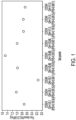
- Binder formulations with varying carboxylic acid/hydroxyl ratios and varying polyvinyl alcohol/sorbitol ratios were utilized to form thin boards (425 °F cure temp and 0.125-inch thickness) that were cut into strips. These ratios are depicted below in Table 5.
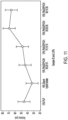
- Each board strip was subjected to a 3-point bend test, wherein a load was placed in the middle of each strip and the amount of load the board strip was able to withstand prior to break was measured. The results are depicted in Figure 1 .
- the flex stress/weight/LOI increased or decreased depending on the polyvinyl alcohol/sorbitol ratio.
- Flex stress is a three-point bend test (i.e., force until breakage) utilizing a 2" x 6" board with a 1/8" thickness.
- the highest flex stress/LOI overall was achieved when the carboxylic acid/hydroxyl group ratio was 1/0.66.
- the flex stress/LOI was further increased when the polyvinyl alcohol/sorbitol ratio was 0.5/0.5.
- a polyvinyl alcohol/sorbitol ratio of about 0.5/0.5 demonstrated the highest flex stress within each set of carboxylic acid/hydroxyl group ratios.
- Binder compositions with varying COOH/OH and long-chain polyol/short-chain polyol ratios were utilized to form non-woven fiberglass binder impregnated filter (BIF) sheets having a width of 9.5 mm, thickness of 0.5 mm, and a length of 97 mm.
- the non-woven fiberglass BIF sheets were cured for 3 minutes and 30 seconds at 425° F.
- the tensile strength, the Loss on Ignition (LOI) and tensile strength divided by the LOI (tensile strength/LOI) for each sample was determined under ambient conditions and steam ("hot/humid") conditions. The tensile strength was measured using Instron (Pulling speed of 2 inches/min).
- the LOI of the reinforcing fibers is the reduction in weight experienced by the fibers after heating them to a temperature sufficient to burn or pyrolyze the binder composition from the fibers.
- the LOI was measured according to the procedure set forth in TAPPI T-1013 OM06, Loss on Ignition of Fiberglass Mats (2006). To create the hot/humid environment, the filter sheets were placed in an autoclave at 240° F. at a pressure between 400 and 500 psi for 60 minutes.
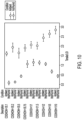
- Figure 10 illustrates the shift in tensile/LOI for filter sheets impregnated with binder compositions having varying COOH/OH ratios from 1/0.1 to 1/10.
- the optimal tensile/LOI under both ambient and hot/humid conditions can be seen when the COOH/OH ratio is not too low or too high.
- the hot/humid tensile/LOI suffers, which leads to insufficient strength properties.
- Binder compositions with varying ratios were utilized to form fiberglass insulation board (e.g., ceiling tiles).
- the insulation boards formed with binder compositions according to the preset application (labeled as PAA/S/PVOH in various ratios of polyacrylic acid/sorbitol/polyvinyl alcohol) were compared to boards formed using both a conventional carbohydrate-based binder composition (“Starch-Hybrid Binder Board”) and a phenol urea formaldehyde binder composition (“PUF Board”).
- the elastic modulus, compressive strength (delta b), and sag (inches) for each sample was determined under ambient conditions.
- each of the PAA/S/PVOH insulation board samples demonstrated improved Flexural Elastic Modulus, as compared to both conventional carbohydrate-based binder compositions and phenol urea formaldehyde-based binder compositions.
- PAA/S/PVOH 50:20:30 and PAA/S/PVOH 60:10:30 demonstrated the greatest improvement, with Flexural Elastic Modulus levels at about 70 psi and 68 psi, respectively.
- the PUF Board demonstrated a Flexural Elastic Modulus of about 46 psi
- the Starch-Hybrid Binder Board demonstrated an elastic modulus of about 31 psi.
- an insulation board with a thickness of about 1 inch and a density of about 6 lbs/ft 3 achieves an elastic modulus of at least 40 psi, including at least 45 psi, at least 50 psi, and at least 55 psi.
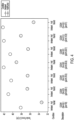
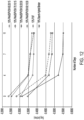
- Figure 12 illustrates the sag observed by various 4' x 4' insulation board panels after a set number of days in a hot/humid environment at 90 F / 90% rH (relative humidity).
- the PAA/S/PVOH binder compositions having lower levels of PVOH i.e., PAA/S/PVOH 60:20:15 and PAA/S/PVOH 75:10:15
- PAA/S/PVOH 60:20:15 and PAA/S/PVOH 75:10:15 demonstrated less sag under hot/humid conditions than both PUF Board and Starch-Hybrid Binder Board. This indicates that lowering the long-chain polyol in the binder compositions may help improve the hot/humid performance in applications that need very high standard of hot and humid performances.
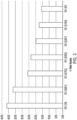
- Figure 13 illustrates the compressive strength at 10% deformation of fiberglass board products of different binders and LOI %. The test was performed on 6" x 6" insulation boards, with a thickness about 1" and density about 6 lb/ft 2 , according to ASTM method C-165. As illustrated in Figure 13 , the compressive strength of the insulation boards formed with a PAA/S/PVOH binder exceeded that of insulation boards formed with both a starch-hybrid binder and a PUF binder, demonstrating compressive strengths of about 260 lbs/ft 2 to over 500 lbs/ft 2 .
- a 6" x 6" insulation board with a thickness of about 1 inch achieves a compressive strength of at least 200 lbs/ft 2 , including at least 300 lbs/ft 2 , at least 400 lbs/ft 2 , and at least 500 lbs/ft 2 .
- Figure 14 illustrates the bond strength at break of fiberglass board products of different binders and LOI %.
- the test measures the strength in Z direction of 6" x 6" insulation boards with a thickness of about 1" and density of about 6 lb/ft 2 .
- the bond strength of insulation boards formed with PAA/S/PVOH binders exceeded that of insulation board formed with a starch-hybrid binder.
- the insulation boards formed with PAA/S/PVOH binders demonstrated a comparable bond strength to insulation boards formed with a PUF binder, demonstrating bond strengths of about 10 lbs/ft 2 to over 15 lbs/ft 2 .
- a 6" x 6" insulation board with a thickness of about 1 inch achieves a bond strength of at least 7.5 lbs./ft 2 /LOI, including at least 10 lbs./ft 2 /LOI, at least 12.5 lbs./ft 2 /LOI, and at least 15 lbs./ft 2 /LOI.
Landscapes
- Chemical & Material Sciences (AREA)
- Chemical Kinetics & Catalysis (AREA)
- Organic Chemistry (AREA)
- Health & Medical Sciences (AREA)
- Medicinal Chemistry (AREA)
- Polymers & Plastics (AREA)
- Engineering & Computer Science (AREA)
- Textile Engineering (AREA)
- General Chemical & Material Sciences (AREA)
- Dispersion Chemistry (AREA)
- Inorganic Chemistry (AREA)
- Life Sciences & Earth Sciences (AREA)
- General Life Sciences & Earth Sciences (AREA)
- Materials Engineering (AREA)
- Geochemistry & Mineralogy (AREA)
- Treatments For Attaching Organic Compounds To Fibrous Goods (AREA)
- Compositions Of Macromolecular Compounds (AREA)
- Adhesives Or Adhesive Processes (AREA)
- Paints Or Removers (AREA)
- Polyurethanes Or Polyureas (AREA)
Applications Claiming Priority (3)
| Application Number | Priority Date | Filing Date | Title |
|---|---|---|---|
| US201762569778P | 2017-10-09 | 2017-10-09 | |
| PCT/US2018/054910 WO2019074867A1 (en) | 2017-10-09 | 2018-10-09 | AQUEOUS BINDING COMPOSITIONS |
| EP18867266.1A EP3694918B1 (de) | 2017-10-09 | 2018-10-09 | Wässrige bindemittelzusammensetzungen |
Related Parent Applications (2)
| Application Number | Title | Priority Date | Filing Date |
|---|---|---|---|
| EP18867266.1A Division-Into EP3694918B1 (de) | 2017-10-09 | 2018-10-09 | Wässrige bindemittelzusammensetzungen |
| EP18867266.1A Division EP3694918B1 (de) | 2017-10-09 | 2018-10-09 | Wässrige bindemittelzusammensetzungen |
Publications (2)
| Publication Number | Publication Date |
|---|---|
| EP4306699A2 true EP4306699A2 (de) | 2024-01-17 |
| EP4306699A3 EP4306699A3 (de) | 2024-04-03 |
Family
ID=65993812
Family Applications (2)
| Application Number | Title | Priority Date | Filing Date |
|---|---|---|---|
| EP23205040.1A Pending EP4306699A3 (de) | 2017-10-09 | 2018-10-09 | Wässrige bindemittelzusammensetzungen |
| EP18867266.1A Revoked EP3694918B1 (de) | 2017-10-09 | 2018-10-09 | Wässrige bindemittelzusammensetzungen |
Family Applications After (1)
| Application Number | Title | Priority Date | Filing Date |
|---|---|---|---|
| EP18867266.1A Revoked EP3694918B1 (de) | 2017-10-09 | 2018-10-09 | Wässrige bindemittelzusammensetzungen |
Country Status (13)
| Country | Link |
|---|---|
| US (3) | US11136451B2 (de) |
| EP (2) | EP4306699A3 (de) |
| JP (1) | JP7219271B2 (de) |
| KR (1) | KR102594229B1 (de) |
| CN (1) | CN111201275B (de) |
| AU (2) | AU2018348020B2 (de) |
| CA (1) | CA3075644A1 (de) |
| ES (1) | ES2972660T3 (de) |
| HU (1) | HUE066157T2 (de) |
| MX (3) | MX2020003062A (de) |
| PL (1) | PL3694918T3 (de) |
| RU (1) | RU2020112202A (de) |
| WO (1) | WO2019074867A1 (de) |
Cited By (1)
| Publication number | Priority date | Publication date | Assignee | Title |
|---|---|---|---|---|
| WO2026010693A1 (en) * | 2024-07-02 | 2026-01-08 | Basf Se | Improved aqueous binders |
Families Citing this family (16)
| Publication number | Priority date | Publication date | Assignee | Title |
|---|---|---|---|---|
| CA3075644A1 (en) | 2017-10-09 | 2019-04-18 | Owens Corning Intellectual Capital, Llc | Aqueous binder compositions |
| AU2020270841A1 (en) * | 2019-04-09 | 2021-12-02 | Owens Corning Intellectual Capital, Llc | Aqueous binder compositions |
| WO2020210191A1 (en) * | 2019-04-09 | 2020-10-15 | Owens Corning Intellectual Capital, Llc | Insulation products formed with aqueous binder compositions |
| KR20220115583A (ko) * | 2019-12-09 | 2022-08-17 | 오웬스 코닝 인텔렉츄얼 캐피탈 엘엘씨 | 유리섬유 절연 제품 |
| BR112022010567A2 (pt) * | 2019-12-09 | 2022-08-23 | Owens Corning Intellectual Capital Llc | Produto de isolamento de fibra de vidro |
| CN114787261B (zh) * | 2019-12-09 | 2024-06-14 | 欧文斯科宁知识产权资产有限公司 | 玻璃纤维绝缘产品 |
| US11813833B2 (en) | 2019-12-09 | 2023-11-14 | Owens Corning Intellectual Capital, Llc | Fiberglass insulation product |
| US20220064408A1 (en) * | 2020-09-01 | 2022-03-03 | Owens Corning Intellectual Capital, Llc | Aqueous binder compositions for mineral wool products |
| US20220106492A1 (en) * | 2020-10-01 | 2022-04-07 | Owens Corning Intellectual Capital, Llc | Additives for binder compositions in fibrous insulation products |
| KR20230082034A (ko) | 2020-10-01 | 2023-06-08 | 오웬스 코닝 인텔렉츄얼 캐피탈 엘엘씨 | B-스테이지 가능한 수성 결합제 조성물 |
| EP4001376A1 (de) | 2020-11-13 | 2022-05-25 | Wilsonart LLC | Mehrteiliges ligninbasiertes harzsystem für dekorative laminate |
| CA3221723A1 (en) * | 2021-06-04 | 2022-12-08 | Owens Corning Intellectual Capital, Llc | Fine fiber insulation product |
| AU2022284877A1 (en) | 2021-06-04 | 2023-11-02 | Owens Corning Intellectual Capital, Llc | Fine fiber insulation products with improved thermal properties |
| MX2025013171A (es) | 2023-05-05 | 2025-12-01 | Cargill Inc | Sistemas aglutinantes de base biologica |
| WO2025137029A1 (en) * | 2023-12-22 | 2025-06-26 | Owens Corning Intellectual Capital, Llc | Coated non-woven fibrous mat |
| WO2025151395A1 (en) | 2024-01-12 | 2025-07-17 | Cargill, Incorporated | Bio-based binder systems and dedust compositions |
Family Cites Families (245)
| Publication number | Priority date | Publication date | Assignee | Title |
|---|---|---|---|---|
| DE2152596C2 (de) | 1971-10-22 | 1982-09-30 | Uhde Gmbh, 4600 Dortmund | Verfahren zur Herstellung eines durch chemische Mittel gebundenen nicht gewebten Faserflächengebildes mit hoher Wasserdampfaufnahmefähigkeit und guten Wärmeisolationseigenschaften |
| US4613627A (en) | 1982-12-13 | 1986-09-23 | Usg Acoustical Products Company | Process for the manufacture of shaped fibrous products and the resultant product |
| FR2539000A1 (fr) | 1983-01-07 | 1984-07-13 | Challet Heraut Creations | Substrat de culture pour les cellules, tissus, organes vegetaux et plantes entieres |
| US5644880A (en) | 1984-02-27 | 1997-07-08 | Georgia-Pacific Corporation | Gypsum board and systems containing same |
| SE8500998D0 (sv) | 1985-03-01 | 1985-03-01 | Miden Building System Kommandi | Fergborttagningsforfarande |
| US4777763A (en) | 1986-06-17 | 1988-10-18 | Owens-Corning Fiberglas Corporation | Plant growing medium |
| JPH0448689Y2 (de) | 1987-03-31 | 1992-11-17 | ||
| US4879173A (en) | 1988-01-06 | 1989-11-07 | Georgia-Pacific Corporation | Glass mat with reinforcing binder |
| FR2658030B1 (fr) | 1990-02-14 | 1992-05-29 | Saint Gobain Isover | Technique de culture hors-sol utilisant des materiaux issus de substrats usages. |
| DK228390D0 (da) | 1990-09-21 | 1990-09-21 | Grodania As | Plantedyrkningsmedium af mineralfibre og indeholdende et bindemiddel og et tensid |
| DE4035249A1 (de) | 1990-11-06 | 1992-05-07 | Gruenzweig & Hartmann | Formteil aus gebundener mineralwolle zur kultivierunng von pflanzen |
| US5244695A (en) | 1992-03-17 | 1993-09-14 | Air Products And Chemicals, Inc. | Aqueous binder saturants used in a process for making nonwoven filters |
| DE4208733A1 (de) | 1992-03-18 | 1993-09-23 | Gruenzweig & Hartmann | Aufwuchsmedium fuer pflanzen sowie verfahren zu dessen herstellung |
| DE4216536A1 (de) | 1992-05-19 | 1993-11-25 | Bayer Ag | Wasserverdünnbare Polyesterpolyole und ihre Verwendung |
| US5661213A (en) * | 1992-08-06 | 1997-08-26 | Rohm And Haas Company | Curable aqueous composition and use as fiberglass nonwoven binder |
| US5810961A (en) | 1993-11-19 | 1998-09-22 | E. Khashoggi Industries, Llc | Methods for manufacturing molded sheets having a high starch content |
| US5679145A (en) | 1992-08-11 | 1997-10-21 | E. Khashoggi Industries | Starch-based compositions having uniformly dispersed fibers used to manufacture high strength articles having a fiber-reinforced, starch-bound cellular matrix |
| US5660900A (en) | 1992-08-11 | 1997-08-26 | E. Khashoggi Industries | Inorganically filled, starch-bound compositions for manufacturing containers and other articles having a thermodynamically controlled cellular matrix |
| US5300192A (en) | 1992-08-17 | 1994-04-05 | Weyerhaeuser Company | Wet laid fiber sheet manufacturing with reactivatable binders for binding particles to fibers |
| US5867937A (en) | 1993-03-24 | 1999-02-09 | Smithers-Oasis Company | Method for decreasing hydrophobicity of peat, bark and rockwool in soilless mixes used for plant growth, promoting easier, faster and more even watering of such mixes without plant injury and providing activity for future watering |
| US5318990A (en) | 1993-06-21 | 1994-06-07 | Owens-Corning Fiberglas Technology Inc. | Fibrous glass binders |
| FR2727826B1 (fr) | 1994-12-09 | 1997-01-31 | Orgel | Substrat pour lutte biologique |
| DE19606393A1 (de) | 1996-02-21 | 1997-08-28 | Basf Ag | Formaldehydfreie Bindemittel für Formkörper |
| DE19606394A1 (de) | 1996-02-21 | 1997-08-28 | Basf Ag | Formaldehydfreie, wäßrige Bindemittel |
| DE19606392A1 (de) | 1996-02-21 | 1997-08-28 | Basf Ag | Formaldehydfreie Beschichtungsmittel für Formkörper |
| US5948833A (en) | 1996-06-04 | 1999-09-07 | Rohm And Haas Company | Method of reducing yellowing of water-borne road marking paints and composition used therein |
| DE19735959A1 (de) | 1997-08-19 | 1999-02-25 | Basf Ag | Verwendung thermisch härtbarer, wässriger Zusammensetzungen als Bindemittel für Formkörper |
| WO1999016984A1 (en) | 1997-09-26 | 1999-04-08 | Ibiden Co., Ltd. | Composite refractory building material, method of manufacturing the same, gypsum board, and resin composition |
| US6197404B1 (en) | 1997-10-31 | 2001-03-06 | Kimberly-Clark Worldwide, Inc. | Creped nonwoven materials |
| CA2255556A1 (en) | 1997-12-24 | 1999-06-24 | Arcoplast, Inc. | Closed edge fiberglass panels |
| US6123172A (en) | 1999-07-22 | 2000-09-26 | Lydall, Inc. | Thermal and acoustical insulating shield |
| AU4190299A (en) | 1998-05-28 | 1999-12-13 | Owens Corning | Corrosion inhibiting composition for polyacrylic acid based binders |
| DE19827475A1 (de) | 1998-06-19 | 1999-12-23 | Wacker Chemie Gmbh | Faserbindepulver-Zusammensetzung zur Verwendung für die Verfestigung von Fasermaterialien |
| US6774071B2 (en) | 1998-09-08 | 2004-08-10 | Building Materials Investment Corporation | Foamed facer and insulation boards made therefrom |
| EP0990727A1 (de) * | 1998-10-02 | 2000-04-05 | Johns Manville International Inc. | Polycarbonsäure/Polyol enthaltendes Bindemittel für Glasfaser |
| US6331350B1 (en) | 1998-10-02 | 2001-12-18 | Johns Manville International, Inc. | Polycarboxy/polyol fiberglass binder of low pH |
| PT1038433E (pt) | 1999-03-19 | 2008-09-11 | Saint Gobain Cultilene B V | Substrato de cultura fora-solo |
| DE19930060A1 (de) | 1999-06-30 | 2001-01-11 | Basf Coatings Ag | Elektrotauchlackbad mit wasserlöslichem Polyvinylalkohol(co)polymeren |
| US6412154B1 (en) | 1999-07-30 | 2002-07-02 | Johns Manville International, Inc. | Hydrodynamically bounded carrier webs and use thereof |
| US6780356B1 (en) | 1999-10-01 | 2004-08-24 | Awi Licensing Company | Method for producing an inorganic foam structure for use as a durable acoustical panel |
| US6305495B1 (en) | 1999-11-02 | 2001-10-23 | Capaul Corporation | Surfacing panels for acoustical ceiling systems |
| EP1143064B1 (de) | 2000-04-07 | 2007-09-05 | Johns Manville Europe GmbH | Abziehbarer Glasfaserwandbehang |
| US7377084B2 (en) | 2000-04-24 | 2008-05-27 | Hunter Douglas Inc. | Compressible structural panel |
| EP1164163A1 (de) | 2000-06-16 | 2001-12-19 | Rockwool International A/S | Harz für Mineralwolleprodukte |
| FR2812012B1 (fr) | 2000-07-18 | 2003-06-13 | Lafarge Platres | Plaque de platre a resistance au feu amelioree et sa reparation |
| US6443256B1 (en) | 2000-12-27 | 2002-09-03 | Usg Interiors, Inc. | Dual layer acoustical ceiling tile having an improved sound absorption value |
| US6933349B2 (en) | 2001-03-21 | 2005-08-23 | Owens Corning Fiberglas Technology, Inc. | Low odor insulation binder from phosphite terminated polyacrylic acid |
| US6838163B2 (en) | 2001-04-12 | 2005-01-04 | Milliken & Company | Composite facer for wallboards |
| US7157524B2 (en) | 2001-05-31 | 2007-01-02 | Owens Corning Fiberglas Technology, Inc. | Surfactant-containing insulation binder |
| US8017531B2 (en) | 2001-09-18 | 2011-09-13 | Elkcorp | Composite material |
| US20030060113A1 (en) | 2001-09-20 | 2003-03-27 | Christie Peter A. | Thermo formable acoustical panel |
| US7141284B2 (en) | 2002-03-20 | 2006-11-28 | Saint-Gobain Technical Fabrics Canada, Ltd. | Drywall tape and joint |
| US6759116B2 (en) | 2002-05-01 | 2004-07-06 | Per Edlund | Volumetric effect glass fiber wallcoverings |
| DE60326582D1 (de) | 2002-06-18 | 2009-04-23 | Georgia Pacific Chemicals Llc | Formaldehydfreies isolierungsbindemittel vom polyestertyp |
| US6818694B2 (en) | 2002-10-10 | 2004-11-16 | Johns Manville International, Inc. | Filler extended fiberglass binder |
| US6734237B1 (en) | 2002-10-28 | 2004-05-11 | Johns Manville International,, Inc. | Imidazoline containing fiberglass binder |
| US6699945B1 (en) | 2002-12-03 | 2004-03-02 | Owens Corning Fiberglas Technology, Inc. | Polycarboxylic acid based co-binder |
| US7026390B2 (en) | 2002-12-19 | 2006-04-11 | Owens Corning Fiberglas Technology, Inc. | Extended binder compositions |
| US7049251B2 (en) | 2003-01-21 | 2006-05-23 | Saint-Gobain Technical Fabrics Canada Ltd | Facing material with controlled porosity for construction boards |
| US6803439B2 (en) | 2003-02-20 | 2004-10-12 | Johns Nanville International, Inc. | Fatty acid containing fiberglass binder |
| US6884838B2 (en) | 2003-02-20 | 2005-04-26 | Johns Manville International, Inc. | Water repellant fiberglass binder |
| US6884849B2 (en) * | 2003-02-21 | 2005-04-26 | Owens-Corning Fiberglas Technology, Inc. | Poly alcohol-based binder composition |
| CA2421961C (en) | 2003-03-11 | 2007-05-01 | Michael J. Straumietis | A volume-specific, chronologically sequential hydroponic plant nutrient kit and method of use |
| FR2853903B1 (fr) | 2003-04-16 | 2005-05-27 | Saint Gobain Isover | Composition d'encollage de fibres minerales renfermant un polyacide carboxylique et une polyamine, procede de preparation, et produits resultants |
| US20040209074A1 (en) | 2003-04-17 | 2004-10-21 | Georgia-Pacific Gypsum Corporation | Mat faced gypsum board |
| US20040219847A1 (en) | 2003-04-30 | 2004-11-04 | Miller Wayne P. | Method for flexibilizing glass fiber nonwoven bound with cured urea formaldehyde resin |
| WO2004098270A1 (en) | 2003-05-01 | 2004-11-18 | Bki Holding Corporation | Improved hydroponic growth medium |
| AU2004201002B2 (en) | 2003-08-26 | 2009-08-06 | Rohm And Haas Company | Curable aqueous composition and use as heat-resistant nonwoven binder |
| US20050059770A1 (en) | 2003-09-15 | 2005-03-17 | Georgia-Pacific Resins Corporation | Formaldehyde free insulation binder |
| US7989370B2 (en) | 2003-10-17 | 2011-08-02 | Georgia-Pacific Gypsum Llc | Interior wallboard and method of making same |
| US8283266B2 (en) | 2003-11-20 | 2012-10-09 | Johns Manville | Method of making tough, flexible mats and tough, flexible mats |
| US20050112374A1 (en) | 2003-11-20 | 2005-05-26 | Alan Michael Jaffee | Method of making fibrous mats and fibrous mats |
| US7842382B2 (en) | 2004-03-11 | 2010-11-30 | Knauf Insulation Gmbh | Binder compositions and associated methods |
| US20050215153A1 (en) | 2004-03-23 | 2005-09-29 | Cossement Marc R | Dextrin binder composition for heat resistant non-wovens |
| US7338702B2 (en) | 2004-04-27 | 2008-03-04 | Johns Manville | Non-woven glass mat with dissolvable binder system for fiber-reinforced gypsum board |
| DE102004024380A1 (de) | 2004-05-17 | 2005-12-15 | Saint-Gobain Isover G+H Ag | Verwendung von Glycerin als Zusatz für formaldehydfreie, wässrige Bindemittel |
| US20050284065A1 (en) | 2004-06-02 | 2005-12-29 | Shaffer Roy E | Faced fibrous insulation |
| US20050288424A1 (en) | 2004-06-23 | 2005-12-29 | Fisler Diana K | Ethoxysilane containing fiberglass binder |
| US20060036014A1 (en) | 2004-08-13 | 2006-02-16 | Hogan Charles R | Wallcovering coating |
| US7803727B2 (en) | 2004-08-16 | 2010-09-28 | Johns Manville | Vinyl floor covering system with woven or non-woven glass fiber mat segmented reinforcement |
| US20060078719A1 (en) | 2004-10-07 | 2006-04-13 | Miele Philip F | Water repellant fiberglass binder comprising a fluorinated polymer |
| EP1814927A1 (de) | 2004-10-13 | 2007-08-08 | Knauf Insulation GmbH | Polyesterbindemittelzusammensetzungen |
| US20060101796A1 (en) | 2004-11-12 | 2006-05-18 | Kern Charles F | Air filtration media |
| JP4916888B2 (ja) | 2004-12-03 | 2012-04-18 | 三菱製紙株式会社 | 石膏ボード用不織布及びその製造方法 |
| US20060137799A1 (en) | 2004-12-29 | 2006-06-29 | Enamul Haque | Thermoplastic composites with improved sound absorbing capabilities |
| US7824762B2 (en) | 2005-03-08 | 2010-11-02 | Johns Manville | Nonwoven fibrous mat laminate |
| US20060217471A1 (en) | 2005-03-22 | 2006-09-28 | Shooshtari Kiarash A | Fiberglass binder comprising maleinized polyenes |
| US20060216489A1 (en) | 2005-03-22 | 2006-09-28 | Shooshtari Kiarash A | Fiberglass binder comprising maleinated polyols |
| US7635657B2 (en) | 2005-04-25 | 2009-12-22 | Georgia-Pacific Gypsum Llc | Interior wallboard and method of making same |
| RU2430124C2 (ru) | 2005-05-06 | 2011-09-27 | Дайнеа Ой | Отверждаемая водная композиция на основе поливинилового спирта, не содержащая формальдегид |
| US20100016143A1 (en) | 2005-05-11 | 2010-01-21 | Kiarash Alavi Shooshtari | Fiberglass binder comprising epoxidized oil and multifunctional carboxylic acids or anhydrides |
| WO2006136389A1 (de) | 2005-06-21 | 2006-12-28 | Deutsche Rockwool Mineralwoll Gmbh & Co. Ohg | Verfahren zur herstellung eines dämmstoffelementes aus mineralfasern und wärmedämmverbundsystem aus mehreren dämmstoffelementen |
| DE602006004507D1 (de) | 2005-07-08 | 2009-02-12 | Rohm & Haas | Härtbare Zusammensetzungen, die reaktive Beta-Hydroxylamide aus Lactonen enthalten |
| US20070009688A1 (en) | 2005-07-11 | 2007-01-11 | Enamul Haque | Glass/polymer reinforcement backing for siding and compression packaging of siding backed with glass/polymer |
| US20070014995A1 (en) | 2005-07-12 | 2007-01-18 | Jacob Chacko | Thin rotary-fiberized glass insulation and process for producing same |
| KR101410624B1 (ko) | 2005-07-26 | 2014-06-20 | 크나우프 인설레이션 게엠베하 | 접착제 및 이들로 만들어진 물질 |
| US8211974B2 (en) | 2005-10-07 | 2012-07-03 | Johns Manville | Curable fiberglass binder comprising a polyacetal or polyketal |
| DE102005056791B4 (de) | 2005-11-28 | 2014-04-30 | Saint-Gobain Isover G+H Ag | Zusammensetzung, Bindemittel für Mineralwolle enthaltend diese Zusammensetzung sowie Verwendung dieser Zusammensetzung |
| US20070125011A1 (en) | 2005-12-06 | 2007-06-07 | Weir Charles R | Acoustic partition for removable panel finishing system |
| US8007886B2 (en) | 2005-12-21 | 2011-08-30 | Johns Manville | Performance enhancing underlayment, underlayment assembly, and method |
| US20070141931A1 (en) | 2005-12-21 | 2007-06-21 | Malay Nandi | Faced board material having a smooth aesthetically pleasing outer surface and good adhesion of facer to core |
| WO2007129202A1 (en) | 2006-05-05 | 2007-11-15 | Dynea Oy | Hydrophilic binder for agricultural plant growth substrate |
| US8173219B2 (en) | 2006-06-09 | 2012-05-08 | Georgia-Pacific Chemicals Llc | Porous fiberglass materials having reduced formaldehyde emissions |
| US9217065B2 (en) | 2006-06-16 | 2015-12-22 | Georgia-Pacific Chemicals Llc | Binder compositions for making fiberglass products |
| US9922634B2 (en) | 2006-06-30 | 2018-03-20 | 3M Innovative Properties Company | Sound insulation constructions and methods of using the same |
| EP1880597A1 (de) | 2006-07-20 | 2008-01-23 | Rockwool International A/S | Zuchtsubstrate, ihre Herstellung und ihre Verwendung |
| EP1880596A1 (de) | 2006-07-20 | 2008-01-23 | Rockwool International A/S | Zuchtsubstrate, ihre Herstellung und ihre Verwendung |
| EP1880600A1 (de) | 2006-07-20 | 2008-01-23 | Rockwool International A/S | Zuchtsubstrate, ihre Herstellung und ihre Verwendung |
| EP1892485A1 (de) | 2006-08-23 | 2008-02-27 | Rockwool International A/S | Sonnenkollektor |
| EP1897433A1 (de) | 2006-09-06 | 2008-03-12 | Rockwool International A/S | Wässrige Bindemittel-Zusammensetzung für Mineralfasern |
| PL2077977T5 (pl) | 2006-11-03 | 2018-08-31 | Prefere Resins Holding Gmbh | Środek wiążący dla włóknin na bazie materiałów odnawialnych |
| US20080176050A1 (en) | 2006-12-01 | 2008-07-24 | Lydall, Inc. | Gypsum wallboard facings |
| US8604122B2 (en) | 2006-12-20 | 2013-12-10 | Rohm And Haas Company | Curable aqueous compositions |
| US8299153B2 (en) | 2006-12-22 | 2012-10-30 | Rohm And Haas Company | Curable aqueous compositions |
| EP1942141A1 (de) | 2006-12-22 | 2008-07-09 | Rohm and Haas France SAS | Härtbare Zusammensetzung |
| EP1942119A1 (de) | 2006-12-22 | 2008-07-09 | Rohm and Haas France SAS | Härtbare wässrige Zusammensetzung |
| US20080160857A1 (en) * | 2006-12-27 | 2008-07-03 | Chacko Jacob T | Blended insulation blanket |
| US7662258B2 (en) | 2006-12-28 | 2010-02-16 | Johns Manville | Roofing mat using urea-formaldehyde binder of particular viscosity and surface tension |
| US20100058661A1 (en) | 2007-01-25 | 2010-03-11 | Roger Jackson | Hydroponics growing medium |
| EP2137223B1 (de) | 2007-04-13 | 2019-02-27 | Knauf Insulation GmbH | Maillard-resol-verbundstoffbinder |
| US8357746B2 (en) | 2007-05-03 | 2013-01-22 | Johns Manville | Binding of fibrous material utilizing a water soluble Michael adduct crosslinking agent and polycarboxylic acid |
| US20080274292A1 (en) | 2007-05-03 | 2008-11-06 | Kiarash Alavi Shooshtari | Binding of fibrous material utilizing a crosslinked polyamic acid |
| BRPI0814014A2 (pt) | 2007-07-05 | 2015-02-03 | Knauf Insulation Gmbh | Material colante de maillard de base ácido hidróxi-monocarboxílico |
| GB0715100D0 (en) | 2007-08-03 | 2007-09-12 | Knauf Insulation Ltd | Binders |
| DE102007042554B4 (de) | 2007-09-07 | 2017-05-11 | Carl Freudenberg Kg | Vliesstoff mit Partikelfüllung |
| US7833638B2 (en) | 2007-09-13 | 2010-11-16 | Johns Manville | Glass mat with inorganic coating |
| GB0718857D0 (en) | 2007-09-27 | 2007-11-07 | Dynea Austria Gmbh | Water dilutable resin composition |
| FR2924719B1 (fr) | 2007-12-05 | 2010-09-10 | Saint Gobain Isover | Composition d'encollage pour laine minerale comprenant un monosaccharide et/ou un polysaccharide et un acide organique polycarboxylique, et produits isolants obtenus. |
| CA2642965C (en) * | 2007-12-12 | 2012-01-03 | Rohm And Haas Company | Binder composition of a polycarboxy emulsion and polyol |
| EP2072480A1 (de) | 2007-12-21 | 2009-06-24 | Rockwool International A/S | Verfahren zur Behandlung von Mineralwolle |
| EP2222721A1 (de) | 2007-12-21 | 2010-09-01 | Akzo Nobel N.V. | Wärmehärtende polymere |
| US7829488B2 (en) | 2008-01-22 | 2010-11-09 | Johns Manville | Non-woven glass fiber mat faced gypsum board and process of manufacture |
| US20090208714A1 (en) | 2008-02-18 | 2009-08-20 | Georgia-Pacific Gypsum Llc | Pre-coated non-woven mat-faced gypsum panel |
| EP2093266A1 (de) | 2008-02-25 | 2009-08-26 | Rockwool International A/S | Wässrige Bindezusammensetzung |
| EP2111746A1 (de) | 2008-04-22 | 2009-10-28 | Rockwool International A/S | Verfahren zum Züchten einer Pflanze |
| US20090275699A1 (en) | 2008-05-05 | 2009-11-05 | Mingfu Zhang | Starch containing formaldehyde-free thermoset binders for fiber products |
| EP2143321A1 (de) | 2008-07-10 | 2010-01-13 | Rockwool International A/S | Verfahren zum Züchten einer Pflanze |
| US20100040832A1 (en) | 2008-08-13 | 2010-02-18 | Saint-Gobain Technical Fabrics America, Inc. | Formaldehyde free woven and non-woven fabrics having improved hot wet tensile strength and binder formulations for same |
| US8486516B2 (en) | 2008-08-29 | 2013-07-16 | Certainteed Gypsum, Inc. | Plastic coated composite building boards and method of making same |
| FR2935707B1 (fr) | 2008-09-11 | 2012-07-20 | Saint Gobain Isover | Composition d'encollage pour laine minerale a base de sucre hydrogene et produits isolants obtenus |
| US20100064618A1 (en) | 2008-09-15 | 2010-03-18 | Certainteed Corporation | Ceiling tile and edge suspension system |
| US8084379B2 (en) | 2008-09-15 | 2011-12-27 | Johns Manville | Wall panel system |
| US20100154300A1 (en) | 2008-12-22 | 2010-06-24 | Wiersma John C | Hydroponics plant growing assembly |
| US20110003522A1 (en) | 2009-05-15 | 2011-01-06 | Liang Chen | Bio-based aqueous binder for fiberglass insulation materials and non-woven mats |
| US8403108B2 (en) | 2009-06-12 | 2013-03-26 | Precision Fabrics Group, Inc. | Acoustically tunable sound absorption articles and methods of making same |
| US20110223364A1 (en) | 2009-10-09 | 2011-09-15 | Hawkins Christopher M | Insulative products having bio-based binders |
| EP3578528A1 (de) | 2009-10-09 | 2019-12-11 | Owens Corning Intellectual Capital, LLC | Biobasierte bindemittel für dämm- und vliesmatten |
| CA2725896C (en) | 2009-12-30 | 2013-11-19 | Rohm And Haas Company | Carboxylated lignin based binders |
| US8865816B2 (en) | 2010-01-06 | 2014-10-21 | Johns Manville | Formaldehyde-free binder compositions containing metal-ion crosslinkers and products made there from |
| US7984594B1 (en) | 2010-01-20 | 2011-07-26 | Propst Family Limited Partnership, Llc | Composite building and panel systems |
| JP5541939B2 (ja) | 2010-02-01 | 2014-07-09 | 日東電工株式会社 | アクリル系粘着剤樹脂組成物およびそれを用いた粘着シート又は粘着テープ |
| USPP27475P2 (en) | 2010-03-13 | 2016-12-20 | Kubby Patent And Licenses, Limited Liability Company | Cannabis plant named ‘Ecuadorian Sativa’ |
| US20130059075A1 (en) | 2010-05-07 | 2013-03-07 | Knauf Insulation | Carbohydrate polyamine binders and materials made therewith |
| US8409391B2 (en) | 2010-06-07 | 2013-04-02 | Certainteed Gypsum, Inc. | Method for constructing composite building boards using dissolvable films |
| FR2964012B1 (fr) | 2010-08-31 | 2017-07-21 | Rockwool Int | Culture de plantes dans un substrat a base de laine minerale comprenant un liant |
| US20120076983A1 (en) | 2010-09-29 | 2012-03-29 | Usg Interiors, Inc. | Panels for the interior surfaces of buildings |
| FR2966822B1 (fr) | 2010-11-02 | 2017-12-22 | Saint-Gobain Technical Fabrics Europe | Liant pour mat de fibres, notamment minerales, et produits obtenus |
| US20120168054A1 (en) | 2011-01-04 | 2012-07-05 | Owens Corning Intellectual Capital, Llc | Use of silicones to improve fiberglass insulation products |
| US9238749B2 (en) | 2011-02-14 | 2016-01-19 | Basf Se | Aqueous binder for granular and/or fibrous substrates |
| US8980998B2 (en) | 2011-03-23 | 2015-03-17 | Basf Se | Aqueous binders for granular and/or fibrous substrates |
| WO2012138723A1 (en) | 2011-04-07 | 2012-10-11 | Cargill, Incorporated | Bio-based binders including carbohydrates and a pre-reacted product of an alcohol or polyol and a monomeric or polymeric polycarboxylic acid |
| US20140186635A1 (en) | 2011-05-07 | 2014-07-03 | Knauf Insulation | Liquid high solids binder composition |
| FR2975689B1 (fr) | 2011-05-25 | 2014-02-28 | Saint Gobain Isover | Composition d'encollage exempte de formaldehyde pour fibres, notamment minerales, et produits resultants. |
| US20140083328A1 (en) | 2011-05-27 | 2014-03-27 | Owens Corning Intellectual Capital, Llc | Bio-based binder systems |
| US20120311744A1 (en) | 2011-06-06 | 2012-12-06 | Erich E. Sirkowski | Marked Cannabis For Indicating Medical Marijuana |
| US8815382B2 (en) | 2011-07-07 | 2014-08-26 | U.S. Harves Postal Protection Services Corporation | Method and use of organic and mineral admixtures for EMI and radioactive isotope shielding of building materials such as glass fiber wall coverings, gypsum wallboard and electrically conductive or resistive, high performance, high strength concrete |
| US9561172B2 (en) | 2011-07-11 | 2017-02-07 | Nof Corporation | Cosmetic composition having both transparent appearance and structural recoverability |
| US9957409B2 (en) | 2011-07-21 | 2018-05-01 | Owens Corning Intellectual Capital, Llc | Binder compositions with polyvalent phosphorus crosslinking agents |
| FR2978446B1 (fr) | 2011-07-27 | 2015-06-05 | Saint Gobain Isover | Composition d'encollage pour laine minerale a base de maltitol et produits isolants obtenus |
| FR2978768B1 (fr) | 2011-08-05 | 2014-11-28 | Saint Gobain Isover | Composition d'encollage pour laine minerale a base de saccharide reducteur et de saccharide hydrogene, et produits isolants obtenus |
| BR112014002837A2 (pt) | 2011-08-05 | 2017-03-07 | Celanese Emulsions Gmbh | dispersão aquosa com baixo teor de formaldeído de um copolímero de vinil éster/etileno preparado por meio de copolimerização de emulsão de uma mistura de monômero; composição de adesivo; produto de cigarro; e uso da composição de adesivo |
| NO2755498T3 (de) | 2011-09-15 | 2018-07-07 | ||
| AU2012315361A1 (en) | 2011-09-30 | 2014-04-17 | Owens Corning Intellectual Capital, Llc | Method of forming a web from fibrous materails |
| US20140350142A1 (en) | 2011-12-02 | 2014-11-27 | Rockwool International A/S | Aqueous binder composition |
| DE102011121589A1 (de) | 2011-12-20 | 2013-06-20 | Johns Manville Europe Gmbh | Binderverfestigtes, textiles Flächengebilde, Verfahren zu dessen Herstellung und dessen Verwendung |
| US20150027052A1 (en) | 2011-12-22 | 2015-01-29 | Rockwool International A/S | Plant growth substrates |
| EP2623310A1 (de) | 2012-02-03 | 2013-08-07 | Ahlstrom Corporation | Für nasse und feuchte Bereiche geeignete Gipsplatte |
| GB201206193D0 (en) | 2012-04-05 | 2012-05-23 | Knauf Insulation Ltd | Binders and associated products |
| US8791198B2 (en) | 2012-04-30 | 2014-07-29 | H.B. Fuller Company | Curable aqueous composition |
| IN2014MN02399A (de) | 2012-06-01 | 2015-08-21 | Stm Technologies S R L | |
| FR2991358B1 (fr) | 2012-06-04 | 2014-06-13 | Saint Gobain Adfors | Toile de verre autoadhesive et activable par l’eau |
| US20130334726A1 (en) | 2012-06-13 | 2013-12-19 | Owens Corning Intellectual Capital, Llc | Use of Surfactants To Improve Aged Properties of Fiberglass Insulation Products |
| US8980774B2 (en) | 2012-06-15 | 2015-03-17 | Hexion Inc. | Compositions and methods for making polyesters and articles therefrom |
| US9267238B2 (en) | 2012-07-25 | 2016-02-23 | Johns Manville | Glass fiber reinforced facer mat |
| PL2953447T3 (pl) | 2013-02-08 | 2025-06-02 | Rockwool A/S | System do uprawy roślin |
| ES2745751T3 (es) | 2013-03-14 | 2020-03-03 | Georgia Pacific Chemicals Llc | Composiciones de aglutinante y métodos de preparación y uso de las mismas |
| WO2015001083A1 (en) | 2013-07-05 | 2015-01-08 | Rockwool International A/S | Plant growth system |
| JP5462973B1 (ja) | 2013-08-26 | 2014-04-02 | ユニチカ株式会社 | 透明不燃性シート |
| PL2843129T5 (pl) | 2013-08-30 | 2023-09-18 | Saint-Gobain Placo | Wzmocniona płyta gipsowa o poprawionej ognioodporności |
| US9144955B2 (en) | 2013-09-04 | 2015-09-29 | Johns Manville | Blended thermoplastic and thermoset materials and methods |
| FI125943B (en) | 2013-09-26 | 2016-04-15 | Teknologian Tutkimuskeskus Vtt Oy | Plant substrate structures based on white moss and their method of production |
| DK201400055U3 (da) | 2014-03-28 | 2015-07-10 | Plantui Oy | Anordning til hydroponisk dyrkning |
| ES2612561T3 (es) | 2014-03-28 | 2017-05-17 | Ursa Insulation, S.A. | Dispersión de resina exenta de formaldehído, endurecible y mejorada con viscosidad reducida y productos de lana mineral producidos con ella |
| PL2923561T3 (pl) | 2014-03-28 | 2018-04-30 | Plantui Oy | Hydroponiczny sposób uprawy ogrodniczej w pomieszczeniach |
| US9376810B2 (en) | 2014-04-25 | 2016-06-28 | Usg Interiors, Llc | Multi-layer ceiling tile |
| FR3021651A1 (fr) | 2014-05-28 | 2015-12-04 | Saint Gobain Isover | Composition de liant pour laine minerale |
| US20180139911A1 (en) | 2014-05-29 | 2018-05-24 | Rockwool International A/S | Growth substrate product |
| GB201412706D0 (en) | 2014-07-17 | 2014-09-03 | Knauf Insulation And Knauf Insulation Ltd | Improved binder compositions and uses thereof |
| GB201412709D0 (en) | 2014-07-17 | 2014-09-03 | Knauf Insulation And Knauf Insulation Ltd | Improved binder compositions and uses thereof |
| AU2015306073A1 (en) | 2014-08-19 | 2017-03-30 | Bfre Pty Ltd | Insulated and prefinished wall panel and wall cladding assembly |
| US12108711B2 (en) | 2014-09-23 | 2024-10-08 | Hologenix Llc | Active polymer materials for growing more vigorous, larger and healthier plants |
| US20160088809A1 (en) | 2014-09-30 | 2016-03-31 | MJAR Holdings, LLC | Methods of cannabis cultivation using a capillary mat |
| WO2016055128A1 (en) | 2014-10-06 | 2016-04-14 | Siniat International | Improved mat and related gypsum boards suitable for wet or humid areas |
| US9751289B2 (en) | 2014-11-10 | 2017-09-05 | Knauf Insulation, Inc. | Insulation articles including corrosion inhibitors and methods of producing the same |
| US10888054B2 (en) | 2014-11-19 | 2021-01-12 | University Of Wyoming | Vertical hydroponic tower array fixture system |
| US10060058B2 (en) | 2014-11-21 | 2018-08-28 | Georgia-Pacific Gypsum Llc | Hybrid nonwoven mats and methods |
| EP3034555B1 (de) | 2014-12-15 | 2017-04-19 | URSA Insulation, S.A. | Härtbare formaldehydfreie harzdispersion und damit hergestellte, verbesserte mineralwolleprodukte |
| US9683143B2 (en) | 2014-12-24 | 2017-06-20 | United States Gypsum Company | Joint finishing adhesive |
| EP3250376A1 (de) | 2015-01-27 | 2017-12-06 | Silcart S.p.A. | Trägerschicht einer wärmedämmplatte für ein gebäude mit erhöhten hafteigenschaften an einer isolationsschicht |
| MX390490B (es) | 2015-02-03 | 2025-03-20 | Georgia Pacific Gypsum Llc | Paneles de yeso, sistemas y metodos. |
| FR3033022B1 (fr) | 2015-02-19 | 2017-10-06 | Saint Gobain Isover Iberica S L | Panneau pour conduits externes de climatisation et produits similaires |
| US10155692B2 (en) | 2015-03-13 | 2018-12-18 | United States Gypsum Company | Hydrophobic finish compositions with extended flow time retention and building products made thereof |
| MX2018002127A (es) | 2015-08-31 | 2019-01-14 | Cta Acoustics Inc | Compuesto de atenuacion de sonido de densidad de gradiente y proceso de fabricacion. |
| US9896807B2 (en) | 2015-09-25 | 2018-02-20 | Usg Interiors, Llc | Acoustical ceiling tile |
| US9777472B2 (en) | 2015-10-28 | 2017-10-03 | Awi Licensing Llc | Scrim attachment system |
| JP6641020B2 (ja) | 2015-10-30 | 2020-02-05 | ローム アンド ハース カンパニーRohm And Haas Company | 改善された湿潤引張強度を有する硬化性水性組成物及びそれらの使用 |
| DE102015222585A1 (de) | 2015-11-16 | 2017-05-18 | Fraunhofer-Gesellschaft zur Förderung der angewandten Forschung e.V. | Verfahren zur Herstellung von thermisch stabilen schmelzspinnbaren PAN-Copolymeren, PAN-Copolymere, hieraus gebildete Formkörper sowie Verfahren zur Herstellung dieser Formkörper |
| JP5997827B1 (ja) | 2015-12-09 | 2016-09-28 | 旭ファイバーグラス株式会社 | 無機繊維断熱吸音材用水性バインダー及び無機繊維断熱吸音材 |
| US10737460B2 (en) | 2016-01-10 | 2020-08-11 | Georgia-Pacific Gypsum Llc | Fibrous mats and panels having a gypsum-based coating and methods for the manufacture thereof |
| US9909310B2 (en) | 2016-01-14 | 2018-03-06 | Usg Interiors, Llc | Mineral fiber based ceiling tile |
| JP6219994B2 (ja) | 2016-02-24 | 2017-10-25 | 旭ファイバーグラス株式会社 | 熱硬化性水性バインダーの製造方法 |
| DE102016009147A1 (de) | 2016-03-17 | 2017-09-21 | Armstrong Building Products Gmbh | Wand- und/oder Deckenplatte und Verfahren zu dessen Herstellung |
| US9822042B2 (en) | 2016-04-01 | 2017-11-21 | Florikan E.S.A. LLC | Method of hydroponically growing of plants |
| JP7020634B2 (ja) | 2016-05-02 | 2022-02-16 | ナチュラル エクストラクション システムズ、 エルエルシー | 植物材料から油を抽出する方法 |
| WO2017214083A1 (en) | 2016-06-06 | 2017-12-14 | Owens Corning Intellectual Capital, Llc | Binder system |
| NL2016897B1 (en) | 2016-06-06 | 2017-12-13 | Euramax Coated Products B V | Composite sheet material useful as vehicle roof panel, and method of its manufacture |
| CN106192547A (zh) | 2016-07-13 | 2016-12-07 | 中材金晶玻纤有限公司 | 石膏板专用化纤玻纤薄毡及其制备方法 |
| FR3062131B1 (fr) | 2017-01-23 | 2020-06-26 | Saint-Gobain Isover | Composition d'encollage pour laine minerale a base de sucre hydrogene et produits isolants obtenus. |
| US20190382536A1 (en) | 2017-01-24 | 2019-12-19 | Cargill, Incorporated | Binder comprising reaction products of polyglycerol and acid |
| JP7152409B2 (ja) | 2017-03-01 | 2022-10-12 | ストラ エンソ オーワイジェイ | ミクロフィブリル化セルロースを含む培地 |
| US10694683B2 (en) | 2017-05-20 | 2020-06-30 | Insectergy, Llc | Cannabis farming systems and methods |
| CA3069289A1 (en) | 2017-06-29 | 2019-01-03 | Dow Global Technologies Llc | Moisture-cured wire and cable constructions |
| US10368502B2 (en) | 2017-09-25 | 2019-08-06 | Multiple Energy Technologies Llc | Bioceramic and carbon-based hydroponic systems, methods and devices |
| US11111372B2 (en) | 2017-10-09 | 2021-09-07 | Owens Corning Intellectual Capital, Llc | Aqueous binder compositions |
| CA3075644A1 (en) * | 2017-10-09 | 2019-04-18 | Owens Corning Intellectual Capital, Llc | Aqueous binder compositions |
| US20190259108A1 (en) | 2018-02-20 | 2019-08-22 | Osram Gmbh | Controlled Agricultural Systems and Methods of Managing Agricultural Systems |
| US10988643B2 (en) | 2018-06-19 | 2021-04-27 | Johns Manville | Starch and carboxylic acid binder compositions and articles made therewith |
| CA3114097A1 (en) | 2018-09-24 | 2020-04-02 | Owens Corning Intellectual Capital, Llc | Ceiling board and tile with reduced discoloration |
| FR3091702B1 (fr) | 2019-01-11 | 2021-01-01 | Saint Gobain Isover | Procédé de fabrication d’un produit d’isolation à base de laine minérale |
| WO2020210191A1 (en) * | 2019-04-09 | 2020-10-15 | Owens Corning Intellectual Capital, Llc | Insulation products formed with aqueous binder compositions |
| AU2020270841A1 (en) * | 2019-04-09 | 2021-12-02 | Owens Corning Intellectual Capital, Llc | Aqueous binder compositions |
| KR20220115583A (ko) | 2019-12-09 | 2022-08-17 | 오웬스 코닝 인텔렉츄얼 캐피탈 엘엘씨 | 유리섬유 절연 제품 |
| US20220064408A1 (en) | 2020-09-01 | 2022-03-03 | Owens Corning Intellectual Capital, Llc | Aqueous binder compositions for mineral wool products |
| KR20230082034A (ko) | 2020-10-01 | 2023-06-08 | 오웬스 코닝 인텔렉츄얼 캐피탈 엘엘씨 | B-스테이지 가능한 수성 결합제 조성물 |
| US20220106492A1 (en) | 2020-10-01 | 2022-04-07 | Owens Corning Intellectual Capital, Llc | Additives for binder compositions in fibrous insulation products |
-
2018
- 2018-10-09 CA CA3075644A patent/CA3075644A1/en active Pending
- 2018-10-09 WO PCT/US2018/054910 patent/WO2019074867A1/en not_active Ceased
- 2018-10-09 HU HUE18867266A patent/HUE066157T2/hu unknown
- 2018-10-09 JP JP2020519347A patent/JP7219271B2/ja active Active
- 2018-10-09 KR KR1020207012846A patent/KR102594229B1/ko active Active
- 2018-10-09 PL PL18867266.1T patent/PL3694918T3/pl unknown
- 2018-10-09 RU RU2020112202A patent/RU2020112202A/ru unknown
- 2018-10-09 ES ES18867266T patent/ES2972660T3/es active Active
- 2018-10-09 CN CN201880065673.1A patent/CN111201275B/zh active Active
- 2018-10-09 EP EP23205040.1A patent/EP4306699A3/de active Pending
- 2018-10-09 US US16/154,794 patent/US11136451B2/en active Active
- 2018-10-09 MX MX2020003062A patent/MX2020003062A/es unknown
- 2018-10-09 EP EP18867266.1A patent/EP3694918B1/de not_active Revoked
- 2018-10-09 AU AU2018348020A patent/AU2018348020B2/en active Active
-
2020
- 2020-03-19 MX MX2025004378A patent/MX2025004378A/es unknown
- 2020-03-19 MX MX2025004377A patent/MX2025004377A/es unknown
-
2021
- 2021-09-03 US US17/465,938 patent/US12139599B2/en active Active
-
2024
- 2024-08-26 US US18/815,174 patent/US20250002703A1/en active Pending
- 2024-09-09 AU AU2024219537A patent/AU2024219537A1/en active Pending
Cited By (1)
| Publication number | Priority date | Publication date | Assignee | Title |
|---|---|---|---|---|
| WO2026010693A1 (en) * | 2024-07-02 | 2026-01-08 | Basf Se | Improved aqueous binders |
Also Published As
| Publication number | Publication date |
|---|---|
| EP3694918A1 (de) | 2020-08-19 |
| US20190106564A1 (en) | 2019-04-11 |
| US20250002703A1 (en) | 2025-01-02 |
| ES2972660T3 (es) | 2024-06-13 |
| AU2018348020B2 (en) | 2024-08-15 |
| RU2020112202A (ru) | 2021-11-12 |
| AU2024219537A1 (en) | 2024-10-03 |
| HUE066157T2 (hu) | 2024-07-28 |
| MX2025004377A (es) | 2025-05-02 |
| US12139599B2 (en) | 2024-11-12 |
| MX2025004378A (es) | 2025-05-02 |
| EP3694918B1 (de) | 2023-12-06 |
| CN111201275A (zh) | 2020-05-26 |
| PL3694918T3 (pl) | 2024-05-06 |
| EP4306699A3 (de) | 2024-04-03 |
| JP2020537055A (ja) | 2020-12-17 |
| KR20200066671A (ko) | 2020-06-10 |
| JP7219271B2 (ja) | 2023-02-07 |
| EP3694918C0 (de) | 2023-12-06 |
| US11136451B2 (en) | 2021-10-05 |
| KR102594229B1 (ko) | 2023-10-25 |
| EP3694918A4 (de) | 2021-06-30 |
| CN111201275B (zh) | 2022-07-01 |
| US20210395508A1 (en) | 2021-12-23 |
| WO2019074867A1 (en) | 2019-04-18 |
| CA3075644A1 (en) | 2019-04-18 |
| MX2020003062A (es) | 2020-10-12 |
| AU2018348020A1 (en) | 2020-04-09 |
| RU2020112202A3 (de) | 2022-04-29 |
Similar Documents
| Publication | Publication Date | Title |
|---|---|---|
| US12139599B2 (en) | Aqueous binder compositions | |
| US11111372B2 (en) | Aqueous binder compositions | |
| US12565568B2 (en) | Aqueous binder compositions | |
| US12359355B2 (en) | Insulation products formed with aqueous binder compositions |
Legal Events
| Date | Code | Title | Description |
|---|---|---|---|
| PUAI | Public reference made under article 153(3) epc to a published international application that has entered the european phase |
Free format text: ORIGINAL CODE: 0009012 |
|
| STAA | Information on the status of an ep patent application or granted ep patent |
Free format text: STATUS: THE APPLICATION HAS BEEN PUBLISHED |
|
| AC | Divisional application: reference to earlier application |
Ref document number: 3694918 Country of ref document: EP Kind code of ref document: P |
|
| AK | Designated contracting states |
Kind code of ref document: A2 Designated state(s): AL AT BE BG CH CY CZ DE DK EE ES FI FR GB GR HR HU IE IS IT LI LT LU LV MC MK MT NL NO PL PT RO RS SE SI SK SM TR |
|
| REG | Reference to a national code |
Ref country code: DE Ref legal event code: R079 Free format text: PREVIOUS MAIN CLASS: D04H0001421800 Ipc: D04H0001587000 |
|
| PUAL | Search report despatched |
Free format text: ORIGINAL CODE: 0009013 |
|
| AK | Designated contracting states |
Kind code of ref document: A3 Designated state(s): AL AT BE BG CH CY CZ DE DK EE ES FI FR GB GR HR HU IE IS IT LI LT LU LV MC MK MT NL NO PL PT RO RS SE SI SK SM TR |
|
| RIC1 | Information provided on ipc code assigned before grant |
Ipc: C03C 25/285 20180101ALI20240228BHEP Ipc: D04H 1/4218 20120101ALI20240228BHEP Ipc: D04H 1/64 20120101ALI20240228BHEP Ipc: D04H 1/587 20120101AFI20240228BHEP |
|
| STAA | Information on the status of an ep patent application or granted ep patent |
Free format text: STATUS: REQUEST FOR EXAMINATION WAS MADE |
|
| STAA | Information on the status of an ep patent application or granted ep patent |
Free format text: STATUS: EXAMINATION IS IN PROGRESS |
|
| 17P | Request for examination filed |
Effective date: 20241001 |
|
| RBV | Designated contracting states (corrected) |
Designated state(s): AL AT BE BG CH CY CZ DE DK EE ES FI FR GB GR HR HU IE IS IT LI LT LU LV MC MK MT NL NO PL PT RO RS SE SI SK SM TR |
|
| 17Q | First examination report despatched |
Effective date: 20241028 |
|
| GRAP | Despatch of communication of intention to grant a patent |
Free format text: ORIGINAL CODE: EPIDOSNIGR1 |
|
| STAA | Information on the status of an ep patent application or granted ep patent |
Free format text: STATUS: GRANT OF PATENT IS INTENDED |
|
| INTG | Intention to grant announced |
Effective date: 20250528 |
|
| GRAJ | Information related to disapproval of communication of intention to grant by the applicant or resumption of examination proceedings by the epo deleted |
Free format text: ORIGINAL CODE: EPIDOSDIGR1 |
|
| STAA | Information on the status of an ep patent application or granted ep patent |
Free format text: STATUS: EXAMINATION IS IN PROGRESS |
|
| GRAP | Despatch of communication of intention to grant a patent |
Free format text: ORIGINAL CODE: EPIDOSNIGR1 |
|
| STAA | Information on the status of an ep patent application or granted ep patent |
Free format text: STATUS: GRANT OF PATENT IS INTENDED |
|
| INTC | Intention to grant announced (deleted) | ||
| INTG | Intention to grant announced |
Effective date: 20250922 |
|
| GRAJ | Information related to disapproval of communication of intention to grant by the applicant or resumption of examination proceedings by the epo deleted |
Free format text: ORIGINAL CODE: EPIDOSDIGR1 |
|
| STAA | Information on the status of an ep patent application or granted ep patent |
Free format text: STATUS: EXAMINATION IS IN PROGRESS |
|
| GRAP | Despatch of communication of intention to grant a patent |
Free format text: ORIGINAL CODE: EPIDOSNIGR1 |
|
| STAA | Information on the status of an ep patent application or granted ep patent |
Free format text: STATUS: GRANT OF PATENT IS INTENDED |
|
| INTC | Intention to grant announced (deleted) | ||
| INTG | Intention to grant announced |
Effective date: 20260107 |
|
| GRAJ | Information related to disapproval of communication of intention to grant by the applicant or resumption of examination proceedings by the epo deleted |
Free format text: ORIGINAL CODE: EPIDOSDIGR1 |
|
| STAA | Information on the status of an ep patent application or granted ep patent |
Free format text: STATUS: EXAMINATION IS IN PROGRESS |
|
| GRAP | Despatch of communication of intention to grant a patent |
Free format text: ORIGINAL CODE: EPIDOSNIGR1 |
|
| STAA | Information on the status of an ep patent application or granted ep patent |
Free format text: STATUS: GRANT OF PATENT IS INTENDED |
|
| INTC | Intention to grant announced (deleted) | ||
| INTG | Intention to grant announced |
Effective date: 20260319 |