EP4319086A1 - Kommunikationsnetzwerk - Google Patents
Kommunikationsnetzwerk Download PDFInfo
- Publication number
- EP4319086A1 EP4319086A1 EP22188935.5A EP22188935A EP4319086A1 EP 4319086 A1 EP4319086 A1 EP 4319086A1 EP 22188935 A EP22188935 A EP 22188935A EP 4319086 A1 EP4319086 A1 EP 4319086A1
- Authority
- EP
- European Patent Office
- Prior art keywords
- information
- communication network
- request
- example embodiments
- analysis
- Prior art date
- Legal status (The legal status is an assumption and is not a legal conclusion. Google has not performed a legal analysis and makes no representation as to the accuracy of the status listed.)
- Pending
Links
Images




Classifications
-
- H—ELECTRICITY
- H04—ELECTRIC COMMUNICATION TECHNIQUE
- H04L—TRANSMISSION OF DIGITAL INFORMATION, e.g. TELEGRAPHIC COMMUNICATION
- H04L43/00—Arrangements for monitoring or testing data switching networks
- H04L43/06—Generation of reports
-
- H—ELECTRICITY
- H04—ELECTRIC COMMUNICATION TECHNIQUE
- H04L—TRANSMISSION OF DIGITAL INFORMATION, e.g. TELEGRAPHIC COMMUNICATION
- H04L41/00—Arrangements for maintenance, administration or management of data switching networks, e.g. of packet switching networks
- H04L41/14—Network analysis or design
-
- H—ELECTRICITY
- H04—ELECTRIC COMMUNICATION TECHNIQUE
- H04L—TRANSMISSION OF DIGITAL INFORMATION, e.g. TELEGRAPHIC COMMUNICATION
- H04L41/00—Arrangements for maintenance, administration or management of data switching networks, e.g. of packet switching networks
- H04L41/16—Arrangements for maintenance, administration or management of data switching networks, e.g. of packet switching networks using machine learning or artificial intelligence
-
- H—ELECTRICITY
- H04—ELECTRIC COMMUNICATION TECHNIQUE
- H04L—TRANSMISSION OF DIGITAL INFORMATION, e.g. TELEGRAPHIC COMMUNICATION
- H04L41/00—Arrangements for maintenance, administration or management of data switching networks, e.g. of packet switching networks
- H04L41/02—Standardisation; Integration
- H04L41/0233—Object-oriented techniques, for representation of network management data, e.g. common object request broker architecture [CORBA]
-
- H—ELECTRICITY
- H04—ELECTRIC COMMUNICATION TECHNIQUE
- H04L—TRANSMISSION OF DIGITAL INFORMATION, e.g. TELEGRAPHIC COMMUNICATION
- H04L41/00—Arrangements for maintenance, administration or management of data switching networks, e.g. of packet switching networks
- H04L41/06—Management of faults, events, alarms or notifications
- H04L41/0631—Management of faults, events, alarms or notifications using root cause analysis; using analysis of correlation between notifications, alarms or events based on decision criteria, e.g. hierarchy, tree or time analysis
- H04L41/0636—Management of faults, events, alarms or notifications using root cause analysis; using analysis of correlation between notifications, alarms or events based on decision criteria, e.g. hierarchy, tree or time analysis based on a decision tree analysis
-
- H—ELECTRICITY
- H04—ELECTRIC COMMUNICATION TECHNIQUE
- H04L—TRANSMISSION OF DIGITAL INFORMATION, e.g. TELEGRAPHIC COMMUNICATION
- H04L41/00—Arrangements for maintenance, administration or management of data switching networks, e.g. of packet switching networks
- H04L41/06—Management of faults, events, alarms or notifications
- H04L41/0654—Management of faults, events, alarms or notifications using network fault recovery
- H04L41/0663—Performing the actions predefined by failover planning, e.g. switching to standby network elements
Definitions
- At least some example embodiments relate to the field of wireless network control and management, for example Orchestration & Automation (O&A) systems, SON, MANO, Cloud RAN, 5G Core NFV, NW Security IPS/IDS, wireless Enterprise NW Management, etc.
- O&A Orchestration & Automation
- AIML Machine Learning
- At least some example embodiments aim at providing means for detecting network problems and analyzing the problems to classify them in a way that enables an automated mapping to or derivation of appropriate solutions.
- this is achieved by an apparatus, a method, and a non-transitory computer-readable storage medium as specified by the appended claims.
- an apparatus of a communication network comprising:
- the means comprises at least one processor, and at least one memory including computer program code, the at least one memory and computer program code configured to, with the at least one processor, cause the performance of the apparatus.
- a problem analytics function (which is also referred to here as “problem analysis function”, “ProblemAnalytics” or “MnS”) is provided as an instance/apparatus with functions to detect network problems and to analyze the problems to classify them in a way that enables an automated mapping to or derivation of appropriate solutions.
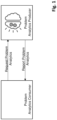
- Fig. 1 shows a schematic diagram illustrating a process of network problem analysis according to at least some example embodiments.
- a problem analytics consumer here also referred to simply as “consumer”
- problem analytics here also referred to as "problem analysis”
- the problem analytics producer performs the requested problem analytics and returns a report on the problem analytics performed to the problem analytics consumer.
- the ProblemAnalytics is a logical entity that enables at least one of the following aspects (1) to (4):
- the ProblemAnalytics further enables a producer to report to an authorized consumer the outcomes of a detection of a problem, of a characterization or classification of a detected problem, or of the solution search for a given problem class.
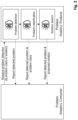
- the ProblemAnalytics may be implemented as three separate components of "problem detection”, “problem classification”, and “solution search” that interact with one another or as a single integrated function that accomplishes all the three roles or aspects as illustrated in Fig. 2 .
- Fig. 2 shows a schematic diagram illustrating network problem analysis as an integration of three subfunctions of detection, classification and solution search according to at least some example embodiments.
- the request for problem analysis is a request for problem detection, which the consumer sends to the producer.
- the producer returns a report on the problem analysis performed, including information on a detected problem.
- the request for problem analysis is a request for problem classification, which the consumer sends to the producer.
- the producer returns a report on the problem analysis performed, including information on a problem class.
- the request for problem analysis is a request for solution search, which the consumer sends to the producer.
- the producer returns a report on the problem analysis performed, including information on a proposed solution.
- the ProblemAnalytics As an integrated function, according to at least some example embodiments, the ProblemAnalytics:
- ProblemAnalytics triggers the execution of this solution, providing the relevant information/data needed for the solution to work. Otherwise, if an appropriate solution does not exist that fits the use case, problem or context, then ProblemAnalytics returns a report to the consumer stating the relevant information of the problem and indicating that no solution has been found.
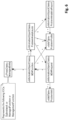
- Fig. 3 showing a flowchart of an analysis process according to at least some example embodiments.
- the analysis process is performed by the problem analytics producer ("ProblemAnalytics") described above.
- step S301 a request for problem analysis is received from a consumer.
- The, the analysis process advances to step S303.
- the request is a ProblemAnalyticsRequest as described above.
- step S303 based on the request, information with respect to a problem related to a communication network is acquired.
- The, the analysis process advances to step S305.
- the information is acquired from at least one of the following: the request or the communication network.
- step S305 the problem analysis is performed based on the information.
- The, the analysis process advances to step S307.
- the problem analysis comprises checking whether or not the information matches at least one of a plurality of problem profiles. According to at least some example embodiments, the problem profiles have been defined in advance.
- the problem analysis further comprises that, in case the information does not match at least one of the plurality of problem profiles, learning of a new problem profile related to the problem is conducted based on the information.
- step S307 a report on the problem analysis performed is returned to the consumer. Then, the analysis process ends.
- the problem analysis of step S305 further comprises that, in case the information matches at least one of the plurality of problem profiles, solutions to the problem are searched based on the at least one of the plurality of problem profiles.
- the problem analysis of step S305 further comprises applying at least one of the searched solutions to the communication network.
- step S305 the checking is performed in response to the request being a request including the information with respect to the problem.
- step S305 in response to the request being a request for classifying the problem, the information with respect to the problem is identified.
- step S305 the communication network is monitored and analyzed based on the request being a request for identifying any problem, in order to identify the problem.
- the problem analysis of step S305 further comprises checking, based on the information acquired in step S303, whether or not a job (which is also referred to here as "ProblemAnalyticsJob" or "problem analytics job") for processing the information is ongoing. In case such a job is not ongoing, the job for processing the information is instantiated. Otherwise, in case such a job is ongoing, requirements of a request which includes the information are added to the job.
- a job which is also referred to here as "ProblemAnalyticsJob” or "problem analytics job
- the problem analysis function (“ProblemAnalytics") is implemented as a standalone function in the communication network.
- the problem analysis function is implemented as a generic data analytics function of the communication network using a generic data analytics service.
- Fig. 4 shows an information model and Fig. 5 shows inheritance relations for the case that the problem analysis function is a standalone function on which a problem analysis process (e.g. the analysis process of Fig. 3 ) may be instantiated.
- a problem analysis process e.g. the analysis process of Fig. 3
- Fig. 6 shows an information model
- Fig. 7 shows inheritance relations for the case that the problem analysis function is a capability on generic analytics functions, i.e. the problem analysis function uses a generic analytics service (e.g. MDAS described [1]).
- a generic analytics service e.g. MDAS described [1]
- IOC "ProblemAnalytics" illustrated in Figs. 4 and 5 represents a problem analysis on MnS producer. As described above, ProblemAnalytics is responsible for problem analysis and the related reporting. According to at least some example embodiments, ProblemAnalytics is contained in a subnetwork, a managed network function or in a management function of the communication network.
- ProblemAnalytics stores the problem profiles for different problems that can be analyzed and instantiates ProblemAnalyticsRequests and ProblemAnalyticsJobs as requested by the authorised consumers.
- Fig. 8 shows a table illustrating attributes of ProblemAnalytics according to at least some example embodiments. These attributes comprise ProblemAnalyticsReportingRequests (which are also referred to here as “problem analytics reporting requests”) and ProblemAnalyticsReports (which are also referred to here as “problem analytics report”), which will be described in more detail later on.
- ProblemAnalyticsReportingRequests which are also referred to here as "problem analytics reporting requests”
- ProblemAnalyticsReports which are also referred to here as "problem analytics report”
- the capabilities and attributes of the ProblemAnalytics are features of MDAFunction (which is also referred to here as "MDA function").
- IOC "ProblemAnalyticsRequest" illustrated in Figs. 4 and 5 represents a problem analysis request on MnS producer.
- ProblemAnalyticsRequests are created by authorized consumers for each needed analytics, i.e., ProblemAnalyticsRequest is an IOC instantiated by authorized consumers on ProblemAnalytics for each analytics needed.
- ProblemAnalyticsRequests are associated with a ProblemAnalyticsJob, if such job has been instantiated and is related to that request. For example, if the ProblemAnalytics requires that a ProblemAnalyticsJob is instantiated only after receiving a number n of ProblemAnalyticsRequests, each of the ProblemAnalyticsRequests can be associated with the ProblemAnalyticsJob whenever such a job is instantiated.
- Fig. 9 shows a table illustrating the attributes of ProblemAnalyticsRequest according to at least some example embodiments.
- the ProblemAnalyticsRequest includes a request ID attribute which identifies the request.
- the ProblemAnalyticsRequest has a source attribute to identify where it is coming from and which may be used to prioritize among different sources.
- the sources may for example be an enumeration defined for network functions, operator roles, or other functional differentiations.
- the ProblemAnalyticsRequest specifies an AnalysisType (see attribute "AnalysisType" in Fig. 9 ).
- the type of analytics/analysis is, for example, problem detection, problem type classification (problem classification), solution search and reporting, as described above with reference to Fig. 2 . If no AnalysisType is specified, default analytics type is set to solution search and reporting.
- the ProblemAnalyticsRequest provides information on the problem to be analyzed.
- attribute "ProblemInfo" is in the form of affected KPIs, errors, faults, or threshold crossings.
- ProblemInfo is in the form of anomalous data collected from the network that deviates from normal/average behavior and requires further investigation to pin point the underlying problem if any.
- the ProblemAnalyticsRequest comprises an attribute "SuspectedProblemType" which comprises information on a type of a problem suspected by the consumer.
- the ProblemAnalyticsRequest specifies a runtime context (attribute "RuntimeContext") describing relevant information to the problem to be analyzed, e.g. time of day, geographical scope, gNB/cell ID.
- This context influences the analytics process in that the runtime context may hold insights about the problem and a possible solution.
- the capabilities and attributes of the ProblemAnalyticsRequest are features of MDARequest.
- IOC "ProblemAnalyticsJob" illustrated in Figs. 4 to 7 represents a problem analytics job on MnS producer.
- a ProblemAnalyticsJob is instantiated, i.e. the ProblemAnalyticsJob is associated with exactly one ProblemProfile (one problem profile of the plurality of problem profiles described with respect to Fig. 3 ).
- the associated ProblemAnalyticsJob may find the most appropriate automation function as the solution for the problem.
- Fig. 10 shows a table illustrating attributes of the ProblemAnalyticsJob.
- the attributes comprise JobID (identification/identifier of the ProblemAnalyticsJob), RequestID (identification/identifier of the ProblemAnalyticsRequest which the ProblemAnalyticsJob is associated with, ProblemID (e.g. identification/identifier of the problem related to the communication network), ProblemInfo (e.g. information with respect to the problem), RuntimeContext (which is also referred to here as "runtime context"), SolutionID (identification/identifier of the solution), and ReportIDs (identifications/identifiers of reports).
- JobID identification/identifier of the ProblemAnalyticsJob
- RequestID identity/identifier of the ProblemAnalyticsRequest which the ProblemAnalyticsJob is associated with
- ProblemID e.g. identification/identifier of the problem related to the communication network
- ProblemInfo e.g. information with respect to the problem
- RuntimeContext
- the ProblemAnalyticsJob is associated with one or more ProblemAnalyticsReport instances. Each instance provides a report on the analytics done in response to a specific ProblemAnalyticsRequest and the type of analytics required in that request.
- a ProblemAnalyticsJob provides a ProblemAnalyticsReport that documents the outcomes of the problem analysis.
- the ProblemAnalyticsReport provides information on the presence of a network problem, the classification of the detected problem or the appropriate solution to address the detected problem.
- the problem profile (also referred to here as “ProblemProfile”, or “profile”) comprises a data type that represents properties of the network problem detected by or reported to ProblemAnalytics.
- Fig. 11 shows a table illustrating attributes of ProblemProfile.
- the attributes include a ProblemID which comprises an identification/identifier of a network problem (which is also referred to here as "problem”).
- the problem profile data type defines characteristics of the network problem such as problem type (also referred to here as "ProblemType”), affected KPI(s) (also referred to here as "AffectedKPI(s)”), and associated runtime context.
- the ProblemAnalytics instantiates a ProblemAnalyticsJob that takes that ProblemInfo and runtime context and tries to match them with existing problem profiles to see where it matches.
- the ProblemAnalytics also reads more data from the network guided by the content of ProblemInfo and runtime context to further analyse the problem.
- the affected KPIs are reported to the ProblemAnalytics by the consumer through a problem analytics request. According to at least some example embodiments, alternatively, the ProblemAnalytics detects anomalies in the network and automatically deduces affected KPIs.
- the associated runtime context to the problem is reported to the ProblemAnalytics by the consumer through a problem analytics request.
- the ProblemAnalytics automatically deduces the needed runtime context after detecting an anomaly and deducing affected KPIs.
- the ProblemType is decided by ProblemAnalytics after the reported/detected problem is analyzed. According to at least some example embodiments, alternatively, the consumer reports the ProblemType together with the problem through the problem analytics request in case such information is available at this time.
- the problem profile also contains a list of thresholds ("ThresholdPoints") which, if they occur concurrently, match the signature of the problem.
- the ProblemProfile is "learned" by the ProblemAnalytics about the different types of problems, e.g. by looking at/analyzing the statistics of the different problems. Given multiple requests with different ProblemInfo and the runtime context related with the ProblemInfo, according to at least some example embodiments, ProblemAnalytics identifies new profiles that do not match existing profiles and thereby matches the problems to the observed new profiles.
- 3GPP SA5 defines a list of problem types that correspond to specific analytics types that can be requested by consumers of an analytics service. Each problem has a specific set of characteristics and analytics solutions are designed to correspond to these specific characteristics. According to at least some example embodiments, these problem types provide a base for defining the problem profile data type that provides a description and relevant information of a network problem as described above.
- ProblemInfo is a data type that represents information available at the consumer side that identifies that there is most likely a problem that needs to be identified.
- Fig. 12 shows a table illustrating attributes of problem information ("ProblemInfo").
- ProblemInfo is in the form of affected KPIs, errors, faults, or threshold crossings. According to at least some example embodiments, alternatively, ProblemInfo is in the form of anomalous data collected from the network that deviates from normal/average behavior and requires further investigation to pin point the underlying problem if any.
- ProblemInfo includes references to a list of KPIs observations (“KPIListRef”), a list of fault observations (“FaultListRef”), or notifications (“NotificationsRef”) that can be used to identify the problem.
- KPIListRef a list of KPIs observations
- FaultListRef a list of fault observations
- NotificationsRef notifications
- ProblemAnalyticsReportingRequest is a data type that represents a problem analytics reporting request on MnS producer.
- Fig. 13 shows a table illustrating attributes of a problem analytics reporting request according to at least some example embodiments.
- the ProblemAnalyticsReportingRequest is sent when the consumer does not require an analysis to be undertaken but requires a report about a previous analysis. Accordingly the consumer has information either about the specific job ("JobID”) or about the specific problem (“ProblemID”) whose reports the consumer wishes to receive. The consumer thus provides either of the problem or job identifiers as part of the ProblemAnalyticsReportingRequest (e.g. the request received in step S301).
- the ProblemAnalyticsReportingRequest includes a request ID attribute which identifies the request.
- the ProblemAnalyticsReportingRequest has a source attribute to identify where it is coming from and which may be used to prioritize among different sources.
- the sources may for example be an enumeration defined for network functions, operator roles, or other functional differentiations.
- the ProblemAnalyticsReportingRequest specifies an AnalysisType.
- the type of analytics/analysis is, for example, problem detection, as described above with reference to Fig. 2 .
- ProblemAnalyticsReport is a data type that represents a problem analytics report on MnS producer.
- a ProblemAnalyticsReport upon terminating a ProblemAnalyticsJob, a ProblemAnalyticsReport is sent by ProblemAnalytics to the consumers associated with the terminated job to notify them of the findings of the analysis performed.
- the ProblemAnalyticsReport is sent in response to a ProblemAnalyticsReportingRequest by an authorized consumer who is interested in the status and progress of an ongoing ProblemAnalyticsJob.
- Fig. 14 shows a table illustrating attributes of a problem analytics report according to at least some example embodiments.
- the attributes comprise an identification/identifier of the report ("ReportID”), an identification/identifier of the job (“JobID”), an identification/identifier of the problem (“ProblemID”), a solution reference (“SolutionRef”), and an analytics type ("AnalyticsType”).
- the condition for the solution reference attribute is if the report includes a solution.
- the SolutionRef is in that case a distinguished name (DN) of an instance that is able to solve the identified problem.
- such an instance comprises an MDAReport instance according to reference [1].
- FIG. 15 illustrating procedures and steps of requesting for problem analytics between an authorized consumer "Consumer” (which is a generic provisioning MnS consumer) and a problem analytics instance "ProblemAnalytics” (which is a generic provisioning MnS producer), according to at least some example embodiments.
- createMOI (S1501) is invoked by the generic provisioning MnS consumer requesting the generic provisioning MnS producer to create a Managed Object instance in the MIB maintained by the generic provisioning MnS producer. This operation will create only one Managed Object instance.
- the authorized consumer creates a ProblemAnalyticsRequest on the ProblemAnalytics instance, providing the attributes shown in Fig. 9 .
- the request can be a problem detection, classification or/and solution search request.
- step S1502 the ProblemAnalytics performs a check on ongoing ProblemAnalyticsJobs.
- step S1503 the ProblemAnalytics instantiates an appropriate ProblemAnalyticsJob associated with the received request.
- step S1504 the consumer is notified that a ProblemAnalyticsJob is instantiated and the Job ID is provided.
- step S1505 the request is mapped to that job and the request's requirements are added to the job.
- step S1506 the consumer is notified that a ProblemAnalyticsJob is modified with the provided requirements and the Job ID is provided.
- the internal task of problem analysis involves two major tasks as illustrated by Fig. 16 . These tasks comprise (A) acquiring data for problem analysis, and (B) conducting problem analysis based on the acquired data which involves undertaking actions to capture insight on problems.
- step S1602 After creation of a ProblemAnalyticsRequest on ProblemAnalytics (step S1601), in step S1602, the ProblemAnalytics reads ProblemInfo and context (runtime context) from the ProblemAnalyticsRequest sent from an authorized consumer.
- the ProblemAnalytics reads extra data from network that matches or is related to submitted ProblemInfo.
- the ProblemAnalytics reads data on the same network objects and KPIs but at different time intervals than those stated in ProblemInfo.
- the ProblemAnalytics also reads extra context data, e.g. reads data on other related metrics, or on user behavior.
- the ProblemAnalytics further reads extended data related to at least one of the following: ProblemInfo or runtime context.
- step S1603 the ProblemAnalytics matches ProblemInfo to the existing ProblemProfiles (the problem profiles of known problems) to identify if ProblemInfo matches any of the known problems.
- step S1603 the ProblemAnalytics matches the combination of ProblemInfo and runtime context to the ProblemProfiles of the known problems.
- step S1607 the ProblemAnalytics extracts extra data and matches the extra data to the existing ProblemProfiles to identify if the extra data matches any of the known problems.
- step S1611 the ProblemAnalytics extracts extended data and matches the extended data to the existing ProblemProfiles to identify if the extended data matches any of the known problems.
- steps S1604, S1608, S1612 and S1613 the ProblemAnalytics compiles a detection report. If no problem is identified in any of the above cases (step S1613), the content of the detection report submitted in step S1614 indicates that no problem is identified; otherwise (steps S1604, S1608, S1612), the report submitted in step S1614 indicates the identified problem.
- the ProblemAnalytics searches existing solutions and provides the Solution ID of the most suitable solution for the given problem in the ProblemAnalyticsReport submitted in step S1614.
- requirements for reporting on ProblemAnalytics are mapped to an existing ProblemAnalyticsJob instance if the stated reporting requirements match the characteristics of the ProblemAnalyticsJob instance.
- a new ProblemAnalyticsJob instance is created to match the indicated reporting requirements.
- ProblemAnalyticsReporting requirements are received through a ProblemAnalyticsRequest.
- the ProblemAnalytics has the capability and a control interface to inform a consumer about the analysis, i.e., to report on a ProblemAnalytics, ProblemAnalyticsRequests or ProblemAnalyticsJobs.
- reporting is accomplished either via file- or streaming-based reporting mechanisms or via notifications.
- the ProblemAnalytics detects that the problem is not known, i.e. there is no match between the existing ProblemProfiles and the submitted ProblemInfo/runtime context (or with the extra/extended data derived using the ProblemInfo/runtime context). This implies that the submitted ProblemInfo/runtime context (and the extra/extended data derived using the ProblemInfo and/or runtime context) represents a new problem that is not known. Accordingly, a new ProblemProfile can be learned for the problem.
- the ProblemAnalytics compiles the characteristics of the new problem, represented by the ProblemInfo/runtime context (and the extra/extended data derived using the ProblemInfo/runtime context), into the new ProblemProfile and stores the new ProblemProfile for the new problem.
- FIG. 17 illustrating a simplified block diagram of a control unit 170 that is suitable for use in practicing at least some example embodiments.
- the analysis process of Fig. 3 is implemented by the control unit 170.
- the control unit 170 comprises processing resources (e.g. processing circuitry) 171, memory resources (e.g. memory circuitry) 172 and interfaces (e.g. interface circuitry) 173, which are coupled via a wired or wireless connection 174.
- processing resources e.g. processing circuitry
- memory resources e.g. memory circuitry
- interfaces e.g. interface circuitry
- the memory resources 172 are of any type suitable to the local technical environment and are implemented using any suitable data storage technology, such as semiconductor based memory devices, magnetic memory devices and systems, optical memory devices and systems, fixed memory and removable memory.
- the processing resources 171 are of any type suitable to the local technical environment, and include one or more of general purpose computers, special purpose computers, microprocessors, digital signal processors (DSPs) and processors based on a multi core processor architecture, as non-limiting examples.
- the memory resources 172 comprise one or more non-transitory computer-readable storage media which store one or more programs that when executed by the processing resources 171 cause the control unit 170 to operate as problem analytics function as described above.
- non-transitory is a limitation of the medium itself (i.e., tangible, not a signal) as opposed to a limitation on data storage persistency (e.g., RAM vs. ROM).
- circuitry may refer to one or more or all of the following:
- circuitry also covers an implementation of merely a hardware circuit or processor (or multiple processors) or portion of a hardware circuit or processor and its (or their) accompanying software and/or firmware.
- circuitry also covers, for example and if applicable to the particular claim element, a baseband integrated circuit or processor integrated circuit for a mobile device or a similar integrated circuit in a server, a cellular network device, or other computing or network device.
- An apparatus of a communication network acquires information with respect to a problem related to the communication network, based on a request for problem analysis received from a consumer.
- the apparatus performs the problem analysis based on the information, comprising checking whether or not the information matches at least one of a plurality of problem profiles and, in case the information does not match at least one of the plurality of problem profiles, conducting learning of a new problem profile related to the problem based on the information.
- the apparatus returns a report on the problem analysis performed to the consumer.
Landscapes
- Engineering & Computer Science (AREA)
- Computer Networks & Wireless Communication (AREA)
- Signal Processing (AREA)
- Artificial Intelligence (AREA)
- Computer Vision & Pattern Recognition (AREA)
- Databases & Information Systems (AREA)
- Evolutionary Computation (AREA)
- Medical Informatics (AREA)
- Software Systems (AREA)
- Data Exchanges In Wide-Area Networks (AREA)
Priority Applications (1)
| Application Number | Priority Date | Filing Date | Title |
|---|---|---|---|
| EP22188935.5A EP4319086A1 (de) | 2022-08-05 | 2022-08-05 | Kommunikationsnetzwerk |
Applications Claiming Priority (1)
| Application Number | Priority Date | Filing Date | Title |
|---|---|---|---|
| EP22188935.5A EP4319086A1 (de) | 2022-08-05 | 2022-08-05 | Kommunikationsnetzwerk |
Publications (1)
| Publication Number | Publication Date |
|---|---|
| EP4319086A1 true EP4319086A1 (de) | 2024-02-07 |
Family
ID=82846455
Family Applications (1)
| Application Number | Title | Priority Date | Filing Date |
|---|---|---|---|
| EP22188935.5A Pending EP4319086A1 (de) | 2022-08-05 | 2022-08-05 | Kommunikationsnetzwerk |
Country Status (1)
| Country | Link |
|---|---|
| EP (1) | EP4319086A1 (de) |
Citations (2)
| Publication number | Priority date | Publication date | Assignee | Title |
|---|---|---|---|---|
| EP0357573A2 (de) * | 1988-08-31 | 1990-03-07 | International Business Machines Corporation | Dienstwarnsignalfunktion für Eingangs-/Ausgangsgerät |
| US20090282292A1 (en) * | 2008-05-12 | 2009-11-12 | Squire Matthew B | Methods, devices and computer program products for automatic fault identification in a network |
-
2022
- 2022-08-05 EP EP22188935.5A patent/EP4319086A1/de active Pending
Patent Citations (2)
| Publication number | Priority date | Publication date | Assignee | Title |
|---|---|---|---|---|
| EP0357573A2 (de) * | 1988-08-31 | 1990-03-07 | International Business Machines Corporation | Dienstwarnsignalfunktion für Eingangs-/Ausgangsgerät |
| US20090282292A1 (en) * | 2008-05-12 | 2009-11-12 | Squire Matthew B | Methods, devices and computer program products for automatic fault identification in a network |
Non-Patent Citations (2)
| Title |
|---|
| "3rd Generation Partnership Project; Technical Specification Group Services and System Aspects; Management and orchestration; Study on enhancement of Management Data Analytics (MDA) (Release 17)", no. V1.1.0, 4 December 2020 (2020-12-04), pages 1 - 93, XP051961771, Retrieved from the Internet <URL:https://ftp.3gpp.org/Specs/archive/28_series/28.809/28809-110.zip 28809-110.docx> [retrieved on 20201204] * |
| "3rd Generation Partnership Project; Technical Specification Group Services and System Aspects; Management and orchestration; Study on enhancement of Management Data Analytics (MDA) (Release 17)", vol. SA WG5, no. V17.0.0, 6 April 2021 (2021-04-06), pages 1 - 96, XP052000543, Retrieved from the Internet <URL:https://ftp.3gpp.org/Specs/archive/28_series/28.809/28809-h00.zip 28809-h00.docx> [retrieved on 20210406] * |
Similar Documents
| Publication | Publication Date | Title |
|---|---|---|
| US9514387B2 (en) | System and method of monitoring and measuring cluster performance hosted by an IAAS provider by means of outlier detection | |
| US20220173980A1 (en) | Ai machine learning technology based fault management system for network equpment that supports sdn open flow protocol | |
| KR102068622B1 (ko) | 이기종 네트워크 보안시스템을 위한 빅데이타 분석기반의 지능형 장애예측 시스템 | |
| CN113424157B (zh) | IoT设备行为的多维周期性检测 | |
| CN111163115A (zh) | 一种基于双引擎的物联网安全监测方法及系统 | |
| CN113542039A (zh) | 一种通过ai算法定位5g网络虚拟化跨层问题的方法 | |
| WO2019001312A1 (zh) | 实现告警关联的方法、装置以及计算机可读存储介质 | |
| WO2020063550A1 (zh) | 策略决策方法及装置、系统、存储介质、策略决策单元及集群 | |
| US10372572B1 (en) | Prediction model testing framework | |
| US20230179616A1 (en) | Systems and methods of network security anomaly detection | |
| CN110943862B (zh) | 互斥业务判断方法、装置、电子设备及存储介质 | |
| US12238604B2 (en) | Enforcing a dynamically modifiable geofence based on conditions of a cellular network | |
| US10671470B2 (en) | Application performance management system with dynamic discovery and extension | |
| WO2022149149A1 (en) | Artificial intelligence with dynamic causal model for failure analysis in mobile communication network | |
| CN111352676A (zh) | 帮助信息推送方法、帮助系统及可读存储介质 | |
| EP4319086A1 (de) | Kommunikationsnetzwerk | |
| CN117493133A (zh) | 告警方法、装置、电子设备和介质 | |
| KR20190104759A (ko) | 지능형 장비 이상 증상 사전 탐지 시스템 및 방법 | |
| US10848371B2 (en) | User interface for an application performance management system | |
| WO2023006193A1 (en) | Trust related management of artificial intelligence or machine learning pipelines in relation to the trustworthiness factor explainability | |
| US20250203443A1 (en) | Site status dashboard for 5g wireless network | |
| CN111983960A (zh) | 一种监控系统及方法 | |
| KR20170071825A (ko) | It 서비스의 애플리케이션 장애 추적 지원 방법 및 이를 적용한 관리 시스템 | |
| KR101520103B1 (ko) | It서비스에서의 어플리케이션 장애 분석 감시 시스템 및 방법 | |
| US11403203B2 (en) | Utilizing application performance management automatic discovery data for plugin priority |
Legal Events
| Date | Code | Title | Description |
|---|---|---|---|
| PUAI | Public reference made under article 153(3) epc to a published international application that has entered the european phase |
Free format text: ORIGINAL CODE: 0009012 |
|
| STAA | Information on the status of an ep patent application or granted ep patent |
Free format text: STATUS: REQUEST FOR EXAMINATION WAS MADE |
|
| 17P | Request for examination filed |
Effective date: 20220805 |
|
| AK | Designated contracting states |
Kind code of ref document: A1 Designated state(s): AL AT BE BG CH CY CZ DE DK EE ES FI FR GB GR HR HU IE IS IT LI LT LU LV MC MK MT NL NO PL PT RO RS SE SI SK SM TR |
|
| GRAP | Despatch of communication of intention to grant a patent |
Free format text: ORIGINAL CODE: EPIDOSNIGR1 |
|
| STAA | Information on the status of an ep patent application or granted ep patent |
Free format text: STATUS: GRANT OF PATENT IS INTENDED |
|
| RIC1 | Information provided on ipc code assigned before grant |
Ipc: H04L 43/06 20220101AFI20260128BHEP Ipc: H04L 41/0233 20220101ALN20260128BHEP Ipc: H04L 41/0631 20220101ALN20260128BHEP Ipc: H04L 41/16 20220101ALN20260128BHEP Ipc: H04L 41/14 20220101ALN20260128BHEP Ipc: H04L 41/0663 20220101ALN20260128BHEP |
|
| INTG | Intention to grant announced |
Effective date: 20260212 |