EP0357573A2 - Dienstwarnsignalfunktion für Eingangs-/Ausgangsgerät - Google Patents
Dienstwarnsignalfunktion für Eingangs-/Ausgangsgerät Download PDFInfo
- Publication number
- EP0357573A2 EP0357573A2 EP89850236A EP89850236A EP0357573A2 EP 0357573 A2 EP0357573 A2 EP 0357573A2 EP 89850236 A EP89850236 A EP 89850236A EP 89850236 A EP89850236 A EP 89850236A EP 0357573 A2 EP0357573 A2 EP 0357573A2
- Authority
- EP
- European Patent Office
- Prior art keywords
- subsystem
- exception
- data base
- record
- service
- Prior art date
- Legal status (The legal status is an assumption and is not a legal conclusion. Google has not performed a legal analysis and makes no representation as to the accuracy of the status listed.)
- Granted
Links
Images


Classifications
-
- G—PHYSICS
- G06—COMPUTING OR CALCULATING; COUNTING
- G06F—ELECTRIC DIGITAL DATA PROCESSING
- G06F11/00—Error detection; Error correction; Monitoring
- G06F11/22—Detection or location of defective computer hardware by testing during standby operation or during idle time, e.g. start-up testing
- G06F11/2257—Detection or location of defective computer hardware by testing during standby operation or during idle time, e.g. start-up testing using expert systems
-
- G—PHYSICS
- G06—COMPUTING OR CALCULATING; COUNTING
- G06F—ELECTRIC DIGITAL DATA PROCESSING
- G06F11/00—Error detection; Error correction; Monitoring
- G06F11/07—Responding to the occurrence of a fault, e.g. fault tolerance
- G06F11/0703—Error or fault processing not based on redundancy, i.e. by taking additional measures to deal with the error or fault not making use of redundancy in operation, in hardware, or in data representation
- G06F11/0706—Error or fault processing not based on redundancy, i.e. by taking additional measures to deal with the error or fault not making use of redundancy in operation, in hardware, or in data representation the processing taking place on a specific hardware platform or in a specific software environment
- G06F11/0745—Error or fault processing not based on redundancy, i.e. by taking additional measures to deal with the error or fault not making use of redundancy in operation, in hardware, or in data representation the processing taking place on a specific hardware platform or in a specific software environment in an input/output transactions management context
-
- G—PHYSICS
- G06—COMPUTING OR CALCULATING; COUNTING
- G06F—ELECTRIC DIGITAL DATA PROCESSING
- G06F11/00—Error detection; Error correction; Monitoring
- G06F11/07—Responding to the occurrence of a fault, e.g. fault tolerance
- G06F11/0703—Error or fault processing not based on redundancy, i.e. by taking additional measures to deal with the error or fault not making use of redundancy in operation, in hardware, or in data representation
- G06F11/079—Root cause analysis, i.e. error or fault diagnosis
-
- G—PHYSICS
- G06—COMPUTING OR CALCULATING; COUNTING
- G06F—ELECTRIC DIGITAL DATA PROCESSING
- G06F11/00—Error detection; Error correction; Monitoring
- G06F11/30—Monitoring
- G06F11/34—Recording or statistical evaluation of computer activity, e.g. of down time, of input/output operation ; Recording or statistical evaluation of user activity, e.g. usability assessment
- G06F11/3466—Performance evaluation by tracing or monitoring
- G06F11/3485—Performance evaluation by tracing or monitoring for I/O devices
Definitions
- the present invention relates to automatic equipment analysis, and particularly to the service support requirements of computer input/output (I/O) devices that have built-in error detection and error recovery capabilities.
- I/O computer input/output
- DAS Direct Access Storage
- the occurrence of a recovered I/O device error event may or may not indicate that a service action is required to restore normal operation. If I/O device performance is permanently degraded due to an error event, or if error events recur often enough to noticeably degrade I/O device performance, then a service action should be scheduled. However, a service action is typically not recommended if I/O performance is not noticeably degraded.
- the decision whether or not a service action is required is typically made through a manual and emperical process. Detailed error symptom reports are called up and examined to determine some degree of problem severity and permanence effecting machine operation. Because of this complicated process, the decision to call or not call for service action is often based on an inaccurate understanding of the real problem. An incorrect decision can be costly in terms of either lost performance or the replacement of non-defective parts.
- the service action decision process to isolate the cause of a possibly very intermittent or usage pattern sensitive fault is also typically conducted through a manual and emperical evaluation process.
- the preferred prior art fault isolation technique is to use maintenance diagnostic programs to recreate an error symptom.
- This technique is inefficient at recreating intermittent error symptoms.
- An alternative is to manually analyze error symptom history data to derive a fault syndrome that can be equated to a probable service action. The service action then is to systematically replace suspect parts until error events are no longer reported, as an indication that normal operation has been restored.
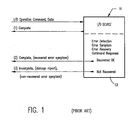
- An input/output (I/O) device 11 of the prior art is shown with its error response mechanism 13 in FIG. 1.
- the I/O device receives an I/O operation command to read or write data. If the I/O device successfully completes the operation, it can respond that the operation has been completed without error (response (1)). If, however, an error is detected, the I/O device proceeds with its error symptom analysis and error recovery procedure, and either recovers successfully, or fails to recover. If the operation is successfully recovered, it can transmit a command response that the operation is complete, but reporting a recovered error symptom (response (2)). If the operation is not recovered, the I/O device issues a command response that the operation is incomplete, and includes a damage report and a report of the non-recovered error symptom (response (3)).
- a report of operation complete, but with a recovered error symptom report indicates that the I/O device operations can continue, but that the error symptom data should be examined to determine if a service action is required.
- a service action may or may not be required as a result of either of the error symptom reports. Any service action requirement must be determined external to the I/O device by manual analysis of error symptom data.
- the disk file will periodically, in the manner known, generate a data check message or an equipment check message indicating that some other than routine event has occurred.
- Data checks are, in many disk files, somewhat expected events, and thus are counted and recorded in ordinary bookkeeping associated with the DAS subsystem, and may not indicate that a service action is required.
- Usage data related to the DAS subsystem is also accumulated. Such data might include which I/O devices are being used, seek counts, and data transfer accounts. This is sometimes referred to as usage information.
- a report is generated periodically (such as daily or weekly) noting all of the recovered exceptions or other potential error events that occurred since the last reporting took place.
- a person will analyze this report to determine if the events recorded represent a problem with the I/O device, and whether corrective action is needed, and what that corrective action might be. Nevertheless, under current systems, this analysis must be performed using only the printed reports to note exception events and detect trends in error events.
- the present invention as defined in the attached claims eliminates the need for an external manual process to determine service action requirements.
- the external manual process is replaced by a service alert function that is built into the I/O device.
- the service alert function operates concurrent with other I/O device functions.
- the internal service alert function of the invention monitors device I/O operations and records exception event records to detect a fault syndrome that requires a service action, determine service action requirements, and initiate a service action via an asynchronous service alert message to the I/O device attachment.
- the present invention is a method of automatically detecting and analyzing exception or error events occurring in a computer peripheral subsystem connected to a host computer system.
- the method of the invention includes maintaining a Subsystem Environment data base comprising information relating to the current configuration of the computer peripheral subsystem, and usage and error information relating to the peripheral subsystem.
- a Problem Description procedure is conditionally invoked when the data in the Subsystem Environment data base reflects an exception event that indicates either a clear or a probable need for service attention to the peripheral subsystem.
- the Problem Description procedure includes creating from stored rules a view of the Subsystem Environment data base relevant to the exception event, and developing a current Problem Profile record describing the exception event.
- a Problem Profile data base comprising Problem Profile records of previously occurring exception events is scanned to relate the current Problem Profile record to a Problem Profile record that already exists in the Problem Profile data base. If the current Problem Profile record matches an existing Problem Profile record in the Problem Profile data base, and the existing Problem Profile record indicates that a service action is pending for the covered problem, the existing Problem Profile record is updated. If the current Problem Profile record matches an existing Problem Profile record in the Problem Profile data base, and the existing Problem Profile record indicates that a service action is not pending for the covered problem, the existing Problem Profile record is updated and a Problem Evaluation procedure is invoked. If the current Problem Profile record does not match an existing Problem Profile record in the Problem Profile data base, the current Problem Profile record is added to the Problem Profile data base.
- the current Problem Profile record is examined in view of stored rules relating to acceptable subsystem performance. If operations of the peripheral subsystem have been disrupted or degraded beyond the limits of acceptable subsystem performance, a service alert message is generated. The service alert message is inserted into the Problem Profile record in the Problem Profile data base. The existing Problem Profile record in the Problem Profile data base is updated, and the service alert message is transmitted to the host system.
- a computer peripheral subsystem 21 includes one or more input/output (I/O) devices 23 for receiving operation commands and data from the host computer system.
- the maximum is typically 64 devices per 7 a subsystem.
- the subsystem additionally includes an error detection and recovery mechanism 25.
- an error detection and recovery mechanism 25 As in the prior art, if the operation is successfully completed, a response that the operation was completed without error is genera ted (response (1)). If, however, an error is detected, the I/O device internal error detection, determination, and recovery mechanism 25 is invoked. The error detection, determination, and recovery mechanism 25 is typically common for all the devices in the subsystem. If the error is successfully recovered, an operation complete message is transmitted, but without recovered error symptom message (response (2)).
- responses (1) and (2) are one message. Any difference is only seen as a difference in command response time.
- a message indicating incomplete operation, and a damage report are provided by the I/O device (response (3)).
- error symptom data is used only internally by the I/O device service alert function 27.
- the service alert function conditionally produces an asynchronous service alert message that contains all of the service action requirements necessary to restore normal I/O device operation.
- a subsystem memory 29 stores data representing the subsystem physical configuration, a subsystem usage log, an exception event log, fault criteria, problem procedures, and a Problem Profile (record) data base. Together, the subsystem physical configuration, the subsystem usage log, and the exception event log form a Subsystem Environment data base.
- the service alert function 27 is a programmed facility that interfaces with I/O devices in the subsystem to receive detailed input data from the subsystem.
- the Service Alert Message Generate process is carried out by the service alert function 27 and is partitioned into three principal procedures:
- the Problem Detection Procedure monitors DAS subsystem activity with respect to changes in subsystem configuration, such as unit install/remove, data format mode change, Engineering Change install, and resource fence/spare due fault condition; also, seek/read/write usage of subsystem control paths and devices; and subsystem exception activity caused by error conditions detected and handled during the processing of system tasks.
- the monitored data is retained in a Subsystem Environment data base that always describes the current subsystem configuration, usage and error status for the DAS subsystem.
- the Problem Detection procedure is more explicitly described by the pseudo code sequence included in Appendix 1.
- the Problem Detection mechanism is illustrated schematically in FIG. 3.
- the Problem Detection stage does "housekeeping" so as to maintain the normal (model) description of the subsystem environment.
- subsystem usage log or data base (which is a portion of the Subsystem Environment data base), is information relating to which devices are used, which devices are used more heavily than others, which are used consistently at a certain level, which have intermittent periods of high use, and other information relating to the distribution and amount of usage of the devices in the system. Such information is important to assist in the determination of the nature of failures or exceptions that may be reported by the subsystem.
- a portion of the data base stores current use rate patterns.
- the current time and current use report information (Input Log Record) is read into the current event and trend portion 43 of the subsystem usage data base memory 29(a)(b)(c).
- the current use rate pattern also becomes a part of the subsystem usage or history data base or log.
- a relational view 47 is applied to the Subsystem Environment data base to provide a relational configuration and usage history.
- the new usage data is always being examined for trends or patterns in view of the subsystem physical configuration and previous usage history. This creates a continuously updated record of subsystem usage and trends and patterns in subsystem usage.
- the relational view 47 is developed according to rules 45 stored in a rules memory, which is a portion of the problem procedures 29(e).
- the Input Log Record is applied to the rules to generate the relational view instruction used to create the relational view 47 of the history data in the Subsystem Environment data base in view of the current use.
- Rule selection is determined by usage type (such as control unit, path, device data, or device access) and physical address boundary.
- the rules stored in the rules memory will be determined by expert input as to the way in which the history of usage in the particular device being analyzed should be examined. Thus, this information is entirely a function of the device being examined, and will differ for different devices and subsystems.
- the rules might specify that when a certain type of usage occurs, a specific portion of the usage data base might be called out as possibly or likely related to that usage.
- An Input Log Record may also be supplied by the DAS subsystem when the subsystem physical configuration is changed. Such an Input Log Record is used to update the Subsystem Environment data base to reflect the current subsystem configuration.
- FIG. 3 also presents a conceptual diagram of storing and analyzing data relating to exception event reports, or error reports, that may be received from various parts of the storage subsystem, such as the device, the channel, or the path from the channel to the device.
- a journal or data base 29(c) of exceptions and trends is developed and stored in the I/O device error event log memory.
- the log includes a subpart 43 containing the current exception event and trend information.
- the rules 45 to create the relational view 47 of the Subsystem Environment data base are preferably accessed by the current exception event report in a backward chain manner so that the rules are addressed sequentially by the error event report. Operating in this manner, as is known, if the first rule is met and its condition satisfied, it will become the relational view instruction, while if it is not, the next rule is examined, and so forth.
- the order of the rules for examination, and the rules themselves are again a function of the device in which the service alert function is contained, and are generated with expert knowledge from persons intimately familiar with the error and exception characteristics of the particular I/O device.
- the current error event, and current trend information, are applied to a set of rules for analysis alert 29(d), which rules contain fault criteria.
- the output of the rules for analysis alert controls a gate 49 for passing the current exception event and trend information to the next stage for problem description.
- Exception Type indicates a "hard” fail. System operation is disrupted and service action is very likely to be necessary. More probable though are "soft" fail Exception Types that do not cause significant disruption, but can occur due to a repairable fault condition.
- the fault criteria 29(d) may be set up as a backward chained set of rules for looking at the current event and trend.
- the rules should provide that when a "hard” failure is encountered (corrective action is needed to restore proper subsystem operation) or when a "soft, pattern threshold exceeded” exception condition is detected an Analysis Alert is generated and the gate 49 passes the current event and trend information to the Problem Description procedure.
- Expert knowledge of the subsystem being analyzed is required to generate a set of rules containing appropriate fault criteria. Generally, the chain will be ordered by exception priority so that the most severe fault symptom recognized fires first.
- the rules for analysis alert should be established so that an analysis alert message is generated to pass the current exception event and trend information on to invoke the Problem Description Procedure more frequently than when there is truly a problem, so that the information can be further analyzed when there is any doubt.
- FIG. 4 Illustrated conceptually in FIG. 4 is the mechanism to implement the Problem Description Procedure.
- the Problem Description Procedure is described in the pseudo code listing of Appendix 2.
- the current error event record when passed to the Problem Description Procedure by the Invoke Problem Description Procedure signal, is applied to a set of rules 51 that are part of the problem procedures 29(e) and create a relational view 53 of the Problem Profile data base 29(c) of exception records of subsystem faults for which analysis is in progress for which service is pending or completed.
- This relational view insures that only the portion of the data base that relates to the current error event under consideration is used when applying the selection rules to the current error event. Again, this is to reduce the computational effort required in the selection.
- the rules 51 to create the view 53 are generated with expert knowledge as to the factors relating to the particular subsystem and devices in which the service alert function is contained regarding what types of error events might be related or connected.
- the selection processor 61 compares the current exception record to the relational view of the Problem Profile data base 29(c) to select one of:
- a status indicator or control signal is placed on the line A.
- the Build/Update Problem Profile procedure is then invoked, and the signal on the line A becomes a command to analyze for a new fault.
- the selection rules cause a control signal to be placed on the output line A.
- a repeat fault is a fault for which a service alert message was sent to the host system, but a service action has not been initiated.
- a repeat call is a fault for which a service action has been completed, indicating that the service action was not successful.
- the comparison finds a link between the current exception event record and a Problem Profile record for which a service action is pending, the recurrent problem counter in the Problem Profile record is incremented and the Problem Description Procedure is ended. In this event, the Problem Evaluation Procedure is not invoked.
- the Build/Update Problem Profile Procedure is invoked as a subroutine of the Problem Description Procedure.
- the procedure is used to build a Problem Profile record for the Problem Profile data base when no Problem Profile record is found in the data base to match the current exception record, and to update the Problem Profile record when a Problem Profile record is found in the data base to match the current exception record.
- the Problem Profile records in the Problem Profile data base 29(c) preferably have a common record format. Different bytes in the record indicate if an analysis is in progress for the fault represented by that Problem Profile record, or if a service action is pending, or if a service alert message has been transmitted to the host system, or if a service action has been completed, or other information relevant to the analysis and treatment of subsystem faults.
- the Build Problem Profile Record Procedure is illustrated as element 71 (FIG. 4), and is described more fully in the pseudo code listing of Appendix 3. This procedure builds or updates a Problem Profile record in the Problem Profile data base 29(c).
- the current exception or Problem Profile record is applied to the Build Problem Profile Record Procedure. If a known fault for which analysis is in progress is involved, the updated Problem Profile record from the Problem Profile data base (not including the current exception record) is applied to the Build Problem Profile Record Procedure so that it can be updated with the current Problem Profile (exception) record.
- the control signal for a known fault causes a set of rules 65 to be invoked to create a view 66 of the Subsystem Environment data base 29(a)(b)(c) relevant to the current exception.
- the viewed data is provided to the Build/Update Problem Profile Procedure 71, along with the current record and the existing Problem Profile record from the Problem Profile data base 29(c). After the Problem Profile record has been updated, the process then returns to the point in the Problem Description Procedure at which the Problem Evaluation Procedure (Profile Record, Recurrent Problem) is invoked.
- a Problem Profile record is built with the Build Problem Profile Record Procedure 71.
- the control signal for a new fault causes a set of rules 63 to be invoked to create a view 66 of the Subsystem Environment data base 29(a)(b)(c) relevant to the current exception.
- the viewed data is provided to the Build/Update Problem Profile Procedure 71, along with the current record.
- no existing Problem Profile record exists in the Problem Profile data base 29(c).
- the process returns to the Problem Description Procedure at the point at which the Problem Evaluation Procedure (Profile Record, New Problem) is invoked.
- the Problem Profile record is created as for a new fault, after which the process returns to the Problem Description Procedure at the point at which the Problem Evaluation Procedure (Profile Record, Repeat Alert) is invoked.
- a Problem Profile record is also built as for a new fault, after which the process returns to the point in the Problem Description Procedure at which the Problem Evaluation Procedure (Profile Record, Repeat Call) is invoked.
- the Problem Evaluation Procedure is invoked when the Profile Record input parameter contains new problem information to be evaluated.
- the evaluation task is to determine appropriate service action requirements for the problem condition and determine if a service action should be initiated for problem resolution.
- the problem evaluation process is RULE driven, such that information within the Problem Profile Record determines both RULE selection and RULE products.
- Information produced by RULE execution is JOINED with the Profile Record to become part of the Problem Profile data base.
- the result is a data base record that describes both the problem and the results of problem analysis.
- the evaluation process determines that service action is not (yet) required, the updated Problem Profile Record is returned to the Problem Profile data base. A subsequent invocation of the service analysis message process may update and re-evaluate the problem again. Otherwise the record will eventually be purged from the data base.
- a set of rules 73 is installed to analyze the faults.
- the rules 73 are applied to the Problem Profile record (updated) received from the Build/Update Problem Profile 71 (see FIG. 4). If the current fault is a known fault for which analysis is in progress, a service alert message is contained in the Problem Profile record. That service alert message is placed in the message data space 83, from which it is read to the analysis rules 73.
- the control commands on the lines (A) or (B) instruct the rules 73 whether to analyze for a new fault (including repeat faults and repeat calls), or analyze for a known fault for which analysis is in progress.
- the rules will generate a service alert message to read into the message data space 83.
- the rules will modify the existing message read from the data space 83 and read the new message back in the space.
- the rules 73 isolate the fault, determine the fault severity, and determine a recommended service action. Output from the rules is a report and update data base control information, which are applied to the service alert and data base update control 81.
- the service alert and data base update control 81 receives the report from the rules to analyze faults 73, and the service alert message.
- the output from the fault analysis rules 73 determines whether the service alert and data base update control 81 forwards service alert message report to the host, or whether it is simply returned to the Problem Profile data base 29(c) to be a part of the observation for future faults. If the report is to be sent to the host, then the Problem Profile data base is also augmented with that report.
- Service analysis message Sense Data is JOINED with the Problem Profile Record and also presented to a host system.
Landscapes
- Engineering & Computer Science (AREA)
- Theoretical Computer Science (AREA)
- General Engineering & Computer Science (AREA)
- Quality & Reliability (AREA)
- Physics & Mathematics (AREA)
- General Physics & Mathematics (AREA)
- Computer Hardware Design (AREA)
- Health & Medical Sciences (AREA)
- Biomedical Technology (AREA)
- Debugging And Monitoring (AREA)
Applications Claiming Priority (2)
| Application Number | Priority Date | Filing Date | Title |
|---|---|---|---|
| US07/239,154 US4922491A (en) | 1988-08-31 | 1988-08-31 | Input/output device service alert function |
| US239154 | 1988-09-01 |
Publications (3)
| Publication Number | Publication Date |
|---|---|
| EP0357573A2 true EP0357573A2 (de) | 1990-03-07 |
| EP0357573A3 EP0357573A3 (de) | 1991-07-24 |
| EP0357573B1 EP0357573B1 (de) | 1995-09-13 |
Family
ID=22900845
Family Applications (1)
| Application Number | Title | Priority Date | Filing Date |
|---|---|---|---|
| EP89850236A Expired - Lifetime EP0357573B1 (de) | 1988-08-31 | 1989-07-24 | Dienstwarnsignalfunktion für Eingangs-/Ausgangsgerät |
Country Status (5)
| Country | Link |
|---|---|
| US (1) | US4922491A (de) |
| EP (1) | EP0357573B1 (de) |
| JP (1) | JPH02105947A (de) |
| BR (1) | BR8904416A (de) |
| DE (1) | DE68924226T2 (de) |
Cited By (4)
| Publication number | Priority date | Publication date | Assignee | Title |
|---|---|---|---|---|
| EP0458556A3 (en) * | 1990-05-21 | 1992-11-19 | International Business Machines Corporation | Error detection and recovery in a data processing system |
| EP0471636A3 (en) * | 1990-08-17 | 1993-02-24 | International Business Machines Corporation | Flexible service network for computer systems |
| GB2368689A (en) * | 2000-06-28 | 2002-05-08 | Ibm | Performance profiling for software efficiency |
| EP4319086A1 (de) * | 2022-08-05 | 2024-02-07 | Nokia Technologies Oy | Kommunikationsnetzwerk |
Families Citing this family (55)
| Publication number | Priority date | Publication date | Assignee | Title |
|---|---|---|---|---|
| US5090014A (en) * | 1988-03-30 | 1992-02-18 | Digital Equipment Corporation | Identifying likely failure points in a digital data processing system |
| CA1318030C (en) * | 1988-03-30 | 1993-05-18 | Herman Polich | Expert system for identifying failure points in a digital data processing system |
| US5047977A (en) * | 1988-04-08 | 1991-09-10 | International Business Machines Corporation | Methods of generating and retrieving error and task message records within a multitasking computer system |
| US5067107A (en) * | 1988-08-05 | 1991-11-19 | Hewlett-Packard Company | Continuous computer performance measurement tool that reduces operating system produced performance data for logging into global, process, and workload files |
| US5063535A (en) * | 1988-11-16 | 1991-11-05 | Xerox Corporation | Programming conflict identification system for reproduction machines |
| JP2714091B2 (ja) * | 1989-01-09 | 1998-02-16 | 株式会社日立製作所 | フィールド計器 |
| EP0389729A1 (de) * | 1989-03-28 | 1990-10-03 | International Business Machines Corporation | Datenübertragungssystem mit Hilfsmitteln zur Leitungsproblembestimmung für alle Anschlüsse |
| US5023873A (en) * | 1989-06-15 | 1991-06-11 | International Business Machines Corporation | Method and apparatus for communication link management |
| US5138617A (en) * | 1990-02-21 | 1992-08-11 | Honeywell Bull Inc. | Method for masking false bound faults in a central processing unit |
| US5175679A (en) * | 1990-09-28 | 1992-12-29 | Xerox Corporation | Control for electronic image processing systems |
| US5170340A (en) * | 1990-09-28 | 1992-12-08 | Xerox Corporation | System state controller for electronic image processing systems |
| US5528759A (en) * | 1990-10-31 | 1996-06-18 | International Business Machines Corporation | Method and apparatus for correlating network management report messages |
| JPH04245751A (ja) * | 1991-01-31 | 1992-09-02 | Nec Corp | イベント処理分散型網監視システム |
| US5127012A (en) * | 1991-02-19 | 1992-06-30 | Eastman Kodak Company | Diagnostic and administrative device for document production apparatus |
| US5307484A (en) * | 1991-03-06 | 1994-04-26 | Chrysler Corporation | Relational data base repository system for managing functional and physical data structures of nodes and links of multiple computer networks |
| CA2075774C (en) * | 1991-08-27 | 2000-10-17 | Jeff D. Pipkins | Bidirectional parallel protocol |
| JPH05158876A (ja) * | 1991-12-06 | 1993-06-25 | Hitachi Ltd | 評価データ蓄積・収集および出力システム |
| US5680541A (en) * | 1991-12-16 | 1997-10-21 | Fuji Xerox Co., Ltd. | Diagnosing method and apparatus |
| US5388218A (en) * | 1992-02-14 | 1995-02-07 | Advanced Micro Devices, Inc. | Apparatus and method for supporting a transfer trapping discipline for a non-enabled peripheral unit within a computing system |
| US5471631A (en) * | 1992-10-19 | 1995-11-28 | International Business Machines Corporation | Using time stamps to correlate data processing event times in connected data processing units |
| US5729397A (en) * | 1992-12-31 | 1998-03-17 | International Business Machines Corporation | System and method for recording direct access storage device operating statistics |
| DE59307083D1 (de) * | 1993-11-18 | 1997-09-11 | Siemens Ag | Rechnergestütztes Entwurfsverfahren für ein programmierbares Automatisierungssystem |
| JP3675851B2 (ja) * | 1994-03-15 | 2005-07-27 | 富士通株式会社 | 計算機監視方式 |
| US5553237A (en) * | 1994-12-13 | 1996-09-03 | Base Ten Systems, Inc. | Safety critical monitoring of microprocessor controlled embedded systems |
| JPH08249133A (ja) * | 1994-12-15 | 1996-09-27 | Internatl Business Mach Corp <Ibm> | ディスク・ドライブ・アレイの故障対策の方法及びシステム |
| US5530705A (en) * | 1995-02-08 | 1996-06-25 | International Business Machines Corporation | Soft error recovery system and method |
| US5852746A (en) * | 1995-06-26 | 1998-12-22 | Canon Kabushiki Kaisha | System for transmitting a message using status button to system administrator by using a signal comprising predetermined number of changes effected over a period |
| US5913036A (en) * | 1996-06-28 | 1999-06-15 | Mci Communications Corporation | Raw performance monitoring correlated problem alert signals |
| US5872912A (en) * | 1996-06-28 | 1999-02-16 | Mciworldcom, Inc. | Enhanced problem alert signals |
| US5778184A (en) * | 1996-06-28 | 1998-07-07 | Mci Communications Corporation | System method and computer program product for processing faults in a hierarchial network |
| US6009246A (en) * | 1997-01-13 | 1999-12-28 | International Business Machines Corporation | Method and system for evaluating intrusive repair for plurality of devices |
| JP2003114811A (ja) * | 2001-10-05 | 2003-04-18 | Nec Corp | 自動障害復旧方法及びシステム並びに装置とプログラム |
| US7290247B2 (en) | 2001-10-25 | 2007-10-30 | Aol, Llc, A Delaware Limited Liability Company | Help center and filtering applications |
| US7350146B2 (en) * | 2001-10-25 | 2008-03-25 | Aol Llc, A Delaware Limited Liability Company | Help center and condition-based applications |
| US7742999B2 (en) * | 2001-10-25 | 2010-06-22 | Aol Inc. | Help center and print center applications |
| US7353140B2 (en) * | 2001-11-14 | 2008-04-01 | Electric Power Research Institute, Inc. | Methods for monitoring and controlling boiler flames |
| US20030182600A1 (en) * | 2001-12-31 | 2003-09-25 | Globespanvirata Incorporated | System and method for analyzing buffer usage |
| US7093284B2 (en) | 2002-02-12 | 2006-08-15 | International Business Machines Corporation | Method, system, and storage medium for preventing recurrence of a system outage in a computer network |
| US7346630B2 (en) | 2003-06-13 | 2008-03-18 | Yahoo! Inc. | Method and system for delivery alerts to a user |
| US7360114B2 (en) * | 2003-06-17 | 2008-04-15 | International Business Machines Corporation | Logging of exception data |
| US7328376B2 (en) * | 2003-10-31 | 2008-02-05 | Sun Microsystems, Inc. | Error reporting to diagnostic engines based on their diagnostic capabilities |
| US7171337B2 (en) | 2005-06-21 | 2007-01-30 | Microsoft Corpoartion | Event-based automated diagnosis of known problems |
| US7814372B2 (en) * | 2007-09-07 | 2010-10-12 | Ebay Inc. | Method and system for exception detecting and alerting |
| US8407686B2 (en) * | 2007-09-07 | 2013-03-26 | Ebay Inc. | Method and system for problem notification and processing |
| US7958387B2 (en) * | 2008-05-30 | 2011-06-07 | Spirent Communications, Inc. | Realtime test result promulgation from network component test device |
| US20090300291A1 (en) * | 2008-06-03 | 2009-12-03 | Gerald Keith Bartley | Implementing Cache Coherency and Reduced Latency Using Multiple Controllers for Memory System |
| US20090300411A1 (en) * | 2008-06-03 | 2009-12-03 | Gerald Keith Bartley | Implementing Redundant Memory Access Using Multiple Controllers for Memory System |
| US8090997B2 (en) * | 2008-06-20 | 2012-01-03 | International Business Machines Corporation | Run-time fault resolution from development-time fault and fault resolution path identification |
| US8595553B2 (en) * | 2010-06-03 | 2013-11-26 | Siemens Aktiengesellschaft | Error pattern identification in an installed base of systems |
| US8719626B2 (en) * | 2011-09-28 | 2014-05-06 | International Business Machines Corporation | Proactively removing channel paths in error from a variable scope of I/O devices |
| CN105306272B (zh) * | 2015-11-10 | 2019-01-25 | 中国建设银行股份有限公司 | 信息系统故障场景信息收集方法及系统 |
| CN106469098A (zh) * | 2016-09-19 | 2017-03-01 | 广州日滨科技发展有限公司 | 一种设备的故障处理方法和装置 |
| US11182399B2 (en) | 2018-09-04 | 2021-11-23 | Spirent Communications, Inc. | Effective correlation of multiple time-series result sets |
| CN110162420B (zh) * | 2019-04-26 | 2022-10-11 | 平安科技(深圳)有限公司 | 数据辅助定位方法、装置、计算机设备及存储介质 |
| CN115757457A (zh) * | 2022-12-09 | 2023-03-07 | 广州富莱星科技有限公司 | 一种数据比对方法、系统、设备及可存储介质 |
Family Cites Families (9)
| Publication number | Priority date | Publication date | Assignee | Title |
|---|---|---|---|---|
| US3704363A (en) * | 1971-06-09 | 1972-11-28 | Ibm | Statistical and environmental data logging system for data processing storage subsystem |
| GB1442665A (en) * | 1972-12-14 | 1976-07-14 | Siemens Ag | Data processing systems |
| US3873819A (en) * | 1973-12-10 | 1975-03-25 | Honeywell Inf Systems | Apparatus and method for fault-condition signal processing |
| JPS58136473A (ja) * | 1982-02-08 | 1983-08-13 | Hitachi Ltd | プリント装置 |
| DE3272316D1 (en) * | 1982-08-30 | 1986-09-04 | Ibm | Device to signal to the central control unit of a data processing equipment the errors occurring in the adapters |
| JPS60204050A (ja) * | 1984-03-27 | 1985-10-15 | Fujitsu Ltd | 入出力装置のエラ−回復方式 |
| US4745602A (en) * | 1985-09-20 | 1988-05-17 | Minolta Camera Company, Ltd. | Printer error and control system |
| JPS62212843A (ja) * | 1986-03-14 | 1987-09-18 | Fujitsu Ltd | エラ−・リカバリ処理方式 |
| JPS63244143A (ja) * | 1987-03-30 | 1988-10-11 | Nec Corp | 情報処理方式 |
-
1988
- 1988-08-31 US US07/239,154 patent/US4922491A/en not_active Expired - Lifetime
-
1989
- 1989-07-24 DE DE68924226T patent/DE68924226T2/de not_active Expired - Fee Related
- 1989-07-24 EP EP89850236A patent/EP0357573B1/de not_active Expired - Lifetime
- 1989-08-28 JP JP89218778A patent/JPH02105947A/ja not_active Withdrawn
- 1989-09-01 BR BR898904416A patent/BR8904416A/pt unknown
Cited By (5)
| Publication number | Priority date | Publication date | Assignee | Title |
|---|---|---|---|---|
| EP0458556A3 (en) * | 1990-05-21 | 1992-11-19 | International Business Machines Corporation | Error detection and recovery in a data processing system |
| EP0471636A3 (en) * | 1990-08-17 | 1993-02-24 | International Business Machines Corporation | Flexible service network for computer systems |
| GB2368689A (en) * | 2000-06-28 | 2002-05-08 | Ibm | Performance profiling for software efficiency |
| GB2368689B (en) * | 2000-06-28 | 2004-12-01 | Ibm | Performance profiling in a data processing system |
| EP4319086A1 (de) * | 2022-08-05 | 2024-02-07 | Nokia Technologies Oy | Kommunikationsnetzwerk |
Also Published As
| Publication number | Publication date |
|---|---|
| EP0357573A3 (de) | 1991-07-24 |
| DE68924226D1 (de) | 1995-10-19 |
| JPH02105947A (ja) | 1990-04-18 |
| EP0357573B1 (de) | 1995-09-13 |
| BR8904416A (pt) | 1990-04-17 |
| DE68924226T2 (de) | 1996-05-02 |
| US4922491A (en) | 1990-05-01 |
Similar Documents
| Publication | Publication Date | Title |
|---|---|---|
| US4922491A (en) | Input/output device service alert function | |
| US5394543A (en) | Knowledge based machine initiated maintenance system | |
| JP4717079B2 (ja) | コンピュータ・システムにおける障害の診断および保守のための方法およびシステム(疑わしいコンポーネントの履歴ベースの優先順位付け) | |
| US5293556A (en) | Knowledge based field replaceable unit management | |
| US5404503A (en) | Hierarchical distributed knowledge based machine inititated maintenance system | |
| US5675724A (en) | Knowledge based resource management | |
| US5253184A (en) | Failure and performance tracking system | |
| US5740357A (en) | Generic fault management of a computer system | |
| US6996751B2 (en) | Method and system for reduction of service costs by discrimination between software and hardware induced outages | |
| US7506314B2 (en) | Method for automatically collecting trace detail and history data | |
| US7475387B2 (en) | Problem determination using system run-time behavior analysis | |
| EP0348080A2 (de) | Prüfung von wahlfreiem Zusatz in einem Datenverarbeitungssystem | |
| EP0401816A2 (de) | Unterstützungsverfahren für den Betrieb einer Anlage | |
| AU758061B2 (en) | A method and system for analyzing operational data for diagnostics of locomotive malfunctions | |
| US12608265B2 (en) | Intelligent automated forensic agent | |
| CN111610778B (zh) | 一种提高工控系统稳定性的自适应监测系统 | |
| JPH04213123A (ja) | 電子計算機の故障予防保全方式 | |
| JPH05298157A (ja) | 情報処理システムのログファイル格納方式 | |
| JPH06265445A (ja) | 監視装置 | |
| Moore et al. | Tru64 UNIX troubleshooting: diagnosing and correcting system problems | |
| Lee et al. | On-line recovery for rediscovered software problems | |
| GAWHON | SAFEGUARD Data-Processing System | |
| JPS61120248A (ja) | 診断方式 |
Legal Events
| Date | Code | Title | Description |
|---|---|---|---|
| PUAI | Public reference made under article 153(3) epc to a published international application that has entered the european phase |
Free format text: ORIGINAL CODE: 0009012 |
|
| AK | Designated contracting states |
Kind code of ref document: A2 Designated state(s): DE FR GB |
|
| 17P | Request for examination filed |
Effective date: 19900723 |
|
| PUAL | Search report despatched |
Free format text: ORIGINAL CODE: 0009013 |
|
| AK | Designated contracting states |
Kind code of ref document: A3 Designated state(s): DE FR GB |
|
| 17Q | First examination report despatched |
Effective date: 19931220 |
|
| GRAA | (expected) grant |
Free format text: ORIGINAL CODE: 0009210 |
|
| AK | Designated contracting states |
Kind code of ref document: B1 Designated state(s): DE FR GB |
|
| REF | Corresponds to: |
Ref document number: 68924226 Country of ref document: DE Date of ref document: 19951019 |
|
| ET | Fr: translation filed | ||
| PLBE | No opposition filed within time limit |
Free format text: ORIGINAL CODE: 0009261 |
|
| STAA | Information on the status of an ep patent application or granted ep patent |
Free format text: STATUS: NO OPPOSITION FILED WITHIN TIME LIMIT |
|
| 26N | No opposition filed | ||
| REG | Reference to a national code |
Ref country code: GB Ref legal event code: IF02 |
|
| PGFP | Annual fee paid to national office [announced via postgrant information from national office to epo] |
Ref country code: GB Payment date: 20030702 Year of fee payment: 15 |
|
| PGFP | Annual fee paid to national office [announced via postgrant information from national office to epo] |
Ref country code: DE Payment date: 20030704 Year of fee payment: 15 |
|
| PGFP | Annual fee paid to national office [announced via postgrant information from national office to epo] |
Ref country code: FR Payment date: 20030721 Year of fee payment: 15 |
|
| PG25 | Lapsed in a contracting state [announced via postgrant information from national office to epo] |
Ref country code: GB Free format text: LAPSE BECAUSE OF NON-PAYMENT OF DUE FEES Effective date: 20040724 |
|
| PG25 | Lapsed in a contracting state [announced via postgrant information from national office to epo] |
Ref country code: DE Free format text: LAPSE BECAUSE OF NON-PAYMENT OF DUE FEES Effective date: 20050201 |
|
| GBPC | Gb: european patent ceased through non-payment of renewal fee |
Effective date: 20040724 |
|
| PG25 | Lapsed in a contracting state [announced via postgrant information from national office to epo] |
Ref country code: FR Free format text: LAPSE BECAUSE OF NON-PAYMENT OF DUE FEES Effective date: 20050331 |
|
| REG | Reference to a national code |
Ref country code: FR Ref legal event code: ST |