EP4338757A1 - Nouveau traceur pet pour l'imagerie de la réserve hépatique fonctionnelle - Google Patents
Nouveau traceur pet pour l'imagerie de la réserve hépatique fonctionnelle Download PDFInfo
- Publication number
- EP4338757A1 EP4338757A1 EP22195665.9A EP22195665A EP4338757A1 EP 4338757 A1 EP4338757 A1 EP 4338757A1 EP 22195665 A EP22195665 A EP 22195665A EP 4338757 A1 EP4338757 A1 EP 4338757A1
- Authority
- EP
- European Patent Office
- Prior art keywords
- group
- compound
- compound according
- attachment point
- designates
- Prior art date
- Legal status (The legal status is an assumption and is not a legal conclusion. Google has not performed a legal analysis and makes no representation as to the accuracy of the status listed.)
- Withdrawn
Links
- 210000004185 liver Anatomy 0.000 title claims description 31
- 238000003384 imaging method Methods 0.000 title claims description 20
- 239000000700 radioactive tracer Substances 0.000 title description 15
- 150000001875 compounds Chemical class 0.000 claims abstract description 89
- 238000002600 positron emission tomography Methods 0.000 claims abstract description 15
- GYHNNYVSQQEPJS-YPZZEJLDSA-N Gallium-68 Chemical compound [68Ga] GYHNNYVSQQEPJS-YPZZEJLDSA-N 0.000 claims description 43
- 208000035896 Twin-reversed arterial perfusion sequence Diseases 0.000 claims description 43
- 238000000034 method Methods 0.000 claims description 23
- 239000002738 chelating agent Substances 0.000 claims description 21
- 210000003494 hepatocyte Anatomy 0.000 claims description 18
- 239000000203 mixture Substances 0.000 claims description 18
- 125000005647 linker group Chemical group 0.000 claims description 14
- 150000003839 salts Chemical class 0.000 claims description 10
- 230000002440 hepatic effect Effects 0.000 claims description 8
- MBLBDJOUHNCFQT-UHFFFAOYSA-N N-acetyl-D-galactosamine Natural products CC(=O)NC(C=O)C(O)C(O)C(O)CO MBLBDJOUHNCFQT-UHFFFAOYSA-N 0.000 claims description 7
- -1 DOTAGA Chemical compound 0.000 claims description 6
- HHLZCENAOIROSL-UHFFFAOYSA-N 2-[4,7-bis(carboxymethyl)-1,4,7,10-tetrazacyclododec-1-yl]acetic acid Chemical compound OC(=O)CN1CCNCCN(CC(O)=O)CCN(CC(O)=O)CC1 HHLZCENAOIROSL-UHFFFAOYSA-N 0.000 claims description 4
- JHALWMSZGCVVEM-UHFFFAOYSA-N 2-[4,7-bis(carboxymethyl)-1,4,7-triazonan-1-yl]acetic acid Chemical compound OC(=O)CN1CCN(CC(O)=O)CCN(CC(O)=O)CC1 JHALWMSZGCVVEM-UHFFFAOYSA-N 0.000 claims description 4
- SYFGLWDDLZQFNI-UHFFFAOYSA-N 2-[4-(carboxymethyl)-1,4,8,11-tetrazabicyclo[6.6.2]hexadecan-11-yl]acetic acid Chemical compound C1CN(CC(O)=O)CCCN2CCN(CC(=O)O)CCCN1CC2 SYFGLWDDLZQFNI-UHFFFAOYSA-N 0.000 claims description 4
- 239000000654 additive Substances 0.000 claims description 4
- 230000000996 additive effect Effects 0.000 claims description 4
- GRUVVLWKPGIYEG-UHFFFAOYSA-N 2-[2-[carboxymethyl-[(2-hydroxyphenyl)methyl]amino]ethyl-[(2-hydroxyphenyl)methyl]amino]acetic acid Chemical compound C=1C=CC=C(O)C=1CN(CC(=O)O)CCN(CC(O)=O)CC1=CC=CC=C1O GRUVVLWKPGIYEG-UHFFFAOYSA-N 0.000 claims description 3
- DCXYFEDJOCDNAF-UHFFFAOYSA-N Asparagine Natural products OC(=O)C(N)CC(N)=O DCXYFEDJOCDNAF-UHFFFAOYSA-N 0.000 claims description 3
- WHUUTDBJXJRKMK-UHFFFAOYSA-N Glutamic acid Natural products OC(=O)C(N)CCC(O)=O WHUUTDBJXJRKMK-UHFFFAOYSA-N 0.000 claims description 3
- DCXYFEDJOCDNAF-REOHCLBHSA-N L-asparagine Chemical compound OC(=O)[C@@H](N)CC(N)=O DCXYFEDJOCDNAF-REOHCLBHSA-N 0.000 claims description 3
- CKLJMWTZIZZHCS-REOHCLBHSA-N L-aspartic acid Chemical compound OC(=O)[C@@H](N)CC(O)=O CKLJMWTZIZZHCS-REOHCLBHSA-N 0.000 claims description 3
- WHUUTDBJXJRKMK-VKHMYHEASA-N L-glutamic acid Chemical compound OC(=O)[C@@H](N)CCC(O)=O WHUUTDBJXJRKMK-VKHMYHEASA-N 0.000 claims description 3
- ZDXPYRJPNDTMRX-VKHMYHEASA-N L-glutamine Chemical compound OC(=O)[C@@H](N)CCC(N)=O ZDXPYRJPNDTMRX-VKHMYHEASA-N 0.000 claims description 3
- KDXKERNSBIXSRK-YFKPBYRVSA-N L-lysine Chemical compound NCCCC[C@H](N)C(O)=O KDXKERNSBIXSRK-YFKPBYRVSA-N 0.000 claims description 3
- KDXKERNSBIXSRK-UHFFFAOYSA-N Lysine Natural products NCCCCC(N)C(O)=O KDXKERNSBIXSRK-UHFFFAOYSA-N 0.000 claims description 3
- 239000004472 Lysine Substances 0.000 claims description 3
- 235000009582 asparagine Nutrition 0.000 claims description 3
- 229960001230 asparagine Drugs 0.000 claims description 3
- 235000003704 aspartic acid Nutrition 0.000 claims description 3
- OQFSQFPPLPISGP-UHFFFAOYSA-N beta-carboxyaspartic acid Natural products OC(=O)C(N)C(C(O)=O)C(O)=O OQFSQFPPLPISGP-UHFFFAOYSA-N 0.000 claims description 3
- 235000013922 glutamic acid Nutrition 0.000 claims description 3
- 239000004220 glutamic acid Substances 0.000 claims description 3
- ZDXPYRJPNDTMRX-UHFFFAOYSA-N glutamine Natural products OC(=O)C(N)CCC(N)=O ZDXPYRJPNDTMRX-UHFFFAOYSA-N 0.000 claims description 3
- 235000004554 glutamine Nutrition 0.000 claims description 3
- 235000018977 lysine Nutrition 0.000 claims description 3
- HBAYEVATSBINBX-UHFFFAOYSA-N n-[5-[acetyl(hydroxy)amino]pentyl]-n'-hydroxy-n'-[5-[[4-[hydroxy-[5-[(4-isothiocyanatophenyl)carbamothioylamino]pentyl]amino]-4-oxobutanoyl]amino]pentyl]butanediamide Chemical compound CC(=O)N(O)CCCCCNC(=O)CCC(=O)N(O)CCCCCNC(=O)CCC(=O)N(O)CCCCCNC(=S)NC1=CC=C(N=C=S)C=C1 HBAYEVATSBINBX-UHFFFAOYSA-N 0.000 claims description 3
- 230000002194 synthesizing effect Effects 0.000 claims description 3
- OVRNDRQMDRJTHS-KEWYIRBNSA-N N-acetyl-D-galactosamine Chemical compound CC(=O)N[C@H]1C(O)O[C@H](CO)[C@H](O)[C@@H]1O OVRNDRQMDRJTHS-KEWYIRBNSA-N 0.000 claims 1
- ACHQFNGCBWWVRR-UHFFFAOYSA-N NOPO Chemical compound NOPO ACHQFNGCBWWVRR-UHFFFAOYSA-N 0.000 claims 1
- 230000000694 effects Effects 0.000 description 37
- 238000002372 labelling Methods 0.000 description 22
- 239000000243 solution Substances 0.000 description 22
- XLYOFNOQVPJJNP-UHFFFAOYSA-N water Chemical compound O XLYOFNOQVPJJNP-UHFFFAOYSA-N 0.000 description 20
- OKKJLVBELUTLKV-UHFFFAOYSA-N Methanol Chemical compound OC OKKJLVBELUTLKV-UHFFFAOYSA-N 0.000 description 18
- 238000004128 high performance liquid chromatography Methods 0.000 description 17
- 230000015572 biosynthetic process Effects 0.000 description 15
- 210000000056 organ Anatomy 0.000 description 14
- 238000003786 synthesis reaction Methods 0.000 description 13
- JGFZNNIVVJXRND-UHFFFAOYSA-N N,N-Diisopropylethylamine (DIPEA) Chemical compound CCN(C(C)C)C(C)C JGFZNNIVVJXRND-UHFFFAOYSA-N 0.000 description 12
- 238000006243 chemical reaction Methods 0.000 description 12
- 238000004007 reversed phase HPLC Methods 0.000 description 12
- 102000005427 Asialoglycoprotein Receptor Human genes 0.000 description 11
- 108010006523 asialoglycoprotein receptor Proteins 0.000 description 11
- 239000000047 product Substances 0.000 description 11
- 239000003446 ligand Substances 0.000 description 10
- XEKOWRVHYACXOJ-UHFFFAOYSA-N Ethyl acetate Chemical compound CCOC(C)=O XEKOWRVHYACXOJ-UHFFFAOYSA-N 0.000 description 9
- HEMHJVSKTPXQMS-UHFFFAOYSA-M Sodium hydroxide Chemical compound [OH-].[Na+] HEMHJVSKTPXQMS-UHFFFAOYSA-M 0.000 description 9
- 210000004369 blood Anatomy 0.000 description 8
- 239000008280 blood Substances 0.000 description 8
- 210000004027 cell Anatomy 0.000 description 8
- 229930182830 galactose Natural products 0.000 description 8
- 210000003734 kidney Anatomy 0.000 description 8
- 239000002243 precursor Substances 0.000 description 8
- 210000002966 serum Anatomy 0.000 description 8
- 239000003039 volatile agent Substances 0.000 description 8
- WQZGKKKJIJFFOK-SVZMEOIVSA-N (+)-Galactose Chemical compound OC[C@H]1OC(O)[C@H](O)[C@@H](O)[C@H]1O WQZGKKKJIJFFOK-SVZMEOIVSA-N 0.000 description 7
- WEVYAHXRMPXWCK-UHFFFAOYSA-N Acetonitrile Chemical compound CC#N WEVYAHXRMPXWCK-UHFFFAOYSA-N 0.000 description 7
- DTQVDTLACAAQTR-UHFFFAOYSA-N Trifluoroacetic acid Chemical compound OC(=O)C(F)(F)F DTQVDTLACAAQTR-UHFFFAOYSA-N 0.000 description 7
- 239000007983 Tris buffer Substances 0.000 description 7
- 235000018102 proteins Nutrition 0.000 description 7
- 102000004169 proteins and genes Human genes 0.000 description 7
- 108090000623 proteins and genes Proteins 0.000 description 7
- 125000000218 acetic acid group Chemical group C(C)(=O)* 0.000 description 6
- 238000001906 matrix-assisted laser desorption--ionisation mass spectrometry Methods 0.000 description 6
- 239000013580 millipore water Substances 0.000 description 6
- 238000011725 BALB/c mouse Methods 0.000 description 5
- 206010028980 Neoplasm Diseases 0.000 description 5
- 201000011510 cancer Diseases 0.000 description 5
- 230000008030 elimination Effects 0.000 description 5
- 238000003379 elimination reaction Methods 0.000 description 5
- 238000002474 experimental method Methods 0.000 description 5
- 230000001965 increasing effect Effects 0.000 description 5
- 210000000936 intestine Anatomy 0.000 description 5
- 230000003908 liver function Effects 0.000 description 5
- 125000002924 primary amino group Chemical group [H]N([H])* 0.000 description 5
- 238000000746 purification Methods 0.000 description 5
- 102000005962 receptors Human genes 0.000 description 5
- 108020003175 receptors Proteins 0.000 description 5
- 230000009467 reduction Effects 0.000 description 5
- 239000007787 solid Substances 0.000 description 5
- 239000006228 supernatant Substances 0.000 description 5
- LENZDBCJOHFCAS-UHFFFAOYSA-N tris Chemical compound OCC(N)(CO)CO LENZDBCJOHFCAS-UHFFFAOYSA-N 0.000 description 5
- XKRFYHLGVUSROY-UHFFFAOYSA-N Argon Chemical compound [Ar] XKRFYHLGVUSROY-UHFFFAOYSA-N 0.000 description 4
- LFQSCWFLJHTTHZ-UHFFFAOYSA-N Ethanol Chemical compound CCO LFQSCWFLJHTTHZ-UHFFFAOYSA-N 0.000 description 4
- 108090000288 Glycoproteins Proteins 0.000 description 4
- 102000003886 Glycoproteins Human genes 0.000 description 4
- 241000699670 Mus sp. Species 0.000 description 4
- FAPWRFPIFSIZLT-UHFFFAOYSA-M Sodium chloride Chemical compound [Na+].[Cl-] FAPWRFPIFSIZLT-UHFFFAOYSA-M 0.000 description 4
- 238000009825 accumulation Methods 0.000 description 4
- 238000007324 demetalation reaction Methods 0.000 description 4
- 238000011156 evaluation Methods 0.000 description 4
- 210000002216 heart Anatomy 0.000 description 4
- 210000004072 lung Anatomy 0.000 description 4
- 210000003205 muscle Anatomy 0.000 description 4
- 210000000496 pancreas Anatomy 0.000 description 4
- 238000011002 quantification Methods 0.000 description 4
- 239000011541 reaction mixture Substances 0.000 description 4
- 238000002603 single-photon emission computed tomography Methods 0.000 description 4
- 239000011734 sodium Substances 0.000 description 4
- 210000000952 spleen Anatomy 0.000 description 4
- ZNYVGVMHKCUCAT-UHFFFAOYSA-N 3-[[4,7-bis[[hydroxy(hydroxymethyl)phosphoryl]methyl]-1,4,7-triazonan-1-yl]methyl-hydroxyphosphoryl]propanoic acid Chemical compound OCP(O)(=O)CN1CCN(CP(O)(=O)CO)CCN(CP(O)(=O)CCC(O)=O)CC1 ZNYVGVMHKCUCAT-UHFFFAOYSA-N 0.000 description 3
- IAZDPXIOMUYVGZ-UHFFFAOYSA-N Dimethylsulphoxide Chemical compound CS(C)=O IAZDPXIOMUYVGZ-UHFFFAOYSA-N 0.000 description 3
- PXGOKWXKJXAPGV-UHFFFAOYSA-N Fluorine Chemical compound FF PXGOKWXKJXAPGV-UHFFFAOYSA-N 0.000 description 3
- 101000785944 Homo sapiens Asialoglycoprotein receptor 1 Proteins 0.000 description 3
- 241001465754 Metazoa Species 0.000 description 3
- QPCDCPDFJACHGM-UHFFFAOYSA-N N,N-bis{2-[bis(carboxymethyl)amino]ethyl}glycine Chemical compound OC(=O)CN(CC(O)=O)CCN(CC(=O)O)CCN(CC(O)=O)CC(O)=O QPCDCPDFJACHGM-UHFFFAOYSA-N 0.000 description 3
- YXFVVABEGXRONW-UHFFFAOYSA-N Toluene Chemical compound CC1=CC=CC=C1 YXFVVABEGXRONW-UHFFFAOYSA-N 0.000 description 3
- ZMANZCXQSJIPKH-UHFFFAOYSA-N Triethylamine Chemical compound CCN(CC)CC ZMANZCXQSJIPKH-UHFFFAOYSA-N 0.000 description 3
- 150000001412 amines Chemical class 0.000 description 3
- 238000004458 analytical method Methods 0.000 description 3
- 238000013459 approach Methods 0.000 description 3
- 239000007864 aqueous solution Substances 0.000 description 3
- 230000000903 blocking effect Effects 0.000 description 3
- 150000001720 carbohydrates Chemical group 0.000 description 3
- 235000014633 carbohydrates Nutrition 0.000 description 3
- 239000012230 colorless oil Substances 0.000 description 3
- 238000002591 computed tomography Methods 0.000 description 3
- 230000021615 conjugation Effects 0.000 description 3
- 229940093499 ethyl acetate Drugs 0.000 description 3
- 235000019439 ethyl acetate Nutrition 0.000 description 3
- 230000006870 function Effects 0.000 description 3
- 150000002256 galaktoses Chemical class 0.000 description 3
- 229910052733 gallium Inorganic materials 0.000 description 3
- 238000000338 in vitro Methods 0.000 description 3
- 238000001727 in vivo Methods 0.000 description 3
- 238000007726 management method Methods 0.000 description 3
- 230000002503 metabolic effect Effects 0.000 description 3
- 238000012544 monitoring process Methods 0.000 description 3
- 239000002287 radioligand Substances 0.000 description 3
- 235000010378 sodium ascorbate Nutrition 0.000 description 3
- PPASLZSBLFJQEF-RKJRWTFHSA-M sodium ascorbate Substances [Na+].OC[C@@H](O)[C@H]1OC(=O)C(O)=C1[O-] PPASLZSBLFJQEF-RKJRWTFHSA-M 0.000 description 3
- 229960005055 sodium ascorbate Drugs 0.000 description 3
- PPASLZSBLFJQEF-RXSVEWSESA-M sodium-L-ascorbate Chemical compound [Na+].OC[C@H](O)[C@H]1OC(=O)C(O)=C1[O-] PPASLZSBLFJQEF-RXSVEWSESA-M 0.000 description 3
- 210000002784 stomach Anatomy 0.000 description 3
- 238000001356 surgical procedure Methods 0.000 description 3
- KSRDTSABQYNYMP-FPRJBGLDSA-N (2r,3r,4s,5r,6r)-2-azido-6-(hydroxymethyl)oxane-3,4,5-triol Chemical compound OC[C@H]1O[C@@H](N=[N+]=[N-])[C@H](O)[C@@H](O)[C@H]1O KSRDTSABQYNYMP-FPRJBGLDSA-N 0.000 description 2
- 102100026292 Asialoglycoprotein receptor 1 Human genes 0.000 description 2
- IJGRMHOSHXDMSA-UHFFFAOYSA-N Atomic nitrogen Chemical compound N#N IJGRMHOSHXDMSA-UHFFFAOYSA-N 0.000 description 2
- RTZKZFJDLAIYFH-UHFFFAOYSA-N Diethyl ether Chemical compound CCOCC RTZKZFJDLAIYFH-UHFFFAOYSA-N 0.000 description 2
- 239000007821 HATU Substances 0.000 description 2
- 102000008100 Human Serum Albumin Human genes 0.000 description 2
- 108091006905 Human Serum Albumin Proteins 0.000 description 2
- 238000012879 PET imaging Methods 0.000 description 2
- HEDRZPFGACZZDS-MICDWDOJSA-N Trichloro(2H)methane Chemical compound [2H]C(Cl)(Cl)Cl HEDRZPFGACZZDS-MICDWDOJSA-N 0.000 description 2
- 238000013019 agitation Methods 0.000 description 2
- 208000010002 alcoholic liver cirrhosis Diseases 0.000 description 2
- 229910052786 argon Inorganic materials 0.000 description 2
- MSWZFWKMSRAUBD-UHFFFAOYSA-N beta-D-galactosamine Natural products NC1C(O)OC(CO)C(O)C1O MSWZFWKMSRAUBD-UHFFFAOYSA-N 0.000 description 2
- 239000012148 binding buffer Substances 0.000 description 2
- KBPLFHHGFOOTCA-UHFFFAOYSA-N caprylic alcohol Natural products CCCCCCCCO KBPLFHHGFOOTCA-UHFFFAOYSA-N 0.000 description 2
- 238000010668 complexation reaction Methods 0.000 description 2
- 239000007822 coupling agent Substances 0.000 description 2
- 230000006196 deacetylation Effects 0.000 description 2
- 238000003381 deacetylation reaction Methods 0.000 description 2
- 238000010511 deprotection reaction Methods 0.000 description 2
- 238000003745 diagnosis Methods 0.000 description 2
- 239000002552 dosage form Substances 0.000 description 2
- 230000029142 excretion Effects 0.000 description 2
- 230000002349 favourable effect Effects 0.000 description 2
- 229910052731 fluorine Inorganic materials 0.000 description 2
- 239000011737 fluorine Substances 0.000 description 2
- BTCSSZJGUNDROE-UHFFFAOYSA-N gamma-aminobutyric acid Chemical compound NCCCC(O)=O BTCSSZJGUNDROE-UHFFFAOYSA-N 0.000 description 2
- 229910052736 halogen Inorganic materials 0.000 description 2
- 150000002367 halogens Chemical class 0.000 description 2
- 238000011534 incubation Methods 0.000 description 2
- 230000000155 isotopic effect Effects 0.000 description 2
- 210000005228 liver tissue Anatomy 0.000 description 2
- 239000006166 lysate Substances 0.000 description 2
- 238000002595 magnetic resonance imaging Methods 0.000 description 2
- 229910052751 metal Inorganic materials 0.000 description 2
- 239000002184 metal Substances 0.000 description 2
- VLKZOEOYAKHREP-UHFFFAOYSA-N n-Hexane Chemical compound CCCCCC VLKZOEOYAKHREP-UHFFFAOYSA-N 0.000 description 2
- 229910052757 nitrogen Inorganic materials 0.000 description 2
- 239000003921 oil Substances 0.000 description 2
- 239000012044 organic layer Substances 0.000 description 2
- 238000005192 partition Methods 0.000 description 2
- 229960003330 pentetic acid Drugs 0.000 description 2
- 238000011349 peptide receptor radionuclide therapy Methods 0.000 description 2
- 239000008194 pharmaceutical composition Substances 0.000 description 2
- 238000002360 preparation method Methods 0.000 description 2
- JKANAVGODYYCQF-UHFFFAOYSA-N prop-2-yn-1-amine Chemical compound NCC#C JKANAVGODYYCQF-UHFFFAOYSA-N 0.000 description 2
- YORCIIVHUBAYBQ-UHFFFAOYSA-N propargyl bromide Chemical compound BrCC#C YORCIIVHUBAYBQ-UHFFFAOYSA-N 0.000 description 2
- 238000000163 radioactive labelling Methods 0.000 description 2
- 230000035945 sensitivity Effects 0.000 description 2
- 239000011780 sodium chloride Substances 0.000 description 2
- 230000008685 targeting Effects 0.000 description 2
- 150000003573 thiols Chemical class 0.000 description 2
- 210000001519 tissue Anatomy 0.000 description 2
- 238000013519 translation Methods 0.000 description 2
- 238000002054 transplantation Methods 0.000 description 2
- 238000011282 treatment Methods 0.000 description 2
- GETQZCLCWQTVFV-UHFFFAOYSA-N trimethylamine Chemical group CN(C)C GETQZCLCWQTVFV-UHFFFAOYSA-N 0.000 description 2
- 238000005406 washing Methods 0.000 description 2
- 238000010626 work up procedure Methods 0.000 description 2
- OGNSCSPNOLGXSM-UHFFFAOYSA-N (+/-)-DABA Natural products NCCC(N)C(O)=O OGNSCSPNOLGXSM-UHFFFAOYSA-N 0.000 description 1
- LSSQMISUDUUZCC-DWSYCVKZSA-N (2,5-dioxopyrrolidin-1-yl) 4-fluoranylbenzoate Chemical compound C1=CC([18F])=CC=C1C(=O)ON1C(=O)CCC1=O LSSQMISUDUUZCC-DWSYCVKZSA-N 0.000 description 1
- AOYNUTHNTBLRMT-RBQTWWAMSA-N (2s,3s,4r,5r)-2-fluoranyl-3,4,5,6-tetrahydroxyhexanal Chemical compound OC[C@@H](O)[C@@H](O)[C@H](O)[C@H]([18F])C=O AOYNUTHNTBLRMT-RBQTWWAMSA-N 0.000 description 1
- CEGXZKXILQSJHO-AKNDJLBFSA-N (3R,4S,5R)-3,4,5,6-tetrahydroxyhexan(18F)oyl fluoride Chemical compound [18F]C(=O)C[C@@H](O)[C@H](O)[C@H](O)CO CEGXZKXILQSJHO-AKNDJLBFSA-N 0.000 description 1
- FPIRBHDGWMWJEP-UHFFFAOYSA-N 1-hydroxy-7-azabenzotriazole Chemical compound C1=CN=C2N(O)N=NC2=C1 FPIRBHDGWMWJEP-UHFFFAOYSA-N 0.000 description 1
- 238000005160 1H NMR spectroscopy Methods 0.000 description 1
- IRPGOXJVTQTAAN-UHFFFAOYSA-N 2,2,3,3,3-pentafluoropropanal Chemical compound FC(F)(F)C(F)(F)C=O IRPGOXJVTQTAAN-UHFFFAOYSA-N 0.000 description 1
- QXYLYYZZWZQACI-UHFFFAOYSA-N 2,3,4,5-tetrafluorophenol Chemical compound OC1=CC(F)=C(F)C(F)=C1F QXYLYYZZWZQACI-UHFFFAOYSA-N 0.000 description 1
- AOYNUTHNTBLRMT-MXWOLSILSA-N 2-Deoxy-2(F-18)fluoro-2-D-glucose Chemical compound OC[C@@H](O)[C@@H](O)[C@H](O)[C@@H]([18F])C=O AOYNUTHNTBLRMT-MXWOLSILSA-N 0.000 description 1
- ZJFWCELATJMDNO-LMANFOLPSA-N 2-bromo-1-(4-fluoranylphenyl)ethanone Chemical compound [18F]C1=CC=C(C(=O)CBr)C=C1 ZJFWCELATJMDNO-LMANFOLPSA-N 0.000 description 1
- ZCXUVYAZINUVJD-AHXZWLDOSA-N 2-deoxy-2-((18)F)fluoro-alpha-D-glucose Chemical compound OC[C@H]1O[C@H](O)[C@H]([18F])[C@@H](O)[C@@H]1O ZCXUVYAZINUVJD-AHXZWLDOSA-N 0.000 description 1
- MTAODLNXWYIKSO-KWCOIAHCSA-N 2-fluoranylpyridine Chemical class [18F]C1=CC=CC=N1 MTAODLNXWYIKSO-KWCOIAHCSA-N 0.000 description 1
- 125000006290 2-hydroxybenzyl group Chemical group [H]OC1=C(C([H])=C([H])C([H])=C1[H])C([H])([H])* 0.000 description 1
- 125000001494 2-propynyl group Chemical group [H]C#CC([H])([H])* 0.000 description 1
- YAMHLBFZUOLXGL-UHFFFAOYSA-N 3-[[4,7-bis[[2-carboxyethyl(hydroxy)phosphoryl]methyl]-1,4,7-triazonan-1-yl]methyl-hydroxyphosphoryl]propanoic acid Chemical compound OC(=O)CCP(O)(=O)CN1CCN(CP(O)(=O)CCC(O)=O)CCN(CP(O)(=O)CCC(O)=O)CC1 YAMHLBFZUOLXGL-UHFFFAOYSA-N 0.000 description 1
- SFYGGDFSUBNBRM-GKTGUEEDSA-N 3-[ditert-butyl(fluoranyl)silyl]benzoic acid Chemical compound CC(C)(C)[Si](C1=CC=CC(=C1)C(=O)O)(C(C)(C)C)[18F] SFYGGDFSUBNBRM-GKTGUEEDSA-N 0.000 description 1
- OVBRWILBZHYAOR-UHFFFAOYSA-N 3-hydroxyphosphonoylpropanoic acid Chemical compound OC(=O)CCP(O)=O OVBRWILBZHYAOR-UHFFFAOYSA-N 0.000 description 1
- HIDJWBGOQFTDLU-UHFFFAOYSA-N 4-[(2-methylpropan-2-yl)oxycarbonylamino]butanoic acid Chemical compound CC(C)(C)OC(=O)NCCCC(O)=O HIDJWBGOQFTDLU-UHFFFAOYSA-N 0.000 description 1
- UOQXIWFBQSVDPP-COJKEBBMSA-N 4-fluoranylbenzaldehyde Chemical compound [18F]C1=CC=C(C=O)C=C1 UOQXIWFBQSVDPP-COJKEBBMSA-N 0.000 description 1
- QTBSBXVTEAMEQO-UHFFFAOYSA-N Acetic acid Chemical compound CC(O)=O QTBSBXVTEAMEQO-UHFFFAOYSA-N 0.000 description 1
- KLZUFWVZNOTSEM-UHFFFAOYSA-K Aluminum fluoride Inorganic materials F[Al](F)F KLZUFWVZNOTSEM-UHFFFAOYSA-K 0.000 description 1
- 108010002913 Asialoglycoproteins Proteins 0.000 description 1
- WKBOTKDWSSQWDR-UHFFFAOYSA-N Bromine atom Chemical compound [Br] WKBOTKDWSSQWDR-UHFFFAOYSA-N 0.000 description 1
- MNCJFTJHDVXEBP-UHFFFAOYSA-N C(C)(C)(C)C=1C(=C(C=CC=1)[SiH2]F)C(C)(C)C Chemical class C(C)(C)(C)C=1C(=C(C=CC=1)[SiH2]F)C(C)(C)C MNCJFTJHDVXEBP-UHFFFAOYSA-N 0.000 description 1
- 102000003930 C-Type Lectins Human genes 0.000 description 1
- 108090000342 C-Type Lectins Proteins 0.000 description 1
- 206010008635 Cholestasis Diseases 0.000 description 1
- 102000005853 Clathrin Human genes 0.000 description 1
- 108010019874 Clathrin Proteins 0.000 description 1
- 206010016654 Fibrosis Diseases 0.000 description 1
- WRFIKQWBKYAFNH-UHFFFAOYSA-N Fusarinine Natural products CC(=C/C(=O)N(O)CCCC(N)C(=O)O)CCO WRFIKQWBKYAFNH-UHFFFAOYSA-N 0.000 description 1
- 229910005258 GaBr3 Inorganic materials 0.000 description 1
- GYHNNYVSQQEPJS-UHFFFAOYSA-N Gallium Chemical compound [Ga] GYHNNYVSQQEPJS-UHFFFAOYSA-N 0.000 description 1
- 229910004373 HOAc Inorganic materials 0.000 description 1
- 206010019663 Hepatic failure Diseases 0.000 description 1
- 241000282412 Homo Species 0.000 description 1
- GUBGYTABKSRVRQ-QKKXKWKRSA-N Lactose Natural products OC[C@H]1O[C@@H](O[C@H]2[C@H](O)[C@@H](O)C(O)O[C@@H]2CO)[C@H](O)[C@@H](O)[C@H]1O GUBGYTABKSRVRQ-QKKXKWKRSA-N 0.000 description 1
- PEEHTFAAVSWFBL-UHFFFAOYSA-N Maleimide Chemical compound O=C1NC(=O)C=C1 PEEHTFAAVSWFBL-UHFFFAOYSA-N 0.000 description 1
- OVRNDRQMDRJTHS-CBQIKETKSA-N N-Acetyl-D-Galactosamine Chemical compound CC(=O)N[C@H]1[C@@H](O)O[C@H](CO)[C@H](O)[C@@H]1O OVRNDRQMDRJTHS-CBQIKETKSA-N 0.000 description 1
- 229920001213 Polysorbate 20 Polymers 0.000 description 1
- 229920005654 Sephadex Polymers 0.000 description 1
- 239000012507 Sephadex™ Substances 0.000 description 1
- XUIMIQQOPSSXEZ-UHFFFAOYSA-N Silicon Chemical compound [Si] XUIMIQQOPSSXEZ-UHFFFAOYSA-N 0.000 description 1
- VMHLLURERBWHNL-UHFFFAOYSA-M Sodium acetate Chemical compound [Na+].CC([O-])=O VMHLLURERBWHNL-UHFFFAOYSA-M 0.000 description 1
- NINIDFKCEFEMDL-UHFFFAOYSA-N Sulfur Chemical compound [S] NINIDFKCEFEMDL-UHFFFAOYSA-N 0.000 description 1
- 239000005864 Sulphur Substances 0.000 description 1
- 229910021626 Tin(II) chloride Inorganic materials 0.000 description 1
- ZCXUVYAZINUVJD-GLCXRVCCSA-N [18F]fluorodeoxyglucose Chemical compound OC[C@H]1OC(O)[C@H]([18F])[C@@H](O)[C@@H]1O ZCXUVYAZINUVJD-GLCXRVCCSA-N 0.000 description 1
- 239000002253 acid Substances 0.000 description 1
- 125000002015 acyclic group Chemical group 0.000 description 1
- 210000003484 anatomy Anatomy 0.000 description 1
- 239000006286 aqueous extract Substances 0.000 description 1
- QVGXLLKOCUKJST-UHFFFAOYSA-N atomic oxygen Chemical compound [O] QVGXLLKOCUKJST-UHFFFAOYSA-N 0.000 description 1
- 230000008901 benefit Effects 0.000 description 1
- WPYMKLBDIGXBTP-UHFFFAOYSA-N benzoic acid Chemical compound OC(=O)C1=CC=CC=C1 WPYMKLBDIGXBTP-UHFFFAOYSA-N 0.000 description 1
- 230000001588 bifunctional effect Effects 0.000 description 1
- 230000033228 biological regulation Effects 0.000 description 1
- 210000000988 bone and bone Anatomy 0.000 description 1
- GDTBXPJZTBHREO-UHFFFAOYSA-N bromine Substances BrBr GDTBXPJZTBHREO-UHFFFAOYSA-N 0.000 description 1
- 229910052794 bromium Inorganic materials 0.000 description 1
- 239000000872 buffer Substances 0.000 description 1
- 238000004364 calculation method Methods 0.000 description 1
- 125000003178 carboxy group Chemical group [H]OC(*)=O 0.000 description 1
- 150000001732 carboxylic acid derivatives Chemical group 0.000 description 1
- 238000005119 centrifugation Methods 0.000 description 1
- 238000012512 characterization method Methods 0.000 description 1
- 239000003795 chemical substances by application Substances 0.000 description 1
- 230000007870 cholestasis Effects 0.000 description 1
- 231100000359 cholestasis Toxicity 0.000 description 1
- 208000019425 cirrhosis of liver Diseases 0.000 description 1
- 229930193282 clathrin Natural products 0.000 description 1
- 238000004440 column chromatography Methods 0.000 description 1
- 229940125782 compound 2 Drugs 0.000 description 1
- 229940126214 compound 3 Drugs 0.000 description 1
- 230000001268 conjugating effect Effects 0.000 description 1
- OPQARKPSCNTWTJ-UHFFFAOYSA-L copper(ii) acetate Chemical compound [Cu+2].CC([O-])=O.CC([O-])=O OPQARKPSCNTWTJ-UHFFFAOYSA-L 0.000 description 1
- 230000008878 coupling Effects 0.000 description 1
- 238000010168 coupling process Methods 0.000 description 1
- 238000005859 coupling reaction Methods 0.000 description 1
- 238000011161 development Methods 0.000 description 1
- 238000002405 diagnostic procedure Methods 0.000 description 1
- 239000012153 distilled water Substances 0.000 description 1
- 238000009826 distribution Methods 0.000 description 1
- 238000012377 drug delivery Methods 0.000 description 1
- 238000002330 electrospray ionisation mass spectrometry Methods 0.000 description 1
- 238000010828 elution Methods 0.000 description 1
- 230000004761 fibrosis Effects 0.000 description 1
- 239000000706 filtrate Substances 0.000 description 1
- 238000009472 formulation Methods 0.000 description 1
- 229960003692 gamma aminobutyric acid Drugs 0.000 description 1
- 150000004820 halides Chemical class 0.000 description 1
- 125000000623 heterocyclic group Chemical group 0.000 description 1
- 230000013632 homeostatic process Effects 0.000 description 1
- 102000051237 human ASGR1 Human genes 0.000 description 1
- IKXNIQJDNKPPCH-UHFFFAOYSA-N hydron;prop-2-yn-1-amine;chloride Chemical compound [Cl-].[NH3+]CC#C IKXNIQJDNKPPCH-UHFFFAOYSA-N 0.000 description 1
- 125000002887 hydroxy group Chemical group [H]O* 0.000 description 1
- 230000002401 inhibitory effect Effects 0.000 description 1
- 238000002347 injection Methods 0.000 description 1
- 239000007924 injection Substances 0.000 description 1
- 230000003993 interaction Effects 0.000 description 1
- 238000010253 intravenous injection Methods 0.000 description 1
- PNDPGZBMCMUPRI-UHFFFAOYSA-N iodine Chemical compound II PNDPGZBMCMUPRI-UHFFFAOYSA-N 0.000 description 1
- 239000008101 lactose Substances 0.000 description 1
- 208000019423 liver disease Diseases 0.000 description 1
- 208000007903 liver failure Diseases 0.000 description 1
- 231100000835 liver failure Toxicity 0.000 description 1
- 210000003712 lysosome Anatomy 0.000 description 1
- 230000001868 lysosomic effect Effects 0.000 description 1
- 238000004519 manufacturing process Methods 0.000 description 1
- 239000000463 material Substances 0.000 description 1
- 238000005259 measurement Methods 0.000 description 1
- 230000004060 metabolic process Effects 0.000 description 1
- 229910021645 metal ion Inorganic materials 0.000 description 1
- 125000000325 methylidene group Chemical group [H]C([H])=* 0.000 description 1
- 238000013508 migration Methods 0.000 description 1
- 230000005012 migration Effects 0.000 description 1
- TVMXDCGIABBOFY-UHFFFAOYSA-N n-Octanol Natural products CCCCCCCC TVMXDCGIABBOFY-UHFFFAOYSA-N 0.000 description 1
- MBLBDJOUHNCFQT-OSMVPFSASA-N n-[(2r,3r,4r,5r)-3,4,5,6-tetrahydroxy-1-oxohexan-2-yl]acetamide Chemical compound CC(=O)N[C@@H](C=O)[C@@H](O)[C@@H](O)[C@H](O)CO MBLBDJOUHNCFQT-OSMVPFSASA-N 0.000 description 1
- 238000012633 nuclear imaging Methods 0.000 description 1
- 150000002894 organic compounds Chemical class 0.000 description 1
- 229910052760 oxygen Inorganic materials 0.000 description 1
- 239000001301 oxygen Substances 0.000 description 1
- 239000000546 pharmaceutical excipient Substances 0.000 description 1
- UEZVMMHDMIWARA-UHFFFAOYSA-M phosphonate Chemical compound [O-]P(=O)=O UEZVMMHDMIWARA-UHFFFAOYSA-M 0.000 description 1
- 230000035790 physiological processes and functions Effects 0.000 description 1
- 239000000256 polyoxyethylene sorbitan monolaurate Substances 0.000 description 1
- 235000010486 polyoxyethylene sorbitan monolaurate Nutrition 0.000 description 1
- 230000005855 radiation Effects 0.000 description 1
- 230000002285 radioactive effect Effects 0.000 description 1
- 239000012217 radiopharmaceutical Substances 0.000 description 1
- 229940121896 radiopharmaceutical Drugs 0.000 description 1
- 230000002799 radiopharmaceutical effect Effects 0.000 description 1
- 238000001959 radiotherapy Methods 0.000 description 1
- 238000007830 receptor-based assay Methods 0.000 description 1
- 230000010837 receptor-mediated endocytosis Effects 0.000 description 1
- 238000011160 research Methods 0.000 description 1
- 108010038196 saccharide-binding proteins Proteins 0.000 description 1
- 238000000926 separation method Methods 0.000 description 1
- 229910052710 silicon Inorganic materials 0.000 description 1
- 239000010703 silicon Substances 0.000 description 1
- ABTOQLMXBSRXSM-UHFFFAOYSA-N silicon tetrafluoride Chemical compound F[Si](F)(F)F ABTOQLMXBSRXSM-UHFFFAOYSA-N 0.000 description 1
- 150000003384 small molecules Chemical class 0.000 description 1
- 230000007863 steatosis Effects 0.000 description 1
- 231100000240 steatosis hepatitis Toxicity 0.000 description 1
- 239000011550 stock solution Substances 0.000 description 1
- 238000003860 storage Methods 0.000 description 1
- 239000012536 storage buffer Substances 0.000 description 1
- AXZWODMDQAVCJE-UHFFFAOYSA-L tin(II) chloride (anhydrous) Chemical compound [Cl-].[Cl-].[Sn+2] AXZWODMDQAVCJE-UHFFFAOYSA-L 0.000 description 1
- 238000003325 tomography Methods 0.000 description 1
- KVOZONGARYFAGH-UHFFFAOYSA-M trifluoromethanesulfonate;trimethyl-[5-(2,3,5,6-tetrafluorophenoxy)carbonylpyridin-2-yl]azanium Chemical compound [O-]S(=O)(=O)C(F)(F)F.C1=NC([N+](C)(C)C)=CC=C1C(=O)OC1=C(F)C(F)=CC(F)=C1F KVOZONGARYFAGH-UHFFFAOYSA-M 0.000 description 1
- 210000000689 upper leg Anatomy 0.000 description 1
- 210000003462 vein Anatomy 0.000 description 1
- 239000003643 water by type Substances 0.000 description 1
- 238000012982 x-ray structure analysis Methods 0.000 description 1
Images



Classifications
-
- A—HUMAN NECESSITIES
- A61—MEDICAL OR VETERINARY SCIENCE; HYGIENE
- A61K—PREPARATIONS FOR MEDICAL, DENTAL OR TOILETRY PURPOSES
- A61K51/00—Preparations containing radioactive substances for use in therapy or testing in vivo
- A61K51/02—Preparations containing radioactive substances for use in therapy or testing in vivo characterised by the carrier, i.e. characterised by the agent or material covalently linked or complexing the radioactive nucleus
- A61K51/04—Organic compounds
- A61K51/0497—Organic compounds conjugates with a carrier being an organic compounds
-
- A—HUMAN NECESSITIES
- A61—MEDICAL OR VETERINARY SCIENCE; HYGIENE
- A61K—PREPARATIONS FOR MEDICAL, DENTAL OR TOILETRY PURPOSES
- A61K51/00—Preparations containing radioactive substances for use in therapy or testing in vivo
- A61K51/02—Preparations containing radioactive substances for use in therapy or testing in vivo characterised by the carrier, i.e. characterised by the agent or material covalently linked or complexing the radioactive nucleus
- A61K51/04—Organic compounds
- A61K51/0491—Sugars, nucleosides, nucleotides, oligonucleotides, nucleic acids, e.g. DNA, RNA, nucleic acid aptamers
-
- C—CHEMISTRY; METALLURGY
- C07—ORGANIC CHEMISTRY
- C07H—SUGARS; DERIVATIVES THEREOF; NUCLEOSIDES; NUCLEOTIDES; NUCLEIC ACIDS
- C07H15/00—Compounds containing hydrocarbon or substituted hydrocarbon radicals directly attached to hetero atoms of saccharide radicals
- C07H15/26—Acyclic or carbocyclic radicals, substituted by hetero rings
Definitions
- the present invention relates to new and inventive compounds, especially compounds useful as PET (positron emission tomography) tracer.
- the present invention further relates to a pharmaceutical or diagnostic composition comprising such a compound.
- the present invention further relates to a method of synthesizing the compound.
- the present invention further relates to a method of imaging hepatocytes, comprising a) contacting the hepatocyte with such a compound and b) visualizing the compound that is in contact with the hepatocyte.
- the present invention relates to a method of determining functional hepatic reserve, comprising a) contacting the liver with such a compound, and b) visualizing the compound that is in contact with the liver.
- the present invention further relates to the use of the compound for imaging hepatocytes as well as to the use for determining functional hepatic reserve.
- the asialoglycoprotein receptor is a c-type lectin mainly expressed on the basolateral side of hepatocytes, where up to 500.000 receptors per cell can be found ( D'Souza AA et al. J Control Release 2015;203:126-39 ) . In contrast, in the remainder of the body expression is low making it a promising target for e.g. drug delivery into hepatocytes.
- the main physiological function of the ASGR is to maintain serum glycoprotein homeostasis by clearing of desialylated glycoproteins bearing D-galactose (Gal) or N-acetylgalactosamine (GalNAc) as terminal carbohydrates.
- glycoproteins are internalized via receptor-mediated endocytosis. This is initiated by binding of the glycoprotein to the ASGR, followed by the migration of the receptor-ligand complex to active internalization sites (clathrin coated pits) where corresponding vesicles are formed leading to the internalization of the complex. Subsequently, in the cell, the glycoprotein is degraded in the lysosome and the ASGR is recycled ( Stockert RJ. et al. Physiol Rev 1995;75:591-609 ; de Graaf W et al. J Nucl Med 2010;51:742-52 ).
- the ASGR consists of two homologous subunits H1 and H2, which are responsible for Gal/GalNAc recognition ( Lee YC et al. J Biol Chem 1983;258:199-202 ). Carbohydrate binding was elucidated by X-ray structure analysis of the carbohydrate recognition domain (CRD) of the H1 subunit ( Meier M et al. J Mol Biol 2000;300:857-65 ).
- Non-invasive methods allowing quantitative determination of the functional liver mass are of great interest for patient management in a diversity of clinical settings comprising liver surgery and liver transplantation ( de Graaf W et al. J Nucl Med 2010;51:742-52 ; Hoekstra LT et al. Ann Surg 2013;257:27-36 ; Kaibori M et al. Ann Nucl Med 2011;25:593-602 ) as well as diagnosis ( Virgolini I etal.. Br J Cancer 1990;61:937-41 ; Kurtaran A et al. J Nucl Med 1995;36:1875-81 ) and treatment monitoring ( Virgolini I et al. Br J Cancer 1993;68:549-54 ) of cancer.
- SIRT selective internal radiation therapy
- the ASGR is an optimal target structure for non-invasive monitoring of the liver function.
- 99m Tc]Tc-diethylenetriamine-pentaacetic acid galactosyl human serum albumin ( 99m Tc-GSA) ( Kokudo N et al. Nucl Med Biol 2003;30:845-9 ) has been developed to image ASGR expression using single photon emission tomography (SPECT). It has been shown that 99m Tc-GSA and dynamic SPECT allows estimation of regional hepatic function based on the determination of the ASGR density ( Kudo M et al. Hepatology 1993;17:814-9 ; Vera DR et al. J Nucl Med 1996;37:160-4 ).
- the present invention relates to a compound according to formula (I) wherein D, R, L 1 -L 3 , G and n are defined as disclosed below.
- the present invention relates to a pharmaceutical composition
- a pharmaceutical composition comprising the compound according to formula (I) and a pharmaceutically acceptable excipient.
- the present invention relates to a method of producing the compound according to formula (I), the method comprising synthesizing the compound.
- the present invention relates to a pharmaceutical or diagnostic composition
- a pharmaceutical or diagnostic composition comprising the compound according to formula (I) and at least one additive.
- the present invention relates to a method of imaging hepatocytes, comprising a) contacting the hepatocyte with a compound according to formula (I), and b) visualizing the compound that is in contact with the hepatocyte.
- the present invention relates to a method of determining functional hepatic reserve, comprising a) contacting the liver with the compound according to formula (I), and b) visualizing the compound that is in contact with the liver.
- the present invention relates to the use of the compound according to formula (I) for imaging hepatocytes.
- the present invention relates to the use of the compound according to formula (I) for determining functional hepatic reserve.
- the present invention relates to a compound of formula (I), or a pharmaceutically acceptable salt thereof, wherein
- D is a chelating group selected from the group consisting of NODAGA, NOTA, DOTAGA, DO3A, HBED, NCS-DTPA, p-NCS-DFO, FusC, DafC, CNAAZTA, NOPO, TRAP, DOTPI, DOTAZA, sacrophagine-based chelators, TE2A derivatives such as CB-TE2A.
- NODAGA and TRAP are NODAGA and TRAP.
- NODAGA is preferred if -L 1 -R is present and TRAP is preferred if -L 1 -R is absent.
- NODAGA chelates [ 68 Ga]Ga or [ 18 F]AlF.
- TRAP chelates [ 68 Ga]Ga or [ 18 F]AlF.
- the moiety -L 1 -R is absent. If-L 1 -R is absent, L 2 is directly bound to D.
- the moiety -L 1 -R is present.
- the linker L 1 binds to the multivalent group R through the amino functionality of
- -L 1 -R is present and D is a chelating group selected from the group consisting of and
- -L 1 -R is present and the chelator D is selected from
- the chelator D is
- L 1 is a linker selected from the group consisting of *-N(H)-(CH 2 ) x -C(O)-, aspartic acid, glutamic acid, asparagine, glutamine, lysine, *-N(H)-(CH 2 -CH 2 -O) y -(CH 2 ) z -C(O)- and wherein* designates the attachment point to D.
- L 1 is *-N(H)-(CH 2 ) x -C(O)-, and * designates the attachment point to D.
- the index x in *-N(H)-(CH 2 ) x C(O)- represents an integer from 1-16. In preferred embodiments, x is 2-10, 2-8 or 2-6. Most preferably, x is 3.
- L 1 -R is present and L 2 is selected from *-CH 2 -C(O)-NH-, and *-CH 2 -CH 2 -O-, wherein * designates the attachment point to R.
- L 1 -R is present and L 2 is wherein * designates the attachment point to R.
- -L 1 -R is present and L 3 is selected from # -(CH 2 -CH 3 -O) m -CH 2 -CH 2 -, # -(CH 2 ) m -, and wherein # designates the attachment point to L 2 .
- -L 1 -R is present and L 3 is # -(CH 2 -CH 3 -O) m -CH 2 -CH 2 -, and # designates the attachment point to L 2 .
- the index m in # -(CH 2 -CH 2 -O) m -CH 2 -CH 2 - represents an integer from 1-36, preferably from 2-24, 2-18, 2-12 or 2-6.
- m is 2.
- -L 1 -R is present and the linker unit -L 2 -L 3 - connecting the sugar moiety G with the hydroxy functionalities of the multivalent group R has a length of about 10-30 ⁇ , preferably about 14-20 ⁇ .
- the length of -L 2 -L 3 - can be about 11 ⁇ , 12 ⁇ , 13 ⁇ , 14 ⁇ , 15 ⁇ , 16 ⁇ , 17 ⁇ , 18 ⁇ , 19 ⁇ , 20 ⁇ , 21 ⁇ , 22 ⁇ , 23 ⁇ , 24 ⁇ , 25 ⁇ , 26 ⁇ , 27 ⁇ , 28 ⁇ or 29 ⁇ .
- the compound is N-(2-aminoethyl)-2-aminoethyl-N-(2-aminoethyl)-2-aminoethyl-N-(2-aminoethyl)-2-aminoethyl-N-(2-aminoethyl)-2-aminoethyl-N-(2-aminoethyl)-2-aminoethyl-N-(2-aminoethyl)-2-aminoethyl-N-(2-aminoethyl)-2-aminoethyl-N-(2-aminoethyl)-2-aminoethyl-N-(2-aminoethyl)-2-aminoethyl-N-(2-aminoethyl)-2-aminoethyl-N-(2-aminoethyl)-2-aminoethyl-N
- the moiety -L 1 -R is absent; the compounds of the present invention are then represented by structural formula (II)
- Compounds comprised by structural formula (II) have a group D as the central functionality to which sugar moieties G are attached via the linker group L 2 -L 3 .
- D is a chelating group.
- -L 1 -R is absent and D is a chelating group selected from the group consisting of and
- -L 1 -R is absent and the chelator D is In some embodiments, -L 1 -R is absent and L 2 is selected from wherein * designates the attachment point to D.
- -L 1 -R is absent and L 2 is wherein * designates the attachment point to D.
- the index q ranges from 1-16, preferably from 1-12, 1-6, 1-4 or 1-3. In a more preferred embodiment, the index q is 1 or 2.
- the index r ranges from 1-36, preferably from 1-30, 1-24, 1-18, 1-12, 1-10, 1-8, 1-6, 1-4 or 1-3. In a more preferred embodiment, the index r is 1 or 2.
- the index s ranges from 1-10, preferably from 1-8, 1-6, 1-4 or 1-3. In a more preferred embodiment, the index s is 1 or 2.
- -L 1 -R is absent and L 3 is selected from # -(CH 2 -CH 3 -O) m -CH 2 -CH 2 -, # -(CH 2 ) m -, and wherein # designates the attachment point to L 2 .
- -L 1 -R is absent and L 3 is # -(CH 2 -CH 3 -O) m -CH 2 -CH 2 -, wherein # designates the attachment point to L 2 .
- the index m in # -(CH 2 -CH 2 -O) m -CH 2 -CH 2 - represents an integer from 1-36, preferably from 2-24, 2-18, 2-12 or 2-6. Most preferably, m is 2.
- -L 1 -R is absent and the linker unit -L 2 -L 3 - connecting the sugar moieties G with the chelator D has a length of 10-30 ⁇ , preferably 14-20 ⁇ .
- the length of -L 2 -L 3 - can be about 11 ⁇ , 12 ⁇ , 13 ⁇ , 14 ⁇ , 15 ⁇ , 16 ⁇ , 17 ⁇ , 18 ⁇ , 19 ⁇ , 20 ⁇ , 21 ⁇ , 22 ⁇ , 23 ⁇ , 24 ⁇ , 25 ⁇ , 26 ⁇ , 27 ⁇ , 28 ⁇ or 29 ⁇ .
- the compound is N-(2-aminoethyl)-2-aminoethyl-N-(2-aminoethyl)-2-aminoethyl-N-(2-aminoethyl)-2-aminoethyl-N-(2-aminoethyl)-2-aminoethyl-N-(2-aminoethyl)-2-aminoethyl-N-(2-aminoethyl)-2-aminoethyl-N-(2-aminoethyl)-2-aminoethyl-N-(2-aminoethyl)-2-aminoethyl-N-(2-aminoethyl)-2-aminoethyl-N-(2-aminoethyl)-2-aminoethyl-N-(2-aminoethyl)-2-aminoethyl-N
- -L 1 -R and L 3 are both absent.
- the compound is
- D is a chelating group (chelator), a prosthetic group or a [ 18 F]F accepting group.
- chelator or "chelating group” is known in the art and refers to organic compounds that are polydentate ligands that form two or more coordinate bonds with a radionuclide.
- the chelator may contain different donor groups for metal complexation such as oxygen, nitrogen, sulphur, (carboxyl, phosphonate, hydroxamate, amine, thiol, thiocarboxylate or derivatives thereof) and comprises acyclic and macrocyclic chelators such as polyaminopolycarboxylic ligands.
- the introduction of the radionuclide into the chelator is typically performed after conjugation of the chelator to the remainder of the molecule.
- prosthetic group refers to a bifunctional labelling agent that is a small organic molecule that can be easily radiolabelled, for example with a radionuclide, and conjugated to a second molecule, e.g. a biomolecule such as a sugar containing molecule.
- a second molecule e.g. a biomolecule such as a sugar containing molecule.
- prosthetic groups are conjugated to amines, thiols or carboxylic acid functions present in the second molecule. Also conjugation via click chemistry is possible.
- [ 18 F]F accepting group” refers to a group that can be selectively covalently modified with [ 18 F]F.
- D is a chelating group and coordinates to (chelates) a radionuclide.
- the radionuclide is preferably selected from [ 68 Ga]Ga, [ 18 F]AlF, [ 89 Zr]Zr, [ 64 Cu]Cu and [ 86 Y]Y, more preferably [ 68 Ga]Ga or [ 18 F]AlF, most preferably [ 68 Ga]Ga.
- the chelator is selected from the group consisting of NODAGA (1,4,7-triazacyclononane-1-glutaric acid-4,7-diacetic acid), NOTA (1,4,7-triazacyclononane-1,4,7-triacetic acid), DOTAGA (1,4,7,10-Tetraazacyclododecane-1-glutaric acid-4,7,10-triacetic acid), DO3A (1,4,7,10-Tetraazacyclododecane-1,4,7-triacetic acid), HBED (N,N'-di(2-hydroxybenzyl)-ethylenediamine-N,N'-diacetic acid), NCS-DTPA (S-2-(4-Isothiocyanatobenzyl)-diethylene-triamine pentaacetic acid), p-NCS-Bz-DFO (N1-hydroxy-N1-(5-(4-(hydroxy(5-(3-(4-isothio
- the radionuclide is preferably a positron-emitting isotope of a metal or halogen suitable for PET imaging.
- Suitable radionuclides to be coordinated to the chelating group include but are not limited to [ 89 Zr]Zr, [ 44 Sc]Sc, [ 45 Ti]Ti, [ 51 Mn]Mn, [ 64 Cu]Cu, [ 61 Cu]Cu, [ 63 Zn]Zn, [ 68 Ga]Ga, [ 11 C]C [ 124 I]I, and [ 18 F]AlF.
- the radionuclide is a metal ion such as [ 68 Ga]Ga, [ 89 Zr]Zr, [ 44 Sc]Sc, [ 64 Cu]Cu or [ 86 Y]Y, more preferably [ 68 Ga]Ga or [ 64 Cu]Cu. Most preferably, the radionuclide is [ 68 Ga]Ga. In some other embodiments, the radionuclide is a halide such as [ 124 I]I or [ 18 F]AlF, most preferably [ 18 F]AlF. In some embodiments, the radionuclide is selected from [ 68 Ga]Ga and [ 18 F]AlF.
- positron-emitting isotope various factors may be included in the selection of a suitable positron-emitting isotope. Such factors include a sufficient half-life of the isotope to allow preparation of a diagnostic composition prior to administration to the patient, and a sufficient remaining half-life to yield sufficient activity to allow non-invasive measurement by PET.
- the isotope should have a sufficiently short half-life to limit patient exposure to unnecessary radiation.
- Suitable isotopes to be coordinated by the chelating groups of the present invention are 68 Ga and [ 18 F]AlF.
- Preferred prosthetic groups of the present invention are labelled with radionuclides of halogens such as iodine, bromine or fluorine, preferably fluorine, more preferably [ 18 F]F.
- the introduction of the radionuclide into the prosthetic group in typically performed before conjugation of the prosthetic group to the remainder of the molecule (e.g. conjugating D to L 1 -R-(L 2 -L 3 -G) n or (L 2 -L 3 -G) n ).
- the prosthetic group is selected from a group comprising but not limited to 4-[ 18 F]fluorophenacyl bromide, N-succinimidyl-4-[ 18 F]fluorobenzoate ([ 18 F]SFB), N-succinimidyl-4-([ 18 F]fluoromethyl)benzoate, 4-[ 18 F]fluorobenzaldehyde, 18 F-6-fluoropyridine-3-carboxylic acid 2,3,5,6-tetrafluorophenyl ester ([ 18 F]F-Py-TFP), silicon-containing building blocks such as N-Succinimidyl 3-(di-tert-butyl[ 18 F]fluorosilyl)benzoate ([ 18 F]SiFB), carbohydrate-based prosthetic groups, such as [ 18 F]fluoro-deoxyglucose, preferably 2-[ 18 F]fluoro-2-deoxyglucose ([ 18 F]FDG), and [ 18 F]fluorophen
- the preferred prosthetic group is 18 F-6-fluoropyridine-3-carboxylic acid 2,3,5,6-tetrafluorophenyl ester (F-Py-TFP).
- the linkers are designed to have a N-terminal amino function allowing labelling via any prosthetic group, which reacts with an amine.
- a chelator-based labelling approach using aluminum-fluoride ([ 18 F]AlF) is applied for radiofluorination.
- D is a [ 18 F]F accepting group.
- direct labelling of the compound of the present invention is achieved by attaching a [ 18 F]F accepting group to the remainder of the molecule.
- a [ 18 F]F accepting group for instance, N,N,N-trimethyl-5-[(2,3,5,6-tetrafluorophenoxy)carbonyl]pyridin-2-aminium trifluoromethanesulfonate can be conjugated to the amino function of R group under release of tetrafluorophenol.
- the trimethylammonium group acts as a leaving group and can be replaced by, e.g. [ 18 F]F.
- SiFA silicon-fluoride acceptor
- the compound has the following structure
- the fluor of the tert-butylfluorosilylbenzene moiety is 18 F.
- the compound has the following structure In some embodiments, the trimethylammonium group is replaced with 18 F.
- the sugar moiety G is galactose (Gal, D-galacto-hexopyranose), galactose with an acetylated amino residue at position 2 (GalNAc, 2-(acetylamino)-2-deoxy-D-galactose), or lactose (Lac). More preferably, G is Gal or GalNAc.
- the sugar moiety may be connected to the linker L 3 via an O-glycosidic linkage, an N-glycosidic linkage, an S-glycosidic linkage or a C-glycosidic linkage. In a preferred embodiment, the linkage is O-glycosidic.
- the present invention further relates to pharmaceutical compositions, preferably for diagnostic use, comprising the compound described herein and a pharmaceutically acceptable additive.
- the present invention also relates to a method of imaging cells as described herein.
- the method of imaging cells described herein makes use of the compound described herein.
- PET positron emission tomography
- PET is a nuclear imaging methology that detects pairs of gamma rays emitted indirectly by a positron-producing radionuclide.
- SPECT Single Photon Emission Computed Tomography
- PET functional imaging obtained by PET
- CT computer tomography
- MRI magnetic resonance imaging
- Radiopharmaceuticals such as the compounds of the present invention are of great interest for patient management in a diversity of clinical settings comprising liver surgery and liver transplantation, diagnosis and treatment monitoring of cancer, as well as other liver diseases like alcoholic liver cirrhosis and liver fibrosis.
- the optimal liver function assessment will allow a precise evaluation of the different liver segments aimed at better predicting liver failure following major liver surgery.
- the compounds of the present invention overcome the drawbacks of the human GSA-based radiotracers, e.g. 99m Tc-GSA, in the art because they can be easily prepared and put to practice in clinical routine.
- the present inventors have found that the compounds of the present invention show higher affinity for the target receptors compared to the GSA-based radiotracer. Without being bound by theory, it is thought that due to the lower molecular mass, elimination from the body is faster resulting, at least for later time points, in improved liver to organ ratios compared with GSA-based radiotracer such as 99m Tc-GSA.
- the present invention provides a method of imaging hepatocytes, comprising a) contacting the hepatocyte with a compound of the present invention and b) visualizing the compound that is in contact with the hepatocyte.
- the present invention provides a method of determining functional hepatic reserve, comprising a) contacting the liver with the compound of the present invention, and b) visualizing the compound that is in contact with the liver.
- the visualizing is performed via positron emitting computer tomography (PET).
- PET positron emitting computer tomography
- the methods of the invention may be performed in vivo or in vitro.
- the contacting of the hepatocyte or the contacting of the liver with the compound can be achieved, for example, by administering the compound to a patient.
- Administration to the patient can be by injection, in particular by intravenous injection.
- the compound is formulated in a suitable dosage form.
- a suitable dosage form is a pharmaceutical or diagnostic composition, comprising at least on additive, such as saline.
- the molar activity of the radiolabelled compound ranges from about 50 MBq/nmol up to about 33 GBq/nmol.
- the molar activity of the radiolabelled compound is about 50-500 MBq/nmol. In preferred embodiments, the molar activity of the radiolabelled compound is about 50-450 MBq/nmol, about 50-400 MBq/nmol, about 50-450 MBq/nmol, about 50-400 MBq/nmol, about 100-500 MBq/nmol, about 100-450 MBq/nmol, about 100-400 MBq/nmol, or about 120-400 MBq/nmol. In a more preferred embodiment, the molar activity of the radiolabelled compound is about 100-400 MBq/nmol.
- the molar activity of the radiolabelled compound ranges from 1000 MBq/nmol up to 33 GBq/nmol. In preferred embodiments, the molar activity of the radiolabelled compound is about 3000 MBq/nmol - 20 GBq/nmol, about 3500 MBq/nmol - 10 GBq/nmol, about 3500-5000 MBq/nmol, or about 3500-4500 MBq/nmol. In a more preferred embodiment, the molar activity of the radiolabelled compound is about 3500-5000 MBq/nmol.
- the molar activity of the radiolabelled compound ranges from 10 MBq/nmol up to 2 GBq/nmol.
- the molar activity is about 50-500 MBq/nmol, more preferably about 50-450 MBq/nmol.
- the compounds of the present invention can be prepared by a combination of methods known in the art including the procedures described in schemes 1, 2 and 3 below.
- the following reaction schemes are meant only to exemplify and do not limit the invention.
- the labelling precursor NODAGA-TriGalactan was obtained in a seven step synthesis (Scheme 1).
- Boc-protected Tris (1) was reacted with propargylbromide to give the respective ether conjugate (2).
- Cu-catalyzed click chemistry was used to attach three galactose moieties to the backbone followed by removal of the Bocprotection group using trifluoroacetic acid (3).
- ⁇ -amino butyric acid was introduced as a linker on the free amino function of Tris (4). Coupling of R -NODAGA and subsequent removal of all acetyl protection groups from the galactoses yielded NODAGA-TriGalactan (6).
- the labelling precursor TRAP-Galactan (4) was obtained in a four step synthesis (Scheme 2).
- the chelator TRAP-Pr (1) was functionalized with propargylamine to give TRAP-Alkyne 3 (2).
- Cu-catalyzed click chemistry was used to attach three galactose moieties to the chelator followed by demetallation of the resulting Cu-complex. (3). Subsequent removal of all acetyl protection groups from the galactoses yielded TRAP-Galactan (4).
- the labelling precursor Galacto-TRAP (6) was obtained in a four step synthesis (Scheme 3).
- the chelator TRAP-Pr (1) was functionalized with propargylamine to give TRAP-Alkyne 3 (2).
- Cu-catalyzed click chemistry was used to attach three galactose moieties to the chelator followed by demetallation of the resulting Cu-complex. (5). Subsequent removal of all acetyl protection groups from the galactoses yielded Galacto-TRAP (6).
- Step 3 Synthesis of GABA-Tris(Ac 4 -Gal) 3 (4)
- the reaction mixture was allowed to stand at room temperature for 2 h before 500 ⁇ L of water were added to deactivate the remaining coupling agents.
- the solution was transferred to a 10 mL round bottom flask and all volatiles were removed in vacuo.
- Boc-deprotection the residue was resupended in 1 mL TFA/TIPS/H 2 O (95/2.5/2.5) and incubated for 1 h at room temperature. After removal of TFA under a stream of Argon the raw product was dissolved in 660 ⁇ L H 2 O/30 % MeCN and substracted to semipreparative RP-HPLC (30-45 % B in 20 min). The product was obtained as as colorless oil (15.9 mg, 8.16 ⁇ mol, 56%).
- the labelled compound was further purified via fixation on a Waters (Milford, Massachusetts, USA) Sep Pak Ct 18 Light cartridge.
- the cartridge was flushed with 5 mL of EtOH followed by 10 mL of water and 1mL of air.
- the labelling solution was loaded onto the cartridge and 10 mL of water were used for washing.
- the final compound was eluted using 300 ⁇ L of EtOH/H 2 O (1:1) and diluted with PBS for further usage.
- Radiolabelling of NODAGA-TriGalactan with 68 Ga was achieved in high radiochemal yields and purity as determined by radio-HPLC (> 99 %) ( Fig. 1 ) and radio-TLC (> 98 %). Molar activities were usually between 8 - 10 MBq/nmol. Labelling with nat Ga with a 3-fold molar excess over the labeling precursor occurred instantly and led to formation of [ nat Ga]Ga-NODAGA-TriGalactan in quantitative yields and high purity (> 97 %) as determined by HPLC and MS analysis.
- Step 1 Synthesis of TRAP-Alkyne 3
- TRAP-Pr 200 mg, 346 ⁇ mol, 1.00 eq
- DMSO dimethyl sulfoxide
- DIPEA dimethyl sulfoxide
- the solution stirred for about 5 min at room temperature before propargylamine hydrochloride (158 mg, 1.73 mmol, 5.00 eq) and HATU (1.18 g, 3.12 mmol, 9.00 eq) were added as a solid.
- TRAP-Alkyne 3 (17.7 mg, 22.0 ⁇ mol, 1.00 eq) was dissolved in 35 ⁇ L Millipore Water and was added to a solution of 40.0 mg (79.1 ⁇ mol, 3.60 eq) Ac 4 -Gal-PEG 3 -Azid in 200 ⁇ L of MeOH. Furthermore aqueous solutions of 5.27 mg (26.4 ⁇ mol, 1.20 eq) Cu(OAc)*H 2 O and 174 mg (880 ⁇ mol, 40.0 eq) of sodium ascorbate were added and the resulting mixture was stirred for 1 h at 60 °C.
- reaction mixture was centrifuged (14 000 rpm, 5 min) and the supernatant was added to a solution of 330 mg (662 ⁇ mol, 30.0 eq) DTPA in 300 ⁇ L of millipore water.
- the pH was adjusted to 2.2 using concentrated HCI and the resulting solution was heated to 60 °C for 1 h.
- Completion of the demetallation reaction was monitored by MS and the acetyl protected intermediate was isolated by semi-preparative RP-HPLC (38 % B isocratic). Fractions of the intermediate were collected and reduced to dryness before 3 mL of NEt 3 /MeOH/H 2 O (1/6/3) were added for deacetylation.
- TRAP-Alkyne 3 (10.0 mg, 12.4 ⁇ mol, 1.00 eq) were dissolved in 20 ⁇ L of Millipore water and was added to a solution of 1-Azido-1-deoxy- ⁇ -D-Galactose (16.7 mg, 44.6 ⁇ mol, 3.60 eq) in 150 ⁇ L hot MeOH. Furthermore aqueous solutions of 2.95 mg (14.8 ⁇ mol, 1.20 eq) Cu(OAc)*H 2 O and 73.7 mg (372 ⁇ mol, 30.0 eq) of sodium ascorbate were added and the resulting mixture was stirred for 1 h at 60 °C.
- reaction mixture was centrifuged (14 000 rpm, 5 min) and the supernatant was added to a solution of 185 mg (372 ⁇ mol, 30.0 eq) DTPA in 500 ⁇ L of millipore water.
- the pH was adjusted to 2.2 using concentrated HCI and the resulting solution was heated to 60 °C for 1 h.
- Completion of the demetallation reaction was monitored by MS and the acetyl protected intermediate was isolated by semipreparative RP-HPLC (38 % B isocratic). Fractions of the intermediate were collected and reduced to dryness before 3 mL of NEt 3 /MeOH/H 2 O (1/6/3) were added for deacetylation.
- MALDI-MS (m/z) 926.2 [2(M+2Na+K)] 3+ , 1305.8 [M+H]+, 1421.5 [M+H+3K]+.
- Radiolabelling of TRAP-Galactan & Galacto-TRAP with 68 Ga was achieved in high radiochemal yields and purity as determined by radio-HPLC (> 98 %) and radio-TLC (> 98 %) ( Fig. 5 and 6 ). Molar activities were usually between 10 - 15 MBq/nmol. Labelling with nat Ga with a 1.5-fold molar excess over the labeling precursor occurred instantly and led to formation of the respective nat Ga-TRAP complexes in quantitative yields and high purity (> 97 %) as determined by HPLC and MS analysis. MS analysis also shows that both peaks correspond to the same mass and thus, might be different conformers of the desired porducts. Of interest is also that the ratio of both peaks are similar for both compounds.
- the labelled compound was then diluted with PBS without further purification.
- the 99m Tc-pertechnetate solution was diluted with 0.9 % saline and an activity of approx. 15 MBq/100 ⁇ L was added to reach the same molar activity as for the gallium labelled tracer.
- n -Octanol (500 ⁇ L) and PBS (500 ⁇ L) were pipetted into eight 1.5 mL Protein Low-Bind Eppendorf tubes followed by addition of 300 kBq of labelled compound.
- the vials were vortexed for 5 min at 1,500 1/min and then centrifuged for 5 min at 20,000 rcf (Eppendorf Centrifuge 5424). Aliquots of 100 ⁇ L were taken out of each phase and the amount of activity was quantified in a ⁇ -counter (Perkin Elmer 2480 Wizard2 3"; Waltham, Massachusetts, USA).
- Protein binding was determinded for different time points (2 min, 30 min, 60 min, 120 min) in triplicates using Sephadex MicroSpin G-50 columns (GE-Healthcare, Chicago, Illinois, USA). The columns were spun initially at 20,000 rcf for 1 min to remove the storage buffer. Then approx. 5 MBq of radioligand was added to 1 mL of fresh human serum and incubated at 37 °C. At each given timepoint 25 ⁇ L of the mixture was loaded on to the column, which was then spun at 20,000 rcf for 1 min. The activity content on the column (free radioligand) and in the filtrate (protein bound fraction) was quantified in a ⁇ -counter.
- binding buffer as well as 20 ⁇ L of a 19 mM CaCl 2 -solution were added to the wells followed by addition of either 20 ⁇ L of PBS (control) or 20 ⁇ L of [ nat Ga]Ga-NODAGA-TriGalactan in PBS. Final ligand concentrations were ranging from 10 -5 - 10 -11 M. Lastly 20 ⁇ L of 125 I-Asialoorosomucoid (50 nM, 2.4 kBq per well) were added and the plate was incubated for 1 hour at room temperature under mild agitation (200 1/min).
- [ 68 Ga]Ga-NODAGA-TriGalactan showed high stability in PBS (> 99 % intact tracer) and human blood serum (> 93 %) over the time course of 2 hours as determined by radio-HPLC.
- Example 8 In vivo evaluation
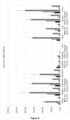
- liver to organ ratio is 3.5 10 min p.i. increasing to 11.4 60 min p.i.
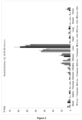
- Most favourable liver-to-organ ratios were reached after 60 min p.i. in almost all organs including blood, spleen, pancreas, heart, lung and muscle demonstrating the described lack of ASGR1 expression in non-liver tissue and the good pharmacokinetic properties of this new compound ( Fig. 3 , Table 4).
- the rapid reduction of activity uptake in kidneys indicate fast renal excretion of the tracer.
- the only organ with increasing activity concentration over time is the intestine reaching 3.0 ⁇ 0,4 % ID/g 60 min p.i.
- Blocking experiments were carried out co-injecting a high excess of D-Galactose and examining the mice 30 min p.i. ( Fig. 4 ).
- a significant reduction in activity accumulation in the liver can be found (32.2 ⁇ 3.7 %ID/g vs. 13.9 ⁇ 1.0 %ID/g) whereas in most non-target organs comparable activity accumulation is observed.
- the only other organs with an activity reduction are stomach and intestine where uptake might be effected due to elimination of the high galactose amount and not due to specific interaction with the tracer.
- the reference compound 99m Tc-GSA showed higher liver uptake 10 min p.i. (58.1 ⁇ 6.7 % ID/g,) but declines more significantly over the observation period of 60 min. (46.3 ⁇ 5.9 % ID/g) ( Fig. 2 , Table 3).
- [ 68 Ga]Ga-NODAGA-TriGalactan elimination from the blood pool is much slower and activity concentration in kidneys remains almost stable over the observation period of 60 min. Again, highest non-target uptake was found in the kidneys.
- the increase of activity in the intestine is also higher compared to the new tracer resulting in 9.8 ⁇ 1.6 %ID/g vs. 3.0 ⁇ 0.4 %ID/g 60 min p.i.
- In general activity concentration in observed organs and tissue is higher as found for [ 68 Ga]Ga-NODAGA-TriGalactan resulting for the later time points in inferior liver-to-organ ratios (Table 4).
Landscapes
- Health & Medical Sciences (AREA)
- Chemical & Material Sciences (AREA)
- Life Sciences & Earth Sciences (AREA)
- General Health & Medical Sciences (AREA)
- Medicinal Chemistry (AREA)
- Public Health (AREA)
- Optics & Photonics (AREA)
- Pharmacology & Pharmacy (AREA)
- Epidemiology (AREA)
- Animal Behavior & Ethology (AREA)
- Proteomics, Peptides & Aminoacids (AREA)
- Physics & Mathematics (AREA)
- Veterinary Medicine (AREA)
- Engineering & Computer Science (AREA)
- Biochemistry (AREA)
- Biotechnology (AREA)
- Molecular Biology (AREA)
- Organic Chemistry (AREA)
- Genetics & Genomics (AREA)
- Medicines Containing Antibodies Or Antigens For Use As Internal Diagnostic Agents (AREA)
Priority Applications (3)
| Application Number | Priority Date | Filing Date | Title |
|---|---|---|---|
| EP22195665.9A EP4338757A1 (fr) | 2022-09-14 | 2022-09-14 | Nouveau traceur pet pour l'imagerie de la réserve hépatique fonctionnelle |
| EP23769256.1A EP4587065A1 (fr) | 2022-09-14 | 2023-09-14 | Nouveau traceur tep pour l'imagerie de la réserve hépatique fonctionnelle |
| PCT/EP2023/075302 WO2024056805A1 (fr) | 2022-09-14 | 2023-09-14 | Nouveau traceur tep pour l'imagerie de la réserve hépatique fonctionnelle |
Applications Claiming Priority (1)
| Application Number | Priority Date | Filing Date | Title |
|---|---|---|---|
| EP22195665.9A EP4338757A1 (fr) | 2022-09-14 | 2022-09-14 | Nouveau traceur pet pour l'imagerie de la réserve hépatique fonctionnelle |
Publications (1)
| Publication Number | Publication Date |
|---|---|
| EP4338757A1 true EP4338757A1 (fr) | 2024-03-20 |
Family
ID=83319329
Family Applications (2)
| Application Number | Title | Priority Date | Filing Date |
|---|---|---|---|
| EP22195665.9A Withdrawn EP4338757A1 (fr) | 2022-09-14 | 2022-09-14 | Nouveau traceur pet pour l'imagerie de la réserve hépatique fonctionnelle |
| EP23769256.1A Pending EP4587065A1 (fr) | 2022-09-14 | 2023-09-14 | Nouveau traceur tep pour l'imagerie de la réserve hépatique fonctionnelle |
Family Applications After (1)
| Application Number | Title | Priority Date | Filing Date |
|---|---|---|---|
| EP23769256.1A Pending EP4587065A1 (fr) | 2022-09-14 | 2023-09-14 | Nouveau traceur tep pour l'imagerie de la réserve hépatique fonctionnelle |
Country Status (2)
| Country | Link |
|---|---|
| EP (2) | EP4338757A1 (fr) |
| WO (1) | WO2024056805A1 (fr) |
Families Citing this family (1)
| Publication number | Priority date | Publication date | Assignee | Title |
|---|---|---|---|---|
| EP4640240A1 (fr) * | 2024-04-22 | 2025-10-29 | Medizinische Universität Innsbruck | Produits radiopharmaceutiques à base de peptides pour l'imagerie non invasive de la réserve fonctionnelle du foie |
Citations (1)
| Publication number | Priority date | Publication date | Assignee | Title |
|---|---|---|---|---|
| US20110097264A1 (en) * | 2009-10-26 | 2011-04-28 | Institute Of Nuclear Energy Research Atomic Energy Council, Executive Yuan | Radiolabeling method using multivalent glycoligands as hepatic receptor imaging agent |
-
2022
- 2022-09-14 EP EP22195665.9A patent/EP4338757A1/fr not_active Withdrawn
-
2023
- 2023-09-14 WO PCT/EP2023/075302 patent/WO2024056805A1/fr not_active Ceased
- 2023-09-14 EP EP23769256.1A patent/EP4587065A1/fr active Pending
Patent Citations (1)
| Publication number | Priority date | Publication date | Assignee | Title |
|---|---|---|---|---|
| US20110097264A1 (en) * | 2009-10-26 | 2011-04-28 | Institute Of Nuclear Energy Research Atomic Energy Council, Executive Yuan | Radiolabeling method using multivalent glycoligands as hepatic receptor imaging agent |
Non-Patent Citations (22)
| Title |
|---|
| A. WURZER ET AL., J NUCL MED, 2020 |
| BENNINK RJ ET AL., SEMIN NUCL MED, vol. 42, 2012, pages 124 - 37 |
| D'ARIENZO M ET AL., NUCL MED COMMUN, vol. 33, 2012, pages 633 - 40 |
| DE GRAAF W ET AL., J NUCL MED, vol. 51, 2010, pages 742 - 52 |
| D'SOUZA AA ET AL., J CONTROL RELEASE, vol. 203, 2015, pages 126 - 39 |
| EGGINK LL ET AL., J IMMUNOTHER CANCER, vol. 6, 2018, pages 28 |
| HAUBNER R ET AL., EUR J NUCL MED MOL IMAGING, vol. 43, 2016, pages 2005 - 13 |
| HAUBNER R ET AL., MOL IMAGING BIOL, vol. 19, 2017, pages 723 - 30 |
| HOEKSTRA LT ET AL., ANN SURG, vol. 257, 2013, pages 27 - 36 |
| KAIBORI M ET AL., ANN NUCL MED, vol. 25, 2011, pages 593 - 602 |
| KOKUDO N ET AL., NUCL MED BIOL, vol. 30, 2003, pages 845 - 9 |
| KUDO M ET AL., HEPATOLOGY, vol. 17, 1993, pages 814 - 9 |
| KUDO M ET AL., METHODS ENZYMOL, 1994 |
| KURTARAN A ET AL., J NUCL MED, vol. 36, 1995, pages 1875 - 81 |
| LEE YC ET AL., J BIOL CHEM, vol. 258, 1983, pages 199 - 202 |
| MANSI L ET AL., EUR J NUCL MED MOL IMAGING, vol. 38, 2011, pages 605 - 12 |
| MEIER M ET AL., J MOL BIOL, vol. 300, 2000, pages 857 - 65 |
| STOCKERT RJ ET AL., PHYSIOL REV, vol. 75, 1995, pages 591 - 609 |
| VERA DR ET AL., J NUCL MED, vol. 37, 1996, pages 160 - 4 |
| VIRGOLINI I ET AL., BR J CANCER, vol. 61, 1990, pages 937 - 41 |
| VIRGOLINI I ET AL., BR J CANCER, vol. 68, 1993, pages 549 - 54 |
| VIRGOLINI I ET AL., NUCL MED COMMUN, vol. 12, 1991, pages 507 - 17 |
Also Published As
| Publication number | Publication date |
|---|---|
| WO2024056805A1 (fr) | 2024-03-21 |
| EP4587065A1 (fr) | 2025-07-23 |
Similar Documents
| Publication | Publication Date | Title |
|---|---|---|
| JP7500551B2 (ja) | 前立腺特異的膜抗原(psma)の標識化阻害剤、画像化剤としてのそれらの使用、及びpsma発現がんの処置のための医薬剤 | |
| ES3011272T3 (en) | Dual mode radiotracer and -therapeutics | |
| ES2953196T3 (es) | Radiotrazador de modo dual de unión a PSMA y terapéutico | |
| Jackson et al. | 64Cu-NO2A-RGD-Glu-6-Ahx-BBN (7-14) NH2: a heterodimeric targeting vector for positron emission tomography imaging of prostate cancer | |
| ES2749640T3 (es) | Análogos de octreotato radiomarcados como trazadores de PET | |
| CZ20032564A3 (cs) | Značené antagonisty receptoru makrofágového lapače pro zobrazování atherosklerosy a citlivých plaků | |
| JPH08502075A (ja) | 標識された単球走化性因子タンパク質材料およびその医学的使用 | |
| Meckel et al. | A DOTA based bisphosphonate with an albumin binding moiety for delayed body clearance for bone targeting | |
| AU2022219294A1 (en) | Cxcr4-ligands for diagnostic and therapeutic use and precursors thereof | |
| EP4338757A1 (fr) | Nouveau traceur pet pour l'imagerie de la réserve hépatique fonctionnelle | |
| WO2005087275A2 (fr) | Agents d'imagerie tep radiomarques metalliques | |
| Choi et al. | Ga-68-labeled neolactosylated human serum albumin (LSA) for PET imaging of hepatic asialoglycoprotein receptor | |
| CA2665494C (fr) | 2-nitroimidazoles faiblement basiques pour la detection non invasive d'une hypoxie tissulaire | |
| Prasanphanich et al. | The effects of linking substituents on the in vivo behavior of site-directed, peptide-based, diagnostic radiopharmaceuticals | |
| Jalilian et al. | Preparation, quality control and biodistribution studies of two [111In]-rituximab immunoconjugates | |
| EP4640240A1 (fr) | Produits radiopharmaceutiques à base de peptides pour l'imagerie non invasive de la réserve fonctionnelle du foie | |
| US6749832B2 (en) | Labelled ascorbic acid derivatives | |
| Yang et al. | Synthesis and biological evaluation of 99mTc-DMP-NGA as a novel hepatic asialoglycoprotein receptor imaging agent | |
| RU2803734C1 (ru) | Псма-таргетное соединение и его комплекс с радионуклидами для тераностики опухолей, экспрессирующих псма | |
| EP3494998A1 (fr) | Inhibiteurs de psma glycosylés pour l'imagerie et l'endoradiothérapie | |
| Kaizuka | Development of In Vivo Stable Astatine-211 Labeled Scaffold and Its Application in Cancer Radiotheranostics | |
| WO2010066051A1 (fr) | Dérivés de thiol-nota pour radiomarquage par kit 68ga | |
| Braz | Mitochondria-Targeted 111In-Radiocomplexes for Auger Therapy of Prostate Cancer | |
| Ertay et al. | 99m Tc-exorphin C: A new peptide radiopharmaceutical for tumor imaging | |
| Müller et al. | Folate Receptor-Targeted Radionuclide Imaging Agents |
Legal Events
| Date | Code | Title | Description |
|---|---|---|---|
| PUAI | Public reference made under article 153(3) epc to a published international application that has entered the european phase |
Free format text: ORIGINAL CODE: 0009012 |
|
| STAA | Information on the status of an ep patent application or granted ep patent |
Free format text: STATUS: THE APPLICATION HAS BEEN PUBLISHED |
|
| AK | Designated contracting states |
Kind code of ref document: A1 Designated state(s): AL AT BE BG CH CY CZ DE DK EE ES FI FR GB GR HR HU IE IS IT LI LT LU LV MC MK MT NL NO PL PT RO RS SE SI SK SM TR |
|
| STAA | Information on the status of an ep patent application or granted ep patent |
Free format text: STATUS: THE APPLICATION IS DEEMED TO BE WITHDRAWN |
|
| 18D | Application deemed to be withdrawn |
Effective date: 20240921 |