EP4340421A1 - Procédé et appareil de génération de clé de session - Google Patents
Procédé et appareil de génération de clé de session Download PDFInfo
- Publication number
- EP4340421A1 EP4340421A1 EP22827221.7A EP22827221A EP4340421A1 EP 4340421 A1 EP4340421 A1 EP 4340421A1 EP 22827221 A EP22827221 A EP 22827221A EP 4340421 A1 EP4340421 A1 EP 4340421A1
- Authority
- EP
- European Patent Office
- Prior art keywords
- terminal device
- public key
- access network
- radio access
- network device
- Prior art date
- Legal status (The legal status is an assumption and is not a legal conclusion. Google has not performed a legal analysis and makes no representation as to the accuracy of the status listed.)
- Pending
Links
Images




Classifications
-
- H—ELECTRICITY
- H04—ELECTRIC COMMUNICATION TECHNIQUE
- H04W—WIRELESS COMMUNICATION NETWORKS
- H04W12/00—Security arrangements; Authentication; Protecting privacy or anonymity
- H04W12/04—Key management, e.g. using generic bootstrapping architecture [GBA]
- H04W12/041—Key generation or derivation
-
- G—PHYSICS
- G06—COMPUTING OR CALCULATING; COUNTING
- G06F—ELECTRIC DIGITAL DATA PROCESSING
- G06F21/00—Security arrangements for protecting computers, components thereof, programs or data against unauthorised activity
- G06F21/30—Authentication, i.e. establishing the identity or authorisation of security principals
- G06F21/44—Program or device authentication
- G06F21/445—Program or device authentication by mutual authentication, e.g. between devices or programs
-
- G—PHYSICS
- G06—COMPUTING OR CALCULATING; COUNTING
- G06F—ELECTRIC DIGITAL DATA PROCESSING
- G06F21/00—Security arrangements for protecting computers, components thereof, programs or data against unauthorised activity
- G06F21/60—Protecting data
- G06F21/64—Protecting data integrity, e.g. using checksums, certificates or signatures
-
- H—ELECTRICITY
- H04—ELECTRIC COMMUNICATION TECHNIQUE
- H04L—TRANSMISSION OF DIGITAL INFORMATION, e.g. TELEGRAPHIC COMMUNICATION
- H04L63/00—Network architectures or network communication protocols for network security
- H04L63/04—Network architectures or network communication protocols for network security for providing a confidential data exchange among entities communicating through data packet networks
- H04L63/0428—Network architectures or network communication protocols for network security for providing a confidential data exchange among entities communicating through data packet networks wherein the data content is protected, e.g. by encrypting or encapsulating the payload
- H04L63/0442—Network architectures or network communication protocols for network security for providing a confidential data exchange among entities communicating through data packet networks wherein the data content is protected, e.g. by encrypting or encapsulating the payload wherein the sending and receiving network entities apply asymmetric encryption, i.e. different keys for encryption and decryption
-
- H—ELECTRICITY
- H04—ELECTRIC COMMUNICATION TECHNIQUE
- H04L—TRANSMISSION OF DIGITAL INFORMATION, e.g. TELEGRAPHIC COMMUNICATION
- H04L63/00—Network architectures or network communication protocols for network security
- H04L63/06—Network architectures or network communication protocols for network security for supporting key management in a packet data network
- H04L63/062—Network architectures or network communication protocols for network security for supporting key management in a packet data network for key distribution, e.g. centrally by trusted party
-
- H—ELECTRICITY
- H04—ELECTRIC COMMUNICATION TECHNIQUE
- H04L—TRANSMISSION OF DIGITAL INFORMATION, e.g. TELEGRAPHIC COMMUNICATION
- H04L9/00—Cryptographic mechanisms or cryptographic arrangements for secret or secure communications; Network security protocols
- H04L9/08—Key distribution or management, e.g. generation, sharing or updating, of cryptographic keys or passwords
- H04L9/0816—Key establishment, i.e. cryptographic processes or cryptographic protocols whereby a shared secret becomes available to two or more parties, for subsequent use
- H04L9/0819—Key transport or distribution, i.e. key establishment techniques where one party creates or otherwise obtains a secret value, and securely transfers it to the other(s)
- H04L9/0825—Key transport or distribution, i.e. key establishment techniques where one party creates or otherwise obtains a secret value, and securely transfers it to the other(s) using asymmetric-key encryption or public key infrastructure [PKI], e.g. key signature or public key certificates
-
- H—ELECTRICITY
- H04—ELECTRIC COMMUNICATION TECHNIQUE
- H04L—TRANSMISSION OF DIGITAL INFORMATION, e.g. TELEGRAPHIC COMMUNICATION
- H04L9/00—Cryptographic mechanisms or cryptographic arrangements for secret or secure communications; Network security protocols
- H04L9/08—Key distribution or management, e.g. generation, sharing or updating, of cryptographic keys or passwords
- H04L9/0816—Key establishment, i.e. cryptographic processes or cryptographic protocols whereby a shared secret becomes available to two or more parties, for subsequent use
- H04L9/0819—Key transport or distribution, i.e. key establishment techniques where one party creates or otherwise obtains a secret value, and securely transfers it to the other(s)
- H04L9/083—Key transport or distribution, i.e. key establishment techniques where one party creates or otherwise obtains a secret value, and securely transfers it to the other(s) involving central third party, e.g. key distribution center [KDC] or trusted third party [TTP]
-
- H—ELECTRICITY
- H04—ELECTRIC COMMUNICATION TECHNIQUE
- H04L—TRANSMISSION OF DIGITAL INFORMATION, e.g. TELEGRAPHIC COMMUNICATION
- H04L9/00—Cryptographic mechanisms or cryptographic arrangements for secret or secure communications; Network security protocols
- H04L9/30—Public key, i.e. encryption algorithm being computationally infeasible to invert or user's encryption keys not requiring secrecy
-
- H—ELECTRICITY
- H04—ELECTRIC COMMUNICATION TECHNIQUE
- H04L—TRANSMISSION OF DIGITAL INFORMATION, e.g. TELEGRAPHIC COMMUNICATION
- H04L9/00—Cryptographic mechanisms or cryptographic arrangements for secret or secure communications; Network security protocols
- H04L9/32—Cryptographic mechanisms or cryptographic arrangements for secret or secure communications; Network security protocols including means for verifying the identity or authority of a user of the system or for message authentication, e.g. authorization, entity authentication, data integrity or data verification, non-repudiation, key authentication or verification of credentials
- H04L9/3236—Cryptographic mechanisms or cryptographic arrangements for secret or secure communications; Network security protocols including means for verifying the identity or authority of a user of the system or for message authentication, e.g. authorization, entity authentication, data integrity or data verification, non-repudiation, key authentication or verification of credentials using cryptographic hash functions
- H04L9/3239—Cryptographic mechanisms or cryptographic arrangements for secret or secure communications; Network security protocols including means for verifying the identity or authority of a user of the system or for message authentication, e.g. authorization, entity authentication, data integrity or data verification, non-repudiation, key authentication or verification of credentials using cryptographic hash functions involving non-keyed hash functions, e.g. modification detection codes [MDCs], MD5, SHA or RIPEMD
-
- H—ELECTRICITY
- H04—ELECTRIC COMMUNICATION TECHNIQUE
- H04L—TRANSMISSION OF DIGITAL INFORMATION, e.g. TELEGRAPHIC COMMUNICATION
- H04L9/00—Cryptographic mechanisms or cryptographic arrangements for secret or secure communications; Network security protocols
- H04L9/32—Cryptographic mechanisms or cryptographic arrangements for secret or secure communications; Network security protocols including means for verifying the identity or authority of a user of the system or for message authentication, e.g. authorization, entity authentication, data integrity or data verification, non-repudiation, key authentication or verification of credentials
- H04L9/3247—Cryptographic mechanisms or cryptographic arrangements for secret or secure communications; Network security protocols including means for verifying the identity or authority of a user of the system or for message authentication, e.g. authorization, entity authentication, data integrity or data verification, non-repudiation, key authentication or verification of credentials involving digital signatures
-
- H—ELECTRICITY
- H04—ELECTRIC COMMUNICATION TECHNIQUE
- H04L—TRANSMISSION OF DIGITAL INFORMATION, e.g. TELEGRAPHIC COMMUNICATION
- H04L9/00—Cryptographic mechanisms or cryptographic arrangements for secret or secure communications; Network security protocols
- H04L9/50—Cryptographic mechanisms or cryptographic arrangements for secret or secure communications; Network security protocols using hash chains, e.g. blockchains or hash trees
-
- H—ELECTRICITY
- H04—ELECTRIC COMMUNICATION TECHNIQUE
- H04W—WIRELESS COMMUNICATION NETWORKS
- H04W12/00—Security arrangements; Authentication; Protecting privacy or anonymity
- H04W12/04—Key management, e.g. using generic bootstrapping architecture [GBA]
- H04W12/043—Key management, e.g. using generic bootstrapping architecture [GBA] using a trusted network node as an anchor
- H04W12/0431—Key distribution or pre-distribution; Key agreement
-
- H—ELECTRICITY
- H04—ELECTRIC COMMUNICATION TECHNIQUE
- H04W—WIRELESS COMMUNICATION NETWORKS
- H04W12/00—Security arrangements; Authentication; Protecting privacy or anonymity
- H04W12/12—Detection or prevention of fraud
- H04W12/121—Wireless intrusion detection systems [WIDS]; Wireless intrusion prevention systems [WIPS]
- H04W12/122—Counter-measures against attacks; Protection against rogue devices
-
- H—ELECTRICITY
- H04—ELECTRIC COMMUNICATION TECHNIQUE
- H04L—TRANSMISSION OF DIGITAL INFORMATION, e.g. TELEGRAPHIC COMMUNICATION
- H04L2209/00—Additional information or applications relating to cryptographic mechanisms or cryptographic arrangements for secret or secure communication H04L9/00
- H04L2209/80—Wireless
Definitions
- This application relates to the communication field, and more specifically, to a session key generation method and apparatus.
- a 5th generation (5th generation, 5G) communication system unified derivation of keys for 3rd generation partnership project (the 3rd generation partnership project, 3GPP) access and non-3GPP access is completed.
- 3rd generation partnership project the 3rd generation partnership project, 3GPP
- a same session key is derived on a terminal device side based on a same key algorithm, and is used for encrypted communication between a terminal device and a network device.
- This application provides a session key generation method and apparatus, to implement session key distribution in a decentralized or distributed architecture and reduce a man-in-the-middle attack risk.
- a session key generation method is provided.
- the method may be performed by a terminal device, or may be performed by a component (such as a circuit, a chip, or a chip system) configured in the terminal device. This is not limited in this application.
- the method includes: A terminal device obtains a first public key of a radio access network device from a blockchain, where the first public key of the radio access network device is a public key that is of the radio access network device and that is signed by using an operator private key, and the first public key of the radio access network device is generated based on a private key of the radio access network device.
- the terminal device processes the first public key of the radio access network device by using an operator public key, to obtain a second public key of the radio access network device.
- the terminal device generates a first session key based on a first private key of the terminal device and the second public key of the radio access network device.
- the public key that is of the radio access network device and that is signed by using the operator private key is obtained from the blockchain, and a session key is generated based on the public key of the radio access network device and a private key of the terminal device, so that the session key can be generated in a decentralized or distributed architecture.
- a trust anchor is constructed on the blockchain, to reduce a man-in-the-middle attack risk during public key distribution.
- the method further includes: The terminal device sends a first message to the radio access network device, where the first message includes a first public key of the terminal device, the first public key of the terminal device is a public key that is of the terminal device and that is encrypted by using the first session key, the first public key of the terminal device is generated based on a second private key of the terminal device, and the second private key of the terminal device is different from the first private key of the terminal device.
- the terminal device generates a second session key based on the second private key of the terminal device and the second public key of the radio access network device.
- a new public key generated by the terminal device is encrypted by using an existing session key, and the session key is updated based on an actual requirement, based on specific time, or periodically without depending on two-way authentication, so that excessive exposure of a weakness of an asymmetric key can be reduced, and a quantum attack risk can be reduced to a maximum extent.
- the method further includes: The terminal device receives a second message from the radio access network device, where the second message includes a first random number encrypted by using a second public key of the terminal device, the second public key of the terminal device has been verified by using the operator private key, and the second public key of the terminal device is generated based on the first private key of the terminal device.
- the terminal device decrypts, by using the first private key of the terminal device, the first random number encrypted by using the second public key of the terminal device, to obtain the decrypted first random number.
- the terminal device sends a first response message to the radio access network device, where the first response message includes the first random number encrypted by using the second public key of the radio access network device.
- the first random number is generated by the radio access network device.
- the first response message further includes a second random number encrypted by using the second public key of the radio access network device.
- the second random number is generated by the terminal device.
- the method further includes: The terminal device receives a third message from the radio access network device, where the third message includes the second random number encrypted by using the second public key of the terminal device.
- the terminal device decrypts, by using the first private key of the terminal device, the second random number encrypted by using the second public key of the terminal device, to obtain the decrypted second random number.
- a terminal device obtains a first public key of a radio access network device from a blockchain includes: The terminal device sends a fourth message to the blockchain, where the fourth message includes an identifier of the radio access network device, and the fourth message is used to request the first public key of the radio access network device. The terminal device receives a second response message from the blockchain, where the second response message includes the first public key of the radio access network device.
- mutual authentication between the terminal device and the radio access network device is implemented by using the random numbers respectively generated by the terminal device and the radio access network device.
- the session key is generated based on elliptic curve Diffie-Hellman ECDH key agreement instead of a random number.
- the trust anchor is constructed on the blockchain, and ac root key does not need to be shared between the terminal device and the radio access network device in advance, to resolve a trust assumption problem of symmetric key distribution.
- a session key generation method is provided.
- the method may be performed by a radio access network device, or may be performed by a component (such as a circuit, a chip, or a chip system) configured in the radio access network device. This is not limited in this application.
- the method includes: A radio access network device obtains a third public key of a terminal device from a blockchain, where the third public key of the terminal device is a public key that is of the terminal device and that is signed by using an operator private key, and the third public key of the terminal device is generated based on a first private key of the terminal device.
- the radio access network device processes the third public key of the terminal device by using an operator public key, to obtain a second public key of the terminal device.
- the radio access network device generates a first session key based on a private key of the radio access network device and the second public key of the terminal device.
- the public key that is of the terminal device and that is signed by using the operator private key is obtained from the blockchain, and a session key is generated based on the public key of the terminal device and the private key of the radio access network device, so that the session key can be generated in a decentralized or distributed architecture.
- a trust anchor is constructed on the blockchain, to reduce a man-in-the-middle attack risk during public key distribution.
- the second aspect is performed by the radio access network device
- the first aspect is performed by the terminal device
- the method in the first aspect corresponds to the method in the second aspect.
- the method further includes: The radio access network device receives a first message from the terminal device, where the first message includes a first public key of the terminal device, the first public key of the terminal device is a public key that is of the terminal device and that is encrypted by using the first session key, the first public key of the terminal device is generated based on a second private key of the terminal device, and the second private key of the terminal device is different from the first private key of the terminal device.
- the radio access network device decrypts the first public key of the terminal device by using the first session key, to obtain a fourth public key of the terminal device.
- the radio access network device generates a second session key based on the private key of the radio access network device and the fourth public key of the terminal device.
- the method further includes: The radio access network device sends a fifth message to the blockchain, where the fifth message includes the fourth public key of the terminal device, and the fifth message is used by the blockchain to sign the fourth public key of the terminal device by using the operator private key.
- the method further includes: The radio access network device encrypts a first random number by using the second public key of the terminal device.
- the radio access network device sends a second message to the terminal device, where the second message includes the first random number encrypted by using the second public key of the terminal device.
- the radio access network device receives a first response message from the terminal device, where the first response message includes the first random number encrypted by using a second public key of the radio access network device, and the second public key of the radio access network device has been verified by using the operator public key.
- the radio access network device decrypts, by using the private key of the radio access network device, the first random number encrypted by using the second public key of the radio access network device, to obtain the decrypted first random number.
- the first random number is generated by the radio access network device.
- the first response message further includes a second random number encrypted by using the second public key of the radio access network device.
- the second random number is generated by the terminal device.
- the method further includes: The radio access network device decrypts, by using the private key of the radio access network device, the second random number encrypted by using the second public key of the radio access network device, to obtain the decrypted second random number.
- the radio access network device sends a third message to the terminal device, where the third message includes the second random number encrypted by using the second public key of the terminal device.
- a radio access network device obtains a third public key of a terminal device from a blockchain includes: The radio access network device sends a sixth message to the blockchain, where the sixth message includes an identifier of the terminal device, and the sixth message is used to request the third public key of the terminal device. The radio access network device receives a third response message from the blockchain, where the third response message includes the third public key of the terminal device.
- a session key update method is provided.
- the method may be performed by a terminal device, or may be performed by a component (such as a circuit, a chip, or a chip system) configured in the terminal device. This is not limited in this application.
- the method includes: A terminal device sends a first message to a radio access network device, where the first message includes a first public key of the terminal device, and the first public key of the terminal device is a public key that is of the terminal device and that is encrypted by using a first session key.
- the terminal device generates a second session key based on a first private key of the terminal device and a first public key of the radio access network device, where the first public key of the radio access network device has been verified by using an operator private key.
- a new public key generated by the terminal device is encrypted by using an existing session key, and the session key is updated without depending on two-way authentication, so that excessive exposure of a weakness of an asymmetric key can be reduced, and a quantum attack risk can be reduced to a maximum extent.
- the method further includes: The terminal device obtains a second public key of the radio access network device from a blockchain, where the second public key of the radio access network device is a public key that is of the radio access network device and that is signed by using the operator private key, and the second public key of the radio access network device is generated based on a private key of the radio access network device.
- the terminal device processes the second public key of the radio access network device by using an operator public key, to obtain the first public key of the radio access network device.
- the terminal device generates the first session key based on a second private key of the terminal device and the first public key of the radio access network device, where the first private key of the terminal device is different from the second private key of the terminal device.
- the method further includes: The terminal device receives a second message from the radio access network device, where the second message includes a first random number encrypted by using a second public key of the terminal device, the second public key of the terminal device has been verified by using the operator private key, and the second public key of the terminal device is generated based on the second private key of the terminal device.
- the terminal device decrypts, by using the second private key of the terminal device, the first random number encrypted by using the second public key of the terminal device, to obtain the decrypted first random number.
- the terminal device sends a first response message to the radio access network device, where the first response message includes the first random number encrypted by using the first public key of the radio access network device.
- the first random number is generated by the radio access network device.
- the first response message further includes a second random number encrypted by using the first public key of the radio access network device.
- the second random number is generated by the terminal device.
- the method further includes: The terminal device receives a third message from the radio access network device, where the third message includes the second random number encrypted by using the second public key of the terminal device.
- the terminal device decrypts, by using the second private key of the terminal device, the second random number encrypted by using the second public key of the terminal device, to obtain the decrypted second random number.
- that the terminal device obtains a second public key of the radio access network device from a blockchain includes: The terminal device sends a fourth message to the blockchain, where the fourth message includes an identifier of the radio access network device, and the fourth message is used to request the second public key of the radio access network device. The terminal device receives a second response message from the blockchain, where the second response message includes the second public key of the radio access network device.
- a session key generation method is provided.
- the method may be performed by a radio access network device, or may be performed by a component (such as a circuit, a chip, or a chip system) configured in the radio access network device. This is not limited in this application.
- the method includes: A radio access network device receives a first message from a terminal device, where the first message includes a first public key of the terminal device, and the first public key of the terminal device is a public key that is of the terminal device and that is encrypted by using a first session key.
- the radio access network device decrypts the first public key of the terminal device by using the first session key, to obtain a third public key of the terminal device.
- the radio access network device generates a second session key based on a private key of the radio access network device and the third public key of the terminal device.
- the method further includes: The radio access network device sends a fifth message to a blockchain, where the fifth message includes the third public key of the terminal device, and the fifth message is used by the blockchain to sign the third public key of the terminal device.
- the method further includes: The radio access network device obtains a fourth public key of the terminal device from the blockchain, where the fourth public key of the terminal device is a public key that is of the terminal device and that is signed by using an operator private key.
- the radio access network device processes the fourth public key of the terminal device by using an operator public key, to obtain a second public key of the terminal device, where the second public key of the terminal device is generated based on a second private key of the terminal device, the first public key of the terminal device is generated based on the first private key of the terminal device, and the first private key of the terminal device is different from the second private key of the terminal device.
- the radio access network device generates a second session key based on the private key of the radio access network device and the public key of the terminal device.
- the method further includes: The radio access network device encrypts a first random number by using the second public key of the terminal device.
- the radio access network device sends a second message to the terminal device, where the second message includes the first random number encrypted by using the second public key of the terminal device.
- the radio access network device receives a first response message from the terminal device, where the first response message includes the first random number encrypted by using a first public key of the radio access network device.
- the radio access network device decrypts, by using the private key of the radio access network device, the first random number encrypted by using the first public key of the radio access network device, to obtain the decrypted first random number.
- the first random number is generated by the radio access network device.
- the first response message further includes a second random number encrypted by using the first public key of the radio access network device.
- the second random number is generated by the terminal device.
- the method further includes: The radio access network device decrypts, by using the private key of the radio access network device, the second random number encrypted by using the first public key of the radio access network device, to obtain the decrypted second random number.
- the radio access network device sends a third message to the terminal device, where the third message includes the second random number encrypted by using the second public key of the terminal device.
- the radio access network device obtains a fourth public key of the terminal device from the blockchain includes: The radio access network device sends a sixth message to the blockchain, where the sixth message includes an identifier of the terminal device, and the sixth message is used to request the fourth public key of the terminal device. The radio access network device receives a third response message from the blockchain, where the third response message includes the fourth public key of the terminal device.
- a session key generation apparatus includes a transceiver unit and a processing unit.
- the transceiver unit is configured to obtain a first public key of a radio access network device from a blockchain, where the first public key of the radio access network device is a public key that is of the radio access network device and that is signed by using an operator private key, and the first public key of the radio access network device is generated based on a private key of the radio access network device.
- the processing unit is configured to process the first public key of the radio access network device by using an operator public key, to obtain a second public key of the radio access network device; and generate a first session key based on a first private key of the terminal device and the second public key of the radio access network device.
- the transceiver unit is further configured to send a first message to the radio access network device, where the first message includes a first public key of the terminal device, the first public key of the terminal device is a public key that is of the terminal device and that is encrypted by using the first session key, the first public key of the terminal device is generated based on a second private key of the terminal device, and the second private key of the terminal device is different from the first private key of the terminal device.
- the processing unit is further configured to generate a second session key based on the second private key of the terminal device and the second public key of the radio access network device.
- the transceiver unit is further configured to receive a second message from the radio access network device, where the second message includes a first random number encrypted by using a second public key of the terminal device, the second public key of the terminal device has been verified by using the operator private key, and the second public key of the terminal device is generated based on the first private key of the terminal device.
- the processing unit is further configured to decrypt, by using the first private key of the terminal device, the first random number encrypted by using the second public key of the terminal device, to obtain the decrypted first random number.
- the transceiver unit is further configured to send a first response message to the radio access network device, where the first response message includes the first random number encrypted by using the second public key of the radio access network device.
- the first response message further includes a second random number encrypted by using the second public key of the radio access network device.
- the transceiver unit is further configured to receive a third message from the radio access network device, where the third message includes the second random number encrypted by using the second public key of the terminal device.
- the processing unit is further configured to decrypt, by using the first private key of the terminal device, the second random number encrypted by using the second public key of the terminal device, to obtain the decrypted second random number.
- a session key generation apparatus includes a transceiver unit and a processing unit.
- the transceiver unit is configured to obtain a third public key of a terminal device from a blockchain, where the third public key of the terminal device is a public key that is of the terminal device and that is signed by using an operator private key, and the third public key of the terminal device is generated based on a first private key of the terminal device.
- the processing unit is configured to process the third public key of the terminal device by using an operator public key, to obtain a second public key of the terminal device; and generate a second session key based on a private key of the radio access network device and the second public key of the terminal device.
- the transceiver unit is further configured to receive a first message from the terminal device, where the first message includes a first public key of the terminal device, the first public key of the terminal device is a public key that is of the terminal device and that is encrypted by using a first session key, the first public key of the terminal device is generated based on a second private key of the terminal device, and the second private key of the terminal device is different from the first private key of the terminal device.
- the processing unit is further configured to decrypt the first public key of the terminal device by using the first session key, to obtain a fourth public key of the terminal device; and generate the second session key based on the private key of the radio access network device and the fourth public key of the terminal device.
- the transceiver unit is further configured to send a fifth message to the blockchain, where the fifth message includes the fourth public key of the terminal device, and the fifth message is used by the blockchain to sign the fourth public key of the terminal device by using the operator private key.
- the processing unit is further configured to encrypt a first random number by using the second public key of the terminal device.
- the transceiver unit is further configured to send a second message to the terminal device, where the second message includes the first random number encrypted by using the second public key of the terminal device; and receive a first response message from the terminal device, where the first response message includes the first random number encrypted by using a second public key of the radio access network device, and the second public key of the radio access network device has been verified by using the operator public key.
- the processing unit is further configured to decrypt, by using the private key of the radio access network device, the first random number encrypted by using the second public key of the radio access network device, to obtain the decrypted first random number.
- the first response message further includes a second random number encrypted by using the second public key of the radio access network device.
- the processing unit is further configured to decrypt, by using the private key of the radio access network device, the second random number encrypted by using the second public key of the radio access network device, to obtain the decrypted second random number.
- the transceiver unit is further configured to send a third message to the terminal device, where the third message includes the second random number encrypted by using the second public key of the terminal device.
- a session key update apparatus includes a transceiver unit and a processing unit.
- the transceiver unit is configured to send a first message to a radio access network device, where the first message includes a first public key of the terminal device, and the first public key of the terminal device is a public key that is of the terminal device and that is encrypted by using a first session key.
- the processing unit is configured to generate a second session key based on a first private key of the terminal device and a first public key of the radio access network device, where the first public key of the radio access network device has been verified by using an operator private key.
- the transceiver unit is further configured to obtain a second public key of the radio access network device from a blockchain, where the second public key of the radio access network device is a public key that is of the radio access network device and that is signed by using the operator private key, and the second public key of the radio access network device is generated based on a private key of the radio access network device.
- the processing unit is further configured to process the second public key of the radio access network device by using an operator public key, to obtain the first public key of the radio access network device; and generate the first session key based on a second private key of the terminal device and the first public key of the radio access network device, where the first private key of the terminal device is different from the second private key of the terminal device.
- the transceiver unit is further configured to receive a second message from the radio access network device, where the second message includes a first random number encrypted by using a second public key of the terminal device, the second public key of the terminal device has been verified by using the operator private key, and the second public key of the terminal device is generated based on the second private key of the terminal device.
- the processing unit is further configured to decrypt, by using the second private key of the terminal device, the first random number encrypted by using the second public key of the terminal device, to obtain the decrypted first random number.
- the transceiver unit is further configured to send a first response message to the radio access network device, where the first response message includes the first random number encrypted by using the first public key of the radio access network device.
- the first response message further includes a second random number encrypted by using the first public key of the radio access network device.
- the transceiver unit is further configured to receive a third message from the radio access network device, where the third message includes the second random number encrypted by using the second public key of the terminal device.
- the processing unit is further configured to decrypt, by using the second private key of the terminal device, the second random number encrypted by using the second public key of the terminal device, to obtain the decrypted second random number.
- the transceiver unit is specifically configured to send a fourth message to the blockchain, where the fourth message includes an identifier of the radio access network device, and the fourth message is used to request the second public key of the radio access network device; and receive a second response message from the blockchain, where the second response message includes the second public key of the radio access network device.
- a session key update apparatus includes a transceiver unit and a processing unit.
- the transceiver unit is configured to receive a first message from a terminal device, where the first message includes a first public key of the terminal device, and the first public key of the terminal device is a public key that is of the terminal device and that is encrypted by using a first session key.
- the processing unit is configured to decrypt the first public key of the terminal device by using the first session key, to obtain a third public key of the terminal device; and generate a second session key based on a private key of the radio access network device and the third public key of the terminal device.
- the transceiver unit is further configured to send a fifth message to a blockchain, where the fifth message includes the third public key of the terminal device, and the fifth message is used by the blockchain to sign the third public key of the terminal device.
- the transceiver unit is further configured to obtain a fourth public key of the terminal device from the blockchain, where the fourth public key of the terminal device is a public key that is of the terminal device and that is signed by using an operator private key.
- the processing unit is further configured to process the fourth public key of the terminal device by using an operator public key, to obtain a second public key of the terminal device, where the second public key of the terminal device is generated based on a second private key of the terminal device, the first public key of the terminal device is generated based on the first private key of the terminal device, and the first private key of the terminal device is different from the second private key of the terminal device; and generate a second session key based on the private key of the radio access network device and the public key of the terminal device.
- the processing unit is further configured to encrypt a first random number by using the second public key of the terminal device.
- the transceiver unit is further configured to send a second message to the terminal device, where the second message includes the first random number encrypted by using the second public key of the terminal device; and receive a first response message from the terminal device, where the first response message includes the first random number encrypted by using a first public key of the radio access network device.
- the processing unit is further configured to decrypt, by using the private key of the radio access network device, the first random number encrypted by using the first public key of the radio access network device, to obtain the decrypted first random number.
- the first response message further includes a second random number encrypted by using the first public key of the radio access network device.
- the processing unit is further configured to decrypt, by using the private key of the radio access network device, the second random number encrypted by using the first public key of the radio access network device, to obtain the decrypted second random number.
- the transceiver unit is further configured to send a third message to the terminal device, where the third message includes the second random number encrypted by using the second public key of the terminal device.
- a communication apparatus includes a processor and a storage medium, the storage medium stores instructions, and when the instructions are run by the processor, the communication apparatus is enabled to perform the method provided in any one of the first aspect or the possible implementations of the first aspect, or perform the method provided in any one of the second aspect or the possible implementations of the second aspect, or perform the method provided in any one of the third aspect or the possible implementations of the third aspect, or perform the method provided in any one of the fourth aspect or the possible implementations of the fourth aspect.
- a computer-readable storage medium includes instructions, and when the instructions are run by a processor, the method provided in any one of the first aspect or the possible implementations of the first aspect, the method provided in any one of the second aspect or the possible implementations of the second aspect, the method provided in any one of the third aspect or the possible implementations of the third aspect, or the method provided in any one of the fourth aspect or the possible implementations of the fourth aspect is implemented.
- a computer product includes instructions, and when the instructions are run by a processor, the method provided in any one of the first aspect or the possible implementations of the first aspect, the method provided in any one of the second aspect or the possible implementations of the second aspect, the method provided in any one of the third aspect or the possible implementations of the third aspect, or the method provided in any one of the fourth aspect or the possible implementations of the fourth aspect is implemented.
- a chip system includes: a processor, configured to invoke a computer program from a memory and run the computer program, so that a communication device in which the chip system is installed performs the method provided in any one of the first aspect or the possible implementations of the first aspect, or performs the method provided in any one of the second aspect or the possible implementations of the second aspect, or performs the method provided in any one of the third aspect or the possible implementations of the third aspect, or performs the method provided in any one of the fourth aspect or the possible implementations of the fourth aspect.
- a communication system including the apparatus in the fifth aspect and the apparatus in the sixth aspect, or the apparatus in the seventh aspect and the apparatus in the eighth aspect.
- Embodiments of this application may be used in various communication systems, for example, a wireless local area network (wireless local area network, WLAN) system, a narrowband-internet of things (narrowband-internet of things, NB-IoT) system, a global system for mobile communications (global system for mobile communications, GSM), an enhanced data rates for GSM evolution (enhanced data rates for GSM evolution, EDGE) system, a wideband code division multiple access (wideband code division multiple access, WCDMA) system, a code division multiple access 2000 (code division multiple access, CDMA2000) system, a time division-synchronous code division multiple access (time division-synchronization code division multiple access, TD-SCDMA) system, a long term evolution (long term evolution, LTE) system, satellite communication, a 5G system, or a new communication system that emerges in the future.
- WLAN wireless local area network
- NB-IoT narrowband-internet of things
- GSM global system for mobile communications
- GSM evolution enhanced data rates
- a terminal device in embodiments of this application may also be referred to as user equipment (user equipment, UE), a mobile station (mobile station, MS), a mobile terminal (mobile terminal, MT), or the like, and is a device that provides voice and/or data connectivity for a user; for example, a handheld device or a vehicle-mounted device that has a wireless connection function.
- user equipment user equipment
- MS mobile station
- MT mobile terminal
- the terminal are a mobile phone (mobile phone), a tablet computer, a laptop computer, a palmtop computer, a mobile internet device (mobile internet device, MID), a wearable device, a virtual reality (virtual reality, VR) device, an augmented reality (augmented reality, AR) device, a wireless terminal in industrial control (industrial control), a wireless terminal in self driving (self driving), a wireless terminal in remote medical surgery (remote medical surgery), a wireless terminal in a smart grid (smart grid), a wireless terminal in transportation safety (transportation safety), a wireless terminal in a smart city (smart city), a wireless terminal in a smart home (smart home), or the like.
- a specific technology and a specific device form that are used for the terminal device are not limited in embodiments of this application.
- the terminal device may have a plurality of subscriber identity modules (subscriber identity modules, SIMs) or universal subscriber identity modules (universal subscriber identity modules, USIMs).
- SIM subscriber identity modules
- USIMs universal subscriber identity modules
- the SIM may be a physical SIM card, or may be a software SIM (software SIM), a virtual SIM (virtual SIM), or an embedded SIM (embedded SIM, eSIM).
- software SIM software SIM
- virtual SIM virtual SIM
- embedded SIM embedded SIM
- eSIM embedded SIM
- An access network device is a radio access network (radio access network, RAN) node (or device) that connects a terminal to a wireless network, and may also be referred to as a base station.
- RAN radio access network
- some examples of the RAN node are a further evolved NodeB (gNB), a transmission reception point (transmission reception point, TRP), an evolved NodeB (evolved NodeB, eNB), a radio network controller (radio network controller, RNC), a NodeB (NodeB, NB), a base station controller (base station controller, BSC), a base transceiver station (base transceiver station, BTS), a home base station (for example, a home evolved NodeB or a home NodeB, HNB), a baseband unit (baseband unit, BBU), a wireless fidelity (wireless fidelity, Wi-Fi) access point (access point, AP), and the like.
- gNB further evolved NodeB
- TRP transmission reception
- the access network device may include a central unit (central unit, CU) node, a distributed unit (distributed unit, DU) node, or a RAN device including a CU node and a DU node.
- the RAN device including the CU node and the DU node splits protocol layers of a gNB in an NR system. Some functions of the protocol layers are centrally controlled by a CU, and some or all of remaining functions of the protocol layers are distributed in a DU, and the CU centrally controls the DU.
- a radio resource control (radio Resource Control, RRC) layer, a packet data convergence protocol (packet data convergence protocol, PDCP) layer, and a service data adaptation protocol (service data adaptation protocol, SDAP) layer in a protocol stack is deployed on the CU; and a radio link control (radio link control, RLC) layer, a media access control (media access control, MAC) layer, and a physical layer (physical layer, PHY) in the protocol stack is deployed on the DU. Therefore, the CU is capable of processing RRC, a PDCP, and an SDAP.
- the DU is capable of processing RLC, MAC, and the PHY.
- Functions of the CU may be implemented by one entity, or may be implemented by different entities.
- the functions of the CU may be further divided.
- a control plane (CP) is separated from a user plane (UP), that is, a CU control plane (CU-CP) and a CU user plane (CU-UP).
- UP user plane
- CU-CP CU control plane
- CU-UP CU user plane
- the CU-CP and the CU-UP may be implemented by different functional entities.
- the CU-CP and the CU-UP may be coupled to the DU to jointly implement a function of the base station.
- the CU-CP is responsible for control plane functions, and mainly includes RRC and a PDCP-C.
- the PDCP-C is mainly responsible for data encryption and decryption, integrity protection, data transmission, and the like on the control plane.
- the CU-UP is responsible for functions of a user plane, and mainly includes the SDAP and a PDCP-U.
- the SDAP is mainly responsible for processing data of a core network and mapping a data flow (flow) to a bearer.
- the PDCP-U is mainly responsible for encryption and decryption, integrity protection, header compression, serial number maintenance, data transmission, and the like on a data plane.
- the CU-CP is connected to the CU-UP through an E1 interface.
- the CU-CP representing a gNB is connected to the core network through an Ng interface, and is connected to the DU through an F1-C (control plane).
- the CU-UP is connected to the DU through F1-U (user plane).
- the PDCP-C is implemented on the CU-UP.
- the radio access network device and the terminal device may be deployed on land, including an indoor or outdoor device, a handheld device, or a vehicle-mounted device; or may be deployed on water; or may be deployed on an airplane, a balloon, and a satellite in the air.
- Application scenarios of the radio access network device and the terminal device are not limited in embodiments of this application.
- the terminal device in this application may be an apparatus, a chip, a circuit, or the like having a function of the terminal device.
- the radio access network device may be an apparatus, a chip, a circuit, or the like having a function of the radio access network device.
- the terminal device or the radio access network device includes a hardware layer, an operating system layer running above the hardware layer, and an application layer running above the operating system layer.
- the hardware layer includes hardware such as a central processing unit (central processing unit, CPU), a memory management unit (memory management unit, MMU), and a memory (also referred to as a main memory).
- An operating system may be any one or more computer operating systems that implement service processing through a process (process), for example, a Linux operating system, a Unix operating system, an Android operating system, an iOS operating system, or a Windows operating system.
- the application layer includes applications such as a browser, an address book, word processing software, and instant messaging software.
- a specific structure of an execution body of a method provided in embodiments of this application is not specifically limited in embodiments of this application provided that a program that records code of the method provided in embodiments of this application can be run to perform communication according to the method provided in embodiments of this application.
- the method provided in embodiments of this application may be performed by the terminal device or the network device, or a functional module that can invoke and execute the program in the terminal device or the network device.
- FIG. 1 is a schematic diagram of a distributed network architecture of a user-centric network (user-centric network, UCN).
- each UE corresponds to one user service node (user service node, USN)
- each multi-access edge computing Multi-access Edge Computing, MEC
- MEC has one network service node (network service node, NSN) and a plurality of USNs, and all NSNs are interconnected.
- a session key is a product in a process of two-way authentication between a terminal device and a network device.
- two-way authentication between a terminal device and a network is completed by all of the terminal device, a mobility management entity (mobility management entity, MME), and a home subscriber server (home subscriber server, HSS).
- MME mobility management entity
- HSS home subscriber server
- the terminal device sends an attachment request that includes a globally unique temporary identity (globally unique temporary identity, GUTI)/international mobile subscriber identity (international mobile subscriber identity, IMSI).
- the MME adds an ID of a visited network to the attachment request, and forwards the attachment request to the HSS.
- an authentication vector group is generated and sent to the MME.
- the MME selects a vector, allocates a key, and sends an authentication request to the terminal device.
- the terminal device extracts information from the authentication request, and authenticity of the HS S is verified if verification succeeds; and then the terminal device calculates an authentication request response value (response, RES) and sends the response value to the MME.
- the MME performs comparison on the RES. If a vector in the RES is consistent with the vector selected by the MME, the terminal device has been authenticated. In this way, two-way authentication is completed, and an encryption key and a protection key are calculated based on an agreed algorithm, to implement subsequent confidential communication.
- a 5G communication system After two-way authentication is performed between a terminal device and a network device, the terminal device and the network device agree on a security algorithm and a key that are used for signaling encryption and integrity protection in a subsequent communication process.
- different keys are used for authentication, encryption, and integrity protection.
- Different keys in a mobile communication network are derived from a root key.
- different network elements have different functions and require different keys. Descriptions of a key derivation relationship and a key network element correspondence are referred to as a key architecture.
- 5G implements unified derivation of keys for 3GPP access and non-3GPP access.
- a root key is stored in a unified data management (unified data management, UDM) and a USIM card.
- the root key is used to derive a key of an authentication server function (authentication servicefunction, AUSF), a key of a security anchor function (security anchor function, SEAF), and a key of an access and mobility management function (access and mobility management function, AMF) layer by layer.
- authentication server function authentication servicefunction
- SEAF security anchor function
- AMF access and mobility management function
- a same key that is, a key of the AMF, is used to derive a non-access stratum (non-access stratum, NAS) key and an access stratum (access stratum, AS) key, to implement unified derivation.
- NAS non-access stratum
- AS access stratum
- An authentication credential repository and processing function stores a key K, and generates and sends a key for authentication to the AUSF.
- the AUSF generates and sends a key of the SEAF to the SEAF.
- the SEAF generates and sends a NAS protection key to the AMF, generates and sends an air interface protection key to an access network (access network, AN), and generates and sends a user plane protection key to a session management function (session management function, SMF).
- the SMF generates a separate key for each protocol data unit (protocol data unit, PDU) session and sends the key to a corresponding user plane function (user plane function, UPF).
- 5G proposes a new user plane protection manner.
- User plane data is not only encrypted between an air interface terminal device and the AN, but also encrypted between the terminal device and the UPF. Therefore, a network device needs to distribute a key to the UPF.
- the terminal device may access a plurality of isolated network slices, and establish a PDU session in each slice. A user key of each session is different.
- a same session key is derived on a terminal device side based on a same key algorithm, and is used for encrypted communication between the terminal device and the AN and between the terminal device and the UPF.
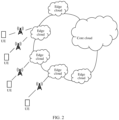
- FIG. 2 is a schematic diagram of a network architecture in which edge clouds are widely deployed according to an embodiment of this application.
- Embodiments of this application provide a session key generation method, used in a scenario in which a terminal device communicates with a radio access network device in a distributed network architecture, for example, a UCN architecture.
- FIG. 3 is a schematic block diagram of a session key generation method according to an embodiment of this application. The method 300 includes the following steps.
- a terminal device obtains a first public key of a radio access network device from a blockchain, where the first public key of the radio access network device is a public key that is of the radio access network device and that is signed by using an operator private key, and the first public key of the radio access network device is generated based on a private key of the radio access network device.
- the terminal device sends a fourth message to the blockchain, where the fourth message includes an identifier of the radio access network device, and the fourth message is used to request the first public key of the radio access network device. More specifically, the terminal device sends the fourth message to the radio access network device corresponding to the terminal device, and the radio access network device forwards the fourth message to the blockchain.
- the blockchain receives the fourth message, queries, based on the identifier of the radio access network device, the first public key of the radio access network device stored in the blockchain, and sends the first public key to the radio access network device. In other words, the blockchain sends a second response message to the terminal device, where the second response message includes the first public key of the radio access network device.
- the blockchain sends the second response message to the radio access network device, and the radio access network device forwards the second response message to the terminal device.
- the terminal device receives the second response message, and obtains the first public key of the radio access network device from the second response message. It should be understood that the first public key of the radio access network device that the terminal device requests to obtain from the blockchain is signed by the operator private key.
- S320 The terminal device processes the first public key of the radio access network device by using an operator public key, to obtain a second public key of the radio access network device.
- the terminal device verifies the first public key of the radio access network device by using the operator public key, to obtain the second public key of the radio access network device.
- the second public key of the radio access network device is obtained after the terminal device verifies a first private key of the radio access network device by using the operator public key.
- the first public key of the radio access network device and the second public key of the radio access network device are public keys in different states after the public key of the radio access network device is signed or verified.
- the first public key of the radio access network device or the second public key of the radio access network device may be considered to be generated by the radio access network device based on the private key of the radio access network device.
- the operator public key is known to the terminal device.
- the terminal device generates a first session key based on a first private key of the terminal device and the second public key of the radio access network device.
- the terminal device obtains the public key that is of the radio access network device and that has been signed by a third party (for example, an operator), verifies validity of the public key of the radio access network device, and generates the session key based on the verified public key of the radio device and the private key of the terminal device.
- the terminal device generates the first session key based on the first private key of the terminal device and the second public key of the radio access network device.
- a manner in which the terminal device generates the first session key includes but is not limited to: multiplying the first private key of the terminal device by the second public key of the radio access network device.
- a first session key generated by the radio access network device is approximately the same as the first session key generated by the terminal device.
- the radio access network device obtains a third public key of the terminal device from the blockchain, where the third public key of the terminal device is a public key that is of the terminal device and that is signed by using the operator private key, and the third public key of the terminal device is generated based on the first private key of the terminal device.
- the radio access network device sends a sixth message to the blockchain, where the sixth message includes an identifier of the terminal device, and the sixth message is used to request the third public key of the terminal device.
- the blockchain receives the sixth message, queries, based on the identifier of the terminal device, the third public key of the terminal device stored in the blockchain, and sends the third public key of the terminal device to the radio access network device.
- the blockchain sends a third response message to the radio access network device, where the third response message includes the third public key of the terminal device.
- the radio access network device receives the third response message, and obtains the third public key of the terminal device from the third response message. It should be understood that the third public key of the terminal device that is requested by the radio access network device from the blockchain is signed by the operator private key.
- the radio access network device processes the third public key of the terminal device by using the operator public key, to obtain the second public key of the terminal device.
- the radio access network device verifies the third public key of the terminal device by using the operator public key, to obtain the second public key of the terminal device.
- the second public key of the terminal device is obtained after the radio access network device verifies the second public key of the terminal device by using the operator public key.
- the third public key of the terminal device and the second public key of the terminal device are public keys in different states after the public key of the terminal device is signed or verified.
- the second public key of the terminal device and the third public key of the terminal device may be considered to be generated based on the first private key of the terminal device.
- the operator public key is known to the terminal device.
- the radio access network device generates the first session key based on the private key of the radio access network device and the second public key of the terminal device.
- the radio access network device obtains the public key that is of the terminal device and that has been signed by the third party (for example, the operator), verifies validity of the public key of the terminal device, and generates the session key based on the verified public key of the terminal device and the private key of the radio access network device.
- the radio access network device generates the first session key based on the second public key of the terminal device and the private key of the radio access network device.
- a manner in which the radio access network device generates the first session key includes but is not limited to: multiplying the private key of the radio access network device by the third public key of the terminal device.
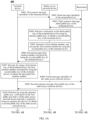
- FIG. 4A and FIG. 4B are a schematic flowchart of a session key generation method 400 according to this application.
- the method 400 is a specific implementation process of the method 300.
- the following describes, with reference to FIG. 4A and FIG. 4B , the session key generation method 400 provided in an embodiment of this application.
- the method 400 includes the following steps.
- a terminal device sends a first request message to a radio access network device, where the first request message includes an identifier of the terminal device.
- the radio access network device receives the first request message from the terminal device.
- the terminal device sends the first request message to the radio access network device, where the first request message is used to request to access a network, the first request message includes but is not limited to the identifier of the terminal device, and the radio access network device is a network device accessed by the terminal device.
- the radio access network device sends a sixth message to a blockchain, where the sixth message includes the identifier of the terminal device, and correspondingly, the blockchain receives the third message from the radio access network device.
- step S401 after receiving the request message that carries the identifier of the terminal device, the radio access network device queries, based on the identifier of the terminal, the blockchain for a public key corresponding to the identifier of the terminal device. Specifically, the radio access network device sends the sixth message to the blockchain, where the sixth message includes the identifier of the terminal device, and the sixth message is used to request to obtain a third public key of the terminal device.
- step S403 The blockchain sends a third response message to the radio access network device, where the third response message includes the third public key of the terminal device.
- the radio access network device receives the third response message from the blockchain.
- the blockchain receives the sixth message, queries, based on the identifier of the terminal device carried in the sixth message, the public key of the terminal device stored in the blockchain, and sends the third response message to the radio access network device.
- the third response message includes the third public key of the terminal device, and the third public key of the terminal device is a public key that is of the terminal device and that is signed by using an operator private key.
- the third response message is used to respond to the sixth message.
- the radio access network device performs verification on the third public key of the terminal device by using an operator public key, to obtain a second public key of the terminal device.
- the radio access network device obtains, from the blockchain, the third public key that is of the terminal device and that is signed by using the operator private key, and verifies, by using the operator public key, the third public key that is of the terminal device and that is signed by using the operator private key, to obtain the second public key of the terminal device.
- the operator public key is known to the radio access network device.
- the radio access network device generates a first random number, and encrypts the first random number by using the second public key of the terminal device.
- the radio access network device generates the first random number, for example, generates a random number N, and the radio access network device encrypts the random number N by using the second public key of the terminal device.
- the second public key of the terminal device has been verified by using the operator public key in step S404, that is, the public key of the terminal device is obtained after verification is performed by using the operator public key.
- the radio access network device sends a second message to the terminal device, where the second message includes the first random number encrypted by using the second public key of the terminal device.
- the terminal device receives the second message from the radio access network device.
- the terminal device decrypts, by using a first private key of the terminal device, the first random number encrypted by using the second public key of the terminal device, to obtain the decrypted first random number.
- the first private key of the terminal device is unique to the terminal device, and only the terminal device can decrypt the first random number encrypted by using the second public key of the terminal device.
- step S408 The terminal device sends a fourth message to the blockchain, where the fourth message includes an identifier of the radio access network device.
- the blockchain receives the fourth message from the terminal device.
- the terminal device sends the fourth message to the blockchain, to request to obtain a first public key of the radio access network device.
- the fourth message includes but is not limited to the identifier of the radio access network device.
- the radio access network device is the network device accessed by the terminal device.
- step S409 The blockchain sends a second response message to the terminal device, where the second response message includes the first public key of the radio access network device.
- the terminal device receives the second response message from the blockchain.
- the blockchain receives the fourth message, queries, based on the identifier of the radio terminal device carried in the fourth message, the public key of the radio access network device stored in the blockchain, and sends the second response message to the terminal device.
- the second response message includes the first public key of the radio access network device, and the first public key of the radio access network device is a public key that is of the radio access network device and that is signed by using the operator private key.
- the second response message is used to respond to the fourth message.
- step S408 and step S409 may be specifically as follows:
- the terminal device sends the fourth message to the radio access network device accessed by the terminal device, and the radio access network device forwards the fourth message to the blockchain.
- the blockchain queries the public key of the radio access network device based on the identifier of the radio access network device carried in the fourth message, and sends the found first public key of the radio access network device to the radio access network device accessed by the terminal device.
- the radio access network device accessed by the terminal device forwards, to the terminal device, the second response message that carries the first public key of the radio access network device.
- steps S408 and S409 are optional steps.
- the terminal device may alternatively obtain the first public key of the radio access network device in, but not limited to, the following implementation.
- the radio access network device sends a seventh message to the blockchain, where the seventh message includes the identifier of the radio access network device.
- the blockchain receives the seventh message, and queries the public key of the radio access network device, that is, the first public key of the radio access network device, based on the identifier of the radio access network device.
- the blockchain sends the found first public key of the radio access network device to the radio access network device, and the radio access network device forwards the first public key of the radio access network device to the terminal device.
- step S406 may be performed before step S406, or may be performed after step S406, or may be performed simultaneously with step S406. This is not limited in this embodiment of this application.
- the terminal device performs, by using the operator public key, verification on the first public key that is of the radio access network device and that is signed by using the operator private key, to obtain a second public key of the radio access network device.
- the terminal device obtains, from the blockchain, a first private key that is of the radio access network device and that is signed by using the operator private key, and verifies, by using the operator public key, the first public key that is of the radio access network device and that is signed by using the operator private key, to obtain the second public key of the radio access network device.
- the operator public key is known to the terminal device.
- the terminal device generates a second random number, and encrypts a third random number by using the second public key of the radio access network device, where the third random number includes the first random number and the second random number.
- step S407 the terminal device obtains the first random number through decryption, generates the second random number, splices the first random number and the second random number to form the third random number, and encrypts the third random number by using the second public key of the radio access network device.
- the first random number is N
- the generated second random number is M
- the random number N and the random number M are spliced.
- a specific splicing manner is not limited in this embodiment of this application.
- the terminal device sends a first response message to the radio access network device, where the first response message includes the third random number encrypted by using the second public key of the radio access network device.
- the radio access network device receives the first response message from the terminal device.
- the radio access network device decrypts, by using a private key of the radio access network device, the third random number encrypted by using the second public key of the radio access network device, to obtain the decrypted first random number.
- the radio access network device receives the encrypted third random number from the terminal device, and decrypts, based on the private key of the radio access network device, the third random number encrypted by using the second public key of the radio access network device, to obtain the first random number and the second random number. If the first random number is a random number previously generated by the radio access network device, authentication on the terminal device is completed, that is, the radio access network device determines that the terminal device is valid, or in other words, the radio access network device determines that the terminal device is a target terminal device of the radio access network device.
- the target terminal device may be understood as a terminal device associated with the radio access network device.
- the private key of the radio access network device is unique to the radio access network device, and only the radio access network device can decrypt the third random number encrypted by using the second public key of the radio access device.
- the radio access network device encrypts the second random number by using the second public key of the terminal device.
- the radio access network device sends a third message to the terminal device, where the third message includes the second random number encrypted by using the second public key of the terminal device.
- the terminal device receives the third message from the radio access network device.
- S416 The terminal device decrypts, by using the first private key of the terminal device, the second random number encrypted by using the second public key of the terminal device, to obtain the decrypted second random number.
- the terminal device receives the encrypted second random number from the radio access network device, and decrypts, based on the first private key of the terminal device, the second random number encrypted by using the second public key of the terminal device, to obtain the decrypted second random number.
- the second random number is the random number generated by the terminal device in step S411
- authentication on the radio access network device is completed, that is, the terminal device determines that the radio access network device is valid, or in other words, the terminal device determines that the radio access network device is a target access network device of the terminal device.
- the target access network device may be understood as a radio access network device associated with the terminal device.
- the first private key of the terminal device is unique to the terminal device, and only the terminal device can decrypt the second random number encrypted by using the second public key of the terminal device.
- the terminal device further includes the second public key of the radio access network device.
- the terminal device multiplies the first private key of the terminal device by the second public key of the radio access network device.
- the radio access network device multiplies the private key of the radio access network device by the second public key of the terminal device.
- the first private key of the terminal device is K1, s
- the second public key of the terminal device is K1, p
- the private key of the radio access network device is K2, s
- the second public key of the radio access network device is K2, p.
- the first session key may be used to encrypt a subsequent session.
- the public keys of the radio access network device and the terminal device are separately signed by using the operator private key, and are stored in the blockchain.
- one party obtains the public key of the other party, and obtains the session key based on the private key of the party and the public key of the other party.
- a root key does not need to be shared between the terminal device and the radio access network device in advance. Therefore, a defect of a current cellular network based on a symmetric key, that is, a distribution trust assumption of the symmetric key, can be resolved.
- a trust anchor is constructed on the blockchain, to avoid a man-in-the-middle attack risk during public key distribution.
- FIG. 5 is a schematic flowchart in which a terminal device initially registers a public key with a blockchain. As shown in FIG. 5 , the method 500 includes the following steps.
- S510 A terminal device generates a public key.
- the terminal device generates a private key K1, s. More specifically, a SIM or a USIM in the terminal device generates the private key K1, s (for example, a first private key of the terminal device).
- the terminal device obtains a public key K1, p (for example, a third public key of the terminal device) through calculation based on elliptic curve Diffie-Hellman key agreement (elliptic curve diffie-hellman key agreement, ECDH key agreement) and the private key.
- ellip elliptic curve Diffie-Hellman key agreement
- ECDH key agreement elliptic curve diffie-hellman key agreement
- step S520 The terminal device sends an eighth message to a blockchain, where the eighth message includes an identifier of the terminal device and the public key K1, p of the terminal device.
- the blockchain receives the eighth message from the UE.
- the terminal device sends the eighth message to the blockchain.
- the terminal device provides a record for an operator through an application programming interface (application programming interface, API) call (BC RR REQ) provided by the blockchain.
- the terminal device provides the identifier of the terminal device and the public key K1, p of the terminal device for the operator.
- S530 The blockchain signs and stores the public key K1, p of the terminal device.
- the blockchain After receiving the eighth message, the blockchain obtains the identifier (for example, a UEID) of the terminal device and the public key K1, p of the terminal device that are carried in the eighth message, and signs the public key K1, p of the terminal device by using a private key K0, s of the blockchain.
- the signature may be represented as S[(UEID, K1, p), K0, s], and a signed record (as transaction processing) is stored in the blockchain.
- step S540 The blockchain sends a fourth response message to the terminal device.
- the terminal device receives the fourth response message from the blockchain.
- the blockchain After successfully storing a record of the public key K1, p of the terminal device in step S530, or in other words, successfully storing the public key K1, p that is of the terminal device and that is signed by the operator, the blockchain sends a response message to the terminal device, where the response message is used to notify the terminal device that the blockchain has successfully signed and stored the public key K1, p of the terminal device.
- the fourth response message includes but is not limited to an "OK" message.
- FIG. 6 is a schematic flowchart in which a radio access network device initially registers a public key with a blockchain. As shown in FIG. 6 , the method 600 includes the following steps.
- S610 A radio access network device generates a public key.
- the radio access network device generates a private key K2, s, and obtains a public key K2, p (for example, a first public key of the radio access network device) through calculation based on ECDH and the private key. It should be understood that a specific process of generating the public key K2, p by the radio access network device is not limited in this embodiment of this application.
- the radio access network device sends a ninth message to a blockchain, where the ninth message includes an identifier of the radio access network device and the public key K2, p of the radio access network device.
- the blockchain receives the ninth message from the radio access network device.
- the radio access network device sends the ninth message to the blockchain.
- the radio access network device provides a record for an operator through an API call (BC_RR_REQ) provided by the blockchain.
- the radio access network device provides the identifier of the radio access network device and the public key K2, p of the radio access network device for the network operator.
- S630 The blockchain signs and stores the public key K2, p of the radio access network device.
- the blockchain After receiving the ninth message, the blockchain obtains the identifier (for example, a BSID) of the radio access network device and the public key K2, p of the radio access network device that are carried in the ninth message, signs the public key K2, p of the radio access network device by using a private key K0, s of the blockchain.
- the signature may be represented as S[(BSID, K2, p), K0, s], and a signed record (as transaction processing) is stored in the blockchain.
- step S640 The blockchain sends a fifth response message to the radio access network device.
- the radio access network device receives the fifth response message from the blockchain.
- the blockchain After successfully storing a record of the public key K2, p of the radio access network device in step S630, or in other words, successfully storing the public key K2, p that is of the radio access network device and that is signed by the operator, the blockchain sends a response message to the radio access network device, where the response message is used to notify the radio access network device that the blockchain has successfully signed and stored the public key K2, p of the radio access network device.
- the fifth response message includes but is not limited to an "OK" message.
- FIG. 7 is a schematic flowchart of session key update.
- the method 700 includes the following steps.
- a terminal device generates a first public key of the terminal device.
- the terminal device generates a new private key, for example, a second private key of the terminal device, and obtains the first public key through calculation based on ECDH and the private key. It should be understood that a specific process of generating the first public key of the terminal device by the terminal device is not limited in this embodiment of this application.
- the terminal device sends a first message to a radio access network device, where the first message includes the first public key that is of the terminal device and that is encrypted by using a first session key.
- the radio access network device receives the first message from the terminal device.
- the first message may further include an identifier of the terminal device.
- the radio access network device obtains a fourth public key of the terminal device.
- the radio access network device receives the first message, obtains, from the first message, the first public key that is of the terminal device and that is encrypted by using the first session key, and performs decryption by using the first session key obtained by the radio access network device in step S417, to obtain the fourth public key of the terminal device.
- the first public key of the terminal device and the fourth public key of the terminal device are public keys in different states after the public key of the terminal device is encrypted or decrypted.
- the first public key of the terminal device and the fourth public key of the terminal device are public keys of the terminal device, and may be considered to be generated by the terminal device based on the second private key of the terminal device.
- the second private key of the terminal device is different from the first private key of the terminal device in the method 600. In other words, the second private key of the terminal device is different from the private key used by the terminal device to generate the first session key.
- the radio access network device sends a fifth message to the blockchain, where the fifth message includes the fourth public key of the terminal device.
- the fifth message further includes the identifier of the terminal device.
- S705 The blockchain signs and stores the fourth public key of the terminal device.
- the blockchain After receiving the fifth message, the blockchain obtains the identifier (UEID) of the terminal device and the fourth public key of the terminal device that are carried in the fifth message, signs the fourth public key (K3, p) of the terminal device by using a private key K0, s of the blockchain.
- the signature may be represented as S[(UEID, K3, p), K0, s], and a signed record (as transaction processing) is stored in the blockchain.
- step S706 The blockchain sends a sixth response message to the radio access network device.
- the radio access network device receives the sixth response message from the blockchain.
- the blockchain After successfully storing a record of the fourth public key of the terminal device in step S705, or in other words, successfully storing the fourth public key that is of the terminal device and that is signed by an operator, the blockchain sends a response message to the radio access network device, where the response message is used to notify the radio access network device that the blockchain has successfully signed and stored the fourth public key of the terminal device.
- the radio access network device generates a second session key.
- the radio access network device obtains the second session key based on the fourth public key of the terminal device and a private key of the radio access network device that are obtained by the radio access network device through decryption in step S703.
- the radio access network device multiplies the private key of the radio access network device by the fourth public key of the terminal device.
- the fourth public key of the terminal device is K3, p
- the private key of the radio access network device is K2, s.
- the obtained second session key Ks' K2, s ⁇ K3, p.
- the second session key is an updated session key.
- the radio access network device sends a seventh response message to the terminal device, where the seventh response message is used to notify the terminal device that a new session key has been generated.
- the terminal device receives the seventh response message from the radio access network device.
- S709 The terminal device generates a second session key.
- the terminal device multiplies a new private key generated by the terminal device, that is, the second private key of the terminal device, by a second public key of the radio access network device.
- the second private key of the terminal device is K3, s
- the second public key of the radio access network device is K2, p.
- the obtained second session key Ks' K3, s ⁇ K2, p.
- the second session key is an updated session key.
- a sequence in which the radio access network device and the terminal device each generate the second session key is not limited in this embodiment of this application.
- the radio access network device may generate the second session key before the terminal device generates the second session key, or may generate the second session key after the terminal device generates the second session key, or may simultaneously generate the second session key when the terminal device generates the second session key.
- a sequence in which the radio access network device registers the fourth public key of the terminal device with the blockchain and a sequence in which the radio access network device and the terminal device each generate the second session key are not limited in this embodiment of this application.
- the radio access network device may alternatively trigger session key update.
- the radio access network device generates a new private key, for example, a first private key of the radio access network device, and generates a responded third public key of the radio access network device based on the private key.
- the radio access network device may encrypt the third public key of the radio access network device by using the first session key, and send the encrypted third public key to the terminal device.
- the terminal device decrypts, by using the first session key, information received by the terminal device, to obtain a fourth public key of the radio access network device, and generates the second session key based on the first private key of the terminal device and the fourth public key of the radio access network device.
- the radio access network device generates the second session key by using the first private key of the radio access network device and the second public key of the terminal device. It should be understood that the third public key of the radio access network device and the fourth public key of the radio access network device are public keys in different states after the public key of the radio access network device is encrypted or decrypted. In addition, the radio access network device may further register a new public key generated by the radio access network device with the blockchain. For a registration procedure of the radio access network device, refer to the foregoing descriptions. This is not limited in this embodiment of this application.
- radio access network device and the terminal device may simultaneously trigger the session key update.
- the radio access network device and the terminal device may simultaneously trigger the session key update.
- Some simple adaptation may be required, but this also falls within the protection scope of this embodiment of this application. This is not described in this embodiment of this application.
- the session key update does not depend on two-way authentication, but the session key is generated based on a previous session key, so that excessive exposure of a weakness of an asymmetric key is reduced, and a quantum attack risk is reduced to a maximum extent.
- FIG. 8 is a schematic block diagram of a session key generation apparatus 800 according to an embodiment of this application.
- the apparatus may be used for the terminal device in the method embodiments in FIG. 3 , FIG. 4A and FIG. 4B , FIG. 5 , and FIG. 7 , or may be a component that implements the methods in the embodiments in FIG. 3 , FIG. 4A and FIG. 4B , FIG. 5 , and FIG. 7 , for example, a chip.
- the apparatus 800 includes a transceiver unit 810 and a processing unit 820.
- the transceiver unit 810 is configured to obtain a first public key of a radio access network device from a blockchain, where the first public key of the radio access network device is a public key that is of the radio access network device and that is signed by using an operator private key, and the first public key of the radio access network device is generated based on a private key of the radio access network device.
- the processing unit 820 is configured to:
- the transceiver unit 810 is further configured to send a first message to the radio access network device, where the first message includes a first public key of the terminal device, the first public key of the terminal device is a public key that is of the terminal device and that is encrypted by using the first session key, the first public key of the terminal device is generated based on a second private key of the terminal device, and the second private key of the terminal device is different from the first private key of the terminal device.
- the processing unit 820 is further configured to generate a second session key based on the second private key of the terminal device and the second public key of the radio access network device.
- the transceiver unit 810 is further configured to receive a second message from the radio access network device, where the second message includes a first random number encrypted by using a second public key of the terminal device, the second public key of the terminal device has been verified by using the operator private key, and the second public key of the terminal device is generated based on the first private key of the terminal device.
- the processing unit 820 is further configured to decrypt, by using the first private key of the terminal device, the first random number encrypted by using the second public key of the terminal device, to obtain the decrypted first random number.
- the transceiver unit 810 is further configured to send a first response message to the radio access network device, where the first response message includes the first random number encrypted by using the second public key of the radio access network device.
- the first response message further includes a second random number encrypted by using the second public key of the radio access network device.
- the transceiver unit 810 is further configured to receive a third message from the radio access network device, where the third message includes the second random number encrypted by using the second public key of the terminal device.
- the processing unit 820 is further configured to decrypt, by using the first private key of the terminal device, the second random number encrypted by using the second public key of the terminal device, to obtain the decrypted second random number.
- the transceiver unit 810 is specifically configured to:
- FIG. 9 is a schematic diagram of a communication apparatus 900 according to an embodiment of this application.
- the apparatus 900 may include a processor 910, and may further include a memory 920.
- the memory 920 is configured to store instructions
- the processor 910 is configured to execute the instructions stored in the memory 920, so that the apparatus 900 implements the steps performed in the method corresponding to any one of FIG. 3 to FIG. 7 .
- the apparatus 900 may further include an input interface 930 (that is, an example of a transceiver module) and an output interface 940 (that is, another example of the transceiver module).
- the processor 910, the memory 920, the input interface 930, and the output interface 940 may communicate with each other through an internal connection path, to transmit a control signal and/or a data signal.
- the memory 920 is configured to store a computer program.
- the processor 910 may be configured to invoke the computer program from the memory 920 and run the computer program, to control the input interface 930 to receive a signal, and control the output interface 940 to send a signal, to complete the steps performed by the terminal device in the foregoing methods.
- the memory 920 may be integrated into the processor 910, or may be separated from the processor 910.
- the input interface 930 is a receiver
- the output interface 940 is a transmitter.
- the receiver and the transmitter may be a same physical entity or different physical entities.
- the receiver and the transmitter may be collectively referred to as a transceiver.
- the input interface 930 is an input interface
- the output interface 940 is an output interface
- functions of the input interface 930 and the output interface 940 are implemented by a transceiver circuit or a dedicated transceiver chip. It may be considered that the processor 910 is implemented by a dedicated processing chip, a processing circuit, a processor, or a general-purpose chip.
- the communication device provided in this embodiment of this application is implemented by a general-purpose computer.
- program code that is used to implement functions of the processor 910, the input interface 930, and the output interface 940 is stored in the memory 920, and a general-purpose processor implements the functions of the processor 910, the input interface 930, and the output interface 940 by executing the code in the memory 920.
- this application further provides a computer program product.
- the computer program product includes instructions. When the instructions are run by a processor, the method of the terminal device in any one of the foregoing method embodiments is implemented.
- this application further provides a computer-readable medium.
- the computer-readable medium includes instructions. When the instructions are run by a processor, the method of the terminal device in the foregoing method embodiments is implemented.
- this application further provides a chip system.
- the chip system includes a processor, configured to invoke a computer program from a memory and run the computer program, so that a communication device on which the chip system is installed performs the method on a terminal device side in any one of the foregoing method embodiments.
- this application further provides a system, including the foregoing one or more terminal devices and at least one of the foregoing one or more radio access network devices.
- An embodiment of this application further provides a processing apparatus, including a processor and an interface.
- the processor is configured to perform the communication method in any one of the foregoing method embodiments.
- the processing apparatus may be a chip.
- the processing apparatus may be a field programmable gate array (field programmable gate array, FPGA), may be a general-purpose processor, a digital signal processor (digital signal processor, DSP), an application specific integrated circuit (application specific integrated circuit, ASIC), the field programmable gate array (field programmable gate array, FPGA), another programmable logic device, a discrete gate, a transistor logic device, or a discrete hardware component, may be a system on chip (system on chip, SoC), may be a central processing unit (central processing unit, CPU), may be a network processor (network processor, NP), may be a digital signal processor (digital signal processor, DSP), may be a micro controller unit (micro controller unit, MCU), or may be a programmable logic device (programmable logic device, PLD) or another integrated chip.
- FPGA field programmable gate array
- DSP digital signal processor
- ASIC application specific integrated circuit
- FPGA field programmable gate array
- the processor may implement or perform the methods, the steps, and logical block diagrams that are disclosed in embodiments of this application.
- the general-purpose processor may be a microprocessor, or the processor may be any conventional processor or the like.
- the steps of the method disclosed with reference to embodiments of this application may be directly performed by a hardware decoding processor, or may be performed by using a combination of hardware in the decoding processor and a software module.
- the software module may be located in a mature storage medium in the art, such as a random access memory, a flash memory, a read-only memory, a programmable read-only memory, an electrically erasable programmable memory, or a register.
- the storage medium is located in the memory, and the processor reads information in the memory and completes the steps in the foregoing methods in combination with hardware of the processor.
- the memory in embodiments of this application may be a volatile memory or a nonvolatile memory, or may include a volatile memory and a nonvolatile memory.
- the nonvolatile memory may be a read-only memory (read-only memory, ROM), a programmable read-only memory (programmable ROM, PROM), an erasable programmable read-only memory (erasable PROM, EPROM), an electrically erasable programmable read-only memory (electrically EPROM, EEPROM), or a flash memory.
- the volatile memory may be a random access memory (random access memory, RAM), used as an external cache.
- RAMs may be used, for example, a static random access memory (static RAM, SRAM), a dynamic random access memory (dynamic RAM, DRAM), a synchronous dynamic random access memory (synchronous DRAM, SDRAM), a double data rate synchronous dynamic random access memory (double data rate SDRAM, DDR SDRAM), an enhanced synchronous dynamic random access memory (enhanced SDRAM, ESDRAM), a synchlink dynamic random access memory (synchlink DRAM, SLDRAM), and a direct rambus random access memory (direct rambus RAM, DR RAM).
- static random access memory static random access memory
- DRAM dynamic random access memory
- DRAM dynamic random access memory
- SDRAM synchronous dynamic random access memory
- double data rate SDRAM double data rate SDRAM
- DDR SDRAM double data rate SDRAM
- ESDRAM enhanced synchronous dynamic random access memory
- synchlink dynamic random access memory synchlink dynamic random access memory
- direct rambus RAM direct rambus RAM
- All or some of the foregoing embodiments may be implemented by using software, hardware, firmware, or any combination thereof.
- software is used to implement embodiments, all or some of embodiments may be implemented in a form of a computer program product.
- the computer program product includes one or more computer instructions. When the computer instructions are loaded and executed on a computer, all or a part of the procedures or functions according to embodiments of this application are generated.
- the computer may be a general-purpose computer, a dedicated computer, a computer network, or another programmable apparatus.
- the computer instructions may be stored in a computer-readable storage medium, or may be transmitted from a computer-readable storage medium to another computer-readable storage medium.
- the computer instructions may be transmitted from a website, computer, server, or data center to another website, computer, server, or data center in a wired (for example, a coaxial cable, an optical fiber, or a digital subscriber line (digital subscriber line, DSL)) or wireless (for example, infrared, radio, or microwave) manner.
- the computer-readable storage medium may be any usable medium accessible to the computer, or a data storage device, for example, a server or a data center, integrating one or more usable media.
- the usable medium may be a magnetic medium (for example, a floppy disk, a hard disk, or a magnetic tape), an optical medium (for example, a high-density digital video disc (digital video disc, DVD)), a semiconductor medium (for example, a solid state disk (solid state disc, SSD)), or the like.
- a magnetic medium for example, a floppy disk, a hard disk, or a magnetic tape
- an optical medium for example, a high-density digital video disc (digital video disc, DVD)
- a semiconductor medium for example, a solid state disk (solid state disc, SSD)
- the network device and the terminal device in the foregoing apparatus embodiments completely correspond to the network device or the terminal device in the method embodiments.
- a corresponding module or unit performs a corresponding step.
- the communication unit (the transceiver) performs a receiving or sending step in the method embodiments, and a step other than the sending step and the receiving step may be performed by the processing module (the processor).
- the processing module (the processor).
- the processor For a function of a specific unit, refer to a corresponding method embodiment.
- a component may be but is not limited to a process that runs on a processor, a processor, an object, an executable file, an execution thread, a program, or a computer.
- a computing device and an application that runs on the computing device may be components.
- One or more components may reside within a process or an execution thread, and a component may be located on one computer or distributed between two or more computers.
- these components may be executed from various computer-readable media that store various data structures.
- the components may perform communication by using a local process or a remote process and based on, for example, a signal having one or more data packets (for example, data from two components interacting with another component in a local system, a distributed system, or across a network such as the internet interacting with another system by using the signal).
- a signal having one or more data packets for example, data from two components interacting with another component in a local system, a distributed system, or across a network such as the internet interacting with another system by using the signal.
- B corresponding to A represents that B is associated with A, and B may be determined based on A.
- determining B based on A does not mean that B is determined based only on A.
- B may alternatively be determined based on A and/or other information.
- an expression used in this application similar to an expression that "an item includes one or more of the following: A, B, and C" usually means that the item may be any one of the following: A; B; C; A and B; A and C; B and C; A, B, and C; A and A; A, A, and A; A, A, and B; A, A, and C; A, B, and B; A, C, and C; B and B; B, B and B; B, B and C; C and C; C, C, and C; and another combination of A, B and C.
- three elements A, B, and C are used as an example to describe an optional case of the item.
- the terminal device and/or the radio access network device may perform some or all steps in embodiments of this application. These steps or the operations are merely examples. In embodiments of this application, other operations or variations of various operations may be further performed. In addition, the steps may be performed in a sequence different from a sequence presented in embodiments of this application, and not all the operations in embodiments of this application may be performed.
- the disclosed system, apparatus, and method may be implemented in other manners.
- the described apparatus embodiments are merely examples.
- division into the units is merely logical function division, and may be other division during actual implementation.
- a plurality of units or components may be combined or may be integrated into another system, or some features may be ignored or not performed.
- the displayed or discussed mutual couplings or direct couplings or communication connections may be implemented through some interfaces.
- the indirect couplings or communication connections between the apparatuses or the units may be implemented in electrical, mechanical, or another form.
- the units described as separate parts may or may not be physically separate, and parts displayed as units may or may not be physical units, may be located in one position, or may be distributed on a plurality of network units. Some or all of the units may be selected based on actual requirements to achieve the objectives of the solutions of embodiments.
- the functions When the functions are implemented in a form of a software functional unit and sold or used as an independent product, the functions may be stored in a computer-readable storage medium. Based on such an understanding, the technical solutions of this application essentially, or the part contributing to the conventional technology, or a part of the technical solutions may be implemented in a form of a software product.
- the computer software product is stored in a storage medium and includes several instructions for instructing a computer device (which may be a personal computer, a server, a network device, or the like) to perform all or some of the steps of the methods described in embodiments of this application.
- the foregoing storage medium includes any medium that can store program code, such as a USB flash drive, a removable hard disk, a read-only memory (Read-Only Memory, ROM), a random access memory (Random Access Memory, RAM), a magnetic disk, or an optical disc.
- program code such as a USB flash drive, a removable hard disk, a read-only memory (Read-Only Memory, ROM), a random access memory (Random Access Memory, RAM), a magnetic disk, or an optical disc.
Landscapes
- Engineering & Computer Science (AREA)
- Computer Security & Cryptography (AREA)
- Computer Networks & Wireless Communication (AREA)
- Signal Processing (AREA)
- Theoretical Computer Science (AREA)
- Computer Hardware Design (AREA)
- General Engineering & Computer Science (AREA)
- Software Systems (AREA)
- Computing Systems (AREA)
- Physics & Mathematics (AREA)
- General Physics & Mathematics (AREA)
- Health & Medical Sciences (AREA)
- Bioethics (AREA)
- General Health & Medical Sciences (AREA)
- Mobile Radio Communication Systems (AREA)
Applications Claiming Priority (2)
| Application Number | Priority Date | Filing Date | Title |
|---|---|---|---|
| CN202110690839.2A CN115515130A (zh) | 2021-06-22 | 2021-06-22 | 一种会话密钥生成的方法及装置 |
| PCT/CN2022/091869 WO2022267723A1 (fr) | 2021-06-22 | 2022-05-10 | Procédé et appareil de génération de clé de session |
Publications (2)
| Publication Number | Publication Date |
|---|---|
| EP4340421A1 true EP4340421A1 (fr) | 2024-03-20 |
| EP4340421A4 EP4340421A4 (fr) | 2024-11-06 |
Family
ID=84499566
Family Applications (1)
| Application Number | Title | Priority Date | Filing Date |
|---|---|---|---|
| EP22827221.7A Pending EP4340421A4 (fr) | 2021-06-22 | 2022-05-10 | Procédé et appareil de génération de clé de session |
Country Status (3)
| Country | Link |
|---|---|
| EP (1) | EP4340421A4 (fr) |
| CN (1) | CN115515130A (fr) |
| WO (1) | WO2022267723A1 (fr) |
Families Citing this family (2)
| Publication number | Priority date | Publication date | Assignee | Title |
|---|---|---|---|---|
| CN115865350B (zh) * | 2023-02-27 | 2023-05-05 | 合肥工业大学 | 一种基于量子安全的车云服务系统 |
| CN119584106B (zh) * | 2024-10-29 | 2025-08-29 | 成都愿景仿视科技有限公司 | 一种基于区块链的5g网络分布式加密方法及系统 |
Family Cites Families (10)
| Publication number | Priority date | Publication date | Assignee | Title |
|---|---|---|---|---|
| US7249259B1 (en) * | 1999-09-07 | 2007-07-24 | Certicom Corp. | Hybrid signature scheme |
| US8176328B2 (en) * | 2008-09-17 | 2012-05-08 | Alcatel Lucent | Authentication of access points in wireless local area networks |
| WO2018040805A1 (fr) * | 2016-08-31 | 2018-03-08 | 华为技术有限公司 | Procédé d'établissement d'une association dans un réseau local sans fil, terminal et point d'accès |
| US10476879B2 (en) * | 2017-07-26 | 2019-11-12 | International Business Machines Corporation | Blockchain authentication via hard/soft token verification |
| US10425810B2 (en) * | 2018-01-10 | 2019-09-24 | Intel Corporation | Method for physical layer security protection using public keys |
| US12003957B2 (en) * | 2018-10-04 | 2024-06-04 | Google Llc | Distributed network cellular identity management |
| CN109698834A (zh) * | 2019-01-11 | 2019-04-30 | 深圳市元征科技股份有限公司 | 一种加密传输方法以及系统 |
| CN109768988B (zh) * | 2019-02-26 | 2021-11-26 | 安捷光通科技成都有限公司 | 去中心化物联网安全认证系统、设备注册和身份认证方法 |
| CN111132149B (zh) * | 2019-12-30 | 2023-11-21 | 全链通有限公司 | 5g用户终端的注册方法、用户终端设备及介质 |
| CN111385755B (zh) * | 2020-03-18 | 2021-12-03 | 成都西加云杉科技有限公司 | 一种带宽资源共享方法、装置、设备及可读存储介质 |
-
2021
- 2021-06-22 CN CN202110690839.2A patent/CN115515130A/zh active Pending
-
2022
- 2022-05-10 EP EP22827221.7A patent/EP4340421A4/fr active Pending
- 2022-05-10 WO PCT/CN2022/091869 patent/WO2022267723A1/fr not_active Ceased
Also Published As
| Publication number | Publication date |
|---|---|
| EP4340421A4 (fr) | 2024-11-06 |
| CN115515130A (zh) | 2022-12-23 |
| WO2022267723A1 (fr) | 2022-12-29 |
Similar Documents
| Publication | Publication Date | Title |
|---|---|---|
| US11863982B2 (en) | Subscriber identity privacy protection against fake base stations | |
| JP7443541B2 (ja) | 鍵取得方法および装置 | |
| US10880747B2 (en) | Network slice allocation method, device, and system | |
| US11917054B2 (en) | Network key processing method and system and related device | |
| WO2020010515A1 (fr) | Protection et vérification d'intégrité de messages sur la base de l'identité pour des communications sans fil | |
| EP3567797A1 (fr) | Appareil et procédé de traitement de données de sécurité | |
| WO2021031051A1 (fr) | Authentification de dispositif mobile sans justificatifs d'identité de module d'identité d'abonné électronique (esim) | |
| WO2019183794A1 (fr) | Protection de la confidentialité d'une identité d'abonné et gestion de clés de réseau | |
| EP3255914A1 (fr) | Procédé, dispositif et système de génération de clé | |
| EP3076710B1 (fr) | Procédé de délestage, équipement utilisateur, station de base et point d'accès | |
| CN110891271B (zh) | 一种鉴权方法及装置 | |
| EP4322579A1 (fr) | Procédé et appareil de communication | |
| EP3745755A1 (fr) | Procédé et appareil de communication | |
| US12273706B2 (en) | Method, system, and apparatus for determining user plane security algorithm | |
| CN113395697B (zh) | 传输寻呼信息的方法和通信装置 | |
| EP4013091A1 (fr) | Procédé et appareil de communication | |
| US12375306B2 (en) | Mutual authentication method and apparatus | |
| EP3328106B1 (fr) | Procédé et appareil de vérification d'accès | |
| EP4340421A1 (fr) | Procédé et appareil de génération de clé de session | |
| CN101552983A (zh) | 密钥生成方法、密钥生成装置、移动管理实体与用户设备 | |
| WO2019028698A1 (fr) | Protection de la confidentialité d'une identité d'abonné | |
| EP4024930A1 (fr) | Procédé et appareil de protection de sécurité pour informations d'interface radio | |
| US20240381092A1 (en) | Data transmission protection method, device, and system | |
| WO2022148469A1 (fr) | Procédé, appareil et système de protection de sécurité | |
| EP3908022B1 (fr) | Procédé et appareil de communication multibande |
Legal Events
| Date | Code | Title | Description |
|---|---|---|---|
| STAA | Information on the status of an ep patent application or granted ep patent |
Free format text: STATUS: THE INTERNATIONAL PUBLICATION HAS BEEN MADE |
|
| PUAI | Public reference made under article 153(3) epc to a published international application that has entered the european phase |
Free format text: ORIGINAL CODE: 0009012 |
|
| STAA | Information on the status of an ep patent application or granted ep patent |
Free format text: STATUS: REQUEST FOR EXAMINATION WAS MADE |
|
| 17P | Request for examination filed |
Effective date: 20231213 |
|
| AK | Designated contracting states |
Kind code of ref document: A1 Designated state(s): AL AT BE BG CH CY CZ DE DK EE ES FI FR GB GR HR HU IE IS IT LI LT LU LV MC MK MT NL NO PL PT RO RS SE SI SK SM TR |
|
| DAV | Request for validation of the european patent (deleted) | ||
| DAX | Request for extension of the european patent (deleted) | ||
| A4 | Supplementary search report drawn up and despatched |
Effective date: 20241007 |
|
| RIC1 | Information provided on ipc code assigned before grant |
Ipc: H04W 12/122 20210101ALI20240930BHEP Ipc: H04W 12/0431 20210101ALI20240930BHEP Ipc: G06F 21/44 20130101ALI20240930BHEP Ipc: H04L 9/40 20220101ALI20240930BHEP Ipc: H04L 9/00 20220101ALI20240930BHEP Ipc: H04L 9/32 20060101ALI20240930BHEP Ipc: H04L 9/30 20060101ALI20240930BHEP Ipc: H04L 9/08 20060101ALI20240930BHEP Ipc: G06F 21/64 20130101ALI20240930BHEP Ipc: H04W 12/041 20210101AFI20240930BHEP |